

The DOI matches its Crossref record.
Functional Architecture of Deleterious Genetic Variants in the Genome of a Wrangel Island Mammoth
Published version of a preprint
Abstract
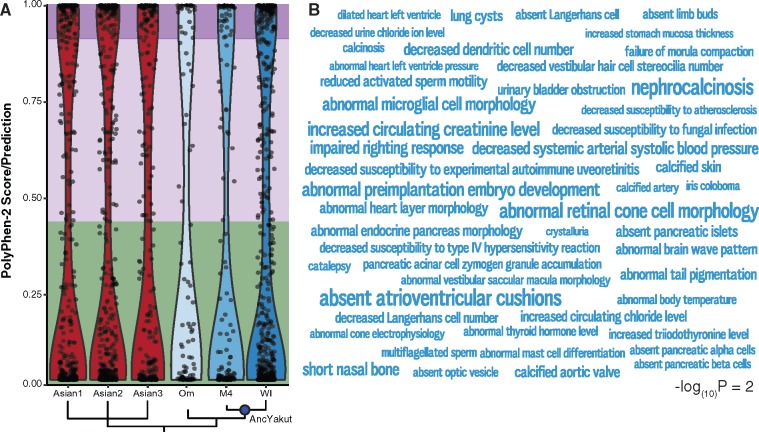
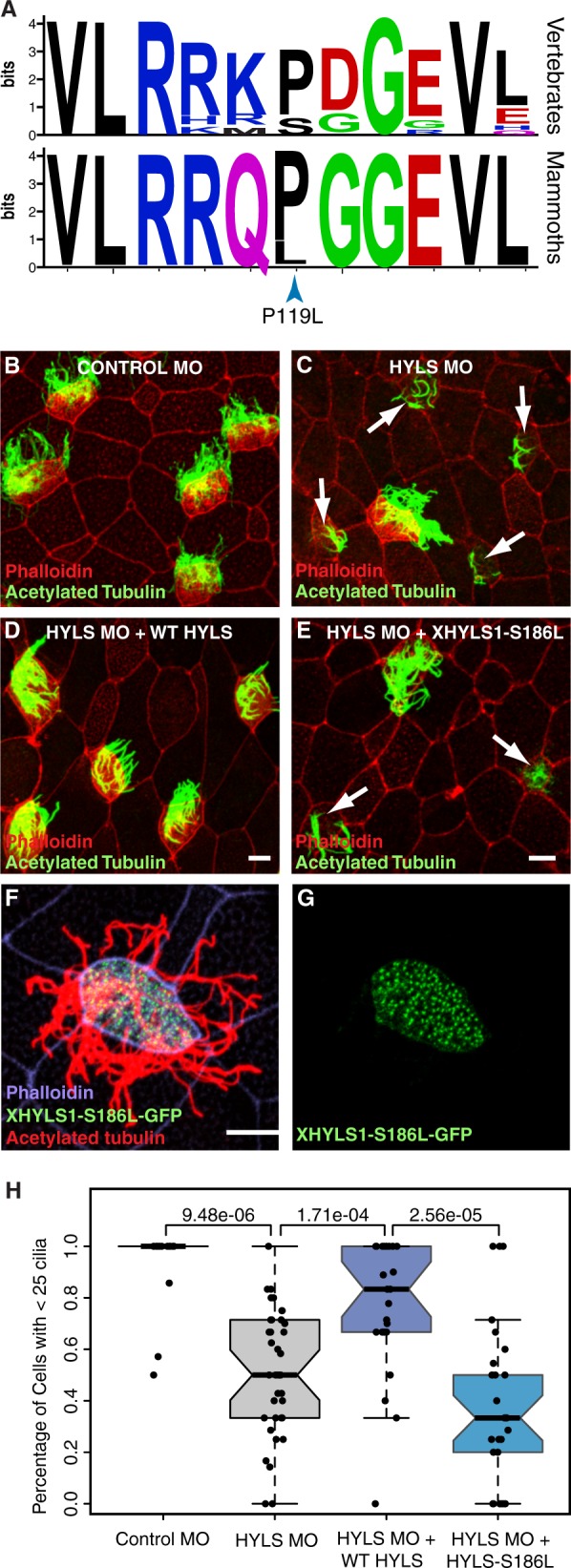
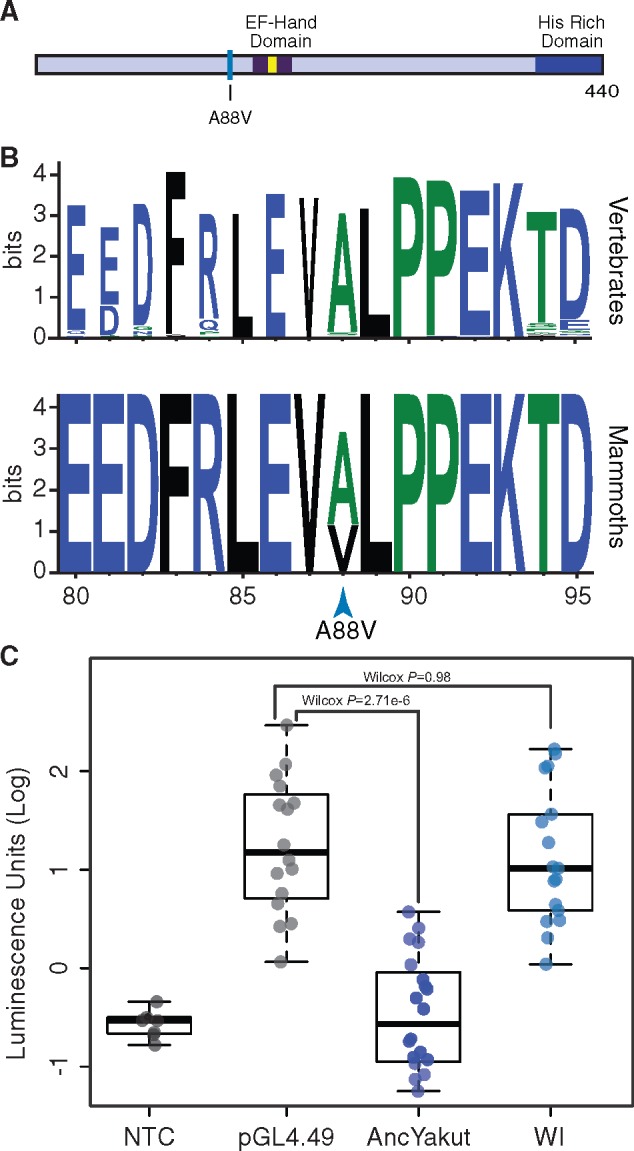
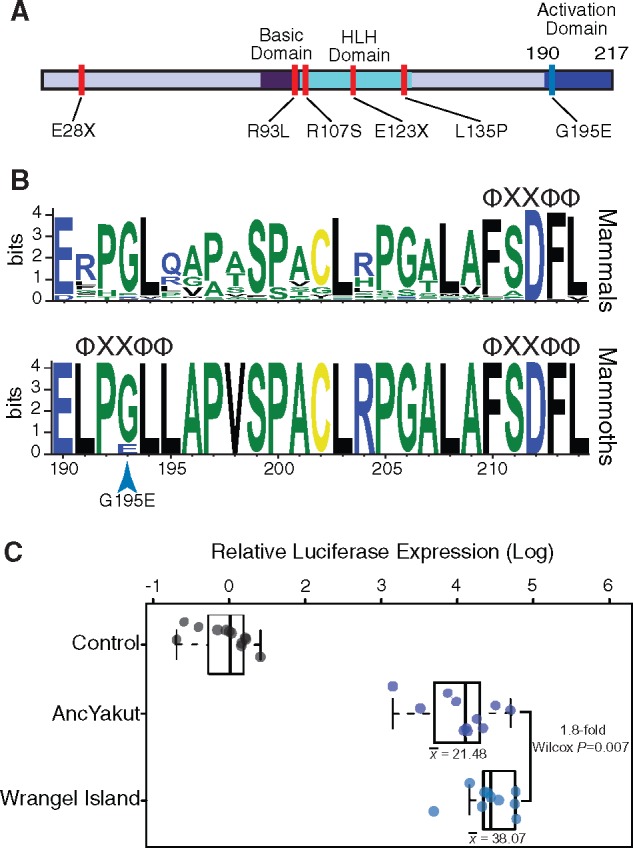
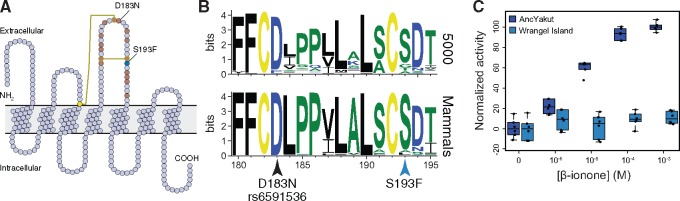
Woolly mammoths were among the most abundant cold-adapted species during the Pleistocene. Their once-large populations went extinct in two waves, an end-Pleistocene extinction of continental populations followed by the mid-Holocene extinction of relict populations on St. Paul Island ∼5,600 years ago and Wrangel Island ∼4,000 years ago. Wrangel Island mammoths experienced an episode of rapid demographic decline coincident with their isolation, leading to a small population, reduced genetic diversity, and the fixation of putatively deleterious alleles, but the functional consequences of these processes are unclear. Here, we show that a Wrangel Island mammoth genome had many putative deleterious mutations that are predicted to cause diverse behavioral and developmental defects. Resurrection and functional characterization of several genes from the Wrangel Island mammoth carrying putatively deleterious substitutions identified both loss and gain of function mutations in genes associated with developmental defects (HYLS1), oligozoospermia and reduced male fertility (NKD1), diabetes (NEUROG3), and the ability to detect floral scents (OR5A1). These data suggest that at least one Wrangel Island mammoth may have suffered adverse consequences from reduced population size and isolation.
Overview
The claims and statistics of this paper haven’t been checked yet.
Run the check — free, no account needed. It reads the open-access text and checks the sources it cites.
Integrity signals
Registry
Cites
Statistics
Figures
Verification
Claims the paper makes
The claims and statistics of this paper haven’t been checked yet.
Run the check — free, no account needed. It reads the open-access text and checks the sources it cites.
Claims other papers make about this one
Each is checked against this paper’s own text: does it say what the citing paper says it does?
The cited source says what the claim attributes to it.
In the citing paper
“The resulting reduced genetic diversity and the accumulation of numerous potentially deleterious mutations may have precipitated the population's extinction through the alteration of important functions in development, reproduction, and olfaction [17][18][19] .”
From Ancient DNA analysis (2021) · cites this paper as [19]
Self-check
Percentages, sums and reported differences re-computed from the paper’s own numbers.
The self-check needs the paper’s full text.
Citations
Cites
No references could be resolved yet.
Research works printed but not linked: 62
- Adzhubei, 2013, Predicting functional effect of human missense mutations using PolyPhen-2, Curr Protoc Hum Genet., 10.1002/0471142905.hg0720s76 · DOI · Paper page
- Adzhubei, 2010, A method and server for predicting damaging missense mutations, Nat Methods, 7, 248, 10.1038/nmeth0410-248 · DOI · Paper page
- Angonin, 2013, Nkd1 functions as a passive antagonist of Wnt signaling, PLoS One, 8, e74666., 10.1371/journal.pone.0074666 · DOI
- Asa, 2007, Relationship of inbreeding with sperm quality and reproductive success in Mexican gray wolves, Anim Conserv, 10, 326, 10.1111/j.1469-1795.2007.00116.x · DOI
- Badano, 2006, The ciliopathies: an emerging class of human genetic disorders, Annu Rev Genom Hum Genet, 7, 125, 10.1146/annurev.genom.7.080505.115610 · DOI · Paper page
- Barnosky, 2004, Assessing the causes of late Pleistocene extinctions on the continents, Science, 306, 70, 10.1126/science.1101476 · DOI · Paper page
- Chen, 2013, Enrichr: interactive and collaborative HTML5 gene list enrichment analysis tool, BMC Bioinformatics, 14, 128., 10.1186/1471-2105-14-128 · DOI · Paper page
- Dammermann, 2009, The hydrolethalus syndrome protein HYLS-1 links core centriole structure to cilia formation, Genes Dev, 23, 2046, 10.1101/gad.1810409 · DOI
- DePristo, 2011, A framework for variation discovery and genotyping using next-generation DNA sequencing data, Nat Genet, 43, 491, 10.1038/ng.806 · DOI
- Dikov, 1988, The earliest sea mammal hunters of Wrangell Island, Arctic Anthropol, 25, 80
- Flather, 2011, Minimum viable populations: is there a “magic number” for conservation practitioners?, Trends Ecol Evol (Amst), 26, 307, 10.1016/j.tree.2011.03.001 · DOI
- Gilbert, 2007, Whole-genome shotgun sequencing of mitochondria from ancient hair shafts, Science, 317, 1927, 10.1126/science.1146971 · DOI
- Gilbert, 2008, Intraspecific phylogenetic analysis of Siberian woolly mammoths using complete mitochondrial genomes, Proc Natl Acad Sci U S A, 105, 8327, 10.1073/pnas.0802315105 · DOI
- Graham, 2016, Timing and causes of mid-Holocene mammoth extinction on St. Paul Island, Alaska, Proc Natl Acad Sci U S A, 113, 9310, 10.1073/pnas.1604903113 · DOI
- Jaeger, 2013, A Mendelian trait for olfactory sensitivity affects odor experience and food selection, Curr Biol, 23, 1601, 10.1016/j.cub.2013.07.030 · DOI
- Kircher, 2012, Analysis of high-throughput ancient DNA sequencing data, Methods Mol Biol, 840, 197, 10.1007/978-1-61779-516-9_23 · DOI · Paper page
- Kuleshov, 2016, Enrichr: a comprehensive gene set enrichment analysis web server 2016 update, Nucleic Acids Res, 44, W90, 10.1093/nar/gkw377 · DOI · Paper page
- Li, 2009, The Sequence Alignment/Map format and SAMtools, Bioinformatics, 25, 2078, 10.1093/bioinformatics/btp352 · DOI · Paper page
- Li, 2010, Fast and accurate long-read alignment with Burrows-Wheeler transform, Bioinformatics, 26, 589, 10.1093/bioinformatics/btp698 · DOI · Paper page
- Li, 2005, A targeted mutation of Nkd1 impairs mouse spermatogenesis, J Biol Chem, 280, 2831, 10.1074/jbc.M405680200 · DOI
- Liao, 2008, Null mutations in human and mouse orthologs frequently result in different phenotypes, Proc Natl Acad Sci U S A, 105, 6987, 10.1073/pnas.0800387105 · DOI · Paper page
- Lorenzen, 2011, Species-specific responses of Late Quaternary megafauna to climate and humans, Nature, 479, 359, 10.1038/nature10574 · DOI · Paper page
- Lozhkin, 2011, Late glacial and holocene landscapes of central Beringia, Quaternary Research, 76, 383, 10.1016/j.yqres.2011.08.003 · DOI
- Lynch, 2009, Use with caution: developmental systems divergence and potential pitfalls of animal models, Yale J Biol Med, 82, 53
- Lynch, 2015, Elephantid genomes reveal the molecular bases of woolly mammoth adaptations to the Arctic, Cell Rep, 12, 217, 10.1016/j.celrep.2015.06.027 · DOI · Paper page
- Mainland, 2014, The missense of smell: functional variability in the human odorant receptor repertoire, Nat Neurosci, 17, 114, 10.1038/nn.3598 · DOI
- Man, 2004, Prediction of the odorant binding site of olfactory receptor proteins by human–mouse comparisons, Protein Sci, 13, 240, 10.1110/ps.03296404 · DOI
- Mee, 2005, Hydrolethalus syndrome is caused by a missense mutation in a novel gene HYLS1, Hum Mol Genet, 14, 1475, 10.1093/hmg/ddi157 · DOI
- Miller, 2008, Sequencing the nuclear genome of the extinct woolly mammoth, Nature, 456, 387, 10.1038/nature07446 · DOI
- Nei, 2008, The evolution of animal chemosensory receptor gene repertoires: roles of chance and necessity, Nat Rev Genet, 9, 951, 10.1038/nrg2480 · DOI
- Niimura, 2014, Extreme expansion of the olfactory receptor gene repertoire in African elephants and evolutionary dynamics of orthologous gene groups in 13 placental mammals, Genome Res, 24, 1485, 10.1101/gr.169532.113 · DOI
- Nogués-Bravo, 2008, Climate change, humans, and the extinction of the woolly mammoth, PLoS Biol, 6, e79., 10.1371/journal.pbio.0060079 · DOI
- Nunney, 1993, Assessing minimum viable population size: demography meets population genetics, Trends Ecol Evol (Amst), 8, 234, 10.1016/0169-5347(93)90197-W · DOI
- Nyström, 2010, Temporal genetic change in the last remaining population of woolly mammoth, Proc R Soc B, 277, 2331, 10.1098/rspb.2010.0301 · DOI
- Nyström, 2012, Microsatellite genotyping reveals end-Pleistocene decline in mammoth autosomal genetic variation, Mol Ecol, 21, 3391, 10.1111/j.1365-294X.2012.05525.x · DOI
- Oka, 2016, A novel HYLS1 homozygous mutation in living siblings with Joubert syndrome, Clin Genet, 89, 739, 10.1111/cge.12752 · DOI
- Palkopoulou, 2013, Holarctic genetic structure and range dynamics in the woolly mammoth, Proc Biol Sci, 280, 10.1098/rspb.2013.1910 · DOI
- Palkopoulou, 2015, Complete genomes reveal signatures of demographic and genetic declines in the woolly mammoth, Curr Biol, 25, 1395, 10.1016/j.cub.2015.04.007 · DOI · Paper page
- Pečnerová, 2016, Changes in variation at the MHC class II DQA locus during the final demise of the woolly mammoth, Sci Rep, 6, 25274., 10.1038/srep25274 · DOI
- Pečnerová, 2017, Mitogenome evolution in the last surviving woolly mammoth population reveals neutral and functional consequences of small population size, Evol Lett, 1, 292, 10.1002/evl3.33 · DOI
- Peter, 2001, Early Development of Xenopus laevis: A Laboratory Manual, The Quarterly Review of Biology, 76, 235, 10.1086/393914 · DOI
- Pinney, 2011, Neonatal diabetes and congenital malabsorptive diarrhea attributable to a novel mutation in the human neurogenin-3 gene coding sequence, J Clin Endocrinol Metab, 96, 1960, 10.1210/jc.2011-0029 · DOI
- Plotnik, 2014, Thinking with their trunks: Elephants use smell but not sound to locate food and exclude nonrewarding alternatives, Animal Behaviour, 88, 91, 10.1016/j.anbehav.2013.11.011 · DOI
- Reed, 2003, Estimates of minimum viable population sizes for vertebrates and factors influencing those estimates, Biol Conserv, 113, 23, 10.1016/S0006-3207(02)00346-4 · DOI
- Rogers, 2017, Excess of genomic defects in a woolly mammoth on Wrangel island, PLoS Genet, 13, e1006601., 10.1371/journal.pgen.1006601 · DOI · Paper page
- Rubio-Cabezas, 2011, Permanent neonatal diabetes and enteric anendocrinosis associated with biallelic mutations in NEUROG3, Diabetes, 60, 1349, 10.2337/db10-1008 · DOI
- Saito, 2004, RTP family members induce functional expression of mammalian odorant receptors, Cell, 119, 679, 10.1016/j.cell.2004.11.021 · DOI
- Shorter, 2017, Male infertility is responsible for nearly half of the extinction observed in the mouse collaborative cross, Genetics, 206, 557, 10.1534/genetics.116.199596 · DOI
- Smith, 2004, Neurogenin3 activates the islet differentiation program while repressing its own expression, Mol Endocrinol, 18, 142, 10.1210/me.2003-0037 · DOI
- Thomas, 1990, What do real population dynamics tell us about minimum viable population sizes?, Conserv Biol, 4, 324, 10.1111/j.1523-1739.1990.tb00295.x · DOI
- Thomas, 2012, The flickering genes of the last mammoths, Mol Ecol, 21, 3379, 10.1111/j.1365-294X.2012.05594.x · DOI
- True, 2001, Developmental system drift and flexibility in evolutionary trajectories, Evol Dev, 3, 109, 10.1046/j.1525-142x.2001.003002109.x · DOI
- Vartanyan, 2008 Collection of radiocarbon dates on the mammoths (Mammuthus primigenius) and other genera of Wrangel Island, northeast Siberia, Russia, Quat. Res., 70, 51, 10.1016/j.yqres.2008.03.005 · DOI
- Van Raay, 2007, Zebrafish Naked1 and Naked2 antagonize both canonical and non-canonical Wnt signaling, Dev Biol, 309, 151, 10.1016/j.ydbio.2007.04.018 · DOI
- Van Raay, 2011, Naked1 antagonizes Wnt signaling by preventing nuclear accumulation of β-catenin, PLoS One, 6, e18650., 10.1371/journal.pone.0018650 · DOI
- Wang, 2006, Mutant neurogenin-3 in congenital malabsorptive diarrhea, N Engl J Med, 355, 270, 10.1056/NEJMoa054288 · DOI
- Wang, 2011, Antagonism of LIN-17/Frizzled and LIN-18/Ryk in nematode vulva induction reveals evolutionary alterations in core developmental pathways, PLoS Biol, 9, e1001110., 10.1371/journal.pbio.1001110 · DOI
- Willerslev, 2014, Fifty thousand years of Arctic vegetation and megafaunal diet, Nature, 506, 47, 10.1038/nature12921 · DOI · Paper page
- Yu, 2015, Responsiveness of G protein-coupled odorant receptors is partially attributed to the activation mechanism, Proc Natl Acad Sci U S A, 112, 14966, 10.1073/pnas.1517510112 · DOI
- Zhang, 2007, Viable mice with compound mutations in the Wnt/Dvl pathway antagonists nkd1 and nkd2, Mol Cell Biol, 27, 4454, 10.1128/MCB.00133-07 · DOI
- Zhuang, 2009, Dynamic functional evolution of an odorant receptor for sex-steroid-derived odors in primates, Proc Natl Acad Sci U S A, 106, 21247, 10.1073/pnas.0808378106 · DOI
- Zhuang, 2008, Evaluating cell-surface expression and measuring activation of mammalian odorant receptors in heterologous cells, Nat Protoc, 3, 1402, 10.1038/nprot.2008.120 · DOI
Cited by
Sorted by citations
Orlando, L., Allaby, R., Skoglund, P., Der Sarkissian, C., Stockhammer, P. W., Ávila-Arcos, M. C., Fu, Q., Krause, J., Willerslev, E., Stone, A. C., et al. (2021) · Nature Reviews Methods Primers · doi:10.1038/s43586-020-00011-0 · Cited by 411
Metadata
- Authors
- Fry, E., Kim, S. K., Chigurapti, S., Mika, K. M., Ratan, A., Dammermann, A., Mitchell, B. J., Miller, W., & Lynch, V. J.
- Affiliations
- Department of Human Genetics, The University of Chicago
- Department of Cell and Molecular Biology, Feinberg School of Medicine, Northwestern University
- Center for Public Health Genomics, University of Virginia
- Max Perutz Labs, Vienna Biocenter (VBC), University of Vienna, Austria
- Center for Comparative Genomics and Bioinformatics, Pennsylvania State University
- Department of Biological Sciences, University at Buffalo, SUNY
- ORCID
- Lynch, Vincent J
- Venue
- Genome Biology and Evolution
- Publisher
- Oxford University Press (OUP)
- Published
- 2020-02-07
- Volume
- 12
- Issue
- 3
- Pages
- 48-58
- ISSN
- 1759-6653
- PMC
- PMC7094797
- Cited by
- 12
- References
- 0
- Language
- en
About these checks
Registry, retraction, Cites and statistics results are computed, not judged, with one exception: a printed reference that no index lists is read once by a model before it counts as a citation error. Claims are extracted by a model and kept only when their quote appears verbatim in the text; each cited source is then checked, with a model’s help, for whether it says what the claim relies on. Those verdicts can be wrong — read the claim’s quote and the cited source before relying on one.
Statistics and arithmetic are recomputed, not judged.
Confidence bands are shown only for fields calibrated on our annotated test set. None is calibrated yet, so no band is shown.
What counts as a claim ›How we measure confidence ›How we check this ›
Are you an author, or do you see a problem with this page? Request a review
