

17α-Estradiol Alleviates Age-related Metabolic and Inflammatory Dysfunction in Male Mice Without Inducing Feminization
Open accessThe DOI matches its Crossref record; 92 of the 92 references it cites were found in a registry or an index.
Abstract
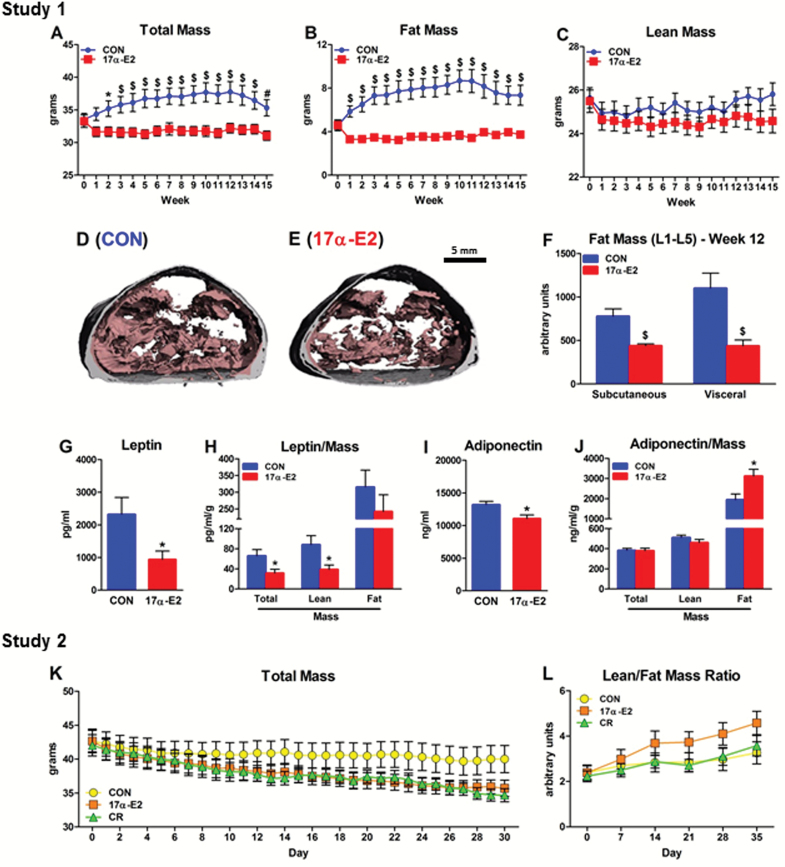
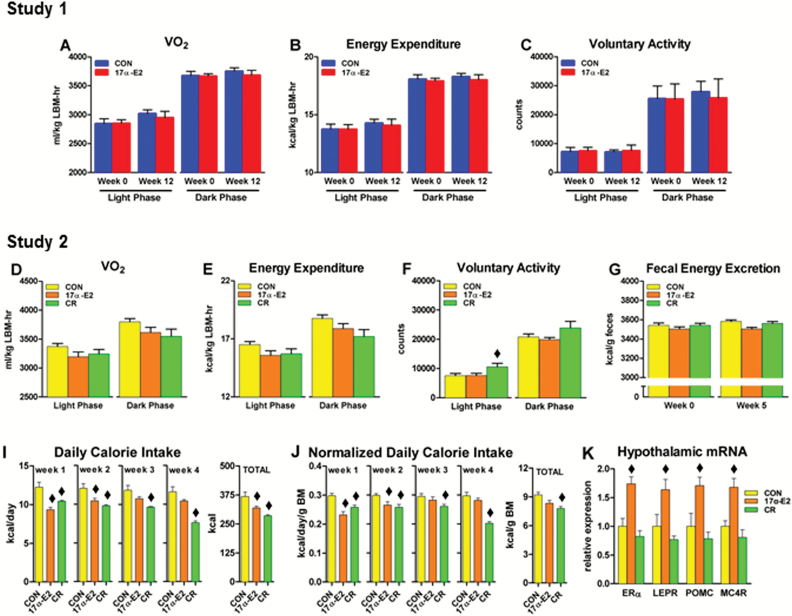
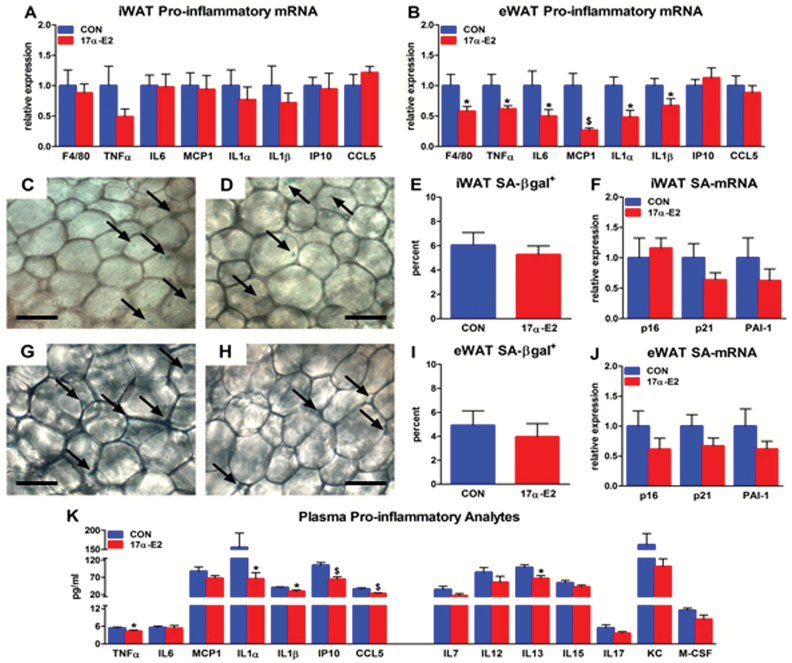
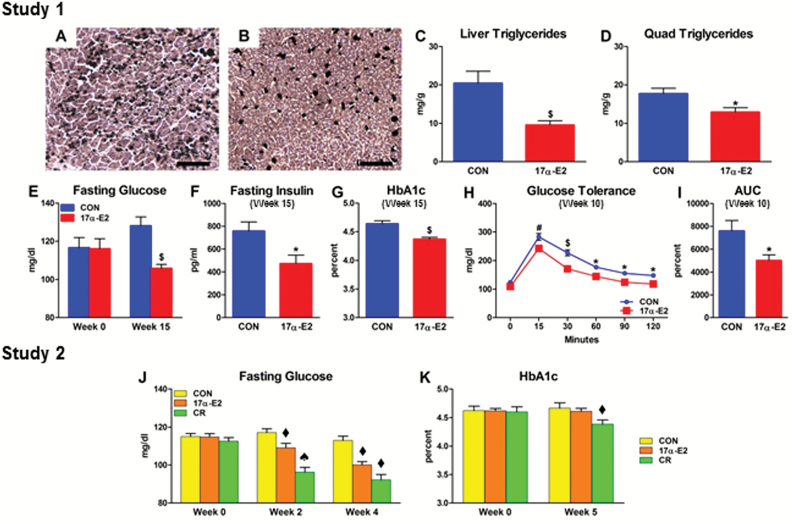
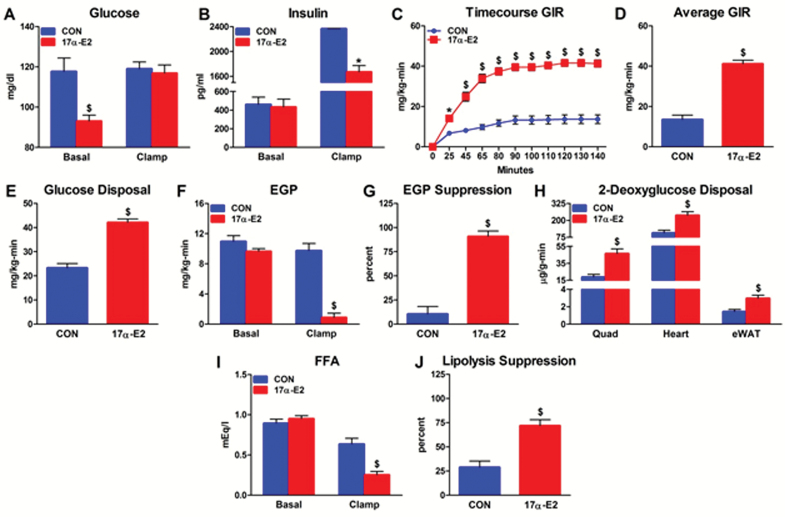
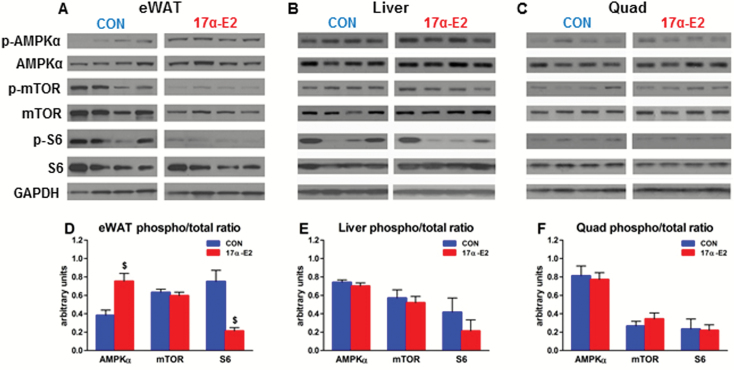
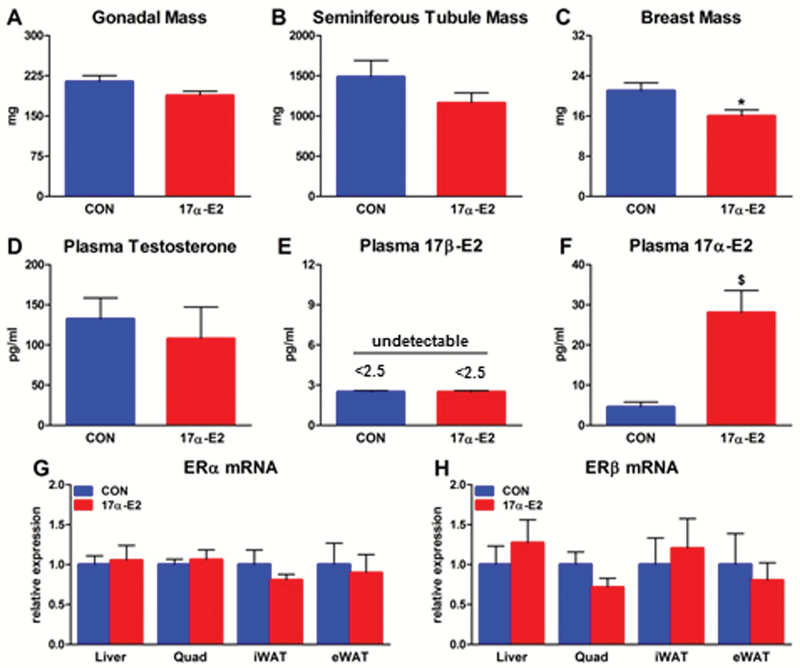
Aging is associated with visceral adiposity, metabolic disorders, and chronic low-grade inflammation. 17α-estradiol (17α-E2), a naturally occurring enantiomer of 17β-estradiol (17β-E2), extends life span in male mice through unresolved mechanisms. We tested whether 17α-E2 could alleviate age-related metabolic dysfunction and inflammation. 17α-E2 reduced body mass, visceral adiposity, and ectopic lipid deposition without decreasing lean mass. These declines were associated with reductions in energy intake due to the activation of hypothalamic anorexigenic pathways and direct effects of 17α-E2 on nutrient-sensing pathways in visceral adipose tissue. 17α-E2 did not alter energy expenditure or excretion. Fasting glucose, insulin, and glycosylated hemoglobin were also reduced by 17α-E2, and hyperinsulinemic-euglycemic clamps revealed improvements in peripheral glucose disposal and hepatic glucose production. Inflammatory mediators in visceral adipose tissue and the circulation were reduced by 17α-E2. 17α-E2 increased AMPKα and reduced mTOR complex 1 activity in visceral adipose tissue but not in liver or quadriceps muscle, which is in contrast to the generalized systemic effects of caloric restriction. These beneficial phenotypic changes occurred in the absence of feminization or cardiac dysfunction, two commonly observed deleterious effects of exogenous estrogen administration. Thus, 17α-E2 holds potential as a novel therapeutic for alleviating age-related metabolic dysfunction through tissue-specific effects.
Overview
The claims and statistics of this paper haven’t been checked yet.
Free: it reads the open-access text and checks the first 5 claims that cite a source we can check. Create a free account to check every claim.
Integrity signals
Registry
Cites
Statistics
Figures
Verification
Claims the paper makes
The claims and statistics of this paper haven’t been checked yet.
Free: it reads the open-access text and checks the first 5 claims that cite a source we can check. Create a free account to check every claim.
Claims other papers make about this one
Each is checked against this paper’s own text: does it say what the citing paper says it does?
The source backs part of the claim, not all of it — or backs it for a different population, condition or comparison.
In the citing paper
“The non-feminizing estrogen, 17α-estradiol, declines with aging in females and males and 17α-estradiol treatment extends healthspan and alleviates age-related metabolic dysfunction and inflammation in mice142.”
From Cellular senescence and senolytics: the path to the clinic (2022) · cites this paper as [142]
Experimental — accuracy not yet measuredThe source backs part of the claim, not all of it — or backs it for a different population, condition or comparison.
In the citing paper
“First, interventions known to increase health span such as dietary restriction41, exercise42, rapamycin43,44 and 17β-oestradiol45 can reduce the frequency of cells with TAFs.”
From Telomere dysfunction in ageing and age-related diseases (2022) · cites this paper as [45]
Experimental — accuracy not yet measuredThe cited source says what the claim attributes to it.
In the citing paper
“reduces age‐related metabolic dysfunction and inflammatory symptoms. 12 , 13”
From Three Tiers to biological escape velocity: The quest to outwit aging (2022) · cites this paper as [13]
Self-check
Percentages, sums and reported differences re-computed from the paper’s own numbers.
The self-check needs the paper’s full text.
Citations
Cites
Analysis of Relative Gene Expression Data Using Real-Time Quantitative PCR and the 2−ΔΔCT Method
Livak, K. J., & Schmittgen, T. D. (2001) · Methods · doi:10.1006/meth.2001.1262 · Cited by 180,860 · cited 1×
“Target gene expression was expressed as 2−ΔΔCT by the comparative CT method (35) and normalized to the expression of TATA-binding protein.”
MethodThe senescence-associated secretory phenotype: the dark side of tumor suppression
Coppé, J.-P., Desprez, P.-Y., Krtolica, A., & Campisi, J. (2010) · Annual Review of Pathology: Mechanisms of Disease · doi:10.1146/annurev-pathol-121808-102144 · Cited by 5,206 · cited 2×
“Accumulation of senescent cells is believed to contribute to age-related chronic inflammation due to the proinflammatory senescence-associated secretory phenotype (57,80).”
BackgroundAdipokines in inflammation and metabolic disease
Ouchi, N., Parker, J. L., Lugus, J. J., & Walsh, K. (2011) · Nature Reviews Immunology · doi:10.1038/nri2921 · Cited by 4,625 · cited 2×
“The reduction in leptin was anticipated because it serves as a surrogate marker of whole-body adiposity (49), which was confirmed by normalizing leptin to total adiposity (Figure 1H).”
BackgroundChronic Inflammation (Inflammaging) and Its Potential Contribution to Age-Associated Diseases
Franceschi, C., & Campisi, J. (2014) · The Journals of Gerontology Series A: Biological Sciences and Medical Sciences · doi:10.1093/gerona/glu057 · Cited by 3,891 · cited 1×
“Accumulation of senescent cells is believed to contribute to age-related chronic inflammation due to the proinflammatory senescence-associated secretory phenotype (57,80).”
BackgroundClearance of p16Ink4a-positive senescent cells delays ageing-associated disorders
Baker, D. J., Wijshake, T., Tchkonia, T., LeBrasseur, N. K., Childs, B. G., van de Sluis, B., Kirkland, J. L., & van Deursen, J. M. (2011) · Nature · doi:10.1038/nature10600 · Cited by 3,670 · cited 3×
“Reports suggest that accumulation of senescent cells within WAT may contribute to this pro-inflammatory phenotype (37,54,55).”
BackgroundMethodSelf-citationAgeing populations: the challenges ahead
Christensen, K., Doblhammer, G., Rau, R., & Vaupel, J. W. (2009) · The Lancet · doi:10.1016/s0140-6736(09)61460-4 · Cited by 3,011 · cited 1×
“Human life expectancy has increased dramatically in developed countries in the past several decades, and no deceleration of this trend appears imminent (1).”
BackgroundThe Achilles' heel of senescent cells: from transcriptome to senolytic drugs
Zhu, Y., Tchkonia, T., Pirtskhalava, T., Gower, A. C., Ding, H., Giorgadze, N., Palmer, A. K., Ikeno, Y., Hubbard, G. B., Lenburg, M., et al. (2015) · Aging Cell · doi:10.1111/acel.12344 · Cited by 2,584 · cited 2×
“Reports suggest that accumulation of senescent cells within WAT may contribute to this pro-inflammatory phenotype (37,54,55).”
BackgroundSelf-citationLeptin activates anorexigenic POMC neurons through a neural network in the arcuate nucleus
Cowley, M. A., Smart, J. L., Rubinstein, M., Cerdán, M. G., Diano, S., Horvath, T. L., Cone, R. D., & Low, M. J. (2001) · Nature · doi:10.1038/35078085 · Cited by 2,356 · cited 2×
“Leptin activation of POMC expressing neurons in response to a meal promotes the release of α-melanocyte-stimulating hormone (αMSH) (72).”
BackgroundMitochondrial dysfunction in the elderly: possible role in insulin resistance
Petersen, K. F., Befroy, D., Dufour, S., Dziura, J., Ariyan, C., Rothman, D. L., DiPietro, L., Cline, G. W., & Shulman, G. I. (2003) · Science · doi:10.1126/science.1082889 · Cited by 2,107
Self-citationmTOR is a key modulator of ageing and age-related disease
Johnson, S. C., Rabinovitch, P. S., & Kaeberlein, M. (2013) · Nature · doi:10.1038/nature11861 · Cited by 1,676 · cited 3×
“Increased AMPKα and reduced mTOR activity blunt pro-inflammatory pathways by regulating nuclear factor kappa B (NFκB) activity (4,5).”
Background
Cited by
Cellular senescence and senolytics: the path to the clinic
Chaib, S., Tchkonia, T., & Kirkland, J. L. (2022) · Nature Medicine · doi:10.1038/s41591-022-01923-y · Cited by 1,134
Self-citationCellular senescence: a translational perspective
Kirkland, J. L., & Tchkonia, T. (2017) · EBioMedicine · doi:10.1016/j.ebiom.2017.04.013 · Cited by 1,013
“…but does not appear to profoundly affect characteristics of senescent cells, shares effects with those due to senescent cell clearance, including decreased adipose tissue inflammation and enhanced insulin responsiveness (Stout et al., 2016; Strong et al., 2016; Xu et al., 2015a; Xu et al., 2015b).”
BackgroundSelf-citationZhu, Y., Doornebal, E. J., Pirtskhalava, T., Giorgadze, N., Wentworth, M., Fuhrmann-Stroissnigg, H., Niedernhofer, L. J., Robbins, P. D., Tchkonia, T., & Kirkland, J. L. (2017) · Aging · doi:10.18632/aging.101202 · Cited by 757
Self-citationTelomere dysfunction in ageing and age-related diseases
Rossiello, F., Jurk, D., Passos, J. F., & d’Adda di Fagagna, F. (2022) · Nature Cell Biology · doi:10.1038/s41556-022-00842-x · Cited by 754
Self-citationThe quest to slow ageing through drug discovery
Partridge, L., Fuentealba, M., & Kennedy, B. K. (2020) · Nature Reviews Drug Discovery · doi:10.1038/s41573-020-0067-7 · Cited by 468
Metadata
- Authors
- Stout, M. B., Steyn, F. J., Jurczak, M. J., Camporez, J.-P. G., Zhu, Y., Hawse, J. R., Jurk, D., Palmer, A. K., Xu, M., Pirtskhalava, T., Evans, G. L., de Souza Santos, R., Frank, A. P., White, T. A., Monroe, D. G., Singh, R. J., Casaclang-Verzosa, G., Miller, J. D., Clegg, D. J., LeBrasseur, N. K., von Zglinicki, T., Shulman, G. I., Tchkonia, T., & Kirkland, J. L.
- Affiliations
- Mayo Clinic (US)
- The University of Queensland (AU)
- University of Pittsburgh (US)
- Newcastle University (GB)
- Cedars-Sinai Medical Center (US)
- Howard Hughes Medical Institute (US)
- Corresponding author
- Kirkland, James L.
- ORCID
- Venue
- The Journals of Gerontology Series A: Biological Sciences and Medical Sciences
- Publisher
- Oxford University Press (OUP)
- Published
- 2016-01-24
- Volume
- 72
- Issue
- 1
- Pages
- 3-15
- ISSN
- 1079-5006 (ISSN-L)
- 1758-535X
- PMC
- PMC5155656
- OpenAlex
- W2301706102
- Cited by
- 119
- References
- 91
- Citations by year
- 2026: 4 · 2025: 12 · 2024: 17 · 2023: 10 · 2022: 18 · 2021: 8 · 2020: 10 · 2019: 13 · 2018: 6 · 2017: 11 · 2016: 9
- FWCI
- 10.47
- Type
- journal article
- Language
- en
- Open access
- hybrid
- doi.org
- Licence
- cc-by-nc
- Locations
- The Journals of Gerontology Series A (publishedVersion, cc-by-nc)
- PubMed Central (publishedVersion, cc-by-nc)
- PubMed (publishedVersion)
- HighWire Press Open Archive (submittedVersion)
- Newcastle University ePrints (Newcastle Univesity) (cc-by-nc)
- Funders
- Yale University
- Fundação de Amparo à Pesquisa do Estado de São Paulo (2015/05801-7, 2015/)
- National Institutes of Health (5p60dk079626-05, DK079626, DK059635, AG041122, DK-45735, DK050456, UL1TR001863)
- Biotechnology and Biological Sciences Research Council (BB/I020748/1)
- National Institute on Aging (F30AG046061, P01AG041122, K99AG051661, R00AG051661, R37AG013925)
- National Heart, Lung, and Blood Institute (R01HL111121)
- National Institute of Diabetes and Digestive and Kidney Diseases (K01DK099402, P30DK050456, P60-DK-079626, R01DK040936, U24DK059635, P30DK056336, P30DK079626, P30DK045735)
- National Center for Advancing Translational Sciences
- Topics
- Health Sciences › Medicine › Physiology (medical) › Adipose Tissue and Metabolism
- Health Sciences › Medicine › Endocrinology, Diabetes and Metabolism › Hormonal and reproductive studies
- Health Sciences › Medicine › Endocrinology, Diabetes and Metabolism › Adipokines, Inflammation, and Metabolic Diseases
- Keywords
- 17α-estradiol, aging, visceral fat, metabolic dysfunction, low-grade inflammation, energy intake, visceral adipose tissue, ectopic fat deposition, glucose metabolism, insulin sensitivity, AMPK, mTOR, caloric restriction, male mice
- MeSH terms
- Aging, Animals, Estradiol, Estrogens, Feminization, Male, Mice, Inbred C57BL, Body Mass Index, Intra-Abdominal Fat, Adiposity, Lipid Metabolism, Mice
About these checks
Registry, retraction, Cites and statistics results are computed, not judged, with one exception: a printed reference that no index lists is read once by a model before it counts as a citation error. Claims are extracted by a model and kept only when their quote appears verbatim in the text; each cited source is then checked, with a model’s help, for whether it says what the claim relies on. Those verdicts can be wrong — read the claim’s quote and the cited source before relying on one.
Statistics and arithmetic are recomputed, not judged.
Confidence bands are shown only for fields calibrated on our annotated test set. None is calibrated yet, so no band is shown.
What counts as a claim ›How we measure confidence ›How we check this ›
Are you an author, or do you see a problem with this page? Request a review
Data sources
Bibliographic data: Semantic Scholar, OpenAlex, Crossref.
Contains information from the Semantic Scholar Academic Graph Datasets, made available under the ODC Attribution License (ODC-BY 1.0).
Semantic Scholar’s data is described in: Kinney, R., et al. (2023). The Semantic Scholar Open Data Platform. arXiv:2301.10140.
