

The DOI matches its Crossref record; 33 of the 34 references it cites were found in a registry or an index.
Inherited and de novo SHANK2 variants associated with autism spectrum disorder impair neuronal morphogenesis and physiology
Open accessAbstract
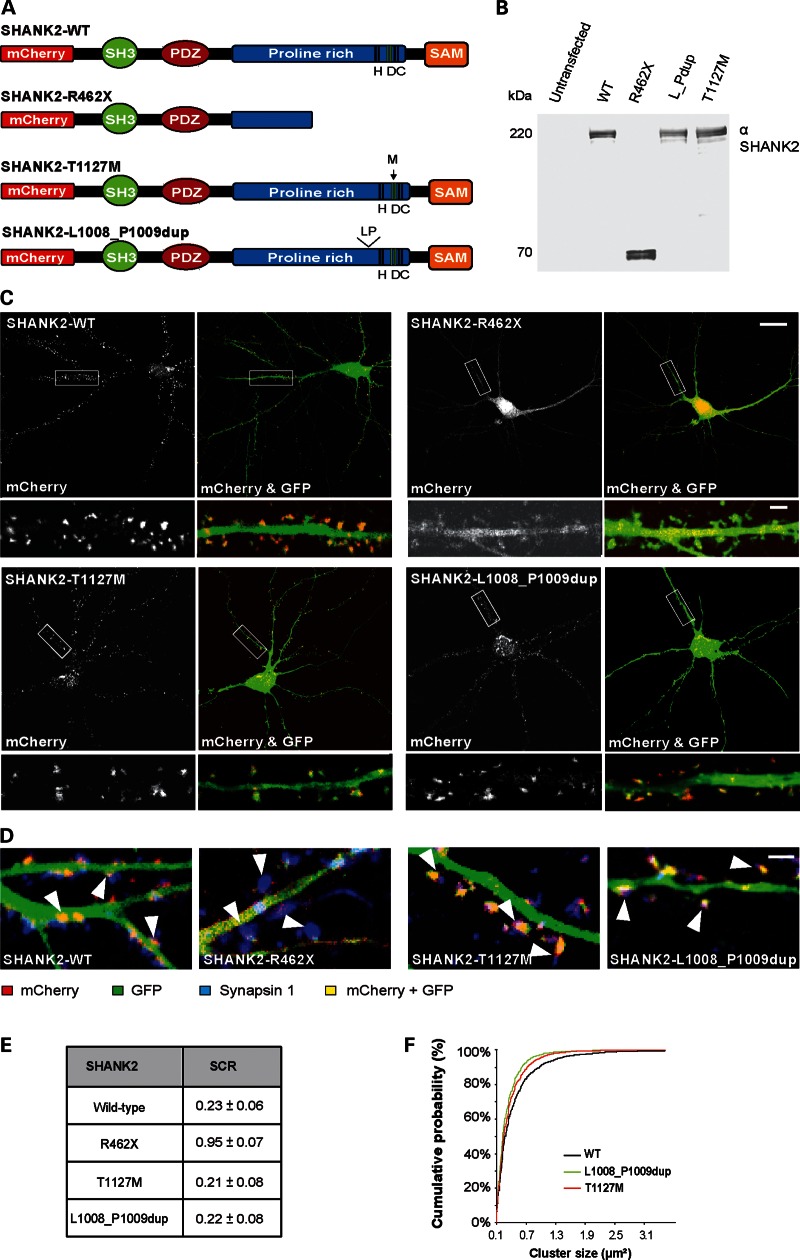
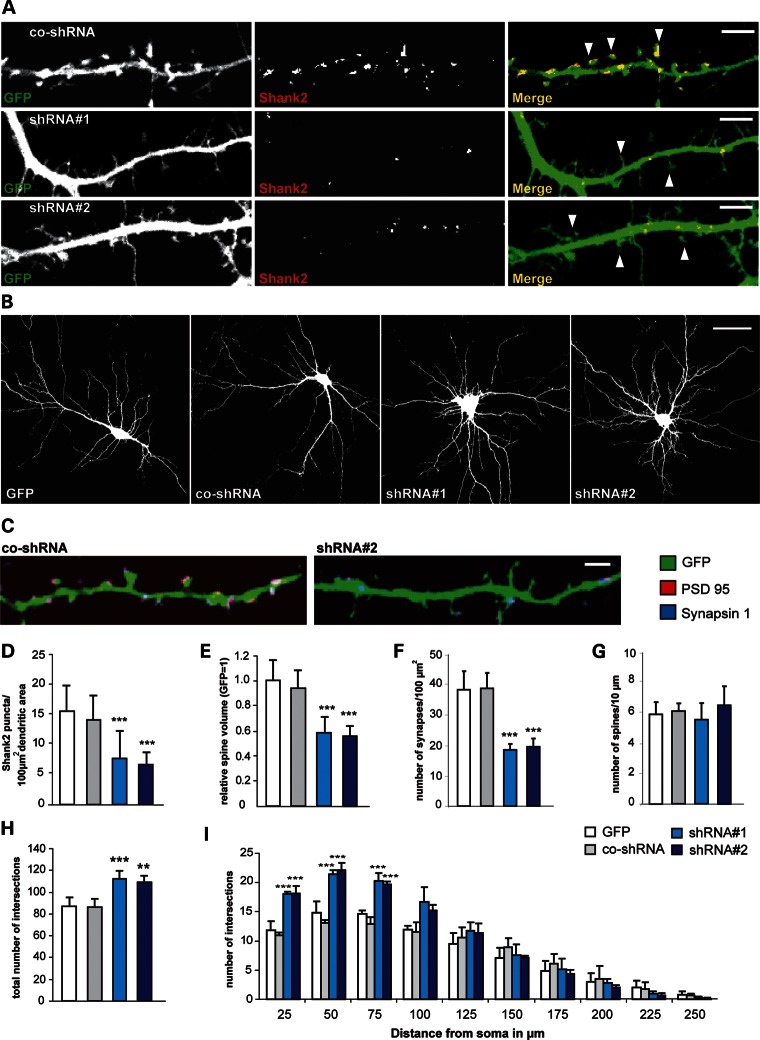
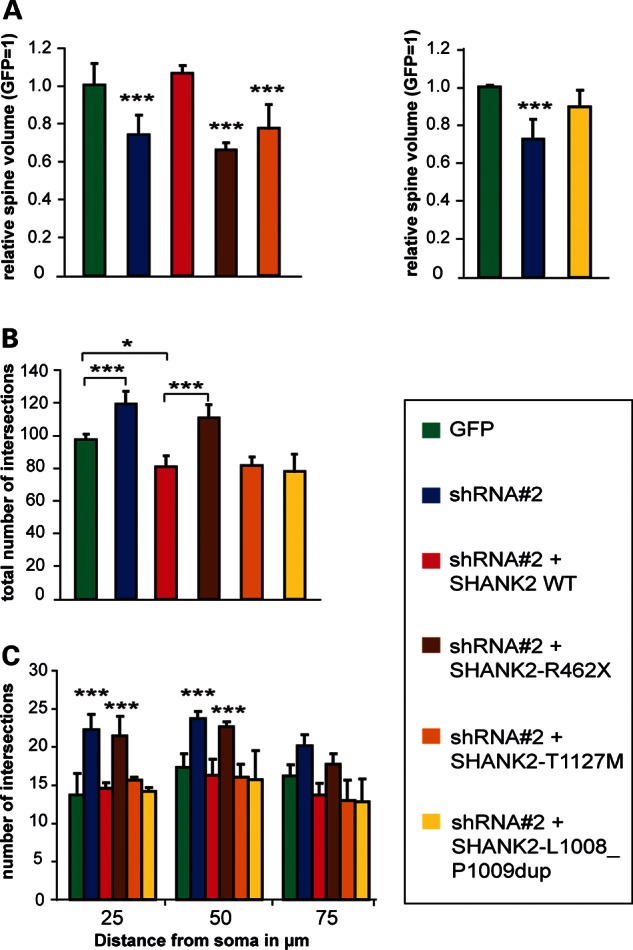
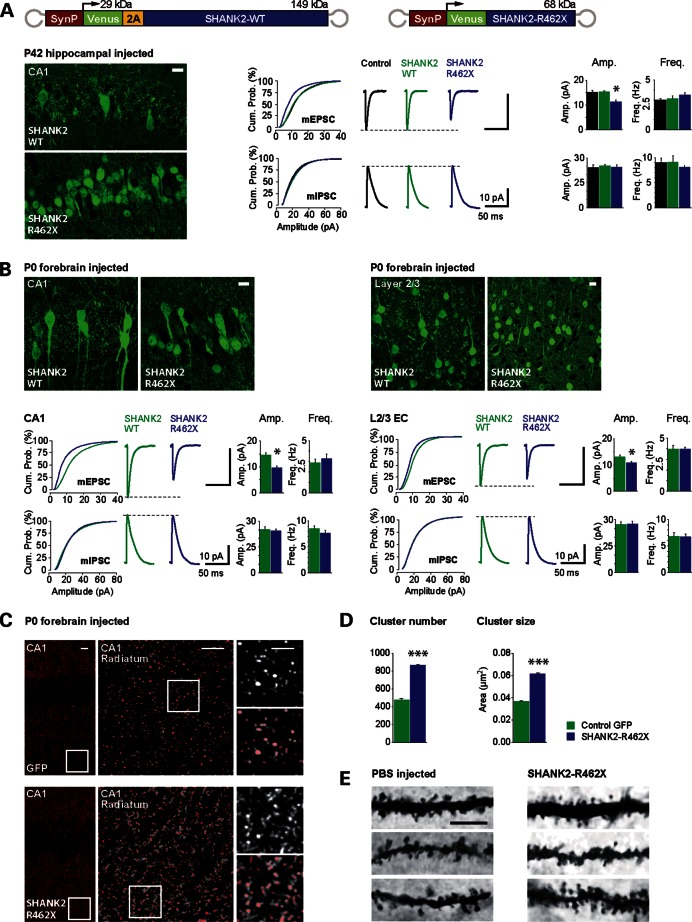
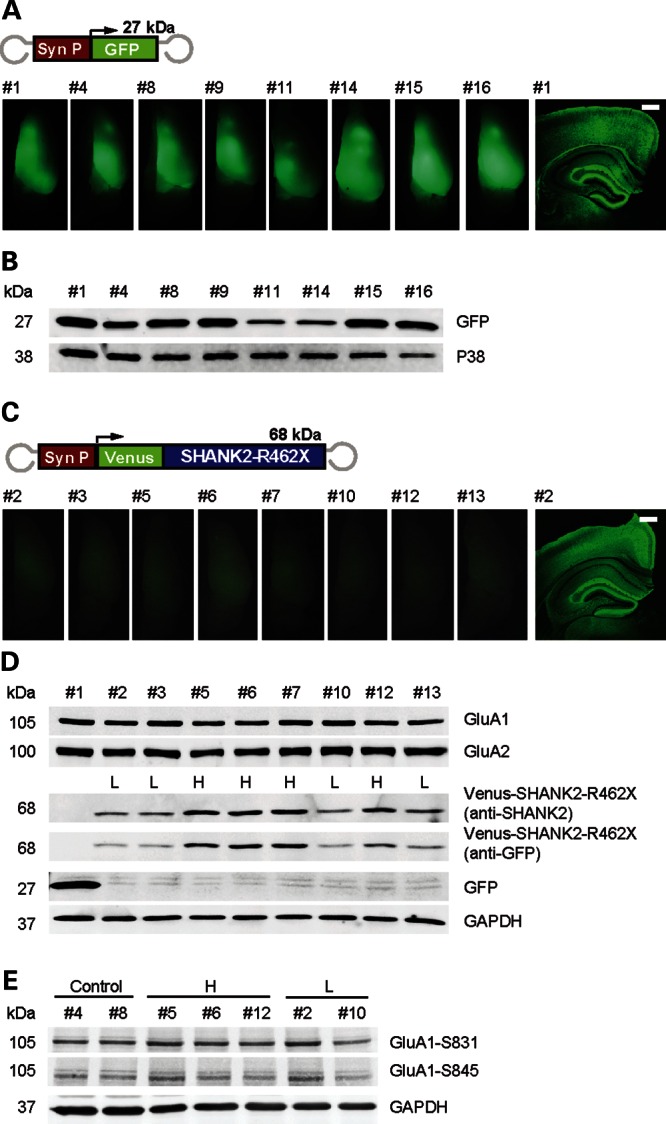
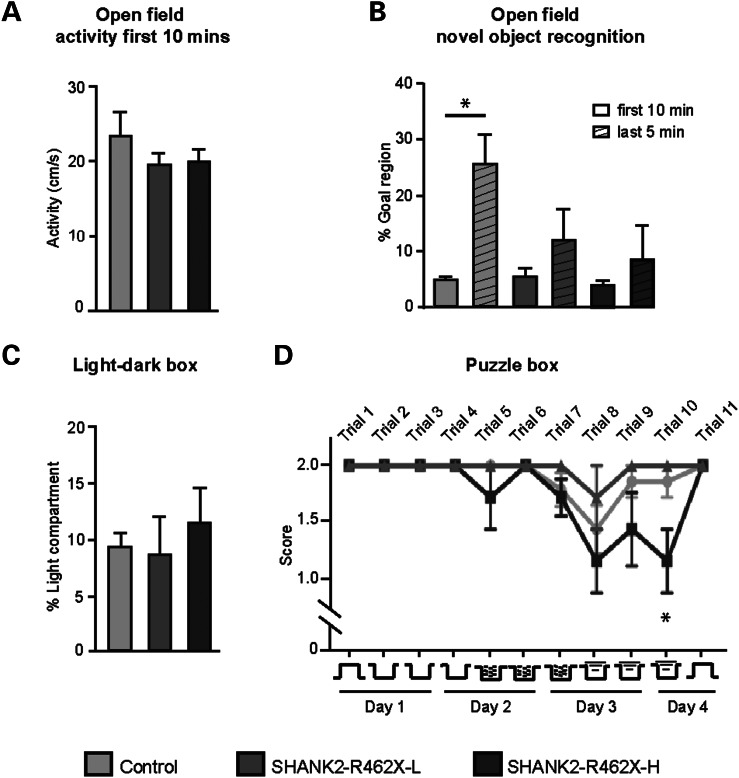
Mutations in the postsynaptic scaffolding gene SHANK2 have recently been identified in individuals with autism spectrum disorder (ASD) and intellectual disability. However, the cellular and physiological consequences of these mutations in neurons remain unknown. We have analyzed the functional impact caused by two inherited and one de novo SHANK2 mutations from ASD individuals (L1008_P1009dup, T1127M, R462X). Although all three variants affect spine volume and have smaller SHANK2 cluster sizes, T1127M additionally fails to rescue spine volume in Shank2 knock-down neurons. R462X is not able to rescue spine volume and dendritic branching and lacks postsynaptic clustering, indicating the most severe dysfunction. To demonstrate that R462X when expressed in mouse can be linked to physiological effects, we analyzed synaptic transmission and behavior. Principal neurons of mice expressing rAAV-transduced SHANK2-R462X present a specific, long-lasting reduction in miniature postsynaptic AMPA receptor currents. This dominant negative effect translates into dose-dependent altered cognitive behavior of SHANK2-R462X-expressing mice, with an impact on the penetrance of ASD.
Overview
The claims and statistics of this paper haven’t been checked yet.
Run the check — free, no account needed. It reads the open-access text and checks the sources it cites.
Integrity signals
Registry
Cites
Statistics
Figures
Verification
Claims the paper makes
The claims and statistics of this paper haven’t been checked yet.
Run the check — free, no account needed. It reads the open-access text and checks the sources it cites.
Claims other papers make about this one
Each is checked against this paper’s own text: does it say what the citing paper says it does?
In the citing paper
“Recent human genetic studies indicate that SHANK family genes (SHANK1, SHANK2, and SHANK3) are causative genes for idiopathic autism spectrum disorders (ASD).”
From Modeling Autism by SHANK Gene Mutations in Mice (2013) · cites this paper as Berkel et al., 2012
In the citing paper
“SHANK/ProSAP family proteins (SHANK1, SHANK2, SHANK3) have emerged as promising candidates for modeling ASD in mice due to strong genetic evidence showing molecular defects of SHANK in patients with ASD (Berkel et al., 2010; Berkel et al., 2012; Durand et al., 2007; Gauthier et al., 2010; Marshall et al., 2008; Pinto et al., 2010; Sato et al., 2012).”
From Modeling Autism by SHANK Gene Mutations in Mice (2013) · cites this paper as Berkel et al., 2012
In the citing paper
“Recently, mutations in SHANK1 and SHANK2 have also been associated with ASD (Berkel et al., 2010; Berkel et al., 2012; Sato et al., 2012), supporting a general function for this gene family in common molecular pathways associated with ASD.”
From Modeling Autism by SHANK Gene Mutations in Mice (2013) · cites this paper as Berkel et al., 2012
Self-check
Percentages, sums and reported differences re-computed from the paper’s own numbers.
The self-check needs the paper’s full text.
Citations
Cites
Functional impact of global rare copy number variation in autism spectrum disorders
Pinto, D., Pagnamenta, A. T., Klei, L., Anney, R., Merico, D., Regan, R., Conroy, J., Magalhaes, T. R., Correia, C., Abrahams, B. S., et al. (2010) · Nature · doi:10.1038/nature09146 · Cited by 2,013 · cited 1×
“In previous studies, mutations and copy number variations in the scaffolding gene SHANK2 have been reported in individuals with ASD and ID (6,7).”
Neuroligins and neurexins link synaptic function to cognitive disease
Südhof, T. C. (2008) · Nature · doi:10.1038/nature07456 · Cited by 1,849
Durand, C. M., Betancur, C., Boeckers, T. M., Bockmann, J., Chaste, P., Fauchereau, F., Nygren, G., Rastam, M., Gillberg, I. C., Anckarsäter, H., et al. (2007) · Nature Genetics · doi:10.1038/ng1933 · Cited by 1,602
Shank3 mutant mice display autistic-like behaviours and striatal dysfunction
Peça, J., Feliciano, C., Ting, J. T., Wang, W., Wells, M. F., Venkatraman, T. N., Lascola, C. D., Fu, Z., & Feng, G. (2011) · Nature · doi:10.1038/nature09965 · Cited by 1,570
Dendritic spine pathology in neuropsychiatric disorders
Penzes, P., Cahill, M. E., Jones, K. A., VanLeeuwen, J.-E., & Woolfrey, K. M. (2011) · Nature Neuroscience · doi:10.1038/nn.2741 · Cited by 1,523
Naisbitt, S., Kim, E., Tu, J. C., Xiao, B., Sala, C., Valtschanoff, J., Weinberg, R. J., Worley, P. F., & Sheng, M. (1999) · Neuron · doi:10.1016/s0896-6273(00)80809-0 · Cited by 1,009
T-maze alternation in the rodent
Deacon, R. M. J., & Rawlins, J. N. P. (2006) · Nature Protocols · doi:10.1038/nprot.2006.2 · Cited by 903
Increased dendritic spine densities on cortical projection neurons in autism spectrum disorders
Hutsler, J. J., & Zhang, H. (2010) · Brain Research · doi:10.1016/j.brainres.2009.09.120 · Cited by 765
The Autistic Neuron: Troubled Translation?
Kelleher, R. J., & Bear, M. F. (2008) · Cell · doi:10.1016/j.cell.2008.10.017 · Cited by 598
The Shank family of scaffold proteins
Sheng, M., & Kim, E. (2000) · Journal of Cell Science · doi:10.1242/jcs.113.11.1851 · Cited by 578
Mutations in the SHANK2 synaptic scaffolding gene in autism spectrum disorder and mental retardation
Berkel, S., Marshall, C. R., Weiss, B., Howe, J., Roeth, R., Moog, U., Endris, V., Roberts, W., Szatmari, P., Pinto, D., et al. (2010) · Nature Genetics · doi:10.1038/ng.589 · Cited by 563
Self-citationGeschwind, D. H. (2009) · Annual Review of Medicine · doi:10.1146/annurev.med.60.053107.121225 · Cited by 512
Siegel, G., Obernosterer, G., Fiore, R., Oehmen, M., Bicker, S., Christensen, M., Khudayberdiev, S., Leuschner, P. F., Busch, C. J. L., Kane, C., et al. (2009) · Nature Cell Biology · doi:10.1038/ncb1876 · Cited by 500
Self-citationFailure of neuronal homeostasis results in common neuropsychiatric phenotypes
Ramocki, M. B., & Zoghbi, H. Y. (2008) · Nature · doi:10.1038/nature07457 · Cited by 399
Gauthier, J., Champagne, N., Lafrenière, R. G., Xiong, L., Spiegelman, D., Brustein, E., Lapointe, M., Peng, H., Côté, M., Noreau, A., et al. (2010) · Proceedings of the National Academy of Sciences · doi:10.1073/pnas.0906232107 · Cited by 369
Smith, R. H., Levy, J. R., & Kotin, R. M. (2009) · Molecular Therapy · doi:10.1038/mt.2009.128 · Cited by 260
Cline, H. T., & Haas, K. Z. (2008) · The Journal of Physiology · doi:10.1113/jphysiol.2007.150029 · Cited by 254
Concerted action of zinc and ProSAP/Shank in synaptogenesis and synapse maturation
Grabrucker, A. M., Knight, M. J., Proepper, C., Bockmann, J., Joubert, M., Rowan, M., Nienhaus, G. U., Garner, C. C., Bowie, J. U., Kreutz, M. R., et al. (2011) · The EMBO Journal · doi:10.1038/emboj.2010.336 · Cited by 228
The State of Synapses in Fragile X Syndrome
Pfeiffer, B. E., & Huber, K. M. (2009) · The Neuroscientist · doi:10.1177/1073858409333075 · Cited by 216
Tang, W., Ehrlich, I., Wolff, S. B. E., Michalski, A., Wölfl, S., Hasan, M. T., Lüthi, A., & Sprengel, R. (2009) · Journal of Neuroscience · doi:10.1523/jneurosci.0359-09.2009 · Cited by 179
Self-citationThe genetics of neurodevelopmental disease
Mitchell, K. J. (2011) · Current Opinion in Neurobiology · doi:10.1016/j.conb.2010.08.009 · Cited by 164
Abdallah, N. M. ‐. B., Fuß, J., Trusel, M., Galsworthy, M. J., Bobsin, K., Colacicco, G., Deacon, R. M. J., Riva, M. A., Kellendonk, C., Sprengel, R., et al. (2010) · Experimental Neurology · doi:10.1016/j.expneurol.2010.09.008 · Cited by 154
Self-citationBoeckers, T. M., Liedtke, T., Spilker, C., Dresbach, T., Bockmann, J., Kreutz, M. R., & Gundelfinger, E. D. (2005) · Journal of Neurochemistry · doi:10.1111/j.1471-4159.2004.02910.x · Cited by 113
Do common variants play a role in risk for autism? Evidence and theoretical musings
Devlin, B., Melhem, N., & Roeder, K. (2011) · Brain Research · doi:10.1016/j.brainres.2010.11.026 · Cited by 105
Bannerman, D. M., Deacon, R. M. J., Brady, S., Bruce, A., Sprengel, R., SEEBURG, P. H., & Rawlins, J. N. P. (2004) · Behavioral Neuroscience · doi:10.1037/0735-7044.118.3.643 · Cited by 102
Self-citationArikkath, J., Peng, I., Ng, Y., Israely, I., Liu, X., Ullian, E. M., & Reichardt, L. F. (2009) · Journal of Neuroscience · doi:10.1523/jneurosci.0835-09.2009 · Cited by 96
Current Opinion in Neurobiology 2011
Arber, S., & Davis, G. (2011) · Current Opinion in Neurobiology · doi:10.1016/j.conb.2010.12.001 · Cited by 91
Haeckel, A., Ahuja, R., Gundelfinger, E. D., Qualmann, B., & Kessels, M. M. (2008) · The Journal of Neuroscience · doi:10.1523/jneurosci.0336-08.2008 · Cited by 85
Okamoto, P. M., Gamby, C., Wells, D. G., Fallon, J. R., & Vallee, R. B. (2001) · Journal of Biological Chemistry · doi:10.1074/jbc.m104927200 · Cited by 81
Characterization of an ankyrin repeat-containing Shank2 isoform (Shank2E) in liver epithelial cells
McWILLIAMS, R. R., GIDEY, E., FOUASSIER, L., WEED, S. A., & DOCTOR, R. B. (2004) · Biochemical Journal · doi:10.1042/bj20031577 · Cited by 63
Pilpel, N., Landeck, N., Klugmann, M., Seeburg, P. H., & Schwarz, M. K. (2009) · Journal of Neuroscience Methods · doi:10.1016/j.jneumeth.2009.05.020 · Cited by 61
Romo-Parra, H., Treviño, M., Heinemann, U., & Gutiérrez, R. (2008) · Journal of Neurophysiology · doi:10.1152/jn.01074.2007 · Cited by 52
Self-citationWebb, S. (2010) · Nature Biotechnology · doi:10.1038/nbt0810-772 · Cited by 18
Cited by
Sorted by citations
Genetics of autism spectrum disorders
Geschwind, D. H. (2011) · Trends in Cognitive Sciences · doi:10.1016/j.tics.2011.07.003 · Cited by 696
Autistic-like social behaviour in Shank2-mutant mice improved by restoring NMDA receptor function
Won, H., Lee, H.-R., Gee, H. Y., Mah, W., Kim, J.-I., Lee, J., Ha, S., Chung, C., Jung, E. S., Cho, Y. S., et al. (2012) · Nature · doi:10.1038/nature11208 · Cited by 695
Leblond, C. S., Nava, C., Polge, A., Gauthier, J., Huguet, G., Lumbroso, S., Giuliano, F., Stordeur, C., Depienne, C., Mouzat, K., et al. (2014) · PLoS Genetics · doi:10.1371/journal.pgen.1004580 · Cited by 630
“Previous functional studies have shown that inherited variants are associated with a statistically significant reduction in the density of synapses, although not as severe as the reduction caused by the de novo or truncating mutations [6,18,42–44].”
BackgroundSelf-citationAutistic-like behaviours and hyperactivity in mice lacking ProSAP1/Shank2
Schmeisser, M. J., Ey, E., Wegener, S., Bockmann, J., Stempel, A. V., Kuebler, A., Janssen, A.-L., Udvardi, P. T., Shiban, E., Spilker, C., et al. (2012) · Nature · doi:10.1038/nature11015 · Cited by 638
Genetic architecture in autism spectrum disorder
Devlin, B., & Scherer, S. W. (2012) · Current Opinion in Genetics & Development · doi:10.1016/j.gde.2012.03.002 · Cited by 545
Self-citation
Metadata
- Authors
- Berkel, S., Tang, W., Treviño, M., Vogt, M., Obenhaus, H. A., Gass, P., Scherer, S. W., Sprengel, R., Schratt, G., & Rappold, G. A.
- Affiliations
- Heidelberg University (DE)
- Max Planck Institute for Medical Research (DE)
- University of Toronto (CA)
- Philipps University of Marburg (DE)
- Corresponding author
- Rappold, Gudrun Anna
- ORCID
- Venue
- Human Molecular Genetics
- Publisher
- Oxford University Press (OUP)
- Published
- 2011-10-12
- Volume
- 21
- Issue
- 2
- Pages
- 344-357
- ISSN
- 0964-6906 (ISSN-L)
- 1460-2083
- PMC
- PMC3276277
- OpenAlex
- W2120195741
- Cited by
- 162
- References
- 34
- Citations by year
- 2026: 6 · 2025: 4 · 2024: 23 · 2023: 7 · 2022: 10 · 2021: 12 · 2020: 11 · 2019: 8 · 2018: 14 · 2017: 9 · 2016: 9 · 2015: 14 · 2014: 14 · 2013: 9 · 2012: 11
- FWCI
- 6.98
- Type
- journal article
- Language
- en
- Open access
- hybrid
- doi.org
- Licence
- cc-by-nc
- Locations
- Human Molecular Genetics (publishedVersion, cc-by-nc)
- PubMed Central (publishedVersion, cc-by-nc)
- PubMed (publishedVersion)
- Max Planck Digital Library (submittedVersion)
- MPG.PuRe (Max Planck Society) (submittedVersion)
- Funders
- GlaxoSmithKline
- Deutsche Forschungsgemeinschaft (EXC 81, SFB636.A4, SFB 636, SFB 488)
- Bundesministerium für Bildung und Forschung (01GS08168, EXC81)
- University of Toronto
- Hospital for Sick Children
- Canadian Institutes of Health Research
- Topics
- Life Sciences › Biochemistry, Genetics and Molecular Biology › Genetics › Genetics and Neurodevelopmental Disorders
- Life Sciences › Neuroscience › Cognitive Neuroscience › Autism Spectrum Disorder Research
- Life Sciences › Neuroscience › Cellular and Molecular Neuroscience › Neuroscience and Neuropharmacology Research
- Keywords
- Shank2, autism spectrum disorder, de novo mutations, postsynaptic scaffolding, dendritic spine morphology, synaptic transmission, intellectual disability, cognitive behavior, dominant negative effect, penetrance, neuronal morphogenesis
- MeSH terms
- Animals, Child, Child Development Disorders, Pervasive, Hippocampus, Humans, Morphogenesis, Mutation, Nerve Tissue Proteins, Neurons, Mice, Gene Knockdown Techniques
About these checks
Registry, retraction, Cites and statistics results are computed, not judged, with one exception: a printed reference that no index lists is read once by a model before it counts as a citation error. Claims are extracted by a model and kept only when their quote appears verbatim in the text; each cited source is then checked, with a model’s help, for whether it says what the claim relies on. Those verdicts can be wrong — read the claim’s quote and the cited source before relying on one.
Statistics and arithmetic are recomputed, not judged.
Confidence bands are shown only for fields calibrated on our annotated test set. None is calibrated yet, so no band is shown.
What counts as a claim ›How we measure confidence ›How we check this ›
Are you an author, or do you see a problem with this page? Request a review
