

Long-term cardiometabolic disease risk in women with PCOS: a systematic review and meta-analysis
Open accessThe DOI matches its Crossref record; 70 of the 71 references it cites were found in a registry or an index.
Abstract
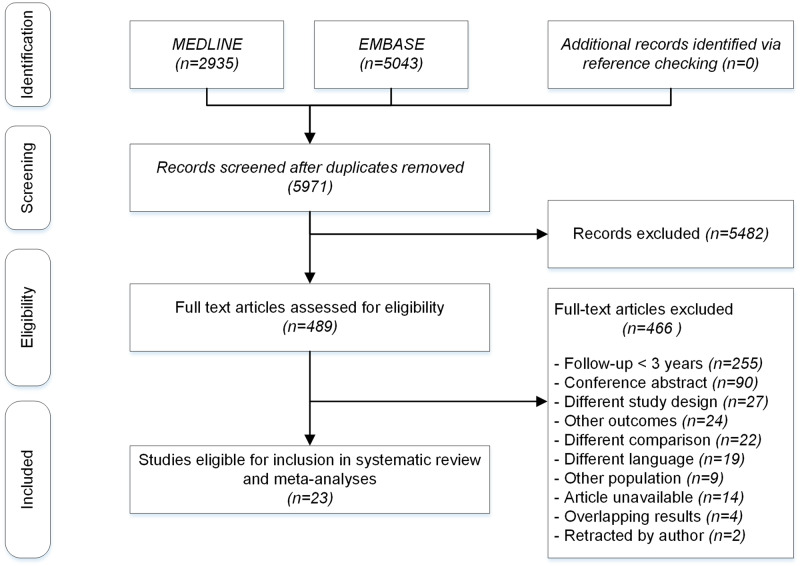
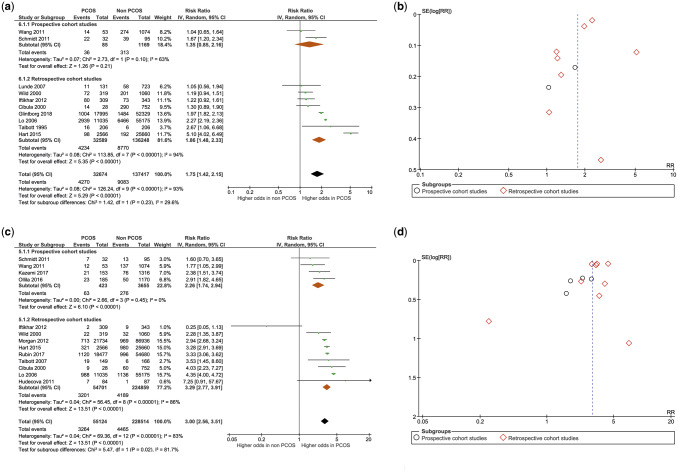
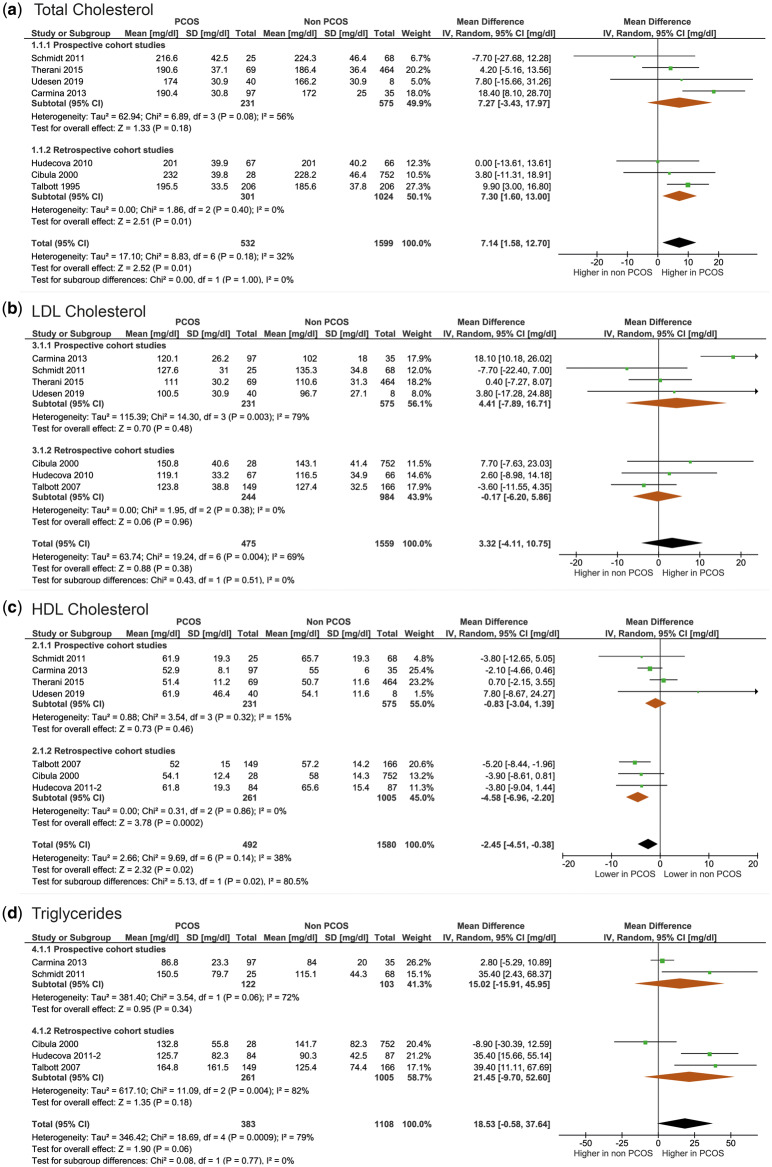
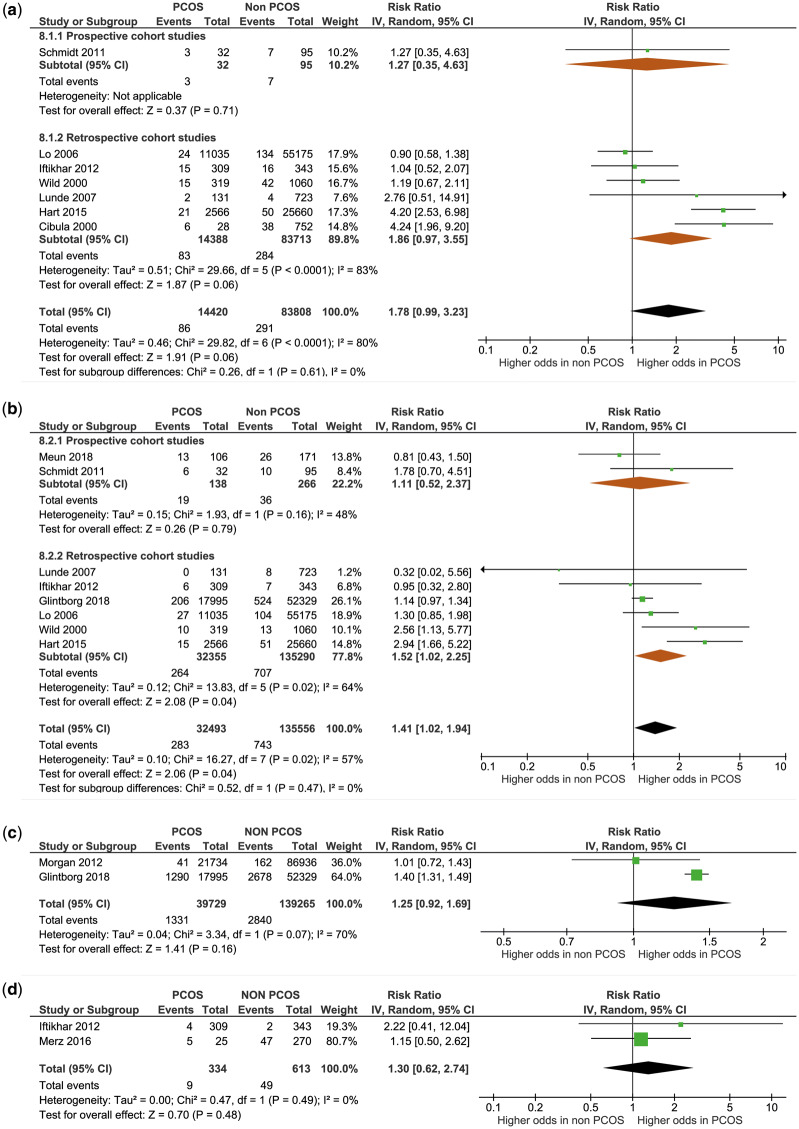
BACKGROUND: Polycystic ovary syndrome (PCOS) is associated with cardiometabolic disease, but recent systematic reviews and meta-analyses of longitudinal studies that quantify these associations are lacking. OBJECTIVE AND RATIONALE: Is PCOS a risk factor for cardiometabolic disease? SEARCH METHODS: We searched from inception to September 2019 in MEDLINE and EMBASE using controlled terms (e.g. MESH) and text words for PCOS and cardiometabolic outcomes, including cardiovascular disease (CVD), stroke, myocardial infarction, hypertension (HT), type 2 diabetes (T2D), metabolic syndrome and dyslipidaemia. Cohort studies and case–control studies comparing the prevalence of T2D, HT, fatal or non-fatal CVD and/or lipid concentrations of total cholesterol (TC), low-density lipoprotein cholesterol (LDL-C), high-density lipoprotein cholesterol (HDL-C) and triglycerides (TGs) between women with and without PCOS of ≥18 years of age were eligible for this systematic review and meta-analysis. Studies were eligible regardless of the degree to which they adjusted for confounders including obesity. Articles had to be written in English, German or Dutch. Intervention studies, animal studies, conference abstracts, studies with a follow-up duration less than 3 years and studies with less than 10 PCOS cases were excluded. Study selection, quality assessment (Newcastle–Ottawa Scale) and data extraction were performed by two independent researchers. OUTCOMES: Of the 5971 identified records, 23 cohort studies were included in the current systematic review. Women with PCOS had increased risks of HT (risk ratio (RR): 1.75, 95% CI 1.42 to 2.15), T2D (RR: 3.00, 95% CI 2.56 to 3.51), a higher serum concentration of TC (mean difference (MD): 7.14 95% CI 1.58 to 12.70 mg/dl), a lower serum concentration of HDL-C (MD: −2.45 95% CI −4.51 to −0.38 mg/dl) and increased risks of non-fatal cerebrovascular disease events (RR: 1.41, 95% CI 1.02 to 1.94) compared to women without PCOS. No differences were found for LDL-C (MD: 3.32 95% CI −4.11 to 10.75 mg/dl), TG (MD 18.53 95% CI −0.58 to 37.64 mg/dl) or coronary disease events (RR: 1.78, 95% CI 0.99 to 3.23). No meta-analyses could be performed for fatal CVD events due to the paucity of mortality data. WIDER IMPLICATIONS: Women with PCOS are at increased risk of cardiometabolic disease. This review quantifies this risk, which is important for clinicians to inform patients and to take into account in the cardiovascular risk assessment of women with PCOS. Future clinical trials are needed to assess the ability of cardiometabolic screening and management in women with PCOS to reduce future CVD morbidity.
Overview
The claims and statistics of this paper haven’t been checked yet.
Free: it reads the open-access text and checks the first 5 claims that cite a source we can check. Create a free account to check every claim.
Integrity signals
Registry
Cites
Statistics
Figures
Verification
Claims the paper makes
The claims and statistics of this paper haven’t been checked yet.
Free: it reads the open-access text and checks the first 5 claims that cite a source we can check. Create a free account to check every claim.
Claims other papers make about this one
Each is checked against this paper’s own text: does it say what the citing paper says it does?
The source backs part of the claim, not all of it — or backs it for a different population, condition or comparison.
In the citing paper
“PCOS is associated with increased co-morbidities including obesity, infertility, pregnancy complications, depression and anxiety, metabolic syndrome, diabetes, reproductive cancers and cardiovascular disease [3, 7, 8, 10–13].”
From Challenges in diagnosis and health care in polycystic ovary syndrome in Canada: a patient view to improve health care (2023) · cites this paper as [13]
Experimental — accuracy not yet measuredIn the citing paper
“Women with PCOS have a more unfavorable lipid profile than women without PCOS.62,63”
Self-check
Percentages, sums and reported differences re-computed from the paper’s own numbers.
The self-check needs the paper’s full text.
Citations
Cites
Preferred Reporting Items for Systematic Reviews and Meta-Analyses: the PRISMA statement
Moher, D., Liberati, A., Tetzlaff, J., Altman, D. G., & for the PRISMA Group (2009) · BMJ · doi:10.1136/bmj.b2535 · Cited by 83,823
Preferred reporting items for systematic reviews and meta-analyses: the PRISMA Statement.
(2009) · PubMed Central · Cited by 44,859
(2004) · Fertility and Sterility · doi:10.1016/j.fertnstert.2003.10.004 · Cited by 9,050
European Guidelines on cardiovascular disease prevention in clinical practice (version 2012)
Authors/Task Force Members:, Perk, J., De Backer, G., Gohlke, H., Graham, I., Reiner, Ž., Verschuren, M., Albus, C., Benlian, P., Boysen, G., et al. (2012) · European Heart Journal · doi:10.1093/eurheartj/ehs092 · Cited by 8,490
How should meta‐regression analyses be undertaken and interpreted?
Thompson, S. G., & Higgins, J. P. T. (2002) · Statistics in Medicine · doi:10.1002/sim.1187 · Cited by 3,026
Meschia, J. F., Bushnell, C., Boden-Albala, B., Braun, L. T., Bravata, D. M., Chaturvedi, S., Creager, M. A., Eckel, R. H., Elkind, M. S. V., Fornage, M., et al. (2014) · Stroke · doi:10.1161/str.0000000000000046 · Cited by 2,650
Men at risk: occupation and male infertility
Claman, P. (2004) · Fertility and Sterility · doi:10.1016/s0015-0282(03)01188-9 · Cited by 2,387
Azziz, R., Carmina, E., Dewailly, D., Diamanti-Kandarakis, E., Escobar-Morreale, H. F., Futterweit, W., Janssen, O. E., Legro, R. S., Norman, R. J., Taylor, A. E., et al. (2009) · Fertility and Sterility · doi:10.1016/j.fertnstert.2008.06.035 · Cited by 2,132 · cited 2×
“Sensitivity analyses including highquality studies and based on the diagnostic criteria for PCOS (NIH 1990 criteria (Zawadzki and Dunaif, 1992), AE-PCOS criteria (Azziz et al., 2009) or Rotterdam 2003 criteria (Rotterdam ESHRE/ASRMSponsored PCOS Consensus Workshop Group, 2004)) were performed if three or more studies…”
MethodTeede, H. J., Misso, M. L., Costello, M. F., Dokras, A., Laven, J., Moran, L., Piltonen, T., Norman, R. J., & the International PCOS Network (2018) · Clinical Endocrinology · doi:10.1111/cen.13795 · Cited by 1,823
Self-citationInsulin resistance and cardiovascular disease
Ginsberg, H. N. (2000) · Journal of Clinical Investigation · doi:10.1172/jci10762 · Cited by 1,358 · cited 1×
“Intrinsic insulin resistance, often present and linked to hyperandrogenism in women with PCOS, is also associated with cardiometabolic disease (Ginsberg, 2000; Baptiste et al., 2010; Stepto et al., 2013; Cassar et al., 2016).”
Background
Research works printed but not linked: 1
- Zawadzki J, Dunaif A. Diagnostic Criteria for Polycystic Ovary Syndrome: Towards a Rational Approach. Boston: Blackwell Scientific Publications, 1992.
Cited by
Items 101–200 of 450
The Current and Emerging Role of Statins in the Treatment of PCOS: The Evidence to Date
Kolnikaj, T. S., Herman, R., Janež, A., & Jensterle, M. (2024) · Medicina · doi:10.3390/medicina60020244 · Cited by 23
“In addition, other studies have reported an increased incidence of non-fatal cerebrovascular disease [64] and a higher risk of coronary heart disease in PCOS women, even after BMI adjustments [65,66].”
BackgroundLiraglutide Improves PCOS Symptoms in Rats by Targeting FDX1
Ji, S., Yang, H., Ji, Y., Wu, W., Dong, Y., Fu, H., Tang, N., Hou, Z., & Wang, F.-F. (2024) · Reproductive Sciences · doi:10.1007/s43032-024-01503-0 · Cited by 20
Biomarkers to inform the management of polycystic ovary syndrome: A review of systematic reviews
Walford, H., Tyler, B., Abbara, A., Clarke, S. A., Talaulikar, V. S., & Wattar, B. H. A. (2024) · Clinical Endocrinology · doi:10.1111/cen.15101 · Cited by 21
Han, W., Zhang, M., Wang, H., Yang, Y., & Wang, L. (2024) · Frontiers in Endocrinology · doi:10.3389/fendo.2023.1279978 · Cited by 20
Fang, Y., Zhang, H., Wei, Q., & Li, Y. (2024) · The FASEB Journal · doi:10.1096/fj.202401346r · Cited by 22
Nawrocka-Rutkowska, J., Szydłowska, I., Jakubowska, K., Olszewska, M., Chlubek, D., Szczuko, M., & Starczewski, A. (2022) · Biomedicines · doi:10.3390/biomedicines10071700 · Cited by 20
“Similar to other authors, we found no significant differences in the TG values in PCOS patients compared to a healthy control [41], perhaps because lipid disorders are often associated with overweight and obesity.”
ResultWang, Z., Chen, S., Feng, X., Chen, X., Evans, P. C., Strijdom, H., Ding, Y., Weng, J., & Xu, S. (2025) · Advanced Science · doi:10.1002/advs.202510552 · Cited by 18
Prospective Risk of Type 2 Diabetes in Normal Weight Women with Polycystic Ovary Syndrome
Glintborg, D., Kolster, N. D., Ravn, P., & Andersen, M. (2022) · Biomedicines · doi:10.3390/biomedicines10061455 · Cited by 21
“Selection of studies was crosschecked by evaluation of reference lists of three recent reviews regarding metabolic outcomes in PCOS [7,14,15], which did not add additional references.”
MethodFeng, J., Luo, R., Gao, J., Wang, Y., Cong, J., Ma, H., & Wu, X. (2025) · Clinical Endocrinology · doi:10.1111/cen.15252 · Cited by 19
Sumji, S. A., Bhat, A., Rashid, A., Bashir, R., Wani, I. A., Vasudevan, V., Sehar, T., & Ganie, M. A. (2022) · Indian Journal of Clinical Biochemistry · doi:10.1007/s12291-022-01058-4 · Cited by 20
Li, L., Yu, J., & Zhou, Z. (2022) · Medicine · doi:10.1097/md.0000000000030579 · Cited by 20
Reproductive Effect by Rheumatoid Arthritis and Related Autoantibodies
Li, P.-F., Li, S., & Zheng, P. (2024) · Rheumatology and Therapy · doi:10.1007/s40744-023-00634-1 · Cited by 18
“PCOS, characterized by chronic anovulation and hyperandrogenism, is associated with a multitude of conditions, including metabolic abnormalities such as diabetes mellitus, obesity, and cardiovascular disorders [54].”
Jakubowska-Kowal, K. M., Skrzyńska, K., & Gawlik, A. (2024) · Ginekologia Polska · doi:10.5603/gpl.98849 · Cited by 21
Wang, Y., Wu, Y., Jiang, H., Li, S., Li, J., Wang, C., Yang, L., Zhou, X., Yu, J., Zhai, J., et al. (2025) · Metabolism · doi:10.1016/j.metabol.2025.156238 · Cited by 18
Si, M., Xu, W., Qi, X., Jiang, H., Zhao, Y., Li, R., Long, X., & Qiao, J. (2023) · Journal of Clinical Medicine · doi:10.3390/jcm12155073 · Cited by 18
“These factors, along with BMI and blood pressure, collectively contribute to the increased cardiometabolic risk observed in individuals with PCOS [8].”
BackgroundYao, K., Zheng, H., & Peng, H. (2023) · Endokrynologia Polska · doi:10.5603/ep.93291 · Cited by 17
“PCOS is regarded as the most com - mon cause of anovulatory infertility and a risk factor for certain cardiometabolic diseases including type 2 diabetes mellitus (T2DM), myocardial infarction, and stroke [4, 5].”
BackgroundUnderstanding hirsutism in PCOS
Oliveira, T. F., & Comim, F. V. (2024) · Expert Review of Endocrinology & Metabolism · doi:10.1080/17446651.2024.2310558 · Cited by 20
“PCOS is a complex endocrine disorder associated with several coexisting medical risks that significantly impact overall health [61,62] (Figure 3).”
BackgroundAmiri, M., Mousavi, M., Noroozzadeh, M., Azizi, F., & Tehrani, F. R. (2025) · Reproductive Biology and Endocrinology · doi:10.1186/s12958-025-01346-7 · Cited by 22
“The mechanisms that increase the CVD risk in women with PCOS are complex and not completely understood, and they involve multiple cardiometabolic risk factors [44].”
Wu, T., Liu, Y., Kong, F., Hu, J., Liu, Y., Yang, J., & Chen, J. (2025) · Annals of Medicine · doi:10.1080/07853890.2025.2477295 · Cited by 20
Herkiloğlu, D., & Gökçe, Ş. (2021) · Ginekologia Polska · doi:10.5603/gp.a2020.0191 · Cited by 17
“Sensitivity meta-analyses of high-quality studies have proven that the risk of developing Type 2 DM and HT are higher in women with PCOS compared to those without PCOS [21].”
BackgroundLiao, D., Liu, X., Yuan, X., Feng, P., Ouyang, Z., Liu, Y., & Li, C. (2021) · Gynecological Endocrinology · doi:10.1080/09513590.2021.1988559 · Cited by 19
Diagnostic criteria for polycystic ovary syndrome
Kiran, Z. (2023) · Elsevier eBooks · doi:10.1016/b978-0-323-87932-3.00018-9 · Cited by 16
Zhang, L., Wang, Z., Kong, L., Liu, H., Ma, Z., Xu, M., Yushanjiang, S., Yuan, D., & Yu, L. (2023) · Reproductive Sciences · doi:10.1007/s43032-023-01415-5 · Cited by 17
“…diabetes, and their shared characteristics, such as obesity, low-grade inflammation, metabolic abnormalities and increased cardiovascular risks [35, 36], it is reasonable to explore the potential benefits of SGLT2 inhibitors in PCOS patients and investigate any complementary mechanisms beyond the…”
Dutta, C., & Maddukuri, S. (2024) · Cureus · doi:10.7759/cureus.72987 · Cited by 19
Alenzi, E. O., Alqntash, N., Almajed, E. H., & AlZabin, A. K. (2024) · BMC Women s Health · doi:10.1186/s12905-024-03446-9 · Cited by 21
Mahboobifard, F., Rahmati, M., Niknam, A., Rojhani, E., Momenan, A. A., Azizi, F., & Tehrani, F. R. (2021) · Archives of Medical Research · doi:10.1016/j.arcmed.2021.11.001 · Cited by 19
Polycystic ovary syndrome: Pathways and mechanisms for possible increased susceptibility to COVID-19
Ilias, Ι., Goulas, S., & Zabulienė, L. (2021) · World Journal of Clinical Cases · doi:10.12998/wjcc.v9.i12.2711 · Cited by 16
Butler, A. E., Moin, A. S. M., Reiner, Ž., Sathyapalan, T., Jamialahmadi, T., Sahebkar, A., & Atkin, S. L. (2023) · Frontiers in Endocrinology · doi:10.3389/fendo.2023.1117761 · Cited by 15
Ollila, M., Hoek, A., & Piltonen, T. (2023) · European Journal of Endocrinology · doi:10.1093/ejendo/lvad083 · Cited by 16
Self-citationTreatment and complications of PCOS in adolescents - what’s new in 2023?
Jakubowska-Kowal, K. M., Skrzyńska, K., & Gawlik, A. (2024) · Frontiers in Endocrinology · doi:10.3389/fendo.2024.1436952 · Cited by 17
Liu, M., Zhu, H., Hu, X., Zhu, Y., & Chen, H. (2020) · Medicine · doi:10.1097/md.0000000000023130 · Cited by 18
“Metabolic sequelae associated with PCOS include insulin resistance (IR), type 2 diabetes (T2DM), obesity, and increased cardiometabolic risk.([3,4]) Coenzyme Q10 (CoQ10) is a fat-soluble natural vitamin, which has a continuous oxidation-reduction cycle and is an effective antioxidant([5]) that can protect ovaries from…”
BackgroundScannell, N., Moran, L., Mantzioris, E., Cowan, S., & Villani, A. M. (2022) · Metabolites · doi:10.3390/metabo12040311 · Cited by 18
“As such, this combination of cardiometabolic risk factors substantially increases the risk for cardiovascular disease (CVD), metabolic syndrome and type 2 diabetes mellitus (T2DM) in PCOS [8,19,20].”
BackgroundZhang, R., Hu, K., Bai, H., Liu, H., Pu, Y., Yang, C., Liu, Q., & Fan, P. (2024) · Endocrine · doi:10.1007/s12020-024-03726-2 · Cited by 15
Female-specific risk factors for cardiovascular disease: an update
Theodorou, A., Karagiannakis, D. S., Stefanaki, K., Kassi, E., Peppa, Μ., Vryonidou, A., & Paschou, S. Α. (2024) · HORMONES · doi:10.1007/s42000-024-00576-5 · Cited by 16
Dou, J., Wu, Y., Hu, R., Liu, J., Zhang, Y., Zhen, X., Wu, T., Zhang, C., Liu, Y., Zheng, R., et al. (2024) · Nutrition & Metabolism · doi:10.1186/s12986-024-00855-3 · Cited by 13
“The disease, with a prevalence ranging from 4 to 21% among reproductive-age women [2], affects the entire long cycle of fertility and is considered to be a specific female reproductive risk factor [3].”
BackgroundBarriers to treatment regimen adherence in Indian women with polycystic ovarian syndrome
Vijayan, S. M., Kalaivani, H., Mitra, S., John, J., Anila, A. P., damini, D., Boban, L., Chowdhury, P., & Gayen, S. (2022) · Journal of Family Medicine and Primary Care · doi:10.4103/jfmpc.jfmpc_2360_21 · Cited by 16
Serum-Derived Exosomal microRNAs in Lipid Metabolism in Polycystic Ovary Syndrome
Hong, Y., Wu, J., Yu, S., Miao, H., & Lin, S. (2022) · Reproductive Sciences · doi:10.1007/s43032-022-00930-1 · Cited by 14
Huang, J., Huang, B., Kong, Y., Yang, Y., Tian, C., Chen, L., Yan, L., & Ma, L. (2022) · Frontiers in Endocrinology · doi:10.3389/fendo.2022.1032064 · Cited by 13
“Autophagy governs the metabolic response in various metabolic organs such as adipose tissue (16), ovary (17), skeletal muscles (18), liver (19), and heart (20).”
BackgroundBody mass index is a good predictor of metabolic abnormalities in polycystic ovary syndrome
Fruzzetti, F., Fidecicchi, T., Benelli, E., Baldari, F., & Tonacchera, M. (2023) · Journal of Endocrinological Investigation · doi:10.1007/s40618-023-02210-4 · Cited by 15
“Women with PCOS have an increased risk of developing DM2 and cardiometabolic diseases compared to the general population [4].”
Bays, H. E., Khera, A., Blaha, M. J., Budoff, M. J., & Toth, P. P. (2021) · American Journal of Preventive Cardiology · doi:10.1016/j.ajpc.2021.100176 · Cited by 13
Brennan, E., Butler, A. E., Drage, D. S., Sathyapalan, T., & Atkin, S. L. (2023) · Frontiers in Endocrinology · doi:10.3389/fendo.2023.1233484 · Cited by 14
“…Enrichment Analysis showed interactions with cardiovascular disease (57), regulation of cholesterol transport (and association with dyslipidemia (58)) and type 2 diabetes (58) all of which are associated with PCOS, there were other interactions that appeared unrelated to PCOS such as thyroid…”
BackgroundOlaniyi, K. S., Areloegbe, S. E. J., & Fiemotongha, F. E. (2023) · European Journal of Pharmacology · doi:10.1016/j.ejphar.2023.176243 · Cited by 12
Zhu, H., Wu, Y., Zhuang, Z., Xu, J., Chen, F., Wang, Q., & Tang, Q. (2023) · Biomedicine & Pharmacotherapy · doi:10.1016/j.biopha.2023.116093 · Cited by 12
Farhan, M., Seyfi, A., Alnuaimi, A., Alamour, M., Alwarafi, S., Elastal, H., Nazir, M. H., Kamaraj, B., Nagarajan, H. D. P., Delianne, D., et al. (2025) · Annals of Medicine and Surgery · doi:10.1097/ms9.0000000000003217 · Cited by 18
“Additionally, ongoing research into the metabolic and cardiovascular risks associated with PCOS emphasizes the critical need for early diagnosis and intervention [ 64 ] .”
Decrinis, C., Hofmann, K., Bitterlich, N., Singer, A., Tropschuh, K., Fiacco, S., Estermann, J., Bachmann, A., & Stute, P. (2025) · Archives of Gynecology and Obstetrics · doi:10.1007/s00404-025-08049-9 · Cited by 12
“In recent decades, it has been well established that PCOS does not only affect the reproductive system, but is a systemic, chronic disease associated with metabolic complications such as insulin resistance, diabetes [3], obesity and cardiovascular disease [4].”
Zhou, Y., Wang, X., Guo, S., Li, R., Li, Y., Yu, Y., & Liu, T. H. (2024) · Gynecological Endocrinology · doi:10.1080/09513590.2024.2302402 · Cited by 14
“This is consistent with previous studies showing that the level of testosterone is positively correlated with BMI, TC and TGs [21].”
Association of lipid profile and obesity in patients with polycystic ovary syndrome
Parveen, S., Khan, S., Khan, M. M., Gupta, B., Ahmad, A., & Alam, R. (2024) · Endocrine Regulations · doi:10.2478/enr-2024-0009 · Cited by 13
Change of HeART: Cardiovascular Implications of Assisted Reproductive Technology
Niazi, E., & Dumanski, S. M. (2023) · CJC Open · doi:10.1016/j.cjco.2023.09.008 · Cited by 14
“49 Similarly, individuals living with endometriosis, a disease characterized by presence of endometrial glands and stroma outside of the uterus, 50 experience elevated CV risk.”
Backgroundvan Hooff, M. H. A., Caanen, M. R., Peters, H. E., Laven, J. S. E., & Lambalk, C. B. (2024) · Human Reproduction · doi:10.1093/humrep/deae262 · Cited by 13
Self-citationWang, G., Mao, W., Zhang, Y., Yang, H., Zhu, M., Li, Y., Chen, W., Chen, Y., Lou, C., Li, P., et al. (2025) · Advanced Science · doi:10.1002/advs.202411679 · Cited by 12
Association of polycystic ovary syndrome with atherosclerotic cardiovascular disease events
Lee, I. T., Dokras, A., & Alur-Gupta, S. (2025) · Fertility and Sterility · doi:10.1016/j.fertnstert.2025.08.033 · Cited by 12
Inflammatory status and clinical phenotypes of PCOS: the role of NLR, SII, SIRI, and AISI
Özkan, H. D., Özkan, M. A., Dayanan, R., Bulan, D. D., Filiz, A. A., & Üstün, Y. E. (2025) · BMC Women s Health · doi:10.1186/s12905-025-04033-2 · Cited by 13
“…that women with PCOS have a significantly increased long-term risk of cardiovascular disease, type 2 diabetes and dyslipidemia compared to the general population [28, 29]. in et al. demonstrated that the prevalence of hypertension increased significantly with rising levels of SII, SIRI and AISI.”
Su, B., Cao, Y., Ma, L., & Huang, J. (2026) · Frontiers in Endocrinology · doi:10.3389/fendo.2026.1734041 · Cited by 12
Chen, X., Huang, L., Cui, L., Xiao, Z., Xiong, X., & Chen, C. (2022) · The Journal of Physiology · doi:10.1113/jp283259 · Cited by 14
“Considering that the key metabolically disturbed trait of PCOS (defined as insulin resistance) resembles that of diabetes, and there are common accompanying features of the two (including obesity, low grade inflammation, metabolic abnormalities and increased risk of cardiovascular events) (Berni et al., 2021; Wekker e…”
Cirone, D., Berbrier, D. E., Gibbs, J. C., & Usselman, C. W. (2023) · Archives of Gynecology and Obstetrics · doi:10.1007/s00404-023-07004-w · Cited by 12
“Commonly associated with sub-optimal fertility [6], PCOS is also associated with cardiometabolic sequelae [7] including obesity [8] and insulin resistance [9], present in ~ 50% and up to 70% of women with PCOS, respectively [5, 8].”
Obesity and Hyperandrogenemia in Polycystic Ovary Syndrome: Clinical Implications
López‐Alarcón, M., Vital-Reyes, V. S., Almeida‐Gutiérrez, E., Maldonado‐Hernández, J., Flores, S., Domínguez-Salgado, J. M., Vite-Bautista, J., Cruz-Martínez, D., Barradas-Vázquez, A. S., & Z’Cruz-López, R. (2023) · Journal of Personalized Medicine · doi:10.3390/jpm13091319 · Cited by 12
“We also confirmed the high frequency of metabolic disorders in women with PCOS, as already reported by others [2,5,8–10], and additionally, provided data concerning the high frequency of metabolic alterations that have not yet been revealed as a pathological entity.”
ResultXiao, H., Yin, T., Diao, L., Zhang, Y., & Huang, C. (2023) · American Journal of Reproductive Immunology · doi:10.1111/aji.13780 · Cited by 11
Ryu, K.-J., Park, H., Kim, M. S., Jeong, H. G., & Kim, T. (2024) · Scientific Reports · doi:10.1038/s41598-023-50650-y · Cited by 12
“…found that women with PCOS did not have an increased risk of coronary disease events (RR 1.78, [0.99–3.23]), whereas they had an increased risk of hypertension (RR, 1.75 [1.42–2.15]), type 2 diabetes (RR 3.0 [2.56–3.51]), and non-fatal cerebrovascular disease events (RR 1.41 [1.02–1.94]) 14 .”
BackgroundResultInfluentialWu, X., Wilke, M., Batara, J., Proctor, S. D., Cree‐Green, M., Ghosh, M., Raggi, P., Windram, J. D., Becher, H. H., & Vine, D. F. (2025) · Frontiers in Endocrinology · doi:10.3389/fendo.2025.1520922 · Cited by 10
Al‐Hassany, L., Linstra, K. M., Meun, C., van den Berg, J., Boersma, E. H., Danser, A. H. J., Fauser, B. C. J. M., Laven, J. S. E., Wermer, M. J. H., Terwindt, G. M., et al. (2023) · Atherosclerosis · doi:10.1016/j.atherosclerosis.2023.06.078 · Cited by 12
Self-citationJanež, A., Herman, R., Poredoš, P., Mikhailidis, D. P., Blinc, A., Šabović, M., Studen, K. B., Jezovnik, M. K., Schernthaner, G.-H., Anagnostis, P. G., et al. (2023) · Current Vascular Pharmacology · doi:10.2174/0115701611269146230920073301 · Cited by 11
Correlation Between Serum AMH Levels and Cardiometabolic Indices in PCOS Women
Mitra, S., Saharia, G. K., & Jena, S. K. (2021) · Indian Journal of Endocrinology and Metabolism · doi:10.4103/ijem.ijem_421_21 · Cited by 10
Palomba, S., Costanzi, F., Cannarella, R., Votino, R., Calogero, A. E., Signore, F., & Caserta, D. (2025) · Fertility and Sterility · doi:10.1016/j.fertnstert.2025.04.026 · Cited by 9
Nandi, A., Singh, K. D., & Sharma, K. (2025) · Microchimica Acta · doi:10.1007/s00604-025-07187-w · Cited by 14
“…physiological and psychological load consists of cardiovascular diseases (dyslipidemia [7], hypertension [8], myocardial infarction, stroke [9], carotid intima-media thickness [10]), metabolic risk (obesity [11], insulin resistance [12], nonalcoholic fatty liver disease [13], obstructive…”
Adams, Z. H., Berbrier, D. E., Schwende, B. K., Huckins, W., Richards, C. T., Rees, A., Usselman, C. W., & Lord, R. N. (2025) · The Journal of Physiology · doi:10.1113/jp287288 · Cited by 9
Capozzi, A., Scambia, G., Driul, L., Vignali, M., & Lello, S. (2025) · Minerva Obstetrics and Gynecology · doi:10.23736/s2724-606x.25.05746-x · Cited by 9
Glintborg, D., Ollila, M., Koskenkari, N. V. S., Møller, J. K., Calla, D., Gyllenberg, F., Rubin, K. H., Pesonen, P., Andersen, M., Poromaa, I. S., et al. (2025) · European Journal of Endocrinology · doi:10.1093/ejendo/lvaf266 · Cited by 9
Powell, M. J., Fuller, S., Gunderson, E. P., & Benz, C. C. (2022) · Human Reproduction · doi:10.1093/humrep/deac059 · Cited by 10
“PCOS is associated with increased risk for CVD and its precursor conditions of HTN and HC, as well increased risk of T2D (Glueck et al., 2009; de Groot et al. , 2011; Mani et al. , 2013; Wekker et al. , 2020).”
Dietrich, E., Jomard, A., & Osto, E. (2022) · Frontiers in Cardiovascular Medicine · doi:10.3389/fcvm.2022.989428 · Cited by 11
Uluğ, E., & Açıkgöz, A. (2023) · Current Nutrition Reports · doi:10.1007/s13668-023-00488-7 · Cited by 10
Polinski, K. J., Robinson, S. L., Putnick, D. L., Sundaram, R., Ghassabian, A., Joseph, P. V., Gomez‐Lobo, V., Bell, E. M., & Yeung, E. H. (2023) · Human Reproduction · doi:10.1093/humrep/dead227 · Cited by 9
Cai, M., Zhang, Y., Gao, J., Dilimulati, D., Lin, Z., Bu, L., Cheng, X., Du, L., Zhu, J., Zhu, J., et al. (2023) · Diabetes Metabolic Syndrome and Obesity · doi:10.2147/dmso.s411573 · Cited by 9
PCOS Diagnosis With Commonly Known Diseases Using Hybrid Machine Learning Algorithms
Aggarwal, S., & Pandey, K. (2023) · International Conference on Contemporary Computing and Informatics (IC3I) · doi:10.1109/ic3i59117.2023.10397717 · Cited by 11
“Wekker et al.[12] examine the likelihood that women with PCOS may develop heart problems.”
BackgroundYan, X., Yang, Z., Zhao, H., Feng, G., Li, S., Li, Y., Sun, Y., Ma, J., Zhao, H., Gao, X., et al. (2025) · BMC Medicine · doi:10.1186/s12916-025-04120-z · Cited by 8
“Clinical characteristics of PCOS included clinical and/or biochemical hyperandrogenism (HA), irregular menstruation (IM), polycystic ovarian morphology (PCOM), and metabolic disorders such as insulin resistance [2], type 2 diabetes [3], cardiovascular disease [4], and dyslipidemia [5].”
Polycystic ovarian syndrome and long-term risk of acute myocardial infarction and ischaemic stroke
Havers‐Borgersen, E., Ekelund, C. K., Svendsen, P. F., Reinert, M. S., Vistisen, H. T., Butt, J. H., Østergaard, L., Schou, M., Køber, L., & Fosbøl, E. L. (2025) · European Journal of Preventive Cardiology · doi:10.1093/eurjpc/zwaf351 · Cited by 10
Risk of stroke the year following a delivery after using assisted reproductive technologies
Magnus, M. C., Håberg, S. E., Rönö, K., Romundstad, L. B., Bergh, C., Spangmose, A. L., Pinborg, A. B., Gissler, M., Wennerholm, U., & Opdahl, S. (2023) · Paediatric and Perinatal Epidemiology · doi:10.1111/ppe.13037 · Cited by 8
Shah, M. Z. U. H., Shrivastava, V. K., Bashir, S. M., & Olaniyi, K. S. (2024) · BMC Endocrine Disorders · doi:10.1186/s12902-024-01639-9 · Cited by 9
“Changes in lipid-regulating genes are associated with hyperandrogenism, insulin resistance, infertility, and oxidative stress in PCOS [7].”
BackgroundA Potential Link Between Polycystic Ovary Syndrome and Asthma: a Meta-Analysis
Sun, H., Li, D., Jiao, J., Liu, Q., Bian, J., & Wang, X. (2021) · Reproductive Sciences · doi:10.1007/s43032-021-00662-8 · Cited by 10
“PCOS patients have a higher risk of metabolic disorders [4] and these patients can often be diagnosed as having hypertension [5], cardiovascular disease [6], diabetes [7], and non-alcoholic fatty liver [8].”
BackgroundZhang, X., Huangfu, Z., & Wang, S. (2023) · Endocrine · doi:10.1007/s12020-023-03467-8 · Cited by 8
“A previous meta-analysis found that there was an association between PCOS and an increased risk of cardio-metabolic diseases, including non-fatal CVDs [relative risk (RR) = 1.41, 95% CI = 1.02 – 1.94) and hypertension (RR = 1.75, 95% CI = 1.42 – 2.15) [44].”
BackgroundInfluentialPotassium levels in women with polycystic ovary syndrome using spironolactone for long‐term
deOliveira, T. A., Marchesan, L. B., & Spritzer, P. M. (2023) · Clinical Endocrinology · doi:10.1111/cen.15008 · Cited by 8
Ovulation induction in polycystic ovarian syndrome: A review to contemporary approaches
Chouhan, P., & Garg, A. K. (2023) · Journal of Medical Society · doi:10.4103/jms.jms_21_22 · Cited by 10
Peng, H., Ren, J., Zhao, Y., Fang, X., Wang, X., Liu, C., & Wan, Z. (2025) · Diabetes Research and Clinical Practice · doi:10.1016/j.diabres.2025.112235 · Cited by 7
Sharafutdinov, K., Hilpert, J., Burghaus, R., Diedrich, C., Lippert, J., Scheerans, C., & Schaper, S. (2025) · Fertility and Sterility · doi:10.1016/j.fertnstert.2025.09.013 · Cited by 11
Wu, X., Yi, W., & Liu, X. (2026) · Biomedicines · doi:10.3390/biomedicines14010213 · Cited by 8
Clinical and biochemical signs of polycystic ovary syndrome in young women born preterm
Paalanne, M., Vääräsmäki, M., Mustaniemi, S., Tikanmäki, M., Wehkalampi, K., Matinolli, H., Eriksson, J. G., Järvelin, M., Morin-Papunen, L. C., & Kajantie, E. (2021) · European Journal of Endocrinology · doi:10.1530/eje-20-1462 · Cited by 10
“…dyslipidemia, metabolic syndrome, hypertension and cerebrovascular disease) are frequent in adolescent and adult women with PCOS (28, 38, 39, 40), it is still uncertain whether PCOS confers a risk of CVD through mechanisms other than overweight, insulin resistance, diabetes, and metabolic…”
Prevalence and characteristics of polycystic ovarian syndrome in patients with bipolar disorder
Liu, J., Teng, Z., Xie, H., Yuan, H., Liu, M., Chen, J., Tang, H., Xiang, H., Wu, H., & Huang, J. (2023) · Journal of Affective Disorders · doi:10.1016/j.jad.2023.08.007 · Cited by 10
Lipid Lowering Effects of Herbal Supplements: A Review
Tan, E., & Faller, E. M. (2022) · Research Journal of Pharmacy and Technology · doi:10.52711/0974-360x.2022.00044 · Cited by 7
Metabolic dysfunctions in polycystic ovary syndrome
Rahman, M., Rahman, F. T., Mallik, M. U., Saha, J., Rahman, M. M., & Azad, K. A. K. (2024) · Journal of Medicine · doi:10.3329/jom.v25i1.70703 · Cited by 8
Bestel, A., Elmas, B., Günkaya, O. S., Bestel, M., & Bahat, P. Y. (2022) · Gynecological Endocrinology · doi:10.1080/09513590.2022.2163234 · Cited by 8
“It is of significant importance due to its association with cardiological and metabolic disorders [2].”
BackgroundMousa, S., Saif, A., Fathy, M., Mansour, M., Elhamid, A. M. A., Atef, A., Galal, M. A., Saad, S., & Aboulsoud, S. H. (2023) · Gynecological Endocrinology · doi:10.1080/09513590.2023.2210226 · Cited by 8
“This was in agreement with Wekker et al. [9] who found that women with PCOS had higher serum concentration of TC.”
ResultIs metformin effective and safe during pregnancy in women with PCOS? An overview of reviews
Palomba, S., Seminara, G., Costanzi, F., Sculli, M. A., Alessi, E., Caserta, D., & Aversa, A. (2025) · Expert Review of Endocrinology & Metabolism · doi:10.1080/17446651.2025.2574334 · Cited by 7
“In PCOS, GDM development may influence the future risk of type 2 DM [23,25], and the development of cardiovascular disease [26].”
Impact of Reducing Obesity in PCOS: Methods and Treatment Outcomes
Dzienny, A. C., & Seifer, D. B. (2025) · Journal of Personalized Medicine · doi:10.3390/jpm15110518 · Cited by 7
“Furthermore, PCOS has greater implications for overall short-and long-term health, with an increased risk of dyslipidemia, type 2 diabetes, cardiovascular disease, metabolic syndrome, moderate to severe anxiety, depression, hypertension, and non-fatal cerebrovascular events [2,5–7].”
Sayed, S. E., Saiyed, D., Macri, V. I., Asamoah‐Mensah, A., Segars, J. H., & Islam, M. S. (2026) · Nutrients · doi:10.3390/nu18030393 · Cited by 9
“In addition to their reproductive consequences, these conditions are frequently accompanied by metabolic, cardiovascular, and mental health comorbidities, underscoring the need for safe and effective long-term therapeutic strategies [6–8].”
Zhou, Z., Zhang, Y., Zhang, X., Zhang, J., Yi, G., Wan, B., Li, Y., Lu, H., Tan, C., & Lu, W. (2023) · Reproductive Sciences · doi:10.1007/s43032-023-01251-7 · Cited by 7
“Despite the high degree of heterogeneity in the clinical symptoms and biochemical markers observed in PCOS patients, follicular dysplasia is a common characteristic of the disorder, affecting around 10% of women who experience infertility [6].”
BackgroundTang, H., Yang, X., Zhou, L., Zhang, Y., Chen, H., Dai, M., & Shao, C. (2024) · Frontiers in Endocrinology · doi:10.3389/fendo.2024.1433930 · Cited by 7
“…or never married), smoking status (never, former or current), body mass index (BMI) categories (underweight/normal [less than 25kg/m²], overweight [25 to less than 30kg/m²], obese [greater than or equal to 30kg/m²]), history of hypertension (yes or no), history of heart attack (yes or no),…”
BackgroundWu, Z., Liang, G., Zhang, Y., & Li, R. (2025) · Endocrine Practice · doi:10.1016/j.eprac.2025.01.011 · Cited by 7
Wang, L., Zhang, Y., Ji, F., Si, Z., Liu, C., Wu, X., Wang, C., & Chang, H. (2025) · International Journal of Gynecology & Obstetrics · doi:10.1002/ijgo.70014 · Cited by 6
Soy Isoflavones and PCOS: Role in Hormonal and Metabolic Mechanisms
Dereń, K., Michońska, I., Dymek, A., Zielińska, M., & Łuszczki, E. (2025) · Applied Sciences · doi:10.3390/app15116198 · Cited by 7
Lambadiari, V., Pililis, S., Lampsas, S., Kountouri, A., Thymis, J., Pliouta, L., Peppa, Μ., Kalantaridou, S., Oikonomou, E. K., Siasos, G., et al. (2025) · International Journal of Molecular Sciences · doi:10.3390/ijms26125488 · Cited by 7
Akkuş, C., Öner, Ö., Kilic, A. O., & Duran, C. (2025) · Medicina · doi:10.3390/medicina61091673 · Cited by 8
Metadata
- Authors
- Wekker, V, van Dammen, L., Koning, A., Heida, K. Y., Painter, R. C., Limpens, J., Laven, J. S. E., Roeters van Lennep, J. E., Roseboom, T. J., & Hoek, A.
- Affiliations
- Amsterdam UMC Location University of Amsterdam (NL)
- Department of Clinical Epidemiology, Biostatistics and Bioinformatics, Amsterdam UMC, University of Amsterdam, Amsterdam, The Netherlands
- Ziekenhuis Amstelland (NL)
- University Medical Center Utrecht (NL)
- Amsterdam University Medical Centers (NL)
- Erasmus MC (NL)
- Department of Internal Medicine, Erasmus University Medical Centre, Rotterdam, The Netherlands
- University Medical Center Groningen (NL)
- Corresponding author
- Wekker, V
- Venue
- Human Reproduction Update
- Publisher
- Oxford University Press (OUP)
- Published
- 2020-09-30
- Volume
- 26
- Issue
- 6
- Pages
- 942-960
- ISSN
- 1355-4786 (ISSN-L)
- 1460-2369
- PMC
- PMC7600286
- OpenAlex
- W3090224534
- Cited by
- 425
- References
- 71
- Citations by year
- 2026: 80 · 2025: 89 · 2024: 76 · 2023: 89 · 2022: 48 · 2021: 39 · 2020: 3
- FWCI
- 6.62
- Type
- journal article
- Language
- en
- Open access
- hybrid
- doi.org
- Licence
- Locations
- Human Reproduction Update (publishedVersion, cc-by-nc)
- PubMed Central (publishedVersion, cc-by-nc)
- PubMed (publishedVersion)
- Pure Amsterdam UMC (publishedVersion, cc-by)
- EUR Research Repository (Erasmus University Rotterdam) (publishedVersion, other-oa)
- University of Groningen research database (University of Groningen / Centre for Information Technology) (submittedVersion, cc-by-nc)
- Data Archiving and Networked Services (DANS) (submittedVersion, other-oa)
- EUR Research Repository (Erasmus University Rotterdam) (submittedVersion, other-oa)
- RePub (Erasmus University Rotterdam) (submittedVersion, other-oa)
- Funders
- Dutch Heart Foundation (2013T085)
- Topics
- Health Sciences › Medicine › Reproductive Medicine › Ovarian function and disorders
- Health Sciences › Medicine › Endocrinology, Diabetes and Metabolism › Diabetes, Cardiovascular Risks, and Lipoproteins
- Life Sciences › Biochemistry, Genetics and Molecular Biology › Genetics › Genetic and Kidney Cyst Diseases
- Keywords
- polycystic ovary syndrome, cardiometabolic disease, cardiovascular disease, stroke, myocardial infarction, hypertension, type 2 diabetes, metabolic syndrome, dyslipidemia, total cholesterol, HDL cholesterol, LDL cholesterol, triglycerides, women's health, long-term risk factors, cardiovascular risk stratification
- MeSH terms
- Cardiometabolic Risk Factors, Adult, Cardiovascular Diseases, Diabetes Mellitus, Type 2, Female, Humans, Cholesterol, HDL, Cholesterol, LDL, Obesity, Polycystic Ovary Syndrome, Risk Factors, Triglycerides, Case-Control Studies, Stroke, Young Adult
About these checks
Registry, retraction, Cites and statistics results are computed, not judged, with one exception: a printed reference that no index lists is read once by a model before it counts as a citation error. Claims are extracted by a model and kept only when their quote appears verbatim in the text; each cited source is then checked, with a model’s help, for whether it says what the claim relies on. Those verdicts can be wrong — read the claim’s quote and the cited source before relying on one.
Statistics and arithmetic are recomputed, not judged.
Confidence bands are shown only for fields calibrated on our annotated test set. None is calibrated yet, so no band is shown.
What counts as a claim ›How we measure confidence ›How we check this ›
Are you an author, or do you see a problem with this page? Request a review
Data sources
Bibliographic data: Semantic Scholar, OpenAlex, Crossref.
Contains information from the Semantic Scholar Academic Graph Datasets, made available under the ODC Attribution License (ODC-BY 1.0).
Semantic Scholar’s data is described in: Kinney, R., et al. (2023). The Semantic Scholar Open Data Platform. arXiv:2301.10140.
