

Long-term cardiometabolic disease risk in women with PCOS: a systematic review and meta-analysis
Open accessThe DOI matches its Crossref record; 70 of the 71 references it cites were found in a registry or an index.
Abstract
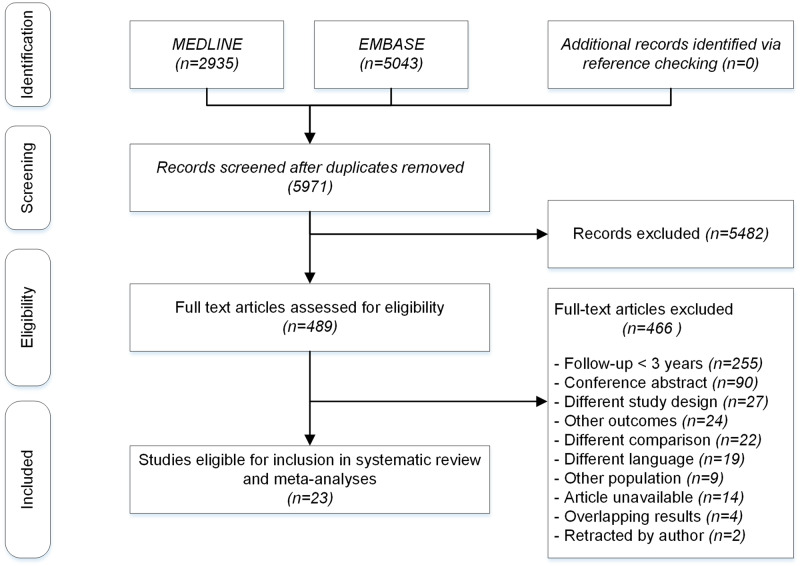
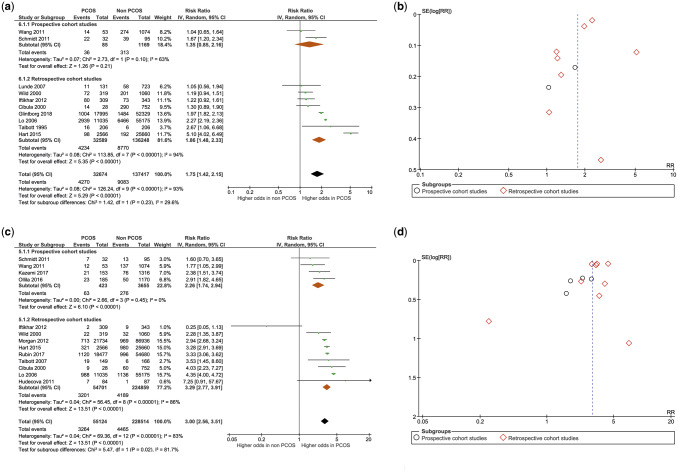
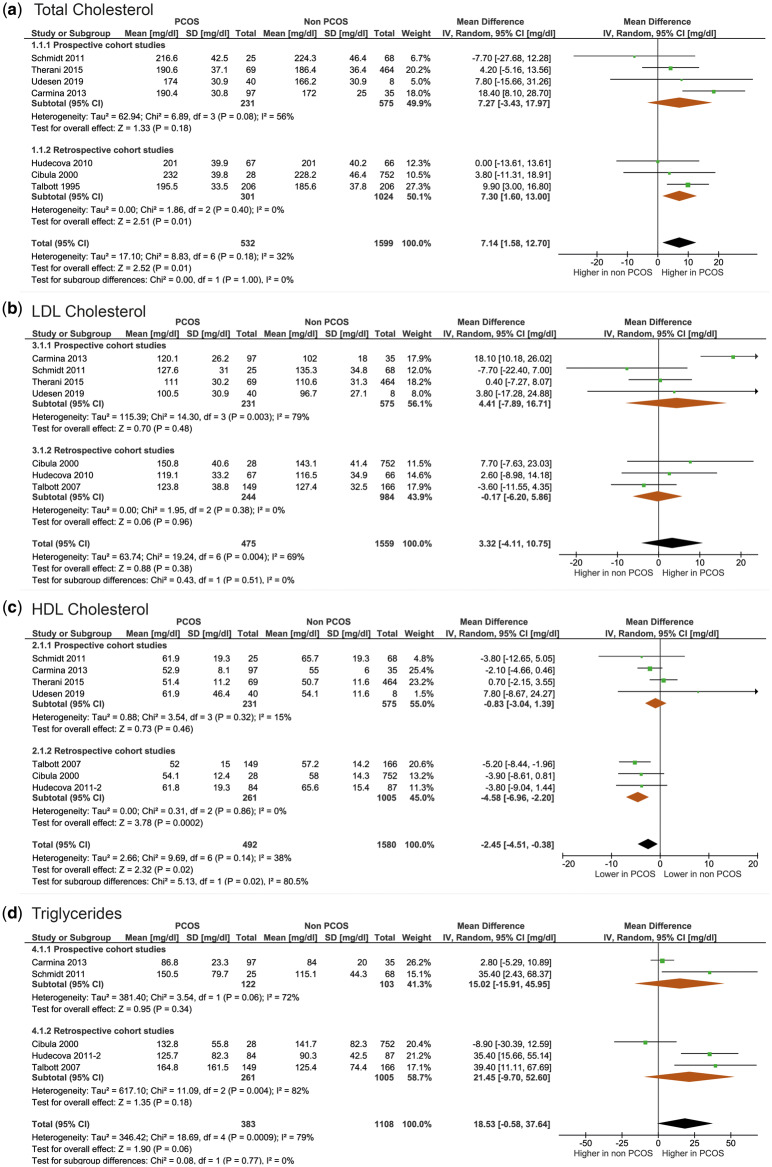
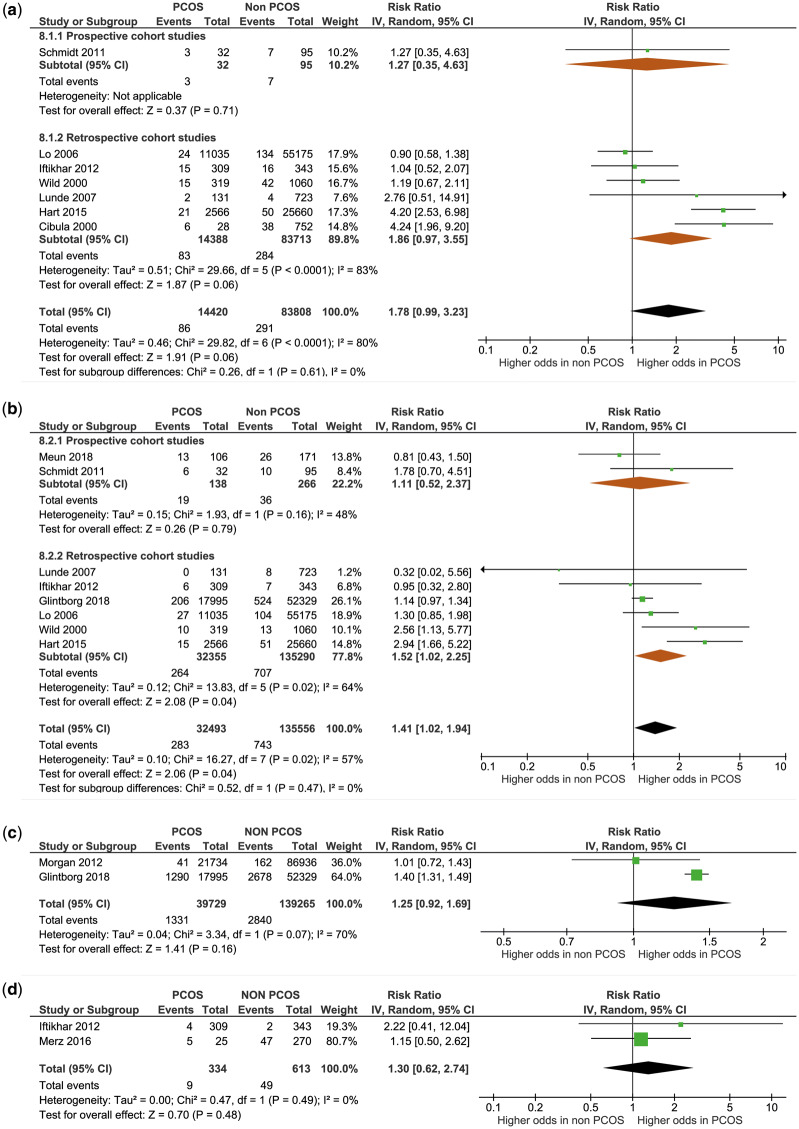
BACKGROUND: Polycystic ovary syndrome (PCOS) is associated with cardiometabolic disease, but recent systematic reviews and meta-analyses of longitudinal studies that quantify these associations are lacking. OBJECTIVE AND RATIONALE: Is PCOS a risk factor for cardiometabolic disease? SEARCH METHODS: We searched from inception to September 2019 in MEDLINE and EMBASE using controlled terms (e.g. MESH) and text words for PCOS and cardiometabolic outcomes, including cardiovascular disease (CVD), stroke, myocardial infarction, hypertension (HT), type 2 diabetes (T2D), metabolic syndrome and dyslipidaemia. Cohort studies and case–control studies comparing the prevalence of T2D, HT, fatal or non-fatal CVD and/or lipid concentrations of total cholesterol (TC), low-density lipoprotein cholesterol (LDL-C), high-density lipoprotein cholesterol (HDL-C) and triglycerides (TGs) between women with and without PCOS of ≥18 years of age were eligible for this systematic review and meta-analysis. Studies were eligible regardless of the degree to which they adjusted for confounders including obesity. Articles had to be written in English, German or Dutch. Intervention studies, animal studies, conference abstracts, studies with a follow-up duration less than 3 years and studies with less than 10 PCOS cases were excluded. Study selection, quality assessment (Newcastle–Ottawa Scale) and data extraction were performed by two independent researchers. OUTCOMES: Of the 5971 identified records, 23 cohort studies were included in the current systematic review. Women with PCOS had increased risks of HT (risk ratio (RR): 1.75, 95% CI 1.42 to 2.15), T2D (RR: 3.00, 95% CI 2.56 to 3.51), a higher serum concentration of TC (mean difference (MD): 7.14 95% CI 1.58 to 12.70 mg/dl), a lower serum concentration of HDL-C (MD: −2.45 95% CI −4.51 to −0.38 mg/dl) and increased risks of non-fatal cerebrovascular disease events (RR: 1.41, 95% CI 1.02 to 1.94) compared to women without PCOS. No differences were found for LDL-C (MD: 3.32 95% CI −4.11 to 10.75 mg/dl), TG (MD 18.53 95% CI −0.58 to 37.64 mg/dl) or coronary disease events (RR: 1.78, 95% CI 0.99 to 3.23). No meta-analyses could be performed for fatal CVD events due to the paucity of mortality data. WIDER IMPLICATIONS: Women with PCOS are at increased risk of cardiometabolic disease. This review quantifies this risk, which is important for clinicians to inform patients and to take into account in the cardiovascular risk assessment of women with PCOS. Future clinical trials are needed to assess the ability of cardiometabolic screening and management in women with PCOS to reduce future CVD morbidity.
Overview
The claims and statistics of this paper haven’t been checked yet.
Free: it reads the open-access text and checks the first 5 claims that cite a source we can check. Create a free account to check every claim.
Integrity signals
Registry
Cites
Statistics
Figures
Verification
Claims the paper makes
The claims and statistics of this paper haven’t been checked yet.
Free: it reads the open-access text and checks the first 5 claims that cite a source we can check. Create a free account to check every claim.
Claims other papers make about this one
Each is checked against this paper’s own text: does it say what the citing paper says it does?
The source backs part of the claim, not all of it — or backs it for a different population, condition or comparison.
In the citing paper
“PCOS is associated with increased co-morbidities including obesity, infertility, pregnancy complications, depression and anxiety, metabolic syndrome, diabetes, reproductive cancers and cardiovascular disease [3, 7, 8, 10–13].”
From Challenges in diagnosis and health care in polycystic ovary syndrome in Canada: a patient view to improve health care (2023) · cites this paper as [13]
Experimental — accuracy not yet measuredIn the citing paper
“Women with PCOS have a more unfavorable lipid profile than women without PCOS.62,63”
Self-check
Percentages, sums and reported differences re-computed from the paper’s own numbers.
The self-check needs the paper’s full text.
Citations
Cites
Preferred Reporting Items for Systematic Reviews and Meta-Analyses: the PRISMA statement
Moher, D., Liberati, A., Tetzlaff, J., Altman, D. G., & for the PRISMA Group (2009) · BMJ · doi:10.1136/bmj.b2535 · Cited by 83,823
Preferred reporting items for systematic reviews and meta-analyses: the PRISMA Statement.
(2009) · PubMed Central · Cited by 44,859
(2004) · Fertility and Sterility · doi:10.1016/j.fertnstert.2003.10.004 · Cited by 9,050
European Guidelines on cardiovascular disease prevention in clinical practice (version 2012)
Authors/Task Force Members:, Perk, J., De Backer, G., Gohlke, H., Graham, I., Reiner, Ž., Verschuren, M., Albus, C., Benlian, P., Boysen, G., et al. (2012) · European Heart Journal · doi:10.1093/eurheartj/ehs092 · Cited by 8,490
How should meta‐regression analyses be undertaken and interpreted?
Thompson, S. G., & Higgins, J. P. T. (2002) · Statistics in Medicine · doi:10.1002/sim.1187 · Cited by 3,026
Meschia, J. F., Bushnell, C., Boden-Albala, B., Braun, L. T., Bravata, D. M., Chaturvedi, S., Creager, M. A., Eckel, R. H., Elkind, M. S. V., Fornage, M., et al. (2014) · Stroke · doi:10.1161/str.0000000000000046 · Cited by 2,650
Men at risk: occupation and male infertility
Claman, P. (2004) · Fertility and Sterility · doi:10.1016/s0015-0282(03)01188-9 · Cited by 2,387
Azziz, R., Carmina, E., Dewailly, D., Diamanti-Kandarakis, E., Escobar-Morreale, H. F., Futterweit, W., Janssen, O. E., Legro, R. S., Norman, R. J., Taylor, A. E., et al. (2009) · Fertility and Sterility · doi:10.1016/j.fertnstert.2008.06.035 · Cited by 2,132 · cited 2×
“Sensitivity analyses including highquality studies and based on the diagnostic criteria for PCOS (NIH 1990 criteria (Zawadzki and Dunaif, 1992), AE-PCOS criteria (Azziz et al., 2009) or Rotterdam 2003 criteria (Rotterdam ESHRE/ASRMSponsored PCOS Consensus Workshop Group, 2004)) were performed if three or more studies…”
MethodTeede, H. J., Misso, M. L., Costello, M. F., Dokras, A., Laven, J., Moran, L., Piltonen, T., Norman, R. J., & the International PCOS Network (2018) · Clinical Endocrinology · doi:10.1111/cen.13795 · Cited by 1,823
Self-citationInsulin resistance and cardiovascular disease
Ginsberg, H. N. (2000) · Journal of Clinical Investigation · doi:10.1172/jci10762 · Cited by 1,358 · cited 1×
“Intrinsic insulin resistance, often present and linked to hyperandrogenism in women with PCOS, is also associated with cardiometabolic disease (Ginsberg, 2000; Baptiste et al., 2010; Stepto et al., 2013; Cassar et al., 2016).”
Background
Research works printed but not linked: 1
- Zawadzki J, Dunaif A. Diagnostic Criteria for Polycystic Ovary Syndrome: Towards a Rational Approach. Boston: Blackwell Scientific Publications, 1992.
Cited by
Joham, A. E., Norman, R. J., Stener-Victorin, E., Legro, R. S., Franks, S., Moran, L. J., Boyle, J., & Teede, H. J. (2022) · The Lancet Diabetes & Endocrinology · doi:10.1016/s2213-8587(22)00163-2 · Cited by 838
Stener-Victorin, E., Teede, H., Norman, R. J., Legro, R., Goodarzi, M. O., Dokras, A., Laven, J., Hoeger, K., & Piltonen, T. T. (2024) · Nature Reviews Disease Primers · doi:10.1038/s41572-024-00511-3 · Cited by 495
“Current analyses have strengthened the evidence for increased risk for different cardiovascular disease outcomes in individuals with PCOS 13,49 .”
Self-citationZhao, H., Zhang, J., Cheng, X., Nie, X., & He, B. (2023) · Journal of Ovarian Research · doi:10.1186/s13048-022-01091-0 · Cited by 408
Lifestyle management in polycystic ovary syndrome – beyond diet and physical activity
Cowan, S., Lim, S., Alycia, C., Pirotta, S., Thomson, R., Gibson-Helm, M., Blackmore, R., Naderpoor, N., Bennett, C., Ee, C., et al. (2023) · BMC Endocrine Disorders · doi:10.1186/s12902-022-01208-y · Cited by 240
“It also highlights evidence which suggests that the psychological impact associated with PCOS is under-appreciated in clinical care [4, 5], and that few women are satisfied with the mental health support they receive [6, 7].”
BackgroundAutophagy in ovary and polycystic ovary syndrome: role, dispute and future perspective
Kumariya, S., Ubba, V., Jha, R. K., & Gayen, J. R. (2021) · Autophagy · doi:10.1080/15548627.2021.1938914 · Cited by 305
Deconstructing a Syndrome: Genomic Insights Into PCOS Causal Mechanisms and Classification
Dapas, M., & Dunaif, A. (2022) · Endocrine Reviews · doi:10.1210/endrev/bnac001 · Cited by 300
Polycystic ovary syndrome as a metabolic disease
Helvaci, N., & Yildiz, B. O. (2025) · Nature Reviews Endocrinology · doi:10.1038/s41574-024-01057-w · Cited by 188
“Meta-analyses investigating the association between PCOS and T2DM have consistently shown that women with PCOS are about three times more likely to have IGT 121,122 and T2DM 121,123,124 than those without PCOS.”
Roeters van Lennep, J. E., Tokgözoğlu, L. S., Badimon, L., Dumanski, S. M., Gulati, M., Hess, C. N., Holven, K. B., Kavousi, M., Kayıkçıoğlu, M., Lutgens, E., et al. (2023) · European Heart Journal · doi:10.1093/eurheartj/ehad472 · Cited by 229
“15,16 19 Evaluating women for cardiovascular risk, ideally from midlife, 20 would improve early identification of those with elevated modifiable risk factors or sex-specific risk factors, and prompt early initiation of guideline-recommended treatment.”
BackgroundMetabolic Syndrome and PCOS: Pathogenesis and the Role of Metabolites
Chen, W., & Pang, Y. (2021) · Metabolites · doi:10.3390/metabo11120869 · Cited by 228
Polycystic ovary syndrome: a “risk-enhancing” factor for cardiovascular disease
Guan, C., Zahid, S., Minhas, A. S., Ouyang, P., Vaught, A., Baker, V. L., & Michos, E. D. (2022) · Fertility and Sterility · doi:10.1016/j.fertnstert.2022.03.009 · Cited by 188
Sex differences in lipids: a life course approach
Holven, K. B., & Roeters van Lennep, J. (2023) · Atherosclerosis · doi:10.1016/j.atherosclerosis.2023.117270 · Cited by 180
Atherosclerosis Development and Progression: The Role of Atherogenic Small, Dense LDL
Vekić, J., Zeljković, A., Cicero, A. F. G., Janež, A., Stoian, A. P., Sönmez, A., & Rizzo, M. (2022) · Medicina · doi:10.3390/medicina58020299 · Cited by 184
“After adjusting for triglyceride levels, other traits of insulin resistance syndrome (IRS) were not associated with LDL size phenotype, suggesting that the IRS-related sdLDL is linked most strongly to alterations in triglyceride levels [64].”
BackgroundDysregulation of immune response in PCOS organ system
Wang, J., Yin, T., & Liu, S. (2023) · Frontiers in Immunology · doi:10.3389/fimmu.2023.1169232 · Cited by 183
Berni, T. R., Morgan, C. L., & Rees, D. A. (2021) · The Journal of Clinical Endocrinology & Metabolism · doi:10.1210/clinem/dgab392 · Cited by 146
“In a recent systematic review and meta-analysis of observational longitudinal studies comparing fatal and non-fatal CVD events in women with and without PCOS (32), the risk of coronary events was not different between groups, whereas non-fatal cerebrovascular events were higher in women with PCOS.”
BackgroundResultSystematic low-grade chronic inflammation and intrinsic mechanisms in polycystic ovary syndrome
Deng, H., Chen, Y., Xing, J., Zhang, N., & Xu, L. (2024) · Frontiers in Immunology · doi:10.3389/fimmu.2024.1470283 · Cited by 170
Tay, C. T., Mousa, A., Vyas, A., Pattuwage, L., Tehrani, F. R., & Teede, H. J. (2024) · Journal of the American Heart Association · doi:10.1161/jaha.123.033572 · Cited by 156
“3–5 Compared with the general population, these CVRFs often manifest at an earlier age in women with PCOS, a population where the prevalence of excess body weight is also notably high.”
Cao, J., Huo, P., Cui, K., Wei, H., Cao, J., Wang, J., Liu, Q., Lei, X., & Zhang, S. (2022) · Cell Communication and Signaling · doi:10.1186/s12964-022-00876-6 · Cited by 134
“Although the clinical manifestations and biochemical indicators of patients with PCOS are highly heterogeneous, follicular dysplasia is still a typical feature of PCOS, affecting approximately 10% of infertile women [6].”
BackgroundOllila, M.-M., Arffman, R. K., Korhonen, E., Morin-Papunen, L., Franks, S., Junttila, J., & Piltonen, T. T. (2023) · European Journal of Endocrinology · doi:10.1093/ejendo/lvad077 · Cited by 108
Polycystic ovary syndrome and type 2 diabetes mellitus: A state-of-the-art review
Livadas, S., Anagnostis, P. G., Bosdou, J. Κ., Bantouna, D., & Paparodis, R. D. (2022) · World Journal of Diabetes · doi:10.4239/wjd.v13.i1.5 · Cited by 131
Guo, F., Gong, Z., Fernando, T., Zhang, L., Zhu, X., & Shi, Y. (2022) · Frontiers in Endocrinology · doi:10.3389/fendo.2022.892125 · Cited by 126
“In addition, dyslipidemia is increasingly common in young adult women with PCOS (4).”
BackgroundDietary Interventions: A Promising Treatment for Polycystic Ovary Syndrome
Che, X., Chen, Z., Liu, M., & Mo, Z. (2021) · Annals of Nutrition and Metabolism · doi:10.1159/000519302 · Cited by 87
Natural Molecules in the Management of Polycystic Ovary Syndrome (PCOS): An Analytical Review
Iervolino, M., Lepore, E., Forte, G., Laganà, A. S., Buzzaccarini, G., & Unfer, V. (2021) · Nutrients · doi:10.3390/nu13051677 · Cited by 98
“Therefore, administration of omega-3 fatty acids should be specific only for PCOS women who already exhibit inflammatory and cardiovascular-related symptoms, which usually occur between 40 and 45 years of age [94,95].”
BackgroundBarrea, L., Muscogiuri, G., Pugliese, G., de Alteriis, G., Colao, A., & Savastano, S. (2021) · Nutrients · doi:10.3390/nu13113925 · Cited by 99
“Very recently, a systematic review of the literature reported that women with PCOS were more likely to be diagnosed with cardio-metabolic risk factors, although the extent to which increased cardio-metabolic risk was independent of obesity still remains to be resolved [5,6].”
BackgroundPredicting polycystic ovary syndrome with machine learning algorithms from electronic health records
Zad, Z., Jiang, V. S., Wolf, A. T., Wang, T., Cheng, J. J., Paschalidis, I. C., & Mahalingaiah, S. (2024) · Frontiers in Endocrinology · doi:10.3389/fendo.2024.1298628 · Cited by 97
Yuan, D., Luo, J., Sun, Y., Hao, L., Zheng, J., & Yang, Z. (2021) · Cellular Signalling · doi:10.1016/j.cellsig.2021.110030 · Cited by 110
Samarasinghe, S., Leca, B. M., Alabdulkader, S., Dimitriadis, G. K., Davasgaium, A., Thadani, P., Parry, K., Luli, M., O'Donnell, K., Johnson, B., et al. (2024) · The Lancet · doi:10.1016/s0140-6736(24)00538-5 · Cited by 99
“Women with PCOS are at higher risk of developing type 2 diabetes, 32 dyslipidaemia, 33 hypertension, 34 and probably cardiovascular disease 35 compared with age-matched and BMI-matched women without PCOS.”
Kazemi, M., Kim, J. Y., Wan, C., Xiong, J. D., Michalak, J., Xavier, I. B., Ganga, K., Tay, C. T., Grieger, J. A., Parry, S. A., et al. (2022) · Human Reproduction Update · doi:10.1093/humupd/dmac023 · Cited by 89
Chien, Y.-J., Chang, C.-Y., Wu, M.-Y., Chen, C.-H., Horng, Y.-S., & Wu, H.-C. (2021) · Nutrients · doi:10.3390/nu13020684 · Cited by 80
“In addition, nearly half of adult patients with PCOS develop metabolic syndrome and insulin resistance [4,5], and are associated with considerably higher risks of type 2 diabetes mellitus, cardiovascular disease, and even cancer [6,7].”
BackgroundPCOS during the menopausal transition and after menopause: a systematic review and meta-analysis
Millán-de-Meer, M., Luque-Ramírez, M., Nattero-Chávez, L., & Escobar-Morreale, H. F. (2023) · Human Reproduction Update · doi:10.1093/humupd/dmad015 · Cited by 82
The role of gonadotropin‐releasing hormone neurons in polycystic ovary syndrome
McCartney, C. R., Campbell, R. E., Marshall, J. C., & Moenter, S. M. (2022) · Journal of Neuroendocrinology · doi:10.1111/jne.13093 · Cited by 94
Aggarwal, S., & Pandey, K. (2023) · Expert Systems with Applications · doi:10.1016/j.eswa.2023.119532 · Cited by 91
Li, W., Liu, C., Yang, Q., Zhou, Y., Liu, M., & Shan, H. (2022) · Frontiers in Nutrition · doi:10.3389/fnut.2022.1018674 · Cited by 97
“The overall prevalence rate is 6%-10%(1), and PCOS is an important cause of ovulation disorder infertility.”
BackgroundAn Update on Contraception in Polycystic Ovary Syndrome
Oguz, S. H., & Yildiz, B. O. (2021) · Endocrinology and Metabolism · doi:10.3803/enm.2021.958 · Cited by 76
“However, the evidence remains controversial regarding whether there is an absolute increase in risk for MI, stroke, cardiovascular death, or coronary heart disease in women with PCOS in the long-term [58,59], including peri- and postmenopausal periods [60-63].”
BackgroundLong‐term health outcomes in young women with polycystic ovary syndrome: A narrative review
Allen, L. A., Shrikrishnapalasuriyar, N., & Rees, D. A. (2022) · Clinical Endocrinology · doi:10.1111/cen.14609 · Cited by 62
Melin, J., Forslund, M., Alesi, S., Piltonen, T., Romualdi, D., Spritzer, P. M., Tay, C. T., Pena, A., Witchel, S. F., Mousa, A., et al. (2023) · European Journal of Endocrinology · doi:10.1093/ejendo/lvad098 · Cited by 72
Challenges in diagnosis and understanding of natural history of polycystic ovary syndrome
Joham, A. E., Piltonen, T., Lujan, M. E., Kiconco, S., & Tay, C. T. (2022) · Clinical Endocrinology · doi:10.1111/cen.14757 · Cited by 80
“quantified risk of metabolic disease in women with PCOS compared to their counterparts.(51) It is important to evaluate data from longitudinal studies that have compared metabolic risk factors and”
BackgroundSpremović-Radjenović, S., Pupovac, M., Andjić, M., Bila, J. S., Sreckovic, S. D., Gudović, A., Dragaš, B., & Radunović, N. V. (2022) · Biomedicines · doi:10.3390/biomedicines10010131 · Cited by 79
Farhadi‐Azar, M., Behboudi‐Gandevani, S., Rahmati, M., Mahboobifard, F., Pouya, E. K., Tehrani, F. R., & Azizi, F. (2022) · Frontiers in Endocrinology · doi:10.3389/fendo.2022.825528 · Cited by 75
Wang, Y., Stuart, J. J., Rich-Edwards, J. W., Missmer, S. A., Rexrode, K. M., Farland, L. V., Mukamal, K. J., Nelson, S. M., Solomon, C. G., Fraser, A., et al. (2022) · JAMA Network Open · doi:10.1001/jamanetworkopen.2022.38513 · Cited by 70
The gut microbiota–bile acid–TGR5 axis orchestrates platelet activation and atherothrombosis
Qi, Z., Zhang, W., Zhang, P., Qu, Y., Zhong, H., Zhou, L., Zhou, W., Yang, W., Xu, H., Zhao, X., et al. (2025) · Nature Cardiovascular Research · doi:10.1038/s44161-025-00637-x · Cited by 69
“Interestingly, in women with PCOS, who face increased cardiovascular risks 53 , B. vulgatus was elevated and positively correlated with serum DCA levels.”
Optimized Machine Learning for the Early Detection of Polycystic Ovary Syndrome in Women
Panjwani, B., Yadav, J., Mohan, V., Agarwal, N., & Agarwal, S. (2025) · Sensors · doi:10.3390/s25041166 · Cited by 77
“…patients with PCOS had higher HDL serum concentrations and were at higher risk of hypertension, as well as cerebrovascular disease, compared to women without PCOS [15,16], with studies suggesting that PCOS exacerbates heart health conditions and increases the risk of stroke by almost 50% [17,18].”
Bai, X., Zheng, L., Li, D., & Xu, Y. (2021) · Reproductive Biology and Endocrinology · doi:10.1186/s12958-021-00802-4 · Cited by 75
Gesteiro, E., Megía, A., Guadalupe‐Grau, A., Fernández‐Veledo, S., Vendrell, J. J., & González‐Gross, M. (2021) · Nutrition Metabolism and Cardiovascular Diseases · doi:10.1016/j.numecd.2021.05.022 · Cited by 69
Polycystic ovary syndrome and thyroid disorder: a comprehensive narrative review of the literature
Palomba, S., Colombo, C., Busnelli, A., Caserta, D., & Vitale, G. (2023) · Frontiers in Endocrinology · doi:10.3389/fendo.2023.1251866 · Cited by 73
Sydora, B. C., Wilke, M. S., McPherson, M., Chambers, S., Ghosh, M., & Vine, D. F. (2023) · BMC Women's Health · doi:10.1186/s12905-023-02732-2 · Cited by 60
“PCOS is associated with increased co-morbidities including obesity, infertility, pregnancy complications, depression and anxiety, metabolic syndrome, diabetes, reproductive cancers and cardiovascular disease [3, 7, 8, 10–13].”
BackgroundInfertility and Risk of Cardiovascular Disease: A Prospective Cohort Study
Farland, L. V., Wang, Y., Gaskins, A. J., Rich-Edwards, J. W., Wang, S., Magnus, M. C., Chavarro, J. E., Rexrode, K. M., & Missmer, S. A. (2023) · Journal of the American Heart Association · doi:10.1161/jaha.122.027755 · Cited by 60
“…infertility diagnoses, such as PCOS, endometriosis, and unexplained infertility, have been observed to be associated with CVD risk and adverse cardiometabolic profiles (eg, hypertension, high cholesterol, type 2 diabetes), 20– 28 which has not been thoroughly investigated in the current literature.”
Valerio, G., Bonito, P. D., Calcaterra, V., Cherubini, V., Corica, D., SANCTIS, L. D., Sessa, A. D., Faienza, M. F., Fornari, E., Iughetti, L., et al. (2024) · The Italian Journal of Pediatrics/Italian journal of pediatrics · doi:10.1186/s13052-024-01767-x · Cited by 64
“A systematic review of 23 studies [88], of which at least one third on young adults, concluded that women with PCOS had an increased risk of T2D, HTN, dyslipidemia, cerebrovascular disease, but not coronary disease events, whereas a more recent retrospective study in 174.660 young women with PCOS…”
BackgroundInfluentialVine, D., Ghosh, M., Wang, T., & Bakal, J. (2024) · CJC Open · doi:10.1016/j.cjco.2023.12.010 · Cited by 53
“6,11,13,18,27,31,32,116,117 Of note, our results showed that diagnosis of myocardial infarction, and peripheral and cerebrovascular disease occurred in young premenopausal women, and 3-4 years earlier in those with PCOS.”
BackgroundResultTherapeutic effect and safety of curcumin in women with PCOS: A systematic review and meta-analysis
Shen, W., Qu, Y., Jiang, H., Wang, H., Pan, Y., Zhang, Y., Wu, X., Han, Y., & Zhang, Y. (2022) · Frontiers in Endocrinology · doi:10.3389/fendo.2022.1051111 · Cited by 53
Why does type 2 diabetes mellitus impair weight reduction in patients with obesity? A review
Bays, H. E. (2023) · Obesity Pillars · doi:10.1016/j.obpill.2023.100076 · Cited by 63
“Females with polycystic ovary syndrome (PCOS) have an increased risk of type 2 diabetes [40], with PCOS being both a potential consequence (i.e., due to adi-posopathic endocrinopathies) [2], and potential contributor to fat weight gain (i.e., via insulin resistance and associated eating disorders,…”
BackgroundPililis, S., Lampsas, S., Kountouri, A., Pliouta, L., Korakas, E., Livadas, S., Thymis, J., Peppa, Μ., Kalantaridou, S., Oikonomou, E. K., et al. (2024) · Medicina · doi:10.3390/medicina60101656 · Cited by 64
“These phenotypes highlight Clinicians often focus on the management of speci fi c symptoms such as ovulatory dysfunction and infertility, but it is increasingly challenging due to the syndrome’s complexity and varied presentations [20].”
BackgroundInfluentialAnagnostis, P. G., Paparodis, R. D., Bosdou, J. Κ., Bothou, C., Μacut, D., Goulis, D. G., & Livadas, S. (2021) · Endocrine · doi:10.1007/s12020-021-02801-2 · Cited by 52
Maternal Risk of Cardiovascular Disease After Use of Assisted Reproductive Technologies
Magnus, M. C., Fraser, A., Håberg, S. E., Rönö, K., Romundstad, L. B., Bergh, C., Spangmose, A. L., Pinborg, A. B., Gissler, M., Wennerholm, U., et al. (2023) · JAMA Cardiology · doi:10.1001/jamacardio.2023.2324 · Cited by 48
Recent advances in emerging PCOS therapies
Glendining, K. A., & Campbell, R. E. (2023) · Current Opinion in Pharmacology · doi:10.1016/j.coph.2022.102345 · Cited by 51
Hyperandrogenism and Cardiometabolic Risk in Pre- and Postmenopausal Women—What Is the Evidence?
Hirschberg, A. L. (2023) · The Journal of Clinical Endocrinology & Metabolism · doi:10.1210/clinem/dgad590 · Cited by 46
Ryu, K.-J., Kim, M. S., Kim, H. K., Kim, Y. J., Yi, K. W., Shin, J., Hur, J. Y., Kim, T., & Park, H. (2021) · Fertility and Sterility · doi:10.1016/j.fertnstert.2020.12.018 · Cited by 49
Risk and incidence of cardiovascular disease associated with polycystic ovary syndrome
Wan, Z., Zhao, J., Ye, Y., Sun, Z., Li, K., Chen, Y., Fang, Y., Zhang, Y., Lin, J., Sun, P., et al. (2024) · European Journal of Preventive Cardiology · doi:10.1093/eurjpc/zwae066 · Cited by 60
Polycystic Ovary Syndrome, Insulin Resistance, and Cardiovascular Disease
Dubey, P., Reddy, S., Sharma, K., Johnson, S., Hardy, G., & Dwivedi, A. K. (2024) · Current Cardiology Reports · doi:10.1007/s11886-024-02050-5 · Cited by 52
“Conflicting results were seen in another meta-analysis which showed an increased risk of non-fatal cerebrovascular disease events but failed to find difference in non-fatal coronary events in women with PCOS compared to controls [62].”
Cardiometabolic biomarkers in women with polycystic ovary syndrome
van der Ham, K., Louwers, Y. V., & Laven, J. S. E. (2022) · Fertility and Sterility · doi:10.1016/j.fertnstert.2022.03.008 · Cited by 49
Self-citationKujanpää, L., Arffman, R. K., Pesonen, P., Korhonen, E., Karjula, S., Järvelin, M., Franks, S., Tapanainen, J. S., Morin‐Papunen, L., & Piltonen, T. T. (2022) · Acta Obstetricia et Gynecologica Scandinavica · doi:10.1111/aogs.14382 · Cited by 40
Huang, C., Lin, B., Yuan, Y., Li, K., Xu, B., Zhang, P., Wei, X., Wang, W., Liu, W., Deng, Y., et al. (2023) · Journal of the American Heart Association · doi:10.1161/jaha.122.029020 · Cited by 38
Morbidity and mortality in PCOS: A prospective follow-up up to a mean age above 80 years
Forslund, M., Schmidt, J., Brännström, M., Landin‐Wilhelmsen, K., & Dahlgren, E. (2022) · European Journal of Obstetrics & Gynecology and Reproductive Biology · doi:10.1016/j.ejogrb.2022.02.020 · Cited by 39
Kim, C., Catov, J. M., Schreiner, P. J., Appiah, D., Wellons, M., Siscovick, D. S., Calderon‐Margalit, R., Huddleston, H. G., Ebong, I., & Lewis, C. E. (2023) · Journal of the American Heart Association · doi:10.1161/jaha.122.028132 · Cited by 41
Cardiovascular disease in women: traditional and sex-specific risk factors
Appelman, Y., Gulati, M., van Lennep, J. E. R., Shaw, L. J., & Merz, C. N. B. (2025) · European Heart Journal · doi:10.1093/eurheartj/ehaf1001 · Cited by 40
“95 Interestingly, a meta-analysis showed that women with PCOS, despite a diagnosis of cardiometabolic risk factors, did not have a significantly higher risk of non-fatal CAD events but did have a 41% higher risk of non-fatal cerebrovascular events.”
The impact of ageing and menopause in women with polycystic ovary syndrome
Helvaci, N., & Yildiz, B. O. (2022) · Clinical Endocrinology · doi:10.1111/cen.14558 · Cited by 32
“23).(60) On the other hand, in a very recent retrospective study from the United Kingdom where more than 174,000 women with a diagnosis of PCOS were traced from electronic health records, the authors reported a significantly increased risk of incident myocardial infarction, angina and revascularization in women with P…”
BackgroundInfertility, Infertility Treatment, and Cardiovascular Disease: An Overview
Smith, J., Vélez, M. P., & Dayan, N. (2021) · Canadian Journal of Cardiology · doi:10.1016/j.cjca.2021.09.002 · Cited by 39
He, H. R., Feng, J., Zhang, S., Wang, Y., Li, J., Gao, J., Cong, J., Gong, Y., & Wu, X. (2022) · Frontiers in Endocrinology · doi:10.3389/fendo.2021.773781 · Cited by 33
Lo, A., Lo, C. C. W., & Oliver‐Williams, C. (2023) · European Heart Journal Open · doi:10.1093/ehjopen/oead061 · Cited by 34
“Despite mounting evidence that PCOS is an independent cardiovascular disease (CVD) risk factor, findings from previous meta-analyses examining this relationship have been hampered by substantial between-study heterogeneity.(2,3) This limits the interpretation and clinical use of these results as the pooled estimate ma…”
BackgroundResultInfluentialSharifi, M., Saber, A., Moludi, J., Salimi, Y., & Jahan-Mihan, A. (2024) · Nutrition Journal · doi:10.1186/s12937-024-01056-7 · Cited by 35
“…between PCOS and the cardiovascular risk profile of PCOS female patients, due to a lipid/glucose altered metabolism, hypertension, systemic inflammatory condition (assessable by markers such as VES, TNF-alpha, cytokines and C-reactive protein (hs-CRP) levels), and vascular injuries [21, 22].”
Mauricio, R., Sharma, G. V., Lewey, J., Tompkins, R. O., Plowden, T. C., Rexrode, K. M., Canobbio, M. M., Skowronski, J. N., Hameed, A. B., Silversides, C. K., et al. (2025) · Circulation · doi:10.1161/cir.0000000000001292 · Cited by 33
Gonadal dysfunction in women with diabetes mellitus
Zaimi, M., Michalopoulou, O., Stefanaki, K., Kazakou, P., Vasileiou, V., Ψαλτοπούλου, Θ., Karagiannakis, D. S., & Paschou, S. Α. (2024) · Endocrine · doi:10.1007/s12020-024-03729-z · Cited by 35
“Results from another meta-analysis showed similar fi ndings, underpinning a higher rate of T2DM among women with PCOS compared to women without (RR: 3.00, 95% CI 2.56 – 3.51) [48].”
ResultInfluentialIrregular Cycles, Ovulatory Disorders, and Cardiometabolic Conditions in a US-Based Digital Cohort
Wang, Z., Jukic, A. M. Z., Baird, D. D., Wilcox, A. J., Li, H., Curry, C. L., Fischer‐Colbrie, T., Onnela, J.-P. “., Williams, M. A., Hauser, R. B., et al. (2024) · JAMA Network Open · doi:10.1001/jamanetworkopen.2024.9657 · Cited by 37
Lonardo, A. (2023) · Expert Review of Clinical Pharmacology · doi:10.1080/17512433.2023.2259306 · Cited by 31
“A meta-analysis found that peri-and post-menopausal PCOS was associated with several CMRs; however, meta-analysis was restricted to those studies featuring similar average BMI in women with PCOS and controls, only decreased HDL-cholesterol concentrations and increased serum androgen concentrations remained statistical…”
BackgroundInfluentialArtificial intelligence in polycystic ovarian syndrome management: past, present, and future
Wang, J., Chen, R., Long, H., He, J., Tang, M., Su, M., Deng, R., Chen, Y., Ni, R., Zhao, S., et al. (2025) · La radiologia medica · doi:10.1007/s11547-025-02032-9 · Cited by 39
“Precise diagnoses are essential for formulating optimal therapeutic strategies, particularly in PCOS, where etiological factors contain clinical indexes and biochemical indicators of PCOS patients are highly heterogeneous [64].”
Sharmeen, S., Nomani, H., Taub, E. M., Carlson, H. E., & Yao, Q. (2021) · Clinical Rheumatology · doi:10.1007/s10067-021-05850-0 · Cited by 30
“1 3 and cerebrocardiovascular disease [5].”
Rao, V. S., Cowan, S., Armour, M., Smith, C. A., Cheema, B. S., Moran, L., Lim, S. S., Gupta, S., de Manincor, M., Sreedhar, V., et al. (2022) · International Journal of Environmental Research and Public Health · doi:10.3390/ijerph192315850 · Cited by 40
“, insulin resistance (IR), type 2 diabetes (T2D), adverse cardiovascular risk profiles) [3,4], reproductive (e.”
BackgroundZhang, F., Dai, M., Yang, X., Cheng, Y., Ye, L., Huang, W., Chen, X., Yin, T., & Sha, Y.-W. (2023) · Andrology · doi:10.1111/andr.13448 · Cited by 28
“28,29 3 RESULTS”
Dwivedi, A. K., Vishwakarma, D., Dubey, P., & Reddy, S. (2023) · European Journal of Endocrinology · doi:10.1093/ejendo/lvad067 · Cited by 29
Belsti, Y., Enticott, J., Azumah, R., Tay, C. T., Moran, L., Ronald, C. W., Joham, A. E., Laven, J. S. E., Teede, H. J., & Mousa, A. (2024) · Diabetes & Metabolic Syndrome Clinical Research & Reviews · doi:10.1016/j.dsx.2024.102970 · Cited by 33
“The prevalence of T2D ranges from 1.5% to 12.4% among women with PCOS, depending on age [8], BMI [9,10] and ethnic variation [11 – 13].”
InfluentialSelf-citationWang, W., Zeng, W., He, S., Shi, Y., Chen, X., Tu, L., Yang, B., Xu, J., & Yin, X. (2023) · Digital Health · doi:10.1177/20552076231160323 · Cited by 31
Zhang, S., He, H., Wang, Y., Wang, X., & Liu, X. (2023) · Scientific Reports · doi:10.1038/s41598-023-34746-z · Cited by 30
Polycystic Ovarian Syndrome: a Risk Factor for Cardiovascular Disease
Alvarez, Y. R., Pico, M. G., Ashokprabhu, N. D., Abou-Amro, K., Bailey, S., Pung, E., Oberholster, E., & Quesada, O. (2023) · Current Atherosclerosis Reports · doi:10.1007/s11883-023-01168-1 · Cited by 27
“A meta-analysis found increased risk of myocardial infarction and stroke (hazard ratio of 1.26 and 1.32, respectively) in individuals with PCOS [46]; whereas other metanalyses showed no difference in the risk of CVD events between individuals with and without PCOS [55, 56].”
InfluentialHuffman, A. M., Rezq, S., Basnet, J., Cardozo, L. L. Y., & Romero, D. G. (2021) · International Journal of Molecular Sciences · doi:10.3390/ijms22094472 · Cited by 27
“Other cardiometabolic risk factors in PCOS include alterations to blood lipid profile and increased risk for non-fatal cerebrovascular disease, which interferes with blood flow to the brain [71].”
BackgroundKiconco, S., Tay, C. T., Rassie, K. L., Azziz, R., Teede, H. J., & Joham, A. E. (2022) · Clinical Endocrinology · doi:10.1111/cen.14647 · Cited by 25
Association between obesity in women with polycystic ovary syndrome and adverse obstetric outcomes
Peeva, M., Badeghiesh, A. M., Baghlaf, H. A., & Dahan, M. H. (2022) · Reproductive BioMedicine Online · doi:10.1016/j.rbmo.2022.02.007 · Cited by 26
Glintborg, D., Ollila, M., Møller, J. K., Pesonen, P., Persson, S., Elenis, E., Rubin, K. H., Gissler, M., Andersen, M., Poromaa, I. S., et al. (2024) · Human Reproduction · doi:10.1093/humrep/deae124 · Cited by 26
He, J., Deng, R., Wei, Y., Zhang, S., Su, M., Tang, M., Wang, J., Nong, W., & Lei, X. (2024) · Food & Function · doi:10.1039/d3fo02824k · Cited by 26
Xia, Y., Wang, Y., Cui, M., & Su, D. (2021) · Annals of Palliative Medicine · doi:10.21037/apm-21-1050 · Cited by 23
“21037/apm-21-1050 Introduction Polycystic ovary syndrome (PCOS), with a prevalence of 6−10%, is a common endocrine disorder in women (1).”
BackgroundMahabamunuge, J., Sekula, N. M., Lepore, C., Kudrimoti, M., Upadhyay, A., Alshowaikh, K., Li, H. J., Seifer, D. B., & AlAshqar, A. (2025) · Biomedicines · doi:10.3390/biomedicines13030709 · Cited by 30
“Polycystic ovary syndrome (PCOS) is the most prevalent endocrinopathy among women of reproductive age, with reported prevalence rates ranging from 10% to 20%, depending on the diagnostic criteria used [1,2].”
InfluentialZheng, Y., He, J., Yang, D., Yuan, M., Liu, S., Dai, F., Jia, Y., & Cheng, Y. (2022) · Biology of Reproduction · doi:10.1093/biolre/ioac125 · Cited by 31
Barberis, N., Calaresi, D., Cannavò, M., & Verrastro, V. (2022) · Frontiers in Public Health · doi:10.3389/fpubh.2022.962083 · Cited by 23
“The condition is multifactorial and often difficult to diagnose due to the existence of different diagnostic criteria (2), mainly based on the presence of a combination of clinical signs of anovulation or menstrual irregularities, polycystic ovaries and androgen excess (3).”
BackgroundLipoprotein Metabolism, Dyslipidemia, and Lipid-Lowering Therapy in Women: A Comprehensive Review
Zimodro, J. M., Mucha, M., Berthold, H. K., & Gouni‐Berthold, I. (2024) · Pharmaceuticals · doi:10.3390/ph17070913 · Cited by 26
“A recent meta-analysis of 23 cohort studies found higher TC and lower HDL-C levels in women with PCOS compared to healthy controls [115].”
BackgroundYuan, J., Wen, X., & Jia, M. (2021) · Annals of Palliative Medicine · doi:10.21037/apm-21-2018 · Cited by 22
“It is the most common endocrine disorder, is accompanied by a multitude of conditions, and affects 6–20% of reproductive-age women (1,2).”
BackgroundChudzicka-Strugała, I., Kubiak, A., Banaszewska, B., Wysocka, E., Zwoździak, B., Siakowska, M., Pawelczyk, L. A., & Dulęba, A. J. (2024) · Archives of Gynecology and Obstetrics · doi:10.1007/s00404-024-07833-3 · Cited by 28
“PCOS is also associated with an adverse lipid profile, especially reduced HDL cholesterol and elevated triglycerides [43, 44].”
Polycystic ovary syndrome: associations with cardiovascular disease
Benham, J. L., Goldberg, A., Teede, H. J., & Tay, C. T. (2023) · Climacteric · doi:10.1080/13697137.2023.2282689 · Cited by 27
“…23 cohort studies found that individuals with PCOS compared to those without PCOS had higher total cholesterol (mean difference 7.14; 95% CI 1.58, 12.70 mg/dl) and lower HDL-C (mean difference −2.45; 95% CI −4.51, −0.38 mg/dl), whereas no differences were observed for LDL-C or triglycerides [18].”
InfluentialJoham, A. E., Rees, A., Shinkai, K., Forslund, M., Tay, C. T., & Teede, H. J. (2025) · Reproduction · doi:10.1530/rep-25-0121 · Cited by 21
Zhang, C., Li, Y., Wang, Y., Hu, S., Liu, Y., Liang, X., Chen, Z., Zhang, Y., & Zhao, H. (2024) · Journal of Advanced Research · doi:10.1016/j.jare.2024.10.038 · Cited by 21
“Our study extends beyond these earlier findings by unveiling robust causal associations between TG, LDL-c, HDL-c and PCOS risk, the roles of which have been controversial in previous research [24].”
Prevalence, Pattern and Predictors for Dyslipidemia of Chinese Women With Polycystic Ovary Syndrome
Luo, X., Cai, W.-Y., & Wu, X. (2021) · Frontiers in Cardiovascular Medicine · doi:10.3389/fcvm.2021.790454 · Cited by 22
“Dyslipidemia is closely related to the occurrence and progress of CVD due to its role on atherosclerosis (21).”
BackgroundInfluentialRajbanshi, I., Sharma, V. K., Tuladhar, E. T., Bhattarai, A., Raut, M., Dubey, R. K., Koirala, P., & Niraula, A. (2023) · BMC Women s Health · doi:10.1186/s12905-023-02379-z · Cited by 20
“PCOS is reported to be more prevalent in younger ages (< 35) than among older women, which can be attributed to a physiological decline of the follicular cohort leading to a normalized ovarian ultrasonographic appearance with advancing age [7].”
BackgroundPaczkowska, K., Rachoń, D., Berg, A., Rybka, J., Kapczyńska, K., Bolanowski, M., & Daroszewski, J. (2023) · Nutrients · doi:10.3390/nu15194153 · Cited by 23
“The baseline information (anthropometric, hormonal, and biochemical parameters) is presented in Table 1 as previously published [3].”
BackgroundMethod
Metadata
- Authors
- Wekker, V, van Dammen, L., Koning, A., Heida, K. Y., Painter, R. C., Limpens, J., Laven, J. S. E., Roeters van Lennep, J. E., Roseboom, T. J., & Hoek, A.
- Affiliations
- Amsterdam UMC Location University of Amsterdam (NL)
- Department of Clinical Epidemiology, Biostatistics and Bioinformatics, Amsterdam UMC, University of Amsterdam, Amsterdam, The Netherlands
- Ziekenhuis Amstelland (NL)
- University Medical Center Utrecht (NL)
- Amsterdam University Medical Centers (NL)
- Erasmus MC (NL)
- Department of Internal Medicine, Erasmus University Medical Centre, Rotterdam, The Netherlands
- University Medical Center Groningen (NL)
- Corresponding author
- Wekker, V
- Venue
- Human Reproduction Update
- Publisher
- Oxford University Press (OUP)
- Published
- 2020-09-30
- Volume
- 26
- Issue
- 6
- Pages
- 942-960
- ISSN
- 1355-4786 (ISSN-L)
- 1460-2369
- PMC
- PMC7600286
- OpenAlex
- W3090224534
- Cited by
- 425
- References
- 71
- Citations by year
- 2026: 80 · 2025: 89 · 2024: 76 · 2023: 89 · 2022: 48 · 2021: 39 · 2020: 3
- FWCI
- 6.62
- Type
- journal article
- Language
- en
- Open access
- hybrid
- doi.org
- Licence
- Locations
- Human Reproduction Update (publishedVersion, cc-by-nc)
- PubMed Central (publishedVersion, cc-by-nc)
- PubMed (publishedVersion)
- Pure Amsterdam UMC (publishedVersion, cc-by)
- EUR Research Repository (Erasmus University Rotterdam) (publishedVersion, other-oa)
- University of Groningen research database (University of Groningen / Centre for Information Technology) (submittedVersion, cc-by-nc)
- Data Archiving and Networked Services (DANS) (submittedVersion, other-oa)
- EUR Research Repository (Erasmus University Rotterdam) (submittedVersion, other-oa)
- RePub (Erasmus University Rotterdam) (submittedVersion, other-oa)
- Funders
- Dutch Heart Foundation (2013T085)
- Topics
- Health Sciences › Medicine › Reproductive Medicine › Ovarian function and disorders
- Health Sciences › Medicine › Endocrinology, Diabetes and Metabolism › Diabetes, Cardiovascular Risks, and Lipoproteins
- Life Sciences › Biochemistry, Genetics and Molecular Biology › Genetics › Genetic and Kidney Cyst Diseases
- Keywords
- polycystic ovary syndrome, cardiometabolic disease, cardiovascular disease, stroke, myocardial infarction, hypertension, type 2 diabetes, metabolic syndrome, dyslipidemia, total cholesterol, HDL cholesterol, LDL cholesterol, triglycerides, women's health, long-term risk factors, cardiovascular risk stratification
- MeSH terms
- Cardiometabolic Risk Factors, Adult, Cardiovascular Diseases, Diabetes Mellitus, Type 2, Female, Humans, Cholesterol, HDL, Cholesterol, LDL, Obesity, Polycystic Ovary Syndrome, Risk Factors, Triglycerides, Case-Control Studies, Stroke, Young Adult
About these checks
Registry, retraction, Cites and statistics results are computed, not judged, with one exception: a printed reference that no index lists is read once by a model before it counts as a citation error. Claims are extracted by a model and kept only when their quote appears verbatim in the text; each cited source is then checked, with a model’s help, for whether it says what the claim relies on. Those verdicts can be wrong — read the claim’s quote and the cited source before relying on one.
Statistics and arithmetic are recomputed, not judged.
Confidence bands are shown only for fields calibrated on our annotated test set. None is calibrated yet, so no band is shown.
What counts as a claim ›How we measure confidence ›How we check this ›
Are you an author, or do you see a problem with this page? Request a review
Data sources
Bibliographic data: Semantic Scholar, OpenAlex, Crossref.
Contains information from the Semantic Scholar Academic Graph Datasets, made available under the ODC Attribution License (ODC-BY 1.0).
Semantic Scholar’s data is described in: Kinney, R., et al. (2023). The Semantic Scholar Open Data Platform. arXiv:2301.10140.
