

Long-term cardiometabolic disease risk in women with PCOS: a systematic review and meta-analysis
Open accessThe DOI matches its Crossref record; 70 of the 71 references it cites were found in a registry or an index.
Abstract
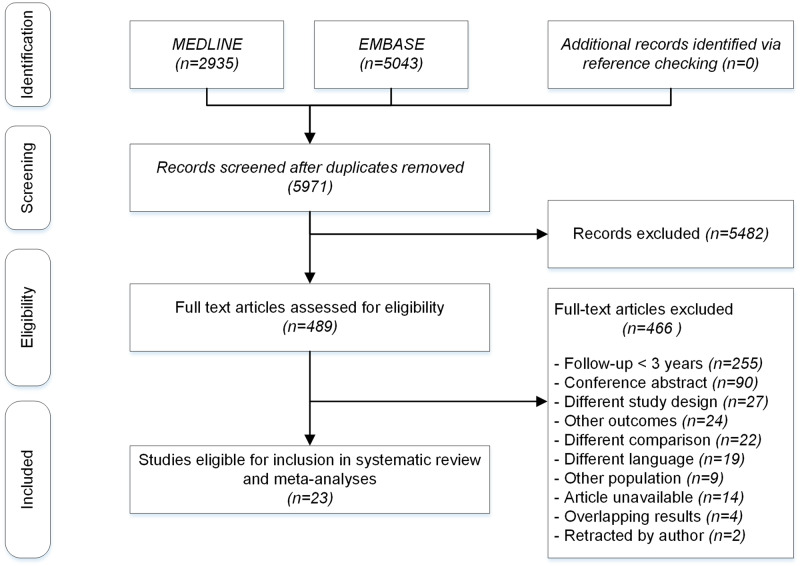
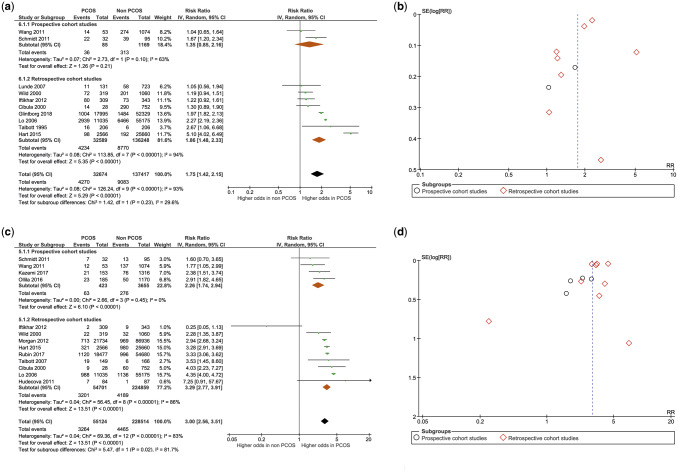
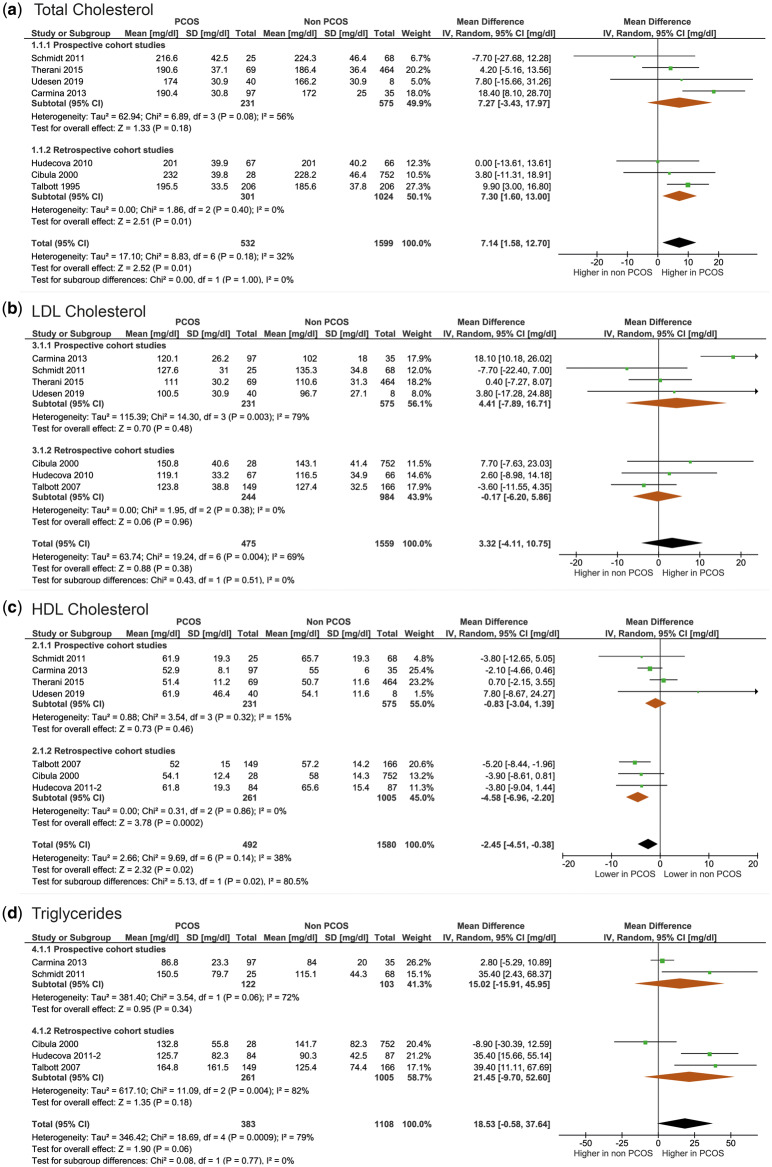
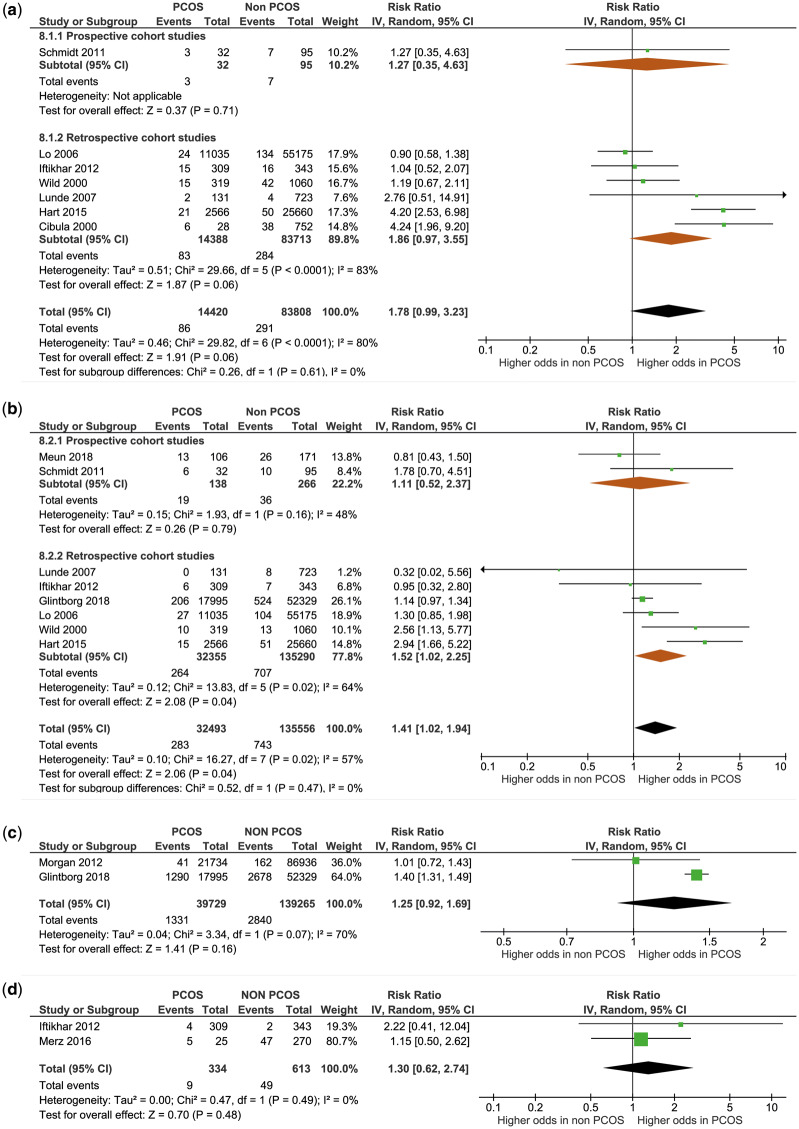
BACKGROUND: Polycystic ovary syndrome (PCOS) is associated with cardiometabolic disease, but recent systematic reviews and meta-analyses of longitudinal studies that quantify these associations are lacking. OBJECTIVE AND RATIONALE: Is PCOS a risk factor for cardiometabolic disease? SEARCH METHODS: We searched from inception to September 2019 in MEDLINE and EMBASE using controlled terms (e.g. MESH) and text words for PCOS and cardiometabolic outcomes, including cardiovascular disease (CVD), stroke, myocardial infarction, hypertension (HT), type 2 diabetes (T2D), metabolic syndrome and dyslipidaemia. Cohort studies and case–control studies comparing the prevalence of T2D, HT, fatal or non-fatal CVD and/or lipid concentrations of total cholesterol (TC), low-density lipoprotein cholesterol (LDL-C), high-density lipoprotein cholesterol (HDL-C) and triglycerides (TGs) between women with and without PCOS of ≥18 years of age were eligible for this systematic review and meta-analysis. Studies were eligible regardless of the degree to which they adjusted for confounders including obesity. Articles had to be written in English, German or Dutch. Intervention studies, animal studies, conference abstracts, studies with a follow-up duration less than 3 years and studies with less than 10 PCOS cases were excluded. Study selection, quality assessment (Newcastle–Ottawa Scale) and data extraction were performed by two independent researchers. OUTCOMES: Of the 5971 identified records, 23 cohort studies were included in the current systematic review. Women with PCOS had increased risks of HT (risk ratio (RR): 1.75, 95% CI 1.42 to 2.15), T2D (RR: 3.00, 95% CI 2.56 to 3.51), a higher serum concentration of TC (mean difference (MD): 7.14 95% CI 1.58 to 12.70 mg/dl), a lower serum concentration of HDL-C (MD: −2.45 95% CI −4.51 to −0.38 mg/dl) and increased risks of non-fatal cerebrovascular disease events (RR: 1.41, 95% CI 1.02 to 1.94) compared to women without PCOS. No differences were found for LDL-C (MD: 3.32 95% CI −4.11 to 10.75 mg/dl), TG (MD 18.53 95% CI −0.58 to 37.64 mg/dl) or coronary disease events (RR: 1.78, 95% CI 0.99 to 3.23). No meta-analyses could be performed for fatal CVD events due to the paucity of mortality data. WIDER IMPLICATIONS: Women with PCOS are at increased risk of cardiometabolic disease. This review quantifies this risk, which is important for clinicians to inform patients and to take into account in the cardiovascular risk assessment of women with PCOS. Future clinical trials are needed to assess the ability of cardiometabolic screening and management in women with PCOS to reduce future CVD morbidity.
Overview
The claims and statistics of this paper haven’t been checked yet.
Free: it reads the open-access text and checks the first 5 claims that cite a source we can check. Create a free account to check every claim.
Integrity signals
Registry
Cites
Statistics
Figures
Verification
Claims the paper makes
The claims and statistics of this paper haven’t been checked yet.
Free: it reads the open-access text and checks the first 5 claims that cite a source we can check. Create a free account to check every claim.
Claims other papers make about this one
Each is checked against this paper’s own text: does it say what the citing paper says it does?
The source backs part of the claim, not all of it — or backs it for a different population, condition or comparison.
In the citing paper
“PCOS is associated with increased co-morbidities including obesity, infertility, pregnancy complications, depression and anxiety, metabolic syndrome, diabetes, reproductive cancers and cardiovascular disease [3, 7, 8, 10–13].”
From Challenges in diagnosis and health care in polycystic ovary syndrome in Canada: a patient view to improve health care (2023) · cites this paper as [13]
Experimental — accuracy not yet measuredIn the citing paper
“Women with PCOS have a more unfavorable lipid profile than women without PCOS.62,63”
Self-check
Percentages, sums and reported differences re-computed from the paper’s own numbers.
The self-check needs the paper’s full text.
Citations
Cites
Preferred Reporting Items for Systematic Reviews and Meta-Analyses: the PRISMA statement
Moher, D., Liberati, A., Tetzlaff, J., Altman, D. G., & for the PRISMA Group (2009) · BMJ · doi:10.1136/bmj.b2535 · Cited by 83,823
Preferred reporting items for systematic reviews and meta-analyses: the PRISMA Statement.
(2009) · PubMed Central · Cited by 44,859
(2004) · Fertility and Sterility · doi:10.1016/j.fertnstert.2003.10.004 · Cited by 9,050
European Guidelines on cardiovascular disease prevention in clinical practice (version 2012)
Authors/Task Force Members:, Perk, J., De Backer, G., Gohlke, H., Graham, I., Reiner, Ž., Verschuren, M., Albus, C., Benlian, P., Boysen, G., et al. (2012) · European Heart Journal · doi:10.1093/eurheartj/ehs092 · Cited by 8,490
How should meta‐regression analyses be undertaken and interpreted?
Thompson, S. G., & Higgins, J. P. T. (2002) · Statistics in Medicine · doi:10.1002/sim.1187 · Cited by 3,026
Meschia, J. F., Bushnell, C., Boden-Albala, B., Braun, L. T., Bravata, D. M., Chaturvedi, S., Creager, M. A., Eckel, R. H., Elkind, M. S. V., Fornage, M., et al. (2014) · Stroke · doi:10.1161/str.0000000000000046 · Cited by 2,650
Men at risk: occupation and male infertility
Claman, P. (2004) · Fertility and Sterility · doi:10.1016/s0015-0282(03)01188-9 · Cited by 2,387
Azziz, R., Carmina, E., Dewailly, D., Diamanti-Kandarakis, E., Escobar-Morreale, H. F., Futterweit, W., Janssen, O. E., Legro, R. S., Norman, R. J., Taylor, A. E., et al. (2009) · Fertility and Sterility · doi:10.1016/j.fertnstert.2008.06.035 · Cited by 2,132 · cited 2×
“Sensitivity analyses including highquality studies and based on the diagnostic criteria for PCOS (NIH 1990 criteria (Zawadzki and Dunaif, 1992), AE-PCOS criteria (Azziz et al., 2009) or Rotterdam 2003 criteria (Rotterdam ESHRE/ASRMSponsored PCOS Consensus Workshop Group, 2004)) were performed if three or more studies…”
MethodTeede, H. J., Misso, M. L., Costello, M. F., Dokras, A., Laven, J., Moran, L., Piltonen, T., Norman, R. J., & the International PCOS Network (2018) · Clinical Endocrinology · doi:10.1111/cen.13795 · Cited by 1,823
Self-citationInsulin resistance and cardiovascular disease
Ginsberg, H. N. (2000) · Journal of Clinical Investigation · doi:10.1172/jci10762 · Cited by 1,358 · cited 1×
“Intrinsic insulin resistance, often present and linked to hyperandrogenism in women with PCOS, is also associated with cardiometabolic disease (Ginsberg, 2000; Baptiste et al., 2010; Stepto et al., 2013; Cassar et al., 2016).”
Background
Research works printed but not linked: 1
- Zawadzki J, Dunaif A. Diagnostic Criteria for Polycystic Ovary Syndrome: Towards a Rational Approach. Boston: Blackwell Scientific Publications, 1992.
Cited by
Items 201–300 of 450
Programmed cell death 4: A novel player in the pathogenesis of polycystic ovary syndrome
Zarezadeh, R., Abbasi, K., Beilankouhi, E. A. V., Navali, N., Hakimi, P., Fattahi, A., & Farzadi, L. (2023) · Cell Biochemistry and Function · doi:10.1002/cbf.3905 · Cited by 6
Polycystic Ovarian Syndrome: Exploring Hypertension and Cardiometabolic Implications
Silva, G. D. B., Garcia, K. D. T., Ajamyan, H., Shekhawat, P., Rodriguez, L., Hammoud, A. O., Zapata, M. D. J. A., Hernandez, N. F., & Rayon, H. M. R. (2024) · Cureus · doi:10.7759/cureus.70958 · Cited by 10
“However, the exact mechanism of this latter effect remains unclear [52-54].”
BackgroundKwiatkowski, J., Akpang, N., Ziemkiewicz, Z., Zaborowska, Ł., & Ludwin, A. (2025) · International Journal of Molecular Sciences · doi:10.3390/ijms26178192 · Cited by 7
Unfer, V. (2021) · International Journal of Molecular Sciences · doi:10.3390/ijms221810114 · Cited by 8
Gu, M., Ruan, X., Li, Y., Li, T., Yin, C., & Mueck, A. O. (2022) · Gynecological Endocrinology · doi:10.1080/09513590.2022.2078805 · Cited by 9
“A recent study suggests that patients with PCOS have a higher risk for cardiovascular diseases (CVDs), such as an increased risk of cardiometabolic diseases [3].”
BackgroundStaying up late increases cardiovascular disease risk in women with polycystic ovary syndrome
Zeng, X., Ye, J., Yan, X., Zhang, J., Guo, J., Tao, X., Zheng, X., Tong, M., Huang, Y., Zhang, M., et al. (2023) · Human Reproduction · doi:10.1093/humrep/dead110 · Cited by 7
Biomaterials as regenerative medicine in Poly Cystic Ovarian Syndrome (PCOS) treatment
Chauhan, N., Peter, A., Soni, S., Rawal, R., & Jain, U. (2022) · Biochemical Engineering Journal · doi:10.1016/j.bej.2022.108649 · Cited by 7
Insulin resistance: still an underestimated factor in polycystic ovary syndrome?
Zippl, A. L., Seeber, B., & Wildt, L. (2021) · Fertility and Sterility · doi:10.1016/j.fertnstert.2021.03.020 · Cited by 6
Polycystic ovary syndrome and cardiovascular risk: asking the right questions
Safwan, N., Saadedine, M., Merz, C. N. B., & SHUFELT, C. L. (2024) · European Journal of Preventive Cardiology · doi:10.1093/eurjpc/zwae159 · Cited by 6
Asouri, S. A., Asemi, R., Aghadavod, E., & Jamilian, M. (2024) · Annals of Medicine and Surgery · doi:10.1097/ms9.0000000000001732 · Cited by 6
“According to a recent meta-analysis result, patients with PCOS had increased total cholesterol levels and decreased HDL-cholesterol concentrations, and the risk of non-fatal cerebrovascular diseases is high among them [56] .”
ResultJeong, H. G., Jeon, M., Ryu, K.-J., Kim, J., Choe, B. Y., Joo, Y. Y., & Park, H. (2024) · Journal of Korean Medical Science · doi:10.3346/jkms.2024.39.e284 · Cited by 5
“17 Notably, these metabolic disorders, which contribute to increased cardiovascular risk, were not observed as comorbidities with endometriosis in our analysis.”
Recent advances in reprogramming lactate metabolism in polycystic ovary syndrome
Xu, J., Chen, W., Huang, M.-N., Zheng, L., Huang, S.-Y., Lin, S., & Shi, Q. (2025) · Journal of Ovarian Research · doi:10.1186/s13048-025-01797-x · Cited by 6
Androgen actions in metabolic tissues in polycystic ovary syndrome
MacRae, C. L., & Campbell, R. E. (2026) · Endocrinology · doi:10.1210/endocr/bqag001 · Cited by 6
Liu, S., Wang, R., Yu, W., Shi, C., Wang, X., Liu, A., & Zhang, L. (2026) · Nutrients · doi:10.3390/nu18060964 · Cited by 6
Luque‐Ramírez, M., Ortiz-Flores, A. E., Nattero‐Chávez, L., Martínez-García, M. Á., Insenser, M. R., Álvarez‐Blasco, F., Fernández‐Durán, E., Quintero-Tobar, A., Quiñones, S. D. L., & Escobar-Morreale, H. F. (2021) · Scientific Reports · doi:10.1038/s41598-021-01606-7 · Cited by 6
Alur-Gupta, S., Boland, M. R., Dokras, A., Haendel, M. A., Chute, C. G., Walden, A., Gersing, K. R., Misquitta, L., Gersing, K. R., Burgoon, P. W., et al. (2023) · Fertility and Sterility · doi:10.1016/j.fertnstert.2023.01.025 · Cited by 5
“Although data surrounding cardiovascular disease are limited especially with regard to longitudinal studies, there are longitudinal data on cardiometabolic disease risk factors persisting beyond the reproductive years (7, 9, 10).”
Yavuzcan, A., Keyif, B., Yavuzcan, G., & Göynümer, G. (2024) · Turkish Journal of Biochemistry · doi:10.1515/tjb-2023-0215 · Cited by 5
Zhao, X., Wang, J., Sun, D., Xu, D., & Lu, Y. (2024) · European Journal of Preventive Cardiology · doi:10.1093/eurjpc/zwae375 · Cited by 16
Ganie, M. A., Malhotra, N., Jabbar, P. K., Aggarwal, S., Rozati, R., Sahay, R. K., Chowdhary, S., Kamboj, S., Wani, I. A., Arora, T. K., et al. (2025) · BMC Women s Health · doi:10.1186/s12905-025-03617-2 · Cited by 6
“Although, the disorder classically presents with features of an-ovulation and hyperandrogenism, a barrage of metabolic abnormalities are described which may manifest simultaneously or later in life and is a cause of concern, besides menstrual and reproductive dysfunctions [2, 3].”
InfluentialDuan, J., Sun, Y.-F., Wang, X., Liu, H., Chang, Z., Shao, Y., Liu, J., & Hou, R. (2025) · Journal of Asian Natural Products Research · doi:10.1080/10286020.2025.2482072 · Cited by 5
Risk of Cardiovascular Diseases Associated with PCOS in India: A Review
Kaur, A., Kumar, R., Kumar, H., Garg, S., Vijukumar, A., & Kumar, D. (2025) · Current Cardiology Reviews · doi:10.2174/011573403x349035250408050637 · Cited by 5
Civilsamhället klämt mellan stat och kapital välfärd, mångfald, framtid
Trägårdh, L., Selle, P., & Henriksen, L. S. (2013) · VBN Forskningsportal (Aalborg Universitet) · Cited by 24
Yang, Z. F., Liu, F.-T., Bai, J., Ye, Z., Yin, J., Peng, T., Shan, H., Yu, Y., Zhou, P., & Li, R. (2023) · Biology of Reproduction · doi:10.1093/biolre/ioad017 · Cited by 6
Żeber‐Lubecka, N., Kulecka, M., Suchta, K., Dąbrowska, M., Ciebiera, M., & Hennig, E. E. (2023) · Antioxidants · doi:10.3390/antiox12111983 · Cited by 7
“The metabolic and reproductive consequences of the disease occur more frequently and are more severe in women with coexisting PCOS and HT than in women with each condition separately [2,3].”
Forslund, M., Landin‐Wilhelmsen, K., Brännström, M., & Dahlgren, E. (2023) · European Journal of Obstetrics & Gynecology and Reproductive Biology · doi:10.1016/j.ejogrb.2023.04.008 · Cited by 5
Cao, Q., Wang, R., Zhou, R., Huang, X., Li, Y., Zhu, H., Qiao, X., & Huang, W. (2024) · Psychoneuroendocrinology · doi:10.1016/j.psyneuen.2024.106984 · Cited by 4
Polycystic Ovary Syndrome and Sex Hormones in Bariatric Surgery Candidates
Dong, S., Law, S., Ou, C., Wu, B., Dong, Z., Yang, W., & Zhang, X. (2025) · Obesity Surgery · doi:10.1007/s11695-025-07740-9 · Cited by 4
Exploration and analysis of methylglyoxal-driven chronic inflammation in polycystic ovary syndrome
Song, J., Wang, X., Feng, D., Gao, W., Wang, X., Qiu, X., Cheng, W., Fang, Y., Shi, B., & Li, D. (2025) · Journal of Advanced Research · doi:10.1016/j.jare.2025.08.048 · Cited by 4
“Metabolic dysfunction characterized by insulin resistance and dyslipidemia is a key factor contributing to PCOS [19,20].”
Autonomic dysfunction in polycystic ovary syndrome
Adams, Z. H., Simpson, L. L., Hart, E. C., & Lord, R. N. (2025) · Autonomic Neuroscience · doi:10.1016/j.autneu.2025.103357 · Cited by 4
Cardiovascular-Kidney-Metabolic Syndrome: Development of an ICD-10-CM Coding Framework
ZHAO, M., Zhang, J., Wang, H., Xu, C., Li, J., Li, C., He, X., & Zheng, X. (2026) · JMIR Diabetes · doi:10.2196/91827 · Cited by 5
“PCOS is one of the most common endocrine disorders in reproductive-age women, characterized by hyperandrogenism, anovulation, and insulin resistance, and is strongly linked to obesity, T2DM, dyslipidemia, and increased long-term CVD risk [85-87].”
Hypertension and dyslipidemia in women with PCOS: a population-based multiregister study in Sweden
Persson, S., Türkmen, Ş., Hirschberg, A. L., Poromaa, I. S., & Elenis, E. (2026) · Human Reproduction · doi:10.1093/humrep/deag064 · Cited by 5
“…dyslipidemia, hypertension is also more commonly seen among women with PCOS than in the general female population, with higher blood pressure reported already at a younger age (Elting et al. , 2001; Diamanti-Kandarakis et al. , 2007; Ollila et al. , 2019; Wekker et al. , 2020; Zhang et al. , 2025).”
Prediction and Analysis of Polycystic Ovary Syndrome Using Machine Learning
Raghav, S., Rathore, M., Suri, A., Jain, R., Nagrath, P., & Kumar, A. (2023) · Lecture notes in electrical engineering · doi:10.1007/978-981-19-8493-8_13 · Cited by 4
Liao, C.-C., Chien, C., Yu, T., & Li, J. (2023) · Journal of Multidisciplinary Healthcare · doi:10.2147/jmdh.s442816 · Cited by 4
“9 10–12 Women diagnosed with PCOS are more likely to possess conventional cardiovascular risk factors, such as obesity, hypertension, dyslipidemia, and insulin resistance, leading to an increased risk of CHD development.”
BackgroundVisfatin and VEGF levels are not increased in adolescent girls with polycystic ovary syndrome
Skrzyńska, K., Zachurzok, A., Pietrusik, A., Jakubowska-Kowal, K. M., & Gawlik, A. (2024) · Frontiers in Endocrinology · doi:10.3389/fendo.2024.1488249 · Cited by 5
Alarslan, P., & Doruk, M. (2025) · Journal of Personalized Medicine · doi:10.3390/jpm15020070 · Cited by 4
“However, the underlying mechanisms linking PCOS to these disorders remain as poorly understood topics [3].”
Garay, O. U., Olziersky, A.-M., Laven, J. S. E., Mawson, R. L., Piltonen, T., Franks, S., & Sillman, J. (2025) · PLoS ONE · doi:10.1371/journal.pone.0326162 · Cited by 4
“…compared with individuals without PCOS, individuals with PCOS are at increased risk of type 2 diabetes (T2D) and metabolic disturbances such as dyslipidemia and hypertension; adverse pregnancy outcomes; psychological conditions, such as depression and anxiety; and endometrial cancer [7,8,11,12].”
Self-citationParker, M. N., Wiggins, S. P., Thornton, J. A., Sunderland, K. W., Brydum, R., Funk, W., Pav, V., & Klein, D. A. (2025) · Journal of Pediatric and Adolescent Gynecology · doi:10.1016/j.jpag.2025.06.008 · Cited by 4
Kiel, I. A., Jones, H., Lionett, S., Røsbjørgen, R. E. N., Lydersen, S., Vanky, E., & Moholdt, T. T. (2022) · Journal of Clinical Medicine · doi:10.3390/jcm11061626 · Cited by 6
“PCOS is associated with multiple cardiovascular disease (CVD) risk factors already present in the pre-menopausal age in this clinical population [1,2].”
BackgroundShrivastava, R., Pathak, T., Shrivastava, P., Patel, S. N., Chouhan, S., Singh, R., Parashar, R., & Mishra, S. (2023) · Cureus · doi:10.7759/cureus.45580 · Cited by 6
“Additionally, obesity, which is one of the major risk factors for cardiometabolic diseases, is common with PCOS and is reported in approximately half of the PCOS-affected population [6].”
BackgroundSzakun, N. A., Liva, S., Bodner, M. E., Wolff, A. C., Kim, M., & Coté, A. T. (2023) · CJC Open · doi:10.1016/j.cjco.2023.11.003 · Cited by 5
Pregnancy, Reproductive Factors, and Female Heart Failure Risk and Outcomes
Moreno, G., Martínez‐Sellés, M., Vicente-Galán, M. J., & Vicent, L. (2024) · Current Heart Failure Reports · doi:10.1007/s11897-024-00657-x · Cited by 4
“In fact, recent systematic reviews and meta-analyses have not found an increased risk of non-fatal cardiovascular disease events (including HF) in women with PCOS [62].”
Shruthi, S., Nirmaladevi, V., & Aravindhan, V. (2024) · Journal of Reproductive Immunology · doi:10.1016/j.jri.2024.104388 · Cited by 4
Psychological symptoms in perimenarcheal adolescents: association with PCOS risk factors
Brink, H. V., McCormick, K. C., Lujan, M. E., Chang, J. P., Ipp, L. S., Mudrak, E. L., Alladeen, A., Lamar, H., Kim, J. Y., & Mendle, J. (2025) · Frontiers in Endocrinology · doi:10.3389/fendo.2025.1551958 · Cited by 5
The hyperemic response to exercise is blunted in females with polycystic ovary syndrome
Huckins, W., Delage, S. I., Berbrier, D. E., Skolnik, D. A., Keightley, H. S. A., & Usselman, C. W. (2025) · American Journal of Physiology-Regulatory, Integrative and Comparative Physiology · doi:10.1152/ajpregu.00263.2024 · Cited by 4
Metabolic Syndrome in Polycystic Ovary Syndrome
Hsieh, Y.-C., Yang, P.-K., & Chen, M. (2021) · Fertility & Reproduction · doi:10.1142/s2661318221500158 · Cited by 4
Is polycystic ovary syndrome undervalued in China?
Zheng, X., & Wang, C. C. (2022) · The Lancet Regional Health - Western Pacific · doi:10.1016/j.lanwpc.2022.100513 · Cited by 4
Management of Hypertension in Patients With Polycystic Ovarian Syndrome: A Mini-Review
Liaghatdar, A., Mazaheri‐Tehrani, S., & Fakhrolmobasheri, M. (2024) · Cardiology in Review · doi:10.1097/crd.0000000000000635 · Cited by 4
Cao, Q., Liu, D., Zhu, H., Wang, Q., Tan, J., Huang, X., Li, Y., Wang, R., Zhou, R., & Huang, W. (2025) · Gynecological Endocrinology · doi:10.1080/09513590.2025.2530566 · Cited by 3
“In addition to reduced fertility, women with PCOS exhibit metabolic syndrome features, including insulin resistance (IR), obesity, nonalcoholic fatty liver disease, and type II diabetes [3,4].”
Targeted metabolomics in PCOS mice identifies hippuric acid as a therapeutic metabolite
Lan, H. Y., Meng, B., Li, J., Duan, C., Liu, S., Qu, P., & Qin, H. (2025) · Steroids · doi:10.1016/j.steroids.2025.109665 · Cited by 3
Cardiovascular Consequences of Premature Menopause
Bast, J. A., Olubi, O. M., Le, D. E., Parashar, S., Dobrescu, I., & Kondapalli, L. (2025) · Current Cardiology Reports · doi:10.1007/s11886-025-02265-0 · Cited by 3
“These women have a 2–4-fold increased risk of type 2 diabetes [ 33] and dyslipidemia [ 34].”
“I feel like it gets worse as I get older”: perspectives of peri-postmenopausal women with PCOS
Wright, P. J., Corbett, C. F., Dawson, R. M., & Burts, C. (2025) · Frontiers in Global Women s Health · doi:10.3389/fgwh.2025.1588505 · Cited by 4
Cardiometabolic risk in women with polycystic ovary syndrome: a comprehensive review
Cagnacci, A., ANTONELLI, G. A., VATTERONI, G., & Xholli, A. (2025) · Minerva Obstetrics and Gynecology · doi:10.23736/s2724-606x.25.05732-x · Cited by 4
Luque‐Ramírez, M., Martínez-García, M. Á., Insenser, M. R., Quintero-Tobar, A., Quiñones, S. D. L., Nattero‐Chávez, L., & Escobar-Morreale, H. F. (2025) · European Journal of Endocrinology · doi:10.1093/ejendo/lvaf213 · Cited by 3
Dysregulation of Endothelial cell markers in polycystic ovary syndrome
Borde, P., Niinuma, S. A., Habib, H., Takemoto, A. S.-N., Nandakumar, M., Sathyapalan, T., Butler, A. E., & Atkin, S. L. (2026) · Scientific Reports · doi:10.1038/s41598-026-40533-3 · Cited by 3
Xu, Y., Ning, L., Wang, R., Ma, H., Zhao, H., Si, Y., Xiu, L., & Ren, Q. (2026) · Reproductive Toxicology · doi:10.1016/j.reprotox.2026.109200 · Cited by 3
Kelly, R. K., Harris, K., Muntner, P., & Woodward, M. (2026) · Journal of the American Heart Association · doi:10.1161/jaha.125.045533 · Cited by 3
Ho, V. N. A., Pham, T. D., Nguyen, N. T., Tran, L. T. H., Ho, T. M., Tran, V. T. T., Le, H. L., Tran, M. T. N., Tran, H. K., Truong, D. H., et al. (2026) · Fertility and Sterility · doi:10.1016/j.fertnstert.2026.05.165 · Cited by 3
Spritzer, P. M., dos Santos, G. R., Vega, M. L. M., Chedraui, P. A., Pilnik, S., Lascano, A. C., Belardo, A., Elizalde-Cremonte, A., Ramírez, A. V., Balán, A. R., et al. (2025) · Gynecological Endocrinology · doi:10.1080/09513590.2025.2456578 · Cited by 4
“It is associated with reproductive, hormonal, and cardiometabolic dysfunctions, such as insulin resistance and related comorbidities [1,2].”
Adropin-Driven Browning: Targeting M2 Macrophages to Combat PCOS
Zhang, S., Li, J., Lv, X., Pan, G., Liu, Q., Zheng, L., & Xu, L. (2025) · International Immunopharmacology · doi:10.1016/j.intimp.2025.114273 · Cited by 3
Pereira, J. D., Magalhães, F. M. V., Tameirão, F. M. S., Soriani, F. M., Jorge, K. T. D. O. S., dos Reis, F. M., Cândido, A. L., Comim, F. V., & Gomes, K. B. (2025) · Molecular and Cellular Endocrinology · doi:10.1016/j.mce.2025.112492 · Cited by 3
Pharmacological management of PCOS: trends and insights from a 10-year bibliometric analysis
Gautam, R., Jyoti, A., Bhateja, A., Malhotra, N., & Arora, T. (2025) · Expert Opinion on Pharmacotherapy · doi:10.1080/14656566.2025.2535175 · Cited by 3
“Further PCOS is also closely associated with metabolic derangements such as insulin resistance, obesity, dyslipidemia, type 2 diabetes mellitus, and cardiovascular disease [7–10].”
Richards, C. T., Griffiths, T. D., Adams, Z. H., Wright, M. E., Davies, S., Talbot, J. S., Broad‐Thomas, L., Esteban, D. G., Steventon, J. J., Brassard, P., et al. (2025) · Clinical Endocrinology · doi:10.1111/cen.70061 · Cited by 3
Na, Z., Song, J., Meng, Y., Feng, D., Wei, J., Jiang, H., Yang, H., Peng, Y., Cheng, D., Fang, Y., et al. (2022) · Reproductive BioMedicine Online · doi:10.1016/j.rbmo.2022.04.011 · Cited by 4
Newer Glucose-Lowering Medications and Potential Role in Metabolic Management of PCOS
Anam, A. K., & Inzucchi, S. E. (2022) · Springer eBooks · doi:10.1007/978-3-030-92589-5_26 · Cited by 3
Nonalcoholic Fatty Liver Disease in Polycystic Ovary Syndrome: A Race Against the Clock
Huffman, A. M., & Romero, D. G. (2022) · Endocrinology · doi:10.1210/endocr/bqac167 · Cited by 3
Al-Busaidi, S., Al-Farsi, M., Al-Maqbali, J. S., Kashoub, M. S., Farhan, H., Rawahi, B. A., & Alawi, A. M. A. (2023) · Cureus · doi:10.7759/cureus.34251 · Cited by 3
“Additionally, combined oral contraceptives (COCs) containing estrogen are well known to increase the risk of VTE and ischemic stroke.”
BackgroundInfluentialPaediatric Obesity Evaluation for Metabolic Susceptibility (POEMS)
Chan, D. W. K., Chua, C., Loh, C. L. Y., Sultana, R., & Vasanwala, R. F. (2023) · BMJ Open Diabetes Research & Care · doi:10.1136/bmjdrc-2022-003228 · Cited by 4
Association Between rs2278426 Polymorphism of the ANGPTL8 Gene and Polycystic Ovary Syndrome
Wu, H., Wang, H., Sun, L., Liu, M., Wang, H., Sun, X., & Zhang, W. (2024) · Diabetes Metabolic Syndrome and Obesity · doi:10.2147/dmso.s455274 · Cited by 3
Akram, W., Nori, W., & Zghair, M. A. G. (2023) · Italian Journal of Gynaecology and Obstetrics · doi:10.36129/jog.2022.86 · Cited by 3
Cardiovascular Events in Polycystic Ovary Syndrome: Is the Debate Settled for Good?
Romero, D. G., & Cardozo, L. L. Y. (2021) · The Journal of Clinical Endocrinology & Metabolism · doi:10.1210/clinem/dgab509 · Cited by 3
Pouraghajan, K., & Mohamadpour, M. (2023) · Research Square · doi:10.21203/rs.3.rs-3402313/v1 · Cited by 3
Dileep, A., & Saeed, S. (2025) · International Journal of Gynecology & Obstetrics · doi:10.1002/ijgo.70240 · Cited by 2
Ahmad, R., Frishman, W. H., & Aronow, W. S. (2025) · Cardiology in Review · doi:10.1097/crd.0000000000001054 · Cited by 4
Khalafi, M., Fatolahi, S., Rahmatpanah, G., Symonds, M. E., Rosenkranz, S. K., Dinizadeh, F., & Batrakoulis, A. (2026) · BMC Women s Health · doi:10.1186/s12905-025-04240-x · Cited by 2
“The efficacy of AT is most evident in individuals who initially present with elevated inflammation or suboptimal cardiometabolic health [82], as is the case with women diagnosed with PCOS [8].”
MASLD coexisting with PCOS increases cardiometabolic risk
Ayonrinde, O. T., Mori, T. A., Adams, L. A., Beilin, L. J., Olynyk, J. K., & Hart, R. J. (2026) · The Journal of Clinical Endocrinology & Metabolism · doi:10.1210/clinem/dgag008 · Cited by 2
Du, C., Deng, L., Ran, J., Wang, Y., Tang, D., Liu, L., Liu, L., Wang, C. H., Ayis, S. A., Chen, L., et al. (2026) · Tropical Medicine & International Health · doi:10.1111/tmi.70110 · Cited by 2
Wan, K., Dai, Z.-H., Lei, E., Wong, P.-S., Wang, Y.-Y., Yu, A. P., Lin, F., Huang, Y., Duncan, W. C., Chan, K. Y., et al. (2026) · The Lancet Obstetrics Gynaecology & Women s Health · doi:10.1016/s3050-5038(25)00219-5 · Cited by 2
Gao, L., Ju, Y., Zhu, Y., Xu, J., & Lu, D. (2026) · Frontiers in Endocrinology · doi:10.3389/fendo.2026.1700331 · Cited by 2
Effect of breastfeeding on cardiometabolic risk in patients with polycystic ovary syndrome
Palomba, S., Seminara, G., Costanzi, F., Cannarella, R., Russo, T., Signore, F., Sarica, M., Calogero, A. E., Caserta, D., & Aversa, A. (2026) · Journal of Endocrinological Investigation · doi:10.1007/s40618-026-02948-7 · Cited by 2
“Furthermore, large-scale meta-analyses have confirmed that women with PCOS are at elevated long-term risk for cardiometabolic conditions, such as hypertension and DM2 [10].”
Forslund, M., Melin, J. M., Joham, A. E., Piltonen, T., Rees, A., & Teede, H. J. (2026) · Journal of Internal Medicine · doi:10.1111/joim.70156 · Cited by 2
“Multiple large-scale population-based cohort studies have conclusively demonstrated elevated CVD risk in women with PMOS across diverse healthcare systems and geographic regions [7, 81].”
Adverse pregnancy outcomes and long-term cardiovascular risk: lifelong connections
Giorgione, V., Parikh, N. I., Pedicino, D., & Thilaganathan, B. (2026) · European Heart Journal · doi:10.1093/eurheartj/ehag654 · Cited by 2
“78,79 A similar clustering of pre-pregnancy risk factors has been re-ported for other APOs.”
Evaluation of the cardiovascular risk in women with PCOS
Alkassas, A., Mohammed, R. R., & Elian, M. (2023) · Benha Medical Journal · doi:10.21608/bmfj.2023.176005.1715 · Cited by 2
“without PCOS (28) and one comparative study reported that normotensive nonobese PCOS women were prone to have higher left ventricular mass index than”
BackgroundStatins for women with polycystic ovary syndrome not actively trying to conceive
Xiong, T., Fraison, É., Kolibianaki, E., Costello, M., Venetis, C. A., & Kostova, E. (2023) · Cochrane Database of Systematic Reviews · doi:10.1002/14651858.cd008565.pub3 · Cited by 4
MODERN METHODS OF SOLVING SCIENTIFIC PROBLEMS OF REALITY
International Science Group, & Vladlenov, D. (2023) · doi:10.46299/isg.p.2023.1.35 · Cited by 2
Chowdhury, D. S., Hossain, D. M. J., Akhter, S., Ahmed, M. I., & Nasrin, S. (2025) · Scholars International Journal of Obstetrics and Gynecology · doi:10.36348/sijog.2025.v08i01.006 · Cited by 2
Areloegbe, S. E. J., Atuma, C. L., Aturamu, A., Ajadi, I. O., Adelekan, O. E., Ajadi, M. B., Akintayo, C. O., Omoruyi, G. O., Onyekweli, S. O., Anifowose, O. F., et al. (2025) · BMC Nephrology · doi:10.1186/s12882-025-04157-5 · Cited by 2
Bhandary, P., Shetty, P. K., Shetty, P. K., Manjeera, L., & Patil, P. (2025) · Reproductive Biology · doi:10.1016/j.repbio.2025.101085 · Cited by 3
Assisted Reproductive Technology and Cardiovascular Risk in Women
Cameron, K. E., Luke, B., Murugappan, G., & Baker, V. L. (2023) · Current Cardiovascular Risk Reports · doi:10.1007/s12170-023-00732-3 · Cited by 3
Connecting Obesity and Reproductive Disorders
Ahima, R. S., & Dias, J. P. (2023) · Springer eBooks · doi:10.1007/978-3-031-40116-9_54 · Cited by 4
Topiramate Added to Metformin for Obesity Control in Women With Polycystic Ovary Syndrome
Marchesan, L. B., Silva, T. R., & Spritzer, P. M. (2024) · The Journal of Clinical Endocrinology & Metabolism · doi:10.1210/clinem/dgae637 · Cited by 4
Vedavathi, V., Goud, V. G., Patil, S., & Gandham, R. (2023) · Asian Journal of Medical Sciences · doi:10.3126/ajms.v14i6.51673 · Cited by 1
A holistic approach to advancing women’s health
Turco, M. Y., & Kraft, O. (2025) · Nature Reviews Bioengineering · doi:10.1038/s44222-025-00304-7 · Cited by 2
“For example, polycystic ovary syndrome (PCOS) is associated with a 68% higher risk of composite cardiovascular disease, a 3-fold increased risk of type 2 diabetes, mental health issues, and an 8-fold increase in suicide risk 4–6 .”
Yan, W., Kan, Z., Wang, L., Yu, Z.-P., Liu, C., Yan, S., & Yang, N. (2025) · Integrative Medicine Research · doi:10.1016/j.imr.2025.101148 · Cited by 1
Risk Factors for Hypertension in Polycystic Ovary Syndrome: Evidence from a Retrospective Study
Robeva, R. N., Elenkova, A. P., Кirilov, G., Kalinov, K., & Zacharieva, S. (2025) · Life · doi:10.3390/life15091416 · Cited by 1
“In a large meta-analysis, Wekker et al. report an increased risk for hypertension in PCOS women compared to healthy women [9].”
Upadhyay, S., Mazumder, A., & Das, S. (2025) · Current Pharmaceutical Design · doi:10.2174/0113816128382284250822045319 · Cited by 1
Xu, Y., Si, Y., Li, N., Wang, R., Hua, M., Xiu, L., Zhao, H., & Ren, Q. (2025) · Frontiers in Nutrition · doi:10.3389/fnut.2025.1644496 · Cited by 1
Swinton, M., Kim, M., Klein, D. A., Thornton, J. A., Sunderland, K. W., Brydum, R., Funk, W., Pav, V., & Parker, M. N. (2025) · Women s Health Issues · doi:10.1016/j.whi.2025.09.004 · Cited by 1
A multidisciplinary approach to polycystic ovary syndrome: synergy of methods
Andreeva, E. N., Mel'nichenko, G. A., Yarmolinskaya, M. I., Khamoshina, M. B., Сутурина, Л. В., Фархадовна, Б. Ф., Grigoryan, O. R., Sukhareva, O. Y., Tiselko, A. V., Vorotnikova, S. Y., et al. (2025) · Bulletin of Reproductive Health · doi:10.14341/brh12779 · Cited by 1
Goliger, M., Kozlov, M., Auerbach, E., Givoni, J., Adler, R., Weiss, J. P., & Lazar, J. (2025) · Baylor University Medical Center Proceedings · doi:10.1080/08998280.2025.2605612 · Cited by 1
“12 Even in younger individuals without overt obesity or diabetes, studies have identified early lipid abnormalities, dysregulated blood pressure, and signs of emerging cardiorenal dysfunction.”
Liu, X., Xie, R., Cai, Y., Lan, H., Mu, J., Zhang, C., & Li, B. (2026) · Reproductive Sciences · doi:10.1007/s43032-025-02039-7 · Cited by 1
“Although patients with PCOS often have a high number efflux capacity [ 20, 21].”
Metadata
- Authors
- Wekker, V, van Dammen, L., Koning, A., Heida, K. Y., Painter, R. C., Limpens, J., Laven, J. S. E., Roeters van Lennep, J. E., Roseboom, T. J., & Hoek, A.
- Affiliations
- Amsterdam UMC Location University of Amsterdam (NL)
- Department of Clinical Epidemiology, Biostatistics and Bioinformatics, Amsterdam UMC, University of Amsterdam, Amsterdam, The Netherlands
- Ziekenhuis Amstelland (NL)
- University Medical Center Utrecht (NL)
- Amsterdam University Medical Centers (NL)
- Erasmus MC (NL)
- Department of Internal Medicine, Erasmus University Medical Centre, Rotterdam, The Netherlands
- University Medical Center Groningen (NL)
- Corresponding author
- Wekker, V
- Venue
- Human Reproduction Update
- Publisher
- Oxford University Press (OUP)
- Published
- 2020-09-30
- Volume
- 26
- Issue
- 6
- Pages
- 942-960
- ISSN
- 1355-4786 (ISSN-L)
- 1460-2369
- PMC
- PMC7600286
- OpenAlex
- W3090224534
- Cited by
- 425
- References
- 71
- Citations by year
- 2026: 80 · 2025: 89 · 2024: 76 · 2023: 89 · 2022: 48 · 2021: 39 · 2020: 3
- FWCI
- 6.62
- Type
- journal article
- Language
- en
- Open access
- hybrid
- doi.org
- Licence
- Locations
- Human Reproduction Update (publishedVersion, cc-by-nc)
- PubMed Central (publishedVersion, cc-by-nc)
- PubMed (publishedVersion)
- Pure Amsterdam UMC (publishedVersion, cc-by)
- EUR Research Repository (Erasmus University Rotterdam) (publishedVersion, other-oa)
- University of Groningen research database (University of Groningen / Centre for Information Technology) (submittedVersion, cc-by-nc)
- Data Archiving and Networked Services (DANS) (submittedVersion, other-oa)
- EUR Research Repository (Erasmus University Rotterdam) (submittedVersion, other-oa)
- RePub (Erasmus University Rotterdam) (submittedVersion, other-oa)
- Funders
- Dutch Heart Foundation (2013T085)
- Topics
- Health Sciences › Medicine › Reproductive Medicine › Ovarian function and disorders
- Health Sciences › Medicine › Endocrinology, Diabetes and Metabolism › Diabetes, Cardiovascular Risks, and Lipoproteins
- Life Sciences › Biochemistry, Genetics and Molecular Biology › Genetics › Genetic and Kidney Cyst Diseases
- Keywords
- polycystic ovary syndrome, cardiometabolic disease, cardiovascular disease, stroke, myocardial infarction, hypertension, type 2 diabetes, metabolic syndrome, dyslipidemia, total cholesterol, HDL cholesterol, LDL cholesterol, triglycerides, women's health, long-term risk factors, cardiovascular risk stratification
- MeSH terms
- Cardiometabolic Risk Factors, Adult, Cardiovascular Diseases, Diabetes Mellitus, Type 2, Female, Humans, Cholesterol, HDL, Cholesterol, LDL, Obesity, Polycystic Ovary Syndrome, Risk Factors, Triglycerides, Case-Control Studies, Stroke, Young Adult
About these checks
Registry, retraction, Cites and statistics results are computed, not judged, with one exception: a printed reference that no index lists is read once by a model before it counts as a citation error. Claims are extracted by a model and kept only when their quote appears verbatim in the text; each cited source is then checked, with a model’s help, for whether it says what the claim relies on. Those verdicts can be wrong — read the claim’s quote and the cited source before relying on one.
Statistics and arithmetic are recomputed, not judged.
Confidence bands are shown only for fields calibrated on our annotated test set. None is calibrated yet, so no band is shown.
What counts as a claim ›How we measure confidence ›How we check this ›
Are you an author, or do you see a problem with this page? Request a review
Data sources
Bibliographic data: Semantic Scholar, OpenAlex, Crossref.
Contains information from the Semantic Scholar Academic Graph Datasets, made available under the ODC Attribution License (ODC-BY 1.0).
Semantic Scholar’s data is described in: Kinney, R., et al. (2023). The Semantic Scholar Open Data Platform. arXiv:2301.10140.
