

p53 modifications: exquisite decorations of the powerful guardian
Open accessThe DOI matches its Crossref record; 207 of the 209 references it cites were found in a registry or an index.
Abstract
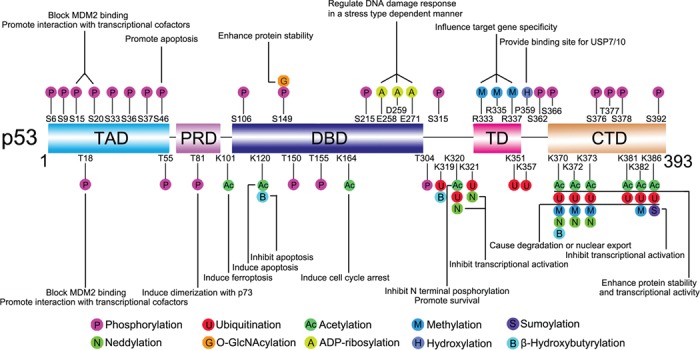
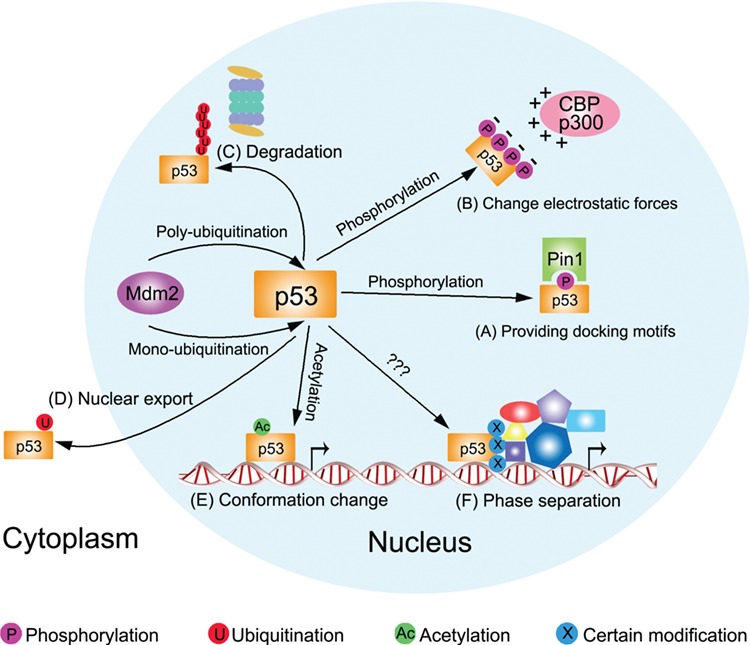
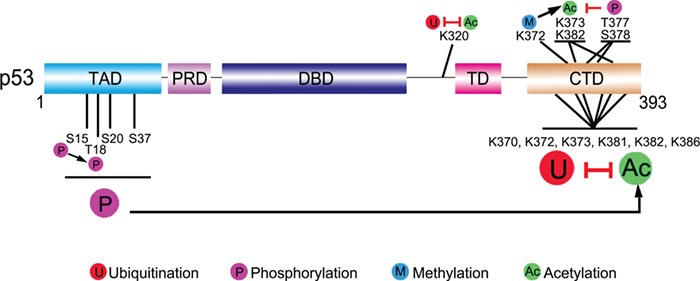
The last 40 years have witnessed how p53 rose from a viral binding protein to a central factor in both stress responses and tumor suppression. The exquisite regulation of p53 functions is of vital importance for cell fate decisions. Among the multiple layers of mechanisms controlling p53 function, posttranslational modifications (PTMs) represent an efficient and precise way. Major p53 PTMs include phosphorylation, ubiquitination, acetylation, and methylation. Meanwhile, other PTMs like sumoylation, neddylation, O-GlcNAcylation, adenosine diphosphate (ADP)-ribosylation, hydroxylation, and β-hydroxybutyrylation are also shown to play various roles in p53 regulation. By independent action or interaction, PTMs affect p53 stability, conformation, localization, and binding partners. Deregulation of the PTM-related pathway is among the major causes of p53-associated developmental disorders or diseases, especially in cancers. This review focuses on the roles of different p53 modification types and shows how these modifications are orchestrated to produce various outcomes by modulating p53 activities or targeted to treat different diseases caused by p53 dysregulation.
Overview
The claims and statistics of this paper haven’t been checked yet.
Free: it reads the open-access text and checks the first 5 claims that cite a source we can check. Create a free account to check every claim.
Integrity signals
Registry
Cites
Statistics
Figures
Verification
Claims the paper makes
The claims and statistics of this paper haven’t been checked yet.
Free: it reads the open-access text and checks the first 5 claims that cite a source we can check. Create a free account to check every claim.
Claims other papers make about this one
Each is checked against this paper’s own text: does it say what the citing paper says it does?
The cited source says what the claim attributes to it.
In the citing paper
“Acetylation’s role in transcription goes further via mediating the stability of various transcription factors including HIF-1α [74] and p53 [75].”
From Acetylation: a new target for protein degradation in cancer (2025) · cites this paper as [75]
Self-check
Percentages, sums and reported differences re-computed from the paper’s own numbers.
The self-check needs the paper’s full text.
Citations
Cites
1 retracted
RETRACTED: The E3 SUMO Ligase PIASy Is a Regulator of Cellular Senescence and Apoptosis
Bischof, O., Schwamborn, K., Martin, N., Werner, A., Sustmann, C., Grosschedl, R., & Dejean, A. (2006) · Molecular Cell · doi:10.1016/j.molcel.2006.05.016 · Cited by 173
RetractedLane, D. P. (1992) · Nature · doi:10.1038/358015a0 · Cited by 5,138 · cited 1×
“Originally, p53 was called ‘the guardian of the genome’ (Lane, 1992) for it was found to be activated in response to various types of DNA damages.”
BackgroundIn Vivo Activation of the p53 Pathway by Small-Molecule Antagonists of MDM2
Vassilev, L. T., Vu, B. T., Graves, B., Carvajal, D., Podlaski, F., Filipovic, Z., Kong, N., Kammlott, U., Lukacs, C., Klein, C., et al. (2004) · Science · doi:10.1126/science.1092472 · Cited by 4,661
Mice deficient for p53 are developmentally normal but susceptible to spontaneous tumours
Donehower, L. A., Harvey, M., Slagle, B. L., McArthur, M. J., Montgomery, C. A., Butel, J. S., & Bradley, A. (1992) · Nature · doi:10.1038/356215a0 · Cited by 4,649
Mechanisms Underlying Ubiquitination
Pickart, C. M. (2001) · Annual Review of Biochemistry · doi:10.1146/annurev.biochem.70.1.503 · Cited by 3,184
hSIR2SIRT1 Functions as an NAD-Dependent p53 Deacetylase
Vaziri, H., Dessain, S. K., Eaton, E. N., Imai, S.-I., Frye, R. A., Pandita, T. K., Guarente, L., & Weinberg, R. A. (2001) · Cell · doi:10.1016/s0092-8674(01)00527-x · Cited by 2,659
ACETYLATION AND METHYLATION OF HISTONES AND THEIR POSSIBLE ROLE IN THE REGULATION OF RNA SYNTHESIS
Allfrey, V. G., Faulkner, R., & Mirsky, A. E. (1964) · Proceedings of the National Academy of Sciences · doi:10.1073/pnas.51.5.786 · Cited by 2,639
Coactivator condensation at super-enhancers links phase separation and gene control
Sabari, B. R., Dall’Agnese, A., Boija, A., Klein, I. A., Coffey, E. L., Shrinivas, K., Abraham, B. J., Hannett, N. M., Zamudio, A. V., Manteiga, J. C., et al. (2018) · Science · doi:10.1126/science.aar3958 · Cited by 2,595
Activation of p53 Sequence-Specific DNA Binding by Acetylation of the p53 C-Terminal Domain
Gu, W., & Roeder, R. G. (1997) · Cell · doi:10.1016/s0092-8674(00)80521-8 · Cited by 2,559
Self-citationAdeno-associated virus vector as a platform for gene therapy delivery
Wang, D., Tai, P. W. L., & Gao, G. (2019) · Nature Reviews Drug Discovery · doi:10.1038/s41573-019-0012-9 · Cited by 2,444
Cited by
Items 101–200 of 394
p53 mutation and deletion contribute to tumor immune evasion
Liu, S. M., Liu, T., Jiang, J., Guo, H., & Yang, R. L. (2023) · Frontiers in Genetics · doi:10.3389/fgene.2023.1088455 · Cited by 41
The master regulators Myc and p53 cellular signaling and functions in polycystic kidney disease
Kurbegovic, A., & Trudel, M. (2020) · Cellular Signalling · doi:10.1016/j.cellsig.2020.109594 · Cited by 30
Heat shock transcription factor 1 is SUMOylated in the activated trimeric state
Kmiecik, S. W., Drzewicka, K., Melchior, F., & Mayer, M. P. (2021) · Journal of Biological Chemistry · doi:10.1016/j.jbc.2021.100324 · Cited by 28
The role of truncated p53 isoforms in the DNA damage response
Reinhardt, L. S., Groen, K., Newton, C., & Avery‐Kiejda, K. A. (2023) · Biochimica et Biophysica Acta (BBA) - Reviews on Cancer · doi:10.1016/j.bbcan.2023.188882 · Cited by 36
Chen, Y., Huang, G., Qin, T. G., Zhang, Z., Wang, H., Xu, Y., & Shen, X. (2023) · Biomedicine & Pharmacotherapy · doi:10.1016/j.biopha.2023.115952 · Cited by 34
Kanellis, D. C., Zisi, A., Skrott, Z., Lemmens, B., Espinoza, J. A., Kosar, M., Björkman, A., Li, X., Arampatzis, S., Bartkova, J., et al. (2023) · Cell Death & Differentiation · doi:10.1038/s41418-023-01167-4 · Cited by 27
“First, immunoblotting analysis of a series of well-established post-translational modifications of p53 [20], including phosphorylation of serine residues 15 and 20, as well as acetylation of lysine 382, were not only uninduced after treatment by CuET alone but these modifications that are otherwise highly induced afte…”
BackgroundTimmerman, D. M., Remmers, T. L., Hillenius, S., & Looijenga, L. H. J. (2021) · International Journal of Molecular Sciences · doi:10.3390/ijms22105377 · Cited by 28
Revisiting the Role of p53 in Prostate Cancer
Teroerde, M., Nientiedt, C., Duensing, A. U., Hohenfellner, M., Stenzinger, A., & Duensing, S. M. (2021) · Exon Publications eBooks · doi:10.36255/exonpublications.prostatecancer.p53.2021 · Cited by 40
Cheng, H., Wang, X., Yao, J., Yang, C., & Liu, J. (2024) · Journal of Inflammation Research · doi:10.2147/jir.s488655 · Cited by 32
The guardian's choice: how p53 enables context‐specific decision‐making in individual cells
Friedel, L., & Loewer, A. (2021) · FEBS Journal · doi:10.1111/febs.15767 · Cited by 32
PPM1D in Solid and Hematologic Malignancies: Friend and Foe?
Zhang, L., Hsu, J. I., & Goodell, M. A. (2022) · Molecular Cancer Research · doi:10.1158/1541-7786.mcr-21-1018 · Cited by 35
Regulating the p53 Tumor Suppressor Network at PML Biomolecular Condensates
Liebl, M. C., & Hofmann, T. G. (2022) · Cancers · doi:10.3390/cancers14194549 · Cited by 29
Jung, J. H., Lee, H., Zeng, S. X., & Lu, H. (2020) · Cells · doi:10.3390/cells9092107 · Cited by 29
Targeting p53 in chronic lymphocytic leukemia
Moia, R., Boggione, P., Mahmoud, A. M., Kodipad, A. A., Adhinaveni, R., Sagiraju, S., Patriarca, A., & Gaïdano, G. (2020) · Expert Opinion on Therapeutic Targets · doi:10.1080/14728222.2020.1832465 · Cited by 27
An Updated View of the Roles of p53 in Embryonic Stem Cells
Ayaz, G., Yan, H., Malik, N., & Huang, J. L. (2022) · Stem Cells · doi:10.1093/stmcls/sxac051 · Cited by 27
Perspectives and mechanisms for targeting ferroptosis in the treatment of hepatocellular carcinoma
Li, L., Wang, X., Xu, H., Liu, X., & Xu, K. (2022) · Frontiers in Molecular Biosciences · doi:10.3389/fmolb.2022.947208 · Cited by 26
The Role of P53 in Myocardial Ischemia-Reperfusion Injury
Zhu, X.-Z., Qiu, Z., Lei, S., Leng, Y., Li, W., & Xia, Z. (2023) · Cardiovascular Drugs and Therapy · doi:10.1007/s10557-023-07480-x · Cited by 29
The Double-Edged Effects of MLN4924: Rethinking Anti-Cancer Drugs Targeting the Neddylation Pathway
Tang, H., Pang, X., Li, S., & Tang, L. (2024) · Biomolecules · doi:10.3390/biom14070738 · Cited by 27
How does p53 work? Regulation by the intrinsically disordered domains
Dyson, H. J., & Wright, P. E. (2024) · Trends in Biochemical Sciences · doi:10.1016/j.tibs.2024.10.009 · Cited by 32
Age-related p53 SUMOylation accelerates senescence and tau pathology in Alzheimer’s disease
Wan, L., Yang, F., Yin, A., Luo, Y., Yi, L. I. U., Liu, F., Wang, J., Liu, R., & Wang, X. (2025) · Cell Death and Differentiation · doi:10.1038/s41418-025-01448-0 · Cited by 28
Self-citationMoxley, A. H., & Reisman, D. (2020) · Cell Biochemistry and Function · doi:10.1002/cbf.3590 · Cited by 27
Differential p53-Mediated Cellular Responses to DNA-Damaging Therapeutic Agents
Carlsen, L., & El‐Deiry, W. S. (2021) · International Journal of Molecular Sciences · doi:10.3390/ijms222111828 · Cited by 32
Regulation of the p53‑mediated ferroptosis signaling pathway in cerebral ischemia stroke (Review)
Xu, S., Li, X., & Wang, Y. (2023) · Experimental and Therapeutic Medicine · doi:10.3892/etm.2023.11812 · Cited by 25
Ma, L., Liu, M., Liu, F., Sun, B., Wang, S.-N., Chen, J., Yu, H.-J., Yan, J., Tian, M., Gao, L., et al. (2023) · Journal of Molecular Medicine · doi:10.1007/s00109-023-02301-y · Cited by 26
Huang, P., Zhao, H., Dai, H., Li, J., Pan, X., Pan, W., Xia, C., & Liu, F. (2024) · Cell Death and Disease · doi:10.1038/s41419-024-07222-3 · Cited by 28
Critical review of non‐histone human substrates of metal‐dependent lysine deacetylases
Toro, T. B., & Watt, T. J. (2020) · The FASEB Journal · doi:10.1096/fj.202001301rr · Cited by 24
Wang, F., Zhang, H., Wang, H., Qiu, T., He, B., & Yang, Q. (2022) · Medical Oncology · doi:10.1007/s12032-022-01777-x · Cited by 24
Permission to pass: on the role of p53 as a gatekeeper for aneuploidy
Marques, J. F., & Kops, G. J. P. L. (2023) · Chromosome Research · doi:10.1007/s10577-023-09741-9 · Cited by 29
Molecular mechanism of ferroptosis and its role in the occurrence and treatment of diabetes
Du, G.-H., Zhang, Q., Huang, X., & Wang, Y. (2022) · Frontiers in Genetics · doi:10.3389/fgene.2022.1018829 · Cited by 27
IKKα mediates UVB-induced cell apoptosis by regulating p53 pathway activation
Wang, H., Zhang, M., Xu, X., Hou, S., Liu, Z., Chen, X., Zhang, C., Xu, H., Wu, L., Liu, K., et al. (2021) · Ecotoxicology and Environmental Safety · doi:10.1016/j.ecoenv.2021.112892 · Cited by 23
Zhang, L., Hou, N., Chen, B., Kan, C., Han, F., Zhang, J., & Sun, X. (2022) · Frontiers in Pharmacology · doi:10.3389/fphar.2022.908772 · Cited by 24
The proteomic effects of ketone bodies: implications for proteostasis and brain proteinopathies
García‐Velázquez, L., & Massieu, L. (2023) · Frontiers in Molecular Neuroscience · doi:10.3389/fnmol.2023.1214092 · Cited by 23
Mechanistic insights into the dual role of CCAR2/DBC1 in cancer
Kim, H. J., Moon, S. J., & Kim, J. H. (2023) · Experimental & Molecular Medicine · doi:10.1038/s12276-023-01058-1 · Cited by 27
Chen, H., Xie, W., Peng, Z., Liu, Y., Li, H., & Huang, W. (2023) · Shock · doi:10.1097/shk.0000000000002224 · Cited by 21
Self-citationIcaritin activates p53 and inhibits aerobic glycolysis in liver cancer cells
Zhou, X., Wu, D., Mi, T., Li, R., Guo, T., & Li, W. (2024) · Chemico-Biological Interactions · doi:10.1016/j.cbi.2024.110926 · Cited by 22
ATXN3: a multifunctional protein involved in the polyglutamine disease spinocerebellar ataxia type 3
Hernández-Carralero, E., Quinet, G., & Freire, R. (2024) · Expert Reviews in Molecular Medicine · doi:10.1017/erm.2024.10 · Cited by 27
Acetylation: a new target for protein degradation in cancer
Crawford, C. E. W., & Burslem, G. M. (2025) · Trends in Cancer · doi:10.1016/j.trecan.2025.01.013 · Cited by 20
BH3-only sensors Bad, Noxa and Puma are Key Regulators of Tacaribe virus-induced Apoptosis
Holzerland, J., Fénéant, L., Banadyga, L., Hölper, J. E., Knittler, M. R., & Groseth, A. (2020) · PLoS Pathogens · doi:10.1371/journal.ppat.1008948 · Cited by 22
Choroid Plexus Carcinomas With TP53 Germline Mutations: Management and Outcome
Li, Y., Liu, H., Li, T., Feng, J., He, Y., Chen, L., Li, C., & Qiu, X. (2021) · Frontiers in Oncology · doi:10.3389/fonc.2021.751784 · Cited by 22
Koike, K., Masuda, T., Sato, K., Fujii, A., Wakiyama, H., Tobo, T., Takahashi, J., Motomura, Y., Nakano, T., Saito, H., et al. (2021) · Cancer Science · doi:10.1111/cas.15174 · Cited by 21
Tissue specificity and spatio-temporal dynamics of the p53 transcriptional program
Pant, V., Sun, C., & Lozano, G. (2023) · Cell Death and Differentiation · doi:10.1038/s41418-023-01123-2 · Cited by 26
Li, Y., Li, S., Shi, X., Xin, Z., Yang, Y., Zhao, B., Li, Y., Lv, L., Ren, P., & Wu, H. (2023) · Cell Death and Disease · doi:10.1038/s41419-023-05824-x · Cited by 26
Ye, S., Liu, Y., Zhang, T., Feng, H., Liu, Y., & Ma, L. (2022) · Frontiers in Pharmacology · doi:10.3389/fphar.2022.1068432 · Cited by 20
Self-citationWang, X., Xu, Y., Zhang, S., Zhu, X., Zhang, H., & Liu, Y. (2023) · Acta Physiologica · doi:10.1111/apha.14059 · Cited by 22
Self-citationYTHDC1 m6A-dependent and m6A-independent functions converge to preserve the DNA damage response
Elvira-Blázquez, D., Fernández-Justel, J. M., Arcas, A., Statello, L., Goñi, E., González, J., Ricci, B., Zaccara, S., Raimondi, I., & Huarte, M. (2024) · The EMBO Journal · doi:10.1038/s44318-024-00153-x · Cited by 26
Liver Lipids of Patients with Hepatitis B and C and Associated Hepatocellular Carcinoma
Haberl, E. M., Weiß, T. S., Peschel, G., Weigand, K., Köhler, N., Pauling, J. K., Wenzel, J. J., Höring, M., Krautbauer, S., Liebisch, G., et al. (2021) · International Journal of Molecular Sciences · doi:10.3390/ijms22105297 · Cited by 19
Lu, S., Chen, K., Liu, Z., & Liu, Z. (2023) · Journal of Translational Medicine · doi:10.1186/s12967-023-03877-2 · Cited by 19
VprBP/DCAF1 regulates p53 function and stability through site-specific phosphorylation
Ghate, N. B., Kim, S., Mehmood, R., Shin, Y., Kim, K., & An, W. (2023) · Oncogene · doi:10.1038/s41388-023-02685-8 · Cited by 21
Martinho, M. S., Nancarrow, D. J., Lawrence, T. S., Beer, D. G., & Ray, D. (2020) · Cellular and Molecular Gastroenterology and Hepatology · doi:10.1016/j.jcmgh.2020.10.012 · Cited by 20
Prematurity alters the progenitor cell program of the upper respiratory tract of neonates
Shui, J. E., Wang, W., Liu, H., Степанова, А., Liao, G., Qian, J., Ai, X., Ten, V. S., Lü, J., & Cardoso, W. V. (2021) · Scientific Reports · doi:10.1038/s41598-021-90093-x · Cited by 18
Targeting cellular senescence to combat cancer and ageing
Wang, C., Hao, X., & Zhang, R. (2022) · Molecular Oncology · doi:10.1002/1878-0261.13266 · Cited by 21
Exploring the future of research in the Tp53 field
Levine, A. J. (2022) · Cell Death and Differentiation · doi:10.1038/s41418-022-00986-1 · Cited by 19
KLHL4, a novel p53 target gene, inhibits cell proliferation by activating p21
Choi, S., Cho, S.-Y., Song, J.-Y., & Hur, M. (2020) · Biochemical and Biophysical Research Communications · doi:10.1016/j.bbrc.2020.07.100 · Cited by 19
Lian, Q., Gao, Y., Li, Q., He, X., Jiang, X., Pu, Z., & Xu, G. (2020) · The Protein Journal · doi:10.1007/s10930-020-09918-9 · Cited by 19
Making Connections: p53 and the Cathepsin Proteases as Co-Regulators of Cancer and Apoptosis
Soond, S. M., Savvateeva, L. V., Makarov, V. A., Gorokhovets, N. V., Townsend, P. A., & Zamyatnin, A. A. (2020) · Cancers · doi:10.3390/cancers12113476 · Cited by 18
Timofeev, O. N., & Stiewe, T. (2021) · Cancers · doi:10.3390/cancers13102422 · Cited by 19
Molecular Mechanisms and Targeted Therapies of Advanced Basal Cell Carcinoma
Hoashi, T., Kanda, N., & Saeki, H. (2022) · International Journal of Molecular Sciences · doi:10.3390/ijms231911968 · Cited by 24
Zhao, Y., Ma, R., Wang, C., Hu, R., Wu, W., Sun, X., Chen, B., Zhang, W., Chen, Y., Zhou, J., et al. (2023) · Molecular and Cellular Probes · doi:10.1016/j.mcp.2023.101919 · Cited by 20
Abdalla, M., Abdelkhalig, S. M., Edet, U. O., Zothantluanga, J. H., Umoh, E. A., Moglad, E. H. O., Nkang, N. A., Hader, M. M., Alanazi, T. M. R., Al‐Shouli, S. T., et al. (2024) · Scientific Reports · doi:10.1038/s41598-024-81499-4 · Cited by 19
Harnessing p53 for targeted cancer therapy: new advances and future directions
Andrysík, Z., & Espinosa, J. M. (2025) · Transcription · doi:10.1080/21541264.2025.2452711 · Cited by 22
Zawacka‐Pankau, J. (2020) · Cancers · doi:10.3390/cancers12092717 · Cited by 17
Bridging pathway dysfunction and therapy: novel compounds for neuroprotection
Patel, S., Prajapati, C., Nand, S., & Singh, S. K. (2026) · 3 Biotech · doi:10.1007/s13205-026-04697-z · Cited by 20
p21WAF1/CIP1 promotes p53 protein degradation by facilitating p53-Wip1 and p53-Mdm2 interaction
Lee, J., Kim, J., Kim, E. M., Kim, U., Kang, A.-R., Park, J. K., & Um, H. (2021) · Biochemical and Biophysical Research Communications · doi:10.1016/j.bbrc.2021.01.074 · Cited by 20
Rani, N., Sahu, M., Ambasta, R. K., & Kumar, P. (2023) · Ageing Research Reviews · doi:10.1016/j.arr.2023.102174 · Cited by 18
Regulation of lung endothelial permeability by NEK kinases
Barabutis, N. (2020) · IUBMB Life · doi:10.1002/iub.2251 · Cited by 16
p53 functional loss, stemness and hepatocellular carcinoma
de Fromentel, C. C., & Levrero, M. (2020) · Hepatoma Research · doi:10.20517/2394-5079.2020.77 · Cited by 19
Exploring the landscape of post-translational modification in drug discovery
Cao, Y., Yu, T., Zhu, Z., Zhang, Y., Sun, S., Li, N., Gu, C., & Yang, Y. (2024) · Pharmacology & Therapeutics · doi:10.1016/j.pharmthera.2024.108749 · Cited by 21
The Role of E3 Ligase Pirh2 in Disease
Daks, A. A., Fedorova, O., Parfenyev, S. E., Nevzorov, I. A., Shuvalov, O. Y., & Barlev, N. A. (2022) · Cells · doi:10.3390/cells11091515 · Cited by 21
The Janus Face of p53-Targeting Ubiquitin Ligases
Hao, Q., Chen, Y., & Zhou, X. Y. (2020) · Cells · doi:10.3390/cells9071656 · Cited by 16
Translational Control in p53 Expression: The Role of 5′-Terminal Region of p53 mRNA
Świątkowska, A., Dutkiewicz, M., Żydowicz-Machtel, P., Szpotkowska, J., Janecki, D. M., & Ciesiołka, J. (2019) · International Journal of Molecular Sciences · doi:10.3390/ijms20215382 · Cited by 17
Domenico, S. D., Banca, V. L., D’Amico, S., Nicolai, S., & Peschiaroli, A. (2025) · Discover Oncology · doi:10.1007/s12672-025-02510-6 · Cited by 19
Small cell lung cancer; recent advances of its biology and therapeutic perspective
Hayashi, R., & Inomata, M. (2021) · Respiratory Investigation · doi:10.1016/j.resinv.2021.10.008 · Cited by 15
Li, Y., Niu, J.-H., & Wang, Y. (2023) · Frontiers in Oncology · doi:10.3389/fonc.2023.1084523 · Cited by 15
Fang, S., Liu, K., Huang, T. D.-M., Du, J., Chen, C., & Zheng, Z. (2023) · Current Gene Therapy · doi:10.2174/1566523223666230601102506 · Cited by 15
Behl, T., Kumar, A., vishakha, V., Sehgal, A., Singh, S., Sharma, N., Yadav, S., Rashid, S., Ali, N., Ahmed, A. S., et al. (2023) · International Journal of Biological Macromolecules · doi:10.1016/j.ijbiomac.2023.126595 · Cited by 17
Ward, J. A., Romartínez-Alonso, B., Kay, D. F., Bellamy‐Carter, J., Thurairajah, B., Basran, J., Kwon, H., Leney, A. C., Macip, S., Roversi, P., et al. (2024) · Journal of Biological Chemistry · doi:10.1016/j.jbc.2024.105651 · Cited by 14
Reciprocal modulation of long noncoding RNA EMS and p53 regulates tumorigenesis
Wang, C., Yang, Y., Wu, X., Li, J., Liu, K., Fang, D., Li, B., Shan, G., Mei, X., Wang, F., et al. (2022) · Proceedings of the National Academy of Sciences · doi:10.1073/pnas.2111409119 · Cited by 16
Shishkova, D. K., Lobov, A. A., Repkin, E., Markova, V. E., Markova, Y. O., Sinitskaya, А. V., Sinitsky, M. Y., Андреевич, К. Е., Torgunakova, E., & Kutikhin, A. G. (2023) · Journal of Cardiovascular Development and Disease · doi:10.3390/jcdd11010005 · Cited by 18
Sicińska, P., Jabłońska, E., Bukowska, B., Balcerczyk, A., & Reszka, E. (2022) · Toxicology in Vitro · doi:10.1016/j.tiv.2022.105369 · Cited by 14
Wakileh, G. A., Bierholz, P., Kotthoff, M., Skowron, M. A., Bremmer, F., Stephan, A., Anbuhl, S. M., Heukers, R., Smit, M. J., Ströbel, P., et al. (2023) · Experimental Hematology and Oncology · doi:10.1186/s40164-023-00460-9 · Cited by 15
The Role of p53 in Nanoparticle-Based Therapy for Cancer
Szewczyk-Roszczenko, O. K., & Barlev, N. A. (2023) · Cells · doi:10.3390/cells12242803 · Cited by 13
PANoptosis-related genes function as efficient prognostic biomarkers in colon adenocarcinoma
Liu, Y., Wang, Y., Feng, H., Ma, L., & Liu, Y. (2024) · Frontiers in Endocrinology · doi:10.3389/fendo.2024.1344058 · Cited by 16
Self-citationO’Garro, C., Igbineweka, L., Ali, Z., Mezei, M., & Mujtaba, S. (2021) · Biomolecules · doi:10.3390/biom11030455 · Cited by 14
Nguyen, A., Dzulko, M., Murr, J., Yen, Y., Schneider, G., & Krämer, O. H. (2021) · Cells · doi:10.3390/cells10102520 · Cited by 14
Jiang, W., Wang, X., Su, S., Du, S., & Song, H. (2022) · Bioengineered · doi:10.1080/21655979.2022.2061288 · Cited by 14
Novoselova, E. G., Sharapov, M. G., Lunin, S. M., Parfenyuk, S. B., Khrenov, M. O., Mubarakshina, E. K., Kuzekova, A. A., Novoselova, T. V., Goncharov, R. G., & Glushkova, O. V. (2021) · Antioxidants · doi:10.3390/antiox10121951 · Cited by 13
RHOA lactylation at oncogenic hotspots promotes oncogenic activity and protein stabilization
Ma, C., Liao, R., Chen, X., Cao, Q., Deng, X., Dai, Z., & Dong, C. (2025) · Molecular Cancer · doi:10.1186/s12943-025-02511-7 · Cited by 20
Pei, H. Z., Peng, Z., Zhuang, X., Wang, X., Lü, B., Guo, Y., Zhao, Y., Zhang, D., Xiao, Y., Gao, T., et al. (2023) · Cell Death Discovery · doi:10.1038/s41420-023-01537-4 · Cited by 15
Yang, Z., Yan, X., Zhang, J., Liang, L., Gao, C.-C., Zhang, P., Liu, Y., Sun, J., Ruan, B., Duan, J., et al. (2023) · Journal of Clinical Investigation · doi:10.1172/jci159860 · Cited by 14
Self-citationRe-appraising the evidence for the source, regulation and function of p53-family isoforms
López, I., Valdivia, I. L., Vojtěšek, B., Fåhræus, R., & Coates, P. J. (2024) · Nucleic Acids Research · doi:10.1093/nar/gkae855 · Cited by 13
Balancing and Differentiating p53 Activities toward Longevity and No Cancer?
Horikawa, I. (2020) · Cancer Research · doi:10.1158/0008-5472.can-20-3080 · Cited by 14
Ma, K., Wang, Z., Ju, X., Huang, J., & He, R. (2022) · Journal of the Science of Food and Agriculture · doi:10.1002/jsfa.12243 · Cited by 12
Ubiquitin ligase DTX3 empowers mutant p53 to promote ovarian cancer development
Wang, S., Hao, Q., Li, J., Chen, Y., Lu, H., Wu, X., & Zhou, X. Y. (2020) · Genes & Diseases · doi:10.1016/j.gendis.2020.11.007 · Cited by 13
Gil-Ranedo, J., Gallego-García, C., & Almendral, J. M. (2021) · Cell Reports · doi:10.1016/j.celrep.2021.109673 · Cited by 12
Beyond Antioxidants: The Emerging Role of Nrf2 Activation in Amyotrophic Lateral Sclerosis (ALS)
Sharbafshaaer, M., Pepe, R., Notariale, R., Canale, F., Tedeschi, G., Tessitore, A., Bergamo, P., & Trojsi, F. (2025) · International Journal of Molecular Sciences · doi:10.3390/ijms26209872 · Cited by 17
Zhang, L., Zhang, J., Xuan, X., Wu, D., Yu, J., Wang, P., Yang, X., Zhang, J., Gan, W., He, M., et al. (2023) · Cell Reports · doi:10.1016/j.celrep.2023.112833 · Cited by 12
Self-citationGong, Y., Yang, H., Chen, T., Zhang, J., Kong, B., Shuai, W., & Huang, H. (2024) · International Immunopharmacology · doi:10.1016/j.intimp.2024.113727 · Cited by 16
Tripartite motif-containing protein 26 promotes colorectal cancer growth by inactivating p53
Tan, Z., Ko, H. M., Naji, P., Zhu, R., Wang, J., Huang, S., Zhang, Y., Zeng, S. X., & Lu, H. (2025) · Cell Death and Differentiation · doi:10.1038/s41418-025-01463-1 · Cited by 17
ADAR1‐HNRNPL‐Mediated CircCANX Decline Promotes Autophagy in Chronic Obstructive Pulmonary Disease
Chen, T., Wei, Y., Kang, J., Zhang, D., Ye, J., Sun, X., Hong, M., Zhang, W., Wu, H., Ding, Z., et al. (2025) · Advanced Science · doi:10.1002/advs.202414211 · Cited by 16
Blockade of TRIM59 enhances esophageal cancer cell chemosensitivity to cisplatin by upregulating p53
Liu, R., Li, H., Xu, Y., Li, X., Guo, X., Shi, J., Cui, Y., Wang, Z., & Liu, J. (2020) · Oncology Letters · doi:10.3892/ol.2020.12267 · Cited by 13
Metadata
- Authors
- Liu, Y., Tavana, O., & Gu, W.
- Affiliations
- Columbia University (US)
- Herbert Irving Comprehensive Cancer Center (US)
- Corresponding author
- Gu, Wei
- Venue
- Journal of Molecular Cell Biology
- Publisher
- Oxford University Press (OUP)
- Published
- 2019-07
- Volume
- 11
- Issue
- 7
- Pages
- 564-577
- ISSN
- 1674-2788 (ISSN-L)
- 1759-4685
- PMC
- PMC6736412
- OpenAlex
- W2961184804
- Cited by
- 392
- References
- 209
- Citations by year
- 2026: 31 · 2025: 47 · 2024: 49 · 2023: 73 · 2022: 83 · 2021: 63 · 2020: 40 · 2019: 5
- FWCI
- 4.55
- Type
- journal article
- Language
- en
- Open access
- gold
- doi.org
- Licence
- Locations
- Journal of Molecular Cell Biology (publishedVersion, cc-by-nc)
- PubMed Central (publishedVersion, cc-by-nc)
- PubMed (publishedVersion)
- Funders
- National Cancer Institute of the National Institutes of Health (5R01CA193890, 5R01CA085533, 5R01CA190477, 5R01CA216884)
- Topics
- Health Sciences › Medicine › Oncology › Cancer-related Molecular Pathways
- Life Sciences › Biochemistry, Genetics and Molecular Biology › Molecular Biology › Ubiquitin and proteasome pathways
- Life Sciences › Biochemistry, Genetics and Molecular Biology › Molecular Biology › PI3K/AKT/mTOR signaling in cancer
- Keywords
- p53, post-translational modification, phosphorylation, ubiquitination, acetylation, methylation, SUMOylation, neddylation, O-GlcNAcylation, ADP-ribosylation, hydroxylation, β-hydroxybutyrylation, p53 stabilization, tumor suppression, stress response, cancer, developmental disorders
- MeSH terms
- Animals, Humans, Neoplasms, Protein Processing, Post-Translational, Tumor Suppressor Protein p53, History, 20th Century, History, 21st Century, Protein Stability
About these checks
Registry, retraction, Cites and statistics results are computed, not judged, with one exception: a printed reference that no index lists is read once by a model before it counts as a citation error. Claims are extracted by a model and kept only when their quote appears verbatim in the text; each cited source is then checked, with a model’s help, for whether it says what the claim relies on. Those verdicts can be wrong — read the claim’s quote and the cited source before relying on one.
Statistics and arithmetic are recomputed, not judged.
Confidence bands are shown only for fields calibrated on our annotated test set. None is calibrated yet, so no band is shown.
What counts as a claim ›How we measure confidence ›How we check this ›
Are you an author, or do you see a problem with this page? Request a review
Data sources
Bibliographic data: Semantic Scholar, OpenAlex, Crossref.
Contains information from the Semantic Scholar Academic Graph Datasets, made available under the ODC Attribution License (ODC-BY 1.0).
Semantic Scholar’s data is described in: Kinney, R., et al. (2023). The Semantic Scholar Open Data Platform. arXiv:2301.10140.
