

p53 modifications: exquisite decorations of the powerful guardian
Open accessThe DOI matches its Crossref record; 207 of the 209 references it cites were found in a registry or an index.
Abstract
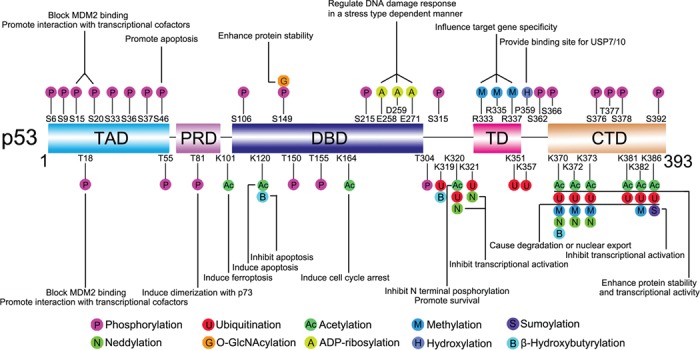
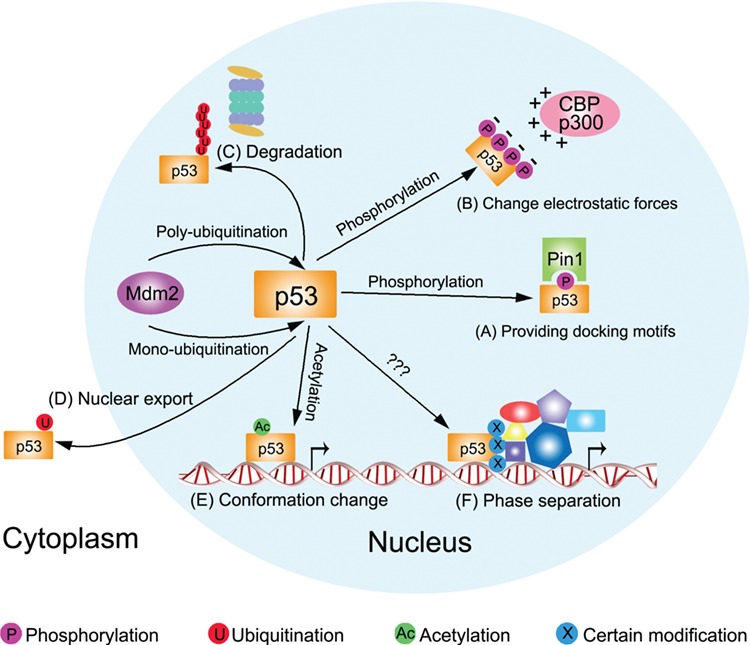
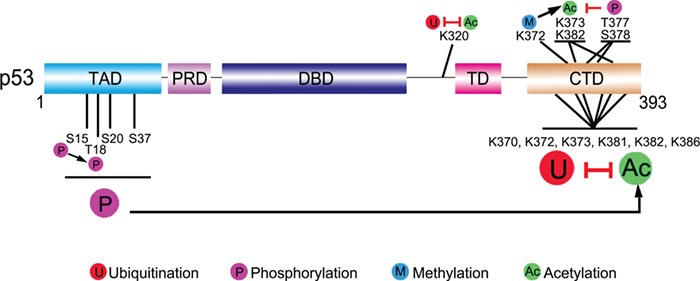
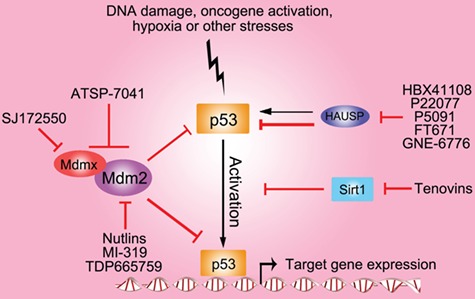
The last 40 years have witnessed how p53 rose from a viral binding protein to a central factor in both stress responses and tumor suppression. The exquisite regulation of p53 functions is of vital importance for cell fate decisions. Among the multiple layers of mechanisms controlling p53 function, posttranslational modifications (PTMs) represent an efficient and precise way. Major p53 PTMs include phosphorylation, ubiquitination, acetylation, and methylation. Meanwhile, other PTMs like sumoylation, neddylation, O-GlcNAcylation, adenosine diphosphate (ADP)-ribosylation, hydroxylation, and β-hydroxybutyrylation are also shown to play various roles in p53 regulation. By independent action or interaction, PTMs affect p53 stability, conformation, localization, and binding partners. Deregulation of the PTM-related pathway is among the major causes of p53-associated developmental disorders or diseases, especially in cancers. This review focuses on the roles of different p53 modification types and shows how these modifications are orchestrated to produce various outcomes by modulating p53 activities or targeted to treat different diseases caused by p53 dysregulation.
Overview
The claims and statistics of this paper haven’t been checked yet.
Free: it reads the open-access text and checks the first 5 claims that cite a source we can check. Create a free account to check every claim.
Integrity signals
Registry
Cites
Statistics
Figures
Verification
Claims the paper makes
The claims and statistics of this paper haven’t been checked yet.
Free: it reads the open-access text and checks the first 5 claims that cite a source we can check. Create a free account to check every claim.
Claims other papers make about this one
Each is checked against this paper’s own text: does it say what the citing paper says it does?
The cited source says what the claim attributes to it.
In the citing paper
“Acetylation’s role in transcription goes further via mediating the stability of various transcription factors including HIF-1α [74] and p53 [75].”
From Acetylation: a new target for protein degradation in cancer (2025) · cites this paper as [75]
Self-check
Percentages, sums and reported differences re-computed from the paper’s own numbers.
The self-check needs the paper’s full text.
Citations
Cites
1 retracted
RETRACTED: The E3 SUMO Ligase PIASy Is a Regulator of Cellular Senescence and Apoptosis
Bischof, O., Schwamborn, K., Martin, N., Werner, A., Sustmann, C., Grosschedl, R., & Dejean, A. (2006) · Molecular Cell · doi:10.1016/j.molcel.2006.05.016 · Cited by 173
RetractedLane, D. P. (1992) · Nature · doi:10.1038/358015a0 · Cited by 5,138 · cited 1×
“Originally, p53 was called ‘the guardian of the genome’ (Lane, 1992) for it was found to be activated in response to various types of DNA damages.”
BackgroundIn Vivo Activation of the p53 Pathway by Small-Molecule Antagonists of MDM2
Vassilev, L. T., Vu, B. T., Graves, B., Carvajal, D., Podlaski, F., Filipovic, Z., Kong, N., Kammlott, U., Lukacs, C., Klein, C., et al. (2004) · Science · doi:10.1126/science.1092472 · Cited by 4,661
Mice deficient for p53 are developmentally normal but susceptible to spontaneous tumours
Donehower, L. A., Harvey, M., Slagle, B. L., McArthur, M. J., Montgomery, C. A., Butel, J. S., & Bradley, A. (1992) · Nature · doi:10.1038/356215a0 · Cited by 4,649
Mechanisms Underlying Ubiquitination
Pickart, C. M. (2001) · Annual Review of Biochemistry · doi:10.1146/annurev.biochem.70.1.503 · Cited by 3,184
hSIR2SIRT1 Functions as an NAD-Dependent p53 Deacetylase
Vaziri, H., Dessain, S. K., Eaton, E. N., Imai, S.-I., Frye, R. A., Pandita, T. K., Guarente, L., & Weinberg, R. A. (2001) · Cell · doi:10.1016/s0092-8674(01)00527-x · Cited by 2,659
ACETYLATION AND METHYLATION OF HISTONES AND THEIR POSSIBLE ROLE IN THE REGULATION OF RNA SYNTHESIS
Allfrey, V. G., Faulkner, R., & Mirsky, A. E. (1964) · Proceedings of the National Academy of Sciences · doi:10.1073/pnas.51.5.786 · Cited by 2,639
Coactivator condensation at super-enhancers links phase separation and gene control
Sabari, B. R., Dall’Agnese, A., Boija, A., Klein, I. A., Coffey, E. L., Shrinivas, K., Abraham, B. J., Hannett, N. M., Zamudio, A. V., Manteiga, J. C., et al. (2018) · Science · doi:10.1126/science.aar3958 · Cited by 2,595
Activation of p53 Sequence-Specific DNA Binding by Acetylation of the p53 C-Terminal Domain
Gu, W., & Roeder, R. G. (1997) · Cell · doi:10.1016/s0092-8674(00)80521-8 · Cited by 2,559
Self-citationAdeno-associated virus vector as a platform for gene therapy delivery
Wang, D., Tai, P. W. L., & Gao, G. (2019) · Nature Reviews Drug Discovery · doi:10.1038/s41573-019-0012-9 · Cited by 2,444
Cited by
Items 301–394 of 394
Alshammari, Q. A., Alshammari, S. O., Alshammari, A., Alfarhan, M., & Baali, F. H. (2024) · Naunyn-Schmiedeberg s Archives of Pharmacology · doi:10.1007/s00210-024-03564-z · Cited by 3
CENPF as a prognostic marker of glioma: unraveling the molecular mechanisms
Chen, X., Wu, Y., Xing, Y., & Zhong, P. Y. (2025) · Journal of Cancer Research and Clinical Oncology · doi:10.1007/s00432-025-06144-7 · Cited by 3
Shi, F., Zhang, L., Wang, C., & Meng, Q. (2025) · Respiratory Research · doi:10.1186/s12931-025-03354-y · Cited by 4
Ferroptosis as a potential therapeutic target for post-traumatic stress disorder
Zhang, Q., Mao, J.-D., Chen, H., Wang, M., Wu, Y., & Wang, C. (2025) · Frontiers in Molecular Neuroscience · doi:10.3389/fnmol.2025.1648047 · Cited by 2
Cortactin Suppresses mTOR-Dependent Senescence in Circulating Tumor Cells
Hu, J., Zhang, B., Chen, J., Huang, G., Zhao, M., Zhou, H., Yang, F., Liu, K., Zheng, S., Tan, H., et al. (2025) · Cancer Research · doi:10.1158/0008-5472.can-25-1175 · Cited by 5
Signaling pathways and potential therapeutic agents in trastuzumab-induced cardiotoxicity
Zhang, H., Lu, C., Cheng, S., Wu, J., Hu, A., Mu, Z., Dong, D., & Sun, M. (2026) · APOPTOSIS · doi:10.1007/s10495-025-02222-w · Cited by 3
The TP53 gene contains a diversity box that makes it more than a tumor suppressor
Levine, A. J., & Hainaut, P. L. (2026) · Cell Death and Differentiation · doi:10.1038/s41418-026-01681-1 · Cited by 7
Liu, F., Zhao, Y., Zhu, D., Wang, J., Zhuang, Z., Chen, Y., Su, Y., & Tu, Z. (2026) · PLoS ONE · doi:10.1371/journal.pone.0333244 · Cited by 3
Benedito, S. D. S., Bernardo, P. S., Martin, J., Marty, C., Plo, I., Antony‐Debré, I., & Monte-Mór, B. D. C. R. (2026) · HemaSphere · doi:10.1002/hem3.70332 · Cited by 2
Liu, H.-S., Li, Z., Lei, D., Xie, H., Yang, X., Zhou, C., Li, S. Q., Li, W., Zeng, Z., & Kang, L. (2026) · Nature Communications · doi:10.1038/s41467-026-71108-5 · Cited by 7
The Ongoing Unmet Needs in Chronic Lymphocytic Leukemia
Ding, W. (2021) · Hematology/Oncology Clinics of North America · doi:10.1016/j.hoc.2021.04.001 · Cited by 3
Salivary biomarkers of age-dependent processes (review)
Bazarnyi, V. V. (2022) · Laboratory Service · doi:10.17116/labs20221103128 · Cited by 2
Krześniak, M., Łasut-Szyszka, B., Będzińska, A., Gdowicz‐Kłosok, A., & Rusin, M. (2024) · Biomedicines · doi:10.3390/biomedicines12071449 · Cited by 1
Yin, Y., Du, Y., Xu, Y., Zhu, Z., Hu, Y., Xu, L., Yang, K., Chen, T., Shi, Y., Wang, C., et al. (2025) · Current Issues in Molecular Biology · doi:10.3390/cimb47050338 · Cited by 1
Zhang, A., Tang, B., Zhou, S., Sui, C., He, S., Liu, Y., Li, M., & Qian, Y. (2025) · Bioorganic & Medicinal Chemistry · doi:10.1016/j.bmc.2025.118410 · Cited by 1
Self-citationLiu, B., Wu, C., Meng, X., Yu, T., Zhang, X., Liu, J., Li, M., Weng, Y., Mao, H., Hu, C., et al. (2025) · Fish & Shellfish Immunology · doi:10.1016/j.fsi.2025.110946 · Cited by 1
Xu, X., Tao, W., Liu, Y., Guo, T., Zhang, Y., Wei, D., Yan, P., Huang, X., & Wei, Y. (2025) · Science Advances · doi:10.1126/sciadv.ady7259 · Cited by 2
Self-citationYan, Q., Qingqing, Z., Yu, S., & Zhang, W. (2025) · Critical Reviews in Clinical Laboratory Sciences · doi:10.1080/10408363.2025.2598380 · Cited by 3
Perez-Aguilera, M., Ruiz-Losada, M., Gil-Cortés, P., Benchaib, M., Rubio, C., Baena-López, L. A., Baonza, A., & Estella, C. (2026) · Cell Death and Disease · doi:10.1038/s41419-026-08571-x · Cited by 1
Modulating p53 condensation rewires transcriptional programs to enhance tumor suppression
Liu, Y., Jia, H., Guan, X., Guo, J., Wang, J., Xiang, S., Chen, J., Liu, Y., Li, Y., & Wang, G. (2026) · Molecular Therapy · doi:10.1016/j.ymthe.2026.03.023 · Cited by 2
Self-citationSub1 contributes to heart failure with preserved ejection fraction driven by aging in mice
Zhao, D., Lin, L., Zhou, Y., Wu, J., Xu, R., Li, L., Zhang, X., Lin, H., Wang, J., Dai, K., et al. (2026) · Nature Communications · doi:10.1038/s41467-026-75237-9 · Cited by 1
Oncogene: An epigenetic regulation
Nagaraja, S. S., & Nagarajan, D. (2021) · Elsevier eBooks · doi:10.1016/b978-0-323-85652-2.00017-8 · Cited by 3
Azemin, W.-A., Alias, N., Ali, A. M., & Shamsir, M. S. (2021) · Journal of Biomolecular Structure and Dynamics · doi:10.1080/07391102.2021.2017349 · Cited by 1
microRNAs and tumor suppressor p53 regulation
Feng, Z., Liu, J., Zhang, C., & Hu, W. (2022) · Elsevier eBooks · doi:10.1016/b978-0-12-822287-4.00001-3 · Cited by 2
A Novel ERK2 Degrader Z734 Induces Apoptosis of MCF–7 Cells via the HERC3/p53 Signaling Pathway
Xu, S. S., Xiong, Y., Yao, R., Tian, R., Meng, Z., Zaky, M. Y., Fu, B., Guo, D., Wang, L., Lin, F., et al. (2022) · Molecules · doi:10.3390/molecules27144337 · Cited by 1
PICT ‐1 regulates p53 splicing and sensitivity of medullary thyroid carcinoma cells to everolimus
Bareli, Y., Shimon, I., Tobar, A., & Rubinfeld, H. (2022) · Journal of Neuroendocrinology · doi:10.1111/jne.13187 · Cited by 1
The anti-cancer effect and mechanism of animal scale-derived extract on malignant melanoma cells
Song, L., Chen, L., Yu, J., Yang, Y., Tian, X., & Choo, S. W. (2023) · Scientific Reports · doi:10.1038/s41598-023-39742-x · Cited by 1
Kohzaki, M., Suzuki, K., Ootsuyama, A., & Okazaki, R. (2023) · npj Aging · doi:10.1038/s41514-023-00123-3 · Cited by 1
Arvindh, S., Priyadarshini, M., Baba, A. B., Veeravarmal, V., Mishra, R., Dash, R., & Nagini, S. (2024) · Current Pharmaceutical Biotechnology · doi:10.2174/0113892010291998240321074920 · Cited by 3
A fork in the road: PADI4 citrullinates p53 to control immune-related networks
Bhattacharjee, S., Regunath, K., & Prives, C. L. (2025) · Molecular Cell · doi:10.1016/j.molcel.2025.09.011 · Cited by 1
Purification of Ubiquitinated p53 Proteins from Mammalian Cells
Wu, D., He, M., & Li, D. (2022) · Journal of Visualized Experiments · doi:10.3791/63602 · Cited by 1
Clark, J., Piccirella, S., Kayed, R., Abate, G., Uberti, D. L., & Kinnon, P. (2021) · Preprints.org · doi:10.20944/preprints202109.0359.v1 · Cited by 1
Editorial: Advances in wild type and mutant p53 research in cancer
la Cruz, O. N. H.-D., Domínguez-Gómez, G., Deb, M., & Díaz‐Chávez, J. (2022) · Frontiers in Molecular Biosciences · doi:10.3389/fmolb.2022.1064280 · Cited by 1
Editorial: Ferroptosis in cancer and beyond
Wang, X., Chen, G., Pan, C., & Liu, Y. (2023) · Frontiers in Molecular Biosciences · doi:10.3389/fmolb.2022.1115974 · Cited by 1
Self-citationVariabilidade do número de cópias de GSTM1 e de GSTT1 no câncer oral: risco e evolução
Firigato, I. B. (2021) · Digital Library of Theses and Dissertations (Universidade de São Paulo) · doi:10.11606/d.5.2021.tde-25102021-133630
Redox regulation of the tumor suppressor p53
Shi, T. (2021) · Utrecht University Repository (Utrecht University) · doi:10.33540/966 · Cited by 1
Huang, S., Cao, B., Wang, J., Zhang, Y.-W., Ledet, E. M., Sartor, O. A., Xiong, Y., Zeng, S. X., & Lu, H. (2021) · Journal of Molecular Cell Biology · doi:10.1093/jmcb/mjab078
An, Y., Zhu, J., Wang, X., Huang, L., Huang, W., Sun, X., Luo, C., Dang, Y., Huang, B., Zhang, B., et al. (2021) · SSRN Electronic Journal · doi:10.2139/ssrn.3979179
Complementary Omics Strategies to Dissect p53 Signaling Networks Under Nutrient StressPreprint
Galhuber, M., Michenthaler, H., Heininger, C., Reinisch, I., Nössing, C., Krstić, J., Kupper, N., Moyschewitz, E., Auer, M., Heitzer, E., et al. (2022) · Research Square · doi:10.21203/rs.3.rs-1224764/v1
GREB1 role in cellular homeostasis and cancer
Huynh, V. T. (2021) · DR-NTU (Nanyang Technological University) · doi:10.32657/10356/160870
Non-canonical functions of the MDM2 oncoprotein
Manzini, V. (2022) · eDiss (Georg-August-Universität Göttingen) · doi:10.53846/goediss-9537
D'Amico, T. P. (2023) · Digital Library of Theses and Dissertations (Universidade de São Paulo) · doi:10.11606/t.9.2023.tde-15032023-140733 · Cited by 1
Ma, X., Fan, M., Yang, K., Wang, Y., Hu, R., Guan, M., Hou, Y., Ying, J., Deng, N., Li, Q., et al. (2023) · Research Square · doi:10.21203/rs.3.rs-2694228/v1
Data from Differential Gain-of-Function Activity of Three p53 Hotspot Mutants In Vivo
Xiong, S., Chachad, D., Zhang, Y., Gencel‐Augusto, J., Sirito, M., Pant, V., Yang, P., Sun, C., Chau, G. P., Qi, Y., et al. (2023) · doi:10.1158/0008-5472.c.6513720.v1
Bazarnyi, V. V., Mandra, Y., Георгиевна, П. Л., Semencova, E., & Kopenkin, M. A. (2023) · The actual problems in dentistry · doi:10.18481/2077-7566-2023-19-2-11-15
Editorial: Ferroptosis in cancer and Beyond—volume II
Wang, X., Lu, J., Chen, G., Pan, C., & Liu, Y. (2023) · Frontiers in Molecular Biosciences · doi:10.3389/fmolb.2023.1265127
Self-citationZeng, H., Lan, B., Liu, X., Xie, H., & Zhang, Y. (2023) · Research Square · doi:10.21203/rs.3.rs-3245324/v1 · Cited by 1
Zhuang, S., Yang, X., Guan, Y. A., Bayliss, G. P., & Dong, Z. (2023) · Research Square · doi:10.21203/rs.3.rs-3303812/v1
Krześniak, M., Łasut-Szyszka, B., Będzińska, A., Gdowicz‐Kłosok, A., & Rusin, M. (2023) · Preprints.org · doi:10.20944/preprints202309.1653.v1
SUMO modification in Huntington's disease: Unraveling complex mechanisms for therapeutic insights
Smith-Geater, C., Steffan, J. S., & Thompson, L. M. (2024) · Elsevier eBooks · doi:10.1016/b978-0-323-95672-7.00019-4
Krześniak, M., Łasut-Szyszka, B., Będzińska, A., Gdowicz‐Kłosok, A., & Rusin, M. (2024) · Preprints.org · doi:10.20944/preprints202309.1653.v2
Copper-Imidazopyridines Activate P53 and Cause Apoptosis in A549 Lung Cancer CellsPreprint
Harmse, L., Mangena, Z., Martins-Furness, C., & Eyk, A. D. V. (2024) · SSRN Electronic Journal · doi:10.2139/ssrn.4900406
Zhu, Y., Xiao, M., Zhao, R., Yang, X., Wu, K., Liu, X., Chen, X. X., Guo, L., Liu, J., Chen, X., et al. (2024) · Human & Experimental Toxicology · doi:10.1177/09603271241279166
RetractedCaspase-9 and p53 Protein Levels in Cancer Patients after Different Anesthesia Techniques
Soloviev, A. O., Долгих, В. Т., Новичкова, О. Н., & Говорова, Н. В. (2024) · General Reanimatology · doi:10.15360/1813-9779-2024-6-2447
Cui, Y., Zheng, H., Zhou, Z., Liu, S., Shen, M.-X., Qiu, R., Zhang, X., Li, Y., & Fan, H. (2025) · Current Computer - Aided Drug Design · doi:10.2174/0115734099293010240810181446
Woo, Q. Y., Lau, P. K., Kwong, B. L. T., Bajalović, N., Lee, S. H., Leong, K. S., Pow, K. Y., Hanan, S., Meng, W., Lai, S. K., et al. (2025) · bioRxiv (Cold Spring Harbor Laboratory) · doi:10.1101/2025.03.06.641096
Singh, A., Malhotra, L., Mishra, A., Kundral, S., Tiwari, P. K., Kumar, S., Hariprasad, G., Kaur, P., & Ethayathulla, A. S. (2025) · Archives of Biochemistry and Biophysics · doi:10.1016/j.abb.2025.110381 · Cited by 1
Hu, J., Zhang, B., Chen, J., Huang, G., Zhou, H., Yang, F., Liu, K., Zheng, S., Liu, X., Liu, J.-L., et al. (2025) · bioRxiv (Cold Spring Harbor Laboratory) · doi:10.1101/2025.03.26.645381
A Tailored Phospho‐p53 Library Probes Antibody Specificity and Recognition Limitations
Hess, M., Davies, J. H., Margiola, S., Schneider, S., Hicks, T., Rai, N., & Müller, M. M. (2025) · ChemBioChem · doi:10.1002/cbic.202500256 · Cited by 1
Li, B., Shi, Y., Zheng, H., Wang, J., Xu, Y., Ni, S., & Xue, H. (2025) · SSRN Electronic Journal · doi:10.2139/ssrn.5384556
Alzetta, D., Cavattoni, I., & Mosna, F. (2025) · Cancers · doi:10.3390/cancers17203285
张, 昊. (2025) · Traditional Chinese Medicine · doi:10.12677/tcm.2025.1410601
PRMT1 promotes H2O2 induced cardiomyocytes cell via mediating arginine methylation of P53
Li, Z., & Zhao, J. (2025) · Tissue and Cell · doi:10.1016/j.tice.2025.103253
Huang, H.-M., Huang, X.-Y., Wu, S.-P., Chen, C.-K., He, X.-H., & Zhang, Y.-F. (2022) · Figshare · doi:10.6084/m9.figshare.19387861
Wakileh, G. A., Bierholz, P., Kotthoff, M., Skowron, M. A., Bremmer, F., Stephan, A., Anbuhl, S. M., Heukers, R., Smit, M. J. M., Ströbel, P., et al. (2024) · Figshare · doi:10.6084/m9.figshare.24630469
Wakileh, G. A., Bierholz, P., Kotthoff, M., Skowron, M. A., Bremmer, F., Stephan, A., Anbuhl, S. M., Heukers, R., Smit, M. J. M., Ströbel, P., et al. (2023) · Figshare · doi:10.6084/m9.figshare.24630316
Wakileh, G. A., Bierholz, P., Kotthoff, M., Skowron, M. A., Bremmer, F., Stephan, A., Anbuhl, S. M., Heukers, R., Smit, M. J. M., Ströbel, P., et al. (2024) · Figshare · doi:10.6084/m9.figshare.26644504
Lu, S., Chen, Z., Liu, Z., & Liu, Z. (2024) · Figshare · doi:10.6084/m9.figshare.26561899
Lu, S., Chen, Z., Liu, Z., & Liu, Z. (2024) · Figshare · doi:10.6084/m9.figshare.26561896
Li, S., Zhang, B.-W., Wei, Z.-J., Xi, Y., Zhang, G.-A., Zhang, Y., Kou, D.-C., Song, X.-P., Huang, J., Song, P., et al. (2025) · Cellular and Molecular Life Sciences · doi:10.1007/s00018-025-05983-4
Self-citationIdentification of MKRN1 as a key modulator of the p53-MDM2 feedback loop
Shimada, T., Noguchi, T., Komatsu, R., Otani, K., Komatsu, T., Suzuki, S., Mitsuya, M., Okubo, T., Ito, R., Yamada, M., et al. (2026) · Cell Death and Differentiation · doi:10.1038/s41418-026-01662-4
KRAB Zinc‐Finger Protein ZNF205 Promotes Hepatocellular Carcinoma via p53 Pathway Repression
Huang, X., Yang, Y., Ma, Y., Hao, W., Jin, J., Ding, Y., Zhang, Y., Zhang, X., Li, X., Song, Q., et al. (2026) · Cancer Science · doi:10.1111/cas.70337
Li, X., Zhang, C., Li, J., Yuan, J., Xing, T., Yang, H., & Shi, H. (2026) · Medicine · doi:10.1097/md.0000000000047629
From EGFR PTM network to TKI resistance: spatial subtypes and targeting in lung cancer
Lai, B., Xu, C., Lai, S., Zhou, M., Kong, H., Kong, E., & Yahaya, B. H. (2026) · Cancer Drug Resistance · doi:10.20517/cdr.2025.231 · Cited by 4
Factors That Affect Chromosomal Translocations in Cells
Canoy, R. J. (2021) · theses.fr (ABES) · doi:10.70675/9f331f7az9151z4c95zbf47zbc6ed65a5896
Rakotopare, J. (2024) · theses.fr (ABES) · doi:10.70675/cc79cc10zbaf8z4e88za003z8a8d37707576
Hattori, H., Otsu, M., Imai, K., Narahara, M., Kondo, J., Shino, A., & Morishita, E. C. (2026) · Small Science · doi:10.1002/smsc.202600007
Yao, Y., Su, W., Nie, Y., Sun, H., Wang, R., Liu, R., & Dong, W. (2026) · Annals of Biomedical Engineering · doi:10.1007/s10439-026-04170-1
Zhang, Q.-Q., Yu, C.-Z., Yu, F.-H., Wang, Y.-B., Chen, S., Chen, Z. K., Zhang, W.-J., & Chang, S. (2026) · Cell Biology and Toxicology · doi:10.1007/s10565-026-10202-2
Cường, N. M., Fefilova, E., Loc, V. T., Karpova, N. S., Ha, N. X., Daks, A. A., Ha, N. V., Hương, T. T., Parfenyev, S. E., Nazarov, A., et al. (2026) · Pharmaceuticals · doi:10.3390/ph19060814
Solvent-mediated modulation of biopolymer interactions and aggregation
Martins, L. D. A., Araújo, J. C. B., de Andrade, G. C., & Marques, M. A. (2026) · Elsevier eBooks · doi:10.1016/b978-0-323-99507-8.00066-4
Sandhu, K., Pacey, S., Brewer, D. S., & Gnanapragasam, V. J. (2026) · Current Oncology · doi:10.3390/curroncol33060370
Liu, Y., Wang, M., Shi, S., Zhang, J., Wang, W., & Xiang, J. (2026) · Food & Function · doi:10.1039/d6fo01372d
Li, Y., Wang, S., Bell, S., Edwards, J., Alboraey, A., Wen, X., Chen, C., Muller, P. A. J., & de Lucas, M. (2026) · iScience · doi:10.1016/j.isci.2026.116775
Naicker, D., Sunda, F., Rhoda, C., Mutavhatsindi, H., Khumalo, N. P., & Arowolo, A. (2026) · Journal of Cannabis Research · doi:10.1186/s42238-026-00481-1
Associative memory plays a role in ER-1α positive breast cancers
Lu, D., Hoyos, D., Yao, N., Greenbaum, B. D., Aylon, Y., Oren, M., & Levine, A. J. (2026) · Cell Death and Differentiation · doi:10.1038/s41418-026-01822-6 · Cited by 1
Wu, X., Zhang, L., Zhou, Y., Liu, K., Lin, B., Zhu, M., & Li, M. (2026) · Chinese Medical Journal · doi:10.1097/cm9.0000000000004225
Feng, S., Hu, J., Guo, X., Xu, Z., Wang, H., Niu, H., & Li, X. (2026) · Frontiers in Immunology · doi:10.3389/fimmu.2026.1914652
Lactylation of RHOA at Oncogenic Hotspots Enhances Oncogenic Activity and Stabilizes the Protein
Hariri, Y., Nasser, H., & Zahra, F. (2024) · Archive of International Journal of Cancer and Allied Science · doi:10.51847/uqcxjtkhrz
Radiation‐Induced Skin Injury in Cancer Radiotherapy: From Mechanisms to Management
Toutoungi, Z. M., Aykin‐Burns, N., Chen, J., & Song, Y. H. (2026) · Advanced Oncology · doi:10.1002/adon.70006
Kuligina, E. S., Yanus, G. A., & Имянитов, Е. Н. (2026) · Biochemistry (Moscow) · doi:10.1134/s0006297926603096
Metadata
- Authors
- Liu, Y., Tavana, O., & Gu, W.
- Affiliations
- Columbia University (US)
- Herbert Irving Comprehensive Cancer Center (US)
- Corresponding author
- Gu, Wei
- Venue
- Journal of Molecular Cell Biology
- Publisher
- Oxford University Press (OUP)
- Published
- 2019-07
- Volume
- 11
- Issue
- 7
- Pages
- 564-577
- ISSN
- 1674-2788 (ISSN-L)
- 1759-4685
- PMC
- PMC6736412
- OpenAlex
- W2961184804
- Cited by
- 392
- References
- 209
- Citations by year
- 2026: 31 · 2025: 47 · 2024: 49 · 2023: 73 · 2022: 83 · 2021: 63 · 2020: 40 · 2019: 5
- FWCI
- 4.55
- Type
- journal article
- Language
- en
- Open access
- gold
- doi.org
- Licence
- Locations
- Journal of Molecular Cell Biology (publishedVersion, cc-by-nc)
- PubMed Central (publishedVersion, cc-by-nc)
- PubMed (publishedVersion)
- Funders
- National Cancer Institute of the National Institutes of Health (5R01CA193890, 5R01CA085533, 5R01CA190477, 5R01CA216884)
- Topics
- Health Sciences › Medicine › Oncology › Cancer-related Molecular Pathways
- Life Sciences › Biochemistry, Genetics and Molecular Biology › Molecular Biology › Ubiquitin and proteasome pathways
- Life Sciences › Biochemistry, Genetics and Molecular Biology › Molecular Biology › PI3K/AKT/mTOR signaling in cancer
- Keywords
- p53, post-translational modification, phosphorylation, ubiquitination, acetylation, methylation, SUMOylation, neddylation, O-GlcNAcylation, ADP-ribosylation, hydroxylation, β-hydroxybutyrylation, p53 stabilization, tumor suppression, stress response, cancer, developmental disorders
- MeSH terms
- Animals, Humans, Neoplasms, Protein Processing, Post-Translational, Tumor Suppressor Protein p53, History, 20th Century, History, 21st Century, Protein Stability
About these checks
Registry, retraction, Cites and statistics results are computed, not judged, with one exception: a printed reference that no index lists is read once by a model before it counts as a citation error. Claims are extracted by a model and kept only when their quote appears verbatim in the text; each cited source is then checked, with a model’s help, for whether it says what the claim relies on. Those verdicts can be wrong — read the claim’s quote and the cited source before relying on one.
Statistics and arithmetic are recomputed, not judged.
Confidence bands are shown only for fields calibrated on our annotated test set. None is calibrated yet, so no band is shown.
What counts as a claim ›How we measure confidence ›How we check this ›
Are you an author, or do you see a problem with this page? Request a review
Data sources
Bibliographic data: Semantic Scholar, OpenAlex, Crossref.
Contains information from the Semantic Scholar Academic Graph Datasets, made available under the ODC Attribution License (ODC-BY 1.0).
Semantic Scholar’s data is described in: Kinney, R., et al. (2023). The Semantic Scholar Open Data Platform. arXiv:2301.10140.
