

p53 modifications: exquisite decorations of the powerful guardian
Open accessThe DOI matches its Crossref record; 207 of the 209 references it cites were found in a registry or an index.
Abstract
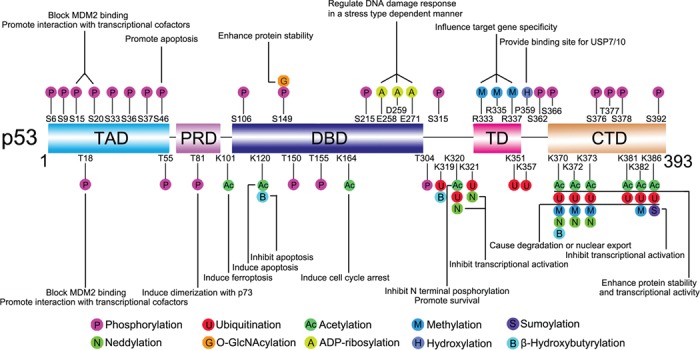
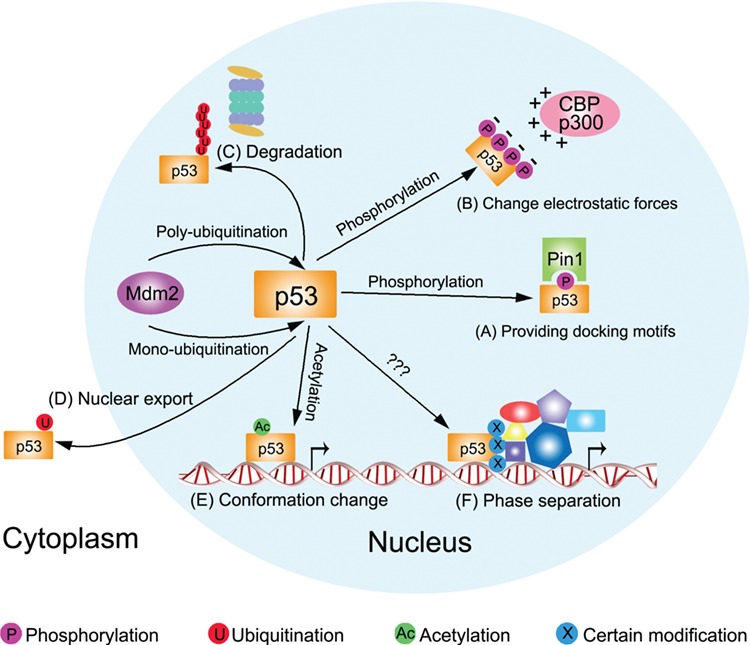
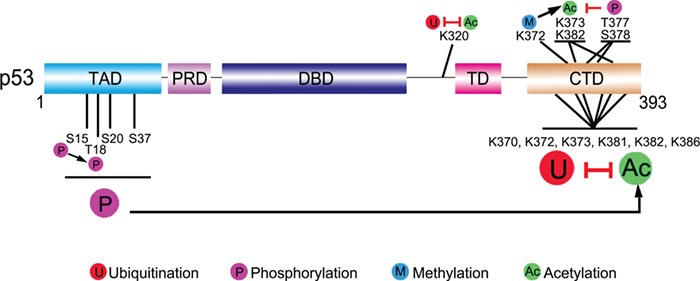
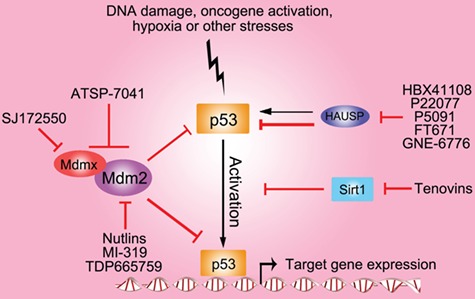
The last 40 years have witnessed how p53 rose from a viral binding protein to a central factor in both stress responses and tumor suppression. The exquisite regulation of p53 functions is of vital importance for cell fate decisions. Among the multiple layers of mechanisms controlling p53 function, posttranslational modifications (PTMs) represent an efficient and precise way. Major p53 PTMs include phosphorylation, ubiquitination, acetylation, and methylation. Meanwhile, other PTMs like sumoylation, neddylation, O-GlcNAcylation, adenosine diphosphate (ADP)-ribosylation, hydroxylation, and β-hydroxybutyrylation are also shown to play various roles in p53 regulation. By independent action or interaction, PTMs affect p53 stability, conformation, localization, and binding partners. Deregulation of the PTM-related pathway is among the major causes of p53-associated developmental disorders or diseases, especially in cancers. This review focuses on the roles of different p53 modification types and shows how these modifications are orchestrated to produce various outcomes by modulating p53 activities or targeted to treat different diseases caused by p53 dysregulation.
Overview
The claims and statistics of this paper haven’t been checked yet.
Free: it reads the open-access text and checks the first 5 claims that cite a source we can check. Create a free account to check every claim.
Integrity signals
Registry
Cites
Statistics
Figures
Verification
Claims the paper makes
The claims and statistics of this paper haven’t been checked yet.
Free: it reads the open-access text and checks the first 5 claims that cite a source we can check. Create a free account to check every claim.
Claims other papers make about this one
Each is checked against this paper’s own text: does it say what the citing paper says it does?
The cited source says what the claim attributes to it.
In the citing paper
“Acetylation’s role in transcription goes further via mediating the stability of various transcription factors including HIF-1α [74] and p53 [75].”
From Acetylation: a new target for protein degradation in cancer (2025) · cites this paper as [75]
Self-check
Percentages, sums and reported differences re-computed from the paper’s own numbers.
The self-check needs the paper’s full text.
Citations
Cites
1 retracted
RETRACTED: The E3 SUMO Ligase PIASy Is a Regulator of Cellular Senescence and Apoptosis
Bischof, O., Schwamborn, K., Martin, N., Werner, A., Sustmann, C., Grosschedl, R., & Dejean, A. (2006) · Molecular Cell · doi:10.1016/j.molcel.2006.05.016 · Cited by 173
RetractedLane, D. P. (1992) · Nature · doi:10.1038/358015a0 · Cited by 5,138 · cited 1×
“Originally, p53 was called ‘the guardian of the genome’ (Lane, 1992) for it was found to be activated in response to various types of DNA damages.”
BackgroundIn Vivo Activation of the p53 Pathway by Small-Molecule Antagonists of MDM2
Vassilev, L. T., Vu, B. T., Graves, B., Carvajal, D., Podlaski, F., Filipovic, Z., Kong, N., Kammlott, U., Lukacs, C., Klein, C., et al. (2004) · Science · doi:10.1126/science.1092472 · Cited by 4,661
Mice deficient for p53 are developmentally normal but susceptible to spontaneous tumours
Donehower, L. A., Harvey, M., Slagle, B. L., McArthur, M. J., Montgomery, C. A., Butel, J. S., & Bradley, A. (1992) · Nature · doi:10.1038/356215a0 · Cited by 4,649
Mechanisms Underlying Ubiquitination
Pickart, C. M. (2001) · Annual Review of Biochemistry · doi:10.1146/annurev.biochem.70.1.503 · Cited by 3,184
hSIR2SIRT1 Functions as an NAD-Dependent p53 Deacetylase
Vaziri, H., Dessain, S. K., Eaton, E. N., Imai, S.-I., Frye, R. A., Pandita, T. K., Guarente, L., & Weinberg, R. A. (2001) · Cell · doi:10.1016/s0092-8674(01)00527-x · Cited by 2,659
ACETYLATION AND METHYLATION OF HISTONES AND THEIR POSSIBLE ROLE IN THE REGULATION OF RNA SYNTHESIS
Allfrey, V. G., Faulkner, R., & Mirsky, A. E. (1964) · Proceedings of the National Academy of Sciences · doi:10.1073/pnas.51.5.786 · Cited by 2,639
Coactivator condensation at super-enhancers links phase separation and gene control
Sabari, B. R., Dall’Agnese, A., Boija, A., Klein, I. A., Coffey, E. L., Shrinivas, K., Abraham, B. J., Hannett, N. M., Zamudio, A. V., Manteiga, J. C., et al. (2018) · Science · doi:10.1126/science.aar3958 · Cited by 2,595
Activation of p53 Sequence-Specific DNA Binding by Acetylation of the p53 C-Terminal Domain
Gu, W., & Roeder, R. G. (1997) · Cell · doi:10.1016/s0092-8674(00)80521-8 · Cited by 2,559
Self-citationAdeno-associated virus vector as a platform for gene therapy delivery
Wang, D., Tai, P. W. L., & Gao, G. (2019) · Nature Reviews Drug Discovery · doi:10.1038/s41573-019-0012-9 · Cited by 2,444
Cited by
Items 201–300 of 394
Zhou, Q., Yin, J., Tan, J., Li, S., Jiang, C., & He, Y. (2021) · Toxicology and Applied Pharmacology · doi:10.1016/j.taap.2021.115800 · Cited by 12
Mohammadi, E., Alemi, F., Maleki, M., Malakoti, F., Farsad-Akhtar, N., & Yousefi, B. (2022) · Drug Research · doi:10.1055/a-1709-0658 · Cited by 12
Polarizable Force Field of Intrinsically Disordered Proteins with CMAP and Reweighting Optimization
Cui, X., Liu, H., & Chen, H. (2022) · Journal of Chemical Information and Modeling · doi:10.1021/acs.jcim.2c00835 · Cited by 12
State of the Art of Pharmacological Activators of p53 in Ocular Malignancies
Casciano, F., Zauli, E., Busin, M., Caruso, L., Al-Mesfer, S., Al-Swailem, S. A., Zauli, G., & Yu, A. C. (2023) · Cancers · doi:10.3390/cancers15143593 · Cited by 11
A DNA Repair-Based Model of Cell Survival with Important Clinical Consequences
Brahme, A. (2020) · Radiation Research · doi:10.1667/rade-20-00052.1 · Cited by 12
Extensive evaluation of environment-specific force field for ordered and disordered proteins
Cui, X., Liu, H., Rehman, A. U., & Chen, H. (2021) · Physical Chemistry Chemical Physics · doi:10.1039/d1cp01385h · Cited by 10
Zhang, L., Lu, Y., Ma, X., Xing, Y., Sun, J., & Jia, Y. (2022) · Frontiers in Molecular Biosciences · doi:10.3389/fmolb.2022.965924 · Cited by 12
Ma, X., Fan, M., Yang, K., Wang, Y., Hu, R., Guan, M., Hou, Y., Ying, J., Deng, N., Li, Q., et al. (2023) · Cancer Science · doi:10.1111/cas.15947 · Cited by 10
Harada, M., Su-Harada, K., Kimura, T., Ono, K., & Ashida, N. (2024) · Cell Cycle · doi:10.1080/15384101.2024.2325802 · Cited by 12
Effects of quercetin on the DNA methylation pattern in tumor therapy: an updated review
Wang, Q., Ma, C., Wang, N., & Mao, H. (2024) · Food & Function · doi:10.1039/d3fo03831a · Cited by 14
p53: The Multifaceted Roles of Covalent Modifications in Cancer
Grigoreva, T. A., Romanova, A. A., Tribulovich, V. G., Pestov, N. B., Oganov, R. A., Kovaleva, D. K., Korneenko, T. V., & Barlev, N. A. (2024) · Pharmaceuticals · doi:10.3390/ph17121682 · Cited by 13
Gupta, H., & Gupta, A. (2025) · Epigenetics & Chromatin · doi:10.1186/s13072-025-00572-y · Cited by 12
Yang, Y. H., Liu, C., Xie, T., Wang, D., Chen, X., Ma, L., & Zhang, A. (2021) · Human & Experimental Toxicology · doi:10.1177/0960327120988880 · Cited by 10
Characterization of full-length p53 aggregates and their kinetics of formation
Julian, L., Sang, J. C., Wu, Y., Meisl, G., Brelstaff, J., Miller, A., Cheetham, M. R., Vendruscolo, M., Knowles, T. P. J., Ruggeri, F. S., et al. (2022) · Biophysical Journal · doi:10.1016/j.bpj.2022.10.013 · Cited by 11
LINC00973 Induces Proliferation Arrest of Drug-Treated Cancer Cells by Preventing p21 Degradation
Karpov, D. S., Spirin, P., Zheltukhin, A. O., Tutyaeva, V. V., Zinovieva, O. L., Grineva, E. N., Matrosova, V. A., Krasnov, G. S., Snezhkina, A. V., Kudryavtseva, A. V., et al. (2020) · International Journal of Molecular Sciences · doi:10.3390/ijms21218322 · Cited by 10
Absence of Sirtuin 1 impairs the testicular development in cattleyak by inactivating SF‐1
Yin, S., Qin, W., Wang, B., Zhou, J., Yang, L., Xiong, X., & Li, J. (2020) · Reproduction in Domestic Animals · doi:10.1111/rda.13737 · Cited by 10
Krawic, C., Łuczak, M. W., Valiente, S., & Zhitkovich, A. (2023) · Journal of Biological Chemistry · doi:10.1016/j.jbc.2023.105385 · Cited by 10
Hsieh, H.-C., Huang, I.-H., Chang, S.-W., Chen, P., Su, Y.-C., Wang, S., Tsai, W., Chen, P., Aroian, R. V., & Chen, C. (2024) · Autophagy · doi:10.1080/15548627.2024.2306655 · Cited by 9
Regulation of Molecular Biomarkers Associated with the Progression of Prostate Cancer
Martin‐Caraballo, M. (2024) · International Journal of Molecular Sciences · doi:10.3390/ijms25084171 · Cited by 10
Huan, X., Li, J., Chu, Z., Zhang, H., Cheng, L., Lun, P., Du, X., Chen, X., Jiao, Q., & Jiang, H. F. (2024) · Neuroscience Bulletin · doi:10.1007/s12264-024-01322-y · Cited by 11
Wang, L., & Pan, S. (2023) · Frontiers in Genetics · doi:10.3389/fgene.2023.1154299 · Cited by 9
Cell fate decisions by c-Myc depend on ZBTB5 and p53
Choi, S.-H., Koh, D.-I., Ahn, H., Kim, J. Y., Kim, Y., & Hur, M. (2020) · Biochemical and Biophysical Research Communications · doi:10.1016/j.bbrc.2020.09.137 · Cited by 9
HOPS and p53: thick as thieves in life and death
Fazia, M. A. D., Castelli, M., Piobbico, D., Pieroni, S., & Servillo, G. (2020) · Cell Cycle · doi:10.1080/15384101.2020.1838772 · Cited by 10
Arenas, V., Castaño, J. L., Domínguez-García, J. J., Yáñez, L., & Pipaón, C. (2021) · Frontiers in Oncology · doi:10.3389/fonc.2021.729550 · Cited by 10
Grass carp (Ctenopharyngodon idella) DYRK2 modulates cell apoptosis through phosphorylating p53
Zeng, S., Li, M., Cheng, X., Lu, S., Feng, Z., Jiang, Z., Sun, Z., Xu, X., Mao, H., & Hu, C. (2022) · Fish & Shellfish Immunology · doi:10.1016/j.fsi.2022.06.065 · Cited by 9
Zhang, M., Lei, Q., Huang, X., & Wang, Y. (2022) · Frontiers in Pharmacology · doi:10.3389/fphar.2022.1071897 · Cited by 11
Pyrimidine synthase CAD deamidates and inactivates p53
Qi, Y., Tan, Z., Chen, H., Xiao, Z., Zhang, L., Wu, B., Liu, C., Gao, Y., Yang, X., Wu, L., et al. (2025) · Cell Research · doi:10.1038/s41422-025-01112-9 · Cited by 10
Complementary omics strategies to dissect p53 signaling networks under nutrient stress
Galhuber, M., Michenthaler, H., Heininger, C., Reinisch, I., Nössing, C., Krstić, J., Kupper, N., Moyschewitz, E., Auer, M., Heitzer, E., et al. (2022) · Cellular and Molecular Life Sciences · doi:10.1007/s00018-022-04345-8 · Cited by 11
Flores, B., Uppalapati, C. K., Pascual, A. S., Vong, A., Baatz, M., Harrison, A. M., Leyva, K. J., & Hull, E. E. (2023) · Biomolecules · doi:10.3390/biom13111588 · Cited by 8
A light way for nuclear cell biologists
Forlani, G., & Ventura, B. D. (2020) · The Journal of Biochemistry · doi:10.1093/jb/mvaa139 · Cited by 10
Li, Y., Zhao, X.-F., Tian, Y., Xiao, X.-Y., Yan, C., & Shen, H. (2022) · Frontiers in Genetics · doi:10.3389/fgene.2022.949989 · Cited by 11
Using TUNEL Assay to Quantitate p53-Induced Apoptosis in Mouse Tissues
Resnick‐Silverman, L. (2021) · Methods in molecular biology · doi:10.1007/978-1-0716-1217-0_12 · Cited by 8
Dependence on Mdm2 for Mdm4 inhibition of p53 activity
Xiong, S., Zhang, Y., Zhou, X., Pant, V., Mirani, A., Gencel‐Augusto, J., Chau, G. P., You, M. J., & Lozano, G. (2025) · Cancer Letters · doi:10.1016/j.canlet.2025.217622 · Cited by 8
Possible impacts of cosmic radiation on leukemia development during human deep space exploration
Ghani, F., & Zubair, A. C. (2025) · Leukemia · doi:10.1038/s41375-025-02624-4 · Cited by 7
Zhang, X.-Z., Sun, Y., Zhang, M.-H., & Jin, Z. (2022) · Folia Histochemica et Cytobiologica · doi:10.5603/fhc.a2022.0005 · Cited by 9
Xu, X., Chen, D., Wu, X. J., & Wang, Q. (2022) · Frontiers in Oncology · doi:10.3389/fonc.2022.988625 · Cited by 8
Metabolite-derived protein modifications modulating oncogenic signaling
Liu, Y., Vandekeere, A., Xu, M., Fendt, S., & Altea‐Manzano, P. (2022) · Frontiers in Oncology · doi:10.3389/fonc.2022.988626 · Cited by 8
Self-citationKiliszek, A., Rypniewski, W. R., & Błaszczyk, L. (2023) · RNA · doi:10.1261/rna.079378.122 · Cited by 7
Lily Polysaccharide Nano‐Selenium Promotes A549 Cells Apoptosis through Cell Cycle Inhibition
Wei, H., Wang, Y., Hua, C., Zhang, Y., Guo, Z., Qiu, Y., Li, W., & Xie, Z. (2024) · Starch - Stärke · doi:10.1002/star.202200273 · Cited by 7
Discovery of a dual-target DYRK2 and HDAC8 inhibitor for the treatment of hepatocellular carcinoma
Zhang, L., Guan, L., Wang, Y., Niu, M., & Yan, J. (2024) · Biomedicine & Pharmacotherapy · doi:10.1016/j.biopha.2024.116839 · Cited by 8
Flores-López, L. A., Enríquez‐Flores, S., Mora, I. D. L. M. L., García‐Torres, I., López‐Velázquez, G., Viedma‐Rodríguez, R., Ávalos‐Rodríguez, A., Contreras‐Ramos, A., & Ortega‐Camarillo, C. (2024) · Molecular Medicine Reports · doi:10.3892/mmr.2024.13317 · Cited by 11
Marney, C. B., Anderson, E. S., Baum, R., & Schmitt, A. M. (2022) · Cells · doi:10.3390/cells11111818 · Cited by 7
Mao, Y., Zhou, Q., Wang, J., Zhao, R., Yang, X., Shi, Y., Yin, J., Jiang, C., & He, Y. (2022) · Environmental Science and Pollution Research · doi:10.1007/s11356-022-22094-w · Cited by 7
Mutant p53K120R expression enables a partial capacity to modulate metabolism
Monti, P., Ravera, S., Speciale, A., Velkova, I., Foggetti, G., Degan, P., Fronza, G., & Menichini, P. (2022) · Frontiers in Genetics · doi:10.3389/fgene.2022.974662 · Cited by 7
Tumor Suppressor p53 Down-Regulates Programmed Cell Death Protein 4 (PDCD4) Expression
Yang, W. H., George, A. P., Wang, C., Yang, R. H., Duncan, A. M., Patel, D., Neil, Z. D., & Yang, W. (2023) · Current Oncology · doi:10.3390/curroncol30020124 · Cited by 7
Post-Translational Modification of Drp1 is a Promising Target for Treating Cardiovascular Diseases
Ji, Y., Zhou, H., Chen, Y., & Li, J. (2023) · Cardiovascular Innovations and Applications · doi:10.15212/cvia.2023.0043 · Cited by 9
Bravo‐Navas, S., Yáñez, L., Romón, Í., Briz, M., Domínguez-García, J. J., & Pipaón, C. (2021) · Leukemia · doi:10.1038/s41375-021-01184-7 · Cited by 8
Generation and Characterization of Site‐Specifically Mono‐Ubiquitylated p53
Julier, A., Radtke, V., Marx, A., & Scheffner, M. (2022) · ChemBioChem · doi:10.1002/cbic.202100659 · Cited by 6
Chowdhury, S. R., Koley, T., Singh, M., Ethayathulla, A. S., & Kaur, P. (2023) · Biochimica et Biophysica Acta (BBA) - Reviews on Cancer · doi:10.1016/j.bbcan.2023.188883 · Cited by 6
Alhebshi, H., Tian, K., Patnaik, L., Taylor, R., Bezecny, P., Hall, C., Muller, P. A. J., Safari, N., Creamer, D. P. M., Demonacos, C., et al. (2021) · International Journal of Molecular Sciences · doi:10.3390/ijms222413198 · Cited by 6
Rodkin, S., Dzreyan, V., Demyanenko, S. V., & Uzdensky, A. B. (2021) · Biochemistry (Moscow) Supplement Series A Membrane and Cell Biology · doi:10.1134/s199074782106009x · Cited by 7
Inactivation of tumor suppressor TAp63 by hepatitis B virus X protein in hepatocellular carcinoma
Xie, B., Hao, Q., Zhou, X. Y., & Chen, D. (2022) · Chinese Medical Journal · doi:10.1097/cm9.0000000000002283 · Cited by 7
The Four Homeostasis Knights: In Balance upon Post-Translational Modifications
Pieroni, S., Castelli, M., Piobbico, D., Ferracchiato, S., Scopetti, D., Di-Iacovo, N., Fazia, M. A. D., & Servillo, G. (2022) · International Journal of Molecular Sciences · doi:10.3390/ijms232214480 · Cited by 6
Sakaguchi, S., Nakagawa, N., Wahba, H. M., Wada, J., Kamada, R., Omichinski, J. G., & Sakaguchi, K. (2023) · International Journal of Molecular Sciences · doi:10.3390/ijms242316620 · Cited by 7
The multifunctional proline-rich domain of p53 tumor suppressor
Zhang, Y., & Dutta, M. (2025) · Biochimica et Biophysica Acta (BBA) - Reviews on Cancer · doi:10.1016/j.bbcan.2025.189326 · Cited by 8
Milosevic, J., Fransson, S. M., Svensson, J., Otte, J., Olsen, T. K., Sveinbjørnsson, B., Hertwig, F., Bartenhagen, C., Abel, F., Reinsbach, S. E., et al. (2025) · Cancer Letters · doi:10.1016/j.canlet.2025.217769 · Cited by 6
The PURB–HOTAIR complex regulates p53-dependent promoter-specific transcriptional activation
Xia, Z., Kon, N., Su, Z., Yi, J., Xu, H. Z., Zhou, H., Zhang, Z., & Gu, W. J. (2025) · Nature Structural & Molecular Biology · doi:10.1038/s41594-025-01597-3 · Cited by 6
Self-citation19q13.12 KRAB zinc-finger protein ZNF383 represses p53 signaling pathway by interacting with p53
Liang, Y., Zhang, X., Geng, W., Wang, Y., Ding, Y., Song, Q., Yuan, Y., Zhao, C., Tian, Z., Wang, J., et al. (2022) · Cellular Signalling · doi:10.1016/j.cellsig.2022.110405 · Cited by 5
Insights into the mechanism of transcription factors in Pb2+-induced apoptosis
Guo, J., Li, R., Ouyang, Z., Tang, J., Zhang, W., Chen, H., Zhu, Q., Zhang, J., & Zhu, G. (2024) · Toxicology · doi:10.1016/j.tox.2024.153760 · Cited by 5
Drude2019IDPC polarizable force field reveals structure-function relationship of insulin
Cui, X., Zheng, Z., Rahman, M. U., Hong, X., Ji, X., Li, Z., & Chen, H. (2024) · International Journal of Biological Macromolecules · doi:10.1016/j.ijbiomac.2024.136256 · Cited by 5
Chen, T., Xu, Y., Yang, K., Du, Y., Zhu, Z., Xu, L., Wang, X., Yin, Y., Hu, Y., Wang, C., et al. (2025) · Acta Biochimica et Biophysica Sinica · doi:10.3724/abbs.2025048 · Cited by 6
RSK2 and its binding partners: an emerging signaling node in cancers
Lee, H. S., Cho, S.-J., Kang, H. C., Lee, J. Y., Kwon, Y. J., & Cho, Y. (2025) · Archives of Pharmacal Research · doi:10.1007/s12272-025-01543-3 · Cited by 7
Nitrogen Mustard Alkylates and Cross-Links p53 in Human Keratinocytes
Jan, Y.-H., Heck, D. E., An, Y., Laskin, D. L., & Laskin, J. D. (2022) · Chemical Research in Toxicology · doi:10.1021/acs.chemrestox.1c00420 · Cited by 6
Zhou, C., Wu, K., Gu, M., Yang, Y., Tu, J., & Huang, X. (2025) · Frontiers in Oncology · doi:10.3389/fonc.2025.1524182 · Cited by 8
Huang, H.-M., Huang, X.-Y., Wu, S., Chen, C.-K., He, X.-H., & Zhang, Y.-F. (2022) · Cellular & Molecular Biology Letters · doi:10.1186/s11658-022-00324-w · Cited by 5
RetractedInhibition of TP53 Mutant Oral Cancer by Reactivating p53
Kang, Y.-J., Kim, D. W., Che, X., Choi, J., & Kim, S. (2022) · Applied Sciences · doi:10.3390/app12125921 · Cited by 6
GAMT facilitates tumor progression via inhibiting p53 in clear cell renal cell carcinoma
Zheng, B., Liu, K., Feng, J., Ouyang, Q., Jia, T., Wang, Y., Tian, S., Chen, X., Cai, T., Wen, L., et al. (2025) · Biology Direct · doi:10.1186/s13062-025-00641-y · Cited by 4
Tubulin Acetylation: A Critical Regulator of Microtubule Function
Delgado, I. L. S., Carmona, B., Nolasco, S., Marques, R., Gonçalves, J., & Soares, H. (2025) · Results and problems in cell differentiation · doi:10.1007/978-3-031-91459-1_4 · Cited by 6
UBC9-mediated p53 SUMOylation drives tubular senescence and exacerbates acute kidney injury in mice
Wu, Q.-M., Liu, J., Mu, Y., Li, J., Tian, Y.-J., Wang, Z., Deng, M., Qiu, Y.-M., Zhou, S., Zhang, Z., et al. (2026) · Acta Pharmacologica Sinica · doi:10.1038/s41401-025-01715-3 · Cited by 4
Yang, Y., Lee, C., Liu, G., Hsieh, J., Lin, Y.-C., Wang, L., Chan, K.-H., Yen, W.-S., Chen, Y.-C., Lin, C., et al. (2025) · Proceedings of the National Academy of Sciences · doi:10.1073/pnas.2423526122 · Cited by 4
Peptide and protein chemistry approaches to study the tumor suppressor protein p53
Chatterjee, C., & Singh, S. K. (2022) · Organic & Biomolecular Chemistry · doi:10.1039/d2ob00902a · Cited by 4
Liu, C., & Zhang, A. (2023) · Biological Trace Element Research · doi:10.1007/s12011-023-03967-8 · Cited by 4
Working title: Molecular involvement of p53‐MDM2 interactome in gastrointestinal cancers
Poornachandra, Y., Bhamidipati, P., Syed, R., & Amanchy, R. (2024) · Cell Biochemistry and Function · doi:10.1002/cbf.4075 · Cited by 5
Wen, J., Yao, H., Cao, Z., & Wang, D. (2022) · Fundamental Research · doi:10.1016/j.fmre.2022.03.012 · Cited by 5
p53 regulation by ubiquitin and ubiquitin-like modifications
Wang, Y., Zhang, C., Wang, J., & Liu, J. (2022) · Genome Instability & Disease · doi:10.1007/s42764-022-00067-0 · Cited by 6
Dong, X., Zhang, J., Zhang, Q., Liang, Z., Xu, Y., Zhao, Y. X., & Zhang, B. (2022) · Frontiers in Immunology · doi:10.3389/fimmu.2022.896472 · Cited by 4
Yao, X., Li, P., Deng, Y., Yang, Y., Luo, H., & He, B. (2023) · Experimental and Therapeutic Medicine · doi:10.3892/etm.2023.11947 · Cited by 5
Tu, B., Bao, Y., Tang, M., Zhu, Q., Lu, X., Wang, H., Hou, T., Zhao, Y., Zhang, P., & Zhu, W. (2020) · Genome Instability & Disease · doi:10.1007/s42764-020-00025-8 · Cited by 5
HLA-B-associated transcript 3 (Bat3) stabilizes and activates p53 in a HAUSP-dependent manner
Zhang, R., Cui, D., Xue, T., Lang, Y., Zhang, Y., Li, L., Sun, H., Kuang, Y., Li, G., & Tang, J. (2019) · Journal of Molecular Cell Biology · doi:10.1093/jmcb/mjz102 · Cited by 5
Editorial: Oxidative stress and distinct cell death
Liu, Y., Duan, Q., & Peng, L. (2023) · Frontiers in Physiology · doi:10.3389/fphys.2023.1292044 · Cited by 4
Self-citationStructural insights into viral hijacking of p53 by E6 and E6APPreprint
Sandate, C. R., Chakraborty, D., Kater, L., Kempf, G., & Thomä, N. H. (2023) · bioRxiv (Cold Spring Harbor Laboratory) · doi:10.1101/2023.11.01.565136 · Cited by 5
Faizi, M., Fellers, R. T., Lu, D., Drown, B. S., Jambhekar, A., Lahav, G., Kelleher, N. L., & Gunawardena, J. (2023) · doi:10.1101/2023.06.06.543961 · Cited by 4
Faizi, M., Fellers, R. T., Lu, D., Drown, B. S., Jambhekar, A., Lahav, G., Kelleher, N. L., & Gunawardena, J. (2024) · Bioinformatics · doi:10.1093/bioinformatics/btae335 · Cited by 4
Yan, X., Xu, W., Yao, H., Wu, Z., Ning, J., Zhao, S., Liu, Y., Zhang, M., Xu, D., Shen, Z., et al. (2025) · Cancer Discovery · doi:10.1158/2159-8290.cd-25-0649 · Cited by 6
Self-citationJeanRichard, P., Ananthanarayan, A., Wu, L., Jazaeri, A., Bachmann, D., & Kaufmann, T. (2026) · Cell Death and Differentiation · doi:10.1038/s41418-026-01666-0 · Cited by 3
ZHANG, X.-H., & Le, L. I. (2022) · Scientia Sinica Vitae · doi:10.1360/ssv-2022-0009 · Cited by 3
Amelida, R. N., Mariya, S., Zaelani, B. F. D., YULIANA, Y., Dayana, H., & Darusman, H. S. (2023) · Biodiversitas Journal of Biological Diversity · doi:10.13057/biodiv/d240951 · Cited by 3
Cao, X., Zhang, M., Xiao, X., Yin, F., Yao, Y., Sui, M., Hu, Y., Yan, X. Y., & Wang, L. (2024) · PLoS ONE · doi:10.1371/journal.pone.0314043 · Cited by 3
Wan, L., Yu, M., Duan, Y., Wu, Q., Liu, H., Shen, S., Wang, X., Shi, C., Liao, X., & Zheng, H. (2024) · International Immunopharmacology · doi:10.1016/j.intimp.2024.113838 · Cited by 3
Mina53 catalyzes arginine demethylation of p53 to promote tumor growth
Zhou, L., Yu, L., Song, S., Wang, Y., Zhu, Q., Li, M., Sha, Y., Xu, L., Shu, X., Liao, Q., et al. (2025) · Cell Reports · doi:10.1016/j.celrep.2025.115242 · Cited by 4
Liu, J., Duan, Y., Xiao, Q., Deng, S., Li, A., Wu, D., Wu, J., Liu, C., Yi, H., Wang, M., et al. (2026) · Cell Death and Differentiation · doi:10.1038/s41418-026-01714-9 · Cited by 5
The transportosome system as a model for the retrotransport of soluble proteins
Mazaira, G. I., Erlejman, A. G., Zgajnar, N. R., Piwien‐Pilipuk, G., & Galigniana, M. D. (2023) · Molecular and Cellular Endocrinology · doi:10.1016/j.mce.2023.112047 · Cited by 3
Liu, Y., Wang, Y., Li, C., Feng, H., Liu, Y., & Ma, L. (2023) · Frontiers in Pharmacology · doi:10.3389/fphar.2023.1254918 · Cited by 3
Self-citationBasha, N. J., & Mohan, R. M. (2024) · ChemistrySelect · doi:10.1002/slct.202304525 · Cited by 4
Rehmutulla, M., Zhang, S., Yin, J., Huang, J., Xiao, Y., Hu, Z., Tong, Q., & Zhang, Y. (2025) · Chinese Journal of Natural Medicines · doi:10.1016/s1875-5364(25)60840-5 · Cited by 8
Bold, N., Buyanbat, K., Ariya, E., Myagmar, N., Batbayar, G., Sandag, Z., Damdinbazar, D., Oyunbat, N., Boldbaatar, T., Ankhbayar, E., et al. (2025) · Cancer Reports · doi:10.1002/cnr2.70227 · Cited by 9
Onyango, T. B., Hjelle, S. M., Haaland, I., Vintermyr, O. K., Johannessen, A. C., & Gjertsen, B. T. (2020) · Cancers · doi:10.3390/cancers12123596 · Cited by 3
Editorial: Role of p53 in cell metabolism, ferroptosis, and stemness
Lu, J., Zhang, Y., Yang, J., Cui, S., Zhang, J., & Liu, Y. (2023) · Frontiers in Genetics · doi:10.3389/fgene.2023.1198641 · Cited by 3
Self-citationEvaluation of RUNX2 and HMGB1 expression as markers of tumor aggressiveness in urothelial carcinoma
Ibrahim, D. A., & Abdelrahman, D. I. (2022) · Egyptian Journal of Pathology · doi:10.4103/egjp.egjp_9_22 · Cited by 2
Targeting P53 Gene in Breast Cancer
Abuhagr, A. M., Musa, E. B., Attir, O. A., & Alati, R. M. O. (2023) · Journal Of Advanced Zoology · doi:10.17762/jaz.v44is7.2746 · Cited by 3
Metadata
- Authors
- Liu, Y., Tavana, O., & Gu, W.
- Affiliations
- Columbia University (US)
- Herbert Irving Comprehensive Cancer Center (US)
- Corresponding author
- Gu, Wei
- Venue
- Journal of Molecular Cell Biology
- Publisher
- Oxford University Press (OUP)
- Published
- 2019-07
- Volume
- 11
- Issue
- 7
- Pages
- 564-577
- ISSN
- 1674-2788 (ISSN-L)
- 1759-4685
- PMC
- PMC6736412
- OpenAlex
- W2961184804
- Cited by
- 392
- References
- 209
- Citations by year
- 2026: 31 · 2025: 47 · 2024: 49 · 2023: 73 · 2022: 83 · 2021: 63 · 2020: 40 · 2019: 5
- FWCI
- 4.55
- Type
- journal article
- Language
- en
- Open access
- gold
- doi.org
- Licence
- Locations
- Journal of Molecular Cell Biology (publishedVersion, cc-by-nc)
- PubMed Central (publishedVersion, cc-by-nc)
- PubMed (publishedVersion)
- Funders
- National Cancer Institute of the National Institutes of Health (5R01CA193890, 5R01CA085533, 5R01CA190477, 5R01CA216884)
- Topics
- Health Sciences › Medicine › Oncology › Cancer-related Molecular Pathways
- Life Sciences › Biochemistry, Genetics and Molecular Biology › Molecular Biology › Ubiquitin and proteasome pathways
- Life Sciences › Biochemistry, Genetics and Molecular Biology › Molecular Biology › PI3K/AKT/mTOR signaling in cancer
- Keywords
- p53, post-translational modification, phosphorylation, ubiquitination, acetylation, methylation, SUMOylation, neddylation, O-GlcNAcylation, ADP-ribosylation, hydroxylation, β-hydroxybutyrylation, p53 stabilization, tumor suppression, stress response, cancer, developmental disorders
- MeSH terms
- Animals, Humans, Neoplasms, Protein Processing, Post-Translational, Tumor Suppressor Protein p53, History, 20th Century, History, 21st Century, Protein Stability
About these checks
Registry, retraction, Cites and statistics results are computed, not judged, with one exception: a printed reference that no index lists is read once by a model before it counts as a citation error. Claims are extracted by a model and kept only when their quote appears verbatim in the text; each cited source is then checked, with a model’s help, for whether it says what the claim relies on. Those verdicts can be wrong — read the claim’s quote and the cited source before relying on one.
Statistics and arithmetic are recomputed, not judged.
Confidence bands are shown only for fields calibrated on our annotated test set. None is calibrated yet, so no band is shown.
What counts as a claim ›How we measure confidence ›How we check this ›
Are you an author, or do you see a problem with this page? Request a review
Data sources
Bibliographic data: Semantic Scholar, OpenAlex, Crossref.
Contains information from the Semantic Scholar Academic Graph Datasets, made available under the ODC Attribution License (ODC-BY 1.0).
Semantic Scholar’s data is described in: Kinney, R., et al. (2023). The Semantic Scholar Open Data Platform. arXiv:2301.10140.
