

p53 modifications: exquisite decorations of the powerful guardian
Open accessThe DOI matches its Crossref record; 207 of the 209 references it cites were found in a registry or an index.
Abstract
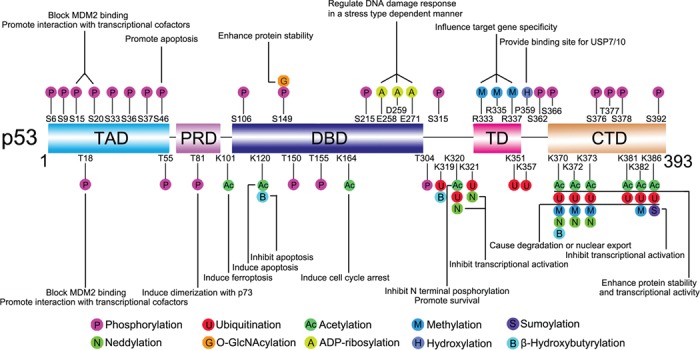
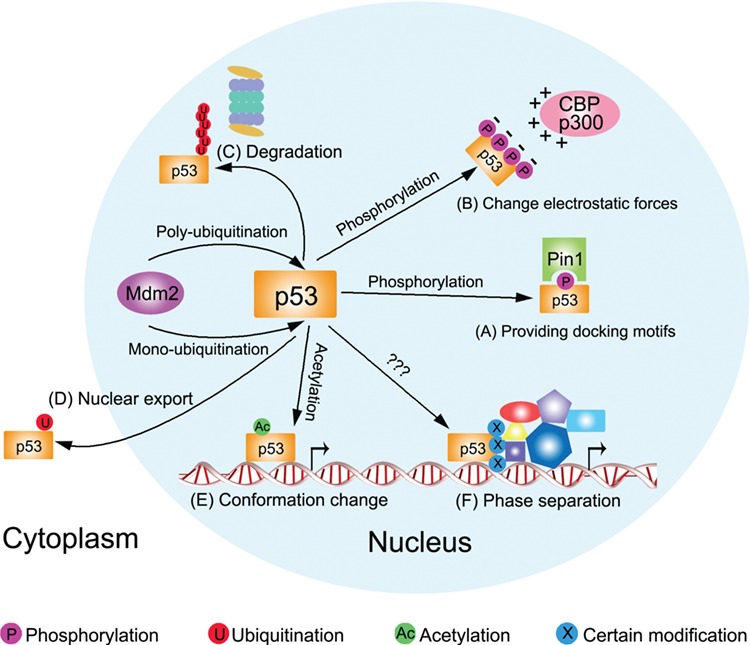
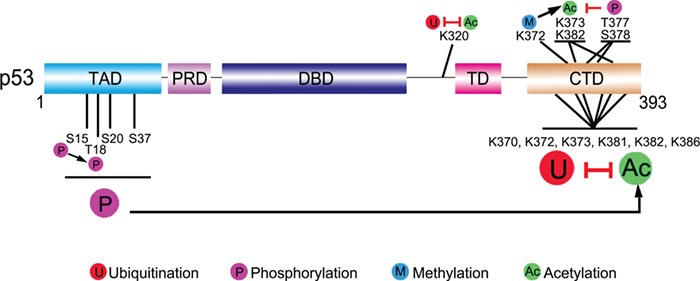
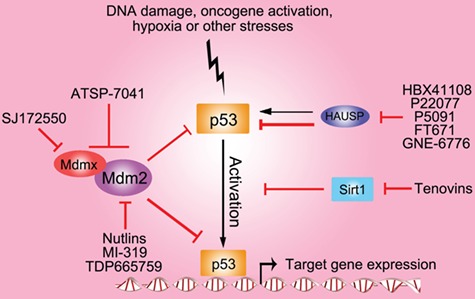
The last 40 years have witnessed how p53 rose from a viral binding protein to a central factor in both stress responses and tumor suppression. The exquisite regulation of p53 functions is of vital importance for cell fate decisions. Among the multiple layers of mechanisms controlling p53 function, posttranslational modifications (PTMs) represent an efficient and precise way. Major p53 PTMs include phosphorylation, ubiquitination, acetylation, and methylation. Meanwhile, other PTMs like sumoylation, neddylation, O-GlcNAcylation, adenosine diphosphate (ADP)-ribosylation, hydroxylation, and β-hydroxybutyrylation are also shown to play various roles in p53 regulation. By independent action or interaction, PTMs affect p53 stability, conformation, localization, and binding partners. Deregulation of the PTM-related pathway is among the major causes of p53-associated developmental disorders or diseases, especially in cancers. This review focuses on the roles of different p53 modification types and shows how these modifications are orchestrated to produce various outcomes by modulating p53 activities or targeted to treat different diseases caused by p53 dysregulation.
Overview
The claims and statistics of this paper haven’t been checked yet.
Free: it reads the open-access text and checks the first 5 claims that cite a source we can check. Create a free account to check every claim.
Integrity signals
Registry
Cites
Statistics
Figures
Verification
Claims the paper makes
The claims and statistics of this paper haven’t been checked yet.
Free: it reads the open-access text and checks the first 5 claims that cite a source we can check. Create a free account to check every claim.
Claims other papers make about this one
Each is checked against this paper’s own text: does it say what the citing paper says it does?
The cited source says what the claim attributes to it.
In the citing paper
“Acetylation’s role in transcription goes further via mediating the stability of various transcription factors including HIF-1α [74] and p53 [75].”
From Acetylation: a new target for protein degradation in cancer (2025) · cites this paper as [75]
Self-check
Percentages, sums and reported differences re-computed from the paper’s own numbers.
The self-check needs the paper’s full text.
Citations
Cites
1 retracted
RETRACTED: The E3 SUMO Ligase PIASy Is a Regulator of Cellular Senescence and Apoptosis
Bischof, O., Schwamborn, K., Martin, N., Werner, A., Sustmann, C., Grosschedl, R., & Dejean, A. (2006) · Molecular Cell · doi:10.1016/j.molcel.2006.05.016 · Cited by 173
RetractedLane, D. P. (1992) · Nature · doi:10.1038/358015a0 · Cited by 5,138 · cited 1×
“Originally, p53 was called ‘the guardian of the genome’ (Lane, 1992) for it was found to be activated in response to various types of DNA damages.”
BackgroundIn Vivo Activation of the p53 Pathway by Small-Molecule Antagonists of MDM2
Vassilev, L. T., Vu, B. T., Graves, B., Carvajal, D., Podlaski, F., Filipovic, Z., Kong, N., Kammlott, U., Lukacs, C., Klein, C., et al. (2004) · Science · doi:10.1126/science.1092472 · Cited by 4,661
Mice deficient for p53 are developmentally normal but susceptible to spontaneous tumours
Donehower, L. A., Harvey, M., Slagle, B. L., McArthur, M. J., Montgomery, C. A., Butel, J. S., & Bradley, A. (1992) · Nature · doi:10.1038/356215a0 · Cited by 4,649
Mechanisms Underlying Ubiquitination
Pickart, C. M. (2001) · Annual Review of Biochemistry · doi:10.1146/annurev.biochem.70.1.503 · Cited by 3,184
hSIR2SIRT1 Functions as an NAD-Dependent p53 Deacetylase
Vaziri, H., Dessain, S. K., Eaton, E. N., Imai, S.-I., Frye, R. A., Pandita, T. K., Guarente, L., & Weinberg, R. A. (2001) · Cell · doi:10.1016/s0092-8674(01)00527-x · Cited by 2,659
ACETYLATION AND METHYLATION OF HISTONES AND THEIR POSSIBLE ROLE IN THE REGULATION OF RNA SYNTHESIS
Allfrey, V. G., Faulkner, R., & Mirsky, A. E. (1964) · Proceedings of the National Academy of Sciences · doi:10.1073/pnas.51.5.786 · Cited by 2,639
Coactivator condensation at super-enhancers links phase separation and gene control
Sabari, B. R., Dall’Agnese, A., Boija, A., Klein, I. A., Coffey, E. L., Shrinivas, K., Abraham, B. J., Hannett, N. M., Zamudio, A. V., Manteiga, J. C., et al. (2018) · Science · doi:10.1126/science.aar3958 · Cited by 2,595
Activation of p53 Sequence-Specific DNA Binding by Acetylation of the p53 C-Terminal Domain
Gu, W., & Roeder, R. G. (1997) · Cell · doi:10.1016/s0092-8674(00)80521-8 · Cited by 2,559
Self-citationAdeno-associated virus vector as a platform for gene therapy delivery
Wang, D., Tai, P. W. L., & Gao, G. (2019) · Nature Reviews Drug Discovery · doi:10.1038/s41573-019-0012-9 · Cited by 2,444
Cited by
p53 in ferroptosis regulation: The new weapon for the old guardian
Liu, Y., & Gu, W. (2022) · Cell Death & Differentiation · doi:10.1038/s41418-022-00943-y · Cited by 540
“Acetylation is a crucial posttranslational modification determining p53 activity [5].”
BackgroundSelf-citationUnderstanding the complexity of p53 in a new era of tumor suppression
Liu, Y., Su, Z., Tavana, O., & Gu, W. (2024) · Cancer Cell · doi:10.1016/j.ccell.2024.04.009 · Cited by 495
Self-citationZhong, Q., Xiao, X., Qiu, Y., Xu, Z., Chen, C., Chong, B., Zhao, X., Hai, S., Li, S., An, Z., et al. (2023) · MedComm · doi:10.1002/mco2.261 · Cited by 442
iPLA2β-mediated lipid detoxification controls p53-driven ferroptosis independent of GPX4
Chen, D., Chu, B., Yang, X., Liu, Z., Jin, Y., Kon, N., Rabadan, R., Jiang, X., Stockwell, B. R., & Gu, W. (2021) · Nature Communications · doi:10.1038/s41467-021-23902-6 · Cited by 348
Self-citationGain-of-function mutant p53 in cancer progression and therapy
Zhang, C., Liu, J., Xu, D., Zhang, T., Hu, W., & Feng, Z. (2020) · Journal of Molecular Cell Biology · doi:10.1093/jmcb/mjaa040 · Cited by 334
The complexity of p53-mediated metabolic regulation in tumor suppression
Liu, Y., & Gu, W. (2022) · Seminars in Cancer Biology · doi:10.1016/j.semcancer.2021.03.010 · Cited by 261
Self-citationThe Regulation of Ferroptosis by Tumor Suppressor p53 and its Pathway
Liu, J., Zhang, C., Wang, J., Hu, W., & Feng, Z. (2020) · International Journal of Molecular Sciences · doi:10.3390/ijms21218387 · Cited by 249
Protein acylation: mechanisms, biological functions and therapeutic targets
Shang, S., Liu, J., & Hua, F. (2022) · Signal Transduction and Targeted Therapy · doi:10.1038/s41392-022-01245-y · Cited by 235
“In response to cellular stresses, p53 transcriptionally participates in the modulation of multiple biological processes, including proliferation, cell cycle arrest, programmed cell death (apoptosis), cellular senescence, DNA repair, autophagy, oxidative response, and metabolic regulation.(120) The acetylation of diffe…”
BackgroundThe ARTS of p53-dependent mitochondrial apoptosis
Hao, Q., Chen, J., Lu, H., & Zhou, X. (2023) · Journal of Molecular Cell Biology · doi:10.1093/jmcb/mjac074 · Cited by 166
Reactive Oxygen Species Induced p53 Activation: DNA Damage, Redox Signaling, or Both?
Shi, T., & Dansen, T. B. (2020) · Antioxidants & Redox Signaling · doi:10.1089/ars.2020.8074 · Cited by 160
p53 at the crossroad of DNA replication and ribosome biogenesis stress pathways
Lindström, M. S., Bartek, J., & Maya-Mendoza, A. (2022) · Cell Death & Differentiation · doi:10.1038/s41418-022-00999-w · Cited by 159
Qi, S.-M., Cheng, G., Cheng, X.-D., Xu, Z., Xu, B., Zhang, W.-D., & Qin, J.-J. (2020) · Frontiers in Cell and Developmental Biology · doi:10.3389/fcell.2020.00233 · Cited by 159
Current developments of targeting the p53 signaling pathway for cancer treatment
Huang, J. (2021) · Pharmacology & Therapeutics · doi:10.1016/j.pharmthera.2020.107720 · Cited by 157
p53 Deacetylation Alleviates Sepsis-Induced Acute Kidney Injury by Promoting Autophagy
Sun, M., Li, J., Mao, L., Wu, J., Deng, Z., He, M., An, S. L., Zeng, Z., Huang, Q., & Chen, Z. (2021) · Frontiers in Immunology · doi:10.3389/fimmu.2021.685523 · Cited by 177
Therapeutics targeting p53-MDM2 interaction to induce cancer cell death
Koo, N., Sharma, A. K., & Narayan, S. (2022) · International Journal of Molecular Sciences · doi:10.3390/ijms23095005 · Cited by 153
Karr, J. P., Ferrie, J. J., Tjian, R., & Darzacq, X. (2022) · Genes & Development · doi:10.1101/gad.349160.121 · Cited by 149
Protein post-translational modifications in the regulation of cancer hallmarks
Wang, H., Yang, L., Liu, M., & Luo, J. (2022) · Cancer Gene Therapy · doi:10.1038/s41417-022-00464-3 · Cited by 163
Cui, C., Yang, F., & Li, Q. (2022) · Frontiers in Molecular Biosciences · doi:10.3389/fmolb.2022.901565 · Cited by 153
Human papillomavirus E6 and E7: What remains?
Vats, A., Trejo-Cerro, Ó., Thomas, M., & Banks, L. (2021) · Tumour Virus Research · doi:10.1016/j.tvr.2021.200213 · Cited by 163
Hallmarks and detection techniques of cellular senescence and cellular ageing in immune cells
Zhou, D., Borsa, M., & Simon, A. K. (2021) · Aging Cell · doi:10.1111/acel.13316 · Cited by 124
Of the many cellular responses activated by TP53, which ones are critical for tumour suppression?
Thomas, A., Kelly, G. L., & Strasser, A. (2022) · Cell Death and Differentiation · doi:10.1038/s41418-022-00996-z · Cited by 110
Jembrek, M. J., Oršolić, N., Mandić, L., Sadžak, A., & Šegota, S. (2021) · Antioxidants · doi:10.3390/antiox10101628 · Cited by 124
The Interplay Between Tumor Suppressor p53 and Hypoxia Signaling Pathways in Cancer
Zhang, C., Liu, J., Wang, J., Zhang, T., Xu, D., Hu, W., & Feng, Z. (2021) · Frontiers in Cell and Developmental Biology · doi:10.3389/fcell.2021.648808 · Cited by 95
Cell fate regulation governed by p53: Friends or reversible foes in cancer therapy
Song, B., Yang, P., & Zhang, S. (2024) · 癌症:英文版 · doi:10.1002/cac2.12520 · Cited by 109
Lysine succinylation, the metabolic bridge between cancer and immunity
Shen, R. D., Ruan, H., Lin, S., Liu, B., Song, H., Li, L., & Ma, T. (2022) · Genes & Diseases · doi:10.1016/j.gendis.2022.10.028 · Cited by 112
Heterogeneity of TP53 Mutations and P53 Protein Residual Function in Cancer: Does It Matter?
Monti, P., Menichini, P., Speciale, A., Cutrona, G., Fais, F., Taìana, E., Neri, A., Bomben, R., Gentile, M., Gattei, V., et al. (2020) · Frontiers in Oncology · doi:10.3389/fonc.2020.593383 · Cited by 107
p53-regulated non-apoptotic cell death pathways and their relevance in cancer and other diseases
Liu, Y., Stockwell, B. R., Jiang, X., & Gu, W. J. (2025) · Nature Reviews Molecular Cell Biology · doi:10.1038/s41580-025-00842-3 · Cited by 112
Self-citationZhang, H., Xu, J., Long, Y., Maimaitijiang, A., Su, Z., Li, W., & Li, J. (2024) · International Journal of Molecular Sciences · doi:10.3390/ijms252312928 · Cited by 112
Miao, Z., Lewis, M. A., Cho, C. J., Adkins-Threats, M., Park, D., Brown, J. W., Sun, J.-X., Burclaff, J., Kennedy, S., Lu, J., et al. (2020) · Developmental Cell · doi:10.1016/j.devcel.2020.07.005 · Cited by 89
The Role of p53 in Progression of Cutaneous Squamous Cell Carcinoma
Piipponen, M., Riihilä, P., Nissinen, L. M., & Kähäri, V. (2021) · Cancers · doi:10.3390/cancers13184507 · Cited by 100
Pathological Role of HDAC8: Cancer and Beyond
Kim, J. Y., Cho, H., Yoo, J. H., Kim, G. W., Jeon, Y. H., Lee, S. W., & Kwon, S. H. (2022) · Cells · doi:10.3390/cells11193161 · Cited by 92
SIRT3 Deficiency Enhances Ferroptosis and Promotes Cardiac Fibrosis via p53 Acetylation
Su, H., Cantrell, A. C., Chen, J., Gu, W. J., & Zeng, H. (2023) · Cells · doi:10.3390/cells12101428 · Cited by 85
Self-citationThe PARP Enzyme Family and the Hallmarks of Cancer Part 1. Cell Intrinsic Hallmarks
Demény, M. Á., & Virág, L. (2021) · Cancers · doi:10.3390/cancers13092042 · Cited by 85
p53: From Fundamental Biology to Clinical Applications in Cancer
Capuozzo, M., Santorsola, M., Bocchetti, M., Perri, F., Cascella, M., Granata, V., Celotto, V., Gualillo, O., Cossu, A. M., Nasti, G., et al. (2022) · Biology · doi:10.3390/biology11091325 · Cited by 68
Wu, Y., Zhang, C., Xiong, J., Cai, D.-Q., Wang, C.-Z., Wang, Y., Liu, Y., Wang, Y., Li, Y., Wu, J. H., et al. (2023) · Cell Research · doi:10.1038/s41422-023-00874-4 · Cited by 73
Self-citationAn unexpected role for p53 in regulating cancer cell–intrinsic PD-1 by acetylation
Cao, Z., Kon, N., Liu, Y., Xu, W., Wen, J., Yao, H., Zhang, M., Wu, Z., Yan, X., Zhu, W., et al. (2021) · Science Advances · doi:10.1126/sciadv.abf4148 · Cited by 70
Self-citationAt a Crossroads to Cancer: How p53-Induced Cell Fate Decisions Secure Genome Integrity
Rizzotto, D., Englmaier, L., & Villunger, A. (2021) · International Journal of Molecular Sciences · doi:10.3390/ijms221910883 · Cited by 75
Repression of P53 Function by SIRT5-Mediated Desuccinylation at Lysine 120
Liu, X., Rong, F., Tang, J., Zhu, C., Chen, X., Jia, S., Wang, Z., Sun, X., Deng, H., Zha, H., et al. (2020) · Cell Death and Differentiation · doi:10.1038/s41418-021-00886-w · Cited by 72
Chemotherapy Resistance: Role of Mitochondrial and Autophagic Components
Bahar, E., Han, S., Kim, J., & Yoon, H. (2022) · Cancers · doi:10.3390/cancers14061462 · Cited by 72
Cell Fate Regulation upon DNA Damage: p53 Serine 46 Kinases Pave the Cell Death Road
Liebl, M. C., & Hofmann, T. G. (2019) · BioEssays · doi:10.1002/bies.201900127 · Cited by 65
p53 in senescence – it's a marathon, not a sprint
Sheekey, E., & Narita, M. (2021) · FEBS Journal · doi:10.1111/febs.16325 · Cited by 67
Isoforms of the p53 Family and Gastric Cancer: A Ménage à Trois for an Unfinished Affair
Blanchet, A., Bourgmayer, A., Kurtz, J., Mellitzer, G., & Gaiddon, C. (2021) · Cancers · doi:10.3390/cancers13040916 · Cited by 72
Liu, Y., Liu, Y., Ye, S., Feng, H., & Ma, L. (2023) · Journal of Translational Internal Medicine · doi:10.2478/jtim-2023-0089 · Cited by 63
Self-citationTargeting the p53 signaling pathway in cancers: Molecular mechanisms and clinical studies
Shen, J., Wang, Q., Mao, Y., Gao, W., & Duan, S. (2023) · MedComm · doi:10.1002/mco2.288 · Cited by 62
Targeting mutant p53: a key player in breast cancer pathogenesis and beyond
Qayoom, H., Haq, B. U., Sofi, S., Jan, N., Jan, A., & Mir, M. A. (2024) · Cell Communication and Signaling · doi:10.1186/s12964-024-01863-9 · Cited by 78
Deciphering the acetylation code of p53 in transcription regulation and tumor suppression
Xia, Z., Kon, N., Gu, A. P., Tavana, O., & Gu, W. (2022) · Oncogene · doi:10.1038/s41388-022-02331-9 · Cited by 60
“There have been other excellent reviews written previously on similar topics [4, 8, 9].”
BackgroundSelf-citationThe Role of DNA Damage Response in Dysbiosis-Induced Colorectal Cancer
Rivas-Domínguez, A., Pastor, N., Martínez-López, L., Colón-Pérez, J., Bermúdez, B., & Orta, M. L. (2021) · Cells · doi:10.3390/cells10081934 · Cited by 67
MDM2: current research status and prospects of tumor treatment
Yao, Y., Zhang, Q., Li, Z., & Zhang, H. (2024) · Cancer Cell International · doi:10.1186/s12935-024-03356-8 · Cited by 83
Falcicchio, M., Ward, J. A., Macip, S., & Doveston, R. G. (2020) · Cell Death Discovery · doi:10.1038/s41420-020-00362-3 · Cited by 64
Tubulin Post-Translational Modifications: The Elusive Roles of Acetylation
Carmona, B., Marinho, H. S., Matos, C. L., Nolasco, S., & Soares, H. (2023) · Biology · doi:10.3390/biology12040561 · Cited by 74
Cross-Talk between p53 and Wnt Signaling in Cancer
Xiao, Q., Werner, J., Venkatachalam, N., Boonekamp, K. E., Ebert, M. P. A., & Zhan, T. (2022) · Biomolecules · doi:10.3390/biom12030453 · Cited by 63
Type 2 diabetic mellitus related osteoporosis: focusing on ferroptosis
Chen, Y., Zhao, W., Hu, A., Lin, S., Chen, P., Yang, B., Fan, Z., Qi, J., Zhang, W., Gao, H., et al. (2024) · Journal of Translational Medicine · doi:10.1186/s12967-024-05191-x · Cited by 71
Tumor suppressor p53 cross-talks with TRIM family proteins
Liu, J., Zhang, C., Wang, X., Hu, W., & Feng, Z. (2020) · Genes & Diseases · doi:10.1016/j.gendis.2020.07.003 · Cited by 60
Regulation of Ferroptosis Pathway by Ubiquitination
Wang, X., Wang, Y., Li, Z., Qin, J., & Wang, P. (2021) · Frontiers in Cell and Developmental Biology · doi:10.3389/fcell.2021.699304 · Cited by 62
Ye, Z., Xia, Y., Li, L., Li, B., Chen, L., Yu, W., Ruan, Y., Rao, T., Zhou, X., & Fan, C. (2023) · Biomedicine & Pharmacotherapy · doi:10.1016/j.biopha.2023.114925 · Cited by 60
p53 induces ARTS to promote mitochondrial apoptosis
Hao, Q., Chen, J., Liao, J., Huang, Y., Gan, Y., Larisch, S., Zeng, S. X., Lu, H., & Zhou, X. Y. (2021) · Cell Death and Disease · doi:10.1038/s41419-021-03463-8 · Cited by 53
Deciphering the PTM codes of the tumor suppressor p53
Wen, J., & Wang, D. (2021) · Journal of Molecular Cell Biology · doi:10.1093/jmcb/mjab047 · Cited by 59
RBCK1 promotes p53 degradation via ubiquitination in renal cell carcinoma
Yu, S., Dai, J., Ma, M., Xu, T., Kong, Y., Cui, C., Chi, Z., Si, L., Tang, H., Yang, L., et al. (2019) · Cell Death and Disease · doi:10.1038/s41419-019-1488-2 · Cited by 49
Opposing Roles of Wild-type and Mutant p53 in the Process of Epithelial to Mesenchymal Transition
Semenov, O., Daks, A. A., Fedorova, O., Shuvalov, O. Y., & Barlev, N. A. (2022) · Frontiers in Molecular Biosciences · doi:10.3389/fmolb.2022.928399 · Cited by 48
Liu, Y., Liu, Y., Ye, S., Feng, H., & Ma, L. (2022) · Frontiers in Oncology · doi:10.3389/fonc.2022.985484 · Cited by 46
Self-citationA Double-Edged Sword: The Two Faces of PARylation
Kang, M., Park, S., Park, S., Lee, H. G., & Park, J. H. (2022) · International Journal of Molecular Sciences · doi:10.3390/ijms23179826 · Cited by 52
Biomedical Relevance of Novel Anticancer Peptides in the Sensitive Treatment of Cancer
Bakare, O. O., Gokul, A., Wu, R., Niekerk, L., Klein, A., & Keyster, M. (2021) · Biomolecules · doi:10.3390/biom11081120 · Cited by 56
TP53 Mutation in Acute Myeloid Leukemia: An Old Foe Revisited
Shin, D.-Y. (2023) · Cancers · doi:10.3390/cancers15194816 · Cited by 46
“However, post-translational modification, including phosphorylation and acetylation on the p53 protein induced by exogenous and endogenous stress like radiation and DNA damage can result in the decoupling of the p53 protein from the MDM2 protein, which leads to p53 activation [14].”
BackgroundBioactive peptides for anticancer therapies.
Zhang, Y., Wang, C., Zhang, W., & Li, X. (2023) · PubMed Central · doi:10.12336/biomatertransl.2023.01.003 · Cited by 78
Targeting tumor suppressor p53 for organ fibrosis therapy
Bao, Y., Yang, Q., Shen, X.-L., Yu, W.-K., Zhou, L., Zhu, Q.-R., Shan, Q., Wang, Z., & Cao, G. (2024) · Cell Death and Disease · doi:10.1038/s41419-024-06702-w · Cited by 52
Mitochondrial–nuclear p53 trafficking controls neuronal susceptibility in stroke
Almeida, Á., Sánchez‐Morán, I., & Rodríguez, C. (2021) · IUBMB Life · doi:10.1002/iub.2453 · Cited by 45
Mechanisms and inhibitors of ferroptosis in psoriasis
Zhou, Q., Yang, L., Li, T., Wang, K., Huang, X., Shi, J., & Wang, Y. (2022) · Frontiers in Molecular Biosciences · doi:10.3389/fmolb.2022.1019447 · Cited by 51
The Functional Roles of ISG15/ISGylation in Cancer
Yin, Y., Qin, H., Li, H., Shi, W., Bao, L., Xu, S., Yin, J., & Zheng, L. (2023) · Molecules · doi:10.3390/molecules28031337 · Cited by 51
Post-Translational Modifications of BRD4: Therapeutic Targets for Tumor
Liu, N., Ling, R., Tang, X., Yu, Y., Zhou, Y., & Chen, D. (2022) · Frontiers in Oncology · doi:10.3389/fonc.2022.847701 · Cited by 48
Shin, E. M., Huynh, V. T., Neja, S. A., Liu, C. Y., Raju, A., Tan, K. Y. S., Tan, N. S., Gunaratne, J., Bi, X., Iyer, L. M., et al. (2021) · Science Advances · doi:10.1126/sciadv.abe2470 · Cited by 45
USP49 participates in the DNA damage response by forming a positive feedback loop with p53
Tu, R., Kang, W., Yang, X.-F., Zhang, Q., Xie, X., Liu, W., Zhang, J., Zhang, X.-D., Wang, H., & Du, R. (2018) · Cell Death and Disease · doi:10.1038/s41419-018-0475-3 · Cited by 44
Berendsen, M. R., Stevens, W. B. C., van den Brand, M., van Krieken, J. H., & Scheijen, B. (2020) · Cancers · doi:10.3390/cancers12123553 · Cited by 44
Inhibition of p53 Sulfoconjugation Prevents Oxidative Hepatotoxicity and Acute Liver Failure
Xu, P., Xi, Y., Wang, P., Luka, Z., Xu, M., Tung, H.-C., Wang, J., Ren, S., Feng, D., Gao, B., et al. (2022) · Gastroenterology · doi:10.1053/j.gastro.2021.12.260 · Cited by 39
Retrospective analysis of somatic mutations and clonal hematopoiesis in astronauts
Brojakowska, A., Kour, A., Thel, M. C., Park, E., Bisserier, M., Garikipati, V. N. S., Hadri, L., Mills, P. J., Walsh, K. X., & Goukassian, D. A. (2022) · Communications Biology · doi:10.1038/s42003-022-03777-z · Cited by 43
Gao, Z., Jiang, J., Hou, L., & Ji, F. (2022) · Oxidative Medicine and Cellular Longevity · doi:10.1155/2022/1366957 · Cited by 45
Differential Gain-of-Function Activity of Three p53 Hotspot Mutants In Vivo
Xiong, S., Chachad, D., Zhang, Y., Gencel-Augusto, J., Sirito, M., Pant, V., Yang, P., Sun, C., Chau, G., Qi, Y., et al. (2022) · Cancer Research · doi:10.1158/0008-5472.can-21-3376 · Cited by 44
Targeting USP2 regulation of VPRBP-mediated degradation of p53 and PD-L1 for cancer therapy
Yi, J., Tavana, O., Li, H., Wang, D., Baer, R. J., & Gu, W. J. (2023) · Nature Communications · doi:10.1038/s41467-023-37617-3 · Cited by 49
Self-citationEmdal, K. B., Palacio‐Escat, N., Wigerup, C., Eguchi, A., Nilsson, H., Bekker‐Jensen, D. B., Rönnstrand, L., Kazi, J. U., Puissant, A., Itzykson, R., et al. (2022) · Cell Reports · doi:10.1016/j.celrep.2022.111177 · Cited by 44
Dobbelstein, M., & Levine, A. J. (2020) · Cancer Science · doi:10.1111/cas.14433 · Cited by 37
Role of RUNX Family Transcription Factors in DNA Damage Response.
Samarakkody, A. S., Shin, N.-Y., & Cantor, A. B. (2020) · PubMed Central · doi:10.14348/molcells.2019.0304 · Cited by 50
The PP2A subunit PR130 is a key regulator of cell development and oncogenic transformation
Dzulko, M., Pons, M., Henke, A., Schneider, G., & Krämer, O. H. (2020) · Biochimica et Biophysica Acta (BBA) - Reviews on Cancer · doi:10.1016/j.bbcan.2020.188453 · Cited by 47
Dying to Survive—The p53 Paradox
Lees, A., Sessler, T., & McDade, S. S. (2021) · Cancers · doi:10.3390/cancers13133257 · Cited by 41
Clark, J., Piccirella, S., Kayed, R., Abate, G., Uberti, D. L., & Kinnon, P. (2022) · Frontiers in Aging Neuroscience · doi:10.3389/fnagi.2022.835288 · Cited by 43
New Insights into the Roles of p53 in Central Nervous System Diseases
Li, H., Zhang, Z., Li, H., Pan, X., & Wang, Y. (2023) · The International Journal of Neuropsychopharmacology · doi:10.1093/ijnp/pyad030 · Cited by 39
Liu, L., Huang, S., Xu, M., Yan Fang, G. O. N. G., Li, D., Wan, C., Wu, H., & Tang, Q. (2021) · International Journal of Molecular Medicine · doi:10.3892/ijmm.2021.4955 · Cited by 35
The Relationship between Cadmium Toxicity and the Modulation of Epigenetic Traits in Plants
Niekerk, L., Carelse, M. F., Bakare, O. O., Mavumengwana, V., Keyster, M., & Gokul, A. (2021) · International Journal of Molecular Sciences · doi:10.3390/ijms22137046 · Cited by 35
Ferroptosis: A new therapeutic target for bladder cancer
Zeng, F. J., Lan, Y., Wang, N., Huang, X., Zhou, Q., & Wang, Y. (2022) · Frontiers in Pharmacology · doi:10.3389/fphar.2022.1043283 · Cited by 37
Gao, J., Li, Y., & Song, R. (2021) · Neuroreport · doi:10.1097/wnr.0000000000001679 · Cited by 34
The Elephant Evolved p53 Isoforms that Escape MDM2-Mediated Repression and Cancer
Padariya, M., Jooste, M.-L., Hupp, T., Fåhraeus, R., Vojtesek, B., Vollrath, F., Kalathiya, U., & Karakostis, K. (2022) · Molecular Biology and Evolution · doi:10.1093/molbev/msac149 · Cited by 33
Mutant P53 in the formation and progression of the tumor microenvironment: Friend or foe
Asl, E. R., Rostamzadeh, D., Duijf, P. H. G., Mafi, S., Mansoori, B., Barati, S., Cho, W. C. S., & Mansoori, B. (2023) · Life Sciences · doi:10.1016/j.lfs.2022.121361 · Cited by 40
Crosstalk between SUMOylation and other post-translational modifications in breast cancer
Wei, B., Yang, F., Yu, L., & Qiu, C. (2024) · Cellular & Molecular Biology Letters · doi:10.1186/s11658-024-00624-3 · Cited by 39
Beauchemin, H., & Möröy, T. (2020) · Frontiers in Genetics · doi:10.3389/fgene.2020.591099 · Cited by 37
(Dis)similarities between the Decidual and Tumor Microenvironment
Krstić, J., Deutsch, A. J. A., Fuchs, J., Gauster, M., Sparovec, T. G., Hiden, U., Krappinger, J. C., Moser, G., Pansy, K., Szmyra, M., et al. (2022) · Biomedicines · doi:10.3390/biomedicines10051065 · Cited by 36
Lipogenic enzyme FASN promotes mutant p53 accumulation and gain-of-function through palmitoylation
Liu, J., Shen, Y., Liu, J., Xu, D., Chang, C., Wang, J., Zhou, J., Haffty, B. G., Zhang, L., Bargonetti, J., et al. (2025) · Nature Communications · doi:10.1038/s41467-025-57099-9 · Cited by 38
Anti-cancer effect of combined action of anti-MUC1 and rosmarinic acid in AGS gastric cancer cells
Radziejewska, I., Supruniuk, K., & Bielawska, A. (2021) · European Journal of Pharmacology · doi:10.1016/j.ejphar.2021.174119 · Cited by 31
Regulation of p53 Function by Formation of Non-Nuclear Heterologous Protein Complexes
Zavileyskiy, L. G., & Bunik, V. I. (2022) · Biomolecules · doi:10.3390/biom12020327 · Cited by 31
The Wheel of p53 Helps to Drive the Immune System
Łasut-Szyszka, B., & Rusin, M. (2023) · International Journal of Molecular Sciences · doi:10.3390/ijms24087645 · Cited by 32
Phosphorylation Control of p53 DNA-Binding Cooperativity Balances Tumorigenesis and Aging
Timofeev, O. N., Koch, L., Niederau, C., Tscherne, A., Schneikert, J., Klimovich, M., Elmshäuser, S., Zeitlinger, M. A., Mernberger, M., Nist, A., et al. (2020) · Cancer Research · doi:10.1158/0008-5472.can-20-2002 · Cited by 34
Huang, Y., Yong, P., Dickey, D. M., Vora, S. M., Wu, H., & Bernlohr, D. (2022) · Endocrinology · doi:10.1210/endocr/bqac014 · Cited by 33
p53: A Regulator of Ferroptosis Induced by Galectin-1 Derived Peptide 3 in MH7A Cells
Hu, J., Zhang, R., Chang, Q., Ji, M.-L., Zhang, H., Geng, R., Li, C., & Wang, Z. (2022) · Frontiers in Genetics · doi:10.3389/fgene.2022.920273 · Cited by 32
Metadata
- Authors
- Liu, Y., Tavana, O., & Gu, W.
- Affiliations
- Columbia University (US)
- Herbert Irving Comprehensive Cancer Center (US)
- Corresponding author
- Gu, Wei
- Venue
- Journal of Molecular Cell Biology
- Publisher
- Oxford University Press (OUP)
- Published
- 2019-07
- Volume
- 11
- Issue
- 7
- Pages
- 564-577
- ISSN
- 1674-2788 (ISSN-L)
- 1759-4685
- PMC
- PMC6736412
- OpenAlex
- W2961184804
- Cited by
- 392
- References
- 209
- Citations by year
- 2026: 31 · 2025: 47 · 2024: 49 · 2023: 73 · 2022: 83 · 2021: 63 · 2020: 40 · 2019: 5
- FWCI
- 4.55
- Type
- journal article
- Language
- en
- Open access
- gold
- doi.org
- Licence
- Locations
- Journal of Molecular Cell Biology (publishedVersion, cc-by-nc)
- PubMed Central (publishedVersion, cc-by-nc)
- PubMed (publishedVersion)
- Funders
- National Cancer Institute of the National Institutes of Health (5R01CA193890, 5R01CA085533, 5R01CA190477, 5R01CA216884)
- Topics
- Health Sciences › Medicine › Oncology › Cancer-related Molecular Pathways
- Life Sciences › Biochemistry, Genetics and Molecular Biology › Molecular Biology › Ubiquitin and proteasome pathways
- Life Sciences › Biochemistry, Genetics and Molecular Biology › Molecular Biology › PI3K/AKT/mTOR signaling in cancer
- Keywords
- p53, post-translational modification, phosphorylation, ubiquitination, acetylation, methylation, SUMOylation, neddylation, O-GlcNAcylation, ADP-ribosylation, hydroxylation, β-hydroxybutyrylation, p53 stabilization, tumor suppression, stress response, cancer, developmental disorders
- MeSH terms
- Animals, Humans, Neoplasms, Protein Processing, Post-Translational, Tumor Suppressor Protein p53, History, 20th Century, History, 21st Century, Protein Stability
About these checks
Registry, retraction, Cites and statistics results are computed, not judged, with one exception: a printed reference that no index lists is read once by a model before it counts as a citation error. Claims are extracted by a model and kept only when their quote appears verbatim in the text; each cited source is then checked, with a model’s help, for whether it says what the claim relies on. Those verdicts can be wrong — read the claim’s quote and the cited source before relying on one.
Statistics and arithmetic are recomputed, not judged.
Confidence bands are shown only for fields calibrated on our annotated test set. None is calibrated yet, so no band is shown.
What counts as a claim ›How we measure confidence ›How we check this ›
Are you an author, or do you see a problem with this page? Request a review
Data sources
Bibliographic data: Semantic Scholar, OpenAlex, Crossref.
Contains information from the Semantic Scholar Academic Graph Datasets, made available under the ODC Attribution License (ODC-BY 1.0).
Semantic Scholar’s data is described in: Kinney, R., et al. (2023). The Semantic Scholar Open Data Platform. arXiv:2301.10140.
