

High compared with moderate protein intake reduces adaptive thermogenesis and induces a negative energy balance during long-term weight-loss maintenance in participants with prediabetes in the Postobese state: a PREVIEW Study
Open accessThe DOI matches its Crossref record; 50 of the 51 references it cites were found in a registry or an index.
Abstract
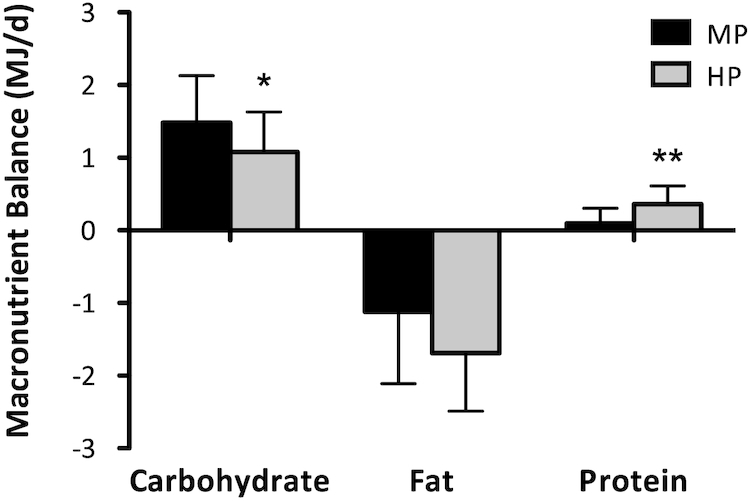
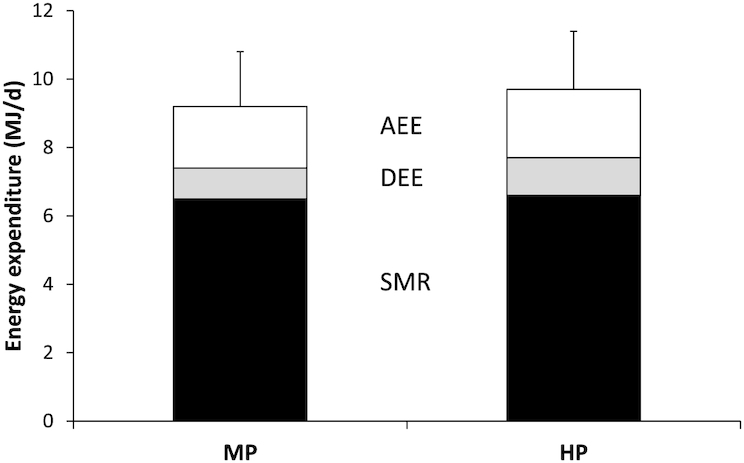
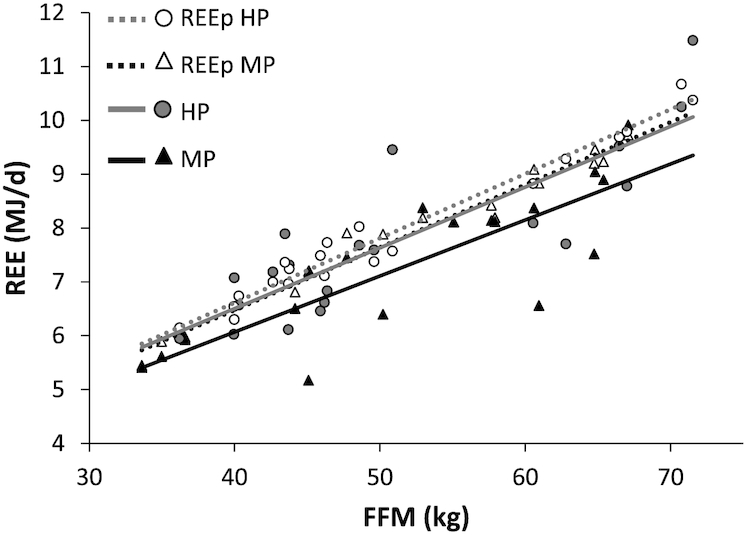
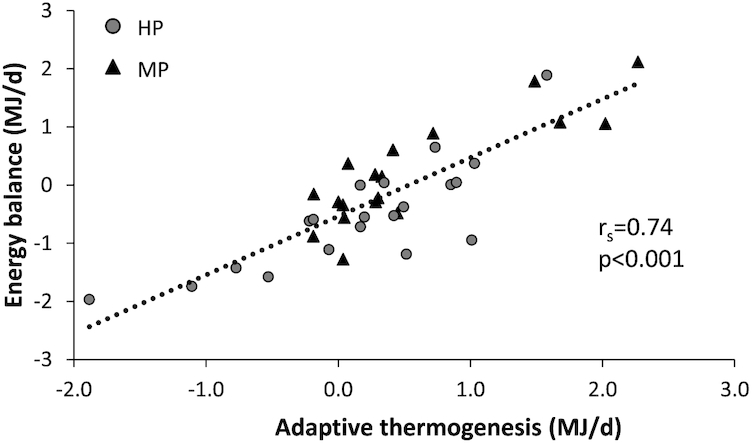
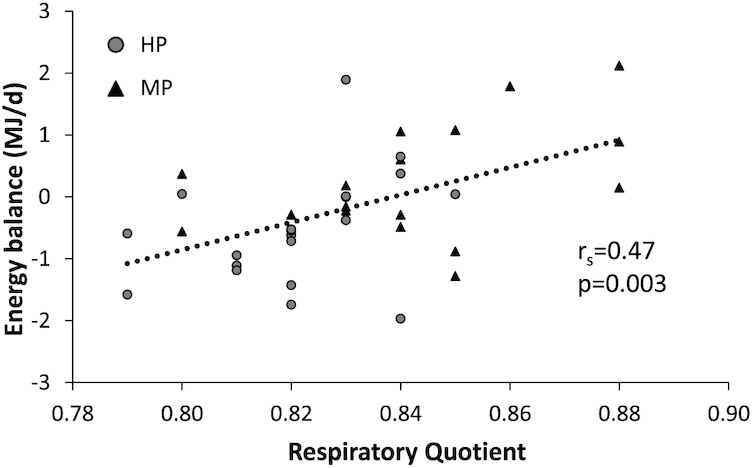
BACKGROUND: Weight loss has been associated with adaptations in energy expenditure. Identifying factors that counteract these adaptations are important for long-term weight loss and weight maintenance. OBJECTIVE: The aim of this study was to investigate whether increased protein/carbohydrate ratio would reduce adaptive thermogenesis (AT) and the expected positive energy balance (EB) during weight maintenance after weight loss in participants with prediabetes in the postobese state. METHODS: In 38 participants, the effects of 2 diets differing in protein/carbohydrate ratio on energy expenditure and respiratory quotient (RQ) were assessed during 48-h respiration chamber measurements ∼34 mo after weight loss. Participants consumed a high-protein (HP) diet (n = 20; 13 women/7 men; age: 64.0 ± 6.2 y; BMI: 28.9 ± 4.0 kg/m 2) with 25:45:30% or a moderate-protein (MP) diet (n = 18; 9 women/9 men; age: 65.1 ± 5.8 y; BMI: 29.0 ± 3.8 kg/m 2) with 15:55:30% of energy from protein:carbohydrate:fat. Predicted resting energy expenditure (REEp) was calculated based on fat-free mass and fat mass. AT was assessed by subtracting measured resting energy expenditure (REE) from REEp. The main outcomes included differences in components of energy expenditure, substrate oxidation, and AT between groups. RESULTS: EB (MP = 0.2 ± 0.9 MJ/d; HP = -0.5 ± 0.9 MJ/d) and RQ (MP = 0.84 ± 0.02; HP = 0.82 ± 0.02) were reduced and REE (MP: 7.3 ± 0.2 MJ/d compared with HP: 7.8 ± 0.2 MJ/d) was increased in the HP group compared with the MP group (P < 0.05). REE was not different from REEp in the HP group, whereas REE was lower than REEp in the MP group (P < 0.05). Furthermore, EB was positively related to AT (rs = 0.74; P < 0.001) and RQ (rs = 0.47; P < 0.01) in the whole group of participants. CONCLUSIONS: In conclusion, an HP diet compared with an MP diet led to a negative EB and counteracted AT ∼34 mo after weight loss, in participants with prediabetes in the postobese state. These results indicate the relevance of compliance to an increased protein/carbohydrate ratio for long-term weight maintenance after weight loss. The trial was registered at clinicaltrials.gov as NCT01777893.
Overview
The claims and statistics of this paper haven’t been checked yet.
Free: it reads the open-access text and checks the first 5 claims that cite a source we can check. Create a free account to check every claim.
Integrity signals
Registry
Cites
Statistics
Figures
Verification
Claims the paper makes
The claims and statistics of this paper haven’t been checked yet.
Free: it reads the open-access text and checks the first 5 claims that cite a source we can check. Create a free account to check every claim.
Claims other papers make about this one
Each is checked against this paper’s own text: does it say what the citing paper says it does?
The cited source says what the claim attributes to it.
In the citing paper
“high-protein diets have received particular attention due to their potential to enhance satiety, preserve lean body mass, and attenuate adaptive reductions in resting energy expenditure that accompany weight loss”
From Weight maintenance after discontinuation of GLP-1 therapies (2026) · cites this paper as [58]
The cited source says what the claim attributes to it.
In the citing paper
“A high-protein diet may also reduce adaptive thermogenesis and induce a negative energy balance to help maintain weight loss in the long term.76”
From Changes in lean body mass with glucagon‐like peptide ‐1‐based therapies and mitigation strategies (2024) · cites this paper as [76]
Self-check
Percentages, sums and reported differences re-computed from the paper’s own numbers.
The self-check needs the paper’s full text.
Citations
Cites
New methods for calculating metabolic rate with special reference to protein metabolism
Weir, J. B. D. V. (1949) · The Journal of Physiology · doi:10.1113/jphysiol.1949.sp004363 · Cited by 5,603 · cited 1×
“O2 consumption and CO2 production were used to calculate TEE according to the formula of Weir (31).”
Method2. Classification and Diagnosis of Diabetes: Standards of Medical Care in Diabetes—2018
American Diabetes Association (2018) · Diabetes Care · doi:10.2337/dc18-s002 · Cited by 3,159
Body composition from fluid spaces and density: analysis of methods. 1961.
Siri, W. E. (1993) · PubMed · Cited by 2,573
Classification and Diagnosis of Diabetes
Fajans, S. S. (1990) · Medical Entomology and Zoology · Cited by 2,359
Changes in Energy Expenditure Resulting from Altered Body Weight
Leibel, R. L., Rosenbaum, M., & Hirsch, J. (1995) · New England Journal of Medicine · doi:10.1056/nejm199503093321001 · Cited by 2,012 · cited 1×
“These numbers are in line with results that have been described before (4, 40, 41), indicating that AT remains present even up to 34 mo after an 8-wk weight loss period during which participants lost 11.”
ResultLong-term weight loss maintenance
Wing, R. R., & Phelan, S. (2005) · The American Journal of Clinical Nutrition · doi:10.1093/ajcn/82.1.222s · Cited by 1,941 · cited 2×
“The most straightforward remedy for obesity is weight loss, but the success of long-term weight-loss maintenance is poor (1).”
BackgroundPersistent metabolic adaptation 6 years after “The Biggest Loser” competition
Fothergill, E., Guo, J., Howard, L., Kerns, J. C., Knuth, N. D., Brychta, R., Chen, K. Y., Skarulis, M. C., Walter, M., Walter, P. J., et al. (2016) · Obesity · doi:10.1002/oby.21538 · Cited by 672
Rosenbaum, M., Hirsch, J., Gallagher, D. A., & Leibel, R. L. (2008) · The American Journal of Clinical Nutrition · doi:10.1093/ajcn/88.4.906 · Cited by 444
Westerterp-Plantenga, M., Rolland, V, Wilson, S., & Westerterp, K. (1999) · European Journal of Clinical Nutrition · doi:10.1038/sj.ejcn.1600782 · Cited by 361
Self-citationDiepvens, K., Westerterp, K. R., & Westerterp-Plantenga, M. S. (2007) · American Journal of Physiology-Regulatory, Integrative and Comparative Physiology · doi:10.1152/ajpregu.00832.2005 · Cited by 341
Self-citationWesterterp‐Plantenga, M. S., Lejeune, M. P. G. M., & Kovacs, E. M. R. (2005) · Obesity Research · doi:10.1038/oby.2005.142 · Cited by 328
Self-citationHigh protein intake sustains weight maintenance after body weight loss in humans
Westerterp-Plantenga, M. S., Lejeune, M. P. G. M., Nijs, I., van Ooijen, M., & Kovacs, E. M. R. (2004) · International Journal of Obesity · doi:10.1038/sj.ijo.0802461 · Cited by 326
Self-citationMikkelsen, P. B., Toubro, S., & Astrup, A. (2000) · The American Journal of Clinical Nutrition · doi:10.1093/ajcn/72.5.1135 · Cited by 293
Changes in energy expenditure with weight gain and weight loss in humans
Müller, M. J., Enderle, J., & Bosy-Westphal, A. (2016) · Current Obesity Reports · doi:10.1007/s13679-016-0237-4 · Cited by 267 · cited 1×
“AT leads to a reduction in energy expenditure greater than that predicted based on reductions in fat-free mass (FFM) and/or fat mass (FM) (2).”
BackgroundA dual-respiration chamber system with automated calibration
Schoffelen, P. F. M., Westerterp, K. R., Saris, W. H. M., & Ten Hoor, F. (1997) · Journal of Applied Physiology · doi:10.1152/jappl.1997.83.6.2064 · Cited by 252 · cited 3×
“O2 consumption and CO2 production were continuously measured by open-circuit ventilated indirect calorimetry (28).”
MethodInfluentialDiet induced thermogenesis measured over 24h in a respiration chamber: effect of diet composition
Westerterp, K., Wilson, S., & Rolland, V (1999) · International Journal of Obesity · doi:10.1038/sj.ijo.0800810 · Cited by 251
Lejeune, M. P. G. M., Kovacs, E. M. R., & Westerterp-Plantenga, M. S. (2003) · British Journal of Nutrition · doi:10.1079/bjn2003938 · Cited by 236
Self-citationDalgaard, L. T., & Pedersen, O. (2001) · Diabetologia · doi:10.1007/s001250100596 · Cited by 217 · cited 1×
“The effects of protein intake on REE as a function of FFM may be mediated via upregulation of uncoupling proteins (UCP) (45), which in turn would support increased energy expenditure (46).”
BackgroundEnergy intake, physical activity and body weight: a simulation model
Westerterp, K. R., Donkers, J. H. H. L. M., Fredrix, E. W. H. M., & oekhoudt, P. (1995) · British Journal of Nutrition · doi:10.1079/bjn19950037 · Cited by 202 · cited 2×
“Individual daily energy requirements were calculated as the basal metabolic rate using the FFM and FM (30) multiplied by a physical activity level of 1.”
MethodChristensen, P., Meinert Larsen, T., Westerterp‐Plantenga, M., Macdonald, I., Martinez, J. A., Handjiev, S., Poppitt, S., Hansen, S., Ritz, C., Astrup, A., et al. (2018) · Diabetes, Obesity and Metabolism · doi:10.1111/dom.13466 · Cited by 188
Self-citationEnergy metabolism after 2 y of energy restriction: the Biosphere 2 experiment
Weyer, C., Walford, R. L., Harper, I. T., Milner, M., MacCallum, T., Tataranni, P. A., & Ravussin, E. (2000) · The American Journal of Clinical Nutrition · doi:10.1093/ajcn/72.4.946 · Cited by 178 · cited 1×
“These numbers are in line with results that have been described before (4, 40, 41), indicating that AT remains present even up to 34 mo after an 8-wk weight loss period during which participants lost 11.”
ResultThermic effect of food and sympathetic nervous system activity in humans
Tappy, L. (1996) · Reproduction Nutrition Development · doi:10.1051/rnd:19960405 · Cited by 177 · cited 1×
“7% (34)] in the calculations to predict energy expenditure, the increases in REE of the HP diet compared with the MP diet exceeded the increased thermic effect of protein.”
BackgroundThermogenic ingredients and body weight regulation
Hursel, R., & Westerterp‐Plantenga, M. S. (2010) · International Journal of Obesity · doi:10.1038/ijo.2009.299 · Cited by 171
Self-citationClinical significance of adaptive thermogenesis
Major, G. C., Doucet, E., Trayhurn, P., Astrup, A., & Tremblay, A. (2007) · International Journal of Obesity · doi:10.1038/sj.ijo.0803523 · Cited by 170 · cited 1×
“an important role in this process (44).”
The prevalence of weight loss maintenance among American adults
McGuire, M., Wing, R., & Hill, J. (1999) · International Journal of Obesity · doi:10.1038/sj.ijo.0801075 · Cited by 164 · cited 1×
“In long-term interventions it has been shown that up to 90% of weight-reduced individuals return to their previous body weight (1, 42) and weight cycling has been associated with increased mortality (43).”
BackgroundWeight loss, weight maintenance, and adaptive thermogenesis
Camps, S. G., Verhoef, S. P. M., & Westerterp, K. R. (2013) · American Journal of Clinical Nutrition · doi:10.3945/ajcn.112.050310 · Cited by 162 · cited 1×
“These numbers are in line with results that have been described before (4, 40, 41), indicating that AT remains present even up to 34 mo after an 8-wk weight loss period during which participants lost 11.”
ResultDietary Protein and Energy Balance in Relation to Obesity and Co-morbidities
Drummen, M., Tischmann, L., Gatta-Cherifi, B., Adam, T., & Westerterp-Plantenga, M. (2018) · Frontiers in Endocrinology · doi:10.3389/fendo.2018.00443 · Cited by 156 · cited 11×
“O2 consumption and CO2 production were used to calculate TEE according to the formula of Weir (31).”
BackgroundSelf-citationThermic effect of food in humans: methods and results from use of a respiratory chamber
Tataranni, P., Larson, D., Snitker, S., & Ravussin, É. (1995) · American Journal of Clinical Nutrition · doi:10.1093/ajcn/61.5.1013 · Cited by 156
MacLean, P. S., Higgins, J. A., Jackman, M. R., Johnson, G. C., Fleming-Elder, B. K., Wyatt, H. R., Melanson, E. L., & Hill, J. O. (2006) · American Journal of Physiology-Regulatory, Integrative and Comparative Physiology · doi:10.1152/ajpregu.00810.2005 · Cited by 136
Smeets, A. J. P. G., & Westerterp‐Plantenga, M. S. (2009) · European Journal of Nutrition · doi:10.1007/s00394-009-0006-1 · Cited by 129
Self-citationNew methods for calculating metabolic rate with special reference to protein metabolism. 1949.
Jb, W. (1990) · PubMed · Cited by 125
Acute Effects of Capsaicin on Energy Expenditure and Fat Oxidation in Negative Energy Balance
Janssens, P. L. H. R., Hursel, R., Martens, E. A. P., & Westerterp‐Plantenga, M. S. (2013) · PLoS ONE · doi:10.1371/journal.pone.0067786 · Cited by 119
Self-citationThermic effect of food in humans: methods and results from use of a respiratory chamber.
Tataranni, P. A., Larson, D. E., Snitker, S., et al. (1995) · PubMed · doi:10.1093/ajcn/61.4.1013 · Cited by 113 · cited 1×
“Simple linear regression analysis based on the relation between TEE and the corresponding accelerometer CPM was used to calculate REE (32).”
MethodExercise Training and Energy Expenditure following Weight Loss
HUNTER, G. R., FISHER, G., NEUMEIER, W. H., CARTER, S. J., & PLAISANCE, E. P. (2015) · Medicine & Science in Sports & Exercise · doi:10.1249/mss.0000000000000622 · Cited by 105 · cited 2×
“These factors include cold-induced brown adipose tissue activation (7), physical activity (8), capsaicinoids (9–14) and tea catechins (15–17).”
BackgroundFogelholm, M., Larsen, T., Westerterp-Plantenga, M., Macdonald, I., Martinez, J., Boyadjieva, N., Poppitt, S., Schlicht, W., Stratton, G., Sundvall, J., et al. (2017) · Nutrients · doi:10.3390/nu9060632 · Cited by 104
Self-citationSoenen, S., Martens, E. A. P., Hochstenbach-Waelen, A., Lemmens, S. G. T., & Westerterp-Plantenga, M. S. (2013) · The Journal of Nutrition · doi:10.3945/jn.112.167593 · Cited by 103
Self-citationFood quotient, respiratory quotient, and energy balance
Westerterp, K. (1993) · The American Journal of Clinical Nutrition · doi:10.1093/ajcn/57.5.759s · Cited by 101 · cited 1×
“results in increased fat oxidation (38, 39).”
Oh, T. J., Moon, J. H., Choi, S. H., Lim, S., Park, K. S., Cho, N. H., & Jang, H. C. (2019) · The Journal of Clinical Endocrinology & Metabolism · doi:10.1210/jc.2018-01239 · Cited by 86
Capsaicinoids: a spicy solution to the management of obesity?
Tremblay, A., Arguin, H., & Panahi, S. (2015) · International Journal of Obesity · doi:10.1038/ijo.2015.253 · Cited by 77
Nutraceuticals for body-weight management: The role of green tea catechins
Janssens, P. L. H. R., Hursel, R., & Westerterp‐Plantenga, M. S. (2016) · Physiology & Behavior · doi:10.1016/j.physbeh.2016.01.044 · Cited by 67
Self-citationEnergy-intake restriction and diet-composition effects on energy expenditure in men
Rumpler, W. V., Seale, J., Miles, C., & Bodwell, C. E. (1991) · American Journal of Clinical Nutrition · doi:10.1093/ajcn/53.2.430 · Cited by 56 · cited 1×
“results in increased fat oxidation (38, 39).”
Stepien, M., Gaudichon, C., Fromentin, G., Even, P., Tomé, D., & Azzout-Marniche, D. (2011) · PLoS ONE · doi:10.1371/journal.pone.0014664 · Cited by 53 · cited 1×
“Although HP diets have been previously shown to acutely increase fat oxidation (37), the reduced RQ in the HP group is likely the result of the negative EB, because a negative balance”
BackgroundMartens, E. A. P., Gonnissen, H. K. J., Gatta‐Cherifi, B., Janssens, P. L. H. R., & Westerterp‐Plantenga, M. S. (2014) · Clinical Nutrition · doi:10.1016/j.clnu.2014.10.007 · Cited by 47 · cited 1×
“Furthermore, a 12-wk HP diet (30% of energy from protein) was able to maintain sleeping metabolic rate (SMR), DEE, and TEE compared to a low-protein diet (5% of energy from protein) in weight-stable individuals (25).”
MethodSelf-citationSmeets, A. J. P. G., Janssens, P. L. H. R., & Westerterp‐Plantenga, M. S. (2013) · Journal of Nutrition · doi:10.3945/jn.112.170613 · Cited by 40
Self-citationPetzke, K. J., Riese, C., & Klaus, S. (2006) · The Journal of Nutritional Biochemistry · doi:10.1016/j.jnutbio.2006.07.005 · Cited by 40 · cited 1×
“Corroborating this cascade and in accordance with our results, a short-term study in rats showed that protein intake led to higher night-time energy expenditure, lower RQ, and higher mRNA expression values for UCP2 and UCP3 (47).”
ResultPetzke, K. J., Friedrich, M., Metges, C. C., & Klaus, S. (2004) · European Journal of Nutrition · doi:10.1007/s00394-004-0545-4 · Cited by 39 · cited 4×
“Corroborating this cascade and in accordance with our results, a short-term study in rats showed that protein intake led to higher night-time energy expenditure, lower RQ, and higher mRNA expression values for UCP2 and UCP3 (47).”
BackgroundInfluentialIs activation of human brown adipose tissue a viable target for weight management?
Marlatt, K. L., Chen, K. Y., & Ravussin, E. (2018) · American Journal of Physiology-Regulatory, Integrative and Comparative Physiology · doi:10.1152/ajpregu.00443.2017 · Cited by 37 · cited 2×
“These factors include cold-induced brown adipose tissue activation (7), physical activity (8), capsaicinoids (9–14) and tea catechins (15–17).”
BackgroundPasiakos, S. M., Mettel, J. B., West, K. L., Lofgren, I. E., Fernández, M. L., Koo, S. I., & Rodriguez, N. R. (2008) · Metabolism · doi:10.1016/j.metabol.2007.11.006 · Cited by 15 · cited 13×
“Predicted resting energy expenditure (REEp) was calculated as basal metabolic rate based on the FFM and FM (30) and diet-induced thermogenesis calculated as 9.7% of the energy intake for the MP group and 11.2% for the HP group, based on median values for the thermogenic effect of separate nutrients (carbohydrate 10% E…”
BackgroundInfluentialClamp, L. D., Hume, D. J., Lambert, E. V., & Kroff, J. (2018) · Journal of Nutritional Science · doi:10.1017/jns.2018.11 · Cited by 12
Cited by
Changes in lean body mass with glucagon‐like peptide ‐1‐based therapies and mitigation strategies
Neeland, I. J., Linge, J., & Birkenfeld, A. L. (2024) · Diabetes, Obesity and Metabolism · doi:10.1111/dom.15728 · Cited by 391
Dietary interventions for obesity: clinical and mechanistic findings.
Chao, A. M., Quigley, K. M., & Wadden, T. A. (2021) · Journal of Clinical Investigation · doi:10.1172/jci140065 · Cited by 257
“A high-protein diet compared with a moderate-protein diet may also create a negative energy balance that counteracts adaptive thermogenesis during weight loss maintenance (105).”
BackgroundLong-Term Space Nutrition: A Scoping Review
Tang, H., Rising, H. H., Majji, M., & Brown, R. D. (2021) · Nutrients · doi:10.3390/nu14010194 · Cited by 141
“Preliminary results from terrestrial studies have shown that an increased protein/ carbohydrate ratio is correlated with long-term weight maintenance after weight loss [78].”
BackgroundEfficacy of Dietary and Supplementation Interventions for Individuals with Type 2 Diabetes
Lewgood, J., Oliveira, B., Korzepa, M., Forbes, S. C., Little, J. P., Breen, L., Bailie, R., & Candow, D. G. (2021) · Nutrients · doi:10.3390/nu13072378 · Cited by 58
Does adaptive thermogenesis occur after weight loss in adults? A systematic review
Nunes, C. L., Casanova, N., Francisco, R., Bosy-Westphal, A., Hopkins, M., Sardinha, L. B., & Silva, A. M. (2022) · British Journal of Nutrition · doi:10.1017/s0007114521001094 · Cited by 44
“It has been shown that the state of energy balance may be associated with AT (57) .”
Influential
Metadata
- Authors
- Drummen, M., Tischmann, L., Gatta-Cherifi, B., Fogelholm, M., Raben, A., Adam, T. C., & Westerterp-Plantenga, M. S.
- Affiliations
- Maastricht University Medical Centre (NL)
- University of Helsinki (FI)
- University of Copenhagen (DK)
- Corresponding author
- Drummen, Mathijs
- Venue
- The Journal of Nutrition
- Publisher
- Elsevier BV
- Published
- 2020-03
- Volume
- 150
- Issue
- 3
- Pages
- 458-463
- ISSN
- 0022-3166 (ISSN-L)
- PMC
- PMC7056617
- OpenAlex
- W2991170681
- Cited by
- 34
- References
- 51
- Citations by year
- 2026: 5 · 2025: 3 · 2024: 2 · 2023: 2 · 2022: 4 · 2021: 12 · 2020: 4
- FWCI
- 3.04
- Type
- journal article
- Language
- en
- Open access
- hybrid
- doi.org
- Licence
- cc-by-nc
- www.elsevier.com/tdm/userlicense/1.0/ (tdm)
- creativecommons.org/licenses/by-nc/4.0/ (vor)
- Locations
- Journal of Nutrition (publishedVersion, cc-by-nc)
- PubMed Central (publishedVersion, cc-by-nc)
- PubMed (publishedVersion)
- Research Publications (Maastricht University) (publishedVersion, cc-by-nc)
- Research at the University of Copenhagen (University of Copenhagen) (publishedVersion, cc-by-nc)
- Työväentutkimus Vuosikirja (submittedVersion)
- Research Publications (Maastricht University) (submittedVersion, cc-by-nc)
- Funders
- EU 7th Framework Programme (312057)
- Topics
- Life Sciences › Neuroscience › Endocrine and Autonomic Systems › Regulation of Appetite and Obesity
- Health Sciences › Medicine › Physiology (medical) › Diet and metabolism studies
- Health Sciences › Nursing › Nutrition and Dietetics › Muscle metabolism and nutrition
- Keywords
- high-protein diet, protein-carbohydrate ratio, adaptive thermogenesis, weight maintenance, prediabetes, energy balance, resting energy expenditure, respiratory quotient, substrate oxidation, fat-free mass
- MeSH terms
- Aged, Dietary Proteins, Energy Metabolism, Female, Humans, Male, Middle Aged, Nutritional Physiological Phenomena, Obesity, Prediabetic State, Biomarkers, Weight Loss, Thermogenesis
About these checks
Registry, retraction, Cites and statistics results are computed, not judged, with one exception: a printed reference that no index lists is read once by a model before it counts as a citation error. Claims are extracted by a model and kept only when their quote appears verbatim in the text; each cited source is then checked, with a model’s help, for whether it says what the claim relies on. Those verdicts can be wrong — read the claim’s quote and the cited source before relying on one.
Statistics and arithmetic are recomputed, not judged.
Confidence bands are shown only for fields calibrated on our annotated test set. None is calibrated yet, so no band is shown.
What counts as a claim ›How we measure confidence ›How we check this ›
Are you an author, or do you see a problem with this page? Request a review
Data sources
Bibliographic data: Semantic Scholar, OpenAlex, Crossref.
Contains information from the Semantic Scholar Academic Graph Datasets, made available under the ODC Attribution License (ODC-BY 1.0).
Semantic Scholar’s data is described in: Kinney, R., et al. (2023). The Semantic Scholar Open Data Platform. arXiv:2301.10140.
