

Circulating Tumor Cells Predict Survival in Early Average-to-High Risk Breast Cancer Patients
Open accessThe DOI matches its Crossref record; 54 of the 55 references it cites were found in a registry or an index.
Abstract
BACKGROUND: Circulating tumor cells (CTCs) have been shown to predict reduced survival outcomes in metastatic breast cancer. METHODS: CTCs were analyzed in 2026 patients with early breast cancer before adjuvant chemotherapy and in 1492 patients after chemotherapy using the CellSearch System. After immuno-magnetic enrichment for cells expressing the epithelial-cell adhesion molecule, CTCs were defined as nucleated cells expressing cytokeratin and lacking CD45. The patients were followed for a median of 35 months (range = 0-54). Kaplan-Meier analyses and the log-rank test were used for survival analyses. All statistical tests were two-sided. RESULTS: Before chemotherapy, CTCs were detected in 21.5% of patients (n = 435 of 2026), with 19.6% (n = 136 of 692) of node-negative and 22.4% (n = 299 of 1334) of node-positive patients showing CTCs (P < .001). No association was found with tumor size, grading, or hormone receptor status. After chemotherapy, 22.1% of patients (n = 330 of 1493) were CTC positive. The presence of CTCs was associated with poor disease-free survival (DFS; P < .0001), distant DFS (P < .001), breast cancer-specific survival (P = .008), and overall survival (OS; P = .0002). CTCs were confirmed as independent prognostic markers in multivariable analysis for DFS (hazard ratio [HR] = 2.11; 95% confidence interval [CI] = 1.49 to 2.99; P < .0001) and OS (HR = 2.18; 95% CI = 1.32 to 3.59; P = .002). The prognosis was worst in patients with at least five CTCs per 30 mL blood (DFS: HR = 4.51, 95% CI = 2.59 to 7.86; OS: HR = 3.60, 95% CI = 1.56 to 8.45). The presence of persisting CTCs after chemotherapy showed a negative influence on DFS (HR = 1.12; 95% CI = 1.02 to 1.25; P = .02) and on OS (HR = 1.16; 95% CI = 0.99 to 1.37; P = .06) CONCLUSIONS: These results suggest the independent prognostic relevance of CTCs both before and after adjuvant chemotherapy in a large prospective trial of patients with primary breast cancer.
Overview
The claims and statistics of this paper haven’t been checked yet.
Free: it reads the open-access text and checks the first 5 claims that cite a source we can check. Create a free account to check every claim.
Integrity signals
Registry
Cites
Statistics
Figures
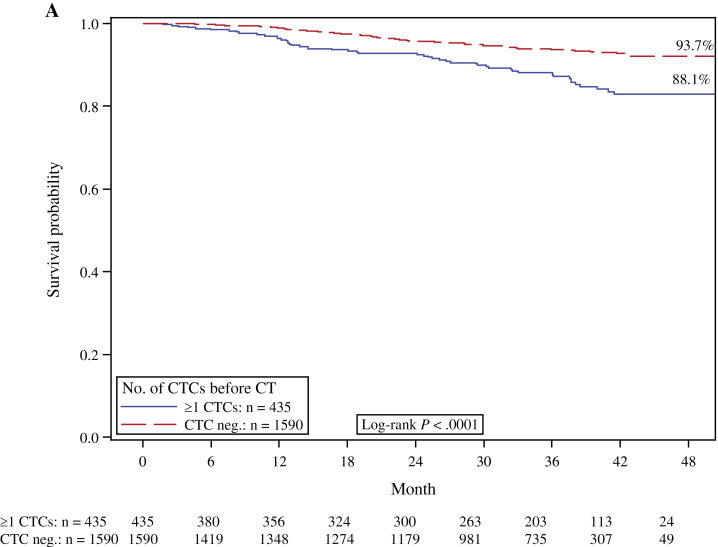
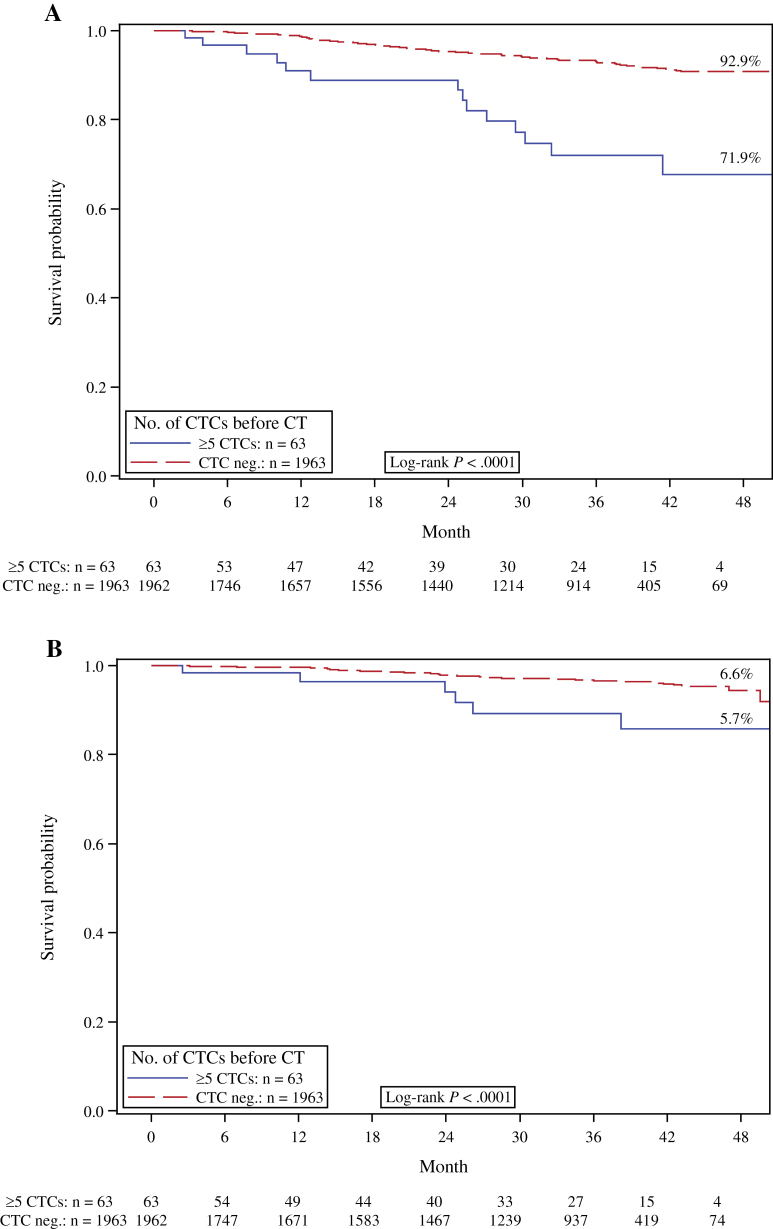
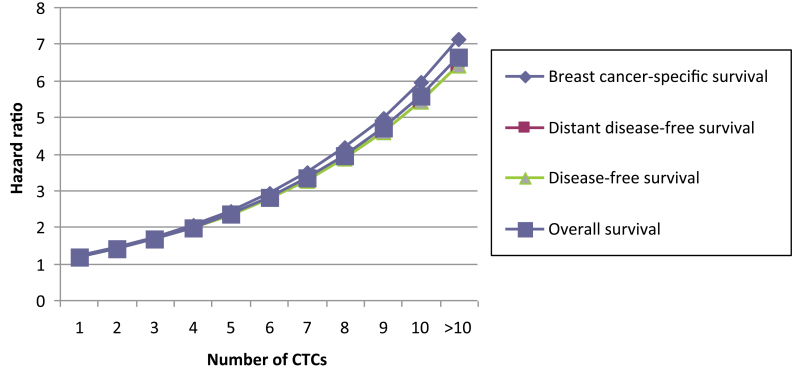
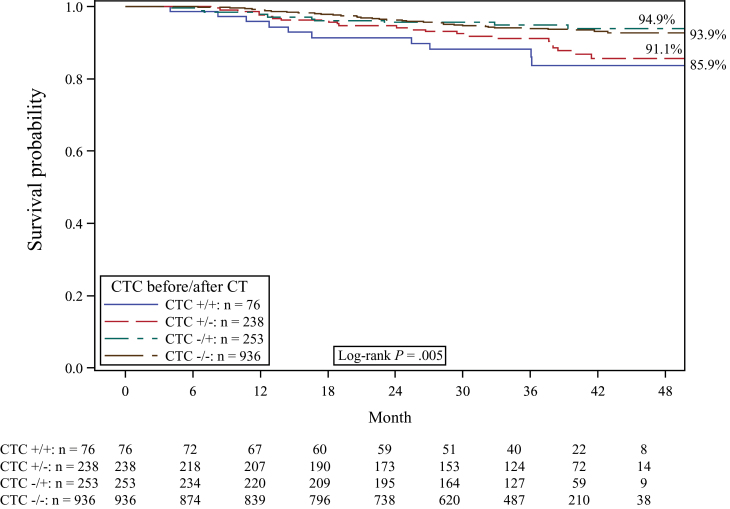
Verification
Claims the paper makes
The claims and statistics of this paper haven’t been checked yet.
Free: it reads the open-access text and checks the first 5 claims that cite a source we can check. Create a free account to check every claim.
Claims other papers make about this one
Each is checked against this paper’s own text: does it say what the citing paper says it does?
The source backs part of the claim, not all of it — or backs it for a different population, condition or comparison.
In the citing paper
“Rack B. et al. piloted a larger prospective study with 2026 breast cancer patients and discovered that the detection rate of CTCs after chemotherapy (22.1%) increased slightly in comparison to the baseline condition (21.5%) [150].”
From Tumor microenvironment complexity and therapeutic implications at a glance (2020) · cites this paper as [150]
Experimental — accuracy not yet measured
Self-check
Percentages, sums and reported differences re-computed from the paper’s own numbers.
The self-check needs the paper’s full text.
Citations
Cites
Nonparametric Estimation from Incomplete Observations
Kaplan, E. L., & Meier, P. (1992) · Springer Series in Statistics · doi:10.1007/978-1-4612-4380-9_25 · Cited by 45,181 · cited 1×
“The product-limit method according to Kaplan–Meier was used to estimate survival (21).”
MethodRegression Models and Life-Tables
Cox, D. R. (1972) · Journal of the Royal Statistical Society Series B: Statistical Methodology · doi:10.1111/j.2517-6161.1972.tb00899.x · Cited by 39,793
Nonparametric Estimation from Incomplete Observations
Kaplan, E. L., & Meier, P. (1958) · Journal of the American Statistical Association · doi:10.1080/01621459.1958.10501452 · Cited by 39,158
Regression Models and Life-Tables
Cox, D. R. (1992) · Springer Series in Statistics · doi:10.1007/978-1-4612-4380-9_37 · Cited by 26,297
ELSTON, C. W., & ELLIS, I. O. (1991) · Histopathology · doi:10.1111/j.1365-2559.1991.tb00229.x · Cited by 6,175
Circulating Tumor Cells, Disease Progression, and Survival in Metastatic Breast Cancer
Cristofanilli, M., Budd, G. T., Ellis, M. J., Stopeck, A., Matera, J., Miller, M. C., Reuben, J. M., Doyle, G. V., Allard, W. J., Terstappen, L. W. M. M., et al. (2004) · New England Journal of Medicine · doi:10.1056/nejmoa040766 · Cited by 4,593
Giuliano, A. E. (2011) · JAMA · doi:10.1001/jama.2011.90 · Cited by 2,942 · cited 1×
“Furthermore, because axillary operation will increasingly be confined to sentinel node biopsy, CTCs could be a helpful tool for selection of highrisk patients who might benefit from a more aggressive dose-dense chemotherapy regimen (27,28).”
BackgroundAllard, W. J., Matera, J., Miller, M. C., Repollet, M., Connelly, M. C., Rao, C., Tibbe, A. G. J., Uhr, J. W., & Terstappen, L. W. M. M. (2004) · Clinical Cancer Research · doi:10.1158/1078-0432.ccr-04-0378 · Cited by 2,542 · cited 1×
“Nevertheless, the CellSearch system has shown highly reproducible and automated detection of CTCs in interlab validation trials (34,35).”
MethodGeneration of a functional mammary gland from a single stem cell
Shackleton, M., Vaillant, F., Simpson, K. J., Stingl, J., Smyth, G. K., Asselin-Labat, M.-L., Wu, L., Lindeman, G. J., & Visvader, J. E. (2006) · Nature · doi:10.1038/nature04372 · Cited by 2,005
Pathological prognostic factors in breast cancer
Elston, C. (1999) · Critical Reviews in Oncology/Hematology · doi:10.1016/s1040-8428(99)00034-7 · Cited by 1,735
Detection of Mutations in EGFR in Circulating Lung-Cancer Cells
Maheswaran, S., Sequist, L. V., Nagrath, S., Ulkus, L., Brannigan, B., Collura, C. V., Inserra, E., Diederichs, S., Iafrate, A. J., Bell, D. W., et al. (2008) · New England Journal of Medicine · doi:10.1056/nejmoa0800668 · Cited by 1,617
Purification and unique properties of mammary epithelial stem cells
Stingl, J., Eirew, P., Ricketson, I., Shackleton, M., Vaillant, F., Choi, D., Li, H. I., & Eaves, C. J. (2006) · Nature · doi:10.1038/nature04496 · Cited by 1,559
A Pooled Analysis of Bone Marrow Micrometastasis in Breast Cancer
Braun, S., Vogl, F. D., Naume, B., Janni, W., Osborne, M. P., Coombes, R. C., Schlimok, G., Diel, I. J., Gerber, B., Gebauer, G., et al. (2005) · New England Journal of Medicine · doi:10.1056/nejmoa050434 · Cited by 1,379
Self-citationConcordance among Gene-Expression–Based Predictors for Breast Cancer
Fan, C., Oh, D. S., Wessels, L., Weigelt, B., Nuyten, D. S. A., Nobel, A. B., van't Veer, L. J., & Perou, C. M. (2006) · New England Journal of Medicine · doi:10.1056/nejmoa052933 · Cited by 1,341
Riethdorf, S., Fritsche, H., Müller, V., Rau, T., Schindlbeck, C., Rack, B., Janni, W., Coith, C., Beck, K., Jänicke, F., et al. (2007) · Clinical Cancer Research · doi:10.1158/1078-0432.ccr-06-1695 · Cited by 1,338 · cited 1×
“Nevertheless, the CellSearch system has shown highly reproducible and automated detection of CTCs in interlab validation trials (34,35).”
MethodSelf-citationRevision of the American Joint Committee on Cancer Staging System for Breast Cancer
Singletary, S. E., Allred, C., Ashley, P., Bassett, L. W., Berry, D., Bland, K. I., Borgen, P. I., Clark, G., Edge, S. B., Hayes, D. F., et al. (2002) · Journal of Clinical Oncology · doi:10.1200/jco.2002.02.026 · Cited by 1,173 · cited 1×
“¶ Tumor-node-metastasis (TNM) was classified according to the revised American Joint Committee on Cancer TNM classification (23).”
MethodDetection, clinical relevance and specific biological properties of disseminating tumour cells
Pantel, K., Brakenhoff, R. H., & Brandt, B. (2008) · Nature Reviews Cancer · doi:10.1038/nrc2375 · Cited by 1,118
Self-citationHayes, D. F., Cristofanilli, M., Budd, G. T., Ellis, M. J., Stopeck, A., Miller, M. C., Matera, J., Allard, W. J., Doyle, G. V., & Terstappen, L. W. W. M. (2006) · Clinical Cancer Research · doi:10.1158/1078-0432.ccr-05-2821 · Cited by 1,030
Hudis, C. A., Barlow, W. E., Costantino, J. P., Gray, R. J., Pritchard, K. I., Chapman, J.-A. W., Sparano, J. A., Hunsberger, S., Enos, R. A., Gelber, R. D., et al. (2007) · Journal of Clinical Oncology · doi:10.1200/jco.2006.10.3523 · Cited by 864 · cited 1×
“The endpoints were defined according to the STEEP criteria, with disease-free survival (DFS) as the primary endpoint (20).”
MethodAktas, B., Tewes, M., Fehm, T., Hauch, S., Kimmig, R., & Kasimir-Bauer, S. (2009) · Breast Cancer Research · doi:10.1186/bcr2333 · Cited by 736
Self-citationCirculating tumour cells in non-metastatic breast cancer: a prospective study
Lucci, A., Hall, C. S., Lodhi, A. K., Bhattacharyya, A., Anderson, A. E., Xiao, L., Bedrosian, I., Kuerer, H. M., & Krishnamurthy, S. (2012) · The Lancet Oncology · doi:10.1016/s1470-2045(12)70209-7 · Cited by 507
Riethdorf, S., Müller, V., Zhang, L., Rau, T., Loibl, S., Komor, M., Roller, M., Huober, J., Fehm, T., Schrader, I., et al. (2010) · Clinical Cancer Research · doi:10.1158/1078-0432.ccr-09-2042 · Cited by 490
Self-citationFehm, T., Müller, V., Aktas, B., Janni, W., Schneeweiss, A., Stickeler, E., Lattrich, C., Löhberg, C. R., Solomayer, E., Rack, B., et al. (2010) · Breast Cancer Research and Treatment · doi:10.1007/s10549-010-1163-x · Cited by 353 · cited 1×
“In smaller cohorts, CTCs were reported in 18% to 30% of patients with early breast cancer (9,12,14,15,25) and more frequently in patients with metastatic disease, with a prevalence of 70% (4,26).”
Self-citationCytogenetic evidence that circulating epithelial cells in patients with carcinoma are malignant.
Fehm, T. N., Sagalowsky, A. I., Clifford, E., Beitsch, P. D., Saboorian, H. M., Euhus, D., Meng, S., Morrison, L. E., Tucker, T. F., Lane, N., et al. (2002) · PubMed · Cited by 307
Self-citationSimmons, C., Miller, N., Geddie, W., Gianfelice, D., Oldfield, M., Dranitsaris, G., & Clemons, M. J. (2009) · Annals of Oncology · doi:10.1093/annonc/mdp028 · Cited by 286 · cited 1×
“phenomenon and may lead to treatment changes in up to 20% of patients (40,41).”
BackgroundPachmann, K., Camara, O., Kavallaris, A., Krauspe, S., Malarski, N., Gajda, M., Kroll, T., Jörke, C., Hammer, U., Altendorf-Hofmann, A., et al. (2008) · Journal of Clinical Oncology · doi:10.1200/jco.2007.13.6523 · Cited by 280
Janni, W., Vogl, F. D., Wiedswang, G., Synnestvedt, M., Fehm, T., Jückstock, J., Borgen, E., Rack, B., Braun, S., Sommer, H., et al. (2011) · Clinical Cancer Research · doi:10.1158/1078-0432.ccr-10-2515 · Cited by 242
Self-citationXenidis, N., Ignatiadis, M., Apostolaki, S., Perraki, M., Kalbakis, K., Agelaki, S., Stathopoulos, E. N., Chlouverakis, G., Lianidou, E., Kakolyris, S., et al. (2009) · Journal of Clinical Oncology · doi:10.1200/jco.2008.18.0497 · Cited by 238
Bidard, F.-C., Fehm, T., Ignatiadis, M., Smerage, J. B., Alix-Panabières, C., Janni, W., Messina, C., Paoletti, C., Müller, V., Hayes, D. F., et al. (2013) · Cancer and Metastasis Reviews · doi:10.1007/s10555-012-9398-0 · Cited by 237
Self-citationSingle circulating tumor cell detection and overall survival in nonmetastatic breast cancer
Bidard, F.-C., Mathiot, C., Delaloge, S., Brain, E., Giachetti, S., de Cremoux, P., Marty, M., & Pierga, J.-Y. (2010) · Annals of Oncology · doi:10.1093/annonc/mdp391 · Cited by 232
Liedtke, C., Thill, M., & on behalf of the AGO Breast Committee (2016) · Breast Care · doi:10.1159/000446941 · Cited by 189
Circulating Tumor Cells: Not All Detected Cells Are Bad and Not All Bad Cells Are Detected
Wicha, M. S., & Hayes, D. F. (2011) · Journal of Clinical Oncology · doi:10.1200/jco.2010.34.0026 · Cited by 172 · cited 1×
“CTCs with decreased epithelial marker expression as a result of the epithelial–mesenchymal transition could be missed by the CellSearch methodology (33).”
BackgroundDawood, S., Broglio, K., Valero, V., Reuben, J., Handy, B., Islam, R., Jackson, S., Hortobagyi, G. N., Fritsche, H., & Cristofanilli, M. (2008) · Cancer · doi:10.1002/cncr.23852 · Cited by 163
Interdisziplinäre S3-Leitlinie für die Diagnostik, Therapie und Nachsorge des Mammakarzinoms
Kreienberg, R., Albert, U., Follmann, M., Kopp, I., Kühn, T., & Wöckel, A. (2013) · Senologie - Zeitschrift für Mammadiagnostik und -therapie · doi:10.1055/s-0033-1355476 · Cited by 149 · cited 1×
“Modern breast cancer treatment is tailored to the individual tumor characteristics (19,39).”
BackgroundHarbeck, N., Scharl, A. J., Thomssen, C., & Müller, V. (2013) · Breast Care · doi:10.1159/000353590 · Cited by 147
Santinelli, A., Pisa, E., Stramazzotti, D., & Fabris, G. (2007) · International Journal of Cancer · doi:10.1002/ijc.23051 · Cited by 144
Bidard, F., Vincent‐Salomon, A., Sigal‐Zafrani, B., Dieras, V. C., Mathiot, C., Mignot, L., Thiery, J. P., Sastre‐Garau, X., & Pierga, J. (2008) · Annals of Oncology · doi:10.1093/annonc/mdm507 · Cited by 124
Characterization of circulating tumor cells by fluorescence in situ hybridization
Swennenhuis, J. F., Tibbe, A. G. J., Levink, R., Sipkema, R. C. J., & Terstappen, L. W. M. M. (2009) · Cytometry Part A · doi:10.1002/cyto.a.20718 · Cited by 122
Apoptotic Circulating Tumor Cells in Early and Metastatic Breast Cancer Patients
Kallergi, G., Konstantinidis, G., Markomanolaki, H., Papadaki, M. A., Mavroudis, D., Stournaras, C., Georgoulias, V., & Agelaki, S. (2013) · Molecular Cancer Therapeutics · doi:10.1158/1535-7163.mct-12-1167 · Cited by 104 · cited 1×
“Tumor cell mobilization by chemotherapy or bone marrow stimulating agents such as granulocyte colony stimulating factor is a known phenomenon (36), whereas adjuvant chemotherapy reduces the number of proliferating CTCs (37,38).”
BackgroundDaskalaki, A., Agelaki, S., Perraki, M., Apostolaki, S., Xenidis, N., Stathopoulos, E., Kontopodis, E., Hatzidaki, D., Mavroudis, D., & Georgoulias, V. (2009) · British Journal of Cancer · doi:10.1038/sj.bjc.6605183 · Cited by 98
DEGRO practical guidelines for radiotherapy of breast cancer IV
Breast Cancer Expert Panel of the German Society of Radiation Oncology (DEGRO), Wenz, F. K., Sperk, E., Budach, W., Dunst, J., Feyer, P., Fietkau, R., Haase, W., Harms, W., Piroth, M. D., et al. (2014) · Strahlentherapie und Onkologie · doi:10.1007/s00066-014-0687-0 · Cited by 98
Botteri, E., Sandri, M. T., Bagnardi, V., Munzone, E., Zorzino, L., Rotmensz, N., Casadio, C., Cassatella, M. C., Espósito, A., Curigliano, G., et al. (2009) · Breast Cancer Research and Treatment · doi:10.1007/s10549-009-0668-7 · Cited by 76
Sandri, M. T., Zorzino, L., Cassatella, M. C., Bassi, F. D., Luini, A., Casadio, C., Botteri, E., Rotmensz, N., Adamoli, L., & Nolè, F. (2010) · Annals of Surgical Oncology · doi:10.1245/s10434-010-0918-2 · Cited by 70
DEGRO Practical Guidelines for Radiotherapy of Breast Cancer I
Sautter‐Bihl, M., Budach, W., Dunst, J., Feyer, P., Haase, W., Harms, W., Sedlmayer, F., Souchon, R., Wenz, F. K., & Sauer, R. (2007) · Strahlentherapie und Onkologie · doi:10.1007/s00066-007-1811-1 · Cited by 70
DEGRO Practical Guidelines for Radiotherapy of Breast Cancer II
Sautter‐Bihl, M., Souchon, R., Budach, W., Sedlmayer, F., Feyer, P., Harms, W., Haase, W., Dunst, J., Wenz, F. K., & Sauer, R. (2008) · Strahlentherapie und Onkologie · doi:10.1007/s00066-008-1901-8 · Cited by 61
Ignatiadis, M., Perraki, M., Apostolaki, S., Politaki, E., Xenidis, N., Kafousi, M., Stathopoulos, E. N., Lianidou, E. S., Sotiriou, C. P., Georgoulias, V., et al. (2007) · Clinical Breast Cancer · doi:10.3816/cbc.2007.n.054 · Cited by 55
Fehm, T. N., Becker, S., Becker‐Pergola, G., Sotlar, K., Gebauer, G., Dürr-Störzer, S., Neubauer, H. J., Wallwiener, D. R., & Solomayer, E. (2006) · Breast Cancer Research · doi:10.1186/bcr1611 · Cited by 54
Self-citationDynamics of circulating tumor cells in early breast cancer under neoadjuvant therapy
SERRANO, M. J., ROVIRA, P. S., MARTÍNEZ-ZUBIAURRE, I., RODRIGUEZ, M. D., FERNÁNDEZ, M., & LORENTE, J. A. (2012) · Experimental and Therapeutic Medicine · doi:10.3892/etm.2012.540 · Cited by 37
Biggers, B., Knox, S. M., Grant, M., Kuhn, J. G., Nemunatitis, J., Fisher, T. L., & Lamont, J. (2009) · Annals of Surgical Oncology · doi:10.1245/s10434-009-0314-y · Cited by 33 · cited 1×
“In smaller cohorts, CTCs were reported in 18% to 30% of patients with early breast cancer (9,12,14,15,25) and more frequently in patients with metastatic disease, with a prevalence of 70% (4,26).”
BackgroundBreast Cancer 2012 - New Aspects
Kolberg, H., Lüftner, D., Lux, M. P., Maass, N., Schütz, F., Fasching, P. A., Fehm, T. N., Janni, W., & Kümmel, S. (2012) · Geburtshilfe und Frauenheilkunde · doi:10.1055/s-0032-1315131 · Cited by 23
Self-citationGenomic of circulating tumor cells in metastatic breast cancer
Reuben, J. M., Lee, B., Li, C., Broglio, K. R., Valero, V., Jackson, S. A., Ueno, N. T., Krishnamurthy, S., Hortobágyi, G. N., & Cristofanilli, M. (2007) · Journal of Clinical Oncology · doi:10.1200/jco.2007.25.18_suppl.1002 · Cited by 19
Mammakarzinom 2011 – Neue Aspekte
Kümmel, S., Kolberg, H., Lüftner, D., Lux, M. P., Maass, N., Schütz, F., Fasching, P. A., Fehm, T. N., & Janni, W. (2011) · Geburtshilfe und Frauenheilkunde · doi:10.1055/s-0031-1280313 · Cited by 13
Self-citationViret, F., Chabannon, C., Sainty, D., Genre, D., Gonçalvès, A., Arnoulet, C., Gravis, G., Bertucci, F., Houvenaeghel, G. F., Jacquemier, J. D., et al. (2003) · Bone Marrow Transplantation · doi:10.1038/sj.bmt.1704283 · Cited by 7 · cited 2×
“Thus, in addition to established parameters, the use of CTCs may considerably contribute to the personalization of breast cancer treatment (36).”
BackgroundScharl, A. J., Thomssen, C., & Harbeck, N. (2012) · Breast Care · doi:10.1159/000342279 · Cited by 3 · cited 1×
“Modern breast cancer treatment is tailored to the individual tumor characteristics (19,39).”
Background
Cited by
Tumor microenvironment complexity and therapeutic implications at a glance
Baghban, R., Roshangar, L., Jahanban-Esfahlan, R., Seidi, K., Ebrahimi-Kalan, A., Jaymand, M., Kolahian, S., Javaheri, T., & Zare, P. (2020) · Cell Communication and Signaling · doi:10.1186/s12964-020-0530-4 · Cited by 1,784
“piloted a larger prospective study with 2026 breast cancer patients and discovered that the detection rate of CTCs after chemotherapy (22.1%) increased slightly in comparison to the baseline condition (21.5%) [150] .”
ResultInfluentialClinical Applications of Circulating Tumor Cells and Circulating Tumor DNA as Liquid Biopsy
Alix-Panabières, C., & Pantel, K. (2016) · Cancer Discovery · doi:10.1158/2159-8290.cd-15-1483 · Cited by 1,394
Self-citationLiquid biopsy and minimal residual disease - latest advances and implications for cure
Pantel, K., & Alix-Panabières, C. (2019) · Nature Reviews Clinical Oncology · doi:10.1038/s41571-019-0187-3 · Cited by 1,110
Self-citationTargeting TGF-β Signaling in Cancer
Colak, S., & ten Dijke, P. (2017) · Trends in cancer · doi:10.1016/j.trecan.2016.11.008 · Cited by 1,003
Liquid Biopsy: From Discovery to Clinical Application
Alix-Panabières, C., & Pantel, K. (2021) · Cancer Discovery · doi:10.1158/2159-8290.cd-20-1311 · Cited by 953
Self-citation
Metadata
- Authors
- Rack, B., Schindlbeck, C., Jückstock, J., Andergassen, U., Hepp, P., Zwingers, T., Friedl, T. W. P., Lorenz, R., Tesch, H., Fasching, P. A., Fehm, T., Schneeweiss, A., Lichtenegger, W., Beckmann, M. W., Friese, K., Pantel, K., & Janni, W.
- Affiliations
- University Hospital Heidelberg (DE)
- Corresponding author
- Rack, Brigitte
- ORCID
- Venue
- JNCI: Journal of the National Cancer Institute
- Publisher
- Oxford University Press (OUP)
- Published
- 2014-05
- Volume
- 106
- Issue
- 5
- ISSN
- 0027-8874 (ISSN-L)
- 1460-2105
- PMC
- PMC4112925
- OpenAlex
- W2169632044
- Cited by
- 615
- References
- 55
- Citations by year
- 2026: 11 · 2025: 23 · 2024: 38 · 2023: 50 · 2022: 45 · 2021: 48 · 2020: 54 · 2019: 63 · 2018: 67 · 2017: 68 · 2016: 68 · 2015: 58 · 2014: 18
- FWCI
- 22.66
- Type
- journal article
- Language
- en
- Open access
- hybrid
- doi.org
- Licence
- cc-by-nc
- Locations
- JNCI Journal of the National Cancer Institute (publishedVersion, cc-by-nc)
- PubMed Central (publishedVersion, cc-by-nc)
- PubMed (publishedVersion)
- OPUS FAU (Kooperativer Bibliotheksverbund Berlin-Brandenburg (KOBV), on behalf of the Universitätsbibliothek Erlangen-Nürnberg) (submittedVersion)
- HighWire Press Open Archive (submittedVersion)
- Funders
- Eli Lilly and Company
- AstraZeneca
- Sanofi
- Chugai Pharmaceutical
- Topics
- Life Sciences › Biochemistry, Genetics and Molecular Biology › Cancer Research › Breast Cancer Treatment Studies
- Health Sciences › Medicine › Oncology › Cancer Cells and Metastasis
- Life Sciences › Biochemistry, Genetics and Molecular Biology › Cancer Research › Cancer Genomics and Diagnostics
- Keywords
- circulating tumor cells, early breast cancer, prognostic factors, disease-free survival, overall survival, adjuvant chemotherapy, CellSearch, EpCAM, cytokeratin, CD45, lymph node status, CTC count, treatment response monitoring, metastatic breast cancer, hormone receptor status, tumor size and grade, risk stratification, risk-adapted treatment
- MeSH terms
- Docetaxel, Gemcitabine, Antineoplastic Combined Chemotherapy Protocols, Breast Neoplasms, Cyclophosphamide, Deoxycytidine, Female, Fluorouracil, Humans, Lymphatic Metastasis, Middle Aged, Neoplastic Cells, Circulating, Neoplasm Staging, Prospective Studies, Epirubicin, Chemotherapy, Adjuvant, Immunomagnetic Separation, Taxoids, Kaplan-Meier Estimate
About these checks
Registry, retraction, Cites and statistics results are computed, not judged, with one exception: a printed reference that no index lists is read once by a model before it counts as a citation error. Claims are extracted by a model and kept only when their quote appears verbatim in the text; each cited source is then checked, with a model’s help, for whether it says what the claim relies on. Those verdicts can be wrong — read the claim’s quote and the cited source before relying on one.
Statistics and arithmetic are recomputed, not judged.
Confidence bands are shown only for fields calibrated on our annotated test set. None is calibrated yet, so no band is shown.
What counts as a claim ›How we measure confidence ›How we check this ›
Are you an author, or do you see a problem with this page? Request a review
Data sources
Bibliographic data: Semantic Scholar, OpenAlex, Crossref.
Contains information from the Semantic Scholar Academic Graph Datasets, made available under the ODC Attribution License (ODC-BY 1.0).
Semantic Scholar’s data is described in: Kinney, R., et al. (2023). The Semantic Scholar Open Data Platform. arXiv:2301.10140.
