

Circulating Tumor Cells Predict Survival in Early Average-to-High Risk Breast Cancer Patients
Open accessThe DOI matches its Crossref record; 54 of the 55 references it cites were found in a registry or an index.
Abstract
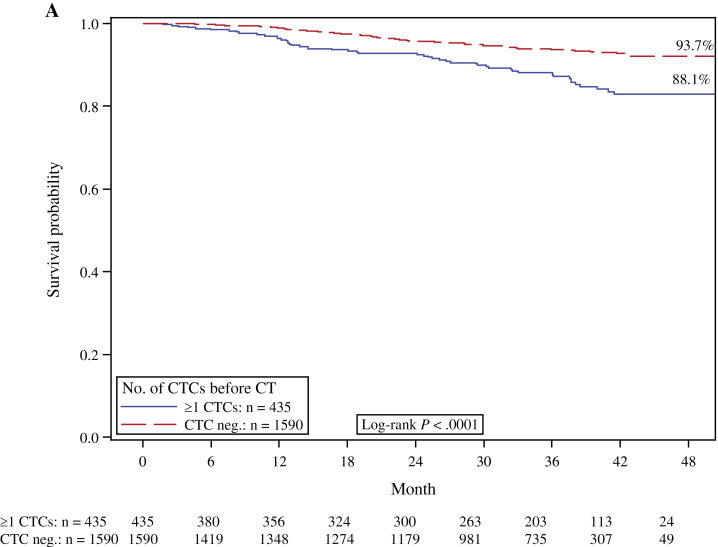
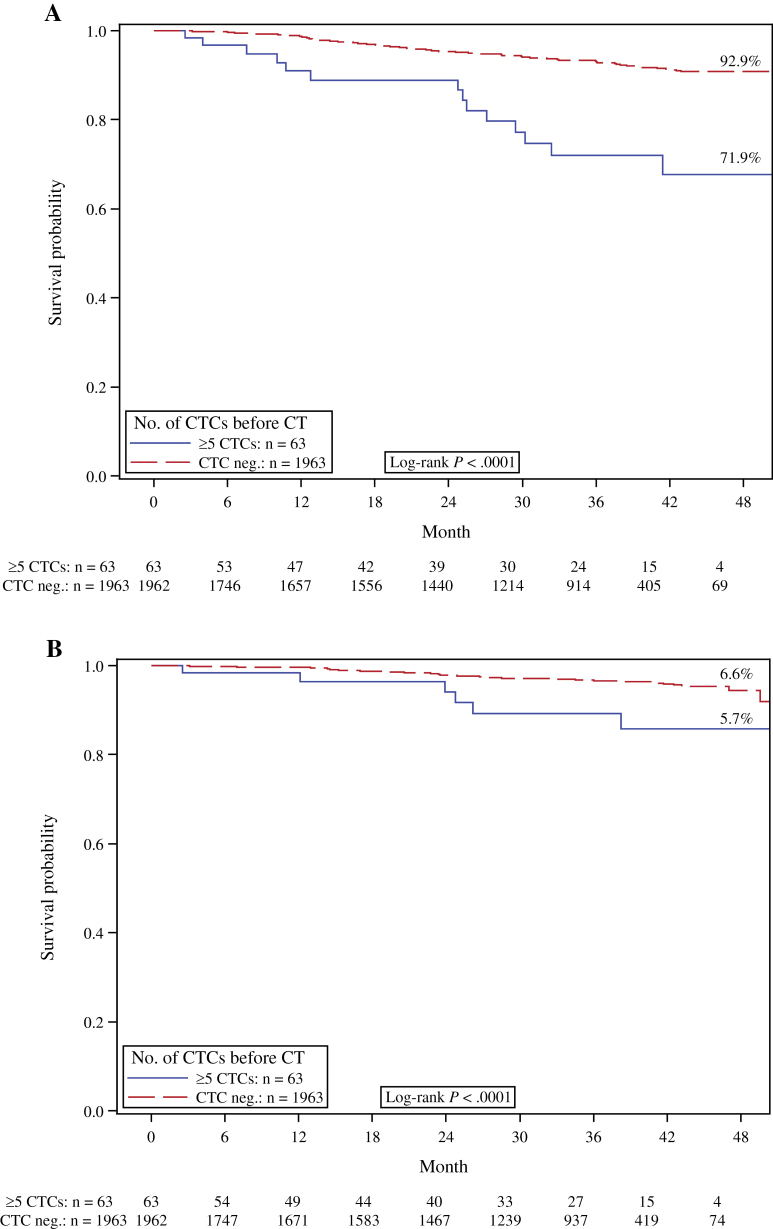
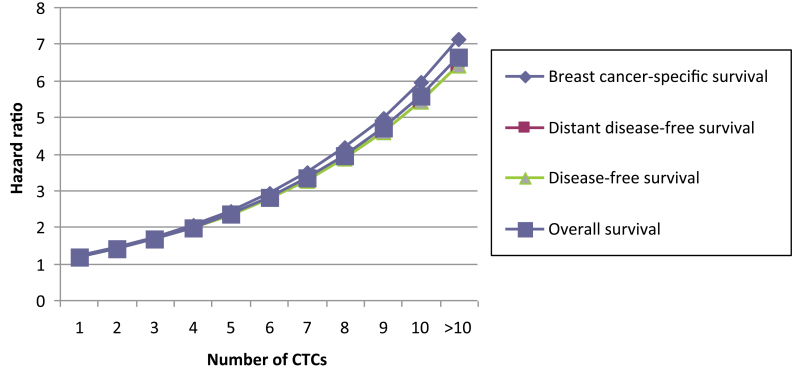
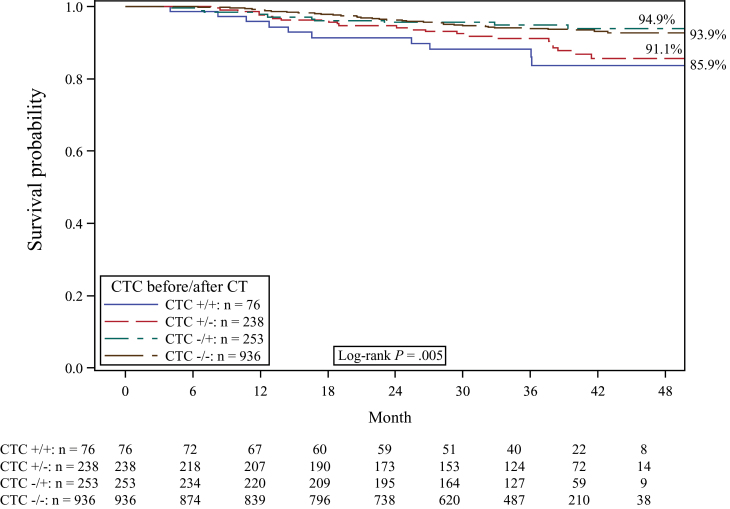
BACKGROUND: Circulating tumor cells (CTCs) have been shown to predict reduced survival outcomes in metastatic breast cancer. METHODS: CTCs were analyzed in 2026 patients with early breast cancer before adjuvant chemotherapy and in 1492 patients after chemotherapy using the CellSearch System. After immuno-magnetic enrichment for cells expressing the epithelial-cell adhesion molecule, CTCs were defined as nucleated cells expressing cytokeratin and lacking CD45. The patients were followed for a median of 35 months (range = 0-54). Kaplan-Meier analyses and the log-rank test were used for survival analyses. All statistical tests were two-sided. RESULTS: Before chemotherapy, CTCs were detected in 21.5% of patients (n = 435 of 2026), with 19.6% (n = 136 of 692) of node-negative and 22.4% (n = 299 of 1334) of node-positive patients showing CTCs (P < .001). No association was found with tumor size, grading, or hormone receptor status. After chemotherapy, 22.1% of patients (n = 330 of 1493) were CTC positive. The presence of CTCs was associated with poor disease-free survival (DFS; P < .0001), distant DFS (P < .001), breast cancer-specific survival (P = .008), and overall survival (OS; P = .0002). CTCs were confirmed as independent prognostic markers in multivariable analysis for DFS (hazard ratio [HR] = 2.11; 95% confidence interval [CI] = 1.49 to 2.99; P < .0001) and OS (HR = 2.18; 95% CI = 1.32 to 3.59; P = .002). The prognosis was worst in patients with at least five CTCs per 30 mL blood (DFS: HR = 4.51, 95% CI = 2.59 to 7.86; OS: HR = 3.60, 95% CI = 1.56 to 8.45). The presence of persisting CTCs after chemotherapy showed a negative influence on DFS (HR = 1.12; 95% CI = 1.02 to 1.25; P = .02) and on OS (HR = 1.16; 95% CI = 0.99 to 1.37; P = .06) CONCLUSIONS: These results suggest the independent prognostic relevance of CTCs both before and after adjuvant chemotherapy in a large prospective trial of patients with primary breast cancer.
Overview
The claims and statistics of this paper haven’t been checked yet.
Free: it reads the open-access text and checks the first 5 claims that cite a source we can check. Create a free account to check every claim.
Integrity signals
Registry
Cites
Statistics
Figures
Verification
Claims the paper makes
The claims and statistics of this paper haven’t been checked yet.
Free: it reads the open-access text and checks the first 5 claims that cite a source we can check. Create a free account to check every claim.
Claims other papers make about this one
Each is checked against this paper’s own text: does it say what the citing paper says it does?
The source backs part of the claim, not all of it — or backs it for a different population, condition or comparison.
In the citing paper
“Rack B. et al. piloted a larger prospective study with 2026 breast cancer patients and discovered that the detection rate of CTCs after chemotherapy (22.1%) increased slightly in comparison to the baseline condition (21.5%) [150].”
From Tumor microenvironment complexity and therapeutic implications at a glance (2020) · cites this paper as [150]
Experimental — accuracy not yet measured
Self-check
Percentages, sums and reported differences re-computed from the paper’s own numbers.
The self-check needs the paper’s full text.
Citations
Cites
Nonparametric Estimation from Incomplete Observations
Kaplan, E. L., & Meier, P. (1992) · Springer Series in Statistics · doi:10.1007/978-1-4612-4380-9_25 · Cited by 45,181 · cited 1×
“The product-limit method according to Kaplan–Meier was used to estimate survival (21).”
MethodRegression Models and Life-Tables
Cox, D. R. (1972) · Journal of the Royal Statistical Society Series B: Statistical Methodology · doi:10.1111/j.2517-6161.1972.tb00899.x · Cited by 39,793
Nonparametric Estimation from Incomplete Observations
Kaplan, E. L., & Meier, P. (1958) · Journal of the American Statistical Association · doi:10.1080/01621459.1958.10501452 · Cited by 39,158
Regression Models and Life-Tables
Cox, D. R. (1992) · Springer Series in Statistics · doi:10.1007/978-1-4612-4380-9_37 · Cited by 26,297
ELSTON, C. W., & ELLIS, I. O. (1991) · Histopathology · doi:10.1111/j.1365-2559.1991.tb00229.x · Cited by 6,175
Circulating Tumor Cells, Disease Progression, and Survival in Metastatic Breast Cancer
Cristofanilli, M., Budd, G. T., Ellis, M. J., Stopeck, A., Matera, J., Miller, M. C., Reuben, J. M., Doyle, G. V., Allard, W. J., Terstappen, L. W. M. M., et al. (2004) · New England Journal of Medicine · doi:10.1056/nejmoa040766 · Cited by 4,593
Giuliano, A. E. (2011) · JAMA · doi:10.1001/jama.2011.90 · Cited by 2,942 · cited 1×
“Furthermore, because axillary operation will increasingly be confined to sentinel node biopsy, CTCs could be a helpful tool for selection of highrisk patients who might benefit from a more aggressive dose-dense chemotherapy regimen (27,28).”
BackgroundAllard, W. J., Matera, J., Miller, M. C., Repollet, M., Connelly, M. C., Rao, C., Tibbe, A. G. J., Uhr, J. W., & Terstappen, L. W. M. M. (2004) · Clinical Cancer Research · doi:10.1158/1078-0432.ccr-04-0378 · Cited by 2,542 · cited 1×
“Nevertheless, the CellSearch system has shown highly reproducible and automated detection of CTCs in interlab validation trials (34,35).”
MethodGeneration of a functional mammary gland from a single stem cell
Shackleton, M., Vaillant, F., Simpson, K. J., Stingl, J., Smyth, G. K., Asselin-Labat, M.-L., Wu, L., Lindeman, G. J., & Visvader, J. E. (2006) · Nature · doi:10.1038/nature04372 · Cited by 2,005
Pathological prognostic factors in breast cancer
Elston, C. (1999) · Critical Reviews in Oncology/Hematology · doi:10.1016/s1040-8428(99)00034-7 · Cited by 1,735
Cited by
Tumor microenvironment complexity and therapeutic implications at a glance
Baghban, R., Roshangar, L., Jahanban-Esfahlan, R., Seidi, K., Ebrahimi-Kalan, A., Jaymand, M., Kolahian, S., Javaheri, T., & Zare, P. (2020) · Cell Communication and Signaling · doi:10.1186/s12964-020-0530-4 · Cited by 1,784
“piloted a larger prospective study with 2026 breast cancer patients and discovered that the detection rate of CTCs after chemotherapy (22.1%) increased slightly in comparison to the baseline condition (21.5%) [150] .”
ResultInfluentialClinical Applications of Circulating Tumor Cells and Circulating Tumor DNA as Liquid Biopsy
Alix-Panabières, C., & Pantel, K. (2016) · Cancer Discovery · doi:10.1158/2159-8290.cd-15-1483 · Cited by 1,394
Self-citationLiquid biopsy and minimal residual disease - latest advances and implications for cure
Pantel, K., & Alix-Panabières, C. (2019) · Nature Reviews Clinical Oncology · doi:10.1038/s41571-019-0187-3 · Cited by 1,110
Self-citationTargeting TGF-β Signaling in Cancer
Colak, S., & ten Dijke, P. (2017) · Trends in cancer · doi:10.1016/j.trecan.2016.11.008 · Cited by 1,003
Liquid Biopsy: From Discovery to Clinical Application
Alix-Panabières, C., & Pantel, K. (2021) · Cancer Discovery · doi:10.1158/2159-8290.cd-20-1311 · Cited by 953
Self-citationBest, M. G., Sol, N., Kooi, I., Tannous, J., Westerman, B. A., Rustenburg, F., Schellen, P., Verschueren, H., Post, E., Koster, J., et al. (2015) · Cancer Cell · doi:10.1016/j.ccell.2015.09.018 · Cited by 916
“…evaluated as liquid biopsies, including plasma DNA (Bettegowda et al., 2014; Chan et al., 2013; Diehl et al., 2008; Murtaza et al., 2013; Newman et al., 2014; Thierry et al., 2014) and circulating tumor cells (Bidard et al., 2014; Dawson et al., 2013; Maheswaran et al., 2008; Rack et al., 2014).”
Antitumour actions of interferons: implications for cancer therapy
Parker, B. S., Rautela, J., & Hertzog, P. J. (2016) · Nature Reviews Cancer · doi:10.1038/nrc.2016.14 · Cited by 907
Harris, L. N., Ismaila, N., McShane, L. M., Andre, F., Collyar, D. E., Gonzalez-Angulo, A. M., Hammond, E. H., Kuderer, N. M., Liu, M. C., Mennel, R. G., et al. (2016) · Journal of Clinical Oncology · doi:10.1200/jco.2015.65.2289 · Cited by 811
Translational Implications of Tumor Heterogeneity
Jamal-Hanjani, M., Quezada, S. A., Larkin, J., & Swanton, C. (2015) · Clinical Cancer Research · doi:10.1158/1078-0432.ccr-14-1429 · Cited by 549
Unravelling tumour heterogeneity by single-cell profiling of circulating tumour cells
Keller, L., & Pantel, K. (2019) · Nature Reviews Cancer · doi:10.1038/s41568-019-0180-2 · Cited by 544
Self-citationBiology, detection, and clinical implications of circulating tumor cells
Joosse, S. A., Gorges, T. M., & Pantel, K. (2015) · EMBO Molecular Medicine · doi:10.15252/emmm.201303698 · Cited by 528
“Through this approach, CTC counts have been associated with an independent prognostic power on progression-free survival (PFS) and overall survival (OS) in primary and metastatic disease (Cristofanilli et al , 2004; de Bono et al , 2008; Cohen et al , 2009; Bidard et al , 2014; Rack et al , 2014).”
Self-citationLiquid Biopsies, What We Do Not Know (Yet)
Bardelli, A., & Pantel, K. (2017) · Cancer Cell · doi:10.1016/j.ccell.2017.01.002 · Cited by 482
Self-citationOlsson, E., Winter, C., George, A., Chen, Y., Howlin, J., Tang, M. E., Dahlgren, M., Schulz, R., Grabau, D., van Westen, D., et al. (2015) · EMBO Molecular Medicine · doi:10.15252/emmm.201404913 · Cited by 453
“For example, whereas circulating tumor cells (CTCs) may carry additional prognostic information in primary breast cancer (Lucci et al , 2012; Rack et al , 2014), available evidence does not support the use of imaging, serum protein markers, and CTCs for routine monitoring after primary surgery…”
Prognostic and predictive biomarkers in breast cancer: Past, present and future
Nicolini, A., Ferrari, P., & Duffy, M. J. (2018) · Seminars in Cancer Biology · doi:10.1016/j.semcancer.2017.08.010 · Cited by 424
Andre, F., Ismaila, N., Allison, K. H., Barlow, W. E., Collyar, D. E., Damodaran, S., Henry, N. L., Jhaveri, K., Kalinsky, K., Kuderer, N. M., et al. (2022) · Journal of Clinical Oncology · doi:10.1200/jco.22.00069 · Cited by 365
“Surveillance-Trial (SUCCESS) using the CellSearch System.(69) The SUCCESS investigators compared fluorouracil, epirubicin, and cyclophosphamide followed by docetaxel versus fluorouracil, epirubicin, and cyclophosphamide followed by docetaxel plus gemcitabine, and 2 versus 5 years of treatment with zoledronic acid in 3…”
MethodCancer progression and the invisible phase of metastatic colonization
Klein, C. A. (2020) · Nature Reviews Cancer · doi:10.1038/s41568-020-00300-6 · Cited by 375
Improving radiotherapy in cancer treatment: Promises and challenges
Chen, H. H. W., & Kuo, M. T. (2017) · Oncotarget · doi:10.18632/oncotarget.18409 · Cited by 372
“Several pre-clinical studies have shown that radiotherapy can enhance CTC production in animal models, and CTC density is an independent biomarker for poor prognosis in NSCLC [85], esophageal squamous cell carcinoma [86], and breast cancers [87].”
BackgroundChallenges in circulating tumor cell detection by the CellSearch system
Andree, K. C., van Dalum, G., & Terstappen, L. W. M. M. (2016) · Molecular Oncology · doi:10.1016/j.molonc.2015.12.002 · Cited by 363
Pooled Analysis of the Prognostic Relevance of Circulating Tumor Cells in Primary Breast Cancer
Janni, W. J., Rack, B., Terstappen, L. W. M. M., Pierga, J.-Y., Taran, F.-A., Fehm, T., Hall, C., de Groot, M. R., Bidard, F.-C., Friedl, T. W. P., et al. (2016) · Clinical Cancer Research · doi:10.1158/1078-0432.ccr-15-1603 · Cited by 363
“0.001), with single-study HRs ranging from 1.916 (Munich) to 2.920 (Houston).”
BackgroundInfluentialSelf-citationIgnatiadis, M., Lee, M., & Jeffrey, S. S. (2015) · Clinical Cancer Research · doi:10.1158/1078-0432.ccr-14-1190 · Cited by 355
Biology, vulnerabilities and clinical applications of circulating tumour cells
Ring, A., Nguyen-Sträuli, B. D., Wicki, A., & Aceto, N. (2023) · Nature Reviews Cancer · doi:10.1038/s41568-022-00536-4 · Cited by 327
Li, S., Zhang, H., Zhu, M., Kuang, Z., Li, X., Xu, F., Miao, S., Zhang, Z., Lou, X., Li, H., et al. (2023) · Chemical Reviews · doi:10.1021/acs.chemrev.1c00759 · Cited by 309
Clinical applications of the CellSearch platform in cancer patients
Riethdorf, S., O'Flaherty, L., Hille, C., & Pantel, K. (2018) · Advanced Drug Delivery Reviews · doi:10.1016/j.addr.2018.01.011 · Cited by 275
Self-citationBetter together: circulating tumor cell clustering in metastatic cancer
Schuster, E., Taftaf, R., Reduzzi, C., Albert, M. K., Romero-Calvo, I., & Liu, H. (2021) · Trends in Cancer · doi:10.1016/j.trecan.2021.07.001 · Cited by 260
“The presence of CTCs in early breast cancer was also demonstrated to have prognostic impact [9,10].”
BackgroundProfiling protein expression in circulating tumour cells using microfluidic western blotting
Sinkala, E., Sollier-Christen, E., Renier, C., Rosàs-Canyelles, E., Che, J., Heirich, K., Duncombe, T. A., Vlassakis, J., Yamauchi, K. A., Huang, H., et al. (2017) · Nature Communications · doi:10.1038/ncomms14622 · Cited by 246
Price, T. T., Burness, M. L., Sivan, A., Warner, M. J., Cheng, R., Lee, C. H., Olivere, L., Comatas, K., Magnani, J., Kim Lyerly, H., et al. (2016) · Science Translational Medicine · doi:10.1126/scitranslmed.aad4059 · Cited by 239
“Furthermore, clinical studies have shown that earlystage and locally advanced breast cancer patients have detectable CTCs both before and after treatment (4, 39).”
BackgroundLiquid Biopsy for Cancer: Circulating Tumor Cells, Circulating Free DNA or Exosomes?
Zhang, W., Xia, W., Lv, Z., Ni, C., Xin, Y., & Yang, L. (2017) · Cellular Physiology and Biochemistry · doi:10.1159/000458736 · Cited by 229
Optimization and Evaluation of a Novel Size Based Circulating Tumor Cell Isolation System
Xu, L., Mao, X., Imrali, A., Syed, F., Mutsvangwa, K., Berney, D., Cathcart, P., Hines, J., Shamash, J., & Lu, Y.-J. (2015) · PLOS ONE · doi:10.1371/journal.pone.0138032 · Cited by 224
“6% of 692 node-negative breast cancer [4] and 24% of stage 1–3 breast cancer patients [5].”
BackgroundShaw, J. A., Guttery, D. S., Hills, A., Fernandez-Garcia, D., Page, K., Rosales, B. M., Goddard, K. S., Hastings, R. K., Luo, J., Ogle, O., et al. (2017) · Clinical Cancer Research · doi:10.1158/1078-0432.ccr-16-0825 · Cited by 222
Circulating and disseminated tumor cells: harbingers or initiators of metastasis?
Dasgupta, A., Lim, A. R., & Ghajar, C. M. (2017) · Molecular Oncology · doi:10.1002/1878-0261.12022 · Cited by 223
“Detecting as few as two to five CTCs per 7.5–10 mL blood predicts shorter progression-free and overall survival across cancer types and stages (Cohen et al., 2008; Cristofanilli et al., 2004; Hiraiwa et al., 2008; Karhade et al., 2014; Rack et al., 2014; Thalgott et al., 2013).”
BackgroundInfluentialCirculating tumor cells: clinical validity and utility
Cabel, L., Proudhon, C., Gortais, H., Loirat, D., Coussy, F., Pierga, J.-Y., & Bidard, F.-C. (2017) · International Journal of Clinical Oncology · doi:10.1007/s10147-017-1105-2 · Cited by 219
“, 0 CTC before therapy and 1 CTC after therapy) did not have a poorer prognosis [49].”
BackgroundLiu, X., Li, J., Cadilha, B. L., Markota, A., Voigt, C., Huang, Z., Lin, P. P., Wang, D. D., Dai, J., Kranz, G., et al. (2019) · Science Advances · doi:10.1126/sciadv.aav4275 · Cited by 207
“Accordingly, numbers of EpCAMCTCs predict clinical outcome of patients withMBC and nonmetastatic breast cancer (8, 41).”
BackgroundSparano, J., O’Neill, A., Alpaugh, K., Wolff, A. C., Northfelt, D. W., Dang, C. T., Sledge, G. W., & Miller, K. D. (2018) · JAMA Oncology · doi:10.1001/jamaoncol.2018.2574 · Cited by 203
Clinical utility of circulating tumor cells: an update
Vasseur, A., Kiavue, N., Bidard, F., Pierga, J., & Cabel, L. (2021) · Molecular Oncology · doi:10.1002/1878-0261.12869 · Cited by 199
Circulating tumor cells in breast cancer
Bidard, F.-C., Proudhon, C., & Pierga, J.-Y. (2016) · Molecular Oncology · doi:10.1016/j.molonc.2016.01.001 · Cited by 197
Hvichia, G. E., Parveen, Z., Wagner, C., Janning, M., Quidde, J., Stein, A., Müller, V., Loges, S., Neves, R. P. L., Stoecklein, N. H., et al. (2016) · International Journal of Cancer · doi:10.1002/ijc.30007 · Cited by 189
Self-citationCirculating tumor cells: from new biological insights to clinical practice
Gu, X., Wei, S., & Lv, X. (2024) · Signal Transduction and Targeted Therapy · doi:10.1038/s41392-024-01938-6 · Cited by 182
Molecular characterization of breast cancer CTCs associated with brain metastasis
Boral, D., Vishnoi, M., Liu, H. N., Yin, W., Sprouse, M. L., Scamardo, A., Hong, D. S., Tan, T. Z., Thiery, J. P., Chang, J. C., et al. (2017) · Nature Communications · doi:10.1038/s41467-017-00196-1 · Cited by 186
Circulating tumor cell-blood cell crosstalk: Biology and clinical relevance
Pereira-Veiga, T., Schneegans, S., Pantel, K., & Wikman, H. (2022) · Cell Reports · doi:10.1016/j.celrep.2022.111298 · Cited by 175
Self-citationDe Luca, F., Rotunno, G., Salvianti, F., Galardi, F., Pestrin, M., Gabellini, S., Simi, L., Mancini, I., Vannucchi, A. M., Pazzagli, M., et al. (2016) · Oncotarget · doi:10.18632/oncotarget.8431 · Cited by 159
“While some authors already provided evidences for the prognostic relevance of CTCs in early breast cancer [13], data on CTCs in different subtypes of non-metastatic breast cancer are still inconsistent [14].”
Circulating tumor cells and circulating tumor DNA for precision medicine: dream or reality?
Ignatiadis, M., & Dawson, S.-J. (2014) · Annals of Oncology · doi:10.1093/annonc/mdu480 · Cited by 158
Accessing Genetic Information with Liquid Biopsies
Cai, X., Jankú, F., Zhan, Q., & Fan, J. (2015) · Trends in Genetics · doi:10.1016/j.tig.2015.06.001 · Cited by 169
Mastoraki, S., Strati, A. D., Tzanikou, E., Chimonidou, M., Politaki, E., Voutsina, A., Psyrri, A. K., Georgoulias, V., & Lianidou, E. S. (2017) · Clinical Cancer Research · doi:10.1158/1078-0432.ccr-17-1181 · Cited by 167
Descamps, L., Roy, D. L., & Deman, A. (2022) · International Journal of Molecular Sciences · doi:10.3390/ijms23041981 · Cited by 164
“Indeed, the prognostic significance of CTCs has been previously demonstrated in numerous studies on patients at early disease stages without clinical and radiological signs of overt metastases, particularly in breast cancer [140,143,144], but also in other tumor entities [145,146].”
BackgroundEpithelial-mesenchymal plasticity in circulating tumor cells
Alix‐Panabières, C., Mader, S., & Pantel, K. (2016) · Journal of Molecular Medicine · doi:10.1007/s00109-016-1500-6 · Cited by 169
Self-citationBulfoni, M., Gerratana, L., Ben, F. D., Marzinotto, S., Sorrentino, M., Turetta, M., Scoles, G., Toffoletto, B., Isola, M., Beltrami, C. A., et al. (2016) · Breast Cancer Research · doi:10.1186/s13058-016-0687-3 · Cited by 145
“Although this latter is robust and its ability to predict patients’ prognosis has been validated over the years [5, 8, 27], several potential limitations have been described.”
Clinical and biological significance of circulating tumor cells in cancer
Masuda, T., Hayashi, N., Iguchi, T., Ito, S., Eguchi, H., & Mimori, K. (2016) · Molecular Oncology · doi:10.1016/j.molonc.2016.01.010 · Cited by 144
“Cancer cells dissoci the premetastatic niche, where mesenchymal cells facilitate metastasis by c intercellular messengers, such as exosomes. enveloped vesicles containing functional biomolecules (i.e., protein, RNA, and DNA) that can be transferred to recipient cells (Raposo and Stoorvogel, 2013).”
BackgroundMorganti, S., Tarantino, P., Ferraro, E., D’Amico, P., Viale, G., Trapani, D., Duso, B. A., & Curigliano, G. (2018) · Critical Reviews in Oncology/Hematology · doi:10.1016/j.critrevonc.2018.11.008 · Cited by 163
Goodman, C. R., Seagle, B.-L. L., Friedl, T. W. P., Rack, B., Lato, K., Fink, V., Cristofanilli, M., Donnelly, E. D., Janni, W., Shahabi, S., et al. (2018) · JAMA Oncology · doi:10.1001/jamaoncol.2018.0163 · Cited by 143
Self-citationPromises and Pitfalls of Using Liquid Biopsy for Precision Medicine
Rossi, G., & Ignatiadis, M. (2019) · Cancer Research · doi:10.1158/0008-5472.can-18-3402 · Cited by 153
Presence of Circulating Tumor Cells in High-Risk Early Breast Cancer During Follow-Up and Prognosis
Trapp, E., Janni, W., Schindlbeck, C., Jückstock, J., Andergassen, U., de Gregorio, A., Alunni-Fabbroni, M., Tzschaschel, M., Polasik, A., Koch, J. G., et al. (2019) · JNCI: Journal of the National Cancer Institute · doi:10.1093/jnci/djy152 · Cited by 140
Self-citationCancer Diagnosis Using a Liquid Biopsy: Challenges and Expectations
Castro-Giner, F., Gkountela, S., Donato, C., Alborelli, I., Quagliata, L., Ng, C. K. Y., Piscuoglio, S., & Aceto, N. (2018) · Diagnostics · doi:10.3390/diagnostics8020031 · Cited by 150
Kalli, S., Semine, A., Cohen, S. L., Naber, S. P., Makim, S. S., & Bahl, M. (2018) · Radiographics · doi:10.1148/rg.2018180056 · Cited by 170
Cadherin-mediated cell-cell interactions in normal and cancer cells
Gloushankova, N. A., Rubtsova, S. N., & Zhitnyak, I. Y. (2017) · Tissue Barriers · doi:10.1080/21688370.2017.1356900 · Cited by 161
CTC enumeration and characterization: moving toward personalized medicine.
Toss, A., Mu, Z., Fernandez, S. V., & Cristofanilli, M. (2014) · PubMed · doi:10.3978/j.issn.2305-5839.2014.09.06 · Cited by 147
The potential of liquid biopsy in the management of cancer patients
Markou, A. N., Tzanikou, E., & Lianidou, E. S. (2022) · Seminars in Cancer Biology · doi:10.1016/j.semcancer.2022.03.013 · Cited by 134
Liquid Biopsy in Clinical Management of Breast, Lung, and Colorectal Cancer
Hench, I. B., Hench, J., & Tolnay, M. (2018) · Frontiers in Medicine · doi:10.3389/fmed.2018.00009 · Cited by 128
“5 ml of blood before therapy start and at first follow-up was predictive of shorter PFS/OS and correlated with lymph node metastasis (78).”
BackgroundLarsson, A.-M., Jansson, S., Bendahl, P., Jørgensen, C. L. T., Loman, N., Graffman, C., Lundgren, L., Aaltonen, K. E., & Rydén, L. (2018) · Breast Cancer Research · doi:10.1186/s13058-018-0976-0 · Cited by 121
“In early breast cancer, a prognostic CTC cutoff ≥ 1 CTC has been proposed [32], and in a metastatic setting this has also been suggested as an alternative cutoff [33].”
BackgroundBiomarkers in Triple-Negative Breast Cancer: State-of-the-Art and Future Perspectives
Cocco, S., Piezzo, M., Calabrese, A., Cianniello, D., Caputo, R., Lauro, V. D., Fusco, G., Gioia, G. D., Licenziato, M., & Laurentiis, M. D. (2020) · International Journal of Molecular Sciences · doi:10.3390/ijms21134579 · Cited by 137
Kim, T.-H., Lim, M., Park, J., Oh, J. M., Kim, H., Jeong, H., Lee, S. J., Park, H. C., Jung, S.-M., Kim, B. C., et al. (2016) · Analytical Chemistry · doi:10.1021/acs.analchem.6b03534 · Cited by 119
Pinzani, P., D’Argenio, V., Re, M. D., Pellegrini, C., Cucchiara, F., Salvianti, F., & Galbiati, S. (2021) · Clinical Chemistry and Laboratory Medicine (CCLM) · doi:10.1515/cclm-2020-1685 · Cited by 135
“assessed in a large cohort of patients the potential role of CTCs as prognostic markers already at BC diagnosis for the stratification of patients requiring adjuvant therapy [88].”
BackgroundHighly Specific Electrochemical Analysis of Cancer Cells using Multi‐Nanoparticle Labeling
Wan, Y., Zhou, Y., Poudineh, M., Safaei, T. S., Mohamadi, R. M., Sargent, E. H., & Kelley, S. O. (2014) · Angewandte Chemie International Edition · doi:10.1002/anie.201407982 · Cited by 114
Duffy, M. J., Walsh, S. M., McDermott, E. W. M., & Crown, J. P. (2015) · Advances in clinical chemistry · doi:10.1016/bs.acc.2015.05.001 · Cited by 136
Yan, W.-T., Cui, X., Chen, Q., Li, Y.-F., Cui, Y.-H., Wang, Y., & Jiang, J. (2017) · Scientific Reports · doi:10.1038/srep43464 · Cited by 113
Bissolati, M., Sandri, M. T., Burtulo, G., Zorzino, L., Balzano, G., & Braga, M. (2014) · Tumor Biology · doi:10.1007/s13277-014-2716-0 · Cited by 113
Riethdorf, S., Müller, V., Loibl, S., Nekljudova, V., Weber, K., Huober, J., Fehm, T., Schrader, I., Hilfrich, J., Holms, F., et al. (2017) · Clinical Cancer Research · doi:10.1158/1078-0432.ccr-17-0255 · Cited by 113
“Hence, in the thus far largest prospective trial on a cohort of 2,026 primary breast cancer patients, the independent prognostic relevance of CTCs detected both before and after adjuvant chemotherapy for DFS and OS could be verified (26).”
BackgroundSelf-citationMolecular mechanisms of cancer metastasis via the lymphatic versus the blood vessels
Leong, S. P. L., Naxerova, K., Keller, L., Pantel, K., & Witte, M. H. (2021) · Clinical & Experimental Metastasis · doi:10.1007/s10585-021-10120-z · Cited by 133
“In patients with affected lymph nodes, CTC detection launches new interesting avenues for minimally invasive detection of a sub-clinical tumor cell dissemination [105, 106], and their genetic characterization could also provide missing pieces in the understanding of lymph node role in distant metastasis seeding [96].”
BackgroundSelf-citationShen, H., Yang, J., Chen, Z., Chen, X., Wang, L., Hu, J., Ji, F., Xie, G., & Feng, W. (2016) · Biosensors and Bioelectronics · doi:10.1016/j.bios.2016.03.048 · Cited by 112
Guan, X., Ma, F., Li, C., Wu, S., Hu, S., Huang, J., Sun, X., Wang, J., Luo, Y., Cai, R., et al. (2019) · 癌症:英文版 · doi:10.1186/s40880-018-0346-4 · Cited by 112
Stoecklein, N. H., Fischer, J., Niederacher, D., & Terstappen, L. W. M. M. (2015) · Expert Review of Molecular Diagnostics · doi:10.1586/14737159.2016.1123095 · Cited by 108
Circulating Tumor Cells: Fluid Surrogates of Solid Tumors
Thiele, J.-A., Bethel, K., Králíčková, M., & Kuhn, P. (2017) · Annual Review of Pathology: Mechanisms of Disease · doi:10.1146/annurev-pathol-052016-100256 · Cited by 107
“The worst prognosis was shown for patients with ≥ 5 CTCs/30mL of blood, and the detection of CTCs before and after chemotherapy was linked to an increased risk of relapse (12).”
BackgroundInfluentialDoucey, M., & Carrara, S. (2018) · Trends in biotechnology · doi:10.1016/j.tibtech.2018.07.014 · Cited by 112
Circulating Tumor Cells in Early Breast Cancer
Marret, L., Meddis, A., Cabel, L., Proudhon, C., Latouche, A., Pierga, J., & Bidard, F. (2019) · JNCI Cancer Spectrum · doi:10.1093/jncics/pkz026 · Cited by 110
“…risk of relapse and demonstrated that, after median follow-up of 35months, CTC positivity before and after adjuvant chemotherapy was an independent prognostic factor, with poor distant-free survival (HR ¼ 2.28, 95% CI ¼ 1.48 to 3.50) and over-all survival (HR ¼ 3.95, 95% CI ¼ 2.13 to 7.32) (34).”
InfluentialCirculating Biomarkers in Breast Cancer
Seale, K. N., & Tkaczuk, K. H. R. (2021) · Clinical Breast Cancer · doi:10.1016/j.clbc.2021.09.006 · Cited by 132
Dynamic EpCAM expression on circulating and disseminating tumor cells: causes and consequences
Gires, O., & Stoecklein, N. H. (2014) · Cellular and Molecular Life Sciences · doi:10.1007/s00018-014-1693-1 · Cited by 110
Paoletti, C., & Hayes, D. F. (2015) · Advances in experimental medicine and biology · doi:10.1007/978-3-319-22909-6_10 · Cited by 102
“Likewise, in two separate studies, CTC as enumerated by CellSearch® are elevated in 5–24 % of patients with stage 1 or 2 disease (depending on cutoffs and blood volume), and are associated with slightly worse prognosis when compared to patients who do not have elevated levels [33, 34].”
BackgroundDianat‐Moghadam, H., Azizi, M., Eslami‐S, Z., Cortés‐Hernández, L. E., Heidarifard, M., Nouri, M., & Alix‐Panabières, C. (2020) · Cancers · doi:10.3390/cancers12040867 · Cited by 106
“In early stage prostate [159], breast [160] and lung cancer [161], the presence of more than five CTCs per 7.”
BackgroundChallenges and achievements of liquid biopsy technologies employed in early breast cancer
Alba-Bernal, A., Lavado-Valenzuela, R., Domínguez-Recio, M. E., Jiménez-Rodríguez, B., Queipo‐Ortuño, M. I., Alba, E., & Comino‐Méndez, I. (2020) · EBioMedicine · doi:10.1016/j.ebiom.2020.103100 · Cited by 108
Yang, J. D., Campion, M. B., Liu, M., Chaiteerakij, R., Giama, N. H., Mohammed, H. A., Zhang, X., Hu, C., Campion, V. L., Jen, J., et al. (2015) · Hepatology · doi:10.1002/hep.27944 · Cited by 96
“A large German study with 2,026 patients with early breast cancer showed that CTC 1 is an independent predictor of poor disease-free survival, breast cancer–specific survival, and OS; the worst prognosis was found in patients with CTC 5.(7) Similar results have been shown for metastatic colon, prostate, and other canc…”
Beyond 5 years: enduring risk of recurrence in oestrogen receptor-positive breast cancer
Richman, J., & Dowsett, M. (2018) · Nature Reviews Clinical Oncology · doi:10.1038/s41571-018-0145-5 · Cited by 110
Biomarkers in Patients with Metastatic Breast Cancer and the PRAEGNANT Study Network
Fasching, P. A., Brucker, S. Y., Fehm, T. N., Overkamp, F., Janni, W., Wallwiener, M., Hadji, P., Belleville, E., Häberle, L., Taran, F., et al. (2015) · Geburtshilfe und Frauenheilkunde · doi:10.1055/s-0034-1396215 · Cited by 94
Self-citationDetection Methods and Clinical Applications of Circulating Tumor Cells in Breast Cancer
Zhang, H., Lin, X., Huang, Y., Wang, M., Cen, C., Tang, S., Dique, M. R., Cai, L., Luis, M. A., Smollar, J., et al. (2021) · Frontiers in Oncology · doi:10.3389/fonc.2021.652253 · Cited by 94
“The largest multicenter study was published by Rack and his colleagues (24).”
BackgroundThe biology and clinical potential of circulating tumor cells
Ložar, T., Geršak, K., Čemažar, M., Kuhar, C. G., & Jesenko, T. (2019) · Radiology and Oncology · doi:10.2478/raon-2019-0024 · Cited by 97
Loeian, M. S., Aghaei, S. M., Farhadi, F., Rai, V., Yang, H. W., Johnson, M. D., Aqil, F., Mandadi, M., Rai, S. N., & Panchapakesan, B. (2019) · Lab on a Chip · doi:10.1039/c9lc00274j · Cited by 86
Liquid Biopsy to Detect Minimal Residual Disease: Methodology and Impact
Honoré, N., Galot, R., van Marcke, C., Limaye, N., & Machiels, J. (2021) · Cancers · doi:10.3390/cancers13215364 · Cited by 97
“The presence of CTCs after neoadjuvant chemotherapy was found to be associated with worse disease-free survival (DFS) in early breast cancer [66,67], nasopharyngeal carcinoma [68], and lung cancer [69], as well as a worse overall survival (OS) in melanoma [70,71].”
BackgroundWallwiener, M., Hartkopf, A. D., Riethdorf, S., Nees, J., Sprick, M. R., Schönfisch, B., Taran, F., Heil, J., Sohn, C., Pantel, K., et al. (2015) · BMC Cancer · doi:10.1186/s12885-015-1423-6 · Cited by 83
“In addition, detection of CTCs in primary breast cancer has been shown to be an independent prognostic marker for survival [18].”
Self-citationTang, S., Shen, H., Hao, Y., Huang, Z., Tao, Y., Yang, P., Guo, Y., Xie, G., & Feng, W. (2018) · Biosensors and Bioelectronics · doi:10.1016/j.bios.2018.01.001 · Cited by 82
Role of circulating tumor cells as prognostic marker in resected stage III colorectal cancer
Sotelo, M. J., Sastre, J., Maestro, M. L., Veganzones, S., Viéitez, J. M., Alonso, V., Grávalos, C., Escudero, P., Vera, R., Aranda, E., et al. (2014) · Annals of Oncology · doi:10.1093/annonc/mdu568 · Cited by 81
“However, multiple studies in patients with localized BC have shown that detection of CTC ≥1 is a predictor of relapse and survival [16, 19].”
BackgroundPantel, K., & Alix‐Panabières, C. (2022) · Journal for ImmunoTherapy of Cancer · doi:10.1136/jitc-2022-005615 · Cited by 94
Self-citationCirculating tumor cells as liquid biopsy markers in cancer patients
Smit, D. J., & Pantel, K. (2024) · Molecular Aspects of Medicine · doi:10.1016/j.mam.2024.101258 · Cited by 88
Self-citationKasimir-Bauer, S., Bittner, A.-K., König, L., Reiter, K., Keller, T., Kimmig, R., & Hoffmann, O. (2016) · Breast Cancer Research · doi:10.1186/s13058-016-0679-3 · Cited by 78
“Although we and others, by using molecular methods, have already characterized the heterogeneous CTC populations in primary BC before adjuvant therapy [7, 33, 37, 38, 76, 77], in few studies have researchers evaluated the presence, not the characteristics, of CTCs after adjuvant therapy, resulting in a positivity rate…”
BackgroundTzanikou, E., Markou, A. N., Politaki, E., Koutsopoulos, A. V., Psyrri, A. K., Mavroudis, D., Georgoulias, V., & Lianidou, E. S. (2019) · Molecular Oncology · doi:10.1002/1878-0261.12540 · Cited by 83
Circulating tumor markers: harmonizing the yin and yang of CTCs and ctDNA for precision medicine
Batth, I. S., Mitra, A., Manier, S., Ghobrial, I. M., Menter, D. G., Kopetz, S., & Li, S. (2016) · Annals of Oncology · doi:10.1093/annonc/mdw619 · Cited by 83
Precision Medicine and the Role of Biomarkers of Radiotherapy Response in Breast Cancer
Meehan, J., Gray, M., Martínez-Pérez, C., Kay, C., Pang, L. Y., Fraser, J. A., Poole, A. V., Kunkler, I. H., Langdon, S. P., Argyle, D. J., et al. (2020) · Frontiers in Oncology · doi:10.3389/fonc.2020.00628 · Cited by 83
Breast cancer dormancy: need for clinically relevant models to address current gaps in knowledge
Bushnell, G. G., Deshmukh, A. P., den Hollander, P., Luo, M., Soundararajan, R., Jia, D., Levine, H., Mani, S. A., & Wicha, M. S. (2021) · npj Breast Cancer · doi:10.1038/s41523-021-00269-x · Cited by 81
HER2-positive breast cancer is lost in translation: time for patient-centered research
Gingras, I., Gebhart, G., de Azambuja, E., & Piccart, M. J. (2017) · Nature Reviews Clinical Oncology · doi:10.1038/nrclinonc.2017.96 · Cited by 78
Meyer, C. P., Pantel, K., Tennstedt, P., Strölin, P., Schlomm, T., Hans Heinzer, A., Riethdorf, S., & Steuber, T. P. (2016) · Urologic Oncology Seminars and Original Investigations · doi:10.1016/j.urolonc.2015.12.003 · Cited by 81
“Although the evidence in PCa is scarce and limited to small series [23], large prospective trials in primary breast cancer have substantiated the independent prognostic relevance of CTCs for predicting lymph node involvement [24].”
BackgroundSelf-citationLabel-free detection of rare circulating tumor cells by image analysis and machine learning
Wang, S., Zhou, Y., Qin, X., Nair, S., Huang, X., & Liu, Y. (2020) · Scientific Reports · doi:10.1038/s41598-020-69056-1 · Cited by 84
Adams, D. L., Adams, D. K., Alpaugh, R. K., Cristofanilli, M., Martin, S. S., Chumsri, S., Tang, C., & Marks, J. R. (2016) · Cancer Epidemiology Biomarkers & Prevention · doi:10.1158/1055-9965.epi-15-1221 · Cited by 73
“A variety of studies have shown that CTC isolation techniques may identify CTCs in approximately 20% of earlystage disease (9, 22) while having a false positive rate of 7.”
Backgroundde Córdoba, B. R.-F., Moreno, H., Valencia, K., Perurena, N., Ruedas, P., Walle, T., Pezonaga-Torres, A., Hinojosa, J., Guruceaga, E., Pineda‐Lucena, A., et al. (2022) · Cancer Discovery · doi:10.1158/2159-8290.cd-21-0932 · Cited by 82
“CTC are detected in 10% to 30% of patients with nonmetastatic breast cancer during tumor evolution (8, 9).”
Metadata
- Authors
- Rack, B., Schindlbeck, C., Jückstock, J., Andergassen, U., Hepp, P., Zwingers, T., Friedl, T. W. P., Lorenz, R., Tesch, H., Fasching, P. A., Fehm, T., Schneeweiss, A., Lichtenegger, W., Beckmann, M. W., Friese, K., Pantel, K., & Janni, W.
- Affiliations
- University Hospital Heidelberg (DE)
- Corresponding author
- Rack, Brigitte
- ORCID
- Venue
- JNCI: Journal of the National Cancer Institute
- Publisher
- Oxford University Press (OUP)
- Published
- 2014-05
- Volume
- 106
- Issue
- 5
- ISSN
- 0027-8874 (ISSN-L)
- 1460-2105
- PMC
- PMC4112925
- OpenAlex
- W2169632044
- Cited by
- 615
- References
- 55
- Citations by year
- 2026: 11 · 2025: 23 · 2024: 38 · 2023: 50 · 2022: 45 · 2021: 48 · 2020: 54 · 2019: 63 · 2018: 67 · 2017: 68 · 2016: 68 · 2015: 58 · 2014: 18
- FWCI
- 22.66
- Type
- journal article
- Language
- en
- Open access
- hybrid
- doi.org
- Licence
- cc-by-nc
- Locations
- JNCI Journal of the National Cancer Institute (publishedVersion, cc-by-nc)
- PubMed Central (publishedVersion, cc-by-nc)
- PubMed (publishedVersion)
- OPUS FAU (Kooperativer Bibliotheksverbund Berlin-Brandenburg (KOBV), on behalf of the Universitätsbibliothek Erlangen-Nürnberg) (submittedVersion)
- HighWire Press Open Archive (submittedVersion)
- Funders
- Eli Lilly and Company
- AstraZeneca
- Sanofi
- Chugai Pharmaceutical
- Topics
- Life Sciences › Biochemistry, Genetics and Molecular Biology › Cancer Research › Breast Cancer Treatment Studies
- Health Sciences › Medicine › Oncology › Cancer Cells and Metastasis
- Life Sciences › Biochemistry, Genetics and Molecular Biology › Cancer Research › Cancer Genomics and Diagnostics
- Keywords
- circulating tumor cells, early breast cancer, prognostic factors, disease-free survival, overall survival, adjuvant chemotherapy, CellSearch, EpCAM, cytokeratin, CD45, lymph node status, CTC count, treatment response monitoring, metastatic breast cancer, hormone receptor status, tumor size and grade, risk stratification, risk-adapted treatment
- MeSH terms
- Docetaxel, Gemcitabine, Antineoplastic Combined Chemotherapy Protocols, Breast Neoplasms, Cyclophosphamide, Deoxycytidine, Female, Fluorouracil, Humans, Lymphatic Metastasis, Middle Aged, Neoplastic Cells, Circulating, Neoplasm Staging, Prospective Studies, Epirubicin, Chemotherapy, Adjuvant, Immunomagnetic Separation, Taxoids, Kaplan-Meier Estimate
About these checks
Registry, retraction, Cites and statistics results are computed, not judged, with one exception: a printed reference that no index lists is read once by a model before it counts as a citation error. Claims are extracted by a model and kept only when their quote appears verbatim in the text; each cited source is then checked, with a model’s help, for whether it says what the claim relies on. Those verdicts can be wrong — read the claim’s quote and the cited source before relying on one.
Statistics and arithmetic are recomputed, not judged.
Confidence bands are shown only for fields calibrated on our annotated test set. None is calibrated yet, so no band is shown.
What counts as a claim ›How we measure confidence ›How we check this ›
Are you an author, or do you see a problem with this page? Request a review
Data sources
Bibliographic data: Semantic Scholar, OpenAlex, Crossref.
Contains information from the Semantic Scholar Academic Graph Datasets, made available under the ODC Attribution License (ODC-BY 1.0).
Semantic Scholar’s data is described in: Kinney, R., et al. (2023). The Semantic Scholar Open Data Platform. arXiv:2301.10140.
