

UFBoot2: Improving the Ultrafast Bootstrap Approximation
Open accessPublished version of a preprint
The DOI matches its Crossref record; 32 of the 32 references it cites were found in a registry or an index.
Abstract
The standard bootstrap (SBS), despite being computationally intensive, is widely used in maximum likelihood phylogenetic analyses. We recently proposed the ultrafast bootstrap approximation (UFBoot) to reduce computing time while achieving more unbiased branch supports than SBS under mild model violations. UFBoot has been steadily adopted as an efficient alternative to SBS and other bootstrap approaches. Here, we present UFBoot2, which substantially accelerates UFBoot and reduces the risk of overestimating branch supports due to polytomies or severe model violations. Additionally, UFBoot2 provides suitable bootstrap resampling strategies for phylogenomic data. UFBoot2 is 778 times (median) faster than SBS and 8.4 times (median) faster than RAxML rapid bootstrap on tested data sets. UFBoot2 is implemented in the IQ-TREE software package version 1.6 and freely available at http://www.iqtree.org.
Overview
The claims and statistics of this paper haven’t been checked yet.
Free: it reads the open-access text and checks the first 5 claims that cite a source we can check. Create a free account to check every claim.
Integrity signals
Registry
Cites
Statistics
Figures
Verification
Claims the paper makes
The claims and statistics of this paper haven’t been checked yet.
Free: it reads the open-access text and checks the first 5 claims that cite a source we can check. Create a free account to check every claim.
Claims other papers make about this one
Each is checked against this paper’s own text: does it say what the citing paper says it does?
The cited source says what the claim attributes to it.
In the citing paper
“Branch support was assessed using the ultrafast bootstrap approximation using a hill-climbing nearest neighbor interchange (NNI) search (Hoang et al. 2018) with 1,000 repeats.”
From Mitochondrial retrograde control of transcription evolves with respiratory stress, metabolic adaptation, and virulence in budding yeasts (2026) · cites this paper as Hoang et al. 2018
The cited source says what the claim attributes to it.
In the citing paper
“The maximum likelihood phylogeny was performed using IQTREE (IQ-TREE multicore version 1.6.12 for Mac OS X 64-bit) software [62], under 1000 Ultra-Fast bootstrap replications [63].”
From Emergent and Neglected Equine Filariosis in Egypt: Species Diversity and Host Immune Response (2022) · cites this paper as [63]
The cited source says what the claim attributes to it.
In the citing paper
“We also performed 1,000 ultrafast bootstraps (Hoang et al., 2018) to assess statistical support for each node.”
From Enigmas no longer: using ultraconserved elements to place several unusual hawk taxa and address the non-monophyly of the genus Accipiter (Accipitriformes: Accipitridae) (2025) · cites this paper as Hoang et al., 2018
In the citing paper
“Support was assessed with 1000 ultrafast boostrap replicates 13 .”
From Available data do not rule out Ctenophora as the sister group to all other Metazoa (2023) · doi:10.1038/s41467-023-36151-6 · cites this paper as [13]
Self-check
Percentages, sums and reported differences re-computed from the paper’s own numbers.
The self-check needs the paper’s full text.
Citations
Cites
CONFIDENCE LIMITS ON PHYLOGENIES: AN APPROACH USING THE BOOTSTRAP
Felsenstein, J. (1985) · Evolution · doi:10.1111/j.1558-5646.1985.tb00420.x · Cited by 44,647 · cited 1×
“Standard nonparametric bootstrap (SBS) (Efron 1979; Felsenstein 1985) is widely used in maximum likelihood (ML) phylogenetic analyses to estimate branch supports of a phylogenetic tree inferred from a multiple sequence alignment (MSA).”
MethodIQ-TREE: A Fast and Effective Stochastic Algorithm for Estimating Maximum-Likelihood Phylogenies
Nguyen, L.-T., Schmidt, H. A., von Haeseler, A., & Minh, B. Q. (2015) · Molecular Biology and Evolution · doi:10.1093/molbev/msu300 · Cited by 26,046
Self-citationGuindon, S., Dufayard, J.-F., Lefort, V., Anisimova, M., Hordijk, W., & Gascuel, O. (2010) · Systematic Biology · doi:10.1093/sysbio/syq010 · Cited by 18,376 · cited 2×
“Although fast ML-tree search algorithms exist for large data sets (Vinh and von Haeseler 2004; Stamatakis 2006; Guindon et al. 2010; Nguyen et al. 2015) SBS is still very computationally intensive.”
MethodBootstrap methods: another look at the jackknife
Efron, B. (1979) · The Annals of Statistics · doi:10.1214/aos/1176344552 · Cited by 17,602
RAxML-VI-HPC: maximum likelihood-based phylogenetic analyses with thousands of taxa and mixed models
Stamatakis, A. (2006) · Bioinformatics · doi:10.1093/bioinformatics/btl446 · Cited by 15,582 · cited 2×
“Although fast ML-tree search algorithms exist for large data sets (Vinh and von Haeseler 2004; Stamatakis 2006; Guindon et al. 2010; Nguyen et al. 2015) SBS is still very computationally intensive.”
MethodEvolutionary trees from DNA sequences: A maximum likelihood approach.
Felsenstein, J. (1981) · Journal of Molecular Evolution · doi:10.1007/bf01734359 · Cited by 14,571 · cited 1×
“The pruning algorithm (Felsenstein 1981) efficiently computes the likelihood of phylogenetic trees, but still does not scale well for large data sets.”
MethodA Rapid Bootstrap Algorithm for the RAxML Web Servers
Stamatakis, A., Hoover, P., & Rougemont, J. (2008) · Systematic Biology · doi:10.1080/10635150802429642 · Cited by 7,028 · cited 2×
“To improve computing time, rapid bootstrap (RBS; Stamatakis et al. 2008) and the ultrafast bootstrap (UFBoot; Minhetal.2013)weredeveloped.”
MethodUltrafast Approximation for Phylogenetic Bootstrap
Minh, B. Q., Nguyen, M. A. T., & von Haeseler, A. (2013) · Molecular Biology and Evolution · doi:10.1093/molbev/mst024 · Cited by 4,844 · cited 8×
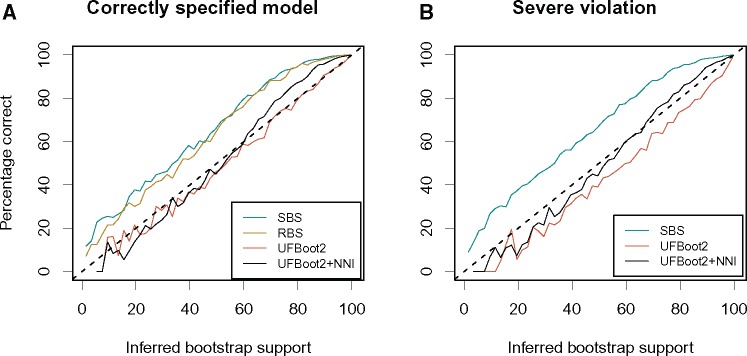
“This conservative behavior of SBS and RBS corroborates previous studies (Hillis and Bull 1993; Minh et al. 2013).”
BackgroundMethodResultInfluentialSelf-citationAn Empirical Test of Bootstrapping as a Method for Assessing Confidence in Phylogenetic Analysis
Hillis, D. M., & Bull, J. J. (1993) · Systematic Biology · doi:10.1093/sysbio/42.2.182 · Cited by 3,631 · cited 2×
“The accuracy of a bootstrap method M is defined by f M x ð Þ , the percentage of branches with support value x (across all reconstructed trees) that occur in the true tree (Hillis and Bull 1993).”
MethodResultAn Empirical Test of Bootstrapping as a Method for Assessing Confidence in Phylogenetic Analysis
Hillis, D. M., & Bull, J. J. (1993) · Systematic Biology · doi:10.2307/2992540 · Cited by 3,423
Cited by
Items 701–800 of 1,084
Zakham, F., Albalawi, A. E., Alanazi, A. D., Nguyen, P. T., Alouffi, A., Alaoui, A., Sironen, T. A., Smura, T., & Vapalahti, O. (2021) · Viruses · doi:10.3390/v13071396 · Cited by 45
“Phylogenetic analysis was performed using the maximum likelihood method implemented in IQ-TREE2 [29] using ModelFinder [30] and ultrafast bootstrapping with 1000 replicates [31].”
MethodMedeiros, I. D., Mazur, E., Miądlikowska, J., Flakus, A., Flakus, P. R., la Hoz, C. J. P., Cieślak, E., Śliwa, L., & Lutzoni, F. M. (2021) · Frontiers in Microbiology · doi:10.3389/fmicb.2021.774839 · Cited by 49
“We inspected the resulting trees for well-supported conflicts (≥95% ultrafast bootstrap; Hoang et al., 2018) among the six mycobiont loci, which were then concatenated to form a single dataset.”
MethodCondamine, F. L., Allio, R., Reboud, E. L., Dupuis, J. R., Toussaint, E. F. A., Mazet, N., Hu, S., Lewis, D. S., Kunte, K. K., Cotton, A. M., et al. (2023) · Molecular Phylogenetics and Evolution · doi:10.1016/j.ympev.2023.107758 · Cited by 46
Dietz, L., Seidel, M., Eberle, J., Misof, B. Y., Pacheco, T. L., Podsiadłowski, L., Ranasinghe, S., Gunter, N. L., Niehuis, O., Mayer, C., et al. (2023) · Systematic Entomology · doi:10.1111/syen.12602 · Cited by 49
Breman, F. C., Haegeman, A., Krešić, N., Philips, W., & Regge, N. D. (2023) · Viruses · doi:10.3390/v15071471 · Cited by 45
Mueller, A. J., Daebeler, A., Herbold, C. W., Kirkegaard, R. H., & Daims, H. (2023) · The ISME Journal · doi:10.1038/s41396-023-01518-6 · Cited by 49
“1.2) [31] with the automatic model fi nder (selected model:JTT + F + R7) [32] and 1000 ultra-fast bootstrap iterations [33].”
MethodInfluentialDesign of CoQ10 crops based on evolutionary history
Xu, J.-J., Yuan, L., Zhang, X., Li, J.-X., Lin, Q., Wu, X., Jiang, Y., Zhang, W., Qian, R., Xiong, S.-Y., et al. (2025) · Cell · doi:10.1016/j.cell.2025.01.023 · Cited by 48
Xu, L., Ye, K., Dai, W.-H., Sun, C., Xu, L., & Han, B.-N. (2019) · Marine Drugs · doi:10.3390/md17090498 · Cited by 45
Lewis, J. M., Lucas, D. D., Harper, M., & Boyce, J. D. (2019) · Frontiers in Microbiology · doi:10.3389/fmicb.2019.02440 · Cited by 45
The mitochondrial genomes of palaeopteran insects and insights into the early insect relationships
Song, N., Li, X., Yin, X., Li, X., Yin, J., & Pan, P. (2019) · Scientific Reports · doi:10.1038/s41598-019-54391-9 · Cited by 45
Evolutionary and Comparative Analysis of Bacterial Nonhomologous End Joining Repair
Sharda, M., Badrinarayanan, A., & Seshasayee, A. S. N. (2020) · Genome Biology and Evolution · doi:10.1093/gbe/evaa223 · Cited by 48
Santos, B. F., Wahl, D. B., Rousse, P., Bennett, A. M. R., Kula, R. R., & Brady, S. G. (2021) · Systematic Entomology · doi:10.1111/syen.12484 · Cited by 45
“6.12 (Nguyen et al., 2015), with 10 000 rounds of ultra-fast bootstrapping (Hoang et al., 2018) to assess clade support and using ModelFinder (Kalyaanamoorthy et al., 2017) to choose the best model for each partition via the option -MFP. Analyses were run with the safe numerical mode (option -safe)…”
MethodInfluentialEsselstyn, J. A., Achmadi, A. S., Handika, H., Swanson, M. T., Giarla, T. C., & Rowe, K. C. (2021) · Bulletin of the American Museum of Natural History · doi:10.1206/0003-0090.454.1.1 · Cited by 46
A unified evolutionary origin for the ubiquitous protein transporters SecY and YidC
Lewis, A. J. O., & Hegde, R. S. (2021) · BMC Biology · doi:10.1186/s12915-021-01171-5 · Cited by 45
“, 2020) was performed with 1000 ultrafast bootstrap replicates (Hoang et al., 2018).”
Su, T., He, B., Li, K., & Liang, A. (2018) · BMC Genomics · doi:10.1186/s12864-018-5365-7 · Cited by 48
Shropshire, W. C., Konovalova, A., McDaneld, P. M., Gohel, M., Strope, B., Sahasrabhojane, P. V., Tran, C. N., Greenberg, D. E., Kim, J., Zhan, X., et al. (2022) · mSystems · doi:10.1128/msystems.00476-22 · Cited by 47
“When creating the core gene inferred ML phylogenetic tree, model selection was performed using ModelFinder (58), a nonparametric bootstrap approximation, UFBoot (59) (n = 1,000), and an SH-aLRT (n = 1,000) test to further evaluate branch lengths.”
Phylogenomics reveals extensive misidentification of fungal strains from the genus Aspergillus
Steenwyk, J. L., Balamurugan, C., Raja, H. A., Gonçalves, C., Li, N., Martin, F. N., Berman, J. G., Oberlies, N. H., Gibbons, J. G., Goldman, G. H., et al. (2024) · Microbiology Spectrum · doi:10.1128/spectrum.03980-23 · Cited by 52
“Bipartition support was assessed using 1,000 ultrafast bootstrap approximations (Hoang et al., 2018).”
MethodProstova, M. A., Kanevskaya, A., Panteleev, V., Lisitskaya, L., Tugaeva, K. V., Sluchanko, N. N., Esyunina, D., & Kulbachinskiy, A. V. (2024) · Nature Microbiology · doi:10.1038/s41564-024-01654-5 · Cited by 44
“The tree was subjected to ultrafast bootstrap analysis with 1,000 replicates 59 .”
Wawina-Bokalanga, T., Merritt, S., Kinganda-Lusamaki, E., Jansen, D., Halbrook, M., Pukuta-Simbu, E., O’Toole, A., Vakaniaki, E. H., Ola-Mpumbe, R., Kwete, P., et al. (2024) · The Lancet · doi:10.1016/s0140-6736(25)00294-6 · Cited by 44
Taxonomic expansion and reorganization of Flaviviridae
Simmonds, P., Butković, A., Grove, J., Mayne, R., Mifsud, J. C. O., Beer, M., Bukh, J., Drexler, J. F., Kapoor, A., Lohmann, V., et al. (2025) · Nature Microbiology · doi:10.1038/s41564-025-02134-0 · Cited by 46
“Robustness of branching was estimated by bootstrap resampling (1,000 replicates) 44 .”
Machine learning enables scalable and systematic hierarchical virus taxonomy
Bolduc, B., Zablocki, O., Turner, D., Jang, H. B., Guo, J., Adriaenssens, E. M., Dutilh, B. E., & Sullivan, M. B. (2025) · Nature Biotechnology · doi:10.1038/s41587-025-02946-9 · Cited by 44
Tallowin, O., Tamar, K., Meiri, S., Allison, A., Kraus, F., Richards, S. J., & Oliver, P. M. (2018) · Molecular Phylogenetics and Evolution · doi:10.1016/j.ympev.2018.03.020 · Cited by 46
Genome sequencing of Rhinorhipus Lawrence exposes an early branch of the Coleoptera
Kusy, D., Motyka, M., Andújar, C., Boček, M., Masek, M., Sklenarova, K., Kokas, F. Z., Bocáková, M., Vogler, A. P., & Bocák, L. (2018) · Frontiers in Zoology · doi:10.1186/s12983-018-0262-0 · Cited by 45
Comparative Genomics Supports Sex and Meiosis in Diverse Amoebozoa
Hofstatter, P. G., Brown, M. W., & Lahr, D. J. G. (2018) · Genome Biology and Evolution · doi:10.1093/gbe/evy241 · Cited by 48
Legendre, M., Alempic, J.-M., Philippe, N., Lartigue, A., Jeudy, S., Poirot, O., Ta, N. T., Nin, S., Couté, Y., Abergel, C., et al. (2019) · Frontiers in Microbiology · doi:10.3389/fmicb.2019.00430 · Cited by 44
Fullmer, M. S., Ouellette, M., Louyakis, A. S., Papke, R. T., & Gogarten, J. P. (2019) · Genes · doi:10.3390/genes10030233 · Cited by 47
The Dual α-Amidation System in Scorpion Venom Glands
Delgado-Prudencio, G., Possani, L. D., Becerril, B., & Ortíz, E. (2019) · Toxins · doi:10.3390/toxins11070425 · Cited by 45
“9 [63,64], using the ultrafast bootstrap method (UFBoot2) [65] with 10,000 replicates.”
MethodSu, C., Klein, M.-L., Hernández‐Reyes, C., Batzenschlager, M., Ditengou, F. A., Lace, B., Keller, J., Delaux, P., & Ott, T. (2020) · The Plant Cell · doi:10.1105/tpc.19.00777 · Cited by 44
“Branch support was tested with 10,000 replicates of UltrFast Bootstraps (Hoang et al., 2018).”
MethodMiller, E. A., Elnekave, E., Flores-Figueroa, C., Johnson, A. J., Kearney, A. K., Muñoz-Aguayo, J., Tagg, K. A., Tschetter, L., Weber, B., Nadon, C. A., et al. (2020) · mSphere · doi:10.1128/msphere.00056-20 · Cited by 49
Rahman, R. U., Cosme, L. V., Costa, M. M., Carrara, L., Lima, J. B. P., & Martins, A. J. (2021) · PLoS neglected tropical diseases · doi:10.1371/journal.pntd.0008492 · Cited by 44
“We performed ultrafast bootstraps (n = 1000) to estimate node certainty [53] and used FigTree [54] to manipulate the aesthetics of the best tree found by IQTree.”
MethodGhaly, T. M., Tetu, S. G., & Gillings, M. R. (2021) · Communications Biology · doi:10.1038/s42003-021-02489-0 · Cited by 51
Modulation of bioelectric cues in the evolution of flying fishes
Daane, J. M., Blum, N., Lanni, J., Boldt, H., Iovine, M. K., Higdon, C. W., Johnson, S. L., Lovejoy, N. R., & Harris, M. P. (2021) · Current Biology · doi:10.1016/j.cub.2021.08.054 · Cited by 41
A Global Phylogenomic Study of the Thelypteridaceae
Fawcett, S., Smith, A. Р., Sundue, M., Burleigh, J. G., Sessa, E. B., Kuo, L., Chen, C., Testo, W., Kessler, M. R., & Barrington, D. S. (2021) · Systematic Botany · doi:10.1600/036364421x16370109698650 · Cited by 49
“Ultrafast bootstrap approximation with 1000 iterations (Minh et al. 2013; Hoang et al. 2017) was used to assess branch support.”
MethodPyron, R. A., O’Connell, K. A., Lemmon, E. M., Lemmon, A. R., & Beamer, D. A. (2022) · Ecology and Evolution · doi:10.1002/ece3.8574 · Cited by 47
Gnezdilov, V. M., Konstantinov, F. V., & Алексеевна, Н. А. (2022) · Systematic Entomology · doi:10.1111/syen.12546 · Cited by 47
Benavides, L. R., Edgecombe, G. D., & Giribet, G. (2022) · Molecular Phylogenetics and Evolution · doi:10.1016/j.ympev.2022.107621 · Cited by 49
Li, J., Zhang, Y., Ruhsam, M., MILNE, R. I., Wang, Y., Wu, D., Jia, S., Tao, T., & Mao, K. (2021) · Cladistics · doi:10.1111/cla.12491 · Cited by 43
Genetic and karyotype divergence between parents affect clonality and sterility in hybrids
Marta, A., Tichopád, T., Bartoš, O., Klíma, J., Shah, M. A., Šlechtová, V., Bohlen, J., Halačka, K., Choleva, L., Stöck, M., et al. (2023) · eLife · doi:10.7554/elife.88366.3 · Cited by 43
Bradshaw, A. J., Ramírez-Cruz, V., Awan, A. R., Furci, G., Guzmán‐Dávalos, L., Stamets, P. E., & Dentinger, B. T. M. (2024) · Proceedings of the National Academy of Sciences · doi:10.1073/pnas.2311245121 · Cited by 44
Anoxygenic phototroph of the Chloroflexota uses a type I reaction centre
Tsuji, J. M., Shaw, N. A., Nagashima, S., Venkiteswaran, J. J., Schiff, S. L., Watanabe, T., Fukui, M., Hanada, S., Tank, M., & Neufeld, J. D. (2024) · Nature · doi:10.1038/s41586-024-07180-y · Cited by 43
“6.9) 91 with 1,000 rapid bootstraps to calculate branch support values 93 .”
MethodInfluentialHauptfeld, E., Pappas, N., van Iwaarden, S., Snoek, B. L., Aldas-Vargas, A., Dutilh, B. E., & von Meijenfeldt, F. A. B. (2024) · Nature Communications · doi:10.1038/s41467-024-47155-1 · Cited by 44
Miric, M., Efetov, K. A., Tarmann, G. M., Chiocchio, A., Heikkilä, M., Wagner, D. L., & Rota, J. (2024) · Systematic Entomology · doi:10.1111/syen.12634 · Cited by 45
“Neurosymploca Wallengren, an Afrotropical genus, formed a strongly supported monophyletic group (SH, UFB = 100), whereas the other two sampled Afrotropical zygaenine genera Orna Kirby and Praezy-gaena Alberti were resolved as sister groups (SH = 99.3, UFB = 100).”
InfluentialLife-cycle-coupled evolution of mitosis in close relatives of animals
Shah, H., Olivetta, M., Bhickta, C., Ronchi, P., Trupinić, M., Tromer, E. C., Tolić, I. M., Schwab, Y., Dudin, O., & Dey, G. (2024) · Nature · doi:10.1038/s41586-024-07430-z · Cited by 45
“The trimmed alignments were used for tree inference with IQTree v.2.0.3 2020 using the model finder and ultra-fast bootstraps (1,000) bootstraps 55–57 .”
MethodInfluentialSmith, B. T., Thom, G., & Joseph, L. (2024) · Bulletin of the American Museum of Natural History · doi:10.1206/0003-0090.468.1.1 · Cited by 48
RNA-guided RNA silencing by an Asgard archaeal Argonaute
Bastiaanssen, C., Ugarte, P. B., Kim, K., Finocchio, G., Feng, Y., Anzelon, T. A., Köstlbacher, S., Tamarit, D., Ettema, T. J. G., Jínek, M., et al. (2024) · Nature Communications · doi:10.1038/s41467-024-49452-1 · Cited by 44
“Statistical support was evaluated using 1,000 replicates via ultrafast boostrap 2 (UFBoot2) 64 .”
Convergent evolution of linked mating-type loci in basidiomycete fungi
Sun, S., Coelho, M. A., Heitman, J., & Nowrousian, M. (2019) · PLoS Genetics · doi:10.1371/journal.pgen.1008365 · Cited by 44
A streamlined and predominantly diploid genome in the tiny marine green alga Chloropicon primus
Lemieux, C., Turmel, M., Otis, C., & Pombert, J. (2019) · Nature Communications · doi:10.1038/s41467-019-12014-x · Cited by 43
Nova, M. V., Durimel, K., La, K., Felten, A., Bessières, P., Mistou, M., Mariadassou, M., & Radomski, N. (2019) · BMC Genomics · doi:10.1186/s12864-019-6188-x · Cited by 50
Takehana, Y., Zahm, M., Cabau, C., Klopp, C., Lopez‐Roques, C., Bouchez, O., Donnadieu, C., Barrachina, C., Journot, L., Kawaguchi, M., et al. (2020) · G3 Genes Genomes Genetics · doi:10.1534/g3.119.400725 · Cited by 43
Systematics of big-eyed bats, genus Chiroderma Peters, 1860 (Chiroptera: Phyllostomidae)
Garbino, G. S. T., Lim, B. K., & Tavares, V. D. C. (2020) · Zootaxa · doi:10.11646/zootaxa.4846.1.1 · Cited by 50
Phylogenomics of the North American Plecoptera
South, E. J., Skinner, R. K., DeWalt, R. E., Kondratieff, B. C., Johnson, K. P., Davis, M. A., Lee, J. J., & Durfee, R. S. (2020) · Systematic Entomology · doi:10.1111/syen.12462 · Cited by 45
“To assess branch support, 3000 ultrafast bootstrap replicates (Minh et al., 2013; Hoang et al., 2018) were performed using the -bnni option to reduce the risk of branch support overestimation.”
MethodXu, Y., Dietrich, C. H., Zhang, Y., Dmitriev, D. A., Zhang, L., Wang, Y., Lu, S., & Qin, D. (2021) · Systematic Entomology · doi:10.1111/syen.12461 · Cited by 43
“A separate maximum likelihood (ML) ultrafast bootstrap analysis was also performed in IQTREE (Nguyen et al., 2015; Hoang et al., 2017) using the MK model for categorical data and empirical character state frequencies with the correction for ascertainment bias applied.”
MethodGenetic diversity and recombination between turnip yellows virus strains in Australia
Filardo, F. F., Nancarrow, N., Kehoe, M. A., McTaggart, A. R., Congdon, B. S., Kumari, S. G., Aftab, M., Trębicki, P., Rodoni, B., Thomas, J. E., et al. (2021) · Archives of Virology · doi:10.1007/s00705-020-04931-w · Cited by 43
Kim, D., Bauer, B. H., & Near, T. J. (2021) · Systematic Biology · doi:10.1093/sysbio/syab029 · Cited by 43
Evolution and function of the epithelial cell-specific ER stress sensor IRE1β
Cloots, E., Simpson, M. S., De Nolf, C., Lencer, W. I., Janssens, S., & Grey, M. J. (2021) · Mucosal Immunology · doi:10.1038/s41385-021-00412-8 · Cited by 42
Pangenomics reveals alternative environmental lifestyles among chlamydiae
Köstlbacher, S., Collingro, A., Halter, T., Schulz, F., Jungbluth, S. P., & Horn, M. (2021) · Nature Communications · doi:10.1038/s41467-021-24294-3 · Cited by 47
Cummins, M. L., Reid, C. J., & Djordjevic, S. P. (2022) · mSystems · doi:10.1128/msystems.01212-21 · Cited by 43
“Subsequently, 17,234 variable sites were extracted from this alignment using SNP-sites version 2.4.1 (89), and maximum likelihood phylogenetic trees were built using IQtree version 2.0.3 (90) with ModelFinder (91) and UFBoot (92) enabled (options “-m MFP -bb 1000”), resulting in selection of the “GTR1F1ASC1R2” model a…”
BackgroundInfluentialБолотов, И. Н., Pasupuleti, R., Rao, N. V. S., Unnikrishnan, S. K., Chan, N., Lunn, Z., Win, T., Gofarov, M. Y., Kondakov, A. V., Konopleva, E. S., et al. (2022) · Scientific Reports · doi:10.1038/s41598-022-05257-0 · Cited by 43
Wang, Y., Huang, J., Li, E., Xu, S., Zhan, Z., Zhang, X., Yang, Z., Guo, F., Liu, K., Liu, D., et al. (2022) · Frontiers in Plant Science · doi:10.3389/fpls.2022.813177 · Cited by 45
Zhao, R., Biddle, J. F., & Jørgensen, S. L. (2022) · ISME Communications · doi:10.1038/s43705-022-00125-4 · Cited by 46
“5 [76] with LG+ F+ R7 the bestfit model selected by ModelFinder [77], and 1000 ultrafast bootstrap iterations using UFBoot2 [78].”
MethodInfluentialBach, E., Rangel, C. P., Ribeiro, I. D. A., & Passaglia, L. M. P. (2022) · Molecular Genetics and Genomics · doi:10.1007/s00438-022-01907-0 · Cited by 43
“The best tree was estimated with the maximum-likelihood approach using ModelFinder and 1000 ultrafast bootstrap replicates implemented in the IQ-Tree tool (Nguyen et al. 2015; Hoang et al. 2018).”
MethodGreenrod, S. T. E., Stoycheva, M., Elphinstone, J. G., & Friman, V. (2022) · BMC Genomics · doi:10.1186/s12864-022-08909-7 · Cited by 43
“A maximum likelihood (ML) phylogenetic tree was then constructed through a phylogenomic analysis with IQ-TREE [58] and GTR + G4 model after model selection with ModelFinder [59] and two bootstrap methods (UFBoot and SH-aLRT) to look at branch support [60].”
MethodHlebec, D., Podnar, M., Kučinić, M., & Harms, D. (2023) · Scientific Reports · doi:10.1038/s41598-022-26298-5 · Cited by 48
Structure and engineering of the minimal type VI CRISPR-Cas13bt3
Nakagawa, R., Kannan, S., Altae-Tran, H., Takeda, S. N., Tomita, A., Hirano, H., Kusakizako, T., Nishizawa, T., Yamashita, K., Zhang, F., et al. (2022) · Molecular Cell · doi:10.1016/j.molcel.2022.08.001 · Cited by 43
“…then used to construct a tree using this model with 5000 ultrafast bootstraps, 500 initial trees, 100 top initial trees, and maintenance of the best 20 trees along the search, along with the bnni option, which optimizes each bootstrap tree using NNI on the bootstrap alignment (Hoang et al., 2018).”
Grouzdev, D. S., Gaisin, V. A., Lunina, O. N., Krutkina, M. S., Krasnova, E. D., Voronov, D. A., Baslerov, R. V., Sigalevich, P., Саввичев, А. С., & Gorlenko, V. M. (2022) · FEMS Microbiology Ecology · doi:10.1093/femsec/fiac103 · Cited by 43
Fungal Pathogens Associated with Crown and Root Rot in Wheat-Growing Areas of Northern Kyrgyzstan
Özer, G., Erper, İ., Yıldız, Ş., Bozoğlu, T., Zholdoshbekova, S., Alkan, M., Tekin, F., Uulu, T. E., İmren, M., Dababat, A. A., et al. (2023) · Journal of Fungi · doi:10.3390/jof9010124 · Cited by 43
“7 [45] with an ultrafast bootstrap approximation approach (UFBoot2) implemented with 1000 replicates [46].”
MethodKim, M., Cha, I., Lee, K., Li, M., & Park, S.-J. (2023) · Microbiology Spectrum · doi:10.1128/spectrum.01003-23 · Cited by 46
“The reliability of each internal branch was evaluated by the SH-like approximate likelihood ratio (SH-aLRT, -alrt 1000) (123) and ultrafast bootstrap (UFBoot, -bb 1000) (124).”
MethodA taxon-rich and genome-scale phylogeny of Opisthokonta
Liu, H., Steenwyk, J. L., Zhou, X., Schultz, D. T., Kocot, K. M., Shen, X., Rokas, A., & Li, Y. (2024) · PLoS Biology · doi:10.1371/journal.pbio.3002794 · Cited by 43
Fei, F., Su, Z., Liu, R., Gao, R., & Sun, C. (2024) · Journal of Hazardous Materials · doi:10.1016/j.jhazmat.2024.136008 · Cited by 42
Narrowe, A. B., Spang, A., Stairs, C. W., Caceres, E. F., Baker, B. J., Miller, C. S., & Ettema, T. J. G. (2018) · Genome Biology and Evolution · doi:10.1093/gbe/evy154 · Cited by 42
Major, P., Sendra, K. M., Dean, P., Williams, T. A., Watson, A., Thwaites, D. T., Embley, T. M., & Hirt, R. P. (2019) · eLife · doi:10.7554/elife.47037 · Cited by 43
“Phylogenies were inferred with Maximum likelihood using the LG+C60 model in IQ-TREE (Nguyen et al., 2015) with 1000 ultrafast bootstrap replicates (Hoang et al., 2018).”
MethodEkin, T., Sayyari, E., Stiller, J., Mirarab, S., & Rouse, G. W. (2020) · Molecular Phylogenetics and Evolution · doi:10.1016/j.ympev.2020.106892 · Cited by 44
Zawierucha, K., Buda, J., Jaroměřská, T. N., Janko, K., & Gąsiorek, P. (2020) · Zoologischer Anzeiger · doi:10.1016/j.jcz.2020.09.004 · Cited by 43
Phadungsombat, J., Imad, H. A., Rahman, M., Nakayama, E. E., Kludkleeb, S., Ponam, T., Rahim, R., Hasan, A., Poltep, K., Yamanaka, A., et al. (2020) · Viruses · doi:10.3390/v12111319 · Cited by 42
Diversification of true water bugs revealed by transcriptome‐based phylogenomics
Wang, Y., Moreira, F. F. F., Rédei, D., Chen, P., Kuechler, S. M., Luo, J., Men, Y., Wu, H., & Xie, Q. (2020) · Systematic Entomology · doi:10.1111/syen.12465 · Cited by 43
“In the IQ-TREE analyses, nodal support values were estimated using the ultrafast bootstrap approach (UFBoot) (Hoang et al., 2018) with 1000 replicates.”
MethodZhu, X., Boulet, A., Buckley, K. M., Phillips, C. B., Gammon, M. G., Oldfather, L. E., Moore, S. A., Leary, S. C., & Cobine, P. A. (2021) · eLife · doi:10.7554/elife.64690 · Cited by 47
Sless, T. J. L., Branstetter, M. G., Gillung, J. P., Krichilsky, E., Tobin, K. B., Straka, J., Rozen, J. G., Freitas, F. V., Martins, A. C., Bossert, S., et al. (2021) · Molecular Phylogenetics and Evolution · doi:10.1016/j.ympev.2021.107326 · Cited by 44
“A majority of nodes in the tree were recovered with 100/100 support values according to SH-aLRT (Guindon et al., 2010) and ultra-fast bootstrap (Hoang et al., 2018) metrics respectively, though six nodes had less than 100/100 support.”
MethodTalamas, E. J., Bremer, J. S., Moore, M. R., Bon, M., Lahey, Z. J., Roberts, C. G., Combee, L. A., McGathey, N., van Noort, S., Timokhov, A. V., et al. (2021) · Journal of Hymenoptera Research · doi:10.3897/jhr.87.72842 · Cited by 42
Schwartz, S. L., Momper, L., Rangel, L. T., Magnabosco, C., Amend, J. P., & Fournier, G. P. (2022) · MicrobiologyOpen · doi:10.1002/mbo3.1258 · Cited by 44
Comparative mitochondrial genome analysis and phylogenetic relationship among lepidopteran species
Chen, Q., Chen, L., Liao, C., Wang, X., Wang, M., & Huang, G. (2022) · Gene · doi:10.1016/j.gene.2022.146516 · Cited by 42
A three-gene phylogeny supports taxonomic rearrangements in the family Didymiaceae (Myxomycetes)
Prikhodko, I. S., Shchepin, O. N., Bortnikova, N. A., Novozhilov, Y. K., Gmoshinskiy, V. I., Moreno, G. H., López-Villalba, Á., Stephenson, S. L., & Schnittler, M. (2023) · Mycological Progress · doi:10.1007/s11557-022-01858-1 · Cited by 43
Transposable elements drive the evolution of metazoan zinc finger genes
Wells, J. N., Chang, N., McCormick, J., Coleman, C., Ramos, N., Jin, B., & Feschotte, C. (2023) · Genome Research · doi:10.1101/gr.277966.123 · Cited by 44
Large-scale mitogenomic analysis of the phylogeography of the Late Pleistocene cave bear
Gretzinger, J., Molak, M., Reiter, E., Pfrengle, S., Urban, C., Neukamm, J., Blant, M., Conard, N. J., Cupillard, C., Dimitrijević, V., et al. (2019) · Scientific Reports · doi:10.1038/s41598-019-47073-z · Cited by 41
Santana‐Molina, C., Henriques, V., Hornero‐Méndez, D., Devos, D. P., & Rivas‐Marín, E. (2022) · Proceedings of the National Academy of Sciences · doi:10.1073/pnas.2210081119 · Cited by 44
Systematics of the avian family Alaudidae using multilocus and genomic data
Alström, P., Mohammadi, Z., Enbody, E. D., Irestedt, M., Engelbrecht, D., Crochet, P., Guillaumet, A., Rancilhac, L., Tieleman, B. I., Olsson, U., et al. (2023) · Avian Research · doi:10.1016/j.avrs.2023.100095 · Cited by 45
“We then ran additional exploration of rate heterogeneity for the best model , and computed a tree with IQ-TREE, obtaining node support with 1000 replicates of ultrafast bootstrap (Hoang et al., 2018).”
MethodGregorio, S. D., Vielma, J., Haim, M. S., Rago, L., Campos, J., Kekre, M., Abrudan, M. I., Famiglietti, A. M. R., Canigia, L. F., Rubinstein, G., et al. (2023) · Microbial Genomics · doi:10.1099/mgen.0.001020 · Cited by 41
“Branch support was estimated with the SH-aLRT test and ultrafast bootstrap (1000 replicates each) [42].”
A molecular phylogeny for all 21 families within Chiroptera (bats)
Hao, X., Lu, Q., & Zhao, H. (2023) · Integrative Zoology · doi:10.1111/1749-4877.12772 · Cited by 41
Phylogenomics supports the monophyly of the Cercozoa
Irwin, N. A. T., Tikhonenkov, D. V., Hehenberger, E., Mylnikov, A. P., Burki, F., & Keeling, P. J. (2018) · Molecular Phylogenetics and Evolution · doi:10.1016/j.ympev.2018.09.004 · Cited by 45
“Missing data and partial genes can bias phylogenomics and lead to erroneous results (Hosner et al., 2016; Roure et al., 2013).”
BackgroundBranstetter, M. G., & Longino, J. T. (2019) · Insect Systematics and Diversity · doi:10.1093/isd/ixz001 · Cited by 42
Tracing Ancient Human Migrations into Sahul Using Hepatitis B Virus Genomes
Yuen, L. K. W., Littlejohn, M., Duchêne, S., Edwards, R., Bukulatjpi, S. M., Binks, P., Jackson, K., Davies, J., Davis, J. S., Tong, S. Y. C., et al. (2019) · Molecular Biology and Evolution · doi:10.1093/molbev/msz021 · Cited by 44
Baek, I., Lee, K., Goodfellow, M., & Chun, J. (2019) · Frontiers in Microbiology · doi:10.3389/fmicb.2019.01978 · Cited by 43
“, 2015) with 1000 bootstrap replications (Minh et al., 2013; Hoang et al., 2018).”
Wang, Y., Youssef, N. H., Couger, M. B., Hanafy, R. A., Elshahed, M. S., & Stajich, J. (2019) · mSystems · doi:10.1128/msystems.00247-19 · Cited by 44
“5.5 package (75, 109, 110).”
InfluentialMasonick, P., & Weirauch, C. (2019) · Systematic Entomology · doi:10.1111/syen.12388 · Cited by 42
Revealing fine-scale spatiotemporal differences in SARS-CoV-2 introduction and spread
Moreno, G. K., Braun, K. M., Riemersma, K. K., Martin, M. A., Halfmann, P., Crooks, C. M., Prall, T. M., Baker, D., Baczenas, J. J., Heffron, A. S., et al. (2020) · Nature Communications · doi:10.1038/s41467-020-19346-z · Cited by 47
Identification and characterization of the LRR repeats in plant LRR-RLKs
Chen, T. (2021) · BMC Molecular and Cell Biology · doi:10.1186/s12860-021-00344-y · Cited by 41
“A maximum likelihood (ML) phylogenic tree was inferred using IQtree with autodetected models (JTT + F + G4 model) [61, 62].”
MethodFarag, I., Zhao, R., & Biddle, J. F. (2021) · Applied and Environmental Microbiology · doi:10.1128/aem.02584-20 · Cited by 44
“6) (30) (located on the CIPRES web server [31]) with LG1R8 as the best-fit substitution model selected by ModelFinder (32), and single-branch location was tested using 1,000 ultrafast bootstraps and approximate Bayesian computation (33).”
MethodThielen, P., Wohl, S., Mehoke, T. S., Ramakrishnan, S., Kirsche, M., Falade-Nwulia, O. O., Trovão, N. S., Ernlund, A. W., Howser, C., Sadowski, N., et al. (2021) · JCI Insight · doi:10.1172/jci.insight.144350 · Cited by 43
Rodriguez, C., de Prost, N., Fourati, S., Lamoureux, C., Gricourt, G., N’Debi, M., Canouï‐Poitrine, F., Désveaux, I., Picard, O., Démontant, V., et al. (2020) · PLoS Pathogens · doi:10.1371/journal.ppat.1009416 · Cited by 43
Suominen, S., van Vliet, D. M., Sánchez‐Andrea, I., van der Meer, M. T. J., Damsté, J. S. S., & Villanueva, L. (2021) · Frontiers in Microbiology · doi:10.3389/fmicb.2021.628301 · Cited by 45
Johnson, C., England, A., Munro‐Ehrlich, M., Colman, D. R., DuBois, J. L., & Boyd, E. S. (2021) · Journal of Bacteriology · doi:10.1128/jb.00117-21 · Cited by 43
Metadata
- Authors
- Hoang, D. T., Chernomor, O., von Haeseler, A., Minh, B. Q., & Vinh, L. S.
- Affiliations
- Vietnam National University, Hanoi (VN)
- University of Vienna (AT)
- Center for Integrative Bioinformatics Vienna, Max F. Perutz Laboratories, University of Vienna, Medical University Vienna, Vienna, Austria
- Faculty of Information Technology, University of Engineering and Technology, Vietnam National University, Hanoi, Vietnam
- Venue
- Molecular Biology and Evolution
- Publisher
- Oxford University Press (OUP)
- Published
- 2017-10-25
- Volume
- 35
- Issue
- 2
- Pages
- 518-522
- ISSN
- 0737-4038 (ISSN-L)
- 1537-1719
- PMC
- PMC5850222
- OpenAlex
- W2951464304
- Cited by
- 10,881
- References
- 32
- Citations by year
- 2026: 1853 · 2025: 1810 · 2024: 1925 · 2023: 1540 · 2022: 1336 · 2021: 1145 · 2020: 758 · 2019: 390 · 2018: 114 · 2017: 1
- FWCI
- 141.14
- Type
- journal article
- Language
- en
- Open access
- hybrid
- doi.org
- Licence
- cc-by-nc
- Locations
- Molecular Biology and Evolution (publishedVersion, cc-by-nc)
- bioRxiv (Cold Spring Harbor Laboratory) (acceptedVersion, cc-by)
- PubMed Central (publishedVersion, cc-by-nc)
- PubMed (publishedVersion)
- Greater South Information System
- Funders
- National Foundation for Science and Technology Development (102.01-2013.04)
- Topics
- Life Sciences › Biochemistry, Genetics and Molecular Biology › Molecular Biology › Genomics and Phylogenetic Studies
- Life Sciences › Biochemistry, Genetics and Molecular Biology › Molecular Biology › RNA and protein synthesis mechanisms
- Life Sciences › Agricultural and Biological Sciences › Ecology, Evolution, Behavior and Systematics › Plant Diversity and Evolution
- Keywords
- maximum likelihood phylogeny, branch support, polytomies, model violations, bootstrapping, IQ-TREE, computational acceleration
- MeSH terms
- Models, Genetic, Phylogeny, Software, Likelihood Functions
About these checks
Registry, retraction, Cites and statistics results are computed, not judged, with one exception: a printed reference that no index lists is read once by a model before it counts as a citation error. Claims are extracted by a model and kept only when their quote appears verbatim in the text; each cited source is then checked, with a model’s help, for whether it says what the claim relies on. Those verdicts can be wrong — read the claim’s quote and the cited source before relying on one.
Statistics and arithmetic are recomputed, not judged.
Confidence bands are shown only for fields calibrated on our annotated test set. None is calibrated yet, so no band is shown.
What counts as a claim ›How we measure confidence ›How we check this ›
Are you an author, or do you see a problem with this page? Request a review
Data sources
Bibliographic data: Semantic Scholar, OpenAlex, Crossref.
Contains information from the Semantic Scholar Academic Graph Datasets, made available under the ODC Attribution License (ODC-BY 1.0).
Semantic Scholar’s data is described in: Kinney, R., et al. (2023). The Semantic Scholar Open Data Platform. arXiv:2301.10140.
