

UFBoot2: Improving the Ultrafast Bootstrap Approximation
Open accessPublished version of a preprint
The DOI matches its Crossref record; 32 of the 32 references it cites were found in a registry or an index.
Abstract
The standard bootstrap (SBS), despite being computationally intensive, is widely used in maximum likelihood phylogenetic analyses. We recently proposed the ultrafast bootstrap approximation (UFBoot) to reduce computing time while achieving more unbiased branch supports than SBS under mild model violations. UFBoot has been steadily adopted as an efficient alternative to SBS and other bootstrap approaches. Here, we present UFBoot2, which substantially accelerates UFBoot and reduces the risk of overestimating branch supports due to polytomies or severe model violations. Additionally, UFBoot2 provides suitable bootstrap resampling strategies for phylogenomic data. UFBoot2 is 778 times (median) faster than SBS and 8.4 times (median) faster than RAxML rapid bootstrap on tested data sets. UFBoot2 is implemented in the IQ-TREE software package version 1.6 and freely available at http://www.iqtree.org.
Overview
The claims and statistics of this paper haven’t been checked yet.
Free: it reads the open-access text and checks the first 5 claims that cite a source we can check. Create a free account to check every claim.
Integrity signals
Registry
Cites
Statistics
Figures
Verification
Claims the paper makes
The claims and statistics of this paper haven’t been checked yet.
Free: it reads the open-access text and checks the first 5 claims that cite a source we can check. Create a free account to check every claim.
Claims other papers make about this one
Each is checked against this paper’s own text: does it say what the citing paper says it does?
The cited source says what the claim attributes to it.
In the citing paper
“Branch support was assessed using the ultrafast bootstrap approximation using a hill-climbing nearest neighbor interchange (NNI) search (Hoang et al. 2018) with 1,000 repeats.”
From Mitochondrial retrograde control of transcription evolves with respiratory stress, metabolic adaptation, and virulence in budding yeasts (2026) · cites this paper as Hoang et al. 2018
The cited source says what the claim attributes to it.
In the citing paper
“The maximum likelihood phylogeny was performed using IQTREE (IQ-TREE multicore version 1.6.12 for Mac OS X 64-bit) software [62], under 1000 Ultra-Fast bootstrap replications [63].”
From Emergent and Neglected Equine Filariosis in Egypt: Species Diversity and Host Immune Response (2022) · cites this paper as [63]
The cited source says what the claim attributes to it.
In the citing paper
“We also performed 1,000 ultrafast bootstraps (Hoang et al., 2018) to assess statistical support for each node.”
From Enigmas no longer: using ultraconserved elements to place several unusual hawk taxa and address the non-monophyly of the genus Accipiter (Accipitriformes: Accipitridae) (2025) · cites this paper as Hoang et al., 2018
In the citing paper
“Support was assessed with 1000 ultrafast boostrap replicates 13 .”
From Available data do not rule out Ctenophora as the sister group to all other Metazoa (2023) · doi:10.1038/s41467-023-36151-6 · cites this paper as [13]
Self-check
Percentages, sums and reported differences re-computed from the paper’s own numbers.
The self-check needs the paper’s full text.
Citations
Cites
CONFIDENCE LIMITS ON PHYLOGENIES: AN APPROACH USING THE BOOTSTRAP
Felsenstein, J. (1985) · Evolution · doi:10.1111/j.1558-5646.1985.tb00420.x · Cited by 44,647 · cited 1×
“Standard nonparametric bootstrap (SBS) (Efron 1979; Felsenstein 1985) is widely used in maximum likelihood (ML) phylogenetic analyses to estimate branch supports of a phylogenetic tree inferred from a multiple sequence alignment (MSA).”
MethodIQ-TREE: A Fast and Effective Stochastic Algorithm for Estimating Maximum-Likelihood Phylogenies
Nguyen, L.-T., Schmidt, H. A., von Haeseler, A., & Minh, B. Q. (2015) · Molecular Biology and Evolution · doi:10.1093/molbev/msu300 · Cited by 26,046
Self-citationGuindon, S., Dufayard, J.-F., Lefort, V., Anisimova, M., Hordijk, W., & Gascuel, O. (2010) · Systematic Biology · doi:10.1093/sysbio/syq010 · Cited by 18,376 · cited 2×
“Although fast ML-tree search algorithms exist for large data sets (Vinh and von Haeseler 2004; Stamatakis 2006; Guindon et al. 2010; Nguyen et al. 2015) SBS is still very computationally intensive.”
MethodBootstrap methods: another look at the jackknife
Efron, B. (1979) · The Annals of Statistics · doi:10.1214/aos/1176344552 · Cited by 17,602
RAxML-VI-HPC: maximum likelihood-based phylogenetic analyses with thousands of taxa and mixed models
Stamatakis, A. (2006) · Bioinformatics · doi:10.1093/bioinformatics/btl446 · Cited by 15,582 · cited 2×
“Although fast ML-tree search algorithms exist for large data sets (Vinh and von Haeseler 2004; Stamatakis 2006; Guindon et al. 2010; Nguyen et al. 2015) SBS is still very computationally intensive.”
MethodEvolutionary trees from DNA sequences: A maximum likelihood approach.
Felsenstein, J. (1981) · Journal of Molecular Evolution · doi:10.1007/bf01734359 · Cited by 14,571 · cited 1×
“The pruning algorithm (Felsenstein 1981) efficiently computes the likelihood of phylogenetic trees, but still does not scale well for large data sets.”
MethodA Rapid Bootstrap Algorithm for the RAxML Web Servers
Stamatakis, A., Hoover, P., & Rougemont, J. (2008) · Systematic Biology · doi:10.1080/10635150802429642 · Cited by 7,028 · cited 2×
“To improve computing time, rapid bootstrap (RBS; Stamatakis et al. 2008) and the ultrafast bootstrap (UFBoot; Minhetal.2013)weredeveloped.”
MethodUltrafast Approximation for Phylogenetic Bootstrap
Minh, B. Q., Nguyen, M. A. T., & von Haeseler, A. (2013) · Molecular Biology and Evolution · doi:10.1093/molbev/mst024 · Cited by 4,844 · cited 8×
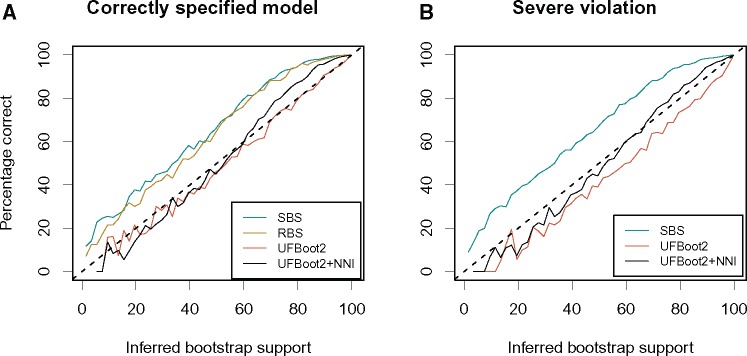
“This conservative behavior of SBS and RBS corroborates previous studies (Hillis and Bull 1993; Minh et al. 2013).”
BackgroundMethodResultInfluentialSelf-citationAn Empirical Test of Bootstrapping as a Method for Assessing Confidence in Phylogenetic Analysis
Hillis, D. M., & Bull, J. J. (1993) · Systematic Biology · doi:10.1093/sysbio/42.2.182 · Cited by 3,631 · cited 2×
“The accuracy of a bootstrap method M is defined by f M x ð Þ , the percentage of branches with support value x (across all reconstructed trees) that occur in the true tree (Hillis and Bull 1993).”
MethodResultAn Empirical Test of Bootstrapping as a Method for Assessing Confidence in Phylogenetic Analysis
Hillis, D. M., & Bull, J. J. (1993) · Systematic Biology · doi:10.2307/2992540 · Cited by 3,423
Cited by
Items 101–200 of 1,084
Henritzi, D., Petric, P. P., Lewis, N. S., Graaf, A., Pessia, A., Starick, E., Breithaupt, A., Strebelow, G., Luttermann, C., Parker, L. M. K., et al. (2020) · Cell Host & Microbe · doi:10.1016/j.chom.2020.07.006 · Cited by 161
Meleshko, O., Martin, M. D., Korneliussen, T. S., Schröck, C., Lamkowski, P., Schmutz, J., Healey, A. L., Piatkowski, B. T., Shaw, A. J., Weston, D. J., et al. (2021) · Molecular Biology and Evolution · doi:10.1093/molbev/msab063 · Cited by 155
“model allowing for a proportion of invariable sites with 1,000 ultrafast bootstrap replicates (Hoang et al. 2018).”
MethodNon-photosynthetic predators are sister to red algae
Gawryluk, R. M. R., Tikhonenkov, D. V., Hehenberger, E., Husnik, F., Mylnikov, A. P., & Keeling, P. J. (2019) · Nature · doi:10.1038/s41586-019-1398-6 · Cited by 148
Shang, J., Tian, J., Cheng, H., Yan, Q., Li, L., Jamal, A., Xu, Z., Xiang, L., Saski, C. A., Jin, S., et al. (2020) · Genome biology · doi:10.1186/s13059-020-02088-y · Cited by 154
Timing the evolution of antioxidant enzymes in cyanobacteria
Boden, J. S., Konhauser, K. O., Robbins, L. J., & Sánchez-Baracaldo, P. (2021) · Nature Communications · doi:10.1038/s41467-021-24396-y · Cited by 145
Redefining species limits in the Fusarium fujikuroi species complex
Yılmaz, N., Sandoval‐Denis, M., Lombard, L., Visagie, C. M., Wingfield, B. D., & Crous, P. W. (2021) · Persoonia - Molecular Phylogeny and Evolution of Fungi · doi:10.3767/persoonia.2021.46.05 · Cited by 175
Govorunova, E. G., Gou, Y., Sineshchekov, O. A., Li, H., Lu, X., Wang, Y., Brown, L. S., St-Pierre, F., Xue, M., & Spudich, J. L. (2022) · Nature Neuroscience · doi:10.1038/s41593-022-01094-6 · Cited by 138
Phylogenomics from low‐coverage whole‐genome sequencing
Zhang, F., Ding, Y., Zhu, C., Zhou, X. Y., Orr, M. C., Scheu, S., & Luan, Y. (2019) · Methods in Ecology and Evolution · doi:10.1111/2041-210x.13145 · Cited by 154
“Node supports were estimated using 1,000 ultrafast bootstrap (Hoang, Chernomor, von Haeseler, Minh, & Vinh, 2018) and 1,000 SH-aLRT replicates (Guindon et al., 2010).”
MethodShahzadi, I., Abdullah, A., Mehmood, F., Ali, Z., Ahmed, I., & Mirza, B. (2019) · Genomics · doi:10.1016/j.ygeno.2019.08.016 · Cited by 156
Fusaro, A., Zecchin, B., Giussani, E., Palumbo, E., Agüero-García, M., Bachofen, C., Bálint, Á., Banihashem, F., Banyard, A. C., Beerens, N., et al. (2024) · Virus Evolution · doi:10.1093/ve/veae027 · Cited by 156
“6.6 (Nguyen et al. 2015; Thi Hoang et al. 2017), performing an ultrafast bootstrap resampling analysis (1,000 replications).”
BackgroundInfluentialKinganda-Lusamaki, E., Amuri-Aziza, A., Fernandez, N., Makangara-Cigolo, J.-C., Pratt, C. B., Vakaniaki, E. H., Hoff, N. A., Luakanda-Ndelemo, G., Akil-Bandali, P., Nundu, S. S., et al. (2024) · Cell · doi:10.1016/j.cell.2024.10.017 · Cited by 144
Mehmood, F., Abdullah, A., Shahzadi, I., Ahmed, I., Waheed, M. T., & Mirza, B. (2019) · Genomics · doi:10.1016/j.ygeno.2019.08.024 · Cited by 146
Molecular evolution of chloroplast genomes in Monsteroideae (Araceae)
Henriquez, C. L., Abdullah, A., Ahmed, I., Carlsen, M. M., Zuluaga, A., Croat, T. B., & McKain, M. R. (2020) · Planta · doi:10.1007/s00425-020-03365-7 · Cited by 160
A higher-rank classification for rust fungi, with notes on genera
Aime, M. C., & McTaggart, A. R. (2020) · Fungal Systematics and Evolution · doi:10.3114/fuse.2021.07.02 · Cited by 149
“…a GTR gamma FreeRate heterogeneity model of evolution and a different rate for each partition (command -spp -m GTR+R), 10 000 ultrafast bootstraps (Hoang et al. 2018), an approximate likelihood ratio test with 10 000 replicates (Guindon et al. 2010) and genealogical concordance factors calculated…”
A megaplasmid family driving dissemination of multidrug resistance in Pseudomonas
Cazares, A., Moore, M., Hall, J. P. J., Wright, L. L., Grimes, M., Emond-Rhéault, J.-G., Pongchaikul, P., Santanirand, P., Lévesque, R. C., Fothergill, J. L., et al. (2020) · Nature Communications · doi:10.1038/s41467-020-15081-7 · Cited by 142
Near-complete phylogeny and taxonomic revision of the world’s babblers (Aves: Passeriformes)
Cai, T., Cibois, A., Alström, P., Moyle, R. G., Kennedy, J. D., Shao, S., Zhang, R., Irestedt, M., Ericson, P. G. P., Gelang, M., et al. (2018) · Molecular Phylogenetics and Evolution · doi:10.1016/j.ympev.2018.10.010 · Cited by 144
Analysis of Spounaviruses as a Case Study for the Overdue Reclassification of Tailed Phages
Barylski, J., Enault, F., Dutilh, B. E., Schuller, M. B. P., Edwards, R. A., Gillis, A., Klumpp, J., Knežević, P., Krupovìč, M., Kuhn, J. H., et al. (2019) · Systematic Biology · doi:10.1093/sysbio/syz036 · Cited by 149
Steenwyk, J. L., Shen, X., Lind, A., Goldman, G. H., & Rokas, A. (2019) · mBio · doi:10.1128/mbio.00925-19 · Cited by 144
“To evaluate support for single gene trees and for the reference phylogeny (Figure 1), we used the ultrafast bootstrap approximation approach (UFBoot) (Hoang et al. 2018), an accurate and faster alternative to the classic bootstrap approach.”
BackgroundMethodSutela, S., Forgia, M., Vainio, E. J., Chiapello, M., Daghino, S., Vallino, M., Martino, E. M. D., Girlanda, M., Perotto, S., & Turina, M. (2020) · Virus Evolution · doi:10.1093/ve/veaa076 · Cited by 137
Liu, B., Campbell, C. S., De‐Yuan, H., & Wen, J. (2020) · Molecular Phylogenetics and Evolution · doi:10.1016/j.ympev.2020.106784 · Cited by 148
Beale, M. A., Marks, M., Cole, M. J., Lee, M.-K., Pitt, R., Ruis, C., Balla, E., Crucitti, T., Ewens, M., Fernández-Naval, C., et al. (2021) · Nature Microbiology · doi:10.1038/s41564-021-01000-z · Cited by 135
“8.4 model (Strict Clock with reference rate prior of 1.23 × 10 − 7 substitutions per site per year, HKY substitution model 54 , Coalescent Bayesian Skyline distribution with 10 populations 54,56 ) in a BEAST2 59 v2.”
InfluentialNeoproterozoic origin and multiple transitions to macroscopic growth in green seaweeds
Del Cortona, A., Jackson, C. J., Bucchini, F., Van Bel, M., D’hondt, S., Škaloud, P., Delwiche, C. F., Knoll, A. H., Raven, J. A., Verbruggen, H., et al. (2020) · Proceedings of the National Academy of Sciences · doi:10.1073/pnas.1910060117 · Cited by 134
A new classification of Cyperaceae (Poales) supported by phylogenomic data
Larridon, I., Zuntini, A. R., Léveillé‐Bourret, É., Barrett, R. L., Starr, J. R., Muasya, A. M., Villaverde, T., Bauters, K., Brewer, G. E., Bruhl, J. J., et al. (2021) · Journal of Systematics and Evolution · doi:10.1111/jse.12757 · Cited by 148
“Fortheconcatenated IQ ‐ TREE analysis, the individual gene alignments were concatenated in AMAS, and IQ ‐ TREE was run with mode set to “ MFP + MERGE ” and 10 000 replicates of ultrafast bootstrap replications (Hoang et al., 2018) to generate the fi nal result.”
Tripodi, P., Rabanus‐Wallace, M. T., Barchi, L., Kale, S. M., Esposito, S., Acquadro, A., Schafleitner, R., van Zonneveld, M., Prohens, J., Díez, M. J., et al. (2021) · Proceedings of the National Academy of Sciences · doi:10.1073/pnas.2104315118 · Cited by 146
“Branch supports were obtained with the ultrafast bootstrap (49).”
MethodFungal Planet description sheets: 1383–1435
Crous, P. W., Boers, J., Holdom, D. G., Osieck, Steinrucken, T. V., Tan, Y. P., Vitelli, J. S., Shivas, R. G., Barrett, M., Boxshall, A.-G., et al. (2022) · Persoonia - Molecular Phylogeny and Evolution of Fungi · doi:10.3767/persoonia.2022.48.08 · Cited by 144
Joining the club: First detection of African swine fever in wild boar in Germany
Sauter‐Louis, C., Forth, J. H., Probst, C., Staubach, C., Hlinak, A., Rudovsky, A., Holland, D., Schlieben, P., Göldner, M., Schatz, J., et al. (2020) · Transboundary and Emerging Diseases · doi:10.1111/tbed.13890 · Cited by 146
Spatiotemporal Evolution of the Global Species Diversity of Rhododendron
Xia, X., Yang, M.-Q., Li, C., Huang, S.-X., Jin, W., Shen, T., Wang, F., Li, X., Yoichi, W., Zhang, L., et al. (2021) · Molecular Biology and Evolution · doi:10.1093/molbev/msab314 · Cited by 140
“For all phylogenetic analyses, all codon positions of the OGs/ genes were included because no substitutional saturation was detected by DAMBE (Xia 2018), and 1,000 ultrafast bootstrap replicates were used (Hoang et al. 2018).”
MethodInfluentialPhylogenomic Subsampling and the Search for Phylogenetically Reliable Loci
Koch, N. M. (2021) · Molecular Biology and Evolution · doi:10.1093/molbev/msab151 · Cited by 137
“2015) under the LGþ FþG model, and 1,000 replicates of ultrafast bootstrap (UFBoot; Hoang et al. 2018) were used to estimate node support values.”
MethodInfluentialThe evolutionary origins of the cat attractant nepetalactone in catnip
Lichman, B. R., Godden, G. T., Hamilton, J. P., Palmer, L., Kamileen, M. O., Zhao, D., Vaillancourt, B., Wood, J. C., Sun, M., Kinser, T. J., et al. (2020) · Science Advances · doi:10.1126/sciadv.aba0721 · Cited by 136
“1 with ModelFinder together with ultrafast bootstraps (UFBoot2, ×1000) (60) and SH-aLRT supports (×1000).”
MethodInfluentialGenomes of multicellular algal sisters to land plants illuminate signaling network evolution
Feng, X., Zheng, J., Irisarri, I., Yu, H., Zheng, B., Ali, Z. M., de Vries, S., Keller, J., Fürst‐Jansen, J. M. R., Dadras, A., et al. (2024) · Nature Genetics · doi:10.1038/s41588-024-01737-3 · Cited by 134
Casting light on Asgardarchaeota metabolism in a sunlit microoxic niche
Bulzu, P., Andrei, A., Salcher, M. M., Mehrshad, M., Inoue, K., Kandori, H., Béjà, O., Ghai, R., & Banciu, H. L. (2019) · Nature Microbiology · doi:10.1038/s41564-019-0404-y · Cited by 141
Undinarchaeota illuminate DPANN phylogeny and the impact of gene transfer on archaeal evolution
Dombrowski, N., Williams, T. A., Sun, J., Woodcroft, B. J., Lee, J.-H., Minh, B. Q., Rinke, C., & Spang, A. (2020) · Nature Communications · doi:10.1038/s41467-020-17408-w · Cited by 124
Self-citationWang, Y., Liu, B., Nie, Z., Chen, H., Chen, F., Figlar, R. B., & Wen, J. (2020) · Journal of Systematics and Evolution · doi:10.1111/jse.12588 · Cited by 145
“, 2015) with 1000 bootstrap replicates, using UFBoot2 (Hoang et al., 2017) and collapsing near zero branches option.”
MethodInfluentialThe Evolutionary History of Wild, Domesticated, and Feral Brassica oleracea (Brassicaceae)
Mabry, M. E., Turner, S., Gallagher, E. Y., McAlvay, A. C., An, H., Edger, P. P., Moore, J. D., Pink, D. A. C., Teakle, G. R., Stevens, C. J., et al. (2021) · Molecular Biology and Evolution · doi:10.1093/molbev/msab183 · Cited by 139
“…used the Polymorphism-aware phylogenetic Models (PoMo) software (Schrempf et al. 2016; -m GTR+P) to perform phylogenetic comparisons using population genetic data, using 1000 bootstrap replicates via the ultrafast bootstrap approximation method (Hoang et al. 2018) and B. villosa to root the tree.”
MethodMultiple independent origins of apicomplexan-like parasites
Mathur, V., Kolísko, M., Hehenberger, E., Irwin, N. A. T., Leander, B. S., Kristmundsson, Á., Freeman, M. A., & Keeling, P. J. (2019) · Current Biology · doi:10.1016/j.cub.2019.07.019 · Cited by 126
Bacterial Vipp1 and PspA are members of the ancient ESCRT-III membrane-remodeling superfamily
Liu, J., Tassinari, M., Souza, D. P., Naskar, S., Noel, J. K., Bohuszewicz, O., Buck, M., Williams, T. A., Baum, B., & Low, H. H. (2021) · Cell · doi:10.1016/j.cell.2021.05.041 · Cited by 118
Barber, A. E., Sae-Ong, T., Kang, K., Seelbinder, B., Li, J., Walther, G., Panagiotou, G., & Kurzai, O. (2021) · Nature Microbiology · doi:10.1038/s41564-021-00993-x · Cited by 129
Staphylococcus aureus viewed from the perspective of 40,000+ genomes
Petit, R. A., & Read, T. D. (2018) · PeerJ · doi:10.7717/peerj.5261 · Cited by 121
“Bootstrap support was generated from 1000 UFBoot2 (Hoang et al., 2018) (ultrafast bootstrap) replicates.”
Wang, L., Didelot, X., Yang, J., Wong, G., Shi, Y., Liu, W., Gao, G. F., & Bi, Y. (2020) · Nature Communications · doi:10.1038/s41467-020-18836-4 · Cited by 126
Barchi, L., Rabanus‐Wallace, M. T., Prohens, J., Toppino, L., Padmarasu, S., Portis, E., Rotino, G. L., Stein, N., Lanteri, S., & Giuliano, G. (2021) · The Plant Journal · doi:10.1111/tpj.15313 · Cited by 131
“A phylogenetic tree by the ML method using the IQTREE software (Nguyen et al., 2015) was constructed; branch supports were obtained with the ultrafast bootstrap (Hoang et al., 2018).”
MethodStrassert, J. F. H., Jamy, M., Mylnikov, A. P., Tikhonenkov, D. V., & Burki, F. (2019) · Molecular Biology and Evolution · doi:10.1093/molbev/msz012 · Cited by 123
“Each sub-data set was again used in ML tree reconstruction (LGþC60þFþC4 model) with UFBoot approximation (Hoang et al. 2018).”
MethodVillanueva, L., Bastiaan von Meijenfeldt, F. A., Westbye, A. B., Yadav, S., Hopmans, E. C., Dutilh, B. E., & Sinninghe Damsté, J. S. (2021) · The ISME Journal · doi:10.1038/s41396-020-00772-2 · Cited by 110
Genome and transcriptome mechanisms driving cephalopod evolution
Albertin, C. B., Medina-Ruiz, S., Mitros, T., Schmidbaur, H., Sanchez, G., Wang, Z. Y., Grimwood, J., Rosenthal, J. J. C., Ragsdale, C. W., Simakov, O., et al. (2022) · Nature Communications · doi:10.1038/s41467-022-29748-w · Cited by 119
An open and continuously updated fern tree of life
Nitta, J. H., Schuettpelz, E., Ramírez‐Barahona, S., & Iwasaki, W. (2022) · Frontiers in Plant Science · doi:10.3389/fpls.2022.909768 · Cited by 130
“Node support was assessed with 1,000 ultrafast rapid bootstrap replicates (Minh et al., 2013; Hoang et al., 2018), which were then used to construct an extended, majority-rule consensus tree (the “backbone phylogeny”).”
MethodZhu, H., Li, S., Hu, Z., & Liu, G. (2018) · BMC Plant Biology · doi:10.1186/s12870-018-1588-7 · Cited by 124
Molecular phylogeny and evolution of world Tachinidae (Diptera)
Stireman, J. O., Cerretti, P., O’Hara, J. E., Blaschke, J. D., & Moulton, J. K. (2018) · Molecular Phylogenetics and Evolution · doi:10.1016/j.ympev.2018.12.002 · Cited by 130
“Branch support was evaluated with 1000 ultrafast bootstraps (ubf2; Hoang et al., 2017), as well as SH-like approximate likelihood ratio tests (SH-alrt, 1000 reps.; Guindon et al., 2010) and approximate Bayes (aBayes) tests (Anisimova et al., 2011).”
MethodBarchi, L., Acquadro, A., Alonso, D. E., Aprea, G., Bassolino, L., Demurtas, O. C., Ferrante, P., Gramazio, P., Mini, P., Portis, E., et al. (2019) · Frontiers in Plant Science · doi:10.3389/fpls.2019.01005 · Cited by 128
Geoghegan, J. L., Ren, X., Storey, M., Hadfield, J., Jelley, L., Jefferies, S., Sherwood, J., Paine, S., Huang, Q. S., Douglas, J., et al. (2020) · Nature Communications · doi:10.1038/s41467-020-20235-8 · Cited by 137
Cai, L., Arnold, B., Xi, Z., Khost, D. E., Patel, N., Hartmann, C. B., Sugumaran, M., Sasirat, S., Nikolov, L. A., Mathews, S., et al. (2021) · Current Biology · doi:10.1016/j.cub.2020.12.045 · Cited by 137
Valiente-Mullor, C., Beamud, B., Ansari, I., Francés-Cuesta, C., García-González, N., Mejía, L., Ruiz-Hueso, P., & González-Candelas, F. (2021) · PLOS Computational Biology · doi:10.1371/journal.pcbi.1008678 · Cited by 115
BTN3A3 evasion promotes the zoonotic potential of influenza A viruses
Pinto, R. M., Bakshi, S., Lytras, S., Zakaria, M. K., Swingler, S., Worrell, J. C., Herder, V., Hargrave, K. E., Varjak, M., Cameron-Ruiz, N., et al. (2023) · Nature · doi:10.1038/s41586-023-06261-8 · Cited by 126
The evolutionary history of bees in time and space
Almeida, E. A. B., Bossert, S., Danforth, B. N., Porto, D. S., Freitas, F. V., Davis, C. “., Murray, E. A., Blaimer, B. B., Spasojevic, T., Ströher, P. R., et al. (2023) · Current Biology · doi:10.1016/j.cub.2023.07.005 · Cited by 133
The complete sequence and comparative analysis of ape sex chromosomes
Makova, K. D., Pickett, B. D., Harris, R. S., Hartley, G. A., Cechova, M., Pal, K., Nurk, S., Yoo, D., Li, Q., Hebbar, P., et al. (2024) · Nature · doi:10.1038/s41586-024-07473-2 · Cited by 119
“Node support values were estimated using 10,000 ultrafast bootstrap replicates 114 with hill-climbing nearest neighbour interchange (–bnni flag) to avoid severe model violations.”
Söllinger, A., & Urich, T. (2019) · Biochemical Society Transactions · doi:10.1042/bst20180565 · Cited by 126
Fungal Planet description sheets: 1478–1549
Crous, P. W., Osieck, E. R., Shivas, R. G., Tan, Y. P., Bishop-Hurley, S. L., Esteve-Raventós, F., Larsson, E., Luangsa-ard, J. J., Pancorbo, F., Balashov, S. V., et al. (2023) · Persoonia - Molecular Phylogeny and Evolution of Fungi · doi:10.3767/persoonia.2023.50.05 · Cited by 128
Ballesteros, J. A., Santibáñez‐López, C. E., Baker, C. M., Benavides, L. R., Cunha, T. J., Gainett, G., Ontano, A. Z., Setton, E. V. W., Arango, C. P., Gavish‐Regev, E., et al. (2022) · Molecular Biology and Evolution · doi:10.1093/molbev/msac021 · Cited by 124
“…trees were inferred using IQ-TREE v. 1.6.10 (Nguyen et al. 2015) with model-fitting using ModelFinder (Kalyaanamoorthy et al. 2017) and nodal support estimation using the ultrafast bootstrap (Hoang et al. 2018) as follows: iqtree -mset LG, WAG, JTT, Dayhoff, JTTDCMut, DCMut, PMB -m MFP -bb 1000 .”
InfluentialStability of SARS-CoV-2 phylogenies
Turakhia, Y., Maio, N. D., Thornlow, B. P., Gozashti, L., Lanfear, R., Walker, C. R., Hinrichs, A. S., Fernandes, J. D., Borges, R., Slodkowicz, G., et al. (2020) · PLoS Genetics · doi:10.1371/journal.pgen.1009175 · Cited by 123
“To examine the aggregate effect of lab-associated and extremal variants, we inferred a tree from the full dataset (“total tree”), and another after masking all lab-associated and extremal variants except 11083 (“filtered tree”) using IQ-TREE 2 with 1000 ultrafast bootstraps [59,60].”
MethodInfluentialMultiple protein structure alignment at scale with FoldMason
Gilchrist, C. L. M., Mirdita, M., & Steinegger, M. (2026) · Science · doi:10.1126/science.ads6733 · Cited by 117
Whole-genome microsynteny-based phylogeny of angiosperms
Zhao, T., Zwaenepoel, A., Xue, J.-Y., Kao, S.-M., Li, Z., Schranz, M. E., & Van de Peer, Y. (2021) · Nature Communications · doi:10.1038/s41467-021-23665-0 · Cited by 117
The phylogenetic range of bacterial and viral pathogens of vertebrates
Shaw, L. P., Wang, A. D., Dylus, D. V., Meier, M., Pogacnik, G., Dessimoz, C., & Balloux, F. (2020) · Molecular Ecology · doi:10.1111/mec.15463 · Cited by 120
Stephens, T. G., González‐Pech, R. A., Cheng, Y., Mohamed, A. R., Burt, D. W., Bhattacharya, D., Ragan, M. A., & Chan, C. X. (2020) · BMC Biology · doi:10.1186/s12915-020-00782-8 · Cited by 137
“Support of nodes in the inferred tree was determined using 2000 ultrafast bootstraps [60].”
BackgroundMethodPhage-plasmids promote recombination and emergence of phages and plasmids
Pfeifer, E., & Rocha, E. P. C. (2024) · Nature Communications · doi:10.1038/s41467-024-45757-3 · Cited by 124
“Tree robustness was assessed by computing 1000 ultrafast bootstraps 87 and the best model was searched with ModelFinder 88 using “ -m TEST -”
MethodKelly, A. C., & Ward, T. J. (2018) · PLoS ONE · doi:10.1371/journal.pone.0194616 · Cited by 128
Copilaş‐Ciocianu, D., Borko, Š., & Fišer, C. (2019) · Molecular Phylogenetics and Evolution · doi:10.1016/j.ympev.2019.106664 · Cited by 120
The genus Serratia revisited by genomics
Williams, D. J., Grimont, P. A. D., Cazares, A., Grimont, F., Ageron, E., Pettigrew, K. A., Cazares, D., Njamkepo, E., Weill, F., Heinz, E., et al. (2022) · Nature Communications · doi:10.1038/s41467-022-32929-2 · Cited by 133
TMPRSS2 is a functional receptor for human coronavirus HKU1
Saunders, N., Fernandez, I., Planchais, C., Michel, V., Rajah, M. M., Baquero, E., Postal, J., Porrot, F., Guivel‐Benhassine, F., Blanc, C., et al. (2023) · Nature · doi:10.1038/s41586-023-06761-7 · Cited by 124
“Branch support was calculated using ultrafast bootstrap approximation with 1,000 replicates 61 .”
MethodShi, T., Zhang, X., Hou, Y., Jiang, Y., Jia, C., Lai, Q., Dan, X., Feng, J., Feng, J., Ma, T., et al. (2024) · Molecular Plant · doi:10.1016/j.molp.2024.03.009 · Cited by 119
Méheust, R., Castelle, C. J., Carnevali, P. B. M., Farag, I., He, C., Chen, L.-X., Amano, Y., Hug, L. A., & Banfield, J. F. (2020) · The ISME Journal · doi:10.1038/s41396-020-0716-1 · Cited by 122
Phylogeny and classification of Odonata using targeted genomics
Bybee, S., Kalkman, V. J., Erickson, R. J., Frandsen, P. B., Breinholt, J. W., Suvorov, A., Dijkstra, K. B., Cordero‐Rivera, A., Skevington, J. H., Abbott, J. C., et al. (2021) · Molecular Phylogenetics and Evolution · doi:10.1016/j.ympev.2021.107115 · Cited by 124
Schmidt, O., Weyer, Y., Baumann, V., Widerin, M. A., Eising, S., Angelova, M., Schleiffer, A., Kremser, L., Lindner, H., Peter, M., et al. (2019) · The EMBO Journal · doi:10.15252/embj.2018101433 · Cited by 109
“The alignment was also used for inferring a maximum-likelihood phylogenetic tree with IQ-tree (version 1.6.7) and for calculating bootstrap values with UFboot2 (Nguyen et al , 2015) (Hoang et al , 2018).”
InfluentialRearrangement and evolution of mitochondrial genomes in Thysanoptera (Insecta)
Tyagi, K., Chakraborty, R., Cameron, S. L., Sweet, A. D., Chandra, K., & Kumar, V. (2020) · Scientific Reports · doi:10.1038/s41598-020-57705-4 · Cited by 114
Wong, H. L., White, R. A., III, Visscher, P. T., Charlesworth, J. C., Vázquez-Campos, X., & Burns, B. P. (2018) · The ISME Journal · doi:10.1038/s41396-018-0208-8 · Cited by 115
Manzano-Marín, A., d’Acier, A. C., Clamens, A., Orvain, C., Cruaud, C., Barbe, V., & Jousselin, E. (2019) · The ISME Journal · doi:10.1038/s41396-019-0533-6 · Cited by 119
Toward unified molecular surveillance of RSV: A proposal for genotype definition
Goya, S., Galiano, M., Nauwelaers, I., Trento, A., Openshaw, P., Mistchenko, A. S., Zambon, M. C. F. A., & Viegas, M. (2020) · Influenza and Other Respiratory Viruses · doi:10.1111/irv.12715 · Cited by 116
Bechteler, J., Peñaloza-Bojacá, G. F., Bell, D., Burleigh, J. G., McDaniel, S. F., Davis, E., Sessa, E. B., Bippus, A. C., Cargill, D. C., Chantanaorrapint, S., et al. (2023) · American Journal of Botany · doi:10.1002/ajb2.16249 · Cited by 121
“Branch support for the amino acid data set was assessed using 1000 replicates of ultrafast bootstrapping (Hoang et al., 2017).”
Support for a clade of Placozoa and Cnidaria in genes with minimal compositional bias
Laumer, C. E., Gruber-Vodicka, H., Hadfield, M. G., Pearse, V. B., Riesgo, A., Marioni, J. C., & Giribet, G. (2018) · eLife · doi:10.7554/elife.36278 · Cited by 112
“DOI: https://doi.org/10.7554/eLife.36278 11 of 19 UF bootstrapping, an approach shown to control misleading inflated support arising from model misspecification (Hoang et al., 2018).”
InfluentialCycles of fusion and fission enabled rapid parallel adaptive radiations in African cichlids
Meier, J. I., McGee, M. D., Marques, D. A., Mwaiko, S., Kishe, M. A., Wandera, S. B., Neumann, D., Mrosso, H. D. J., Chapman, L. J., Chapman, C. A., et al. (2023) · Science · doi:10.1126/science.ade2833 · Cited by 126
Gordon, S., Contreras‐Moreira, B., Levy, J., Djamei, A., Czedik‐Eysenberg, A., Tartaglio, V., Session, A. M., Martin, J., Cartwright, A., Katz, A., et al. (2020) · Nature Communications · doi:10.1038/s41467-020-17302-5 · Cited by 121
A clade of SARS-CoV-2 viruses associated with lower viral loads in patient upper airways
Lorenzo-Redondo, R., Nam, H. H., Roberts, S. C., Simons, L. M., Jennings, L. J., Qi, C., Achenbach, C. J., Hauser, A. R., Ison, M. G., Hultquist, J. F., et al. (2020) · eBioMedicine · doi:10.1016/j.ebiom.2020.103112 · Cited by 111
“We assessed the tree topology for each phylogeny both with the Shimodaira Hasegawa approximate likelihood-ratio test (SHaLRT) and with ultrafast bootstrap (UFboot) with 1000 replicates each [30,31].”
Domańska-Blicharz, K., Świętoń, E., Świątalska, A., Monne, I., Fusaro, A., Tarasiuk, K., Wyrostek, K., Styś-Fijoł, N., Giza, A., Pietruk, M., et al. (2023) · Eurosurveillance · doi:10.2807/1560-7917.es.2023.28.31.2300366 · Cited by 121
“Maximum likelihood phylogenetic trees were generated for each genome segment using IQ-TREE [10,11] with 1,000 ultra-fast bootstrap replications and visualised with FigTree v1.”
Sun, C., Huang, J., Wang, Y., Zhao, X., Su, L., Thomas, G. W. C., Zhao, M., Zhang, X., Jungreis, I., Kellis, M., et al. (2020) · Molecular Biology and Evolution · doi:10.1093/molbev/msaa240 · Cited by 116
Francisco, R. D. S., Benites, L. F., Lamarca, A. P., de Almeida, L. G. P., Hansen, A. W., Gularte, J. S., Demoliner, M., Gerber, A. L., Guimarães, A. P. D. C., Eisen, A. K. A., et al. (2021) · Virus Research · doi:10.1016/j.virusres.2021.198345 · Cited by 119
“0.3 (Nguyen et al., 2015) using the GTR + F + R2 nucleotide substitution model, which was selected by ModelTest algorithm built in IQ-TREE (Kalyaanamoorthy et al., 2017).”
InfluentialAnnelid functional genomics reveal the origins of bilaterian life cycles
Bump, P. A., Liang, Y., Guynes, K., Carrillo‐Baltodano, A. M., Davies, B. E., Donnellan, R. D., Tan, Y., Moggioli, G., Seudre, O., Tran, M., et al. (2023) · Nature · doi:10.1038/s41586-022-05636-7 · Cited by 130
Malassezia: A Commensal, Pathogen, and Mutualist of Human and Animal Skin
Ianiri, G., LeibundGut-Landmann, S., & Dawson, T. L. (2022) · Annual Review of Microbiology · doi:10.1146/annurev-micro-040820-010114 · Cited by 95
RAF-like protein kinases mediate a deeply conserved, rapid auxin response
Kuhn, A., Roosjen, M., Mutte, S. K., Dubey, S. M., Carrasco, V. P. C., Boeren, S. A., Monzer, A., Koehorst, J. J., Kohchi, T., Nishihama, R., et al. (2023) · Cell · doi:10.1016/j.cell.2023.11.021 · Cited by 113
Beale, M. A., Marks, M., Sahi, S. K., Tantalo, L. C., Nori, A. V., French, P., Lukehart, S. A., Marra, C. M., & Thomson, N. R. (2019) · Nature Communications · doi:10.1038/s41467-019-11216-7 · Cited by 109
Higher-Level Phylogeny and Reclassification of Lampyridae (Coleoptera: Elateroidea)
Martin, G. J., Stanger‐Hall, K. F., Branham, M. A., da Silveira, L. F. L., Lower, S. E., Hall, D. W., Li, X., Lemmon, A. R., Lemmon, E. M., & Bybee, S. (2019) · Insect Systematics and Diversity · doi:10.1093/isd/ixz024 · Cited by 118
Gut virome profiling identifies a widespread bacteriophage family associated with metabolic syndrome
de Jonge, P. A., Wortelboer, K., Scheithauer, T. P. M., van den Born, B. H., Zwinderman, A. H., Nóbrega, F. L., Dutilh, B. E., Nieuwdorp, M., & Herrema, H. (2022) · Nature Communications · doi:10.1038/s41467-022-31390-5 · Cited by 118
Bridge, T. C. L., Cowman, P. F., Quattrini, A. M., Bonito, V. E., Sinniger, F., Harii, S., Head, C. E. I., Hung, J. Y., Halafihi, T., Rongo, T., et al. (2023) · Zoological Journal of the Linnean Society · doi:10.1093/zoolinnean/zlad062 · Cited by 119
Virological characteristics of the SARS-CoV-2 Omicron XBB.1.5 variant
Tamura, T., Irie, T., Deguchi, S., Yajima, H., Tsuda, M., Nasser, H., Mizuma, K., Plianchaisuk, A., Suzuki, S., Uriu, K., et al. (2024) · Nature Communications · doi:10.1038/s41467-024-45274-3 · Cited by 116
“Branch support was assessed using and Shimodaira-Hasegawa-like approximate likelihood ratio test and ultrafast bootstrap approximation 43 with 1,000 replicates.”
Mirusviruses link herpesviruses to giant viruses
Gaïa, M., Meng, L., Pelletier, E., Forterre, P., Vanni, C., Fernandez-Guerra, A., Jaillon, O., Wincker, P., Ogata, H., Krupovic, M., et al. (2023) · Nature · doi:10.1038/s41586-023-05962-4 · Cited by 108
“As per the IQ-TREE manual, supports were deemed good when SH-like aLRT ≥ 80% and UFBoot ≥ 95%.”
InfluentialBatista, R. A., Moreno‐Romero, J., Qiu, Y., van Boven, J., Santos‐González, J., Figueiredo, D. D., & Köhler, C. (2019) · eLife · doi:10.7554/elife.50541 · Cited by 109
Vasilikopoulos, A., Misof, B. Y., Meusemann, K., Lieberz, D., Flouri, T., BEUTEL, R. G., Niehuis, O., Wappler, T., Rust, J., Peters, R. S., et al. (2020) · BMC Evolutionary Biology · doi:10.1186/s12862-020-01631-6 · Cited by 114
A unified genotypic classification of infectious bursal disease virus based on both genome segments
Islam, M. R., Nooruzzaman, M., Rahman, T., Mumu, T. T., Rahman, M. M., Chowdhury, E. H., Eterradossi, N., & Müller, H. (2021) · Avian Pathology · doi:10.1080/03079457.2021.1873245 · Cited by 118
“For quick reference, short phylogenetic trees were constructed using IQ-TREE programme for both segment A and segment B using selected sequences representing different phylogenetically distinct groups in the big trees.”
MethodInfluentialGeneric boundaries in the Ophiostomatales reconsidered and revised
de Beer, Z. W., Procter, M., Wingfield, M. J., Marincowitz, S., & Duong, T. A. (2022) · Studies in Mycology · doi:10.3114/sim.2022.101.02 · Cited by 115
Single-cell transcriptomics unveils xylem cell development and evolution
Tung, C.-C., Kuo, S., Yang, C.-L., Yu, J., Huang, C.-E., Liou, P., Sun, Y., Shuai, P., Su, J., Ku, C., et al. (2023) · Genome biology · doi:10.1186/s13059-022-02845-1 · Cited by 110
“The results were then used to construct phylogenetic trees by IQ-TREE [108–110] (v1.”
MethodInfluentialPhage-centric ecological interactions in aquatic ecosystems revealed through ultra-deep metagenomics
Kavagutti, V., Andrei, A., Mehrshad, M., Salcher, M. M., & Ghai, R. (2019) · Microbiome · doi:10.1186/s40168-019-0752-0 · Cited by 114
“A maximum435 likelihood phylogeny was constructed using IQ-TREE [79] with the VT+F+R10 substitution 436 model (chosen as the best-fitting model by ModelFinder [80]) and 1,000 ultrafast bootstrap 437 replicates [81].”
MethodWibberg, D., Stadler, M., Lambert, C. R., Bunk, B., Spröer, C., Rückert, C., Kalinowski, J., Cox, R. J., & Kuhnert, E. (2020) · Fungal Diversity · doi:10.1007/s13225-020-00447-5 · Cited by 113
Underwater CAM photosynthesis elucidated by Isoetes genome
Wickell, D., Kuo, L., Yang, H., Ashok, A. D., Irisarri, I., Dadras, A., de Vries, S., de Vries, J., Huang, Y., Li, Z., et al. (2021) · Nature Communications · doi:10.1038/s41467-021-26644-7 · Cited by 114
Sonnleitner, S. T., Prelog, M., Sonnleitner, S., Hinterbichler, E., Halbfurter, H., Kopecky, D. B. C., Almanzar, G., Koblmüller, S., Sturmbauer, C., Feist, L., et al. (2022) · Nature Communications · doi:10.1038/s41467-022-30163-4 · Cited by 114
Metadata
- Authors
- Hoang, D. T., Chernomor, O., von Haeseler, A., Minh, B. Q., & Vinh, L. S.
- Affiliations
- Vietnam National University, Hanoi (VN)
- University of Vienna (AT)
- Center for Integrative Bioinformatics Vienna, Max F. Perutz Laboratories, University of Vienna, Medical University Vienna, Vienna, Austria
- Faculty of Information Technology, University of Engineering and Technology, Vietnam National University, Hanoi, Vietnam
- Venue
- Molecular Biology and Evolution
- Publisher
- Oxford University Press (OUP)
- Published
- 2017-10-25
- Volume
- 35
- Issue
- 2
- Pages
- 518-522
- ISSN
- 0737-4038 (ISSN-L)
- 1537-1719
- PMC
- PMC5850222
- OpenAlex
- W2951464304
- Cited by
- 10,881
- References
- 32
- Citations by year
- 2026: 1853 · 2025: 1810 · 2024: 1925 · 2023: 1540 · 2022: 1336 · 2021: 1145 · 2020: 758 · 2019: 390 · 2018: 114 · 2017: 1
- FWCI
- 141.14
- Type
- journal article
- Language
- en
- Open access
- hybrid
- doi.org
- Licence
- cc-by-nc
- Locations
- Molecular Biology and Evolution (publishedVersion, cc-by-nc)
- bioRxiv (Cold Spring Harbor Laboratory) (acceptedVersion, cc-by)
- PubMed Central (publishedVersion, cc-by-nc)
- PubMed (publishedVersion)
- Greater South Information System
- Funders
- National Foundation for Science and Technology Development (102.01-2013.04)
- Topics
- Life Sciences › Biochemistry, Genetics and Molecular Biology › Molecular Biology › Genomics and Phylogenetic Studies
- Life Sciences › Biochemistry, Genetics and Molecular Biology › Molecular Biology › RNA and protein synthesis mechanisms
- Life Sciences › Agricultural and Biological Sciences › Ecology, Evolution, Behavior and Systematics › Plant Diversity and Evolution
- Keywords
- maximum likelihood phylogeny, branch support, polytomies, model violations, bootstrapping, IQ-TREE, computational acceleration
- MeSH terms
- Models, Genetic, Phylogeny, Software, Likelihood Functions
About these checks
Registry, retraction, Cites and statistics results are computed, not judged, with one exception: a printed reference that no index lists is read once by a model before it counts as a citation error. Claims are extracted by a model and kept only when their quote appears verbatim in the text; each cited source is then checked, with a model’s help, for whether it says what the claim relies on. Those verdicts can be wrong — read the claim’s quote and the cited source before relying on one.
Statistics and arithmetic are recomputed, not judged.
Confidence bands are shown only for fields calibrated on our annotated test set. None is calibrated yet, so no band is shown.
What counts as a claim ›How we measure confidence ›How we check this ›
Are you an author, or do you see a problem with this page? Request a review
Data sources
Bibliographic data: Semantic Scholar, OpenAlex, Crossref.
Contains information from the Semantic Scholar Academic Graph Datasets, made available under the ODC Attribution License (ODC-BY 1.0).
Semantic Scholar’s data is described in: Kinney, R., et al. (2023). The Semantic Scholar Open Data Platform. arXiv:2301.10140.
