

UFBoot2: Improving the Ultrafast Bootstrap Approximation
Open accessPublished version of a preprint
The DOI matches its Crossref record; 32 of the 32 references it cites were found in a registry or an index.
Abstract
The standard bootstrap (SBS), despite being computationally intensive, is widely used in maximum likelihood phylogenetic analyses. We recently proposed the ultrafast bootstrap approximation (UFBoot) to reduce computing time while achieving more unbiased branch supports than SBS under mild model violations. UFBoot has been steadily adopted as an efficient alternative to SBS and other bootstrap approaches. Here, we present UFBoot2, which substantially accelerates UFBoot and reduces the risk of overestimating branch supports due to polytomies or severe model violations. Additionally, UFBoot2 provides suitable bootstrap resampling strategies for phylogenomic data. UFBoot2 is 778 times (median) faster than SBS and 8.4 times (median) faster than RAxML rapid bootstrap on tested data sets. UFBoot2 is implemented in the IQ-TREE software package version 1.6 and freely available at http://www.iqtree.org.
Overview
The claims and statistics of this paper haven’t been checked yet.
Free: it reads the open-access text and checks the first 5 claims that cite a source we can check. Create a free account to check every claim.
Integrity signals
Registry
Cites
Statistics
Figures
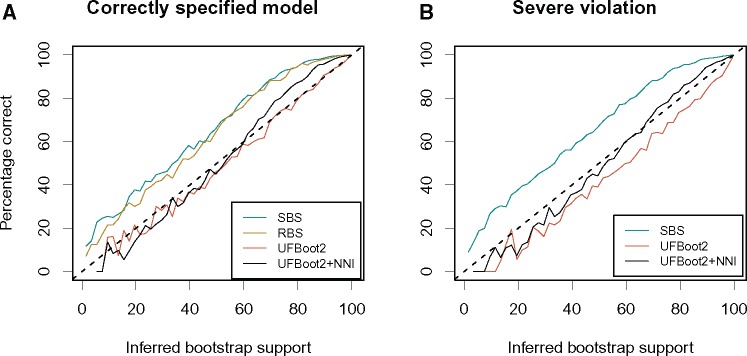
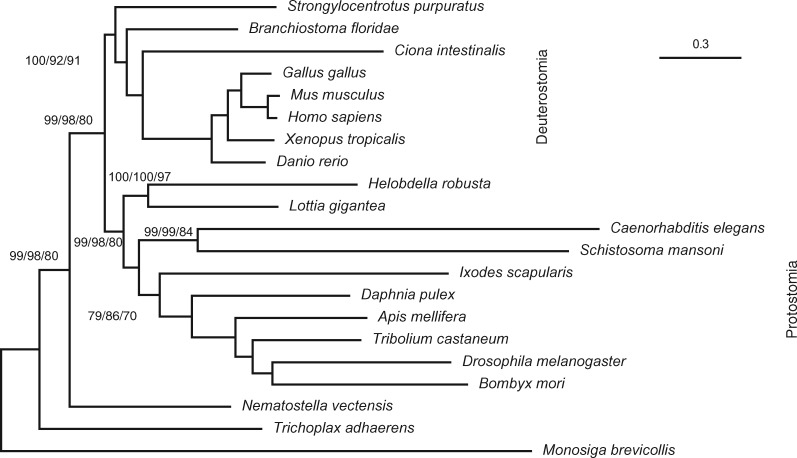
Verification
Claims the paper makes
The claims and statistics of this paper haven’t been checked yet.
Free: it reads the open-access text and checks the first 5 claims that cite a source we can check. Create a free account to check every claim.
Claims other papers make about this one
Each is checked against this paper’s own text: does it say what the citing paper says it does?
The cited source says what the claim attributes to it.
In the citing paper
“Branch support was assessed using the ultrafast bootstrap approximation using a hill-climbing nearest neighbor interchange (NNI) search (Hoang et al. 2018) with 1,000 repeats.”
From Mitochondrial retrograde control of transcription evolves with respiratory stress, metabolic adaptation, and virulence in budding yeasts (2026) · cites this paper as Hoang et al. 2018
The cited source says what the claim attributes to it.
In the citing paper
“The maximum likelihood phylogeny was performed using IQTREE (IQ-TREE multicore version 1.6.12 for Mac OS X 64-bit) software [62], under 1000 Ultra-Fast bootstrap replications [63].”
From Emergent and Neglected Equine Filariosis in Egypt: Species Diversity and Host Immune Response (2022) · cites this paper as [63]
The cited source says what the claim attributes to it.
In the citing paper
“We also performed 1,000 ultrafast bootstraps (Hoang et al., 2018) to assess statistical support for each node.”
From Enigmas no longer: using ultraconserved elements to place several unusual hawk taxa and address the non-monophyly of the genus Accipiter (Accipitriformes: Accipitridae) (2025) · cites this paper as Hoang et al., 2018
In the citing paper
“Support was assessed with 1000 ultrafast boostrap replicates 13 .”
From Available data do not rule out Ctenophora as the sister group to all other Metazoa (2023) · doi:10.1038/s41467-023-36151-6 · cites this paper as [13]
Self-check
Percentages, sums and reported differences re-computed from the paper’s own numbers.
The self-check needs the paper’s full text.
Citations
Cites
CONFIDENCE LIMITS ON PHYLOGENIES: AN APPROACH USING THE BOOTSTRAP
Felsenstein, J. (1985) · Evolution · doi:10.1111/j.1558-5646.1985.tb00420.x · Cited by 44,647 · cited 1×
“Standard nonparametric bootstrap (SBS) (Efron 1979; Felsenstein 1985) is widely used in maximum likelihood (ML) phylogenetic analyses to estimate branch supports of a phylogenetic tree inferred from a multiple sequence alignment (MSA).”
MethodIQ-TREE: A Fast and Effective Stochastic Algorithm for Estimating Maximum-Likelihood Phylogenies
Nguyen, L.-T., Schmidt, H. A., von Haeseler, A., & Minh, B. Q. (2015) · Molecular Biology and Evolution · doi:10.1093/molbev/msu300 · Cited by 26,046
Self-citationGuindon, S., Dufayard, J.-F., Lefort, V., Anisimova, M., Hordijk, W., & Gascuel, O. (2010) · Systematic Biology · doi:10.1093/sysbio/syq010 · Cited by 18,376 · cited 2×
“Although fast ML-tree search algorithms exist for large data sets (Vinh and von Haeseler 2004; Stamatakis 2006; Guindon et al. 2010; Nguyen et al. 2015) SBS is still very computationally intensive.”
MethodBootstrap methods: another look at the jackknife
Efron, B. (1979) · The Annals of Statistics · doi:10.1214/aos/1176344552 · Cited by 17,602
RAxML-VI-HPC: maximum likelihood-based phylogenetic analyses with thousands of taxa and mixed models
Stamatakis, A. (2006) · Bioinformatics · doi:10.1093/bioinformatics/btl446 · Cited by 15,582 · cited 2×
“Although fast ML-tree search algorithms exist for large data sets (Vinh and von Haeseler 2004; Stamatakis 2006; Guindon et al. 2010; Nguyen et al. 2015) SBS is still very computationally intensive.”
MethodEvolutionary trees from DNA sequences: A maximum likelihood approach.
Felsenstein, J. (1981) · Journal of Molecular Evolution · doi:10.1007/bf01734359 · Cited by 14,571 · cited 1×
“The pruning algorithm (Felsenstein 1981) efficiently computes the likelihood of phylogenetic trees, but still does not scale well for large data sets.”
MethodA Rapid Bootstrap Algorithm for the RAxML Web Servers
Stamatakis, A., Hoover, P., & Rougemont, J. (2008) · Systematic Biology · doi:10.1080/10635150802429642 · Cited by 7,028 · cited 2×
“To improve computing time, rapid bootstrap (RBS; Stamatakis et al. 2008) and the ultrafast bootstrap (UFBoot; Minhetal.2013)weredeveloped.”
MethodUltrafast Approximation for Phylogenetic Bootstrap
Minh, B. Q., Nguyen, M. A. T., & von Haeseler, A. (2013) · Molecular Biology and Evolution · doi:10.1093/molbev/mst024 · Cited by 4,844 · cited 8×
“This conservative behavior of SBS and RBS corroborates previous studies (Hillis and Bull 1993; Minh et al. 2013).”
BackgroundMethodResultInfluentialSelf-citationAn Empirical Test of Bootstrapping as a Method for Assessing Confidence in Phylogenetic Analysis
Hillis, D. M., & Bull, J. J. (1993) · Systematic Biology · doi:10.1093/sysbio/42.2.182 · Cited by 3,631 · cited 2×
“The accuracy of a bootstrap method M is defined by f M x ð Þ , the percentage of branches with support value x (across all reconstructed trees) that occur in the true tree (Hillis and Bull 1993).”
MethodResultAn Empirical Test of Bootstrapping as a Method for Assessing Confidence in Phylogenetic Analysis
Hillis, D. M., & Bull, J. J. (1993) · Systematic Biology · doi:10.2307/2992540 · Cited by 3,423
Cited by
Items 401–500 of 1,084
Chen, H., Lahey, Z. J., Talamas, E. J., Valerio, A., Popovici, O. A., Musetti, L., Klompen, H., Polaszek, A., Masner, L., Austin, A. D., et al. (2021) · Systematic Entomology · doi:10.1111/syen.12511 · Cited by 76
“Branch support was estimated with 1000 ultrafast bootstrap replicates (Hoang et al., 2018), with the -bnni flag turned on to minimize the influence of potential model violations during phylogenetic tree building.”
MethodChan, K. O., Hertwig, S. T., Neokleous, D. N., Flury, J. M., & Brown, R. M. (2022) · BMC Ecology and Evolution · doi:10.1186/s12862-022-01994-y · Cited by 74
“The optimal substitution model was inferred using the “AUTO” function and branch support was assessed using 1000 ultrafast bootstrap replicates [59].”
MethodCoiro, M., Allio, R., Mazet, N., Seyfullah, L. J., & Condamine, F. L. (2023) · New Phytologist · doi:10.1111/nph.19010 · Cited by 69
“Branch supports were evaluated with 1000 ultrafast bootstraps (UFBS; Hoang et al ., 2018), with strong UFBS values ≥ 95% considered as strong support.”
A supermatrix phylogeny of the world’s bees (Hymenoptera: Anthophila)
Henríquez‐Piskulich, P., Hugall, A. F., & Stuart-Fox, D. M. (2023) · Molecular Phylogenetics and Evolution · doi:10.1016/j.ympev.2023.107963 · Cited by 71
Zhang, T., Huang, W., Zhang, L., Li, D.-Z., Qi, J., & Mā, H. (2024) · Nature Communications · doi:10.1038/s41467-024-47428-9 · Cited by 67
“1.2 143 with the MLmethod, GTR model, and 1000 ultrafastbootstrap replicates 155 .”
InfluentialWang, Q., & Li, H. (2020) · Zoologica Scripta · doi:10.1111/zsc.12407 · Cited by 70
TRAPID 2.0: a web application for taxonomic and functional analysis of de novo transcriptomes
Bucchini, F., Cortona, A. D., Kreft, Ł., Botzki, A., Bel, M. V., & Vandepoele, K. (2021) · Nucleic Acids Research · doi:10.1093/nar/gkab565 · Cited by 78
“Rate heterogeneity across sites is accounted for using the FreeRate model (46), and branch support is estimated using the ultrafast bootstrap approximation (UFBoot) (47) with 1000 bootstrap replicates.”
MethodMo, Z., Fu, C., Zhu, M., MILNE, R. I., Yang, J., Cai, J., Qin, H., Zheng, W. H., Hollingsworth, P. M., Li, D.-Z., et al. (2022) · Annals of Botany · doi:10.1093/aob/mcac114 · Cited by 65
“6.10 (Nguyen et al., 2015) under the MFP option with 1000 ultrafast bootstrap (UFBS) replicates (Hoang et al., 2018).”
BackgroundInfluentialGe, X., Peng, L., Vogler, A. P., Morse, J. C., Yang, L., Sun, C., & Wang, B. (2022) · Systematic Entomology · doi:10.1111/syen.12575 · Cited by 66
“Brevitentoria Phryganides 0.053091 ≥98 (SH-aLRT/UFBoot2) 80~97.9 (SH-aLRT) or 95~97 (UFBoot2) 50~79.9 (SH-aLRT) or 50~94 (UFBoot2) 50 (SH-aLRT/UFBoot2) ≥95% (PP value) ≥90% (PP value) 90% (PP value) not supported conservative block(cb) L2 K DCOXI COXII COXIIIATP8 ATP6 IQtree ML Phylobayes BI P C G 12 _R N A P C G _A A…”
MethodInfluentialKhomyakova, M. A., Zavarzina, D. G., Merkel, A. Y., Klyukina, A. A., Pikhtereva, V. A., Gavrilov, S. N., & Slobodkin, A. I. (2022) · Frontiers in Microbiology · doi:10.3389/fmicb.2022.1047580 · Cited by 65
“, 2017) and ultrafast approximation for phylogenetic bootstrap (Hoang et al., 2018), as well as approximate likelihood-ratio test for branches (Anisimova and Gascuel, 2006).”
Maire, J., Tandon, K., Collingro, A., van de Meene, A., Damjanovic, K., Gøtze, C. R., Stephenson, S., Philip, G. K., Horn, M., Cantin, N. E., et al. (2023) · Science Advances · doi:10.1126/sciadv.adg0773 · Cited by 68
Fawcett, J. A., Takeshima, R., Kikuchi, S., Yazaki, E., Katsube‐Tanaka, T., Dong, Y., Li, M., Hunt, H. V., Jones, M. K., Lister, D. L., et al. (2023) · Nature Plants · doi:10.1038/s41477-023-01474-1 · Cited by 73
Taxonomic Novelty and Distinctive Genomic Features of Hot Spring Cyanobacteria
Alcorta, J., Alarcón-Schumacher, T., Salgado, O., & Díez, B. (2020) · Frontiers in Genetics · doi:10.3389/fgene.2020.568223 · Cited by 76
“Maximum-likelihood trees were generated using IQtree v.1.5.5 software with the TESTNEW option to choose the best substitution models, after which a non-parametric ultrafast bootstrap (-bb) support of 10,000 replicates was applied (Hoang et al., 2017).”
MethodInfluentialShah, S., Chen, Y., Bhattacharya, D., & Chan, C. X. (2020) · Scientific Reports · doi:10.1038/s41598-020-66429-4 · Cited by 65
Scalable Empirical Mixture Models That Account for Across-Site Compositional Heterogeneity
Schrempf, D., Lartillot, N., & Szöllősi, G. (2020) · Molecular Biology and Evolution · doi:10.1093/molbev/msaa145 · Cited by 61
Bao, Y., Zeng, Q., Wang, J., Zhang, Z., Zhang, Y., Wang, S., Wong, N.-K., Yuan, W., Huang, Y., Zhang, W., et al. (2021) · Molecular Biology and Evolution · doi:10.1093/molbev/msab030 · Cited by 67
“(2011) and the aBayes tests of 10,000 pseudoreplicates of the ultrafast bootstrap procedure (Hoang et al. 2018).”
MethodHa, A. D., Moniruzzaman, M., & Aylward, F. O. (2021) · mSystems · doi:10.1128/msystems.00293-21 · Cited by 72
“Support values were inferred using 1000 358 ultrafast bootstraps (80).”
MethodSperm membrane proteins DCST1 and DCST2 are required for sperm-egg interaction in mice and fish
Noda, T., Blaha, A., Fujihara, Y., Gert, K. R., Emori, C., Deneke, V. E., Oura, S., Panser, K., Lu, Y., Berent, S., et al. (2022) · Communications Biology · doi:10.1038/s42003-022-03289-w · Cited by 63
Wada, N., Hsu, M., Tandon, K., Hsiao, S. S., Chen, H., Chen, Y., Chiang, P., Yu, S.-P., Lu, C.-Y., Chiou, Y., et al. (2022) · Science Advances · doi:10.1126/sciadv.abo2431 · Cited by 68
“12 (88) using the GTR+G4+F model and node support values were calculated by 1000 ultrafast bootstrap (89).”
Historical contingency shapes adaptive radiation in Antarctic fishes
Daane, J. M., Dornburg, A., Smits, P., MacGuigan, D. J., Brent Hawkins, M., Near, T. J., William Detrich III, H., & Harris, M. P. (2019) · Nature Ecology & Evolution · doi:10.1038/s41559-019-0914-2 · Cited by 65
Genetic Determinants of Hydroxycinnamic Acid Metabolism in Heterofermentative Lactobacilli
Gaur, G., Oh, J., Filannino, P., Gobbetti, M., van Pijkeren, J., & Gänzle, M. G. (2019) · Applied and Environmental Microbiology · doi:10.1128/aem.02461-19 · Cited by 68
“Bootstrap values for 1,000 replicates were calculated with ultrafast bootstrap approximation (UFBoot) (64).”
MethodThe Evolution of Protein Secretion Systems by Co-option and Tinkering of Cellular Machineries
Denise, R., Abby, S. S., & Rocha, E. P. C. (2020) · Trends in Microbiology · doi:10.1016/j.tim.2020.01.005 · Cited by 71
Polymerization in the actin ATPase clan regulates hexokinase activity in yeast
Stoddard, P. R., Lynch, E. M., Farrell, D. P., Dosey, A. M., DiMaio, F., Williams, T. A., Kollman, J. M., Murray, A. W., & Garner, E. C. (2020) · Science · doi:10.1126/science.aay5359 · Cited by 59
Grau‐Bové, X., Lucas, E. R., Pipini, D., Rippon, E. J., Hof, A. E. V., Edi, C., Dadzie, S., Egyir-Yawson, A., Essandoh, J., Chabi, J., et al. (2021) · PLoS Genetics · doi:10.1371/journal.pgen.1009253 · Cited by 65
“We estimated node statistical supports from 1,000 UF bootstraps [72,73].”
MethodMeng, K., Chen, S., Xu, K., Zhou, R., Li, M., Dhamala, M. K., Liao, W., & Fan, Q. (2021) · Molecular Phylogenetics and Evolution · doi:10.1016/j.ympev.2021.107083 · Cited by 73
Lourenço, K. S., Costa, O. Y. A., Cantarella, H., & Kuramae, E. E. (2022) · Soil Biology and Biochemistry · doi:10.1016/j.soilbio.2022.108563 · Cited by 63
Genome size evolution in the diverse insect order Trichoptera
Heckenhauer, J., Frandsen, P. B., Sproul, J. S., Li, Z., Paule, J., Larracuente, A. M., Maughan, P. J., Barker, M. S., Schneider, J. V., Stewart, R. J., et al. (2022) · GigaScience · doi:10.1093/gigascience/giac011 · Cited by 63
“We selected amino acid sub-stitution models for each ortholog using ModelFinder (option -m mfp, [124] in IQtree v.2.0.6 [125] and estimated a maximum likelihood tree with 1,000 ultrafast bootstrap replicates [126] with the BNNI correction (option -bb 1000 -bnni).”
InfluentialBenler, S., Faure, G., Altae-Tran, H., Shmakov, S., Zhang, F., & Koonin, E. (2021) · mBio · doi:10.1128/mbio.02938-21 · Cited by 58
“…(Nguyen et al., 2014) for phylogenetic reconstruction with parameters set to perform the aBayes branch test (Anisimova et al., 2011), ultrafast bootstrap approximation (Hoang et al., 2017) and automatic model selection (Kalyaanamoorthy et al., 2017), which selected LG+F+R10 as the best model.”
MethodPhylogenomic insights into the early diversification of fungi
Strassert, J. F. H., & Monaghan, M. T. (2022) · Current Biology · doi:10.1016/j.cub.2022.06.057 · Cited by 70
Joyce, E., Appelhans, M. S., Buerki, S., Cheek, M., de Vos, J. M., Pirani, J. R., Zuntini, A. R., Bachelier, J. B., Bayly, M. J., Callmander, M. W., et al. (2023) · Frontiers in Plant Science · doi:10.3389/fpls.2023.1063174 · Cited by 66
“, 2015), with the appropriate substitution model and partitioning scheme for the alignment chosen using ModelFinder Plus option –MFP+MERGE and 1000 ultrafast bootstrap replicates to determine bootstrap support (BS; Lanfear et al., 2012; Nguyen et al., 2015; Kalyaanamoorthy et al., 2017; Hoang et al., 2018).”
MethodThe gradual establishment of complex coumarin biosynthetic pathway in Apiaceae
Huang, X.-C., Tang, H., Wei, X.-F., He, Y., Hu, S., Wu, J., Xu, D., Qiao, F., Xue, J., & Zhao, Y. (2024) · Nature Communications · doi:10.1038/s41467-024-51285-x · Cited by 66
“2.2.3) 56 – 58 was utilized to infer the maximum likelihood trees using these concatenated data.”
MethodInfluentialZhai, B., Liao, C., Jaggavarapu, S., Tang, Y., Rolling, T., Ning, Y., Sun, T., Bergin, S. A., Gjonbalaj, M., Miranda, E., et al. (2024) · Nature Medicine · doi:10.1038/s41591-024-03183-4 · Cited by 62
Christodoulou, M., O’Hara, T. D., Hugall, A. F., Khodami, S., Rodrigues, C. F., Hilário, A., Vink, Α., & Arbizu, P. M. (2020) · Biogeosciences · doi:10.5194/bg-17-1845-2020 · Cited by 62
Lifestyle Transitions in Fusarioid Fungi are Frequent and Lack Clear Genomic Signatures
Hill, R., Buggs, R. J. A., Vu, D. T., & Gaya, E. (2022) · Molecular Biology and Evolution · doi:10.1093/molbev/msac085 · Cited by 65
“…the best-fi t amino acid substitution model for each partitioned gene was selected by the inbuilt tool ModelFinder (Kalyaanamoorthy et al. 2017) using Bayesian information criterion (BIC) values, and branch support was computed via 1,000 ultrafast boot-strap replicates (UFBoot) (Hoang et al. 2018).”
Patiranage, D. S. R., Rey, E., Emrani, N., Wellman, G. B., Schmid, K., Schmöckel, S. M., Tester, M. A., & Jung, C. (2022) · eLife · doi:10.7554/elife.66873 · Cited by 62
“Next, we used 1000 replicates with ultrafast bootstrapping (UFboots) ( Hoang et al., 2018 ) to check the reliability of the phylogenetic tree.”
Quattrini, A. M., Snyder, K. E., Purow-Ruderman, R., Seiblitz, I. G. L., Hoang, J., Floerke, N., Ramos, N. I., Wirshing, H. H., Rodríguez, E., & McFadden, C. S. (2023) · Scientific Reports · doi:10.1038/s41598-023-34059-1 · Cited by 63
“Ultrafast bootstrapping (-bb 1000 55 ) and the Sh-like approximate likelihood ratio test (-alrt 1000 56 ) were conducted as well as site-concordance factors (-scfl 100) 57 .”
Phylogenomics and diversification of Sordariomycetes
Chen, Y., Su, P., Hyde, K., & Maharachchikumbura, S. S. N. (2023) · Mycosphere · doi:10.5943/mycosphere/14/1/5 · Cited by 73
“The topology of the concatenation-based tree was assessed using 1000 replicates for ultrafast bootstrap approximation (UFboot) (Hoang et al. 2018) and SH-like approximate likelihood ratio test (SH-aLRT) (Guindon et al. 2010).”
MethodA wheat tandem kinase and NLR pair confers resistance to multiple fungal pathogens
Lu, P., Zhang, G., Li, J., Gong, Z. H., Wang, G., Dong, L., Zhang, H., Guo, G., Su, M., Wang, K., et al. (2025) · Science · doi:10.1126/science.adp5469 · Cited by 65
Xanthopoulou, A., Montero‐Pau, J., Mellidou, Ι., Kissoudis, C., Blanca, J., Belén Picó, M., Tsaballa, A., Tsaliki, E., Dalakouras, A., Paris, H. S., et al. (2019) · Horticulture Research · doi:10.1038/s41438-019-0176-9 · Cited by 62
The Genome of Caenorhabditis bovis
Stevens, L., Rooke, S., Falzon, L. C., Machuka, E., Momanyi, K., Murungi, M. K., Njoroge, S. M., Odinga, C. O., Ogendo, A., Ogola, J. G., et al. (2020) · Current Biology · doi:10.1016/j.cub.2020.01.074 · Cited by 67
Erséus, C., Williams, B. W., Horn, K. M., Halanych, K. M., Santos, S. R., James, S. W., Châtelliers, M. C. D., & Anderson, F. E. (2020) · Zoologica Scripta · doi:10.1111/zsc.12426 · Cited by 64
The evolutionary dynamics of endemic human coronaviruses
Jo, W. K., Drosten, C., & Drexler, J. F. (2021) · Virus Evolution · doi:10.1093/ve/veab020 · Cited by 66
Scalable empirical mixture models that account for across-site compositional heterogeneity
Schrempf, D., Lartillot, N., & Szöllősi, G. (2019) · doi:10.1101/794263 · Cited by 61
Vazquez, J. M., & Lynch, V. J. (2021) · eLife · doi:10.7554/elife.65041 · Cited by 61
Inglis, P. W., de Mello, S. C. M., Martins, I., Silva, J. B. T., Macêdo, K., Sifuentes, D. N., & Valadares-Inglis, M. C. (2020) · PLoS ONE · doi:10.1371/journal.pone.0228485 · Cited by 61
“Branch support was estimated using the Ultrafast bootstrap (UFBoot) [38] with 1000 replicates.”
MethodWong, J. M., & Eirin-Lopez, J. M. (2021) · Molecular Biology and Evolution · doi:10.1093/molbev/msab267 · Cited by 65
“The reliability of the reconstructed topologies was contrasted by an ultra-fast bootstrap approximation (UFBoot) (Hoang et al. 2018) with 1,000 replicates.”
MethodStiller, J., Short, G., Hamilton, H., Saarman, N. P., Longo, S. J., Wainwright, P. C., Rouse, G. W., & Simison, W. B. (2022) · BMC Biology · doi:10.1186/s12915-022-01271-w · Cited by 67
“2 [103] using the most appropriate nucleotide substitution model as selected by ModelFinder [104] on the entire alignment and 1000 ultrafast bootstrap replicates [105].”
Reemergence of Dengue Virus Serotype 3, Brazil, 2023
Naveca, F. G., Santiago, G. A., Maito, R. M., Meneses, C. A. R., do Nascimento, V. A., de Souza, V. C., Nascimento, F., Silva, D., Mejía, M., Gonçalves, L. M. F., et al. (2023) · Emerging infectious diseases · doi:10.3201/eid2907.230595 · Cited by 61
Phylogenomic Insights into the Evolution and Origin of Nematoda
Qing, X., Zhang, Y. M., Sun, S., Ahmed, M. I., Lo, W., Bert, W., Holovachov, O. V., & Li, H. (2024) · Systematic Biology · doi:10.1093/sysbio/syae073 · Cited by 66
Loiseau, O., Olivares, I., Paris, M., Harpe, M. D. L., Weigand, A., Koubínová, D., Rolland, J., Bacon, C. D., Balslev, H., Borchsenius, F., et al. (2019) · Frontiers in Plant Science · doi:10.3389/fpls.2019.00864 · Cited by 63
Influenza A Virus Field Surveillance at a Swine-Human Interface
Rambo‐Martin, B. L., Keller, M. W., Wilson, M. M., Nolting, J. M., Anderson, T. K., Vincent, A. L., Bagal, U. R., Jang, Y., Neuhaus, E. B., Davis, C. T., et al. (2020) · mSphere · doi:10.1128/msphere.00822-19 · Cited by 66
“8 (29), implementing a generalized time-reversible model of nucleotide substitution with gamma-distributed rate heterogeneity across sites while allowing for a proportion of invariable sites and 1,000 ultrafast bootstrap approximations (30) (iqtree –m GTR G I – bb 1000).”
BackgroundVoss, R. S., Giarla, T. C., Díaz‐Nieto, J. F., & Jansa, S. A. (2020) · Bulletin of the American Museum of Natural History · doi:10.1206/0003-0090.439.1.1 · Cited by 63
“We evaluated nodal support using 1000 ultrafast bootstrap replicates (the UFBoot2 algorithm; Hoang et al., 2017).”
MethodLight environment drives evolution of color vision genes in butterflies and moths
Sondhi, Y., Ellis, E. A., Bybee, S., Theobald, J. C., & Kawahara, A. Y. (2021) · Communications Biology · doi:10.1038/s42003-021-01688-z · Cited by 65
Unexpected cryptic species among streptophyte algae most distant to land plants
Irisarri, I., Darienko, T., Pröschold, T., Fürst‐Jansen, J. M. R., Jamy, M., & de Vries, J. (2021) · Proceedings of the Royal Society B Biological Sciences · doi:10.1098/rspb.2021.2168 · Cited by 66
Unravelling the diversity of magnetotactic bacteria through analysis of open genomic databases
Uzun, M., Alekseeva, L., Krutkina, M. S., Koziaeva, V. V., & Grouzdev, D. S. (2020) · Scientific Data · doi:10.1038/s41597-020-00593-0 · Cited by 67
The monoaminergic system is a bilaterian innovation
Goulty, M., Botton-Amiot, G., Rosato, E., Sprecher, S. G., & Feuda, R. (2023) · Nature Communications · doi:10.1038/s41467-023-39030-2 · Cited by 60
Comparative genomic analysis reveals metabolic flexibility of Woesearchaeota
Huang, W.-C., Liu, Y., Zhang, X., Zhang, C., Zou, D., Zheng, S., Xu, W., Luo, Z.-H., Liu, F., & Li, M. (2021) · Nature Communications · doi:10.1038/s41467-021-25565-9 · Cited by 66
Verdonckt, T.-W., & Broeck, J. V. (2022) · Frontiers in Physiology · doi:10.3389/fphys.2022.836106 · Cited by 60
A genetically linked pair of NLR immune receptors shows contrasting patterns of evolution
Shimizu, M., Hirabuchi, A., Sugihara, Y., Abe, A., Takeda, T., Kobayashi, M., Hiraka, Y., Kanzaki, E., Oikawa, K., Saitoh, H., et al. (2022) · Proceedings of the National Academy of Sciences · doi:10.1073/pnas.2116896119 · Cited by 62
Zamudio, R., Boerlin, P., Beyrouthy, R., Madec, J.-Y., Schwarz, Š., Mulvey, M. R., Zhanel, G. G., Cormier, A. C., Chalmers, G., Bonnet, R., et al. (2022) · Nature Communications · doi:10.1038/s41467-022-34970-7 · Cited by 64
Fungal Planet description sheets: 1614???1696
Crous, P. W., Jurjević, Ž., Balashov, S. V., Lastra, S. D. L. P., Mateos, A., Pinruan, U., guez, A. R.-R., Osieck, E. R., Altés, A., Czachura, P., et al. (2024) · Fungal Systematics and Evolution · doi:10.3114/fuse.2024.13.11 · Cited by 61
Ramos-Vicente, D., Ji, J., Gratacòs‐Batlle, E., Gou, G., Reig‐Viader, R., Luís, J., Burguera, D., Navas-Pérez, E., García‐Fernàndez, J., Fuentes‐Prior, P., et al. (2018) · eLife · doi:10.7554/elife.35774 · Cited by 66
“In Maximum-likelihood analysis the starting tree was estimated using a neighbor-joining method and branch support was obtained after 1000 iterations of ultrafast bootstrapping (Hoang et al., 2018).”
MethodVincent, A. T., Fernández-Bravo, A., Sanchis, M., Mayayo, E., Figueras, M. J., & Charette, S. J. (2018) · Infection Genetics and Evolution · doi:10.1016/j.meegid.2018.11.019 · Cited by 60
Metabolic potentials of archaeal lineages resolved from metagenomes of deep Costa Rica sediments
Farag, I., Biddle, J. F., Zhao, R., Martino, A. J., House, C. H., & León‐Zayas, R. (2020) · The ISME Journal · doi:10.1038/s41396-020-0615-5 · Cited by 64
Chai, M., Cheng, H., Yan, M., Priyadarshani, S., Zhang, M., He, Q., Huang, Y., Chen, F., Liu, L., Huang, X., et al. (2020) · PeerJ · doi:10.7717/peerj.9006 · Cited by 65
“For this analysis, the parameters were set to default, except for the ultrafast bootstrap option, which was set to n = 1,000 (Hoang et al., 2018), after performing multiple sequence alignments in MUSCLE 3.”
A higher‐level nuclear phylogenomic study of the carrot family (Apiaceae)
Clarkson, J. J., Zuntini, A. R., Maurin, O., Downie, S. R., Plunkett, G. M., Nicolas, A. N., Smith, J. F., Feist, M. A., Gutierrez, K., Malakasi, P., et al. (2021) · American Journal of Botany · doi:10.1002/ajb2.1701 · Cited by 70
Evolutionary Histories of Type III Polyketide Synthases in Fungi
Navarro-Muñoz, J. C., & Collemare, J. (2020) · Frontiers in Microbiology · doi:10.3389/fmicb.2019.03018 · Cited by 59
“, 2017) and ultrafast bootstrap (parameters: -bb 1000 -alrt 1000 -nt AUTO) (Hoang et al., 2018).”
InfluentialSchenk, S., Bannister, S. C., Sedlazeck, F. J., Anrather, D., Minh, B. Q., Bileck, A., Hartl, M., von Haeseler, A., Gerner, C., Raible, F., et al. (2019) · eLife · doi:10.7554/elife.41556 · Cited by 59
“6.3, Minh et al., 2013; Nguyen et al., 2015), ultra fast bootstrapping (Hoang et al., 2018), and the integrated ModelFinder (Kalyaanamoorthy et al., 2017).”
BackgroundInfluentialSelf-citationSugihara, Y., Abe, Y., Takagi, H., Abe, A., Shimizu, M., Ito, K., Kanzaki, E., Oikawa, K., Kourelis, J., Langner, T., et al. (2023) · PLOS Biology · doi:10.1371/journal.pbio.3001945 · Cited by 59
Santos, R., Steenwyk, J. L., Rivero-Menéndez, O., Mead, M. E., Silva, L. P., Bastos, R. W., Alastruey‐Izquierdo, A., Goldman, G. H., & Rokas, A. (2020) · Frontiers in Genetics · doi:10.3389/fgene.2020.00459 · Cited by 62
Rutten, L., Miyata, K., Roswanjaya, Y. P., Huisman, R., Bu, F., Hartog, M., Linders, S., van Velzen, R., van Zeijl, A., Bisseling, T., et al. (2020) · PLANT PHYSIOLOGY · doi:10.1104/pp.19.01420 · Cited by 59
“Branch support analysis was done using Sh.aLRT 1,000 replicates, UF-BOOTSTRAP support 1,000 iterations (Kalyaanamoorthy et al., 2017; Hoang et al., 2018), and approximate Bayes support.”
MethodMaturana, J. L., & Cárdenas, J. P. (2021) · Frontiers in Microbiology · doi:10.3389/fmicb.2021.660920 · Cited by 65
“IQ-TREE was used with 1000 replicates of ultrafast bootstrap (Hoang et al., 2018), optimizing UFBOOT trees by NNI (–bnni) and assessing branch support by a SH-like approximate likelihood ratio test (–alrt) (Guindon et al., 2010).”
MethodFranklin‐Alming, F. V., Kaspersen, H. P., Hetland, M. A. K., Bakksjø, R., Nesse, L. L., Leangapichart, T., Löhr, I. H., Telke, A. A., & Sunde, M. (2021) · Frontiers in Microbiology · doi:10.3389/fmicb.2021.725414 · Cited by 59
“IQ-Tree (Nguyen et al., 2015) version 1.6.12 was used to generate a maximum likelihood phylogeny from the deduplicated core gene alignment, with ultrafast bootstrapping (Hoang et al., 2018) and model finder plus (Kalyaanamoorthy et al., 2017).”
MethodInfluentialValk, L. C., Peces, M., Singleton, C. M., Laursen, M. D., Andersen, M. H., Mielczarek, A. T., & Nielsen, P. H. (2022) · Water Research · doi:10.1016/j.watres.2022.118563 · Cited by 61
Diversity and divergence: evolution of secondary metabolism in the tropical tree genus Inga
Forrister, D. L., Endara, M., Soule, A. J., Younkin, G. C., Mills, A. G., Lokvam, J., Dexter, K. G., Pennington, R. T., Kidner, C. A., Nicholls, J. A., et al. (2022) · New Phytologist · doi:10.1111/nph.18554 · Cited by 59
Mycoviruses as a part of the global virome: Diversity, evolutionary links and lifestyle
Ayllón, M. A., & Vainio, E. J. (2023) · Advances in virus research · doi:10.1016/bs.aivir.2023.02.002 · Cited by 61
DeRaad, D. A., McCullough, J. M., DeCicco, L. H., Hime, P. M., Joseph, L., Andersen, M. J., & Moyle, R. G. (2023) · Molecular Ecology · doi:10.1111/mec.17080 · Cited by 62
Phylogenomic insights into the first multicellular streptophyte
Bierenbroodspot, M. J., Darienko, T., de Vries, S., Fürst‐Jansen, J. M. R., Buschmann, H., Pröschold, T., Irisarri, I., & de Vries, J. (2024) · Current Biology · doi:10.1016/j.cub.2023.12.070 · Cited by 59
Skimming genomes for systematics and DNA barcodes of corals
Quattrini, A. M., McCartin, L. J., Easton, E. E., Horowitz, J., Wirshing, H. H., Bowers, H., Mitchell, K., González‐García, M. D. P., Sei, M., McFadden, C. S., et al. (2024) · Ecology and Evolution · doi:10.1002/ece3.11254 · Cited by 59
“Phylogenomic analyses were conducted using maximum likelihood in IQTree v 2.1 (Minh et al., 2020 ) on the concatenated datasets with ultrafast bootstrapping (−bb 1000, Hoang et al., 2018) and the SH-like approximate likelihood ratio test (−alrt 1000, SH-aLRT Guindon et al., 2010 ).”
MethodInfluentialSharanowski, B. J., Ridenbaugh, R. D., Piekarski, P., Broad, G. R., Burke, G. R., DEANS, A. R., Lemmon, A. R., Lemmon, E. C. M., Diehl, G. J., Whitfield, J. B., et al. (2020) · Molecular Phylogenetics and Evolution · doi:10.1016/j.ympev.2020.107023 · Cited by 59
Co‐infections: Simultaneous detections of West Nile virus and Usutu virus in birds from Germany
Santos, P. D., Michel, F., Wylezich, C., Höper, D. W., Keller, M., Holicki, C. M., Szentiks, C. A., Eiden, M., Muluneh, A., Neubauer‐Juric, A., et al. (2021) · Transboundary and Emerging Diseases · doi:10.1111/tbed.14050 · Cited by 61
“Maximum likelihood inference under the best- predicted model and ultrafast bootstrap options (Hoang et al., 2018; Minh et al., 2013) with 100,000 replicates was implemented in IQ- TREE 1.6.8 (Nguyen et al., 2015).”
MethodInfluentialSecondary metabolite biosynthetic diversity in the fungal family Hypoxylaceae and Xylaria hypoxylon
Kuhnert, E., Navarro-Muñoz, J. C., Becker, K., Stadler, M., Collemare, J., & Cox, R. J. (2021) · Studies in Mycology · doi:10.1016/j.simyco.2021.100118 · Cited by 59
“Branch support was calculated with the ultrafast bootstrap approximation (Hoang et al. 2018), Shimodaira-Hasegawa-like approximate likelihood ratio test (Guindon et al.”
Unexpected complexity of the ammonia monooxygenase in archaea
(2023) · doi:10.1038/s41396-023-01367-3 · Cited by 58
Highly diverse flavobacterial phages isolated from North Sea spring blooms
Bartlau, N., Wichels, A., Krohne, G., Adriaenssens, E. M., Heins, A., Fuchs, B. M., Amann, R., & Moraru, C. (2021) · The ISME Journal · doi:10.1038/s41396-021-01097-4 · Cited by 58
Discovery of ultrapotent broadly neutralizing antibodies from SARS-CoV-2 elite neutralizers
Vanshylla, K., Fan, C., Wunsch, M., Poopalasingam, N., Meijers, M., Kreer, C., Kleipass, F., Ruchnewitz, D., Ercanoglu, M. S., Gruell, H., et al. (2021) · Cell Host & Microbe · doi:10.1016/j.chom.2021.12.010 · Cited by 75
“The tree topology was assessed using the ultrafast bootstrap function with 1000 replicates (Hoang et al., 2018).”
Fernandes, L. G. V., Stone, N. E., Roe, C. C., Goris, M. G. A., van der Linden, H., Sahl, J. W., Wagner, D. M., & Nally, J. E. (2022) · INTERNATIONAL JOURNAL OF SYSTEMATIC AND EVOLUTIONARY MICROBIOLOGY · doi:10.1099/ijsem.0.005560 · Cited by 58
Gene gain facilitated endosymbiotic evolution of Chlamydiae
Dharamshi, J. E., Köstlbacher, S., Schön, M. E., Collingro, A., Ettema, T. J. G., & Horn, M. (2023) · Nature Microbiology · doi:10.1038/s41564-022-01284-9 · Cited by 60
The evolution of white-tailed jackrabbit camouflage in response to past and future seasonal climates
Ferreira, M. S., Thurman, T. J., Jones, M. R., Farelo, L., Kumar, A. V., Mortimer, S. M. E., Demboski, J. R., Mills, L. S., Alves, P. C., Melo‐Ferreira, J., et al. (2023) · Science · doi:10.1126/science.ade3984 · Cited by 60
SYNCAS: Efficient CRISPR/Cas9 gene-editing in difficult to transform arthropods
Rouck, S. D., Mocchetti, A., Dermauw, W., & Leeuwen, T. V. (2024) · Insect Biochemistry and Molecular Biology · doi:10.1016/j.ibmb.2023.104068 · Cited by 61
Bell, A. A., Gu, A., Olvey, J., Wagner, T. A., Tashpulatov, Z., Prom, S., Quintana, J., Nichols, R. L., & Liu, J. (2019) · Plant Disease · doi:10.1094/pdis-09-18-1624-re · Cited by 62
Tsui, H. S., Pham, N. B., Amer, B. R., Bradley, M. C., Gosschalk, J. E., Gallagher-Jones, M., Ibarra, H., Clubb, R., Blaby, C., & Clarke, C. F. (2019) · Journal of Lipid Research · doi:10.1194/jlr.m093534 · Cited by 62
“The phylogenetic analysis was performed using MAFFT (50) for sequence alignment and IQ Tree (51) as implemented on the CIPRES (52, 53) web portal with 1,000 bootstrap replicates (54).”
MethodPeng, C., Ren, J., Deng, C., Jiang, D., Wang, J., Qu, J., Chang, J., Yan, C., Jiang, K., Murphy, R. W., et al. (2020) · Molecular Biology and Evolution · doi:10.1093/molbev/msaa043 · Cited by 61
Grismer, L. L., Wood, P. L., Lê, M. Đ., Quah, E. S. H., & Grismer, J. L. (2020) · Ecology and Evolution · doi:10.1002/ece3.6961 · Cited by 65
Intra-Host Diversity of SARS-Cov-2 Should Not Be Neglected: Case of the State of Victoria, Australia
Armero, A. A., Berthet, N., & Avarre, J. (2021) · Viruses · doi:10.3390/v13010133 · Cited by 119
“To explore the presence of a temporal signal, a phylogenetic reconstruction was applied using iqtree [47,48] software with the -m option grouped to TEST, allowing the identification of the best model for partitions representing the four genes and a bootstrap analysis of 1000 replicates.”
MethodLitti, Y., Potekhina, M. A., Zhuravleva, E. A., Vishnyakova, A., Gruzdev, D. S., Kovalev, А. A., Kovalev, D. A., Katraeva, I. V., & Parshina, S. N. (2022) · International Journal of Hydrogen Energy · doi:10.1016/j.ijhydene.2022.05.235 · Cited by 57
The evolutionary origin of host association in the Rickettsiales
Schön, M. E., Martijn, J., Vosseberg, J., Köstlbacher, S., & Ettema, T. J. G. (2022) · Nature Microbiology · doi:10.1038/s41564-022-01169-x · Cited by 62
“6.9 73 with 1000 ultra-fast bootstraps (-bb 1000 -wbtl) 110 .”
InfluentialOrigin and Evolution of Nitrogen Fixation in Prokaryotes
Pi, H., Lin, J.-J., Chen, C., Wang, P., Chiang, Y., Huang, C., Young, C., & Li, W. (2022) · Molecular Biology and Evolution · doi:10.1093/molbev/msac181 · Cited by 58
“2017), which is implemented in IQ-TREE, to select the best-fit model of protein sequence evolution with ultrafast bootstrap (1,000 replicates) (Hoang et al. 2018).”
MethodInfluentialPast and present giant viruses diversity explored through permafrost metagenomics
Rigou, S., Santini, S., Abergel, C., Claverie, J., & Legendre, M. (2022) · Nature Communications · doi:10.1038/s41467-022-33633-x · Cited by 60
Standardized nuclear markers improve and homogenize species delimitation in Metazoa
Dietz, L., Eberle, J., Mayer, C., Kukowka, S., Bohacz, C., Baur, H., Espeland, M., Huber, B. A., Hutter, C. R., Mengual, X., et al. (2022) · Methods in Ecology and Evolution · doi:10.1111/2041-210x.14041 · Cited by 60
Ordovician origin and subsequent diversification of the brown algae
Choi, S., Graf, L., Choi, J. W., Jo, J., Boo, G. H., Kawai, H., Choi, C. G., Xiao, S., Knoll, A. H., Andersen, R. A., et al. (2024) · Current Biology · doi:10.1016/j.cub.2023.12.069 · Cited by 59
Metadata
- Authors
- Hoang, D. T., Chernomor, O., von Haeseler, A., Minh, B. Q., & Vinh, L. S.
- Affiliations
- Vietnam National University, Hanoi (VN)
- University of Vienna (AT)
- Center for Integrative Bioinformatics Vienna, Max F. Perutz Laboratories, University of Vienna, Medical University Vienna, Vienna, Austria
- Faculty of Information Technology, University of Engineering and Technology, Vietnam National University, Hanoi, Vietnam
- Venue
- Molecular Biology and Evolution
- Publisher
- Oxford University Press (OUP)
- Published
- 2017-10-25
- Volume
- 35
- Issue
- 2
- Pages
- 518-522
- ISSN
- 0737-4038 (ISSN-L)
- 1537-1719
- PMC
- PMC5850222
- OpenAlex
- W2951464304
- Cited by
- 10,881
- References
- 32
- Citations by year
- 2026: 1853 · 2025: 1810 · 2024: 1925 · 2023: 1540 · 2022: 1336 · 2021: 1145 · 2020: 758 · 2019: 390 · 2018: 114 · 2017: 1
- FWCI
- 141.14
- Type
- journal article
- Language
- en
- Open access
- hybrid
- doi.org
- Licence
- cc-by-nc
- Locations
- Molecular Biology and Evolution (publishedVersion, cc-by-nc)
- bioRxiv (Cold Spring Harbor Laboratory) (acceptedVersion, cc-by)
- PubMed Central (publishedVersion, cc-by-nc)
- PubMed (publishedVersion)
- Greater South Information System
- Funders
- National Foundation for Science and Technology Development (102.01-2013.04)
- Topics
- Life Sciences › Biochemistry, Genetics and Molecular Biology › Molecular Biology › Genomics and Phylogenetic Studies
- Life Sciences › Biochemistry, Genetics and Molecular Biology › Molecular Biology › RNA and protein synthesis mechanisms
- Life Sciences › Agricultural and Biological Sciences › Ecology, Evolution, Behavior and Systematics › Plant Diversity and Evolution
- Keywords
- maximum likelihood phylogeny, branch support, polytomies, model violations, bootstrapping, IQ-TREE, computational acceleration
- MeSH terms
- Models, Genetic, Phylogeny, Software, Likelihood Functions
About these checks
Registry, retraction, Cites and statistics results are computed, not judged, with one exception: a printed reference that no index lists is read once by a model before it counts as a citation error. Claims are extracted by a model and kept only when their quote appears verbatim in the text; each cited source is then checked, with a model’s help, for whether it says what the claim relies on. Those verdicts can be wrong — read the claim’s quote and the cited source before relying on one.
Statistics and arithmetic are recomputed, not judged.
Confidence bands are shown only for fields calibrated on our annotated test set. None is calibrated yet, so no band is shown.
What counts as a claim ›How we measure confidence ›How we check this ›
Are you an author, or do you see a problem with this page? Request a review
Data sources
Bibliographic data: Semantic Scholar, OpenAlex, Crossref.
Contains information from the Semantic Scholar Academic Graph Datasets, made available under the ODC Attribution License (ODC-BY 1.0).
Semantic Scholar’s data is described in: Kinney, R., et al. (2023). The Semantic Scholar Open Data Platform. arXiv:2301.10140.
