

UFBoot2: Improving the Ultrafast Bootstrap Approximation
Open accessPublished version of a preprint
The DOI matches its Crossref record; 32 of the 32 references it cites were found in a registry or an index.
Abstract
The standard bootstrap (SBS), despite being computationally intensive, is widely used in maximum likelihood phylogenetic analyses. We recently proposed the ultrafast bootstrap approximation (UFBoot) to reduce computing time while achieving more unbiased branch supports than SBS under mild model violations. UFBoot has been steadily adopted as an efficient alternative to SBS and other bootstrap approaches. Here, we present UFBoot2, which substantially accelerates UFBoot and reduces the risk of overestimating branch supports due to polytomies or severe model violations. Additionally, UFBoot2 provides suitable bootstrap resampling strategies for phylogenomic data. UFBoot2 is 778 times (median) faster than SBS and 8.4 times (median) faster than RAxML rapid bootstrap on tested data sets. UFBoot2 is implemented in the IQ-TREE software package version 1.6 and freely available at http://www.iqtree.org.
Overview
The claims and statistics of this paper haven’t been checked yet.
Free: it reads the open-access text and checks the first 5 claims that cite a source we can check. Create a free account to check every claim.
Integrity signals
Registry
Cites
Statistics
Figures
Verification
Claims the paper makes
The claims and statistics of this paper haven’t been checked yet.
Free: it reads the open-access text and checks the first 5 claims that cite a source we can check. Create a free account to check every claim.
Claims other papers make about this one
Each is checked against this paper’s own text: does it say what the citing paper says it does?
The cited source says what the claim attributes to it.
In the citing paper
“Branch support was assessed using the ultrafast bootstrap approximation using a hill-climbing nearest neighbor interchange (NNI) search (Hoang et al. 2018) with 1,000 repeats.”
From Mitochondrial retrograde control of transcription evolves with respiratory stress, metabolic adaptation, and virulence in budding yeasts (2026) · cites this paper as Hoang et al. 2018
The cited source says what the claim attributes to it.
In the citing paper
“The maximum likelihood phylogeny was performed using IQTREE (IQ-TREE multicore version 1.6.12 for Mac OS X 64-bit) software [62], under 1000 Ultra-Fast bootstrap replications [63].”
From Emergent and Neglected Equine Filariosis in Egypt: Species Diversity and Host Immune Response (2022) · cites this paper as [63]
The cited source says what the claim attributes to it.
In the citing paper
“We also performed 1,000 ultrafast bootstraps (Hoang et al., 2018) to assess statistical support for each node.”
From Enigmas no longer: using ultraconserved elements to place several unusual hawk taxa and address the non-monophyly of the genus Accipiter (Accipitriformes: Accipitridae) (2025) · cites this paper as Hoang et al., 2018
In the citing paper
“Support was assessed with 1000 ultrafast boostrap replicates 13 .”
From Available data do not rule out Ctenophora as the sister group to all other Metazoa (2023) · doi:10.1038/s41467-023-36151-6 · cites this paper as [13]
Self-check
Percentages, sums and reported differences re-computed from the paper’s own numbers.
The self-check needs the paper’s full text.
Citations
Cites
CONFIDENCE LIMITS ON PHYLOGENIES: AN APPROACH USING THE BOOTSTRAP
Felsenstein, J. (1985) · Evolution · doi:10.1111/j.1558-5646.1985.tb00420.x · Cited by 44,647 · cited 1×
“Standard nonparametric bootstrap (SBS) (Efron 1979; Felsenstein 1985) is widely used in maximum likelihood (ML) phylogenetic analyses to estimate branch supports of a phylogenetic tree inferred from a multiple sequence alignment (MSA).”
MethodIQ-TREE: A Fast and Effective Stochastic Algorithm for Estimating Maximum-Likelihood Phylogenies
Nguyen, L.-T., Schmidt, H. A., von Haeseler, A., & Minh, B. Q. (2015) · Molecular Biology and Evolution · doi:10.1093/molbev/msu300 · Cited by 26,046
Self-citationGuindon, S., Dufayard, J.-F., Lefort, V., Anisimova, M., Hordijk, W., & Gascuel, O. (2010) · Systematic Biology · doi:10.1093/sysbio/syq010 · Cited by 18,376 · cited 2×
“Although fast ML-tree search algorithms exist for large data sets (Vinh and von Haeseler 2004; Stamatakis 2006; Guindon et al. 2010; Nguyen et al. 2015) SBS is still very computationally intensive.”
MethodBootstrap methods: another look at the jackknife
Efron, B. (1979) · The Annals of Statistics · doi:10.1214/aos/1176344552 · Cited by 17,602
RAxML-VI-HPC: maximum likelihood-based phylogenetic analyses with thousands of taxa and mixed models
Stamatakis, A. (2006) · Bioinformatics · doi:10.1093/bioinformatics/btl446 · Cited by 15,582 · cited 2×
“Although fast ML-tree search algorithms exist for large data sets (Vinh and von Haeseler 2004; Stamatakis 2006; Guindon et al. 2010; Nguyen et al. 2015) SBS is still very computationally intensive.”
MethodEvolutionary trees from DNA sequences: A maximum likelihood approach.
Felsenstein, J. (1981) · Journal of Molecular Evolution · doi:10.1007/bf01734359 · Cited by 14,571 · cited 1×
“The pruning algorithm (Felsenstein 1981) efficiently computes the likelihood of phylogenetic trees, but still does not scale well for large data sets.”
MethodA Rapid Bootstrap Algorithm for the RAxML Web Servers
Stamatakis, A., Hoover, P., & Rougemont, J. (2008) · Systematic Biology · doi:10.1080/10635150802429642 · Cited by 7,028 · cited 2×
“To improve computing time, rapid bootstrap (RBS; Stamatakis et al. 2008) and the ultrafast bootstrap (UFBoot; Minhetal.2013)weredeveloped.”
MethodUltrafast Approximation for Phylogenetic Bootstrap
Minh, B. Q., Nguyen, M. A. T., & von Haeseler, A. (2013) · Molecular Biology and Evolution · doi:10.1093/molbev/mst024 · Cited by 4,844 · cited 8×
“This conservative behavior of SBS and RBS corroborates previous studies (Hillis and Bull 1993; Minh et al. 2013).”
BackgroundMethodResultInfluentialSelf-citationAn Empirical Test of Bootstrapping as a Method for Assessing Confidence in Phylogenetic Analysis
Hillis, D. M., & Bull, J. J. (1993) · Systematic Biology · doi:10.1093/sysbio/42.2.182 · Cited by 3,631 · cited 2×
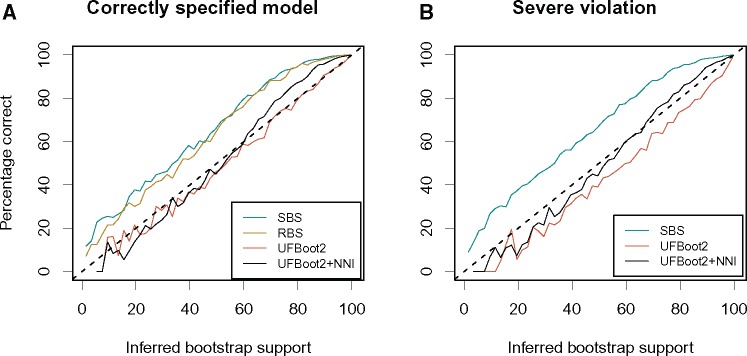
“The accuracy of a bootstrap method M is defined by f M x ð Þ , the percentage of branches with support value x (across all reconstructed trees) that occur in the true tree (Hillis and Bull 1993).”
MethodResultAn Empirical Test of Bootstrapping as a Method for Assessing Confidence in Phylogenetic Analysis
Hillis, D. M., & Bull, J. J. (1993) · Systematic Biology · doi:10.2307/2992540 · Cited by 3,423
Cited by
Items 801–900 of 1,084
Steenwyk, J. L., Mead, M. E., de Castro, P. A., Valero, C., Damásio, A., Santos, R., LaBella, A. L., Li, Y., Knowles, S. L., Raja, H. A., et al. (2021) · Microbiology Spectrum · doi:10.1128/spectrum.00010-21 · Cited by 43
“Bipartition support was assessed using 5,000 ultrafast bootstrap support approximations (99).”
MethodCosta, W. J. E. M. (2021) · Taxonomy · doi:10.3390/taxonomy1020013 · Cited by 45
“The concatenated dataset, a total of 3026 characters for 65 taxa, was first analyzed using IQ-TREE for Maximum Likelihood (ML), applying three methods for assessing the reliability of internal branches: the ShimodairaHasegawa-like procedure support (SH-aLRT) [63], the Bayesian-like transformation of SH-aLRT support (a…”
MethodLi, X., Laurent, R. A. S., Earl, C., Doorenweerd, C., van NIEUKERKEN, E. J., Davis, D. R., Johns, C. A., Kawakita, A., Kobayashi, S., Zwick, A., et al. (2021) · Cladistics · doi:10.1111/cla.12490 · Cited by 44
“Node supports were computed via 1000 ultrafast bootstrap (“-B 1000” command) replicates (Hoang et al., 2018; Minh et al., 2013), and SH-aLRT (“-alrt 1000” command; Guindon et al.”
MethodConstantin, M. E., Fokkens, L., de Sain, M., Takken, F. L. W., & Rep, M. (2021) · Frontiers in Plant Science · doi:10.3389/fpls.2021.761740 · Cited by 45
“We used IQ-TREE to infer a phylogeny based on this partition file and concatenated alignment (IQ-TREE version 1.16.12 with parameters ‘-bb 1000 -m GTR -bsam GENESITE’ (Nguyen et al., 2015; Chernomor et al., 2016; Hoang et al., 2018).”
MethodInfluentialXiao, T., Yan, H., & Ge, X. (2022) · BMC Plant Biology · doi:10.1186/s12870-021-03413-8 · Cited by 41
“The support values of SH‑aLRT (on the left) and UFBS (on the right) are shown on the branches.”
MethodInfluentialUnique structure and positive selection promote the rapid divergence of Drosophila Y chromosomes
Chang, C.-H., Gregory, L. E., Gordon, K. E., Meiklejohn, C. D., & Larracuente, A. M. (2022) · eLife · doi:10.7554/elife.75795 · Cited by 41
“12 (Nguyen et al., 2015; Hoang et al., 2018) using parameters “-m MFP -nt AUTO -alrt 1000 -bb 1000 -bnni”.”
Godeiro, N. N., Ding, Y., Cipola, N. G., Jantarit, S., Bellini, B. C., & Zhang, F. (2022) · Cladistics · doi:10.1111/cla.12521 · Cited by 43
Boulangé, C. L., Pedersen, H., Martin, F., Siegwald, L., Pallejá, A., Eklund, A. C., Jia, W. P., Zhang, H., Berger, B. W., Sprenger, N., et al. (2023) · International Journal of Molecular Sciences · doi:10.3390/ijms241411422 · Cited by 41
Toubiana, W., Armisén, D., Dechaud, C., Arbore, R., & Khila, A. (2021) · BMC Biology · doi:10.1186/s12915-021-01021-4 · Cited by 46
Timing the evolution of phosphorus-cycling enzymes through geological time using phylogenomics
Boden, J. S., Zhong, J., Anderson, R. E., & Stüeken, E. E. (2024) · Nature Communications · doi:10.1038/s41467-024-47914-0 · Cited by 45
“For all analyses, branch supports were estimated with 1000 replicates of ultrafast bootstrap approximations 79 and the SH-aLRT test 80 .”
InfluentialIlluminating the coevolution of photosynthesis and Bacteria
Nishihara, A., Tsukatani, Y., Azai, C., & Nobu, M. K. (2024) · Proceedings of the National Academy of Sciences · doi:10.1073/pnas.2322120121 · Cited by 42
Reticulate evolution: Detection and utility in the phylogenomics era
Bjornson, S., Verbruggen, H., Upham, N. S., & Steenwyk, J. L. (2024) · Molecular Phylogenetics and Evolution · doi:10.1016/j.ympev.2024.108197 · Cited by 43
Fungal Planet description sheets: 1697?1780
Crous, P. W., Wingfield, M. J., Jurjević, Ž., Balashov, S. V., Osieck, E. R., Marín-Felix, Y., Luangsa-ard, J. J., Mejía, L. C., Cappelli, A., Parra, L. A., et al. (2024) · Fungal Systematics and Evolution · doi:10.3114/fuse.2024.14.19 · Cited by 41
Himmel, N. J., Gray, T. R., & Cox, D. N. (2020) · Molecular Biology and Evolution · doi:10.1093/molbev/msaa065 · Cited by 42
“Branch support was calculated by ultrafast bootstrapping (UFBoot, 2,000 bootstraps) (Hoang et al. 2018).”
MethodKamiński, M. J., Lumen, R., Kanda, K., Iwan, D., Johnston, M. A., Kergoat, G. J., Bouchard, P., Bai, X. L., Li, X. M., Ren, G. D., et al. (2020) · Systematic Entomology · doi:10.1111/syen.12453 · Cited by 43
“, 2013), using the ‘bnni’ approach to reduce the risk of overestimating support values (Hoang et al., 2018), and an increased value of maximum number of iterations to stop (−nm 10 000).”
MethodSun, Y., Jiang, C., Jiang, R., Wang, F., Zhang, Z., & Zeng, J. (2021) · Frontiers in Plant Science · doi:10.3389/fpls.2021.642090 · Cited by 44
“…2http://www.phytozome.net Frontiers in Plant Science | www.frontiersin.org 2 April 2021 | Volume 12 | Article 642090 Bootstrap support was estimated using the ultrafast bootstrap approximation with 1,000 replicates (Hoang et al., 2018) (-bb 1,000 -m MFP).”
MethodSmith, J. T., Eckhardt, E. M., Hansel, N. B., Eliato, T. R., Martin, I. W., & Andam, C. P. (2021) · BMC Infectious Diseases · doi:10.1186/s12879-021-06293-3 · Cited by 47
“Hoang DT, Chernomor O, von Haeseler A, Minh BQ, Vinh LS. UFBoot2: improving the ultrafast bootstrap approximation.”
MethodSouth, E. J., Skinner, R. K., DeWalt, R. E., Davis, M. A., Johnson, K. P., TESLENKO, V. A., Lee, J. J., Malison, R. L., Hwang, J. M., Bae, Y. J., et al. (2021) · Insect Systematics and Diversity · doi:10.1093/isd/ixab014 · Cited by 42
When good mitochondria go bad: Cyto-nuclear discordance in landfowl (Aves: Galliformes)
Kimball, R. T., Guido, M., Hosner, P. A., & Braun, E. L. (2021) · Gene · doi:10.1016/j.gene.2021.145841 · Cited by 45
“The majority of taxa were included in the phylogenomic study of Hosner et al. (2017), but we supplemented this with other phylogenomic and multi-locus studies (Hosner et al., 2015; Hosner et al., 2020; Wang et al., 2017) to generate a nuclear topology for the taxa we sampled.”
BackgroundLetsch, H. O., Simon, S., Frandsen, P. B., Liu, S., Machida, R., Mayer, C., Misof, B. Y., Niehuis, O., Zhou, X. Y., & Wipfler, B. (2021) · Systematic Entomology · doi:10.1111/syen.12505 · Cited by 42
“, 2013), with the ‘bnni’ option (Hoang et al., 2018), and an increased maximum number of iterations to stop (−nm 10 000).”
BackgroundIntegrative phylogenomics reveals a Permian origin of Adephaga beetles
Baca, S. M., Gustafson, G. T., Alexander, A. M., Gough, H. M., & Toussaint, E. F. A. (2021) · Systematic Entomology · doi:10.1111/syen.12506 · Cited by 41
“For both unpartitioned and partitioned ML analyses, topology support was inferred using 1000 ultrafast bootstraps, with an ultrafast bootstraps value ≥ 95 being considered as strong support (Hoang et al. , 2018) through IQ-TREE 1.6.12 ( Nguyen et al. , 2015).”
InfluentialA fresh outlook on the smooth-spored species of Inocybe: type studies and 18 new species
Bandini, D., Oertel, B., & Eberhardt, U. (2021) · Mycological Progress · doi:10.1007/s11557-021-01712-w · Cited by 46
Genome sequencing of the NIES Cyanobacteria collection with a focus on the heterocyst-forming clade
Hirose, Y., Ohtsubo, Y., Misawa, N., Yonekawa, C., Nagao, N., Shimura, Y., Fujisawa, T., Kanesaki, Y., Katoh, H., Katayama, M., et al. (2021) · DNA Research · doi:10.1093/dnares/dsab024 · Cited by 44
The first true millipede—1306 legs long
Marek, P. E., Buzatto, B. A., Shear, W. A., Means, J. C., Black, D. G., Harvey, M. S., & Rodríguez, J. (2021) · Scientific Reports · doi:10.1038/s41598-021-02447-0 · Cited by 40
Camacho, G. P., Franco, W., Branstetter, M. G., Pie, M. R., Longino, J. T., Schultz, T. R., & Feitosa, R. M. (2022) · Insect Systematics and Diversity · doi:10.1093/isd/ixab026 · Cited by 41
nQMaker: Estimating Time Nonreversible Amino Acid Substitution Models
Dang, C. C., Minh, B. Q., McShea, H. S., Masel, J., James, J., Le, V. S., & Lanfear, R. (2022) · Systematic Biology · doi:10.1093/sysbio/syac007 · Cited by 45
“The branches on reconstructed trees were labeled with rootstrap values calculated from an ultrafast bootstrap analysis (Hoang et al. 2017), that is, the rootstrap value for a branch is defined as the fraction of rooted bootstrap trees which have the root on that branch (Naser-Khdour et al.”
MethodSelf-citationLiu, C., Smit, S. J., Dang, J., Zhou, P., Godden, G. T., Jiang, Z., Liu, W., Liu, L., Lin, W., Duan, J., et al. (2023) · Molecular Plant · doi:10.1016/j.molp.2023.01.004 · Cited by 41
Rosone, F., Bonfante, F., Sala, M. G., Maniero, S., Cersini, A., Ricci, I., Garofalo, L., Caciolo, D., Denisi, A., Napolitan, A., et al. (2023) · Microorganisms · doi:10.3390/microorganisms11051162 · Cited by 40
“6 was used to construct the maximum likelihood phylogenetic trees performing ultrafast bootstrap resampling analysis (1000 replications) [29,30].”
MethodClinical, epidemiological, and virological features of Mpox in Beijing, China – May 31–June 21, 2023
Dou, X., Li, F., Ren, Z., Zhang, D., Li, J., Li, D., Sun, Y., Jin, H., Li, R., Li, W., et al. (2023) · Emerging Microbes & Infections · doi:10.1080/22221751.2023.2254407 · Cited by 40
“A phylogenetic tree was constructed by the maximum likelihood method using IQ-TREE software [10].”
MethodMuñoz-Gómez, S., Suárez‐Baron, H., Álzate, J. F., González, F., & Pabón‐Mora, N. (2021) · Frontiers in Plant Science · doi:10.3389/fpls.2021.633227 · Cited by 46
“The Ultrafast Bootstrap (UFBS) of 1000 pseudo-replicas also implemented in IQ-TREE was used to calculate branch support (Hoang et al., 2018).”
MethodYu, J., Niu, Y., You, Y., Cox, C. J., Barrett, R. L., Trias‐Blasi, A., Guo, J., Wen, J., Lu, L., & Chen, Z. (2022) · New Phytologist · doi:10.1111/nph.18580 · Cited by 41
“T REE 2.1.2 (Nguyen et al ., 2015) with 5000 ultrafast bootstrap replicates (Hoang et al ., 2018) under edge-unlinked partitioned model (Chernomor et al ., 2016), where the best model scheme was selected by M ODEL F INDER (Kalyaanamoorthy et al ., 2017).”
InfluentialStruck, T. H., Golombek, A., Hösel, C., Dimitrov, D., & Elgetany, A. H. (2023) · Systematic Biology · doi:10.1093/sysbio/syad023 · Cited by 40
Balart‐García, P., Arístide, L., Bradford, T. M., Beasley‐Hall, P. G., Polak, S., Ribera, I., Cooper, S., & Fernández, R. (2023) · Nature Communications · doi:10.1038/s41467-023-39603-1 · Cited by 39
“…(i) for the OGs with 400 sequences or more ( n =36), we inferred phylogenetic trees using FastTree v.2.1.1 52 with the LG+CAT substitution model; (ii) for the OGs with less than 400 sequences ( n =14,952), we used IQTREE v.1.6.12 53 usingtheultrafastbootstrapapproximationwith1000replicates 54 .”
InfluentialJardim, B. R., Tran‐Nguyen, L. T. T., Gambley, C., Al-Sadi, A. M., Al‐Subhi, A. M., Foissac, X., Salar, P., Cai, H., Yang, J., Davis, R. I., et al. (2023) · INTERNATIONAL JOURNAL OF SYSTEMATIC AND EVOLUTIONARY MICROBIOLOGY · doi:10.1099/ijsem.0.005977 · Cited by 46
Araujo‐Vieira, K., Lourenço, A. C. C., Lacerda, J. V. A., Lyra, M. L., Blotto, B. L., Ron, S. R., Baldo, D., Pereyra, M. O., Suárez-Mayorga, Á. M., Baêta, D., et al. (2023) · South American Journal of Herpetology · doi:10.2994/sajh-d-22-00038.1 · Cited by 49
Viral metagenomics reveals diverse virus-host interactions throughout the soil depth profile
Muscatt, G., Cook, R., Millard, A. D., Bending, G. D., & Jameson, E. (2023) · mBio · doi:10.1128/mbio.02246-23 · Cited by 39
“6.3 (65, 66), the Whelan and Goldman protein substitution model, and 1,000 ultrafast bootstrap replicates (67).”
BackgroundInfluentialAssembly of a unique membrane complex in type VI secretion systems of Bacteroidota
Bongiovanni, T., Latario, C. J., Cras, Y. L., Trus, E., Robitaille, S., Swartz, K., Schmidtke, D. T., Vincent, M. S., Kosta, A., Orth, J., et al. (2024) · Nature Communications · doi:10.1038/s41467-023-44426-1 · Cited by 40
“The robustness of the phylogenetic trees was assessed using 1000 ultra-fast bootstraps 54 .”
MethodGenomic and transmission dynamics of the 2024 Marburg virus outbreak in Rwanda
Butera, Y., Mutesa, L., Parker, E., Muvunyi, R., Umumararungu, E., Ayitewala, A., Musabyimana, J. P., Olono, A. S., Sesonga, P., Ogunsanya, O. A., et al. (2024) · Nature Medicine · doi:10.1038/s41591-024-03459-9 · Cited by 46
Beaulieu, C., Libourel, C., Mbadinga, D. L. M., Mahboubi, K. E., Hoey, D. J., Greiff, G. R. L., Keller, J., Girou, C., Clemente, H. S., Diop, S. I., et al. (2025) · Nature Genetics · doi:10.1038/s41588-024-02071-4 · Cited by 43
Dias, B. D. C., Lamarca, A. P., Machado, D. T., Klôh, V., de Carvalho, F. M., & de Vasconcelos, A. T. R. (2025) · Animal Microbiome · doi:10.1186/s42523-025-00379-y · Cited by 40
“Branch support was calculated using 1,000 replicate trees generated by ultrafast bootstrap approximation, implemented in IQ-TREE [153].”
Kiwa is a membrane-embedded defense supercomplex activated at phage attachment sites
Zhang, Z., Todeschini, T. C., Wu, Y., Kogay, R., Naji, A., Rodriguez, J. C., Mondi, R., Kaganovich, D., Taylor, D. W., Bravo, J. P. K., et al. (2025) · Cell · doi:10.1016/j.cell.2025.07.002 · Cited by 39
Comparative Genomics Reveals the Core Gene Toolbox for the Fungus-Insect Symbiosis
Wang, Y., Stata, M., Wang, W., Stajich, J., White, M. M., & Moncalvo, J. (2018) · mBio · doi:10.1128/mbio.00636-18 · Cited by 43
Viral Communities of Shark Bay Modern Stromatolites
White, R. A., III, Wong, H. L., Ruvindy, R., Neilan, B. A., & Burns, B. P. (2018) · Frontiers in Microbiology · doi:10.3389/fmicb.2018.01223 · Cited by 39
“Maximum likelihood phylogenetic trees were constructed using IQ-TREE v. 1.6.1 with a total of 1000 bootstrap replicates, and visualized with iTOL (Letunic and Bork, 2016; Hoang et al., 2017).”
MethodInfluentialMiller, P. W., Pokutta, S., Mitchell, J. M., Chodaparambil, J. V., Clarke, D. N., Nelson, W. J., Weis, W. I., & Nichols, S. (2018) · Journal of Biological Chemistry · doi:10.1074/jbc.ra117.001325 · Cited by 42
“3) (60) with 1000 ultrafast bootstrap replicates (61), and the resulting trees were visualized using CLC Main Workbench 7 (Qiagen).”
MethodNew insights into the structures and interactions of bacterial Y-family DNA polymerases
Timinskas, K., & Venclovas, Č. (2019) · Nucleic Acids Research · doi:10.1093/nar/gkz198 · Cited by 42
Schorn, M., Jordan, P. A., Podell, S. B., Blanton, J. M., Agarwal, V., Biggs, J. S., Allen, E. E., & Moore, B. S. (2019) · mBio · doi:10.1128/mbio.00821-19 · Cited by 45
“The resulting Comparative Genomics of Sponge Symbiont Cyanobacteria trimmed, aligned files were concatenated using a custom Python script, and the resulting supermatrix was processed with IQ-TREE version 1.6.1 (72) with 1,000 ultrabootstrap replicates using UF:Boot2 (73) and ModelFinder (74) for each gene partition.”
InfluentialPaula, F. S., Chin, J. P., Schnürer, A., Müller, B., Manesiotis, P., Waters, N. R., Macintosh, K. A., Quinn, J. P., Connolly, J., Abram, F., et al. (2019) · Scientific Reports · doi:10.1038/s41598-019-53168-4 · Cited by 41
Evolution of Predicted Acid Resistance Mechanisms in the Extremely Acidophilic Leptospirillum Genus
Vergara, E., Neira, G., González, C., Cortez, D., Dopson, M., & Holmes, D. S. (2020) · Genes · doi:10.3390/genes11040389 · Cited by 39
“The robustness of the inf rred tree was assessed using the nonparametric bootstrap procedure implemented in IQTREE (1000 replicates of the original datasets) with the ultrafast bootstrap option [71].”
Gąsiorek, P., & Michalczyk, Ł. (2020) · Zoologica Scripta · doi:10.1111/zsc.12424 · Cited by 40
Ibrahim, A., Benavente, E. D., Nolder, D., Proux, S., Higgins, M. K., Muwanguzi, J. K., Gómez, P. J., Fuehrer, H., Roper, C., Nosten, F. H., et al. (2020) · Scientific Reports · doi:10.1038/s41598-020-67568-4 · Cited by 39
A freshwater radiation of diplonemids
Mukherjee, I., Salcher, M. M., Andrei, A., Kavagutti, V., Shabarova, T., Grujčić, V., Haber, M., Layoun, P., Hodoki, Y., Nakano, S., et al. (2020) · Environmental Microbiology · doi:10.1111/1462-2920.15209 · Cited by 39
Chan, K. O., Hutter, C. R., Wood, P. L., Grismer, L. L., & Brown, R. M. (2020) · Proceedings of the Royal Society B Biological Sciences · doi:10.1098/rspb.2020.2102 · Cited by 43
Abe, H., & Sato‐Okoshi, W. (2021) · ZooKeys · doi:10.3897/zookeys.1015.54387 · Cited by 41
“…an y, Fr an ce U 67 14 4 (1 72 6) AY 34 04 82 (4 76 ) N ad ot & G ra nt (u np ub l.) , Ro us se t e t a l. (2 00 7) aLRT) with 5,000 replicates (Guindon et al. 2010), approximate Bayes (aBayes) test (Anisimova et al. 2011), and ultrafast bootstraps (UFBoot) with 5000 replicates (Hoang et al. 2018).”
MethodRossouw, E., Brauer, M., Meyer, P. W. A., du Plessis, N., Avenant, T., & Mans, J. (2021) · Viruses · doi:10.3390/v13020215 · Cited by 43
“12 [47], with the best fit model automatically selected with ModelFinder and the tree topology validated by 1000 ultrafast bootstrap replicates [48].”
Phylogenomics illuminates the evolution of bobtail and bottletail squid (order Sepiolida)
Sánchez, G., Fernández‐Álvarez, F. Á., Taite, M., Sugimoto, C., Jolly, J., Simakov, O., Marlétaz, F., Allcock, A. L., & Rokhsar, D. S. (2021) · Communications Biology · doi:10.1038/s42003-021-02348-y · Cited by 39
Poltep, K., Phadungsombat, J., Nakayama, E. E., Kosoltanapiwat, N., Hanboonkunupakarn, B., Wiriyarat, W., Shioda, T., & Leaungwutiwong, P. (2021) · Tropical Medicine and Infectious Disease · doi:10.3390/tropicalmed6030162 · Cited by 39
Balparda, M., Elsässer, M., Badia, M. B., Giese, J., Bovdilova, A., Hüdig, M., Reinmuth, L., Eirich, J., Schwarzländer, M., Finkemeier, I., et al. (2021) · The Plant Journal · doi:10.1111/tpj.15556 · Cited by 40
Choi, J., & Lee, S. (2022) · Systematic Entomology · doi:10.1111/syen.12534 · Cited by 43
“replicates of ultrafast bootstrap approximation (Hoang et al., 2018).”
Gene-rich germline-restricted chromosomes in black-winged fungus gnats evolved through hybridization
Hodson, C. N., Jaroň, K. S., Gerbi, S. A., & Ross, L. (2022) · PLoS Biology · doi:10.1371/journal.pbio.3001559 · Cited by 39
Phylogeny and Metabolic Potential of the Candidate Phylum SAR324
Malfertheiner, L., Martínez‐Pérez, C., Zhao, Z., Herndl, G. J., & Baltar, F. (2022) · Biology · doi:10.3390/biology11040599 · Cited by 41
“The marker genes were extracted and aligned following the identify and align steps of gtdbtk, and the resulting multiple alignment was used to construct a maximum likelihood tree in IQtree with the -B 1000 parameter to assess branch support with ultrafast bootstrap approximation [49].”
MethodKronmiller, B. A., Feau, N., Shen, D., Tabima, J. F., Ali, S. S., Armitage, A. D., Arredondo, F. D., Bailey, B. A., Bollmann, S. R., Dale, A. L., et al. (2022) · Molecular Plant-Microbe Interactions · doi:10.1094/mpmi-06-22-0133-r · Cited by 45
Hassan, K. E., Saad, N., Abozeid, H. H., Shany, S. A. S., El‐Kady, M. F., Arafa, A.-S., El-Sawah, A. A., Pfaff, F., Hafez, H. M., Beer, M., et al. (2020) · Infection Genetics and Evolution · doi:10.1016/j.meegid.2020.104375 · Cited by 42
Euglenozoan kleptoplasty illuminates the early evolution of photoendosymbiosis
Karnkowska, A., Yubuki, N., Maruyama, M., Yamaguchi, A., Kashiyama, Y., Suzaki, T., Keeling, P. J., Hampl, V., & Leander, B. S. (2023) · Proceedings of the National Academy of Sciences · doi:10.1073/pnas.2220100120 · Cited by 40
“12 (58), with the evolution model automatically selected with the -m TEST parameter, and statistical support from 1,000 rapid bootstrapping replicates (59).”
An ancient metalloenzyme evolves through metal preference modulation
Sendra, K. M., Barwinska-Sendra, A., Mackenzie, E. S., Baslé, A., Kehl-Fie, T. E., & Waldron, K. J. (2023) · Nature Ecology & Evolution · doi:10.1038/s41559-023-02012-0 · Cited by 38
Revising Clonostachys and allied genera in Bionectriaceae
Zhao, L. G., Groenewald, J. Z., Hernández‐Restrepo, M., Schroers, H., & Crous, P. W. (2023) · Studies in Mycology · doi:10.3114/sim.2023.105.03 · Cited by 38
Host nutrient sensing is mediated by mTOR signaling in cnidarian-dinoflagellate symbiosis
Voss, P. A., Gornik, S. G., Jacobovitz, M. R., Rupp, S., Dörr, M., Maegele, I., & Guse, A. (2023) · Current Biology · doi:10.1016/j.cub.2023.07.038 · Cited by 39
The origin and maintenance of supergenes contributing to ecological adaptation in Atlantic herring
Jamsandekar, M., Ferreira, M. S., Pettersson, M. E., Farrell, E. D., Davis, B. W., & Andersson, L. (2024) · Nature Communications · doi:10.1038/s41467-024-53079-7 · Cited by 39
Symbiosis and horizontal gene transfer promote herbivory in the megadiverse leaf beetles
Kirsch, R., Okamura, Y., García-Lozano, M., Weiß, B., Keller, J., Vogel, H., Fukumori, K., Fukatsu, T., Konstantinov, A. S., Montagna, M., et al. (2025) · Current Biology · doi:10.1016/j.cub.2024.12.028 · Cited by 40
Conservation of mitochondrial genome arrangements in brittle stars (Echinodermata, Ophiuroidea)
Galaska, M. P., Li, Y., Kocot, K. M., Mahon, A. R., & Halanych, K. M. (2018) · Molecular Phylogenetics and Evolution · doi:10.1016/j.ympev.2018.10.002 · Cited by 38
“6.6 (Nguyen et al., 2015) were used to infer phylogenetic relationships, using 1,000 replicates of ultrafast bootstrapping (UFBoot2; Hoang et al., 2018) to evaluate nodal support.”
InfluentialReticulate evolution in eukaryotes: Origin and evolution of the nitrate assimilation pathway
Ocaña‐Pallarès, E., Najle, S. R., Scazzocchio, C., & Ruiz‐Trillo, I. (2019) · PLoS Genetics · doi:10.1371/journal.pgen.1007986 · Cited by 40
Visual Opsin Diversity in Sharks and Rays
Hart, N. S., Lamb, T. D., Patel, H. R., Chuah, A., Natoli, R., Hudson, N. J., Cutmore, S. C., Davies, W. I. L., Collin, S. P., & Hunt, D. M. (2019) · Molecular Biology and Evolution · doi:10.1093/molbev/msz269 · Cited by 40
Genome-scale data reveal the role of hybridization in lichen-forming fungi
Keuler, R., Garretson, A., Saunders, T. C., Erickson, R. J., Andre, N. S., Grewe, F., Smith, H. B., Lumbsch, H. T., Huang, J., Clair, L. L. S., et al. (2020) · Scientific Reports · doi:10.1038/s41598-020-58279-x · Cited by 41
Updating the taxonomy of Aspergillus in South Africa
Visagie, C. M., & Houbraken, J. A. M. P. (2020) · Studies in Mycology · doi:10.1016/j.simyco.2020.02.003 · Cited by 38
“For each dataset or partition, the most suitable model was calculated using Modelfinder (Kalyaanamoorthy et al. 2017) and ultrafast bootstrapping approximation done using UFBoot2 (Hoang et al. 2018), both 269 ITS |BenA | CaM | RPB2 A. qu ad ril in ea tu s C BS 85 3.”
MethodRelative Model Fit Does Not Predict Topological Accuracy in Single-Gene Protein Phylogenetics
Spielman, S. J. (2020) · Molecular Biology and Evolution · doi:10.1093/molbev/msaa075 · Cited by 41
“However, the FPR was not well-bounded at the expected value of 5%, suggesting that UFBoot2 may not be as robust to model violations as has been previously presumed (Hoang et al. 2018).”
BackgroundMethodInfluentialNest microbiota and pathogen abundance in sea turtle hatcheries
Hoh, D. Z., Lin, Y., Liu, W., Sidique, S. N. M., & Tsai, I. J. (2020) · Fungal ecology · doi:10.1016/j.funeco.2020.100964 · Cited by 41
Mansour, M.-N., Yaghi, J., Khoury, A. E., Felten, A., Mistou, M., Atoui, A., & Radomski, N. (2020) · International Journal of Food Microbiology · doi:10.1016/j.ijfoodmicro.2020.108831 · Cited by 44
Stabel, M., Hanafy, R. A., Schweitzer, T., Greif, M., Aliyu, H., Flad, V., Young, D., Lebuhn, M., Elshahed, M. S., Ochsenreither, K., et al. (2020) · Microorganisms · doi:10.3390/microorganisms8111734 · Cited by 40
“The best model was selected using ModelFinder [33] and 1000 ultrafast bootstraps [34] were applied.”
MethodThe Phylogeny and Evolution of the Flashiest of the Armored Harvestmen (Arachnida: Opiliones)
Benavides, L. R., Pinto‐da‐Rocha, R., & Giribet, G. (2020) · Systematic Biology · doi:10.1093/sysbio/syaa080 · Cited by 38
Genomic and kinetic analysis of novel Nitrospinae enriched by cell sorting
Mueller, A. J., Jung, M., Strachan, C. R., Herbold, C. W., Kirkegaard, R. H., Wagner, M., & Daims, H. (2020) · The ISME Journal · doi:10.1038/s41396-020-00809-6 · Cited by 38
Jones, F. K., Wamala, J. F., Rumunu, J. P., Mawien, P. N., Kol, M. T. M., Wohl, S., Deng, L. L., Pezzoli, L., Omar, L. H., Lessler, J., et al. (2020) · The Lancet Planetary Health · doi:10.1016/s2542-5196(20)30255-2 · Cited by 38
Evolution and lineage dynamics of a transmissible cancer in Tasmanian devils
Kwon, Y. M., Gori, K. C., Park, N., Potts, N., Swift, K., Wang, J., Stammnitz, M. R., Cannell, N., Baez‐Ortega, A., Comte, S., et al. (2020) · PLoS Biology · doi:10.1371/journal.pbio.3000926 · Cited by 40
“Branch support was assessed using IQ-TREE’s ultra-fast bootstrap [57] with 1,000 replicates (-bb 1,000 option).”
MethodSaccharibacteria as Organic Carbon Sinks in Hydrocarbon-Fueled Communities
Figueroa-Gonzalez, P. A., Bornemann, T. L. V., Adam, P. S., Plewka, J., Révész, F., von Hagen, C. A., Táncsics, A., & Probst, A. J. (2020) · Frontiers in Microbiology · doi:10.3389/fmicb.2020.587782 · Cited by 39
“…was reconstructed in IQ-TREE 2 (Minh et al., 2020), under a model selected with ModelFinder (Kalyaanamoorthy et al., 2017), and branch supports calculated with 1000 ultrafast bootstraps (Hoang et al., 2018), 1000 SHaLRT replicates (Guindon et al., 2010), and aBayes (Anisimova et al., 2011).”
MethodParker, E., Dornburg, A., Struthers, C. D., JONES, C. D., & Near, T. J. (2021) · Systematic Biology · doi:10.1093/sysbio/syab057 · Cited by 39
Live Bird Markets in Nigeria: A Potential Reservoir for H9N2 Avian Influenza Viruses
Sulaiman, L., Shittu, I. A., Fusaro, A., Inuwa, B., Zecchin, B., Gado, D. A., Schivo, A., Bianco, A., Laleye, A. T., Gobbo, F., et al. (2021) · Viruses · doi:10.3390/v13081445 · Cited by 38
“6 was used to construct the maximum likelihood phylogenetic trees applying the best-fit general time-reversible model of nucleotide substitution with gamma-distributed rate variation among sites (GTR + F + I + G4) and performing ultrafast bootstrap resampling analysis (1000 replications) [21].”
MethodLessard, B. D., Kurucz, N., Rodríguez, J., Carter, J. V., & Hardy, C. M. (2021) · Parasites & Vectors · doi:10.1186/s13071-021-04911-2 · Cited by 44
“6 [22], with 1000 ultrafast bootstrap replicates [23] and the best partitioning scheme [24] implementing a separate partition model for each codon position as follows: position 3, TN {40.”
MethodHidden Viral Sequences in Public Sequencing Data and Warning for Future Emerging Diseases
Kawasaki, J., Kojima, S., Tomonaga, K., & Horie, M. (2021) · mBio · doi:10.1128/mbio.01638-21 · Cited by 42
“The branch 533 supportive values were measured as the ultrafast bootstrap by UFBoot2 (63) with 1,000 534 replicates.”
MethodBarrera, C. A., Sosa‐Calvo, J., Schultz, T. R., Rabeling, C., & Bacci, M. (2021) · Systematic Entomology · doi:10.1111/syen.12513 · Cited by 44
“, 2015), estimating branch support with ultrafast bootstrapping set at 1000 replicates (Hoang et al., 2018), and other settings kept at the default conditions.”
BackgroundMethodInfluentialRamos, S. F., Brugger, S. D., Escapa, I. F., Skeete, C. A., Cotton, S. L., Eslami, S. M., Gao, W., Bomar, L., Tran, T. H., Jones, D. S., et al. (2021) · mSystems · doi:10.1128/msystems.00425-21 · Cited by 38
“Using this model, 553 maximum likelihood searches with 1000 ultrafast rapid Bootstraps (105) were used to generate the final maximum likelihood tree (ML= -2854949.911).”
InfluentialBrussel, K. V., Wang, X., Shī, M., Carrai, M., Feng, S., Li, J., Holmes, E. C., Beatty, J. A., & Barrs, V. R. (2022) · Transboundary and Emerging Diseases · doi:10.1111/tbed.14646 · Cited by 38
“Phylogenetic trees were inferred using the maximum likelihood method in IQ-TREE employing the SH-like approximate likelihood ratio test (SH-aLRT) and ultrafast bootstrap with 1000 replicates to assess nodal support (Hoang et al., 2018).”
MethodMika, K. M., Whittington, C. M., McAllan, B. M., & Lynch, V. J. (2022) · eLife · doi:10.7554/elife.74297 · Cited by 41
“Branch support was assessed using the standard (StdBoot) and ultrafast (UFBoot) bootstraps, which assess the effects of sampling bias on branch support ( Hoang et al., 2018 ; Minh et al., 2020 ).”
Branstetter, M. G., Longino, J. T., Reyes-López, J. L., Schultz, T. R., & Brady, S. G. (2022) · Journal of Biogeography · doi:10.1111/jbi.14462 · Cited by 38
Evolutionary remodelling of N‐terminal domain loops fine‐tunes SARS‐CoV‐2 spike
Cantoni, D. M., Murray, M. J., Kalemera, M. D., Dicken, S. J., Stejskal, L., Brown, G., Lytras, S., Coey, J. D., McKenna, J. P., Bridgett, S., et al. (2022) · EMBO Reports · doi:10.15252/embr.202154322 · Cited by 40
“Node support was calculated using 10,000 ultra-fast bootstraps implemented in iqtree (Hoang et al , 2018).”
Unveiling Mycoviromes Using Fungal Transcriptomes
Jo, Y., Choi, H., Chu, H., & Cho, W. K. (2022) · International Journal of Molecular Sciences · doi:10.3390/ijms231810926 · Cited by 43
“likelihood phylogenetic tree in each dataset was inferred using IQ-TREE with the ultrafast bootstrap method [38] and the SH-aLRT branch test [39].”
MethodPlagued by a cryptic clock: insight and issues from the global phylogeny of Yersinia pestis
Eaton, K., Featherstone, L. A., Duchêne, S., Carmichael, A. G., Varlık, N., Golding, G. B., Holmes, E. C., & Poinar, H. N. (2023) · Communications Biology · doi:10.1038/s42003-022-04394-6 · Cited by 38
The transposon-encoded protein TnpB processes its own mRNA into ωRNA for guided nuclease activity
Nety, S. P., Altae-Tran, H., Kannan, S., Demircioglu, F. E., Faure, G., Hirano, S., Mears, K., Zhang, Y., Macrae, R. K., & Zhang, F. (2023) · The CRISPR Journal · doi:10.1089/crispr.2023.0015 · Cited by 35
El‐Ganainy, S. M., Ismail, A. M., Iqbal, Z., Elshewy, E. S., Alhudaib, K. A., Almaghasla, M. I., & Magistà, D. (2022) · Journal of Fungi · doi:10.3390/jof8111203 · Cited by 41
The phylogeny and global biogeography of Primulaceae based on high-throughput DNA sequence data
Larson, D. A., Chanderbali, A. S., Maurin, O., Gonçalves, D. J. P., Dick, C. W., Soltis, P. S., Soltis, P. S., Fritsch, P. W., Clarkson, J. J., Grall, A., et al. (2023) · Molecular Phylogenetics and Evolution · doi:10.1016/j.ympev.2023.107702 · Cited by 37
Garrido-Amador, P., Stortenbeker, N., Wessels, H. J. C. T., Speth, D. R., García-Heredia, I., & Kartal, B. (2023) · Nature Microbiology · doi:10.1038/s41564-023-01425-8 · Cited by 39
Fromm, A., Hevroni, G., Vincent, F., Schatz, D., Martínez-Gutiérrez, C. A., Aylward, F. O., & Vardi, A. (2024) · Nature Microbiology · doi:10.1038/s41564-024-01669-y · Cited by 37
Virological characteristics of the SARS‐CoV‐2 Omicron EG.5.1 variant
Tsujino, S., Deguchi, S., Nomai, T., Padilla‐Blanco, M., Plianchaisuk, A., Wang, L., Begum, M. M., Uriu, K., Mizuma, K., Nao, N., et al. (2024) · Microbiology and Immunology · doi:10.1111/1348-0421.13165 · Cited by 39
“30 Branch support was assessed using ultrafast bootstrap approximation 31 with 1000 bootstrap replicates.”
Metadata
- Authors
- Hoang, D. T., Chernomor, O., von Haeseler, A., Minh, B. Q., & Vinh, L. S.
- Affiliations
- Vietnam National University, Hanoi (VN)
- University of Vienna (AT)
- Center for Integrative Bioinformatics Vienna, Max F. Perutz Laboratories, University of Vienna, Medical University Vienna, Vienna, Austria
- Faculty of Information Technology, University of Engineering and Technology, Vietnam National University, Hanoi, Vietnam
- Venue
- Molecular Biology and Evolution
- Publisher
- Oxford University Press (OUP)
- Published
- 2017-10-25
- Volume
- 35
- Issue
- 2
- Pages
- 518-522
- ISSN
- 0737-4038 (ISSN-L)
- 1537-1719
- PMC
- PMC5850222
- OpenAlex
- W2951464304
- Cited by
- 10,881
- References
- 32
- Citations by year
- 2026: 1853 · 2025: 1810 · 2024: 1925 · 2023: 1540 · 2022: 1336 · 2021: 1145 · 2020: 758 · 2019: 390 · 2018: 114 · 2017: 1
- FWCI
- 141.14
- Type
- journal article
- Language
- en
- Open access
- hybrid
- doi.org
- Licence
- cc-by-nc
- Locations
- Molecular Biology and Evolution (publishedVersion, cc-by-nc)
- bioRxiv (Cold Spring Harbor Laboratory) (acceptedVersion, cc-by)
- PubMed Central (publishedVersion, cc-by-nc)
- PubMed (publishedVersion)
- Greater South Information System
- Funders
- National Foundation for Science and Technology Development (102.01-2013.04)
- Topics
- Life Sciences › Biochemistry, Genetics and Molecular Biology › Molecular Biology › Genomics and Phylogenetic Studies
- Life Sciences › Biochemistry, Genetics and Molecular Biology › Molecular Biology › RNA and protein synthesis mechanisms
- Life Sciences › Agricultural and Biological Sciences › Ecology, Evolution, Behavior and Systematics › Plant Diversity and Evolution
- Keywords
- maximum likelihood phylogeny, branch support, polytomies, model violations, bootstrapping, IQ-TREE, computational acceleration
- MeSH terms
- Models, Genetic, Phylogeny, Software, Likelihood Functions
About these checks
Registry, retraction, Cites and statistics results are computed, not judged, with one exception: a printed reference that no index lists is read once by a model before it counts as a citation error. Claims are extracted by a model and kept only when their quote appears verbatim in the text; each cited source is then checked, with a model’s help, for whether it says what the claim relies on. Those verdicts can be wrong — read the claim’s quote and the cited source before relying on one.
Statistics and arithmetic are recomputed, not judged.
Confidence bands are shown only for fields calibrated on our annotated test set. None is calibrated yet, so no band is shown.
What counts as a claim ›How we measure confidence ›How we check this ›
Are you an author, or do you see a problem with this page? Request a review
Data sources
Bibliographic data: Semantic Scholar, OpenAlex, Crossref.
Contains information from the Semantic Scholar Academic Graph Datasets, made available under the ODC Attribution License (ODC-BY 1.0).
Semantic Scholar’s data is described in: Kinney, R., et al. (2023). The Semantic Scholar Open Data Platform. arXiv:2301.10140.
