

The STRING database in 2021: customizable protein–protein networks, and functional characterization of user-uploaded gene/measurement sets
Open accessThe DOI matches its Crossref record; 64 of the 64 references it cites were found in a registry or an index.
Abstract
Cellular life depends on a complex web of functional associations between biomolecules. Among these associations, protein–protein interactions are particularly important due to their versatility, specificity and adaptability. The STRING database aims to integrate all known and predicted associations between proteins, including both physical interactions as well as functional associations. To achieve this, STRING collects and scores evidence from a number of sources: (i) automated text mining of the scientific literature, (ii) databases of interaction experiments and annotated complexes/pathways, (iii) computational interaction predictions from co-expression and from conserved genomic context and (iv) systematic transfers of interaction evidence from one organism to another. STRING aims for wide coverage; the upcoming version 11.5 of the resource will contain more than 14 000 organisms. In this update paper, we describe changes to the text-mining system, a new scoring-mode for physical interactions, as well as extensive user interface features for customizing, extending and sharing protein networks. In addition, we describe how to query STRING with genome-wide, experimental data, including the automated detection of enriched functionalities and potential biases in the user's query data. The STRING resource is available online, at https://string-db.org/.
Overview
The claims and statistics of this paper haven’t been checked yet.
Free: it reads the open-access text and checks the first 5 claims that cite a source we can check. Create a free account to check every claim.
Integrity signals
Registry
Cites
Statistics
Figures

Verification
Claims the paper makes
The claims and statistics of this paper haven’t been checked yet.
Free: it reads the open-access text and checks the first 5 claims that cite a source we can check. Create a free account to check every claim.
Claims other papers make about this one
Each is checked against this paper’s own text: does it say what the citing paper says it does?
The cited source says what the claim attributes to it.
In the citing paper
“Interactomics data, such as that presented in the SynWiki resource compilation of JCVI-syn3A-related data10 and deposited in the STRING database,46 is helpful in determining the function of a gene of unknown function when genes from a related cellular process or with known physical interactions are observed in its interactomic network.”
From Toward the Complete Functional Characterization of a Minimal Bacterial Proteome (2022) · cites this paper as [46]
The check wasn’t confident either way, so it gives no verdict — never disputed.
In the citing paper
“Important to note is that this resource takes the STRING data for a highly phylogentically related organism, Mycoplasma mycoides subsp. mycoides SC PG1, to populate data for JCVI-syn3A genes.”
From Toward the Complete Functional Characterization of a Minimal Bacterial Proteome (2022) · cites this paper as [46]
Experimental — accuracy not yet measured
Self-check
Percentages, sums and reported differences re-computed from the paper’s own numbers.
The self-check needs the paper’s full text.
Citations
Cites
Controlling the False Discovery Rate: A Practical and Powerful Approach to Multiple Testing
Benjamini, Y., & Hochberg, Y. (1995) · Journal of the Royal Statistical Society Series B: Statistical Methodology · doi:10.1111/j.2517-6161.1995.tb02031.x · Cited by 109,482 · cited 1×
“With more than 3 million publications available for testing, this requires strong correction for multiple testing (52), but has the advantage of covering newly reported or controversial protein groupings that may yet have to appear in pathway databases.”
BackgroundSTRING v10: protein–protein interaction networks, integrated over the tree of life
Szklarczyk, D., Franceschini, A., Wyder, S., Forslund, K., Heller, D., Huerta-Cepas, J., Simonovic, M., Roth, A., Santos, A., Tsafou, K. P., et al. (2015) · Nucleic Acids Research · doi:10.1093/nar/gku1003 · Cited by 10,436 · cited 2×
“All interaction evidence that contributes to a given network is benchmarked and scored (31,33–34), and the scores are integrated into a final ‘combined score’.”
BackgroundMethodSelf-citationNetwork biology: understanding the cell's functional organization
Barabási, A.-L., & Oltvai, Z. N. (2004) · Nature Reviews Genetics · doi:10.1038/nrg1272 · Cited by 7,903 · cited 1×
“Biomolecular networks are used pervasively in modern biology and medicine (1–3).”
BackgroundUniProt: a worldwide hub of protein knowledge
The UniProt Consortium (2019) · Nucleic Acids Research · doi:10.1093/nar/gky1049 · Cited by 7,698
KEGG as a reference resource for gene and protein annotation
Kanehisa, M., Sato, Y., Kawashima, M., Furumichi, M., & Tanabe, M. (2016) · Nucleic Acids Research · doi:10.1093/nar/gkv1070 · Cited by 7,387 · cited 2×
“These include pathways annotated in KEGG (41), Reactome (42) and MetaCyc (43), as well as protein complexes defined at the EBI Complex Portal (44) or by the Gene Ontology Consortium (45).”
BackgroundBioBERT: a pre-trained biomedical language representation model for biomedical text mining
Lee, J., Yoon, W., Kim, S., Kim, D., Kim, S., So, C. H., & Kang, J. (2020) · Bioinformatics · doi:10.1093/bioinformatics/btz682 · Cited by 7,218 · cited 3×
“BioBERT (57) served once again as the basis for the development of a deep learning-based relation D ow naded rom http/academ ic.”
BackgroundMethodInfluentialThe Reactome pathway Knowledgebase
Fabregat, A., Sidiropoulos, K., Garapati, P., Gillespie, M., Hausmann, K., Haw, R., Jassal, B., Jupe, S., Korninger, F., McKay, S., et al. (2016) · Nucleic Acids Research · doi:10.1093/nar/gkv1351 · Cited by 5,605
Warde-Farley, D., Donaldson, S. L., Comes, O., Zuberi, K., Badrawi, R., Chao, P., Franz, M., Grouios, C., Kazi, F., Lopes, C. T., et al. (2010) · Nucleic Acids Research · doi:10.1093/nar/gkq537 · Cited by 4,835 · cited 1×
“Frequently used resources include FunCoup (23), GeneMANIA (24), HumanBase / GIANT (25), IMP (26), IID (27), Consensus-PathDB (28) and HumanNet (29).”
MethodThe Gene Ontology Resource: 20 years and still GOing strong
The Gene Ontology Consortium (2019) · Nucleic Acids Research · doi:10.1093/nar/gky1055 · Cited by 4,747
Drug repurposing: progress, challenges and recommendations
Pushpakom, S., Iorio, F., Eyers, P. A., Escott, K. J., Hopper, S., Wells, A., Doig, A., Guilliams, T., Latimer, J., McNamee, C., et al. (2019) · Nature Reviews Drug Discovery · doi:10.1038/nrd.2018.168 · Cited by 4,718 · cited 1×
“They also support applications such as drug target discovery or drug repurposing (11,12), and can help in the interpretation of genomic variation (13).”
Background
Cited by
Items 901–1,000 of 1,043
Yan, L., Jiang, M.-Y., & Fan, X. (2023) · Journal of Ethnopharmacology · doi:10.1016/j.jep.2023.116773 · Cited by 25
Time-resolved proteomic analyses of senescence highlight metabolic rewiring of mitochondria
Kim, J. Y., Atanassov, I., Dethloff, F., Kroczek, L., & Langer, T. (2023) · Life Science Alliance · doi:10.26508/lsa.202302127 · Cited by 25
“were investigated for the enrichment analysis including statistics by the String database (58) and the GSEA (59, 60).”
MethodYu, Y., Zhou, M., Long, X., Yin, S., Hu, G., Yang, X., Jian, W., & Yu, R. (2023) · Frontiers in Pharmacology · doi:10.3389/fphar.2023.1147360 · Cited by 24
“The intersecting targets of drugs and diseases were imported into the String network platform (Szklarczyk et al., 2021) (https:// string-db.”
MethodPhillips, B., Western, D., Wang, L., Timsina, J., Sun, Y., Gorijala, P., Yang, C., Do, A., Nykänen, N.-P., Alvarez, I., et al. (2023) · npj Parkinson's Disease · doi:10.1038/s41531-023-00555-4 · Cited by 20
“Protein – protein interaction and pathway analysis Pathway and interaction analyses were performed using STRING 36 , EnrichGO 37 , DisGeNET 37 , and GeneMANIA 38 .”
Sabarathinam, S., & Ganamurali, N. (2023) · Journal of Biomolecular Structure and Dynamics · doi:10.1080/07391102.2023.2252085 · Cited by 25
“To determine the functional interactions among key targets, the Search Tool for the Retrieval of Interacting Genes/Proteins (STRING) was employed (Szklarczyk et al., 2021).”
Clevenger, M. H., Karami, A. L., Carlson, D. A., Kahrilas, P. J., Gonsalves, N. P., Pandolfino, J. E., Winter, D. R., Whelan, K. A., & Tétreault, M. (2023) · JCI Insight · doi:10.1172/jci.insight.171765 · Cited by 24
Jacques, M., Landen, S., Alvarez‐Romero, J., Hiam, D., Schittenhelm, R. B., Hanchapola, I., Shah, A. D., Voisin, S. A. C., & Eynon, N. (2023) · The FASEB Journal · doi:10.1096/fj.202300840rr · Cited by 24
Genome-Wide Analysis of WUSCHEL-Related Homeobox Gene Family in Sacred Lotus (Nelumbo nucifera)
Chen, G.-Z., Huang, J., Lin, Z., Wang, F., Yang, S.-M., Jiang, X., Ahmad, S., Zhou, Y., Lan, S., Liu, Z., et al. (2023) · International Journal of Molecular Sciences · doi:10.3390/ijms241814216 · Cited by 24
“org/, accessed on 12 June 2022) and visualized by Cytoscape [45,46].”
MethodNetwork pharmacology-based analysis of Jin-Si-Wei on the treatment of Alzheimer's disease
Zhi, J., Yin, L., Zhang, Z., Lv, Y.-Z., Wu, F., Yang, Y., Zhang, E., Li, H., Lu, N., Zhou, M., et al. (2023) · Journal of Ethnopharmacology · doi:10.1016/j.jep.2023.117291 · Cited by 30
Knihtilä, H. M., Kachroo, P., Shadid, I. L. C., Raissadati, A., Peng, C., McElrath, T. F., Litonjua, A. A., DeMeo, D. L., Loscalzo, J., Weiss, S. T., et al. (2023) · EBioMedicine · doi:10.1016/j.ebiom.2023.104890 · Cited by 28
Kuku, K. O., Shearer, J. J., Hashemian, M., Oyetoro, R. O., Park, H., Dulek, B., Bielinski, S. J., Larson, N. B., Ganz, P., Levy, D. A., et al. (2024) · Annals of Internal Medicine · doi:10.7326/m23-2328 · Cited by 25
The proteomic landscape of genotoxic stress-induced micronuclei
MacDonald, K. M., Khan, S., Lin, B., Hurren, R., Schimmer, A. D., Kislinger, T., & Harding, S. M. (2024) · Molecular Cell · doi:10.1016/j.molcel.2024.02.001 · Cited by 25
CollaPPI: A Collaborative Learning Framework for Predicting Protein-Protein Interactions
Ma, W., Bi, X., Jiang, H., Zhang, S., & Wei, Z. (2024) · IEEE Journal of Biomedical and Health Informatics · doi:10.1109/jbhi.2024.3375621 · Cited by 24
“E XPLORING protein-protein interaction (PPI) is of great significance to understanding biological processes, such as the transmission of pathway signals [1] and the expression of molecule function [2].”
BackgroundGottumukkala, S. B., Ganesan, T. S., & Palanisamy, A. (2024) · npj Systems Biology and Applications · doi:10.1038/s41540-024-00378-w · Cited by 24
“ManypubliclyavailablepathwaydatabaseslikeReactome 153 , KEGG 154 , STRING 155 ,IPA 156 ,GeneMANIA 157 collatedatafrommultipleexperimental and omicsstudies.”
Tao, M., Chen, J., Cui, C., Xu, Y., Xu, J., Shi, Z., Yun, J., Zhang, J., Ou, G.-Z., Liu, C., et al. (2024) · Nature Aging · doi:10.1038/s43587-024-00641-z · Cited by 25
“2c) to construct a protein–protein association network using the STRING database 45 ; default parameters were used.”
Zhao, H., Zhang, L., Du, D., Mai, L., Liu, Y., Morigen, M., & Fan, L. (2024) · International Immunopharmacology · doi:10.1016/j.intimp.2024.113195 · Cited by 25
Yao, Z., Xue, K., Chen, J., Zhang, Y. L., Zhang, G., Zheng, Z., Li, Z., Li, Z., Wang, F., Sun, X., et al. (2024) · Free Radical Biology and Medicine · doi:10.1016/j.freeradbiomed.2024.09.042 · Cited by 26
Parsa, F. G., Nobili, S., Karimpour, M., Aghdaei, H. A., Mojarad, E. N., & Mini, E. (2022) · Journal of Personalized Medicine · doi:10.3390/jpm12030396 · Cited by 26
“7)) [80] and visualized by using Cytoscape software, version 3.”
MethodLiu, X., Lin, L., Lv, T., Lu, L., Li, X., Han, Y., Qiu, Z., Li, X., Li, Y., Song, X., et al. (2022) · Phytomedicine · doi:10.1016/j.phymed.2022.154103 · Cited by 24
Nokhoijav, E., Guba, A., Kumar, A., Kunkli, B., Kalló, G., Káplár, M., Somodi, S., Garai, I., Csutak, A., Tóth, N., et al. (2022) · International Journal of Molecular Sciences · doi:10.3390/ijms23094534 · Cited by 24
“The first shell interactors of the enzymes and transporters were acquired using STRING DB [75], and their protein– protein interaction networks were generated.”
MethodNovel exotic alleles of EARLY FLOWERING 3 determine plant development in barley
Zahn, T., Zhu, Z., Ritoff, N., Krapf, J., Junker, A., Altmann, T., Schmutzer, T., Tüting, C., Kastritis, P. L., Babben, S., et al. (2023) · Journal of Experimental Botany · doi:10.1093/jxb/erad127 · Cited by 23
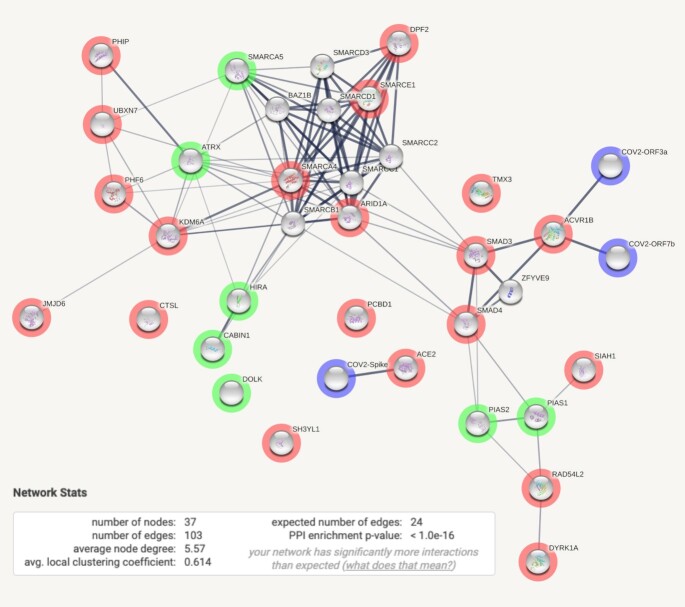
“(G) STRING-network for ELF3 from Arabidopsis.”
BackgroundFreitag, T., Kaps, P., Ramtke, J., Bertels, S., Zunke, E., Schneider, B., Becker, A., Koczan, D., Dubinski, D., Freiman, T. M., et al. (2024) · npj Precision Oncology · doi:10.1038/s41698-024-00653-3 · Cited by 26
“Gene clusters were identi fi ed using STRING database version 12.0 (RRID:SCR_005223) 73 and associated pathways and biological processes were assessed in each subgroup.”
MethodInfluentialRNA interacts with topoisomerase I to adjust DNA topology
Bhola, M., Abe, K., Orozco, P., Rahnamoun, H., Ávila-López, P. A., Taylor, E., Muhammad, N., Liu, B., Patel, P. R., Marko, J. F., et al. (2024) · Molecular Cell · doi:10.1016/j.molcel.2024.07.032 · Cited by 23
Emergence of power law distributions in protein-protein interaction networks through study bias
Blumenthal, D. B., Lucchetta, M., Kleist, L., Fekete, S. P., List, M., & Schaefer, M. H. (2024) · eLife · doi:10.7554/elife.99951 · Cited by 23
Radhakrishnan, S. K., Nath, D., Russ, D., Bravo-Merodio, L., Lad, P., Daisi, F. K., & Acharjee, A. (2025) · Frontiers in Oncology · doi:10.3389/fonc.2024.1505675 · Cited by 23
Chen, S., Qi, H., Zhu, C., Zhao, Y., Jiao, B., Tan, Y., Yuexin, Y., Wang, T., Hou, Y., Dai, B., et al. (2025) · Pharmacological Research · doi:10.1016/j.phrs.2025.107650 · Cited by 23
Ciliary biology intersects autism and congenital heart disease
Teerikorpi, N., McCluskey, K. E., Bader, E., Lasser, M. C., Wang, S., Nguyen, C. H., Schmidt, J. D., Kostyanovskaya, E., Sun, N., Dea, J., et al. (2025) · Development · doi:10.1242/dev.204295 · Cited by 23
Arabidopsis Coexpression Tool: a tool for gene coexpression analysis in Arabidopsis thaliana
Zogopoulos, V. L., Saxami, G., Malatras, A., Angelopoulou, A., Jen, C.-H., Duddy, W. J., Δάρας, Γ., Hatzopoulos, P., Westhead, D. R., & Michalopoulos, I. (2021) · iScience · doi:10.1016/j.isci.2021.102848 · Cited by 23
Xie, Y., Zhang, J., Li, M., Zhang, Y., Li, Q., Zheng, Y., & Wei, L. (2022) · Frontiers in Oncology · doi:10.3389/fonc.2022.818868 · Cited by 24
Bi, Y., Wu, Z., & Cao, F. (2022) · BMC Cancer · doi:10.1186/s12885-022-09328-3 · Cited by 23
“The search tool for the Retrieval of Interacting Genes/Proteins (STRING) database was utilized to conduct the protein–protein interaction (PPI) network to uncover the relationships of DEGs [49].”
MethodInfluentialChen, D., Ruan, X., Liu, Y., & He, Y. (2022) · Bioengineered · doi:10.1080/21655979.2022.2063222 · Cited by 23
“Common DEGs extracted from GSE173884 and GSE161827 were used to generate a PPI network based on the STRING tool [19].”
RetractedYu, B., Zhou, S., Long, D., Ning, Y., Yao, H., Zhou, E., & Wang, Y. (2022) · Cancer Science · doi:10.1111/cas.15393 · Cited by 23
Bielska, A., Bauer, W., Szałkowska, A., Sidorkiewicz, I., Skwarska, A., Raczkowska, J., Ostrowski, D., Gugała, K., Dobrzycki, S., Niemira, M., et al. (2022) · Frontiers in Endocrinology · doi:10.3389/fendo.2022.888948 · Cited by 23
Expression Profile and Diagnostic Significance of MicroRNAs in Papillary Thyroid Cancer
Rogucki, M., Sidorkiewicz, I., Niemira, M., Dzięcioł, J. B., Buczyńska, A., Adamska, A., Siewko, K., Kościuszko, M., Maliszewska, K., Wójcicka, A., et al. (2022) · Cancers · doi:10.3390/cancers14112679 · Cited by 25
“4) [24] and the CytoHubba plugin based on Cytoscape version 3.”
MethodXiang, Q., & Rathinasabapathi, B. (2022) · AoB Plants · doi:10.1093/aobpla/plac024 · Cited by 23
Lee, D., Kwak, H. J., Kim, B. H., Kim, D., Kim, H. Y., Kim, S. H., & Kang, K. S. (2022) · Plants · doi:10.3390/plants11131658 · Cited by 23
“org/ (accessed on 18 August 2021)] [41].”
Li, D., Ding, Y., Cheng, L., Zhang, X., Cheng, S., Ye, Y., Gao, Y., Qin, Y., Liu, Z., Li, C., et al. (2022) · Horticulture Research · doi:10.1093/hr/uhac143 · Cited by 23
“The PPI network of DEGs was constructed using the STRING database [68].”
MethodTian, J., Xu, Y., Xiong, Y., Zuo, L., Zhou, M., Cao, C., Huang, X., & Wang, J. (2022) · Computers in Biology and Medicine · doi:10.1016/j.compbiomed.2022.105790 · Cited by 26
Wang, S., Fu, Y., Kuerban, K., Liu, J., Huang, X., Pan, D., Chen, H., Zhu, Y. Z., & Ye, L. (2022) · Frontiers in Immunology · doi:10.3389/fimmu.2022.933165 · Cited by 26
Su, K., Hao, W.-X., Lv, Z., Wu, M., Li, J., Hu, Y., Zhang, Z., Gao, J., & Feng, X. (2022) · Frontiers in Neurology · doi:10.3389/fneur.2022.855362 · Cited by 24
MS4A6A is a new prognostic biomarker produced by macrophages in glioma patients
Zhang, C., Liu, H., Tan, Y., Xu, Y. Y., Li, Y., Tong, S., Qiu, S., Chen, Q., Su, Z., Tian, D., et al. (2022) · Frontiers in Immunology · doi:10.3389/fimmu.2022.865020 · Cited by 23
Loss of Serpina1 in Mice Leads to Altered Gene Expression in Inflammatory and Metabolic Pathways
Meghadri, S. H., Martínez–Delgado, B., Ostermann, L., Gómez‐Mariano, G., Pérez-Luz, S., Tumpara, S., Wrenger, S., DeLuca, D. S., Maus, U. A., Welte, T., et al. (2022) · International Journal of Molecular Sciences · doi:10.3390/ijms231810425 · Cited by 23
“To mine potential interactions based on protein-protein networks, we queried stringDB [20] using the DEGs.”
MethodWang, F., Zhang, B., Wen, D., Liu, R., Yao, X., Chen, Z., Mu, R., Pei, H., Liu, M., Song, B., et al. (2022) · Frontiers in Plant Science · doi:10.3389/fpls.2022.1004387 · Cited by 23
“, 2001) method and BLAST were conducted between the DEPs and STRING databases (Szklarczyk et al., 2021); and (2) The existing DEP PPINs were extracted from STRING databases and TeaGPIN (Singh et al.”
MethodSagkrioti, E., Biz, G. M., Takan, I., Asfa, S., Nikitaki, Z., Zanni, V., Kars, R. H., Hellweg, C. E., Azzam, E. I., Logotheti, S., et al. (2022) · Antioxidants · doi:10.3390/antiox11112286 · Cited by 23
“org/, accessed on 15 May 2022) [38] was used to investigate and visualize both known and predicted associations among the protein products of the genes under study.”
MethodLiu, L., Lv, Z., Xue, X., Xing, Z.-Y., & Zhu, F. (2022) · Cancers · doi:10.3390/cancers14235781 · Cited by 23
“STRING bioinformatics tool was used to predict interacting proteins [24].”
MethodBaker, K. J., Brint, E. K., & Houston, A. M. (2022) · British Journal of Cancer · doi:10.1038/s41416-022-02083-z · Cited by 23
“Modules identified were then separated as individual networks, and STRING enrichment was performed for functional annotation of gene clusters with top Kyoto Encyclopedia of Genes and Genomes (KEGG) and Gene Ontology (GO) annotations used.”
MethodInfluentialRuiz, E. M., Kandil, E. H., Alhassan, S., Toraih, E. A., Errami, Y., Elmageed, Z. Y. A., & Zerfaoui, M. (2022) · Aging and Disease · doi:10.14336/ad.2022.1021 · Cited by 24
“Aging and Disease • 5 Protein-protein interaction (PPI) and regulatory networks Protein-protein interaction (PPI) data, long non-coding RNA (lncRNA) interactions, and TFs regulations were collected with the STRING [39] database, the RNAInter [40] database, and “tftargets.rda” file (R Curl R package including the Marba…”
MethodInfluentialPeerapen, P., & Thongboonkerd, V. (2023) · Biomedical Journal · doi:10.1016/j.bj.2023.01.001 · Cited by 29
“STRING constructs the PPI network based on both physical and functional associations of proteins retrieved from known associations and from prediction [5].”
MethodInfluentialZhou, J., Liu, Y., Chen, J., Xiong, N., & Yi, D. (2023) · Drug Development Research · doi:10.1002/ddr.22048 · Cited by 24
“2.1.2 | Protein‒protein interaction (PPI) network analysis The screened candidate targets were imported into the STRING database version 11.0 (https://string-db.org/) (Szklarczyk et al., 2021).”
MethodInfluentialNissa, M. U., Pinto, N., Ghosh, B., Singh, U., Goswami, M., & Srivastava, S. (2023) · Journal of Proteomics · doi:10.1016/j.jprot.2023.104870 · Cited by 23
Li, J., Zhang, X., Guo, D., Shi, Y., Zhang, S., Yang, R., & Cheng, J. (2023) · Frontiers in Pharmacology · doi:10.3389/fphar.2023.1113810 · Cited by 25
“org/) (Szklarczyk et al., 2021) with the confidence level set at 0.”
BackgroundOsteoarthritis year in review 2022: Genetics, genomics and epigenetics
Kim, M., Rubab, A., Chan, W. C. W., & Chan, D. T.-M. (2023) · Osteoarthritis and Cartilage · doi:10.1016/j.joca.2023.03.003 · Cited by 24
Sobral, P., Luz, V. C. C., Almeida, J. M. G. C. F., Videira, P. A., & Pereira, F. (2023) · International Journal of Molecular Sciences · doi:10.3390/ijms24065908 · Cited by 24
“The deposited information, and new datasets gained through insight when they are crossed with known interactions, are available through STRING [31] or the even more detailed content of GeneMANIA [32].”
MethodZhang, Y., Zhou, L., Fu, Q., & Liu, Z. (2023) · Biochimica et Biophysica Acta (BBA) - Molecular Basis of Disease · doi:10.1016/j.bbadis.2023.166693 · Cited by 23
Network medicine: an approach to complex kidney disease phenotypes
Pandey, A. K., & Loscalzo, J. (2023) · Nature Reviews Nephrology · doi:10.1038/s41581-023-00705-0 · Cited by 24
AKT activity orchestrates marginal zone B cell development in mice and humans
Cox, E.-M., Behi, M. E., Ries, S., Vogt, J. F., Kohlhaas, V., Michna, T., Manfroi, B., Al-Maarri, M., Wanke, F., Tirosh, B., et al. (2023) · Cell Reports · doi:10.1016/j.celrep.2023.112378 · Cited by 23
Faster and more accurate pathogenic combination predictions with VarCoPP2.0
Versbraegen, N., Gravel, B., Nachtegael, C., Renaux, A., Verkinderen, E., Nowé, A., Lenaerts, T., & Papadimitriou, S. (2023) · BMC Bioinformatics · doi:10.1186/s12859-023-05291-3 · Cited by 25
“…was obtained from post-processed Gtex data collected in the TCSBN database [31], sequence similarity data between genes was downloaded from STRING [32], pathway information was obtained from Reactome [33], gene ontology terms and their linked genes were collected from the Gene ontology [34, 35],…”
MethodMitchell, A. J., Malmgren, L., Bartosch, P., McGuigan, F. E., & Åkesson, K. (2023) · Journal of Bone and Mineral Research · doi:10.1002/jbmr.4861 · Cited by 24
“These include direct (physical) and indirect (functional) associations from computational prediction and knowledge transfer between organisms and aggregated from other (primary) databases.((26,27)) Output includes the following: (i) count in network: number of annotated proteins in your network out of the total number”
BackgroundLuca, C. D., Gupta, A. K., & Bortvin, A. L. (2023) · PLoS Genetics · doi:10.1371/journal.pgen.1010797 · Cited by 27
“5 (https://string-db.org/; [ 67]).”
Schisandrin A ameliorates airway inflammation in model of asthma by attenuating Th2 response
Qiu, Q., Zhang, W., Liu, K., Huang, F., Su, J., Deng, L., He, J., Lin, Q., & Luo, L. (2023) · European Journal of Pharmacology · doi:10.1016/j.ejphar.2023.175850 · Cited by 23
Ashok, G., & Ramaiah, S. (2023) · The Journal of Gene Medicine · doi:10.1002/jgm.3556 · Cited by 23
Analysis of age-dependent gene-expression in human tissues for studying diabetes comorbidities
Guzzi, P. H., Cortese, F., Mannino, G. C., Pedace, E., Succurro, E., Andreozzi, F., & Veltri, P. (2023) · Scientific Reports · doi:10.1038/s41598-023-37550-x · Cited by 25
Cheng, J., Zhao, Y., Hu, H., Tang, L. Y., Zeng, Y., Deng, X., Ding, S., Guo, A., Li, Q., & Zhu, X. (2023) · Cancer Immunology Immunotherapy · doi:10.1007/s00262-023-03475-7 · Cited by 23
Baluszek, S., Kober, P., Rusetska, N., Wągrodzki, M., Mandat, T. S., Kunicki, J., & Bujko, M. (2023) · Acta Neuropathologica Communications · doi:10.1186/s40478-023-01610-0 · Cited by 23
“Subsequently, selected modules were intersected with STRING a protein–protein interaction database [32].”
MethodMakkar, H., Lim, C. T., Tan, K. S., & Sriram, G. (2023) · Biofabrication · doi:10.1088/1758-5090/ace935 · Cited by 24
“In-silico analysis to understand PPI STRING [33] (Search Tool for the Retrieval of Interacting Genes/Proteins, version 11.5, https:// string-db.org/) was used to analyze the interactions between cytokine (IL-6,IL-10, IL-1 β ), chemokines (IL-8, CCL-2, CCL-20), CAMs (ICAM1, VCAM1, E-SEL), macrophage…”
InfluentialFeng, D., Li, L., Li, D., Wu, R., Zhu, W., Wang, J., Ye, L., & Han, P. (2023) · European journal of medical research · doi:10.1186/s40001-023-01215-2 · Cited by 23
“We also assessed the predicted functional partners of P4HB using multiple databases, including HPA, GeneMANIA [46] and STRING [47].”
MethodElkhalifa, A. E. O., Banu, H., Khan, M. I., & Ashraf, S. A. (2023) · Nutrients · doi:10.3390/nu15183949 · Cited by 24
“The STRING database is used to study protein–protein interactions (PPIs) of selected potential targets (https://string-db.org/, accessed on 1 February 2023) [24].”
MethodHuang, R., Xu, M., Guo, W., Cheng, M., Dong, R., Tu, J., Xu, S., & Zou, C. (2023) · Cancer Cell International · doi:10.1186/s12935-023-03046-x · Cited by 24
“And the PPI network was constructed by the STRING (11.0) database with a medium confidence of 0.4 [21].”
MethodInfluentialTsioras, K., Smith, K. C., Edassery, S. L., Garjani, M., Li, Y., Williams, C., McKenna, E. D., Guo, W., Wilen, A. P., Hark, T. J., et al. (2023) · Cell Reports · doi:10.1016/j.celrep.2023.113160 · Cited by 24
Xu, Y., Bao, L., Cao, S., Pang, B., Zhang, J., Zhang, Y., Chen, M., Wang, Y., Sun, Q., Zhao, R., et al. (2023) · Journal of Ethnopharmacology · doi:10.1016/j.jep.2023.117424 · Cited by 24
Zhou, H., Ma, J., Liu, H., & Zhao, P. (2023) · International Journal of Molecular Sciences · doi:10.3390/ijms25010025 · Cited by 23
“We submitted all identified CBF and ICE proteins as candidates to predict the putative targeting of Arabidopsis miRNAs using the online program psRNATarget using default parameters [94].”
MethodClinical Significance of Disulfidptosis-related Genes and Functional Analysis in Gastric Cancer
Yan, J., Fang, Z., Shi, M., Tu, C., Zhang, S., Jiang, C., Li, Q., & Shao, Y. (2024) · Journal of Cancer · doi:10.7150/jca.91796 · Cited by 23
“The interactive genes were chosen to build a protein ‒ protein interaction (PPI) network via STRING 11.5, an online database for searching and constructing organism-wide protein association networks [13].”
MethodInfluentialDisparate macrophage responses are linked to infection outcome of Hantan virus in humans or rodents
Ma, H., Yang, Y., Nie, T., Yan, R., Si, Y., Wei, J., Li, M., Liu, H., Ye, W., Zhang, H., et al. (2024) · Nature Communications · doi:10.1038/s41467-024-44687-4 · Cited by 23
Zambuto, S. G., Theriault, H. S., Jain, I., Crosby, C. O., Pintescu, I., Chiou, N., Oyen, M. L., Zoldan, J., Underhill, G. H., Harley, B. A. C., et al. (2024) · npj Women s Health · doi:10.1038/s44294-024-00020-4 · Cited by 24
“These 14 proteins were entered into the STRING (Search Tool for the Retrieval of Interacting Genes/Proteins) Database to determine known and predicted protein-protein interactions 69 – 71 .”
OmicScope unravels systems-level insights from quantitative proteomics data
Reis‐de‐Oliveira, G., Carregari, V. C., de Sousa, G. R. D. R., & Martins‐de‐Souza, D. (2024) · Nature Communications · doi:10.1038/s41467-024-50875-z · Cited by 26
“Moreover, the protein-speci fi c category includes a function for exploring PPIs by querying the STRING database 27 .”
Identification of Specific microRNAs in Adipose Tissue Affected by Lipedema
Cione, E., Michelini, S., Abrego-Guandique, D. M., Vaia, N., Michelini, S., Puleo, V., Bertelli, M., Caroleo, M. C., & Cannataro, R. (2024) · Current Issues in Molecular Biology · doi:10.3390/cimb46110710 · Cited by 25
“The STRING online tool was used to identify protein–protein interactions of identified key genes [28].”
Capps, M. E., Moyer, A. J., Conklin, C. L., Martina, V., Torija-Olson, E. G., Klein, M. C., Gannaway, W. C., Calhoun, C. C., Vivian, M. D., & Thyme, S. B. (2025) · Proceedings of the National Academy of Sciences · doi:10.1073/pnas.2402557122 · Cited by 25
“S1), identified through public databases (31–33).”
El‐Sherbiny, M., El‐Sayed, R. M., Helal, M. A., Ibrahiem, A. T., Elmahdi, H. S., Eladl, M. A., Bilay, S. E., Alshahrani, A. M., Tawfik, M. K., Hamed, Z. E., et al. (2021) · Molecules · doi:10.3390/molecules26226858 · Cited by 24
“To highlight the importance of the STAT3 signaling pathways and illustrate key players in its si al tra s cti , we performed bioinformatic analysis using the STRING database [34].”
BackgroundMethodInfluentialMayer, R. L., Matzinger, M., Schmücker, A., Stejskal, K., Krššáková, G., Berger, F., & Mechtler, K. (2022) · bioRxiv (Cold Spring Harbor Laboratory) · doi:10.1101/2022.09.01.506203 · Cited by 23
“24 In addition, several other potential interactors that were identified show localization to the nucleus as expected when associated with the chromatin remod-329 eling protein Smarca5 such as Dpf2, Znf280d, Nup62 as well as others, potentially hinting towards a high number of genuine Smarca5…”
BackgroundGeiger-Schuller, K., Eraslan, B., Kuksenko, O., Dey, K. K., Jagadeesh, K. A., Thakore, P. I., Karayel, Ö., Yung, A. R., Rajagopalan, A. R., Meireles, A. M., et al. (2023) · bioRxiv (Cold Spring Harbor Laboratory) · doi:10.1101/2023.01.23.525198 · Cited by 27
Toward the Complete Functional Characterization of a Minimal Bacterial Proteome
Bianchi, D. M., Pelletier, J. F., Hutchison, C. A., Glass, J. I., & Luthey-Schulten, Z. (2022) · The Journal of Physical Chemistry B · doi:10.1021/acs.jpcb.2c04188 · Cited by 22
Ishikawa, M., Sugino, S., Masuda, Y., Tarumoto, Y., Seto, Y., Taniyama, N., Wagai, F., Yamauchi, Y., Kojima, Y., Kiryu, H., et al. (2023) · Communications Biology · doi:10.1038/s42003-023-05594-4 · Cited by 22
“We validated this hypothesis using the protein-protein interaction data obtained from the STRING database 24 and protein complex data obtained from the CORUM3.”
Li, F., Tang, H., Luo, X., Li, X., Luo, K., Liu, S., Liang, J., Liao, S., Zhong, C., Zhan, X., et al. (2023) · Cancer Science · doi:10.1111/cas.15821 · Cited by 22
Finney, C. A., Delerue, F., Gold, W. A., Brown, D. A., & Shvetcov, A. (2023) · Computational and Structural Biotechnology Journal · doi:10.1016/j.csbj.2022.12.018 · Cited by 22
Cross-domain contrastive graph neural network for lncRNA–protein interaction prediction
Li, H., Wu, B., Sun, M., Zhu, Z., Chen, K., & Ge, H. (2024) · Knowledge-Based Systems · doi:10.1016/j.knosys.2024.111901 · Cited by 23
Reho, P., Kalia, V., Jackson, G. L., Wang, F., Eiten, E., Brennan, K. J. M., Brickman, A. M., Mayeux, R. P., Miller, G. W., Vardarajan, B. N., et al. (2025) · Alzheimer s & Dementia · doi:10.1002/alz.70050 · Cited by 25
Mainardi, A., Börsch, A., Occhetta, P., Ivánek, R., Ehrbar, M., Krattiger, L. A., Oertle, P., Loparić, M., Martín, I., Rasponi, M., et al. (2025) · Advanced Healthcare Materials · doi:10.1002/adhm.202501588 · Cited by 22
Alharbi, F., Budhiraja, N., Vakanski, A., Zhang, B., Elbashir, M. K., Guduru, H., & Mohammed, M. (2025) · Scientific Reports · doi:10.1038/s41598-025-13337-0 · Cited by 25
“In this study, we constructed a PPI network using the STRING database, which integrates both experimentally validated and computationally predicted protein interaction data [40].”
Zaborskytė, G., Hjort, K., Lytsy, B., & Sandegren, L. (2025) · Nature Communications · doi:10.1038/s41467-025-64521-9 · Cited by 22
“Identi fi cation of biological functions and grouping of genes was done by combining manual BLASTp 92 , STRING 93 , and EggNog 5.0 94 analysis and literature searches.”
InfluentialNatarajan, S. R., Krishnamoorthy, R., Alshuniaber, M. A., Gatasheh, M. K., Rajagopal, P., Veeraraghavan, V. P., Palanisamy, C. P., & Jayaraman, S. (2025) · The Journal of Gene Medicine · doi:10.1002/jgm.70053 · Cited by 22
Fei, X., Hu, C., Wang, X., Lu, C., Chen, H., Sun, B., & Li, C. (2021) · Frontiers in Cell and Developmental Biology · doi:10.3389/fcell.2021.751490 · Cited by 22
Proteomic Changes of Activated Hepatic Stellate Cells
Schinagl, M., Tomin, T., Gindlhuber, J., Honeder, S. E., Pfleger, R., Schittmayer, M., Trauner, M., & Birner‐Gruenberger, R. (2021) · International Journal of Molecular Sciences · doi:10.3390/ijms222312782 · Cited by 23
“To gain an overview of metabolic pathways and protein classes affected by serum activation we used significantly changed proteins as input for protein network and functional enrichment analysis using the STRING [28] database for analysis and Cytoscape [29] for visualization (Figure 4).”
MethodPowrózek, T., Pigoń-Zając, D., Mazurek, M., Otieno, M. O., Rahnama, M., & Malecka-Massalska, T. J. (2022) · International Journal of Molecular Sciences · doi:10.3390/ijms23073878 · Cited by 23
“5 is a tool used for visualizing and searching for interactions between predicted and known proteins’ sequences [42].”
MethodMoreno, C. M., Bybee, E., Freitas, C. M. T., Pickett, B. E., & Weber, K. S. (2022) · International Journal of Molecular Sciences · doi:10.3390/ijms23105580 · Cited by 22
“Drug targets were used to construct the PPI network using the Search Tool for the Retrieval of Interacting Genes (STRING) [43] database (Version 11.”
MethodInfluentialCerebrospinal fluid proteomic study of two bipolar disorder cohorts
Isgren, A., Göteson, A., Holmén-Larsson, J., Pelanis, A., Sellgren, C., Joas, E., Sparding, T., Zetterberg, H., Smedler, E., Jakobsson, J., et al. (2022) · Molecular Psychiatry · doi:10.1038/s41380-022-01724-2 · Cited by 18
“A graph of protein–protein interactions for these proteins (and GH) from the STRING database of known and predicted protein–protein interactions [23] is shown in Supplementary figure 4.”
MethodPan, J., Yang, H., Zhu, L., Lou, Y., & Jin, B. (2022) · Frontiers in Pharmacology · doi:10.3389/fphar.2022.897966 · Cited by 23
“org/) (Szklarczyk et al., 2021) was used to construct the PPI network with a confidence score >0.”
MethodLara, E., Rivera, N., González-Bernal, A., Rojas, D., López-Espíndola, D., Rodríguez, A., & Escudero, C. (2022) · Journal of Cerebral Blood Flow & Metabolism · doi:10.1177/0271678x221121872 · Cited by 22
Bai, X., Wang, X., Lin, T., Dong, W., Gao, Y., Ji, P., Zhang, Y., Zhao, X., & Zhang, Q. (2022) · International Journal of Molecular Sciences · doi:10.3390/ijms231810717 · Cited by 22
Jiang, J., Chen, S., Tsou, T., McGinnis, C. S., Khazaei, T., Zhu, Q., Park, J. H., Strazhnik, I.-M., Vielmetter, J., Gong, Y., et al. (2023) · doi:10.1101/2023.04.19.537364 · Cited by 21
“Gene regulatory networks play a central role in cellular decision-making processes [9, 10, 11, 12].”
BackgroundMicrobiome modeling: a beginner's guide
Lange, E., Kranert, L., Krüger, J., Benndorf, D., & Heyer, R. (2024) · Frontiers in Microbiology · doi:10.3389/fmicb.2024.1368377 · Cited by 21
Metadata
- Authors
- Szklarczyk, D., Gable, A. L., Nastou, K. C., Lyon, D., Kirsch, R., Pyysalo, S., Doncheva, N. T., Legeay, M., Fang, T., Bork, P., Jensen, L. J., & von Mering, C.
- Affiliations
- SIB Swiss Institute of Bioinformatics (CH)
- University of Copenhagen (DK)
- University of Turku (FI)
- Structural and Computational Biology Unit, European Molecular Biology Laboratory, 69117 Heidelberg, Germany
- Corresponding author
- Jensen, Lars J
- von Mering, Christian
- ORCID
- Venue
- Nucleic Acids Research
- Publisher
- Oxford University Press (OUP)
- Published
- 2020-11-25
- Volume
- 49
- Issue
- D1
- Pages
- D605-D612
- ISSN
- 0305-1048 (ISSN-L)
- 1362-4962
- PMC
- PMC7779004
- OpenAlex
- W3107527779
- Cited by
- 8,056
- References
- 64
- Citations by year
- 2026: 697 · 2025: 1205 · 2024: 1834 · 2023: 2286 · 2022: 1785 · 2021: 240 · 2020: 5
- FWCI
- 356.58
- Type
- journal article
- Language
- en
- Open access
- gold
- doi.org
- Licence
- Locations
- Nucleic Acids Research (publishedVersion, cc-by)
- PubMed Central (publishedVersion, cc-by)
- PubMed (publishedVersion)
- Research at the University of Copenhagen (University of Copenhagen) (publishedVersion, cc-by)
- MDC Repository (Max-Delbrueck-Center for Molecular Medicine) (acceptedVersion)
- Zurich Open Repository and Archive (University of Zurich) (acceptedVersion, cc-by)
- Zurich Open Repository and Archive (University of Zurich) (submittedVersion, cc-by)
- Zurich Open Repository and Archive (University of Zurich)
- Funders
- Novo Nordisk Foundation (NNF14CC0001)
- Academy of Finland (332844)
- Topics
- Life Sciences › Biochemistry, Genetics and Molecular Biology › Molecular Biology › Bioinformatics and Genomic Networks
- Health Sciences › Medicine › Health Informatics › Biomedical Text Mining and Ontologies
- Life Sciences › Biochemistry, Genetics and Molecular Biology › Molecular Biology › Genomics and Phylogenetic Studies
- Keywords
- STRING database, protein-protein interaction, protein-protein interaction network, functional association, literature mining, physical interaction, co-expression, interaction prediction, protein complexes, pathway annotation
- MeSH terms
- Proteins, User-Computer Interface, Protein Interaction Mapping, Databases, Protein
About these checks
Registry, retraction, Cites and statistics results are computed, not judged, with one exception: a printed reference that no index lists is read once by a model before it counts as a citation error. Claims are extracted by a model and kept only when their quote appears verbatim in the text; each cited source is then checked, with a model’s help, for whether it says what the claim relies on. Those verdicts can be wrong — read the claim’s quote and the cited source before relying on one.
Statistics and arithmetic are recomputed, not judged.
Confidence bands are shown only for fields calibrated on our annotated test set. None is calibrated yet, so no band is shown.
What counts as a claim ›How we measure confidence ›How we check this ›
Are you an author, or do you see a problem with this page? Request a review
Data sources
Bibliographic data: Semantic Scholar, OpenAlex, Crossref.
Contains information from the Semantic Scholar Academic Graph Datasets, made available under the ODC Attribution License (ODC-BY 1.0).
Semantic Scholar’s data is described in: Kinney, R., et al. (2023). The Semantic Scholar Open Data Platform. arXiv:2301.10140.
