

The DOI matches its Crossref record; 18 of the 18 references it cites were found in a registry or an index.
SuperTarget and Matador: resources for exploring drug-target relationships
Open accessAbstract
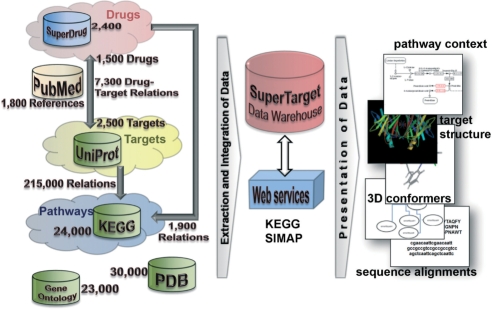
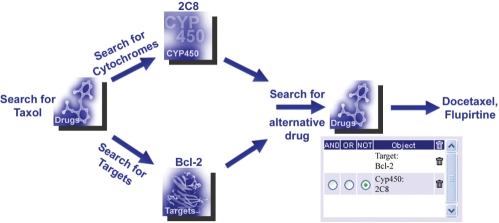
The molecular basis of drug action is often not well understood. This is partly because the very abundant and diverse information generated in the past decades on drugs is hidden in millions of medical articles or textbooks. Therefore, we developed a one-stop data warehouse, SuperTarget that integrates drug-related information about medical indication areas, adverse drug effects, drug metabolization, pathways and Gene Ontology terms of the target proteins. An easy-to-use query interface enables the user to pose complex queries, for example to find drugs that target a certain pathway, interacting drugs that are metabolized by the same cytochrome P450 or drugs that target the same protein but are metabolized by different enzymes. Furthermore, we provide tools for 2D drug screening and sequence comparison of the targets. The database contains more than 2500 target proteins, which are annotated with about 7300 relations to 1500 drugs; the vast majority of entries have pointers to the respective literature source. A subset of these drugs has been annotated with additional binding information and indirect interactions and is available as a separate resource called Matador. SuperTarget and Matador are available at http://insilico.charite.de/supertarget and http://matador.embl.de.
Overview
The claims and statistics of this paper haven’t been checked yet.
Run the check — free, no account needed. It reads the open-access text and checks the sources it cites.
Integrity signals
Registry
Cites
Statistics
Figures
Verification
Claims the paper makes
The claims and statistics of this paper haven’t been checked yet.
Run the check — free, no account needed. It reads the open-access text and checks the sources it cites.
Claims other papers make about this one
Each is checked against this paper’s own text: does it say what the citing paper says it does?
In the citing paper
“This analysis identified 10 drug annotations with FDR < 0.05 including four drugs that are either estrogen receptor agonists (diethylstilbestrol, Implanon [etonogestril implant]), or anti-estrogens (tamoxifen and raloxifene); in addition to nicotine, cocaine, cyclothiazide, felbamate, and riluzole.”
From Bi-ancestral depression GWAS in the Million Veteran Program and meta-analysis in >1.2 million individuals highlight new therapeutic directions (2021) · cites this paper as [19]
Self-check
Percentages, sums and reported differences re-computed from the paper’s own numbers.
The self-check needs the paper’s full text.
Citations
Cites
DrugBank: a comprehensive resource for in silico drug discovery and exploration
Wishart, D. S. (2006) · Nucleic Acids Research · doi:10.1093/nar/gkj067 · Cited by 3,892 · cited 4×
“In a last step, relations from other databases, namely DrugBank (3), KEGG (9), PDB (10), SuperLigands (11) and TTD (4), were checked for drug-target interactions not identified with the preceding steps.”
BackgroundInfluentialThe Universal Protein Resource (UniProt)
Bairoch, A. (2004) · Nucleic Acids Research · doi:10.1093/nar/gki070 · Cited by 3,774
From genomics to chemical genomics: new developments in KEGG
Kanehisa, M. I. (2005) · Nucleic Acids Research · doi:10.1093/nar/gkj102 · Cited by 3,126 · cited 2×
“Proven or potential target proteins are represented by sequences as stored in UniProt (12), by functional annotations extracted from GOA (13) and by related pathway information provided by KEGG (9) (compare Figure 1).”
Backgroundvon Mering, C. (2004) · Nucleic Acids Research · doi:10.1093/nar/gki005 · Cited by 1,768 · cited 2×
“The most probable candidates were identified using a benchmarking scheme ( 8 ) and manually curated.”
MethodThe Gene Ontology Annotation (GOA) Database: sharing knowledge in Uniprot with Gene Ontology
Camon, E. B. (2003) · Nucleic Acids Research · doi:10.1093/nar/gkh021 · Cited by 927 · cited 1×
“Proven or potential target proteins are represented by sequences as stored in UniProt (12), by functional annotations extracted from GOA (13) and by related pathway information provided by KEGG (9) (compare Figure 1).”
BackgroundDrugs, their targets and the nature and number of drug targets
Imming, P., Sinning, C., & Meyer, A. (2006) · Nature Reviews Drug Discovery · doi:10.1038/nrd2132 · Cited by 850 · cited 1×
“For some drugs even the primary targets are still unknown, for example, Diloxanide, Niclosamide and Ambroxol are administered successfully although their effect on human metabolism is still not clarified at a molecular level (1).”
BackgroundDo Structurally Similar Molecules Have Similar Biological Activity?
Martin, Y. C., Kofron, J. L., & Traphagen, L. M. (2002) · Journal of Medicinal Chemistry · doi:10.1021/jm020155c · Cited by 806 · cited 1×
“Since compounds with high structural similarity frequently exhibit similar activities (14), all drugs with comparable structural fingerprints are made accessible.”
BackgroundTTD: Therapeutic Target Database
Chen, X. (2002) · Nucleic Acids Research · doi:10.1093/nar/30.1.412 · Cited by 723 · cited 4×
“Another notable database is the Therapeutic Target Database (TTD) (4), which holds target information on about 1000 small molecule drugs.”
BackgroundInfluentialLiterature mining for the biologist: from information retrieval to biological discovery
Jensen, L. J., Šarić, J., & Peer Bork, B. (2006) · Nature Reviews Genetics · doi:10.1038/nrg1768 · Cited by 632 · cited 1×
“In parallel, potential drug-target relations were automatically extracted from Medline by searching for synonyms of drugs, proteins and Medical Subject Headings (MeSH terms) describing groups of proteins (7).”
MethodSelf-citationThe Universal Protein Resource (UniProt)
The UniProt Consortium (2006) · Nucleic Acids Research · doi:10.1093/nar/gkl929 · Cited by 572
Cited by
Sorted by citations
Items 301–400 of 651
In silico profiling of systemic effects of drugs to predict unexpected interactions
Yoo, S., Noh, K., Shin, M., Park, J., Lee, K.-H., Nam, H., & Lee, D. (2018) · Scientific Reports · doi:10.1038/s41598-018-19614-5 · Cited by 22
Moughari, F. A., & Eslahchi, C. (2021) · PLoS ONE · doi:10.1371/journal.pone.0250620 · Cited by 21
“The relations in STiTCH are based on various sources such as experimental evidence from ChEMBL [30] PDSP Ki database [31], Protein Data Bank (PDB) [32], pathway databases including KEGG [33], Reactome [34], and NCI nature pathway interaction database [35] as well as other databases such as DrugBank [18] and MATADOR [3…”
MethodKhojasteh, H., Pirgazi, J., & Sorkhi, A. G. (2023) · PLoS ONE · doi:10.1371/journal.pone.0288173 · Cited by 21
“[38] extracted information about drug-target interactions from DrugBank [39], KEGG [8,9], BRENDA [40], and SuperTarget [41].”
MethodGe N Nius : an ultrafast drug–target interaction inference method based on graph neural networks
Veleiro, U., de la Fuente, J., Serrano, G., Pizurica, M., Casals, M., Pineda‐Lucena, A., Vicent, S., Ochoa, I., Gevaert, O., & Hernáez, M. (2023) · Bioinformatics · doi:10.1093/bioinformatics/btad774 · Cited by 21
“This model inputs drug SMILES to generate two multimodal information of drugs (molecular image and chemical text) and the amino acid sequence for target representation.”
MethodNeural networks for protein structure and function prediction and dynamic analysis
Tsuchiya, Y., & Tomii, K. (2020) · Biophysical Reviews · doi:10.1007/s12551-020-00685-6 · Cited by 24
A Data-Driven Approach for Identifying Medicinal Combinations of Natural Products
Yoo, S., Ha, S., Shin, M., Noh, K., Nam, H., & Lee, D. (2018) · IEEE Access · doi:10.1109/access.2018.2874089 · Cited by 20
“Compound-gene associations were collected from DrugBank, DCDB, CTD, TTD [31], BindingDB [32], MATADOR [33] and STITCH [34].”
MethodQiu, W., Lv, Z., Yaoqiu, H., Jia, J., & Xiao, X. (2021) · Frontiers in Cell and Developmental Biology · doi:10.3389/fcell.2020.623858 · Cited by 19
“With the accumulation of GPCR–drug interaction data stored in Kyoto Encyclopedia of Genes and Genomes (KEGG) (Kanehisa et al., 2006), SuperTarget (Gunther et al., 2008), and DrugBank (Wishart et al., 2008), methods based on sequence information may be efficient for identifying the interaction…”
Unveiling chronic spontaneous urticaria pathophysiology through systems biology
Segú-Vergés, C., Gómez, J., Terradas-Montana, P., Artigas, L., Smeets, S. J., Ferrer, M., & Savic, S. (2022) · Journal of Allergy and Clinical Immunology · doi:10.1016/j.jaci.2022.12.809 · Cited by 20
Algebraic shortcuts for leave-one-out cross-validation in supervised network inference
Stock, M., Pahikkala, T., Airola, A., Waegeman, W., & Bernard De Baets, C. (2018) · Briefings in Bioinformatics · doi:10.1093/bib/bby095 · Cited by 20
A Multi-Label Learning Framework for Drug Repurposing
Mei, S., & Zhang, K. (2019) · Pharmaceutics · doi:10.3390/pharmaceutics11090466 · Cited by 23
“On Matador [34], the proposed framework only achieves 43.”
BackgroundMethodInfluentialDrug-Target Interaction Prediction with Graph Attention networksPreprint
Wang, H., Zhou, G., Liu, S., Jiang, J., & Wang, W. W. (2021) · arXiv (Cornell University) · doi:10.48550/arxiv.2107.06099 · Cited by 37
Zhao, M., Yuan, M., Yang, Y., & Xu, S. X. (2023) · IEEE/ACM Transactions on Computational Biology and Bioinformatics · doi:10.1109/tcbb.2022.3225296 · Cited by 22
BCM-DTI: A fragment-oriented method for drug–target interaction prediction using deep learning
Dou, L., Zhang, Z., Liu, D., Qian, Y., & Qian, Y. (2023) · Computational Biology and Chemistry · doi:10.1016/j.compbiolchem.2023.107844 · Cited by 19
Collaborative Matrix Factorization with Soft Regularization for Drug-Target Interaction Prediction
Gao, L.-G., Yang, M., & Wang, J. (2021) · Journal of Computer Science and Technology · doi:10.1007/s11390-021-0844-8 · Cited by 19
“The drug-target interaction information on the benchmark datasets comes from the public databases including KEGG BRITE [31] , BRENDA [32] , SuperTarget [33] , and DrugBank [34] .”
A comparison of machine learning techniques for detection of drug target articles
Dánger, R., Segura-Bédmar, I., Martı́nez, P., & Rosso, P. (2010) · Journal of Biomedical Informatics · doi:10.1016/j.jbi.2010.07.010 · Cited by 19
“In the SuperTarget(2) [13] database, the efforts for drug target annotation were reduced by the use of the text mining tool EbiMed [14].”
MethodChem2Bio2RDF: A Linked Open Data Portal for Systems Chemical Biology
Chen, B., Ding, Y., Wang, H., Wild, D. J., Dong, X., Sun, Y., Zhu, Q., & Sankaranarayanan, M. (2010) · IEEE/WIC/ACM International Conference on Web Intelligence and Intelligent Agent Technology (WI-IAT) · doi:10.1109/wi-iat.2010.183 · Cited by 19
“We prototyped an automatic SPARQL query generator so that user can avoid writing complicated SPARQL queries.”
MethodMining large heterogeneous data sets in drug discovery
Wild, D. J. (2009) · Expert Opinion on Drug Discovery · doi:10.1517/17460440903233738 · Cited by 19
“DrugBank [67] contains relationships between drugs and targets; CREDO [68] and SuperTarget [69] provide details of protein–ligand interactions; web-based technologies are likely to be very important in the integrated data mining systems, including semantic and ontologic languages (XML, OWL, RSS, RDF), web services, an…”
BackgroundZhu, Y., Ning, C., Zhang, N., Wang, M., & Zhang, Y. (2024) · BMC Biology · doi:10.1186/s12915-024-01949-3 · Cited by 18
“Finally, known drug-protein interactions were obtained from KEGG BRITE, BRENDA [36], SuperTarget [37], and DrugBank databases; we focused only on regulatory interactions between enzymes and compounds.”
MethodLow, Y., Sedykh, A., Rusyn, I., & Tropsha, A. (2014) · Current Topics in Medicinal Chemistry · doi:10.2174/1568026614666140506121116 · Cited by 18
“Associations successfully predicted in recent studies include those of phenotype-target [72], chemical-phenotype [76,77], and chemicaltarget [74,78,79] type.”
ResultNetwork mirroring for drug repositioning
Park, S., Lee, D. A., & Shin, H. (2017) · BMC Medical Informatics and Decision Making · doi:10.1186/s12911-017-0449-x · Cited by 18
Ban, T., Ohue, M., & Akiyama, Y. (2017) · IEEE International Conference on Computational Advances in Bio and Medical Sciences · doi:10.1109/iccabs.2017.8114299 · Cited by 17
“Interaction information is obtained from the KEGG BRITE [16], BRENDA [17], SupterTarget [18], and DrugBank [19] databases.”
MethodChen, H., Li, D., Liao, J., Wei, L., & Wei, L. (2022) · Methods · doi:10.1016/j.ymeth.2022.09.006 · Cited by 17
Drug-Target Prediction Based on Dynamic Heterogeneous Graph Convolutional Network
Xu, P., Wei, Z., Li, C., Yuan, J., Liu, Z., & Liu, W. (2024) · IEEE Journal of Biomedical and Health Informatics · doi:10.1109/jbhi.2024.3441324 · Cited by 17
“The construction of heterogeneous graph is based on several biomedical databases, such as DrugBank [17], KEGG [18], and SuperTarget [19].”
MethodTabei, Y., Kotera, M., Sawada, R., & Yamanishi, Y. (2019) · BMC Systems Biology · doi:10.1186/s12918-019-0691-1 · Cited by 17
“We got the information on drug-protein interactions from five databases: ChEMBL [19], KEGG [20], DrugBank [21], PDSP Ki [22], and Matador [23].”
MethodVerstraete, N., Jurman, G., Bertagnolli, G., Ghavasieh, A., Pancaldi, V., & Domenico, M. D. (2020) · Network and Systems Medicine · doi:10.1089/nsm.2020.0011 · Cited by 17
“jp/~yamani/ drugprotein/): The links are a subset of 78,692 drug– protein interactions extracted from older versions of ChEMBL,(48) KEGG,(49) DrugBank,(50) PDSP Ki,(51) and Matador.(52) The original sources adopt the following nomenclature for the drug ID (as reported from the corresponding official information):”
BackgroundTowards a more inductive world for drug repurposing approaches
de la Fuente, J., Serrano, G., Veleiro, U., Casals, M., Vera, L., Pizurica, M., Gómez-Cebrián, N., Puchades‐Carrasco, L., Pineda‐Lucena, A., Ochoa, I., et al. (2025) · Nature Machine Intelligence · doi:10.1038/s42256-025-00987-y · Cited by 16
“DTIs in this dataset come from KEGG BRITE 52 , BRENDA 53 , SuperTarget 54 and Drug-Bank.”
2D and 3D similarity landscape analysis identifies PARP as a novel off-target for the drug Vatalanib
Gohlke, B.-O., Overkamp, T., Richter, A. M., Richter, A., Daniel, P. T., Gillissen, B. F., & Preißner, R. (2015) · BMC Bioinformatics · doi:10.1186/s12859-015-0730-x · Cited by 16
“other resources for more elaborate analysis [14].”
Drug‐Target Interaction Prediction Based on Adversarial Bayesian Personalized Ranking
Ye, Y., Wen, Y., Zhang, Z., He, S., & Bo, X. (2021) · BioMed Research International · doi:10.1155/2021/6690154 · Cited by 16
“Here, the drug-target interactions in the IUPHARBPS database, STITCH database, CTD database, TTD database, Matador database, and DGIdb database were used.”
ResultMultimorbidity prediction using link prediction
Aziz, F., Cardoso, V. R., Bravo-Merodio, L., Russ, D., Pendleton, S. C., Williams, J. A., Acharjee, A., & Gkoutos, G. V. (2021) · Scientific Reports · doi:10.1038/s41598-021-95802-0 · Cited by 16
Lian, M., Wang, X., & Du, W. (2022) · Neurocomputing · doi:10.1016/j.neucom.2022.04.104 · Cited by 15
Research Progresses and Applications of Knowledge Graph Embedding Technique in Chemistry
Wang, C., Yang, Y., Song, J., & Nan, X. (2024) · Journal of Chemical Information and Modeling · doi:10.1021/acs.jcim.4c00791 · Cited by 17
Computational probing protein–protein interactions targeting small molecules
Wang, Y., Chen, S., Deng, N.-Y., & Wang, Y. (2015) · Bioinformatics · doi:10.1093/bioinformatics/btv528 · Cited by 15
Overcoming Obstacles to Drug Repositioning in Japan
Nishimura, Y., Tagawa, M., Ito, H., Tsuruma, K., & Hara, H. (2017) · Frontiers in Pharmacology · doi:10.3389/fphar.2017.00729 · Cited by 15
“For example, Iwata colleagues undertook an integrative approach using machine learning combined with multiple big data, including LINCS, Connectivity Map (Lamb et al., 2006), a Toxicogenomics ProjectGenomics Assisted Toxicity Evaluation System (Igarashi et al., 2015), ChEMBL (Gaulton et al., 2017), Kyoto Encyclopedia…”
MethodHan, T., Liu, Y., Chen, Y., Chen, T., Li, Y., Li, Q., & Zhao, M. (2022) · Oxidative Medicine and Cellular Longevity · doi:10.1155/2022/2663758 · Cited by 15
“There are also disease-drug-target databases used for drug-target research on herbal compounds, such as Super-Target, Matador [20], DrugBank [21], and Therapeutic Target Database [22].”
Hao, M., Bryant, S. H., & Wang, Y. (2018) · Journal of Cheminformatics · doi:10.1186/s13321-018-0303-x · Cited by 15
“Specifically, DATASET-Y was retrieved from multiple databases including KEGG BRITE [27], BRENDA [28], SuperTarget [29] and DrugBank [25].”
MethodZhan, X., You, Z., Cai, J., Li, L., Yu, C.-Q., Pan, J., & Kong, J. (2020) · IEEE Access · doi:10.1109/access.2020.3026479 · Cited by 15
“…explosion number of publicly-available data in biology and chemistry, several different types of related databases, such as Therapeutic Target Database (TTD) [7], [8], SuperTarget and Matador [9], Kyoto Encyclopedia of Genes and Genomes (KEGG) [10], and DrugBank [11], [12], have been established.”
BackgroundMethodDrug–target interaction prediction using knowledge graph embedding
Li, N., Yang, Z., Wang, J., & Lin, H. (2024) · iScience · doi:10.1016/j.isci.2024.109393 · Cited by 14
A machine-learned computational functional genomics-based approach to drug classification
Lötsch, J., & Ultsch, A. (2016) · European Journal of Clinical Pharmacology · doi:10.1007/s00228-016-2134-x · Cited by 15
PIMD: An Integrative Approach for Drug Repositioning using Multiple Characterization Fusion
He, S., Wen, Y., Yang, X., Liu, Z., Song, X., Huang, X., & Bo, X. (2020) · Genomics Proteomics & Bioinformatics · doi:10.1016/j.gpb.2018.10.012 · Cited by 14
Proteome‐Scale Drug‐Target Interaction Predictions: Approaches and Applications
MacKinnon, S. S., Tonekaboni, S. A. M., & Windemuth, A. (2021) · Current Protocols · doi:10.1002/cpz1.302 · Cited by 13
“Reported source datasets used by DTI tools include: the Davis Kinase dataset (Davis et al., 2011), the KIBA Kinase dataset (Tang et al., 2014), Drugbank (Wishart et al., 2006), KEGG (Kanehisa et al., 2006), Brenda (Schomburg et al., 2004), Supertargets and Matador (Günther et al., 2008), IUPHAR (Southan et al., 2016),…”
BackgroundBinding sites in membrane proteins – Diversity, druggability and prospects
Adams, R. A., Worth, C. L., Günther, S., Dunkel, M., Lehmann, R., & Preißner, R. (2011) · European Journal of Cell Biology · doi:10.1016/j.ejcb.2011.06.003 · Cited by 17
“SuperTarget (Gunther et al., 2008) is a comprehensive database ith strengths in data integration of drug-related information, edical indication areas, adverse drug effects, drug metabolizaion, pathways and Gene Ontology terms (Ashburner et al.”
BackgroundSelf-citationArany, Á., Bolgár, B., Balogh, B., Antal, P., & Mátyus, P. (2012) · Current Medicinal Chemistry · doi:10.2174/09298673130110 · Cited by 15
Ion Channels and Their Inhibitors
Gupta, S. P. (2011) · Springer eBooks · doi:10.1007/978-3-642-19922-6 · Cited by 16
Drug—target interaction prediction with a deep-learning-based model
Xie, L., Zhang, Z., He, S., Bo, X., & Song, X. (2017) · IEEE International Conference on Bioinformatics and Biomedicine (BIBM) · doi:10.1109/bibm.2017.8217693 · Cited by 14
“Amounts of drug–target interactions (DTIs) are uncovered and stored in databases, including Drugbank, TTD, and Matador, but certain DTIs remain to be discovered [3-5].”
BackgroundMethodInfluentialIn Silico Databases and Tools for Drug Repurposing
Serçinoğlu, O., & Özbek, P. (2019) · Elsevier eBooks · doi:10.1016/b978-0-12-816125-8.00024-9 · Cited by 14
Qian, Y., Wang, Y., Liu, J., Zou, Q., Ding, Y., Guo, X., & Ding, W. (2024) · Information Fusion · doi:10.1016/j.inffus.2024.102894 · Cited by 14
Pirola, C. J., Gianotti, T. F., & Sookoian, S. C. (2025) · Alimentary Pharmacology & Therapeutics · doi:10.1111/apt.18468 · Cited by 13
Computational Study of Drugs by Integrating Omics Data with Kernel Methods
Wang, Y. C., 邓, 乃., Chen, S., & Wang, Y. (2013) · Molecular Informatics · doi:10.1002/minf.201300090 · Cited by 13
Mih, N., Brunk, E., Bordbar, A., & Palsson, B. Ø. (2016) · PLoS Computational Biology · doi:10.1371/journal.pcbi.1005039 · Cited by 14
“In order to be as comprehensive as possible, we also obtained data from ChEMBL [110] and MATADOR [42], with MATADOR providing annotations for indirect interactions.”
Identifying GPCR-drug interaction based on wordbook learning from sequences
Wang, P., Huang, X., Qiu, W., & Xiao, X. (2020) · BMC Bioinformatics · doi:10.1186/s12859-020-3488-8 · Cited by 13
“As far as it goes, sequence-based methods may be an easy and efficient choice owing to machine learning technology and the accumulation of target-drug interaction data stored in KEGG [14], SuperTarget [15], DrugBank [16] and so on.”
Drug-target interactions prediction using marginalized denoising model on heterogeneous networks
Tang, C., Zhong, C., Chen, D., & Wang, J. (2020) · BMC Bioinformatics · doi:10.1186/s12859-020-03662-8 · Cited by 13
Patient-Specific Network for Personalized Breast Cancer Therapy with Multi-Omics Data
Cava, C., Sabetian, S., & Castiglioni, I. (2021) · Entropy · doi:10.3390/e23020225 · Cited by 13
“The interaction between drug and protein was obtained using DGIdb database [27], Matador database [28], and pharmagkb [29].”
MethodSPP-CPI: Predicting Compound–Protein Interactions Based On Neural Networks
Qian, Y., Li, X., Zhang, Q., & Zhang, J. (2021) · IEEE Transactions on Computational Biology and Bioinformatics · doi:10.1109/tcbb.2021.3084397 · Cited by 14
“The positive samples of human and C. elegans datasets are selected from DrugBank [36] and Mata-dor [37].”
MethodQian, Y., Li, X., Wu, J., Zhou, A., Xu, Z., & Zhang, Q. (2021) · Journal of Computational Chemistry · doi:10.1002/jcc.26786 · Cited by 13
SSELM-neg: spherical search-based extreme learning machine for drug–target interaction prediction
Hu, L., Fu, C., Ren, Z., Cai, Y., Yang, J. B., Xu, S., Xu, W., & Tang, D. (2023) · BMC Bioinformatics · doi:10.1186/s12859-023-05153-y · Cited by 13
“In this gold standard dataset, the known DTIs are from multiple public databases, including DrugBank [69], Super-Target [70], KEGG BRITE [71], and BRENDA [72].”
MethodA weighted and integrated drug-target interactome: drug repurposing for schizophrenia as a use case
Huang, L., Soysal, E., Zheng, W. J., Zhao, Z., Xu, H., & Sun, J. (2015) · BMC Systems Biology · doi:10.1186/1752-0509-9-s4-s2 · Cited by 13
“They were DrugBank [14], Kyoto Encyclopedia of Genes and Genomes (KEGG) Drug [24], Therapeutic Target Database (TTD) [23], Manually Annotated Targets and Drugs Online Resource (MATADOR) [10], NIMH Psychoactive Drug Screening Program (PDSP) Ki Database [11], and BindingDB [15].”
BackgroundMethodInfluentialPhenotype-oriented network analysis for discovering pharmacological effects of natural compounds
Yoo, S., Nam, H., & Lee, D. (2018) · Scientific Reports · doi:10.1038/s41598-018-30138-w · Cited by 13
NeuRank: learning to rank with neural networks for drug–target interaction prediction
Wu, X., Zeng, W., Lin, F., & Zhou, X. (2021) · BMC Bioinformatics · doi:10.1186/s12859-021-04476-y · Cited by 13
“And the rest data sets, whose observed DTIs were extracted from public databases KEGG BRITE [45], BRENDA [46], SuperTarget [47], and DrugBank [48], are available at: http:// web.kuicr.kyoto-u.ac.jp/supp/yoshi/drugtarget/.”
MethodRare variant analyses across multiethnic cohorts identify novel genes for refractive error
Musolf, A. M., Haarman, A. E. G., Luben, R., Ong, J., Patasova, K., Trapero, R. H., Marsh, J. A., Jain, I., Jain, R., Wang, Z. P., et al. (2023) · Communications Biology · doi:10.1038/s42003-022-04323-7 · Cited by 12
Identifying potential drug-target interactions based on ensemble deep learning
Zhou, L., Wang, Y., Peng, L., Li, Z., & Luo, X. (2023) · Frontiers in Aging Neuroscience · doi:10.3389/fnagi.2023.1176400 · Cited by 12
“It was collected from the KEGG BRITE (Kanehisa et al., 2017), BRENDA (Schomburg et al., 2004), SuperTarget (Günther et al., 2007), and DrugBank (Wishart et al., 2008) databases.”
BackgroundPrediction of drug target interaction based on under sampling strategy and random forest algorithm
Feng, C., Zhao, Z., Ren, Z. Y., Lu, K., Yu, Y., & Wang, W. (2025) · PLoS ONE · doi:10.1371/journal.pone.0318420 · Cited by 12
Deciding when to stop: efficient experimentation to learn to predict drug-target interactions
Temerinac-Ott, M., Naik, A. W., & Murphy, R. F. (2015) · BMC Bioinformatics · doi:10.1186/s12859-015-0650-9 · Cited by 14
“Results For evaluation of our method, experiments were performed on four data sets extracted from the KEGG BRITE [35], BRENDA [36] , SuperTarget [37] and DrugBank [38] databases, previously described by Yamanishi et al.”
MethodChen, L., He, Z., Huang, T., & Cai, Y. (2010) · Medicinal Chemistry · doi:10.2174/157340610793563983 · Cited by 12
Amano, Y., Honda, H., Sawada, R., Nukada, Y., Yamane, M., Ikeda, N., Morita, O., & Yamanishi, Y. (2020) · The Journal of Toxicological Sciences · doi:10.2131/jts.45.137 · Cited by 12
“, 2014), MATADOR (Günther et al., 2008), DrugBank (Knox et al.”
Roles of Bioinformatics in Reproductive Science
Zafar, I., Saba, M., Raza, M. A., Rather, M. A., Rayan, R. Α., Fatima, M., Ain, Q. U., & Ishneiwra, R. M. (2021) · Springer eBooks · doi:10.1007/978-981-15-8369-8_15 · Cited by 12
Evaluating molecular fingerprint-based models of drug side effects against a statistical control
Alpay, B. A., Gosink, M. M., & Aguiar, D. (2022) · Drug Discovery Today · doi:10.1016/j.drudis.2022.103364 · Cited by 11
Zhang, J., & Xie, M. (2022) · BMC Bioinformatics · doi:10.1186/s12859-022-05119-6 · Cited by 12
“They were from public databases BRENDA [44], KEGG BRITE [45], SuperTarget [46] and DrugBank [47] and were downloaded from the website: http:// web. kuicr. kyoto-u. ac. jp/ supp/ yoshi/ drugt arget/.”
MethodAn Ensemble Learning Approach for Improving Drug–Target Interactions Prediction
Zhang, R. (2015) · Lecture notes in electrical engineering · doi:10.1007/978-3-319-11104-9_51 · Cited by 12
“BRITE [20], BRENDA [21], Super Target [22], and DrugBank [23].”
BackgroundWang, L., Wong, L., Chen, Z., Hu, J., Sun, X., Li, Y., & You, Z. (2022) · Biology · doi:10.3390/biology11050740 · Cited by 12
“Table 9 lists the top ten DTIs with the highest predictive score, from which we can see that seven potential DTIs were validated in the SuperTarget database.”
MethodInfluentialMelge, A. R., Manzoor, K., Nair, S. V., & Mohan, C. G. (2019) · Elsevier eBooks · doi:10.1016/b978-0-12-816125-8.00019-5 · Cited by 12
Systematic Analysis of the Associations between Adverse Drug Reactions and Pathways
Chen, X., Wang, Y., Wang, P., Lian, B., Li, C., Wang, J., Li, X., & Jiang, W. (2015) · BioMed Research International · doi:10.1155/2015/670949 · Cited by 11
“Human protein drug targets were collected from DrugBank [11], PDSP Ki database [12], Matador [13], and Therapeutic Targets Database [14].”
Sulistiawan, F., Kusuma, W. A., Ramadhanti, N. S., & Tedjo, A. (2020) · International Conference on Advanced Computer Science and Information Systems · doi:10.1109/icacsis51025.2020.9263241 · Cited by 11
“SuperTarget [17] is used to find a list of target proteins from compounds and a list of compounds that interact with target proteins.”
MethodSorkhi, A. G., Abbasi, Z., Mobarakeh, M. I., & Pirgazi, J. (2021) · BMC Bioinformatics · doi:10.1186/s12859-021-04464-2 · Cited by 11
“Reference [14] examines information on drug and target proteins interactions for the public databases; KEGG BRITE [73], BRENDA [74] SuperTarget [75] and DrugBank [76].”
BackgroundKanji, R., Sharma, A., & Bagler, G. (2015) · Molecular BioSystems · doi:10.1039/c5mb00312a · Cited by 11
Toward Rational Fragment-Based Lead Design without 3D Structures
Henen, M. A., Coudevylle, N., Geist, L., & Konrat, R. (2012) · Journal of Medicinal Chemistry · doi:10.1021/jm301016m · Cited by 11
Learning from Deep Representations of Multiple Networks for Predicting Drug–Target Interactions
Hu, P., Huang, Y., You, Z., Li, S., Chan, K. C. C., Leung, H., & Hu, L. (2019) · Lecture notes in computer science · doi:10.1007/978-3-030-26969-2_14 · Cited by 11
Yu, D., Liu, G., Zhao, N., Liu, X., & Guo, M. (2020) · Molecular Omics · doi:10.1039/d0mo00062k · Cited by 11
Cava, C., Bertoli, G. R., & Castiglioni, I. (2021) · Future Virology · doi:10.2217/fvl-2020-0392 · Cited by 12
The Treasury Chest of Text Mining: Piling Available Resources for Powerful Biomedical Text Mining
Rosário‐Ferreira, N., Marques-Pereira, C., Pires, M., Ramalhão, D., Pereira, N. N., Guimarães, V., Costa, V. S., & Moreira, I. S. (2021) · BioChem · doi:10.3390/biochem1020007 · Cited by 11
“…and PDB [134], computational predictions and information from manually curated datasets such as DrugBank [135], GPCR-ligand database [136], Matador [137], Therapeutic Targets Database [138], Comparative Toxicogenomics Database [139], and pathway databases like KEGG [140], Reactome [141] and BioCyc…”
BackgroundChemogenomics: Looking at biology through the lens of chemistry
Doddareddy, M. R., van Westen, G. J. P., van der Horst, E., Peironcely, J. E., Corthals, F., IJzerman, A. P., Emmerich, M., Jenkins, J. L., & Bender, A. (2009) · Statistical Analysis and Data Mining The ASA Data Science Journal · doi:10.1002/sam.10046 · Cited by 11
Transform Drug Discovery and Development With Generative Artificial Intelligence
Lavecchia, A. (2025) · Wiley eBooks · doi:10.1002/9781394280735.ch25 · Cited by 14
A Comprehensive Bioinformatics Resource Guide for Genome-Based Antimicrobial Resistance Studies
Samantray, D., Tanwar, A. S., Murali, T. S., Brand, A. M., Satyamoorthy, K., & Paul, B. (2023) · OMICS A Journal of Integrative Biology · doi:10.1089/omi.2023.0140 · Cited by 12
Paratore, S., Pezzino, S., & Cavallaro, S. (2012) · Current Genomics · doi:10.2174/138920212800793366 · Cited by 12
“(7) shows some bioinformatics and cheminformatics resources [50, 69, 81-85] that combine detailed drug data with comprehensive drug target information and allow investigating the targets druggability.”
BackgroundDynamic Embeddings for Interaction Prediction
Kefato, Z. T., Girdzijauskas, Š., Sheikh, N., & Montresor, A. (2021) · International World Wide Web Conference (WWW) · doi:10.1145/3442381.3450020 · Cited by 10
“We use the following static interaction networks: • MATADOR (Manually Annotated Targets andDrugs Online Resource) [22] is a drug-target interaction network, with 801 drugs (users) 2,901 targets (items), and 15,843 interactions.”
MethodTang, C., Zhong, C., Wang, M., & Zhou, F. (2022) · IEEE Transactions on Computational Biology and Bioinformatics · doi:10.1109/tcbb.2022.3172340 · Cited by 10
“The positive samples were retrieved from DrugBank [35] and Matador [36].”
MethodWang, Y., Wang, L., Wong, L., Zhao, B.-W., Su, X., Li, Y., & You, Z. (2022) · Biology · doi:10.3390/biology11050741 · Cited by 10
“SuperTarget is a drug target database with a collection of 332,828 DTIs.”
MethodInfluentialInsights into performance evaluation of compound–protein interaction prediction methods
Yaseen, A., Amin, I. U., Akhter, N., Ben‐Hur, A., & Minhas, F. (2022) · Bioinformatics · doi:10.1093/bioinformatics/btac496 · Cited by 10
“In this dataset, positive examples consisting of protein-compound pairs were collected from two experimentally verified databases: DrugBank 4.1 (Wishart et al. 2008) and Matador (Günther et al. 2008).”
MethodInfluentialBEAR: A Novel Virtual Screening Method Based on Large-Scale Bioactivity Data
Kwon, Y., Park, S., Lee, J., Kang, J., Lee, H. J., & Kim, W. (2023) · Journal of Chemical Information and Modeling · doi:10.1021/acs.jcim.2c01300 · Cited by 10
Overview of Drug Polypharmacology and Multitargeted Molecular Design
Chaudhari, R., Tan, Z., & Zhang, S. (2017) · Elsevier eBooks · doi:10.1016/b978-0-12-409547-2.12323-6 · Cited by 11
Probing the chemical–biological relationship space with the Drug Target Explorer
Allaway, R. J., Rosa, S. L., Guinney, J., & Gosline, S. J. C. (2018) · Journal of Cheminformatics · doi:10.1186/s13321-018-0297-4 · Cited by 10
“All tools listed in Table 1 allow users to identify molecules with known polypharmacology, but only three, STITCH, SuperTar-get, and Probes and Drugs, provide the ability to summarize these targets into biological pathways/mechanisms using a gene list enrichment approach [12, 13, 15].”
Li, G., Zhang, P., Sun, W., Ren, C., & Wang, L. (2021) · Briefings in Bioinformatics · doi:10.1093/bib/bbab557 · Cited by 10
A simple mathematical approach to the analysis of polypharmacology and polyspecificity data
Maggiora, G. M., & Gokhale, V. M. (2017) · F1000Research · doi:10.12688/f1000research.11517.1 · Cited by 10
CSgator: an integrated web platform for compound set analysis
Park, S., Kwon, Y., Jung, H., Jang, S., Lee, H., & Kim, W. (2019) · Journal of Cheminformatics · doi:10.1186/s13321-019-0339-6 · Cited by 9
Xie, L., Kinnings, S., Xie, L., & Bourne, P. E. (2012) · Wiley eBooks · doi:10.1002/9781118274408.ch7 · Cited by 10
Self-citationAmiroch, S., Irawan, M. I., Mukhlash, I., Faroby, M. H. Z. A., & Nidom, C. A. (2022) · Symmetry · doi:10.3390/sym14061114 · Cited by 9
Advances in Predicting Drug Functions: A Decade-Long Survey in Drug Discovery Research
Das, P., & Mazumder, D. H. (2023) · IEEE Transactions on Molecular Biological and Multi-Scale Communications · doi:10.1109/tmbmc.2023.3345145 · Cited by 10
Predicting herb-disease associations using network-based measures in human protein interactome
Wang, S., Lee, H., & Lee, S. (2024) · BMC Complementary Medicine and Therapies · doi:10.1186/s12906-024-04503-4 · Cited by 9
“…functional and/or physical target genes based on compound-gene associations existed in the COCONUT databases, which are obtained from the MATADOR [37], BindingDB [38], STITCH [39], ChEMBL [40], CTD [28], DCDB [41], and DrugBank [42] and the databases that we mentioned above for the herb-compound…”
MethodIntelligence on the graph: Graph neural networks for mechanistic drug target discovery
Chen, J., Fan, N., Lu, Y., Yang, J., Song, W., Sheng, H., Yang, Y., Chen, S., & Wang, J. (2025) · Journal of Pharmaceutical Analysis · doi:10.1016/j.jpha.2025.101508 · Cited by 11
Wang, L., You, Z., Li, L., Yan, X., Zhang, W., Song, K., & Song, C. (2019) · Chemical Biology & Drug Design · doi:10.1111/cbdd.13599 · Cited by 9
dbHDPLS: A database of human disease-related protein-ligand structures
Zhu, M., Song, X., Chen, P., Wang, W., & Wang, B. (2019) · Computational Biology and Chemistry · doi:10.1016/j.compbiolchem.2018.12.023 · Cited by 9
Metadata
- Authors
- Gunther, S., Kuhn, M., Dunkel, M., Campillos, M., Senger, C., Petsalaki, E., Ahmed, J., Urdiales, E. G., Gewiess, A., Jensen, L. J., Schneider, R., Skoblo, R., Russell, R. B., Bourne, P. E., Bork, P., & Preissner, R.
- Affiliations
- University of California San Diego (US)
- Corresponding author
- Preissner, R.
- ORCID
- Venue
- Nucleic Acids Research
- Publisher
- Oxford University Press (OUP)
- Published
- 2007-12-23
- Volume
- 36
- Issue
- Database
- Pages
- D919-D922
- ISSN
- 0305-1048 (ISSN-L)
- 1362-4962
- PMC
- PMC2238858
- OpenAlex
- W2108069034
- Cited by
- 647
- References
- 18
- Citations by year
- 2026: 13 · 2025: 34 · 2024: 33 · 2023: 42 · 2022: 57 · 2021: 73 · 2020: 57 · 2019: 48 · 2018: 43 · 2017: 40 · 2016: 24 · 2015: 36 · 2014: 22 · 2013: 28 · 2012: 30
- FWCI
- 16.70
- Type
- journal article
- Language
- en
- Open access
- gold
- doi.org
- Licence
- Locations
- Nucleic Acids Research (publishedVersion, cc-by-nc)
- PubMed Central (publishedVersion, cc-by-nc)
- PubMed (publishedVersion)
- MDC Repository (Max-Delbrueck-Center for Molecular Medicine) (acceptedVersion)
- Open Repository and Bibliography (University of Luxembourg) (submittedVersion, cc-by-nc-sa)
- Funders
- Deutsche Forschungsgemeinschaft (SFB 449)
- Bundesministerium für Bildung und Forschung (SFB 449)
- Deutsche Krebshilfe
- Topics
- Life Sciences › Pharmacology, Toxicology and Pharmaceutics › Drug Discovery › Computational Drug Discovery Methods
- Health Sciences › Medicine › Health Informatics › Biomedical Text Mining and Ontologies
- Life Sciences › Biochemistry, Genetics and Molecular Biology › Molecular Biology › Bioinformatics and Genomic Networks
- Keywords
- drug-target interactions, matadors, cytochrome P450, drug pathways, Gene Ontology, adverse drug reactions, drug screening, protein sequence comparison, literature annotation
- MeSH terms
- Pharmaceutical Preparations, Pharmacology, Proteins, User-Computer Interface, Drug Design, Databases, Factual, Drug Delivery Systems, Internet
About these checks
Registry, retraction, Cites and statistics results are computed, not judged, with one exception: a printed reference that no index lists is read once by a model before it counts as a citation error. Claims are extracted by a model and kept only when their quote appears verbatim in the text; each cited source is then checked, with a model’s help, for whether it says what the claim relies on. Those verdicts can be wrong — read the claim’s quote and the cited source before relying on one.
Statistics and arithmetic are recomputed, not judged.
Confidence bands are shown only for fields calibrated on our annotated test set. None is calibrated yet, so no band is shown.
What counts as a claim ›How we measure confidence ›How we check this ›
Are you an author, or do you see a problem with this page? Request a review
