

The DOI matches its Crossref record; 18 of the 18 references it cites were found in a registry or an index.
SuperTarget and Matador: resources for exploring drug-target relationships
Open accessAbstract
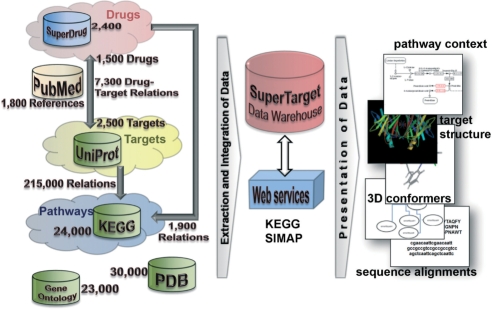
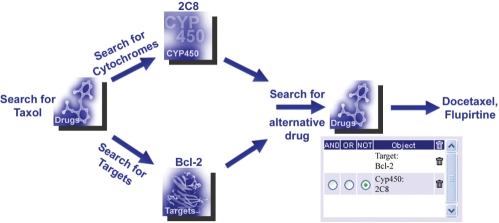
The molecular basis of drug action is often not well understood. This is partly because the very abundant and diverse information generated in the past decades on drugs is hidden in millions of medical articles or textbooks. Therefore, we developed a one-stop data warehouse, SuperTarget that integrates drug-related information about medical indication areas, adverse drug effects, drug metabolization, pathways and Gene Ontology terms of the target proteins. An easy-to-use query interface enables the user to pose complex queries, for example to find drugs that target a certain pathway, interacting drugs that are metabolized by the same cytochrome P450 or drugs that target the same protein but are metabolized by different enzymes. Furthermore, we provide tools for 2D drug screening and sequence comparison of the targets. The database contains more than 2500 target proteins, which are annotated with about 7300 relations to 1500 drugs; the vast majority of entries have pointers to the respective literature source. A subset of these drugs has been annotated with additional binding information and indirect interactions and is available as a separate resource called Matador. SuperTarget and Matador are available at http://insilico.charite.de/supertarget and http://matador.embl.de.
Overview
The claims and statistics of this paper haven’t been checked yet.
Run the check — free, no account needed. It reads the open-access text and checks the sources it cites.
Integrity signals
Registry
Cites
Statistics
Figures
Verification
Claims the paper makes
The claims and statistics of this paper haven’t been checked yet.
Run the check — free, no account needed. It reads the open-access text and checks the sources it cites.
Claims other papers make about this one
Each is checked against this paper’s own text: does it say what the citing paper says it does?
In the citing paper
“This analysis identified 10 drug annotations with FDR < 0.05 including four drugs that are either estrogen receptor agonists (diethylstilbestrol, Implanon [etonogestril implant]), or anti-estrogens (tamoxifen and raloxifene); in addition to nicotine, cocaine, cyclothiazide, felbamate, and riluzole.”
From Bi-ancestral depression GWAS in the Million Veteran Program and meta-analysis in >1.2 million individuals highlight new therapeutic directions (2021) · cites this paper as [19]
Self-check
Percentages, sums and reported differences re-computed from the paper’s own numbers.
The self-check needs the paper’s full text.
Citations
Cites
DrugBank: a comprehensive resource for in silico drug discovery and exploration
Wishart, D. S. (2006) · Nucleic Acids Research · doi:10.1093/nar/gkj067 · Cited by 3,892 · cited 4×
“In a last step, relations from other databases, namely DrugBank (3), KEGG (9), PDB (10), SuperLigands (11) and TTD (4), were checked for drug-target interactions not identified with the preceding steps.”
BackgroundInfluentialThe Universal Protein Resource (UniProt)
Bairoch, A. (2004) · Nucleic Acids Research · doi:10.1093/nar/gki070 · Cited by 3,774
From genomics to chemical genomics: new developments in KEGG
Kanehisa, M. I. (2005) · Nucleic Acids Research · doi:10.1093/nar/gkj102 · Cited by 3,126 · cited 2×
“Proven or potential target proteins are represented by sequences as stored in UniProt (12), by functional annotations extracted from GOA (13) and by related pathway information provided by KEGG (9) (compare Figure 1).”
Backgroundvon Mering, C. (2004) · Nucleic Acids Research · doi:10.1093/nar/gki005 · Cited by 1,768 · cited 2×
“The most probable candidates were identified using a benchmarking scheme ( 8 ) and manually curated.”
MethodThe Gene Ontology Annotation (GOA) Database: sharing knowledge in Uniprot with Gene Ontology
Camon, E. B. (2003) · Nucleic Acids Research · doi:10.1093/nar/gkh021 · Cited by 927 · cited 1×
“Proven or potential target proteins are represented by sequences as stored in UniProt (12), by functional annotations extracted from GOA (13) and by related pathway information provided by KEGG (9) (compare Figure 1).”
BackgroundDrugs, their targets and the nature and number of drug targets
Imming, P., Sinning, C., & Meyer, A. (2006) · Nature Reviews Drug Discovery · doi:10.1038/nrd2132 · Cited by 850 · cited 1×
“For some drugs even the primary targets are still unknown, for example, Diloxanide, Niclosamide and Ambroxol are administered successfully although their effect on human metabolism is still not clarified at a molecular level (1).”
BackgroundDo Structurally Similar Molecules Have Similar Biological Activity?
Martin, Y. C., Kofron, J. L., & Traphagen, L. M. (2002) · Journal of Medicinal Chemistry · doi:10.1021/jm020155c · Cited by 806 · cited 1×
“Since compounds with high structural similarity frequently exhibit similar activities (14), all drugs with comparable structural fingerprints are made accessible.”
BackgroundTTD: Therapeutic Target Database
Chen, X. (2002) · Nucleic Acids Research · doi:10.1093/nar/30.1.412 · Cited by 723 · cited 4×
“Another notable database is the Therapeutic Target Database (TTD) (4), which holds target information on about 1000 small molecule drugs.”
BackgroundInfluentialLiterature mining for the biologist: from information retrieval to biological discovery
Jensen, L. J., Šarić, J., & Peer Bork, B. (2006) · Nature Reviews Genetics · doi:10.1038/nrg1768 · Cited by 632 · cited 1×
“In parallel, potential drug-target relations were automatically extracted from Medline by searching for synonyms of drugs, proteins and Medical Subject Headings (MeSH terms) describing groups of proteins (7).”
MethodSelf-citationThe Universal Protein Resource (UniProt)
The UniProt Consortium (2006) · Nucleic Acids Research · doi:10.1093/nar/gkl929 · Cited by 572
Cited by
Sorted by citations
Items 101–200 of 651
Rayhan, F., Ahmed, S., Shatabda, S., Farid, D. M., Mousavian, Z., Dehzangi, A., & Rahman, M. S. (2017) · Scientific Reports · doi:10.1038/s41598-017-18025-2 · Cited by 121
“Yamanishi et al. used DrugBank [39], KEGG BRITE [40], BRENDA [41] and SuperTarget [42] to extract information about drug-target interactions.”
MethodArtificial intelligence in drug combination therapy
Tsigelny, I. F. (2018) · Briefings in Bioinformatics · doi:10.1093/bib/bby004 · Cited by 124
A review on compound-protein interaction prediction methods: Data, format, representation and model
Lim, S., Lu, Y., Cho, C. Y., Sung, I., Kim, J.-W., Kim, Y., Park, S., & Kim, S. (2021) · Computational and Structural Biotechnology Journal · doi:10.1016/j.csbj.2021.03.004 · Cited by 120
Cao, D., Liu, S., Xu, Q., Lü, H., Huang, J.-H., Hu, Q., & Liang, Y. (2012) · Analytica Chimica Acta · doi:10.1016/j.aca.2012.09.021 · Cited by 120
Drug repurposing and adverse event prediction using high‐throughput literature analysis
Deftereos, S., Andronis, C., Friedla, E. J., Persidis, A., & Persidis, A. (2011) · WIREs Systems Biology and Medicine · doi:10.1002/wsbm.147 · Cited by 118
“…[PDSP Ki Database, 65 Protein Data Bank (PDB), 66 KEGG, 67 Reactome, 68 NCI-Nature Pathway Interaction Database, 69 Drug-Bank, 70 and MATADOR 71 ] and drug–ligand interactions (GLIDA, 72 PharmGKB, 73,74 Comparative Toxi-cogenomics Database (CTD), 75 and BindingDB 76 ) are incorporated in…”
Huthmacher, C., Hoppe, A., Bulik, S., & Holzhütter, H. (2010) · BMC Systems Biology · doi:10.1186/1752-0509-4-120 · Cited by 126
“To address the question whether some of our predicted targets that are not contained in our gold standard are nevertheless valid targets, the SuperTarget databases [81] was queried with the respective EC numbers to check whether some of these reactions are catalyzed by enzymes that were previously targeted in the cour…”
BackgroundLink prediction in drug-target interactions network using similarity indices
Lu, Y., Guo, Y., & Korhonen, A. (2017) · BMC Bioinformatics · doi:10.1186/s12859-017-1460-z · Cited by 119
“We apply four types of similarity indices to the Manually Annotated Target and Drugs Online Resources (MATADOR) database of DTIs [12]: Common Neighbours, Jaccard index, Preferential Attachment and Katz index, after first adapting them (where needed) to the bipartite nature of the DTI network.”
BackgroundMethodInfluentialDINIES: drug–target interaction network inference engine based on supervised analysis
Yamanishi, Y., Kotera, M., Moriya, Y., Sawada, R., Kanehisa, M. I., & Goto, S. (2014) · Nucleic Acids Research · doi:10.1093/nar/gku337 · Cited by 116
Cao, D., Liang, Y., Yan, J., Tan, G., Xu, Q., & Liu, S. (2013) · Journal of Chemical Information and Modeling · doi:10.1021/ci400127q · Cited by 110
Li, M., Lu, Z., Wu, Y., & Li, Y. (2022) · Bioinformatics · doi:10.1093/bioinformatics/btac035 · Cited by 107
Predicting drug-target interactions by dual-network integrated logistic matrix factorization
Hao, M., Bryant, S. H., & Wang, Y. (2017) · Scientific Reports · doi:10.1038/srep40376 · Cited by 107
“One was obtained from the study of Yamanishi et al. 11 , which contains the DTI interaction information as retrieved from the KEGG BRITE 18 , BRENDA 19 , SuperTarget 20 and DrugBank 21 databases.”
MethodApplication of network link prediction in drug discovery
Abbas, K., Abbasi, A., Dong, S., Ling, N., Yu, L., Chen, B., Cai, S., & Hasan, Q. (2021) · BMC Bioinformatics · doi:10.1186/s12859-021-04082-y · Cited by 107
Allarakhia, M. (2013) · Drug Design Development and Therapy · doi:10.2147/dddt.s46289 · Cited by 103
“SuperTarget provides the additional connectivity between target protein and relations to drugs: specifically, 7,300 relations to 1,500 drugs.(8) Similarly, DrugBank, featuring both small- and large-molecule drugs in its database, provides comprehensive information on target diseases, proteins, genes, and organisms on…”
Janga, S. C., & Tzakos, A. G. (2009) · Molecular BioSystems · doi:10.1039/b908147j · Cited by 102
Identification of drug–target interactions via fuzzy bipartite local model
Ding, Y., Tang, J., & Guo, F. (2019) · Neural Computing and Applications · doi:10.1007/s00521-019-04569-z · Cited by 103
Machine learning approaches for drug combination therapies
Paltun, B. G., Samuel Kaski, A., & Mamitsuka, H. (2021) · Briefings in Bioinformatics · doi:10.1093/bib/bbab293 · Cited by 108
Drug Repositioning Through Network Pharmacology
Ye, H., Jia, W. P., Tang, K., Feuers, R. J., & Hong, H. (2016) · Current Topics in Medicinal Chemistry · doi:10.2174/1568026616666160530181328 · Cited by 103
Chen, C., Han, S., Jiang, Z., Salhi, A., Chen, R., Cui, X., & Yu, B. (2021) · Computers in Biology and Medicine · doi:10.1016/j.compbiomed.2021.104676 · Cited by 103
Network Neighbors of Drug Targets Contribute to Drug Side-Effect Similarity
Brouwers, L., Iskar, M., Zeller, G., van Noort, V., & Bork, P. (2011) · PLoS ONE · doi:10.1371/journal.pone.0022187 · Cited by 101
“Construction of drug target, side effect and pathway effect datasets Drugs and their protein targets were extracted from the drug target databases; DrugBank, Matador [41,42] and PDSP Ki (http://pdsp.med.unc.edu/indexR.html).”
MethodLi, Z., Han, P., You, Z., Li, X., Zhang, Y., Yu, H., Nie, R., & Chen, X. (2017) · Scientific Reports · doi:10.1038/s41598-017-10724-0 · Cited by 103
Computational methods for drug design and discovery: focus on China
Zheng, M., Liu, X., Xu, Y., Li, H., Luo, C., & Jiang, H. (2013) · Trends in Pharmacological Sciences · doi:10.1016/j.tips.2013.08.004 · Cited by 105
“There are some databases that focus on the biological actions of drugs, for example, DrugBank [26], TTD [27], SuperTarget [28], and MATADOR [28].”
BackgroundDASPfind: new efficient method to predict drug–target interactions
Ba-Alawi, W., Soufan, O., Essack, M., Kalnis, P., & Bajić, V. B. (2016) · Journal of Cheminformatics · doi:10.1186/s13321-016-0128-4 · Cited by 99
“We searched online resources (DrugBank [25], KEGG [28], SuperTarget [29], PubChem [30], GeneCards [31] and literature) to verify our predictions.”
MethodDrug-target interaction prediction: A Bayesian ranking approach
Peška, L., Búza, K., & Koller, J. (2017) · Computer Methods and Programs in Biomedicine · doi:10.1016/j.cmpb.2017.09.003 · Cited by 95
“The dataset was constructed by collecting the drugs’ and targets’ profiles from up-to-date versions of KEGG [38], DrugBank [39] and Matador [40] databases and parsing the verified DTIs.”
MethodNetwork Pharmacology: Exploring the Resources and Methodologies
Junaid, M., Khan, A., Ali, A., Fang, L., Yanjing, W., Xu, Q., & Wei, D. (2018) · Current Topics in Medicinal Chemistry · doi:10.2174/1568026618666180330141351 · Cited by 100
Shi, J., Yiu, S., Li, Y., Leung, H. C. M., & Chin, F. Y. L. (2015) · Methods · doi:10.1016/j.ymeth.2015.04.036 · Cited by 96
Revealing Drug-Target Interactions with Computational Models and Algorithms
Zhou, L., Li, Z., Yang, J., Tian, G., Liu, F., Wen, H., Li, P., Chen, M., Xiang, J., & Peng, L. (2019) · Molecules · doi:10.3390/molecules24091714 · Cited by 95
“SuperTarget The SuperTarget database [16] (http://insilico.”
BackgroundDTI-HETA: prediction of drug–target interactions based on GCN and GAT on heterogeneous graph
Shao, K., Zhang, Y., Wen, Y., Zhang, Z., He, S., & Bo, X. (2022) · Briefings in Bioinformatics · doi:10.1093/bib/bbac109 · Cited by 100
A paradigm shift in medicine: A comprehensive review of network-based approaches
Conte, F., Fiscon, G., Licursi, V., Bizzarri, D., D'Antò, T., Farina, L., & Paci, P. (2019) · Biochimica et Biophysica Acta (BBA) - Gene Regulatory Mechanisms · doi:10.1016/j.bbagrm.2019.194416 · Cited by 99
Xie, L., Xie, L., & Bourne, P. E. (2009) · Bioinformatics · doi:10.1093/bioinformatics/btp220 · Cited by 93
Self-citationDrug Repositioning for Cancer Therapy Based on Large-Scale Drug-Induced Transcriptional Signatures
Lee, H., Kang, S., & Kim, W. (2016) · PLoS ONE · doi:10.1371/journal.pone.0150460 · Cited by 93
“The compound-target information was collected from 10 public data sources: DrugBank [32], KEGG [31], MATADOR [33], TTD [34], KiDB [35], BindingDB [36], ChEMBL [37], WOMBAT [38], CTD [30], and DCDB [39].”
MethodUse of Bioinformatics Tools in Different Spheres of Life Sciences
Mehmood, M. A. (2014) · Journal of Data Mining in Genomics & Proteomics · doi:10.4172/2153-0602.1000158 · Cited by 90
Large-scale Direct Targeting for Drug Repositioning and Discovery
Zheng, C., Guo, Z., Huang, C., Wu, Z., Li, Y., Chen, X., Fu, Y., Ru, J., Shar, P. A., Wang, Y., et al. (2015) · Scientific Reports · doi:10.1038/srep11970 · Cited by 90
“The weight for each feature was then computed using equation (1).”
BackgroundMethodInfluentialComputational Drug Repurposing: Current Trends
Karaman, B., & Sippl, W. (2018) · Current Medicinal Chemistry · doi:10.2174/0929867325666180530100332 · Cited by 88
MCANet: shared-weight-based MultiheadCrossAttention network for drug–target interaction prediction
Bian, J., Zhang, X., Zhang, X., Xu, D., & Wang, G. (2023) · Briefings in Bioinformatics · doi:10.1093/bib/bbad082 · Cited by 90
Large‐scale prediction of drug–target relationships
Kuhn, M., Campillos, M., González, P., Jensen, L. J., & Bork, P. (2008) · FEBS Letters · doi:10.1016/j.febslet.2008.02.024 · Cited by 92
“TTD [24], DrugBank [25], SuperTarget [26] and Matador [26]”
BackgroundMethodSelf-citationPublic Domain Databases for Medicinal Chemistry
Nicola, G., Liu, T., & Gilson, M. K. (2012) · Journal of Medicinal Chemistry · doi:10.1021/jm300501t · Cited by 89
“…( http://insilico.charite.de/supertarget/) provides various views of over 330,000 interactions involving about 6,000 targets and 200,000 compounds, along with annotated pathway diagrams and the ability to browse for targets categorically, such as by function and cellular location 80, 81 .”
BackgroundMethodYoo, S., Kim, K., Nam, H., & Lee, D. (2018) · Nutrients · doi:10.3390/nu10081042 · Cited by 96
“Molecular targets of phytochemicals were collected from the DrugBank, the Drug Combination Database (DCDB) [26], the Comparative Toxicogenomics Database (CTD) [27], MATADOR [28], STITCH [29] and TTD [30] databases, and gene-phenotype associations were collected from the CTD database.”
MethodChu, Y., Shan, X., Chen, T., Jiang, M., Wang, Y., Wang, Q., Salahub, D. R., Xiong, Y., & Wei, D. (2020) · Briefings in Bioinformatics · doi:10.1093/bib/bbaa205 · Cited by 88
“It collects and integrates DTI data from KEGG BRITE [79], BRENDA [80], SuperTarget [81], and DrugBank [82] databases released in 2008.”
MethodDeep learning-based transcriptome data classification for drug-target interaction prediction
Xie, L., He, S., Song, X., Bo, X., & Zhang, Z. (2018) · BMC Genomics · doi:10.1186/s12864-018-5031-0 · Cited by 87
Validation strategies for target prediction methods
Mathai, N., Chen, Y., & Kirchmair, J. (2019) · Briefings in Bioinformatics · doi:10.1093/bib/bbz026 · Cited by 93
“In addition, SLAP was evaluated on 444 drug–target pairs recorded in MATADOR [96] (and not represented in the network) and successfully identified 170 of these interactions with high confidence.”
ASDCD: Antifungal Synergistic Drug Combination Database
Chen, X., Ren, B., Chen, M., Liu, M.-X., Ren, W., Wang, Q., Zhang, L., & Yan, G. (2014) · PLoS ONE · doi:10.1371/journal.pone.0086499 · Cited by 88
“Through these links, users can search for information about the interactions between drug and target based on the literature and such drug databases as KEGG, DrugBank and SuperTarget [39].”
BackgroundComputational toxicology: an overview of the sources of data and of modelling methods
Nigsch, F., Macaluso, M., Mitchell, J. B. O., & Zmuidinavicius, D. (2009) · Expert Opinion on Drug Metabolism & Toxicology · doi:10.1517/17425250802660467 · Cited by 88
“SuperTarget and Matador [79] , STITCH [80] , PDTD [81] , DrugBank [82] and DART [83] are but a few.”
BackgroundLu, Z., Song, G., Zhu, H., Lei, C., Sun, X., Wang, K., Qin, L., Chen, Y., Tang, J. P., & Li, M. (2025) · Nature Communications · doi:10.1038/s41467-025-57828-0 · Cited by 99
“We have cited these related papers in the revised manuscript.”
Building a virtual ligand screening pipeline using free software: a survey
Glaab, E. (2015) · Briefings in Bioinformatics · doi:10.1093/bib/bbv037 · Cited by 85
Drug–target interaction prediction from PSSM based evolutionary information
Mousavian, Z., Khakabimamaghani, S., Kavousi, K., & Masoudi‐Nejad, A. (2015) · Journal of Pharmacological and Toxicological Methods · doi:10.1016/j.vascn.2015.11.002 · Cited by 83
In Silico Toxicology Data Resources to Support Read-Across and (Q)SAR
Pawar, G. V., Madden, J. C., Ebbrell, D. J., Firman, J. W., & Cronin, M. (2019) · Frontiers in Pharmacology · doi:10.3389/fphar.2019.00561 · Cited by 89
“Some of the most valuable resources are Agile Protein Interactomes Data server (APID) (Alonso-Lopez et al., 2016), The Biological General Repository for Interaction Datasets (BioGRID) (Chatr-Aryamontri et al., 2015), CancerNet (Meng et al., 2015), CompPPI (Veres et al., 2015), The Database of Interacting Proteins (DIP…”
BackgroundAn up-to-date overview of computational polypharmacology in modern drug discovery
Chaudhari, R. R., Fong, L. W. R., Tan, Z., Huang, B., & Zhang, S. (2020) · Expert Opinion on Drug Discovery · doi:10.1080/17460441.2020.1767063 · Cited by 84
Mahmud, S., Chen, W., Han, M., Jahan, H., Liu, Y., & Hasan, S. M. M. (2019) · Analytical Biochemistry · doi:10.1016/j.ab.2019.113507 · Cited by 81
Sequence-based drug-target affinity prediction using weighted graph neural networks
Jiang, M., Wang, S., Zhang, S., Zhou, W. G., Zhang, Y., & Li, Z. (2022) · BMC Genomics · doi:10.1186/s12864-022-08648-9 · Cited by 86
“The positive samples of the data-set are obtained from two manually managed databases which are DrugBank [30] and matador [31].”
MethodCrichton, G., Guo, Y., Pyysalo, S., & Korhonen, A. (2018) · BMC Bioinformatics · doi:10.1186/s12859-018-2163-9 · Cited by 78
“This is an open online DTI database [27].”
BackgroundAchary, P. G. R. (2020) · Mini-Reviews in Medicinal Chemistry · doi:10.2174/1389557520666200429102334 · Cited by 89
Araki, H., Knapp, C., Tsai, P., & Print, C. G. (2012) · FEBS Open Bio · doi:10.1016/j.fob.2012.04.003 · Cited by 79
“MATADOR [32]”
Generating Genome-Scale Candidate Gene Lists for Pharmacogenomics
Hansen, N. T., Brunak, S., & Altman, R. B. (2009) · Clinical Pharmacology & Therapeutics · doi:10.1038/clpt.2009.42 · Cited by 77
Drug-Target Interaction Prediction through Label Propagation with Linear Neighborhood Information
Zhang, W., Chen, Y., & Li, D. (2017) · Molecules · doi:10.3390/molecules22122056 · Cited by 77
“We checked the top 10 interactions predicted by our method and looked for evidences in SuperTarget [38] to support our discoveries.”
BackgroundMethodInfluentialDrugClust: A machine learning approach for drugs side effects prediction
Dimitri, G. M., & Lió, P. (2017) · Computational Biology and Chemistry · doi:10.1016/j.compbiolchem.2017.03.008 · Cited by 77
Structure-Aware Multimodal Deep Learning for Drug–Protein Interaction Prediction
Wang, P., Zheng, S., Jiang, Y., Li, C., Liu, J., Wen, C., Patronov, A., Qian, D., Chen, H., & Yang, Y. (2022) · Journal of Chemical Information and Modeling · doi:10.1021/acs.jcim.2c00060 · Cited by 81
Meng, F., You, Z., Chen, X., Zhou, Y. Z., & An, J. (2017) · Molecules · doi:10.3390/molecules22071119 · Cited by 76
“These data can be freely obtained from the KEGG BRITE [7], BRENDA [30], SuperTarget [6], and Drug Bank [8] databases and were used as the gold-standard datasets by Yamanishi et al [27] The number of drugs known to target enzymes, ion channels, GPCRs, and nuclear receptors are 445, 210, 233, and 54, respectively.”
MethodMahmud, S., Chen, W., Liu, Y., Awal, M. A., Ahmed, K., Rahman, M. H., & Moni, M. A. (2021) · Briefings in Bioinformatics · doi:10.1093/bib/bbab046 · Cited by 73
“After that, we collected the drug chemical structures and protein sequences of these four types of datasets from the DrugBank [55], SuperTarget and Matador [56], KEGG BRITE [57] and BRENDA [58] databases.”
MethodAhmed, J., Meinel, T., Dunkel, M., Murgueitio, M. S., Adams, R. A., Blasse, C., Eckert, A. P., Preißner, S., & Preißner, R. (2010) · Nucleic Acids Research · doi:10.1093/nar/gkq910 · Cited by 72
“Core information of compounds and drugs was collected from different databases like the Developmental Therapeutics Program (DTP) at the NCI (12), PubChem (19), SuperTarget (20) and SuperDrug (15).”
BackgroundSelf-citationIwata, M., Sawada, R., Iwata, H., Kotera, M., & Yamanishi, Y. (2017) · Scientific Reports · doi:10.1038/srep40164 · Cited by 70
“Compound–protein interaction data were acquired from seven databases: ChEMBL 41 , MATADOR 43 , DrugBank 44 , the Psychoactive Drug Screening Program Ki 45 , KEGG 24 , the Binding DB 46 , and the Therapeutic Target Database 47 .”
DTi2Vec: Drug–target interaction prediction using network embedding and ensemble learning
Thafar, M. A., Olayan, R. S., Albaradei, S., Bajic, V. B., Gojobori, T., Essack, M., & Gao, X. (2021) · Journal of Cheminformatics · doi:10.1186/s13321-021-00552-w · Cited by 70
“We manually confirmed those novel candidate DTIs using scientific literature and biomedical databases, including DrugBank [70], KEGG [47], ChEMBL [71], PubChem [72], Comparative Toxicogenomics Database (CTD) [73], MATADOR and SuperTarget [50], and Uniprot knowledgebase [74].”
MethodInfluentialChoudhary, N., & Singh, V. (2018) · PLoS ONE · doi:10.1371/journal.pone.0191006 · Cited by 70
Tripathi, N., Goshisht, M. K., Sahu, S. K., & Arora, C. (2021) · Molecular Diversity · doi:10.1007/s11030-021-10237-z · Cited by 75
Iwata, H., Sawada, R., Mizutani, S., & Yamanishi, Y. (2015) · Journal of Chemical Information and Modeling · doi:10.1021/ci500670q · Cited by 70
Kernel-based data fusion improves the drug–protein interaction prediction
Wang, Y., Zhang, C., Deng, N.-Y., & Wang, Y. (2011) · Computational Biology and Chemistry · doi:10.1016/j.compbiolchem.2011.10.003 · Cited by 70
SELF-BLM: Prediction of drug-target interactions via self-training SVM
Keum, J., & Nam, H. (2017) · PLoS ONE · doi:10.1371/journal.pone.0171839 · Cited by 71
Target-Based Drug Repositioning Using Large-Scale Chemical–Protein Interactome Data
Sawada, R., Iwata, H., Mizutani, S., & Yamanishi, Y. (2015) · Journal of Chemical Information and Modeling · doi:10.1021/acs.jcim.5b00330 · Cited by 69
Application of artificial intelligence in drug design: A review
Singh, S., Kaur, N., & Gehlot, A. (2024) · Computers in Biology and Medicine · doi:10.1016/j.compbiomed.2024.108810 · Cited by 76
Durán, C., Daminelli, S., Thomas, J. M., Haupt, V. J., Schroeder, M., & Cannistraci, C. V. (2017) · Briefings in Bioinformatics · doi:10.1093/bib/bbx041 · Cited by 69
Douglass, E. F., Allaway, R. J., Szalai, B., Wang, W., Tian, T., Fernández-Torras, A., Realubit, R., Karan, C., Zheng, S., Pessia, A., et al. (2022) · Cell Reports Medicine · doi:10.1016/j.xcrm.2021.100492 · Cited by 68
“Drug target datasets include: DrugBank,(31) ChEMBL,(32) KEGG,(33) and MATADOR.(34) Article ll OPEN ACCESS”
Biochemical network-based drug-target prediction
Klipp, E., Wade, R. C., & Kummer, U. (2010) · Current Opinion in Biotechnology · doi:10.1016/j.copbio.2010.05.004 · Cited by 68
Sequence-based prediction of protein binding regions and drug–target interactions
Lee, I., & Nam, H. (2022) · Journal of Cheminformatics · doi:10.1186/s13321-022-00584-w · Cited by 72
“We collected DTIs from the MATADOR database [36] as positive DTIs, and DTIs that appeared as training DTIs were excluded from the validation dataset.”
MethodLabute, M. X., Zhang, X., Lenderman, J., Bennion, B. J., Wong, S., & Lightstone, F. C. (2014) · PLoS ONE · doi:10.1371/journal.pone.0106298 · Cited by 66
“Mizutani [16] applied SCCA to find relationships between the drug-protein interaction network of 658 drugs from DrugBank and 1368 proteins extracted from DrugBank and Matador [17] databases to 1339 side effects associations as found in SIDER [18].”
MethodSAG-DTA: Prediction of Drug–Target Affinity Using Self-Attention Graph Network
Zhang, S., Jiang, M., Wang, S., Wang, X., Wei, Z., & Li, Z. (2021) · International Journal of Molecular Sciences · doi:10.3390/ijms22168993 · Cited by 66
“The Human dataset includes positive CPI pairs derived from DrugBank [32] and Matador [33], and it is characterized by the highly credible negative CPI samples.”
MethodCichońska, A., Rousu, J., & Aittokallio, T. A. (2015) · Expert Opinion on Drug Discovery · doi:10.1517/17460441.2015.1096926 · Cited by 65
“sg/group/ttd SuperTarget [89] Drug--target interactions http://insilico.”
BackgroundPredicting Drug-Target Interactions Over Heterogeneous Information Network
Su, X., Hu, P., Yi, H.-C., You, Z., & Hu, L. (2022) · IEEE Journal of Biomedical and Health Informatics · doi:10.1109/jbhi.2022.3219213 · Cited by 66
“To narrow such a huge gap, the development of computational methods proposed for DTI prediction has attracted much more attention in recent years, especially when several easy-to-access DTI datasets [4], [5], [6] are published.”
BackgroundEstablished and Emerging Trends in Computational Drug Discovery in the Structural Genomics Era
Taboureau, O., Baell, J. B., Fernández‐Recio, J., & Villoutreix, B. O. (2012) · Chemistry & Biology · doi:10.1016/j.chembiol.2011.12.007 · Cited by 63
FRnet-DTI: Deep convolutional neural network for drug-target interaction prediction
Rayhan, F., Ahmed, S., Mousavian, Z., Farid, D. M., & Shatabda, S. (2020) · Heliyon · doi:10.1016/j.heliyon.2020.e03444 · Cited by 62
Bess, A., Berglind, F., Mukhopadhyay, S., Bryliński, M., Griggs, N. W., Cho, T., Galliano, C., & Wasan, K. M. (2021) · Drug Discovery Today · doi:10.1016/j.drudis.2021.10.022 · Cited by 64
A review of deep learning methods for ligand based drug virtual screening
Wu, H., Liu, J., Zhang, R., Lu, Y., Cui, G., Cui, Z., & Ding, Y. (2024) · Fundamental Research · doi:10.1016/j.fmre.2024.02.011 · Cited by 68
“SuperTarget is a repository that constitutes information on DTI, drug metabolism, pathways, and Gene Ontology (GO) terms [49] .”
BackgroundMahmud, S., Chen, W., Jahan, H., Liu, Y., Sujan, N. I., & Ahmad, S. (2019) · IEEE Access · doi:10.1109/access.2019.2910277 · Cited by 62
Sawada, R., Kotera, M., & Yamanishi, Y. (2014) · Molecular Informatics · doi:10.1002/minf.201400066 · Cited by 61
Yan, X. W., Zhang, S., & Zhang, S.-Y. (2015) · Molecular BioSystems · doi:10.1039/c5mb00615e · Cited by 58
“The drug-target interaction adjacent matrix A corresponding to the drug-target interaction network is derived from the KEGG BRITE[2], BRENDA[51], SuperTarget [52] and DrugBank [53] databases.”
MethodRecent Advances in the Machine Learning-Based Drug-Target Interaction Prediction
Zhang, W., Lin, W., Zhang, D., Wang, S., Shi, J., & Niu, Y. (2018) · Current Drug Metabolism · doi:10.2174/1389200219666180821094047 · Cited by 58
In Silico Oncology Drug Repositioning and Polypharmacology
Cheng, F. (2018) · Methods in molecular biology · doi:10.1007/978-1-4939-8868-6_15 · Cited by 57
Dong, J. N., Yao, Z., Wen, M., Zhu, M., Wang, N., Miao, H., Lü, A., Zeng, W., & Cao, D. (2016) · Journal of Cheminformatics · doi:10.1186/s13321-016-0146-2 · Cited by 59
“Consequently, public databases for human-specific molecular interaction data have been undergoing a rapid growth within the past decade, such as BIND [18], DIP [19], STITCH [20], HPRD [21], TTD [22], DrugBank [23], ChEMBL [24], KEGG [25], BindingDB [26], SuperTarget and Matador [27], to name a few.”
BackgroundWeb-based drug repurposing tools: a survey
Sam, E., & Athri, P. (2017) · Briefings in Bioinformatics · doi:10.1093/bib/bbx125 · Cited by 62
Systems pharmacology approaches in herbal medicine research: a brief review
Lee, M., Shin, H., Park, M., Kim, A., Cha, S., & Lee, H. (2022) · BMB Reports · doi:10.5483/bmbrep.2022.55.9.102 · Cited by 62
“ca/), DrugBank, CTD (78), MATADOR (79), STITCH (28), TTD, BioGrid (80)”
Drug repositioning through incomplete bi-cliques in an integrated drug–target–disease network
Daminelli, S., Haupt, V. J., Reimann, M., & Schroeder, M. (2012) · Integrative Biology · doi:10.1039/c2ib00154c · Cited by 55
Hao, M., Wang, Y., & Bryant, S. H. (2016) · Analytica Chimica Acta · doi:10.1016/j.aca.2016.01.014 · Cited by 56
“These interaction information was retrieved from KEGG BRITE [13], BRENDA [14], SuperTarget [15] and DrugBank [16] databases.”
MethodRen, Z.-H., You, Z., Zou, Q., Yu, C.-Q., Ma, Y., Guan, Y.-J., You, H.-R., Wang, X., & Pan, J. (2023) · Journal of Translational Medicine · doi:10.1186/s12967-023-03876-3 · Cited by 58
“According to the type of protein, the dataset can be divided into four main datasets containing enzymes, G-protein-coupled receptors (GPCR), ion channels and nuclear receptors, which have been collected from DrugBank [16], BRENDA [47], KEGG ERITE [48] and Super-Target [49].”
MethodEpigenetic-based therapy: From single- to multi-target approaches
Benedetti, R., Conte, M., Iside, C., & Altucci, L. (2015) · The International Journal of Biochemistry & Cell Biology · doi:10.1016/j.biocel.2015.10.016 · Cited by 56
Screening drug-target interactions with positive-unlabeled learning
Peng, L., Zhu, W. Q., Liao, B., Yu, D., Chen, M., Chen, Y., & Yang, J. (2017) · Scientific Reports · doi:10.1038/s41598-017-08079-7 · Cited by 55
Sawada, R., Iwata, M., Tabei, Y., Yamato, H., & Yamanishi, Y. (2018) · Scientific Reports · doi:10.1038/s41598-017-18315-9 · Cited by 54
“Inhibitory and activatory interactions of compound–protein pairs, including drug–protein pairs, were obtained from the seven public databases ChEMBL 22 , MATADOR 23 , DrugBank 24 , Psychoactive Drug Screening Program Ki (PDSP-Ki) 25 , KEGG DRUG 26 , BindingDB 27 and Therapeutic Target Database 28 .”
SSnet: A Deep Learning Approach for Protein-Ligand Interaction Prediction
Verma, N., Qu, X., Trozzi, F., Elsaied, M., Karki, N., Tao, P., Zoltowski, B. D., Larson, E. C., & Kraka, E. (2021) · International Journal of Molecular Sciences · doi:10.3390/ijms22031392 · Cited by 57
“Most state-of-the-art models for PLI predictions use human and C. elegans created by Liu et al. [59] The positive PLIs for these datasets are considered from DrugBank 4.1 [60] and Matador [61].”
BackgroundInfluentialPPAEDTI: Personalized Propagation Auto-Encoder Model for Predicting Drug-Target Interactions
Li, Y.-C., You, Z., Yu, C.-Q., Wang, L., Wong, L., Hu, L., Hu, P., & Huang, Y. (2022) · IEEE Journal of Biomedical and Health Informatics · doi:10.1109/jbhi.2022.3217433 · Cited by 57
“For example, Kyoto Encyclopedia of Genes and Genomes (KEGG) [7], DrugBank [8], [9], SuperTarget & Matador [10] and Therapeutic Target Database (TTD) [11] provide the information of a large number of experimental testing results such as the structure of the drugs and targets.”
BackgroundMethodBioinformatics: new tools and applications in life science and personalized medicine
Branco, I., & Choupina, A. (2021) · Applied Microbiology and Biotechnology · doi:10.1007/s00253-020-11056-2 · Cited by 60
Network predicting drug’s anatomical therapeutic chemical code
Wang, Y., Chen, S., Deng, N.-Y., & Wang, Y. (2013) · Bioinformatics · doi:10.1093/bioinformatics/btt158 · Cited by 53
Drug–target interaction prediction with Bipartite Local Models and hubness-aware regression
Búza, K., & Peška, L. (2017) · Neurocomputing · doi:10.1016/j.neucom.2017.04.055 · Cited by 53
Noh, H., Shoemaker, J. E., & Gunawan, R. (2017) · Nucleic Acids Research · doi:10.1093/nar/gkx1314 · Cited by 50
“Meanwhile, MATADOR, CTD, and STITCH gave interactions between proteins and chemical compounds, curated from text mining and experimental evidences.”
Background
Metadata
- Authors
- Gunther, S., Kuhn, M., Dunkel, M., Campillos, M., Senger, C., Petsalaki, E., Ahmed, J., Urdiales, E. G., Gewiess, A., Jensen, L. J., Schneider, R., Skoblo, R., Russell, R. B., Bourne, P. E., Bork, P., & Preissner, R.
- Affiliations
- University of California San Diego (US)
- Corresponding author
- Preissner, R.
- ORCID
- Venue
- Nucleic Acids Research
- Publisher
- Oxford University Press (OUP)
- Published
- 2007-12-23
- Volume
- 36
- Issue
- Database
- Pages
- D919-D922
- ISSN
- 0305-1048 (ISSN-L)
- 1362-4962
- PMC
- PMC2238858
- OpenAlex
- W2108069034
- Cited by
- 647
- References
- 18
- Citations by year
- 2026: 13 · 2025: 34 · 2024: 33 · 2023: 42 · 2022: 57 · 2021: 73 · 2020: 57 · 2019: 48 · 2018: 43 · 2017: 40 · 2016: 24 · 2015: 36 · 2014: 22 · 2013: 28 · 2012: 30
- FWCI
- 16.70
- Type
- journal article
- Language
- en
- Open access
- gold
- doi.org
- Licence
- Locations
- Nucleic Acids Research (publishedVersion, cc-by-nc)
- PubMed Central (publishedVersion, cc-by-nc)
- PubMed (publishedVersion)
- MDC Repository (Max-Delbrueck-Center for Molecular Medicine) (acceptedVersion)
- Open Repository and Bibliography (University of Luxembourg) (submittedVersion, cc-by-nc-sa)
- Funders
- Deutsche Forschungsgemeinschaft (SFB 449)
- Bundesministerium für Bildung und Forschung (SFB 449)
- Deutsche Krebshilfe
- Topics
- Life Sciences › Pharmacology, Toxicology and Pharmaceutics › Drug Discovery › Computational Drug Discovery Methods
- Health Sciences › Medicine › Health Informatics › Biomedical Text Mining and Ontologies
- Life Sciences › Biochemistry, Genetics and Molecular Biology › Molecular Biology › Bioinformatics and Genomic Networks
- Keywords
- drug-target interactions, matadors, cytochrome P450, drug pathways, Gene Ontology, adverse drug reactions, drug screening, protein sequence comparison, literature annotation
- MeSH terms
- Pharmaceutical Preparations, Pharmacology, Proteins, User-Computer Interface, Drug Design, Databases, Factual, Drug Delivery Systems, Internet
About these checks
Registry, retraction, Cites and statistics results are computed, not judged, with one exception: a printed reference that no index lists is read once by a model before it counts as a citation error. Claims are extracted by a model and kept only when their quote appears verbatim in the text; each cited source is then checked, with a model’s help, for whether it says what the claim relies on. Those verdicts can be wrong — read the claim’s quote and the cited source before relying on one.
Statistics and arithmetic are recomputed, not judged.
Confidence bands are shown only for fields calibrated on our annotated test set. None is calibrated yet, so no band is shown.
What counts as a claim ›How we measure confidence ›How we check this ›
Are you an author, or do you see a problem with this page? Request a review
