

The DOI matches its Crossref record; 18 of the 18 references it cites were found in a registry or an index.
SuperTarget and Matador: resources for exploring drug-target relationships
Open accessAbstract
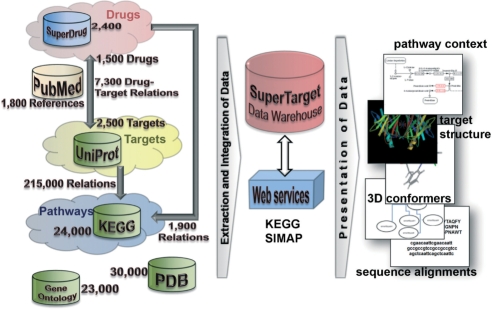
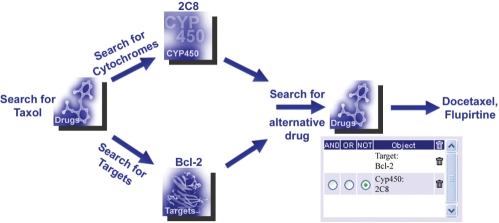
The molecular basis of drug action is often not well understood. This is partly because the very abundant and diverse information generated in the past decades on drugs is hidden in millions of medical articles or textbooks. Therefore, we developed a one-stop data warehouse, SuperTarget that integrates drug-related information about medical indication areas, adverse drug effects, drug metabolization, pathways and Gene Ontology terms of the target proteins. An easy-to-use query interface enables the user to pose complex queries, for example to find drugs that target a certain pathway, interacting drugs that are metabolized by the same cytochrome P450 or drugs that target the same protein but are metabolized by different enzymes. Furthermore, we provide tools for 2D drug screening and sequence comparison of the targets. The database contains more than 2500 target proteins, which are annotated with about 7300 relations to 1500 drugs; the vast majority of entries have pointers to the respective literature source. A subset of these drugs has been annotated with additional binding information and indirect interactions and is available as a separate resource called Matador. SuperTarget and Matador are available at http://insilico.charite.de/supertarget and http://matador.embl.de.
Overview
The claims and statistics of this paper haven’t been checked yet.
Run the check — free, no account needed. It reads the open-access text and checks the sources it cites.
Integrity signals
Registry
Cites
Statistics
Figures
Verification
Claims the paper makes
The claims and statistics of this paper haven’t been checked yet.
Run the check — free, no account needed. It reads the open-access text and checks the sources it cites.
Claims other papers make about this one
Each is checked against this paper’s own text: does it say what the citing paper says it does?
In the citing paper
“This analysis identified 10 drug annotations with FDR < 0.05 including four drugs that are either estrogen receptor agonists (diethylstilbestrol, Implanon [etonogestril implant]), or anti-estrogens (tamoxifen and raloxifene); in addition to nicotine, cocaine, cyclothiazide, felbamate, and riluzole.”
From Bi-ancestral depression GWAS in the Million Veteran Program and meta-analysis in >1.2 million individuals highlight new therapeutic directions (2021) · cites this paper as [19]
Self-check
Percentages, sums and reported differences re-computed from the paper’s own numbers.
The self-check needs the paper’s full text.
Citations
Cites
DrugBank: a comprehensive resource for in silico drug discovery and exploration
Wishart, D. S. (2006) · Nucleic Acids Research · doi:10.1093/nar/gkj067 · Cited by 3,892 · cited 4×
“In a last step, relations from other databases, namely DrugBank (3), KEGG (9), PDB (10), SuperLigands (11) and TTD (4), were checked for drug-target interactions not identified with the preceding steps.”
BackgroundInfluentialThe Universal Protein Resource (UniProt)
Bairoch, A. (2004) · Nucleic Acids Research · doi:10.1093/nar/gki070 · Cited by 3,774
From genomics to chemical genomics: new developments in KEGG
Kanehisa, M. I. (2005) · Nucleic Acids Research · doi:10.1093/nar/gkj102 · Cited by 3,126 · cited 2×
“Proven or potential target proteins are represented by sequences as stored in UniProt (12), by functional annotations extracted from GOA (13) and by related pathway information provided by KEGG (9) (compare Figure 1).”
Backgroundvon Mering, C. (2004) · Nucleic Acids Research · doi:10.1093/nar/gki005 · Cited by 1,768 · cited 2×
“The most probable candidates were identified using a benchmarking scheme ( 8 ) and manually curated.”
MethodThe Gene Ontology Annotation (GOA) Database: sharing knowledge in Uniprot with Gene Ontology
Camon, E. B. (2003) · Nucleic Acids Research · doi:10.1093/nar/gkh021 · Cited by 927 · cited 1×
“Proven or potential target proteins are represented by sequences as stored in UniProt (12), by functional annotations extracted from GOA (13) and by related pathway information provided by KEGG (9) (compare Figure 1).”
BackgroundDrugs, their targets and the nature and number of drug targets
Imming, P., Sinning, C., & Meyer, A. (2006) · Nature Reviews Drug Discovery · doi:10.1038/nrd2132 · Cited by 850 · cited 1×
“For some drugs even the primary targets are still unknown, for example, Diloxanide, Niclosamide and Ambroxol are administered successfully although their effect on human metabolism is still not clarified at a molecular level (1).”
BackgroundDo Structurally Similar Molecules Have Similar Biological Activity?
Martin, Y. C., Kofron, J. L., & Traphagen, L. M. (2002) · Journal of Medicinal Chemistry · doi:10.1021/jm020155c · Cited by 806 · cited 1×
“Since compounds with high structural similarity frequently exhibit similar activities (14), all drugs with comparable structural fingerprints are made accessible.”
BackgroundTTD: Therapeutic Target Database
Chen, X. (2002) · Nucleic Acids Research · doi:10.1093/nar/30.1.412 · Cited by 723 · cited 4×
“Another notable database is the Therapeutic Target Database (TTD) (4), which holds target information on about 1000 small molecule drugs.”
BackgroundInfluentialLiterature mining for the biologist: from information retrieval to biological discovery
Jensen, L. J., Šarić, J., & Peer Bork, B. (2006) · Nature Reviews Genetics · doi:10.1038/nrg1768 · Cited by 632 · cited 1×
“In parallel, potential drug-target relations were automatically extracted from Medline by searching for synonyms of drugs, proteins and Medical Subject Headings (MeSH terms) describing groups of proteins (7).”
MethodSelf-citationThe Universal Protein Resource (UniProt)
The UniProt Consortium (2006) · Nucleic Acids Research · doi:10.1093/nar/gkl929 · Cited by 572
Cited by
Sorted by citations
Network pharmacology: the next paradigm in drug discovery
Hopkins, A. L. (2008) · Nature Chemical Biology · doi:10.1038/nchembio.118 · Cited by 4,622
A comprehensive map of molecular drug targets
Santos, R., Ursu, O., Gaulton, A., Bento, A. P., Donadi, R. S., Bologa, C. G., Karlsson, A., Al-Lazikani, B., Hersey, A., Oprea, T. I., et al. (2017) · Nature Reviews Drug Discovery · doi:10.1038/nrd.2016.230 · Cited by 2,427
“DrugBank 9 , the most widely used specialist drug information resource, maps drugs to proteins that have been reported to bind to them, and SuperTarget 10 is a text-mining-based compilation of direct and indirect drug targets.”
BackgroundDrugBank 3.0: a comprehensive resource for 'Omics' research on drugs
Knox, C., Law, V., Jewison, T., Liu, P., Ly, S., Frolkis, A., Pon, A., Banco, K., Mak, C., Neveu, V., et al. (2010) · Nucleic Acids Research · doi:10.1093/nar/gkq1126 · Cited by 1,832
“Over the years, other drug-specific databases have emerged, including PDTD (2), STITCH (3), SuperTarget (4) and the Druggable Genome database (5).”
BackgroundInfluentialSTITCH 5: augmenting protein–chemical interaction networks with tissue and affinity data
Szklarczyk, D., Santos, A., von Mering, C., Jensen, L. J., Bork, P., & Kuhn, M. (2015) · Nucleic Acids Research · doi:10.1093/nar/gkv1277 · Cited by 1,740
Self-citationiDEP: an integrated web application for differential expression and pathway analysis of RNA-Seq data
Ge, X., Son, E., & Yao, R. (2018) · BMC Bioinformatics · doi:10.1186/s12859-018-2486-6 · Cited by 1,677
Drug target identification using side-effect similarity
Campillos, M., Kuhn, M., Gavin, A.-C., Jensen, L. J., & Bork, P. (2008) · Science · doi:10.1126/science.1158140 · Cited by 1,248
Self-citationPrediction of drug–target interaction networks from the integration of chemical and genomic spaces
Yamanishi, Y., Araki, M., Gutteridge, A., Honda, W., & Kanehisa, M. I. (2008) · Bioinformatics · doi:10.1093/bioinformatics/btn162 · Cited by 1,148
STITCH: interaction networks of chemicals and proteins
Kuhn, M., von Mering, C., Campillos, M., Jensen, L. J., & Bork, P. (2007) · Nucleic Acids Research · doi:10.1093/nar/gkm795 · Cited by 996
“To assess the relevance of the association by a shared pharmacological action, the number of chemicals annotated with each pharmacological action is determined and benchmarked against the probability of sharing a drug target in the MATADOR database.”
BackgroundInfluentialSelf-citationGaussian interaction profile kernels for predicting drug–target interaction
van Laarhoven, T., Nabuurs, S. B., & Marchiori, E. (2011) · Bioinformatics · doi:10.1093/bioinformatics/btr500 · Cited by 943
“…al., 2006), DrugBank (Wishart et al., 2008), GLIDA (Okuno et al., 2007), SuperTarget and Matador (Günther et al., 2008), and BRENDA (Schomburg et al., 2004), and ChEMBL (Overington, 2009), containing drug– target interaction and other related sources of information, like chemical and genomic data.”
Structure and dynamics of molecular networks: A novel paradigm of drug discovery
Csermely, P., Korcsmáros, T., Kiss, H., London, G., & Nussinov, R. (2013) · Pharmacology & Therapeutics · doi:10.1016/j.pharmthera.2013.01.016 · Cited by 911
“bank.ca Knox et al., 2011 PharmGKB http://pharmgkb.org Thorn et al., 2010 Therapeutic Target Database http://bidd.nus.edu.sg/group/cjttd/ TTD_HOME.asp Zhu et al., 2012b MATADOR http://matador.embl.de Günther et al., 2008 Supertarget http://insilico.charite.de/supertarget Hecker et al., 2012 KEGG DRUG http://genome.jp/…”
BackgroundPREDICT: a method for inferring novel drug indications with application to personalized medicine
Gottlieb, A., Stein, G. Y., Ruppin, E., & Sharan, R. (2011) · Molecular Systems Biology · doi:10.1038/msb.2011.26 · Cited by 900
Prediction of Drug-Target Interactions and Drug Repositioning via Network-Based Inference
Cheng, F., Liu, C., Jiang, J., Lü, W., Li, W., Liu, G., Zhou, W., Huang, J. Y., & Tang, Y. (2012) · PLoS Computational Biology · doi:10.1371/journal.pcbi.1002503 · Cited by 827
“All DTI data in the benchmark data sets were collected from KEGG BRITE [49], BRENDA [50], SuperTarget [51] and DrugBank [23].”
MethodProTox: a web server for the in silico prediction of rodent oral toxicity
Drwal, M. N., Banerjee, P., Dunkel, M., Wettig, M. R., & Preißner, R. (2014) · Nucleic Acids Research · doi:10.1093/nar/gku401 · Cited by 766
“Wherever available, further information about the protein targets is given as links to the SuperTarget (15,16) database.”
BackgroundSelf-citationTsubaki, M., Tomii, K., & Sese, J. (2019) · Bioinformatics · doi:10.1093/bioinformatics/bty535 · Cited by 688
Lee, I., Keum, J., & Nam, H. (2019) · PLoS Computational Biology · doi:10.1371/journal.pcbi.1007129 · Cited by 671
“We collected positive DTIs from the MATADOR database [38], including ‘DIRECT’ protein annotations, and all the DTIs observed in the training dataset were excluded.”
MethodInfluentialSupervised prediction of drug–target interactions using bipartite local models
Kevin Bleakley, A., & Yamanishi, Y. (2009) · Bioinformatics · doi:10.1093/bioinformatics/btp433 · Cited by 638
“Recently added drug-target interactions to the SuperTarget database (Gunther et al. , 2008) and a literature search immediately allowed us to confirm at least 4 of the 10 most strongly-predicted drug-target interactions for the nuclear receptor data set obtained using our method.”
BackgroundMethodResultInfluentialIn silico methods and tools for drug discovery
Shaker, B., Ahmad, S., Lee, J., Jung, C., & Na, D. (2021) · Computers in Biology and Medicine · doi:10.1016/j.compbiomed.2021.104851 · Cited by 669
Drug–target interaction prediction: databases, web servers and computational models
Chen, X., Yan, C. C., Zhang, X., Zhang, X., Dai, F., Yin, J., & Zhang, Y. (2016) · Briefings in Bioinformatics · doi:10.1093/bib/bbv066 · Cited by 658
Chen, L., Tan, X., Wang, D., Zhong, F., Liu, X., Yang, T., Luo, X., Chen, K., Jiang, H., & Zheng, M. (2020) · Bioinformatics · doi:10.1093/bioinformatics/btaa524 · Cited by 607
Normal Mode Analysis of Biomolecular Structures: Functional Mechanisms of Membrane Proteins
Bahar, İ., Lezon, T. R., Bakan, A., & Shrivastava, I. H. (2009) · Chemical Reviews · doi:10.1021/cr900095e · Cited by 552
Drug–target interaction prediction by random walk on the heterogeneous network
Chen, X., Liu, M.-X., & Yan, G. (2012) · Molecular BioSystems · doi:10.1039/c2mb00002d · Cited by 536
STITCH 4: integration of protein–chemical interactions with user data
Kuhn, M., Szklarczyk, D., Pletscher-Frankild, S., Blicher, T. H., von Mering, C., Jensen, L. J., & Bork, P. (2013) · Nucleic Acids Research · doi:10.1093/nar/gkt1207 · Cited by 498
Self-citationYamanishi, Y., Kotera, M., Kanehisa, M. I., & Goto, S. (2010) · Bioinformatics · doi:10.1093/bioinformatics/btq176 · Cited by 474
“Suppose that we are given drug candidate compounds and we want to predict unknown interactions between the compounds and target proteins on a genome-wide scale.”
BackgroundLevey, D. F., Stein, M. B., Wendt, F. R., Pathak, G. A., Zhou, H., Aslan, M., Quaden, R., Harrington, K. M., Nuñez, Y. Z., Overstreet, C., et al. (2021) · Nature Neuroscience · doi:10.1038/s41593-021-00860-2 · Cited by 422
Machine learning approaches and databases for prediction of drug–target interaction: a survey paper
Bagherian, M., Sabeti, E., Wang, K., Sartor, M. A., Nikolovska‐Coleska, Z., & Najarian, K. (2019) · Briefings in Bioinformatics · doi:10.1093/bib/bbz157 · Cited by 436
“Other databases included in this group are SuperTarget [241], Guide to PHARMACOLOGY (GtoPdb) [240], DrugBank [242–246], Therapeutic Targets Database (TTD) [247], STITCH [248–252], ChemProt 3.0 [253] and DGIdb 3.0 [254].”
BackgroundMethodInfluentialSimilarity-based machine learning methods for predicting drug–target interactions: a brief review
Ding, H., Takigawa, I., Mamitsuka, H., & Zhu, S. (2013) · Briefings in Bioinformatics · doi:10.1093/bib/bbt056 · Cited by 430
“Data on drugs, targets and drug–target interactions are available in the following databases: KEGG BRITE [9], BRENDA [39], SuperTarget [40], DrugBank [41], DCDB [42] and ChEBI [43].”
MethodJin, G., & Wong, S. T. C. (2013) · Drug Discovery Today · doi:10.1016/j.drudis.2013.11.005 · Cited by 426
Deep learning in drug discovery: an integrative review and future challenges
Askr, H., Elgeldawi, E., Ella, H. A., Elshaier, Y. A. M. M., Gomaa, M. M., & Hassanien, A. E. (2022) · Artificial Intelligence Review · doi:10.1007/s10462-022-10306-1 · Cited by 428
Neighborhood Regularized Logistic Matrix Factorization for Drug-Target Interaction Prediction
Liu, Y., Wu, M., Miao, C., Zhao, P., & Li, X. (2016) · PLoS Computational Biology · doi:10.1371/journal.pcbi.1004760 · Cited by 392
“In addition, the practical prediction ability of NRLMF was also confirmed by mapping with the latest version of online biological databases, including ChEMBL [2], DrugBank [30], KEGG [4], and Matador [5].”
BackgroundMethodInfluentialDrug–target interaction prediction by learning from local information and neighbors
Mei, J.-P., Kwoh, C.-K., Yang, P., Li, X., & Zheng, J. (2012) · Bioinformatics · doi:10.1093/bioinformatics/bts670 · Cited by 386
Gönen, M. (2012) · Bioinformatics · doi:10.1093/bioinformatics/bts360 · Cited by 383
“Yamanishi et al. (2008) use KEGG BRITE (Kanehisa et al., 2006), BRENDA (Schomburg et al., 2004), SuperTarget (Günther et al., 2008) and DrugBank (Wishart et al., 2008) databases to collect information about the interactions between drug compounds and target proteins.”
MethodElucidating Compound Mechanism of Action by Network Perturbation Analysis
Woo, J. H., Shimoni, Y., Yang, W. S., Subramaniam, P., Iyer, A., Nicoletti, P., Rodríguez Martínez, M., López, G., Mattioli, M., Realubit, R., et al. (2015) · Cell · doi:10.1016/j.cell.2015.05.056 · Cited by 351
“For MATADOR, only genes annotated as ‘direct’ or ‘direct-indirect’ were considered as compound targets, while genes labeled as ‘indirect’ were discarded.”
Improving compound–protein interaction prediction by building up highly credible negative samples
Liu, H., Sun, J., Guan, J., Zheng, J., & Zhou, S. (2015) · Bioinformatics · doi:10.1093/bioinformatics/btv256 · Cited by 363
Tedja, M. S., Wojciechowski, R., Hysi, P. G., Eriksson, N., Furlotte, N. A., Verhoeven, V. J. M., Iglesias, A. I., Meester‐Smoor, M. A., Tompson, S. W. J., Fan, Q., et al. (2018) · Nature Genetics · doi:10.1038/s41588-018-0127-7 · Cited by 357
Jarada, T. N., Rokne, J. G., & Alhajj, R. (2020) · Journal of Cheminformatics · doi:10.1186/s13321-020-00450-7 · Cited by 384
HIT: linking herbal active ingredients to targets
Ye, H., Ye, L., Kang, H., Zhang, D., Tao, L., Tang, K., Liu, X., Zhu, R., Liu, Q., Chen, Y., et al. (2010) · Nucleic Acids Research · doi:10.1093/nar/gkq1165 · Cited by 339
Network Pharmacology: A New Approach for Chinese Herbal Medicine Research
Zhang, G.-B., Li, Q., Chen, Q., & Su, S.-B. (2013) · Evidence-based Complementary and Alternative Medicine · doi:10.1155/2013/621423 · Cited by 318
“In addition, the disease-drug-target databases such as SuperTarget, Matador [46], DrugBank [47], andTherapeutic Target Database [48] are also used for drug-target research on herbal compounds.”
BackgroundInformation retrieval and text mining technologies for chemistry
Krallinger, M., Rabal, O., Lourenço, A., Oyarzabal, J., & Valencia, A. (2017) · Chemical Reviews · doi:10.1021/acs.chemrev.6b00851 · Cited by 281
Machine Learning for Drug-Target Interaction Prediction
Chen, R., Liu, X., Jin, S., Lin, J., & Liu, J. (2018) · Molecules · doi:10.3390/molecules23092208 · Cited by 292
“MATADOR [37] http://matador.embl.de/ A database of protein-chemical interactions including as many direct and indirect interactions as possible.”
BackgroundKoutsoukas, A., Simms, B., Kirchmair, J., Bond, P. J., Whitmore, A. V., Zimmer, S., Young, M. P., Jenkins, J. L., Glick, M., Glen, R. C., et al. (2011) · Journal of Proteomics · doi:10.1016/j.jprot.2011.05.011 · Cited by 291
INDI: a computational framework for inferring drug interactions and their associated recommendations
Gottlieb, A., Stein, G. Y., Oron, Y., Ruppin, E., & Sharan, R. (2012) · Molecular Systems Biology · doi:10.1038/msb.2012.26 · Cited by 280
STITCH 2: an interaction network database for small molecules and proteins
Kuhn, M., Szklarczyk, D., Franceschini, A., Campillos, M., von Mering, C., Jensen, L. J., Beyer, A., & Peer Bork, B. (2009) · Nucleic Acids Research · doi:10.1093/nar/gkp937 · Cited by 277
Self-citationSTITCH 3: zooming in on protein-chemical interactions
Kuhn, M., Szklarczyk, D., Franceschini, A., von Mering, C., Jensen, L. J., & Peer Bork, B. (2011) · Nucleic Acids Research · doi:10.1093/nar/gkr1011 · Cited by 275
Self-citationYe, Q., Hsieh, C.-Y., Yang, Z., Kang, Y., Chen, J., Cao, D., He, S., & Hou, T. (2021) · Nature Communications · doi:10.1038/s41467-021-27137-3 · Cited by 261
Drug repositioning for personalized medicine
Li, Y. Y., & Jones, S. J. M. (2012) · Genome Medicine · doi:10.1186/gm326 · Cited by 264
“A few drug-target databases focusing on approved drugs include DrugBank, Kyoto Encyclopedia of Genes and Genomes (KEGG) Drug, the Therapeutic Target Database , and Matador [55,88-90] .”
BackgroundPredicting Drug-Target Interactions for New Drug Compounds Using a Weighted Nearest Neighbor Profile
van Laarhoven, T., & Marchiori, E. (2013) · PLoS ONE · doi:10.1371/journal.pone.0066952 · Cited by 249
“Drug-target interaction information was retrieved from the KEGG BRITE [6], BRENDA [10], SuperTarget [9] and DrugBank [7] databases.”
MethodA multiple kernel learning algorithm for drug-target interaction prediction
do Nascimento, A. C. A., Prudêncio, R. B. C., & Costa, I. G. (2016) · BMC Bioinformatics · doi:10.1186/s12859-016-0890-3 · Cited by 235
“We estimate the most highly ranked drug–target pairs as most likely true interactions, and performed a search on the current release of four major databases (DrugBank [39], MATA-DOR [38], KEGG [57]) and ChEMBL [58].”
BackgroundMethodOlayan, R. S., Ashoor, H., & Bajić, V. B. (2017) · Bioinformatics · doi:10.1093/bioinformatics/btx731 · Cited by 233
Advancing computer-aided drug discovery (CADD) by big data and data-driven machine learning modeling
Zhao, L., Ciallella, H. L., Aleksunes, L. M., & Zhu, H. (2020) · Drug Discovery Today · doi:10.1016/j.drudis.2020.07.005 · Cited by 244
“…[51], AICD [52], and e-Drug3D [53]); (iii) collections of drug targets, including genomics and proteomics data (e.g., BindingDB [54], Supertarget [55], and Ligand Expo [56]); (iv) databases storing biological data obtained from assay screening, metabolism, and efficacy studies (e.g., HMDB [57],…”
BackgroundIn silico methods to address polypharmacology: current status, applications and future perspectives
Lavecchia, A., & Cerchia, C. (2015) · Drug Discovery Today · doi:10.1016/j.drudis.2015.12.007 · Cited by 230
Han, S., Liu, S., Chen, J., Li, X., Ma, Q., & Yu, B. (2018) · Genomics · doi:10.1016/j.ygeno.2018.12.007 · Cited by 226
“In the gold standard dataset, drug-target interactions information has been obtained from KEGG BRITE [53], BRENDA [54], Super-Target [55] and DrugBank [56] databases.”
MethodDiscovering protein drug targets using knowledge graph embeddings
Mohamed, S. K., Nováček, V., & Nounu, A. (2019) · Bioinformatics · doi:10.1093/bioinformatics/btz600 · Cited by 225
“The Yamanishi_08 dataset is a collection of known drug target interactions gathered from different sources like KEGG BRITE (Kanehisa and Goto 2006), BRENDA (Schomburg et al. 2004), SuperTarget (Günther et al. 2007), and DrugBank (Wishart et al. 2008).”
PROMISCUOUS: a database for network-based drug-repositioning
von Eichborn, J., Murgueitio, M. S., Dunkel, M., Koerner, S., Bourne, P. E., & Preißner, R. (2010) · Nucleic Acids Research · doi:10.1093/nar/gkq1037 · Cited by 228
“To provide a comprehensive dataset of drug–target relations, PROMISCUOUS integrates drug–target relations from the extensive databases DrugBank (23), SuperTarget (24) and SuperCyp (25), as well as newly explored ones as follows.”
BackgroundSelf-citationChen, B., Dong, X., Jiao, D., Wang, H., Zhu, Q., Ding, Y., & Wild, D. J. (2010) · BMC Bioinformatics · doi:10.1186/1471-2105-11-255 · Cited by 222
“We have created a single repository called Chem2Bio2RDF by aggregating data from multiple repositories including PubChem Bioassay [28], DrugBank [29], KEGG Ligand [30], CTD [31], BindingDB [32], PharmGKB [33], MATADOR [34], and a number of small QSAR sets available on the web [35].”
MethodCombining Drug and Gene Similarity Measures for Drug-Target Elucidation
Perlman, L., Gottlieb, A., Atias, N., Ruppin, E., & Sharan, R. (2011) · Journal of Computational Biology · doi:10.1089/cmb.2010.0213 · Cited by 218
“To validate these predictions we compared the predicted associations to those reported in two other sources of drug-target interactions that were not used in the learning process: The Therapeutic Target Database (TTD) [21] and the Matador database [22].”
SuperTarget goes quantitative: update on drug-target interactions
Hecker, N., Ahmed, J., von Eichborn, J., Dunkel, M., Macha, K., Eckert, A. P., Gilson, M. K., Bourne, P. E., & Preißner, R. (2011) · Nucleic Acids Research · doi:10.1093/nar/gkr912 · Cited by 218
“In 2008, the first version of SuperTarget was developed with the intention to accentuate drug–target interactions themselves and to provide references to other resources for more elaborate analysis (15).”
BackgroundSelf-citationPredicting drug-target interactions using restricted Boltzmann machines
Wang, Y., & Zeng, J. (2013) · Bioinformatics · doi:10.1093/bioinformatics/btt234 · Cited by 210
Relating drug–protein interaction network with drug side effects
Mizutani, S., Pauwels, E., Stoven, V., Goto, S., & Yamanishi, Y. (2012) · Bioinformatics · doi:10.1093/bioinformatics/bts383 · Cited by 210
MBROLE 2.0—functional enrichment of chemical compounds
López-Ibáñez, J., Pazos, F., & Chagoyen, M. (2016) · Nucleic Acids Research · doi:10.1093/nar/gkw253 · Cited by 210
“coli Metabolome Database (ECMDB) (21), pathway and metabolic reaction databases such as the BioCyc Database Collection (22), Rhea (23) and UniPathway (24), and resources centred on specific classes of compounds including lipids, such as the LIPID MAPS Structure Database (LMSD) (25), and drugs, such as the Comparative…”
BackgroundChu, Y., Kaushik, A. C., Wang, X., Wang, W., Zhang, Y., Shan, X., Salahub, D. R., Xiong, Y., & Wei, D. (2019) · Briefings in Bioinformatics · doi:10.1093/bib/bbz152 · Cited by 206
“These data sets contain known human DTIs retrieved from the KEGG BRITE [98], BRENDA [99], SuperTarget [100], and DrugBank [101] databases.”
MethodMolecular networks for the study of TCM Pharmacology
Zhao, J., Jiang, P., & Zhang, W. (2009) · Briefings in Bioinformatics · doi:10.1093/bib/bbp063 · Cited by 206
“The DrugBank database [64, 65], Therapeutic Target Database (TTD) [66, 67], SuperTarget [68, 69], Matador [68, 70], and Potential Drug Target Database (PDTD) [71, 72] have collected known information of drug targets.”
BackgroundIn Silico Discovery of Candidate Drugs against Covid-19
Cava, C., Bertoli, G. R., & Castiglioni, I. (2020) · Viruses · doi:10.3390/v12040404 · Cited by 208
“The interaction between the drug and protein was obtained using the Matador and DGIdb database [29,30].”
MethodXie, L., Xie, L., Kinnings, S., & Bourne, P. E. (2011) · The Annual Review of Pharmacology and Toxicology · doi:10.1146/annurev-pharmtox-010611-134630 · Cited by 201
Self-citationGeneration of a p16 Reporter Mouse and Its Use to Characterize and Target p16high Cells In Vivo
Omori, S., Wang, T.-W., Johmura, Y., Kanai, T., Nakano, Y., Kido, T., Susaki, E. A., Nakajima, T., Shichino, S., Ueha, S., et al. (2020) · Cell Metabolism · doi:10.1016/j.cmet.2020.09.006 · Cited by 194
Biomedical data and computational models for drug repositioning: a comprehensive review
Luo, H., Li, M., Yang, M., Wu, F., Li, Y., & Wang, J. (2020) · Briefings in Bioinformatics · doi:10.1093/bib/bbz176 · Cited by 205
Identification of drug-target interactions via multiple information integration
Ding, Y., Tang, J., & Guo, F. (2017) · Information Sciences · doi:10.1016/j.ins.2017.08.045 · Cited by 195
Targeting breast cancer stem cells
McDermott, S., & Wicha, M. S. (2010) · Molecular Oncology · doi:10.1016/j.molonc.2010.06.005 · Cited by 198
An Overview of Machine Learning and Big Data for Drug Toxicity Evaluation
Vo, A. H., Vleet, T. R. V., Gupta, R. R., Liguori, M. J., & Rao, M. S. (2019) · Chemical Research in Toxicology · doi:10.1021/acs.chemrestox.9b00227 · Cited by 197
SuperPred: drug classification and target prediction
Dunkel, M., Günther, S., Ahmed, J., Wittig, B., & Preißner, R. (2008) · Nucleic Acids Research · doi:10.1093/nar/gkn307 · Cited by 191
“The calculated fingerprints from the 2500 compounds of the SuperDrug database were used for a further structural screening against the SuperTarget database ( 17 ).”
BackgroundMethodSelf-citationWang, L., You, Z., Chen, X., Xia, S., Liu, F., Yan, X., Zhou, Y. Z., & Song, K. (2017) · Journal of Computational Biology · doi:10.1089/cmb.2017.0135 · Cited by 189
“In the experiments, we used the data about the interactions between drugs and target proteins from SuperTarget (Gunther et al., 2008), DrugBank (Wishart et al., 2008), KEGG BRITE (Kanehisa et al., 2006), and BRENDA (Schomburg et al., 2004) databases collected by Yamanishi et al. (2008).”
A comprehensive review of feature based methods for drug target interaction prediction
Sachdev, K., & Gupta, M. K. (2019) · Journal of Biomedical Informatics · doi:10.1016/j.jbi.2019.103159 · Cited by 193
Graph neural network approaches for drug-target interactions
Zhang, Z., Chen, L., Zhong, F., Wang, D., Jiang, J., Zhang, S., Jiang, H., Zheng, M., & Li, X. (2022) · Current Opinion in Structural Biology · doi:10.1016/j.sbi.2021.102327 · Cited by 190
Microbial-host-isozyme analyses reveal microbial DPP4 as a potential antidiabetic target
Wang, K., Zhang, Z., Hang, J., Liu, J., Guo, F., Ding, Y., Li, M., Nie, Q., Lin, J., Zhuo, Y., et al. (2023) · Science · doi:10.1126/science.add5787 · Cited by 184
“(E) Activity of hDPP4 and nine active microbial DPP4 homologs against GLP-1(7-37), n = 3 biological replicates per group.”
BackgroundInfluentialTang, J. P., & Aittokallio, T. A. (2014) · Current Pharmaceutical Design · doi:10.2174/13816128113199990470 · Cited by 187
“DrugBank [130], Therapeutic Target Database [131], SuperTarget [132] and Matador [133] provide additional resources related to drug-target interactions by text mining the literature.”
BackgroundAssessing Drug Target Association Using Semantic Linked Data
Chen, B., Ding, Y., & Wild, D. J. (2012) · PLoS Computational Biology · doi:10.1371/journal.pcbi.1002574 · Cited by 168
“In addition, we examined drug target pairs from MATADOR”
MethodDocking-based inverse virtual screening: methods, applications, and challenges
Xu, X., Huang, M., & Zou, X. (2018) · Biophysics Reports · doi:10.1007/s41048-017-0045-8 · Cited by 165
“…directly derived from a protein–ligand complex structure database like sc-PDB, or constructed by collecting information from publically accessible drug–target databases such as SuperTarget (Gu¨nther et al. 2008), BindingDB (Liu et al. 2007), and DrugBank (Wishart et al. 2006), as listed in Table 1.”
Wang, Y., Chen, S., Deng, N.-Y., & Wang, Y. (2013) · PLoS ONE · doi:10.1371/journal.pone.0078518 · Cited by 165
“The high-quality drug-target interactions can be manually constructed from the KEGG BRITE [16], BRENDA [17], SuperTarget [18], and DrugBank [19].”
Structure-based systems biology for analyzing off-target binding
Xie, L., Xie, L., & Bourne, P. E. (2011) · Current Opinion in Structural Biology · doi:10.1016/j.sbi.2011.01.004 · Cited by 155
“As shown in Figure 2, among 6,127 drugs or drug candidates in the SuperTarget database [27], around 15% and 60% of them have molecular fingerprint similarity scores larger than 90 and 70, respectively, to ligands deposited in PDB. Comprehensive coverage by structures and ligands provides an…”
BackgroundSelf-citationWang, Y., You, Z., Yang, S., Yi, H.-C., Chen, Z., & Zheng, K. (2020) · BMC Medical Informatics and Decision Making · doi:10.1186/s12911-020-1052-0 · Cited by 156
Quantum machine learning for chemistry and physics
Sajjan, M., Li, J., Selvarajan, R., Sureshbabu, S. H., Kale, S. S., Gupta, R., Singh, V., & Kais, S. (2022) · Chemical Society Reviews · doi:10.1039/d2cs00203e · Cited by 173
Ding, Y., Tang, J., & Guo, F. (2020) · Knowledge-Based Systems · doi:10.1016/j.knosys.2020.106254 · Cited by 147
Role of systems pharmacology in understanding drug adverse events
Berger, S., & Iyengar, R. (2010) · WIREs Systems Biology and Medicine · doi:10.1002/wsbm.114 · Cited by 148
Drug Side-Effect Prediction Based on the Integration of Chemical and Biological Spaces
Yamanishi, Y., Pauwels, E., & Kotera, M. (2012) · Journal of Chemical Information and Modeling · doi:10.1021/ci2005548 · Cited by 143
Thafar, M. A., Olayan, R. S., Ashoor, H., Albaradei, S., Bajic, V. B., Gao, X., Gojobori, T., & Essack, M. (2020) · Journal of Cheminformatics · doi:10.1186/s13321-020-00447-2 · Cited by 143
“…used biomedical literature and several reference databases, including KEGG [81, 82], DrugBank [83, 84], PubChem [85, 86], CheMBLE [87– 89], MATADOR [90], SuperTarget [90], Comparative Toxicogenomics Database (CTD) [91, 92], and the annotated database of common toxins and their targets (T3DB) [93].”
MethodOld friends in new guise: repositioning of known drugs with structural bioinformatics
Haupt, V. J., & Schroeder, M. (2011) · Briefings in Bioinformatics · doi:10.1093/bib/bbr011 · Cited by 142
“freely available online [25, 51–54] together with a”
BackgroundComprehensive Survey of Recent Drug Discovery Using Deep Learning
Kim, J., Park, S., Min, D., & Kim, W. (2021) · International Journal of Molecular Sciences · doi:10.3390/ijms22189983 · Cited by 147
“SuperTarget/MATADOR [218] 8936 1799 719 2008 http://matador.”
Kell, D. B., Dobson, P. D., Bilsland, E., & Oliver, S. G. (2012) · Drug Discovery Today · doi:10.1016/j.drudis.2012.11.008 · Cited by 144
Öztürk, H., Özkırımlı, E., & Özgür, A. (2016) · BMC Bioinformatics · doi:10.1186/s12859-016-0977-x · Cited by 142
“Yamanishi et al. retrieved the interaction information between target proteins and compounds from the KEGG BRITE [34], BRENDA [35], SuperTarget [36], and DrugBank [37] databases.”
MDAD: A Special Resource for Microbe-Drug Associations
Sun, Y., Zhang, D., Cai, S., Ming, Z., Li, J., & Chen, X. (2018) · Frontiers in Cellular and Infection Microbiology · doi:10.3389/fcimb.2018.00424 · Cited by 138
“We browsed almost all drug databases, including DrugBank (Law et al., 2014), TTD (Qin et al., 2014), SuperTarget (Hecker et al., 2012), MATADOR (Gunther et al., 2008), STITCH (Kuhn et al., 2014), TDR targets (Magarinos et al., 2012), PDTD (Gao et al., 2008), ChEMBL (Gaulton et al., 2012), aBiofilm (Rajput et al., 2018…”
MethodDuffy, S., Sykes, M. L., Jones, A. J., Shelper, T., Simpson, M. M., Lang, R., Poulsen, S., Sleebs, B. E., & Avery, V. M. (2017) · Antimicrobial Agents and Chemotherapy · doi:10.1128/aac.00379-17 · Cited by 137
Drug databases and their contributions to drug repurposing
Masoudi-Sobhanzadeh, Y., Omidi, Y., Amanlou, M., & Masoudi-Nejad, A. (2020) · Genomics · doi:10.1016/j.ygeno.2019.06.021 · Cited by 131
Kim, H., Kim, E., Lee, I., Bae, B., Park, M., & Nam, H. (2020) · Biotechnology and Bioprocess Engineering · doi:10.1007/s12257-020-0049-y · Cited by 146
“MATADOR [317] Integrated drug-related information about medical indication areas, adverse drug effects, drug metabolization, pathways, and gene ontology terms of target proteins 2.”
BackgroundInfluentialMachine learning methods, databases and tools for drug combination prediction
Wu, L., Wen, Y., Leng, D., Zhang, Q., Dai, C., Wang, Z., Liu, Z., Yan, B., Zhang, Y., Wang, J., et al. (2021) · Briefings in Bioinformatics · doi:10.1093/bib/bbab355 · Cited by 132
Metabolomics in pesticide research and development: review and future perspectives
Aliferis, K. A., & Chrysayi‐Tokousbalides, M. (2010) · Metabolomics · doi:10.1007/s11306-010-0231-x · Cited by 131
Virtual Screening Techniques in Drug Discovery: Review and Recent Applications
Rocha, S. F. L. D. S., Olanda, C. G., Fokoue, H. H., & Sant’Anna, C. M. R. (2019) · Current Topics in Medicinal Chemistry · doi:10.2174/1568026619666190816101948 · Cited by 126
Network-Based Drug-Target Interaction Prediction with Probabilistic Soft Logic
Fakhraei, S., Huang, B., Raschid, L., & Getoor, L. C. (2014) · IEEE Transactions on Computational Biology and Bioinformatics · doi:10.1109/tcbb.2014.2325031 · Cited by 122
Impact of Binding Site Comparisons on Medicinal Chemistry and Rational Molecular Design
Ehrt, C., Brinkjost, T., & Koch, O. (2016) · Journal of Medicinal Chemistry · doi:10.1021/acs.jmedchem.6b00078 · Cited by 122
Parisi, D., Adasme, M. F., Sveshnikova, A. N., Bolz, S. N., Moreau, Y., & Schroeder, M. (2020) · Computational and Structural Biotechnology Journal · doi:10.1016/j.csbj.2020.04.004 · Cited by 126
“Examples of such databases are the Therapeutic Targets Database [55], Drugbank[56], SuperTarget [57], and the IUPHAR/BPS Guide [58].”
BackgroundSystematic identification of proteins that elicit drug side effects
Kuhn, M., Banchaabouchi, M. A., Campillos, M., Jensen, L. J., Gross, C. T., Gavin, A., & Bork, P. (2013) · Molecular Systems Biology · doi:10.1038/msb.2013.10 · Cited by 117
Self-citationComputational polypharmacology: a new paradigm for drug discovery
Chaudhari, R. R., Tan, Z., Huang, B., & Zhang, S. (2017) · Expert Opinion on Drug Discovery · doi:10.1080/17460441.2017.1280024 · Cited by 123
“In recent years, polypharmacology databases have been developed including STITCH [11], Polypharma [12], SuperTarget [13], IBIS [14], and SIDER [15].”
Method
Metadata
- Authors
- Gunther, S., Kuhn, M., Dunkel, M., Campillos, M., Senger, C., Petsalaki, E., Ahmed, J., Urdiales, E. G., Gewiess, A., Jensen, L. J., Schneider, R., Skoblo, R., Russell, R. B., Bourne, P. E., Bork, P., & Preissner, R.
- Affiliations
- University of California San Diego (US)
- Corresponding author
- Preissner, R.
- ORCID
- Venue
- Nucleic Acids Research
- Publisher
- Oxford University Press (OUP)
- Published
- 2007-12-23
- Volume
- 36
- Issue
- Database
- Pages
- D919-D922
- ISSN
- 0305-1048 (ISSN-L)
- 1362-4962
- PMC
- PMC2238858
- OpenAlex
- W2108069034
- Cited by
- 647
- References
- 18
- Citations by year
- 2026: 13 · 2025: 34 · 2024: 33 · 2023: 42 · 2022: 57 · 2021: 73 · 2020: 57 · 2019: 48 · 2018: 43 · 2017: 40 · 2016: 24 · 2015: 36 · 2014: 22 · 2013: 28 · 2012: 30
- FWCI
- 16.70
- Type
- journal article
- Language
- en
- Open access
- gold
- doi.org
- Licence
- Locations
- Nucleic Acids Research (publishedVersion, cc-by-nc)
- PubMed Central (publishedVersion, cc-by-nc)
- PubMed (publishedVersion)
- MDC Repository (Max-Delbrueck-Center for Molecular Medicine) (acceptedVersion)
- Open Repository and Bibliography (University of Luxembourg) (submittedVersion, cc-by-nc-sa)
- Funders
- Deutsche Forschungsgemeinschaft (SFB 449)
- Bundesministerium für Bildung und Forschung (SFB 449)
- Deutsche Krebshilfe
- Topics
- Life Sciences › Pharmacology, Toxicology and Pharmaceutics › Drug Discovery › Computational Drug Discovery Methods
- Health Sciences › Medicine › Health Informatics › Biomedical Text Mining and Ontologies
- Life Sciences › Biochemistry, Genetics and Molecular Biology › Molecular Biology › Bioinformatics and Genomic Networks
- Keywords
- drug-target interactions, matadors, cytochrome P450, drug pathways, Gene Ontology, adverse drug reactions, drug screening, protein sequence comparison, literature annotation
- MeSH terms
- Pharmaceutical Preparations, Pharmacology, Proteins, User-Computer Interface, Drug Design, Databases, Factual, Drug Delivery Systems, Internet
About these checks
Registry, retraction, Cites and statistics results are computed, not judged, with one exception: a printed reference that no index lists is read once by a model before it counts as a citation error. Claims are extracted by a model and kept only when their quote appears verbatim in the text; each cited source is then checked, with a model’s help, for whether it says what the claim relies on. Those verdicts can be wrong — read the claim’s quote and the cited source before relying on one.
Statistics and arithmetic are recomputed, not judged.
Confidence bands are shown only for fields calibrated on our annotated test set. None is calibrated yet, so no band is shown.
What counts as a claim ›How we measure confidence ›How we check this ›
Are you an author, or do you see a problem with this page? Request a review
