

The DOI matches its Crossref record; 18 of the 18 references it cites were found in a registry or an index.
SuperTarget and Matador: resources for exploring drug-target relationships
Open accessAbstract
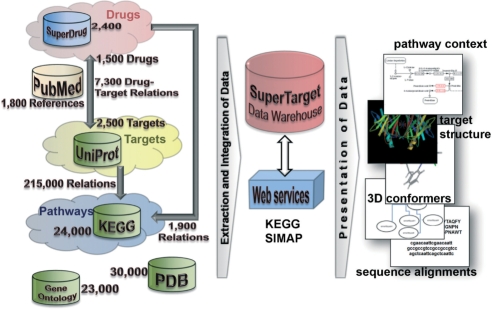
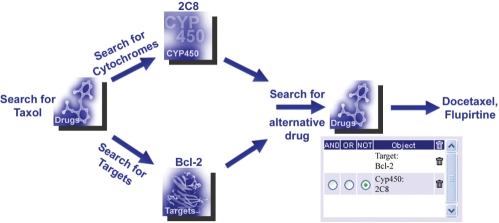
The molecular basis of drug action is often not well understood. This is partly because the very abundant and diverse information generated in the past decades on drugs is hidden in millions of medical articles or textbooks. Therefore, we developed a one-stop data warehouse, SuperTarget that integrates drug-related information about medical indication areas, adverse drug effects, drug metabolization, pathways and Gene Ontology terms of the target proteins. An easy-to-use query interface enables the user to pose complex queries, for example to find drugs that target a certain pathway, interacting drugs that are metabolized by the same cytochrome P450 or drugs that target the same protein but are metabolized by different enzymes. Furthermore, we provide tools for 2D drug screening and sequence comparison of the targets. The database contains more than 2500 target proteins, which are annotated with about 7300 relations to 1500 drugs; the vast majority of entries have pointers to the respective literature source. A subset of these drugs has been annotated with additional binding information and indirect interactions and is available as a separate resource called Matador. SuperTarget and Matador are available at http://insilico.charite.de/supertarget and http://matador.embl.de.
Overview
The claims and statistics of this paper haven’t been checked yet.
Run the check — free, no account needed. It reads the open-access text and checks the sources it cites.
Integrity signals
Registry
Cites
Statistics
Figures
Verification
Claims the paper makes
The claims and statistics of this paper haven’t been checked yet.
Run the check — free, no account needed. It reads the open-access text and checks the sources it cites.
Claims other papers make about this one
Each is checked against this paper’s own text: does it say what the citing paper says it does?
In the citing paper
“This analysis identified 10 drug annotations with FDR < 0.05 including four drugs that are either estrogen receptor agonists (diethylstilbestrol, Implanon [etonogestril implant]), or anti-estrogens (tamoxifen and raloxifene); in addition to nicotine, cocaine, cyclothiazide, felbamate, and riluzole.”
From Bi-ancestral depression GWAS in the Million Veteran Program and meta-analysis in >1.2 million individuals highlight new therapeutic directions (2021) · cites this paper as [19]
Self-check
Percentages, sums and reported differences re-computed from the paper’s own numbers.
The self-check needs the paper’s full text.
Citations
Cites
DrugBank: a comprehensive resource for in silico drug discovery and exploration
Wishart, D. S. (2006) · Nucleic Acids Research · doi:10.1093/nar/gkj067 · Cited by 3,892 · cited 4×
“In a last step, relations from other databases, namely DrugBank (3), KEGG (9), PDB (10), SuperLigands (11) and TTD (4), were checked for drug-target interactions not identified with the preceding steps.”
BackgroundInfluentialThe Universal Protein Resource (UniProt)
Bairoch, A. (2004) · Nucleic Acids Research · doi:10.1093/nar/gki070 · Cited by 3,774
From genomics to chemical genomics: new developments in KEGG
Kanehisa, M. I. (2005) · Nucleic Acids Research · doi:10.1093/nar/gkj102 · Cited by 3,126 · cited 2×
“Proven or potential target proteins are represented by sequences as stored in UniProt (12), by functional annotations extracted from GOA (13) and by related pathway information provided by KEGG (9) (compare Figure 1).”
Backgroundvon Mering, C. (2004) · Nucleic Acids Research · doi:10.1093/nar/gki005 · Cited by 1,768 · cited 2×
“The most probable candidates were identified using a benchmarking scheme ( 8 ) and manually curated.”
MethodThe Gene Ontology Annotation (GOA) Database: sharing knowledge in Uniprot with Gene Ontology
Camon, E. B. (2003) · Nucleic Acids Research · doi:10.1093/nar/gkh021 · Cited by 927 · cited 1×
“Proven or potential target proteins are represented by sequences as stored in UniProt (12), by functional annotations extracted from GOA (13) and by related pathway information provided by KEGG (9) (compare Figure 1).”
BackgroundDrugs, their targets and the nature and number of drug targets
Imming, P., Sinning, C., & Meyer, A. (2006) · Nature Reviews Drug Discovery · doi:10.1038/nrd2132 · Cited by 850 · cited 1×
“For some drugs even the primary targets are still unknown, for example, Diloxanide, Niclosamide and Ambroxol are administered successfully although their effect on human metabolism is still not clarified at a molecular level (1).”
BackgroundDo Structurally Similar Molecules Have Similar Biological Activity?
Martin, Y. C., Kofron, J. L., & Traphagen, L. M. (2002) · Journal of Medicinal Chemistry · doi:10.1021/jm020155c · Cited by 806 · cited 1×
“Since compounds with high structural similarity frequently exhibit similar activities (14), all drugs with comparable structural fingerprints are made accessible.”
BackgroundTTD: Therapeutic Target Database
Chen, X. (2002) · Nucleic Acids Research · doi:10.1093/nar/30.1.412 · Cited by 723 · cited 4×
“Another notable database is the Therapeutic Target Database (TTD) (4), which holds target information on about 1000 small molecule drugs.”
BackgroundInfluentialLiterature mining for the biologist: from information retrieval to biological discovery
Jensen, L. J., Šarić, J., & Peer Bork, B. (2006) · Nature Reviews Genetics · doi:10.1038/nrg1768 · Cited by 632 · cited 1×
“In parallel, potential drug-target relations were automatically extracted from Medline by searching for synonyms of drugs, proteins and Medical Subject Headings (MeSH terms) describing groups of proteins (7).”
MethodSelf-citationThe Universal Protein Resource (UniProt)
The UniProt Consortium (2006) · Nucleic Acids Research · doi:10.1093/nar/gkl929 · Cited by 572
Cited by
Sorted by citations
Items 501–600 of 651
Su, X., You, Z., Zhou, J.-R., Yi, H.-C., & Li, X. (2020) · Lecture notes in computer science · doi:10.1007/978-3-030-60802-6_42 · Cited by 3
Drug-Target Interactions Prediction with Feature Extraction Strategy Based on Graph Neural Network
Li, A., Lin, X., Xu, M., & Yu, H. (2021) · Lecture notes in computer science · doi:10.1007/978-3-030-84532-2_50 · Cited by 3
Duardo-Sánchez, A., González‐Díaz, H., & Pazos, A. (2015) · Current Bioinformatics · doi:10.2174/1574893610666151008013413 · Cited by 3
Soysal, E., Lee, H.-J., Zhang, Y., Huang, L.-C., Chen, X., Wei, Q., Zheng, W. J., Chang, J. T., Cohen, T., Sun, J., et al. (2017) · CPT Pharmacometrics & Systems Pharmacology · doi:10.1002/psp4.12174 · Cited by 3
“Fortunately, the biomedical research community has been aware of this challenge and a substantial amount of effort has been devoted to building integrated drug resources from heterogeneous data sources.(6,8,9,11,12) Such efforts include general drug knowledge bases such as DrugBank, which provides summarized informati…”
BackgroundSystem Biology to Access Target Relevance in the Research and Development of Molecular Inhibitors
Catharina, L., de Menezes, M. A., & Carels, N. (2018) · Computational biology · doi:10.1007/978-3-319-74974-7_12 · Cited by 3
Predicting Drug–Target Interactions Based on the Ensemble Models of Multiple Feature Pairs
Wang, C., Zhang, J., Chen, P., & Wang, B. (2021) · International Journal of Molecular Sciences · doi:10.3390/ijms22126598 · Cited by 3
Quasi‐supervised Strategies for Compound‐protein Interaction Prediction
Çakı, O., & Karaçalı, B. (2021) · Molecular Informatics · doi:10.1002/minf.202100118 · Cited by 3
Gnilopyat, S., DePietro, P. J., Parry, T. K., & McLaughlin, W. A. (2022) · Biomolecules · doi:10.3390/biom12111559 · Cited by 3
Drug Repurposing in Oncotherapeutics
Patel, A. (2020) · IntechOpen eBooks · doi:10.5772/intechopen.92302 · Cited by 4
Deciding when to stop: Efficient stopping of active learning guided drug-target predictionPreprint
Temerinac-Ott, M., Naik, A. W., & Murphy, R. F. (2015) · arXiv (Cornell University) · doi:10.48550/arxiv.1504.02406 · Cited by 3
“added the fraction of experiments performed so far. 3 Results For validation of our method, experiments are performed on four data sets extracted from the KEGG BRITE ([21]), BRENDA [25] , SuperTarget [28] and DrugBank [29] databases, previously described by Yamanishi et al [12] 2. The data set consists of four drug-ta…”
MethodPolypharmacology in Drug Discovery
Méndez‐Lucio, O., Naveja, J. J., Vite‐Caritino, H., Prieto-Martínez, F. D., & Medina‐Franco, J. L. (2017) · Methods and principles in medicinal chemistry · doi:10.1002/9783527674381.ch1 · Cited by 4
Emerging Machine Learning Techniques in Predicting Adverse Drug Reactions
Zhong, Y., Wang, S., Li, G., Ji, Y., Weng, Z., & Luo, H. (2023) · Computational methods in engineering & the sciences · doi:10.1007/978-3-031-20730-3_3 · Cited by 2
Li, J., Wang, Y., Li, Z., Lin, H., & Wu, B. (2023) · Frontiers in Genetics · doi:10.3389/fgene.2023.1181592 · Cited by 2
“, 2004), SUPERTARGET (Günther et al., 2008), and DrugBank (Wishart et al.”
BackgroundNetwork Pharmacology for Drug Repositioning in Anti-Alzheimer’s Drug Development
Dash, R., Munni, Y. A., Mitra, S., Dash, N., & Moon, I. S. (2023) · Neuromethods · doi:10.1007/978-1-0716-3311-3_15 · Cited by 4
Ling, C., Zeng, T., Dang, Q., Liang, Y. Q., Liu, X., & Xie, S. (2024) · Technology and Health Care · doi:10.3233/thc-248005 · Cited by 2
“The Yamanishi dataset is called a benchmark database, which contains drug-target relationships from databases such as KEGG BRITE [40], BRENDA [41], SuperTarget [27], and DrugBank [23], target protein sequence from KEGG Gene Database [40], and drug compounds from KEGG Drug and Compound Database [40].”
MethodLin, Q., Fan, Z., Li, Y., & Zhang, P. (2024) · Lecture notes in computer science · doi:10.1007/978-981-97-5692-6_17 · Cited by 2
A survey on computational methods used for drug repositioning
Abushaaban, E., & Alhajj, R. (2025) · Network Modeling Analysis in Health Informatics and Bioinformatics · doi:10.1007/s13721-025-00502-8 · Cited by 3
Sakai, T., Sawada, R., Ichinose, O., Terabayashi, T., Hatano, Y., Yamanishi, Y., & Ishizaki, T. (2025) · Journal of Dermatological Science · doi:10.1016/j.jdermsci.2025.04.012 · Cited by 2
Zhang, Q. E., Sun, Z., Zhong, Z., Yang, H., Wei, Y., & Xu, J. (2025) · BMC Bioinformatics · doi:10.1186/s12859-025-06195-0 · Cited by 2
“Enzymes and Ion Channels are sourced from KEGG BRITE [27], DrugBank [28], Super-Target [29], and BRENDA databases [30], while GPCRs are from the GLASS database [31].”
DTI-RME: a robust and multi-kernel ensemble approach for drug-target interaction prediction
Qian, Y., Zhang, X., Wang, Y., Zou, Q., Chen, C., Ding, Y., & Guo, X. (2025) · BMC Biology · doi:10.1186/s12915-025-02340-6 · Cited by 2
“It can be divided into four subsets, including nuclear receptors (NR), ion channels (IC), G protein coupled receptors (GPCR), and enzymes (E), based on information extracted from the KEGG [37], BRENDA [38], SuperTarget [39], and DrugBank (Release 2.0) databases [40].”
InfluentialA protein interactions map of multiple organ systems associated with COVID-19 disease
Bharne, D. (2021) · Genomics & Informatics · doi:10.5808/gi.20078 · Cited by 2
Lu, X., Liu, F., Li, J., He, K., Jiang, K., & Gu, C. (2021) · Lecture notes in computer science · doi:10.1007/978-3-030-84532-2_54 · Cited by 2
Drug-Target Interaction Prediction Based on Attentive FP and Word2vec
Lei, Y., Hu, J., Zhao, Z., & Ye, S. (2022) · Lecture notes in computer science · doi:10.1007/978-3-031-13829-4_44 · Cited by 2
Sorokina, S. Y., Kuptzov, V. N., Urban, Y. N., Fokin, A. V., Pojarkov, S. V., Ivankov, M. Y., Мельников, А. И., & Куликов, А. М. (2013) · Biology Bulletin · doi:10.1134/s1062359013030096 · Cited by 2
Regulatory affairs issues and legal ontologies in drug development
Munteanu, C. R. (2012) · Frontiers in Bioscience-Elite · doi:10.2741/e627 · Cited by 2
Data Analytics for Pharmaceutical Discoveries
Fakhraei, S., Onukwugha, E., & Getoor, L. C. (2015) · Cited by 2
Network Pharmacology in the Study of TCM Formulae
Zhao, J., Nagle, D. G., Zhou, Y., & Zhang, W. (2018) · Elsevier eBooks · doi:10.1016/b978-0-12-812744-5.00004-7 · Cited by 2
PDID: Database of Experimental and Putative Drug Targets in Human Proteome
Wang, C., Bryliński, M., & Kurgan, L. (2019) · Elsevier eBooks · doi:10.1016/b978-0-12-816125-8.00028-6 · Cited by 2
Wu, M., Luo, Y., & Liang, F. (2019) · Statistics and Its Interface · doi:10.4310/18-sii552 · Cited by 2
DSAGLSTM-DTA: Prediction of Drug-Target Affinity using Dual Self-Attention and LSTM
Zhijian, L., Shaohua, J., & Tan, Y. (2022) · Machine Learning and Applications An International Journal · doi:10.5121/mlaij.2022.9201 · Cited by 2
“The positive CPI pairs in the Human dataset are derived from DrugBank [29] and Matador [30], and the negative CPI samples in this dataset is highly credible.”
MethodDatabases for Rational Design and Discovery of Multitarget Drugs
Wang, Z., & Yang, B. (2022) · Springer eBooks · doi:10.1007/978-3-031-04998-9_19 · Cited by 2
A Methodology for the Prediction of Drug Target Interaction Using CDK Descriptors
Liyaqat, T., Ahmad, T., & Saxena, C. (2023) · Communications in computer and information science · doi:10.1007/978-981-99-1648-1_34 · Cited by 2
Multi-scale Feature Fusion Neural Network for Accurate Prediction of Drug-Target Interactions
Yang, Z., Bai, B., Long, J., Wei, P., & Li, J. (2023) · Communications in computer and information science · doi:10.1007/978-981-99-8141-0_14 · Cited by 2
Protein–Protein Interaction for Drug Discovery
Brambila, B., Martelli, A. C. F. S., Barcelos, M. P., Antão, S. C., da Silva, C. H. T. D. P., & Novo‐Mansur, M. T. M. (2023) · Engineering materials · doi:10.1007/978-3-031-46545-1_12 · Cited by 2
Analysis of Chemical Spaces: Implications for Drug Repurposing
Orlov, A. A., Berishvili, V. P., Nikitina, A. A., Osolodkin, D. I., Radchenko, E. V., & Palyulin, V. A. (2019) · Elsevier eBooks · doi:10.1016/b978-0-12-816125-8.00013-4 · Cited by 2
Prediction of Drug-Target Interactions with CNNs and Random Forest
Lin, X., Xu, M., & Yu, H. (2020) · Lecture notes in computer science · doi:10.1007/978-3-030-60802-6_32 · Cited by 2
Totañes, F. I. G., Shameer, S., Westhead, D. R., Jourdan, F., & McConkey, G. A. (2016) · Wiley eBooks · doi:10.1002/9783527694082.ch21 · Cited by 1
Repositioning of Drug – New Indications for Marketed Drugs
Kong, R., & Wong, S. T. C. (2017) · Methods and principles in medicinal chemistry · doi:10.1002/9783527674381.ch3 · Cited by 2
Wang, L., You, Z., Li, L., & Yan, X. (2020) · bioRxiv (Cold Spring Harbor Laboratory) · doi:10.1101/2020.01.06.895755 · Cited by 2
“We selected 10 drug-target pairs with the highest predictive score to validate in SuperTarget [23].”
MethodInfluentialAutoencoders for Drug-Target Interaction PredictionPreprint
Chen, M., & Zhou, X. (2020) · doi:10.21203/rs.3.rs-76683/v1 · Cited by 2
“BRENDA [28], SuperTarget [29], and DrugBank [30], respectively.”
BackgroundLiu, B., Pliakos, K., Vens, C., & Tsoumakas, G. (2020) · arXiv (Cornell University) · doi:10.48550/arxiv.2012.12325 · Cited by 2
“To verify the reliability of those new interactions, we checked whether they are included in the corresponding updated dataset that incorporate validated interactions from the last version of the KEGG, DrugBank, ChEMBL and Matador databases.”
BackgroundComputational Approaches for Target Inference
Heßler, G., Grebner, C., & Matter, H. (2019) · Methods and principles in medicinal chemistry · doi:10.1002/9783527818242.ch10 · Cited by 2
Quantum computing enhanced machine learning for physico-chemical applicationsPreprint
Sajjan, M., Li, J., Selvarajan, R., Sureshbabu, S. H., Kale, S. S., Gupta, R., & Kais, S. (2021) · arXiv (Cornell University) · Cited by 3
In SilicoModeling and Drug Design
Shinde, S., Rathod, S., & Chitlange, S. S. (2024) · Wiley eBooks · doi:10.1002/9781394249190.ch7 · Cited by 2
Prediction of Compound-Protein Interactions with Machine Learning Methods
Yamanishi, Y., & Kashima, H. (2010) · IGI Global eBooks · doi:10.4018/978-1-61520-911-8.ch016 · Cited by 1
Hamano, M., Nakamura, T., Ito, R., Shimada, Y., Iwata, M., Takeshita, J., Eguchi, R., & Yamanishi, Y. (2024) · Bioinformatics · doi:10.1093/bioinformatics/btae048 · Cited by 1
“These interaction data were acquired from public databases such as ChEMBL (Gaulton et al. 2012), MATADOR (Gu¨nther et al. 2008), DrugBank (Knox et al. 2011), BindingDB (Liu et al. 2007), KEGG DRUG (Kanehisa et al. 2009), Psychoactive Drug Screening Program Ki (PDSP-Ki) (Roth et al. 2000), and…”
MethodDuran, G. A. (2025) · European Journal of Breast Health · doi:10.4274/ejbh.galenos.2024.2024-11-2 · Cited by 1
Ciaglia, T., Napolitano, V., Miranda, M. R., Gioia, D. L., Musella, S., Moriello, A. S., Merciai, F., Sarno, V. D., Vita, S. D., Colarusso, E., et al. (2025) · Journal of Medicinal Chemistry · doi:10.1021/acs.jmedchem.5c01344 · Cited by 1
Artificial Intelligence in Drug Discovery and Drug Target Interactions
Iqbal, A. B., Gull, I., Shah, S. Z. A., Assad, A., & Macha, M. A. (2025) · Springer eBooks · doi:10.1007/978-981-96-8176-1_15 · Cited by 1
Human Microbiome-Based Prediction of Health Effects of Foods via Machine Learning
Inoue, N., Shibata, T., Sawada, R., & Yamanishi, Y. (2025) · Journal of Agricultural and Food Chemistry · doi:10.1021/acs.jafc.5c06318 · Cited by 1
Dong, Y., Xu, M., & Tang, L. (2025) · IEEE Transactions on Emerging Topics in Computational Intelligence · doi:10.1109/tetci.2025.3604800 · Cited by 1
Zhang, Y., Chen, L., Luo, H., Li, T., Xiong, S., Wang, Z., Zou, Q., & Zhang, W. (2026) · BMC Bioinformatics · doi:10.1186/s12859-026-06377-4 · Cited by 1
Mou, Z., Tian, Z., Jin, J., Yu, H., & Huang, Y. (2026) · Biomolecules · doi:10.3390/biom16060830 · Cited by 1
“These datasets are often complemented by auxiliary similarity information, including chemical structure features, disease similarity derived from MeSH, UMLS, or Disease Ontology, side-effect profiles from SIDER, and target annotations from UniProt, SuperTarget, and related databases [174].”
Structural and Functional Discrimination of Membrane Proteins
Gromiha, M. M., Ou, Y., & Chen, S.-A. (2011) · Springer eBooks · doi:10.1007/978-3-642-19922-6_1 · Cited by 1
Sorkhi, A. G., Mobarakeh, M. I., Hashemi, S. M., & Faridpour, M. (2021) · International journal of nonlinear analysis and applications · doi:10.22075/ijnaa.2021.5023 · Cited by 1
TCM Preparation Network Pharmacology Analysis
Yang, P. (2022) · Translational bioinformatics · doi:10.1007/978-981-19-4771-1_7 · Cited by 1
Bibi, S., Hasan, M. M., Hossain, M. S., Khan, M. S., Yousafi, Q., Islam, F., Chopra, H., & Kamal, M. A. (2023) · Elsevier eBooks · doi:10.1016/b978-0-323-99137-7.00002-2 · Cited by 1
Keyvanpour, M. R., Mehrmolaei, S., & Haddadi, F. (2024) · Current Computer - Aided Drug Design · doi:10.2174/0115734099288803240416103536 · Cited by 1
Zhang, W., Wen, X., Zhang, K., Cao, R., & Gao, B. (2024) · IEEE International Joint Conference on Biometrics (IJCB) · doi:10.1109/ijcb62174.2024.10744528 · Cited by 1
“With positive samples obtained from the most reliable biochemical databases, DrugBank [32] and Matador [33], they include the most comprehensive sample data of clinical kinase inhibitors that are currently known.”
MethodKhorramfard, A., Pirgazi, J., & Sorkhi, A. G. (2024) · Bioimpacts · doi:10.34172/bi.30468 · Cited by 1
Yan, X., You, Z., Wang, L., Li, L.-P., Zheng, K., & Wang, M.-N. (2020) · Lecture notes in computer science · doi:10.1007/978-3-030-60802-6_33 · Cited by 1
Computational Methods and Approaches in Pharmacogenomic Research
Zhou, Y., & Lauschke, V. M. (2021) · Elsevier eBooks · doi:10.1016/b978-0-12-820472-6.00166-3 · Cited by 1
Special Protein Molecules Computational Identification
Zou, Q. (2018) · MDPI eBooks · doi:10.3390/books978-3-03897-044-6 · Cited by 1
Chronological Order Based Wrapper Technique for Drug-Target Interaction Prediction (CO-WT DTI)
Gananathan, K., Manjula, D., & Sugumaran, V. (2022) · Current Bioinformatics · doi:10.2174/1574893617666220509185052 · Cited by 1
Databases and Tools to Investigate Protein-Metabolite Interactions
de Souza, L. P., & Fernie, A. R. (2022) · Methods in molecular biology · doi:10.1007/978-1-0716-2624-5_14 · Cited by 1
Machine learning resources for drug design
Gambacorta, N., Trisciuzzi, D., Ciriaco, F., Mastrolorito, F., Togo, M. V., Tondo, A. R., Altomare, C., Amoroso, N., & Nicolotti, O. (2023) · Elsevier eBooks · doi:10.1016/b978-0-443-18638-7.00018-9 · Cited by 1
Translational and Disease Bioinformatics
Kaushik, S., Prasun, C., & Sharma, D. (2018) · Elsevier eBooks · doi:10.1016/b978-0-12-809633-8.20302-6 · Cited by 1
FRnet-DTI: Convolutional Neural Networks for Drug-Target Interaction.Preprint
Rayhan, F., Ahmed, S., Mousavian, Z., Farid, D. M., & Shatabda, S. (2018) · arXiv (Cornell University) · Cited by 1
Wang, L., You, Z.-H., Li, L., Yan, X., Zhang, W., & Wang, H. (2019) · doi:10.21203/rs.2.15799/v2 · Cited by 1
A new Ligand-Based approach to virtual screening, and prolifing or large chemical libraries
Gregori‐Puigjané, E. (2008) · LA Referencia (Red Federada de Repositorios Institucionales de Publicaciones Científicas)
Hasegawa, K., & Funatsu, K. (2014) · Molecular Informatics · doi:10.1002/minf.201400064
Wang, Y., Chen, X., Liu, L., Chen, Y., Ma, H., Yang, R., & Liu, X. (2015) · Molecular BioSystems · doi:10.1039/c5mb00242g
Combining drug and gene similarity measures for drug-target elucidation
Sackler, B. (2010)
Zhu, C. (2013) · OhioLink ETD Center (Ohio Library and Information Network)
Mining the biomedical literature
Mihăilă, C., Batista-Navarro, R., Alnazzawi, N., Kontonatsios, G., Korkontzelos, I., Rak, R., Thompson, P., & Ananiadou, S. (2015) · Research Explorer (The University of Manchester)
Personalized and adaptive recommendation
Liu, Y. (2016) · doi:10.32657/10356/66909
A Semantic-based Similarity of Human Drug Target Proteins
(2013) · International Conference on Bioinformatics Models, Methods and Algorithms (BIOINFORMATICS) · doi:10.5220/0004239703000303
Jeong, H., Rho, S., & Hwang, D. (2013) · CRC Press eBooks · doi:10.1201/b15476-12
Johnson, D. E., & Cheung, K. W. K. (2017) · Royal Society of Chemistry eBooks · doi:10.1039/9781782623731-00279
Interrogating Drug Mechanism of Action Using Network Dysregulation Analysis
Jung-Hoon, W. (2015) · doi:10.7916/d8qf8rr1
“The direct targets for all compounds were obtained from the Drugbank database [30] and MATADOR database [31] as well as literature search.”
MethodBioinformatics for Diseases Management: A Personalized Therapeutics Prospective
Kanhaiya, K. (2017) · Springer eBooks · doi:10.1007/978-3-319-63633-7_11 · Cited by 1
Statistical Machine Learning for Agriculture and Human Health Care Based on Biomedical Big Data
Yamanishi, Y., Tabei, Y., & Kotera, M. (2018) · Mathematics for industry · doi:10.1007/978-981-10-7811-8_12
Bio-relation Discovery and Sparse Learning
Shi, Y. Y. (2012) · ERA: Education and Research Archive (University of Alberta) · doi:10.7939/r3893k
Lu, X., Liu, F., Li, D., Wang, X., Li, J., & Yuan, Y. (2020) · Lecture notes in computer science · doi:10.1007/978-3-030-60802-6_19
Matrix completion techniques in bioinformatics
Mongia, A., & Majumdar, A. (2020) · INFLIBNET
Drug-protein Interaction Prediction based on Improved AdaBoost Algorithm
Gu, W., Xie, X., Zhang, Z., Mao, Y., Liang, Z., & He, Y. (2020) · IEEE International Conference on Automation, Electronics and Electrical Engineering (AUTEEE) · doi:10.1109/auteee50969.2020.9315654
“We used two datasets: (1) MATADOR 1 [19].”
MethodMulti-Target Drugs as Master Keys to Complex Diseases: Inverse Docking Strategies and Opportunities
Méndez, P. S. (2021) · Elsevier eBooks · doi:10.1016/b978-0-12-822312-3.00005-9
Yan, X., You, Z., Wang, L., & Chen, P.-P. (2021) · Lecture notes in computer science · doi:10.1007/978-3-030-84532-2_51
Pong, J. T. (2014) · TSpace (University of Toronto)
The assessment of similarity vectors of fingerprint and UMLS in adverse drug reaction predictionPreprint
Besharatifard, M., Ghorbanali, Z., & Zare‐Mirakabad, F. (2021) · bioRxiv (Cold Spring Harbor Laboratory) · doi:10.1101/2021.11.15.468509
“The directly interacted proteins with drugs of the Mizutani database are extracted from DrugBank[29] and Matador[30] databases.”
MethodHIV Sero Conversion in Urban Rwandan Women Before and After a Prevention Programme
Allen, S. A., Serufilira, A., de Perre, P. V., Lindan, C., Tice, J., Hulley, S. B., & Black, D. M. (1990)
Faculty Opinions recommendation of STITCH: interaction networks of chemicals and proteins.
Bader, G. D., & Wallace, I. M. (2010) · Faculty Opinions – Post-Publication Peer Review of the Biomedical Literature · doi:10.3410/f.6754956.7110059
Ramanathan, M. K., & Knights, J. (2009) · Faculty Opinions – Post-Publication Peer Review of the Biomedical Literature · doi:10.3410/f.1260972.731058
Hassanzadeh, R., & Shabani-Mashcool, S. (2022) · Research Square · doi:10.21203/rs.3.rs-1533175/v1
Wang, L., You, Z.-H., Li, L., Yan, X., Zhang, W., & Wang, H. (2019) · doi:10.21203/rs.2.15799/v1
“18 19 20 Drug ID Drug name Taregt protein ID Target protein name Validation source D00691 Dihydroxypropyltheophylline hsa5150 PDE7A_HUMAN SuperTarget D00348 Isotretinoino hsa6256 RXRA_HUMAN SuperTarget D00139 Xanthotoxine hsa1543 CP1A1_HUMAN SuperTarget D02340 Loxapinsuccinate hsa1812 DRD1_HUMAN SuperTarget D00493 Pro…”
MethodInfluentialJeong, H., Rho, S., & Hwang, D. (2013) · CRC Press eBooks · doi:10.1201/b15476-10
Prediction of Compound-protein Interactions with Machine Learning Methods
Yamanishi, Y., & Kashima, H. (2011) · IGI Global eBooks · doi:10.4018/978-1-60960-818-7.ch315
Hassanzadeh, R., & Shabani-Mashcool, S. (2022) · Research Square · doi:10.21203/rs.3.rs-1533175/v2
Rational computational approaches to predict novel drug candidates against leishmaniasis
Bustamante, C., Muskus, C., & Ochoa, R. (2022) · Annual reports in medicinal chemistry · doi:10.1016/bs.armc.2022.08.005
Drug Repositioning in Response to COVID-19 and other Challenging Diseases
Fomnya, H. J., Ngulde, S. I., Gana, S. M., Bilbonga, G., Amshi, K. A., Midala, C. A., & Garba, K. A. (2022) · American Journal of Pharmacology and Toxicology · doi:10.3844/ajptsp.2022.37.47
Metadata
- Authors
- Gunther, S., Kuhn, M., Dunkel, M., Campillos, M., Senger, C., Petsalaki, E., Ahmed, J., Urdiales, E. G., Gewiess, A., Jensen, L. J., Schneider, R., Skoblo, R., Russell, R. B., Bourne, P. E., Bork, P., & Preissner, R.
- Affiliations
- University of California San Diego (US)
- Corresponding author
- Preissner, R.
- ORCID
- Venue
- Nucleic Acids Research
- Publisher
- Oxford University Press (OUP)
- Published
- 2007-12-23
- Volume
- 36
- Issue
- Database
- Pages
- D919-D922
- ISSN
- 0305-1048 (ISSN-L)
- 1362-4962
- PMC
- PMC2238858
- OpenAlex
- W2108069034
- Cited by
- 647
- References
- 18
- Citations by year
- 2026: 13 · 2025: 34 · 2024: 33 · 2023: 42 · 2022: 57 · 2021: 73 · 2020: 57 · 2019: 48 · 2018: 43 · 2017: 40 · 2016: 24 · 2015: 36 · 2014: 22 · 2013: 28 · 2012: 30
- FWCI
- 16.70
- Type
- journal article
- Language
- en
- Open access
- gold
- doi.org
- Licence
- Locations
- Nucleic Acids Research (publishedVersion, cc-by-nc)
- PubMed Central (publishedVersion, cc-by-nc)
- PubMed (publishedVersion)
- MDC Repository (Max-Delbrueck-Center for Molecular Medicine) (acceptedVersion)
- Open Repository and Bibliography (University of Luxembourg) (submittedVersion, cc-by-nc-sa)
- Funders
- Deutsche Forschungsgemeinschaft (SFB 449)
- Bundesministerium für Bildung und Forschung (SFB 449)
- Deutsche Krebshilfe
- Topics
- Life Sciences › Pharmacology, Toxicology and Pharmaceutics › Drug Discovery › Computational Drug Discovery Methods
- Health Sciences › Medicine › Health Informatics › Biomedical Text Mining and Ontologies
- Life Sciences › Biochemistry, Genetics and Molecular Biology › Molecular Biology › Bioinformatics and Genomic Networks
- Keywords
- drug-target interactions, matadors, cytochrome P450, drug pathways, Gene Ontology, adverse drug reactions, drug screening, protein sequence comparison, literature annotation
- MeSH terms
- Pharmaceutical Preparations, Pharmacology, Proteins, User-Computer Interface, Drug Design, Databases, Factual, Drug Delivery Systems, Internet
About these checks
Registry, retraction, Cites and statistics results are computed, not judged, with one exception: a printed reference that no index lists is read once by a model before it counts as a citation error. Claims are extracted by a model and kept only when their quote appears verbatim in the text; each cited source is then checked, with a model’s help, for whether it says what the claim relies on. Those verdicts can be wrong — read the claim’s quote and the cited source before relying on one.
Statistics and arithmetic are recomputed, not judged.
Confidence bands are shown only for fields calibrated on our annotated test set. None is calibrated yet, so no band is shown.
What counts as a claim ›How we measure confidence ›How we check this ›
Are you an author, or do you see a problem with this page? Request a review
