

PPDB, the Plant Proteomics Database at Cornell
Open accessThe DOI matches its Crossref record; 23 of the 23 references it cites were found in a registry or an index.
Abstract
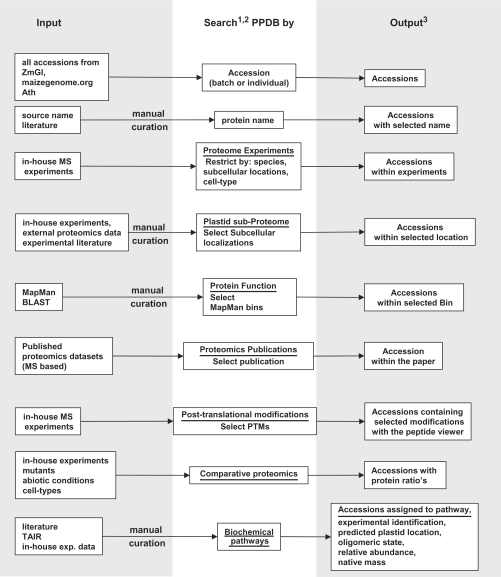
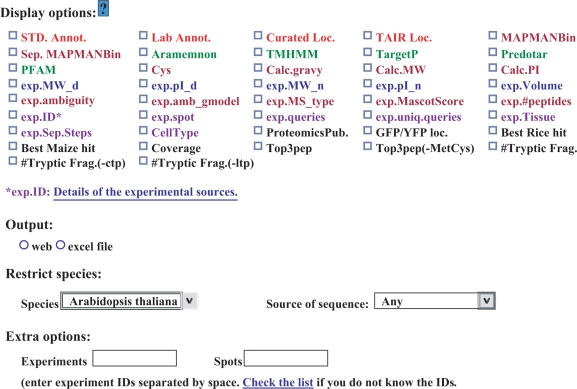
The Plant Proteomics Database (PPDB; http://ppdb.tc.cornell.edu), launched in 2004, provides an integrated resource for experimentally identified proteins in Arabidopsis and maize (Zea mays). Internal BLAST alignments link maize and Arabidopsis information. Experimental identification is based on in-house mass spectrometry (MS) of cell type-specific proteomes (maize), or specific subcellular proteomes (e.g. chloroplasts, thylakoids, nucleoids) and total leaf proteome samples (maize and Arabidopsis). So far more than 5000 accessions both in maize and Arabidopsis have been identified. In addition, more than 80 published Arabidopsis proteome datasets from subcellular compartments or organs are stored in PPDB and linked to each locus. Using MS-derived information and literature, more than 1500 Arabidopsis proteins have a manually assigned subcellular location, with a strong emphasis on plastid proteins. Additional new features of PPDB include searchable posttranslational modifications and searchable experimental proteotypic peptides and spectral count information for each identified accession based on in-house experiments. Various search methods are provided to extract more than 40 data types for each accession and to extract accessions for different functional categories or curated subcellular localizations. Protein report pages for each accession provide comprehensive overviews, including predicted protein properties, with hyperlinks to the most relevant databases.
Overview
The claims and statistics of this paper haven’t been checked yet.
Free: it reads the open-access text and checks the first 5 claims that cite a source we can check. Create a free account to check every claim.
Integrity signals
Registry
Cites
Statistics
Figures

Verification
Claims the paper makes
The claims and statistics of this paper haven’t been checked yet.
Free: it reads the open-access text and checks the first 5 claims that cite a source we can check. Create a free account to check every claim.
Claims other papers make about this one
Each is checked against this paper’s own text: does it say what the citing paper says it does?
In the citing paper
“Proteomic databases exist for plant species95 and, more recently, for human tissues9,23 but public data on protein localisation and abundance across the brain are currently far less mature than their RNA equivalent.”
From Decoding neuroproteomics: integrating the genome, translatome and functional anatomy (2014) · cites this paper as [95]
Self-check
Percentages, sums and reported differences re-computed from the paper’s own numbers.
The self-check needs the paper’s full text.
Citations
Cites
Thimm, O., Bläsing, O., Gibon, Y., Nagel, A., Meyer, S., Krüger, P., Selbig, J., Müller, L. A., Rhee, S. Y., & Stitt, M. (2004) · The Plant Journal · doi:10.1111/j.1365-313x.2004.02016.x · Cited by 3,352 · cited 5×
“We thank the curators of MapMan bin for providing us all MapMan bin assignments to Arabidopsis accessions.”
MethodInfluentialA Model for Random Sampling and Estimation of Relative Protein Abundance in Shotgun Proteomics
Liu, H., Sadygov, R. G., & Yates, J. R. (2004) · Analytical Chemistry · doi:10.1021/ac0498563 · Cited by 2,500
Quantitative mass spectrometry in proteomics: a critical review
Bantscheff, M., Schirle, M., Sweetman, G., Rick, J., & Kuster, B. (2007) · Analytical and Bioanalytical Chemistry · doi:10.1007/s00216-007-1486-6 · Cited by 1,669
Peng, J., Elias, J. E., Thoreen, C. C., Licklider, L. J., & Gygi, S. P. (2003) · Journal of Proteome Research · doi:10.1021/pr025556v · Cited by 1,647 · cited 1×
“The instrument settings and database searches (always using Mascot) and filter criteria (aimed at < 1% false positive rate for peptide identification, with cutoff set by decoy database searches (8)) are standardized (9–11).”
MethodComparison of Label-free Methods for Quantifying Human Proteins by Shotgun Proteomics
Old, W. M., Meyer-Arendt, K., Aveline-Wolf, L., Pierce, K. G., Mendoza, A., Sevinsky, J. R., Resing, K. A., & Ahn, N. G. (2005) · Molecular & Cellular Proteomics · doi:10.1074/mcp.m500084-mcp200 · Cited by 1,206
Lu, P., Vogel, C., Wang, R., Yao, X., & Marcotte, E. M. (2007) · Nature Biotechnology · doi:10.1038/nbt1270 · Cited by 1,139
Sorting Signals, N-Terminal Modifications and Abundance of the Chloroplast Proteome
Zybailov, B., Rutschow, H., Friso, G., Rudella, A., Emanuelsson, O., Sun, Q., & van Wijk, K. J. (2008) · PLoS ONE · doi:10.1371/journal.pone.0001994 · Cited by 637 · cited 2×
“In a recent paper, we showed that ‘spectral counting’ can indeed provide large-scale protein quantification for Arabidopsis (9), if experiments are carefully designed with attention to reproducibility at every step of the process and if appropriate thresholds are applied for the minimum number of matched spectral coun…”
BackgroundSelf-citationAnalysis and validation of proteomic data generated by tandem mass spectrometry
Nesvizhskii, A. I., Vitek, O., & Aebersold, R. (2007) · Nature Methods · doi:10.1038/nmeth1088 · Cited by 629
Friso, G., Giacomelli, L., Ytterberg, A. J., Peltier, J.-B., Rudella, A., Sun, Q., & Wijk, K. J. V. (2004) · The Plant Cell · doi:10.1105/tpc.017814 · Cited by 482
Self-citationZybailov, B., Coleman, M. K., Florens, L., & Washburn, M. P. (2005) · Analytical Chemistry · doi:10.1021/ac050846r · Cited by 349
Self-citation
Cited by
Ferro, M., Brugière, S., Salvi, D., Seigneurin-Berny, D., Court, M., Moyet, L., Ramus, C., Miras, S., Mellal, M., Le Gall, S., et al. (2010) · Molecular & Cellular Proteomics · doi:10.1074/mcp.m900325-mcp200 · Cited by 472
“Indeed, subcellular proteomics has attracted considerable interest within the last few years (3–6), and databases such as the Plant Protein Database (PPDB)(1) (7), the subcellular proteomics database SUBA (8), or the Plastid Protein Database (plprot) (9) gather plastid proteomics data that help and induce further targ…”
BackgroundRazi, K., & Muneer, S. (2021) · Critical Reviews in Biotechnology · doi:10.1080/07388551.2021.1874280 · Cited by 333
“Furthermore, chloroplasts provide protection to plants and resistance to various abiotic stress like drought stress by the assistance of metabolites synthesized during the photosynthesis and the key proteins which are involved in the metabolic process in all plants [54].”
BackgroundRole of Plastid Protein Phosphatase TAP38 in LHCII Dephosphorylation and Thylakoid Electron Flow
Pribil, M., Pesaresi, P., Hertle, A., Barbato, R., & Leister, D. (2010) · PLoS Biology · doi:10.1371/journal.pbio.1000288 · Cited by 319
“thaliana [30,31].”
Arabidopsis Plasmodesmal Proteome
Fernandez-Calvino, L., Faulkner, C., Walshaw, J., Saalbach, G., Bayer, E., Benitez-Alfonso, Y., & Maule, A. (2011) · PLoS ONE · doi:10.1371/journal.pone.0018880 · Cited by 293
“Each protein was placed in one of the MapMan ‘‘bins’’, using the online search facility of the Plant Proteome Database (PPDB, [90]).”
MethodOguz, M. C., Aycan, M., Oguz, E., Poyraz, I., & Yildiz, M. (2022) · Physiologia · doi:10.3390/physiologia2040015 · Cited by 287
“With the help of metabolites synthesized during photosynthesis and key proteins involved in the metabolic process, chloroplasts provide resistance against various abiotic stresses such as drought [114].”
BackgroundDixon, D. P., & Edwards, R. (2010) · The Arabidopsis Book · doi:10.1199/tab.0131 · Cited by 283
“, 2004), a Miscellaneous entry in PPDB (Sun et al., 2009).”
BackgroundMajeran, W., Friso, G., Asakura, Y., Qu, X., Huang, M., Ponnala, L., Watkins, K. P., Barkan, A., & van Wijk, K. J. (2012) · Plant Physiology · doi:10.1104/pp.111.188474 · Cited by 246
“All filtered results were uploaded into the PPDB (http://ppdb.tc.cornell.edu/; Sun et al., 2009).”
BackgroundMethodSelf-citationBryant, N., Lloyd, J., Sweeney, C., Myouga, F., & Meinke, D. (2011) · Plant Physiology · doi:10.1104/pp.110.168120 · Cited by 237
“…Rosso et al., 2003; Kuromori et al., 2004), and development of improved methods for intracellular protein localization (Heazlewood et al., 2007; Sun et al., 2009), genetic dissection of chloroplast function expanded to include large-scale phenotyping of hundreds of insertion mutants disrupted…”
BackgroundMethodMajeran, W., Friso, G., Ponnala, L., Connolly, B., Huang, M., Reidel, E., Zhang, C., Asakura, Y., Bhuiyan, N. H., Sun, Q., et al. (2010) · The Plant Cell · doi:10.1105/tpc.110.079764 · Cited by 231
“All filtered results were uploaded into the PPDB (http://ppdb.tc. cornell.edu/; Sun et al., 2009).”
MethodResultSelf-citationChloroplast Proteomics and the Compartmentation of Plastidial Isoprenoid Biosynthetic Pathways
Joyard, J., Ferro, M., Masselon, C., Seigneurin-Berny, D., Salvi, D., Garin, J., & Rolland, N. (2009) · Molecular Plant · doi:10.1093/mp/ssp088 · Cited by 227
“Therefore, we made in this review an extensive survey of enzymes involved in isoprenoid metabolism within chloroplast protein repertoires that are presently available (Ferro et al., 2002, 2003; Froehlich et al., 2003; Sun et al., 2009; Ferro et al., 2009).”
BackgroundMethodJorrín-Novo, J. V., Maldonado, A. M., Echevarría-Zomeño, S., Valledor, L., Castillejo, M. A., Curto, M., Valero, J., Sghaier, B., Donoso, G., & Redondo, I. (2009) · Journal of Proteomics · doi:10.1016/j.jprot.2009.01.026 · Cited by 220
Friso, G., Majeran, W., Huang, M., Sun, Q., & van Wijk, K. J. (2010) · Plant Physiology · doi:10.1104/pp.109.152694 · Cited by 202
“From PPDB, this information can be freely distributed to the various maize databases (e.g. http://maizesequence.org/index.html and http:// www.maizegdb.org/) and other resources.”
MethodInfluentialSelf-citationZea mays iRS1563: A Comprehensive Genome-Scale Metabolic Reconstruction of Maize Metabolism
Saha, R., Suthers, P. F., & Maranas, C. D. (2011) · PLoS ONE · doi:10.1371/journal.pone.0021784 · Cited by 201
“Because only limited reaction localization information exists for maize, we adopted the compartment or organelle reaction location of the corresponding orthologous gene/enzyme in Arabidopsis using the Arabidopsis Subcellular Database, SUBA [33] and also PPDB [32].”
BackgroundMethodOlinares, P. D. B., Ponnala, L., & van Wijk, K. J. (2010) · Molecular & Cellular Proteomics · doi:10.1074/mcp.m000038-mcp201 · Cited by 199
“The PPDB provides an integrated platform for comparing our protein identifications with other in-house MSbased proteomics experiments, annotated properties, and published information (29).”
MethodSelf-citationEmbryophyte stress signaling evolved in the algal progenitors of land plants
de Vries, J., Curtis, B. A., Gould, S. B., & Archibald, J. M. (2018) · Proceedings of the National Academy of Sciences · doi:10.1073/pnas.1719230115 · Cited by 189
“Second, we utilized the well-curated Plant Proteome Database of Arabidopsis (41) and screened our streptophyte algal RNA-seq data for transcripts homologous and orthologous to Arabidopsis plastid proteins.”
MethodCharacterizing the Anaerobic Response of Chlamydomonas reinhardtii by Quantitative Proteomics
Terashima, M., Specht, M., Naumann, B., & Hippler, M. (2010) · Molecular & Cellular Proteomics · doi:10.1074/mcp.m900421-mcp200 · Cited by 188
“In total, 279 of the 895 putative chloroplast proteins were predicted to be chloroplastlocalized by PPDB, the Plant Proteome Database for Arabidopsis thaliana and maize (41, 42), and accordingly have orthologs in vascular plants (see Table II and supplemental Table 1).”
BackgroundBienvenut, W. V., Sumpton, D., Martinez, A., Lilla, S., Espagne, C., Meinnel, T., & Giglione, C. (2012) · Molecular & Cellular Proteomics · doi:10.1074/mcp.m111.015131 · Cited by 177
“PPDB (Plant Protein DataBase (74)), SUBA (SubCellular Proteomic Database (75)), AT_CHLORO (65), or TAIR, 150 of 231 have been shown experimentally to be localized in the chloroplast.”
BackgroundA Ycf2-FtsHi Heteromeric AAA-ATPase Complex Is Required for Chloroplast Protein Import
Kikuchi, S., Asakura, Y., Imai, M., Nakahira, Y., Kotani, Y., Hashiguchi, Y., Nakai, Y., Takafuji, K., Bédard, J., Hirabayashi-Ishioka, Y., et al. (2018) · The Plant Cell · doi:10.1105/tpc.18.00357 · Cited by 176
“In addition to the well-known stromal molecular chaperones, including Hsp70 and Hsp93 (ClpC), inner envelope-localized AAAtype ATPases have been detected in proteomic analyses of the chloroplasts (Sun et al., 2009; Ferro et al., 2010).”
BackgroundResultMechanistic insights and future perspectives of drought stress management in staple crops
Khan, A. A., Wang, Y.-F., Akbar, R., & Alhoqail, W. A. (2025) · Frontiers in Plant Science · doi:10.3389/fpls.2025.1547452 · Cited by 198
Hooper, C. M., Tanz, S. K., Castleden, I. R., Vacher, M. A., Small, I. D., & Millar, A. H. (2014) · Bioinformatics · doi:10.1093/bioinformatics/btu550 · Cited by 171
A Comprehensive Dataset of Genes with a Loss-of-Function Mutant Phenotype in Arabidopsis
Lloyd, J., & Meinke, D. (2012) · Plant Physiology · doi:10.1104/pp.111.192393 · Cited by 168
Chloroplast proteomics highlights the subcellular compartmentation of lipid metabolism
Joyard, J., Ferro, M., Masselon, C., Seigneurin-Berny, D., Salvi, D., Garin, J., & Rolland, N. (2010) · Progress in Lipid Research · doi:10.1016/j.plipres.2009.10.003 · Cited by 164
“Column 7: Data from the PPDB indicate curated location to Arabidopsis thaliana proteins identified by KVW (Klaas van Wijk) in-house proteomics experiments [43].”
BackgroundMethodPfannschmidt, T., Blanvillain, R., Merendino, L., Courtois, F., Chevalier, F., Liebers, M., Grübler, B., Hommel, E., & Lerbs-Mache, S. (2015) · Journal of Experimental Botany · doi:10.1093/jxb/erv415 · Cited by 155
“…plastids [available in the online databases AT_CHLORO and the Plant Proteome Data Base (PPDB)], indicating that the vast majority of the chloroplast proteome is encoded in the nucleus, translated in the cytosol, and subsequently imported into the organelle (Sun et al., 2009; Ferro et al., 2010).”
BackgroundReiland, S., Finazzi, G., Endler, A., Willig, A., Baerenfaller, K., Grossmann, J., Gerrits, B., Rutishauser, D., Gruissem, W., Rochaix, J.-D., et al. (2011) · Proceedings of the National Academy of Sciences · doi:10.1073/pnas.1104734108 · Cited by 159
Malnoë, A., Wang, F., Girard-Bascou, J., Wollman, F.-A., & de Vitry, C. (2014) · The Plant Cell · doi:10.1105/tpc.113.120113 · Cited by 152
“, 2012; see also Arabidopsis proteome databases [Sun et al., 2009; Ferro et al., 2010]).”
BackgroundKim, J., Rudella, A., Ramírez-Rodríguez, V., Zybailov, B. L., Olinares, P. D. B., & van Wijk, K. J. (2009) · The Plant Cell · doi:10.1105/tpc.108.063784 · Cited by 162
“The catalytic chamber of the Clp protease core is enclosed in the barrel-shaped tetradecamer formed by two homoheptameric rings of ClpP peptidases, which are all encoded by a single gene (Szyk and Maurizi, 2006).”
BackgroundSelf-citationCharacteristics of the tomato chromoplast revealed by proteomic analysis
Barsan, C., Sánchez‐Bel, P., Rombaldi, C. V., Egea, I., Rossignol, M., Kuntz, M., Zouine, M., Latché, A., Bouzayen, M., & Pech, J. (2010) · Journal of Experimental Botany · doi:10.1093/jxb/erq070 · Cited by 144
“PPDB, the Plant Proteomics Database at Cornell.”
BackgroundMethodInfluentialTerashima, M., Specht, M., & Hippler, M. (2011) · Current Genetics · doi:10.1007/s00294-011-0339-1 · Cited by 152
“Arabidopsis proteins that were manually assigned to a sub-cellular location (Sun et al. 2009).”
BackgroundRolland, N., Curien, G., Finazzi, G., Kuntz, M., Maréchal, E., Matringe, M., Ravanel, S., & Seigneurin-Berny, D. (2012) · Annual Review of Genetics · doi:10.1146/annurev-genet-110410-132544 · Cited by 131
Proteomic analysis of cold stress-responsive proteins in Thellungiella rosette leaves
Gao, F., Zhou, Y., Zhu, W., Li, X. F., Fan, L., & Zhang, G. (2009) · Planta · doi:10.1007/s00425-009-1003-6 · Cited by 146
“edu/) (Sun et al. 2009).”
Li, M., Li, D., Feng, F., Zhang, S., Ma, F., & Cheng, L. (2016) · Journal of Experimental Botany · doi:10.1093/jxb/erw277 · Cited by 139
“To associate cellular functions with the set of quantified proteins, we used in-house BLAST alignments of the filtered set protein sequences to Arabidopsis (TAIR 8.0) datasets (Sun et al., 2009).”
MethodInfluentialBarsan, C., Zouine, M., Maza, É., Bian, W.-P., Egea, I., Rossignol, M., Bouyssié, D., Pichereaux, C., Purgatto, E., Bouzayen, M., et al. (2012) · PLANT PHYSIOLOGY · doi:10.1104/pp.112.203679 · Cited by 147
“…grenoble-plant-proteomics/; plprot: Kleffmann et al., 2006; http://www. plprot.ethz.ch) or general databases comprising subcellular subsets (PPDB: Sun et al., 2009; http://ppdb.tc.cornell.edu; SUBA: Heazlewood et al., 2007; http://www.suba.bcs.uwa.edu.au; Uniprot: The Uniprot Consortium, 2010:…”
BackgroundCytochromes b 561: Ascorbate-Mediated Trans-Membrane Electron Transport
Asard, H., Barbaro, R., Trost, P., & Bérczi, A. (2013) · Antioxidants & Redox Signaling · doi:10.1089/ars.2012.5065 · Cited by 121
“Consistently, proteomic studies in plants have identified CYBDOM proteins on the PM (55), in some cases in association with lipid rafts (32).”
Zybailov, B. L., Friso, G., Kim, J., Rudella, A., Ramírez-Rodríguez, V., Asakura, Y., Sun, Q., & van Wijk, K. J. (2009) · Molecular & Cellular Proteomics · doi:10.1074/mcp.m900104-mcp200 · Cited by 150
“locations (from PPDB (43)) showed that 50% of the 768 quan-”
BackgroundMethodSelf-citationKeren, I., Bezawork‐Geleta, A., Kolton, M., Maayan, I., Belausov, E., Levy, M., Mett, A., Gidoni, D., Shaya, F., & Ostersetzer‐Biran, O. (2009) · RNA · doi:10.1261/rna.1776409 · Cited by 135
“…analyses of plant organellar fractions, which also include numerous proteins with predicted RNA-mediated (or DNA-mediated) functions (Peltier et al. 2000, 2002, 2004; Baginsky et al. 2004, 2007; Heazlewood et al. 2005, 2007; Phinney and Thelen 2005; Kleffmann et al. 2007; Sun et al. 2009).”
BackgroundArnold, A., & Nikoloski, Z. (2014) · Plant Physiology · doi:10.1104/pp.114.235358 · Cited by 131
“Unfortunately, the complex structure of enzymes is only seldom available, predominantly from the Braunschweig Enzyme Database (Schomburg et al., 2013) and the AraCyc database (Mueller et al., 2003).”
MethodInfluentialKarpowicz, S. J., Prochnik, S. E., Grossman, A. R., & Merchant, S. S. (2011) · Journal of Biological Chemistry · doi:10.1074/jbc.m111.233734 · Cited by 133
Protein targeting to subcellular organelles via mRNA localization
Weis, B. L., Schleiff, E., & Zerges, W. (2012) · Biochimica et Biophysica Acta (BBA) - Molecular Cell Research · doi:10.1016/j.bbamcr.2012.04.004 · Cited by 123
Colcombet, J., Lopez‐Obando, M., Heurtevin, L., Bernard, C., Martin, K., Berthomé, R., & Lurin, C. (2013) · RNA Biology · doi:10.4161/rna.26128 · Cited by 117
Kaur, B., Sandhu, K. S., Kamal, R., Kaur, K., Singh, J., Röder, M. S., & Muqaddasi, Q. H. (2021) · Plants · doi:10.3390/plants10101989 · Cited by 127
Kmiecik, P., Leonardelli, M., & Teige, M. (2016) · Journal of Experimental Botany · doi:10.1093/jxb/erw136 · Cited by 114
Plant organelle proteomics: Collaborating for optimal cell function
Agrawal, G. K., Bourguignon, J., Rolland, N., Ephritikhine, G., Ferro, M., Jaquinod, M., Alexiou, K. G., Chardot, T., Chakraborty, N., Jolivet, P., et al. (2010) · Mass Spectrometry Reviews · doi:10.1002/mas.20301 · Cited by 116
“edu) was generated in which all MS data are projected on identified gene models (Sun et al., 2009).”
MethodKaundal, R., Saini, R. V., & Zhao, P. X. (2010) · PLANT PHYSIOLOGY · doi:10.1104/pp.110.156851 · Cited by 108
“Besides, several online databases containing readily accessible localization data are also available, such as the PPDB (Sun et al., 2008), especially on specific tissues and purified cellular compartments such as mitochondria (Heazlewood et al., 2004), nucleolus (Brown et al., 2005), plastids (Sun et al., 2008), and oth…”
BackgroundMethodBelin, C., Bashandy, T., Cela, J., Delorme‐Hinoux, V., Riondet, C., & Reichheld, J. (2014) · Plant Cell & Environment · doi:10.1111/pce.12276 · Cited by 106
Cell-type-specific differentiation of chloroplasts in C4 plants
Majeran, W., & van Wijk, K. J. (2009) · Trends in Plant Science · doi:10.1016/j.tplants.2008.11.006 · Cited by 105
Self-citationAgrawal, G. K., Sarkar, A., Righetti, P. G., Pedreschi, R., Carpentier, S., Wang, T., Barkla, B. J., Kohli, A., Ndimba, B. K., Bykova, N. V., et al. (2013) · Mass Spectrometry Reviews · doi:10.1002/mas.21365 · Cited by 108
“xhtml Protein-protein interaction Arabidopsis and maize (Sun et al., 2009) http://ppdb.”
BackgroundSchwarz, N., Armbruster, U., Iven, T., Brückle, L., Melzer, M., Feußner, I., & Jahns, P. (2014) · Plant and Cell Physiology · doi:10.1093/pcp/pcu167 · Cited by 103
“While the Plant Proteomics Database (Sun et al. 2009) favored localization to the thylakoid membrane, a recent proteomic analysis of chloroplast subcompartments (thylakoid membrane, stroma and envelope membrane) in Arabidopsis predicted that the majority of the ZEP protein is associated with the envelope membrane (Fer…”
BackgroundDeciphering Thylakoid Sub-compartments using a Mass Spectrometry-based Approach
Tomizioli, M., Lazar, C., Brugière, S., Bürger, T., Salvi, D., Gatto, L., Moyet, L., Breckels, L. M., Hesse, A.-M., Lilley, K. S., et al. (2014) · Molecular & Cellular Proteomics · doi:10.1074/mcp.m114.040923 · Cited by 109
Aken, O. V., & Whelan, J. (2012) · Frontiers in Plant Science · doi:10.3389/fpls.2012.00281 · Cited by 108
“Furthermore, this list was expanded with the plant proteomics database PPDB (Sun et al., 2009) and was further expanded with chloroplast protein identifications published by (Yu et al., 2008).”
BackgroundMethodParallel Proteomic and Phosphoproteomic Analyses of Successive Stages of Maize Leaf Development
Facette, M. R., Shen, Z., Björnsdóttir, F. R., Briggs, S. P., & Smith, L. G. (2013) · The Plant Cell · doi:10.1105/tpc.113.112227 · Cited by 101
“…include the pep2pro (Baerenfaller et al., 2008) and PhosPhat resources for Arabidopsis thaliana (Heazlewood et al., 2008), the Plant Proteome Database for Arabidopsis and maize (Sun et al., 2009), and the Medicago Phosphoprotein Database for Medicago truncatula (Rose et al., 2012).”
BackgroundCytonuclear Interactions and Relaxed Selection Accelerate Sequence Evolution in Organelle Ribosomes
Sloan, D. B., Triant, D. A., Wu, M., & TAYLOR, D. R. (2013) · Molecular Biology and Evolution · doi:10.1093/molbev/mst259 · Cited by 107
Simons, M., Saha, R., Amiour, N., Kumar, A., Guillard, L., Clément, G., Miquel, M., Li, Z., Mouille, G., Lea, P. J., et al. (2014) · Plant Physiology · doi:10.1104/pp.114.245787 · Cited by 97
“The mitochondrial electron transport chain was similarly updated to include the proton exchange of ATP synthase between the intermembrane space and the mitochondrial matrix (Taiz, 2010).”
Huang, M., Friso, G., Nishimura, K., Qu, X., Olinares, P. D. B., Majeran, W., Sun, Q., & van Wijk, K. J. (2013) · Journal of Proteome Research · doi:10.1021/pr300952g · Cited by 96
Self-citationSchröter, Y., Steiner, S., Matthäi, K., & Pfannschmidt, T. (2010) · PROTEOMICS · doi:10.1002/pmic.200900678 · Cited by 99
“In these studies, around 1300 proteins were identified, which are involved in the major biosynthetic functions of the chloroplast including photosynthesis, amino acid and carbohydrate metabolism (compare entries in the plant plastid database and Plastid protein database (Plprot)) [21, 22].”
BackgroundKang, J., Chu, Y., Ma, G., Zhang, Y., Zhang, X., Wang, M., Lü, H., Wang, L., Kang, G., Ma, D., et al. (2022) · The Crop Journal · doi:10.1016/j.cj.2022.06.010 · Cited by 105
Bischof, S., Baerenfaller, K., Wildhaber, T., Trösch, R., Vidi, P., Roschitzki, B., Hirsch‐Hoffmann, M., Hennig, L., Kessler, F., Gruissem, W., et al. (2011) · The Plant Cell · doi:10.1105/tpc.111.092882 · Cited by 101
“As a final criterion, plastid proteins annotated by PPDB and AT_CHLORO to be localized in the outer envelope were removed (Sun et al., 2009; Ferro et al., 2010).”
Zhang, X., Ibrahim, Z., Khaskheli, M. B., Raza, H., Zhou, F., & Shamsi, I. H. (2024) · Sustainability · doi:10.3390/su16177651 · Cited by 105
Liu, X., Rodermel, S. R., & Yu, F. (2010) · BMC Plant Biology · doi:10.1186/1471-2229-10-287 · Cited by 93
“to be a chloroplast transit peptide (CTP) of 57 amino acids [42] and SVR3 has been identified as a chloroplast protein in several chloroplast proteome studies [43-46].”
BackgroundBreuers, F. K. H., Bräutigam, A., Geimer, S., Welzel, U. Y., Stefano, G., Renna, L., Brandizzí, F., & Weber, A. P. M. (2012) · Frontiers in Plant Science · doi:10.3389/fpls.2012.00007 · Cited by 93
“While LACS activity has been described in outer envelopes of spinach chloroplasts (Roughan and Slack, 1977), the in vivo LACS9 was non-specifically described as envelope localized (Schnurr et al., 2002; Koo et al., 2004; Sun et al., 2009; Zhao et al., 2010).”
BackgroundWallProtDB, a database resource for plant cell wall proteomics
Clemente, H. S., & Jamet, É. (2015) · Plant Methods · doi:10.1186/s13007-015-0045-y · Cited by 92
“edu/) [34] and the cellwallgenomics database (http:// cellwall.”
Fellerer, C., Schweiger, R., Schöngruber, K., Soll, J., & Schwenkert, S. (2011) · Molecular Plant · doi:10.1093/mp/ssr037 · Cited by 109
“…Thylakoid Photosystem II subunit Sun et al., 2009 pRPL28 HSP70 At2g33450 Stroma L28-type protein of S50 ribosomal subunit Sun et al., 2009 pSMTR HSP70 At2g30200 Stroma Malonyl-CoA:ACP transacylase Sun et al., 2009 association of HSP90/14–3–3 binding proteins with HSP70 (Supplemental Figure 1C).”
BackgroundInfluentialVanderschuren, H., Lentz, E. M., Zainuddin, I. M., & Gruissem, W. (2013) · Journal of Proteomics · doi:10.1016/j.jprot.2013.05.036 · Cited by 97
“[204] Sun Q, Zybailov B, Majeran W, Friso G, Olinares PD, van Wijk KJ. PPDB, the Plant Proteomics Database at Cornell.”
BackgroundMethodInfluentialGenetic dissection of vitamin E biosynthesis in tomato
Almeida, J., Quadrana, L., Asís, R., de Setta, N., de Godoy, F., Bermúdez, L. F., Otaiza-González, S. N., da Silva, J. V. C., Fernie, A. R., Carrari, F. O., et al. (2011) · Journal of Experimental Botany · doi:10.1093/jxb/err055 · Cited by 91
“Since it has not been proved thus far that any isoform can be transported within the plant, and the enzymes of the core pathway have been found in plastids (Sun et al., 2009), it is assumed that the biosynthesis also occurs in this compartment.”
BackgroundMASCP Gator: An Aggregation Portal for the Visualization of Arabidopsis Proteomics Data
Joshi, H. J., Hirsch‐Hoffmann, M., Baerenfaller, K., Gruissem, W., Baginsky, S., Schmidt, R., Schulze, W. X., Sun, Q., van Wijk, K. J., Egelhofer, V., et al. (2010) · PLANT PHYSIOLOGY · doi:10.1104/pp.110.168195 · Cited by 89
“, 2008) returns tandem mass spectrometry (MS/MS) data with information regarding experimentally observed peptides for different plant organs; The Plant Proteomic Database (PPDB; Sun et al., 2009) returns experimentally derived spectra from various studies; and ProMEX (Hummel et al.”
MethodSelf-citationIdentification of a Chlorophyll Dephytylase Involved in Chlorophyll Turnover in Arabidopsis
Lin, Y.-P., Wu, M.-C., & Charng, Y.-Y. (2016) · The Plant Cell · doi:10.1105/tpc.16.00478 · Cited by 86
Bromilow, S., Gethings, L. A., Buckley, M., Bromley, M., Shewry, P. R., Langridge, J., & Mills, E. N. C. (2017) · Journal of Proteomics · doi:10.1016/j.jprot.2017.03.026 · Cited by 89
A Previously Unknown Oxalyl-CoA Synthetase Is Important for Oxalate Catabolism in Arabidopsis
Foster, J., Kim, H. U., Nakata, P. A., & Browse, J. (2012) · The Plant Cell · doi:10.1105/tpc.112.096032 · Cited by 89
“Peptides corresponding to AAE3 have been identified at low frequency in two proteomics studies of Arabidopsis chloroplasts (Joyard et al., 2009; Sun et al., 2009).”
BackgroundWhy measure enzyme activities in the era of systems biology?
Stitt, M., & Gibon, Y. (2013) · Trends in Plant Science · doi:10.1016/j.tplants.2013.11.003 · Cited by 97
Synergistic use of plant-prokaryote comparative genomics for functional annotations
Gerdes, S., El Yacoubi, B., Bailly, M., Blaby, I. K., Blaby-Haas, C. E., Jeanguenin, L., Lara-Núñez, A., Pribat, A., Waller, J. C., Wilke, A., et al. (2011) · BMC Genomics · doi:10.1186/1471-2164-12-s1-s2 · Cited by 85
From single- to multi-omics: future research trends in medicinal plants
Yang, L., Yang, Y. J., Huang, L., Cui, X., & Liu, Y. (2022) · Briefings in Bioinformatics · doi:10.1093/bib/bbac485 · Cited by 93
“To date, there is no protein database specific for MPs; however, comprehensive protein databases, such as the continuously updated PRIDE and PPDB, are available for functional studies of proteins in MPs (Table 1; [39,40]).”
BackgroundTowards systems biological understanding of leaf senescence
Guo, Y. (2012) · Plant Molecular Biology · doi:10.1007/s11103-012-9974-2 · Cited by 88
“edu/) (Sun et al. 2009), specific database focusing on leaf senescence will better serve the plant senescence community and facilitate research in systems biology of leaf senescence.”
Plastid–Nuclear Interaction and Accelerated Coevolution in Plastid Ribosomal Genes in Geraniaceae
Weng, M.-L., Ruhlman, T. A., & Jansen, R. K. (2016) · Genome Biology and Evolution · doi:10.1093/gbe/evw115 · Cited by 91
“Since the establishment of endosymbiosis, the bulk of plastid genetic material has been transferred to the nuclear genome (Timmis et al. 2004) and nuclear-encoded proteins regulate the expression of genes retained in the organelle genome (Peled-Zehavi and Danon 2007).”
BackgroundMass Spectrometry in Plant-omics
Gemperline, E., Keller, C., & Li, L. (2016) · Analytical Chemistry · doi:10.1021/acs.analchem.5b02938 · Cited by 93
Chi, W., He, B., Mao, J., Li, Q., Ma, J., Ji, D., Zou, M., & Zhang, L. (2011) · PLANT PHYSIOLOGY · doi:10.1104/pp.111.186775 · Cited by 88
“The information for all of the ribosomal proteins was obtained from PPDB, a plant proteome database for Arabidopsis and maize (Zea mays) at Cornell University (Sun et al., 2009).”
MethodSeaver, S. M. D., Gerdes, S., Frelin, O., Lerma-Ortiz, C., Bradbury, L. M. T., Zallot, R., Hasnain, G., Niehaus, T. D., El Yacoubi, B., Pasternak, S., et al. (2014) · Proceedings of the National Academy of Sciences · doi:10.1073/pnas.1401329111 · Cited by 80
“In the case of the PPDB, we used only curated localization data.”
MethodArabidopsis thaliana as a model organism for plant proteome research
Wienkoop, S., Baginsky, S., & Weckwerth, W. (2010) · Journal of Proteomics · doi:10.1016/j.jprot.2010.07.012 · Cited by 85
Specialized Plastids Trigger Tissue-Specific Signaling for Systemic Stress Response in Plants
Beltrán, J., Wamboldt, Y., Sánchez, R., LaBrant, E., Kundariya, H., Virdi, K. S., Elowsky, C. G., & Mackenzie, S. A. (2018) · PLANT PHYSIOLOGY · doi:10.1104/pp.18.00804 · Cited by 87
Chloroplast Import Signals: The Length Requirement for Translocation In Vitro and In Vivo
Bionda, T., Tillmann, B., Simm, S., Beilstein, K., Ruprecht, M., & Schleiff, E. (2010) · Journal of Molecular Biology · doi:10.1016/j.jmb.2010.07.052 · Cited by 84
Li, M., Hensel, G., Mascher, M., Melzer, M., Budhagatapalli, N., Rutten, T. L. M., Himmelbach, A., Beier, S., Korzun, V. N., Kumlehn, J., et al. (2019) · The Plant Cell · doi:10.1105/tpc.19.00132 · Cited by 86
Prediction of dual protein targeting to plant organelles
Mitschke, J., Fuß, J., Blum, T., Höglund, A., Reski, R., Kohlbacher, O., & Rensing, S. A. (2009) · New Phytologist · doi:10.1111/j.1469-8137.2009.02832.x · Cited by 82
“A comparison with the manually curated plant proteome database (PPDB) (Sun et al., 2008) revealed an average ambiguous targeting predictor score for A.”
BackgroundVitamin E Content and Composition in Tomato Fruits: Beneficial Roles and Bio-Fortification
Raiola, A., Tenore, G. C., Barone, A., Frusciante, L., & Rigano, M. M. (2015) · International Journal of Molecular Sciences · doi:10.3390/ijms161226163 · Cited by 91
“VTE compounds contain a polar chromanol group originated from homogentisate, which derives from shikimate pathway, and a polyprenyl lipophilic side chain which results from the plastidial methylerythritol 4-phosphate (MEP) pathway [7,58,59].”
BackgroundTausta, S. L., Li, P., Si, Y., Gandotra, N., Liu, P., Sun, Q., Brutnell, T. P., & Nelson, T. M. (2014) · Journal of Experimental Botany · doi:10.1093/jxb/eru152 · Cited by 88
Self-citationIdentification of Low-Abundance Lipid Droplet Proteins in Seeds and Seedlings
Kretzschmar, F. K., Doner, N. M., Krawczyk, H. E., Scholz, P., Schmitt, K., Valerius, O., Braus, G. H., Mullen, R. T., & Ischebeck, T. (2019) · PLANT PHYSIOLOGY · doi:10.1104/pp.19.01255 · Cited by 81
“Annotations of protein localization were obtained from the Plant Proteome Database (Sun et al., 2009) as of February 26, 2019.”
MethodIntegrating omics databases for enhanced crop breeding
Chao, H., Zhang, S., Hu, Y., Ni, Q., Xin, S., Zhao, L., Иванисенко, В. А., Orlov, Y. L., & Chen, M. (2023) · Berichte aus der medizinischen Informatik und Bioinformatik/Journal of integrative bioinformatics · doi:10.1515/jib-2023-0012 · Cited by 84
“The Plant Proteome Database (PPDB) [53], Plant stress proteome database (PlantPReS) [54], Rice Proteome Database (RPD) [65], Soybean Proteome Database (SPD) [66], are among the most commonly used proteomic databases for crop plants (Table 2), providing access to proteomic datasets for various crop…”
Matros, A., Kaspar, S., Witzel, K., & Mock, H. (2010) · Phytochemistry · doi:10.1016/j.phytochem.2010.11.009 · Cited by 84
Defining the Core Proteome of the Chloroplast Envelope Membranes
Simm, S., Papasotiriou, D. G., Ibrahim, M. F. M., Leisegang, M. S., Müller, B., Schorge, T., Karas, M., Mirus, O., Sommer, M. S., & Schleiff, E. (2013) · Frontiers in Plant Science · doi:10.3389/fpls.2013.00011 · Cited by 86
“, the (putative) function, the transmembrane anchor architecture, other localization by the PPDB (Sun et al., 2009) and SUBAII (Heazlewood et al., 2007; n.d., not defined, –, no other localization, X, other localization), the number of studies where the protein was identified (our study; Ferro et…”
BackgroundMethodInfluentialLink, S., Engelmann, K., Meierhoff, K., & Westhoff, P. (2012) · PLANT PHYSIOLOGY · doi:10.1104/pp.112.205104 · Cited by 85
“HCF244 Is a Peripheral Thylakoid Membrane Protein The database entry of the Plant Proteome Database (Sun et al., 2009) defines HCF244 to be a thylakoidassociated protein.”
BackgroundRowland, E. E., Kim, J., Bhuiyan, N. H., & van Wijk, K. J. (2015) · PLANT PHYSIOLOGY · doi:10.1104/pp.15.01214 · Cited by 88
Olinares, P. D. B., Kim, J., Davis, J. I., & van Wijk, K. J. (2011) · The Plant Cell · doi:10.1105/tpc.111.086454 · Cited by 77
“All filtered results were uploaded into the PPDB (http://ppdb.tc.cornell.edu/) (Sun et al., 2009).”
MethodSelf-citationSouth, P. F., Walker, B. J., Cavanagh, A. P., Rolland, V., Badger, M. R., & Ort, D. R. (2017) · The Plant Cell · doi:10.1105/tpc.16.00775 · Cited by 77
“Bar = 1 cm. fluorescence (Badger et al., 2009; Sun et al., 2009).”
BackgroundMaize proteomics: An insight into the biology of an important cereal crop
Pechanova, O., Takáč, T., Šamaj, J., & Pechan, T. (2013) · PROTEOMICS · doi:10.1002/pmic.201200275 · Cited by 80
Allan, C. M., Awad, A. M., Johnson, J. S., Shirasaki, D. I., Wang, C., Blaby-Haas, C. E., Merchant, S. S., Loo, J. A., & Clarke, C. F. (2015) · Journal of Biological Chemistry · doi:10.1074/jbc.m114.633131 · Cited by 73
“thaliana ortholog of YLR290C is localized to the plastid based on proteomics data (59), and several other reports have identified it in plastoglobules (54, 60 – 63), which are sites of prenylquinone synthesis and storage (64).”
BackgroundFrontiers in metabolic reconstruction and modeling of plant genomes
Seaver, S. M. D., Henry, C. S., & Hanson, A. D. (2012) · Journal of Experimental Botany · doi:10.1093/jxb/err371 · Cited by 73
“The initial model in each project was subsequently expanded by using information from several databases: BRENDA (Scheer et al., 2011) and Expasy (Schneider et al., 2004) were used to complement the biochemistry, AraPerox (Reumann et al., 2004), SUBA (Heazlewood et al., 2007), and PPDB (Sun et al., 2009) were used to h…”
BackgroundMethodInfluentialZeng, Y., Pan, Z., Ding, Y., Zhu, A., Cao, H., Xu, Q., & Deng, X. (2011) · Journal of Experimental Botany · doi:10.1093/jxb/err140 · Cited by 78
Genomics-Informed Insights into Endosymbiotic Organelle Evolution in Photosynthetic Eukaryotes
Nowack, E. C. M., & Weber, A. P. M. (2018) · Annual Review of Plant Biology · doi:10.1146/annurev-arplant-042817-040209 · Cited by 74
Are we ready for genome-scale modeling in plants?
Collakova, E., Yen, J. Y., & Senger, R. S. (2012) · Plant Science · doi:10.1016/j.plantsci.2012.04.010 · Cited by 68
“These databases include: (i) SUBA; (ii) Plant Proteome Database (PPDB); (iii) AraPerox; and (iv) UniproKB/SwissProt [33–36].”
Nitrate sensing by the maize root apex transition zone: a merged transcriptomic and proteomic survey
Trevisan, S., Manoli, A., Ravazzolo, L., Botton, A., Pivato, M., Masi, A., & Quaggiotti, S. (2015) · Journal of Experimental Botany · doi:10.1093/jxb/erv165 · Cited by 73
Baerenfaller, K., Hirsch‐Hoffmann, M., Svozil, J., Hull, R., Russenberger, D., Bischof, S., Lu, Q., Gruissem, W., & Baginsky, S. (2011) · Integrative Biology · doi:10.1039/c0ib00078g · Cited by 70
Distinct Pathways Mediate the Sorting of Tail-Anchored Proteins to the Plastid Outer Envelope
Dhanoa, P. K., Richardson, L. G. L., Smith, M. D., Gidda, S. K., Henderson, M., Andrews, D. W., & Mullen, R. T. (2010) · PLoS ONE · doi:10.1371/journal.pone.0010098 · Cited by 70
Molecular Functions of Oxygen‐Evolving Complex Family Proteins in Photosynthetic Electron Flow
Ifuku, K., Ishihara, S., & Sato, F. (2010) · Journal of Integrative Plant Biology · doi:10.1111/j.1744-7909.2010.00976.x · Cited by 69
Metadata
- Authors
- Sun, Q., Zybailov, B., Majeran, W., Friso, G., Olinares, P. D. B., & van Wijk, K. J.
- Affiliations
- Cornell University (US)
- Venue
- Nucleic Acids Research
- Publisher
- Oxford University Press (OUP)
- Published
- 2008-10-02
- Volume
- 37
- Issue
- suppl_1
- Pages
- D969-D974
- ISSN
- 0305-1048 (ISSN-L)
- 1362-4962
- PMC
- PMC2686560
- OpenAlex
- W2117056672
- Cited by
- 400
- References
- 23
- Citations by year
- 2026: 8 · 2025: 13 · 2024: 17 · 2023: 18 · 2022: 18 · 2021: 15 · 2020: 23 · 2019: 19 · 2018: 22 · 2017: 13 · 2016: 23 · 2015: 17 · 2014: 32 · 2013: 38 · 2012: 40
- FWCI
- 12.13
- Type
- journal article
- Language
- en
- Open access
- gold
- doi.org
- Licence
- Locations
- Nucleic Acids Research (publishedVersion, cc-by-nc)
- PubMed Central (publishedVersion, cc-by-nc)
- PubMed (publishedVersion)
- Funders
- National Science Foundation (0211935, 0343444, 0701736, 0718897)
- U.S. Department of Energy (DE‐FG02‐, FG02-04ER15560)
- Office of Science
- Topics
- Physical Sciences › Chemistry › Spectroscopy › Advanced Proteomics Techniques and Applications
- Life Sciences › Biochemistry, Genetics and Molecular Biology › Molecular Biology › Bioinformatics and Genomic Networks
- Life Sciences › Biochemistry, Genetics and Molecular Biology › Molecular Biology › Machine Learning in Bioinformatics
- Keywords
- Arabidopsis thaliana, maize, plant proteomics, subcellular localization, plastid proteins, chloroplast proteome, post-translational modification, proteotypic peptides, spectral counts
- MeSH terms
- Zea mays, Peptides, Plant Proteins, Mass Spectrometry, Arabidopsis Proteins, Databases, Protein, Proteomics
About these checks
Registry, retraction, Cites and statistics results are computed, not judged, with one exception: a printed reference that no index lists is read once by a model before it counts as a citation error. Claims are extracted by a model and kept only when their quote appears verbatim in the text; each cited source is then checked, with a model’s help, for whether it says what the claim relies on. Those verdicts can be wrong — read the claim’s quote and the cited source before relying on one.
Statistics and arithmetic are recomputed, not judged.
Confidence bands are shown only for fields calibrated on our annotated test set. None is calibrated yet, so no band is shown.
What counts as a claim ›How we measure confidence ›How we check this ›
Are you an author, or do you see a problem with this page? Request a review
Data sources
Bibliographic data: Semantic Scholar, OpenAlex, Crossref.
Contains information from the Semantic Scholar Academic Graph Datasets, made available under the ODC Attribution License (ODC-BY 1.0).
Semantic Scholar’s data is described in: Kinney, R., et al. (2023). The Semantic Scholar Open Data Platform. arXiv:2301.10140.
