

PPDB, the Plant Proteomics Database at Cornell
Open accessThe DOI matches its Crossref record; 23 of the 23 references it cites were found in a registry or an index.
Abstract
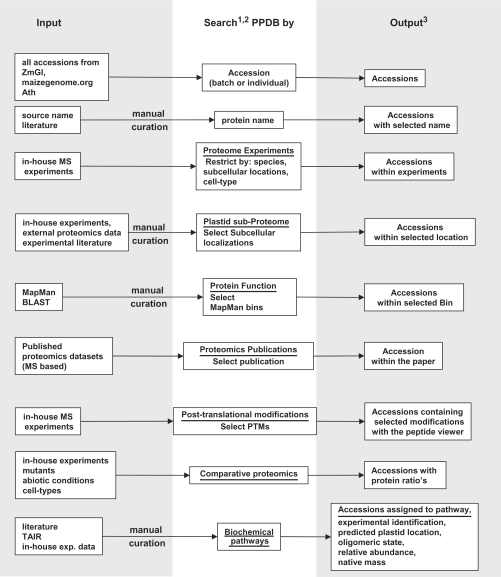
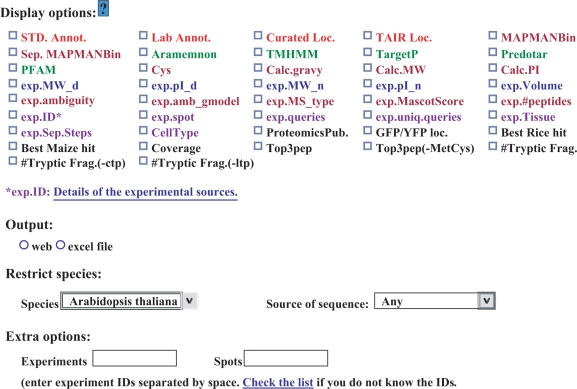
The Plant Proteomics Database (PPDB; http://ppdb.tc.cornell.edu), launched in 2004, provides an integrated resource for experimentally identified proteins in Arabidopsis and maize (Zea mays). Internal BLAST alignments link maize and Arabidopsis information. Experimental identification is based on in-house mass spectrometry (MS) of cell type-specific proteomes (maize), or specific subcellular proteomes (e.g. chloroplasts, thylakoids, nucleoids) and total leaf proteome samples (maize and Arabidopsis). So far more than 5000 accessions both in maize and Arabidopsis have been identified. In addition, more than 80 published Arabidopsis proteome datasets from subcellular compartments or organs are stored in PPDB and linked to each locus. Using MS-derived information and literature, more than 1500 Arabidopsis proteins have a manually assigned subcellular location, with a strong emphasis on plastid proteins. Additional new features of PPDB include searchable posttranslational modifications and searchable experimental proteotypic peptides and spectral count information for each identified accession based on in-house experiments. Various search methods are provided to extract more than 40 data types for each accession and to extract accessions for different functional categories or curated subcellular localizations. Protein report pages for each accession provide comprehensive overviews, including predicted protein properties, with hyperlinks to the most relevant databases.
Overview
The claims and statistics of this paper haven’t been checked yet.
Free: it reads the open-access text and checks the first 5 claims that cite a source we can check. Create a free account to check every claim.
Integrity signals
Registry
Cites
Statistics
Figures

Verification
Claims the paper makes
The claims and statistics of this paper haven’t been checked yet.
Free: it reads the open-access text and checks the first 5 claims that cite a source we can check. Create a free account to check every claim.
Claims other papers make about this one
Each is checked against this paper’s own text: does it say what the citing paper says it does?
In the citing paper
“Proteomic databases exist for plant species95 and, more recently, for human tissues9,23 but public data on protein localisation and abundance across the brain are currently far less mature than their RNA equivalent.”
From Decoding neuroproteomics: integrating the genome, translatome and functional anatomy (2014) · cites this paper as [95]
Self-check
Percentages, sums and reported differences re-computed from the paper’s own numbers.
The self-check needs the paper’s full text.
Citations
Cites
Thimm, O., Bläsing, O., Gibon, Y., Nagel, A., Meyer, S., Krüger, P., Selbig, J., Müller, L. A., Rhee, S. Y., & Stitt, M. (2004) · The Plant Journal · doi:10.1111/j.1365-313x.2004.02016.x · Cited by 3,352 · cited 5×
“We thank the curators of MapMan bin for providing us all MapMan bin assignments to Arabidopsis accessions.”
MethodInfluentialA Model for Random Sampling and Estimation of Relative Protein Abundance in Shotgun Proteomics
Liu, H., Sadygov, R. G., & Yates, J. R. (2004) · Analytical Chemistry · doi:10.1021/ac0498563 · Cited by 2,500
Quantitative mass spectrometry in proteomics: a critical review
Bantscheff, M., Schirle, M., Sweetman, G., Rick, J., & Kuster, B. (2007) · Analytical and Bioanalytical Chemistry · doi:10.1007/s00216-007-1486-6 · Cited by 1,669
Peng, J., Elias, J. E., Thoreen, C. C., Licklider, L. J., & Gygi, S. P. (2003) · Journal of Proteome Research · doi:10.1021/pr025556v · Cited by 1,647 · cited 1×
“The instrument settings and database searches (always using Mascot) and filter criteria (aimed at < 1% false positive rate for peptide identification, with cutoff set by decoy database searches (8)) are standardized (9–11).”
MethodComparison of Label-free Methods for Quantifying Human Proteins by Shotgun Proteomics
Old, W. M., Meyer-Arendt, K., Aveline-Wolf, L., Pierce, K. G., Mendoza, A., Sevinsky, J. R., Resing, K. A., & Ahn, N. G. (2005) · Molecular & Cellular Proteomics · doi:10.1074/mcp.m500084-mcp200 · Cited by 1,206
Lu, P., Vogel, C., Wang, R., Yao, X., & Marcotte, E. M. (2007) · Nature Biotechnology · doi:10.1038/nbt1270 · Cited by 1,139
Sorting Signals, N-Terminal Modifications and Abundance of the Chloroplast Proteome
Zybailov, B., Rutschow, H., Friso, G., Rudella, A., Emanuelsson, O., Sun, Q., & van Wijk, K. J. (2008) · PLoS ONE · doi:10.1371/journal.pone.0001994 · Cited by 637 · cited 2×
“In a recent paper, we showed that ‘spectral counting’ can indeed provide large-scale protein quantification for Arabidopsis (9), if experiments are carefully designed with attention to reproducibility at every step of the process and if appropriate thresholds are applied for the minimum number of matched spectral coun…”
BackgroundSelf-citationAnalysis and validation of proteomic data generated by tandem mass spectrometry
Nesvizhskii, A. I., Vitek, O., & Aebersold, R. (2007) · Nature Methods · doi:10.1038/nmeth1088 · Cited by 629
Friso, G., Giacomelli, L., Ytterberg, A. J., Peltier, J.-B., Rudella, A., Sun, Q., & Wijk, K. J. V. (2004) · The Plant Cell · doi:10.1105/tpc.017814 · Cited by 482
Self-citationZybailov, B., Coleman, M. K., Florens, L., & Washburn, M. P. (2005) · Analytical Chemistry · doi:10.1021/ac050846r · Cited by 349
Self-citation
Cited by
Items 101–200 of 405
Update on Chloroplast Research: New Tools, New Topics, and New Trends
Armbruster, U., Pesaresi, P., Pribil, M., Hertle, A. P., & Leister, D. (2010) · Molecular Plant · doi:10.1093/mp/ssq060 · Cited by 70
“…so far (Table 2 and Figure 1), and the information garnered is publicly available in several databases, such as the Plant Protein Database (PPDB; Sun et al., 2009), the Subcellular Proteomic Database (SUBA; Heazlewood et al., 2007), and the Plastid Protein Database (plprot; Kleffmann et al.,…”
van Wijk, K. J., Leppert, M., Sun, Q., Boguraev, S. S., Sun, Z., Mendoza, L., & Deutsch, E. W. (2021) · The Plant Cell · doi:10.1093/plcell/koab211 · Cited by 68
Self-citationChloroplast-localized protein kinases: a step forward towards a complete inventory
Bayer, R. G., Stael, S., Rocha, A. G., Mair, A., Vothknecht, U. C., & Teige, M. (2012) · Journal of Experimental Botany · doi:10.1093/jxb/err377 · Cited by 67
Lipid transport required to make lipids of photosynthetic membranes
LaBrant, E., Barnes, A. C., & Roston, R. (2018) · Photosynthesis Research · doi:10.1007/s11120-018-0545-5 · Cited by 73
Genome-Wide Identification, Evolution and Expression Analysis of mTERF Gene Family in Maize
Zhao, Y., Cai, M., Zhang, X., Li, Y., Zhang, J., Zhao, H., Kong, F., Zheng, Y., & Qiu, F. (2014) · PLoS ONE · doi:10.1371/journal.pone.0094126 · Cited by 67
“Here we used the maize mTERF proteins to screen PPDB [30], and found that ten mTERF proteins (ZmTERF1, -8, -9, -17, -18, -19, -23, -24, -27 and -29) were detected in maize plastid nucleoid [31] and ZmTERF6 was observed in maize chloroplast stroma (Table 1 and Table S2) [32].”
MethodRelevance of Proteomic Investigations in Plant Abiotic Stress Physiology
Hakeem, K. R., Chandna, R., Ahmad, P., Iqbal, M., & Öztürk, M. (2012) · OMICS A Journal of Integrative Biology · doi:10.1089/omi.2012.0041 · Cited by 64
Qi, Y., Armbruster, U., Schmitz‐Linneweber, C., Delannoy, É., de Longevialle, A. F., Rühle, T., Small, I., Jahns, P., & Leister, D. (2011) · Journal of Experimental Botany · doi:10.1093/jxb/err347 · Cited by 70
“In proteomic analyses of chloroplast subfractions, both CSP41 proteins were detected in the stroma, as well as in thylakoid and envelope subfractions (PPDB database: http://ppdb.tc.cornell.edu; Sun et al., 2009).”
MethodDecoding neuroproteomics: integrating the genome, translatome and functional anatomy
Kitchen, R. R., Rozowsky, J. S., Gerstein, M. B., & Nairn, A. C. (2014) · Nature Neuroscience · doi:10.1038/nn.3829 · Cited by 63
Shredding the signal: targeting peptide degradation in mitochondria and chloroplasts
Kmiec, B., Teixeira, P. F., & Glaser, E. G. (2014) · Trends in Plant Science · doi:10.1016/j.tplants.2014.09.004 · Cited by 70
Assessing the bacterial contribution to the plastid proteome
Qiu, H., Price, D. C., Weber, A. P. M., Facchinelli, F., Yoon, H. S., & Bhattacharya, D. (2013) · Trends in Plant Science · doi:10.1016/j.tplants.2013.09.007 · Cited by 62
Majeran, W., Caër, J. L., Ponnala, L., Meinnel, T., & Giglione, C. (2018) · The Plant Cell · doi:10.1105/tpc.17.00523 · Cited by 69
“…of the best biological replicates was based on enrichment of cell compartment markers (data extracted from PPDB, http://ppdb.tc.cornell. edu/; Sun et al., 2009) and compared with previously published PM (Marmagneet al., 2007) andDRM (Kierszniowska et al., 2009;Minami et al., 2009) proteomes.”
MethodResultSelf-citationImproved evidence-based genome-scale metabolic models for maize leaf, embryo, and endosperm
Seaver, S. M. D., Bradbury, L. M., Frelin, O., Zarecki, R., Ruppin, E., Hanson, A. D., & Henry, C. S. (2015) · Frontiers in Plant Science · doi:10.3389/fpls.2015.00142 · Cited by 66
“The pairing of PPDB and SUBA shares evidence more frequently in all compartments with the exception of the endoplasmic reticulum where there is more agreement between AraCyc and SUBA. function of all the pathways included in the model.”
MethodInfluentialNiehaus, T. D., Nguyen, T. N. D., Gidda, S. K., Elbadawi-Sidhu, M., Lambrecht, J. A., McCarty, D. R., Downs, D. M., Cooper, A. J. L., Fiehn, O., Mullen, R. T., et al. (2014) · The Plant Cell · doi:10.1105/tpc.114.126854 · Cited by 63
“RidA and Thr Dehydratase Are Plastid-Targeted Arabidopsis BCAT3 has been shown to localize to plastids (Diebold et al., 2002), and multiple proteomics analyses, summarized at the Plant Proteome Database (Sun et al., 2009), show that Arabidopsis RidA, Thr dehydratase, and BCAT3 are found in chloroplasts.”
BackgroundIndispensable Roles of Plastids in Arabidopsis thaliana Embryogenesis
Hsu, S., Belmonte, M. F., Harada, J. J., & Inoue, K. (2010) · Current Genomics · doi:10.2174/138920210791616716 · Cited by 59
“By a thorough search of the available literatures and the Plant Proteome DataBase [40], and also by using a computer prediction program to detect transit peptides [41], we estimated that 101 out of 323 genes in the SeedGenes database and seven of the 16 recently reported genes most likely encode proteins targeted to p…”
MethodArrivault, S., Guenther, M., Florian, A., Encke, B., Feil, R., Vosloh, D., Lunn, J. E., Sulpice, R., Fernie, A. R., Stitt, M., et al. (2014) · Molecular & Cellular Proteomics · doi:10.1074/mcp.m114.038190 · Cited by 59
“Functional annotation of metabolites and proteins was carried out according to MapMan (43), and subcellular consensus location was 2248 Molecular & Cellular Proteomics 13.9 obtained from SUBA3 (44) and from PPDB for plastidial subcompartments (45).”
BackgroundInfluentialAlbus, C. A., Salinas, A., Czarnecki, O., Kahlau, S., Rothbart, M., Thiele, W., Lein, W., Bock, R., Grimm, B., & Schöttler, M. A. (2012) · PLANT PHYSIOLOGY · doi:10.1104/pp.112.206045 · Cited by 58
“LCAA has been identified as a chloroplastlocalized protein in the Plant Proteomics Database at Cornell (Sun et al., 2009; http://ppdb.tc.cornell.edu/) and is suggested to be associated with the thylakoid membrane.”
BackgroundIn vivo detection of protein cysteine sulfenylation in plastids
Smet, B. D., Willems, P., Fernández-Fernández, Á. D., Alseekh, S., Fernie, A. R., Messens, J., & Breusegem, F. V. (2018) · The Plant Journal · doi:10.1111/tpj.14146 · Cited by 58
Ubiquitin-based pathway acts inside chloroplasts to regulate photosynthesis
Sun, Y., Yao, Z., Ye, Y., Fang, J., Chen, H., Lyu, Y.-P., Broad, W. J., Fournier, M. L., Chen, G., Hu, Y., et al. (2022) · Science Advances · doi:10.1126/sciadv.abq7352 · Cited by 59
Selective autophagy regulates chloroplast protein import and promotes plant stress tolerance
Chen, W., Zhang, H., Cheng, H., Sowden, R. G., Cai, W., Jarvis, P., & Ling, Q. (2023) · The EMBO Journal · doi:10.15252/embj.2022112534 · Cited by 58
“Information on protein subcellular localization was searched for sequentially and manually in several public databases (TAIR (Lamesch et al, 2012), UniProt (UniProt, 2021), NCBI (NCBI Resource Coordinators, 2018), PPDB (Sun et al, 2009)) and in the appropriate literature, in order to annotate well-characterized chloro…”
Thioredoxins and thioredoxin reductase in chloroplasts: A review
Kang, Z., Qin, T., & Zhao, Z. (2019) · Gene · doi:10.1016/j.gene.2019.04.041 · Cited by 57
Stress-Related Changes in the Expression and Activity of Plant Carbonic Anhydrases
Polishchuk, O. (2021) · Planta · doi:10.1007/s00425-020-03553-5 · Cited by 57
Identification of Chloroplast Envelope Proteins with Critical Importance for Cold Acclimation
Trentmann, O., Mühlhaus, T., Zimmer, D. M., Sommer, F., Schroda, M., Haferkamp, I., Keller, I., Pommerrenig, B., & Neuhaus, H. E. (2020) · PLANT PHYSIOLOGY · doi:10.1104/pp.19.00947 · Cited by 58
“A positive and negative training data set was constructed using a combination of AT_CHLORO (Ferro et al., 2010; Bruley et al., 2012) and Plant Proteome Database (Kaplan et al., 2006; Sun et al., 2009) curated databases of sub-plastidial localization of proteins.”
BackgroundInfluentialHalder, T., Choudhary, M., Liu, H., Chen, Y., Yan, G., & Siddique, K. H. M. (2022) · Proteomes · doi:10.3390/proteomes10020017 · Cited by 56
Leveraging Proteomics to Understand Plant–Microbe Interactions
Jayaraman, D., Forshey, K. L., Grimsrud, P. A., & Ané, J. (2012) · Frontiers in Plant Science · doi:10.3389/fpls.2012.00044 · Cited by 56
“Many existing databases, including plant proteome database, plprot, post-translational modification database, Medicago phosphoprotein database, rice proteome database, and LegProt, should be expanded and integrated in the future (Komatsu et al., 2004; Kleffmann et al., 2006; Sun et al., 2009; Grimsrud et al., 2010b; G…”
BackgroundKhan, N. Z., Lindquist, E., & Aronsson, H. (2013) · PLoS ONE · doi:10.1371/journal.pone.0059898 · Cited by 61
“aspx) (Figure 2) [43].”
The RNA-recognition motif in chloroplasts
Ruwe, H., Kupsch, C., Teubner, M., & Schmitz‐Linneweber, C. (2011) · Journal of Plant Physiology · doi:10.1016/j.jplph.2011.01.012 · Cited by 55
Protein networks identify novel symbiogenetic genes resulting from plastid endosymbiosis
Méheust, R., Zelzion, E., Bhattacharya, D., Lopez, P., & Bapteste, E. (2016) · Proceedings of the National Academy of Sciences · doi:10.1073/pnas.1517551113 · Cited by 52
Modern omics toolbox for producing combined and multifactorial abiotic stress tolerant plants
Joshi, S., Patil, S., Shaikh, A., Jamla, M., & Kumar, V. (2023) · Plant Stress · doi:10.1016/j.stress.2023.100301 · Cited by 59
Suzuki, K., & Miyagishima, S.-Y. (2010) · Molecular Biology and Evolution · doi:10.1093/molbev/msp273 · Cited by 53
“thaliana proteins was searched in the Plant Proteomics Database (Sun et al. 2009) and the Arabidopsis Information Resource (http://www.”
BackgroundMethodInfluentialBogart, E., & Myers, C. R. (2016) · PLoS ONE · doi:10.1371/journal.pone.0151722 · Cited by 54
“Gene associations for reactions present in more than one subcellular compartment have been refined based on the results of subcellular proteomics experiments and computational predictions (as collected by the Plant Proteomics Database, [26]) to assign genes to reactions in appropriate compartments.”
BackgroundUncovering the Protein Lysine and Arginine Methylation Network in Arabidopsis Chloroplasts
Alban, C., Tardif, M., Mininno, M., Brugière, S., Gilgen, A., Ma, S., Mazzoleni, M., Gigarel, O., Martin‐Laffon, J., Ferro, M., et al. (2014) · PLoS ONE · doi:10.1371/journal.pone.0095512 · Cited by 53
“1 SDH Saccharopine dehydrogenase Not assigned Mitochondrion K6 (me3)a NA Protein accession, symbol and description were from TAIR, Uniprot and PPDB databases.”
BackgroundMethodRichter, C. V., Bals, T., & Schünemann, D. (2010) · European Journal of Cell Biology · doi:10.1016/j.ejcb.2010.06.020 · Cited by 58
PSI: A Comprehensive and Integrative Approach for Accurate Plant Subcellular Localization Prediction
Liu, L., Zhang, Z., Mei, Q., & Chen, M. (2013) · PLoS ONE · doi:10.1371/journal.pone.0075826 · Cited by 57
“Protein with curated locations from SUBA3 [30] and PPDB [31] were used as our datasets, including 16009 protein sequences located in ten sites: (1) cytosol (cytos), (2) endoplasmic reticulum (ER), (3) extracellular space (extra), (4) Golgi apparatus (Golgi), (5) membrane (membr), (6) mitochondria (mito), (7) nucleus (…”
Roston, R., Ruppel, N. J., Damoc, C., Phinney, B. S., & Inoue, K. (2010) · PLANT PHYSIOLOGY · doi:10.1104/pp.109.151977 · Cited by 54
“Putative functions aswell as subcellular and suborganellar locations of the identified proteins were assigned by cross-referencing the Plant Proteome Database (Sun et al., 2009) and the Arabidopsis Information Resource database (http:// www.arabidopsis.org).”
MethodMining the soluble chloroplast proteome by affinity chromatography
Bayer, R. G., Stael, S., Csaszar, E., & Teige, M. (2011) · PROTEOMICS · doi:10.1002/pmic.201000495 · Cited by 59
“Proteins that have been reported to be localized in the chloroplast during preparation of this publication are labelled by superscript lowercase letters, which are explained at the bottom of the table. a) Protein is present in the AT_CHLORO database. b) Protein is chloroplast localized according to the recent PPDB upd…”
BackgroundMethodInfluentialXu, J., Yang, J., Wu, Z., Liu, H., Huang, F., Wu, Y., Carrie, C., Narsai, R., Murcha, M. W., Whelan, J., et al. (2013) · PLANT PHYSIOLOGY · doi:10.1104/pp.112.210831 · Cited by 51
“At5g01500 is the TAAC protein and is found in thylakoids (Thuswaldner et al., 2007; Yin et al., 2010); however, the protein encoded by At3g51870 is likely located in the envelopes of plastids according to proteomics-based analysis (Ferro et al., 2003, 2010; Sun et al., 2009).”
MethodProteomic characterisation of endoplasmic reticulum-derived protein bodies in tobacco leaves
Joseph, M., Ludevid, M. D., Torrent, M., Rofidal, V., Tauzin, M., Rossignol, M., & Peltier, J. (2012) · BMC Plant Biology · doi:10.1186/1471-2229-12-36 · Cited by 54
“In order to highlight specific pathways or protein functions that could be altered through the production of PBs, the 195 protein accessions were classified into 13 different functional categories using a simplified version of MapMan categories [[23,24]; http://ppdb.”
MethodThe plastid outer envelope – a highly dynamic interface between plastid and cytoplasm
Breuers, R. K. H. (2011) · Frontiers in Plant Science · doi:10.3389/fpls.2011.00097 · Cited by 55
“, 2010) and is most likely located to the OE (compare Koo et al., 2004; Sun et al., 2009).”
BackgroundInfluentialAdam, Z., Aviv‐Sharon, E., Keren‐Paz, A., Naveh, L., Rozenberg, M., Savidor, A., & Chen, J. (2019) · Frontiers in Plant Science · doi:10.3389/fpls.2019.00428 · Cited by 51
Fu, A., Liu, H., Yu, F., Kambakam, S., Luan, S., & Rodermel, S. R. (2012) · The Plant Cell · doi:10.1105/tpc.112.096701 · Cited by 53
“AOX2, like other AOX family members, has been assumed to reside in mitochondria, even though it lacks a typical mitochondrial targeting signal (Heazlewood and Millar, 2005; Clifton et al., 2006; Kleffmann et al., 2006; Sun et al., 2009).”
BackgroundAT_CHLORO: A Chloroplast Protein Database Dedicated to Sub-Plastidial Localization
Bruley, C., Dupierris, V., Salvi, D., Rolland, N., & Ferro, M. (2012) · Frontiers in Plant Science · doi:10.3389/fpls.2012.00205 · Cited by 50
“Four types of information can be found in the AT_CHLORO database: (i) the proteomics-based sub-plastidial localization as revealed by spectral counting; (ii) analytical coordinates (HPLC retention time, RT; peptide molecular weight, Mr) of all the peptides corresponding to the proteins stored in the database; (iii) cu…”
InfluentialCarbonic anhydrases in photosynthetic cells of higher plants
Rudenko, N. N., Ignatova, L. K., Fedorchuk, T. P., & Ivanov, B. N. (2015) · Biochemistry (Moscow) · doi:10.1134/s0006297915060048 · Cited by 49
Plants Utilize a Highly Conserved System for Repair of NADH and NADPH Hydrates
Niehaus, T. D., Richardson, L. G. L., Gidda, S. K., ElBadawi-Sidhu, M., Meissen, J. K., Mullen, R. T., Fiehn, O., & Hanson, A. D. (2014) · Plant Physiology · doi:10.1104/pp.114.236539 · Cited by 45
“Thus, two independent studies detected the Arabidopsis protein in enriched cytosolic fractions (Ito et al., 2011) and in mitochondria (Finkemeier et al., 2011), and unpublished experiments from the Plant Proteome Database (Sun et al., 2009) detected it in the chloroplast stroma.”
BackgroundAmbrosino, L., Colantuono, C., Diretto, G., Fiore, A., & Chiusano, M. L. (2020) · Plants · doi:10.3390/plants9050591 · Cited by 58
“The Plant Proteomics Database (PPDB; [237]), although limited to Arabidopsis and maize studies, contains a series of proteomics experiments and tools for comparative and subcellular proteomics, biochemical pathways, etc.”
BackgroundA Plant DJ-1 Homolog Is Essential for Arabidopsis thaliana Chloroplast Development
Lin, J., Nazarenus, T. J., Nostrand, J. L. V., Liang, X., Wilson, M. A., & Stone, J. M. (2011) · PLoS ONE · doi:10.1371/journal.pone.0023731 · Cited by 49
“The absence of this cysteine residue may be related to the chloroplast localization of AtDJ1C, as cysteine content is low is chloroplast proteomes compared to the remainder of the plant cell proteome [49,50].”
BackgroundProtein N-acylation overrides differing targeting signals
Stael, S., Bayer, R. G., Mehlmer, N., & Teige, M. (2011) · FEBS Letters · doi:10.1016/j.febslet.2011.01.001 · Cited by 53
“2% (2 proteins) out of the 1100 experimentally confirmed chloroplast proteins listed in the plant proteome database (PPDB) [33] are predicted to be myristoylated by the Myrist Predictor (Fig.”
BackgroundInfluentialFu, X.-Z., Gong, X., Zhang, Y., Wang, Y., & Liu, J. (2012) · PLoS ONE · doi:10.1371/journal.pone.0041790 · Cited by 55
“edu/, University of California) by aligning the consensus sequences of all probe sets to the sequences in the Arabidopsis database, and the MapManBin [29] functional categorization was carried out online in the Plant Proteome Database (PPDB) [74] using the best matched AGI number.”
MethodInfluentialLohrig, K., Müller, B., Davydova, J., Leister, D., & Wolters, D. A. (2009) · Planta · doi:10.1007/s00425-009-0901-y · Cited by 54
“To further evaluate the predicted plastidic proteins, we used the plant proteome database ( Sun et al. 2009 ), which stores information about experimental and mass spectrometric data regarding plant proteins.”
BackgroundMethodInfluentialHan, C., Ren, C., Zhi, T., Zhou, Z., Liu, Y., Chen, F., Peng, W., & Xie, D. (2013) · PLANT PHYSIOLOGY · doi:10.1104/pp.113.216804 · Cited by 47
“The SSCD1 protein is predicted to contain a domain of unknown function, DUF1969, and a FAH domain using the Plant Proteomics Database (http://ppdb.tc.cornell.edu; Sun et al., 2009; Fig.”
MethodDeciphering the roles of acyl-CoA-binding proteins in plant cells
Lung, S., & Chye, M. (2015) · PROTOPLASMA · doi:10.1007/s00709-015-0882-6 · Cited by 46
Evolution-Driven Versatility of N Terminal Acetylation in Photoautotrophs
Giglione, C., & Meinnel, T. (2020) · Trends in Plant Science · doi:10.1016/j.tplants.2020.11.012 · Cited by 45
Calmodulin-Mediated Signal Transduction Pathways in Arabidopsis Are Fine-Tuned by Methylation
Banerjee, J., Magnani, R., Nair, M. N., Dirk, L. M. A., DeBolt, S., Maiti, I. B., & Houtz, R. L. (2013) · The Plant Cell · doi:10.1105/tpc.113.119115 · Cited by 44
Gawroński, P., Burdiak, P., Scharff, L. B., Mielecki, J., Górecka, M., Zaborowska, M., Leister, D., Waszczak, C., & Karpiński, S. M. (2020) · The Plant Journal · doi:10.1111/tpj.15058 · Cited by 45
MU-LOC: A Machine-Learning Method for Predicting Mitochondrially Localized Proteins in Plants
Zhang, N., Rao, R. S. P., Salvato, F., Havelund, J. F., Møller, I. M., Thelen, J. J., & Xu, D. H. (2018) · Frontiers in Plant Science · doi:10.3389/fpls.2018.00634 · Cited by 44
“The Plant Proteome Database (PPDB) contains manually curated subcellular localizations for Arabidopsis and maize proteins (Sun et al., 2009).”
BackgroundAnalysis of Essential Arabidopsis Nuclear Genes Encoding Plastid-Targeted Proteins
Savage, L. J., Imre, K. M., HALL, D. A., & Last, R. L. (2013) · PLoS ONE · doi:10.1371/journal.pone.0073291 · Cited by 42
“This included .5,200 nuclear Arabidopsis thaliana genes identified as putatively producing chloroplast-targeted proteins based on bioinformatic analysis of gene models in The Arabidopsis Information Resource (TAIR; http://www.arabidopsis.org) as well as from various lines of experimental evidence collated in SUBA (SUB…”
BackgroundGolgi Traffic and Integrity Depend on N-Myristoyl Transferase-1 in Arabidopsis
Renna, L., Stefano, G., Majeran, W., Micalella, C., Meinnel, T., Giglione, C., & Brandizzí, F. (2013) · The Plant Cell · doi:10.1105/tpc.113.111393 · Cited by 42
“aspx) (Sun et al., 2009).”
Self-citationSeaver, S. M. D., Lerma‐Ortiz, C., Conrad, N. R., Mikaili, A., Sreedasyam, A., Hanson, A. D., & Henry, C. S. (2018) · The Plant Journal · doi:10.1111/tpj.14003 · Cited by 43
Abiotic Stress Responses in Plants: Metabolism to Productivity
Macedo, A. F. (2011) · Springer eBooks · doi:10.1007/978-1-4614-0634-1_3 · Cited by 46
Photosynthesis in Arabidopsis Is Unaffected by the Function of the Vacuolar K + Channel TPK3
Höhner, R., Galvis, V. A. C., Strand, D. D., Völkner, C., Krämer, M., Messer, M., Dinc, F., Sjuts, I., Bölter, B., Kramer, D., et al. (2019) · PLANT PHYSIOLOGY · doi:10.1104/pp.19.00255 · Cited by 41
Identification of an Arabidopsis mitoferrinlike carrier protein involved in Fe metabolism
Tarantino, D., Morandini, P. A., Ramírez, L., Soave, C., & Murgia, I. (2011) · Plant Physiology and Biochemistry · doi:10.1016/j.plaphy.2011.02.003 · Cited by 43
Characterization of the inositol monophosphatase gene family in Arabidopsis
Nourbakhsh, A., Collakova, E., & Gillaspy, G. E. (2015) · Frontiers in Plant Science · doi:10.3389/fpls.2014.00725 · Cited by 41
“P, as predicted from lack of genetic complementation in the Actinobacteria histidine auxotroph mutant (Petersen et al., 2010).”
BackgroundInfluentialDąbrowska‐Bronk, J., Komar, D. N., Rusaczonek, A., Kozlowska-Makulska, A., Szechyńska‐Hebda, M., & Karpiński, S. M. (2016) · Journal of Plant Physiology · doi:10.1016/j.jplph.2016.05.013 · Cited by 44
Yokoyama, R., Yamamoto, H., Kondo, M., Takeda, S., Ifuku, K., Fukao, Y., Kamei, Y., Nishimura, M., & Shikanai, T. (2016) · The Plant Cell · doi:10.1105/tpc.16.00296 · Cited by 40
“Because of the absence of chlorophyll b, ch1-1 does not accumulate any functional LHCIIs except for Lhcb5, resulting in adrastic reduction inqE (Havaux et al., 2007; Takabayashi et al., 2011).”
BackgroundIdentification of drought responsive proteins and related proteomic QTLs in barley
Rodziewicz, P., Chmielewska, K., Sawikowska, A., Marczak, Ł., Łuczak, M., Bednarek, P., Mikołajczak, K., Ogrodowicz, P., Kuczyńska, A., Krajewski, P., et al. (2019) · Journal of Experimental Botany · doi:10.1093/jxb/erz075 · Cited by 44
“Droughtinduced increase in accumulation of low molecular mass HSPs was already associated with maintaining the stability and integrity of cellular architecture, which may, for example, positively influence the plant’s ability to recover after rewatering (Waters et al., 1996; Sato et al., 2009; Sun et al., 2009).”
BackgroundWittenberg, G., Levitan, A., Klein, T., Dangoor, I., Keren, N., & Danon, A. (2014) · The Plant Journal · doi:10.1111/tpj.12525 · Cited by 44
The Complexity of Vesicle Transport Factors in Plants Examined by Orthology Search
Paul, P., Simm, S., Mirus, O., Scharf, K., Fragkostefanakis, S., & Schleiff, E. (2014) · PLoS ONE · doi:10.1371/journal.pone.0097745 · Cited by 39
“Furthermore, 5 of the 14 Exo70 (co-)orthologues in A. thaliana have been predicted as chloroplast-localized [177], while we detected contradictory localization based on experimental evidences (FTFLP, PPDB) for two (co-)orthologues (At3g55150, At5g59730; Table 8) [139].”
MethodInfluentialProteomic Insight into the Response of Arabidopsis Chloroplasts to Darkness
Wang, J., Yu, Q., Xiong, H., Wang, J., Chen, S., Yang, Z., & Dai, S. (2016) · PLoS ONE · doi:10.1371/journal.pone.0154235 · Cited by 42
Wang, G., Wang, G., Wang, J., Du, Y., Yao, D., Shuai, B., Han, L., Tang, Y., & Song, R. (2016) · Journal of Experimental Botany · doi:10.1093/jxb/erw396 · Cited by 39
“Subcellular localization prediction was carried out using Target P (http://www.cbs.dtu.dk/services/TargetP/) and WoLFPSORT (http://cbrc3.cbrc.jp/cbrc/news/wolf_eng.html), as well as information for best-hit Arabidopsis homologs in published organelle proteomes in the Plant Proteome Database (PPDB) (http://ppdb.tc.corn…”
Okekeogbu, I., Pattathil, S., Fernández‐Niño, S. M. G., Aryal, U. K., Penning, B. W., Lao, J., Heazlewood, J. L., Hahn, M. G., McCann, M. C., & Carpita, N. C. (2019) · The Plant Cell · doi:10.1105/tpc.18.00755 · Cited by 40
“Quantitation of classes of proteins using MapMan functional categories in the Plant Proteomics Database (http://ppdb.tc.cornell.edu/dbsearch/subproteome. aspx; Sun et al., 2009) showed only 2.”
MethodInfluentialCytochrome c maturation system on the negative side of bioenergetic membranes: CCB or System IV
de Vitry, C. (2011) · FEBS Journal · doi:10.1111/j.1742-4658.2011.08373.x · Cited by 44
Differential Roles of the Thylakoid Lumenal Deg Protease Homologs in Chloroplast Proteostasis
Butenko, Y., Lin, A., Naveh, L., Kupervaser, M., Levin, Y., Reich, Z., & Adam, Z. (2018) · PLANT PHYSIOLOGY · doi:10.1104/pp.18.00912 · Cited by 38
“Of the entire list of proteins, 954 were annotated as chloroplast proteins, including 160 thylakoid proteins (cellular locations were according to the Plant Proteome Database [http://ppdb.tc.cornell.edu]; Sun et al., 2009).”
Manara, A., DalCorso, G., Leister, D., Jahns, P., Baldan, B., & Furini, A. (2013) · New Phytologist · doi:10.1111/nph.12533 · Cited by 38
Agrawal, G. K., Job, D., Zivy, M., Agrawal, V. P., Bradshaw, R. A., Dunn, M. J., Haynes, P. A., van Wijk, K. J., Kikuchi, S., Renaut, J., et al. (2011) · PROTEOMICS · doi:10.1002/pmic.201000608 · Cited by 40
“edu/ [66]; AtProteome at http://fgcz-atproteome.”
Zybailov, B. L., Sun, Q., & van Wijk, K. J. (2009) · Analytical Chemistry · doi:10.1021/ac9011792 · Cited by 41
Self-citationDoner, N. M., Seay, D., Mehling, M., Sun, S., Gidda, S. K., Schmitt, K., Braus, G. H., Ischebeck, T., Chapman, K. D., Dyer, J. M., et al. (2021) · Frontiers in Plant Science · doi:10.3389/fpls.2021.658961 · Cited by 38
Predictive Models of Genetic Redundancy inArabidopsis thaliana
Cusack, S. A., Wang, P., Lotreck, S. G., Moore, B. M., Meng, F., Conner, J. K., Krysan, P. J., Lehti‐Shiu, M. D., & Shiu, S. (2021) · Molecular Biology and Evolution · doi:10.1093/molbev/msab111 · Cited by 36
“Acetylation, deamination, formylation, hydroxylation, oxidation, and propionylation data were obtained from The Plant Proteome Database (Sun et al. 2009).”
MethodLau, E., Lam, M. P. Y., Siu, S. O., Kong, R. P. W., Chan, W. L., Zhou, Z., Huang, J., Lo, C., & Chu, I. K. (2011) · Molecular BioSystems · doi:10.1039/c1mb05010a · Cited by 35
Li, W., Liang, Q., Mishra, R. C., Sanchez‐Muñoz, R., Wang, H., Chen, X., Straeten, D. V. D., Zhang, C., & Xiao, Y. (2021) · The Plant Cell · doi:10.1093/plcell/koab198 · Cited by 37
Hedtke, B., Alawady, A. E., Albacete, A. A., Kobayashi, K., Melzer, M., Roitsch, T. G., Masuda, T., & Grimm, B. (2011) · Plant Molecular Biology · doi:10.1007/s11103-011-9846-1 · Cited by 35
“Riboflavin biosynthesis is proposed to be located in plastids (Fischer et al. 2004) and mass spectrometry analysis identified all three RIBA isoforms in these organelles (Sun et al. 2009).”
BackgroundThe Main Functions of Plastids
Rolland, N., Bouchnak, I., Moyet, L., Salvi, D., & Kuntz, M. (2018) · Methods in molecular biology · doi:10.1007/978-1-4939-8654-5_5 · Cited by 35
Arabidopsis plastid carbonic anhydrase βCA5 is important for normal plant growth
Weerasooriya, H. N., DiMario, R. J., Rosati, V. C., Rai, A. K., LaPlace, L. M., Filloon, V. D., Longstreth, D. J., & Moroney, J. V. (2022) · PLANT PHYSIOLOGY · doi:10.1093/plphys/kiac451 · Cited by 34
CyMIRA: The Cytonuclear Molecular Interactions Reference for Arabidopsis
Forsythe, E. S., Sharbrough, J., Havird, J. C., Warren, J. M., & Sloan, D. B. (2019) · Genome Biology and Evolution · doi:10.1093/gbe/evz144 · Cited by 34
Rakkammal, K., Priya, A., Pandian, S., Maharajan, T., Rathinapriya, P., Satish, L., Ceasar, S. A., Sohn, S.-I., & Ramesh, M. (2022) · Plants · doi:10.3390/plants11212852 · Cited by 35
Proteomic analysis of Medicago truncatula root plastids
Daher, Z., Recorbet, G., Valot, B., Robert, F., Balliau, T., Potin, S., Schoefs, B., & Dumas‐Gaudot, E. (2010) · PROTEOMICS · doi:10.1002/pmic.200900345 · Cited by 34
“Because annotation of proteins in most generic database is often incomplete and does not always discriminate between proteins having a confirmed subcellular location from those being candidates according to in silico predictions, more specific databases dedicated to organelles have been created that enable cross-speci…”
BackgroundMaize defective kernel5 is a bacterial TamB homologue required for chloroplast envelope biogenesis
Zhang, J., Wu, S., Boehlein, S. K., McCarty, D. R., Song, G., Walley, J. W., Myers, A. M., & Settles, A. M. (2019) · The Journal of Cell Biology · doi:10.1083/jcb.201807166 · Cited by 33
“dk/services/TMHMM/), and envelope localization was annotated using the Plant Proteome Database (Sun et al., 2009).”
Hasnain, G., Frelin, O., Roje, S., Ellens, K. W., Ali, K., Guan, J., Garrett, T. J., de Crécy‐Lagard, V., Gregory, J. F., McCarty, D. R., et al. (2012) · PLANT PHYSIOLOGY · doi:10.1104/pp.112.208488 · Cited by 33
“As noted above, PyrR and PyrD proteins are predicted to be plastid localized, and there is some support for this from high-throughput proteomic data for Arabidopsis and maize (Zybailov et al., 2008, 2009; Sun et al., 2009; Ferro et al., 2010).”
BackgroundThe Green Proteome: Challenges in Plant Proteomics
Heazlewood, J. L. (2011) · Frontiers in Plant Science · doi:10.3389/fpls.2011.00006 · Cited by 33
Remmerie, N., Vijlder, T. D., Laukens, K., Dang, T. H., Lemière, F., Mertens, I., Valkenborg, D., Blust, R., & Witters, E. (2011) · Phytochemistry · doi:10.1016/j.phytochem.2011.01.003 · Cited by 35
Evidence for nucleotide‐dependent processes in the thylakoid lumen of plant chloroplasts – an update
Spetea, C., & Lundin, B. (2012) · FEBS Letters · doi:10.1016/j.febslet.2012.07.005 · Cited by 32
Emerging roles for diverse intramembrane proteases in plant biology
Adam, Z. (2013) · Biochimica et Biophysica Acta (BBA) - Biomembranes · doi:10.1016/j.bbamem.2013.05.013 · Cited by 32
van Wijk, K. J., Leppert, T., Sun, Z., Kearly, A., Li, M., Mendoza, L., Guzchenko, I., Debley, E. L., Sauermann, G., Routray, P., et al. (2023) · Journal of Proteome Research · doi:10.1021/acs.jproteome.3c00536 · Cited by 35
Self-citationMedicago PhosphoProtein Database: a repository for Medicago truncatula phosphoprotein data
Rose, C. M., Venkateshwaran, M., Grimsrud, P. A., Westphall, M. S., Sussman, M. R., Coon, J. J., & Ané, J. (2012) · Frontiers in Plant Science · doi:10.3389/fpls.2012.00122 · Cited by 32
“…2005; SUBA, Heazlewood et al., 2007; PlProt, Kleffmann et al., 2006; AT_Chloro, Ferro et al., 2010), single species (SpruceDB, Lippert et al., 2009; Soybean Proteome Database, Sakata et al., 2009; PhosPhAt, Durek et al., 2010), multiple species (P3DB, Gao et al., 2009; PPDB, Sun et al., 2009), 2-”
BackgroundLangella, O., Valot, B., Jacob, D. J., Balliau, T., Flores, R., Hoogland, C., Joets, J., & Zivy, M. (2013) · PROTEOMICS · doi:10.1002/pmic.201200564 · Cited by 32
“Most of them focus on a particular species [5, 6], a particular cellular compartment [7] or a particular PTM [8,9], or they handle peptide-centered data [10].”
BackgroundGutiérrez-Carbonell, E., Takahashi, D., Lattanzio, G., Rodríguez-Celma, J., Kehr, J., Soll, J., Philippar, K., Uemura, M., Abadía, J., & López‐Millán, A. F. (2014) · Journal of Proteome Research · doi:10.1021/pr500106s · Cited by 31
An efficient method for the extraction of chloroplast proteins compatible for 2‐DE and MS analysis
Fan, P., Wang, X., Kuang, T., & Li, Y. (2009) · Electrophoresis · doi:10.1002/elps.200900172 · Cited by 31
Proteomes reveal the lipid metabolic network in the complex plastid of Phaeodactylum tricornutum
Huang, T., Pan, Y., Maréchal, É., & Hu, H. (2023) · The Plant Journal · doi:10.1111/tpj.16477 · Cited by 29
Identification of the thiamin salvage enzyme thiazole kinase in Arabidopsis and maize
Yazdani, M., Zallot, R., Tunc‐Ozdemir, M., de Crécy‐Lagard, V., Shintani, D. K., & Hanson, A. D. (2013) · Phytochemistry · doi:10.1016/j.phytochem.2013.05.017 · Cited by 29
“Neither protein has apparent targeting signals or has so far been detected in organelles (Sun et al., 2009; Tanz et al., 2013).”
BackgroundSalvage of the thiamin pyrimidine moiety by plant TenA proteins lacking an active-site cysteine
Zallot, R., Yazdani, M., Goyer, A., Ziemak, M. J., Guan, J., McCarty, D. R., de Crécy‐Lagard, V., Gerdes, S., Garrett, T. J., Benach, J., et al. (2014) · Biochemical Journal · doi:10.1042/bj20140522 · Cited by 29
“These proteins are predicted to be cytosolic and have not been detected in organelles [41].”
BackgroundSurveying the Oligomeric State of Arabidopsis thaliana Chloroplasts
Lundquist, P. K., Mantegazza, O., Stefanski, A., Stühler, K., & Weber, A. P. M. (2016) · Molecular Plant · doi:10.1016/j.molp.2016.10.011 · Cited by 29
Functional divergence and origin of the DAG-like gene family in plants
Luo, M., Cai, M., Zhang, J., Li, Y., Zhang, R., Song, W., Zhang, K., Xiao, H., Yue, B., Zheng, Y., et al. (2017) · Scientific Reports · doi:10.1038/s41598-017-05961-2 · Cited by 28
Metadata
- Authors
- Sun, Q., Zybailov, B., Majeran, W., Friso, G., Olinares, P. D. B., & van Wijk, K. J.
- Affiliations
- Cornell University (US)
- Venue
- Nucleic Acids Research
- Publisher
- Oxford University Press (OUP)
- Published
- 2008-10-02
- Volume
- 37
- Issue
- suppl_1
- Pages
- D969-D974
- ISSN
- 0305-1048 (ISSN-L)
- 1362-4962
- PMC
- PMC2686560
- OpenAlex
- W2117056672
- Cited by
- 400
- References
- 23
- Citations by year
- 2026: 8 · 2025: 13 · 2024: 17 · 2023: 18 · 2022: 18 · 2021: 15 · 2020: 23 · 2019: 19 · 2018: 22 · 2017: 13 · 2016: 23 · 2015: 17 · 2014: 32 · 2013: 38 · 2012: 40
- FWCI
- 12.13
- Type
- journal article
- Language
- en
- Open access
- gold
- doi.org
- Licence
- Locations
- Nucleic Acids Research (publishedVersion, cc-by-nc)
- PubMed Central (publishedVersion, cc-by-nc)
- PubMed (publishedVersion)
- Funders
- National Science Foundation (0211935, 0343444, 0701736, 0718897)
- U.S. Department of Energy (DE‐FG02‐, FG02-04ER15560)
- Office of Science
- Topics
- Physical Sciences › Chemistry › Spectroscopy › Advanced Proteomics Techniques and Applications
- Life Sciences › Biochemistry, Genetics and Molecular Biology › Molecular Biology › Bioinformatics and Genomic Networks
- Life Sciences › Biochemistry, Genetics and Molecular Biology › Molecular Biology › Machine Learning in Bioinformatics
- Keywords
- Arabidopsis thaliana, maize, plant proteomics, subcellular localization, plastid proteins, chloroplast proteome, post-translational modification, proteotypic peptides, spectral counts
- MeSH terms
- Zea mays, Peptides, Plant Proteins, Mass Spectrometry, Arabidopsis Proteins, Databases, Protein, Proteomics
About these checks
Registry, retraction, Cites and statistics results are computed, not judged, with one exception: a printed reference that no index lists is read once by a model before it counts as a citation error. Claims are extracted by a model and kept only when their quote appears verbatim in the text; each cited source is then checked, with a model’s help, for whether it says what the claim relies on. Those verdicts can be wrong — read the claim’s quote and the cited source before relying on one.
Statistics and arithmetic are recomputed, not judged.
Confidence bands are shown only for fields calibrated on our annotated test set. None is calibrated yet, so no band is shown.
What counts as a claim ›How we measure confidence ›How we check this ›
Are you an author, or do you see a problem with this page? Request a review
Data sources
Bibliographic data: Semantic Scholar, OpenAlex, Crossref.
Contains information from the Semantic Scholar Academic Graph Datasets, made available under the ODC Attribution License (ODC-BY 1.0).
Semantic Scholar’s data is described in: Kinney, R., et al. (2023). The Semantic Scholar Open Data Platform. arXiv:2301.10140.
