

PPDB, the Plant Proteomics Database at Cornell
Open accessThe DOI matches its Crossref record; 23 of the 23 references it cites were found in a registry or an index.
Abstract
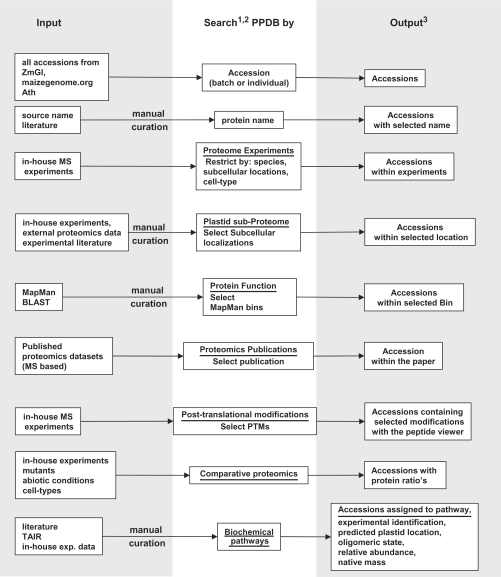
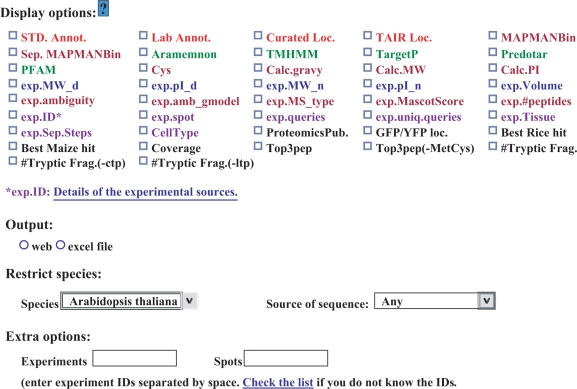
The Plant Proteomics Database (PPDB; http://ppdb.tc.cornell.edu), launched in 2004, provides an integrated resource for experimentally identified proteins in Arabidopsis and maize (Zea mays). Internal BLAST alignments link maize and Arabidopsis information. Experimental identification is based on in-house mass spectrometry (MS) of cell type-specific proteomes (maize), or specific subcellular proteomes (e.g. chloroplasts, thylakoids, nucleoids) and total leaf proteome samples (maize and Arabidopsis). So far more than 5000 accessions both in maize and Arabidopsis have been identified. In addition, more than 80 published Arabidopsis proteome datasets from subcellular compartments or organs are stored in PPDB and linked to each locus. Using MS-derived information and literature, more than 1500 Arabidopsis proteins have a manually assigned subcellular location, with a strong emphasis on plastid proteins. Additional new features of PPDB include searchable posttranslational modifications and searchable experimental proteotypic peptides and spectral count information for each identified accession based on in-house experiments. Various search methods are provided to extract more than 40 data types for each accession and to extract accessions for different functional categories or curated subcellular localizations. Protein report pages for each accession provide comprehensive overviews, including predicted protein properties, with hyperlinks to the most relevant databases.
Overview
The claims and statistics of this paper haven’t been checked yet.
Free: it reads the open-access text and checks the first 5 claims that cite a source we can check. Create a free account to check every claim.
Integrity signals
Registry
Cites
Statistics
Figures

Verification
Claims the paper makes
The claims and statistics of this paper haven’t been checked yet.
Free: it reads the open-access text and checks the first 5 claims that cite a source we can check. Create a free account to check every claim.
Claims other papers make about this one
Each is checked against this paper’s own text: does it say what the citing paper says it does?
In the citing paper
“Proteomic databases exist for plant species95 and, more recently, for human tissues9,23 but public data on protein localisation and abundance across the brain are currently far less mature than their RNA equivalent.”
From Decoding neuroproteomics: integrating the genome, translatome and functional anatomy (2014) · cites this paper as [95]
Self-check
Percentages, sums and reported differences re-computed from the paper’s own numbers.
The self-check needs the paper’s full text.
Citations
Cites
Thimm, O., Bläsing, O., Gibon, Y., Nagel, A., Meyer, S., Krüger, P., Selbig, J., Müller, L. A., Rhee, S. Y., & Stitt, M. (2004) · The Plant Journal · doi:10.1111/j.1365-313x.2004.02016.x · Cited by 3,352 · cited 5×
“We thank the curators of MapMan bin for providing us all MapMan bin assignments to Arabidopsis accessions.”
MethodInfluentialA Model for Random Sampling and Estimation of Relative Protein Abundance in Shotgun Proteomics
Liu, H., Sadygov, R. G., & Yates, J. R. (2004) · Analytical Chemistry · doi:10.1021/ac0498563 · Cited by 2,500
Quantitative mass spectrometry in proteomics: a critical review
Bantscheff, M., Schirle, M., Sweetman, G., Rick, J., & Kuster, B. (2007) · Analytical and Bioanalytical Chemistry · doi:10.1007/s00216-007-1486-6 · Cited by 1,669
Peng, J., Elias, J. E., Thoreen, C. C., Licklider, L. J., & Gygi, S. P. (2003) · Journal of Proteome Research · doi:10.1021/pr025556v · Cited by 1,647 · cited 1×
“The instrument settings and database searches (always using Mascot) and filter criteria (aimed at < 1% false positive rate for peptide identification, with cutoff set by decoy database searches (8)) are standardized (9–11).”
MethodComparison of Label-free Methods for Quantifying Human Proteins by Shotgun Proteomics
Old, W. M., Meyer-Arendt, K., Aveline-Wolf, L., Pierce, K. G., Mendoza, A., Sevinsky, J. R., Resing, K. A., & Ahn, N. G. (2005) · Molecular & Cellular Proteomics · doi:10.1074/mcp.m500084-mcp200 · Cited by 1,206
Lu, P., Vogel, C., Wang, R., Yao, X., & Marcotte, E. M. (2007) · Nature Biotechnology · doi:10.1038/nbt1270 · Cited by 1,139
Sorting Signals, N-Terminal Modifications and Abundance of the Chloroplast Proteome
Zybailov, B., Rutschow, H., Friso, G., Rudella, A., Emanuelsson, O., Sun, Q., & van Wijk, K. J. (2008) · PLoS ONE · doi:10.1371/journal.pone.0001994 · Cited by 637 · cited 2×
“In a recent paper, we showed that ‘spectral counting’ can indeed provide large-scale protein quantification for Arabidopsis (9), if experiments are carefully designed with attention to reproducibility at every step of the process and if appropriate thresholds are applied for the minimum number of matched spectral coun…”
BackgroundSelf-citationAnalysis and validation of proteomic data generated by tandem mass spectrometry
Nesvizhskii, A. I., Vitek, O., & Aebersold, R. (2007) · Nature Methods · doi:10.1038/nmeth1088 · Cited by 629
Friso, G., Giacomelli, L., Ytterberg, A. J., Peltier, J.-B., Rudella, A., Sun, Q., & Wijk, K. J. V. (2004) · The Plant Cell · doi:10.1105/tpc.017814 · Cited by 482
Self-citationZybailov, B., Coleman, M. K., Florens, L., & Washburn, M. P. (2005) · Analytical Chemistry · doi:10.1021/ac050846r · Cited by 349
Self-citation
Cited by
Items 201–300 of 405
Hooper, C. M., Castleden, I. R., Aryamanesh, N., Black, K., Grasso, S. V., & Millar, A. H. (2020) · The Plant Journal · doi:10.1111/tpj.14961 · Cited by 27
Hasnain, G., Roje, S., Sa, N., Zallot, R., Ziemak, M. J., de Crécy‐Lagard, V., Gregory, J. F., & Hanson, A. D. (2015) · Biochemical Journal · doi:10.1042/bj20150805 · Cited by 27
Path to improving the life cycle and quality of genome-scale models of metabolism
Seif, Y., & Palsson, B. Ø. (2021) · Cell Systems · doi:10.1016/j.cels.2021.06.005 · Cited by 28
Lakshmanan, M., Cheung, C. Y. M., Mohanty, B., & Lee, D. (2016) · Frontiers in Plant Science · doi:10.3389/fpls.2016.01795 · Cited by 26
“…reaction with 79 components and species-specific metabolic and transport reactions assigned to nine subcellular compartments mostly based on AraCyc (Mueller et al., 2003) and the Plant Proteomics 1http://bis.zju.edu.cn/ricenetdb/ 2http://plantseed.theseed.org/ Database (PPDB) (Sun et al., 2009).”
BackgroundRole of pyrimidine salvage pathway in the maintenance of organellar and nuclear genome integrity
Pedroza‐García, J. A., Nájera-Martínez, M., Mazubert, C., Aguilera-Alvarado, P., Drouin‐Wahbi, J., Sánchez‐Nieto, S., Gualberto, J. M., Raynaud, C., & Plasencia, J. (2018) · The Plant Journal · doi:10.1111/tpj.14128 · Cited by 26
Heinnickel, M. L., Alric, J., Wittkopp, T. M., Yang, W., Catalanotti, C., Dent, R. M., Niyogi, K., Wollman, F.-A., & Grossman, A. R. (2013) · Journal of Biological Chemistry · doi:10.1074/jbc.m112.427476 · Cited by 27
(2024) · doi:10.1093/plphys/kiae274 · Cited by 25
“Using the plant proteome database (PPDB; http://ppdb.tc.cornell.edu/; Sun et al. 2009), the abundance of all proteins with an assigned unique subcellular localization was combined.”
Plant Proteome Databases and Bioinformatic Tools: An Expert Review and Comparative Insights
Subba, P., Kotimoole, C. N., & Prasad, T. S. K. (2019) · OMICS A Journal of Integrative Biology · doi:10.1089/omi.2019.0024 · Cited by 25
“The Plant Proteome Database (PPDB) houses data from organellar proteome studies (Sun et al., 2009).”
Bölter, B., Mitterreiter, M. J., Schwenkert, S., Finkemeier, I., & Kunz, H. (2019) · Photosynthesis Research · doi:10.1007/s11120-019-00700-2 · Cited by 25
Exploring synergies between plant metabolic modelling and machine learning
Sampaio, M., Rocha, M., & Dias, Ó. (2022) · Computational and Structural Biotechnology Journal · doi:10.1016/j.csbj.2022.04.016 · Cited by 25
“Proteomics data can be retrieved from sources like ProteomicsDB [50], PRoteomics IDEntifications (PRIDE) [51], Pep-tideAtlas [52], Global Proteome Machine Database (GPMDB) [53], Mass Spectrometry Interactive Virtual Environment (MassIVE) [54] and Plant Proteomics Database (PPDB) [55].”
MethodThe ‘protein complex proteome’ of chloroplasts in Arabidopsis thaliana
Behrens, C., Blume, C., Senkler, M., Eubel, H., Peterhänsel, C., & Braun, H. (2013) · Journal of Proteomics · doi:10.1016/j.jprot.2013.07.001 · Cited by 25
Granlund, I., Hall, M., Kieselbach, T., & Schröder, W. P. (2009) · PLoS ONE · doi:10.1371/journal.pone.0005649 · Cited by 29
“edu/, [29]) as having a plastid localisation.”
Dai, M., Zhang, Y., Lu, X., Wang, D., Zhang, Y., Zhou, N., Wu, Z., Liu, L., Rui, C., Wang, X., et al. (2022) · Industrial Crops and Products · doi:10.1016/j.indcrop.2022.116158 · Cited by 24
Zhang, Y., Xu, Y., Skaggs, T. H., Ferreira, J., Chen, X., & Sandhu, D. (2023) · The Plant Cell · doi:10.1093/plcell/koad124 · Cited by 24
Plastid intramembrane proteolysis
Adam, Z. (2014) · Biochimica et Biophysica Acta (BBA) - Bioenergetics · doi:10.1016/j.bbabio.2014.12.006 · Cited by 24
“Although the intraorganellar location of AtEGY1 was not determined in that work, it was identified in thylakoid membranes in proteomic studies (see the Plant Proteomics Database, PPDB, [21]; http://ppdb.”
BackgroundProteomic and Transcriptomic Analyses of Agave americana in Response to Heat Stress
Shakeel, S. N., Aman, S., Haq, N. U., Heckathorn, S. A., & Luthe, D. S. (2013) · Plant Molecular Biology Reporter · doi:10.1007/s11105-013-0555-6 · Cited by 27
“2000), and each thylakoid membrane contains ∼350 integral membrane-bound proteins and several peripheral thylakoid proteins (Sun et al. 2009).”
BackgroundDual protein trafficking to secretory and non-secretory cell compartments: Clear or double vision?
Porter, B. W., Yuen, C. Y. L., & Christopher, D. A. (2015) · Plant Science · doi:10.1016/j.plantsci.2015.02.013 · Cited by 23
Ying, S., Scheible, W., & Lundquist, P. K. (2022) · PLANT PHYSIOLOGY · doi:10.1093/plphys/kiac486 · Cited by 23
“To investigate the subcellular localization of plant RFS proteins, we first searched proteomic databases and subcellular localization prediction tools, namely SUBA4, WoLF P-Sort, TargetP, and the Plant Proteome Database (Horton et al., 2007; Sun et al., 2009; Hooper et al., 2016; Almagro Armenteros et al., 2019).”
MethodGalland, M., Job, D., & Rajjou, L. (2012) · Frontiers in Plant Science · doi:10.3389/fpls.2012.00098 · Cited by 23
“ORIGINALITY OF THE SEED PROTEOME We investigated the specificity of the Arabidopsis seed proteome by comparison with the leaf proteome data from the Plant Proteomics Database (Sun et al., 2009) and by the comparison with the entire Arabidopsis proteome (TAIR10 Gene Annotation Data).”
MethodJung, H.-S., Okegawa, Y., Shih, P. M., Kellogg, E. H., Abdel‐Ghany, S. E., Pilon, M., Sjölander, K. V., Shikanai, T., & Niyogi, K. (2010) · PLoS ONE · doi:10.1371/journal.pone.0011688 · Cited by 23
“Chloroplast localization of PGR7 PGR7 was predicted to be a chloroplast protein, and it was detected by proteomics analysis of a chloroplast stroma fraction in Arabidopsis [18].”
BackgroundInfluentialSharma, M., Bennewitz, B., & Klösgen, R. B. (2018) · Photosynthesis Research · doi:10.1007/s11120-018-0543-7 · Cited by 25
Synthetic Biology of Plants and Microbes for Agriculture, Environment, and Future Applications
Clauer, P. R., Nou, A., Toth, T., Yu, Q., Chemla, Y., Boo, A., Yoon, K. S., & Voigt, C. A. (2026) · Chemical Reviews · doi:10.1021/acs.chemrev.4c00687 · Cited by 24
Brumbarova, T., & Ivanov, R. (2016) · Frontiers in Plant Science · doi:10.3389/fpls.2016.01456 · Cited by 22
Chloroplast function revealed through analysis of GreenCut2 genes
Fristedt, R. (2017) · Journal of Experimental Botany · doi:10.1093/jxb/erx082 · Cited by 22
Christian, R. W., Hewitt, S., Nelson, G., Roalson, E. H., & Dhingra, A. (2020) · PeerJ · doi:10.7717/peerj.9772 · Cited by 23
Narasimhan, M. L., Bressan, R. A., D’Urzo, M. P., Jenks, M. A., & Mengiste, T. D. (2009) · Advances in botanical research · doi:10.1016/s0065-2296(09)51011-7 · Cited by 22
Shah, M., Soares, E. L., de Lima, M. L. B., Pinheiro, C. B., Soares, A. A., Domont, G. B., Nogueira, F. C. S., & Campos, F. (2016) · Journal of Proteomics · doi:10.1016/j.jprot.2016.02.025 · Cited by 21
Role of Plant Carbonic Anhydrases under Stress Conditions
Rudenko, N. N., Borisova‐Mubarakshina, M. M., Ignatova, L. K., Fedorchuk, T. P., Nadeeva, E. M., & Ivanov, B. N. (2020) · IntechOpen eBooks · doi:10.5772/intechopen.91971 · Cited by 21
Bhattacharya, O., Ortiz, I., & Walling, L. L. (2020) · Plant Methods · doi:10.1186/s13007-020-00667-5 · Cited by 21
Two plastid POLLUX ion channel-like proteins are required for stress-triggered stromal Ca2+release
Völkner, C., Holzner, L. J., Day, P. M., Ashok, A. D., de Vries, J., Bölter, B., & Kunz, H. (2021) · PLANT PHYSIOLOGY · doi:10.1093/plphys/kiab424 · Cited by 21
“Additionally, both PEC members contain a predicted pTP (Schwacke et al., 2003; Sun et al., 2009) and were identified in recent envelope proteomes from Arabidopsis (Bouchnak et al.”
BackgroundTomcal, M., Stiffler, N., & Barkan, A. (2013) · PLoS ONE · doi:10.1371/journal.pone.0082569 · Cited by 21
“edu/) [14].”
Kaundal, R., Sahu, S. S., Verma, R., & Weirick, T. (2013) · BMC Bioinformatics · doi:10.1186/1471-2105-14-s14-s7 · Cited by 21
“Phase-II (plastid-types): A thorough search was performed in various databases such as UniProt, NCBI (http://www.ncbi.nlm.nih.gov/), plprot (http://www. plprot.ethz.ch/), PPDB (http://ppdb.tc.cornell.edu/) to search proteins of various plastid types viz . chloroplast, chromoplast, etioplast, amyloplast, leucoplast, el…”
Kaneko, K., Takamatsu, T., Inomata, T., Oikawa, K., Itoh, K., Hirose, K., Amano, M., Nishimura, S., Toyooka, K., Matsuoka, K., et al. (2016) · Plant and Cell Physiology · doi:10.1093/pcp/pcw089 · Cited by 21
Majerská, J., Schrumpfová, P. P., Dokládal, L., Schořová, Š., Stejskal, K., Obořil, M., Honys, D., Kozáková, L., Polanská, P., & Sýkorová, E. (2016) · PROTOPLASMA · doi:10.1007/s00709-016-1042-3 · Cited by 21
NTRC mediates the coupling of chloroplast redox rhythm with nuclear circadian clock in plant cells
Paeng, S. K., Wi, S. D., Chae, H. B., Bae, S. B., Phan, K. A. T., Kim, M. G., Yun, D., Kim, W., McClung, C. R., & Lee, S. Y. (2025) · Molecular Plant · doi:10.1016/j.molp.2025.01.014 · Cited by 21
Databases: A Weapon from the Arsenal of Bioinformatics for Plant Abiotic Stress Research
Anamika, A., Mehta, S., Singh, B. P., Patra, A., & Islam, M. A. (2019) · Springer eBooks · doi:10.1007/978-3-030-21687-0_7 · Cited by 22
Intra-chloroplast proteases: A holistic network view of chloroplast proteolysis
van Wijk, K. J. (2024) · The Plant Cell · doi:10.1093/plcell/koae178 · Cited by 20
Gould, S. B., Magiera, J., García, C. G., & Raval, P. K. (2024) · PLoS Computational Biology · doi:10.1371/journal.pcbi.1012575 · Cited by 20
Su, L., Chang, S., Li, M., Huang, H.-Y., Jane, W., & Yang, J. (2013) · Plant Science · doi:10.1016/j.plantsci.2013.09.001 · Cited by 20
Zhurikova, E. M., Ignatova, L. K., Semenova, G. A., Rudenko, N. N., Mudrik, V. A., & Ivanov, B. N. (2015) · Russian Journal of Plant Physiology · doi:10.1134/s1021443715040214 · Cited by 20
“The aim of this work was to identify the role in pho tosynthesis of α carbonic anhydrase 4 (α CA4) (according to the nomenclature used in [5] and adopted by most researchers), which was detected by mass spectrometry in the protein composition of thy lakoid membranes [8, 9].”
MethodGenome-Scale Characterization of Predicted Plastid-Targeted Proteomes in Higher Plants
Christian, R. W., Hewitt, S., Roalson, E. H., & Dhingra, A. (2020) · Scientific Reports · doi:10.1038/s41598-020-64670-5 · Cited by 21
Proteome Analysis of Plastids from Developing Seeds of Jatropha curcas L.
Pinheiro, C. B., Shah, M., Soares, E. L., Nogueira, F. C. S., Carvalho, P. C., Junqueira, M., Araujo, G. D. T., Soares, A. A., Domont, G. B., & Campos, F. (2013) · Journal of Proteome Research · doi:10.1021/pr400515b · Cited by 20
Bienvenut, W. V., Scarpelli, J.-P., Dumestier, J., Meinnel, T., & Giglione, C. (2017) · BMC Bioinformatics · doi:10.1186/s12859-017-1595-y · Cited by 20
“specialized databases such as AT_Chloro [22, 23], PPDB [24], SUBA [25], TopFind [26], MASCP-Gator [27] and various prediction tools such as TargetP / ChloroP / SignalP [5, 6]) or Mitofate [28] were used to assess N-termini relevancy and protein sub-cellular localization for each candidate (Additional file 1: Table S1).”
MethodLiu, L., Shen, F., Xin, C., & Wang, Z. (2015) · Journal of Integrative Plant Biology · doi:10.1111/jipb.12370 · Cited by 21
Proteomic dissection of the chloroplast: Moving beyond photosynthesis
Lande, N. V., Barua, P., Gayen, D., Kumar, S., Chakraborty, S., & Chakraborty, N. (2019) · Journal of Proteomics · doi:10.1016/j.jprot.2019.103542 · Cited by 19
Chloroplast Chaperonin-Mediated Targeting of a Thylakoid Membrane Protein
Klasek, L., Inoue, K., & Theg, S. M. (2020) · The Plant Cell · doi:10.1105/tpc.20.00309 · Cited by 18
Raval, P. K., MacLeod, A. I., & Gould, S. B. (2024) · PLoS Biology · doi:10.1371/journal.pbio.3002608 · Cited by 18
“Orthogroups that contained at least 1 experimentally verified organelle protein from any one of the 4 experimentally verified organelle proteome of C . reinhardtii [159], P . patens [160], Z . mays [161], A . thaliana [161], were annotated as organelle (plastid and mitochondria) orthogroups.”
BackgroundMetNet Online: a novel integrated resource for plant systems biology
Sucaet, Y., Wang, Y., Li, J., & Wurtele, E. S. (2012) · BMC Bioinformatics · doi:10.1186/1471-2105-13-267 · Cited by 17
Leister, D. (2016) · F1000Research · doi:10.12688/f1000research.7915.1 · Cited by 17
Zhang, S., Zhang, H., Xia, Y., & Xiong, L. (2018) · BMC Plant Biology · doi:10.1186/s12870-018-1396-0 · Cited by 17
Melkonian, K., Stolze, S. C., Harzen, A., & Nakagami, H. (2022) · New Phytologist · doi:10.1111/nph.18151 · Cited by 17
Efficient Replication of the Plastid Genome Requires an Organellar Thymidine Kinase
Ret, M. L., Belcher, S. E., Graindorge, S., Dietrich, A., Koechler, S., Erhardt, M., Williams-Carrier, R. E., Barkan, A., & Gualberto, J. M. (2018) · PLANT PHYSIOLOGY · doi:10.1104/pp.18.00976 · Cited by 16
“However, most TK1B protein sequences from eudicots are predicted to be targeted to chloroplasts, and peptides corresponding to TK1B have been identified in a proteome of Arabidopsis chloroplasts (Sun et al., 2009).”
BackgroundMichel, E. J. S., Ponnala, L., & van Wijk, K. J. (2021) · Journal of Experimental Botany · doi:10.1093/jxb/erab175 · Cited by 16
Gérard, C., Carrière, F., Receveur‐Brechot, V., Launay, H., & Gontero, B. (2022) · Biomolecules · doi:10.3390/biom12081047 · Cited by 16
“In the C4 plant maize (Zea mays), a CP12 homolog was found in the bundle sheath and not in the mesophyll cells [68].”
BackgroundEvolution and applications of plant pathway resources and databases
Sucaet, Y., & Deva, T. (2011) · Briefings in Bioinformatics · doi:10.1093/bib/bbq083 · Cited by 16
Big Data in Plant Science: Resources and Data Mining Tools for Plant Genomics and Proteomics
Popescu, G. V., Noutsos, C., & Popescu, S. C. (2016) · Methods in molecular biology · doi:10.1007/978-1-4939-3572-7_27 · Cited by 16
Predictive sulfur metabolism – a field in flux
Calderwood, A., Morris, R. J., & Kopřiva, S. (2014) · Frontiers in Plant Science · doi:10.3389/fpls.2014.00646 · Cited by 19
Li, M., Ruwe, H., Melzer, M., Junker, A., Hensel, G., Tschiersch, H., Schwenkert, S., Chamas, S., Schmitz‐Linneweber, C., Börner, T., et al. (2021) · Frontiers in Plant Science · doi:10.3389/fpls.2021.681375 · Cited by 15
Toyoshima, M., Sakata, M., Ohnishi, K., Tokumaru, Y., Kato, Y., Tokutsu, R., Sakamoto, W., Minagawa, J., Matsuda, F., & Shimizu, H. (2018) · Journal of Bioscience and Bioengineering · doi:10.1016/j.jbiosc.2018.09.001 · Cited by 17
“Omics” insights into plastid behavior toward improved carotenoid accumulation
Li, Y., Jian, Y., Mao, Y., Meng, F., Shao, Z., Wang, T., Zheng, J., Wang, Q., & Liu, L. (2022) · Frontiers in Plant Science · doi:10.3389/fpls.2022.1001756 · Cited by 14
“For example, the Plant Protein Database (http://ppdb.tc.cornell. edu/default.aspx, Sun et al., 2009) presents the most exhaustive plastid proteome available online.”
BackgroundCurrent perspectives in proteomic analysis of abiotic stress in Grapevines
George, I. S., & Haynes, P. A. (2014) · Frontiers in Plant Science · doi:10.3389/fpls.2014.00686 · Cited by 14
Ion homeostasis in the Chloroplast
Hanikenne, M., Bernal, M., & Urzica, E. I. (2014) · Springer eBooks · doi:10.1007/978-1-4939-1136-3_17 · Cited by 20
“Several proteomic studies have been conducted to identify chloroplastidial proteins and to determine their sub-plastidial localization [85, 98–100, 104, 160, 291, 324, 362].”
BackgroundArabidopsis thaliana: A Model for Plant Research
Sivasubramanian, R., Mukhi, N., & Kaur, J. (2015) · Springer eBooks · doi:10.1007/978-81-322-2283-5_1 · Cited by 13
Hooper, C. M., Stevens, T. J., Saukkonen, A., Castleden, I. R., Singh, P., Mann, G. W., Fabre, B., Ito, J., Deery, M. J., Lilley, K. S., et al. (2017) · The Plant Journal · doi:10.1111/tpj.13743 · Cited by 13
“Over 100 publications describing the proteomes of enriched subcellular regions, organelles and protein complexes are contained in SUBA, PPDB and AtChloro (Sun et al., 2009; Ferro et al., 2010; Hooper et al., 2017).”
Application of Proteomics Technologies in Oil Palm Research
Lau, B. Y. C., Othman, A., & Ramli, U. S. (2018) · The Protein Journal · doi:10.1007/s10930-018-9802-x · Cited by 14
Dual Protein Localization to the Envelope and Thylakoid Membranes Within the Chloroplast
Klasek, L., & Inoue, K. (2016) · International review of cytology · doi:10.1016/bs.ircmb.2015.12.008 · Cited by 13
AT_CHLORO: The First Step When Looking for Information About Subplastidial Localization of Proteins
Salvi, D., Bournais, S., Moyet, L., Bouchnak, I., Kuntz, M., Bruley, C., & Rolland, N. (2018) · Methods in molecular biology · doi:10.1007/978-1-4939-8654-5_26 · Cited by 12
MASCP gator: an overview of the Arabidopsis proteomic aggregation portal
Mann, G. W., Calley, P. C., Joshi, H. J., & Heazlewood, J. L. (2013) · Frontiers in Plant Science · doi:10.3389/fpls.2013.00411 · Cited by 12
“…2008), ProMEX (Hummel et al., 2007; Wienkoop et al., 2012), PhosPhAt (Heazlewood et al., 2008; Durek et al., 2010; Arsova and Schulze, 2012), PPDB (Sun et al., 2009), RIPP-DB (Nakagami et al., 2010), AT_CHLORO (Ferro et al., 2010; Bruley et al., 2012), and AtPeptide (Castellana et al., 2008) and…”
CO-EXPRESSED WITH PSI ASSEMBLY1 (CEPA1) is a photosystem I assembly factor in Arabidopsis
Rolo, D., Sandoval-Ibáñez, O., Thiele, W., Schöttler, M. A., Gerlach, I., Zoschke, R., Schwartzmann, J., Meyer, E. H., & Bock, R. (2024) · The Plant Cell · doi:10.1093/plcell/koae042 · Cited by 11
“CEPA1-specific peptides from proteomic datasets were retrieved from the PPDB database (http://ppdb.tc.cornell.edu/; Sun et al. 2009) and the Arabidopsis PeptideAtlas (build 2021-03; http://www. peptideatlas.org/builds/arabidopsis/; van Wijk et al. 2021).”
BackgroundMethodUniProtKB amid the turmoil of plant proteomics research
Schneider, M., & Poux, S. (2012) · Frontiers in Plant Science · doi:10.3389/fpls.2012.00270 · Cited by 11
“, 2011), an aggregation portal for the visualization of Arabidopsis proteomics data or PPDB, the Plant Proteomics Database (Sun et al., 2009) to cite only a few.”
BackgroundInfluentialKim, J., Le, T.-N. N., & Kang, H. (2017) · Journal of Plant Biology · doi:10.1007/s12374-017-0044-9 · Cited by 11
“However, more than 3,000 nucleus-encoded proteins are targeted to the chloroplast (Leister, 2003; Sun et al. 2009), and play indispensable roles in chloroplast gene expression.”
Sun, R., Wang, Y., Zhu, R., Li, L., Xi, Q., Dai, Y., Li, J., Cao, Y., Guo, X., Pan, X., et al. (2025) · International Journal of Biological Macromolecules · doi:10.1016/j.ijbiomac.2025.140872 · Cited by 10
Databases for Plant Phosphoproteomics
Schulze, W. X., Yao, Q., & Xu, D. H. (2015) · Methods in molecular biology · doi:10.1007/978-1-4939-2648-0_16 · Cited by 10
Gene Duplication Accelerates the Pace of Protein Gain and Loss from Plant Organelles
Costello, R., Emms, D., & Kelly, S. L. (2019) · Molecular Biology and Evolution · doi:10.1093/molbev/msz275 · Cited by 12
“2014) and subchloroplast terms assigned using the hierarchical structure provided on the Plant Protein Database (Sun et al. 2009) using only experimentally validated proteins (see supplementary file S5, Supplementary Material online, for the PPDB list used at time of writing).”
MethodJefferson, D. J. (2024) · Plants People Planet · doi:10.1002/ppp3.10615 · Cited by 9
“…Plant Public RNA-seq Database (Yu et al. 2022) serve as vast repositories of information to facilitate projects targeting the expression of specific genes, while other resources such as the Plant Proteome Database store curated data about the function and properties of proteins (Sun et al., 2009).”
Genome-wide identification, phylogeny, and expression analysis of the CA gene family in tomato
Feng, C.-Y., Chen, Z., Ling-ling, P., Ma, S.-X., Nie, H., Zheng, S., Sun, S., & Xing, G. (2020) · Biotechnology & Biotechnological Equipment · doi:10.1080/13102818.2020.1715832 · Cited by 9
“aCA4 is located in the thylakoid membranes and affects the activity of the external light harvesting antenna complexes [12,13], whereas CA6 is mainly located around the pyrenoids and may be involved in the incorporation of CO2 into bicarbonate, thereby increasing the concentration of HCO3 - in the cytoplasmic matrix a…”
BackgroundŠimko, I., & Zhao, R. (2023) · Frontiers in Plant Science · doi:10.3389/fpls.2023.1296660 · Cited by 9
“…analyses of predicted function using InterPro classi fi cation of protein families (https://www.ebi.ac.uk/ interpro/) (Paysan-Lafosse et al., 2023), the Plant Proteome Database (http://ppdb.tc.cornell.edu/) (Sun et al., 2009), and UniProt (https:// www.uniprot.org/) (The_UniProt_Consortium, 2023).”
MethodLung, S., Smith, M. D., Weston, J. K., Gwynne, W. D., Secord, N., & Chuong, S. D. X. (2014) · Frontiers in Plant Science · doi:10.3389/fpls.2014.00722 · Cited by 9
Su, P.-H., Lin, H.-Y. J., & Lai, Y. (2020) · Frontiers in Plant Science · doi:10.3389/fpls.2019.01719 · Cited by 9
“edu) (Sun et al., 2009) and predicted by the ChloroP program (Emanuelsson et al.”
MethodTwo canonically aerobic foraminifera express distinct peroxisomal and mitochondrial metabolisms
Powers, C., Gomaa, F., Billings, E. B., Utter, D. R., Beaudoin, D., Edgcomb, V. P., Hansel, C. M., Wankel, S. D., Filipsson, H. L., Zhang, Y., et al. (2022) · Frontiers in Marine Science · doi:10.3389/fmars.2022.1010319 · Cited by 10
“, 2020), and mitochondrial sequences from the plant proteome database (Sun et al., 2009).”
BackgroundMechanisms of Chloroplast Protein Import in Plants
Jarvis, P., & Kessler, F. (2014) · Springer eBooks · doi:10.1007/978-1-4939-1136-3_9 · Cited by 9
“However, the number of chloroplast proteins has been estimated at around 1500 in recent proteomics studies [59, 113, 198].”
BackgroundGismondi, M., Strologo, L., Gabilondo, J., Budde, C. O., Drincovich, M. F., & Bustamante, C. A. (2024) · Planta · doi:10.1007/s00425-024-04593-x · Cited by 9
The plastid proteome of the nonphotosynthetic chlorophycean alga Polytomella parva
Fuentes-Ramírez, E. O., Vázquez‐Acevedo, M., Cabrera‐Orefice, A., Guerrero‐Castillo, S., & González‐Halphen, D. (2020) · Microbiological Research · doi:10.1016/j.micres.2020.126649 · Cited by 8
van Wijk, K. J., Leppert, T., Sun, Z., & Deutsch, E. W. (2023) · Journal of Proteome Research · doi:10.1021/acs.jproteome.3c00178 · Cited by 8
Inoue, K. (2015) · Frontiers in Plant Science · doi:10.3389/fpls.2015.00278 · Cited by 8
“…studies (Ferro et al., 2003, 2010; Froehlich et al., 2003), which are listed in The Plant Proteome Database (PPDB: http://ppdb.tc.cornell.edu/) (Sun et al., 2009). eProteins found in the mitochondrial outer membrane by (x) Duncan et al. (2013) or (xi) Marty et al. (2014). targeting signals for…”
BackgroundSalavati, A., Shafeinia, A., Klubicová, K., Bushehri, A. A. S. N., & Komatsu, S. (2013) · Frontiers in Plant Science · doi:10.3389/fpls.2013.00028 · Cited by 9
“Many existing databases, including Soybean, Medicago and rice proteome database should be expanded and integrated in the future (Komatsu et al., 2004; Sun et al., 2009).”
BackgroundProteome analysis of chloroplasts from the moss Physcomitrella patens (Hedw.) B.S.G.
Polyakov, N. B., Slizhikova, D. K., Izmalkova, M. Y., Cherepanova, N. I., Kazakov, V. S., Rogova, M. A., Zhukova, N. A., Alexeev, D. G., Bazaleev, N. A., Skripnikov, A., et al. (2010) · Biochemistry (Moscow) · doi:10.1134/s0006297910120084 · Cited by 8
Tanz, S. K., & Small, I. (2011) · Methods in molecular biology · doi:10.1007/978-1-61779-234-2_16 · Cited by 8
LIHONG, W., Guan, J., Wei, J. I. A. N., Mahmood, A., Rasheed, A., Hassan, M., Al-Khayri, J. M., Al-Daej, M. I., Sattar, M. N., Adel Abdel-Sabour, R. E. Z. K., et al. (2023) · Notulae Botanicae Horti Agrobotanici Cluj-Napoca · doi:10.15835/nbha51413447 · Cited by 7
Understanding protein import in diverse non-green plastids
Christian, R. W., Labbancz, J., Usadel, B., & Dhingra, A. (2023) · Frontiers in Genetics · doi:10.3389/fgene.2023.969931 · Cited by 7
Two critical membranes: how does the chloroplast envelope affect plant acclimation properties?
John, A., Keller, I., Ebel, K. W., & Neuhaus, H. E. (2024) · Journal of Experimental Botany · doi:10.1093/jxb/erae436 · Cited by 7
Proteome Databases and Other Online Resources for Chloroplast Research in Arabidopsis
Demartini, D. R., Carlini, C. R., & Thelen, J. J. (2011) · Methods in molecular biology · doi:10.1007/978-1-61779-237-3_6 · Cited by 7
self-assembling GFP: A Versatile Tool for Plant (Membrane) Protein Analyses
Wiesemann, K., Groß, L. E., Sommer, M., Schleiff, E., & Sommer, M. S. (2013) · Methods in molecular biology · doi:10.1007/978-1-62703-487-6_9 · Cited by 7
Kuntz, M., & Rolland, N. (2011) · Springer eBooks · doi:10.1007/978-3-642-22380-8_9 · Cited by 7
“edu) was generated in which all massspectrometry data are projected on identified gene models (Sun et al. 2009).”
MethodPlant Proteomics: From Genome Sequencing to Proteome Databases and Repositories
Sakata, K., & Komatsu, S. (2013) · Methods in molecular biology · doi:10.1007/978-1-62703-631-3_3 · Cited by 8
Gupta, R. (2026) · Physiologia Plantarum · doi:10.1111/ppl.70735 · Cited by 6
“These efforts are being supported by dedicated databases and repositories, such as the Plant Proteome Database (PPDB) (Sun et al. 2009), ProteomicsDB (Lautenbacher et al. 2022), and PRIDE (Jones et al. 2006; Perez-Riverol et al. 2019), which facilitate data sharing and comparative analyses.”
Scholz, P., Dabisch, J., Vilchez, A. C., Clews, A. C., Niemeyer, P. W., Lim, M. S. S., Sun, S., Hembach, L., Naganawa, M., Dreier, F., et al. (2025) · New Phytologist · doi:10.1111/nph.70726 · Cited by 6
“In order to unravel whether any other organelles were systematically co-enriched, we binned the abundance of all proteins with the same assigned subcellular localization (according to the PPDB; http://ppdb.tc.cornell.edu/; Sun et al ., 2009).”
The Eucalyptus grandis chloroplast proteome: Seasonal variations in leaf development
Baldassi, A. C., & Balbuena, T. S. (2022) · PLoS ONE · doi:10.1371/journal.pone.0265134 · Cited by 6
“For this purpose, a protein was considered plastidial if identified by at least one of the subcellular prediction algorithms–ChloroP [41] and Predotar [42]–or by presenting at least one homologous protein in any of the databases used–PPDB [43] or AT-Chloro [44].”
MethodBioinformatics Analysis of Protein Secretion in Plants
Chen, L. (2017) · Methods in molecular biology · doi:10.1007/978-1-4939-7262-3_3 · Cited by 6
PlantMWpIDB: a database for the molecular weight and isoelectric points of the plant proteomes
Mohanta, T. K., Kamran, M. S., Omar, M., Anwar, W., & Choi, G. S. (2022) · Scientific Reports · doi:10.1038/s41598-022-11077-z · Cited by 6
Metadata
- Authors
- Sun, Q., Zybailov, B., Majeran, W., Friso, G., Olinares, P. D. B., & van Wijk, K. J.
- Affiliations
- Cornell University (US)
- Venue
- Nucleic Acids Research
- Publisher
- Oxford University Press (OUP)
- Published
- 2008-10-02
- Volume
- 37
- Issue
- suppl_1
- Pages
- D969-D974
- ISSN
- 0305-1048 (ISSN-L)
- 1362-4962
- PMC
- PMC2686560
- OpenAlex
- W2117056672
- Cited by
- 400
- References
- 23
- Citations by year
- 2026: 8 · 2025: 13 · 2024: 17 · 2023: 18 · 2022: 18 · 2021: 15 · 2020: 23 · 2019: 19 · 2018: 22 · 2017: 13 · 2016: 23 · 2015: 17 · 2014: 32 · 2013: 38 · 2012: 40
- FWCI
- 12.13
- Type
- journal article
- Language
- en
- Open access
- gold
- doi.org
- Licence
- Locations
- Nucleic Acids Research (publishedVersion, cc-by-nc)
- PubMed Central (publishedVersion, cc-by-nc)
- PubMed (publishedVersion)
- Funders
- National Science Foundation (0211935, 0343444, 0701736, 0718897)
- U.S. Department of Energy (DE‐FG02‐, FG02-04ER15560)
- Office of Science
- Topics
- Physical Sciences › Chemistry › Spectroscopy › Advanced Proteomics Techniques and Applications
- Life Sciences › Biochemistry, Genetics and Molecular Biology › Molecular Biology › Bioinformatics and Genomic Networks
- Life Sciences › Biochemistry, Genetics and Molecular Biology › Molecular Biology › Machine Learning in Bioinformatics
- Keywords
- Arabidopsis thaliana, maize, plant proteomics, subcellular localization, plastid proteins, chloroplast proteome, post-translational modification, proteotypic peptides, spectral counts
- MeSH terms
- Zea mays, Peptides, Plant Proteins, Mass Spectrometry, Arabidopsis Proteins, Databases, Protein, Proteomics
About these checks
Registry, retraction, Cites and statistics results are computed, not judged, with one exception: a printed reference that no index lists is read once by a model before it counts as a citation error. Claims are extracted by a model and kept only when their quote appears verbatim in the text; each cited source is then checked, with a model’s help, for whether it says what the claim relies on. Those verdicts can be wrong — read the claim’s quote and the cited source before relying on one.
Statistics and arithmetic are recomputed, not judged.
Confidence bands are shown only for fields calibrated on our annotated test set. None is calibrated yet, so no band is shown.
What counts as a claim ›How we measure confidence ›How we check this ›
Are you an author, or do you see a problem with this page? Request a review
Data sources
Bibliographic data: Semantic Scholar, OpenAlex, Crossref.
Contains information from the Semantic Scholar Academic Graph Datasets, made available under the ODC Attribution License (ODC-BY 1.0).
Semantic Scholar’s data is described in: Kinney, R., et al. (2023). The Semantic Scholar Open Data Platform. arXiv:2301.10140.
