

PPDB, the Plant Proteomics Database at Cornell
Open accessThe DOI matches its Crossref record; 23 of the 23 references it cites were found in a registry or an index.
Abstract
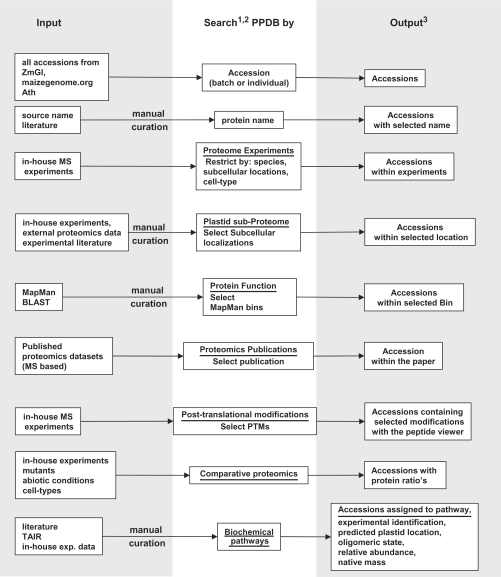
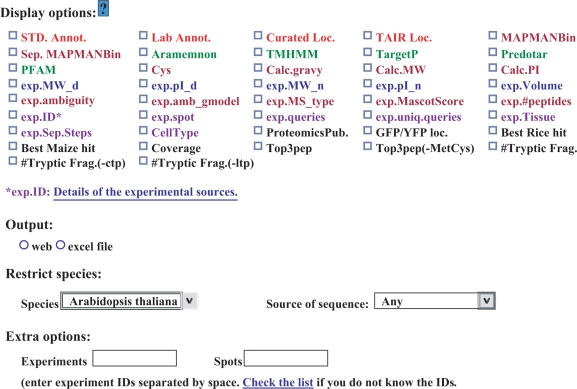
The Plant Proteomics Database (PPDB; http://ppdb.tc.cornell.edu), launched in 2004, provides an integrated resource for experimentally identified proteins in Arabidopsis and maize (Zea mays). Internal BLAST alignments link maize and Arabidopsis information. Experimental identification is based on in-house mass spectrometry (MS) of cell type-specific proteomes (maize), or specific subcellular proteomes (e.g. chloroplasts, thylakoids, nucleoids) and total leaf proteome samples (maize and Arabidopsis). So far more than 5000 accessions both in maize and Arabidopsis have been identified. In addition, more than 80 published Arabidopsis proteome datasets from subcellular compartments or organs are stored in PPDB and linked to each locus. Using MS-derived information and literature, more than 1500 Arabidopsis proteins have a manually assigned subcellular location, with a strong emphasis on plastid proteins. Additional new features of PPDB include searchable posttranslational modifications and searchable experimental proteotypic peptides and spectral count information for each identified accession based on in-house experiments. Various search methods are provided to extract more than 40 data types for each accession and to extract accessions for different functional categories or curated subcellular localizations. Protein report pages for each accession provide comprehensive overviews, including predicted protein properties, with hyperlinks to the most relevant databases.
Overview
The claims and statistics of this paper haven’t been checked yet.
Free: it reads the open-access text and checks the first 5 claims that cite a source we can check. Create a free account to check every claim.
Integrity signals
Registry
Cites
Statistics
Figures

Verification
Claims the paper makes
The claims and statistics of this paper haven’t been checked yet.
Free: it reads the open-access text and checks the first 5 claims that cite a source we can check. Create a free account to check every claim.
Claims other papers make about this one
Each is checked against this paper’s own text: does it say what the citing paper says it does?
In the citing paper
“Proteomic databases exist for plant species95 and, more recently, for human tissues9,23 but public data on protein localisation and abundance across the brain are currently far less mature than their RNA equivalent.”
From Decoding neuroproteomics: integrating the genome, translatome and functional anatomy (2014) · cites this paper as [95]
Self-check
Percentages, sums and reported differences re-computed from the paper’s own numbers.
The self-check needs the paper’s full text.
Citations
Cites
Thimm, O., Bläsing, O., Gibon, Y., Nagel, A., Meyer, S., Krüger, P., Selbig, J., Müller, L. A., Rhee, S. Y., & Stitt, M. (2004) · The Plant Journal · doi:10.1111/j.1365-313x.2004.02016.x · Cited by 3,352 · cited 5×
“We thank the curators of MapMan bin for providing us all MapMan bin assignments to Arabidopsis accessions.”
MethodInfluentialA Model for Random Sampling and Estimation of Relative Protein Abundance in Shotgun Proteomics
Liu, H., Sadygov, R. G., & Yates, J. R. (2004) · Analytical Chemistry · doi:10.1021/ac0498563 · Cited by 2,500
Quantitative mass spectrometry in proteomics: a critical review
Bantscheff, M., Schirle, M., Sweetman, G., Rick, J., & Kuster, B. (2007) · Analytical and Bioanalytical Chemistry · doi:10.1007/s00216-007-1486-6 · Cited by 1,669
Peng, J., Elias, J. E., Thoreen, C. C., Licklider, L. J., & Gygi, S. P. (2003) · Journal of Proteome Research · doi:10.1021/pr025556v · Cited by 1,647 · cited 1×
“The instrument settings and database searches (always using Mascot) and filter criteria (aimed at < 1% false positive rate for peptide identification, with cutoff set by decoy database searches (8)) are standardized (9–11).”
MethodComparison of Label-free Methods for Quantifying Human Proteins by Shotgun Proteomics
Old, W. M., Meyer-Arendt, K., Aveline-Wolf, L., Pierce, K. G., Mendoza, A., Sevinsky, J. R., Resing, K. A., & Ahn, N. G. (2005) · Molecular & Cellular Proteomics · doi:10.1074/mcp.m500084-mcp200 · Cited by 1,206
Lu, P., Vogel, C., Wang, R., Yao, X., & Marcotte, E. M. (2007) · Nature Biotechnology · doi:10.1038/nbt1270 · Cited by 1,139
Sorting Signals, N-Terminal Modifications and Abundance of the Chloroplast Proteome
Zybailov, B., Rutschow, H., Friso, G., Rudella, A., Emanuelsson, O., Sun, Q., & van Wijk, K. J. (2008) · PLoS ONE · doi:10.1371/journal.pone.0001994 · Cited by 637 · cited 2×
“In a recent paper, we showed that ‘spectral counting’ can indeed provide large-scale protein quantification for Arabidopsis (9), if experiments are carefully designed with attention to reproducibility at every step of the process and if appropriate thresholds are applied for the minimum number of matched spectral coun…”
BackgroundSelf-citationAnalysis and validation of proteomic data generated by tandem mass spectrometry
Nesvizhskii, A. I., Vitek, O., & Aebersold, R. (2007) · Nature Methods · doi:10.1038/nmeth1088 · Cited by 629
Friso, G., Giacomelli, L., Ytterberg, A. J., Peltier, J.-B., Rudella, A., Sun, Q., & Wijk, K. J. V. (2004) · The Plant Cell · doi:10.1105/tpc.017814 · Cited by 482
Self-citationZybailov, B., Coleman, M. K., Florens, L., & Washburn, M. P. (2005) · Analytical Chemistry · doi:10.1021/ac050846r · Cited by 349
Self-citation
Cited by
Items 301–400 of 405
Malcevschi, A., & Marmiroli, N. (2012) · InTech eBooks · doi:10.5772/30785 · Cited by 6
“…a number of initiatives such as the International Plant Proteomics Organization (INPPO) and The Plant Proteomics Database (PPDB) have been launched recently to organize the massive amount of information that emerged within the field of plant proteomics (Agrawal et al. 2011, Sun et al. 2009).”
BackgroundMacromolecular Crowding in Cytoplasm and Cellular Organelles
Adilović, M., Uversky, V. N., & Šutković, J. (2025) · Sub-cellular biochemistry/Subcellular biochemistry · doi:10.1007/978-3-032-03370-3_10 · Cited by 5
Proteomics Application in Plant Breeding
Naaz, N., Choudhary, S., & Hasan, N. (2024) · Advances in plant breeding strategies · doi:10.1007/978-3-031-68586-6_10 · Cited by 5
Evolutionary Integration of Chloroplast Metabolism with the Metabolic Networks of the Cells
Linka, M., & Weber, A. P. M. (2011) · Advances in photosynthesis and respiration · doi:10.1007/978-94-007-1533-2_8 · Cited by 5
Wu, X., Zhang, Q., Wu, Z., Tai, F., & Wang, W. (2017) · Briefings in Bioinformatics · doi:10.1093/bib/bbx050 · Cited by 5
Bhattacharya, O., Ortiz, I., Hendricks, N. G., & Walling, L. L. (2023) · Frontiers in Plant Science · doi:10.3389/fpls.2023.1020275 · Cited by 5
“Our endeavors provided empirical evidence for 545 tomato plastid proteins and 92 Arabidopsis stromal proteins that were not previously reported (Sun et al., 2009; Barsan et al., 2012).”
BackgroundBatool, A., Yue, D., Xiao, Y.-L., Li, S., Duan, H., Haq, Z., Ahmed, K., Zhao, L., Zhu, L., & Xiong, Y. (2024) · International Journal of Applied and Experimental Biology · doi:10.56612/ijaaeb.v1i1.92 · Cited by 8
Mann, G. W., Joshi, H. J., Petzold, C. J., & Heazlewood, J. L. (2012) · Journal of Proteomics · doi:10.1016/j.jprot.2012.12.009 · Cited by 5
The Response of Chloroplast Proteome to Abiotic Stress
Ning, F., & Wang, W. (2016) · Springer eBooks · doi:10.1007/978-3-319-32423-4_9 · Cited by 6
Ruíz-Lau, N., ez, Ï. ⁄. N. S. ⁄., Lanza, M., & Benito, B. (2017) · Plant and Cell Physiology · doi:10.1093/pcp/pcx150 · Cited by 5
Determination of the DNA/RNA-Associated Subproteome from Chloroplasts and Other Plastid Types
Chieb, M., Liebers, M., Chevalier, F., Lerbs‐Mache, S., Blanvillain, R., & Pfannschmidt, T. (2018) · Methods in molecular biology · doi:10.1007/978-1-4939-8654-5_17 · Cited by 5
Functional Analysis of Three Rice Chloroplast Transit Peptides
He, L., Chen, G., Zhang, S., Qiu, Z., Hu, J., Zeng, D., Zhang, G., Dong, G., Gao, Z., Ren, D., et al. (2018) · Rice Science · doi:10.1016/j.rsci.2018.12.001 · Cited by 5
Bioinformatics and Plant Stress Management
Shafi, A., & Zahoor, I. (2019) · Springer eBooks · doi:10.1007/978-3-030-19318-8_3 · Cited by 6
Vaid, N., Ishihara, H., Plötner, B., Sageman‐Furnas, K., Wiszniewski, A. A. G., & Laitinen, R. A. E. (2020) · New Phytologist · doi:10.1111/nph.16752 · Cited by 5
“This mutation is the hydrophilic carboxyl-terminal domain, which is proposed to have regulatory functions in CHX family proteins (Sze et al., 2004).”
BackgroundFumarylacetoacetate hydrolase is required for fertility in rice
Hu, C., Huang, L., Chen, Y., Liu, J., Wang, Z., Gao, B., Zhu, Q., & Ren, C. (2021) · Planta · doi:10.1007/s00425-021-03632-1 · Cited by 5
Raval, P. K., García, C. G., Sanchez, M.-D. S., & Gould, S. B. (2025) · Molecular Biology and Evolution · doi:10.1093/molbev/msaf240 · Cited by 4
Devadasu, E., Schilmiller, A. L., Mahey, M., Gonzalez, N., Susanto, F. A., & Lundquist, P. K. (2025) · Journal of Experimental Botany · doi:10.1093/jxb/eraf453 · Cited by 4
Influence of various endogenous and artefact modifications on large‐scale proteomics analysis
Bienvenut, W. V., Sumpton, D. P., Lilla, S., Martinez, A., Meinnel, T., & Giglione, C. (2012) · Rapid Communications in Mass Spectrometry · doi:10.1002/rcm.6474 · Cited by 4
Agri/Bioinformatics: Shaping Next-Generation Agriculture
Mishra, R., & Pandey, D. K. (2021) · Springer eBooks · doi:10.1007/978-981-33-4791-5_7 · Cited by 5
Protein assemblies in the Arabidopsis thaliana chloroplast compartment
Ditz, N., Braun, H., & Eubel, H. (2024) · Frontiers in Plant Science · doi:10.3389/fpls.2024.1380969 · Cited by 4
“Chloroplast sub-fractionation analysis assigned >1300 proteins to organelle sub-compartments, such as the two envelope membranes, the stroma, the thylakoid membranes, the thylakoid lumen, plastoglobuli, and nucleoids (Sun et al., 2009; Ferro et al., 2010).”
BackgroundStress Tolerance in Plants: A Proteomics Approach
Rout, G. R., & Senapati, S. K. (2013) · Springer eBooks · doi:10.1007/978-81-322-0807-5_15 · Cited by 5
A conserved sequence insert of fibrillins is involved in plastoglobule association and lipid binding
Shivaiah, K., Kithan-Lundquist, R., Kaneshiro, A. K., Boren, D. M., Susanto, F. A., Herrera-Tequia, A., Vermaas, J. V., & Lundquist, P. K. (2026) · Plant and Cell Physiology · doi:10.1093/pcp/pcag047 · Cited by 4
“…of plastoglobule proteins peripherally associated with the other chloroplast membrane systems, we applied our HeliQuest search against the complete list of Plant Proteome Database-annotated peripherally associated inner envelope and peripherally associated thylakoid proteins ( Sun et al. 2009).”
TNAU PDB - Tamil Nadu Agricultural University Proteome DataBase - Black Gram Proteome
Senthil, N. (2013) · Journal of Experimental Agriculture International · doi:10.9734/ajea/2013/4748 · Cited by 4
“Similar advanced proteome databases were developed for Arabidopsis and maize by Cornell university [14] and Dyna Prot 2D for dynamic online access to proteomes and two-dimensional electrophoresis gels [15].”
BackgroundThe TriMet_DB: A Manually Curated Database of the Metabolic Proteins of Triticum aestivum
Cunsolo, V., Francesco, A. D., Pittalà, M. G. G., Saletti, R., & Foti, S. (2022) · Nutrients · doi:10.3390/nu14245377 · Cited by 4
“In the light of this evidence, researchers started to develop comprehensive manually curated databases to support proteomic studies [29].”
BackgroundThe Main Functions of Plastids
Kuntz, M., Dimnet, L., Pullara, S., Moyet, L., & Rolland, N. (2024) · Methods in molecular biology · doi:10.1007/978-1-0716-3726-5_5 · Cited by 4
Differential distributions of trafficking and signaling proteins of the maize ER-Golgi apparatus
Okekeogbu, I., Aryal, U. K., Fernández‐Niño, S. M. G., Penning, B. W., Heazlewood, J. L., McCann, M. C., & Carpita, N. C. (2019) · Plant Signaling & Behavior · doi:10.1080/15592324.2019.1672513 · Cited by 4
Iron metabolism in the social amoeba Dictyostelium discoideum: A role for ferric chelate reductases
Peracino, B., Monica, V., Primo, L., Bracco, E., & Bozzaro, S. (2022) · European Journal of Cell Biology · doi:10.1016/j.ejcb.2022.151230 · Cited by 3
“The sequence analysis of the three Dictyostelium putative ferric re-ductases displayed a few peculiar common features: (a) five hypothetical transmembrane domains; (b) four conserved histidine (His) residues localized between the first and the fourth transmembrane domain, proposed to act as two heme ligands in mammali…”
Rossi, S., Fardella, P. A., & Huang, B. (2026) · Annals of Botany · doi:10.1093/aob/mcag045 · Cited by 3
Understanding Plant Secondary Metabolism Using Bioinformatics Tools
Mukherjee, D., & Mukherjee, A. (2024) · Wiley eBooks · doi:10.1002/9781394209965.ch19 · Cited by 6
LaBrant, E., Smith, C. N., Torres-Gerena, A. D., Ishimwe, J., Huang, F., Tullis, A., Litterer, L., Modi, B., Naldrett, M. J., Altartouri, B., et al. (2026) · Nature Communications · doi:10.1038/s41467-026-73514-1 · Cited by 3
“To evaluate the quality of the dataset, we assessed the subcellular localization of identi fi ed proteins using curated annotations from PPDB 42 and SUBA 43 .”
Schröter, Y., Steiner, S., Weisheit, W., Mittag, M., & Pfannschmidt, T. (2014) · Frontiers in Plant Science · doi:10.3389/fpls.2014.00557 · Cited by 3
Managing the green proteomes for the next decade of plant research
Carroll, A. W., Joshi, H. J., & Heazlewood, J. L. (2013) · Frontiers in Plant Science · doi:10.3389/fpls.2013.00501 · Cited by 3
“A similarly focused resource, the Plant Protein DataBase (PPDB) also deals with subcellular proteomics but also encompasses other plant species (Sun et al., 2009).”
BackgroundHooper, C. M., Castleden, I. R., Tanz, S. K., Grasso, S. V., & Millar, A. H. (2021) · Advances in experimental medicine and biology · doi:10.1007/978-3-030-80352-0_4 · Cited by 3
Plant Proteome in Response to Abiotic Stresses
Suvarna, Yashaswini, R., Sagar, S. P. P., Kuchanur, P. H., Raghavendra, V. C., Prasad, B. K., Amaregouda, A., & Patil, A. (2024) · IntechOpen eBooks · doi:10.5772/intechopen.114297 · Cited by 3
Solouki, T., Khalvatı, M. A., Miladi, M., & Zekavat, B. (2010) · Plant ecophysiology · doi:10.1007/978-90-481-9852-8_12 · Cited by 3
“Although a true proteome analysis is still a distant objective and current studies focus on select portions of the total protein profiles, progress in proteomics has been rapid (Wilkins et al. 1996; Oeljeklaus et al. 2009; Pan et al. 2009; Sheoran et al. 2009; Sun et al. 2009).”
BackgroundWang, Y., Ding, J., Daniell, H., Hu, H., & Li, X. (2012) · Plant Molecular Biology · doi:10.1007/s11103-012-9938-6 · Cited by 3
“We acquired 1,924 putative NeC genes from the following resources: 186 from the Plant Protein Database (Sun et al. 2009); 845 from the Subcellular Proteomic Database (Heazlewood et al. 2007), by searching genes with key words: Chloroplast, thylakoid membrane, thylakoid lumen, stroma; 655 from the Plastid Protein Datab…”
MethodRecent Trends in Identification and Molecular Characterization of Rhizobia Species
Jain, P., & Pundir, R. K. (2017) · Soil biology · doi:10.1007/978-3-319-64982-5_8 · Cited by 3
FungiProteomeDB: a database for the molecular weight and isoelectric points of the fungal proteomes
Rashid, M., Omar, M., & Mohanta, T. K. (2023) · Database · doi:10.1093/database/baad004 · Cited by 2
“It reports curated information on protein function, subcellular localization and protein properties (63).”
BackgroundLi, C., Li, S., Xu, J., Han, Z., Li, W., Zhao, Y., & Wang, Y. (2025) · Frontiers in Plant Science · doi:10.3389/fpls.2025.1707567 · Cited by 3
“This is consistent with observations in Arabidopsis thaliana , where Clade III genes are expressed only in non-photosynthetic tissues such as roots, rather than in photosynthetic tissues (Sun et al., 2009).”
Prabha, R., Singh, D. P., Keshri, V., Sevyaa, & Sharma, A. K. (2013) · Springer eBooks · doi:10.1007/978-81-322-1620-9_21 · Cited by 2
Tocotrienols in Plants: Occurrence, Biosynthesis, and Function
Müller, M., Cela, J., Asensi-Fabado, M. A., & Munné‐Bosch, S. (2012) · CRC Press eBooks · doi:10.1201/b12502-2 · Cited by 2
Bioinformatic Resources for Plant Genomic Research
Kumar, V. S. S., & Sreekumar, N. (2023) · Current Bioinformatics · doi:10.2174/1574893618666230725123211 · Cited by 2
Sweetpotato: Nutritional Constituents and Genetic Composition
Pereira, G. D. S., Amankwaah, V. A., Ketavi, M., Oloka, B. M., Nair, A. G. H., da Mata, A. P., da Silva, C. C., dos Santos, I. G., Rosa, J. R. B. F., & Campos, H. (2023) · Springer eBooks · doi:10.1007/978-981-19-4169-6_58 · Cited by 2
Sorghum and Sugarcane Proteomics
Ndimba, B. K., & Ngara, R. (2012) · Springer eBooks · doi:10.1007/978-1-4419-5947-8_7 · Cited by 2
Tackling the Heat-Stress Tolerance in Crop Plants: A Bioinformatics Approach
Palakolanu, S. R., Vadez, V., Sreenivasulu, N., & Kishor, P. B. K. (2014) · Springer eBooks · doi:10.1007/978-81-322-1880-7_3 · Cited by 2
Proteomics and its application in plant biotechnology
Bischof, S., Grossmann, J., & Gruissem, W. (2011) · Elsevier eBooks · doi:10.1016/b978-0-12-381466-1.00004-3 · Cited by 4
Roston, R., Hurlock, A. K., & Benning, C. (2014) · Signaling and communication in plants · doi:10.1007/978-3-319-06511-3_7 · Cited by 3
Functional Genomics Dissection of Photosynthetic Mechanisms in Arabidopsis thaliana
Chi, W., & Zhang, L. (2011) · Advances in photosynthesis and respiration · doi:10.1007/978-94-007-1533-2_7 · Cited by 2
Sequencing the Rice Genome: Gateway to Agricultural Development
Paul, A. (2020) · Springer eBooks · doi:10.1007/978-981-15-4120-9_6 · Cited by 2
Alaoui, S. E., Henry, C. S., Blaby-Haas, C., Paape, T., Xie, M., & Seaver, S. M. D. (2025) · bioRxiv (Cold Spring Harbor Laboratory) · doi:10.1101/2025.06.10.658179 · Cited by 2
“…as the summed transcript abundance of all enzymes whose Arabidopsis orthologs are localized to the plastid — collected from two localization sources (Bouchnak et al., 2019; Sun et al., 2009) and mapped to Poplar and Sorghum orthologs ( 𝑝 ) with OrthoFinder — computed per species,…”
Redox regulation of membrane-associated processes mediated by chloroplastic thioredoxins
Vargas, P., Torres‐Romero, D., Mérida, Á., Sahrawy, M., & Serrato, A. J. (2025) · Plant Science · doi:10.1016/j.plantsci.2025.112859 · Cited by 1
Intervertebral Disc Proteome Database in Human (TNAUPDB –Human Proteome)
Rajagopalan, V. R., Sreemol, G., Raveendran, M., Senthil, N., Gnanam, R., Rishi, M. K., & Rajasekaran, S. (2014) · Current Trends in Biotechnology and Pharmacy · Cited by 1
Proteomic Approaches to Identify Cold-Regulated Plasma Membrane Proteins
Kamal, M. M., Takahashi, D., Nakayama, T., Miki, Y., Kawamura, Y., & Uemura, M. (2020) · Methods in molecular biology · doi:10.1007/978-1-0716-0660-5_13 · Cited by 1
Improved Evidence-Based Genome-Scale Metabolic Models for Maize Leaf, Embryo, and Endosperm
Seaver, S. M. D., Bradbury, L. M., Frelin, O., Zarecki, R., Ruppin, E., Hanson, A. D., & Henry, C. S. (2016) · CRC Press eBooks · doi:10.1201/9781315365084-9 · Cited by 1
Sweetpotato: Nutritional Constituents and Genetic Composition
Pereira, G. D. S., Amankwaah, V. A., Kitavi, M. N., Oloka, B. M., Nair, A. G. H., da Mata, A. P., da Silva, C. C., dos Santos, I. G., Rosa, J. R. B. F., & Campos, H. (2023) · Springer eBooks · doi:10.1007/978-981-19-3627-2_58-1 · Cited by 2
Analysis and Interpretation of Pharmacoproteomic Data
Jain, N., Prajapati, P., Prajapati, V. D., Patel, A., Tandel, H., & Patel, J. K. (2024) · Springer eBooks · doi:10.1007/978-3-031-64021-6_6 · Cited by 1
The study of the mechanism of Arabidopsis immutans variegation
Liu, H. (2009) · Iowa State University Digital Repository (Iowa State University) · doi:10.31274/etd-180810-98 · Cited by 1
Pfam domain adaptation profiles reflect plant species’ evolutionary historyPreprint
Jensen, S. E., & Buckler, E. S. (2021) · bioRxiv (Cold Spring Harbor Laboratory) · doi:10.1101/2021.07.13.452250 · Cited by 1
“Organelle expression data for plastid, mitochondria, and cytosol proteins was obtained from the Plant Proteome Database [43] for maize and the SUBA database [44] for Arabidopsis.”
BackgroundMethodThe chloroplast-to-chromoplast transition in tomato fruit
Bian, W. (2012) · theses.fr (ABES) · doi:10.70675/e67e6330zaf0cz438fza454zabf3ecbc131b · Cited by 1
Zampogna, G. (2013) · eCommons (Cornell University)
Caracterização de genes envolvidos no conteúdo de vitamina E em frutos de tomate
da Silva, J. A. B. (2011) · Digital Library of Theses and Dissertations (Universidade de São Paulo) · doi:10.11606/d.41.2011.tde-06092011-095715
Proteomic and functional analysis of chloroplast and thylacoids sub-compartments
Tomizioli, M. (2014) · theses.fr (ABES) · doi:10.70675/dbfab180z4407z4a5aza9a3z605a22435c36
Chloroplast proteome analysis: new insights into intracellular trafficking
Bischof, S. (2010) · Repository for Publications and Research Data (ETH Zurich) · doi:10.3929/ethz-a-006089914
Metabolomics based annotation of novel genes in Arabidopsis thaliana
Moon, S. M. (2008) · Iowa State University Digital Repository (Iowa State University) · doi:10.31274/etd-180810-1711
Characterization of the membrane protein Prat1 in the inner envelope of chloroplasts
Studte, C. (2012) · Electronic Theses of LMU Munich (Ludwig-Maximilians-Universität München) · doi:10.5282/edoc.14904
Molecular chaperones involved in preprotein targeting to plant organelles
Fellerer, C. (2012) · Electronic Theses of LMU Munich (Ludwig-Maximilians-Universität München) · doi:10.5282/edoc.16380 · Cited by 1
Molecular characterisation of two putative photosynthetic proteins in Arabidopsis thaliana
Qi, Y. (2011) · Elektronische Hochschulschriften der LMU München (Ludwig-Maximilians-Universität München) · doi:10.5282/edoc.13994
Sequence Maneuverer: tool for sequence extraction from genomes
Yasmin, T., Rehman, I. U., Ansari, A. A., liaqat, K., & Khan, M. I. (2012) · Bioinformation · doi:10.6026/97320630081277
Genetic Engineering in Ornamental Plants
Dubey, R. K., Singh, P., Sidhu, P., & Dubey, M. (2013) · CRC Press eBooks · doi:10.1201/b16352-13
The Characterization of Alpha- and Beta-Carbonic Anhydrases of Arabidopsis thaliana
DiMario, R. J. (2016) · Louisiana State University · doi:10.31390/gradschool_dissertations.3758 · Cited by 1
“chloroplast lumen CA present in Arabidopsis (Friso et al., 2004; Sun et al., 2009).”
BackgroundA molecular dissection of the Rubisco activation system from rice
Shivhare, D. (2017) · DR-NTU (Nanyang Technological University) · doi:10.32657/10356/72402
Pounds, L. (2017) · Louisiana State University · doi:10.31390/gradschool_theses.4333
“Plant proteomes provide no information on cell wall localization of carbonic anhydrase in higher plants (Sun et al. 2009; Hooper et al. 2016).”
BackgroundDistinct Plastids Trigger Local Signaling for Systemic Stress Response in PlantsPreprint
Beltrán, J., Wamboldt, Y., Sánchez, R., LaBrant, E., Kundariya, H., Virdi, K. S., Elowsky, C. G., & Mackenzie, S. A. (2018) · SSRN Electronic Journal · doi:10.2139/ssrn.3188331
Luciano Gallino, da riformatore a radicale
Rositi, F. (2018) · Società e trasformazioni sociali · doi:10.30687/978-88-6969-273-4/004
Biogénèse du chloroplaste : Voies d'import alternatives
Bouchnak, I. (2018) · theses.fr (ABES) · doi:10.70675/c3374172zf63fz4859z9625z91774c1ab834
Use and application of bioinformatics for the characterization of plant proteomes
Osawa-Martínez, E. E., Minjarez, B. D., Rivera, M. M. M., & Mena, S. (2019) · Journal-Agrarian and Natural Resource Economics · doi:10.35429/janre.2019.4.3.11.18
Recent Advances in Temperate Fruit Crops: An Omics Perspective
Rahim, A., & Trainotti, L. (2013) · CRC Press eBooks · doi:10.1201/b16352-9
Udaondo, J. C. (2012) · Dipòsit Digital de la Universitat de Barcelona (Universitat de Barcelona) · Cited by 2
(2020) · PeerJ · doi:10.7287/peerj.9772v0.1/reviews/3
“Transit peptide analysis Experimentally-validated proteomics data were retrieved from PPDB (Sun et al., 2009), AT_CHLORO (Ferro et al.”
MethodInfluentialOsbourn, A. (2012) · Faculty Opinions – Post-Publication Peer Review of the Biomedical Literature · doi:10.3410/f.714497866.790052870
Protein Turnover on Plant Lipid Droplets
Kretzschmar, F. K. (2020) · eDiss (Georg-August-Universität Göttingen) · doi:10.53846/goediss-7946
Metabolic Flux Analysis in Plant Metabolic Network
Ali, V., Singh, P., Gupta, S. K., Muley, V. Y., & Verma, M. (2019) · Research Journal of Life Sciences Bioinformatics Pharmaceutical and Chemical Sciences · doi:10.26479/2019.0502.26
(2010) · Elsevier eBooks · doi:10.1016/b978-0-12-374233-9.00028-3
Omics’ Approaches to Analysis of Stress Response Genes in Medicinal Plants
Sharma, D. (2023) · Springer eBooks · doi:10.1007/978-981-99-4480-4_17 · Cited by 2
Liu, Y., Xu, X., Ma, J., Chen, T., & Zhu, Y. (2024) · Scientia Sinica Vitae · doi:10.1360/ssv-2023-0141
Małas, K., Polechońska, L., & Kabała, K. (2025) · International Journal of Molecular Sciences · doi:10.3390/ijms26157103
“Surprisingly, in silico analysis of the Arabidopsis MFL1, identified by searching for sequences homologous to mitoferrin 2 of Danio rerio [14], as well as proteomic data [34,35], suggested that it localizes to chloroplasts.”
Karia, P., Dwyer, W., Kloss-Schmidt, A., Hawkins, C., Xue, B., Ginzburg, D. N., Gutierrez, M. L., Mewalal, R., Blaby, I. K., Ehrhardt, D. W., et al. (2026) · The Plant Journal · doi:10.1101/2025.08.24.672047
Molecular mechanisms optimizing photosynthesis during high light stress in plants
Yin, L. (2014) · Gothenburg University Publications Electronic Archive (Gothenburg University)
Screening for Chloroplast Inner Envelope-thylakoid Membrane Contact Site Proteins
LaBrant, E. (2025) · Lincoln (University of Nebraska)
Sucaet, Y. (2012) · VUBIR (Vrije Universiteit Brussel)
Direct empirical in-house assessment of peptide proteotypicity for targeted proteomicsPreprint
Butenko, I., Kitsilovskaya, K. N. A., Chudinov, I. K., Vakaryuk, A. V., Lebedeva, A. A., Baraboshkin, N. М., Khchoian, A., Kovalenko, A. V., Gremyacheva, V., Лазарева, А. А., et al. (2026) · bioRxiv (Cold Spring Harbor Laboratory) · doi:10.64898/2026.02.22.699713
Jeran, N., Domingo, G., Tadini, L., Costantini, E., Lasorella, C., Fortunato, S., Runge, M., Bertaso, C., Vita, F., de Pinto, M. C., et al. (2026) · bioRxiv (Cold Spring Harbor Laboratory) · doi:10.64898/2026.03.05.709749
pamiR: INVESTIGATING PLANT CELLS ONE ORGANELLE AT A TIMEPreprint
Brandt, B., Pratt, A. I., Engstler, C., Schwarz, D., Schneider, D., Hauser, F., Lewis, C. L., Lewis, C. M., Schwenkert, S., Schwacke, R., et al. (2026) · bioRxiv (Cold Spring Harbor Laboratory) · doi:10.64898/2026.03.12.711057
“1B), the 21-nt amiRNA guides were designed using the well-established Web MicroRNA Designer (WMD) strategy previously employed in the construction of the PHANTOM collection (Schwab et al., 2006; Ossowski et al., 2008; Hauser et al., 2013).”
InfluentialCharacterization of tomato fruit chromoplasts by proteomic approach
Barsan, C. (2010) · theses.fr (ABES) · doi:10.70675/487639c6z7aa3z4bdez9e99z0bc2ce7a44b5
Caractérisation biochimique des machineries de biosynthèse de t6A, un nucléoside modifié universel
Perrochia, L. (2013) · theses.fr (ABES) · doi:10.70675/d9bee41fzc1c2z4a39z8741zff1be84558de
Study of lipid metabolism in Chlamydomonas reinhardtii by proteomic and genetic approaches
Nguyen, H. M. (2013) · theses.fr (ABES) · doi:10.70675/fa6708edzf622z48b7z9c07zdcc1c5706954
Metadata
- Authors
- Sun, Q., Zybailov, B., Majeran, W., Friso, G., Olinares, P. D. B., & van Wijk, K. J.
- Affiliations
- Cornell University (US)
- Venue
- Nucleic Acids Research
- Publisher
- Oxford University Press (OUP)
- Published
- 2008-10-02
- Volume
- 37
- Issue
- suppl_1
- Pages
- D969-D974
- ISSN
- 0305-1048 (ISSN-L)
- 1362-4962
- PMC
- PMC2686560
- OpenAlex
- W2117056672
- Cited by
- 400
- References
- 23
- Citations by year
- 2026: 8 · 2025: 13 · 2024: 17 · 2023: 18 · 2022: 18 · 2021: 15 · 2020: 23 · 2019: 19 · 2018: 22 · 2017: 13 · 2016: 23 · 2015: 17 · 2014: 32 · 2013: 38 · 2012: 40
- FWCI
- 12.13
- Type
- journal article
- Language
- en
- Open access
- gold
- doi.org
- Licence
- Locations
- Nucleic Acids Research (publishedVersion, cc-by-nc)
- PubMed Central (publishedVersion, cc-by-nc)
- PubMed (publishedVersion)
- Funders
- National Science Foundation (0211935, 0343444, 0701736, 0718897)
- U.S. Department of Energy (DE‐FG02‐, FG02-04ER15560)
- Office of Science
- Topics
- Physical Sciences › Chemistry › Spectroscopy › Advanced Proteomics Techniques and Applications
- Life Sciences › Biochemistry, Genetics and Molecular Biology › Molecular Biology › Bioinformatics and Genomic Networks
- Life Sciences › Biochemistry, Genetics and Molecular Biology › Molecular Biology › Machine Learning in Bioinformatics
- Keywords
- Arabidopsis thaliana, maize, plant proteomics, subcellular localization, plastid proteins, chloroplast proteome, post-translational modification, proteotypic peptides, spectral counts
- MeSH terms
- Zea mays, Peptides, Plant Proteins, Mass Spectrometry, Arabidopsis Proteins, Databases, Protein, Proteomics
About these checks
Registry, retraction, Cites and statistics results are computed, not judged, with one exception: a printed reference that no index lists is read once by a model before it counts as a citation error. Claims are extracted by a model and kept only when their quote appears verbatim in the text; each cited source is then checked, with a model’s help, for whether it says what the claim relies on. Those verdicts can be wrong — read the claim’s quote and the cited source before relying on one.
Statistics and arithmetic are recomputed, not judged.
Confidence bands are shown only for fields calibrated on our annotated test set. None is calibrated yet, so no band is shown.
What counts as a claim ›How we measure confidence ›How we check this ›
Are you an author, or do you see a problem with this page? Request a review
Data sources
Bibliographic data: Semantic Scholar, OpenAlex, Crossref.
Contains information from the Semantic Scholar Academic Graph Datasets, made available under the ODC Attribution License (ODC-BY 1.0).
Semantic Scholar’s data is described in: Kinney, R., et al. (2023). The Semantic Scholar Open Data Platform. arXiv:2301.10140.
