

Assessing the gene space in draft genomes
Open accessThe DOI matches its Crossref record; 22 of the 22 references it cites were found in a registry or an index.
Abstract
Genome sequencing projects have been initiated for a wide range of eukaryotes. A few projects have reached completion, but most exist as draft assemblies. As one of the main reasons to sequence a genome is to obtain its catalog of genes, an important question is how complete or completable the catalog is in unfinished genomes. To answer this question, we have identified a set of core eukaryotic genes (CEGs), that are extremely highly conserved and which we believe are present in low copy numbers in higher eukaryotes. From an analysis of a phylogenetically diverse set of eukaryotic genome assemblies, we found that the proportion of CEGs mapped in draft genomes provides a useful metric for describing the gene space, and complements the commonly used N50 length and x-fold coverage values.
Overview
The claims and statistics of this paper haven’t been checked yet.
Free: it reads the open-access text and checks the first 5 claims that cite a source we can check. Create a free account to check every claim.
Integrity signals
Registry
Cites
Statistics
Figures
Verification
Claims the paper makes
The claims and statistics of this paper haven’t been checked yet.
Free: it reads the open-access text and checks the first 5 claims that cite a source we can check. Create a free account to check every claim.
Claims other papers make about this one
Each is checked against this paper’s own text: does it say what the citing paper says it does?
The cited source says what the claim attributes to it.
In the citing paper
“The completeness of our assembly was also supported by high coverage (95.6%) in essential eukaryotic genes assessed by Core Eukaryotic Genes Mapping Approach16 (Supplementary Table 2) and the very low duplication rate in Core Eukaryotic Genes Mapping Approach (1.13) indicated that our assembly was largely free from inflation by contaminating organisms.”
From Extremotolerant tardigrade genome and improved radiotolerance of human cultured cells by tardigrade-unique protein (2016) · cites this paper as [16]
Self-check
Percentages, sums and reported differences re-computed from the paper’s own numbers.
The self-check needs the paper’s full text.
Citations
Cites
Analysis of the genome sequence of the flowering plant Arabidopsis thaliana
Initiative, T. A. G. (2000) · Nature · doi:10.1038/35048692 · Cited by 9,301
The Genome Sequence of Drosophila melanogaster
Adams, M. D., Celniker, S. E., Holt, R. A., Evans, C. A., Gocayne, J. D., Amanatides, P. G., Scherer, S. E., Li, P. W., Hoskins, R. A., Galle, R. F., et al. (2000) · Science · doi:10.1126/science.287.5461.2185 · Cited by 5,929
Whole-Genome Random Sequencing and Assembly of Haemophilus influenzae Rd
Fleischmann, R. D., Adams, M. D., White, O., Clayton, R. A., Kirkness, E. F., Kerlavage, A. R., Bult, C. J., Tomb, J.-F., Dougherty, B. A., Merrick, J. M., et al. (1995) · Science · doi:10.1126/science.7542800 · Cited by 5,654
Eddy, S. R. (1998) · Bioinformatics · doi:10.1093/bioinformatics/14.9.755 · Cited by 5,515
Genome Sequence of the Nematode C. elegans : A Platform for Investigating Biology
The C. elegans Sequencing Consortium* (1998) · Science · doi:10.1126/science.282.5396.2012 · Cited by 4,485
The COG database: an updated version includes eukaryotes
Tatusov, R. L., Fedorova, N. D., Jackson, J. D., Jacobs, A. R., Kiryutin, B., Koonin, E. V., Krylov, D. M., Mazumder, R., Mekhedov, S. L., Nikolskaya, A. N., et al. (2003) · BMC Bioinformatics · doi:10.1186/1471-2105-4-41 · Cited by 4,430
International Chicken Genome Sequencing Consortium (2004) · Nature · doi:10.1038/nature03154 · Cited by 2,750
Genome sequence, comparative analysis and haplotype structure of the domestic dog
members, B. S. P., Lindblad-Toh, K., Wade, C. M., Mikkelsen, T. S., Karlsson, E. K., Jaffe, D. B., Kamal, M., Clamp, M., Chang, J. L., Kulbokas, E. J., et al. (2005) · Nature · doi:10.1038/nature04338 · Cited by 2,568 · cited 2×
“For example, improvements to the ARACHNE assembler algorithm (8) dramatically improved the assembly of the dog genome sequence when compared to the previous version; specifically the N50 contig size increased 3-fold from 61 kb to 180 kb (9).”
BackgroundMethodBirney, E., Clamp, M., & Durbin, R. (2004) · Genome Research · doi:10.1101/gr.1865504 · Cited by 2,542
Initial sequence of the chimpanzee genome and comparison with the human genome
The Chimpanzee Sequencing and Analysis Consortium (2005) · Nature · doi:10.1038/nature04072 · Cited by 2,459
Cited by
Items 201–300 of 398
Zondag, L., Rutherford, K., Gemmell, N. J., & Wilson, M. J. (2016) · BMC Genomics · doi:10.1186/s12864-016-2435-6 · Cited by 41
“To estimate the completeness of the assembled reference transcriptome, the Core Eukaryotic Genes Mapping Approach (CEGMA) was used [11, 12].”
MethodRaethong, N., Laoteng, K., & Vongsangnak, W. (2018) · Scientific Reports · doi:10.1038/s41598-018-27534-7 · Cited by 45
Genome Evolution in Three Species of CactophilicDrosophila
Sánchez‐Flores, A., Peñaloza, F., Carpinteyro-Ponce, J., Nazario-Yepiz, N. O., Abreu‐Goodger, C., Machado, C. A., & Markow, T. A. (2016) · G3 Genes Genomes Genetics · doi:10.1534/g3.116.033779 · Cited by 41
Genomic signatures of local adaptation to the degree of environmental predictability in rotifers
Franch‐Gras, L., Hahn, C., García-Roger, E. M., Carmona, M. J., Serra, M., & Gómez, Á. (2018) · Scientific Reports · doi:10.1038/s41598-018-34188-y · Cited by 38
The genome of a subterrestrial nematode reveals adaptations to heat
Weinstein, D. J., Allen, S. E., Lau, M. C. Y., Erasmus, M., Asalone, K. C., Walters-Conte, K., Deikus, G. Y., Sebra, R., Borgonie, G., van Heerden, E., et al. (2019) · Nature Communications · doi:10.1038/s41467-019-13245-8 · Cited by 43
Hagestad, O. C., Hou, L., Andersen, J. H., Hansen, E. H., Altermark, B., Li, C., Kuhnert, E., Cox, R. J., Crous, P. W., Spatafora, J. W., et al. (2021) · IMA Fungus · doi:10.1186/s43008-021-00072-0 · Cited by 38
“Core Eukaryotic Genes Mapping Approach (CEGMA) was used to make a set of reliable genes and determine the completeness of the gene annotation (Parra et al. 2007; Parra et al. 2009).”
MethodAssessment of de novoassemblers for draft genomes: a case study with fungal genomes
Abbas, M. M., Malluhi, Q. M., & Balakrishnan, P. (2014) · BMC Genomics · doi:10.1186/1471-2164-15-s9-s10 · Cited by 37
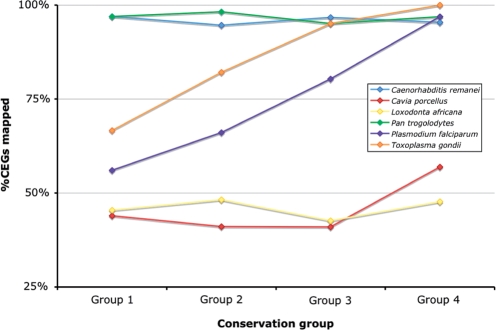
“Based on the average degree of conservation observed from each CEG, the work in [33] divides the CEGs into four groups (group 1 has the least conserved CEGs while group 4 has the most conserved CEGs).”
BackgroundMethodInfluentialPenselin, D., Münsterkötter, M., Kirsten, S., Felder, M., Taudien, S., Platzer, M., Ashelford, K. E., Paskiewicz, K. H., Harrison, R. J., Hughes, D., et al. (2016) · BMC Genomics · doi:10.1186/s12864-016-3299-5 · Cited by 40
“In addition, all of the 248 core genes commonly present in higher eukaryotes (CEGs) could be identified by Blastp comparisons (eVal: 10 − 3 ) for two proteomes, whereas only one protein was missing in the R. agropyri proteome [138].”
BackgroundDe novo genome assembly of the soil-borne fungus and tomato pathogen Pyrenochaeta lycopersici
Aragona, M., Minio, A., Ferrarini, A., Valente, M. T., Bagnaresi, P., Orrù, L., Tononi, P., Zamperin, G., Infantino, A., Valè, G., et al. (2014) · BMC Genomics · doi:10.1186/1471-2164-15-313 · Cited by 41
“The comprehensiveness of the gene space covered by the assembly and annotation procedures was assessed by screening for 248 core eukaryotic genes (CEGs) [24] revealing hits for 238 CEGs (95.”
MethodHu, X., Liu, H., Jin, Y., Sun, Y., Li, Y., Zhao, W., El-Kassaby, Y. A., Wang, X., & Mao, J. (2016) · PLoS ONE · doi:10.1371/journal.pone.0148985 · Cited by 40
“The CEGMA pipeline [21, 22] was used to identify a subset of 248 highly conserved core eukaryotic genes (CEGs) in the resulting unigene assembly and to estimate the completeness of the core gene assembly.”
MethodDraft Genome Sequence of Plasmopara viticola , the Grapevine Downy Mildew Pathogen
Dussert, Y., Gouzy, J., Richart‐Cervera, S., Mazet, I. D., Delière, L., Couture, C., Legrand, L., Piron, M.-C., Mestre, P., & Delmotte, F. (2016) · Genome Announcements · doi:10.1128/genomea.00987-16 · Cited by 36
“Completeness of the genome as estimated by CEGMA (10, 11), using a set of 248 conserved eukaryote genes, was 91% (95% when counting partial matches).”
MethodEvaluating Genome Assemblies and Gene Models Using gVolante
Nishimura, O., Hara, Y., & Kuraku, S. (2019) · Methods in molecular biology · doi:10.1007/978-1-4939-9173-0_15 · Cited by 45
Burns, J. A., Paasch, A., Narechania, A., & Kim, E. (2015) · Genome Biology and Evolution · doi:10.1093/gbe/evv144 · Cited by 38
McNulty, S. N., Strübe, C., Rosa, B. A., Martin, J. C., Tyagi, R., Choi, Y.-J., Wang, Q., Pepin, K., Zhang, X., Ozersky, P., et al. (2016) · Scientific Reports · doi:10.1038/srep20316 · Cited by 41
“The quality of the assembly was assessed using the CEGMA method 52 ; 245 of 248 low copy CEGs were identified, and only 13% of these were present in more than one copy (as compared to 11% in the C. elegans genome), an indication that our assembly is (1) nearly complete and (2) that it does not…”
MethodLi, Y., Hsiang, T., Yang, R., Hu, X., Wang, K., Wang, W.-J., Wang, X.-L., Jiao, L., & Yao, Y. (2016) · Journal of Microbiological Methods · doi:10.1016/j.mimet.2016.06.025 · Cited by 34
Campbell, L. J., Hammond, S. A., Price, S. J., Sharma, M. D., Garner, T. W. J., Birol, I., Helbing, C. C., Wilfert, L., & Griffiths, A. G. F. (2018) · Molecular Ecology · doi:10.1111/mec.14528 · Cited by 35
Improving eukaryotic genome annotation using single molecule mRNA sequencing
Magrini, V. J., Gao, X., Rosa, B. A., McGrath, S. D., Zhang, X., Hallsworth-Pepin, K., Martin, J. C., Hawdon, J. M., Wilson, R. K., & Mitreva, M. (2018) · BMC Genomics · doi:10.1186/s12864-018-4555-7 · Cited by 36
High-Quality Genome Sequence of the Root-Knot Nematode Meloidogyne arenaria Genotype A2-O
Sato, K., Kadota, Y., Gan, P., Bino, T., Uehara, T., Yamaguchi, K., Ichihashi, Y., Maki, N., Iwahori, H., Suzuki, T., et al. (2018) · Genome Announcements · doi:10.1128/genomea.00519-18 · Cited by 35
“76% of the coding space according to Core Eukaryotic Genes Mapping Approach (CEGMA) analysis (12) and is more contiguous than the previously published M.”
ResultInter and Intraspecific Genomic Divergence in Drosophila montana Shows Evidence for Cold Adaptation
Parker, D. J., Wiberg, R. A. W., Trivedi, U. H., Tyukmaeva, V. I., Gharbi, K., Butlin, R. K., Hoikkala, A., Kankare, M., & Ritchie, M. G. (2018) · Genome Biology and Evolution · doi:10.1093/gbe/evy147 · Cited by 37
Blanco‐Ulate, B., Rolshausen, P. E., & Cantù, D. (2013) · Genome Announcements · doi:10.1128/genomea.00390-13 · Cited by 35
“The UCR-PA7 genome was estimated to be 97% complete based on the mapping of 248 low-copy and conserved core eukaryotic genes (CEGs) (12).”
BackgroundMethodInfluentialHeizer, E. M., Zarlenga, D. S., Rosa, B. A., Gao, X., Gasser, R. B., Graef, J. D., Geldhof, P., & Mitreva, M. (2013) · BMC Genomics · doi:10.1186/1471-2164-14-118 · Cited by 35
“Predicted peptides were compared to the core eukaryotic genes (CEG’s) [41] using HMMER [42] to estimate the completeness of each transcriptome.”
MethodBirol, İ., Behsaz, B., Hammond, S. A., Küçük, E., Veldhoen, N., & Helbing, C. C. (2015) · PLoS ONE · doi:10.1371/journal.pone.0130720 · Cited by 35
“We assessed the quality of the final transcriptome assemblies using 248 highly conserved core eukaryotic genes [32] (CEGs), and showed that we were able to reconstruct all CEGs for R.”
MethodDraft Genome Sequence of Botrytis cinerea BcDW1, Inoculum for Noble Rot of Grape Berries
Blanco‐Ulate, B., Allen, G., Powell, A. L. T., & Cantù, D. (2013) · Genome Announcements · doi:10.1128/genomea.00252-13 · Cited by 34
“0 with the parameters optimized to achieve the highest completeness of the gene space estimated using Core Eukaryotic Genes Mapping Approach (CEGMA) (6).”
BackgroundMethodSánchez-Herrero, J. F., Frías-López, C., Escuer, P., Hinojosa‐Álvarez, S., Arnedo, M. A., Sánchez‐Gracia, A., & Rozas, J. (2019) · GigaScience · doi:10.1093/gigascience/giz099 · Cited by 39
“We searched for homologs of the functionally annotated peptides (36,398) (i) among CEG genes of Drosophila melanogaster [41]; (ii) among the pre-6 dicted peptides of Parasteatoda tepidariorum , a spider with a well-annotated genome [62]; (iii) among the 9,473 1:1 orthologs across 5 Dysdera species;…”
Cornman, R. S., Bennett, A. K., Murray, K. D., Evans, J. D., Elsik, C. G., & Aronstein, K. (2012) · BMC Genomics · doi:10.1186/1471-2164-13-285 · Cited by 36
“apis genome assembly, we used the Core Eukaryotic Genes Mapping Approach (CEGMA) tool [15], with the CEGMA subset of 248 widely conserved eukaryotic core genes that are considered to have low frequencies of gene family expansion (http://korflab.”
MethodKenny, N. J., Shen, X., Chan, T., Wong, N. W. Y., Chan, T., Chu, K. H., Lam, H., & Hui, J. H. L. (2015) · Genome Biology and Evolution · doi:10.1093/gbe/evv070 · Cited by 29
“In S. maritima, no representatives of the Odorant Binding Protein (Pelosi 1994) or CheA/B families (Starostina et al. 2009) could be identified, leading to the conclusion that these genes are possible insect novelties (Chipman et al. 2014).”
BackgroundExtraordinary conservation of entire chromosomes in insects over long evolutionary periods
Sved, J. A., Chen, Y., Shearman, D. C. A., Frommer, M., Gilchrist, A. S., & Sherwin, W. B. (2015) · Evolution · doi:10.1111/evo.12831 · Cited by 37
FGMP: assessing fungal genome completeness
Cissé, O. H., & Stajich, J. (2019) · BMC Bioinformatics · doi:10.1186/s12859-019-2782-9 · Cited by 35
Quandt, C. A., Kohler, A., Hesse, C. N., Sharpton, T. J., Martin, F. M., & Spatafora, J. W. (2015) · Environmental Microbiology · doi:10.1111/1462-2920.12840 · Cited by 37
The immunotranscriptome of the Caribbean reef-building coral Pseudodiploria strigosa
Ocampo-Ibáñez, I. D., Zárate-Potes, A., Pizarro, V., Rojas, C. A., Parra, N. E. V., & Cadavid, L. F. (2015) · Immunogenetics · doi:10.1007/s00251-015-0854-1 · Cited by 37
Evolution of Hemoglobin Genes in Codfishes Influenced by Ocean Depth
Baalsrud, H. T., Voje, K. L., Tørresen, O. K., Solbakken, M. H., Matschiner, M., Malmstrøm, M., Hanel, R., Salzburger, W., Jakobsen, K. S., & Jentoft, S. (2017) · Scientific Reports · doi:10.1038/s41598-017-08286-2 · Cited by 34
Sequencing and de novo draft assemblies of a fathead minnow (Pimephales promelas) reference genome
Burns, F., Cogburn, A., Ankley, G. T., Villeneuve, D. L., Waits, E. R., Chang, Y., Llaca, V., Deschamps, S., Jackson, R. E., & Hoke, R. A. (2015) · Environmental Toxicology and Chemistry · doi:10.1002/etc.3186 · Cited by 31
“A more stringent analysis that distinguishes target genes from closely related orthologs and indicates whether the complete genes are contained within a single scaffold was also performed on the 248 most highly conserved genes (Table 3) [34].”
BackgroundRNA sequencing read depth requirement for optimal transcriptome coverage in Hevea brasiliensis
Chow, K.-S., Ghazali, A.-K., Hoh, C.-C., & Mohd.-Zainuddin, Z. (2014) · BMC Research Notes · doi:10.1186/1756-0500-7-69 · Cited by 33
“This was also supported by detection of all but one of 248 core genes expressed in eukaryotes [66] and significant alignments with known Hevea protein coding frames.”
MethodResultInfluentialChan, C. L., Yew, S. M., Ngeow, Y. F., Na, S. L., Lee, K. W., Hoh, C.-C., Yee, W.-Y., & Ng, K. P. (2015) · BMC Genomics · doi:10.1186/s12864-015-2200-2 · Cited by 31
“The completeness of genome assembly was assessed using the CEGMA (Core Eukaryotic Genes Mapping Approach) software that evaluates the presence and completeness of a widely conserved set of 248 core eukaryotic genes [17, 18].”
MethodGenome Update. Let the consumer beware: Streptomyces genome sequence quality
Studholme, D. J. (2016) · Microbial Biotechnology · doi:10.1111/1751-7915.12344 · Cited by 36
“A more recently published tool, Benchmarking Universal Single-Copy Orthologs (BUSCO), has a number of advantages (Sim~ao et al., 2015) and effectively replaces CEGMA.”
MethodEvolutionary History of Major Chemosensory Gene Families across Panarthropoda
Vizueta, J., Escuer, P., Frías-López, C., Guirao‐Rico, S., Hering, L., Mayer, G., Rozas, J., & Sánchez‐Gracia, A. (2020) · Molecular Biology and Evolution · doi:10.1093/molbev/msaa197 · Cited by 44
MolluscDB: a genome and transcriptome database for molluscs
Caurcel, C., Laetsch, D. R., CHALLIS, R. J., Kumar, S., Gharbi, K., & Blaxter, M. (2021) · Philosophical Transactions of the Royal Society B Biological Sciences · doi:10.1098/rstb.2020.0157 · Cited by 32
“Analytical and import-related containers (BLAST [14], BUSCO [15], CEGMA [16,17], InterProScan [18], RepeatMasker [19] and EasyImport [12]) were run when needed in a local compute cluster at the Institute of Evolutionary Biology, Edinburgh (768 cores, 384 GB to 1.”
MethodInfluentialCzaban, A., Sharma, S., Byrne, S. L., Spannagl, M., Mayer, K., & Asp, T. (2015) · BMC Genomics · doi:10.1186/s12864-015-1447-y · Cited by 35
“Secondly, we used the CEGMA pipeline [32] to evaluate the completeness of our assemblies.”
MethodHumble, E., Barrio, Á. M., Forcada, J., Trathan, P. N., Thorne, M. A. S., Hoffmann, M., Wolf, J. B. W., & Hoffman, J. I. (2015) · Molecular Ecology Resources · doi:10.1111/1755-0998.12502 · Cited by 30
“To estimate the status of completeness and contiguity of the fur seal genome, we also used the program CEGMA 2.4 (Parra et al. 2007, 2009), which uses hidden Markov models to compare the genome assembly to a set of 248 ultraconserved eukaryotic genes.”
MethodInfluentialGenome wide analysis of the transition to pathogenic lifestyles in Magnaporthales fungi
Zhang, N., Cai, G., Price, D. C., Crouch, J. A., Gladieux, P., Hillman, B. I., Khang, C. H., Lebrun, M., Lee, Y., Luo, J., et al. (2018) · Scientific Reports · doi:10.1038/s41598-018-24301-6 · Cited by 33
Feng, N. Y., Fergus, D. J., & Bass, A. H. (2015) · BMC Genomics · doi:10.1186/s12864-015-1577-2 · Cited by 33
“Additionally, CEGMA (Core Eukaryotic Genes Mapping Approach) analysis of conserved eukaryotic genes (CEGs), determined that our filtered transcriptome contained 453 full-length CEGs of the complete set of 458 CEGs (99%), and 238 of the more-conserved set of 248 CEGs (96%) [51,52].”
BackgroundMethodInfluentialHammond, S. A., Veldhoen, N., & Helbing, C. C. (2015) · General and Comparative Endocrinology · doi:10.1016/j.ygcen.2014.12.001 · Cited by 35
Debat, H., Grabiele, M., Aguilera, P. M., Bubillo, R., Otegui, M. B., Ducasse, D. A., Zapata, P. D., & Marti, D. A. (2014) · PLoS ONE · doi:10.1371/journal.pone.0109835 · Cited by 32
“In this CEGMA analysis, 95% of the core proteins were identified in the N. benthamiana transcriptome.”
Methodde Farias, L. R., Schimmelpfeng, P. H. C., Togawa, R. C., Costa, M. M. C., Grynberg, P., Martins, N. F., Borges, M., Blassioli‐Moraes, M. C., Laumann, R. A., Báo, S. N., et al. (2015) · PLoS ONE · doi:10.1371/journal.pone.0132286 · Cited by 29
“CEGMA software (Core Eukaryotic Genes Mapping Approach) was used (default parameters) to assess the completeness of the transcriptome assemblies, and identify the presence of a core consisting of 248 highly conserved proteins that are found in a wide range of eukaryotes, mostly housekeeping genes, that can be expected…”
MethodGile, G. H., & Slamovits, C. H. (2014) · PLoS ONE · doi:10.1371/journal.pone.0096258 · Cited by 30
“For an additional, independent, rough estimate of completeness, we used CEGMA [40,41] to determine the proportion of a conserved eukaryotic core gene set that is present in our dataset.”
MethodInfluentialMeyer, W. K., Venkat, A., Kermany, A. R., van de Geijn, B., Zhang, S., & Przeworski, M. (2015) · Molecular Ecology · doi:10.1111/mec.13327 · Cited by 27
“…contigs from the blue-eyed black lemur genome assembly to previously sequenced BACs (Appendix S9, Supporting information), and (ii) we assessed the proportion of highly conserved, core eukaryotic genes covered by scaffolds in the assembly (Parra et al. 2009; Appendix S10, Supporting information).”
BackgroundInfluentialGlobal deceleration of gene evolution following recent genome hybridizations in fungi
Sriswasdi, S., Takashima, M., Manabe, R., Ohkuma, M., Sugita, T., & Iwasaki, W. (2016) · Genome Research · doi:10.1101/gr.205948.116 · Cited by 30
“Assembly quality was assessed using CEGMA version 2.5 (Parra et al. 2009) and REAPR version 1.0.18 (Supplemental Table S1; Hunt et al. 2013).”
MethodInfluentialSeligmann, H. (2015) · Mitochondrial DNA Part A · doi:10.3109/19401736.2015.1033691 · Cited by 28
“…assembly are not uncommon, and lead to oversee major phenomena, such as the trashing of reads that are actual chromosome fragments (e.g. in the squid genome, Parra et al., 2009) or even the complete genome of a symbiont (various Wolbachia symbionts of various Drosophila, Salzberg et al., 2005a,b).”
BackgroundNizovoy, P., Bellora, N., Haridas, S., Sun, H., Daum, C. G., Barry, K., Grigoriev, I. V., Libkind, D., Connell, L. B., & Moliné, M. (2020) · FEMS Yeast Research · doi:10.1093/femsyr/foaa056 · Cited by 38
Draft genome of the Marco Polo Sheep (Ovis ammon polii)
Yang, Y. P., Wang, Y., Zhao, Y., Zhang, X., Li, R., Chen, L., Zhang, G., Jiang, Y., Qiu, Q., Wang, W., et al. (2017) · GigaScience · doi:10.1093/gigascience/gix106 · Cited by 27
“5) [15] dataset comprising 248 CEGs was used to evaluate the completeness of the draft: 93.55% (232/248) of genes were completely or partially covered in the assembled genome (Table S5).”
InfluentialAnimal multicellularity and polarity without Wnt signaling
Schenkelaars, Q., Pratlong, M., Kodjabachian, L., Fierro‐Constaín, L., Vacelet, J., Bivic, A. L., Renard, E., & Borchiellini, C. (2017) · Scientific Reports · doi:10.1038/s41598-017-15557-5 · Cited by 32
Tyagi, R., Joachim, A., Ruttkowski, B., Rosa, B. A., Martin, J. C., Hallsworth-Pepin, K., Zhang, X., Ozersky, P., Wilson, R. K., Ranganathan, S., et al. (2015) · Biotechnology Advances · doi:10.1016/j.biotechadv.2015.05.004 · Cited by 33
“%) of the genome (Parra et al., 2007; Parra et al., 2009).”
Next generation sequencing and de novo transcriptomics to study gene evolution
Jayasena, A. S., Secco, D., Bernath-Levin, K., Berkowitz, O., Whelan, J., & Mylne, J. S. (2014) · Plant Methods · doi:10.1186/1746-4811-10-34 · Cited by 26
“Traditional quality metrics such as N50 (N50 refers to the contig length where 50% of the assembly is represented by contigs of this size or longer) and contig count are often used to represent the quality of de novo assemblies, but such figures can be mis-leading [29,30].”
BackgroundMethodTranscriptome profiling of tobacco (Nicotiana tabacum) pollen and pollen tubes
Conze, L. L., Berlin, S., Bail, A. L., & Kost, B. (2017) · BMC Genomics · doi:10.1186/s12864-017-3972-3 · Cited by 25
“To get an estimate of how completely the assembled unigenes cover the tobacco male gametophyte transcriptome, they were queried against two different groups of exceptionally highly conserved genes [29]: 1) the “ultra-conserved orthologous sequences” (UCOS) across eukaryotes and 2) the “shared single copy genes” of Ara…”
Surm, J. M., Toledo, T. M., Prentis, P. J., & Pavasovic, A. (2018) · Ecology and Evolution · doi:10.1002/ece3.4044 · Cited by 26
Pérez-Bercoff, Å., Papanicolaou, A., Ramsperger, M., Kaur, J., Patel, H. R., Harun, A. B., Duan, S. Y., Elbourne, L. D. H., Bouchara, J.-P., Paulsen, I. T., et al. (2015) · Genome Announcements · doi:10.1128/genomea.01526-14 · Cited by 30
“The CEGMA pipeline (7) indicated an assembly completeness of 93.”
BackgroundThe Chironomus tentans genome sequence and the organization of the Balbiani ring genes
Kutsenko, A. S., Svensson, T., Nystedt, B., Lundeberg, J., Björk, P., Sonnhammer, E. L. L., Giacomello, S., Visa, N., & Wieslander, L. (2014) · BMC Genomics · doi:10.1186/1471-2164-15-819 · Cited by 27
“The completeness of the assembled genome was evaluated by analyzing a set of 248 highly conserved core eukaryotic genes using hidden markov models (HMM) as implemented in CEGMA [32].”
MethodMcNulty, S. N., Abubucker, S., Simon, G. M., Mitreva, M., McNulty, N. P., Fischer, K., Curtis, K. C., Brattig, N. W., Weil, G. J., & Fischer, P. (2012) · PLoS ONE · doi:10.1371/journal.pone.0045777 · Cited by 24
“flexuosa transcriptome was estimated by profile searching isotigs and singletons against core eukaryotic genes [17,18] using HMMer [42].”
MethodOldeschulte, D. L., Halley, Y., Wilson, M. L., Bhattarai, E. K., Brashear, W. A., Hill, J., Metz, R. P., Johnson, C. D., Rollins, D., Peterson, M. J., et al. (2017) · G3 Genes Genomes Genetics · doi:10.1534/g3.117.043083 · Cited by 22
Takashima, M., Sriswasdi, S., Manabe, R., Ohkuma, M., Sugita, T., & Iwasaki, W. (2017) · Yeast · doi:10.1002/yea.3284 · Cited by 26
“Assembly quality was assessed using CEGMA software (version 2.5; Parra et al., 2009).”
MethodInfluentialBahram, M., Vanderpool, D., Pent, M., Hiltunen, M., & Ryberg, M. K. (2018) · Environmental Microbiology Reports · doi:10.1111/1758-2229.12612 · Cited by 28
Early insights into the genome sequence of Uromyces fabae
Link, T. I., Seibel, C., & Voegele, R. T. (2014) · Frontiers in Plant Science · doi:10.3389/fpls.2014.00587 · Cited by 24
The yellowtail ( Seriola quinqueradiata ) genome and transcriptome atlas of the digestive tract
Yasuike, M., Iwasaki, Y., Nishiki, I., Nakamura, Y., Matsuura, A., Yoshida, K., Noda, T., Andoh, T., & Fujiwara, A. (2018) · DNA Research · doi:10.1093/dnares/dsy024 · Cited by 28
Liu, S., Chen, H., Ouyang, J., Huang, M., Zhang, H., Zheng, S., Xi, S., Tang, H., Gao, Y., Xiong, Y., et al. (2022) · GigaScience · doi:10.1093/gigascience/giac018 · Cited by 22
“The consistency and integrity of the assembled peafowl genome were separately assessed using BUSCO (BUSCO,RRID:SCR_015008) [32] and CEGMA (CEGMA, RRID:SCR_015055) [33, 34], based on single-copy orthologues from the AVES (odb9) database.”
Izuno, A., Hatakeyama, M., Nishiyama, T., Tamaki, I., Shimizu‐Inatsugi, R., Sasaki, R., Shimizu, K. K., & Isagi, Y. (2016) · Journal of Plant Research · doi:10.1007/s10265-016-0822-3 · Cited by 24
“2.5; Parra et al. 2007, 2009), which annotates the highly conserved core eukaryotic genes (CEGs) in assembled sequences.”
BackgroundInfluentialDrozdova, P. B., Tarasov, O. V., Matveenko, A. G., Radchenko, E. A., Sopova, J. V., Polev, D. E., Inge-Vechtomov, S. G., & Dobrynin, P. V. (2016) · PLoS ONE · doi:10.1371/journal.pone.0154722 · Cited by 26
“Quality of assemblies was estimated with Quast [31] and CEGMA [34].”
MethodWestbury, M. V., Petersen, B., & Lorenzen, E. D. (2019) · PLoS ONE · doi:10.1371/journal.pone.0222004 · Cited by 21
“As no training gene models were available for the fin PLOS ONE | https://doi.org/10.1371/journal.pone.0222004 September 25, 2019 3 / 13 whale, we used CEGMA [23,24] to train the ab-initio gene predictor SNAP [25], rather than using the de-novo gene predictor in Augustus [26].”
MethodInfluentialLoss of flight in the Galapagos cormorant mirrors human skeletal ciliopathiesPreprint
Burga, A. R., Wang, W., Wolf, P. C., Ramey, A. M., Verdugo, C., Lyons, K. M., Parker, P. G., & Kruglyak, L. (2016) · bioRxiv (Cold Spring Harbor Laboratory) · doi:10.1101/061432 · Cited by 22
Reynolds, K. B., Cullerne, D. P., Tahchy, A. E., Rolland, V., BLANCHARD, C. L., Wood, C. C., Singh, S. P., & Petrie, J. R. (2019) · Plant and Cell Physiology · doi:10.1093/pcp/pcy247 · Cited by 21
Systemic and sex-biased regulation of OBP expression under semiochemical stimuli
Paula, D. P., Togawa, R. C., Costa, M. M. D. C., Grynberg, P., Martins, N. F., & Andow, D. A. (2018) · Scientific Reports · doi:10.1038/s41598-018-24297-z · Cited by 20
Zárate-Potes, A., Ocampo-Ibáñez, I. D., & Cadavid, L. F. (2018) · Gene · doi:10.1016/j.gene.2018.10.068 · Cited by 22
Mussurova, S., Al-Bader, N., Zuccolo, A., & Wing, R. A. (2020) · Frontiers in Plant Science · doi:10.3389/fpls.2020.579980 · Cited by 22
Impact of analytic provenance in genome analysis
Morrison, S. S., Pyzh, R., Jeon, M. S., Amaro, C., Roig, F. J., Baker‐Austin, C., Oliver, J. D., & Gibas, C. (2014) · BMC Genomics · doi:10.1186/1471-2164-15-s8-s1 · Cited by 22
“[4] and others [5] reported that choosing assemblies with higher N50 values frequently results in conserved genes going undetected in benchmark studies.”
BackgroundThe Genome of a Thermo Tolerant, Pathogenic Albino Aspergillus fumigatus
Couger, M. B., Weirick, T., Damásio, A., Segato, F., Polizeli, M. D. L. T. D. M., Almeida, R. S., Goldman, G. H., & Prade, R. A. (2018) · Frontiers in Microbiology · doi:10.3389/fmicb.2018.01827 · Cited by 21
Lütkenhaus, R., Traeger, S., Breuer, J., Carreté, L., Kuo, A., Lipzen, A., Pangilinan, J. L., Dilworth, D. J., Sandor, L., Pöggeler, S., et al. (2019) · Genetics · doi:10.1534/genetics.119.302749 · Cited by 25
“BLASTP searches with a eukaryotic core gene set were used to determine completeness of the gene space as described previously (Parra et al. 2009).”
MethodLeushkin, E. V., Logacheva, M. D., Penin, A. A., Sutormin, R. A., Gerasimov, E. S., Kochkina, G. A., Ivanushkina, N. E., Vasilenko, O. V., Kondrashov, A. S., & Ozerskaya, S. M. (2015) · BMC Genomics · doi:10.1186/s12864-015-1570-9 · Cited by 24
“pipeline [24], we demonstrated that for all P.”
BackgroundBrown, T. M., Hammond, S. A., Behsaz, B., Veldhoen, N., Birol, İ., & Helbing, C. C. (2017) · Aquatic Toxicology · doi:10.1016/j.aquatox.2017.02.004 · Cited by 20
Hsieh, J., Chuah, A., Patel, H. R., Sandhu, K. S., Foley, W. J., & Külheim, C. (2017) · Phytopathology · doi:10.1094/phyto-09-17-0307-r · Cited by 24
Antonielli, L., Compant, S., Strauss, J., Sessitsch, A., & Berger, H. (2014) · Genome Announcements · doi:10.1128/genomea.00098-14 · Cited by 20
“A sequencing completeness of 96% was calculated using CEGMA (8).”
MethodOkubo, N., Hayward, D. C., Forêt, S., & Ball, E. E. (2016) · BMC Evolutionary Biology · doi:10.1186/s12862-016-0615-2 · Cited by 23
Benchmark study for evaluating the quality of reference genomes and gene annotations in 114 species
Park, S., Lee, J., Kim, J., Kim, D., Lee, J. H., Pack, S. P., & Seo, M. (2023) · Frontiers in Veterinary Science · doi:10.3389/fvets.2023.1128570 · Cited by 21
“Multiple methods exist for measuring the quality of a reference genome, but the only way to measure the completeness of annotated transcripts in the genome is to compare them with the annotations of evolutionarily similar species (18, 48).”
BackgroundSavojardo, C., Luchetti, A., Martelli, P. L., Casadio, R., & Mantovani, B. (2018) · Molecular Ecology Resources · doi:10.1111/1755-0998.12952 · Cited by 23
Genome and Ontogenetic-Based Transcriptomic Analyses of the Flesh Fly,Sarcophaga bullata
Martinson, E. O., Peyton, J. T., Kelkar, Y., Jennings, E. C., Benoit, J. B., Werren, J. H., & Denlinger, D. L. (2019) · G3 Genes Genomes Genetics · doi:10.1534/g3.119.400148 · Cited by 21
Current status in other finfish species
Manchado, M., Planas, J. V., Cousin, X., Rebordinos, L. G., & Claros, M. G. (2016) · Elsevier eBooks · doi:10.1016/b978-0-12-801418-9.00008-1 · Cited by 19
Kittichotirat, W., Patumcharoenpol, P., Rujirawat, T., Lohnoo, T., Yingyong, W., & Krajaejun, T. (2017) · Data in Brief · doi:10.1016/j.dib.2017.10.047 · Cited by 19
“Assessment of the resulting draft genome sequence by CEGMA [17,18] showed 78.6% genome completeness.”
BackgroundInfluentialIncorporating tree‐thinking and evolutionary time scale into developmental biology
Kuraku, S., Feiner, N., Keeley, S. D., & Hara, Y. (2016) · Development Growth & Differentiation · doi:10.1111/dgd.12258 · Cited by 19
“In reality, some of the publicly available genome assemblies are known to lack some genes whose existence is supported by independent information, such as transcriptome sequences (Parra et al. 2009).”
BackgroundPatumcharoenpol, P., Rujirawat, T., Lohnoo, T., Yingyong, W., Vanittanakom, N., Kittichotirat, W., & Krajaejun, T. (2017) · Data in Brief · doi:10.1016/j.dib.2017.11.002 · Cited by 18
“CEGMA analysis with 248 highly-conserved eukaryotic genes [15,16] reported 87% and 77% completeness of draft genomes of the strains CBS573.”
MethodGene content of the fish-hunting cone snail Conus consorsPreprint
Andreson, R., Roosaare, M., Kaplinski, L., Laht, S., Kõressaar, T., Lepamets, M., Brauer, A., Kukuškina, V., & Remm, M. (2019) · bioRxiv (Cold Spring Harbor Laboratory) · doi:10.1101/590695 · Cited by 21
Genome Sequence of a Lethal Strain of Xylem-Invading Verticillium nonalfalfae
Jakše, J., Jelen, V., Radišek, S., de Jonge, R., Mandelc, S., Majer, A., Curk, T., Zupan, B., Thomma, B. P. H. J., & Javornik, B. (2018) · Genome Announcements · doi:10.1128/genomea.01458-17 · Cited by 17
“The CEGMA pipeline (12) identified 445 of the 458 clusters of orthologous groups (COGs) to be present (completeness, 97.”
MethodWong, B., Leal, I., Feau, N., Dale, A. L., Uzunovic, A., & Hamelin, R. C. (2020) · PLoS ONE · doi:10.1371/journal.pone.0221742 · Cited by 20
“ramorum were identified by performing a BLAST (Basic Local Alignment Search Tool) search with the CEGMA (Core Eukaryotic Genes Mapping Approach) protein database [25] against the genome sequences of P.”
MethodElfstrand, M., Chen, J., Cleary, M., Halecker, S., Ihrmark, K., Karlsson, M., Davydenko, K., Stenlid, J., Stadler, M., & Durling, M. B. (2021) · BMC Genomics · doi:10.1186/s12864-021-07837-2 · Cited by 17
“Assemblies were evaluated with FRCAlign [52], and genome completeness was also evaluated using CEGMA [53].”
MethodAn improved genome assembly uncovers prolific tandem repeats in Atlantic codPreprint
Tørresen, O. K., Star, B., Jentoft, S., Reinar, W. B., Grove, H., Miller, J. R., Walenz, B. P., Knight, J., Ekholm, J. M., Peluso, P., et al. (2016) · bioRxiv (Cold Spring Harbor Laboratory) · doi:10.1101/060921 · Cited by 19
Cooper, L., Bunnefeld, L., Hearn, J., Cook, J. M., Lohse, K., & Stone, G. N. (2020) · Molecular Ecology · doi:10.1111/mec.15523 · Cited by 17
The genome of the black cutworm Agrotis ipsilon
Wang, Y., Fang, G., Chen, X., Cao, Y., Wu, N., Cui, Q., Zhu, C., Qian, L., Huang, Y., & Zhan, S. (2021) · Insect Biochemistry and Molecular Biology · doi:10.1016/j.ibmb.2021.103665 · Cited by 24
Miller, K. M. W., Bracewell, R., Eisen, M. B., & Bachtrog, D. (2017) · Molecular Biology and Evolution · doi:10.1093/molbev/msx134 · Cited by 17
A de novo transcriptome assembly of the zebra bullhead shark, Heterodontus zebra
Onimaru, K., Tatsumi, K., Shibagaki, K., & Kuraku, S. (2018) · Scientific Data · doi:10.1038/sdata.2018.197 · Cited by 16
Frías-López, C., Almeida, F. C., Guirao‐Rico, S., Vizueta, J., Sánchez‐Gracia, A., Arnedo, M. A., & Rozas, J. (2015) · PeerJ · doi:10.7717/peerj.1064 · Cited by 18
“Frı́as-López et al. (2015), PeerJ, DOI 10.7717/peerj.1064 5/22 Furthermore, we also estimated the number of transcripts that encode genes included in the CEG (Cluster of Essential Genes) database (a set of 458 Eukaryotic Orthologous Groups proteins identified by the Core Eukaryotic Genes Mapping Approach, CEGMA) (Par…”
BackgroundInfluentialHigh-Quality Draft Genome Sequence of Candida apicola NRRL Y-50540
Vega‐Alvarado, L., Gómez-Angulo, J. H., Escalante-García, Z., Grande, R., Gschaedler, A., Amaya-Delgado, L., Sánchez‐Flores, A., & Arrizón, J. (2015) · Genome Announcements · doi:10.1128/genomea.00437-15 · Cited by 15
“5 (9), we obtained 92% genome completeness.”
Frédéric, M. Y., Lundin, V. F., Whiteside, M. D., Cueva, J. G., Tu, D. K., Kang, S. Y. C., Singh, H., Baillie, D. L., Hutter, H., Goodman, M. B., et al. (2013) · PLoS Genetics · doi:10.1371/journal.pgen.1003804 · Cited by 17
“Our approach is aimed at uncovering the most inclusive set of metazoan ortholog groups while retaining high stringency, and taking into account different levels of genome completeness [9] (Table S1; see also Materials and Methods).”
Pandurangan, S., Diapari, M., Yin, F., Munholland, S., Perry, G. E., Chapman, B. P., Huang, S., Sparvoli, F., Bollini, R., Crosby, W. L., et al. (2016) · Frontiers in Plant Science · doi:10.3389/fpls.2016.00389 · Cited by 14
“Assembly stats were cross checked with assemblathon_stats.pl. CEGMA was used to identify 248 Core Eukaryotic Genes (CEGs) as an indirect measure of functional completeness of the assembly (Parra et al., 2009).”
Method
Metadata
- Authors
- Parra, G., Bradnam, K., Ning, Z., Keane, T., & Korf, I.
- Affiliations
- Wellcome Sanger Institute (GB)
- Corresponding author
- Korf, Ian
- Venue
- Nucleic Acids Research
- Publisher
- Oxford University Press (OUP)
- Published
- 2008-11-28
- Volume
- 37
- Issue
- 1
- Pages
- 289-297
- ISSN
- 0305-1048 (ISSN-L)
- 1362-4962
- PMC
- PMC2615622
- OpenAlex
- W2141157287
- Cited by
- 395
- References
- 22
- Citations by year
- 2026: 2 · 2025: 2 · 2024: 3 · 2023: 6 · 2022: 7 · 2021: 18 · 2020: 14 · 2019: 28 · 2018: 43 · 2017: 56 · 2016: 65 · 2015: 58 · 2014: 35 · 2013: 31 · 2012: 12
- FWCI
- 2.06
- Type
- journal article
- Language
- en
- Open access
- gold
- doi.org
- Licence
- Locations
- Nucleic Acids Research (publishedVersion, cc-by-nc)
- Europe PMC (PubMed Central) (publishedVersion, cc-by-nc)
- PubMed Central (publishedVersion, cc-by-nc)
- PubMed (publishedVersion)
- OSTI OAI (U.S. Department of Energy Office of Scientific and Technical Information) (submittedVersion, other-oa)
- eScholarship (California Digital Library) (submittedVersion)
- eScholarship (California Digital Library) (submittedVersion, cc-by-nc)
- Funders
- U.S. Department of Energy
- Wellcome Trust
- Broad Institute
- Joint Genome Institute
- National Institutes of Health (5r01hg004348-05)
- National Human Genome Research Institute (1R01 HG004348, HG004348)
- Topics
- Life Sciences › Biochemistry, Genetics and Molecular Biology › Molecular Biology › Genomics and Phylogenetic Studies
- Life Sciences › Biochemistry, Genetics and Molecular Biology › Genetics › Chromosomal and Genetic Variations
- Life Sciences › Biochemistry, Genetics and Molecular Biology › Molecular Biology › Bioinformatics and Genomic Networks
- Keywords
- draft genome assembly, gene content, eukaryotic genomes, gene mapping
- MeSH terms
- Animals, Chromosome Mapping, Genes, Humans, Proteins, Genomics
About these checks
Registry, retraction, Cites and statistics results are computed, not judged, with one exception: a printed reference that no index lists is read once by a model before it counts as a citation error. Claims are extracted by a model and kept only when their quote appears verbatim in the text; each cited source is then checked, with a model’s help, for whether it says what the claim relies on. Those verdicts can be wrong — read the claim’s quote and the cited source before relying on one.
Statistics and arithmetic are recomputed, not judged.
Confidence bands are shown only for fields calibrated on our annotated test set. None is calibrated yet, so no band is shown.
What counts as a claim ›How we measure confidence ›How we check this ›
Are you an author, or do you see a problem with this page? Request a review
Data sources
Bibliographic data: Semantic Scholar, OpenAlex, Crossref.
Contains information from the Semantic Scholar Academic Graph Datasets, made available under the ODC Attribution License (ODC-BY 1.0).
Semantic Scholar’s data is described in: Kinney, R., et al. (2023). The Semantic Scholar Open Data Platform. arXiv:2301.10140.
