

Assessing the gene space in draft genomes
Open accessThe DOI matches its Crossref record; 22 of the 22 references it cites were found in a registry or an index.
Abstract
Genome sequencing projects have been initiated for a wide range of eukaryotes. A few projects have reached completion, but most exist as draft assemblies. As one of the main reasons to sequence a genome is to obtain its catalog of genes, an important question is how complete or completable the catalog is in unfinished genomes. To answer this question, we have identified a set of core eukaryotic genes (CEGs), that are extremely highly conserved and which we believe are present in low copy numbers in higher eukaryotes. From an analysis of a phylogenetically diverse set of eukaryotic genome assemblies, we found that the proportion of CEGs mapped in draft genomes provides a useful metric for describing the gene space, and complements the commonly used N50 length and x-fold coverage values.
Overview
The claims and statistics of this paper haven’t been checked yet.
Free: it reads the open-access text and checks the first 5 claims that cite a source we can check. Create a free account to check every claim.
Integrity signals
Registry
Cites
Statistics
Figures
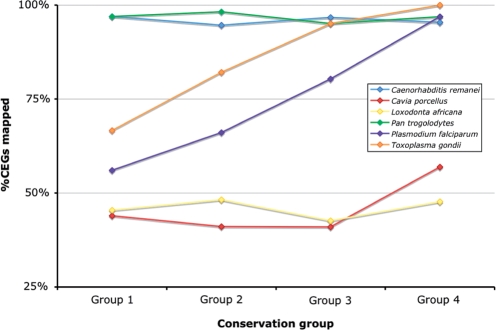
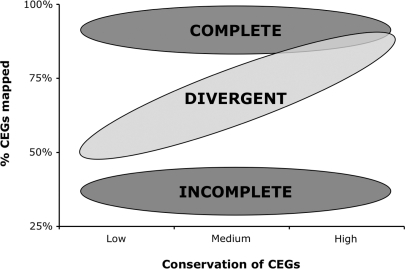
Verification
Claims the paper makes
The claims and statistics of this paper haven’t been checked yet.
Free: it reads the open-access text and checks the first 5 claims that cite a source we can check. Create a free account to check every claim.
Claims other papers make about this one
Each is checked against this paper’s own text: does it say what the citing paper says it does?
The cited source says what the claim attributes to it.
In the citing paper
“The completeness of our assembly was also supported by high coverage (95.6%) in essential eukaryotic genes assessed by Core Eukaryotic Genes Mapping Approach16 (Supplementary Table 2) and the very low duplication rate in Core Eukaryotic Genes Mapping Approach (1.13) indicated that our assembly was largely free from inflation by contaminating organisms.”
From Extremotolerant tardigrade genome and improved radiotolerance of human cultured cells by tardigrade-unique protein (2016) · cites this paper as [16]
Self-check
Percentages, sums and reported differences re-computed from the paper’s own numbers.
The self-check needs the paper’s full text.
Citations
Cites
Analysis of the genome sequence of the flowering plant Arabidopsis thaliana
Initiative, T. A. G. (2000) · Nature · doi:10.1038/35048692 · Cited by 9,301
The Genome Sequence of Drosophila melanogaster
Adams, M. D., Celniker, S. E., Holt, R. A., Evans, C. A., Gocayne, J. D., Amanatides, P. G., Scherer, S. E., Li, P. W., Hoskins, R. A., Galle, R. F., et al. (2000) · Science · doi:10.1126/science.287.5461.2185 · Cited by 5,929
Whole-Genome Random Sequencing and Assembly of Haemophilus influenzae Rd
Fleischmann, R. D., Adams, M. D., White, O., Clayton, R. A., Kirkness, E. F., Kerlavage, A. R., Bult, C. J., Tomb, J.-F., Dougherty, B. A., Merrick, J. M., et al. (1995) · Science · doi:10.1126/science.7542800 · Cited by 5,654
Eddy, S. R. (1998) · Bioinformatics · doi:10.1093/bioinformatics/14.9.755 · Cited by 5,515
Genome Sequence of the Nematode C. elegans : A Platform for Investigating Biology
The C. elegans Sequencing Consortium* (1998) · Science · doi:10.1126/science.282.5396.2012 · Cited by 4,485
The COG database: an updated version includes eukaryotes
Tatusov, R. L., Fedorova, N. D., Jackson, J. D., Jacobs, A. R., Kiryutin, B., Koonin, E. V., Krylov, D. M., Mazumder, R., Mekhedov, S. L., Nikolskaya, A. N., et al. (2003) · BMC Bioinformatics · doi:10.1186/1471-2105-4-41 · Cited by 4,430
International Chicken Genome Sequencing Consortium (2004) · Nature · doi:10.1038/nature03154 · Cited by 2,750
Genome sequence, comparative analysis and haplotype structure of the domestic dog
members, B. S. P., Lindblad-Toh, K., Wade, C. M., Mikkelsen, T. S., Karlsson, E. K., Jaffe, D. B., Kamal, M., Clamp, M., Chang, J. L., Kulbokas, E. J., et al. (2005) · Nature · doi:10.1038/nature04338 · Cited by 2,568 · cited 2×
“For example, improvements to the ARACHNE assembler algorithm (8) dramatically improved the assembly of the dog genome sequence when compared to the previous version; specifically the N50 contig size increased 3-fold from 61 kb to 180 kb (9).”
BackgroundMethodBirney, E., Clamp, M., & Durbin, R. (2004) · Genome Research · doi:10.1101/gr.1865504 · Cited by 2,542
Initial sequence of the chimpanzee genome and comparison with the human genome
The Chimpanzee Sequencing and Analysis Consortium (2005) · Nature · doi:10.1038/nature04072 · Cited by 2,459
Cited by
Items 301–398 of 398
Orthology: Promises and Challenges
Nevers, Y., Defosset, A., & Lecompte, O. (2020) · Springer eBooks · doi:10.1007/978-3-030-57246-4_9 · Cited by 20
“As these parameters are nearly orthogonal to core ortholog completeness, they can be used in parallel with methods like BUSCO and CEGMA to identify low quality proteomes.”
BackgroundTimmermans, M. J. T. N., Thompson, M. J., Collins, S. C., & Vogler, A. P. (2017) · Molecular Ecology · doi:10.1111/mec.14012 · Cited by 14
“Completeness of the assembly was assessed using CEGMA (Parra et al. 2007, 2009).”
MethodYao, L., Tan, K. W. M., Tan, T. W., & Lee, Y. K. (2017) · BMC Bioinformatics · doi:10.1186/s12859-017-1551-x · Cited by 14
Li, H., Tang, X., Zhu, J., Yang, X., & Zhang, H. (2017) · Forests · doi:10.3390/f8060211 · Cited by 14
“Core Eukaryotic Genes Mapping Approach (CEGMA) was used to assess subset of 248 highly conserved core eukaryotic genes (CEGs) in the resulting unigenes assembly and to estimate the completeness of the core gene assembly [49,50].”
MethodChen, H., Lin, F., Xing, K., & He, X. (2015) · Nature Communications · doi:10.1038/ncomms9812 · Cited by 15
Genome Sequence of Torulaspora delbrueckii NRRL Y-50541, Isolated from Mezcal Fermentation
Gómez-Angulo, J. H., Vega‐Alvarado, L., Escalante-García, Z., Grande, R., Gschaedler, A., Amaya-Delgado, L., Arrizón, J., & Sánchez‐Flores, A. (2015) · Genome Announcements · doi:10.1128/genomea.00438-15 · Cited by 13
“5, we obtained a 97% genome completeness (11).”
BackgroundQuandt, C. A., Patterson, & Spatafora (2018) · Mycologia · doi:10.1080/00275514.2018.1442618 · Cited by 13
“To estimate the completeness of these genomes, Core Eukaryotic Mapping Genes Approach (CEGMA) was employed (Parra et al. 2007, 2009).”
MethodRosenblad, M. A., Abramova, A., Lind, U., Olason, P. I., Giacomello, S., Nystedt, B., & Blomberg, A. (2021) · Marine Biotechnology · doi:10.1007/s10126-021-10033-8 · Cited by 13
A chromosome-level genome assembly of the Asian arowana, Scleropages formosus
Li, J., Bian, C., Hu, Y., Mu, X., Shen, X., Ravi, V., Kuznetsova, I. S., Sun, Y., You, X., Qiu, Y., et al. (2016) · Scientific Data · doi:10.1038/sdata.2016.105 · Cited by 13
Korlach, J., Gedman, G. L., Kingan, S., Chin, C., Howard, J., Cantin, L. J., & Jarvis, E. (2017) · bioRxiv · doi:10.1101/103911 · Cited by 16
“The long-read assemblies have more complete conserved protein coding genes To assess gene completeness, we analyzed 248 highly conserved eukaryotic genes from the CEGMA human set (Parra et al. 2007; Parra et al. 2009) in each of the assemblies.”
BackgroundMethodInfluentialEvolution of Vertebrate Hormones and Their Receptors: Insights from Non-Osteichthyan Genomes
Kuraku, S., Kaiya, H., Tanaka, T., & Hyodo, S. (2022) · Annual Review of Animal Biosciences · doi:10.1146/annurev-animal-050922-071351 · Cited by 12
Scaffolding low quality genomes using orthologous protein sequences
Li, Y., & Copley, R. R. (2012) · Bioinformatics · doi:10.1093/bioinformatics/bts661 · Cited by 12
“To understand the best possible outcome for the scaffolding process, we first tested SWiPS’s ability to assemble a genome using a protein set from the same species as the genome.”
MethodExploiting Oxytricha trifallax nanochromosomes to screen for non-coding RNA genes
Jung, S., Swart, E. C., Minx, P. J., Magrini, V. J., Mardis, E. R., Landweber, L. F., & Eddy, S. R. (2011) · Nucleic Acids Research · doi:10.1093/nar/gkr501 · Cited by 13
“eukaryotic protein genes (54), yielding an estimate of 65% coverage (see ‘Materials and Methods’ section).”
BackgroundMethodCarlson, D. E., & Hedin, M. C. (2017) · PLoS ONE · doi:10.1371/journal.pone.0174102 · Cited by 15
Genomic Consequences of Recent Rapid Population Decline in the Yellow-Breasted Bunting
Wang, P., Hou, R., Wu, Y., Zhang, Z., Que, P., & Chen, P. (2022) · iScience · doi:10.1016/j.isci.2022.104501 · Cited by 12
Dessimoz, C., Zoller, S., Manousaki, T., Qiu, H., Meyer, A., & Kuraku, S. (2011) · Briefings in Bioinformatics · doi:10.1093/bib/bbr038 · Cited by 13
“We used the CEGMA pipeline [26] to estimate the percentage of genes covered by the current assembly [32].”
MethodVisualization and quality assessment of de novo genome assemblies
Riba‐Grognuz, O., Keller, L., Falquet, L., Xénarios, I., & Wurm, Y. (2011) · Bioinformatics · doi:10.1093/bioinformatics/btr569 · Cited by 13
Transcriptomic profile of leaf tissue from the leguminous tree, Millettia pinnata
Wegrzyn, J., Whalen, J., Kinlaw, C. S., Harry, D. E., Puryear, J. D., Loopstra, C. A., González‐Ibeas, D., Vasquez-Gross, H. A., Famula, R. A., & Neale, D. B. (2016) · Tree Genetics & Genomes · doi:10.1007/s11295-016-0986-y · Cited by 11
“Completeness of the transcriptome was analyzed with the Core Eukaryotic Genes Mapping Approach (CEGMA) pipeline (Parra et al. 2009) with default parameters.”
MethodThe Genome of the Great Gerbil Reveals Species-Specific Duplication of an MHCII Gene
Nilsson, P., Solbakken, M. H., Schmid, B. V., Orr, R. J. S., Lv, R., Cui, Y., Song, Y., Zhang, Y., Baalsrud, H. T., Tørresen, O. K., et al. (2020) · Genome Biology and Evolution · doi:10.1093/gbe/evaa008 · Cited by 10
Mishra, B., Ploch, S., Runge, F., Schmuker, A., Xia, X., Gupta, D. K., Sharma, R., & Thines, M. (2020) · Frontiers in Plant Science · doi:10.3389/fpls.2020.00943 · Cited by 13
The complex task of choosing a de novo assembly: Lessons from fungal genomes
Gallo, J. E., Muñoz, J. F., Misas, E., McEwen, J. G., & Clay, O. (2014) · Computational Biology and Chemistry · doi:10.1016/j.compbiolchem.2014.08.014 · Cited by 10
“…assemblies312 The presence of genes in the assemblies, which corresponds to representation313 or coverage of the gene space (Carels et al., 1995; Parra et al., 2009), did not314 vary appreciably with the k-mer length used for constructing the assemblies, and315 is therefore not affected by the…”
BackgroundInfluentialQuality Assessment of Domesticated Animal Genome Assemblies
Seemann, S. E., Anthon, C., Palasca, O., & Gorodkin, J. (2015) · Bioinformatics and Biology Insights · doi:10.4137/bbi.s29333 · Cited by 12
Population history and genomic admixture of sea snakes of the genus Laticauda in the West Pacific
Kishida, T., Toda, M., Go, Y., Tatsumoto, S., Sasai, T., & Hikida, T. (2020) · Molecular Phylogenetics and Evolution · doi:10.1016/j.ympev.2020.107005 · Cited by 11
Inference of a genome-wide protein-coding gene set of the inshore hagfish Eptatretus burgeriPreprint
Yamaguchi, K., Hara, Y., Tatsumi, K., Nishimura, O., Smith, J. J., Kadota, M., & Kuraku, S. (2020) · bioRxiv (Cold Spring Harbor Laboratory) · doi:10.1101/2020.07.24.218818 · Cited by 10
Gauci, C. G., Rojas, C. A. Á., Chow, C., & Lightowlers, M. W. (2017) · Parasitology · doi:10.1017/s0031182017001767 · Cited by 9
“Zheng et al. (2013) undertook transcriptome data analysis from four different life-cycle stages of E.”
MethodOlafson, P. U., Aksoy, S., Attardo, G. M., Buckmeier, G., Chen, X., Coates, C. J., Davis, M., Dykema, J., Emrich, S., Friedrich, M., et al. (2019) · bioRxiv (Cold Spring Harbor Laboratory) · doi:10.1101/623009 · Cited by 9
A Genomic Distance for Assembly Comparison Based on Compressed Maximal Exact Matches
Garcia, S. P., Rodrigues, J. M. O. S., Santos, S. M., Pratas, D., Afreixo, V. M. A., Bastos, C. A. C., Ferreira, P. J. S. G., & Pinho, A. J. (2013) · IEEE Transactions on Computational Biology and Bioinformatics · doi:10.1109/tcbb.2013.77 · Cited by 9
Looso, M. (2014) · BioEssays · doi:10.1002/bies.201300093 · Cited by 9
“This metric was suggested to describe the gene space of a new genome beside the commonly used N50 values [84].”
MethodInference of a genome-wide protein-coding gene set of the inshore hagfish Eptatretus burgeri
Yamaguchi, K., Hara, Y., Tatsumi, K., Nishimura, O., Smith, J. J., Kadota, M., & Kuraku, S. (2022) · F1000Research · doi:10.12688/f1000research.124719.1 · Cited by 16
Klumpy: A tool to evaluate the integrity of long‐read genome assemblies and illusive sequence motifs
Madrigal, G., Minhas, B. F., & Catchen, J. (2024) · Molecular Ecology Resources · doi:10.1111/1755-0998.13982 · Cited by 13
“…the N50 metric), gene space completeness through tools such as BUSCO (Benchmarking Universal Single-Copy Orthlog) and compleasm (Huang & Li, 2023; Parra et al., 2009; Simão et al., 2015) and, in some instances, the detection and removal of exogenous contamination (Diesel et al., 2023; Gao et…”
Fine-scale spatial genetic structure of a fungal parasite of coffee scale insects
Jackson, D., Zemenick, A. T., Malloure, B., Quandt, C. A., & James, T. Y. (2016) · Journal of Invertebrate Pathology · doi:10.1016/j.jip.2016.07.007 · Cited by 8
“Completeness of the L. lecanii genome was estimated using CEGMA (Parra et al., 2007, 2009).”
MethodChromosome-level genome assembly of Huai pig (Sus scrofa)
Du, H., Lu, S., Huang, Q., Zhou, L., & Liu, J. (2024) · Scientific Data · doi:10.1038/s41597-024-03921-w · Cited by 8
Improving Re-annotation of Annotated Eukaryotic Genomes
Gupta, S. K., Bencúrová, E., Srivastava, M., Pahlavan, P., Balkenhol, J., & Dandekar, T. (2016) · Springer eBooks · doi:10.1007/978-3-319-41279-5_5 · Cited by 8
Neely, B. A., Ellisor, D. L., & Davis, W. C. (2023) · Genes · doi:10.3390/genes14091696 · Cited by 8
“First used in the Core Eukaryotic Genes Mapping Approach (CEGMA) [11,12], this concept has developed into Benchmarking Universal Single-Copy Orthologs (BUSCO), which is a content-based quality assessment that uses universal single-copy markers to gauge genome completeness [10,13–15].”
MethodLiu, Q., Yuan, H., Li, M., Wang, Z., Cui, D., Ye, Y., Sun, Z., Tan, X., Schwarzacher, T., & Heslop-Harrison, J. S. (2022) · bioRxiv (Cold Spring Harbor Laboratory) · doi:10.1101/2022.02.09.479819 · Cited by 7
“%) of these were complete [Additional file 2: Tables S4 (assembly consistency statistics), S5a (BUSCO analysis), b (CEGMA analysis)].”
BackgroundInfluentialMougel, F., Solignac, M., Vautrin, D., Baudry, E., Ogden, J., Tchapla, A., Schweitz, H., & Gilbert, H. (2011) · Apidologie · doi:10.1007/s13592-011-0090-0 · Cited by 5
“This is confirmed by a recent study of the completeness of genome sequencing projects (Parra et al. 2009), which showed that the coverage of the honeybee genome sequence is good but that the annotation is not complete even for genes highly conserved between eukaryotes.”
Quantitative Genetic Mapping and Genome Assembly in the Lesser Wax Moth Achroia grisella
Koseva, B. S., Hackett, J. L., Zhou, Y., Harris, B. R., Kelly, J. K., Greenfield, M. D., Gleason, J. M., & Macdonald, S. J. (2019) · G3 Genes Genomes Genetics · doi:10.1534/g3.119.400090 · Cited by 5
“In common with most de Bruijn assemblers (Pevzner et al. 2001) ABySS requires that the user specify a k-mer size, where the optimal k depends on the repetitiveness of the genome, its heterozygosity, and technology-specific error rates (Chikhi and Medvedev 2014).”
BackgroundExploiting Solved Genomes of Plant-Parasitic Nematodes to Understand Parasitism
Bird, D. M., Williamson, V. M., & Opperman, C. (2015) · Advances in botanical research · doi:10.1016/bs.abr.2014.12.008 · Cited by 5
Muñoz, J. F., Misas, E., Gallo, J. E., McEwen, J. G., & Clay, O. (2013) · Advances in intelligent systems and computing · doi:10.1007/978-3-319-01568-2_32 · Cited by 5
“Their rigorous filtering protocol yielded 458 genes [28] present in 6 eukaryotic model organisms including human and baker’s yeast, of which 248 genes were found to be generally present as single copy genes [29]; the 248 genes were then further divided into 4 groups according to their conservation.”
BackgroundInfluentialFergus, D. J., Feng, N. Y., & Bass, A. H. (2015) · BMC Genomics · doi:10.1186/s12864-015-1940-3 · Cited by 6
“We used edgeR to estimate the common dispersion using a subset of 228 core eukaryotic genes (CEGs) [89, 90] selected based on having little or no direct involvement in cellular respiration, transcription, or translation.”
MethodGayk, Z. G., Duc, D. L., Horn, J., & Lindsay, A. R. (2018) · BMC Evolutionary Biology · doi:10.1186/s12862-018-1181-6 · Cited by 6
“Despite the fragmented nature of the current common loon assembly, contig lengths as indicated by N50 appear to be adequate for identifying protein coding regions of genes [15].”
MethodDraft genome sequences of seven isolates of Phytophthora ramorum EU2 from Northern Ireland
Sáez, L., McCracken, A. R., COOKE, L. R., O'Neill, P., Grant, M., & Studholme, D. J. (2015) · Genomics Data · doi:10.1016/j.gdata.2015.09.009 · Cited by 4
“We estimated the completeness of our assemblies with the CEGMA pipeline [13].”
MethodCrooks, B. A., Mckenzie, D., Cadd, L. C., McCoy, C. J., McVeigh, P., Marks, N. J., Maule, A. G., Mousley, A., & Atkinson, L. E. (2022) · Frontiers in Endocrinology · doi:10.3389/fendo.2022.892758 · Cited by 5
“Parascaris equorum and Globodera pallida do not appear to possess either a dagl-2 or abhd-12 homolog, however their genome quality is lower as indicated by CEGMA/BUSCO scores [see Figure 2; (76, 77)].”
BackgroundKiran, K., Rawal, H. C., Dubey, H., Jaswal, R., Bhardwaj, S. C., Deshmukh, R. K., & Sharma, T. R. (2021) · Journal of Fungi · doi:10.3390/jof7090701 · Cited by 5
“Genome completeness of the assembled pathotypes was checked by CEGMA using a set of very highly conserved 248 core eukaryotic genes (CEGs), single-copy genes [33,34].”
MethodNeely, B. A., Ellisor, D. L., & Davis, W. C. (2018) · bioRxiv (Cold Spring Harbor Laboratory) · doi:10.1101/254250 · Cited by 4
Yan, M., Yang, G., Yang, D., Zhang, X., Wang, Q., Gao, J., & Mei, C. (2025) · Plants · doi:10.3390/plants14071140 · Cited by 4
Brown, S. M., Heguy, A., Zappile, P., Chen, H., Goradia, A., Wang, Y., Hao, Y., Roy, N. K., Vitale, K., Chambers, R. C., et al. (2017) · Genome Biology and Evolution · doi:10.1093/gbe/evx159 · Cited by 4
A Molecular Approach to the Phylogeny of Theraphosidae and Their Kin
Longhorn, S. J., & Hamilton, C. A. (2020) · Zoological monographs · doi:10.1007/978-3-030-48644-0_2 · Cited by 3
Increased taxon sampling reveals thousands of hidden orthologs in flatwormsPreprint
Martín-Durán, J. M., Ryan, J. F., Vellutini, B. C., Pang, K., & Hejnol, A. (2016) · bioRxiv (Cold Spring Harbor Laboratory) · doi:10.1101/050724 · Cited by 3
Plötner, M., Meixner, M. J., Poustka, A. J., Grau, J. H., Theusner, S., Liere, K., Schüllermann, T., Doležálková‐Kaštánková, M., Choleva, L., & Plötner, J. (2026) · Scientific Reports · doi:10.1038/s41598-026-37515-w · Cited by 2
“The completeness of both genome assemblies was assessed with CEGMA 141,142 , which identifies ultra-conserved core genes, and the BUSCO pipeline 143 , using the eukaryote lineage reference protein set.”
Assessment of Next-Generation Sequence Assembly
El‐Metwally, S., Ouda, O. M., & Helmy, M. (2014) · SpringerBriefs in systems biology · doi:10.1007/978-1-4939-0715-1_10 · Cited by 2
Assembly Algorithms for Deep Sequencing Data: Basics and Pitfalls
Kol, N., & Shomron, N. (2013) · Methods in molecular biology · doi:10.1007/978-1-62703-514-9_5 · Cited by 3
The evolutionary history of the current global Ramularia collo-cygni epidemicPreprint
Stam, R., Sghyer, H., Münsterkötter, M., Pophaly, S. D., Tellier, A., Güldener, U., Hückelhoven, R., & Heß, M. (2017) · bioRxiv (Cold Spring Harbor Laboratory) · doi:10.1101/215418 · Cited by 3
“All of the 248 core-genes commonly present in higher eukaryotes (CEGs) could be identified by Blastp comparisons (e-value: 10 )[25].”
BackgroundComputational ortholog prediction: evaluating use cases and improving high-throughput performance
Whiteside, M. D. (2013) · Summit (Simon Fraser University) · Cited by 1
Homchan, S., & Gupta, Y. (2022) · Mitochondrial DNA Part B · doi:10.1080/23802359.2022.2107441 · Cited by 1
Predicting variable gene content in Escherichia coli using conserved genes
Nguyen, M., Elmore, Z., Ihle, C., Moen, F. S., Slater, A. D., Turner, B. N., Parrello, B., Best, A. A., & Davis, J. J. (2023) · mSystems · doi:10.1128/msystems.00058-23 · Cited by 4
“Many studies have established measures to predict genome completeness by searching for sets of universal or lineage-specific genes from close relatives, including CheckM (9), BUSCO (10), CEGMA (11), mOTU (12), Anvi’o (13), and CheckV (14).”
BackgroundThe brain transcriptome of the wolf spider, Schizocosa ocreata
Stribling, D., Chang, P. L., Dalton, J. E., Conow, C. A., Rosenthal, M. F., Hebets, E. A., Graze, R. M., & Arbeitman, M. N. (2021) · BMC Research Notes · doi:10.1186/s13104-021-05648-y · Cited by 1
Albeshr, M. F. (2016) · UEA Digital Repository (University of East Anglia) · Cited by 4
Investigating Biofumigation for the Control of Plant-Parasitic Nematodes
Lennon, J. W. H. (2018) · White Rose eTheses Online (University of Leeds, The University of Sheffield, University of York) · Cited by 2
The genome of a subterrestrial nematode reveals an evolutionary strategy for adaptation to heatPreprint
Weinstein, D. J., Allen, S. E., Lau, M. C. Y., Erasmus, M., Asalone, K. C., Walters-Conte, K., Deikus, G. Y., Sebra, R., Borgonie, G., van Heerden, E., et al. (2019) · bioRxiv (Cold Spring Harbor Laboratory) · doi:10.1101/747584 · Cited by 1
Liu, S., Chen, H., Ouyang, J., Huang, M., Zhang, H., Zheng, S., Xi, S., Tang, H., Gao, Y., Xiong, Y., et al. (2024) · doi:10.22541/au.170666290.06903129/v1
Chromosome-scale genome assembly and annotation of the water monitor lizard, Varanus salvator
Du, Y., Zhu, X.-M., Yao, Y.-T., Kang, L.-P., Lin, C.-X., Guo, K., Wang, X., Qu, Y., & Ji, X. (2026) · Scientific Data · doi:10.1038/s41597-026-06985-y · Cited by 2
Genome Biology: The Sleek and Oh-So Chic Oxytricha Nanochromosomes
Horrell, S. A., & Chalker, D. L. (2013) · Current Biology · doi:10.1016/j.cub.2013.02.041
Exploring Evolution and Biology of Oomycetes: Integrative and Comparative Genomics
Seidl, M. F. (2013) · Utrecht University Repository (Utrecht University)
Systematic Identification of Independent Functional Non-coding RNA Genes in Oxytricha trifallax
Jung, S. (2011) · Open Scholarship Institutional Repository (Washington University in St. Louis) · doi:10.7936/k7gh9fz3
“described a method to estimate the completeness of a eukaryotic genome assembly by assessing the presence of 248 “core eukaryotic genes” (CEGs), chosen for their wide orthologous conservation but low frequency of paralogous duplication [183].”
BackgroundMethodBennett, A. K., Beye, M., Childers, C. P., Deng, J., Devreese, B. V., Foster, L. J., Guigó, R., Hoff, K. J., Hunt, G. J., Jiang, H., et al. (2014)
LOODUS- JA TEHNOLOOGIATEADUSKOND MOLEKULAAR- JA RAKUBIOLOOGIA INSTITUUT BIOINFORMAATIKA ÕPPETOOL
Ülikool, T., & Edula, T. (2014)
Annotation Pipelines for Next-Generation Sequencing Projects
Axelson-Fisk, M. (2015) · Computational biology · doi:10.1007/978-1-4471-6693-1_8
Xu, P., Li, J.-T., & Sun, X. (2017) · Wiley eBooks · doi:10.1002/9781118782392.ch7
De novo assembly and comparative genomics of teleosts
Tørresen, O. K. (2017) · NORA - Norwegian Open Research Archives
Repetitive DNA sequence assembly
Jiang, Y. (2018) · Figshare
A Transcriptomic Comparison of Physiological Responses to Iron and Light in Southern Ocean Diatoms
Moreno, C. M. (2015) · Carolina Digital Repository (University of North Carolina at Chapel Hill) · doi:10.17615/kgar-fs08
Molecular Insights into the Evolution of Novel Genes
Surm, J. M. (2019) · Queensland University of Technology · doi:10.5204/thesis.eprints.129180
Liu, S., Chen, H., Ouyang, J., Huang, M., Zhang, H., Zheng, S., Xi, S., Tang, H., Gao, Y., Xiong, Y., et al. (2021) · Research Square · doi:10.21203/rs.3.rs-650113/v1
Heitman, J., Priest, S. J., & Yadav, V. (2020) · Faculty Opinions – Post-Publication Peer Review of the Biomedical Literature · doi:10.3410/f.736596519.793576423
Gupta, B. P. (2019) · Faculty Opinions – Post-Publication Peer Review of the Biomedical Literature · doi:10.3410/f.733796892.793556068
Winter, C. E. (2017) · Faculty Opinions – Post-Publication Peer Review of the Biomedical Literature · doi:10.3410/f.731312464.793538318
Johnson, N. (2019) · Faculty Opinions – Post-Publication Peer Review of the Biomedical Literature · doi:10.3410/f.735735267.793563257
Bornberg‐Bauer, E., Dowling, D., & Kurafeiski, J. D. (2019) · Faculty Opinions – Post-Publication Peer Review of the Biomedical Literature · doi:10.3410/f.733793012.793563800
Maduro, M. (2018) · Faculty Opinions – Post-Publication Peer Review of the Biomedical Literature · doi:10.3410/f.733796892.793549526
Herman, R. K. (2017) · Faculty Opinions – Post-Publication Peer Review of the Biomedical Literature · doi:10.3410/f.731312464.793538735
Predicting Protein-encoding Gene Content in Escherichia coli GenomesPreprint
Nguyen, M., Elmore, Z. C., Ihle, C., Moen, F. S., Slater, A. D., Turner, B. N., Parrello, B., Best, A. A., & Davis, J. J. (2023) · bioRxiv (Cold Spring Harbor Laboratory) · doi:10.1101/2023.01.17.524402
“Many studies have established measures of genome completeness by searching for sets of universal or lineage-specific genes from close relatives including CheckM (9), BUSCO (10), CEGMA (11), mOTU (12), Anvi’o (13), and CheckV (14).”
BackgroundGenetic structure and diversity of rfb locus of pathogenic species of genus LeptospiraPreprint
Ferreira, L. C. A., Filho, L. F. A. F., Cosate, M. R. V., & Sakamoto, T. (2023) · bioRxiv (Cold Spring Harbor Laboratory) · doi:10.1101/2023.03.23.533916
Genome scan for signatures of adaptive evolution in wild African goat (capra nubiana)
Chebii, V. J. (2021) · doi:10.58694/20.500.12479/1368 · Cited by 2
Current and Future Studies on the Genes for Parasitism in Meloidogyne
Mounika, A., Phanindra, P. V., Thera, U. K., Tiwari, S., Timsina, A., Rajashekar, M., & Pandey, L. (2023) · Springer eBooks · doi:10.1007/978-981-99-3892-6_5
Elfstrand, M., Chen, J., Cleary, M., Halecker, S., Ihrmark, K., Karlsson, M., Davydenko, K., Stenlid, J., Stadler, M., & Durling, M. B. (2021) · Figshare · doi:10.6084/m9.figshare.14906002
Elfstrand, M., Chen, J., Cleary, M., Halecker, S., Ihrmark, K., Karlsson, M., Davydenko, K., Stenlid, J., Stadler, M., & Durling, M. B. (2021) · Figshare · doi:10.6084/m9.figshare.14905999
Elfstrand, M., Chen, J., Cleary, M., Halecker, S., Ihrmark, K., Karlsson, M., Davydenko, K., Stenlid, J., Stadler, M., & Durling, M. B. (2021) · Figshare · doi:10.6084/m9.figshare.14905996
Haplotype-resolved assemblies of the MHC region in five widely used tumor cell lines
Yuan, H., Jiang, M., Xu, X., Zhu, J., Dong, S., Meng, W., Zhang, D., Ma, J., Lin, Y., Chen, Z., et al. (2025) · Genes & Diseases · doi:10.1016/j.gendis.2025.101603
“48 The completeness of 82 CEGs in the targeted MHC region indicated that the assembled MHC haplotypes of the five cell lines achieved approximately 90% completeness (Fig.”
Elfstrand, M., Chen, J., Cleary, M., Halecker, S., Ihrmark, K., Karlsson, M., Davydenko, K., Stenlid, J., Stadler, M., & Durling, M. B. (2021) · Figshare · doi:10.6084/m9.figshare.14906005
Elfstrand, M., Chen, J., Cleary, M., Halecker, S., Ihrmark, K., Karlsson, M., Davydenko, K., Stenlid, J., Stadler, M., & Durling, M. B. (2021) · Figshare · doi:10.6084/m9.figshare.14906008
Elfstrand, M., Chen, J., Cleary, M., Halecker, S., Ihrmark, K., Karlsson, M., Davydenko, K., Stenlid, J., Stadler, M., & Durling, M. B. (2021) · Figshare · doi:10.6084/m9.figshare.14905990
Elfstrand, M., Chen, J., Cleary, M., Halecker, S., Ihrmark, K., Karlsson, M., Davydenko, K., Stenlid, J., Stadler, M., & Durling, M. B. (2021) · Figshare · doi:10.6084/m9.figshare.14905993
Olafson, P. U., Aksoy, S., Attardo, G. M., Buckmeier, G., Chen, X., Coates, C. J., Davis, M., Dykema, J., Emrich, S. J., Friedrich, M., et al. (2021) · Figshare · doi:10.6084/m9.figshare.14190051
Investigating chromosome dynamics through Hi-C assembly
Baudry, L. (2019) · theses.fr (ABES) · doi:10.70675/a91a798czcccbz4ccfzb7f8zc2f5d6e00d20
Humble, E., Martinez-Barrio, A., Forcada, J., Trathan, P. N., Thorne, M. A. S., Hoffmann, M., Wolf, J. B. W., & Hoffman, J. I. (2015) · Data Archiving and Networked Services (DANS) · doi:10.5061/dryad.8kn8c.1
Metadata
- Authors
- Parra, G., Bradnam, K., Ning, Z., Keane, T., & Korf, I.
- Affiliations
- Wellcome Sanger Institute (GB)
- Corresponding author
- Korf, Ian
- Venue
- Nucleic Acids Research
- Publisher
- Oxford University Press (OUP)
- Published
- 2008-11-28
- Volume
- 37
- Issue
- 1
- Pages
- 289-297
- ISSN
- 0305-1048 (ISSN-L)
- 1362-4962
- PMC
- PMC2615622
- OpenAlex
- W2141157287
- Cited by
- 395
- References
- 22
- Citations by year
- 2026: 2 · 2025: 2 · 2024: 3 · 2023: 6 · 2022: 7 · 2021: 18 · 2020: 14 · 2019: 28 · 2018: 43 · 2017: 56 · 2016: 65 · 2015: 58 · 2014: 35 · 2013: 31 · 2012: 12
- FWCI
- 2.06
- Type
- journal article
- Language
- en
- Open access
- gold
- doi.org
- Licence
- Locations
- Nucleic Acids Research (publishedVersion, cc-by-nc)
- Europe PMC (PubMed Central) (publishedVersion, cc-by-nc)
- PubMed Central (publishedVersion, cc-by-nc)
- PubMed (publishedVersion)
- OSTI OAI (U.S. Department of Energy Office of Scientific and Technical Information) (submittedVersion, other-oa)
- eScholarship (California Digital Library) (submittedVersion)
- eScholarship (California Digital Library) (submittedVersion, cc-by-nc)
- Funders
- U.S. Department of Energy
- Wellcome Trust
- Broad Institute
- Joint Genome Institute
- National Institutes of Health (5r01hg004348-05)
- National Human Genome Research Institute (1R01 HG004348, HG004348)
- Topics
- Life Sciences › Biochemistry, Genetics and Molecular Biology › Molecular Biology › Genomics and Phylogenetic Studies
- Life Sciences › Biochemistry, Genetics and Molecular Biology › Genetics › Chromosomal and Genetic Variations
- Life Sciences › Biochemistry, Genetics and Molecular Biology › Molecular Biology › Bioinformatics and Genomic Networks
- Keywords
- draft genome assembly, gene content, eukaryotic genomes, gene mapping
- MeSH terms
- Animals, Chromosome Mapping, Genes, Humans, Proteins, Genomics
About these checks
Registry, retraction, Cites and statistics results are computed, not judged, with one exception: a printed reference that no index lists is read once by a model before it counts as a citation error. Claims are extracted by a model and kept only when their quote appears verbatim in the text; each cited source is then checked, with a model’s help, for whether it says what the claim relies on. Those verdicts can be wrong — read the claim’s quote and the cited source before relying on one.
Statistics and arithmetic are recomputed, not judged.
Confidence bands are shown only for fields calibrated on our annotated test set. None is calibrated yet, so no band is shown.
What counts as a claim ›How we measure confidence ›How we check this ›
Are you an author, or do you see a problem with this page? Request a review
Data sources
Bibliographic data: Semantic Scholar, OpenAlex, Crossref.
Contains information from the Semantic Scholar Academic Graph Datasets, made available under the ODC Attribution License (ODC-BY 1.0).
Semantic Scholar’s data is described in: Kinney, R., et al. (2023). The Semantic Scholar Open Data Platform. arXiv:2301.10140.
