

CAMP: a useful resource for research on antimicrobial peptides.
Open accessThe DOI matches its Crossref record; 49 of the 49 references it cites were found in a registry or an index.
Abstract
Antimicrobial peptides (AMPs) are gaining popularity as better substitute to antibiotics. These peptides are shown to be active against several bacteria, fungi, viruses, protozoa and cancerous cells. Understanding the role of primary structure of AMPs in their specificity and activity is essential for their rational design as drugs. Collection of Anti-Microbial Peptides (CAMP) is a free online database that has been developed for advancement of the present understanding on antimicrobial peptides. It is manually curated and currently holds 3782 antimicrobial sequences. These sequences are divided into experimentally validated (patents and non-patents: 2766) and predicted (1016) datasets based on their reference literature. Information like source organism, activity (MIC values), reference literature, target and non-target organisms of AMPs are captured in the database. The experimentally validated dataset has been further used to develop prediction tools for AMPs based on the machine learning algorithms like Random Forests (RF), Support Vector Machines (SVM) and Discriminant Analysis (DA). The prediction models gave accuracies of 93.2% (RF), 91.5% (SVM) and 87.5% (DA) on the test datasets. The prediction and sequence analysis tools, including BLAST, are integrated in the database. CAMP will be a useful database for study of sequence-activity and -specificity relationships in AMPs. CAMP is freely available at http://www.bicnirrh.res.in/antimicrobial.
Overview
The claims and statistics of this paper haven’t been checked yet.
Free: it reads the open-access text and checks the first 5 claims that cite a source we can check. Create a free account to check every claim.
Integrity signals
Registry
Cites
Statistics
Figures
Verification
Claims the paper makes
The claims and statistics of this paper haven’t been checked yet.
Free: it reads the open-access text and checks the first 5 claims that cite a source we can check. Create a free account to check every claim.
Claims other papers make about this one
Each is checked against this paper’s own text: does it say what the citing paper says it does?
In the citing paper
“APD2 and CAMP are databases set up to classify not only antibacterial but also antifungal and antiviral peptides (Wang et al., 2009; Thomas et al., 2010).”
From Bioactive Molecules Released in Food by Lactic Acid Bacteria: Encrypted Peptides and Biogenic Amines (2016) · cites this paper as Thomas et al., 2010
Self-check
Percentages, sums and reported differences re-computed from the paper’s own numbers.
The self-check needs the paper’s full text.
Citations
Cites
Breiman, L. (2001) · Machine Learning · doi:10.1023/a:1010933404324 · Cited by 133,538
Gapped BLAST and PSI-BLAST: a new generation of protein database search programs
Altschul, S. (1997) · Nucleic Acids Research · doi:10.1093/nar/25.17.3389 · Cited by 73,302 · cited 1×
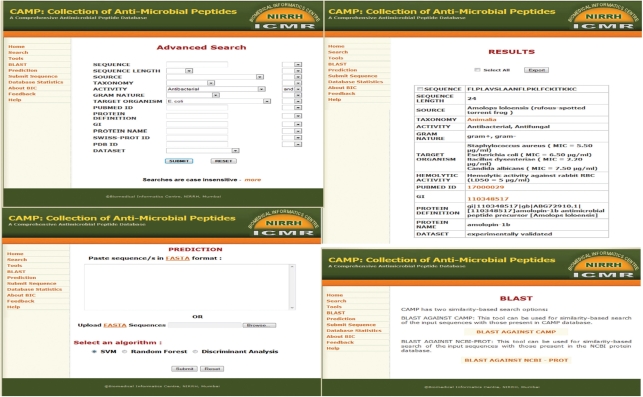
“The interfaces in CAMP are designed in a manner to help users in easy navigation and use of the various tools integrated in the database (Figure 1). The database interfaces include: Home, Search, Tools, Prediction, BLAST ( 43 ), Submit Sequence, Feedback and Help.”
MethodThe Nature of Statistical Learning Theory
Vapnik, V. N. (1995) · doi:10.1007/978-1-4757-2440-0 · Cited by 39,138
A simple method for displaying the hydropathic character of a protein
Kyte, J., & Doolittle, R. F. (1982) · Journal of Molecular Biology · doi:10.1016/0022-2836(82)90515-0 · Cited by 22,843 · cited 1×
“Properties that can be calculated are length, net charge, amino acid composition, aliphatic index (44), instability index (45), hydropathy (46) and secondary structure propensities (30).”
BackgroundClassification and Regression by randomForest
Liaw, A. I., & Wiener, M. C. (2007) · Cited by 18,594
Cd-hit: a fast program for clustering and comparing large sets of protein or nucleotide sequences
Li, W., & Godzik, A. (2006) · Bioinformatics · doi:10.1093/bioinformatics/btl158 · Cited by 11,410
Antimicrobial peptides of multicellular organisms
Zasloff, M. (2002) · Nature · doi:10.1038/415389a · Cited by 8,457
Antimicrobial peptides: pore formers or metabolic inhibitors in bacteria?
Brogden, K. A. (2005) · Nature Reviews Microbiology · doi:10.1038/nrmicro1098 · Cited by 5,829
Comparison of the predicted and observed secondary structure of T4 phage lysozyme
Matthews, B. W. (1975) · Biochimica et Biophysica Acta (BBA) - Protein Structure · doi:10.1016/0005-2795(75)90109-9 · Cited by 5,399 · cited 1×
“MCC is considered to be a balanced measure for evaluating the performance of the algorithm, even in datasets of different sizes (41, 42 ).”
BackgroundAn introduction to kernel-based learning algorithms
Muller, K.-R., Mika, S., Ratsch, G., Tsuda, K., & Scholkopf, B. (2001) · IEEE Transactions on Neural Networks · doi:10.1109/72.914517 · Cited by 3,473
Research works printed but not linked: 1
- Norusis MJ SPSS/PC+Advanced StatisticsTM V2.0 1988 USA ISBN 0-918469-57-0, SPSS Inc.
Cited by
Items 201–300 of 510
Juba, M. L., Russo, P. S., Devine, M., Barksdale, S. M., Rodriguez, C. A., Vliet, K. A., Schnur, J. M., van Hoek, M. L., & Bishop, B. (2015) · Journal of Proteome Research · doi:10.1021/acs.jproteome.5b00447 · Cited by 30
Dassanayake, R. P., Falkenberg, S. M., Briggs, R. E., Tatum, F. M., & Sacco, R. E. (2017) · PLoS ONE · doi:10.1371/journal.pone.0183610 · Cited by 29
Antimicrobial activity of bovine NK-lysin-derived peptides on Mycoplasma bovis
Dassanayake, R. P., Falkenberg, S. M., Register, K. B., Samorodnitsky, D., Nicholson, E. M., & Reinhardt, T. A. (2018) · PLoS ONE · doi:10.1371/journal.pone.0197677 · Cited by 29
Płotka, M., Szadkowska, M., Håkansson, M., Kovačič, R., Al‐Karadaghi, S., Walse, B., Werbowy, O., Kaczorowska, A., & Kaczorowski, T. (2020) · International Journal of Molecular Sciences · doi:10.3390/ijms21144894 · Cited by 28
Games, P. D., daSilva, E., Barbosa, M. D. O., Almeida-Souza, H. O., Fontes, P. P., Júnior, M. J. M., Pereira, P. R. G., Prates, M. V., Franco, G. R., Faria-Campos, A., et al. (2016) · BMC Genomics · doi:10.1186/s12864-016-3332-8 · Cited by 28
“In the portal Bioactive Peptide Databases, Amper DB detected alignment (P < 0.05) with two mature Hevein fragments from Hevea brasiliensis and Eucommia ulmoides; CAMP found 16 Hevein-like and/ or CBD-protein that showed significant alignments (Evalue from 2e-16 to 6e-8).”
InfluentialCabral, I. M., Gonçalves, C., Grosso, A. R., & Costa, P. M. (2024) · Frontiers in Marine Science · doi:10.3389/fmars.2024.1362697 · Cited by 27
Classifying antimicrobial and multifunctional peptides with Bayesian network models
Barrett, R., Jiang, S., & White, A. D. (2018) · Peptide Science · doi:10.1002/pep2.24079 · Cited by 27
Wang, Y., Ding, Y., Wen, H., Lin, Y., Hu, Y., Zhang, Y., Xia, Q., & Lin, Z. (2012) · Combinatorial Chemistry & High Throughput Screening · doi:10.2174/138620712799361807 · Cited by 26
“…such as AMSDb [10], ANTIMIC [11], APD [12] [13], Peptaibol Database [14] [15], PenBase [16], Seebah Defensins knowledgebase [17], AMPer [18], CAMP [19], and PhytAMP [20]; (2) synthetic antibiotic peptides databases, such as SAPD [21] and Peptidomimetics [22]; and (3) secondary databases on…”
BactPepDB: a database of predicted peptides from a exhaustive survey of complete prokaryote genomes
Rey, J., Deschavanne, P., & Tufféry, P. (2014) · Database · doi:10.1093/database/bau106 · Cited by 26
“Intra-genus RefSeq 978 (25) 40 913 (29) 152 429 (42)”
BackgroundRossetti, P., Trollmann, M. F. W., Wichmann, C., Gutsmann, T., Eggeling, C., & Böckmann, R. A. (2026) · Small · doi:10.1002/smll.202411476 · Cited by 25
Romani, A. A., Baroni, M. C., Taddei, S., Ghidini, F., Sansoni, P., Cavirani, S., & Cabassi, C. S. (2013) · Journal of Peptide Science · doi:10.1002/psc.2532 · Cited by 25
Toward the definition of a peptidome signature and protease profile in chronic periodontitis
Trindade, F., Amado, F., Oliveira‐Silva, R. P., Daniel‐da‐Silva, A. L., Ferreira, R., Klein, J., Faria‐Almeida, R., Gomes, P. S., & Vitorino, R. (2015) · PROTEOMICS – Clinical Applications · doi:10.1002/prca.201400191 · Cited by 24
“The antimicrobial activity of the control and CP signature peptides was predicted with the antimicrobial peptide (AMP) prediction tool available in collection of AntiMicrobial peptides (release 2) website [33] (see the Supporting Information for details about bioinformatics analysis).”
MethodShao, J. Y., Zhao, Y., Wei, W., & Vaisman, I. I. (2024) · Frontiers in Microbiology · doi:10.3389/fmicb.2024.1304044 · Cited by 24
“While previously reported models utilize the Random Forest family of algorithms (Thomas et al., 2010; Waghu et al., 2016; Bhadra et al., 2018), this study explores N-gram representations of 2-gram and 3-gram with a 9-letter reduced alphabet and a 3-letter reduced alphabet.”
MethodInfluentialZouhir, A., Taieb, M., Ashraf, L. M., Cherif, A., Jridi, T., Mahjoubi, B., Mbarek, S., Fliss, I., Nefzi, A., Sebei, K., et al. (2016) · Archives of Microbiology · doi:10.1007/s00203-016-1293-6 · Cited by 24
“2008), ‘Collection of Anti-Microbial Peptides’ (CAMP) (Thomas et al. 2010), (http://www.”
MethodHalder, T., Upadhyaya, G., Roy, S., Biswas, R., Das, A., Bagchi, A., Agarwal, T., & Ray, S. (2019) · Plant Molecular Biology · doi:10.1007/s11103-019-00894-y · Cited by 24
Development of Antimicrobial Peptide Prediction Tool for Aquaculture Industries
Gautam, A., Sharma, A., Jaiswal, S., Fatma, S., Arora, V., Iquebal, M. A., Nandi, S., Sundaray, J. K., Jayasankar, P., Rai, A. K., et al. (2016) · Probiotics and Antimicrobial Proteins · doi:10.1007/s12602-016-9215-0 · Cited by 25
Tan, L., Wang, L., Ren, X., Zou, Q., Yao, X., Zeng, X., & Fu, X. (2025) · Information Fusion · doi:10.1016/j.inffus.2025.103119 · Cited by 23
Akbar, S., Raza, A., Ullah, M., Alghamdi, W., Khan, M., & Zou, Q. (2026) · BMC Biology · doi:10.1186/s12915-026-02547-1 · Cited by 23
Challenges in computational discovery of bioactive peptides in ’omics data
Coelho, L. P., Júnior, C. D. S., & de la Fuente‐Núñez, C. (2024) · PROTEOMICS · doi:10.1002/pmic.202300105 · Cited by 23
Dutta, S. R., Gauri, S. S., Ghosh, T., Halder, S. K., DasMohapatra, P. K., Mondal, K. C., & Ghosh, A. K. (2017) · Bioorganic & Medicinal Chemistry Letters · doi:10.1016/j.bmcl.2017.03.003 · Cited by 22
Khalaf, W. S., Morgan, R. N., & Elkhatib, W. F. (2025) · Journal of Microbiological Methods · doi:10.1016/j.mimet.2025.107125 · Cited by 22
In Silico Peptide Design: Methods, Resources, and Role of AI
Choudhury, P. R., Mishra, S. K., Yadav, S., Singh, S., & Mathur, P. (2025) · Journal of Peptide Science · doi:10.1002/psc.70063 · Cited by 22
“Notable examples include LAMP [37], DBAASP [38], DRAMP [39], CAMP [40], APD [41], dbAMP [42], YADAMP [43], and AMPer [44].”
Fuse feeds as one: cross-modal framework for general identification of AMPs
Zhang, W., Xu, Y., Wang, A., Chen, G., & Zhao, J. (2023) · Briefings in Bioinformatics · doi:10.1093/bib/bbad336 · Cited by 21
Wang, X. R., Zhou, W., Wang, R., & Gao, X. (2024) · Symmetry · doi:10.3390/sym16040464 · Cited by 21
AMDD: Antimicrobial Drug Database
Danishuddin, M., Kaushal, L., Baig, M. H., & Khan, A. U. (2012) · Genomics Proteomics & Bioinformatics · doi:10.1016/j.gpb.2012.04.002 · Cited by 21
“, CAMP [3], APD2 [4], PhytAMP [5] and ANTIMIC [6], of natural antimicrobial peptides which are used for treating bacterial and fungal infections.”
BackgroundThe Application of Biophysical Techniques to Study Antimicrobial Peptides
Torcato, I. M., Castanho, M. A. R. B., & Henriques, S. T. (2012) · Journal of Spectroscopy · doi:10.1155/2012/460702 · Cited by 21
“With a broad action spectrum, and less susceptiblilty to the development of bacterial resistance, AMPs have been regarded as an exciting alternative to classical antibiotics [1].”
BackgroundIn Silico Identification and Molecular Validation of Putative Antimicrobial Peptides for HIV Therapy
Tincho, M. B., Gabere, M. N., & Pretorius, A. (2016) · Journal of AIDS & Clinical Research · doi:10.4172/2155-6113.1000606 · Cited by 21
Garai, S., Thomas, J., Dey, P., & Das, D. (2023) · Molecular Diversity · doi:10.1007/s11030-023-10602-0 · Cited by 20
AMP-GSM: Prediction of Antimicrobial Peptides via a Grouping–Scoring–Modeling Approach
Söylemez, Ü. G., Yousef, M., & Bakır-Güngör, B. (2023) · Applied Sciences · doi:10.3390/app13085106 · Cited by 20
Leni, G., Vecchio, L. D., Dellapina, C., Moliterni, V. M. C., Caligiani, A., & Cirlini, M. (2024) · Macromol—A Journal of Macromolecular Research · doi:10.3390/macromol4010007 · Cited by 20
Binary Response Models for Recognition of Antimicrobial Peptides
Randou, E. G., Veltri, D., & Shehu, A. (2013) · ACM International Conference on Bioinformatics, Computational Biology, and Health Informatics (ACM-BCB) · doi:10.1145/2506583.2506597 · Cited by 20
“HMM [16] 0.98 AMPer HMM [18] 0.88 RANDOM ANN [7] 0.60 CAMEL DA [38] 0.75 0.74 CAMP RF [38] 0.86 0.86 CAMP SVM [38] 0.88 0.82 CAMP SVM [28] 0.84 AntiBP2 ANFIS [13] 0.94 APD2 ANN [13] 0.85 APD2 SVM [42] 0.80 APD2 F K NN [45]”
BackgroundMethodInfluentialEberle, R. J., Brattig, N. W., Trusch, M., Schlüter, H., Achukwi, M. D., Eisenbarth, A., Renz, A., Liebau, E., Perbandt, M., & Betzel, C. (2014) · Acta Tropica · doi:10.1016/j.actatropica.2014.11.015 · Cited by 20
Ruiz‐Blanco, Y. B., Agüero-Chapin, G., Romero‐Molina, S., Antunes, A., Olari, L., Spellerberg, B., Münch, J., & Sánchez‐García, E. (2022) · Antibiotics · doi:10.3390/antibiotics11121708 · Cited by 20
Ruhanen, H., Hurley, D., Ghosh, A., O'Brien, K. T., Johnston, C. R., & Shields, D. C. (2014) · Frontiers in Microbiology · doi:10.3389/fmicb.2014.00004 · Cited by 20
“Bioactivity predictors based on biophysical properties within the peptide sequences are an alternative strategy (Dosztanyi et al., 2009; Thomas et al., 2010; Mooney et al., 2012, 2013).”
BackgroundYu, Q., Dong, Z., Fan, X., Zong, L., & Li, Y. (2021) · bioRxiv (Cold Spring Harbor Laboratory) · doi:10.1101/2021.11.10.468157 · Cited by 20
“First and foremost, there are improving data availability, such as DBAASP [12], LAMP [13], CAMP [14], APD-3 [15], DAMPD [16] and DRAMP 2.0 [10].”
BackgroundInfluentialRoque‐Borda, C. A., Vishwakarma, S. K., Delgado, O. J. R., Rodrigues, H. L. D. S., Primo, L. M. D. G., Campos, I. C., de Lima, T. S., Perdigão, J., & Pavan, F. R. (2025) · Pharmaceuticals · doi:10.3390/ph18101440 · Cited by 19
“This significantly reduces the number of experimental peptides, saving time and resources [119,120,125,126].”
Yu, W., Zhang, X., Yu, Y., Zhao, D., Duan, S., Szeto, I. M., He, J., Liu, L., & Jin, Y. (2025) · Food Chemistry · doi:10.1016/j.foodchem.2025.145174 · Cited by 19
Pérez-Polo, S., Imran, M. A. S., Dios, S., Pérez‐Vázquez, J., Barros, L., Carrera, M., & Gestal, C. (2023) · International Journal of Molecular Sciences · doi:10.3390/ijms24087145 · Cited by 18
“in/antimicrobial/, accessed on 19 June 2022) [52] applying the DAC score (Discriminate Analysis Classifier score) to predict all potential bioactive peptides.”
MethodFarzi, N., Oloomi, M., Bahramali, G., Siadat, S. D., & Bouzari, S. (2023) · Probiotics and Antimicrobial Proteins · doi:10.1007/s12602-023-10070-w · Cited by 18
Draft Genome Sequence of the Marine Streptomyces sp. Strain PP-C42, Isolated from the Baltic Sea
Fan, L., Liu, Y., Li, Z., Baumann, H., Kleinschmidt, K., Ye, W., Imhoff, J. F., Kleine, M., & Cai, D. (2011) · Journal of Bacteriology · doi:10.1128/jb.05097-11 · Cited by 18
“Also, a set of hits was retrieved (BLASTP 1e 5) from various antimicrobial peptide databases (6, 15, 16, 17) but with striking sequence variations at both DNA and”
MethodFirst evidence of antimicrobial activity of neurotoxin 2 from Anemonia sulcata (Cnidaria)
Trapani, M., Parisi, M. G., Toubiana, M., Coquet, L., Jouenne, T., Roch, P. G., & Cammarata, M. (2014) · Invertebrate survival journal · Cited by 18
Automated Diagnosis and Cause Analysis of Cesarean Section Using Machine Learning Techniques
Sana, A., Razzaq, S., & Ferzund, J. (2012) · International Journal of Machine Learning and Computing · doi:10.7763/ijmlc.2012.v2.213 · Cited by 18
Saleem, N., Kumar, N., El-Omar, E. M., Willcox, M. D. P., & Jiang, X. (2025) · Antibiotics · doi:10.3390/antibiotics14121263 · Cited by 17
“Possessed curated host defense peptides with bactericidal activity against MDR pathogens from invertebrates [82].”
Multi-label Learning for Predicting the Activities of Antimicrobial Peptides
Wang, P., Ge, R., Liu, L., Xiao, X., Li, Y., & Cai, Y. (2017) · Scientific Reports · doi:10.1038/s41598-017-01986-9 · Cited by 17
“There have been many bioinformatics tools with good ability proposed for identifying a peptide sequence as AMP or not, some of them can obtain the testing accuracy of more than 90% 6,8,12,13 .”
BackgroundQuorum sensing: An imperative longevity weapon in bacteria
Shrikant, P., & Lahiri, C. (2018) · African Journal of Microbiology Research · doi:10.5897/ajmr2017.8751 · Cited by 17
Dubovskii, P. V., & Efremov, R. G. (2018) · Expert Review of Proteomics · doi:10.1080/14789450.2018.1537786 · Cited by 17
Bella, M. A. D., Fedders, H., Leo, G. D., & Leippe, M. (2011) · Results in Immunology · doi:10.1016/j.rinim.2011.09.001 · Cited by 17
“More than 1700 AMPs have been identified to date ([13,14]; http://aps.”
BackgroundPandey, P., & Srivastava, A. K. (2024) · Proteins Structure Function and Bioinformatics · doi:10.1002/prot.26681 · Cited by 16
“29 In 2011, Wang et al. developed a more efficient web server by integrating the BLASTP-based sequence alignment method and the feature selection method with amino acid composition (AAC) and pseudo amino acid composition (PseAAC).”
ESKtides: a comprehensive database and mining method for ESKAPE phage-derived antimicrobial peptides
Wu, H., Chen, R., Li, X., Zhang, Y., Zhang, J., Yang, Y., Wan, J., Zhou, Y., Chen, H., Li, J., et al. (2024) · Database · doi:10.1093/database/baae022 · Cited by 16
“DBAASP (32) and R1–R4 Collection of Anti-Microbial Peptides (CAMPR) (33–36) comprise manually collected and experimentally verified high-quality peptides, resulting in a more limited dataset compared to those derived from high-throughput methods.”
BackgroundInfluentialSantos, M. F. D. S., Freitas, C. S., Costa, G., Pereira, P. R., & Paschoalin, V. M. F. (2022) · Pharmaceuticals · doi:10.3390/ph15020163 · Cited by 17
An automatic representation of peptides for effective antimicrobial activity classification
Beltran, J. A., del Rio, G., & Brizuela, C. A. (2020) · Computational and Structural Biotechnology Journal · doi:10.1016/j.csbj.2020.02.002 · Cited by 16
“They are: DAT1 [4], DAT2 [6], and DAT3 used in [10] was taken from [50,51].”
MethodInfluentialA deep reinforcement learning platform for antibiotic discoveryPreprint
Cao, H., Torres, M. D. T., Zhang, J., Gao, Z., Wu, F., Gu, C., Leskovec, J., Choi, Y., de la Fuente‐Núñez, C., Chen, G., et al. (2025) · bioRxiv (Cold Spring Harbor Laboratory) · doi:10.1101/2025.09.23.678086 · Cited by 16
“Yet most computational discovery platforms address only parts of the pipeline— scoring 4,8–18 , generation 6,19–28 , or database management 12,29–32 —and are constrained by limited open-source sequences (~30,000 sequences) with inconsistent experimental annotations, especially MIC values 3,33,34 .”
Molik, Z. A., Ajayi, T. O., Ogunniyi, Q. A., Fijagbade, A. O., & Ogbole, O. O. (2025) · Discover Molecules · doi:10.1007/s44345-025-00008-w · Cited by 15
“However, future research should focus on addressing the challenges in AMP development, exploring the diversity of AMPs in different plant species, and developing sustainable practices for latex extraction.”
Asim, M. N., Asif, T., Mehmood, F., & Dengel, A. R. (2025) · Computers in Biology and Medicine · doi:10.1016/j.compbiomed.2025.109821 · Cited by 16
Leveraging protein language models for robust antimicrobial peptide detection
Zhang, L., Xiong, S., Xu, L., Liang, J., Zhao, X., Zhang, H., & Tan, X. (2025) · Methods · doi:10.1016/j.ymeth.2025.03.002 · Cited by 15
Transfer learning on protein language models improves antimicrobial peptide classification
Georgoulis, E., Zervou, M. A., & Pantazis, Y. (2025) · Scientific Reports · doi:10.1038/s41598-025-21223-y · Cited by 15
In vitro and in vivo Activity of Phibilin Against Candida albicans
Li, Z., Jing, X., Yuan, Y., Shui, Y., Li, S., Zhao, Z., Deng, B., & Zhang, W. (2022) · Frontiers in Microbiology · doi:10.3389/fmicb.2022.862834 · Cited by 15
Chung, C., Liou, J.-T., Wu, L.-C., Horng, J., & Lee, T.-Y. (2023) · iScience · doi:10.1016/j.isci.2023.108250 · Cited by 15
Higgins, S., Igwe, D. O., Coradetti, S. T., Ramsey, J. S., DeBlasio, S. L., Pitino, M., Shatters, R. G., Niedz, R. P., Fleites, L. A., & Heck, M. L. (2024) · Phytopathology · doi:10.1094/phyto-09-23-0322-kc · Cited by 15
Yang, L., GUO, G., Zhao, X., SU, P.-P., FU, P., Peng, J., Xiu, J., & LI, B.-Y. (2019) · Polish Journal of Microbiology · doi:10.33073/pjm-2019-041 · Cited by 15
“To further assess the antimicrobial activity of the protein encoded by this gene, the prediction tools of the Antimicrobial Peptide (APD) and Collection of Anti-Microbial Peptides (CAMP) databases were used (Wang et al. 2004; Thomas et al. 2010; Wang et al. 2016).”
MethodSzadkowska, M., Kocot, A. M., Sowik, D., Wyrzykowski, D., Jankowska, E., Kozlowski, L. P., Makowska, J., & Płotka, M. (2024) · Frontiers in Microbiology · doi:10.3389/fmicb.2023.1303794 · Cited by 14
“…was predicted by the use of Collection of Anti-Microbial Peptides CAMP which is 1 https://blast.ncbi.nlm. nih.gov/blast.cgi based on four different algorithms: Support Vector Machine (SVM), Random Forest (RF), Artificial Neural Network (ANN), and Discriminant Analysis (DA; Thomas et al., 2010).”
MethodComprehensive Assessment of BERT-Based Methods for Predicting Antimicrobial Peptides
Gao, W. J., Zhao, J. W., Gui, J., Wang, Z., Chen, J., & Yue, Z. (2024) · Journal of Chemical Information and Modeling · doi:10.1021/acs.jcim.4c00507 · Cited by 14
Xu, C., Han, A., Tian, Y., & Sun, S. (2024) · Food Chemistry · doi:10.1016/j.foodchem.2024.142275 · Cited by 14
A Uniform In Vitro Efficacy Dataset to Guide Antimicrobial Peptide Design
Nagarajan, D., Nagarajan, T., Nanajkar, N., & Chandra, N. R. (2019) · Data · doi:10.3390/data4010027 · Cited by 15
Bioinformatics Approaches Applied to the Discovery of Antifungal Peptides
Rodríguez‐Cerdeira, C., Molares-Vila, A., Cárdenas, C. D. S., Velásquez-Bámaca, J. S., & Martínez-Herrera, E. O. (2023) · Antibiotics · doi:10.3390/antibiotics12030566 · Cited by 14
Alsaab, F. M., Dean, S. N., Bobde, S., Ascoli, G. G., & van Hoek, M. L. (2023) · Antibiotics · doi:10.3390/antibiotics12091396 · Cited by 14
“Comparing the output from different tools increases confidence in the results computationally predicted using tools such as support vector Comparing the output from different tools increases confidence in the results”
MethodCipcigan, F. S., Carrieri, A. P., Pyzer‐Knapp, E. O., Krishna, R., Hsiao, Y., Winn, M., Ryadnov, M. G., Edge, C., Martyna, G. J., & Crain, J. N. (2018) · The Journal of Chemical Physics · doi:10.1063/1.5027261 · Cited by 14
Kumar, A., Doan, V. M., Kunkli, B., & Csősz, É. (2021) · Frontiers in Genetics · doi:10.3389/fgene.2021.633050 · Cited by 14
Khajeh, E., Jamshidian-Mojaver, M., Naeemipour, M., & Farzin, H. (2021) · Iranian Journal of Medical Microbiology · doi:10.30699/ijmm.15.3.302 · Cited by 15
“To this aim, Four software tools have been employed, namely Random Forest, Support Vector Machines, Artificial Neural Network, and Discriminant Analysis (41).”
MethodInfluentialPepBenchmark: A Standardized Benchmark for Peptide Machine LearningPreprint
Zhang, J., Wang, R., Zhou, K., Xiao, T., Zhu, L., Min, Y., & Wang, Y. (2026) · arXiv (Cornell University) · doi:10.48550/arxiv.2604.10531 · Cited by 14
Nawaz, M., Huiyuan, Y., Akhtar, F., Ma, T., & Zheng, H. (2025) · Molecular Diversity · doi:10.1007/s11030-025-11173-y · Cited by 14
“AVPpred is distinguished by its specific focus on antiviral peptides, offering superior accuracy compared to general antimicrobial peptide prediction methods, such as those developed by Wang et al., [102] and Thomas et al., [103].”
Cui, Z. Y., Wang, S., He, Y., Chen, Z., & Zhang, Q. (2023) · IEEE Journal of Biomedical and Health Informatics · doi:10.1109/jbhi.2023.3290014 · Cited by 13
“In other words, these eight types of peptides have high research value and significance in biomedicine [43].”
BackgroundCorte, C. L., Catania, V., Dara, M., Parrinello, D., Staropoli, M., Trapani, M. R., Cammarata, M., & Parisi, M. G. (2024) · Marine Drugs · doi:10.3390/md22040172 · Cited by 13
Ensemble Machine Learning and Predicted Properties Promote Antimicrobial Peptide Identification
Zhong, G., Liu, H., & Deng, L. (2024) · Interdisciplinary Sciences Computational Life Sciences · doi:10.1007/s12539-024-00640-z · Cited by 14
“Experimentally verified positive AMP samples were obtained from eight databases, including ADAM [36], AMPfun [37], APD3 [38], CAMP [39], DRAMP [40], dbAMP [41], LAMP [42] and SATPdb [43].”
Bakare, O. O., Keyster, M., & Pretorius, A. (2020) · BMC Molecular and Cell Biology · doi:10.1186/s12860-020-00328-4 · Cited by 13
“Thomas S, et al. CAMP: a useful resource for research on antimicrobial peptides.”
InfluentialFurther Identification of Novel Lantibiotic Operons Using LanM-Based Genome Mining
O’Sullivan, Ó., Begley, M., Ross, R. P., Cotter, P. D., & Hill, C. (2011) · Probiotics and Antimicrobial Proteins · doi:10.1007/s12602-011-9062-y · Cited by 13
“As a consequence of the conserved nature of LanMencoding genes relative to other lantibiotic-associated gene families, they are the most appropriate targets when undertaking a wet lab [47] or in silico DNA-based screen for novel type 2 gene clusters [5, 15, 59 ].”
BackgroundYuan, C., Zheng, X., Liu, K., Yuan, W., Zhang, Y., Mao, F., & Bao, Y. (2022) · Marine Drugs · doi:10.3390/md20070459 · Cited by 12
Kao, H.-J., Weng, T., Chen, C., Chen, Y., Chi, Y.-H., Huang, K., & Weng, S.-L. (2024) · International Journal of Molecular Sciences · doi:10.3390/ijms25136848 · Cited by 12
“…verified ACP sequences were gathered from the literature [14,20,22,24] and public tools and databases including ACPred [21], ACPred-FL [20], AntiCP [13], AntiCP2 [23], APD3 [25], CAMP [26], Can-cerPPD [27], DADP [28], dbAMP [29], DRAMP [30], EnACP [24], mACPpred [22], and SATPdb [31].”
MethodWang, Z., Wu, J., Zheng, M., Geng, C., Zhen, B., Zhang, W., Wu, H., Xu, Z., Xu, G., Chen, S., et al. (2024) · Journal of Chemical Information and Modeling · doi:10.1021/acs.jcim.4c01718 · Cited by 12
Draft Genome Sequence of the Marine Streptomyces sp. Strain AA1529, Isolated from the Yellow Sea
Xiong, Z., & Wang, Y. (2012) · Journal of Bacteriology · doi:10.1128/jb.01247-12 · Cited by 12
“Additionally, some antimicrobial peptides predicted by the CAMP database (11) had significant DNA and amino acid sequence variations from their orthologs from other Streptomyces species.”
BackgroundOral delivery of self-assembling bioactive peptides to target gastrointestinal tract disease
Petit, N., Dyer, J. M., Clerens, S., Gerrard, J. A., & Domigan, L. J. (2020) · Food & Function · doi:10.1039/d0fo01801e · Cited by 12
Ranganarayanan, P., Thanigesan, N., Vivek-Ananth, R. P., Valadi, J. K., & Ramakrishnan, V. (2015) · IEEE Transactions on Computational Biology and Bioinformatics · doi:10.1109/tcbb.2015.2415806 · Cited by 12
“The van der Waals and shortrange electrostatic interactions were estimated within a 9 A cut-off and the long-range electrostatic interactions were assessed using the Particle Mesh Ewald (PME) method.”
MethodThe Generation of Antimicrobial Peptide Activity: A Trade‐off between Charge and Aggregation?
Torrent, M., Valle, J., Nogués, M. V., Boix, E., & Andreu, D. (2011) · Angewandte Chemie · doi:10.1002/ange.201103589 · Cited by 12
Paglia, L. L., Vazzana, M., Mauro, M., Urso, A. M., Arizza, V., & Vizzini, A. (2023) · Marine Drugs · doi:10.3390/md22010006 · Cited by 12
“CAMPR3 (h tt p://www.camp3.bicnirrh.res.in/, CAMPR3 (http://www.camp3 accessed on 1 October 2023) (Collection of Antimicrobial Peptides) [117,118] allows the expansion and acceleration of AMP family-based studies. bicnirrh.res.in/, accessed on 1 October Collection of Antimicrobial Peptides)…”
BackgroundBsR1, a broad-spectrum antibacterial peptide with potential for plant protection
Song, P., Zhao, L., Zhu, L., Sha, G., & Dong, W. (2023) · Microbiology Spectrum · doi:10.1128/spectrum.02578-23 · Cited by 11
“Classic antimicrobial peptide databases and prediction sites like CAMP (Collection of Anti-Microbial Peptides) (43, 44) and ClassAMP (45) offer researchers a great deal of convenience.”
BackgroundA Survey on Evolutionary Computation-Based Drug Discovery
Yu, Q., Lin, Q., Ji, J., Zhou, W., He, S., Zhu, Z., & Tan, K. C. (2024) · IEEE Transactions on Evolutionary Computation · doi:10.1109/tevc.2024.3382145 · Cited by 13
“For peptide drugs, the available databases include UniProt [171], SWISS-PROT [172], PepBank [173], BIOPEP-UWM [174], APD [175], YADAMP [176], and CAMP [177].”
Baradaran, M. (2012) · AFRICAN JOURNAL OF BIOTECHNOLOGY · doi:10.5897/ajb11.3373 · Cited by 11
“Resistance to antibiotics is a rising concern among health care professionals, driving them to search peptides with antimicrobial activities in plants, bacteria and animals (Meylears et al., 2002; Shaini et al., 2010).”
BackgroundBadapanda, C., & Chikara, S. K. (2015) · Entomology in focus · doi:10.1007/978-3-319-24244-6_6 · Cited by 11
Li, Z., Yuan, Y., Meng, M., Li, S., Deng, B., & Wang, Y. (2020) · Genomics · doi:10.1016/j.ygeno.2020.06.046 · Cited by 11
Schillaci, D., Cusimano, M. G., Russo, D., & Arizza, V. (2014) · The European Zoological Journal · doi:10.1080/11250003.2014.922128 · Cited by 11
“Currently, more than 4000 peptides have been isolated and characterized from tissues and organisms, and have been listed in the main databases or in journal publications (Thomas et al. 2010).”
BackgroundMilk protein tailoring to improve functional and biological properties
Chobert, J. (2012) · DOAJ (DOAJ: Directory of Open Access Journals) · Cited by 11
Maccari, G., Nifosì, R., & Luca, M. D. (2013) · doi:10.13140/2.1.4408.6726 · Cited by 11
Accelerating Antimicrobial Peptide Discovery with Latent Structure
Wang, D., Wen, Z., Ye, F., Li, L., & Zhou, H. (2023) · Proceedings of the 29th ACM SIGKDD Conference on Knowledge Discovery and Data Mining · doi:10.1145/3580305.3599249 · Cited by 10
“[42] trained on the AMP database of 3782 sequences with random forest (RF), discriminant analysis (DA), support vector machines (SVM)8, and artificial neural network (ANN)9 respectively.”
MethodPepGraphormer: an ESM-GAT hybrid deep learning framework for antimicrobial peptide prediction
Lin, C., Xiong, S., Li, J., Cui, F., Zhang, Z., Shi, H., & Wei, L. (2026) · Journal of Cheminformatics · doi:10.1186/s13321-025-01144-8 · Cited by 10
“For these datasets, the positive samples were comprehensively curated from typical AMP databases, including SATPdb [43], ADAM [44], AMPfun [10], APD3 [45], CAMP [46, 47], LAMP [48, 49], DRAMP [50], and dbAMP [51].”
Machine Learning Approaches to Improve Prediction of Target‐Drug Interactions
Balatti, G. E., Barletta, P. G., D. Perez, A., Giudicessi, S. L., & Martínez‐Ceron, M. C. (2022) · Wiley eBooks · doi:10.1002/9781394167258.ch2 · Cited by 10
Diversity and Molecular Evolution of Antimicrobial Peptides in Caecilian Amphibians
Prian, M. B., Lorente-Martínez, H., Agorreta, A., Gower, D. J., Wilkinson, M., Roelants, K., & Mauro, D. S. (2024) · Toxins · doi:10.3390/toxins16030150 · Cited by 10
Varga, J. F. A., Brunner, S. R., Cheng, G., Min, D., Aucoin, M. G., Doxey, A. C., & Dixon, B. (2022) · Developmental & Comparative Immunology · doi:10.1016/j.dci.2022.104518 · Cited by 10
Saikat, A. S. M. (2023) · Genomics & Informatics · doi:10.5808/gi.23001 · Cited by 10
Deng, Y., Ma, S., Li, J., Zheng, B., & Lv, Z. (2023) · International Journal of Molecular Sciences · doi:10.3390/ijms241310854 · Cited by 10
HybAVPnet: A Novel Hybrid Network Architecture for Antiviral Peptides Prediction
Ge, R., Xia, Y., Jiang, M., Jia, G., Jing, X., Li, Y., & Cai, Y. (2024) · IEEE Transactions on Computational Biology and Bioinformatics · doi:10.1109/tcbb.2024.3385635 · Cited by 10
Metadata
- Authors
- Thomas, S., Karnik, S., Barai, R. S., Jayaraman, V. K., & Idicula-Thomas, S.
- Affiliations
- ICMR National Institute for Research on Women's Health (IN)
- Centre for Development of Advanced Computing (IN)
- Corresponding author
- Jayaraman, V. K.
- Venue
- Nucleic Acids Research
- Publisher
- Oxford University Press (OUP)
- Published
- 2009-11-18
- Volume
- 38
- Issue
- suppl_1
- Pages
- D774-D780
- ISSN
- 0305-1048 (ISSN-L)
- 1362-4962
- PMC
- PMC2808926
- OpenAlex
- W2129115651
- Cited by
- 462
- References
- 49
- Citations by year
- 2026: 30 · 2025: 35 · 2024: 37 · 2023: 43 · 2022: 31 · 2021: 30 · 2020: 32 · 2019: 25 · 2018: 21 · 2017: 15 · 2016: 17 · 2015: 23 · 2014: 27 · 2013: 39 · 2012: 31
- FWCI
- 18.21
- Type
- journal article
- Language
- en
- Open access
- gold
- doi.org
- Licence
- Locations
- Nucleic Acids Research (publishedVersion, cc-by-nc)
- PubMed Central (publishedVersion, cc-by-nc)
- PubMed (publishedVersion)
- HighWire Press Open Archive (submittedVersion)
- IUScholarWorks (Indiana University) (submittedVersion, cc-by-nc)
- Publisher
- Funders
- Indian Council of Medical Research
- Topics
- Life Sciences › Immunology and Microbiology › Microbiology › Antimicrobial Peptides and Activities
- Life Sciences › Pharmacology, Toxicology and Pharmaceutics › Drug Discovery › Computational Drug Discovery Methods
- Life Sciences › Immunology and Microbiology › Applied Microbiology and Biotechnology › Antimicrobial agents and applications
- Keywords
- antimicrobial peptides, antimicrobial peptide database, antimicrobial activity prediction, sequence-activity relationship, machine learning prediction models, minimum inhibitory concentration, sequence analysis tools
- MeSH terms
- Algorithms, Anti-Infective Agents, Humans, Peptides, Software, Reproducibility of Results, Information Storage and Retrieval, Genome, Bacterial, Computational Biology, Internet, Antimicrobial Cationic Peptides, Databases, Genetic, Databases, Nucleic Acid, Databases, Protein
About these checks
Registry, retraction, Cites and statistics results are computed, not judged, with one exception: a printed reference that no index lists is read once by a model before it counts as a citation error. Claims are extracted by a model and kept only when their quote appears verbatim in the text; each cited source is then checked, with a model’s help, for whether it says what the claim relies on. Those verdicts can be wrong — read the claim’s quote and the cited source before relying on one.
Statistics and arithmetic are recomputed, not judged.
Confidence bands are shown only for fields calibrated on our annotated test set. None is calibrated yet, so no band is shown.
What counts as a claim ›How we measure confidence ›How we check this ›
Are you an author, or do you see a problem with this page? Request a review
Data sources
Bibliographic data: Semantic Scholar, OpenAlex, Crossref.
Contains information from the Semantic Scholar Academic Graph Datasets, made available under the ODC Attribution License (ODC-BY 1.0).
Semantic Scholar’s data is described in: Kinney, R., et al. (2023). The Semantic Scholar Open Data Platform. arXiv:2301.10140.
