

CAMP: a useful resource for research on antimicrobial peptides.
Open accessThe DOI matches its Crossref record; 49 of the 49 references it cites were found in a registry or an index.
Abstract
Antimicrobial peptides (AMPs) are gaining popularity as better substitute to antibiotics. These peptides are shown to be active against several bacteria, fungi, viruses, protozoa and cancerous cells. Understanding the role of primary structure of AMPs in their specificity and activity is essential for their rational design as drugs. Collection of Anti-Microbial Peptides (CAMP) is a free online database that has been developed for advancement of the present understanding on antimicrobial peptides. It is manually curated and currently holds 3782 antimicrobial sequences. These sequences are divided into experimentally validated (patents and non-patents: 2766) and predicted (1016) datasets based on their reference literature. Information like source organism, activity (MIC values), reference literature, target and non-target organisms of AMPs are captured in the database. The experimentally validated dataset has been further used to develop prediction tools for AMPs based on the machine learning algorithms like Random Forests (RF), Support Vector Machines (SVM) and Discriminant Analysis (DA). The prediction models gave accuracies of 93.2% (RF), 91.5% (SVM) and 87.5% (DA) on the test datasets. The prediction and sequence analysis tools, including BLAST, are integrated in the database. CAMP will be a useful database for study of sequence-activity and -specificity relationships in AMPs. CAMP is freely available at http://www.bicnirrh.res.in/antimicrobial.
Overview
The claims and statistics of this paper haven’t been checked yet.
Free: it reads the open-access text and checks the first 5 claims that cite a source we can check. Create a free account to check every claim.
Integrity signals
Registry
Cites
Statistics
Figures
Verification
Claims the paper makes
The claims and statistics of this paper haven’t been checked yet.
Free: it reads the open-access text and checks the first 5 claims that cite a source we can check. Create a free account to check every claim.
Claims other papers make about this one
Each is checked against this paper’s own text: does it say what the citing paper says it does?
In the citing paper
“APD2 and CAMP are databases set up to classify not only antibacterial but also antifungal and antiviral peptides (Wang et al., 2009; Thomas et al., 2010).”
From Bioactive Molecules Released in Food by Lactic Acid Bacteria: Encrypted Peptides and Biogenic Amines (2016) · cites this paper as Thomas et al., 2010
Self-check
Percentages, sums and reported differences re-computed from the paper’s own numbers.
The self-check needs the paper’s full text.
Citations
Cites
Breiman, L. (2001) · Machine Learning · doi:10.1023/a:1010933404324 · Cited by 133,538
Gapped BLAST and PSI-BLAST: a new generation of protein database search programs
Altschul, S. (1997) · Nucleic Acids Research · doi:10.1093/nar/25.17.3389 · Cited by 73,302 · cited 1×
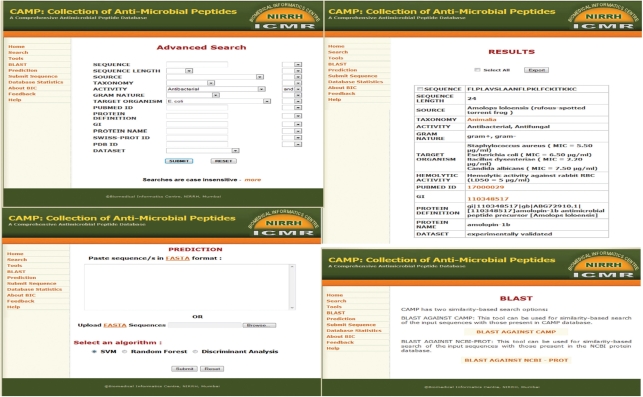
“The interfaces in CAMP are designed in a manner to help users in easy navigation and use of the various tools integrated in the database (Figure 1). The database interfaces include: Home, Search, Tools, Prediction, BLAST ( 43 ), Submit Sequence, Feedback and Help.”
MethodThe Nature of Statistical Learning Theory
Vapnik, V. N. (1995) · doi:10.1007/978-1-4757-2440-0 · Cited by 39,138
A simple method for displaying the hydropathic character of a protein
Kyte, J., & Doolittle, R. F. (1982) · Journal of Molecular Biology · doi:10.1016/0022-2836(82)90515-0 · Cited by 22,843 · cited 1×
“Properties that can be calculated are length, net charge, amino acid composition, aliphatic index (44), instability index (45), hydropathy (46) and secondary structure propensities (30).”
BackgroundClassification and Regression by randomForest
Liaw, A. I., & Wiener, M. C. (2007) · Cited by 18,594
Cd-hit: a fast program for clustering and comparing large sets of protein or nucleotide sequences
Li, W., & Godzik, A. (2006) · Bioinformatics · doi:10.1093/bioinformatics/btl158 · Cited by 11,410
Antimicrobial peptides of multicellular organisms
Zasloff, M. (2002) · Nature · doi:10.1038/415389a · Cited by 8,457
Antimicrobial peptides: pore formers or metabolic inhibitors in bacteria?
Brogden, K. A. (2005) · Nature Reviews Microbiology · doi:10.1038/nrmicro1098 · Cited by 5,829
Comparison of the predicted and observed secondary structure of T4 phage lysozyme
Matthews, B. W. (1975) · Biochimica et Biophysica Acta (BBA) - Protein Structure · doi:10.1016/0005-2795(75)90109-9 · Cited by 5,399 · cited 1×
“MCC is considered to be a balanced measure for evaluating the performance of the algorithm, even in datasets of different sizes (41, 42 ).”
BackgroundAn introduction to kernel-based learning algorithms
Muller, K.-R., Mika, S., Ratsch, G., Tsuda, K., & Scholkopf, B. (2001) · IEEE Transactions on Neural Networks · doi:10.1109/72.914517 · Cited by 3,473
Research works printed but not linked: 1
- Norusis MJ SPSS/PC+Advanced StatisticsTM V2.0 1988 USA ISBN 0-918469-57-0, SPSS Inc.
Cited by
Designing antimicrobial peptides: form follows function
Fjell, C. D., Hiss, J. A., Hancock, R. E. W., & Schneider, G. (2012) · Nature Reviews Drug Discovery · doi:10.1038/nrd3591 · Cited by 2,035
“The Antimicrobial Peptides Database (APD) 75 , and later the updated APD2 (REF.”
MethodThe value of antimicrobial peptides in the age of resistance
Magana, M., Pushpanathan, M., Santos, A. L., Leanse, L., Fernandez, M., Ioannidis, A., Giulianotti, M. A., Apidianakis, Y., Bradfute, S., Ferguson, A. L., et al. (2020) · The Lancet Infectious Diseases · doi:10.1016/s1473-3099(20)30327-3 · Cited by 1,150
Antimicrobial peptides: key components of the innate immune system
Pasupuleti, M., Schmidtchen, A., & Malmsten, M. (2012) · Critical Reviews in Biotechnology · doi:10.3109/07388551.2011.594423 · Cited by 799
“Since then, more than 1400 AMPs have been isolated from bacteria, insects and other invertebrates, amphibians, birds, fishes, mammals, and plants (Wang and Wang, 2004; Wang et al., 2009a; Thomas et al., 2010).”
BackgroundMooney, C., Haslam, N. J., Pollastri, G., & Shields, D. C. (2012) · PLoS ONE · doi:10.1371/journal.pone.0045012 · Cited by 615
“The experimentally validated CAMP dataset was used to develop prediction tools based on machine learning techniques [10].”
BackgroundMethodInfluentialMembrane Active Antimicrobial Peptides: Translating Mechanistic Insights to Design
Li, J., Koh, J.-J., Liu, S., Lakshminarayanan, R., Verma, C. S., & Beuerman, R. W. (2017) · Frontiers in Neuroscience · doi:10.3389/fnins.2017.00073 · Cited by 611
“AMP databases enhance computer aided AMP design (Fjell et al., 2007; Thomas et al., 2010; Wang G. et al., 2016).”
Deep learning improves antimicrobial peptide recognition
Veltri, D., Kamath, U., & Shehu, A. (2018) · Bioinformatics · doi:10.1093/bioinformatics/bty179 · Cited by 593
Xiao, X., Wang, P., Lin, W.-Z., Jia, J.-H., & Chou, K.-C. (2013) · Analytical Biochemistry · doi:10.1016/j.ab.2013.01.019 · Cited by 547
“Based on the experimentally validated data in CAMP, these authors further used various machine-learning algorithms such as Random Forests (RF), Support Vector Machines (SVM) and Discriminant Analysis (DA) to identify AMPs [11].”
BackgroundMethodInfluentialMeher, P. K., Sahu, T. K., Saini, V., & Rao, A. R. (2017) · Scientific Reports · doi:10.1038/srep42362 · Cited by 516
Peptides: A Package for Data Mining of Antimicrobial Peptides
Osorio, D., Rondón-Villarreal, P., & Torres, R. (2015) · The R Journal · doi:10.32614/rj-2015-001 · Cited by 430
“Additionally to these four properties there are other descriptors that used in conjunction can provide useful information in the classification and design of antimicrobial peptides (Boman, 2003; Wang et al., 2009; Thomas et al., 2010; Piotto et al., 2012).”
BackgroundMethodAccelerated antimicrobial discovery via deep generative models and molecular dynamics simulations
Das, P., Sercu, T., Wadhawan, K., Padhi, I., Gehrmann, S., Cipcigan, F., Chenthamarakshan, V., Strobelt, H., dos Santos, C., Chen, P.-Y., et al. (2021) · Nature Biomedical Engineering · doi:10.1038/s41551-021-00689-x · Cited by 414
BACTIBASE second release: a database and tool platform for bacteriocin characterization
Hammami, R., Zouhir, A., Le Lay, C., Ben Hamida, J., & Fliss, I. (2010) · BMC Microbiology · doi:10.1186/1471-2180-10-22 · Cited by 369
LAMP: A Database Linking Antimicrobial Peptides
Zhao, X., Wu, H., Lu, H., Li, G., & Huang, Q. (2013) · PLoS ONE · doi:10.1371/journal.pone.0066557 · Cited by 346
“There are 3,706 links to the CAMP and 1,972 links to the APD.”
BackgroundInfluentialBhadra, P., Yan, J., Li, J., Fong, S., & Siu, S. W. I. (2018) · Scientific Reports · doi:10.1038/s41598-018-19752-w · Cited by 339
Bioactive Molecules Released in Food by Lactic Acid Bacteria: Encrypted Peptides and Biogenic Amines
Pessione, E., & Cirrincione, S. (2016) · Frontiers in Microbiology · doi:10.3389/fmicb.2016.00876 · Cited by 333
“The concentration of free amino acids in wine is also dependent on the proteolytic activity of the strain concerned with MLF (Alexandre et al., 2001).”
BackgroundAVPpred: collection and prediction of highly effective antiviral peptides.
Thakur, N., Qureshi, A., & Kumar, M. (2012) · Nucleic Acids Research · doi:10.1093/nar/gks450 · Cited by 324
“About 150 AVP of our collection were also present in the existing antimicrobial databases (21,22).”
BackgroundInfluentialIn Silico Models for Designing and Discovering Novel Anticancer Peptides
Tyagi, A., Kapoor, P., Kumar, R., Chaudhary, K., Gautam, A., & Raghava, G. P. S. (2013) · Scientific Reports · doi:10.1038/srep02984 · Cited by 320
Machine intelligence in peptide therapeutics: A next‐generation tool for rapid disease screening
Basith, S., Manavalan, B., Hwan Shin, T., & Lee, G. (2020) · Medicinal Research Reviews · doi:10.1002/med.21658 · Cited by 312
Deep-AmPEP30: Improve Short Antimicrobial Peptides Prediction with Deep Learning
Yan, J., Bhadra, P., Li, A., Sethiya, P., Qin, L., Tai, H. K., Wong, K. H., & Siu, S. W. I. (2020) · Molecular Therapy - Nucleic Acids · doi:10.1016/j.omtn.2020.05.006 · Cited by 291
“Thomas et al. 11 built the Collection of Anti-Microbial Peptides (CAMP) database and then constructed prediction tools using random forest (RF), support vector machines (SVMs), and discriminant analysis (DA).”
MethodCAMPR4: a database of natural and synthetic antimicrobial peptides
Gawde, U., Chakraborty, S., Waghu, F. H., Barai, R. S., Khanderkar, A., Indraguru, R., Shirsat, T., & Idicula-Thomas, S. (2023) · Nucleic Acids Research · doi:10.1093/nar/gkac933 · Cited by 278
“Negative class: As it is difficult to get substantial number of experimentally validated non-AMPs from published literature, a dataset of 4011 peptides as previously described in CAMPR1 was used as a negative class (13).”
Self-citationCAMP: Collection of sequences and structures of antimicrobial peptides
Waghu, F. H., Gopi, L., Barai, R. S., Ramteke, P., Nizami, B., & Idicula-Thomas, S. (2014) · Nucleic Acids Research · doi:10.1093/nar/gkt1157 · Cited by 271
“The negative dataset consists of 4011 sequences, generated in our previous work (12).”
BackgroundSelf-citationQureshi, A., Thakur, N., Tandon, H., & Kumar, M. (2014) · Nucleic Acids Research · doi:10.1093/nar/gkt1191 · Cited by 271
“Although a number of resources exist for general antimicrobial peptides like APD2 (26), CAMP (27), DAMPD (28), YADAMP (29), LAMP (30), etc.”
BackgroundConventional and Unconventional Antimicrobials from Fish, Marine Invertebrates and Micro-algae
Smith, V. J., Desbois, A. P., & Dyrynda, E. A. (2010) · Marine Drugs · doi:10.3390/md8041213 · Cited by 263
Connecting Peptide Physicochemical and Antimicrobial Properties by a Rational Prediction Model
Torrent, M., Andreu, D., Nogués, V. M., & Boix, E. (2011) · PLoS ONE · doi:10.1371/journal.pone.0016968 · Cited by 260
“The CAMP database [17] was used to construct the positive data set, containing 1157 peptides, where 95% of the peptides ranged from 10 to 50 residues.”
BackgroundMethodYADAMP: yet another database of antimicrobial peptides
Piotto, S. P., Sessa, L., Concilio, S., & Iannelli, P. (2012) · International Journal of Antimicrobial Agents · doi:10.1016/j.ijantimicag.2011.12.003 · Cited by 253
Yan, K., Lv, H., Guo, Y., Peng, W., & Liu, B. (2023) · Bioinformatics · doi:10.1093/bioinformatics/btac715 · Cited by 232
DADP: the database of anuran defense peptides
Novković, M., Simunić, J., Bojović, V., Tossi, A., & Juretić, D. (2012) · Bioinformatics · doi:10.1093/bioinformatics/bts141 · Cited by 218
“We here present a manually curated database of antimicrobial and other defense peptides with a total of 2571 entries, most of them in the precursor form with demarcated signal peptide (SP), acidic proregion(s) and bioactive moiety(s) corresponding to 1923 non-identical bioactive sequences.”
Analysis and Prediction of Highly Effective Antiviral Peptides Based on Random Forests
Chang, K. Y., & Yang, J.-R. (2013) · PLoS ONE · doi:10.1371/journal.pone.0070166 · Cited by 217
“Several studies have been done in antimicrobial peptides [30–35], but a recent study by Thakur et al.”
BackgroundWeb scraping technologies in an API world
Glez-Peña, D., Lourenço, A., López-Fernández, H., Reboiro-Jato, M., & Fdez-Riverola, F. (2014) · Briefings in Bioinformatics · doi:10.1093/bib/bbt026 · Cited by 206
“Anti-Microbial Peptides [34] provide details on the”
Road to Clinical Efficacy: Challenges and Novel Strategies for Antimicrobial Peptide Development
Eckert, R. (2011) · Future Microbiology · doi:10.2217/fmb.11.27 · Cited by 204
“As of 2010, several databases have attempted to catalog all existing publically available natural AMPs, and have reported approximately 1700 peptides [30], with many more synthetic and predicted AMPs yet to be cataloged [31].”
BackgroundConvergent evolution of defensin sequence, structure and function
Shafee, T. M. A., Lay, F. T., Phan, T. K., Anderson, M. A., & Hulett, M. D. (2017) · Cellular and Molecular Life Sciences · doi:10.1007/s00018-016-2344-5 · Cited by 201
“It is also relevant for resolving relationships within the ever-ex- panding small cysteine-rich protein and peptide databases such as the manually curated APD (and its subsequent updates) [16–18] and machine-learning databases and prediction servers, such as CAMP [19], iAMP-2L [20], LAMP [21], PhytAMP [22], YADAMP [23…”
BackgroundPrediction of Antimicrobial Peptides Based on Sequence Alignment and Feature Selection Methods
Wang, P., Hu, L., Liu, G., Jiang, N., Chen, X., Xu, J., Zheng, W., Li, L., Tan, M., Chen, Z., et al. (2011) · PLoS ONE · doi:10.1371/journal.pone.0018476 · Cited by 201
“Comparison between CAMP and our method on the test set.”
BackgroundMethodInfluentialImproved Methods for Classification, Prediction, and Design of Antimicrobial Peptides
Wang, G. (2015) · Methods in Molecular Biology · doi:10.1007/978-1-4939-2285-7_3 · Cited by 187
“More recently, the CAMP [ 29 ], YADAMP [ 30 ], and LAMP [ 31 ] have also been built.”
MethodMoretta, A., Salvia, R., Scieuzo, C., Di Somma, A., Vogel, H., Pucci, P., Sgambato, A., Wolff, M., & Falabella, P. (2020) · Scientific Reports · doi:10.1038/s41598-020-74017-9 · Cited by 184
Antimicrobial peptides and periodontal disease
Gorr, S., & Abdolhosseini, M. (2011) · Journal of Clinical Periodontology · doi:10.1111/j.1600-051x.2010.01664.x · Cited by 183
Comprehensive assessment of machine learning-based methods for predicting antimicrobial peptides
Xu, J., Li, F., Leier, A., Xiang, D., Shen, H.-H., Marquez Lago, T. T., Li, J., Yu, D.-J., & Song, J. (2021) · Briefings in Bioinformatics · doi:10.1093/bib/bbab083 · Cited by 157
Antimicrobial Peptides in 2014
Wang, G., Mishra, B., Lau, K., Lushnikova, T., Golla, R., & Wang, X. (2015) · Pharmaceuticals · doi:10.3390/ph8010123 · Cited by 179
“Not surprising, several online machine-learning programs were unable to predict it as an antimicrobial peptide [37–39].”
BackgroundA review on antimicrobial peptides databases and the computational tools
Ramazi, S., Mohammadi, N., Allahverdi, A., Khalili, E., & Abdolmaleki, P. (2022) · Database · doi:10.1093/database/baac011 · Cited by 176
“Some natural peptides are negatively charged, such as maximin H5, dermcidin and enkelytin, which are enhanced by their activities by combination with zinc or highly cationic peptides (13, 40).”
Nagarajan, D., Nagarajan, T., Roy, N., Kulkarni, O., Ravichandran, S., Mishra, M., Chakravortty, D., & Chandra, N. (2018) · Journal of Biological Chemistry · doi:10.1074/jbc.m117.805499 · Cited by 156
“Currently, over 2000 natural and designed antimicrobial peptides are curated in various databases (9–11) and have displayed broad-spectrum activity against Gram-positive, Gram-negative, fungal, mycobacterial, and protozoal pathogens (9).”
BackgroundJorge, P., Lourenço, A. M. G., & Pereira, M. O. (2012) · Biofouling · doi:10.1080/08927014.2012.728210 · Cited by 174
“of proteins; the CAMP method (Thomas et al. 2010) uses RF, DA and SVM models to predict the antimicrobial activity of peptide sequences; the BAGEL2 method (de Jong et al.”
BackgroundMethodInfluentialThe Potential of Antimicrobial Peptides as Biocides
Laverty, G., Gorman, S. P., & Gilmore, B. F. (2011) · International Journal of Molecular Sciences · doi:10.3390/ijms12106566 · Cited by 171
“Cationic antimicrobial peptides, as a class of compounds, have broad structural diversity and antimicrobial spectrum influenced primarily by the amino acids that constitute the primary sequence of the peptide [29].”
BackgroundCollection of antimicrobial peptides database and its derivatives: Applications and beyond
Waghu, F. H., & Idicula‐Thomas, S. (2020) · Protein Science · doi:10.1002/pro.3714 · Cited by 143
Self-citationHemolytik: a database of experimentally determined hemolytic and non-hemolytic peptides
Gautam, A., Chaudhary, K., Singh, S., Joshi, A., Anand, P., Tuknait, A., Mathur, D., Varshney, G. C., & Raghava, G. P. S. (2014) · Nucleic Acids Research · doi:10.1093/nar/gkt1008 · Cited by 168
“Data were manually collected from published literature and various databases, including the Antimicrobial Peptide Database (4), Dragon Antimicrobial Peptide Database (5), Collection of Antimicrobial Peptides (6) and Swiss-Prot (7).”
MethodAntimicrobial peptides: promising compounds against pathogenic microorganisms
Cruz, J., Ortiz, C., Guzmán, F., Fernández-Lafuente, R., & Torres, R. (2014) · Current Medicinal Chemistry · doi:10.2174/0929867321666140217110155 · Cited by 166
AMPGAN v2: Machine Learning-Guided Design of Antimicrobial Peptides
Van Oort, C. M., Ferrell, J. B., Remington, J. M., Wshah, S., & Li, J. (2021) · Journal of Chemical Information and Modeling · doi:10.1021/acs.jcim.0c01441 · Cited by 166
Deep generative models for peptide design
Wan, F., Kontogiorgos-Heintz, D., & de la Fuente-Nunez, C. (2022) · Digital Discovery · doi:10.1039/d1dd00024a · Cited by 141
CPPpred: prediction of cell penetrating peptides
Holton, T. A., Pollastri, G., Shields, D. C., & Mooney, C. (2013) · Bioinformatics · doi:10.1093/bioinformatics/btt518 · Cited by 164
“…classification systems for CPPs have been proposed (Heitz et al., 2009; Madani et al., 2011; Milletti, 2012), in general, CPPs are typified by a length of 5-30 amino acids, an enrichment in basic residues, therefore a net positive charge, and are hydrophobic in part (Lundberg and Langel, 2003).”
BackgroundXia, J., Ge, C., & Yao, H. (2021) · Animals · doi:10.3390/ani11071937 · Cited by 162
NeuroPep: a comprehensive resource of neuropeptides
Wang, Y., Wang, M., Yin, S., Jang, R., Wang, J., Xue, Z., & Xu, T. (2015) · Database · doi:10.1093/database/bav038 · Cited by 162
“There are also some databases such as APD2 (17), CAMP (18), DAMPD (19), which were designed for specific antimicrobial peptides.”
BackgroundDallas, D. C., Guerrero, A., Khaldi, N., Castillo, P. A., Martin, W. F., Smilowitz, J. T., Bevins, C. L., Barile, D., German, J. B., & Lebrilla, C. B. (2013) · Journal of Proteome Research · doi:10.1021/pr400212z · Cited by 161
Capriotti, A. L., Caruso, G., Cavaliere, C., Samperi, R., Ventura, S., Zenezini Chiozzi, R., & Laganà, A. (2015) · Journal of Food Composition and Analysis · doi:10.1016/j.jfca.2015.08.007 · Cited by 159
ClassAMP: A Prediction Tool for Classification of Antimicrobial Peptides
Joseph, S., Karnik, S., Nilawe, P., Valadi, J. K., & Idicula‐Thomas, S. (2012) · IEEE Transactions on Computational Biology and Bioinformatics · doi:10.1109/tcbb.2012.89 · Cited by 159
Self-citationClinical Applications of Antimicrobial Peptides (AMPs): Where do we Stand Now?
Divyashree, M., Mani, M. K., Reddy, D., Kumavath, R., Ghosh, P., Azevedo, V., & Barh, D. (2019) · Protein and Peptide Letters · doi:10.2174/0929866526666190925152957 · Cited by 155
TumorHoPe: A Database of Tumor Homing Peptides
Kapoor, P., Singh, H., Gautam, A., Chaudhary, K., Kumar, R., & Raghava, G. P. S. (2012) · PLoS ONE · doi:10.1371/journal.pone.0035187 · Cited by 153
“[23], Bcipep [24], HMRbase [25], MimotopeDB [26] , CAMP [27], and ANTIMIC [28] have been published, yet, at present, to”
BackgroundWang, J., Feng, J., Kang, Y., Pan, P., Ge, J., Wang, Y., Wang, M., Wu, Z., Zhang, X., Yu, J., et al. (2025) · Science Advances · doi:10.1126/sciadv.ads8932 · Cited by 152
“…the use of label data to facilitate contrastive prompt learning, which was sourced from antimicrobial peptide database (APD3) ( 86 ), CAMP ( 87 ), database of antimicrobial activity and structure of peptides (DBAASP) ( 88 ), antimicrobial peptides database (DBAMP) ( 16 ), and data…”
Holásková, E., Galuszka, P., Frébort, I., & Öz, M. T. (2015) · Biotechnology Advances · doi:10.1016/j.biotechadv.2015.03.007 · Cited by 150
Farkas, A., Maróti, G., Kereszt, A., & Kondorosi, É. (2017) · Frontiers in Microbiology · doi:10.3389/fmicb.2017.00051 · Cited by 147
“Additionally, all tested AMP prediction tools at the CAMP, such as RF, SVM, ANN, and DA (Thomas et al., 2009) classified NCR247 as AMP with high probability, while NCR335 was recognized as AMP by two of the four models (Table 2).”
MethodInfluentialYan, J., Cai, J., Zhang, B., Wang, Y., Wong, D. F., & Siu, S. W. I. (2022) · Antibiotics · doi:10.3390/antibiotics11101451 · Cited by 146
DeepAVP: A Dual-Channel Deep Neural Network for Identifying Variable-Length Antiviral Peptides
Li, J., Pu, Y., Tang, J., Zou, Q., & Guo, F. (2020) · IEEE Journal of Biomedical and Health Informatics · doi:10.1109/jbhi.2020.2977091 · Cited by 144
“[21],Wang etal.”
Xu, J., Li, F., Li, C., Guo, X., Landersdorfer, C. B., Shen, H., Peleg, A. Y., Li, J., Imoto, S., Yao, J., et al. (2023) · Briefings in Bioinformatics · doi:10.1093/bib/bbad240 · Cited by 146
“…the AMPs with functional activity annotations from several databases, including APD3 [5], dbAMP [6, 7], DRAMP [8–10], dbaasp [54– 56], CAMP [57, 58], LAMP [11, 12], ParaPep [59], phytAMP [60], AVPdb [61], CancerPPD [62], AntiTbPdb [63], Hemolytik [64] and…”
MethodLAMP2: a major update of the database linking antimicrobial peptides
Ye, G., Wu, H., Huang, J., Wang, W., Ge, K., Li, G., Zhong, J. F., & Huang, Q. (2020) · Database · doi:10.1093/database/baaa061 · Cited by 143
“For example, the number of records in CAMP was about 3782 in the 2009 version (12).”
BackgroundComputational tools for exploring sequence databases as a resource for antimicrobial peptides
Porto, W. F., Pires, Á. S., & Franco, O. L. (2017) · Biotechnology Advances · doi:10.1016/j.biotechadv.2017.02.001 · Cited by 142
“…description of a search pattern in text string format, providing a method for locating specific character strings embedded in character text (Thompson, 1968), where each REGEX position may be fixed, ambiguous or wild card; and when a protein sequence is described by a REGEX, it means that…”
MethodDesign Methods for Antimicrobial Peptides with Improved Performance
Mwangi, J., Kamau, P. M., Thuku, R. C., & Lai, R. (2023) · 动物学研究 · doi:10.24272/j.issn.2095-8137.2023.246 · Cited by 141
“0 (Kang et al., 2019), and CAMP (Thomas et al., 2010), as well as online tools such as Ensemble-AMPPred (Lertampaiporn et al., 2021) and dbAMP v2.”
MethodPhysicochemical Features and Peculiarities of Interaction of AMP with the Membrane
Pirtskhalava, M., Vishnepolsky, B., Grigolava, M., & Managadze, G. (2021) · Pharmaceuticals · doi:10.3390/ph14050471 · Cited by 121
Antimicrobial peptides in crustaceans
Rosa, R. D., & Barracco, M. A. (2010) · Invertebrate survival journal · Cited by 136
Deep learning regression model for antimicrobial peptide design
Witten, J., & Witten, Z. (2019) · bioRxiv (Cold Spring Harbor Laboratory) · doi:10.1101/692681 · Cited by 98
HIPdb: A Database of Experimentally Validated HIV Inhibiting Peptides
Qureshi, A., Thakur, N., & Kumar, M. (2013) · PLoS ONE · doi:10.1371/journal.pone.0054908 · Cited by 133
“Similarly in CAMP database 2766 entries only 56 are anti HIV peptides [23].”
BackgroundAkbar, S., Hayat, M., Tahir, M., Khan, S. A., & Alarfaj, F. K. (2022) · Artificial Intelligence in Medicine · doi:10.1016/j.artmed.2022.102349 · Cited by 133
Empirical comparison of web-based antimicrobial peptide prediction tools
Gabere, M. N., & Noble, W. S. (2017) · Bioinformatics · doi:10.1093/bioinformatics/btx081 · Cited by 134
Liscano, Y., Oñate-Garzón, J., & Delgado, J. P. (2020) · Molecules · doi:10.3390/molecules25184245 · Cited by 131
Machine Learning Prediction of Antimicrobial Peptides
Wang, G., Vaisman, I. I., & van Hoek, M. L. (2022) · Methods in molecular biology · doi:10.1007/978-1-0716-1855-4_1 · Cited by 131
PlantPepDB: A manually curated plant peptide database
Das, D., Jaiswal, M., Khan, F. N., Ahamad, S., & Kumar, S. (2020) · Scientific Reports · doi:10.1038/s41598-020-59165-2 · Cited by 130
Molecular understanding of a potential functional link between antimicrobial and amyloid peptides
Zhang, M., Zhao, J., & Zheng, J. (2014) · Soft Matter · doi:10.1039/c4sm00907j · Cited by 131
MilkAMP: a comprehensive database of antimicrobial peptides of dairy origin
Théolier, J., Fliss, I., Jean, J., & Hammami, R. (2013) · Dairy Science and Technology · doi:10.1007/s13594-013-0153-2 · Cited by 129
“…of these list peptides from various sources (Antimicrobial Peptide Database (APD) (Wang et al. 2009), Collection of Antimicrobial Peptides (CAMP) (Thomas et al. 2010), DAMPD (Seshadri Sundararajan et al. 2012), YADAMP (Piotto et al. 2012), etc.) while others are dedicated to a specific category…”
BackgroundInfluentialDAMPD: a manually curated antimicrobial peptide database
Sundararajan, V. S., Gabere, M. N., Pretorius, A., Adam, S., Christoffels, A. G., Lehväslaiho, M., Archer, J. A. C., & Bajić, V. B. (2011) · Nucleic Acids Research · doi:10.1093/nar/gkr1063 · Cited by 126
“Although several AMP related databases exist such as APD (23), AMSdb (14), BACTIBASE (24), Defensin knowledgebase (25), PenBase (26), Peptaibol Database (27), SAPD (28), AMPer (29), CyBase (30), BAGEL (31), Minicope (The Innate immunity defense peptides MiniCOPE Dictionary, http://www.copewithcytokines .de/cope.cgi?ke…”
BackgroundImbalanced multi-label learning for identifying antimicrobial peptides and their functional types
Lin, W., & Xu, D. H. (2016) · Bioinformatics · doi:10.1093/bioinformatics/btw560 · Cited by 123
Xiao, X., Shao, Y., Cheng, X., & Stamatovic, B. (2021) · Briefings in Bioinformatics · doi:10.1093/bib/bbab209 · Cited by 120
ACPP: A Web Server for Prediction and Design of Anti-cancer Peptides
Vijayakumar, S., & Lakshmi, P. (2014) · International Journal of Peptide Research and Therapeutics · doi:10.1007/s10989-014-9435-7 · Cited by 120
“The positive dataset (anti-cancer peptides) was obtained from literature search and databases including Database of Anuran Defense Peptides (DADP) (Novkovic et al. 2012), Collection of Anti-Microbial Peptide database (CAMP) (Thomas et al. 2010), and Updated Anti-microbial database (APD2) (Wang et al. 2009), which cont…”
BackgroundPorto, W. F., Pires, Á. S., & Franco, O. L. (2012) · PLoS ONE · doi:10.1371/journal.pone.0051444 · Cited by 119
“We are grateful to Dr. T. Joachims, from Department of Computer Science of Cornell University (USA), for making the SVM Light available; to Dr. S. Thomas and co-workers, from Biomedical Informatics Centre of National Institute for Reserch in Reproductive Health (India), for providing the CAMP models; and to Dr. F. C.…”
BackgroundMethodResultInfluentialDatabase-Guided Discovery of Potent Peptides to Combat HIV-1 or Superbugs
Wang, G. (2013) · Pharmaceuticals · doi:10.3390/ph6060728 · Cited by 119
“Some known prediction protocols are also programmed into recent databases such as CAMP and DAMPD [10,11].”
BackgroundMethodLuca, M. D., Maccari, G., & Nifosì, R. (2014) · Pathogens and Disease · doi:10.1111/2049-632x.12151 · Cited by 117
“In particular, sequence alignment or position-specific scoring matrix (PSSM; Thomas et al., 2010) allows to take into account particularly successful evolutionary conserved motives, sequence order, and amino acidic composition in bioactive peptides.”
BackgroundOptimizing molecules using efficient queries from property evaluations
Hoffman, S. C., Chenthamarakshan, V., Wadhawan, K., Chen, P., & Das, P. (2021) · Nature Machine Intelligence · doi:10.1038/s42256-021-00422-y · Cited by 114
Wang, R., Wang, T., Zhuo, L., Wei, J., Fu, X., Zou, Q., & Yao, X. (2024) · Briefings in Bioinformatics · doi:10.1093/bib/bbae078 · Cited by 113
“In our Diff-AMP framework, we have integrated leading AMP attribute prediction models, including AMAP [62], AMPfun [63], CAMP [64], DbAMP2.”
MethodHashemi, Z. S., Zarei, M., Fath, M. K., Ganji, M., Farahani, M. S., Afsharnouri, F., Pourzardosht, N., Khalesi, B., Jahangiri, A., Rahbar, M. R., et al. (2021) · Frontiers in Molecular Biosciences · doi:10.3389/fmolb.2021.669431 · Cited by 110
Cytokeratins mediate epithelial innate defense through their antimicrobial properties
Tam, C. K. P., Mun, J. J., Evans, D. J., & Fleiszig, S. M. J. (2012) · Journal of Clinical Investigation · doi:10.1172/jci64416 · Cited by 108
“Since glycine residues were a common feature of naturally occurring KDAMPs (Table 2), and dominance of glycine has been identified in some nonmammalian antimicrobial peptides (22, 30), the contribution of 2 glycine residues to the bactericidal activity of synthetic KDAMPs was investigated.”
Antimicrobial Peptides Design by Evolutionary Multiobjective Optimization
Maccari, G., Di Luca, M., Nifosí, R., Cardarelli, F., Signore, G., Boccardi, C., & Bifone, A. (2013) · PLoS Computational Biology · doi:10.1371/journal.pcbi.1003212 · Cited by 94
Vishnepolsky, B., & Pirtskhalava, M. (2014) · Journal of Chemical Information and Modeling · doi:10.1021/ci4007003 · Cited by 103
“e are motivated to make estimation in regular structure approximation. There are various statistical approaches for the prediction of AMP which take into account a number of different characteristics [15,34, 35, 36, 37, 38, 39]. In this paper our goal is: a) to develop the simplest method of discrimination (based on t…”
BackgroundMethodResultInfluentialWang, J., Kaletsky, R., Silva, M., Williams, A., Haas, L. A., Androwski, R. J., Landis, J. N., Patrick, C., Rashid, A., Santiago-Martinez, D., et al. (2015) · Current Biology · doi:10.1016/j.cub.2015.10.057 · Cited by 96
Engineering Antimicrobial Peptides with Improved Antimicrobial and Hemolytic Activities
Zhao, J. W., Zhao, C., Liang, G., Zhang, M., & Zheng, J. (2013) · Journal of Chemical Information and Modeling · doi:10.1021/ci400477e · Cited by 101
Machine learning-enabled discovery and design of membrane-active peptides
Lee, E. Y., Wong, G. C. L., & Ferguson, A. L. (2017) · Bioorganic & Medicinal Chemistry · doi:10.1016/j.bmc.2017.07.012 · Cited by 100
dos Santos-Silva, C. A., Zupin, L., Oliveira-Lima, M., Vilela, L. M. B., Bezerra-Neto, J. P., Ferreira‐Neto, J. R. C., Ferreira, J. D. C., Silva, R. L. D. O., Pires, C. D. J., Aburjaile, F. F., et al. (2020) · Bioinformatics and Biology Insights · doi:10.1177/1177932220952739 · Cited by 100
IAMPE: NMR-Assisted Computational Prediction of Antimicrobial Peptides
Kavousi, K., Bagheri, M., Behrouzi, S., Vafadar, S., Atanaki, F. F., Lotfabadi, B. T., Ariaeenejad, S., Shockravi, A., & Moosavi‐Movahedi, A. A. (2020) · Journal of Chemical Information and Modeling · doi:10.1021/acs.jcim.0c00841 · Cited by 99
Mehta, D., Anand, P., Kumar, V. D., Joshi, A., Mathur, D. D., Singh, S., Tuknait, A., Chaudhary, K., Gautam, S. K., Gautam, A., et al. (2014) · Database · doi:10.1093/database/bau051 · Cited by 97
“In addition, APPs were also collected from patents and other databases like Collection of Antimicrobial Peptides (CAMP) (12), Antimicrobial Peptide Database (APD2) (13) and Dragon Antimicrobial Peptide Database (DAMPD) (14).”
BackgroundAntimicrobial peptide identification using multi-scale convolutional network
Su, X. B., Xu, J., Yin, Y., Quan, X., & Zhang, H. (2019) · BMC Bioinformatics · doi:10.1186/s12859-019-3327-y · Cited by 96
Liang, X. Q., Li, F., Chen, J.-X., Li, J., Wu, H., Li, S., Song, J., & Liu, Q. (2020) · Briefings in Bioinformatics · doi:10.1093/bib/bbaa312 · Cited by 95
“Several public databases, such as CancerPPD [5], DADP [7], CAMP [8] and APD [9], collect more and more experimentally validated ACPs, providing rich resources for knowledge-based discovery of novel ACPs.”
BackgroundMethodMilk-Derived Antimicrobial Peptides: Overview, Applications, and Future Perspectives
Singh, A., Duche, R. T., Wandhare, A. G., Kaur, J., Singh, B. P., Sihag, M. K., Singh, K. S., Sangwan, V., Talan, S., & Panwar, H. (2022) · Probiotics and Antimicrobial Proteins · doi:10.1007/s12602-022-10004-y · Cited by 95
“Several antimicrobial peptide databases have been created over the past several years including Peptaibol Database [84], PenBase [77], Defensins Knowledgebase [85], PhytAMP [80], BACTIBASE [76], CAMP [86], YADAMP [87], DAMPD [88], Milk AMP [89], CAMPR3 [90], DBAASP [91], APD [92], MBPBD [93], FeptideDB [94], and FermF…”
BackgroundPeptideLocator: prediction of bioactive peptides in protein sequences
Mooney, C., Haslam, N. J., Holton, T. A., Pollastri, G., & Shields, D. C. (2013) · Bioinformatics · doi:10.1093/bioinformatics/btt103 · Cited by 86
Akbar, S., Rahman, A. U., Hayat, M., & Sohail, M. (2019) · Chemometrics and Intelligent Laboratory Systems · doi:10.1016/j.chemolab.2019.103912 · Cited by 92
Toward computer-made artificial antibiotics
Torres, M. D. T., & de la Fuente-Nunez, C. (2019) · Current Opinion in Microbiology · doi:10.1016/j.mib.2019.03.004 · Cited by 82
Emerging Concepts Promising New Horizons for Marine Biodiscovery and Synthetic Biology
Reen, F. J., Gutiérrez‐Barranquero, J. A., Dobson, A. D. W., Adams, C., & O’Gara, F. (2015) · Marine Drugs · doi:10.3390/md13052924 · Cited by 89
“With the worldwide resistance to most known classes of current antibiotics reaching critical levels, marine environments and in particular marine microorganisms, which often experience extreme and stressful environments, are becoming a rich source of novel antimicrobial peptides (AMPs) [26–28].”
BackgroundCurrent trends in antimicrobial agent research: chemo- and bioinformatics approaches
Hammami, R., & Fliss, I. (2010) · Drug Discovery Today · doi:10.1016/j.drudis.2010.05.002 · Cited by 88
Metadata
- Authors
- Thomas, S., Karnik, S., Barai, R. S., Jayaraman, V. K., & Idicula-Thomas, S.
- Affiliations
- ICMR National Institute for Research on Women's Health (IN)
- Centre for Development of Advanced Computing (IN)
- Corresponding author
- Jayaraman, V. K.
- Venue
- Nucleic Acids Research
- Publisher
- Oxford University Press (OUP)
- Published
- 2009-11-18
- Volume
- 38
- Issue
- suppl_1
- Pages
- D774-D780
- ISSN
- 0305-1048 (ISSN-L)
- 1362-4962
- PMC
- PMC2808926
- OpenAlex
- W2129115651
- Cited by
- 462
- References
- 49
- Citations by year
- 2026: 30 · 2025: 35 · 2024: 37 · 2023: 43 · 2022: 31 · 2021: 30 · 2020: 32 · 2019: 25 · 2018: 21 · 2017: 15 · 2016: 17 · 2015: 23 · 2014: 27 · 2013: 39 · 2012: 31
- FWCI
- 18.21
- Type
- journal article
- Language
- en
- Open access
- gold
- doi.org
- Licence
- Locations
- Nucleic Acids Research (publishedVersion, cc-by-nc)
- PubMed Central (publishedVersion, cc-by-nc)
- PubMed (publishedVersion)
- HighWire Press Open Archive (submittedVersion)
- IUScholarWorks (Indiana University) (submittedVersion, cc-by-nc)
- Publisher
- Funders
- Indian Council of Medical Research
- Topics
- Life Sciences › Immunology and Microbiology › Microbiology › Antimicrobial Peptides and Activities
- Life Sciences › Pharmacology, Toxicology and Pharmaceutics › Drug Discovery › Computational Drug Discovery Methods
- Life Sciences › Immunology and Microbiology › Applied Microbiology and Biotechnology › Antimicrobial agents and applications
- Keywords
- antimicrobial peptides, antimicrobial peptide database, antimicrobial activity prediction, sequence-activity relationship, machine learning prediction models, minimum inhibitory concentration, sequence analysis tools
- MeSH terms
- Algorithms, Anti-Infective Agents, Humans, Peptides, Software, Reproducibility of Results, Information Storage and Retrieval, Genome, Bacterial, Computational Biology, Internet, Antimicrobial Cationic Peptides, Databases, Genetic, Databases, Nucleic Acid, Databases, Protein
About these checks
Registry, retraction, Cites and statistics results are computed, not judged, with one exception: a printed reference that no index lists is read once by a model before it counts as a citation error. Claims are extracted by a model and kept only when their quote appears verbatim in the text; each cited source is then checked, with a model’s help, for whether it says what the claim relies on. Those verdicts can be wrong — read the claim’s quote and the cited source before relying on one.
Statistics and arithmetic are recomputed, not judged.
Confidence bands are shown only for fields calibrated on our annotated test set. None is calibrated yet, so no band is shown.
What counts as a claim ›How we measure confidence ›How we check this ›
Are you an author, or do you see a problem with this page? Request a review
Data sources
Bibliographic data: Semantic Scholar, OpenAlex, Crossref.
Contains information from the Semantic Scholar Academic Graph Datasets, made available under the ODC Attribution License (ODC-BY 1.0).
Semantic Scholar’s data is described in: Kinney, R., et al. (2023). The Semantic Scholar Open Data Platform. arXiv:2301.10140.
