

CAMP: a useful resource for research on antimicrobial peptides.
Open accessThe DOI matches its Crossref record; 49 of the 49 references it cites were found in a registry or an index.
Abstract
Antimicrobial peptides (AMPs) are gaining popularity as better substitute to antibiotics. These peptides are shown to be active against several bacteria, fungi, viruses, protozoa and cancerous cells. Understanding the role of primary structure of AMPs in their specificity and activity is essential for their rational design as drugs. Collection of Anti-Microbial Peptides (CAMP) is a free online database that has been developed for advancement of the present understanding on antimicrobial peptides. It is manually curated and currently holds 3782 antimicrobial sequences. These sequences are divided into experimentally validated (patents and non-patents: 2766) and predicted (1016) datasets based on their reference literature. Information like source organism, activity (MIC values), reference literature, target and non-target organisms of AMPs are captured in the database. The experimentally validated dataset has been further used to develop prediction tools for AMPs based on the machine learning algorithms like Random Forests (RF), Support Vector Machines (SVM) and Discriminant Analysis (DA). The prediction models gave accuracies of 93.2% (RF), 91.5% (SVM) and 87.5% (DA) on the test datasets. The prediction and sequence analysis tools, including BLAST, are integrated in the database. CAMP will be a useful database for study of sequence-activity and -specificity relationships in AMPs. CAMP is freely available at http://www.bicnirrh.res.in/antimicrobial.
Overview
The claims and statistics of this paper haven’t been checked yet.
Free: it reads the open-access text and checks the first 5 claims that cite a source we can check. Create a free account to check every claim.
Integrity signals
Registry
Cites
Statistics
Figures
Verification
Claims the paper makes
The claims and statistics of this paper haven’t been checked yet.
Free: it reads the open-access text and checks the first 5 claims that cite a source we can check. Create a free account to check every claim.
Claims other papers make about this one
Each is checked against this paper’s own text: does it say what the citing paper says it does?
In the citing paper
“APD2 and CAMP are databases set up to classify not only antibacterial but also antifungal and antiviral peptides (Wang et al., 2009; Thomas et al., 2010).”
From Bioactive Molecules Released in Food by Lactic Acid Bacteria: Encrypted Peptides and Biogenic Amines (2016) · cites this paper as Thomas et al., 2010
Self-check
Percentages, sums and reported differences re-computed from the paper’s own numbers.
The self-check needs the paper’s full text.
Citations
Cites
Breiman, L. (2001) · Machine Learning · doi:10.1023/a:1010933404324 · Cited by 133,538
Gapped BLAST and PSI-BLAST: a new generation of protein database search programs
Altschul, S. (1997) · Nucleic Acids Research · doi:10.1093/nar/25.17.3389 · Cited by 73,302 · cited 1×
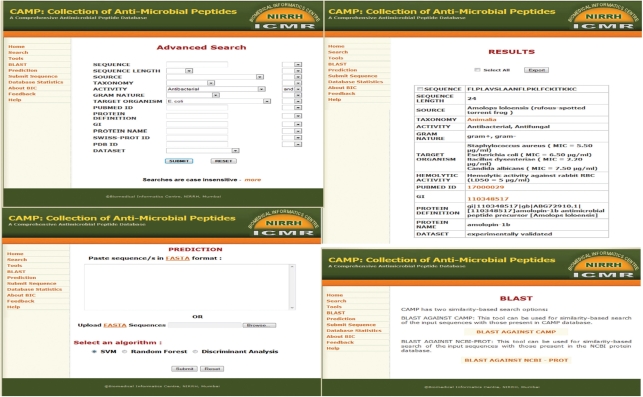
“The interfaces in CAMP are designed in a manner to help users in easy navigation and use of the various tools integrated in the database (Figure 1). The database interfaces include: Home, Search, Tools, Prediction, BLAST ( 43 ), Submit Sequence, Feedback and Help.”
MethodThe Nature of Statistical Learning Theory
Vapnik, V. N. (1995) · doi:10.1007/978-1-4757-2440-0 · Cited by 39,138
A simple method for displaying the hydropathic character of a protein
Kyte, J., & Doolittle, R. F. (1982) · Journal of Molecular Biology · doi:10.1016/0022-2836(82)90515-0 · Cited by 22,843 · cited 1×
“Properties that can be calculated are length, net charge, amino acid composition, aliphatic index (44), instability index (45), hydropathy (46) and secondary structure propensities (30).”
BackgroundClassification and Regression by randomForest
Liaw, A. I., & Wiener, M. C. (2007) · Cited by 18,594
Cd-hit: a fast program for clustering and comparing large sets of protein or nucleotide sequences
Li, W., & Godzik, A. (2006) · Bioinformatics · doi:10.1093/bioinformatics/btl158 · Cited by 11,410
Antimicrobial peptides of multicellular organisms
Zasloff, M. (2002) · Nature · doi:10.1038/415389a · Cited by 8,457
Antimicrobial peptides: pore formers or metabolic inhibitors in bacteria?
Brogden, K. A. (2005) · Nature Reviews Microbiology · doi:10.1038/nrmicro1098 · Cited by 5,829
Comparison of the predicted and observed secondary structure of T4 phage lysozyme
Matthews, B. W. (1975) · Biochimica et Biophysica Acta (BBA) - Protein Structure · doi:10.1016/0005-2795(75)90109-9 · Cited by 5,399 · cited 1×
“MCC is considered to be a balanced measure for evaluating the performance of the algorithm, even in datasets of different sizes (41, 42 ).”
BackgroundAn introduction to kernel-based learning algorithms
Muller, K.-R., Mika, S., Ratsch, G., Tsuda, K., & Scholkopf, B. (2001) · IEEE Transactions on Neural Networks · doi:10.1109/72.914517 · Cited by 3,473
Research works printed but not linked: 1
- Norusis MJ SPSS/PC+Advanced StatisticsTM V2.0 1988 USA ISBN 0-918469-57-0, SPSS Inc.
Cited by
Items 401–500 of 510
Zhang, S., & Ren, J. (2025) · Interdisciplinary Sciences Computational Life Sciences · doi:10.1007/s12539-025-00761-z · Cited by 2
“The CAMP [ 21 ] database offers curated information on natural and synthetic antimicrobial peptides, including sequence data, activity profiles, and predictive tools, supporting the discovery of peptides with potential anti-inflammatory properties.”
A Systematic Approach to the Interrogation and Sharing of Standardised Biofilm Signatures
Lourenço, A. M. G., Ferreira, A., Pereira, M. O., & Azevedo, N. F. (2012) · Advances in intelligent and soft computing · doi:10.1007/978-3-642-28839-5_13 · Cited by 2
Identification and Characterization of Antimicrobial Peptides with Therapeutic Potential
Wang, G. (2017) · MDPI eBooks · doi:10.3390/books978-3-03842-463-5 · Cited by 2
In silico assessment of missense point mutations on human cathelicidin LL-37
Porto, W. F., & de Alencar, S. A. (2022) · Journal of Molecular Graphics and Modelling · doi:10.1016/j.jmgm.2022.108368 · Cited by 2
Recombinant Antimicrobial Peptides
Rodríguez‐Cabello, J. C., García‐Arévalo, C., Girotti, A., Martín, L., & Santos, M. (2011) · Wiley eBooks · doi:10.1002/9781118150887.ch9 · Cited by 2
Ciancio, A. (2016) · Springer eBooks · doi:10.1007/978-94-024-0884-3_7 · Cited by 2
Leveraging Domain Knowledge in Deep Learning Systems
Oort, C. M. V. (2021) · ScholarWorks -A service of University of Vermont Libraries (University of Vermont) · Cited by 2
Bio-oligomers as antibacterial agents and strategies for bacterial detection
Kasturiarachchi, J. C. (2014) · ERA · Cited by 2
Settle, L. L. (2012) · VTechWorks (Virginia Tech) · Cited by 2
Irazazabal, L. N. (2016) · RIUnB Institutional Repository (University of Brasília) · doi:10.26512/2016.09.t.23243 · Cited by 2
Novel strategies for exploitation of milk glycoproteins for food ingredient applications
Feeney, S. (2019) · Arrow@dit (Dublin Institute of Technology) · doi:10.13025/16178 · Cited by 2
Qutb, A. M., Wei, F., & Dong, W. (2021) · Frontiers in Microbiology · doi:10.3389/fmicb.2021.667085 · Cited by 2
Shendre, A., Gahlot, P. S., & Raghava, G. P. S. (2026) · bioRxiv (Cold Spring Harbor Laboratory) · doi:10.64898/2026.01.19.700485 · Cited by 2
Bajwa, T., & Sharma, R. K. (2021) · Journal of Bacteriology and Mycology · doi:10.26420/jbacteriolmycol.2021.1188 · Cited by 1
“in/antimicrobial/ Has a collection of 6756 AMPs and 3D structures of 682 AMPs [139]”
BackgroundDAHUNSI, A. A., & Akin-Osanaiye, B. C. (2024) · World Journal of Advanced Pharmaceutical and Life Sciences · doi:10.53346/wjapls.2024.6.1.0082 · Cited by 1
Hirschler, E., Glattard, E., Arnaud, N., Chicher, J., Hammann, P., Leize‐Wagner, E., Bechinger, B., & Potier, N. (2025) · Rapid Communications in Mass Spectrometry · doi:10.1002/rcm.10044 · Cited by 1
AEPMA: peptide–microbe association prediction based on autoevolutionary heterogeneous graph learning
Hu, Z., Pan, L., Zhang, D.-J., Bin, Y., & Su, Y. (2025) · Briefings in Bioinformatics · doi:10.1093/bib/bbaf334 · Cited by 1
“Antimicrobial peptides (AMPs), as bio-molecules with therapeutic potential, exhibit broad-spectrum antimicrobial activity against various Gram-negative bacteria, cancer cells, and fungi [2].”
de Souza, P. B., Lima, S. S., & Games, P. D. (2024) · LA Referencia (Red Federada de Repositorios Institucionales de Publicaciones Científicas) · Cited by 1
Sarangi, M. K., Kar, S. K., Singh, L. P., Das, S., ADHIKARI, S. N. R., Singh, A., Parashar, T., Joshi, M. D., & Mishra, N. (2026) · Peptide Science · doi:10.1002/pep2.70023 · Cited by 1
Ferdous, S. M., Mugdha, S. B. S., & Uddin, M. (2026) · Current Research in Biotechnology · doi:10.1016/j.crbiot.2026.100376 · Cited by 1
Ghosh, K., Dasgupta, P., & Kanaujia, S. P. (2026) · International Journal of Biological Macromolecules · doi:10.1016/j.ijbiomac.2026.151756 · Cited by 1
Important progress in antimicrobial peptide prediction research in the past five years
Zuo, Y., Liu, X., Shao, X., Guo, Z., Zhu, S., & Dai, Z. (2026) · Analytical Biochemistry · doi:10.1016/j.ab.2026.116141 · Cited by 1
Advancing antimicrobial peptides: Mechanisms, design, and applications in the post-antibiotic era
Mirzaee, Z. (2026) · Protein and Peptide Letters · doi:10.1016/j.ppl.2026.07.002 · Cited by 1
Zhang, W., Wang, Y., Zhai, Y., Zhang, P., Ding, Y., & Zou, Q. (2026) · PLoS Computational Biology · doi:10.1371/journal.pcbi.1014771 · Cited by 1
“…membrane interaction potential, generated peptides were preliminarily screened by AMP-Hunter were screened using DBAASP [46], CAMP database [47] and AMP Scanner [48], followed by physicochemical filtering: normalized hydrophobicity moment > 0.5, normalized hydrophobicity within [-0.5,…”
InfluentialWang, G. (2026) · Journal of Chemical Information and Modeling · doi:10.1021/acs.jcim.6c02831 · Cited by 1
Griffin, N. (2013) · Cited by 1
Sun, G., Leng, L.-Y., & Wang, X. (2018) · Journal of Chemometrics · doi:10.1002/cem.3026 · Cited by 1
Frehse, G., & Althoff, M. (2017) · Institute of Science and Technology Austria · Cited by 1
Bai, X. (2022) · Security and Communication Networks · doi:10.1155/2022/7828378 · Cited by 1
“Generally speaking, research camps [41, 42] are bigger in scale, have a certain amount of outdoor area, and are sites that may give both research experience and lodging.”
BackgroundRetractedIn silico discovery of biomarkers for the accurate and sensitive detection of Fusarium solani
Bakare, O. O., Gokul, A., Jimoh, M. O., Klein, A., & Keyster, M. (2022) · Frontiers in Bioinformatics · doi:10.3389/fbinf.2022.972529 · Cited by 1
Carfagno, A. K., Lin, S., Chafran, L. S., Akhrymuk, I. V., Callahan, V., Po, M., Zhu, Y., Altalhi, A., Durkin, D. P., Russo, P. S., et al. (2023) · PROTEOMICS · doi:10.1002/pmic.202200237 · Cited by 1
“have proven to be highly effective against viruses such as human immunodeficiency virus-1 (HIV-1), influenza A virus, Zika virus, and respiratory syncytial virus (RSV), among others [6].”
BackgroundCurrent Development of Data Resources and Bioinformatics Tools for Anticoronavirus Peptide
Li, B., Li, M., Lu, C., Wu, Y., Chen, H., & He, B. (2024) · Current Medicinal Chemistry · doi:10.2174/0109298673264218231121104407 · Cited by 1
Modak, S., Pandya, M. A., Siarry, P., & Valadi, J. K. (2024) · Computational intelligence methods and applications · doi:10.1007/978-981-99-9718-3_13 · Cited by 1
Zhu, A. (2024) · Aresty Rutgers Undergraduate Research Journal · doi:10.14713/arestyrurj.v1i5.238 · Cited by 1
“Based on the method used to generate the prediction algo-rithm by Thomas et al. (2010), 70% of the 4,218 peptides in the DBAASP data set were used as the training set and 30% were used as the testing set.”
MethodComputational tools for handling large databases of biological relevance
Claros, N. A., Cárdenas, P., Puentes, J., Puentes, P. R., & Arbeláez, P. (2025) · Elsevier eBooks · doi:10.1016/b978-0-443-15393-8.00004-x · Cited by 1
A Prompt and Contrastive Learning-Based Model for Plant Antimicrobial Peptide Prediction
Qin, Z., Meng, J., Li, H., Tang, Y., & Luan, Y. (2025) · Communications in computer and information science · doi:10.1007/978-981-96-1907-8_14 · Cited by 1
iDNS3IP: Identification and Characterization of HCV NS3 Protease Inhibitory Peptides
Kao, H.-J., Weng, T., Chen, C.-H., Yu, C., Chen, Y., Huang, C., Huang, K., & Weng, S. (2025) · International Journal of Molecular Sciences · doi:10.3390/ijms26115356 · Cited by 1
“Among the numerous peptide databases available, including APD3 [39], CAMPR3 [40], DBAASP v3 [41], dbAMP [42], DRAMP 2.0 [43], and SATPdb [44], AVPdb and HIPdb were identified as particularly relevant for their detailed functional categorization of inhibitory peptides, including those targeting the…”
InfluentialScreening, identification and characterisation of bacteriocins produced by the wine isolated LAB
Ndlovu, J. B. (2013) · SUNScholar (Stellenbosch University) · Cited by 1
Machine Learning Identification of Protein Properties Useful for Specific Applications
Khamis, A. M. (2016) · King Abdullah University of Science and Technology Repository (King Abdullah University of Science and Technology) · doi:10.25781/kaust-14k4p · Cited by 1
Tincho, M. B. (2016) · UWC Research Repository (University of the Western Cape) · Cited by 1
Prediction of antimicrobial peptides using hyperparameter optimized support vector machines
Gabere, M. N. (2011) · UWC Research Repository (University of the Western Cape) · Cited by 1
Abdullah, G. (2019) · UWC Research Repository (University of the Western Cape) · Cited by 1
A repository of web-based bioinformatics resources developed in IndiaPreprint
Agarwal, A., Agrawal, P., Sharma, A., Kumar, V. D., Mugdal, C., Dhall, A., & Raghava, G. P. S. (2020) · bioRxiv (Cold Spring Harbor Laboratory) · doi:10.1101/2020.01.21.855627 · Cited by 1
“CAMP: database of antimicrobial peptides [19] http://www.”
Naik, J. H., Solanki, D., & Georrge, J. J. (2020) · SSRN Electronic Journal · doi:10.2139/ssrn.3574482 · Cited by 1
Bakare, O. O. (2019) · UWC Research Repository (University of the Western Cape) · Cited by 1
The Human Mitochondrial Genome Encodes for an Interferon-Responsive Host Defense PeptidePreprint
Rice, M. C., Imun, M., Jung, S. W., Park, C. Y., Kim, J. Y., Lai, R. W., Barr, C. R., Son, J. M., Tor, K., Kim, E., et al. (2025) · eLife · doi:10.7554/elife.87615.2 · Cited by 1
System of classification of antibacterial peptides using support vector machines
Camacho, F. L. (2013) · Universidad Industrial de Santander · Cited by 1
Irazazabal, L. N. (2016) · theses.fr (ABES) · doi:10.70675/e6283a91z32a6z4a6bza6b7z35fcf56b2036 · Cited by 1
Houyvet, B. (2018) · theses.fr (ABES) · doi:10.70675/52b91545za08ez4c52za996z11327a69a308 · Cited by 1
Cuny, H. (2021) · theses.fr (ABES) · doi:10.70675/16d8e8cbz24b9z4702z832bz98124c214a63 · Cited by 1
The design and synthesis of peptide-inspired antileishmanial agents
Chadbourne, F. L. (2014) · Durham e-Theses (Durham University)
Cui, X., Jiang, X., Chen, J.-T., Rong, C., Fu, Z., Ji, C., & Guo, X. (2013) · Journal of Functional Foods · doi:10.1016/j.jff.2013.10.021
RetractedTargeted antimicrobial moieties (WO2010080819): patent evaluation
Song, Z., & Zhu, H. (2011) · Expert Opinion on Therapeutic Patents · doi:10.1517/13543776.2011.560571
Peptidome analysis: tools and technologies
Rakowska, P. D., & Ryadnov, M. G. (2013) · Royal Society of Chemistry eBooks · doi:10.1039/9781849737081-00172
NMR investigation of disulfide containing peptides and proteins
Kövér, K. E., & Batta, G. (2013) · Royal Society of Chemistry eBooks · doi:10.1039/9781849737081-00037
Pulido, D. (2013) · LA Referencia (Red Federada de Repositorios Institucionales de Publicaciones Científicas)
Cammarata, M., Trapani, M. R., & Parrinello, N. (2013) · Nova Science Publishers (Nova Science Publishers, Inc.)
gtP20b isolated from the Indian Ocean
Fan, L., Bo, S., Chen, H., Ye, W., Kleinschmidt, K., Heike, I., Imhoff, J. F., Kleine, M., & Cai, D. (2010)
Mining Biomedical Literature to Extract Pharmacokinetic Drug-Drug Interactions
Karnik, S. (2014) · IUScholarWorks (Indiana University) · doi:10.7912/c2/883
Self-citationCharacterization of Novel Compounds that Inhibit Intracellular Salmonella Growth
Edwards, M. (2016) · CU Scholar (University of Colorado Boulder)
Fan, L., Bo, S., Chen, H., Ye, W., Kleinschmidt, K., Baumann, H., Imhoff, J. F., Kleine, M., & Cai, D. (2011)
Analyse von Beta-Defensinen im infizierten porkinen Wundheilungsmodell
Kraneburg, U. M. (2016) · Carl von Ossiezky University of Oldenburg
Stability Analysis of Antimicrobial Peptides in Solvation Conditions by Molecular Dynamics
Osorio, D., Rondón-Villarreal, P., & Torres, R. G. (2013) · Advances in intelligent systems and computing · doi:10.1007/978-3-319-01568-2_19
“These results are not consistent with those reported in the CAMP database [8], where these are scored with a higher instability index (45.”
ResultGuiding Exploration of Antimicrobial Peptide Space with a Deep Neural Network
Dua, M., Veltri, D., Bishop, B., & Shehu, A. (2018) · IEEE International Conference on Bioinformatics and Biomedicine (BIBM) · doi:10.1109/bibm.2018.8621295
“2083 criminant analysis (DA) [19], fuzzy k-nearest neighbor [17], hidden Markov models [20], logistic regression [15], [21], random forests (RF) [22], support vector machines (SVM) [14], [16], and deep NNs (DNNs) [13].”
BackgroundMethodInfluentialPearman, N. A. (2019) · University of Huddersfield Repository (University of Huddersfield)
Bersi, G. (2018) · LA Referencia (Red Federada de Repositorios Institucionales de Publicaciones Científicas)
Support vector machine for prediction of antimicrobial peptides in legumes
Sarika, S., Iquebal, M. A., Rai, A. K., & Anshika, A. (2013)
BHARALII, K., KALITA, D. J., Bora, P., Saikia, D., DEVI, B., & DAS, L. (2018) · The Indian Journal of Animal Sciences · doi:10.56093/ijans.v88i5.79945
Zouhir, A., Khamessi, O., Kamoun, S., Hkimi, C., Othman, H., Cherif, A., Mahjoubi, B., Jr, T., Sebei, K., & Ghedira, K. (2023) · Research Square · doi:10.21203/rs.3.rs-2579195/v1
Antibacterial Peptides: Potential Therapeutic Agent
Singh, J., Dutta, J., & Pathak, R. (2023) · BENTHAM SCIENCE PUBLISHERS eBooks · doi:10.2174/9789815079609123010006
Antimicrobial protein and peptides from marine macroalgae
Caprani, M., O’Keeffe, J., Slattery, O., & Healy, J. (2023) · Elsevier eBooks · doi:10.1016/b978-0-323-98819-3.00005-5
Chaudhuri, D., Datta, J., Majumder, S., & Giri, K. (2023) · Proceedings of the National Academy of Sciences India Section B Biological Sciences · doi:10.1007/s40011-023-01516-w
“Only peptides which were predicted to be antimicrobial by all these 4 models were considered for further screening [16–18].”
Kohinoor, M. S. R., & Hossain, M. S. (2025) · Research Square · doi:10.21203/rs.3.rs-7623974/v1
Insights of Biological Databases
Asim, M. N., Ahmed, S., & Dengel, A. (2025) · Springer eBooks · doi:10.1007/978-3-031-90450-9_4
Informatic strategies for the discovery and characterization of peptidic natural products
Merwin, N. J. (2018) · MacSphere (McMaster University) · doi:10.71548/9446
Krein Space Methods for Structured Data
Redshaw, J. (2024) · Nottingham ePrints (University of Nottingham)
Producción de proteínas recombinantes en microalgas
Cionfrini, A. (2017) · RIULL (Universidad de La Laguna)
(2013) · Arizona State University Library Digital Repository (Arizona State University)
Estudo in silico de Derivados do G-CSF Humano Como Antibacterianos
SATURNINO, C. F. (2013) · Americanae (AECID Library)
Evaluación de péptidos sintéticos sobre bacterias, levaduras y mohos
Gómez, E. C. (2013) · Repositorio Institucional UN - Biblioteca Digital
Família defensiva de peptídeos antimicrobianos em Urochloa.
Shirakawa, K. T., CHIARI, L., & PEREIRA, R. M. (2014) · Portuguese National Funding Agency for Science, Research and Technology (RCAAP Project by FCT)
Strategies for the production of cationic α-helical antimicrobial peptides in plant biofactories
Company Casadevall, N. (2014) · LA Referencia (Red Federada de Repositorios Institucionales de Publicaciones Científicas)
Computational Design of Therapeutic Peptides
Choudhury, P. R., Yadav, S., Jaiswal, S., Khanna, T., & Mathur, P. (2025) · BENTHAM SCIENCE PUBLISHERS eBooks · doi:10.2174/9798898812164125080005
Artificial Intelligence in Peptide Drug Discovery
Fu, Y., & Bai, Q. (2026) · Springer eBooks · doi:10.1007/978-3-031-98022-0_7
Antibacterial Peptides, Classification, Design.
Villarreal, N. P. R. (2016) · Universidad Industrial de Santander
Amaya, A. M. C. (2017) · Universidad Industrial de Santander
Hurtado, D. C. O. (2014) · Universidad Industrial de Santander
MIRANDA-ESPINO, R., Gurrola, G. B., Chávez-Jacobo, V. M., Possani, L. D., & Cid-Uribe, J. I. (2026) · Toxicon · doi:10.1016/j.toxicon.2026.109064
Design, in silico modeling, and in vitro evaluation of a novel antimicrobial peptide (QLSNGLFVDYLWW)
Tikhonov, S. L., Babich, O., Tikhonova, N. V., Chernukha, I. M., Awasthi, M. K., & Сухих, С. А. (2026) · Journal of Applied Biology & Biotechnology · doi:10.7324/jabb.2026.264169
“Classification or regression algorithms are used for analysis, allowing qualitative or quantitative differentiation of peptide activities [34].”
Xu, J., Torres, M. D. T., Li, C., Li, J., Li, F., Song, J., & de la Fuente‐Núñez, C. (2026) · bioRxiv (Cold Spring Harbor Laboratory) · doi:10.64898/2026.04.09.717597
Roy, J., Panicker, V. P., Madhavan, V., Uma, R., Chinnu, M. V., Chaithanya, K. N., Farooq, S. U., Shynu, M., Manoj, M., & Abraham, J. M. (2026) · Developmental & Comparative Immunology · doi:10.1016/j.dci.2026.105619
PepCL enables accurate antimicrobial peptide identification via contrastive learning
Shang, Z., Shi, T., & Liu, J. (2026) · Computational Biology and Chemistry · doi:10.1016/j.compbiolchem.2026.109122
Li, F., Baniel, A., Hearn, M. T., Martin, L. L., Moro, J., & Bennett, L. (2026) · SSRN Electronic Journal · doi:10.2139/ssrn.7019386
Liu, S., Gao, X., Wang, J., Li, Z., Liu, Y., Wang, Y., Hou, T., Liu, Y., & Liu, Y. (2026) · Journal of Chemical Information and Modeling · doi:10.1021/acs.jcim.6c01300
Qin, W., Wu, Y., Li, C., Cao, S., Guo, J., Ge, Y., Guo, J., Mo, J., Ning, Z. H., & Duan, H. (2026) · Journal of Cheminformatics · doi:10.1186/s13321-026-01269-4
Li, Q., & Li, Z. (2026) · bioRxiv (Cold Spring Harbor Laboratory) · doi:10.64898/2026.08.18.745516
Computational Platforms for Membrane-Active Peptide Therapeutic Design
Zan, B., Chen, C. H., Sabha, M., Wu, K., Kadri, M., Nwajiaku, O. L., Hoogland, D., Ulmschneider, J. P., & Ulmschneider, M. B. (2026) · Chemical Reviews · doi:10.1021/acs.chemrev.6c00100
Metadata
- Authors
- Thomas, S., Karnik, S., Barai, R. S., Jayaraman, V. K., & Idicula-Thomas, S.
- Affiliations
- ICMR National Institute for Research on Women's Health (IN)
- Centre for Development of Advanced Computing (IN)
- Corresponding author
- Jayaraman, V. K.
- Venue
- Nucleic Acids Research
- Publisher
- Oxford University Press (OUP)
- Published
- 2009-11-18
- Volume
- 38
- Issue
- suppl_1
- Pages
- D774-D780
- ISSN
- 0305-1048 (ISSN-L)
- 1362-4962
- PMC
- PMC2808926
- OpenAlex
- W2129115651
- Cited by
- 462
- References
- 49
- Citations by year
- 2026: 30 · 2025: 35 · 2024: 37 · 2023: 43 · 2022: 31 · 2021: 30 · 2020: 32 · 2019: 25 · 2018: 21 · 2017: 15 · 2016: 17 · 2015: 23 · 2014: 27 · 2013: 39 · 2012: 31
- FWCI
- 18.21
- Type
- journal article
- Language
- en
- Open access
- gold
- doi.org
- Licence
- Locations
- Nucleic Acids Research (publishedVersion, cc-by-nc)
- PubMed Central (publishedVersion, cc-by-nc)
- PubMed (publishedVersion)
- HighWire Press Open Archive (submittedVersion)
- IUScholarWorks (Indiana University) (submittedVersion, cc-by-nc)
- Publisher
- Funders
- Indian Council of Medical Research
- Topics
- Life Sciences › Immunology and Microbiology › Microbiology › Antimicrobial Peptides and Activities
- Life Sciences › Pharmacology, Toxicology and Pharmaceutics › Drug Discovery › Computational Drug Discovery Methods
- Life Sciences › Immunology and Microbiology › Applied Microbiology and Biotechnology › Antimicrobial agents and applications
- Keywords
- antimicrobial peptides, antimicrobial peptide database, antimicrobial activity prediction, sequence-activity relationship, machine learning prediction models, minimum inhibitory concentration, sequence analysis tools
- MeSH terms
- Algorithms, Anti-Infective Agents, Humans, Peptides, Software, Reproducibility of Results, Information Storage and Retrieval, Genome, Bacterial, Computational Biology, Internet, Antimicrobial Cationic Peptides, Databases, Genetic, Databases, Nucleic Acid, Databases, Protein
About these checks
Registry, retraction, Cites and statistics results are computed, not judged, with one exception: a printed reference that no index lists is read once by a model before it counts as a citation error. Claims are extracted by a model and kept only when their quote appears verbatim in the text; each cited source is then checked, with a model’s help, for whether it says what the claim relies on. Those verdicts can be wrong — read the claim’s quote and the cited source before relying on one.
Statistics and arithmetic are recomputed, not judged.
Confidence bands are shown only for fields calibrated on our annotated test set. None is calibrated yet, so no band is shown.
What counts as a claim ›How we measure confidence ›How we check this ›
Are you an author, or do you see a problem with this page? Request a review
Data sources
Bibliographic data: Semantic Scholar, OpenAlex, Crossref.
Contains information from the Semantic Scholar Academic Graph Datasets, made available under the ODC Attribution License (ODC-BY 1.0).
Semantic Scholar’s data is described in: Kinney, R., et al. (2023). The Semantic Scholar Open Data Platform. arXiv:2301.10140.
