

CAMP: a useful resource for research on antimicrobial peptides.
Open accessThe DOI matches its Crossref record; 49 of the 49 references it cites were found in a registry or an index.
Abstract
Antimicrobial peptides (AMPs) are gaining popularity as better substitute to antibiotics. These peptides are shown to be active against several bacteria, fungi, viruses, protozoa and cancerous cells. Understanding the role of primary structure of AMPs in their specificity and activity is essential for their rational design as drugs. Collection of Anti-Microbial Peptides (CAMP) is a free online database that has been developed for advancement of the present understanding on antimicrobial peptides. It is manually curated and currently holds 3782 antimicrobial sequences. These sequences are divided into experimentally validated (patents and non-patents: 2766) and predicted (1016) datasets based on their reference literature. Information like source organism, activity (MIC values), reference literature, target and non-target organisms of AMPs are captured in the database. The experimentally validated dataset has been further used to develop prediction tools for AMPs based on the machine learning algorithms like Random Forests (RF), Support Vector Machines (SVM) and Discriminant Analysis (DA). The prediction models gave accuracies of 93.2% (RF), 91.5% (SVM) and 87.5% (DA) on the test datasets. The prediction and sequence analysis tools, including BLAST, are integrated in the database. CAMP will be a useful database for study of sequence-activity and -specificity relationships in AMPs. CAMP is freely available at http://www.bicnirrh.res.in/antimicrobial.
Overview
The claims and statistics of this paper haven’t been checked yet.
Free: it reads the open-access text and checks the first 5 claims that cite a source we can check. Create a free account to check every claim.
Integrity signals
Registry
Cites
Statistics
Figures
Verification
Claims the paper makes
The claims and statistics of this paper haven’t been checked yet.
Free: it reads the open-access text and checks the first 5 claims that cite a source we can check. Create a free account to check every claim.
Claims other papers make about this one
Each is checked against this paper’s own text: does it say what the citing paper says it does?
In the citing paper
“APD2 and CAMP are databases set up to classify not only antibacterial but also antifungal and antiviral peptides (Wang et al., 2009; Thomas et al., 2010).”
From Bioactive Molecules Released in Food by Lactic Acid Bacteria: Encrypted Peptides and Biogenic Amines (2016) · cites this paper as Thomas et al., 2010
Self-check
Percentages, sums and reported differences re-computed from the paper’s own numbers.
The self-check needs the paper’s full text.
Citations
Cites
Breiman, L. (2001) · Machine Learning · doi:10.1023/a:1010933404324 · Cited by 133,538
Gapped BLAST and PSI-BLAST: a new generation of protein database search programs
Altschul, S. (1997) · Nucleic Acids Research · doi:10.1093/nar/25.17.3389 · Cited by 73,302 · cited 1×
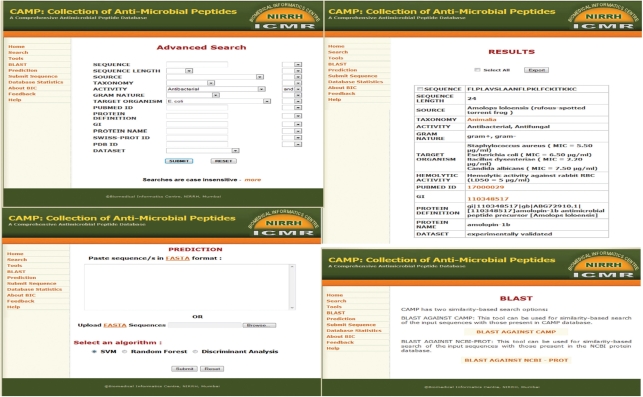
“The interfaces in CAMP are designed in a manner to help users in easy navigation and use of the various tools integrated in the database (Figure 1). The database interfaces include: Home, Search, Tools, Prediction, BLAST ( 43 ), Submit Sequence, Feedback and Help.”
MethodThe Nature of Statistical Learning Theory
Vapnik, V. N. (1995) · doi:10.1007/978-1-4757-2440-0 · Cited by 39,138
A simple method for displaying the hydropathic character of a protein
Kyte, J., & Doolittle, R. F. (1982) · Journal of Molecular Biology · doi:10.1016/0022-2836(82)90515-0 · Cited by 22,843 · cited 1×
“Properties that can be calculated are length, net charge, amino acid composition, aliphatic index (44), instability index (45), hydropathy (46) and secondary structure propensities (30).”
BackgroundClassification and Regression by randomForest
Liaw, A. I., & Wiener, M. C. (2007) · Cited by 18,594
Cd-hit: a fast program for clustering and comparing large sets of protein or nucleotide sequences
Li, W., & Godzik, A. (2006) · Bioinformatics · doi:10.1093/bioinformatics/btl158 · Cited by 11,410
Antimicrobial peptides of multicellular organisms
Zasloff, M. (2002) · Nature · doi:10.1038/415389a · Cited by 8,457
Antimicrobial peptides: pore formers or metabolic inhibitors in bacteria?
Brogden, K. A. (2005) · Nature Reviews Microbiology · doi:10.1038/nrmicro1098 · Cited by 5,829
Comparison of the predicted and observed secondary structure of T4 phage lysozyme
Matthews, B. W. (1975) · Biochimica et Biophysica Acta (BBA) - Protein Structure · doi:10.1016/0005-2795(75)90109-9 · Cited by 5,399 · cited 1×
“MCC is considered to be a balanced measure for evaluating the performance of the algorithm, even in datasets of different sizes (41, 42 ).”
BackgroundAn introduction to kernel-based learning algorithms
Muller, K.-R., Mika, S., Ratsch, G., Tsuda, K., & Scholkopf, B. (2001) · IEEE Transactions on Neural Networks · doi:10.1109/72.914517 · Cited by 3,473
Research works printed but not linked: 1
- Norusis MJ SPSS/PC+Advanced StatisticsTM V2.0 1988 USA ISBN 0-918469-57-0, SPSS Inc.
Cited by
Items 301–400 of 510
Mining antimicrobial peptides from small open reading frames in Ciona intestinalis
Lu, Y., Zhuang, Y., & Liu, J. (2013) · Journal of Peptide Science · doi:10.1002/psc.2584 · Cited by 10
The transcriptome analysis of Protaetia brevitarsis Lewis larvae
Li, Z., Meng, M., Li, S., & Deng, B. (2019) · PLoS ONE · doi:10.1371/journal.pone.0214001 · Cited by 10
Comprehensive Review and Comparison of Anticancer Peptides Identification Models
Song, X., Zhuang, Y., Lan, Y., Lin, Y., & Min, X. (2020) · Current Protein and Peptide Science · doi:10.2174/1389203721666200117162958 · Cited by 10
Seto, Y., & Tamura, K. (2013) · International Journal of Genomics · doi:10.1155/2013/542139 · Cited by 10
“Indeed, AMP prediction web programs, CAMP [28] and AMPA [29], predicted them to be AMPs, although another program, AntiBP2 [27], did not (Table 4).”
BackgroundMethodA Potent Antimicrobial Peptide Derived from the Protein LsGRP1 of Lilium
Lin, C., Chang, M.-W., & Chen, C. (2014) · Phytopathology · doi:10.1094/phyto-09-13-0252-r · Cited by 10
Ying, F., Go, W., Li, Z., Ouyang, C., Phaphuangwittayakul, A., & Dhuny, R. (2025) · International Journal of Molecular Sciences · doi:10.3390/ijms26157387 · Cited by 9
“The framework integrates multiple AMP function prediction models, including IAMPCN [19], AMAP [46], CAMP [25], iamp-2l [26], iamp-CA2L [27], and multi-AMP [47] enabling the prediction of 5 different AMP functionalities.”
Artificial intelligence in antibiotic discovery: Applications, challenges, and future outlook
Xu, J. B., Li, C., Wang, X., Peleg, A. Y., LI, F., Song, J., & de la Fuente‐Núñez, C. (2026) · Cell Biomaterials · doi:10.1016/j.celbio.2026.100445 · Cited by 9
Saikat, A. S. M., Das, R. C., & Das, M. C. (2022) · International Electronic Conference on Synthetic Organic Chemistry (ECSOC) · doi:10.3390/ecsoc-26-13530 · Cited by 9
Zhang, S., Zhao, Y., & Liang, Y. (2023) · match Communications in Mathematical and in Computer Chemistry · doi:10.46793/match.91-1.109z · Cited by 9
A novel stacking-based predictor for accurate prediction of antimicrobial peptides
Kanwal, S., Arif, R., Ahmad, S., & Kabir, M. (2024) · Journal of Biomolecular Structure and Dynamics · doi:10.1080/07391102.2024.2329298 · Cited by 9
“At present, antibiotic resistance is a rising global concern, as a result AMPs have drawn attention as potential antibiotic alternatives (Thomas et al., 2010).”
InfluentialAbAMPdb: a database of Acinetobacter baumannii specific antimicrobial peptides
Anwer, F., Navid, A., Faiz, F., Haider, U., Nasir, S., Farooq, M., Zahra, M., Bano, A., Bashir, H. H., Ahmad, M. S., et al. (2024) · Database · doi:10.1093/database/baae096 · Cited by 9
“…as DRAMP [16] [http://dramp.cpu-bioinfor. org/ (accessed on 1 October 2021)], DBAASP [14] [https:// dbaasp.org/ (accessed on 1 October 2021)], CAMP [23] [http://www.camp.bicnirrh.res.in/ (accessed on 1 October 2021)], LAMP [24] [http://biotechlab.fudan.edu.cn/database/ lamp/ (accessed on 1 October…”
Bhattarai, S., Chong, K. T., & Tayara, H. (2025) · Chemometrics and Intelligent Laboratory Systems · doi:10.1016/j.chemolab.2025.105390 · Cited by 9
Bioinformatics and Chemometrics for Discovering Biologically Active Peptides From Food Proteins
Imai, K., Ji, D., Nwachukwu, I. D., Agyei, D., & Udenigwe, C. C. (2019) · Elsevier eBooks · doi:10.1016/b978-0-08-100596-5.22878-3 · Cited by 9
An Overview of Databases and Bioinformatics Tools for Plant Antimicrobial Peptides
Quintans, I. L. A. D. C. R., de Araújo, J. V. A., Rocha, L. N. M., de Andrade, A. E. B., do Rego, T. G., & Deyholos, M. K. (2021) · Current Protein and Peptide Science · doi:10.2174/1389203723666211222170342 · Cited by 9
Antimicrobial Peptides Prediction method based on sequence multidimensional feature embedding
Dong, B., Li, M., Jiang, B., Gao, B., Li, D., & Zhang, T. (2022) · Frontiers in Genetics · doi:10.3389/fgene.2022.1069558 · Cited by 9
“, 2022a), discriminant analysis (DA) (Thomas et al., 2010; Waghu et al., 2016), Hidden Markov (Fjell et al.”
BackgroundZou, H. (2016) · International Journal of Peptide Research and Therapeutics · doi:10.1007/s10989-015-9511-7 · Cited by 9
“Some AMPs also possess antitumor activity and can act as mitogens and signaling molecules (Thomas et al. 2010).”
BackgroundPrada, Y. A., Guzmán, F., Rondón-Villarreal, P., Escobar, P., Ortíz, C., Sierra, D., Torres, R. G., & Mejía‐Ospino, E. (2016) · Probiotics and Antimicrobial Proteins · doi:10.1007/s12602-016-9219-9 · Cited by 9
Mass Spectrometric Identification of Endogenous Peptides
Azkargorta, M., Escobés, I., Iloro, I., & Elortza, F. (2018) · Methods in molecular biology · doi:10.1007/978-1-4939-7537-2_4 · Cited by 9
Bakare, O. O., Keyster, M., & Pretorius, A. (2021) · Scientific Reports · doi:10.1038/s41598-021-00223-8 · Cited by 8
ANTIPSEUDOBASE: Database of Antimicrobial Peptides and Essential Oils Against Pseudomonas
Zouhir, A., Souiaï, O., Harigua‐Souiai, E., Cherif, A., Chaalia, A. B., & Sebei, K. (2023) · International Journal of Peptide Research and Therapeutics · doi:10.1007/s10989-023-10511-8 · Cited by 8
“Eye (Lond) 26:185–193 Thomas S, Karnik S, Barai RS et al (2010) CAMP: a useful resource for research on antimicrobial peptides.”
MethodAbdou, Y. T., Saleeb, S. M., Abdel-Raouf, K. M. A., Allam, M., Adel, M., & Amleh, A. (2023) · BMC Cancer · doi:10.1186/s12885-023-11045-4 · Cited by 8
Echinoderm Antimicrobial Peptides to Contrast Human Pathogens
Schillaci, D. (2014) · Natural Products Chemistry & Research · doi:10.4172/2329-6836.1000109 · Cited by 8
“Currently, more than 4000 peptides have been isolated and characterized from tissues and organisms and have been listed in the main databases (Table 1), or in journal publications [9].”
BackgroundProteomics to Assess Fish Quality and Bioactivity
Méndez, L., & Pazos, M. (2017) · Elsevier eBooks · doi:10.1016/b978-0-12-804007-2.00018-7 · Cited by 8
Innovaciones en la terapia antimicrobiana
Agudelo, F. A. G., Molina, L. C. M., Jeannette Navarrete, O., Salazar, L. M., & Pinilla, G. (2020) · Nova · doi:10.22490/24629448.3921 · Cited by 8
Enzymatic synthesis of new antimicrobial peptides for food purposes
Adaro, M. O., Ibáñez, Á. G. S., Origone, A. L., Vallés, D., Guzmán, F., Vega, A. E., & Barberis, S. E. (2023) · Frontiers in Microbiology · doi:10.3389/fmicb.2023.1153135 · Cited by 8
“It is important to highlight that the IQ-OH sequence has not yet been reported in bioactive peptide databases (Dziuba et al., 1999; Shtatland et al., 2007; Liu et al., 2008; Thomas et al., 2010; Wang et al., 2017), and according to our results, it is a promising antimicrobial agent.”
BackgroundBarigye, S. J., Gómez‐Ganau, S., Serrano‐Candelas, E., & Gozalbes, R. (2020) · Proteins Structure Function and Bioinformatics · doi:10.1002/prot.26003 · Cited by 8
“Table 5 compares test set performance of the Deep Neural Network (DNN), Collection of Anti-Microbial Peptides (CAMP) models based on RF, SVM, Artificial Neural Networks (ANN), and Discriminant Analysis (DA), as well as the gapped-kmerSVM classifier (gkmSVM) classifier.(37,38) While direct comparisons of test set perfo…”
MethodZhou, J.-S., Wen, H., & Yu, M. (2024) · International Journal of Molecular Sciences · doi:10.3390/ijms25105312 · Cited by 7
“These files comprise the AMP dataset sourced from four databases: APD3 [12], LAMP [45], CAMP3 [46], and DRAMP [47], whereas the non-AMP dataset consists of a blend of real-world peptides and artificially generated sequences.”
MethodMOTS-c is a mitochondrial-encoded interferon-linked host defense peptide
Rice, M. C., Imun, M., Jung, S., Park, C., Kim, J., Lai, R., Barr, C. R., Son, J., Tor, K., Kim, E., et al. (2026) · eLife · doi:10.1101/2023.03.02.530691 · Cited by 7
Panji, A., Ismaili, A., & Sohrabi, S. M. (2023) · 3 Biotech · doi:10.1007/s13205-023-03545-8 · Cited by 7
“2001), DiANNA (Ferrè and Clote 2005), and CAMP web servers (Thomas et al. 2010) were also used to determine the subcellular localization, signal peptide, signal peptide cleavage site, transmembrane helices, disulfide bonds, and putative antimicrobial activity of barley GASA proteins respectively (Table 3).”
MethodBakare, O. O., Gokul, A., & Keyster, M. (2021) · BioTech · doi:10.3390/biotech10020008 · Cited by 7
“The anti-Fusarium oxysporum AMPs were retrieved from antimicrobial peptide databases such as Antimicrobial Peptides Database (APD3) [19,20] and Collection of Antimicrobial Peptides (CAMP) [21].”
MethodClassification of Antimicrobial Peptides by Using the p-spectrum Kernel and Support Vector Machines
Rondón-Villarreal, P., Sierra, D., & Torres, R. G. (2013) · Advances in intelligent systems and computing · doi:10.1007/978-3-319-01568-2_23 · Cited by 7
“In this work, an antimicrobial peptide classifier was designed and created using only the information given by the p-spectrum kernel with p = 3, which it is different to majority of studies used in the classification of antimicrobial peptides, where QSAR techniques have been used for this aim [6,7,10].”
BackgroundMethodInfluentialAntimicrobial activity of aurein 2.5 against yeasts
Dennison, S. R., Harris, F., Morton, L. H. G., & Phoenix, D. A. (2013) · FEMS Microbiology Letters · doi:10.1111/1574-6968.12212 · Cited by 7
“20% have been reported to possess antifungal activity (Wang et al., 2009; Thomas et al., 2010).”
BackgroundPorto, W. F., Nolasco, D. O., Pires, Á. S., Fernandes, G. D. R., Franco, O. L., & de Alencar, S. A. (2015) · Biopolymers · doi:10.1002/bip.22763 · Cited by 7
Holthaus, K. B., Spisni, E., & Alibardi, L. (2016) · Journal of Immunobiology · Cited by 7
AmpClass: an Antimicrobial Peptide Predictor Based on Supervised Machine Learning
Mera, C., Ordúz, S., Cardona, P., Orrego, A., Muñoz‐Pérez, J. M., & Branch, J. W. (2024) · Anais da Academia Brasileira de Ciências · doi:10.1590/0001-3765202420230756 · Cited by 6
Lu, J., Yang, H., Han, G., & Zeng, L. (2025) · Health Information Science and Systems · doi:10.1007/s13755-025-00342-w · Cited by 6
Zhao, H., Sun, S., Ding, X., Zhang, Y., Li, B., Wang, S., Guo, G., & Zhang, J. (2025) · Journal of Medicinal Chemistry · doi:10.1021/acs.jmedchem.4c02917 · Cited by 6
Lawrance, R., Yang, T.-Y., Chen, Y., Lin, S., Wang, Y., Lu, P., Chan, Y.-H., & Lin, H. (2025) · ACS Applied Bio Materials · doi:10.1021/acsabm.5c00679 · Cited by 6
Roy, S., Agarwal, T., Das, A., Halder, T., Upadhyaya, G., Chaubey, B., & Ray, S. (2022) · Plant Molecular Biology · doi:10.1007/s11103-022-01317-1 · Cited by 6
Bioactive Peptide Recognition Based on NLP Pre-Train Algorithm
Jiang, L., Sun, N., Zhang, Y., Yu, X., & Liu, X. (2023) · IEEE Transactions on Computational Biology and Bioinformatics · doi:10.1109/tcbb.2023.3323295 · Cited by 6
“The other type of method incorporate machine learning algorithms and statistical method, such as fuzzy k-nearest neighbor [17], hidden Markov models [18], logistic regression [19], [20], random forests [21], [22], support vector machines [23], [24], [25].”
MethodTakeda, A., Tsubaki, T., Sagae, N., Onda, Y., Inada, Y., Mochizuki, T., Okumura, K., Kikuyama, S., Kobayashi, T., & Iwamuro, S. (2014) · Peptides · doi:10.1016/j.peptides.2014.06.012 · Cited by 6
Antimicrobial Peptides in Plants: Classes, Databases, and Importance
Matkawala, F., Nighojkar, A., & Kumar, A. (2019) · Canadian Journal of Biotechnology · doi:10.24870/cjb.2019-000130 · Cited by 6
“None of these databases include all the AMPs described in the literature [45].”
BackgroundPriya, A., Swetha, T. K., & Pandian, S. K. (2020) · Elsevier eBooks · doi:10.1016/b978-0-12-820084-1.00021-1 · Cited by 6
Zhang, X., Zhong, Y.-Q., Ma, Z.-Y., Hu, Y., Su, J., & Zhang, Y. (2022) · The Journal of Immunology · doi:10.4049/jimmunol.2101019 · Cited by 6
Conserved HIV Wide Spectrum Antipeptides-A Hope for HIV Treatment
Rao, B. S., Gupta, K. K., Kumari, S., Gupta, A. R., & Pujitha, K. (2013) · Advanced Techniques in Biology & Medicine · doi:10.4172/2379-1764.1000102 · Cited by 6
“As per CAMP analysis, this peptide is predicted to be AMP from both algorithms, SVM and Random Forest with probability of 0.69 and 0.55, respectively.”
MethodInfluentialGene Expression Profiling of Cecropin B-Resistant Haemophilus parasuis
Wang, C., Chen, F., Hu, H., Li, W., Wang, Y., Chen, P., Liu, Y., Ku, X., He, Q., Chen, H., et al. (2014) · Microbial Physiology · doi:10.1159/000362277 · Cited by 6
“Databases have been created to support studies of AMP sequence specificity and sequence activity for the development of novel antimicrobial drugs [Thomas et al., 2010].”
MethodSarika, S., Iquebal, M. A., Arora, V., Rai, A. K., & Kumar, D. (2015) · Computers and Electronics in Agriculture · doi:10.1016/j.compag.2014.12.008 · Cited by 6
Surana, S., Gunjal, D., Singh, D., Arora, P., & Valadi, J. K. (2020) · IEEE International Conference on Bioinformatics and Biomedicine (BIBM) · doi:10.1109/bibm49941.2020.9313565 · Cited by 6
“1) Positive dataset creation: Antimicrobial peptide data was collected from publicly available databases such as APD3 [12], CAMP3 [8], DbAMP [13] and DRAMP [14].”
MethodCarrera, M., Pazos, M., Aubourg, S. P., & Gallardo, J. M. (2021) · Methods in molecular biology · doi:10.1007/978-1-0716-1178-4_14 · Cited by 6
Adaro, M. O., Bersi, G., Talia, J. M., Bernal, C., Guzmán, F., Vallés, D., & Barberis, S. E. (2021) · Frontiers in Nutrition · doi:10.3389/fnut.2021.685330 · Cited by 6
“It is essential to highlight that the Z-Tyr-Val-OH sequence has not yet been reported in bioactive peptide databases, such as: PepBank (58), PeptideDB (59), BIOPEP (60); nor in the databases of antimicrobial peptides, such as: APD3, Antimicrobial Peptide Database (61), and CAMP (62).”
BackgroundFast Construction of Relational Features for Machine Learning
Kuželka, O. (2013) · Czech Technical University Digital Library (Czech Technical University in Prague) · Cited by 6
Mahendrarajan, V., & Easwaran, N. (2026) · RSC Advances · doi:10.1039/d5ra09511e · Cited by 5
Salimi, A., & Lee, J. Y. (2026) · Expert Systems with Applications · doi:10.1016/j.eswa.2026.131999 · Cited by 5
Han, J., Zhang, S., & Liu, J. (2023) · STAR Protocols · doi:10.1016/j.xpro.2023.102541 · Cited by 5
“0 GitHub https://github.com/raghavagps/anticp2/ CAMP-SVM Thomas et al.16 https://www.bicnirrh.res.in/antimicrobial DNN Veltri et al.17 https://www.dveltri.com/ascan/ TensorFlow (CPU/GPU) GitHub https://github.com/tensorflow/tensorflow Scikit-learn GitHub https://github.com/scikit-learn/scikit-learn NumPy GitHub https:…”
InfluentialSalinas-Restrepo, C., Naranjo-Durán, A. M., Quintana, J. C., Bueno-Sánchez, J. C., Guzmán, F., Palacio, L. M. H., & Segura, C. (2023) · Antibiotics · doi:10.3390/antibiotics13010006 · Cited by 5
“…the Antimicrobial Peptide Database [98] (Available at https://aps.unmc.edu, accessed on 30 June 2019), the Collection of Antimicrobial Peptides [99] (Available at http://www.camp.bicnirrh.res.in, accessed on 30 June 2019), the Database of Antimicrobial Activity [100] (Available at…”
BackgroundNovel Antimicrobial Peptide Design Using Motif Match Score Representation
Söylemez, Ü. G., Yousef, M., Kesmen, Z., & Bakir-Gungor, B. (2024) · IEEE Transactions on Computational Biology and Bioinformatics · doi:10.1109/tcbb.2024.3413021 · Cited by 5
“YADAMP [3], DRAMP [4], APD [5], DBAASP [6], CAMP [7] are popular databases focusing on AMPs.”
Evaluation of oilseed proteins as precursors of antimicrobial peptides using bioinformatics method
Duan, X., Leng, Y., Chen, F., Zhang, M., & Li, Z. (2023) · Amino Acids · doi:10.1007/s00726-023-03234-z · Cited by 5
“In addition, the accuracy of the antimicrobial activity prediction results is not 100% (Thomas et al. 2010).”
BackgroundEmergent Tools and Techniques in Diagnosis of Soil-Borne Phytopathogens
Singh, S., Bhoi, T. K., Majhi, P. K., Vyas, V., Singh, I., Khan, I., & Rathi, A. (2023) · Springer eBooks · doi:10.1007/978-981-19-8307-8_3 · Cited by 5
Antimicrobial peptides: a novel and natural approach as antibiofouling mediator
Sharma, H., Dave, V., Tyagi, E., & Prakash, A. (2024) · Biologia · doi:10.1007/s11756-024-01703-8 · Cited by 5
“Nosocomial infections are caused by bio - fouling on medical equipment (Thomas et al., 2009).”
耿, 浩. (2024) · Réngōng zhìnéng qiányán yǔ yìngyòng · doi:10.52810/faai.2024.005 · Cited by 5
Yan, J., Chen, Z., Cai, J., Xian, W., Wei, X., Qin, Y., & Li, Y. (2025) · Applied Sciences · doi:10.3390/app15137363 · Cited by 5
Designing antimicrobial peptides with weighted finite-state transducers
Whelan, C. W., Roark, B., & Sönmez, K. (2010) · Annual International Conference of the IEEE Engineering in Medicine and Biology Society (EMBC) · doi:10.1109/iembs.2010.5626357 · Cited by 5
“Fortunately, researchers have recently published several databases of AMPs, such as ADP2 [2] and CAMP [3], allowing the creation of large data sets for the computational analysis of AMPs.”
BackgroundMethodInfluentialDu, Q.-S., Ma, Y., Xie, N., & Huang, R. B. (2014) · SAR and QSAR in environmental research · doi:10.1080/1062936x.2014.959049 · Cited by 5
Progress in the Development of Antimicrobial Peptide Prediction Tools
Ao, C., Zhang, Y. P., Li, D., Zhao, Y., & Zou, Q. (2020) · Current Protein and Peptide Science · doi:10.2174/1389203721666200117163802 · Cited by 5
Prediction of antimicrobial activity of peptides using relational machine learning
Szabóová, A., Kuželka, O., & Železný, F. (2012) · IEEE International Conference on Bioinformatics and Biomedicine Workshops (BIBMW) · doi:10.1109/bibmw.2012.6470203 · Cited by 5
“Most attempts have been focused to the prediction of peptide’s activity using quantitative structureactivity relationships (QSAR) descriptors together with artificial neural networks [12], [13], [1], linear discriminant [14] or principal component analysis [15].”
Velásquez-Mejía, L., Vidal-Limon, A., Flores-Vargas, G., Ruíz-May, E., Scavone, P., de la Fuente‐Núñez, C., & Zamora‐Briseño, J. A. (2026) · Journal of Applied Microbiology · doi:10.1093/jambio/lxag036 · Cited by 4
Deep learning-driven integrated pipeline for de novo design and synthesis of antimicrobial peptides
Liu, J., Chen, Y., Tang, J., Xing, X., Lin, J., Sun, J., Xing, X., Li, J., & Zhang, C. Y. (2026) · npj Drug Discovery. · doi:10.1038/s44386-026-00045-6 · Cited by 4
A Novel Classification Method for Antimicrobial Peptides Based on ProteinBERT
Lü, J., Zhang, H., Jin, C., & Quan, X. (2023) · Chinese Control Conference (CCC) · doi:10.23919/ccc58697.2023.10240596 · Cited by 4
“As in the same situation encountered in CAMP[4], we need to generate the negative samples due to the lack of the experimental dataset for non-AMPs.”
BackgroundMethodInfluentialIn Silico Studies in Antimicrobial Peptides Design and Development
Rinanda, T. (2019) · IOP Conference Series Earth and Environmental Science · doi:10.1088/1755-1315/305/1/012062 · Cited by 4
“…provide the AMPs sequences but also render the related information such as structural, complexities, specific target, antimicrobial activity and cytotoxicity, and also link to external related database (National Centre for Bioinformatics, Swiss Prot, etc) and certain prediction tools [12,13,14].”
BackgroundIn Silico Approaches for Unearthing Bacterial Quorum-Sensing Inhibitors Against Pathogenic Bacteria
Pawar, S., Bramhachari, P. V., & Lahiri, C. (2019) · Springer eBooks · doi:10.1007/978-981-32-9409-7_6 · Cited by 4
iDVIP: identification and characterization of viral integrase inhibitory peptides
Huang, K., Kao, H.-J., Weng, T., Chen, C., & Weng, S. (2022) · Briefings in Bioinformatics · doi:10.1093/bib/bbac406 · Cited by 4
Genome-wide identification of antimicrobial peptides in the liver fluke, Clonorchis sinensis
Yoo, W. G., Lee, S., Lee, M., Yun, M.-R., Kwon, T., & Kim, D.-W. (2015) · Bioinformation · doi:10.6026/97320630011017 · Cited by 4
Classification of antimicrobial peptides with imbalanced datasets
Camacho, F. L., Torres, R. G., & Pollán, R. R. (2015) · Proceedings of SPIE, the International Society for Optical Engineering/Proceedings of SPIE · doi:10.1117/12.2207525 · Cited by 4
“In the case of SVM, we used a radial base function kernel and we optimized the free parameters C, γ with a grid resulted from varying the ranges as follows C (from 10-1.5 to 102 with a step size of 0.25) and γ (from 10-1.5 to 100.5 with a step size of 0.25).”
MethodInfluentialIn silico prediction of anticancer peptides by TRAINER tool
Hajisharifi, Z., & Mohabatkar, H. (2013) · Molecular biology research communications/Molecular biology research communications · doi:10.22099/mbrc.2013.1551 · Cited by 4
“A number of databases such as the Antimicrobial Peptide Database (APD2) [20] and the Collection of Antimicrobial Peptides (CAMP) have identified anticancer peptides [21].”
BackgroundDesigning Antimicrobial Peptide: Current Status
Almsned, F. M. (2016) · Journal of Medical Science And clinical Research · doi:10.18535/jmscr/v5i3.153 · Cited by 4
The Human Mitochondrial Genome Encodes for an Interferon-Responsive Host Defense PeptidePreprint
Rice, M. C., Kim, J., Imun, M., Jung, S., Park, C., Lai, R., Barr, C. R., Son, J., Tor, K., Kim, E., et al. (2023) · doi:10.7554/elife.87615.1 · Cited by 4
Tahir, S., Abbas, R. Z., Qamar, W., Arshad, M. I., Alvi, M. A., Mahmood, M. S., & Zaheer, T. (2024) · Annals of Animal Science · doi:10.2478/aoas-2023-0058 · Cited by 3
Bin, Y., Li, J., Cao, R., Wei, P., & Zheng, C. (2026) · Briefings in Bioinformatics · doi:10.1093/bib/bbag170 · Cited by 3
“With advances in computational biology and machine learning, researchers have increasingly applied these techniques to predict ABP activity [9].”
Veltri, D., Kamath, U., & Shehu, A. (2014) · IEEE International Conference on Bioinformatics and Biomedicine (BIBM) · doi:10.1109/bibm.2014.6999187 · Cited by 3
“The particular implementation used here is the FCBF option from the publicly-available Weka package for machine learning [25].”
MethodRevilla, J., Stambuk, F., Hurtado, L., Rojas, R., Aróstica, M., Guzmán, F., Cárdenas, C., Álvarez, C., Brokordt, K., & Schmitt, P. (2024) · Aquaculture · doi:10.1016/j.aquaculture.2024.741238 · Cited by 3
Biomimetic Antimicrobial Polymers
Baul, U., & Vemparala, S. (2019) · Royal Society of Chemistry eBooks · doi:10.1039/9781788012638-00113 · Cited by 3
Prediction of Anuran Antimicrobial Peptides Using AdaBoost and Improved PSSM Profiles
Fu, H., Cao, Z., Li, M., Xia, X., & Wang, S. (2020) · International Conference on Biological Information and Biomedical Engineering (BIBE) · doi:10.1145/3403782.3403807 · Cited by 3
“…have been developed to recognize different protein or peptide sequences, such as artificial neural networks (ANN) [5], discriminant analysis (DA) [5], fuzzy k-nearest neighbor [6], BIBE2020, July 2020, Chengdu, China Haoyi Fu et al. hidden Markov models [7], logistic regression [8], random…”
BackgroundMethodAnti-microbial Peptides against Methicillin-resistant Staphylococcus aureus: Promising Therapeutics
Niraj, R. R. K., Sharma, V., Sinoliya, P., Solanki, P. S., & Piplani, S. (2022) · Current Protein and Peptide Science · doi:10.2174/1389203724666221216115850 · Cited by 3
Chen, H., Li, Y., Wu, J., Liu, J., Huang, Q., Wei, S., Zhao, G., Zhang, Z., & Ling, H. (2015) · International Journal of Peptide Research and Therapeutics · doi:10.1007/s10989-015-9472-x · Cited by 3
“html) (Thomas et al. 2010) and Antimicrobial Peptides Database (APD; http:// aps.”
BackgroundMethodInfluentialSenthilkumar, B., & Rajasekaran, R. (2016) · Applied Biochemistry and Biotechnology · doi:10.1007/s12010-016-2257-7 · Cited by 3
“AMPs show a varied spectrum in their biological activity [52].”
BackgroundTesting Antimicrobial Properties of Selected Short Amyloids
Gagat, P., Duda-Madej, A., Ostrówka, M., Pietluch, F., Seniuk, A., Mackiewicz, P., & Burdukiewicz, M. (2023) · International Journal of Molecular Sciences · doi:10.3390/ijms24010804 · Cited by 3
Feature weighting for antimicrobial peptides classification: A multi-objective evolutionary approach
Beltran, J. A., Aguilera‐Mendoza, L., & Brizuela, C. A. (2017) · IEEE International Conference on Bioinformatics and Biomedicine (BIBM) · doi:10.1109/bibm.2017.8217663 · Cited by 3
“Our findings are comparable with the results obtained by other methods in the classification of antimicrobial peptides [27]–[30].”
MethodResultInfluentialDua, M., Barbará, D., & Shehu, A. (2020) · EPiC series in computing · doi:10.29007/rbxj · Cited by 3
“…discriminative models largely focus on a binary classification setting and include artificial neural networks (ANN) [16], discriminant analysis (DA) [15], fuzzy k -nearest neighbor [25], hidden Markov models [5], logistic regression [13,20], random forests (RF) [19], support vector machines (SVM)…”
BackgroundMethodRice seeds as biofactories of the production of antimicrobial peptides
Montesinos, L. (2014) · LA Referencia (Red Federada de Repositorios Institucionales de Publicaciones Científicas) · Cited by 3
Branquinho, F. R. G. P. N. (2014) · Portuguese National Funding Agency for Science, Research and Technology (RCAAP Project by FCT) · doi:10.34626/5frn-bp25 · Cited by 3
Khan, M. S. I., Ju, W., Ji, S., Tan, D., Sui, B., Peng, S., Zhan, J.-B., & Yin, J. (2025) · Frontiers in Cellular and Infection Microbiology · doi:10.3389/fcimb.2025.1643576 · Cited by 2
“…189 overlapping 20-mer peptides were submitted to the CAMP3 server (http://www.camp3.bicnirrh.res.in/) for AMP and non-AMP (NAMP) classi fi cation (Thomas et al., 2010) and peptides were evaluated using four classi fi ers: support vector machine (SVM), random forest (RF), discriminant analysis…”
Zhong, G., & Deng, L. (2025) · Briefings in Bioinformatics · doi:10.1093/bib/bbaf569 · Cited by 2
“This dataset aggregates positive samples in the eight categories from multiple public peptide databases, namely ADAM [39], ADAPTABLE [40], APD3 [41], CAMP [42], dbAMP [43], DRAMP [44], LAMP [45], MilkAMP [46], and YADAMP [47].”
Antimicrobial Peptide Activity in Lipid Bilayers with Smooth-Type Lipopolysaccharides
Hashimoto, W., Takeuchi, N., Hagiri, Y., Sato, M., & Kawano, R. (2026) · Analytical Chemistry · doi:10.1021/acs.analchem.5c05474 · Cited by 2
Artificial intelligence catalyzes antimicrobial peptide design
Liu, Y., Hu, J., Zhang, N., Bai, Y., Yao, Y., & Chen, G. (2026) · Synthetic and Systems Biotechnology · doi:10.1016/j.synbio.2026.05.019 · Cited by 2
Recent Developments and Future Prospects of Natural and Synthetic Antitubercular Peptide Drugs
Kahlon, A. K., Tripathi, S., & Sharma, A. K. (2018) · Elsevier eBooks · doi:10.1016/b978-0-12-815407-6.00008-3 · Cited by 2
New Horizons to Survive in a Post-Antibiotics Era
Us, A. (2018) · Journal of Tropical Medicine and Health · doi:10.29011/2688-6383.000030 · Cited by 2
Goyal, R., & Ramakrishnan, V. (2022) · Elsevier eBooks · doi:10.1016/b978-0-323-99917-5.00004-4 · Cited by 2
Mitra, U., & Singh, A. K. (2024) · Lecture notes in networks and systems · doi:10.1007/978-981-97-2089-7_18 · Cited by 2
Artificial intelligence for the discovery of antimicrobial peptides
Puentes, P. R., Claros, N. A., & Arbeláez, P. (2025) · Elsevier eBooks · doi:10.1016/b978-0-443-15393-8.00003-8 · Cited by 2
Bioinformatic methods for the design of antimicrobial peptides
Reyes, L. H., & Cruz, J. C. (2025) · Elsevier eBooks · doi:10.1016/b978-0-443-15393-8.00001-4 · Cited by 2
Metadata
- Authors
- Thomas, S., Karnik, S., Barai, R. S., Jayaraman, V. K., & Idicula-Thomas, S.
- Affiliations
- ICMR National Institute for Research on Women's Health (IN)
- Centre for Development of Advanced Computing (IN)
- Corresponding author
- Jayaraman, V. K.
- Venue
- Nucleic Acids Research
- Publisher
- Oxford University Press (OUP)
- Published
- 2009-11-18
- Volume
- 38
- Issue
- suppl_1
- Pages
- D774-D780
- ISSN
- 0305-1048 (ISSN-L)
- 1362-4962
- PMC
- PMC2808926
- OpenAlex
- W2129115651
- Cited by
- 462
- References
- 49
- Citations by year
- 2026: 30 · 2025: 35 · 2024: 37 · 2023: 43 · 2022: 31 · 2021: 30 · 2020: 32 · 2019: 25 · 2018: 21 · 2017: 15 · 2016: 17 · 2015: 23 · 2014: 27 · 2013: 39 · 2012: 31
- FWCI
- 18.21
- Type
- journal article
- Language
- en
- Open access
- gold
- doi.org
- Licence
- Locations
- Nucleic Acids Research (publishedVersion, cc-by-nc)
- PubMed Central (publishedVersion, cc-by-nc)
- PubMed (publishedVersion)
- HighWire Press Open Archive (submittedVersion)
- IUScholarWorks (Indiana University) (submittedVersion, cc-by-nc)
- Publisher
- Funders
- Indian Council of Medical Research
- Topics
- Life Sciences › Immunology and Microbiology › Microbiology › Antimicrobial Peptides and Activities
- Life Sciences › Pharmacology, Toxicology and Pharmaceutics › Drug Discovery › Computational Drug Discovery Methods
- Life Sciences › Immunology and Microbiology › Applied Microbiology and Biotechnology › Antimicrobial agents and applications
- Keywords
- antimicrobial peptides, antimicrobial peptide database, antimicrobial activity prediction, sequence-activity relationship, machine learning prediction models, minimum inhibitory concentration, sequence analysis tools
- MeSH terms
- Algorithms, Anti-Infective Agents, Humans, Peptides, Software, Reproducibility of Results, Information Storage and Retrieval, Genome, Bacterial, Computational Biology, Internet, Antimicrobial Cationic Peptides, Databases, Genetic, Databases, Nucleic Acid, Databases, Protein
About these checks
Registry, retraction, Cites and statistics results are computed, not judged, with one exception: a printed reference that no index lists is read once by a model before it counts as a citation error. Claims are extracted by a model and kept only when their quote appears verbatim in the text; each cited source is then checked, with a model’s help, for whether it says what the claim relies on. Those verdicts can be wrong — read the claim’s quote and the cited source before relying on one.
Statistics and arithmetic are recomputed, not judged.
Confidence bands are shown only for fields calibrated on our annotated test set. None is calibrated yet, so no band is shown.
What counts as a claim ›How we measure confidence ›How we check this ›
Are you an author, or do you see a problem with this page? Request a review
Data sources
Bibliographic data: Semantic Scholar, OpenAlex, Crossref.
Contains information from the Semantic Scholar Academic Graph Datasets, made available under the ODC Attribution License (ODC-BY 1.0).
Semantic Scholar’s data is described in: Kinney, R., et al. (2023). The Semantic Scholar Open Data Platform. arXiv:2301.10140.
