

CAMP: a useful resource for research on antimicrobial peptides.
Open accessThe DOI matches its Crossref record; 49 of the 49 references it cites were found in a registry or an index.
Abstract
Antimicrobial peptides (AMPs) are gaining popularity as better substitute to antibiotics. These peptides are shown to be active against several bacteria, fungi, viruses, protozoa and cancerous cells. Understanding the role of primary structure of AMPs in their specificity and activity is essential for their rational design as drugs. Collection of Anti-Microbial Peptides (CAMP) is a free online database that has been developed for advancement of the present understanding on antimicrobial peptides. It is manually curated and currently holds 3782 antimicrobial sequences. These sequences are divided into experimentally validated (patents and non-patents: 2766) and predicted (1016) datasets based on their reference literature. Information like source organism, activity (MIC values), reference literature, target and non-target organisms of AMPs are captured in the database. The experimentally validated dataset has been further used to develop prediction tools for AMPs based on the machine learning algorithms like Random Forests (RF), Support Vector Machines (SVM) and Discriminant Analysis (DA). The prediction models gave accuracies of 93.2% (RF), 91.5% (SVM) and 87.5% (DA) on the test datasets. The prediction and sequence analysis tools, including BLAST, are integrated in the database. CAMP will be a useful database for study of sequence-activity and -specificity relationships in AMPs. CAMP is freely available at http://www.bicnirrh.res.in/antimicrobial.
Overview
The claims and statistics of this paper haven’t been checked yet.
Free: it reads the open-access text and checks the first 5 claims that cite a source we can check. Create a free account to check every claim.
Integrity signals
Registry
Cites
Statistics
Figures
Verification
Claims the paper makes
The claims and statistics of this paper haven’t been checked yet.
Free: it reads the open-access text and checks the first 5 claims that cite a source we can check. Create a free account to check every claim.
Claims other papers make about this one
Each is checked against this paper’s own text: does it say what the citing paper says it does?
In the citing paper
“APD2 and CAMP are databases set up to classify not only antibacterial but also antifungal and antiviral peptides (Wang et al., 2009; Thomas et al., 2010).”
From Bioactive Molecules Released in Food by Lactic Acid Bacteria: Encrypted Peptides and Biogenic Amines (2016) · cites this paper as Thomas et al., 2010
Self-check
Percentages, sums and reported differences re-computed from the paper’s own numbers.
The self-check needs the paper’s full text.
Citations
Cites
Breiman, L. (2001) · Machine Learning · doi:10.1023/a:1010933404324 · Cited by 133,538
Gapped BLAST and PSI-BLAST: a new generation of protein database search programs
Altschul, S. (1997) · Nucleic Acids Research · doi:10.1093/nar/25.17.3389 · Cited by 73,302 · cited 1×
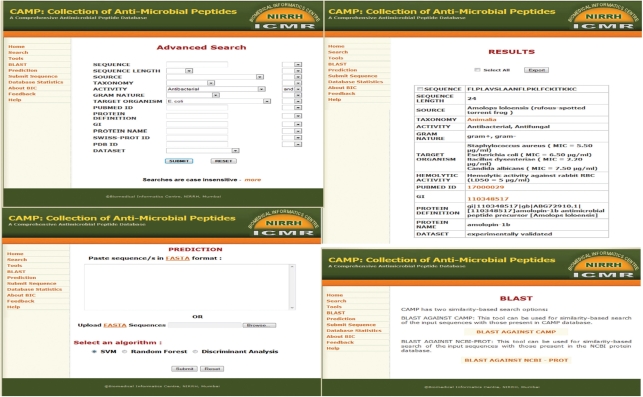
“The interfaces in CAMP are designed in a manner to help users in easy navigation and use of the various tools integrated in the database (Figure 1). The database interfaces include: Home, Search, Tools, Prediction, BLAST ( 43 ), Submit Sequence, Feedback and Help.”
MethodThe Nature of Statistical Learning Theory
Vapnik, V. N. (1995) · doi:10.1007/978-1-4757-2440-0 · Cited by 39,138
A simple method for displaying the hydropathic character of a protein
Kyte, J., & Doolittle, R. F. (1982) · Journal of Molecular Biology · doi:10.1016/0022-2836(82)90515-0 · Cited by 22,843 · cited 1×
“Properties that can be calculated are length, net charge, amino acid composition, aliphatic index (44), instability index (45), hydropathy (46) and secondary structure propensities (30).”
BackgroundClassification and Regression by randomForest
Liaw, A. I., & Wiener, M. C. (2007) · Cited by 18,594
Cd-hit: a fast program for clustering and comparing large sets of protein or nucleotide sequences
Li, W., & Godzik, A. (2006) · Bioinformatics · doi:10.1093/bioinformatics/btl158 · Cited by 11,410
Antimicrobial peptides of multicellular organisms
Zasloff, M. (2002) · Nature · doi:10.1038/415389a · Cited by 8,457
Antimicrobial peptides: pore formers or metabolic inhibitors in bacteria?
Brogden, K. A. (2005) · Nature Reviews Microbiology · doi:10.1038/nrmicro1098 · Cited by 5,829
Comparison of the predicted and observed secondary structure of T4 phage lysozyme
Matthews, B. W. (1975) · Biochimica et Biophysica Acta (BBA) - Protein Structure · doi:10.1016/0005-2795(75)90109-9 · Cited by 5,399 · cited 1×
“MCC is considered to be a balanced measure for evaluating the performance of the algorithm, even in datasets of different sizes (41, 42 ).”
BackgroundAn introduction to kernel-based learning algorithms
Muller, K.-R., Mika, S., Ratsch, G., Tsuda, K., & Scholkopf, B. (2001) · IEEE Transactions on Neural Networks · doi:10.1109/72.914517 · Cited by 3,473
Research works printed but not linked: 1
- Norusis MJ SPSS/PC+Advanced StatisticsTM V2.0 1988 USA ISBN 0-918469-57-0, SPSS Inc.
Cited by
Items 101–200 of 510
Computational resources and tools for antimicrobial peptides
Liu, S., Fan, L., Sun, J., Lao, X., & Zheng, H. (2016) · Journal of Peptide Science · doi:10.1002/psc.2947 · Cited by 87
“…datasets can be achieved by randomly selecting non-secretory protein sequences from UniProt database without annotated by ‘ antimicrobial ’ or synthesizing amino acid sequences following a uniform amino acid distribution or following the amino acid distribution of UniProt/Swiss-Prot [20,62].”
BackgroundMethodDziuba, B., & Dziuba, M. (2014) · International Journal of Molecular Sciences · doi:10.3390/ijms150814531 · Cited by 86
“In the first stage, the antimicrobial potential of milk protein fragments obtained by proteolysis was evaluated with the use of four statistical models available in the CAMP database.”
BackgroundMethodInfluentialAntimicrobial Peptides: Their History, Evolution, and Functional Promiscuity
Phoenix, D. A., Dennison, S. R., & Harris, F. (2013) · Wiley eBooks · doi:10.1002/9783527652853.ch1 · Cited by 86
Tavares, L. S., Silva, C. S. F., de Souza, V. C., da Silva, V. L., Diniz, C. G., & Santos, M. O. (2013) · Frontiers in Microbiology · doi:10.3389/fmicb.2013.00412 · Cited by 74
“…sequence, definition of protein biological activity, taxonomy of the source organism, target organisms—indicating the MIC (minimum inhibitory concentration), hemolytic activity of the peptide and links to external databases such as SwissProt, PDB, PubMed and the NCBI Taxonomy (Thomas et al., 2010).”
MethodAntimicrobial peptides in oyster hemolymph: The bacterial connection
Defer, D., Desriac, F., Henry, J., Bourgougnon, N., Baudy-Floc’h, M., Brillet, B., Chevalier, P. L., & Fleury, Y. (2013) · Fish & Shellfish Immunology · doi:10.1016/j.fsi.2013.03.357 · Cited by 82
“All these antimicrobial peptides have been gathered in various generalist databases such as APD2 [8], cAMP [9] or DAMPD [10] or specialized ones such as Defensin knowledgebase [11] or Bactibase [12].”
BackgroundStraPep: a structure database of bioactive peptides
Wang, J., Yin, T., Xiao, X. R., He, D., Xue, Z., Jiang, X., & Wang, Y. (2018) · Database · doi:10.1093/database/bay038 · Cited by 80
“For example, Amper (11), APD (12), Bactibase (13), CAMP (14), DAMPD (15) and YADAMP (16) hold antimicrobial peptides; Quorumpeps (17) is developed for quorum sensing peptides; CPPsite (18) and CPPsite 2.”
BackgroundInfluentialCharacterization and Identification of Natural Antimicrobial Peptides on Different Organisms
Chung, C., Jhong, J.-H., Wang, Z., Chen, S., Wan, Y., Horng, J., & Lee, T.-Y. (2020) · International Journal of Molecular Sciences · doi:10.3390/ijms21030986 · Cited by 77
“In this study, we collected the positive dataset by capturing naturally existing and experimentally validated AMP sequences from different organisms from several databases, CAMP [7], APD [15], ADAM [19], and DRAMP [21].”
BackgroundMethodInfluentialHovde, B. T., Deodato, C. R., Hunsperger, H. M., Ryken, S. A., Yost, W., Jha, R. K., Patterson, J., Monnat, R. J., Barlow, S. B., Starkenburg, S. R., et al. (2015) · PLoS Genetics · doi:10.1371/journal.pgen.1005469 · Cited by 76
“Using the curated Collection of Anti-Microbial Peptides (CAMP) [60] antimicrobial peptide prediction tool (http://www.”
MethodPeptide based antimicrobials: Design strategies and therapeutic potential
Hazam, P. K., Goyal, R., & Ramakrishnan, V. (2018) · Progress in Biophysics and Molecular Biology · doi:10.1016/j.pbiomolbio.2018.08.006 · Cited by 74
A novel type III crustin (CrusEs2) identified from Chinese mitten crab Eriocheir sinensis
Mu, C., Zheng, P., Zhao, J., Wang, L., Qiu, L., Zhang, H., Gai, Y., & Song, L. (2011) · Fish & Shellfish Immunology · doi:10.1016/j.fsi.2011.04.013 · Cited by 73
“Since the first antimicrobial peptidewas discovered in the mothHyalophora cecropia [9], AMPs are gaining popularity as better substitutes for antibiotics [10], and more than 1500 antimicrobial peptides have been registered in one AMP database (http://aps.”
BackgroundFeptideDB: A web application for new bioactive peptides from food protein
Panyayai, T., Ngamphiw, C., Tongsima, S., Mhuantong, W., Limsripraphan, W., Choowongkomon, K., & Sawatdichaikul, O. (2019) · Heliyon · doi:10.1016/j.heliyon.2019.e02076 · Cited by 72
“These include PepBank (Shtatland et al., 2007), PeptideDB (Liu et al., 2008), BIOPEP (Minkiewicz et al., 2008) with antimicrobial peptide databases, APD (Wang et al., 2016) and CAMP (Thomas et al., 2010).”
MethodActivity of Anti-Microbial Peptides (AMPs) against Leishmania and Other Parasites: An Overview
El-Dirany, R., Shahrour, H., Dirany, Z., Abdel‐Sater, F., González‐Gaitano, G., Brandenburg, K., de Tejada, G. M., & Nguewa, P. (2021) · Biomolecules · doi:10.3390/biom11070984 · Cited by 73
Doherty, A., Wall, A. M., Khaldi, N., & Kussmann, M. (2021) · Frontiers in Genetics · doi:10.3389/fgene.2021.768979 · Cited by 72
“…properties, such as the essential micronutrients vitamins (Jacobson and Jacobson, 2018; Maqbool and Aslam, 2018), omega-3 and -6 fatty acids (Thomas et al., 2009; Watanabe and Tatsuno, 2017; Shahidi and Ambigaipalan, 2018) or phytonutrients such as polyphenols (Nagy et al., 2009) and…”
BackgroundRecent advances in the design of antimicrobial peptide conjugates
Silva, A. R. P., Guimarães, M. D. S., Rabelo, J., Belén, L. H., Perecin, C. J., Farías, J. G., Santos, J. H. P. M., & Rangel‐Yagui, C. D. O. (2022) · Journal of Materials Chemistry B · doi:10.1039/d1tb02757c · Cited by 70
Lertampaiporn, S., Vorapreeda, T., Hongsthong, A., & Thammarongtham, C. (2021) · Genes · doi:10.3390/genes12020137 · Cited by 69
LMPred: predicting antimicrobial peptides using pre-trained language models and deep learning
Dee, W. (2022) · Bioinformatics Advances · doi:10.1093/bioadv/vbac021 · Cited by 68
“Previous model-based methods have utilized a range of Machine Learning approaches, including; Hidden Markov Models (11), Fuzzy K-Nearest Neighbour (FKNN) (4), Random Forest (RF) (1), Discriminant Analysis (DA) (12) and Support Vector Machines (SVM) (7, 13, 14).”
MethodPrediction of antimicrobial peptides based on the adaptive neuro‐fuzzy inference system application
Fernandes, F. C., Rigden, D. J., & Franco, O. L. (2012) · Peptide Science · doi:10.1002/bip.22066 · Cited by 67
Advances in Antimicrobial Peptide Discovery via Machine Learning and Delivery via Nanotechnology
Sowers, A., Wang, G., Xing, M. M. Q., & Li, B. (2023) · Microorganisms · doi:10.3390/microorganisms11051129 · Cited by 66
Sinha, A., Rae, R. G., Iatsenko, I., & Sommer, R. J. (2012) · PLoS ONE · doi:10.1371/journal.pone.0044255 · Cited by 65
“[95] was used to predict whether they can act as potential Anti-”
MethodLourenço, A. M. G., Coenye, T., Goeres, D. M., Donelli, G., Azevedo, A. S., Ceri, H., Coelho, F. A. B. L., Flemming, H., Juhna, T., Lopes, S. P., et al. (2014) · Pathogens and Disease · doi:10.1111/2049-632x.12146 · Cited by 65
ThioFinder: A Web-Based Tool for the Identification of Thiopeptide Gene Clusters in DNA Sequences
Li, J., Qu, X., He, X., Duan, L., Wu, G., Bi, D., Deng, Z., Liu, W., & Ou, H.-Y. (2012) · PLoS ONE · doi:10.1371/journal.pone.0045878 · Cited by 55
“Furthermore, there are a few databases including APD2 [23], CAMP [24] and DAMPD [25] featuring collecting and aiding to design antimicrobial peptides; however, they are not specialized to the thiopeptide antibiotics and currently only contain four thiopeptide members (thiostrepton, thiocillin, GE37468, GE2270).”
BackgroundFu, H., Cao, Z., Li, M., & Wang, S. (2020) · BMC Genomics · doi:10.1186/s12864-020-06978-0 · Cited by 63
“…machine learning algorithms or statistical analysis techniques, such as artificial neural networks (ANN) [5], discriminant analysis (DA) [6, 7], fuzzy k-nearest neighbors (KNN) [8], hidden Markov models (HM) [9], logistic regression (LR) [10, 11], random forests (RF) [6, 10], support…”
MethodThe Generation of Antimicrobial Peptide Activity: A Trade‐off between Charge and Aggregation?
Torrent, M., Valle, J., Nogués, M. V., Boix, E., & Andreu, D. (2011) · Angewandte Chemie International Edition · doi:10.1002/anie.201103589 · Cited by 63
In silico identification of novel hevein-like peptide precursors
Porto, W. F., Souza, V. A., Nolasco, D. O., & Franco, O. L. (2012) · Peptides · doi:10.1016/j.peptides.2012.07.025 · Cited by 62
Azkargorta, M., Soria, J. M., Ojeda, C., Guzmán, F., Acera, A., Iloro, I., Suárez, T., & Elortza, F. (2015) · Journal of Proteome Research · doi:10.1021/acs.jproteome.5b00179 · Cited by 63
Li, H., Parisi, M. G., Parrinello, N., Cammarata, M., & Roch, P. G. (2011) · Invertebrate survival journal · Cited by 62
Bishop, B., Juba, M. L., Russo, P. S., Devine, M., Barksdale, S. M., Scott, S., Settlage, R. E., Michalak, P., Gupta, K. H., Vliet, K. A., et al. (2017) · Journal of Proteome Research · doi:10.1021/acs.jproteome.6b00857 · Cited by 61
PandoraGAN: Generating Antiviral Peptides Using Generative Adversarial Network
Surana, S., Arora, P., Singh, D., Sahasrabuddhe, D., & Valadi, J. K. (2023) · SN Computer Science · doi:10.1007/s42979-023-02203-3 · Cited by 60
Prediction and Rational Design of Antimicrobial Peptides
William, F., Osmar, N., & Octvio, L. (2012) · InTech eBooks · doi:10.5772/38023 · Cited by 61
“These properties served as the basis for developing approaches for antimicrobial activity prediction, through several methods, such as support vector machine (SVM, Lata et al., 2007; Porto et al., 2010; Thomas et al., 2010), artificial neural network (ANN, Fjell et al.”
BackgroundMethodInfluentialJuretić, D., Vukičević, D., Petrov, D., Novković, M., Bojović, V., Lučić, B., Ilić, N., & Tossi, A. (2011) · European Biophysics Journal · doi:10.1007/s00249-011-0674-7 · Cited by 60
“Searching the UNIPROT database using an AMP sequence as query can result in many hits corresponding to putative or reported AMPs sequences; more so than searching dedicated AMP databases (Giangaspero et al. 2001; Wang et al. 2009; Thomas et al. 2010) that may not consistently follow up published AMP sequences or those…”
BackgroundMethodVeltri, D., Kamath, U., & Shehu, A. (2015) · IEEE Transactions on Computational Biology and Bioinformatics · doi:10.1109/tcbb.2015.2462364 · Cited by 59
“ANN, and DA) provided as part of the CAMP AMP-Prediction Server Release 2 [16] (available at: http://www.”
MethodHou, X., Li, S., Luo, Q., Shen, G., Wu, H., Li, M., Liu, X., Chen, A., Ye, M., & Zhang, Z. (2019) · Applied Microbiology and Biotechnology · doi:10.1007/s00253-018-09593-y · Cited by 57
Antimicrobial Peptides and Their Applications in Biomedical Sector
Sultana, A., Luo, H., & Ramakrishna, S. (2021) · Antibiotics · doi:10.3390/antibiotics10091094 · Cited by 58
Bioprospecting the American Alligator (Alligator mississippiensis) Host Defense Peptidome
Bishop, B., Juba, M. L., Devine, M., Barksdale, S. M., Rodriguez, C. A., Chung, M. C., Russo, P. S., Vliet, K. A., Schnur, J. M., & van Hoek, M. L. (2015) · PLoS ONE · doi:10.1371/journal.pone.0117394 · Cited by 57
“CAMP database uses three different algorithms, Support Vector Machine (SVM), Random Forest (RF) and Discriminate Analysis (DA), to predict likelihood of antimicrobial activity [10].”
MethodInfluentialRecent Progress in Machine Learning-based Prediction of Peptide Activity for Drug Discovery
Wu, Q., Ke, H., Li, D., Wang, Q., Fang, J., & Zhou, J. (2019) · Current Topics in Medicinal Chemistry · doi:10.2174/1568026619666190122151634 · Cited by 53
Exploring pathological link between antimicrobial and amyloid peptides
Tang, Y., Zhang, Y., Zhang, D., Liu, Y., Nussinov, R., & Zheng, J. (2024) · Chemical Society Reviews · doi:10.1039/d3cs00878a · Cited by 56
Capriotti, A. L., Cavaliere, C., Foglia, P., Piovesana, S., Samperi, R., Chiozzi, R. Z., & Laganà, A. (2014) · Analytical and Bioanalytical Chemistry · doi:10.1007/s00216-014-8094-z · Cited by 54
Design, antimicrobial activity and mechanism of action of Arg-rich ultra-short cationic lipopeptides
Armas, F., Pacor, S., Ferrari, E., Guida, F., Pertinhez, T. A., Romani, A. A., Scocchi, M., & Benincasa, M. (2019) · PLoS ONE · doi:10.1371/journal.pone.0212447 · Cited by 54
Antimicrobial/Anticancer Peptides: Bioactive Molecules and Therapeutic Agents
Kardani, K., & Bolhassani, A. (2021) · Immunotherapy · doi:10.2217/imt-2020-0312 · Cited by 54
Zohra, T., Numan, M., Ikram, A., Salman, M., Khan, T., Din, M., Salman, M., Farooq, A., Amir, A., & Ali, M. (2021) · Microorganisms · doi:10.3390/microorganisms9050954 · Cited by 54
AMPpred-EL: An effective antimicrobial peptide prediction model based on ensemble learning
Lv, H., Yan, K., Guo, Y., Zou, Q., Hesham, A. E., & Liu, B. (2022) · Computers in Biology and Medicine · doi:10.1016/j.compbiomed.2022.105577 · Cited by 55
Freitas, C. S., Verícimo, M. A., da Silva, M. L., Costa, G., Pereira, P. R., Paschoalin, V. M. F., & Aguila, E. M. D. (2019) · Journal of Functional Foods · doi:10.1016/j.jff.2019.01.024 · Cited by 53
Natural antimicrobial peptides as a source of new antiviral agents
Zakaryan, H. S., Chilingaryan, G., Arabyan, E., Serobian, A., & Wang, G. (2021) · Journal of General Virology · doi:10.1099/jgv.0.001661 · Cited by 53
Lourenço, A. M. G., Ferreira, A., Veiga, N., Machado, I., Pereira, M. O., & Azevedo, N. F. (2012) · PLoS ONE · doi:10.1371/journal.pone.0039960 · Cited by 50
“Only microbial species and antimicrobial agents relate to existing databases - species to the NCBI Taxonomy Browser [22] and antimicrobial agents to the CAMP database [23], respectively.”
BackgroundPeptide Dendrimer-Based Antibacterial Agents: Synthesis and Applications
Paul, S., Verma, S. K., & Chen, Y. (2024) · ACS Infectious Diseases · doi:10.1021/acsinfecdis.3c00624 · Cited by 51
Attique, M., Farooq, M. S., Khelifi, A., & Abid, A. (2020) · IEEE Access · doi:10.1109/access.2020.3015792 · Cited by 49
“It is composed manually and recently has 3782 sequences of antimicrobial peptides, out of these 2766 were experimentally tested and 1016 predicted datasets according to their reference material [38], [74].”
MethodAntimicrobial peptides in the centipede Scolopendra subspinipes mutilans
Yoo, W. G., Lee, J. H., Shin, Y., Shim, J.-Y., Jung, M., Kang, B.-C., Oh, J.-D., Seong, J., Lee, H., Kong, H., et al. (2014) · Functional & Integrative Genomics · doi:10.1007/s10142-014-0366-3 · Cited by 47
Sultana, A., Luo, H., & Ramakrishna, S. (2021) · Applied Sciences · doi:10.3390/app11156991 · Cited by 47
“Hermetia illucens (the black soldier fly) is found to be the most propitious source due to its resisting ability against a huge range of pathogens [15].”
BackgroundAntibiotrophs: The complexity of antibiotic-subsisting and antibiotic-resistant microorganisms
Woappi, Y., Gabani, P., Singh, A., & Singh, O. V. (2014) · Critical Reviews in Microbiology · doi:10.3109/1040841x.2013.875982 · Cited by 46
“ANTIMIC, PhytAMP, APD2 and CAMP) that provide an overview of antibiotic resistance (Brahmachary et al., 2004; Chowdhury et al., 2011; Thomas et al., 2010; Wang et al., 2009).”
BackgroundRF-GlutarySite: a random forest based predictor for glutarylation sites
AL-barakati, H. J., Saigo, H., Newman, R. H., & KC, D. B. (2019) · Molecular Omics · doi:10.1039/c9mo00028c · Cited by 45
Prediction and analysis of antimicrobial peptides from rapeseed protein using in silico approach
Duan, X., Zhang, M., & Chen, F. (2021) · Journal of Food Biochemistry · doi:10.1111/jfbc.13598 · Cited by 45
Antimicrobial Peptides as a Promising Alternative for Plant Disease Protection
López‐García, B., Segundo, B. S., & Coca, M. A. (2012) · ACS symposium series · doi:10.1021/bk-2012-1095.ch013 · Cited by 46
Boone, K., Camarda, K. V., Spencer, P., & Tamerler, C. (2018) · BMC Bioinformatics · doi:10.1186/s12859-018-2514-6 · Cited by 44
“Our method was tested against publicly available prediction servers CAMP AMP prediction [9], iAMP-2 L [50], and a motif-searching algorithm EFC method [51, 52] with and without FCBF.”
MethodNg, X. Y., Rosdi, B. A., & Shahrudin, S. (2015) · BioMed Research International · doi:10.1155/2015/212715 · Cited by 44
“These training sequences were downloaded from CAMP [5] and processed by Wang et al.”
BackgroundMethodInfluentialBiotic stress resistance in agriculture through antimicrobial peptides
Sarika, S., Iquebal, M. A., & Rai, A. K. (2012) · Peptides · doi:10.1016/j.peptides.2012.05.012 · Cited by 44
“Also, AMPs from other origin have been used in transgenic tobacco [68,83], banana [18] and potato [74] to provide disease control [104].”
BackgroundWang, L., Niu, D., Wang, X., Khan, J., Shen, Q., & Xue, Y. (2021) · Foods · doi:10.3390/foods10030550 · Cited by 43
Porto, W. F., Pires, Á. S., & Franco, O. L. (2017) · Journal of Theoretical Biology · doi:10.1016/j.jtbi.2017.05.011 · Cited by 42
Chang, K. Y., Lin, T.-P., Shih, L.-Y., & Wang, C. (2015) · PLoS ONE · doi:10.1371/journal.pone.0119490 · Cited by 42
“To verify if predicting AMP cores could be simply substituted by predicting AMPs, several AMP prediction models from CAMP webserver were investigated, including SVM, random forest, artificial neural network, and discriminant analysis [29].”
MethodEnzyBase: a novel database for enzybiotic studies
Wu, H., Lu, H., Huang, J., Li, G., & Huang, Q. (2012) · BMC Microbiology · doi:10.1186/1471-2180-12-54 · Cited by 41
“These databases, including APD [19,20], ANTIMIC [21], CAMP [22], BACTIBASE [23,24], PhytAMP [25], PenBase [26], Defensins [27], CyBase [28], and peptaibols Peptaibol [29], contain AMP sequences from diverse origins or specific families and accordingly have accelerated and stimulated research on AMPs.”
BackgroundLi, C., Zou, Q., Jia, C., & Zheng, J. (2023) · Journal of Chemical Information and Modeling · doi:10.1021/acs.jcim.3c01017 · Cited by 41
Evolving biomaterials design from trial and error to intelligent innovation
Hang, R., Yao, X., Bai, L., & Hang, R. (2025) · Acta Biomaterialia · doi:10.1016/j.actbio.2025.03.013 · Cited by 41
Niarchou, A., Αλεξανδρίδου, Α., Athanasiadis, E. I., & Spyrou, G. M. (2013) · PLoS ONE · doi:10.1371/journal.pone.0079728 · Cited by 40
“Of these databases, CAMP is the only one to hold predicted peptides as well [10].”
BackgroundMethodDiscovering New In Silico Tools for Antimicrobial Peptide Prediction
Torrent, M., Nogués, M. V., & Boix, E. (2012) · Current Drug Targets · doi:10.2174/138945012802002311 · Cited by 41
“CAMP 4020 General NCBI Antimicrobial activity Sequence alignment [2]”
BackgroundAzkargorta, M., Bregón-Villahoz, M., Escobés, I., Ibáñez, J. D. A., Iloro, I., Iglesias, M., Díez-Zapirain, M., Rabanal, A., Prieto, B., Moragues, M. D., et al. (2020) · Journal of Proteomics · doi:10.1016/j.jprot.2020.103652 · Cited by 39
TriNet: A tri-fusion neural network for the prediction of anticancer and antimicrobial peptides
Zhou, W., Liu, Y., Li, Y., Kong, S., Wang, W., Ding, B., Han, J., Mou, C., Gao, X., & Liu, J. (2023) · Patterns · doi:10.1016/j.patter.2023.100702 · Cited by 39
“32 Finally, we analyzed the effectiveness of the extracted features as well as the structures of TriNet.”
MethodPrediction of Antifungal Peptides by Deep Learning with Character Embedding
Fang, C., Moriwaki, Y., Li, C., & Shimizu, K. (2019) · IPSJ Transactions on Bioinformatics · doi:10.2197/ipsjtbio.12.21 · Cited by 38
“…far, many methods have been developed for predicting various biopeptides, such as antibacterial peptides [11], [12], cell-penetrating peptides [13], [14], [15], [16], anti-inflammatory peptides [17], AFPs [18], [19], antimicrobial peptides [20], [21], [22], [23], [24], and anticancer peptides [25].”
MethodVan, J. A. D., Clotet‐Freixas, S., Zhou, J., Batruch, I., Sun, C., Glogauer, M., Rampoldi, L., Elia, Y. T., Mahmud, F. H., Sochett, E. B., et al. (2019) · Molecular & Cellular Proteomics · doi:10.1074/mcp.ra119.001858 · Cited by 38
Hussain, W. (2021) · Briefings in Bioinformatics · doi:10.1093/bib/bbab487 · Cited by 37
Wang, L., Liu, Y., Fu, X., Ye, X., Shi, J., Yen, G. G., Zou, Q., Zeng, X., & Cao, D. (2025) · Journal of Medicinal Chemistry · doi:10.1021/acs.jmedchem.4c03073 · Cited by 38
Distinct profiling of antimicrobial peptide families
Khamis, A. M., Essack, M., Gao, X., & Bajić, V. B. (2014) · Bioinformatics · doi:10.1093/bioinformatics/btu738 · Cited by 37
Machine learning-enabled predictive modeling to precisely identify the antimicrobial peptides
Wani, M. A., Garg, P., & Roy, K. K. (2021) · Medical & Biological Engineering & Computing · doi:10.1007/s11517-021-02443-6 · Cited by 37
In Silico Design of Antimicrobial Peptides
Maccari, G., Luca, M. D., & Nifosì, R. (2014) · Methods in molecular biology · doi:10.1007/978-1-4939-2285-7_9 · Cited by 37
Singh, P. K., Sharma, S., Kumari, A., & Korpole, S. (2014) · BMC Microbiology · doi:10.1186/s12866-014-0226-2 · Cited by 36
“Further, bioinformatics analysis of the sequence did not show any significant similarity with known pediocin-like bacteriocins or other bacterial AMPs available with databases like Bactibase [23,24] or Collection of Antimicrobial Peptide (CAMP) database [25].”
BackgroundSalivary peptidomic as a tool to disclose new potential antimicrobial peptides
Trindade, F., Amado, F. M. L., da Costa, J. P., Ferreira, R. M., Maia, C., Henriques, I. S., Colaço, B., & Vitorino, R. M. P. (2014) · Journal of Proteomics · doi:10.1016/j.jprot.2014.12.004 · Cited by 36
MacCallum, D. M., Desbois, A. P., & Coote, P. J. (2013) · European Journal of Clinical Microbiology & Infectious Diseases · doi:10.1007/s10096-013-1850-8 · Cited by 35
Diéguez‐Santana, K., & González‐Díaz, H. (2023) · Computers in Biology and Medicine · doi:10.1016/j.compbiomed.2023.106638 · Cited by 36
Noga, E. J., Stone, K. L., Wood, A., Gordon, W. L., & Robinette, D. W. (2010) · Developmental & Comparative Immunology · doi:10.1016/j.dci.2010.11.015 · Cited by 36
“in/antimicrobial) databases of AMP sequences (Brahmachary et al., 2004; Thomas et al., 2010).”
BackgroundCai, J., Yan, J., Un, C.-W., Wang, Y., Campbell‐Valois, F., & Siu, S. W. I. (2025) · Journal of Chemical Information and Modeling · doi:10.1021/acs.jcim.4c01749 · Cited by 35
Contribution of Structural Domains to the Activity of Ribonuclease 7 against Uropathogenic Bacteria
Wang, H., Schwaderer, A. L., Kline, J. M., Spencer, J. D., Kline, D., & Hains, D. S. (2012) · Antimicrobial Agents and Chemotherapy · doi:10.1128/aac.01378-12 · Cited by 36
“To determine whether individual amino acid properties were associated with fragment antimicrobial activity, the net charge and hydrophobicity were calculated with the Collection of Antimicrobial Peptides Comprehensive Antimicrobial Peptide Database AMP tool (14).”
MethodCarrera, M., Ezquerra‐Brauer, J. M., & Aubourg, S. P. (2019) · Marine Drugs · doi:10.3390/md18010031 · Cited by 33
Zhang, K., Teng, D., Mao, R., Yang, N., Hao, Y., & Wang, J. (2023) · International Journal of Molecular Sciences · doi:10.3390/ijms24043134 · Cited by 33
Sun, D., Wu, S., Jing, C., Zhang, N., Liang, D., & Xu, A. (2012) · The Journal of Antibiotics · doi:10.1038/ja.2011.120 · Cited by 33
Xiang, N., Lyu, Y., Zhu, X., Bhunia, A. K., & Narsimhan, G. (2016) · Peptides · doi:10.1016/j.peptides.2016.09.004 · Cited by 34
Liu, J., Jiang, J., Wu, Z., & Xie, F. (2012) · Journal of Proteomics · doi:10.1016/j.jprot.2012.08.004 · Cited by 33
“[4] Thomas S, Karnik S, Barai RS, JayaramanVK, Idicula-Thomas S.”
Advances in separation and identification of biologically important milk proteins and peptides
Št́astná, M. (2023) · Electrophoresis · doi:10.1002/elps.202300084 · Cited by 32
“…and animals; initially online in 2003 (ADP); version from 2009 (ADP2) is continually updated and it expanded into ADP3; https://aps.unmc.edu) [147], and CAMP R4 (an updated CAMP database [148]; Collection of AntiMicrobial Peptides from various organisms; http://camp.bicnirrh.res.in) [149, 150].”
BackgroundDesign of antimicrobial peptides from a cuttlefish database
Houyvet, B., Zanuttini, B., Corre, E., Corguillé, G. L., Henry, J., & Zatylny‐Gaudin, C. (2018) · Amino Acids · doi:10.1007/s00726-018-2633-4 · Cited by 32
El-Sayed, S. E., Messiha, A. A., & Zafer, M. M. (2025) · Journal of Infection and Public Health · doi:10.1016/j.jiph.2025.103058 · Cited by 31
Wanmakok, M., Orrapin, S., Intorasoot, A., & Intorasoot, S. (2018) · Gene · doi:10.1016/j.gene.2018.05.106 · Cited by 31
Yue, L., Song, L., Zhu, S., Fu, X., Li, X., He, C., & Li, J. (2024) · Scientific Reports · doi:10.1038/s41598-023-50832-8 · Cited by 31
“Peptides were predicted for their antimicrobial ability by some AI programs 39–42 .”
BackgroundGenome Sequence of Bacillus subtilis subsp. spizizenii gtP20b, Isolated from the Indian Ocean
Fan, L., Bo, S., Chen, H., Ye, W., Kleinschmidt, K., Baumann, H., Imhoff, J. F., Kleine, M., & Cai, D. (2010) · Journal of Bacteriology · doi:10.1128/jb.01351-10 · Cited by 31
“A set of hits was retrieved from antimicrobial peptide (AMP) databases (5, 11, 12, 13), including subtilisin A (sboA), surfactin (sfp), beta-lactamase precursor (penP), and replicative DNA heli-”
MethodQutb, A. M., Wei, F., & Dong, W. (2020) · Frontiers in Microbiology · doi:10.3389/fmicb.2020.01353 · Cited by 31
Zare, M., Mohabatkar, H., Faramarzi, F. K., Beigi, M. M., & Behbahani, M. (2015) · The Open Bioinformatics Journal · doi:10.2174/1875036201509010013 · Cited by 31
de Cena, G. L., Scavassa, B. V., & Conceição, K. (2022) · Pharmaceuticals · doi:10.3390/ph15091141 · Cited by 32
AMP-RNNpro: a two-stage approach for identification of antimicrobials using probabilistic features
Shaon, M. S. H., Karim, T., Sultan, M. F., Ali, M. M., Ahmed, K., Hasan, M. Z., Moustafa, A. A., Bui, F. M., & Al-Zahrani, F. A. (2024) · Scientific Reports · doi:10.1038/s41598-024-63461-6 · Cited by 30
Tuber Storage Proteins as Potential Precursors of Bioactive Peptides: An In Silico Analysis
Ibrahim, M. A., Bester, M. J., Neitz, A. W. H., & Gaspar, A. R. M. (2018) · International Journal of Peptide Research and Therapeutics · doi:10.1007/s10989-018-9688-7 · Cited by 30
“EL and ELLL are AMPs derived from marine bacterium Bacillus subtilis and active against both bacteria and fungi (Thomas et al. 2010).”
Lopes, F. E. S., da Costa, H. P. S., Souza, P. F. N., de Oliveira, J. P. B., Ramos, M. V., Freire, J. E. D. C., Jucá, T. L., & Freitas, C. D. T. (2018) · Phytochemistry · doi:10.1016/j.phytochem.2018.12.006 · Cited by 30
Tsai, C.-T., Lin, C.-W., Ye, G.-L., Wu, S.-C., Yao, P., Lin, C., Wan, L., & Tsai, H. G. (2024) · ACS Omega · doi:10.1021/acsomega.3c08676 · Cited by 29
Fungi against insects and contrariwise as biological control models
Elkhateeb, W. A., Mousa, M., Elnahas, M. O., & Daba, G. M. (2021) · Egyptian Journal of Biological Pest Control · doi:10.1186/s41938-020-00360-8 · Cited by 29
“The amino acids constituting the CAPs primary sequence are the main factor that affects the antimicrobial spectrum and broad structural diversity (Thomas et al. 2010).”
BackgroundBioactive Peptides and Its Alternative Processes: A Review
Abd-Talib, N., Yaji, E. L. A., Wahab, N. S. A., Razali, N., Len, K. Y. T., Roslan, J., Saari, N., & Pa’ee, K. F. (2022) · Biotechnology and Bioprocess Engineering · doi:10.1007/s12257-021-0160-8 · Cited by 30
“Collection of Antimicrobial Peptides have identified over 1,500 unique bioactive peptides [19].”
BackgroundKrein support vector machine classification of antimicrobial peptides
Redshaw, J., Ting, D. S. J., Brown, A., Hirst, J. D., & Gärtner, T. (2023) · Digital Discovery · doi:10.1039/d3dd00004d · Cited by 29
Metadata
- Authors
- Thomas, S., Karnik, S., Barai, R. S., Jayaraman, V. K., & Idicula-Thomas, S.
- Affiliations
- ICMR National Institute for Research on Women's Health (IN)
- Centre for Development of Advanced Computing (IN)
- Corresponding author
- Jayaraman, V. K.
- Venue
- Nucleic Acids Research
- Publisher
- Oxford University Press (OUP)
- Published
- 2009-11-18
- Volume
- 38
- Issue
- suppl_1
- Pages
- D774-D780
- ISSN
- 0305-1048 (ISSN-L)
- 1362-4962
- PMC
- PMC2808926
- OpenAlex
- W2129115651
- Cited by
- 462
- References
- 49
- Citations by year
- 2026: 30 · 2025: 35 · 2024: 37 · 2023: 43 · 2022: 31 · 2021: 30 · 2020: 32 · 2019: 25 · 2018: 21 · 2017: 15 · 2016: 17 · 2015: 23 · 2014: 27 · 2013: 39 · 2012: 31
- FWCI
- 18.21
- Type
- journal article
- Language
- en
- Open access
- gold
- doi.org
- Licence
- Locations
- Nucleic Acids Research (publishedVersion, cc-by-nc)
- PubMed Central (publishedVersion, cc-by-nc)
- PubMed (publishedVersion)
- HighWire Press Open Archive (submittedVersion)
- IUScholarWorks (Indiana University) (submittedVersion, cc-by-nc)
- Publisher
- Funders
- Indian Council of Medical Research
- Topics
- Life Sciences › Immunology and Microbiology › Microbiology › Antimicrobial Peptides and Activities
- Life Sciences › Pharmacology, Toxicology and Pharmaceutics › Drug Discovery › Computational Drug Discovery Methods
- Life Sciences › Immunology and Microbiology › Applied Microbiology and Biotechnology › Antimicrobial agents and applications
- Keywords
- antimicrobial peptides, antimicrobial peptide database, antimicrobial activity prediction, sequence-activity relationship, machine learning prediction models, minimum inhibitory concentration, sequence analysis tools
- MeSH terms
- Algorithms, Anti-Infective Agents, Humans, Peptides, Software, Reproducibility of Results, Information Storage and Retrieval, Genome, Bacterial, Computational Biology, Internet, Antimicrobial Cationic Peptides, Databases, Genetic, Databases, Nucleic Acid, Databases, Protein
About these checks
Registry, retraction, Cites and statistics results are computed, not judged, with one exception: a printed reference that no index lists is read once by a model before it counts as a citation error. Claims are extracted by a model and kept only when their quote appears verbatim in the text; each cited source is then checked, with a model’s help, for whether it says what the claim relies on. Those verdicts can be wrong — read the claim’s quote and the cited source before relying on one.
Statistics and arithmetic are recomputed, not judged.
Confidence bands are shown only for fields calibrated on our annotated test set. None is calibrated yet, so no band is shown.
What counts as a claim ›How we measure confidence ›How we check this ›
Are you an author, or do you see a problem with this page? Request a review
Data sources
Bibliographic data: Semantic Scholar, OpenAlex, Crossref.
Contains information from the Semantic Scholar Academic Graph Datasets, made available under the ODC Attribution License (ODC-BY 1.0).
Semantic Scholar’s data is described in: Kinney, R., et al. (2023). The Semantic Scholar Open Data Platform. arXiv:2301.10140.
