

BioModels: expanding horizons to include more modelling approaches and formats
Open accessThe DOI matches its Crossref record; 13 of the 13 references it cites were found in a registry or an index.
Abstract
BioModels serves as a central repository of mathematical models representing biological processes. It offers a platform to make mathematical models easily shareable across the systems modelling community, thereby supporting model reuse. To facilitate hosting a broader range of model formats derived from diverse modelling approaches and tools, a new infrastructure for BioModels has been developed that is available at http://www.ebi.ac.uk/biomodels. This new system allows submitting and sharing of a wide range of models with improved support for formats other than SBML. It also offers a version-control backed environment in which authors and curators can work collaboratively to curate models. This article summarises the features available in the current system and discusses the potential benefit they offer to the users over the previous system. In summary, the new portal broadens the scope of models accepted in BioModels and supports collaborative model curation which is crucial for model reproducibility and sharing.
Overview
The claims and statistics of this paper haven’t been checked yet.
Free: it reads the open-access text and checks the first 5 claims that cite a source we can check. Create a free account to check every claim.
Integrity signals
Registry
Cites
Statistics
Figures
Verification
Claims the paper makes
The claims and statistics of this paper haven’t been checked yet.
Free: it reads the open-access text and checks the first 5 claims that cite a source we can check. Create a free account to check every claim.
Claims other papers make about this one
Each is checked against this paper’s own text: does it say what the citing paper says it does?
The cited source says what the claim attributes to it.
In the citing paper
“Two such model repositories currently exist: BioModels25 geared toward cell‐ and molecular‐based systems models and DDMoRE26 for pharmacometrics.”
From Reproducibility of Quantitative Systems Pharmacology Models: Current Challenges and Future Opportunities (2019) · cites this paper as [25]
The cited source says what the claim attributes to it.
In the citing paper
“Model repositories such as BioModels [10, 11], JWS Online [12], or the Physiome Model Repository 2 (PMR2) [13] provide different means to retrieve and use simulation models.”
From Relating simulation studies by provenance—Developing a family of Wnt signaling models (2021) · cites this paper as [11]
Self-check
Percentages, sums and reported differences re-computed from the paper’s own numbers.
The self-check needs the paper’s full text.
Citations
Cites
A pathology atlas of the human cancer transcriptome
Uhlen, M., Zhang, C., Lee, S., Sjöstedt, E., Fagerberg, L., Bidkhori, G., Benfeitas, R., Arif, M., Liu, Z., Edfors, F., et al. (2017) · Science · doi:10.1126/science.aan2507 · Cited by 3,371
CellML: its future, present and past
Lloyd, C. M., Halstead, M. D. B., & Nielsen, P. F. (2004) · Progress in Biophysics and Molecular Biology · doi:10.1016/j.pbiomolbio.2004.01.004 · Cited by 499 · cited 2×
“Key parts of the functionality in the previous system (1), including the curation pipeline and the model display page, are contingent on the model being encoded in standard formats including SBML or CellML.”
MethodBioModels: ten-year anniversary
Chelliah, V., Juty, N., Ajmera, I., Ali, R., Dumousseau, M., Glont, M., Hucka, M., Jalowicki, G., Keating, S., Knight-Schrijver, V., et al. (2015) · Nucleic Acids Research · doi:10.1093/nar/gku1181 · Cited by 281 · cited 2×
“BioModels (1) emerged in 2005 as a response to the needs of the systems biology community for a resource that facilitates the exchange, reuse and repurposing of the models.”
BackgroundSelf-citationHucka, M., Bergmann, F. T., Chaouiya, C., Dräger, A., Hoops, S., Keating, S. M., König, M., Novère, N. L., Myers, C. J., Olivier, B. G., et al. (2019) · Journal of Integrative Bioinformatics · doi:10.1515/jib-2019-0021 · Cited by 258
Self-citationDiscovering and linking public omics data sets using the Omics Discovery Index
Perez-Riverol, Y., Bai, M., da Veiga Leprevost, F., Squizzato, S., Park, Y. M., Haug, K., Carroll, A. J., Spalding, D., Paschall, J., Wang, M., et al. (2017) · Nature Biotechnology · doi:10.1038/nbt.3790 · Cited by 212 · cited 1×
“The upgraded search system, based on the Omics Discovery Index (10) and the EBI search engine (11), retains the in-depth capabilities of the previous system whilst offering a streamlined experience for end users in terms of speed and ease of use.”
MethodSelf-citationIdentifiers.org and MIRIAM Registry: community resources to provide persistent identification
Juty, N., Le Novere, N., & Laibe, C. (2012) · Nucleic Acids Research · doi:10.1093/nar/gkr1097 · Cited by 202
Self-citationCOMBINE archive and OMEX format: one file to share all information to reproduce a modeling project
Bergmann, F. T., Adams, R., Moodie, S., Cooper, J., Glont, M., Golebiewski, M., Hucka, M., Laibe, C., Miller, A. K., Nickerson, D. P., et al. (2014) · BMC Bioinformatics · doi:10.1186/s12859-014-0369-z · Cited by 173 · cited 1×
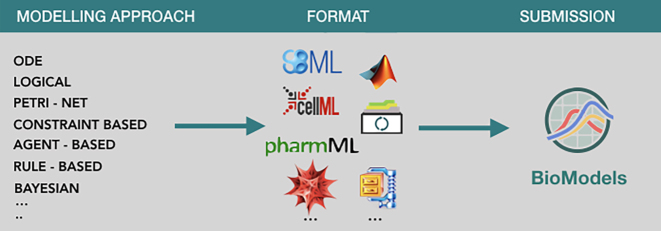
“To foster interoperability and model reuse, the new system offers enhanced technical support for open formats such as SBML, PharmML (7) or COMBINE Archive (8).”
MethodSelf-citationPath2Models: large-scale generation of computational models from biochemical pathway maps
Büchel, F., Rodriguez, N., Swainston, N., Wrzodek, C., Czauderna, T., Keller, R., Mittag, F., Schubert, M., Glont, M., Golebiewski, M., et al. (2013) · BMC Systems Biology · doi:10.1186/1752-0509-7-116 · Cited by 172
Self-citationBioModels.net Web Services, a free and integrated toolkit for computational modelling software
Li, C., Courtot, M., Le Novere, N., & Laibe, C. (2010) · Briefings in Bioinformatics · doi:10.1093/bib/bbp056 · Cited by 51 · cited 1×
“External tools use the web services exposed by the earlier BioModels infrastructure (12) to allow their users to search and retrieve relevant BioModels content remotely.”
MethodSelf-citationThe Systems Biology Markup Language (SBML): Language Specification for Level 3 Version 1 Core
Smith, L., Wilkinson, D., Hucka, M., Bergmann, F., Hoops, S., Keating, S., Sahle, S., & Schaff, J. (2010) · Nature Precedings · doi:10.1038/npre.2010.4959.1 · Cited by 44
Cited by
Benchmarking algorithms for gene regulatory network inference from single-cell transcriptomic data
Pratapa, A., Jalihal, A. P., Law, J. N., Bharadwaj, A., & Murali, T. M. (2020) · Nature Methods · doi:10.1038/s41592-019-0690-6 · Cited by 792
Current status and applications of genome-scale metabolic models
Gu, C., Kim, G. B., Kim, W. J., Kim, H. U., & Lee, S. Y. (2019) · Genome Biology · doi:10.1186/s13059-019-1730-3 · Cited by 785
BioModels—15 years of sharing computational models in life science
Malik-Sheriff, R. S., Glont, M., Nguyen, T. V. N., Tiwari, K., Roberts, M. G., Xavier, A., Vu, M. T., Men, J., Maire, M., Kananathan, S., et al. (2019) · Nucleic Acids Research · doi:10.1093/nar/gkz1055 · Cited by 361
“The technical capabilities significantly improved after switching to the new infrastructure allowing BioModels to accept submissions and host models from diverse modelling approaches and formats (10).”
BackgroundSelf-citationReconstructing organisms in silico: genome-scale models and their emerging applications
Fang, X., Lloyd, C. J., & Palsson, B. O. (2020) · Nature Reviews Microbiology · doi:10.1038/s41579-020-00440-4 · Cited by 292
“Many of them can be found in GEM databases including BiGG Models 63 , BioModels 64 , MetaNetX 65 , MEMOSys 66 and Virtual Metabolic Human 67 .”
BackgroundMetExplore: collaborative edition and exploration of metabolic networks
Cottret, L., Frainay, C., Chazalviel, M., Cabanettes, F., Gloaguen, Y., Camenen, E., Merlet, B., Heux, S., Portais, J.-C., Poupin, N., et al. (2018) · Nucleic Acids Research · doi:10.1093/nar/gky301 · Cited by 134
“Many network repositories like BIGG (23) or BioModels (24) offer to download metabolic networks in that format.”
BackgroundInfluentialCollin, C. B., Gebhardt, T., Golebiewski, M., Karaderi, T., Hillemanns, M., Khan, F. M., Salehzadeh‐Yazdi, A., Kirschner, M. W., Krobitsch, S., & Kuepfer, L. (2022) · Journal of Personalized Medicine · doi:10.3390/jpm12020166 · Cited by 147
Quantifying the impact of public omics data
Perez-Riverol, Y., Zorin, A., Dass, G., Vu, M.-T., Xu, P., Glont, M., Vizcaíno, J. A., Jarnuczak, A. F., Petryszak, R., Ping, P., et al. (2019) · Nature Communications · doi:10.1038/s41467-019-11461-w · Cited by 112
Self-citationEnzyme annotation in UniProtKB using Rhea
Morgat, A., Lombardot, T., Coudert, E., Axelsen, K., Neto, T. B., Gehant, S., Bansal, P., Bolleman, J., Gasteiger, E., de Castro, E., et al. (2020) · Bioinformatics · doi:10.1093/bioinformatics/btz817 · Cited by 99
The European Bioinformatics Institute in 2017: data coordination and integration
Cook, C. E., Bergman, M. T., Cochrane, G., Apweiler, R., & Birney, E. (2017) · Nucleic Acids Research · doi:10.1093/nar/gkx1154 · Cited by 83
“Eight EMBL-EBI resources were named as ELIXIR deposition databases: ArrayExpress (2), BioModels (15), EGA (5), ENA (6), IntAct (10), Metabo-Lights (16), PDBe (12) and PRIDE (13); with four additional databases to be included in the near future: BioSam-ples (17), BioStudies (18), EVA (19) and Electron Microscopy Data B…”
MethodEnzyme capacity-based genome scale modelling of CHO cells
Yeo, H. C., Hong, J., Lakshmanan, M., & Lee, D.-Y. (2020) · Metabolic Engineering · doi:10.1016/j.ymben.2020.04.005 · Cited by 75
Harmonizing semantic annotations for computational models in biology
Neal, M. L., König, M., Nickerson, D., Mısırlı, G., Kalbasi, R., Dräger, A., Atalag, K., Chelliah, V., Cooling, M. T., Cook, D. L., et al. (2019) · Briefings in Bioinformatics · doi:10.1093/bib/bby087 · Cited by 74
“BioModels is a repository of publicly available models maintained at the European Molecular Biology Laboratory’s European Bioinformatics Institute (EMBL-EBI).”
InfluentialSelf-citationMemote: A community driven effort towards a standardized genome-scale metabolic model test suitePreprint
Lieven, C., Beber, M. E., Olivier, B. G., Bergmann, F., Ataman, M., Babaei, P., Bartell, J. A., Blank, L. M., Chauhan, S., Correia, K., et al. (2018) · bioRxiv (Cold Spring Harbor Laboratory) · doi:10.1101/350991 · Cited by 60
Self-citationCommunity standards to facilitate development and address challenges in metabolic modeling
Carey, M. A., Dräger, A., Beber, M. E., Papin, J. A., & Yurkovich, J. T. (2020) · Molecular Systems Biology · doi:10.15252/msb.20199235 · Cited by 50
Kirouac, D. C., Cicali, B., & Schmidt, S. (2019) · CPT: Pharmacometrics & Systems Pharmacology · doi:10.1002/psp4.12390 · Cited by 46
“Two such model repositories currently exist: BioModels 25 geared toward cell-and molecular-based systems models and DDMoRE 26 for pharmacometrics.”
MethodRe-curation and rational enrichment of knowledge graphs in Biological Expression Language
Hoyt, C. T., Domingo‐Fernándéz, D., Aldisi, R. S., Xu, L., Kolpeja, K., Spalek, S., Wollert, E., Bachman, J. A., Gyori, B. M., Greene, P., et al. (2019) · Database · doi:10.1093/database/baz068 · Cited by 46
Making in silico predictive models for toxicology FAIR
Cronin, M., Belfield, S. J., Briggs, K. A., Enoch, S. J., Firman, J. W., Frericks, M., Garrard, C., Maccallum, P. H., Madden, J. C., Pastor, M., et al. (2023) · Regulatory Toxicology and Pharmacology · doi:10.1016/j.yrtph.2023.105385 · Cited by 43
Coupled metabolic‐hydrodynamic modeling enabling rational scale‐up of industrial bioprocesses
Wang, G., Haringa, C., Tang, W., Noorman, H. J., Chu, J., Zhuang, Y., & Zhang, S. (2019) · Biotechnology and Bioengineering · doi:10.1002/bit.27243 · Cited by 37
Koduru, L., Lakshmanan, M., Lee, Y. Q., Ho, P. L., Lim, P. Y., Ler, W. X., Ng, S. K., Kim, D., Park, D., Banu, M., et al. (2022) · Cell Reports · doi:10.1016/j.celrep.2022.111735 · Cited by 37
Multiscale three-dimensional imaging of the placenta
Lewis, R. M., & Pearson-Farr, J. E. (2020) · Placenta · doi:10.1016/j.placenta.2020.01.016 · Cited by 34
Niarakis, A., Kuiper, M. T. R., Ostaszewski, M., Malik‐Sheriff, R. S., Casals‐Casas, C., Thieffry, D., Freeman, T. C., Thomas, P. D., Touré, V., Noël, V., et al. (2020) · Briefings in Bioinformatics · doi:10.1093/bib/bbaa046 · Cited by 34
“Established in 2005, BioModels provides a platform to support sharing, easy accessibility and reproducibility of mathematical models of biological processes [5, 29].”
BackgroundSelf-citationBeura, S., Kundu, P., Das, A. K., & Ghosh, A. (2022) · Computers in Biology and Medicine · doi:10.1016/j.compbiomed.2022.105997 · Cited by 28
Genome-Scale Investigation of the Metabolic Determinants Generating Bacterial Fastidious Growth
Gerlin, L., Cottret, L., Cesbron, S., Taghouti, G., Jacques, M., Genin, S., & Baroukh, C. (2020) · mSystems · doi:10.1128/msystems.00698-19 · Cited by 31
Adapting modeling and simulation credibility standards to computational systems biology
Tatka, L. T., Smith, L. P., Hellerstein, J. L., & Sauro, H. M. (2023) · Journal of Translational Medicine · doi:10.1186/s12967-023-04290-5 · Cited by 27
Antioxidant Green Factories: Toward Sustainable Production of Vitamin E in Plant In Vitro Cultures
Muthulakshmi, M., Srinivasan, A., & Srivastava, S. (2023) · ACS Omega · doi:10.1021/acsomega.2c05819 · Cited by 30
Midingoyi, C. A., Pradal, C., Enders, A., Fumagalli, D., Raynal, H., Donatelli, M., Athanasiadis, I. N., Porter, C. H., Hoogenboom, G., Holzworth, D. P., et al. (2021) · Environmental Modelling & Software · doi:10.1016/j.envsoft.2021.105055 · Cited by 32
Gerlin, L., Cottret, L., Escourrou, A., Genin, S., & Baroukh, C. (2021) · PLANT PHYSIOLOGY · doi:10.1093/plphys/kiab548 · Cited by 25
Koduru, L., Kim, H. Y., Lakshmanan, M., Mohanty, B., Lee, Y. Q., Lee, C. H., & Lee, D. (2020) · Molecular Plant Pathology · doi:10.1111/mpp.12914 · Cited by 28
“org/) (Data S1) and can be downloaded from BioModels database (Glont et al., 2018) with identifier MODEL1912100001.”
MethodRelating simulation studies by provenance—Developing a family of Wnt signaling models
Budde, K., Smith, J., Wilsdorf, P., Haack, F., & Uhrmacher, A. M. (2021) · PLOS Computational Biology · doi:10.1371/journal.pcbi.1009227 · Cited by 23
“For capturing provenance information from simulation A list of published simulation studies of the Wnt signaling pathway is presented showing the references, the availability of the simulation models in BioModels, the modeling approaches (MA), the simulation approaches (SA), the scale of the models, additional compart…”
MethodInfluentialSemGen: a tool for semantics-based annotation and composition of biosimulation models
Neal, M. L., Thompson, C. T., Kim, K., James, R. C., Cook, D. L., Carlson, B. E., & Gennari, J. H. (2018) · Bioinformatics · doi:10.1093/bioinformatics/bty829 · Cited by 27
Organizing genome engineering for the gigabase scale
Bartley, B., Beal, J., Karr, J. R., & Strychalski, E. A. (2020) · Nature Communications · doi:10.1038/s41467-020-14314-z · Cited by 22
Curating and comparing 114 strain-specific genome-scale metabolic models of Staphylococcus aureus
Renz, A., & Dräger, A. (2021) · npj Systems Biology and Applications · doi:10.1038/s41540-021-00188-4 · Cited by 24
Koch, I., & Büttner, B. (2023) · American Journal of Physiology-Cell Physiology · doi:10.1152/ajpcell.00487.2022 · Cited by 18
Sego, T. J., Aponte-Serrano, J. O., Gianlupi, J. F., & Glazier, J. A. (2021) · BMC Biology · doi:10.1186/s12915-021-01115-z · Cited by 20
“In the very least, the lack of consistent translation of model terms and parameters between spatial and non-spatial models severely inhibits the potential to apply the vast amount of available information and resources in non-spatial modeling, such as those available in BioModels [20], to spatial contexts, and to shar…”
BackgroundIncreasing certainty in systems biology models using Bayesian multimodel inference
Linden-Santangeli, N. J., Zhang, J., Krämer, B., & Rangamani, P. (2025) · Nature Communications · doi:10.1038/s41467-025-62415-4 · Cited by 21
“For example, searching the popular BioModels database for models of the extracellular-regulated kinase (ERK) signaling cascade yields over 125 results for models that use ordinary differential equations 8,9 .”
Practical steps to digital organism models, from laboratory model species to ‘Crops in silico
Millar, A. J., Urquiza‐García, U., Freeman, P. L., Hume, A. C., Plotkin, G. D., Sorokina, O., Zardilis, A., & Zieliński, T. (2018) · Journal of Experimental Botany · doi:10.1093/jxb/ery435 · Cited by 18
From Planning Stage Towards FAIR Data: A Practical Metadatasheet For Biomedical Scientists
Seep, L., Grein, S., Šplíchalová, I., Ran, D., Mikhael, M., Hildebrand, S., Lauterbach, M., Hiller, K., Ribeiro, D. J. S., Sieckmann, K., et al. (2024) · Scientific Data · doi:10.1038/s41597-024-03349-2 · Cited by 19
“Example biomedical domain repositories are BioSample and GEO 15 , maintained by the National Center for Biotechnology Information (NCBI), or PRIDE 16 and BioModels 17,18 , maintained by European Bioinformatics Institute (EBI).”
Ansari, A. F., Acharya, N. I. S., Kumaran, S., Ravindra, K., Reddy, Y. B. S., Dixit, N. M., & Raut, J. S. (2019) · Industrial & Engineering Chemistry Research · doi:10.1021/acs.iecr.9b03190 · Cited by 16
Casini, I., McCubbin, T., Esquivel-Elizondo, S., Luque, G. G., Evseeva, D., Fink, C., Beblawy, S., Youngblut, N. D., Aristilde, L., Huson, D. H., et al. (2023) · iScience · doi:10.1016/j.isci.2023.108016 · Cited by 14
“The modeling -related files (Data S2) were deposited in an Open Modeling EXchange format (OMEX) 70 to BioModels 71,72 and assigned the identifiers MODEL2211290001 ( M. thermautotrophicus D H), MODEL2211290002 ( M. thermautotrophicus Z-245), and MODEL2211290003 ( M. marburgensis Marburg).”
MethodIn silico encounters: harnessing metabolic modelling to understand plant–microbe interactions
Feierabend, M., & Töpfer, N. (2025) · FEMS Microbiology Reviews · doi:10.1093/femsre/fuaf030 · Cited by 15
“Model repositories such as BiGG (King et al. 2016 ), BioModels (Glont et al. 2018 ), and ModelSEED (Henry et al. 2010 ) facilitate model dissemination.”
AI-driven automated discovery tools reveal diverse behavioral competencies of biological networksPreprint
Etcheverry, M., Moulin-Frier, C., Oudeyer, P., & Levin, M. G. (2025) · eLife · doi:10.7554/elife.92683 · Cited by 15
Whole-Cell Modeling and Simulation: A Brief Survey
Bhat, N. G., & Balaji, S. (2019) · New Generation Computing · doi:10.1007/s00354-019-00066-y · Cited by 13
Clinical Applications of Metabolic Models in SBML Format
Renz, A., Mostolizadeh, R., & Dräger, A. (2020) · Elsevier eBooks · doi:10.1016/b978-0-12-801238-3.11524-7 · Cited by 14
Chung, D., Bakshi, S., & van der Graaf, P. H. (2023) · Pharmaceutics · doi:10.3390/pharmaceutics15030918 · Cited by 12
“Simulation of a prothrombin time test (PT) based on thrombin and fibrin generation for the Burghaus model [4] and the related BioModels code repository [1].”
MethodInfluentialMetabolic Tug-of-War between Glycolysis and Translation Revealed by Biochemical Reconstitution
Sato, G. T., Kinoshita, S., Yamada, T., Arai, S., Kitaguchi, T., Funahashi, A., Doi, N., & Fujiwara, K. (2024) · ACS Synthetic Biology · doi:10.1021/acssynbio.4c00209 · Cited by 13
Merigueti, T. C., Carneiro, M. W., Carvalho-Assef, A. P. D., Silva, F. P., & da Silva, F. A. B. (2019) · Frontiers in Genetics · doi:10.3389/fgene.2019.00633 · Cited by 13
“The SBML files processed in this manuscript were retrieved from the BioModels repository (Glont et al., 2017) or directly from the supplementary material of the associated reference.”
MethodAI-driven automated discovery tools reveal diverse behavioral competencies of biological networks
Etcheverry, M., Moulin-Frier, C., Oudeyer, P., & Levin, M. G. (2025) · eLife · doi:10.31219/osf.io/s6thq · Cited by 17
Quantitative Analyses of the Yeast Oxidative Protein Folding Pathway In Vitro and In Vivo
Beal, D. M., Bastow, E. L., Staniforth, G. L., von der Haar, T., Freedman, R. B., & Tuite, M. F. (2019) · Antioxidants and Redox Signaling · doi:10.1089/ars.2018.7615 · Cited by 11
“A structural biology markup language version of the model file is available from the Biomodels database (17) under accession number MODEL1902080001.”
Jones, C. F., Dias, D., Moreira, A. C., Gonçalves, G., Cinti, S., Djamgoz, M. B. A., Ferreira, F. C., Sanjuan‐Alberte, P., & Moreddu, R. (2025) · iScience · doi:10.1016/j.isci.2025.113579 · Cited by 10
“36,47 The combination of genomics (mutations, copy-number variation), transcriptomics (mRNA, miRNA), epigenomics, and proteomics allows us to obtain a holistic molecular portrait that improves subtype matching.”
Standardization of Human Metabolic Stoichiometric Models: Challenges and Directions
Pantziri, M. D. A., & Klapa, M. I. (2022) · Frontiers in Systems Biology · doi:10.3389/fsysb.2022.899980 · Cited by 18
“Main resource of this type is the EMBL-EBI BioModels (Glont et al., 2018; Malik-Sheriff et al., 2020), which stores both kinetic and stoichiometric models.”
MethodSMGen: A Generator of Synthetic Models of Biochemical Reaction Networks
Riva, S. G., Cazzaniga, P., Nobile, M. S., Spolaor, S., Rundo, L., Besozzi, D., & Tangherloni, A. (2022) · Symmetry · doi:10.3390/sym14010119 · Cited by 11
libOmexMeta: enabling semantic annotation of models to support FAIR principles
Welsh, C., Nickerson, D. P., Rampadarath, A., Neal, M. L., Sauro, H. M., & Gennari, J. H. (2021) · Bioinformatics · doi:10.1093/bioinformatics/btab445 · Cited by 8
Fitzpatrick, R., & Stefan, M. I. (2022) · Neuroinformatics · doi:10.1007/s12021-022-09584-5 · Cited by 8
“…et al., 2020; Hedley et al., 2001; Le Novère et al., 2009; Touré et al., 2020; Schreiber et al., 2020; Waltemath et al., 2020), model databases (Glont et al., 2018; Malik-Sheriff et al., 2019), and standards for model annotation and documentation (Waltemath et al., 2011; Bergmann et al., 2014;…”
MethodBelfield, S. J., Basiri, H., Chavan, S., Chrysochoou, G., Enoch, S. J., Firman, J. W., Gomatam, A., Hardy, B., Helmke, P. S., Madden, J. C., et al. (2025) · ALTEX · doi:10.14573/altex.2411161 · Cited by 7
“…limited resources that may be applied to make (Q)SAR models available, notable amongst these are the JRC QSAR Model Database (EC, 2020); BioModels (Glont et al., 2018; Malik-Sheriff et al., 2020); Harvard Dataverse 1 ; the Danish (Q)SAR Database 2 ; the ConcertREACH Gateway for predictive…”
InfluentialQuantitative Systems Pharmacology models as a key to translational medicine
Schoeberl, B. (2019) · Current Opinion in Systems Biology · doi:10.1016/j.coisb.2019.10.019 · Cited by 7
Data integration strategies for whole-cell modeling
Tummler, K., & Klipp, E. (2024) · FEMS Yeast Research · doi:10.1093/femsyr/foae011 · Cited by 6
“Ther e ar e open standard model r epositories suc h as BioMod-els (Malik-Sheriff et al. 2020 , Glont et al. 2018 ), CellCollective (He-likar et al. 2012 ), JWSonline (Olivier and Snoep 2004 ), and Phys-iome (Hunter 2004 ), where models can be stored, accessed and in some cases e v en cr eated for a…”
BackgroundZieliński, T., Hay, J., & Millar, A. J. (2019) · Wellcome Open Research · doi:10.12688/wellcomeopenres.15341.2 · Cited by 6
Kutumova, E. O., Akberdin, I. R., Lavrik, I. N., & Kolpakov, F. (2025) · Cells · doi:10.3390/cells14221792 · Cited by 5
“Additionally, 23 of the 27 SBML models are accessible through the BioModels database [274,275].”
AI4EOSC: A federated cloud platform for Artificial Intelligence in scientific research
Heredia, I., García, Á. L., Aguilar, F., Aguirre, D., Marín, C. A., Alibabaei, K., Berberi, L., Caballer, M., Calatrava, A., Castro, P., et al. (2026) · Future Generation Computer Systems · doi:10.1016/j.future.2026.108672 · Cited by 6
SBMLtoODEpy: A software program for converting SBML models into ODE models in Python
Ruggiero, S., & Versypt, A. N. F. (2019) · The Journal of Open Source Software · doi:10.21105/joss.01643 · Cited by 6
“The BioModels Database uses SBFC to automate conversion of a large library of SBML models into other formats that can be downloaded by users (Chelliah et al., 2015; Glont et al., 2018).”
MethodAnalysis of the Conradi-Kahle Algorithm for Detecting Binomiality on Biological ModelsPreprint
Iosif, A., & Rahkooy, H. (2019) · arXiv (Cornell University) · doi:10.48550/arxiv.1912.06896 · Cited by 5
“The experiments are performed on biological models in the BioModels repository (3), which is a repository of mechanistic models of bio-medical systems [2,8].”
MethodModelling the effect of subcellular mutations on the migration of cells in the colorectal crypt
Romijn, L. B., Almet, A. A., Tan, C. W., & Osborne, J. M. (2020) · BMC Bioinformatics · doi:10.1186/s12859-020-3391-3 · Cited by 4
Isolating structural errors in reaction networks in systems biology
Shin, W., & Hellerstein, J. L. (2020) · Bioinformatics · doi:10.1093/bioinformatics/btaa720 · Cited by 4
“For example, BioModels (Glont et al. [2018], MalikSheriff et al.”
BackgroundMethodGrowth Dependent Computation of Chokepoints in Metabolic Networks
Oarga, A., Bannerman, B. P., & Júlvez, J. (2020) · Lecture notes in computer science · doi:10.1007/978-3-030-60327-4_6 · Cited by 4
FAIR Sharing of Reproducible Models of Epidemic and Pandemic ForecastPreprint
Ramachandran, K., König, M., Scharm, M., Nguyen, T. V. N., Hermjakob, H., Waltemath, D., & Malik‐Sheriff, R. S. (2022) · Preprints.org · doi:10.20944/preprints202206.0137.v1 · Cited by 4
“It can host submissions from different modeling approaches in any format including the R, C++, Python, MATLAB, Mathematica, SBML and OMEX formats (33).”
Self-citationInsights into Dynamic Network States Using Metabolomic Data
Mostolizadeh, R., Dräger, A., & Jamshidi, N. (2019) · Methods in molecular biology · doi:10.1007/978-1-4939-9236-2_15 · Cited by 4
Epigene Networks: Theory, Models, and Experiment
Galimzyanov, A. V., Stupak, E. E., & Tchuraev, R. N. (2019) · Biology Bulletin Reviews · doi:10.1134/s2079086419060021 · Cited by 3
Maximization of information transmission influences selection of native phosphorelay architectures
Alves, R., Salvadó, B., Milo, R., Vilaprinyó, E., & Sorribas, A. (2021) · PeerJ · doi:10.7717/peerj.11558 · Cited by 4
“To find experimentally determined parameter values for the individual reactions of the PR, we searched Medline and the Biomodels database ( Glont et al., 2018 ).”
Tn-Core: Functionally Interpreting Transposon-Sequencing Data with Metabolic Network Analysis
diCenzo, G. C., Galardini, M., & Fondi, M. (2020) · Methods in molecular biology · doi:10.1007/978-1-0716-0822-7_15 · Cited by 3
Benchmarking kinetic models of Escherichia coli metabolismPreprint
Shepelin, D., Machado, D., Nielsen, L. K., & Herrgård, M. J. (2020) · bioRxiv (Cold Spring Harbor Laboratory) · doi:10.1101/2020.01.16.908921 · Cited by 4
“This model is represented as set of ODEs and distributed as an SBML file deposited on BioModels (15).”
MethodIntroduction to In Silico Modeling to Study ROS Dynamics
Schleicher, J. (2020) · Methods in molecular biology · doi:10.1007/978-1-0716-0896-8_1 · Cited by 3
Kodate, S., Sato, M., Hishinuma, E., Kojima, K., Motoike, I. N., ToMMo Study Group, Abe, H., Abe, M., Abe, M., Abe, N., et al. (2025) · Scientific Reports · doi:10.1038/s41598-025-01634-7 · Cited by 2
“The human liver cell folate cycle model developed by Nijhout et al. 12 , acquired from BioModels 13,14 , was used.”
Integrative modeling of the cell
Zhong, X., Zhao, J., & Sun, L. (2022) · Acta Biochimica et Biophysica Sinica · doi:10.3724/abbs.2022115 · Cited by 3
“Current existing asset management infrastructure (e.g., Datanator [50], Deriva [107], BioModels [59], BioStudies [61], COMBINE [108], BioSimulators [60], runBioSimulations [109] and BioSimulations [110]) can be potentially used and expanded to facilitate accessible and reproducible studies for experimentalists and mod…”
BackgroundAI-driven Automated Discovery Tools Reveal Diverse Behavioral Competencies of Biological NetworksPreprint
Etcheverry, M., Moulin-Frier, C., Oudeyer, P., & Levin, M. G. (2024) · eLife · doi:10.7554/elife.92683.2 · Cited by 3
AI-driven Automated Discovery Tools Reveal Diverse Behavioral Competencies of Biological NetworksPreprint
Etcheverry, M., Moulin-Frier, C., Oudeyer, P., & Levin, M. G. (2024) · eLife · doi:10.7554/elife.92683.3 · Cited by 3
Santos, W. D. O., de Oliveira, R. D., Gomez, J. G. C., & Roux, G. A. C. L. (2025) · ACS Omega · doi:10.1021/acsomega.4c11178 · Cited by 1
Biomedical Repositories for Simulation Studies
Henkel, R. (2020) · Elsevier eBooks · doi:10.1016/b978-0-12-801238-3.11684-8 · Cited by 1
Computational Logic for Biomedicine and Neurosciences
MARIA, E. D., Despeyroux, J., Felty, A., Lió, P., Olarte, C. A., & Bahrami, A. (2023) · Wiley eBooks · doi:10.1002/9781394229086.ch6 · Cited by 3
SBMLToolkit.jl: a Julia package for importing SBML into the SciML ecosystem
Lang, P. F., Jain, A., & Rackauckas, C. (2024) · Berichte aus der medizinischen Informatik und Bioinformatik/Journal of integrative bioinformatics · doi:10.1515/jib-2024-0003 · Cited by 1
AI-driven Automated Discovery Tools Reveal Diverse Behavioral Competencies of Biological NetworksPreprint
Etcheverry, M., Moulin-Frier, C., Oudeyer, P., & Levin, M. G. (2024) · eLife · doi:10.7554/elife.92683.1 · Cited by 1
Generation and Applications of Knowledge Graphs in Systems and Networks Biology
Hoyt, C. T. (2019) · bonndoc (University of Bonn)
Metabolic Modeling of Anti-Cancer CD8 T Cells and SARS-CoV-2 Infection
Cheng, K. (2021) · University Libraries (University of Maryland) · doi:10.13016/txkp-dvgu · Cited by 1
Modeling the Microbial Cells for Biotechnological Applications
Kaya, F. E. A., & Avcı, F. G. (2023) · Advances in bioinformatics and biomedical engineering book series · doi:10.4018/978-1-6684-6577-6.ch006
Etcheverry, M., Moulin-Frier, C., Oudeyer, P., & Levin, M. G. (2024) · eLife · doi:10.7554/elife.92683.1.sa3
Etcheverry, M., Moulin-Frier, C., Oudeyer, P., & Levin, M. G. (2025) · eLife · doi:10.7554/elife.92683.4.sa3
Linkevicius, D., Chadwick, A., Faas, G. C., Stefan, M. I., & Sterratt, D. C. (2025) · PLoS ONE · doi:10.1371/journal.pone.0318646
“Pepke et al. [12] (in their supplemental information) give reaction rate constants as ranges—we take specific numerical values from this model’s entry (model identifier: MODEL1001150000) in the BioModels Database [29, 30].”
Lorenz, L. J., Andréoletti, A., Nguyen, T. V. N., Hermjakob, H., FitzJohn, R. G., Malik‐Sheriff, R. S., & Lees, J. A. (2025) · Bioinformatics · doi:10.1093/bioinformatics/btaf484
“BioModels is a database that hosts about 4000 computational models for biology (Glont et al. 2018, Malik-Sheriff et al. 2020).”
Self-citationYadalam, P. K., Anegundi, R. V., & Ardila, C. M. (2025) · Journal of Clinical and Experimental Dentistry · doi:10.4317/jced.62834
“-Evaluation Framework Models were assessed across four capabilities: gene expression, spatial modeling, temporal dynamics, and computational efficiency [20,21].”
Chaliha, J. K. (2023) · University Library of Skövde (University of Skövde)
Semantic and modular representation of crop models using a declarative metalanguage
Midingoyi, C. A. (2020) · theses.fr (ABES) · doi:10.70675/23a97b8cz7507z444aza512zd551c4fd99c3 · Cited by 2
Gerlin, L. (2021) · theses.fr (ABES) · doi:10.70675/0d3025afz66c2z4fe0zad06z5f742ae5cabd · Cited by 1
Curiosity-driven AI for Science : Automated Discovery of Self-Organized Structures
Etcheverry, M. (2023) · theses.fr (ABES) · doi:10.70675/5041450bz7b8az4fcez966azf89b0a4e7e48 · Cited by 10
Evaluating Metabolic Support in Pairwise Microbial Communities Using MetQuest
Sengupta, P., Vasudevan, S., & Raman, K. (2026) · Methods in molecular biology · doi:10.1007/978-1-0716-5080-6_9
Gall, L., & Pin, C. (2026) · Methods in molecular biology · doi:10.1007/978-1-0716-5412-5_4
FAIRsharing record for: BioModels
FAIRsharing Team (2015) · FAIRsharing.org · doi:10.25504/fairsharing.paz6mh
Metadata
- Authors
- Glont, M., Nguyen, T. V. N., Graesslin, M., Hälke, R., Ali, R., Schramm, J., Wimalaratne, S. M., Kothamachu, V. B., Rodriguez, N., Swat, M. J., Eils, J., Eils, R., Laibe, C., Malik-Sheriff, R. S., Chelliah, V., Le Novère, N., & Hermjakob, H.
- Affiliations
- European Bioinformatics Institute (GB)
- German Cancer Research Center (DE)
- University of Rostock (DE)
- Babraham Institute (GB)
- Corresponding author
- Hermjakob, Henning
- ORCID
- Venue
- Nucleic Acids Research
- Publisher
- Oxford University Press (OUP)
- Published
- 2017-11-02
- Volume
- 46
- Issue
- D1
- Pages
- D1248-D1253
- ISSN
- 0305-1048 (ISSN-L)
- 1362-4962
- PMC
- PMC5753244
- OpenAlex
- W2765869690
- Cited by
- 89
- References
- 13
- Citations by year
- 2026: 2 · 2025: 8 · 2024: 9 · 2023: 10 · 2022: 8 · 2021: 9 · 2020: 20 · 2019: 17 · 2018: 5 · 2017: 1
- FWCI
- 4.81
- Type
- journal article
- Language
- en
- Open access
- gold
- doi.org
- Licence
- Locations
- Nucleic Acids Research (publishedVersion, cc-by)
- Europe PMC (PubMed Central) (publishedVersion, cc-by)
- PubMed Central (publishedVersion, cc-by)
- PubMed (publishedVersion)
- Funders
- Deutsches Krebsforschungszentrum
- European Molecular Biology Laboratory
- Research Councils UK (BB/J004456/1)
- Directorate for Biological Sciences
- Biotechnology and Biological Sciences Research Council (BB/F010516/1, BB/J004456/1, BB/P013414/1, BB/J019305/1, BB/N019482/1, BB/P013406/1, BB/N019474/1, BB/P013384/1)
- Topics
- Life Sciences › Biochemistry, Genetics and Molecular Biology › Molecular Biology › Gene Regulatory Network Analysis
- Social Sciences › Decision Sciences › Information Systems and Management › Scientific Computing and Data Management
- Life Sciences › Biochemistry, Genetics and Molecular Biology › Molecular Biology › Bioinformatics and Genomic Networks
- Keywords
- biomodels, model sharing, model reuse, SBML, version control, model reproducibility, systems biology modeling
- MeSH terms
- Data Collection, Models, Biological, Software, User-Computer Interface, Internet, Data Curation
About these checks
Registry, retraction, Cites and statistics results are computed, not judged, with one exception: a printed reference that no index lists is read once by a model before it counts as a citation error. Claims are extracted by a model and kept only when their quote appears verbatim in the text; each cited source is then checked, with a model’s help, for whether it says what the claim relies on. Those verdicts can be wrong — read the claim’s quote and the cited source before relying on one.
Statistics and arithmetic are recomputed, not judged.
Confidence bands are shown only for fields calibrated on our annotated test set. None is calibrated yet, so no band is shown.
What counts as a claim ›How we measure confidence ›How we check this ›
Are you an author, or do you see a problem with this page? Request a review
Data sources
Bibliographic data: Semantic Scholar, OpenAlex, Crossref.
Contains information from the Semantic Scholar Academic Graph Datasets, made available under the ODC Attribution License (ODC-BY 1.0).
Semantic Scholar’s data is described in: Kinney, R., et al. (2023). The Semantic Scholar Open Data Platform. arXiv:2301.10140.
