

The NHGRI-EBI GWAS Catalog of published genome-wide association studies, targeted arrays and summary statistics 2019
Open accessThe DOI matches its Crossref record; 37 of the 39 references it cites were found in a registry or an index.
Abstract
The GWAS Catalog delivers a high-quality curated collection of all published genome-wide association studies enabling investigations to identify causal variants, understand disease mechanisms, and establish targets for novel therapies. The scope of the Catalog has also expanded to targeted and exome arrays with 1000 new associations added for these technologies. As of September 2018, the Catalog contains 5687 GWAS comprising 71673 variant-trait associations from 3567 publications. New content includes 284 full P-value summary statistics datasets for genome-wide and new targeted array studies, representing 6 × 10⁹ individual variant-trait statistics. In the last 12 months, the Catalog's user interface was accessed by ∼90000 unique users who viewed >1 million pages. We have improved data access with the release of a new RESTful API to support high-throughput programmatic access, an improved web interface and a new summary statistics database. Summary statistics provision is supported by a new format proposed as a community standard for summary statistics data representation. This format was derived from our experience in standardizing heterogeneous submissions, mapping formats and in harmonizing content. Availability: https://www.ebi.ac.uk/gwas/.
Overview
The claims and statistics of this paper haven’t been checked yet.
Free: it reads the open-access text and checks the first 5 claims that cite a source we can check. Create a free account to check every claim.
Integrity signals
Registry
Cites
Statistics
Figures
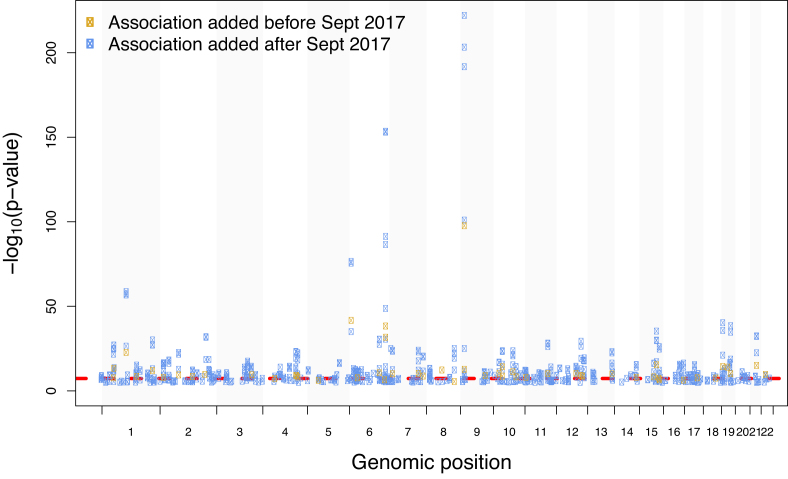
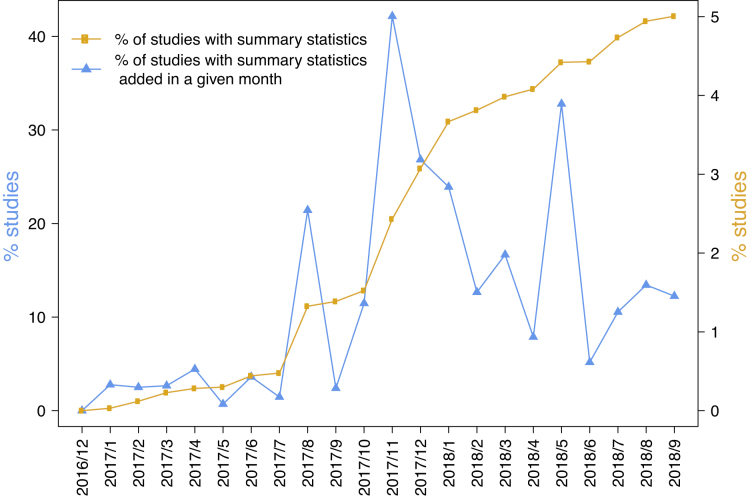
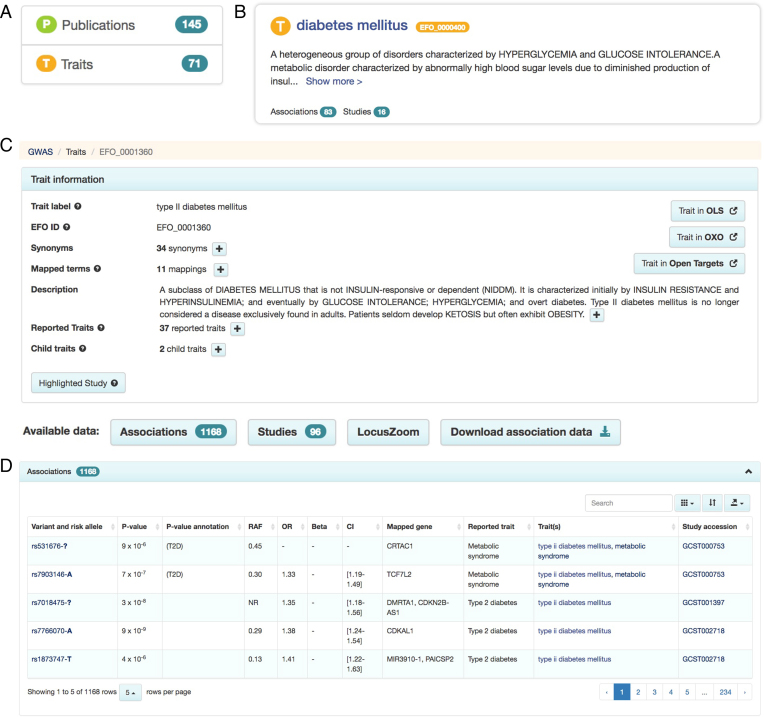
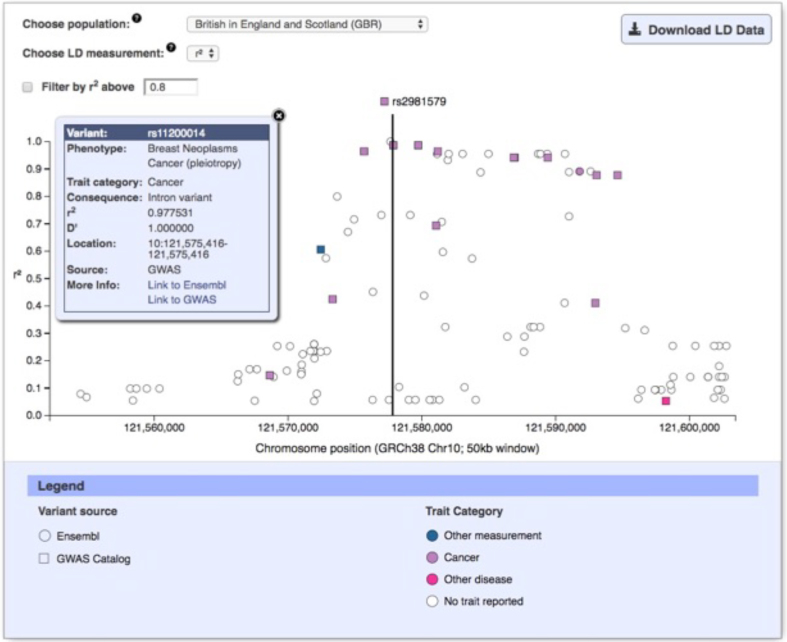
Verification
Claims the paper makes
The claims and statistics of this paper haven’t been checked yet.
Free: it reads the open-access text and checks the first 5 claims that cite a source we can check. Create a free account to check every claim.
Claims other papers make about this one
Each is checked against this paper’s own text: does it say what the citing paper says it does?
The source backs part of the claim, not all of it — or backs it for a different population, condition or comparison.
In the citing paper
“Of note, this region also includes one of the SNPs (rs10119) significantly associated with AD in the National Human Genome Research Institute catalog of published genome-wide association studies (NHGRI-GWAS33), indicating that this regulatory element may be involved in AD in humans (Fig. 6B).”
From Integrated analysis of behavioral, epigenetic, and gut microbiome analyses in AppNL-G-F, AppNL-F, and wild type mice (2021) · cites this paper as [33]
Experimental — accuracy not yet measuredThe source backs part of the claim, not all of it — or backs it for a different population, condition or comparison.
In the citing paper
“Genome-wide association studies (GWASs) have been employed to identify genetic variants in CS genes associated with AD onset [17].”
From Integrated multi-omics analysis revealed the molecular networks and potential targets of cellular senescence in Alzheimer’s disease (2025) · cites this paper as [17]
Experimental — accuracy not yet measuredThe cited source says what the claim attributes to it.
In the citing paper
“Although tens of thousands of associations have been discovered across thousands of common human diseases and traits44, multiple factors have frustrated efforts to convert these genetic signals to knowledge about causal variants, genes and mechanisms.”
From A brief history of human disease genetics (2020) · cites this paper as [44]
The cited source says what the claim attributes to it.
In the citing paper
“Of note, this region also includes one of the SNPs (rs10119) significantly associated with AD in the National Human Genome Research Institute catalog of published genome-wide association studies (NHGRI-GWAS33), indicating that this regulatory element may be involved in AD in humans (Fig. 6B).”
From Integrated analysis of behavioral, epigenetic, and gut microbiome analyses in AppNL-G-F, AppNL-F, and wild type mice (2021) · cites this paper as [33]
The check wasn’t confident either way, so it gives no verdict — never disputed.
In the citing paper
“To date, however, no large-scale molecular genetic studies have utilized the extensive degree of genetic overlap among externalizing traits to aid gene discovery, as most studies have focused on individual disorders6.”
From Multivariate analysis of 1.5 million people identifies genetic associations with traits related to self-regulation and addiction. (2021) · cites this paper as [6]
Experimental — accuracy not yet measured
6 more claims about this paper
Create a free account to see every claim other papers make about this one.
Self-check
Percentages, sums and reported differences re-computed from the paper’s own numbers.
The self-check needs the paper’s full text.
Citations
Cites
PLINK: a tool set for whole-genome association and population-based linkage analyses.
Purcell, S., Neale, B., Todd-Brown, K., Thomas, L., Ferreira, M. A. R., Bender, D., Maller, J., Sklar, P., de Bakker, P. I. W., Daly, M. J., et al. (2007) · The American Journal of Human Genetics · doi:10.1086/519795 · Cited by 34,089 · cited 1×
“Our standard format contains a minimal set of requirements that are included in the outputs from the most common GWAS analysis programs (such as PLINK, (29) and additional optional columns.”
The FAIR Guiding Principles for scientific data management and stewardship
Wilkinson, M. D., Dumontier, M., Aalbersberg, I. J., Appleton, G., Axton, M., Baak, A., Blomberg, N., Boiten, J.-W., da Silva Santos, L. B., Bourne, P. E., et al. (2016) · Scientific Data · doi:10.1038/sdata.2016.18 · Cited by 18,423
A global reference for human genetic variation
The 1000 Genomes Project Consortium, authors, C., Auton, A., Abecasis, G. R., Steering committee, Altshuler, D. M., Durbin, R. M., Abecasis, G. R., Bentley, D. R., Chakravarti, A., et al. (2015) · Nature · doi:10.1038/nature15393 · Cited by 18,247
Self-citationThe International HapMap Project
†The International HapMap Consortium, Genotyping centres: Baylor College of Medicine and ParAllele BioScience, Gibbs, R. A., Belmont, J. W., Hardenbol, P., Willis, T. D., Yu, F., Chinese HapMap Consortium, Yang, H., Ch'ang, L.-Y., et al. (2003) · Nature · doi:10.1038/nature02168 · Cited by 6,057
Self-citationThe Genotype-Tissue Expression (GTEx) pilot analysis: Multitissue gene regulation in humans
The GTEx Consortium, Ardlie, K. G., Deluca, D. S., Segrè, A. V., Sullivan, T. J., Young, T. R., Gelfand, E. T., Trowbridge, C. A., Maller, J. B., Tukiainen, T., et al. (2015) · Science · doi:10.1126/science.1262110 · Cited by 5,062
LocusZoom: regional visualization of genome-wide association scan results
Pruim, R. J., Welch, R. P., Sanna, S., Teslovich, T. M., Chines, P. S., Gliedt, T. P., Boehnke, M., Abecasis, G. R., & Willer, C. J. (2010) · Bioinformatics · doi:10.1093/bioinformatics/btq419 · Cited by 2,707
The new NHGRI-EBI Catalog of published genome-wide association studies (GWAS Catalog)
MacArthur, J., Bowler, E., Cerezo, M., Gil, L., Hall, P., Hastings, E., Junkins, H., McMahon, A., Milano, A., Morales, J., et al. (2017) · Nucleic Acids Research · doi:10.1093/nar/gkw1133 · Cited by 2,161 · cited 1×
“The NHGRI-EBI GWAS Catalog (www.ebi.ac.uk/gwas; (16)) is a publicly available resource of published human GWAS.”
Self-citationThe support of human genetic evidence for approved drug indications
Nelson, M. R., Tipney, H., Painter, J. L., Shen, J., Nicoletti, P., Shen, Y., Floratos, A., Sham, P. C., Li, M. J., Wang, J., et al. (2015) · Nature Genetics · doi:10.1038/ng.3314 · Cited by 1,666 · cited 2×
“estimate that the inclusion of genetic associations in the drug discovery process could double the success rate of targets in clinical development (8).”
Association analysis identifies 65 new breast cancer risk loci
Michailidou, K., Lindström, S., Dennis, J., Beesley, J., Hui, S., Kar, S., Lemaçon, A., Soucy, P., Glubb, D., Rostamianfar, A., et al. (2017) · Nature · doi:10.1038/nature24284 · Cited by 1,413 · cited 1×
“For over a decade, genome-wide association studies (GWAS) have contributed to the identification of reproducible genomic regions associated with an impressive number of common traits, including breast cancer (1,2), ovarian cancer (3), coronary artery disease (4), type 2 diabetes (5), osteoarthritis (6) and systemic lu…”
Yates, A., Akanni, W., Amode, M. R., Barrell, D., Billis, K., Carvalho-Silva, D., Cummins, C., Clapham, P., Fitzgerald, S., Gil, L., et al. (2016) · Nucleic Acids Research · doi:10.1093/nar/gkv1157 · Cited by 1,273
Self-citation
Cited by
Items 901–1,000 of 1,033
Chong, M., Narula, S., Morton, R. W., Judge, C. S., Akhabir, L., Cawte, N., Pathan, N., Lali, R., Mohammadi‐Shemirani, P., Shoamanesh, A., et al. (2021) · Neurology · doi:10.1212/wnl.0000000000013165 · Cited by 33
“UK Biobank mtDNACN GWAS summary statistics will be posted on the GWAS catalog.(39) GISCOME summary statistics are freely available to download from the Cerebrovascular Disease Knowledge Portal.”
MethodConstruction and Application of Polygenic Risk Scores in Autoimmune Diseases
Khunsriraksakul, C., Markus, H., Olsen, N. J., Carrel, L., Jiang, B., & Liu, D. J. (2022) · Frontiers in Immunology · doi:10.3389/fimmu.2022.889296 · Cited by 33
Look-alike humans identified by facial recognition algorithms show genetic similarities
Joshi, R. S., Rigau, M., García-Prieto, C. A., de Moura, M. C., Piñeyro, D., Morán, S., Dávalos, V., Carrión, P., Ferrando-Bernal, M., Olalde, Í., et al. (2022) · Cell Reports · doi:10.1016/j.celrep.2022.111257 · Cited by 38
GenoREC: A Recommendation System for Interactive Genomics Data Visualization
Pandey, A., L’Yi, S., Wang, Q., Borkin, M. A., & Gehlenborg, N. (2022) · IEEE Transactions on Visualization and Computer Graphics · doi:10.1109/tvcg.2022.3209407 · Cited by 38
Jia, G., Ping, J., Shu, X., Yang, Y., Cai, Q., Kweon, S., Choi, J.-Y., Kubo, M., Park, S. K., Bolla, M. K., et al. (2022) · The American Journal of Human Genetics · doi:10.1016/j.ajhg.2022.10.011 · Cited by 36
Genetic predictors of lifelong medication-use patterns in cardiometabolic diseases
Kiiskinen, T., Helkkula, P., Krebs, K., Karjalainen, J. M., Saarentaus, E., Mars, N., Lehistö, A., Zhou, W., Cordioli, M., Jukarainen, S., et al. (2023) · Nature Medicine · doi:10.1038/s41591-022-02122-5 · Cited by 33
Sommerer, Y., Dobričić, V., Schilling, M., Ohlei, O., Sabet, S. S., Wesse, T., Fuß, J., Franzenburg, S., Franke, A., Parkkinen, L., et al. (2023) · Alzheimer s Research & Therapy · doi:10.1186/s13195-023-01232-7 · Cited by 32
“uk/ gwas/ [37]) also revealed no noteworthy AD-related entries for CNFN, LIPE, PALD1, PRF1, or DIRAS1.”
BackgroundPathogen-specific innate immune response patterns are distinctly affected by genetic diversity
Häder, A., Schäuble, S., Gehlen, J., Thielemann, N., Buerfent, B. C., Schüller, V., Hess, T., Wolf, T., Schröder, J., Weber, M., et al. (2023) · Nature Communications · doi:10.1038/s41467-023-38994-5 · Cited by 36
Genetic determinants of IgG antibody response to COVID-19 vaccination
Bian, S., Guo, X., Yang, X., Wei, Y., Yang, Z., Cheng, S., Yan, J., Chen, Y., Chen, G., Du, X., et al. (2024) · The American Journal of Human Genetics · doi:10.1016/j.ajhg.2023.12.005 · Cited by 34
“38 For rs10947290-A in round 2,the annotationrevealsits location upstream of HLA-DRB9 , a pseudogene between HLA-DRB1 and HLA-DRA .”
BackgroundWen, J., Yang, Z., Nasrallah, I. M., Cui, Y., Erus, G., Srinivasan, D., Abdulkadir, A., Mamourian, E., Skampardoni, I., Hwang, G., et al. (2024) · Translational Psychiatry · doi:10.1038/s41398-024-03121-5 · Cited by 36
“For example, FDA-approved Niacin [R1; target gene: NNMT ; Anatomical Therapeutic Chemical (ATC) code: C10AD02] is a B vitamin used to treat various de fi ciencies and diseases in the cardiovascular system, including myocardial infarctions [62], hyperlipidemia [63], and coronary artery disease [64].”
BackgroundMethodInfluentialYang, Y., Shi, X., Jiao, Y., Huang, J., Chen, M., Zhou, X., Sun, L., Lin, X., Yang, C., & Liu, J. (2019) · Bioinformatics · doi:10.1093/bioinformatics/btz880 · Cited by 36
Fan, P., Qi, X., Sweet, R. A., & Wang, L. (2020) · Scientific Reports · doi:10.1038/s41598-020-63021-8 · Cited by 37
Zhang, J., Zhang, S., Qiao, J., Wang, T., & Zeng, P. (2023) · BMC Genomics · doi:10.1186/s12864-023-09434-x · Cited by 35
“4% (= 7,377/11,113, until 2023-4-25) of studies conducted in EUR but only a few in other populations [4].”
BackgroundMoksnes, M. R., Hansen, A. F., Wolford, B. N., Thomas, L. F., Rasheed, H., Simić, A., Bhatta, L., Brantsæter, A. L., Surakka, I. L., Zhou, W., et al. (2024) · Communications Biology · doi:10.1038/s42003-024-06101-z · Cited by 32
“Previouslypublishedlociwereidenti fi ed with a literature search and a look-up in the NHGRI-EBI GWAS catalog 116 .”
Torres‐Martos, Á., Anguita‐Ruiz, A., Bustos‐Aibar, M., Ramírez‐Mena, A., Arteaga, M., Bueno, G., Leis, R., Aguilera, C. M., Alcalá, R., & Alcalá‐Fdez, J. (2024) · Artificial Intelligence in Medicine · doi:10.1016/j.artmed.2024.102962 · Cited by 32
Single-cell multiomic analysis identifies macrophage subpopulations in promoting cardiac repair
Fu, M., Jia, S., Xu, L., Li, X., Lv, Y., Zhong, Y., & Ai, S. (2024) · Journal of Clinical Investigation · doi:10.1172/jci175297 · Cited by 31
“Next, we extracted single-nucleotide polymorphisms (SNPs) associated with cardiovascular diseases from the GWAS database (31) and accurately lifted over to the orthologous mouse genome, resulting in the identification of 4,313 SNPs (Supplemental Table 5).”
MethodIntegration of variant annotations using deep set networks boosts rare variant association testing
Clarke, B., Holtkamp, E., Öztürk, H., Mück, M., Wahlberg, M., Meyer, K., Munzlinger, F., Brechtmann, F., Hölzlwimmer, F. R., Lindner, J., et al. (2024) · Nature Genetics · doi:10.1038/s41588-024-01919-z · Cited by 37
“While genome-wide association studies (GWAS) on common variants have identified a compendium of trait-associated loci 2 , mapping these largely noncoding variants to affected genes and addressing the typically subtle effect sizes remain challenging 3,4 .”
Multi-ancestry genome-wide association analyses of polycystic ovary syndrome
Zhao, H., Xu, Y., Xue, B., Zhao, S., Zhang, M., Wu, X., Wang, T., Wen, Y., Li, S., Zhang, Q., et al. (2025) · Nature Genetics · doi:10.1038/s41588-025-02393-x · Cited by 36
“Previously reported SNPs located within 250 kb of the lead variants were extracted from the GWAS Catalog 64 (as of 20 May 2024).”
Zhao, Q., Dacre, M., Nguyen, T., Pjanic, M., Liu, B., Iyer, D., Cheng, P. P., Wirka, R. C., Kim, J. B., Fraser, H. B., et al. (2020) · Genome biology · doi:10.1186/s13059-020-02049-5 · Cited by 34
“GWAS catalog data came from NHGRI-EBI [18].”
MethodInfluentialLundtoft, C., Pucholt, P., Imgenberg‐Kreuz, J., Almlöf, J. C., Eloranta, M., Syvänen, A., Nordmark, G., Sandling, J. K., Kockum, I. S., Olsson, T. P., et al. (2020) · PLoS Genetics · doi:10.1371/journal.pgen.1009199 · Cited by 32
“Genome-wide association studies (GWAS) have identified thousands of inflammatory disease-associated single nucleotide polymorphisms (SNPs) [6] and many of these are located in genes connected to the IFN system [7].”
Li, G., Zhang, B., Hao, J., Chu, X., Wiestler, M., Cornberg, M., Xu, C., Liu, X., & Li, Y. (2021) · Cellular and Molecular Gastroenterology and Hepatology · doi:10.1016/j.jcmgh.2021.01.020 · Cited by 50
Human intelectin-1 (ITLN1) genetic variation and intestinal expression
Nonnecke, E. B., Castillo, P. A., Dugan, A. E., Almalki, F., Underwood, M. A., de la Motte, C. A., Yuan, W., Lu, W., Shen, B., Johansson, M., et al. (2021) · Scientific Reports · doi:10.1038/s41598-021-92198-9 · Cited by 31
Díez‐Obrero, V., Moratalla-Navarro, F., Ibáñez‐Sanz, G., Guardiola, J., Rodríguez‐Moranta, F., Obón‐Santacana, M., Díez-Villanueva, A., Dampier, C. H., Devall, M. A. M., Carreras‐Torres, R., et al. (2021) · Journal of Crohn s and Colitis · doi:10.1093/ecco-jcc/jjab131 · Cited by 32
TCF7L2 lncRNA: a link between bipolar disorder and body mass index through glucocorticoid signaling
Liu, D., Nguyen, T. T. L., Gao, H., Huang, H., Kim, D. C., Sharp, B., Ye, Z., Lee, J., Coombes, B. J., Ördög, T., et al. (2021) · Molecular Psychiatry · doi:10.1038/s41380-021-01274-z · Cited by 33
Giacopuzzi, E., Popitsch, N. P., & Taylor, J. C. (2022) · Nucleic Acids Research · doi:10.1093/nar/gkac130 · Cited by 34
Dynamic 3D genome reorganization during development and metabolic stress of the porcine liver
Chen, L., Li, J., Yuan, R., Wang, Y., Zhang, J., Lin, Y., Wang, L., Zhu, X., Zhu, W., Bai, J., et al. (2022) · Cell Discovery · doi:10.1038/s41421-022-00416-z · Cited by 52
Target Discovery for Drug Development Using Mendelian Randomization
Evans, D. S. (2022) · Methods in molecular biology · doi:10.1007/978-1-0716-2573-6_1 · Cited by 33
3D genome organization links non-coding disease-associated variants to genes
Orozco, G., Schoenfelder, S., Walker, N. J., Eyre, S., & Fraser, P. (2022) · Frontiers in Cell and Developmental Biology · doi:10.3389/fcell.2022.995388 · Cited by 31
“Since then, more than 5,600 GWAS have been published, identifying over 370,000 associations (Buniello et al., 2019), with samples sizes that now surpass 1 million individuals (Lee et al., 2018; Jansen et al., 2019).”
BackgroundCooper, P. J., Figueiredo, C. A., Rodríguez, A., dos Santos, L. M., Ribeiro‐Silva, R. C., Carneiro, V. L., Costa, G., da Silva, T. M., de Jesus, T. D. S., Rios, R., et al. (2023) · Clinical and Translational Allergy · doi:10.1002/clt2.12232 · Cited by 31
“Of all GWAS analyses, only 0.31% have been done in Hispanic or LA populations, while greater than 90% have been done in European‐derived populations.121,122 Of 180 studies with asthma as the main outcome, only 15 included Latin Americans.123 Greater diversity among participants of genetic studies will improve our unde…”
BackgroundInfluentialThelwall, M. A. (2019) · Quantitative Science Studies · doi:10.1162/qss_a_00003 · Cited by 35
“As an example, one paper reports a type of cancer risk for patients (Clifford et al., 2008).”
BackgroundZhang, G., Byun, H. R., Ying, Z., Blencowe, M., Zhao, Y., Hong, J. S., Shu, L., Krishnan, K. C., Gómez‐Pinilla, F., & Yang, X. (2019) · Biochimica et Biophysica Acta (BBA) - Molecular Basis of Disease · doi:10.1016/j.bbadis.2019.165569 · Cited by 33
COVID-19 research risks ignoring important host genes due to pre-established research patterns
Stoeger, T., & Nunes Amaral, L. A. (2020) · eLife · doi:10.7554/elife.61981 · Cited by 30
“Of additional interest in the context of COVID-19, FYCO1 is associated with the levels of the monocyte chemoattractant protein1 (Ahola-Olli et al., 2017; Buniello et al., 2019), which contributes to COVID-19 through hyperinflammation (Mehta et al., 2020).”
BackgroundHwang, W., Yong, J. H., Min, K. B., Lee, K., Pascoe, B., Sheppard, S. K., & Yoon, S. S. (2021) · PLoS Pathogens · doi:10.1371/journal.ppat.1009681 · Cited by 32
“Genome-wide association studies (GWASs) have been useful in uncovering causal relationships between genetic variations and disease phenotypes in human populations [18], with over 4,000 human GWAS conducted to date [19].”
BackgroundAn allelic-series rare-variant association test for candidate-gene discovery
McCaw, Z. R., O’Dushlaine, C. T., Somineni, H., Bereket, M. D., Klein, C., Karaletsos, T., Casale, F. P., Koller, D., & Soare, T. W. (2023) · The American Journal of Human Genetics · doi:10.1016/j.ajhg.2023.07.001 · Cited by 33
“For each trait of interest, common-variant associations were obtained from the NHGRI-EBI GWAS Portal [37, 38] and filtered to those having p 5 × 10 − 8 .”
MethodThe phenotype-genotype reference map: Improving biobank data science through replication
Bastarache, L. A., Delozier, S., Pandit, A., He, J., Lewis, A. J., Annis, A. C., LeFaive, J., Denny, J. C., Carroll, R. J., Altman, R. B., et al. (2023) · The American Journal of Human Genetics · doi:10.1016/j.ajhg.2023.07.012 · Cited by 32
“To facilitate phenome-wide replication studies across biobanks, we created the phenotype-genotype reference map (PGRM), a set of genotype associations selected from the National Human Genome Research Institute and European Bioinformatics Institute (NHGRI-EBI) GWAS catalog.(24) Best practice guidelines for replication…”
MethodRomanovsky, E., Choudhary, A., Peles, D., Abu-Akel, A. M., & Stern, S. (2024) · Molecular Psychiatry · doi:10.1038/s41380-024-02740-0 · Cited by 32
Heterogeneous genetic architectures of prostate cancer susceptibility in sub-Saharan Africa
Janivara, R., Chen, W. C., Hazra, U., Baichoo, S., Agalliu, I., Kachambwa, P., Simonti, C. N., Brown, L., Tambe, S. P., Kim, M. S., et al. (2024) · Nature Genetics · doi:10.1038/s41588-024-01931-3 · Cited by 33
“This tool enabled us to filter associations that were not in high LD ( r 2 0.2, pooled data from all 26 populations in the 1KGP) with known associations from NHGRI-EBI GWAS Catalog 77 .”
InfluentialAgentic AI and the rise of in silico team science in biomedical research
Li, B.-L., Saini, A., Hernandez, J. G., & Moore, J. H. (2026) · Nature Biotechnology · doi:10.1038/s41587-026-03035-1 · Cited by 35
“One approach to mitigating privacy concerns is to train foundational models on publicly available databases such as the GWAS Catalog 127 and the GenBank genetic sequence repository 128 , while ensuring that private databases continue to protect patient-level data.”
TSEA-DB: a trait–tissue association map for human complex traits and diseases
Jia, P., Dai, Y., Hu, R., Pei, G., Manuel, A. M., & Zhao, Z. (2019) · Nucleic Acids Research · doi:10.1093/nar/gkz957 · Cited by 33
“The GWAS summary statistics data were collected and processed from the following sources: major multi-trait studies (21,24,25), GWAS Catalog (26), the UK Biobank (UKBB) resource (http://www.nealelab.is/ukbiobank) (2), and extensive literature mining.”
MethodInfluentialProtein-Protein interactions uncover candidate ‘core genes’ within omnigenic disease networks
Ratnakumar, A., Weinhold, N., Mar, J. C., & Riaz, N. (2020) · PLoS Genetics · doi:10.1371/journal.pgen.1008903 · Cited by 31
“Since the majority of GWAS hits are in intergenic regions, and the putative causal gene is inferred by the closest location [29], it is likely that this inference may often not identify the true causal gene.”
BackgroundMethodInfluentialStimulation of exosome biogenesis by adiponectin, a circulating factor secreted from adipocytes
Kita, S., & Shimomura, I. (2020) · The Journal of Biochemistry · doi:10.1093/jb/mvaa105 · Cited by 31
Byun, J., Han, Y., Ostrom, Q. T., Edelson, J. L., Walsh, K. M., Pettit, R. W., Bondy, M. L., Hung, R. J., McKay, J., & Amos, C. I. (2021) · Cancer Epidemiology Biomarkers & Prevention · doi:10.1158/1055-9965.epi-20-1635 · Cited by 33
“To attenuate the contribution of smoking-related variants to these LDSR associations, chromosomal regions ( 500 kb) centered on 473 SNPs associated with smoking traits such as cigarettes per day, smoking initiation, smoking cessation, initiation age of regular smoking, and nicotine dependence were excluded from lung c…”
BackgroundDíaz-Gallo, L.-M., Brynedal, B., Westerlind, H., Sandberg, R., & Ramsköld, D. (2021) · PLoS ONE · doi:10.1371/journal.pone.0250282 · Cited by 30
“Genetic mapping studies of complex human traits have identified thousands of genetic loci implicated in the susceptibility to complex diseases [1, 2].”
BackgroundPerrin, H. J., Currin, K. W., Vadlamudi, S., Pandey, G. K., Ng, K. K. H., Wabitsch, M., Laakso, M., Love, M. I., & Mohlke, K. L. (2021) · PLoS Genetics · doi:10.1371/journal.pgen.1009865 · Cited by 31
“To identify genetic variants that may have context-dependent effects on disease-relevant traits, we identified distinct signals from the GWAS catalog [40] (see Methods) for which a proxy variant (LD r(2)>0.”
BackgroundMethodInfluentialSearching for robust associations with a multi-environment knockoff filter
Li, S., Sesia, M., Romano, Y., Candès, E. J., & Sabatti, C. (2021) · Biometrika · doi:10.1093/biomet/asab055 · Cited by 39
Yamada, M., Motoike, I. N., Kojima, K., Fuse, N., Hozawa, A., Kuriyama, S., Katsuoka, F., Tadaka, S., Shirota, M., Sakurai, M., et al. (2021) · Communications Biology · doi:10.1038/s42003-021-02813-8 · Cited by 32
Identification of Druggable Genes for Asthma by Integrated Genomic Network Analysis
Adikusuma, W., Chou, W., Lin, M., Ting, J., Irham, L. M., Perwitasari, D. A., Chang, W.-P., & Chang, W. (2022) · Biomedicines · doi:10.3390/biomedicines10010113 · Cited by 32
“We acquired asthmaassociated single-nucleotide polymorphisms (SNPs) through genome-wide association studies (GWASs) [17] and Phenome-wide association studies (PheWAS) Catalog [18] on 8 May 8 2019.”
MethodGenetic Diagnostics in Routine Osteological Assessment of Adult Low Bone Mass Disorders
Oheim, R., Tsourdi, E. A., Seefried, L., Beller, G., Schubach, M., Vettorazzi, E., Stürznickel, J., Rolvien, T., Ehmke, N., Delsmann, A., et al. (2022) · The Journal of Clinical Endocrinology & Metabolism · doi:10.1210/clinem/dgac147 · Cited by 32
“For proof of concept, twenty single nucleotide polymorphisms (SNPs) were used to calculate a basic genetic risk score (GRS) and predicted its effect on BMD relative to healthy controls (Supplement Table S2)(24,29,30).”
MethodLi, Q., Wang, Y., Hu, X., Zhang, Y., Li, H., Zhang, Q., Cai, W., Wang, Z., Zhu, B., Xu, L., et al. (2022) · Cell Proliferation · doi:10.1111/cpr.13219 · Cited by 32
“Genome-wide association studies (GWAS) have proved to be an effective and promising approach for the identification of genetic variants associated with complex traits.(97) However, most of these genetic variants are located in non-coding regions and a push for annotation of”
BackgroundEnvironmentally sensitive hotspots in the methylome of the early human embryo
Silver, M. J., Saffari, A., Kessler, N. J., Chandak, G. R., Fall, C. H. D., Issarapu, P., Dedaniya, A., Betts, M., Moore, S. E., Routledge, M. N., et al. (2022) · eLife · doi:10.7554/elife.72031 · Cited by 33
Temprano‐Sagrera, G., Sitlani, C. M., Bone, W. P., Martín‐Bórnez, M., Voight, B. F., Morrison, A. C., Damrauer, S. M., de Vries, P. S., Smith, N. L., Sabater‐Lleal, M., et al. (2022) · Journal of Thrombosis and Haemostasis · doi:10.1111/jth.15698 · Cited by 36
Evolution of single‐nucleotide polymorphism use in forensic genetics
Novroski, N. M. M., & Cihlar, J. C. (2022) · Wiley Interdisciplinary Reviews Forensic Science · doi:10.1002/wfs2.1459 · Cited by 35
Nieves-Colón, M. A., Rivera, K. M. B., Sandoval, K., Dávalos, V. V., Lencinas, L. E. E., Mendoza‐Revilla, J., Adhikari, K., González-Buenfil, R., Chen, J. W., Zhang, E., et al. (2022) · The American Journal of Human Genetics · doi:10.1016/j.ajhg.2022.04.014 · Cited by 30
Xin, J., Gu, D., Chen, S., Ben, S., Li, H., Zhang, Z., Du, M., & Wang, M. (2022) · Nucleic Acids Research · doi:10.1093/nar/gkac677 · Cited by 32
Discerning asthma endotypes through comorbidity mapping
Jia, G., Zhong, X. Y., Im, H. K., Schoettler, N., Pividori, M., Hogarth, D. K., Sperling, A. I., White, S. R., Naureckas, E. T., Lyttle, C. S., et al. (2022) · Nature Communications · doi:10.1038/s41467-022-33628-8 · Cited by 31
Migraine and thyroid dysfunction: Co‐occurrence, shared genes and biological mechanisms
Tasnim, S., & Nyholt, D. R. (2023) · European Journal of Neurology · doi:10.1111/ene.15753 · Cited by 30
“As of February 2022, 5595 GWAS have been published, reporting 195,610 unique SNPs and 326,947 individual associations with thousands of traits [83].”
BackgroundPrasad, G., Bandesh, K., Giri, A., Kauser, Y., Chanda, P., Parekatt, V., INDICO, Mathur, S. K., Madhu, S. V., Venkatesh, P., et al. (2019) · Biomolecules · doi:10.3390/biom9080321 · Cited by 32
“Discovered MC4R locus is a previously documented signal for obesity and type 2 diabetes (rs17782313 and rs12970134) in multiple ethnic cohorts [41].”
BackgroundHughey, J., Rhoades, S. D., Fu, D., Bastarache, L. A., Denny, J. C., & Chen, Q. (2019) · BMC Genomics · doi:10.1186/s12864-019-6192-1 · Cited by 30
“2 r2018-08-30 (Additional file 1: Table S1) [22].”
Targeted RNA sequencing enhances gene expression profiling of ultra-low input samples
Curion, F., Handel, A. E., Attar, M., Gallone, G., Bowden, R. J., Cader, M. Z., & Clark, M. B. (2020) · RNA Biology · doi:10.1080/15476286.2020.1777768 · Cited by 33
“10 [25]); and filtered to retain only those with p values <5x10 [26].”
BackgroundComputational and experimental methods for classifying variants of unknown clinical significance.
Spielmann, M., & Kircher, M. (2022) · PubMed Central · doi:10.1101/mcs.a006196 · Cited by 34
“…like ClinVar (Landrum and Kattman 2018) or variants curated from literature like HGMD (Stenson et al. 2020), but also variants implicated by genome-wide association studies (GWASs) and QTL studies like the GWAS catalog (Buniello et al. 2019) or the GTEx expression QTLs (GTEx Consortium 2020).”
BackgroundAntontseva, E. V., Degtyareva, A. O., Korbolina, E. E., Damarov, I. S., & Merkulova, T. I. (2023) · Vavilov Journal of Genetics and Breeding · doi:10.18699/vjgb-23-77 · Cited by 38
AI/ML advances in non-small cell lung cancer biomarker discovery
Çalışkan, M., & Tazaki, K. (2023) · Frontiers in Oncology · doi:10.3389/fonc.2023.1260374 · Cited by 30
Unlocking the potential of big data and AI in medicine: insights from biobanking
Akyüz, K., Abadía, M. C., Goisauf, M., & Mayrhofer, M. T. (2024) · Frontiers in Medicine · doi:10.3389/fmed.2024.1336588 · Cited by 32
“…in the genomics world, efforts to standardize and make genomic data accessible such as summary statistics of genome-wide association studies is picking up pace (31, 32) as well as the development of trusted research environments despite critique (33) with specific tools, such as DataSHIELD (34).”
BackgroundZhang, D., Cheng, J., Li, X., Huang, K., Yuan, L., Zhao, Y., Xu, D., Zhang, Y., Zhao, L., Yang, X., et al. (2024) · iMeta · doi:10.1002/imt2.254 · Cited by 32
“Genome ‐ wide association studies (GWAS) have been widely used to understand the genetic architecture of diseases and complex traits in humans and other livestock species [2 – 5].”
The impact of common and rare genetic variants on bradyarrhythmia development
Weng, L.-C. C., Rämö, J. T., Jurgens, S. J., Khurshid, S. S., Chaffin, M. D., Hall, A. W., Morrill, V. N., Wang, X., Nauffal, V., Sun, Y. V., et al. (2025) · Nature Genetics · doi:10.1038/s41588-024-01978-2 · Cited by 29
Genome-wide analysis identifies novel shared loci between depression and white matter microstructure
Zhao, Q., Wang, S., Xiong, D., Liu, M., Zhang, Y., Zhao, G., Zhao, J., Shi, Z., Zhang, Z., Lei, M., et al. (2025) · Molecular Psychiatry · doi:10.1038/s41380-025-02932-2 · Cited by 31
“For a complete description of the procedures employed, please refer to Supplementary Methods.”
Functional phenotyping of genomic variants using joint multiomic single-cell DNA–RNA sequencing
Lindenhofer, D., Bauman, J., Hawkins, J. A., Fitzgerald, D., Yildiz, U., Jung, H., Korosteleva, A., Marttinen, M., Kueblbeck, M., Zaugg, J. B., et al. (2025) · Nature Methods · doi:10.1038/s41592-025-02805-0 · Cited by 31
JASS: command line and web interface for the joint analysis of GWAS results
Julienne, H., Lechat, P., Guillemot, V., Lasry, C., Yao, C., Araud, R., Laville, V., Vilhjálmsson, B. J., Ménager, H., & Aschard, H. (2020) · NAR Genomics and Bioinformatics · doi:10.1093/nargab/lqaa003 · Cited by 46
“For example, as of May 2019, the NHGRI-EBI GWAS Catalog contains the results from 3989 GWAS (1).”
BackgroundAncestry effects on type 2 diabetes genetic risk inference in Hispanic/Latino populations
Chande, A. T., Rishishwar, L., Conley, A. B., Valderrama-Aguirre, A., Medina-Rivas, M. A., & Jordan, I. K. (2020) · BMC Medical Genetics · doi:10.1186/s12881-020-01068-0 · Cited by 34
“The power to infer genetic risk for complex common diseases, such as T2D, has exploded in recent years owing to the accumulation of GWAS for a wide variety of health-related traits [10, 11].”
BackgroundMethodInfluentialTranslational biomarkers in the era of precision medicine
Bravo-Merodio, L., Acharjee, A., Russ, D., Bisht, V., Williams, J. A., Tsaprouni, L., & Gkoutos, G. V. (2020) · Advances in clinical chemistry · doi:10.1016/bs.acc.2020.08.002 · Cited by 31
8q24.21 Locus: A Paradigm to Link Non-Coding RNAs, Genome Polymorphisms and Cancer
Wilson, C., & Kanhere, A. (2021) · International Journal of Molecular Sciences · doi:10.3390/ijms22031094 · Cited by 31
“Similarly, SNPs associated with cancers have been shown to be located within intron 1 of PVT1 which can modify promoter strength of the gene [36].”
BackgroundMethodDeep learning model reveals potential risk genes for ADHD, especially Ephrin receptor gene EPHA5
Liu, L., Feng, X., Li, H., Li, S. C., Qian, Q., & Wang, Y. (2021) · Briefings in Bioinformatics · doi:10.1093/bib/bbab207 · Cited by 30
“Moreover, we queried all genes of the top 100 SNPs from ‘GWAS Catalog’ database [30] and found that 14 genes (out of 100 genes) have been reported in previous ADHD-related studies (see Table 2), which proved that our model has the potential to discover ADHD-related genes using saliency analysis.”
MethodGenetic Ancestry Inference and Its Application for the Genetic Mapping of Human Diseases
Suarez-Pajes, E., Usera, A. D.-D., Marcelino-Rodríguez, I., Guillén‐Guío, B., & Flores, C. (2021) · International Journal of Molecular Sciences · doi:10.3390/ijms22136962 · Cited by 32
“Since 2005, genome-wide association studies (GWAS) have allowed the identification of thousands of genetic loci associated with many traits, including complex diseases [61].”
BackgroundInnate immune response analysis in COVID-19 and kawasaki disease reveals MIS-C predictors
Yang, C.-A., Huang, Y., & Chiang, B. (2021) · Journal of the Formosan Medical Association · doi:10.1016/j.jfma.2021.06.009 · Cited by 29
Cindrić, A., Krištić, J., Kavur, M. M., & Pezer, M. (2021) · Advances in experimental medicine and biology · doi:10.1007/978-3-030-70115-4_17 · Cited by 34
Haswell, J. R., Mattioli, K., Gerhardinger, C., Maass, P. G., Foster, D. J., Peinado, P., Wang, X., Medina, P. P., Rinn, J. L., & Slack, F. J. (2021) · PLoS ONE · doi:10.1371/journal.pone.0252848 · Cited by 32
“GWAS We downloaded the list of GWAS Catalog (all associations, v.1.0.2) from https://www.ebi.ac.uk/gwas/docs/file-downloads (Buniello et al., 2019).”
MethodInfluentialEpitranscriptomics of cardiovascular diseases (Review)
Leptidis, S., Papakonstantinou, E., Diakou, K. I., Pierouli, K., Mitsis, Τ., Dragoumani, K., Bacopoulou, F., Sanoudou, D., Chrousos, G. P., & Vlachakis, D. P. (2021) · International Journal of Molecular Medicine · doi:10.3892/ijmm.2021.5064 · Cited by 30
A Review of Breast Cancer Risk Factors in Adolescents and Young Adults
McVeigh, U. M., Tepper, J. W., & McVeigh, T. P. (2021) · Cancers · doi:10.3390/cancers13215552 · Cited by 30
Afrasiabi, A., Keane, J. T., Ong, L. T. C., Alinejad‐Rokny, H., Fewings, N., Booth, D. R., Parnell, G. P., & Swaminathan, S. (2021) · Journal of Autoimmunity · doi:10.1016/j.jaut.2021.102781 · Cited by 31
Implications of topological imbalance for representation learning on biomedical knowledge graphs
Bonner, S., Kirik, U., Engkvist, O., Tang, J., & Barrett, I. P. (2022) · Briefings in Bioinformatics · doi:10.1093/bib/bbac279 · Cited by 38
Boua, P. R., Brandenburg, J., Choudhury, A., Sorgho, H., Nonterah, E. A., Agongo, G., Asiki, G., Micklesfield, L. K., Choma, S., Gómez-Olivé, F. X., et al. (2022) · Nature Communications · doi:10.1038/s41467-022-28276-x · Cited by 31
Deep neural network prediction of genome-wide transcriptome signatures – beyond the Black-box
Magnusson, R., Tegner, J. N., & Gustafsson, M. (2022) · npj Systems Biology and Applications · doi:10.1038/s41540-022-00218-9 · Cited by 31
“To this end, using each hidden node, we performed a genome-wide association study (GWAS) enrichment analysis between annotations in the NHGRI-EBI GWAS catalog 31 and the 500 genes with the highest light-up associations.”
Somatic mutational profiles and germline polygenic risk scores in human cancer
Liu, Y., Gusev, A., Heng, Y. J., Alexandrov, L. B., & Kraft, P. L. (2022) · Genome Medicine · doi:10.1186/s13073-022-01016-y · Cited by 31
“For cancer PRS, the list of SNPs and corresponding weights were obtained from one of the four sources: (i) GWAS or PRS paper, (ii) NHGRI-EBI GWAS Catalog [32], (iii) Cancer PRSweb [33], and (iv) The Polygenic Score (PGS) Catalog [34].”
MethodApplying Mendelian randomization to appraise causality in relationships between nutrition and cancer
Wade, K. H., Yarmolinsky, J. W., Giovannucci, E. L., Lewis, S. J., Millwood, I. Y., Munafo, M. R., Meddens, S. F. W., Burrows, K., Bell, J. A., Davies, N. M., et al. (2022) · Cancer Causes & Control · doi:10.1007/s10552-022-01562-1 · Cited by 36
Ghandikota, S. K., Sharma, M., Ediga, H. H., Madala, S. K., & Jegga, A. G. (2022) · International Journal of Molecular Sciences · doi:10.3390/ijms23105447 · Cited by 32
“Interestingly, these modules consisted of 6 GWA genes (ABCA3, OBFC1, TOLLIP, SFTPC, ATP11A, and DEPTOR) reported to be associated with IPF [29].”
BackgroundMethodRuskovska, T., Budić-Leto, I., Corral‐Jara, K. F., Ajdžanović, V. Z., Arola‐Arnal, A., Bravo, F. I., Deligiannidou, G.-E., Havlík, J., Janeva, M., Kistanova, E. K., et al. (2022) · Ageing Research Reviews · doi:10.1016/j.arr.2022.101649 · Cited by 32
Gilchrist, J. J., Makino, S., Naranbhai, V., Sharma, P. K., Koturan, S., Tong, O., Taylor, C. A., Watson, R. A., Aires, A. V. D. L., Cooper, R. A., et al. (2022) · Nature Communications · doi:10.1038/s41467-022-31626-4 · Cited by 31
“We used RTC to test for colocalisation at cis eQTL with 87,919 GWAS-significant loci (p 5 × 10⁻⁸) from 5,823 GWAS studies/traits downloaded on 28/01/2021 from the NHGRI-EBI GWAS Catalog[8] (Table S1).”
BackgroundMethodInfluentialSex differences in interindividual gene expression variability across human tissues
Khodursky, S., Jiang, C. S., Zheng, E. B., VAUGHAN, R. D., Schrider, D. R., & Zhao, L. (2022) · PNAS Nexus · doi:10.1093/pnasnexus/pgac243 · Cited by 32
Rare genetic variants impact muscle strength
Huang, Y., Bodnár, D., Chen, C., Sánchez-Andrade, G., Sanderson, M., Biogen Biobank Team, Whelan, C. D., Bronson, P. G., Sexton, D., John, S., et al. (2023) · Nature Communications · doi:10.1038/s41467-023-39247-1 · Cited by 30
Cai, M., Wang, Z., Xiao, J., Hu, X., Chen, G., & Yang, C. (2023) · Nature Communications · doi:10.1038/s41467-023-42614-7 · Cited by 37
“Genome-wide association studies (GWASs) have reported hundreds of thousands of associations 16 between single-nucleotide polymorphisms (SNPs) and various phenotypes [1], but most reported 17 SNPs reside in non-coding regions [2, 3, 4].”
BackgroundGouveia, M. H., Bentley, A. R., Leal, T. P., Tarazona‐Santos, E., Bustamante, C. D., Adeyemo, A., Rotimi, C. N., & Shriner, D. (2023) · Nature Communications · doi:10.1038/s41467-023-42491-0 · Cited by 31
“We observed moderate correlation in four studies (Mantel ’ s rho from 0.46 to 0.53, p 0.001), with GENOA not showing a signi fi cant correlation (Supplementary Data 14).”
InfluentialMultimodal analysis methods in predictive biomedicine
Qoku, A., Katsaouni, N., Flinner, N., Buettner, F., & Schulz, M. H. (2023) · Computational and Structural Biotechnology Journal · doi:10.1016/j.csbj.2023.11.011 · Cited by 29
Skampardoni, I., Nasrallah, I. M., Abdulkadir, A., Wen, J., Melhem, R., Mamourian, E., Erus, G., Doshi, J., Singh, A., Yang, Z., et al. (2024) · JAMA Psychiatry · doi:10.1001/jamapsychiatry.2023.5599 · Cited by 28
Local patterns of genetic sharing between neuropsychiatric and insulin resistance-related conditions
Fanelli, G., Franke, B., Fabbri, C., Werme, J., Erdogan, I., Witte, W. D., Poelmans, G., Ruisch, I. H., Reus, L. M., van Gils, V., et al. (2025) · Translational Psychiatry · doi:10.1038/s41398-025-03349-9 · Cited by 28
“Tocontextualise our fi ndings within the broader landscape of known disease associations, we also investigated the overrepresentation of the identi fi ed genes within those previously associated with traits or diseases by querying the NHGRI-EBI GWAS Catalog [29].”
Herrera-Rivero, M., Stoll, M., Hegenbarth, J.-C., Rühle, F., Limperger, V., Junker, R., Franke, A., Hoffmann, P., Shneyder, M., Stach, M., et al. (2021) · Thrombosis and Haemostasis · doi:10.1055/s-0041-1723988 · Cited by 31
Drebrin attenuates atherosclerosis by limiting smooth muscle cell transdifferentiation
Wu, J., Zhang, L., Nepliouev, I., Brian, L., Huang, T.-Q., Snow, K. P., Schickling, B., Hauser, E. R., Miller, F. J., Freedman, N. J., et al. (2021) · Cardiovascular Research · doi:10.1093/cvr/cvab156 · Cited by 30
Advani, D., & Kumar, P. (2021) · ACS Omega · doi:10.1021/acsomega.1c01526 · Cited by 30
Gao, C., Marcketta, A., Backman, J., O’Dushlaine, C. T., Staples, J. C., Ferreira, M. A. R., Lotta, L. A., Overton, J. D., Reid, J. G., Mirshahi, T., et al. (2021) · Genetic Epidemiology · doi:10.1002/gepi.22392 · Cited by 29
Gaining insight into metabolic diseases from human genetic discoveries
Claussnitzer, M., & Suszták, K. (2021) · Trends in Genetics · doi:10.1016/j.tig.2021.07.005 · Cited by 30
Sequencing-based genome-wide association studies reporting standards
McMahon, A., Lewis, E., Buniello, A., Cerezo, M., Hall, P., Sollis, E., Parkinson, H., Hindorff, L. A., Harris, L. W., & MacArthur, J. A. L. (2021) · Cell Genomics · doi:10.1016/j.xgen.2021.100005 · Cited by 32
“The data content of single-variant summary statistics for seqGWAS is comparable with that for standard-array GWASs and can conform to emerging standards.(11,50) However, summary statistics for aggregate analysis in seqGWAS are commonly composed only of a gene name (or other range specifying chromosomal coordinates), p…”
Self-citation
Metadata
- Authors
- Buniello, A., MacArthur, J. A. L., Cerezo, M., Harris, L. W., Hayhurst, J., Malangone, C., McMahon, A., Morales, J., Mountjoy, E., Sollis, E., Suveges, D., Vrousgou, O., Whetzel, P. L., Amode, R., Guillen, J. A., Riat, H. S., Trevanion, S. J., Hall, P., Junkins, H., Flicek, P., Burdett, T., Hindorff, L. A., Cunningham, F., & Parkinson, H.
- Affiliations
- European Bioinformatics Institute (GB)
- European Molecular Biology Laboratory, European Bioinformatics Institute, Wellcome Genome Campus, Hinxton, Cambridge CB10 1SD, UK
- Centre for Human Genetics (GB)
- National Institutes of Health (US)
- Corresponding author
- Parkinson, Helen
- ORCID
- Venue
- Nucleic Acids Research
- Publisher
- Oxford University Press (OUP)
- Published
- 2018-11-16
- Volume
- 47
- Issue
- D1
- Pages
- D1005-D1012
- ISSN
- 0305-1048 (ISSN-L)
- 1362-4962
- PMC
- PMC6323933
- OpenAlex
- W2901303766
- Semantic Scholar
- c4a71f9579395b92e4696fdf6e9003a54f6eafcf
- Cited by
- 4,000
- References
- 39
- Citations by year
- 2026: 219 · 2025: 302 · 2024: 552 · 2023: 651 · 2022: 815 · 2021: 804 · 2020: 476 · 2019: 173 · 2018: 3
- FWCI
- 231.93
- Type
- journal article
- Language
- en
- Open access
- gold
- doi.org
- Licence
- Locations
- Nucleic Acids Research (publishedVersion, cc-by)
- Europe PMC (PubMed Central) (publishedVersion, cc-by)
- PubMed Central (publishedVersion, cc-by)
- PubMed (publishedVersion)
- Acceda (Universidad de Las Palmas de Gran Canaria) (submittedVersion)
- Funders
- National Institutes of Health (U41-HG007823)
- Topics
- Life Sciences › Biochemistry, Genetics and Molecular Biology › Genetics › Genetic Associations and Epidemiology
- Life Sciences › Biochemistry, Genetics and Molecular Biology › Molecular Biology › Bioinformatics and Genomic Networks
- Physical Sciences › Computer Science › Information Systems › Research Data Management Practices
- Keywords
- GWAS Catalog, genome-wide association study, summary statistics, causal variants, disease mechanisms, therapeutic target, REST API, data harmonization
- MeSH terms
- Disease, Humans, Publications, Software, User-Computer Interface, Genetic Variation, Databases, Genetic, Microarray Analysis, Genome-Wide Association Study
About these checks
Registry, retraction, Cites and statistics results are computed, not judged, with one exception: a printed reference that no index lists is read once by a model before it counts as a citation error. Claims are extracted by a model and kept only when their quote appears verbatim in the text; each cited source is then checked, with a model’s help, for whether it says what the claim relies on. Those verdicts can be wrong — read the claim’s quote and the cited source before relying on one.
Statistics and arithmetic are recomputed, not judged.
Confidence bands are shown only for fields calibrated on our annotated test set. None is calibrated yet, so no band is shown.
What counts as a claim ›How we measure confidence ›How we check this ›
Are you an author, or do you see a problem with this page? Request a review
Data sources
Bibliographic data: Semantic Scholar, OpenAlex, Crossref.
Contains information from the Semantic Scholar Academic Graph Datasets, made available under the ODC Attribution License (ODC-BY 1.0).
Semantic Scholar’s data is described in: Kinney, R., et al. (2023). The Semantic Scholar Open Data Platform. arXiv:2301.10140.
