

The NHGRI-EBI GWAS Catalog of published genome-wide association studies, targeted arrays and summary statistics 2019
Open accessThe DOI matches its Crossref record; 37 of the 39 references it cites were found in a registry or an index.
Abstract
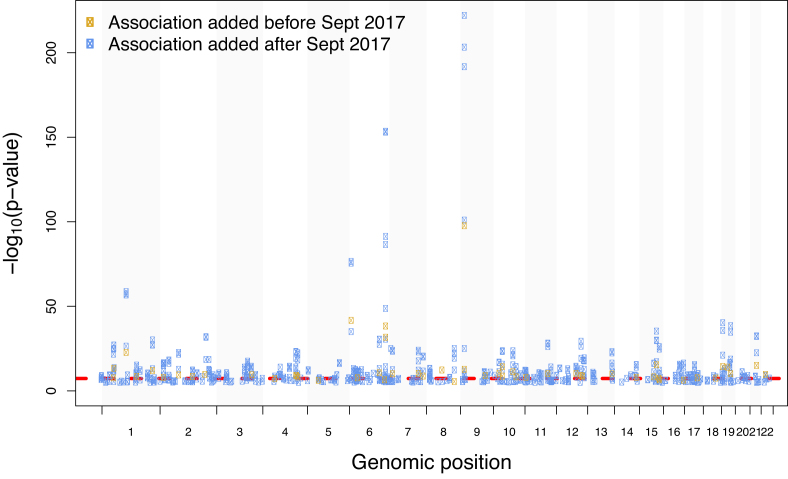
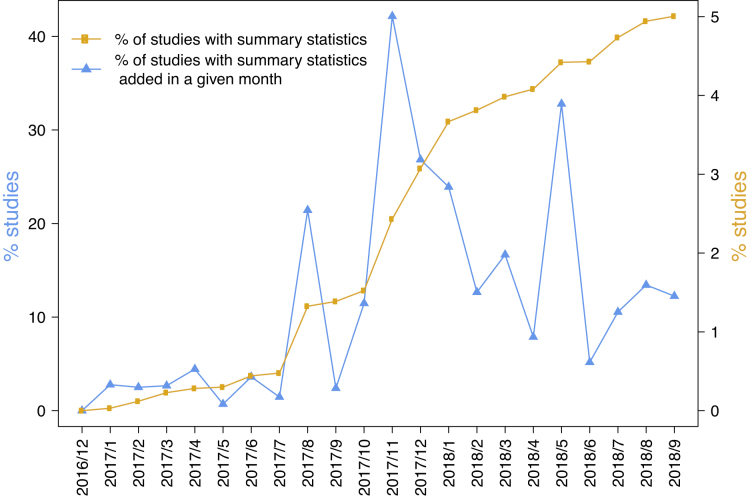
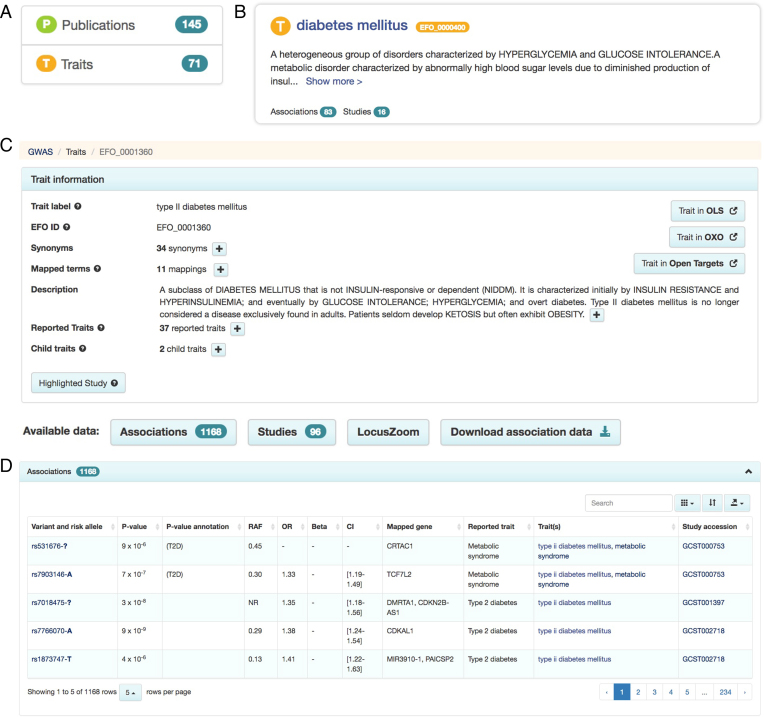
The GWAS Catalog delivers a high-quality curated collection of all published genome-wide association studies enabling investigations to identify causal variants, understand disease mechanisms, and establish targets for novel therapies. The scope of the Catalog has also expanded to targeted and exome arrays with 1000 new associations added for these technologies. As of September 2018, the Catalog contains 5687 GWAS comprising 71673 variant-trait associations from 3567 publications. New content includes 284 full P-value summary statistics datasets for genome-wide and new targeted array studies, representing 6 × 10⁹ individual variant-trait statistics. In the last 12 months, the Catalog's user interface was accessed by ∼90000 unique users who viewed >1 million pages. We have improved data access with the release of a new RESTful API to support high-throughput programmatic access, an improved web interface and a new summary statistics database. Summary statistics provision is supported by a new format proposed as a community standard for summary statistics data representation. This format was derived from our experience in standardizing heterogeneous submissions, mapping formats and in harmonizing content. Availability: https://www.ebi.ac.uk/gwas/.
Overview
The claims and statistics of this paper haven’t been checked yet.
Free: it reads the open-access text and checks the first 5 claims that cite a source we can check. Create a free account to check every claim.
Integrity signals
Registry
Cites
Statistics
Figures
Verification
Claims the paper makes
The claims and statistics of this paper haven’t been checked yet.
Free: it reads the open-access text and checks the first 5 claims that cite a source we can check. Create a free account to check every claim.
Claims other papers make about this one
Each is checked against this paper’s own text: does it say what the citing paper says it does?
The source backs part of the claim, not all of it — or backs it for a different population, condition or comparison.
In the citing paper
“Of note, this region also includes one of the SNPs (rs10119) significantly associated with AD in the National Human Genome Research Institute catalog of published genome-wide association studies (NHGRI-GWAS33), indicating that this regulatory element may be involved in AD in humans (Fig. 6B).”
From Integrated analysis of behavioral, epigenetic, and gut microbiome analyses in AppNL-G-F, AppNL-F, and wild type mice (2021) · cites this paper as [33]
Experimental — accuracy not yet measuredThe source backs part of the claim, not all of it — or backs it for a different population, condition or comparison.
In the citing paper
“Genome-wide association studies (GWASs) have been employed to identify genetic variants in CS genes associated with AD onset [17].”
From Integrated multi-omics analysis revealed the molecular networks and potential targets of cellular senescence in Alzheimer’s disease (2025) · cites this paper as [17]
Experimental — accuracy not yet measuredThe cited source says what the claim attributes to it.
In the citing paper
“Although tens of thousands of associations have been discovered across thousands of common human diseases and traits44, multiple factors have frustrated efforts to convert these genetic signals to knowledge about causal variants, genes and mechanisms.”
From A brief history of human disease genetics (2020) · cites this paper as [44]
The cited source says what the claim attributes to it.
In the citing paper
“Of note, this region also includes one of the SNPs (rs10119) significantly associated with AD in the National Human Genome Research Institute catalog of published genome-wide association studies (NHGRI-GWAS33), indicating that this regulatory element may be involved in AD in humans (Fig. 6B).”
From Integrated analysis of behavioral, epigenetic, and gut microbiome analyses in AppNL-G-F, AppNL-F, and wild type mice (2021) · cites this paper as [33]
The check wasn’t confident either way, so it gives no verdict — never disputed.
In the citing paper
“To date, however, no large-scale molecular genetic studies have utilized the extensive degree of genetic overlap among externalizing traits to aid gene discovery, as most studies have focused on individual disorders6.”
From Multivariate analysis of 1.5 million people identifies genetic associations with traits related to self-regulation and addiction. (2021) · cites this paper as [6]
Experimental — accuracy not yet measured
6 more claims about this paper
Create a free account to see every claim other papers make about this one.
Self-check
Percentages, sums and reported differences re-computed from the paper’s own numbers.
The self-check needs the paper’s full text.
Citations
Cites
PLINK: a tool set for whole-genome association and population-based linkage analyses.
Purcell, S., Neale, B., Todd-Brown, K., Thomas, L., Ferreira, M. A. R., Bender, D., Maller, J., Sklar, P., de Bakker, P. I. W., Daly, M. J., et al. (2007) · The American Journal of Human Genetics · doi:10.1086/519795 · Cited by 34,089 · cited 1×
“Our standard format contains a minimal set of requirements that are included in the outputs from the most common GWAS analysis programs (such as PLINK, (29) and additional optional columns.”
The FAIR Guiding Principles for scientific data management and stewardship
Wilkinson, M. D., Dumontier, M., Aalbersberg, I. J., Appleton, G., Axton, M., Baak, A., Blomberg, N., Boiten, J.-W., da Silva Santos, L. B., Bourne, P. E., et al. (2016) · Scientific Data · doi:10.1038/sdata.2016.18 · Cited by 18,423
A global reference for human genetic variation
The 1000 Genomes Project Consortium, authors, C., Auton, A., Abecasis, G. R., Steering committee, Altshuler, D. M., Durbin, R. M., Abecasis, G. R., Bentley, D. R., Chakravarti, A., et al. (2015) · Nature · doi:10.1038/nature15393 · Cited by 18,247
Self-citationThe International HapMap Project
†The International HapMap Consortium, Genotyping centres: Baylor College of Medicine and ParAllele BioScience, Gibbs, R. A., Belmont, J. W., Hardenbol, P., Willis, T. D., Yu, F., Chinese HapMap Consortium, Yang, H., Ch'ang, L.-Y., et al. (2003) · Nature · doi:10.1038/nature02168 · Cited by 6,057
Self-citationThe Genotype-Tissue Expression (GTEx) pilot analysis: Multitissue gene regulation in humans
The GTEx Consortium, Ardlie, K. G., Deluca, D. S., Segrè, A. V., Sullivan, T. J., Young, T. R., Gelfand, E. T., Trowbridge, C. A., Maller, J. B., Tukiainen, T., et al. (2015) · Science · doi:10.1126/science.1262110 · Cited by 5,062
LocusZoom: regional visualization of genome-wide association scan results
Pruim, R. J., Welch, R. P., Sanna, S., Teslovich, T. M., Chines, P. S., Gliedt, T. P., Boehnke, M., Abecasis, G. R., & Willer, C. J. (2010) · Bioinformatics · doi:10.1093/bioinformatics/btq419 · Cited by 2,707
The new NHGRI-EBI Catalog of published genome-wide association studies (GWAS Catalog)
MacArthur, J., Bowler, E., Cerezo, M., Gil, L., Hall, P., Hastings, E., Junkins, H., McMahon, A., Milano, A., Morales, J., et al. (2017) · Nucleic Acids Research · doi:10.1093/nar/gkw1133 · Cited by 2,161 · cited 1×
“The NHGRI-EBI GWAS Catalog (www.ebi.ac.uk/gwas; (16)) is a publicly available resource of published human GWAS.”
Self-citationThe support of human genetic evidence for approved drug indications
Nelson, M. R., Tipney, H., Painter, J. L., Shen, J., Nicoletti, P., Shen, Y., Floratos, A., Sham, P. C., Li, M. J., Wang, J., et al. (2015) · Nature Genetics · doi:10.1038/ng.3314 · Cited by 1,666 · cited 2×
“estimate that the inclusion of genetic associations in the drug discovery process could double the success rate of targets in clinical development (8).”
Association analysis identifies 65 new breast cancer risk loci
Michailidou, K., Lindström, S., Dennis, J., Beesley, J., Hui, S., Kar, S., Lemaçon, A., Soucy, P., Glubb, D., Rostamianfar, A., et al. (2017) · Nature · doi:10.1038/nature24284 · Cited by 1,413 · cited 1×
“For over a decade, genome-wide association studies (GWAS) have contributed to the identification of reproducible genomic regions associated with an impressive number of common traits, including breast cancer (1,2), ovarian cancer (3), coronary artery disease (4), type 2 diabetes (5), osteoarthritis (6) and systemic lu…”
Yates, A., Akanni, W., Amode, M. R., Barrell, D., Billis, K., Carvalho-Silva, D., Cummins, C., Clapham, P., Fitzgerald, S., Gil, L., et al. (2016) · Nucleic Acids Research · doi:10.1093/nar/gkv1157 · Cited by 1,273
Self-citation
Cited by
Items 201–300 of 1,033
Tadaka, S., Hishinuma, E., Komaki, S., Motoike, I. N., Kawashima, J., Saigusa, D., Inoue, J., Takayama, J., Okamura, Y., Aoki, Y., et al. (2020) · Nucleic Acids Research · doi:10.1093/nar/gkaa1034 · Cited by 162
Inflammatory bowel disease and Parkinson’s disease: common pathophysiological links
Lee, H.-S., Lobbestael, E., Vermeire, S., Sabino, J., & Cleynen, I. (2021) · Gut · doi:10.1136/gutjnl-2020-322429 · Cited by 151
Zhao, B., Zhang, J., Ibrahim, J. G., Luo, T., Santelli, R. C., Li, Y., Li, T., Shan, Y., Zhu, Z., Zhou, F., et al. (2021) · Molecular Psychiatry · doi:10.1038/s41380-019-0569-z · Cited by 151
Multivariate genomic scan implicates novel loci and haem metabolism in human ageing
Timmers, P. R. H. J., Wilson, J. F., Joshi, P. K., & Deelen, J. (2020) · Nature Communications · doi:10.1038/s41467-020-17312-3 · Cited by 143
WebCSEA: web-based cell-type-specific enrichment analysis of genes
Dai, Y., Hu, R., Liu, A., Cho, K. S., Manuel, A. M., Li, X., Dong, X., Jia, P., & Zhao, Z. (2022) · Nucleic Acids Research · doi:10.1093/nar/gkac392 · Cited by 161
“We used a dynamic gene-based P-value threshold to generate the TAGs for >5600 GWAS from our previous curation and GWAS catalog accessed by 25 November 2021 (13,29).”
Eising, E., Mirza‐Schreiber, N., de Zeeuw, E. L., Wang, C. A., Truong, D. T., Allegrini, A. G., Shapland, C. Y., Zhu, G., Wigg, K. G., Gerritse, M., et al. (2022) · Proceedings of the National Academy of Sciences · doi:10.1073/pnas.2202764119 · Cited by 163
“GWAS summary statistics for genetic correlation analyses with cognitive traits were obtained from the Social Science Genetic Association Consortium (18) and the GWAS catalog (79) and through collaboration with the iPSYCH Consortium (20).”
MethodGenome-wide association studies: assessing trait characteristics in model and crop plants
Alseekh, S., Kostova, D., Bulut, M., & Fernie, A. R. (2021) · Cellular and Molecular Life Sciences · doi:10.1007/s00018-021-03868-w · Cited by 169
“hirsutum (Cotton) 258 [1,871,401] Yield-related traits [119*] [62] −”
BackgroundInfluentialJamialahmadi, O., Mancina, R. M., Ciociola, E., Tavaglione, F., Luukkonen, P. K., Baselli, G., Malvestiti, F., Thuillier, D., Raverdy, V., Männistö, V., et al. (2021) · Gastroenterology · doi:10.1053/j.gastro.2020.12.023 · Cited by 148
Using Mendelian randomisation to assess causality in observational studies
Pagoni, P., Dimou, N. L., Murphy, N., & Stergiakouli, E. (2019) · Evidence-Based Mental Health · doi:10.1136/ebmental-2019-300085 · Cited by 176
Genetic architecture of host proteins involved in SARS-CoV-2 infection
Pietzner, M., Wheeler, E., Carrasco-Zanini, J., Raffler, J., Kerrison, N. D., Oerton, E., Auyeung, V. P. W., Luan, J., Finan, C., Casas, J. P., et al. (2020) · Nature Communications · doi:10.1038/s41467-020-19996-z · Cited by 143
Genetic associations of protein-coding variants in human disease
Sun, B. B., Kurki, M. I., Foley, C. N., Mechakra, A., Chen, C.-Y., Marshall, E., Wilk, J. B., Biogen Biobank Team, Sun, B. B., Ghen, C.-Y., et al. (2022) · Nature · doi:10.1038/s41586-022-04394-w · Cited by 147
Causal influences of neuroticism on mental health and cardiovascular disease
Zhang, F., Baranova, A. V., Zhou, C., Cao, H., Chen, J., Zhang, X., & Xu, M. (2021) · Human Genetics · doi:10.1007/s00439-021-02288-x · Cited by 167
Genomics of perivascular space burden unravels early mechanisms of cerebral small vessel disease
Duperron, M., Knol, M. J., Grand, Q. L., Evans, T. E., Mishra, A., Tsuchida, A., Roshchupkin, G. V., Konuma, T., Trégouët, D., Romero, J. R., et al. (2023) · Nature Medicine · doi:10.1038/s41591-023-02268-w · Cited by 151
Guo, J., Yu, K., Dong, S., Yao, S., Rong, Y., Wu, H., Zhang, K., Jiang, F., Chen, Y.-X., Guo, Y., et al. (2022) · Nature Neuroscience · doi:10.1038/s41593-022-01174-7 · Cited by 157
DNA Methylation Clocks and Their Predictive Capacity for Aging Phenotypes and Healthspan
Bergsma, T., & Rogaeva, E. A. (2020) · Neuroscience Insights · doi:10.1177/2633105520942221 · Cited by 153
Butler‐Laporte, G., Kreuzer, D., Nakanishi, T., Harroud, A., Forgetta, V., & Richards, J. B. (2020) · Open Forum Infectious Diseases · doi:10.1093/ofid/ofaa450 · Cited by 156
“Review of Previously Reported Associations We used the NHGRI-EBI GWAS catalog [29] and the Phenoscanner [30, 31] tool to review previously reported disease associations with the genome-wide significant SNPs found in our GWAS, and with the alleles selected using Table 1.”
MethodGrissa, D., Junge, A., Oprea, T. I., & Jensen, L. J. (2022) · Database · doi:10.1093/database/baac019 · Cited by 144
A practical view of fine-mapping and gene prioritization in the post-genome-wide association era
Broekema, R. V., Bakker, O. B., & Jonkers, I. H. (2020) · Open Biology · doi:10.1098/rsob.190221 · Cited by 130
“Over 4000 GWASs have been published since 2002 [5], yielding almost 150 000 marker variant associations to hundreds of traits [6].”
BackgroundTissue-specific 5-hydroxymethylcytosine landscape of the human genome
He, B., Zhang, C., Zhang, X., Fan, Y., Zeng, H., Liu, J., Meng, H., Bai, D., Peng, J., Zhang, Q., et al. (2021) · Nature Communications · doi:10.1038/s41467-021-24425-w · Cited by 134
Murphy, A. E., Schilder, B. M., & Skene, N. G. (2021) · Bioinformatics · doi:10.1093/bioinformatics/btab665 · Cited by 131
“There have been movements to standardise the summary statistic file format such as the NHGRI-EBI GWAS Catalogue standardised format(7) and the SMR Tool binary format(8).”
MethodXiang, R., MacLeod, I. M., Daetwyler, H. D., de Jong, G., O’Connor, E. S., Schrooten, C., Chamberlain, A. J., & Goddard, M. E. (2021) · Nature Communications · doi:10.1038/s41467-021-21001-0 · Cited by 162
Prenatal immune stress blunts microglia reactivity, impairing neurocircuitry
Hayes, L. N., An, K., Carloni, E., Li, F., Vincent, E., Trippaers, C., Paranjpe, M. D., Dölen, G., Goff, L. A., Ramos, A., et al. (2022) · Nature · doi:10.1038/s41586-022-05274-z · Cited by 145
Cell-type-specific and disease-associated expression quantitative trait loci in the human lung
Natri, H. M., Azodi, C. B. D., Peter, L. M., Taylor, C. J., Chugh, S., Kendle, R., Chung, M.-I., Flaherty, D. K., Matlock, B. K., Calvi, C. L., et al. (2024) · Nature Genetics · doi:10.1038/s41588-024-01702-0 · Cited by 154
“Three of these loci were eQTLs for genes previously implicated in a GWAS in the National Human Genome Research Institute (NHGRI)-EBI GWAS Catalog 26 : MUC5B , DSP and KANSL1 .”
Pharos 2023: an integrated resource for the understudied human proteome
Kelleher, K. J., Sheils, T. K., Mathias, S. L., Yang, J. J., Metzger, V. T., Siramshetty, V. B., Nguyen, D.-T., Jensen, L. J., Vidović, D., Schürer, S. C., et al. (2023) · Nucleic Acids Research · doi:10.1093/nar/gkac1033 · Cited by 137
“Previously, TCRD incorporated gene–trait relationships directly from the GWAS (Genome-Wide Association Studies) catalog (27).”
Precision medicine in systemic lupus erythematosus
Fasano, S., Milone, A., Nicoletti, G. F., Isenberg, D. A., & Ciccia, F. (2023) · Nature Reviews Rheumatology · doi:10.1038/s41584-023-00948-y · Cited by 151
“Later GWA studies have used denser genotyping and reference data set and to date, there are up to 100 SLE risk loci reported [50].”
GeneCaRNA: A Comprehensive Gene-centric Database of Human Non-coding RNAs in the GeneCards Suite.
Barshir, R., Fishilevich, S., Iny-Stein, T., Zelig, O., Mazor, Y., Guan-Golan, Y., Safran, M., & Lancet, D. (2021) · Journal of Molecular Biology · doi:10.1016/j.jmb.2021.166913 · Cited by 134
Liu, C.-J., Fu, X., Xia, M., Zhang, Q., Gu, Z., & Guo, A.-Y. (2021) · Nucleic Acids Research · doi:10.1093/nar/gkaa783 · Cited by 134
“In this version, to quickly explore associations between miRNA variations and diseases / traits, we integrated COSMIC, GWAS Catalog and ClinVar variations on miRNA and gene 3 UTR as DRVs.”
MethodSex-Dependent Shared and Non-Shared Genetic Architecture Across Mood and Psychotic Disorders
Blokland, G. A. M., Grove, J., Chen, C., Cotsapas, C. J., Tobet, S. A., Handa, R. J., Ripke, S., Neale, B. M., Corvin, A., Walters, J., et al. (2020) · Biological Psychiatry · doi:10.1016/j.biopsych.2021.02.972 · Cited by 147
Tsuo, K., Zhou, W., Wang, Y., Kanai, M., Namba, S., Gupta, R., Majara, L., Nkambule, L. L., Morisaki, T., Okada, Y., et al. (2022) · Cell Genomics · doi:10.1016/j.xgen.2022.100212 · Cited by 145
“, 2020) and listed in the GWAS catalog (as of 11/14/2021) (Buniello et al., 2019).”
Leveraging base-pair mammalian constraint to understand genetic variation and human disease
Sullivan, P. F., Meadows, J. R. S., Gazal, S., Phan, B. N., Li, X., Genereux, D. P., Dong, M. X., Bianchi, M., Andrews, G., Sakthikumar, S., et al. (2023) · Science · doi:10.1126/science.abn2937 · Cited by 120
An expanded registry of candidate cis-regulatory elements
Moore, J. E., Pratt, H., Fan, K., Phalke, N. N., Fisher, J., Elhajjajy, S. I., Andrews, G., Gao, M., Shedd, N., Fu, Y., et al. (2026) · Nature · doi:10.1038/s41586-025-09909-9 · Cited by 168
Brandes, N., Linial, N., & Linial, M. (2020) · Genome biology · doi:10.1186/s13059-020-02089-x · Cited by 140
“In the past decade, the method has implicated numerous variant-phenotype associations [5] and driven important scientific discovery [6, 7].”
MethodGenetic substructure and complex demographic history of South African Bantu speakers
Sengupta, D., Choudhury, A., Fortes-Lima, C., Aron, S., Whitelaw, G., Bostoen, K. A. G., Gunnink, H., Chousou‐Polydouri, N., Delius, P., Tollman, S. M., et al. (2021) · Nature Communications · doi:10.1038/s41467-021-22207-y · Cited by 139
Kavousi, M., Bos, M. M., Barnes, H. J., Lino Cardenas, C. L., Wong, D., Lu, H., Hodonsky, C. J., Landsmeer, L. P. L., Turner, A. W., Kho, M., et al. (2023) · Nature Genetics · doi:10.1038/s41588-023-01518-4 · Cited by 122
Gene–environment interactions in human health
Luis, E. H., Benke, K. S., Volk, H. E., Ladd‐Acosta, C., & Wojcik, G. L. (2024) · Nature Reviews Genetics · doi:10.1038/s41576-024-00731-z · Cited by 137
Bovo, S., Ribani, A., Muñoz, M., Alves, E., Araújo, J. P., Bozzi, R., Čandek‐Potokar, M., Charneca, R., Palma, F. D., Etherington, G., et al. (2020) · Genetics Selection Evolution · doi:10.1186/s12711-020-00553-7 · Cited by 139
Zhao, L., Li, Z., Vong, J. S. L., Chen, X., Lai, H.-M., Yan, L. Y. C., Huang, J., Sy, S. K. H., Tian, X., Huang, Y., et al. (2020) · Nature Communications · doi:10.1038/s41467-020-18249-3 · Cited by 126
Genome-wide analyses identify 30 loci associated with obsessive–compulsive disorder
Strom, N. I., Gerring, Z. F., Galimberti, M., Yu, D., Halvorsen, M., Abdellaoui, A., Rodriguez‐Fontenla, C., Sealock, J., Bigdeli, T. B., Coleman, J. R. I., et al. (2025) · Nature Genetics · doi:10.1038/s41588-025-02189-z · Cited by 142
“After mapping significantly associated SNPs from the GWAS meta-analysis to likely causal genes, we explored which tissues or cell Shown are the lead SNP, the chromosome, base pair position on the genome, P value, effect estimate as an odds ratio (OR), s.e., effect allele and non-effect allele (A 1 and A 2 ), frequency…”
InfluentialThe selection landscape and genetic legacy of ancient Eurasians
Irving-Pease, E. K., Refoyo-Martínez, A., Barrie, W., Ingason, A., Pearson, A., Fischer, A., Sjögren, K.-G., Halgren, A. S., Macleod, R., Demeter, F., et al. (2024) · Nature · doi:10.1038/s41586-023-06705-1 · Cited by 126
“We then adapted CLUES 23 to model aDNA time-series data (Supplementary Notes 4 and 5) and used it to infer allele frequency trajectories and selection coefficients for 33,341 quality-controlled trait-associated variants from the GWAS Catalog 24 .”
Method“Reports of My Death Were Greatly Exaggerated”: Behavior Genetics in the Postgenomic Era
Harden, K. P. (2020) · Annual Review of Psychology · doi:10.1146/annurev-psych-052220-103822 · Cited by 134
Christakoudi, S., Evangelou, E., Riboli, E., & Tsilidis, K. K. (2021) · Scientific Reports · doi:10.1038/s41598-021-89176-6 · Cited by 120
“Significant Genes 342 (45) 337 (45) 172 (29) * 262 (37) * 33 (11) 90 (9.”
Mendelian Randomization Analysis as a Tool to Gain Insights into Causes of Diseases: A Primer
Tin, A., & Köttgen, A. (2021) · Journal of the American Society of Nephrology · doi:10.1681/asn.2020121760 · Cited by 137
Nait Saada, J., Kalantzis, G., Shyr, D., Cooper, F., Robinson, M., Gusev, A., & Palamara, P. F. (2020) · Nature Communications · doi:10.1038/s41467-020-19588-x · Cited by 125
Byun, J., Han, Y., Li, Y., Xia, J., Long, E., Choi, J., Xiao, X., Zhu, M., Zhou, W., Sun, R., et al. (2022) · Nature Genetics · doi:10.1038/s41588-022-01115-x · Cited by 133
Yun, Z., Guo, Z., Li, X., Shen, Y., Nan, M., Dong, Q., & Hou, L. (2023) · Cancer Medicine · doi:10.1002/cam4.6022 · Cited by 135
Dand, N., Stuart, P. E., Bowes, J., Ellinghaus, D., Nititham, J., Saklatvala, J. R., Teder‐Laving, M., Thomas, L. F., Traks, T., Uebe, S., et al. (2025) · Nature Communications · doi:10.1038/s41467-025-56719-8 · Cited by 133
Genetics Insights in the Relationship Between Type 2 Diabetes and Coronary Heart Disease
Goodarzi, M. O., & Rotter, J. I. (2020) · Circulation Research · doi:10.1161/circresaha.119.316065 · Cited by 141
Mapping the human genetic architecture of COVID-19 by worldwide meta-analysis
Initiative, T. C.-1. H. G., & Ganna, A. (2021) · medRxiv · doi:10.1101/2021.03.10.21252820 · Cited by 103
Adaptive sequence divergence forged new neurodevelopmental enhancers in humans
Mangan, R. J., Alsina, F. C., Mosti, F., Sotelo-Fonseca, J. E., Snellings, D. A., Au, E. H., Carvalho, J., Sathyan, L., Johnson, G. D., Reddy, T. E., et al. (2022) · Cell · doi:10.1016/j.cell.2022.10.016 · Cited by 125
Song, B., Tang, Y., Chen, K., Wei, Z. C., Rong, R., Lu, Z.-L., Su, J., de Magalhães, J. P., Rigden, D. J., & Meng, J. (2020) · Bioinformatics · doi:10.1093/bioinformatics/btaa178 · Cited by 129
“We applied the R language interface of LIBSVM (Chang and Lin, 2011) to construct our m 7 G site prediction model, and the radial basis function was set as kernel following the default setting for other parameters.”
MethodMammalian evolution of human cis-regulatory elements and transcription factor binding sites
Andrews, G., Fan, K., Pratt, H. E., Phalke, N. N., Karlsson, E. K., Lindblad‐Toh, K., Gazal, S., Moore, J. E., Weng, Z., Andrews, G., et al. (2023) · Science · doi:10.1126/science.abn7930 · Cited by 125
PhenomeXcan: Mapping the genome to the phenome through the transcriptome
Pividori, M., Rajagopal, P. S., Barbeira, A., Liang, Y., Melia, O., Bastarache, L. A., Park, Y., Wen, X., & Im, H. K. (2020) · Science Advances · doi:10.1126/sciadv.aba2083 · Cited by 127
“Existing catalogs largely organize associations between genetic variants and complex traits at the variant level rather than by genes and often are confined to a narrow set of genes or traits (3).”
BackgroundLncBook 2.0: integrating human long non-coding RNAs with multi-omics annotations
Zhao, L., Liu, L., Feng, C., Qin, Y., Xiao, J., Zhang, Z., & Ma, L. (2022) · Nucleic Acids Research · doi:10.1093/nar/gkac999 · Cited by 128
“For GWAS Catalog (30), we collected the associations with P-value < 5 × 10⁻⁸, which has been widely used to determine association between a common genetic variant and a trait of interest (31,32).”
MethodImpact of admixture and ancestry on eQTL analysis and GWAS colocalization in GTEx
Gay, N. R., Gloudemans, M., Antonio, M. L., Abell, N. S., Balliu, B., Park, Y., Martin, A. R., Musharoff, S., Rao, A. S., Aguet, F., et al. (2020) · Genome Biology · doi:10.1186/s13059-020-02113-0 · Cited by 114
A mechanistic framework for cardiometabolic and coronary artery diseases
Koplev, S., Seldin, M., Sukhavasi, K., Ermel, R., Pang, S., Zeng, L., Bankier, S., Di Narzo, A., Cheng, H., Meda, V., et al. (2022) · Nature Cardiovascular Research · doi:10.1038/s44161-021-00009-1 · Cited by 122
A new method for multiancestry polygenic prediction improves performance across diverse populations
Zhang, H., Zhan, J., Jin, J., Zhang, J., Lu, W., Zhao, R., Ahearn, T. U., Yu, Z., O’Connell, J., Jiang, Y., et al. (2023) · Nature Genetics · doi:10.1038/s41588-023-01501-z · Cited by 127
“CT-SLEB requires 6 three independent datasets: (1) GWAS summary statistics from training datasets across 7 EUR and non-EUR populations; (2) a tuning dataset for the target population to find 8 optimal model parameters; and (3) a validation dataset for the target population to 9 report the final prediction performance.”
MethodDistinct transcriptome architectures underlying lupus establishment and exacerbation
Nakano, M., Ota, M., Takeshima, Y., Iwasaki, Y., Hatano, H., Nagafuchi, Y., Itamiya, T., Maeda, J., Yoshida, R., Yamada, S., et al. (2022) · Cell · doi:10.1016/j.cell.2022.07.021 · Cited by 126
Bondareva, O., Rodríguez-Aguilera, J. R., Oliveira, F., Liao, L., Rose, A., Gupta, A., Singh, K., Geier, F., Schuster, J., Boeckel, J.-N., et al. (2022) · Nature Metabolism · doi:10.1038/s42255-022-00674-x · Cited by 111
Xu, J., Mao, C., Hou, Y., Luo, Y., Binder, J. L., Zhou, Y., Bekris, L. M., Shin, J., Hu, M., Wang, F., et al. (2022) · Cell Reports · doi:10.1016/j.celrep.2022.111717 · Cited by 115
“44 For SNPs with no mapped genes, if there were any reported genes (REPORTED GENE(S) column in GWAS Catalog 44 ) associated with this SNP, we then map the SNP to its reported genes.”
BackgroundMethodInfluentialPeyrot, W. J., & Price, A. L. (2021) · Nature Genetics · doi:10.1038/s41588-021-00787-1 · Cited by 125
Towards Realizing the Vision of Precision Medicine: AI Based Prediction of Clinical Drug Response
de Jong, J., Cutcutache, I., Page, M., Elmoufti, S., Dilley, C., Fröhlich, H., & Armstrong, M. (2020) · Brain · doi:10.1093/brain/awab108 · Cited by 124
Ohkura, N., Yasumizu, Y., Kitagawa, Y., Tanaka, A., Nakamura, Y., Motooka, D., Nakamura, S., Okada, Y., & Sakaguchi, S. (2020) · Immunity · doi:10.1016/j.immuni.2020.04.006 · Cited by 104
Single-Cell Epigenomics and Functional Fine-Mapping of Atherosclerosis GWAS Loci
Örd, T., Õunap, K., Stolze, L. K., Aherrahrou, R., Nurminen, V., Toropainen, A., Selvarajan, I., Lönnberg, T., Aavik, E., Ylä-Herttuala, S., et al. (2021) · Circulation Research · doi:10.1161/circresaha.121.318971 · Cited by 119
Blazev, R., Carl, C. S., Ng, Y.-K., Molendijk, J., Voldstedlund, C. T., Zhao, Y., Xiao, D., Kueh, A. J., Miotto, P. M., Haynes, V. R., et al. (2022) · Cell Metabolism · doi:10.1016/j.cmet.2022.07.003 · Cited by 112
Zawistowski, M., Fritsche, L. G., Pandit, A., Vanderwerff, B. R., Patil, S. B., Schmidt, E. M., VandeHaar, P., Willer, C. J., Brummett, C. M., Kheterpal, S., et al. (2023) · Cell Genomics · doi:10.1016/j.xgen.2023.100257 · Cited by 123
Advances in bulk and single-cell multi-omics approaches for systems biology and precision medicine
Li, Y., Ma, L., Wu, D., & Chen, G. (2021) · Briefings in Bioinformatics · doi:10.1093/bib/bbab024 · Cited by 133
Symptom-level modelling unravels the shared genetic architecture of anxiety and depression
Thorp, J. G., Campos, A. I., Grotzinger, A. D., Gerring, Z. F., An, J., Ong, J., Wang, W., Shringarpure, S., Byrne, E. M., MacGregor, S., et al. (2021) · Nature Human Behaviour · doi:10.1038/s41562-021-01094-9 · Cited by 124
A genome-wide association analysis reveals new pathogenic pathways in gout
Major, T. J., Takei, R., Matsuo, H., Leask, M., Sumpter, N. A., Topless, R., Shirai, Y., Wang, W., Cadzow, M. J., Phipps‐Green, A. J., et al. (2024) · Nature Genetics · doi:10.1038/s41588-024-01921-5 · Cited by 123
Ntalla, I., Weng, L.-C., Cartwright, J. H., Hall, A. W., Sveinbjornsson, G., Tucker, N. R., Choi, S. H., Chaffin, M. D., Roselli, C., Barnes, M. R., et al. (2020) · Nature Communications · doi:10.1038/s41467-020-15706-x · Cited by 106
Genome Variation Map: a worldwide collection of genome variations across multiple species
Li, C., Tian, D., Tang, B., Liu, X., Teng, X., Zhao, W., Zhang, Z., & Song, S. (2020) · Nucleic Acids Research · doi:10.1093/nar/gkaa1005 · Cited by 119
“Importantly, to provide high-quality variant data and metadata and deliver user-friendly data services, GVM has been frequently updated in the past years by standardizing the curation model and process, improving the web functionalities for data submission, browse and download, providing the database tutorial in PPT a…”
BackgroundBreast cancer risk factors and their effects on survival: a Mendelian randomisation study
Escala-Garcia, M., Morra, A., Canisius, S., Chang-Claude, J. C., Kar, S., Zheng, W., Bojesen, S. E., Easton, D. F., Pharoah, P. D. P., & Schmidt, M. K. (2020) · BMC Medicine · doi:10.1186/s12916-020-01797-2 · Cited by 123
“GWAS Catalog [22], 29 August 2019 update), harmo-”
MethodLi, Z., Li, X., Zhou, H., Gaynor, S. M., Selvaraj, M. S., Arapoglou, T., Quick, C., Liu, Y., Chen, H., Sun, R., et al. (2022) · Nature Methods · doi:10.1038/s41592-022-01640-x · Cited by 121
“We first selected a list of known variants by including the previously identified trait-associated variants, for example, variants indexed in the GWAS Catalog 39 .”
MethodCadby, G., Giles, C., Melton, P. E., Huynh, K., Mellett, N. A., Duong, T., Nguyen, T. A., Cinel, M. A., Smith, A., Olshansky, G., et al. (2022) · Nature Communications · doi:10.1038/s41467-022-30875-7 · Cited by 111
Saw, J., Yang, M.-L., Trinder, M., Tcheandjieu, C., Xu, C., Starovoytov, A., Birt, I., Mathis, M. R., Hunker, K. L., Schmidt, E. M., et al. (2020) · Nature Communications · doi:10.1038/s41467-020-17558-x · Cited by 105
SEanalysis 2.0: a comprehensive super-enhancer regulatory network analysis tool for human and mouse
Qian, F., Zhou, L., Li, Y., Yu, Z., Li, L., Wang, Y., Xu, M., Wang, Q., & Li, C. (2023) · Nucleic Acids Research · doi:10.1093/nar/gkad408 · Cited by 108
Brain aging patterns in a large and diverse cohort of 49,482 individuals
Yang, Z., Wen, J., Erus, G., Govindarajan, S. T., Melhem, R., Mamourian, E., Cui, Y., Srinivasan, D., Abdulkadir, A., Parmpi, P., et al. (2024) · Nature Medicine · doi:10.1038/s41591-024-03144-x · Cited by 112
“Among them, 38 loci were never associated with any clinical traits in the EMBL-EBI GWAS Catalog 21 , including 11, 7, 6, 5 and 11 loci for the five R-indices, respectively.”
Degtyareva, A. O., Antontseva, E. V., & Merkulova, T. I. (2021) · International Journal of Molecular Sciences · doi:10.3390/ijms22126454 · Cited by 116
“Having appeared in the mid-2000s, GWAS have so far detected over 70 thousand loci associated with various human traits and diseases [1,2].”
BackgroundProkopenko, D., Morgan, S. L., Mullin, K., Hofmann, O., Chapman, B., Kirchner, R., (ADNI), A. D. N. I., Amberkar, S., Wohlers, I., Lange, C., et al. (2021) · Alzheimer's & Dementia · doi:10.1002/alz.12319 · Cited by 105
“(1) Genetics and Aging Research Unit and The Henry and Allison McCance Center for Brain Health, Department of Neurology, Massachusetts General Hospital, Boston, MA, USA (2) Harvard Medical School, Boston, MA, USA (3) Department of Neuroscience, Sheffield Institute for Translational Neurosciences, University of Sheffie…”
Insights from complex trait fine-mapping across diverse populations
Kanai, M., Ulirsch, J. C., Karjalainen, J., Kurki, M., Karczewski, K. J., Fauman, E., Wang, Q. S., Jacobs, H., Aguet, F., Ardlie, K. G., et al. (2021) · medRxiv · doi:10.1101/2021.09.03.21262975 · Cited by 97
Marnetto, D., Pärna, K., Läll, K., Molinaro, L., Montinaro, F., Haller, T., Metspalu, M., Mägi, R., Fischer, K., & Pagani, L. (2020) · Nature Communications · doi:10.1038/s41467-020-15464-w · Cited by 108
Abu‐El‐Haija, A., Reddi, H. V., Wand, H., Rose, N. C., Mori, M., Qian, E., & Murray, M. F. (2023) · Genetics in Medicine · doi:10.1016/j.gim.2023.100803 · Cited by 110
Antagonistic Pleiotropy in Human Disease
Byars, S., & Voskarides, K. (2019) · Journal of Molecular Evolution · doi:10.1007/s00239-019-09923-2 · Cited by 107
Annotating and prioritizing genomic variants using the Ensembl Variant Effect Predictor—A tutorial
Hunt, S. E., Moore, B., Amode, R., Armean, I. M., Lemos, D., Mushtaq, A., Parton, A., Schuilenburg, H., Szpak, M., Thormann, A., et al. (2021) · Human Mutation · doi:10.1002/humu.24298 · Cited by 120
“Available on http://www.orpha.net), the COSMIC Cancer Gene Census (Sondka et al., 2018), ClinVar and the National Human Genome Research Institute ‐ European Bioinformatics Institute Genome ‐ wide association study Catalog (NHGRI ‐ EBI GWAS Catalog; Buniello et al., 2019), into a standardized format (Hunt et al., 2018).”
BackgroundSelf-citationScalable genetic screening for regulatory circuits using compressed Perturb-seq
Yao, D., Binan, L., Bezney, J., Simonton, B., Freedman, J., Frangieh, C. J., Dey, K., Geiger-Schuller, K., Eraslan, B., Gusev, A., et al. (2024) · Nature Biotechnology · doi:10.1038/s41587-023-01964-9 · Cited by 101
“…identified by search for ‘bacterial infection’ in the OMIM database 75 and 115 Mendelian genes similarly identified by ‘NF-κB’ search; and 173 genes reported in studies identified by a GWAS Catalog 76 search for ‘infection’ with diseases/traits related to liver disease and HIV-1 infection excluded.”
Ding, J., Blencowe, M., Nghiem, T., Ha, S.-M., Chen, Y.-W., Li, G., & Yang, X. (2021) · Nucleic Acids Research · doi:10.1093/nar/gkab405 · Cited by 97
“Next, we chose canonical pathways from the KEGG database and a positive control gene set from the NHGRIEBI GWAS catalog (64) for psoriasis as the pathways or marker sets to be examined.”
MethodTIGER: The gene expression regulatory variation landscape of human pancreatic islets
Alonso, L., Piron, A., Morán, I., Guindo-Martínez, M., Bonàs‐Guarch, S., Atla, G., Miguel-Escalada, I., Royo, R., Puiggròs, M., Garcia-Hurtado, X., et al. (2021) · Cell Reports · doi:10.1016/j.celrep.2021.109807 · Cited by 104
“, 2017) T2D meta-analyses or included in the GWAS Catalog v1 release 2021-06-08 (Buniello et al., 2019), b) variant annotation and characterization through Variant Effect Predictor v87.”
MethodTesting the super-enhancer concept
Blobel, G. A., Higgs, D. R., Mitchell, J. A., Notani, D., & Young, R. A. (2021) · Nature Reviews Genetics · doi:10.1038/s41576-021-00398-w · Cited by 95
Freimer, J. W., Shaked, O., Naqvi, S., Sinnott-Armstrong, N., Kathiria, A., Garrido, C. M., Chen, A. F., Cortez, J. T., Greenleaf, W. J., Pritchard, J. K., et al. (2022) · Nature Genetics · doi:10.1038/s41588-022-01106-y · Cited by 95
“Key gene + associated CREs Other gene + associated CREs Disease gene + associated CREs Upstream regulators (2) Discover network structure, target cis-regulatory elements, and coregulated disease genes with arrayed knockouts + RNA/ATAC-seq (1) Identify upstream regulators via CRISPR screens”
BackgroundMorris, J. H., Soman, K., Akbas, R. E., Zhou, X., Smith, B., Meng, E. C., Huang, C. C., Cerono, G., Schenk, G., Rizk-Jackson, A., et al. (2023) · Bioinformatics · doi:10.1093/bioinformatics/btad080 · Cited by 99
The individual and global impact of copy-number variants on complex human traits
Auwerx, C., Lepamets, M., Sadler, M. C., Patxot, M., Stojanov, M., Baud, D., Mägi, R., Esko, T., Metspalu, A., Milani, L. A., et al. (2022) · The American Journal of Human Genetics · doi:10.1016/j.ajhg.2022.02.010 · Cited by 112
“654 The American Journal of Human Genetics 109, 647–668, April 7, CNVs as modifiers of complex traits To assess whether CNV-GWAS signals mapped to regions previously identified by SNP-GWASs for the same trait, we annotated CNVRs with associations reported by the NHGRI-EBI GWAS Catalog.(31) From the 126 autosomal CNV a…”
MethodPhysical activity, sedentary time and breast cancer risk: a Mendelian randomisation study
Dixon‐Suen, S. C., Lewis, S. J., Martin, R. M., English, D. R., Boyle, T., Giles, G. G., Michailidou, K., Bolla, M. K., Wang, Q., Dennis, J., et al. (2022) · British Journal of Sports Medicine · doi:10.1136/bjsports-2021-105132 · Cited by 107
Self-citationEye-brain connections revealed by multimodal retinal and brain imaging genetics
Zhao, B., Li, Y., Fan, Z., Wu, Z., Shu, J., Yang, X., Yang, Y., Wang, X., Li, B., Wang, X., et al. (2024) · Nature Communications · doi:10.1038/s41467-024-50309-w · Cited by 104
“Similarly, we performed a sensitivity analysis for our genetic study on all the 156 retinal imaging traits (covering both OCT and fundus images).”
Matoba, N., Liang, D., Sun, H., Aygün, N., McAfee, J. C., Davis, J. E., Raffield, L. M., Qian, H., Piven, J., Li, Y., et al. (2020) · Translational Psychiatry · doi:10.1038/s41398-020-00953-9 · Cited by 120
Zeng, P., Shao, Z., & Zhou, X. (2021) · Computational and Structural Biotechnology Journal · doi:10.1016/j.csbj.2021.05.042 · Cited by 114
Chen, K., Song, B., Tang, Y., Wei, Z. C., Xu, Q., Su, J., de Magalhães, J. P., Rigden, D. J., & Meng, J. (2020) · Nucleic Acids Research · doi:10.1093/nar/gkaa790 · Cited by 103
“To unveil potentially epitranscriptome-related pathogenesis, the association between disease and RNA modificationassociated variants was extracted from GWAS catalog (86), ClinVar (87) and Johnson and O’Donnel’s data (88).”
MethodMeta-analysis fine-mapping is often miscalibrated at single-variant resolution
Kanai, M., Elzur, R., Zhou, W., Zhou, W., Kanai, M., Wu, K.-H., Rasheed, H., Tsuo, K., Hirbo, J. B., Wang, Y., et al. (2022) · Cell Genomics · doi:10.1016/j.xgen.2022.100210 · Cited by 107
BetaScan2: Standardized Statistics to Detect Balancing Selection Utilizing Substitution Data
Siewert, K. M., & Voight, B. F. (2020) · Genome Biology and Evolution · doi:10.1093/gbe/evaa013 · Cited by 96
“…is a new estimator based on the number of fixed differences with an outgroup species (i.e., substitutions), bhD. Incorporating this estimator into our b framework increases power, owing to the expected reduction of substitutions under balancing selection (Hudson et al., 1987; Charlesworth, 2006).”
BackgroundGenome-wide association studies of cardiovascular disease
Walsh, R., Jurgens, S. J., Erdmann, J., & Bezzina, C. R. (2023) · Physiological Reviews · doi:10.1152/physrev.00024.2022 · Cited by 102
Kulski, J. K. (2019) · Cells · doi:10.3390/cells8050480 · Cited by 99
“The online Genome-Wide Association Studies (GWAS) Catalog [90] revealed that HCP5 has 131 associations in 86 studies (86 variants) with most severe consequences associated with SNP in the regulatory and transcript region from chromosomal position 31,462,917 to 31,466,072.”
BackgroundLi, X., Christenson, S. A., Modena, B. D., Li, H., Busse, W. W., Castro, M., Denlinger, L. C., ERZURUM, S. C., Fahy, J. V., Gaston, B. M., et al. (2020) · Journal of Allergy and Clinical Immunology · doi:10.1016/j.jaci.2020.07.030 · Cited by 99
Metadata
- Authors
- Buniello, A., MacArthur, J. A. L., Cerezo, M., Harris, L. W., Hayhurst, J., Malangone, C., McMahon, A., Morales, J., Mountjoy, E., Sollis, E., Suveges, D., Vrousgou, O., Whetzel, P. L., Amode, R., Guillen, J. A., Riat, H. S., Trevanion, S. J., Hall, P., Junkins, H., Flicek, P., Burdett, T., Hindorff, L. A., Cunningham, F., & Parkinson, H.
- Affiliations
- European Bioinformatics Institute (GB)
- European Molecular Biology Laboratory, European Bioinformatics Institute, Wellcome Genome Campus, Hinxton, Cambridge CB10 1SD, UK
- Centre for Human Genetics (GB)
- National Institutes of Health (US)
- Corresponding author
- Parkinson, Helen
- ORCID
- Venue
- Nucleic Acids Research
- Publisher
- Oxford University Press (OUP)
- Published
- 2018-11-16
- Volume
- 47
- Issue
- D1
- Pages
- D1005-D1012
- ISSN
- 0305-1048 (ISSN-L)
- 1362-4962
- PMC
- PMC6323933
- OpenAlex
- W2901303766
- Semantic Scholar
- c4a71f9579395b92e4696fdf6e9003a54f6eafcf
- Cited by
- 4,000
- References
- 39
- Citations by year
- 2026: 219 · 2025: 302 · 2024: 552 · 2023: 651 · 2022: 815 · 2021: 804 · 2020: 476 · 2019: 173 · 2018: 3
- FWCI
- 231.93
- Type
- journal article
- Language
- en
- Open access
- gold
- doi.org
- Licence
- Locations
- Nucleic Acids Research (publishedVersion, cc-by)
- Europe PMC (PubMed Central) (publishedVersion, cc-by)
- PubMed Central (publishedVersion, cc-by)
- PubMed (publishedVersion)
- Acceda (Universidad de Las Palmas de Gran Canaria) (submittedVersion)
- Funders
- National Institutes of Health (U41-HG007823)
- Topics
- Life Sciences › Biochemistry, Genetics and Molecular Biology › Genetics › Genetic Associations and Epidemiology
- Life Sciences › Biochemistry, Genetics and Molecular Biology › Molecular Biology › Bioinformatics and Genomic Networks
- Physical Sciences › Computer Science › Information Systems › Research Data Management Practices
- Keywords
- GWAS Catalog, genome-wide association study, summary statistics, causal variants, disease mechanisms, therapeutic target, REST API, data harmonization
- MeSH terms
- Disease, Humans, Publications, Software, User-Computer Interface, Genetic Variation, Databases, Genetic, Microarray Analysis, Genome-Wide Association Study
About these checks
Registry, retraction, Cites and statistics results are computed, not judged, with one exception: a printed reference that no index lists is read once by a model before it counts as a citation error. Claims are extracted by a model and kept only when their quote appears verbatim in the text; each cited source is then checked, with a model’s help, for whether it says what the claim relies on. Those verdicts can be wrong — read the claim’s quote and the cited source before relying on one.
Statistics and arithmetic are recomputed, not judged.
Confidence bands are shown only for fields calibrated on our annotated test set. None is calibrated yet, so no band is shown.
What counts as a claim ›How we measure confidence ›How we check this ›
Are you an author, or do you see a problem with this page? Request a review
Data sources
Bibliographic data: Semantic Scholar, OpenAlex, Crossref.
Contains information from the Semantic Scholar Academic Graph Datasets, made available under the ODC Attribution License (ODC-BY 1.0).
Semantic Scholar’s data is described in: Kinney, R., et al. (2023). The Semantic Scholar Open Data Platform. arXiv:2301.10140.
