

The NHGRI-EBI GWAS Catalog of published genome-wide association studies, targeted arrays and summary statistics 2019
Open accessThe DOI matches its Crossref record; 37 of the 39 references it cites were found in a registry or an index.
Abstract
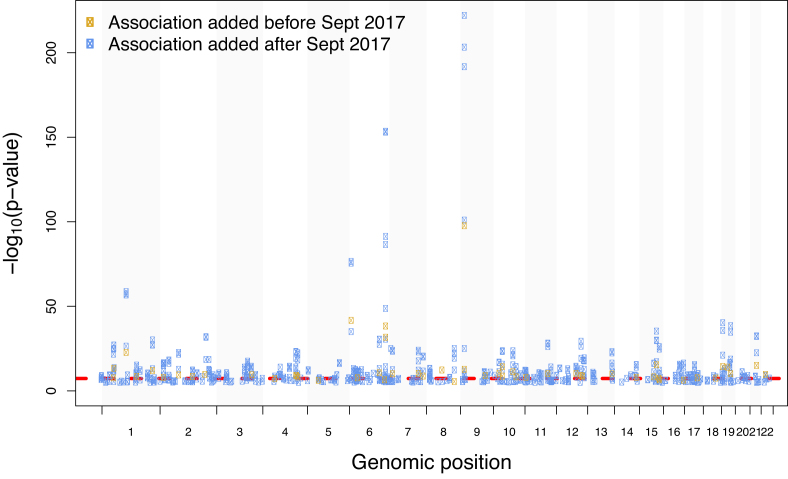
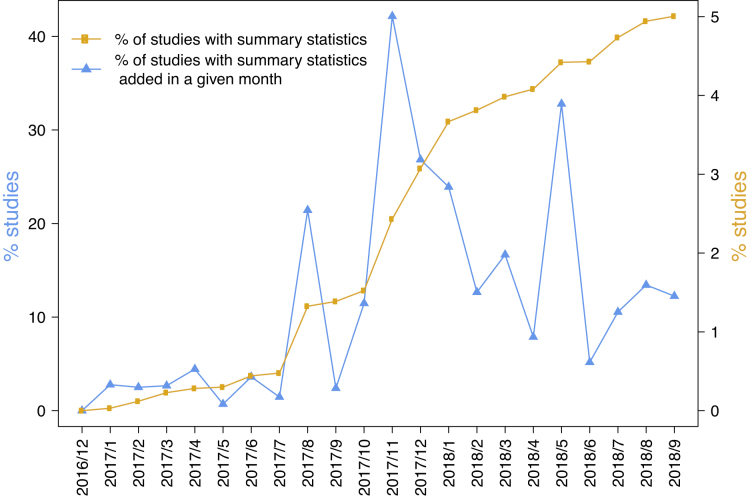
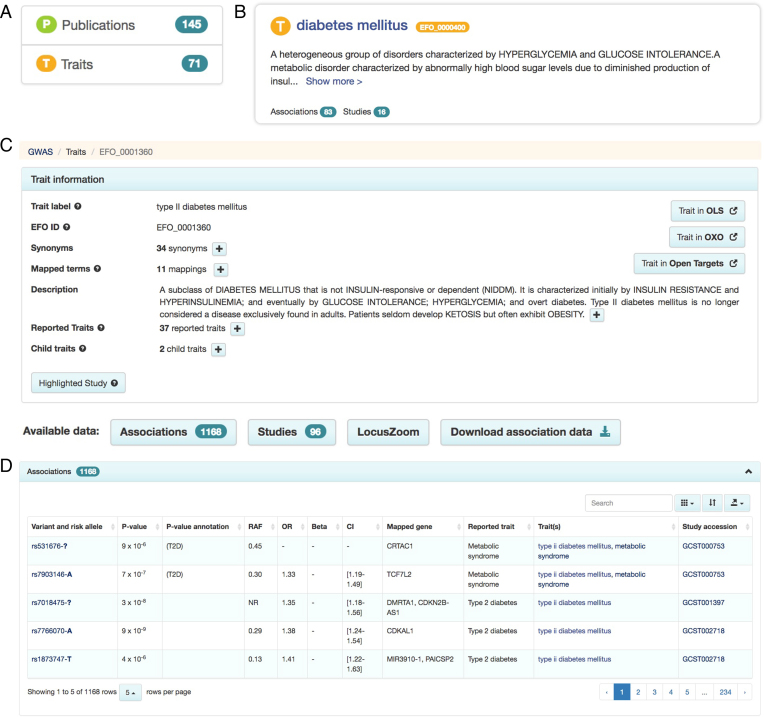
The GWAS Catalog delivers a high-quality curated collection of all published genome-wide association studies enabling investigations to identify causal variants, understand disease mechanisms, and establish targets for novel therapies. The scope of the Catalog has also expanded to targeted and exome arrays with 1000 new associations added for these technologies. As of September 2018, the Catalog contains 5687 GWAS comprising 71673 variant-trait associations from 3567 publications. New content includes 284 full P-value summary statistics datasets for genome-wide and new targeted array studies, representing 6 × 10⁹ individual variant-trait statistics. In the last 12 months, the Catalog's user interface was accessed by ∼90000 unique users who viewed >1 million pages. We have improved data access with the release of a new RESTful API to support high-throughput programmatic access, an improved web interface and a new summary statistics database. Summary statistics provision is supported by a new format proposed as a community standard for summary statistics data representation. This format was derived from our experience in standardizing heterogeneous submissions, mapping formats and in harmonizing content. Availability: https://www.ebi.ac.uk/gwas/.
Overview
The claims and statistics of this paper haven’t been checked yet.
Free: it reads the open-access text and checks the first 5 claims that cite a source we can check. Create a free account to check every claim.
Integrity signals
Registry
Cites
Statistics
Figures
Verification
Claims the paper makes
The claims and statistics of this paper haven’t been checked yet.
Free: it reads the open-access text and checks the first 5 claims that cite a source we can check. Create a free account to check every claim.
Claims other papers make about this one
Each is checked against this paper’s own text: does it say what the citing paper says it does?
The source backs part of the claim, not all of it — or backs it for a different population, condition or comparison.
In the citing paper
“Of note, this region also includes one of the SNPs (rs10119) significantly associated with AD in the National Human Genome Research Institute catalog of published genome-wide association studies (NHGRI-GWAS33), indicating that this regulatory element may be involved in AD in humans (Fig. 6B).”
From Integrated analysis of behavioral, epigenetic, and gut microbiome analyses in AppNL-G-F, AppNL-F, and wild type mice (2021) · cites this paper as [33]
Experimental — accuracy not yet measuredThe source backs part of the claim, not all of it — or backs it for a different population, condition or comparison.
In the citing paper
“Genome-wide association studies (GWASs) have been employed to identify genetic variants in CS genes associated with AD onset [17].”
From Integrated multi-omics analysis revealed the molecular networks and potential targets of cellular senescence in Alzheimer’s disease (2025) · cites this paper as [17]
Experimental — accuracy not yet measuredThe cited source says what the claim attributes to it.
In the citing paper
“Although tens of thousands of associations have been discovered across thousands of common human diseases and traits44, multiple factors have frustrated efforts to convert these genetic signals to knowledge about causal variants, genes and mechanisms.”
From A brief history of human disease genetics (2020) · cites this paper as [44]
The cited source says what the claim attributes to it.
In the citing paper
“Of note, this region also includes one of the SNPs (rs10119) significantly associated with AD in the National Human Genome Research Institute catalog of published genome-wide association studies (NHGRI-GWAS33), indicating that this regulatory element may be involved in AD in humans (Fig. 6B).”
From Integrated analysis of behavioral, epigenetic, and gut microbiome analyses in AppNL-G-F, AppNL-F, and wild type mice (2021) · cites this paper as [33]
The check wasn’t confident either way, so it gives no verdict — never disputed.
In the citing paper
“To date, however, no large-scale molecular genetic studies have utilized the extensive degree of genetic overlap among externalizing traits to aid gene discovery, as most studies have focused on individual disorders6.”
From Multivariate analysis of 1.5 million people identifies genetic associations with traits related to self-regulation and addiction. (2021) · cites this paper as [6]
Experimental — accuracy not yet measured
6 more claims about this paper
Create a free account to see every claim other papers make about this one.
Self-check
Percentages, sums and reported differences re-computed from the paper’s own numbers.
The self-check needs the paper’s full text.
Citations
Cites
PLINK: a tool set for whole-genome association and population-based linkage analyses.
Purcell, S., Neale, B., Todd-Brown, K., Thomas, L., Ferreira, M. A. R., Bender, D., Maller, J., Sklar, P., de Bakker, P. I. W., Daly, M. J., et al. (2007) · The American Journal of Human Genetics · doi:10.1086/519795 · Cited by 34,089 · cited 1×
“Our standard format contains a minimal set of requirements that are included in the outputs from the most common GWAS analysis programs (such as PLINK, (29) and additional optional columns.”
The FAIR Guiding Principles for scientific data management and stewardship
Wilkinson, M. D., Dumontier, M., Aalbersberg, I. J., Appleton, G., Axton, M., Baak, A., Blomberg, N., Boiten, J.-W., da Silva Santos, L. B., Bourne, P. E., et al. (2016) · Scientific Data · doi:10.1038/sdata.2016.18 · Cited by 18,423
A global reference for human genetic variation
The 1000 Genomes Project Consortium, authors, C., Auton, A., Abecasis, G. R., Steering committee, Altshuler, D. M., Durbin, R. M., Abecasis, G. R., Bentley, D. R., Chakravarti, A., et al. (2015) · Nature · doi:10.1038/nature15393 · Cited by 18,247
Self-citationThe International HapMap Project
†The International HapMap Consortium, Genotyping centres: Baylor College of Medicine and ParAllele BioScience, Gibbs, R. A., Belmont, J. W., Hardenbol, P., Willis, T. D., Yu, F., Chinese HapMap Consortium, Yang, H., Ch'ang, L.-Y., et al. (2003) · Nature · doi:10.1038/nature02168 · Cited by 6,057
Self-citationThe Genotype-Tissue Expression (GTEx) pilot analysis: Multitissue gene regulation in humans
The GTEx Consortium, Ardlie, K. G., Deluca, D. S., Segrè, A. V., Sullivan, T. J., Young, T. R., Gelfand, E. T., Trowbridge, C. A., Maller, J. B., Tukiainen, T., et al. (2015) · Science · doi:10.1126/science.1262110 · Cited by 5,062
LocusZoom: regional visualization of genome-wide association scan results
Pruim, R. J., Welch, R. P., Sanna, S., Teslovich, T. M., Chines, P. S., Gliedt, T. P., Boehnke, M., Abecasis, G. R., & Willer, C. J. (2010) · Bioinformatics · doi:10.1093/bioinformatics/btq419 · Cited by 2,707
The new NHGRI-EBI Catalog of published genome-wide association studies (GWAS Catalog)
MacArthur, J., Bowler, E., Cerezo, M., Gil, L., Hall, P., Hastings, E., Junkins, H., McMahon, A., Milano, A., Morales, J., et al. (2017) · Nucleic Acids Research · doi:10.1093/nar/gkw1133 · Cited by 2,161 · cited 1×
“The NHGRI-EBI GWAS Catalog (www.ebi.ac.uk/gwas; (16)) is a publicly available resource of published human GWAS.”
Self-citationThe support of human genetic evidence for approved drug indications
Nelson, M. R., Tipney, H., Painter, J. L., Shen, J., Nicoletti, P., Shen, Y., Floratos, A., Sham, P. C., Li, M. J., Wang, J., et al. (2015) · Nature Genetics · doi:10.1038/ng.3314 · Cited by 1,666 · cited 2×
“estimate that the inclusion of genetic associations in the drug discovery process could double the success rate of targets in clinical development (8).”
Association analysis identifies 65 new breast cancer risk loci
Michailidou, K., Lindström, S., Dennis, J., Beesley, J., Hui, S., Kar, S., Lemaçon, A., Soucy, P., Glubb, D., Rostamianfar, A., et al. (2017) · Nature · doi:10.1038/nature24284 · Cited by 1,413 · cited 1×
“For over a decade, genome-wide association studies (GWAS) have contributed to the identification of reproducible genomic regions associated with an impressive number of common traits, including breast cancer (1,2), ovarian cancer (3), coronary artery disease (4), type 2 diabetes (5), osteoarthritis (6) and systemic lu…”
Yates, A., Akanni, W., Amode, M. R., Barrell, D., Billis, K., Carvalho-Silva, D., Cummins, C., Clapham, P., Fitzgerald, S., Gil, L., et al. (2016) · Nucleic Acids Research · doi:10.1093/nar/gkv1157 · Cited by 1,273
Self-citation
Cited by
Items 501–600 of 1,033
Gorski, M., Rasheed, H., Teumer, A., Thomas, L. F., Graham, S. E., Sveinbjörnsson, G., Winkler, T. W., Günther, F., Stark, K. J., Chai, J. F., et al. (2022) · Kidney International · doi:10.1016/j.kint.2022.05.021 · Cited by 64
“14 A challenge beyond power is limited experience in longitudinal GWASs with regard to covariate adjustment: clinical trials for disease-related biomarker change require control for differences in baseline levels between therapy groups.”
Sato, G. R., Shirai, Y., Namba, S., Edahiro, R., Sonehara, K., Hata, T., Uemura, M., the Biobank Japan Project, Yamanashi, Y., Furukawa, Y., et al. (2023) · Nature Communications · doi:10.1038/s41467-023-39136-7 · Cited by 68
“To help ensure that the identi fi ed loci were novel, we con fi rmed that any variants within ±1 Mbp from the leadvariants and correlated with the lead variants ( r 2 >0.1) were not previously reported at P 1.0 ×10 − 6 using GWAS Catalog.”
InfluentialAssessing Digital Phenotyping to Enhance Genetic Studies of Human Diseases
DeBoever, C., Tanigawa, Y., Aguirre, M., McInnes, G., Lavertu, A., & Rivas, M. A. (2020) · The American Journal of Human Genetics · doi:10.1016/j.ajhg.2020.03.007 · Cited by 62
Romero-Morales, A. I., Robertson, G. L., Rastogi, A., Rasmussen, M. L., Temuri, H., McElroy, G. S., Chakrabarty, R. P., Hsu, L., Almonacid, P. M., Millis, B. A., et al. (2022) · Development · doi:10.1242/dev.199914 · Cited by 61
Proteogenomic links to human metabolic diseases
Koprulu, M., Carrasco-Zanini, J., Wheeler, E., Lockhart, S., Kerrison, N. D., Wareham, N. J., Pietzner, M., & Langenberg, C. (2023) · Nature Metabolism · doi:10.1038/s42255-023-00753-7 · Cited by 57
“We demonstrate that systematic application of cis-pQTLs to large-scale genetic studies of human diseases can (1) guide causal gene annotation at GWAS loci (for example, DKKL1 for MS); (2) identify pathways that link genes to diseases guided by a protein–phenotype network; and (3) complement gene-burden testing of rare…”
BackgroundInfluentialTASUKE+: a web-based platform for exploring GWAS results and large-scale resequencing data
Kumagai, M., Nishikawa, D., Kawahara, Y., Wakimoto, H., Itoh, R., Tabei, N., Tanaka, T., & Itoh, T. (2019) · DNA Research · doi:10.1093/dnares/dsz022 · Cited by 60
Shared genetic liability between major depressive disorder and osteoarthritis
Zhang, F., Rao, S., & Baranova, A. V. (2022) · Bone and Joint Research · doi:10.1302/2046-3758.111.bjr-2021-0277.r1 · Cited by 58
Barturen, G., Carnero-Montoro, E., Martínez-Bueno, M., Rojo-Rello, S., Sobrino, B., Porras-Perales, Ó., Alcántara-Domínguez, C., Bernardo, D., & Alarcón-Riquelme, M. (2022) · Nature Communications · doi:10.1038/s41467-022-32357-2 · Cited by 46
An ensemble penalized regression method for multi-ancestry polygenic risk prediction
Zhang, J., Zhan, J., Jin, J., Ma, C., Zhao, R., O’Connell, J., Jiang, Y., Koelsch, B. L., Zhang, H., & Chatterjee, N. (2024) · Nature Communications · doi:10.1038/s41467-024-47357-7 · Cited by 65
“Tens of thousands of single nucleotide polymorphisms (SNP) have been mapped to human complex traits and diseases through genome-wide association studies (GWAS) 1,2 .”
Tissue-specific genetic features inform prediction of drug side effects in clinical trials
Duffy, Á., Verbanck, M., Dobbyn, A. L., Won, H., Rein, J. L., Forrest, I. S., Nadkarni, G. N., Rocheleau, G., & Do, R. (2020) · Science Advances · doi:10.1126/sciadv.abb6242 · Cited by 62
“(6), including (i) GWA loci identified from the National Health Genome Research InstituteEuropean Bioinformatics Institute GWA study catalog (29) and (ii) genes involved in Mendelian diseases from the Human Phenotype Ontology and OMIM (30).”
BackgroundJönsson, J., Renault, K. M., García-Calzón, S., Perfilyev, A., Estampador, A. C., Nørgaard, K., Lind, M. V., Vaag, A. A., Hjort, L., Michaelsen, K. F., et al. (2021) · Diabetes · doi:10.2337/db20-0487 · Cited by 60
“Additionally, SNPs previously associated with DNA methylation in cord blood of our identified sites were linked to disease traits in the GWAS catalog.”
BackgroundMethodInfluentialRoberts, R., Chang, C. C., & Hadley, T. D. (2021) · JACC Basic to Translational Science · doi:10.1016/j.jacbts.2020.09.004 · Cited by 65
“The National Human Genome Research Instituteve GWAS catalog indicates >5,687 GWASs have been performed, involving >71,000 variant trait associations and published in >3,000 publications (29).”
BackgroundChoudhury, A., Brandenburg, J., Chikowore, T., Sengupta, D., Boua, P. R., Crowther, N. J., Agongo, G., Asiki, G., Gómez-Olivé, F. X., Kisiangani, I., et al. (2022) · Nature Communications · doi:10.1038/s41467-022-30098-w · Cited by 60
The DNA methylome of cervical cells can predict the presence of ovarian cancer
Barrett, J. J. E., Jones, A., Evans, I., Reisel, D., Herzog, C. M. S., Chindera, K., Kristiansen, M., Leavy, O. C., Manchanda, R., Bjørge, L., et al. (2022) · Nature Communications · doi:10.1038/s41467-021-26615-y · Cited by 59
Li, X., Ren, J. F., Zhang, W., Zhang, Z., Yu, J., Wu, J., Sun, H., Zhou, S., Yan, K., Yan, X., et al. (2022) · Pharmacological Research · doi:10.1016/j.phrs.2022.106185 · Cited by 62
BURT, C. H. (2022) · Behavioral and Brain Sciences · doi:10.1017/s0140525x22001145 · Cited by 66
Yang, M., Huang, L., Huang, H., Tang, H., Zhang, N., Yang, H., Wu, J., & Mu, F. (2022) · Nucleic Acids Research · doi:10.1093/nar/gkac326 · Cited by 67
“We download all T2D-associated SNPs from GWAS Catalog (44) (2020-05-14 version, P-value ranging from 9×10⁻⁶ to 6×10–447) and corresponding LD SNPs (r2 > 0.”
MethodInfluentialKakoti, B. B., Bezbaruah, R., & Ahmed, N. (2022) · Frontiers in Pharmacology · doi:10.3389/fphar.2022.1007315 · Cited by 59
“where the National Human Genome Research Institute-European Bioinformatics Institute GenomeWide Association Study catalog, PubMed, and the Human Metabolome database were precisely extracted to generate an assembly of proteomic, metabolomics, and genetic signatures of AD (Zhang et al., 2016; Wishart et al., 2018; Bunie…”
Methodm7GHub V2.0: an updated database for decoding the N7-methylguanosine (m7G) epitranscriptome
Wang, X., Zhang, Y., Chen, K., Liang, Z., Ma, J., Xia, R. M., de Magalhães, J. P., Rigden, D. J., Meng, J., & Song, B. (2023) · Nucleic Acids Research · doi:10.1093/nar/gkad789 · Cited by 60
“A large number of disease-related variants (TagSNPs) were obtained from ClinVar ( 48 ), the GWAS catalog ( 49 ) and Johnson and O’Donnel’s database ( 50 ).”
Yang, Z., Wen, J., Abdulkadir, A., Cui, Y., Erus, G., Mamourian, E., Melhem, R., Srinivasan, D., Govindarajan, S. T., Chen, J., et al. (2024) · Nature Communications · doi:10.1038/s41467-023-44271-2 · Cited by 62
“To preselect disease-associated SNPs, we performed a manual search through the NHGRI-EBI GWAS Catalog 63 .”
Zhang, S., He, Y., Liu, H., Zhai, H., Huang, D., Yi, X., Dong, X., Wang, Z., Zhao, K., Zhou, Y., et al. (2019) · Nucleic Acids Research · doi:10.1093/nar/gkz774 · Cited by 58
“0.1 (53); (v) Somatic eQTL dataset: recurrent somatic mutations from COSMIC V84 with recurrence ≥ 2 within significant flanking intervals per somatic eGene (54); (vi) Rare Patho SNV dataset: high confidence pathogenic regulatory variants curated by two recent publications.”
BackgroundInfluentialBioinformatics approaches for deciphering the epitranscriptome: Recent progress and emerging topics
Liu, L., Song, B., Ma, J., Song, Y., Zhang, S.-Y., Tang, Y., Wu, X., Wei, Z. C., Chen, K., Su, J., et al. (2020) · Computational and Structural Biotechnology Journal · doi:10.1016/j.csbj.2020.06.010 · Cited by 59
“A variant was defined as m(6)A-associated variants if it can cause the alteration of methylation status of a m(6)A site (gain or loss), and the potential impact of m(6)A modification on diseases was revealed by incorporating the information of disease-associated SNPs derived from different databases, including GWAS ca…”
MethodNon-additive association analysis using proxy phenotypes identifies novel cattle syndromes
Reynolds, E., Neeley, C., Lopdell, T., Keehan, M., Dittmer, K. E., Harland, C., Couldrey, C., Johnson, T., Tiplady, K., Worth, G. M., et al. (2021) · Nature Genetics · doi:10.1038/s41588-021-00872-5 · Cited by 62
Zebrafish models of sarcopenia
Daya, A., Donaka, R., & Karasik, D. (2020) · Disease Models & Mechanisms · doi:10.1242/dmm.042689 · Cited by 55
“…out in the GWAS section above, it is well recognized that ∼ 90% of disease-associated SNPs are mapped to non-coding intergenic or intronic regions and are not positioned within protein-coding genes, and therefore are likely to influence gene regulation (Buniello et al., 2019; Giral et al., 2018).”
Genetic variation and microRNA targeting of A-to-I RNA editing fine tune human tissue transcriptomes
Park, E., Jiang, Y. Y., Hao, L., Hui, J., & Xing, Y. (2021) · Genome biology · doi:10.1186/s13059-021-02287-1 · Cited by 59
“We obtained GWAS signals from the NHGRI-EBI GWAS Catalog [63] (accessed 2019- 05-03).”
MethodInfluentialSong, B., Chen, K., Tang, Y., Wei, Z. C., Su, J., de Magalhães, J. P., Rigden, D. J., & Meng, J. (2021) · Briefings in Bioinformatics · doi:10.1093/bib/bbab088 · Cited by 58
RNA binding motif 47 (RBM47): emerging roles in vertebrate development, RNA editing and cancer
Shivalingappa, P. K. M., Sharma, V., Shiras, A., & Bapat, S. A. (2021) · Molecular and Cellular Biochemistry · doi:10.1007/s11010-021-04256-5 · Cited by 59
Host Genetic Determinants of the Microbiome Across Animals: From Caenorhabditis elegans to Cattle
Ryu, E. P., & Davenport, E. (2022) · Annual Review of Animal Biosciences · doi:10.1146/annurev-animal-020420-032054 · Cited by 60
Li, X., Quick, C., Zhou, H., Gaynor, S. M., Liu, Y., Chen, H., Selvaraj, M. S., Sun, R., Dey, R., Arnett, D. K., et al. (2022) · Nature Genetics · doi:10.1038/s41588-022-01225-6 · Cited by 64
“After conditioning on known lipids-associated variants 16,35 , 40 of 53 associations remained significant at the Bonferroni-corrected threshold of α = 5 .”
BackgroundHow data science and AI-based technologies impact genomics
Jing, L., & Ngiam, K. Y. (2023) · Singapore Medical Journal · doi:10.4103/singaporemedj.smj-2021-438 · Cited by 57
“[2] The phenome‑wide association study (PheWAS), a complementary approach to GWAS, has been developed with the emergence of clinical electronic health records (EHRs) with linked genetic data.”
BackgroundMoreno-Salinas, A. L., Avila-Zozaya, M., Ugalde-Silva, P., Hernández-Guzmán, D. A., Missirlis, F., & Boucard, A. A. (2019) · Frontiers in Neuroscience · doi:10.3389/fnins.2019.00700 · Cited by 55
Zhang, W., Liu, Y., Min, Z., Liang, G., Mo, J., Ju, Z., Zeng, B., Guan, W. X., Zhang, Y., Chen, J., et al. (2021) · Nucleic Acids Research · doi:10.1093/nar/gkab809 · Cited by 62
“More data features can also be included through integrating the circRNA data related to genomics, proteomics, epigenetics and even the circRNA data of other organisms from the public resources, which include Catalogue of Somatic Mutations in Cancer (42), GWAS Catalog (43), The Cancer Genome Atlas (44), International C…”
BackgroundBarriers to Implementing Clinical Pharmacogenetics Testing in Sub-Saharan Africa. A Critical Review
Tata, E. B., Ambele, M. A., & Pepper, M. S. (2020) · Pharmaceutics · doi:10.3390/pharmaceutics12090809 · Cited by 57
“However, the genomes of African populations are greatly underrepresented in global GWAS studies [19].”
BackgroundA shared genetic contribution to breast cancer and schizophrenia
Lu, D., Song, J., Lu, Y., Fall, K., Chen, X., Fang, F., Landén, M., Hultman, C. M., Czene, K., Sullivan, P. F., et al. (2020) · Nature Communications · doi:10.1038/s41467-020-18492-8 · Cited by 57
Precision Population Medicine in Primary Care: The Sanford Chip Experience
Christensen, K. D., Bell, M., Zawatsky, C. L. B., Galbraith, L. N., Green, R. C., Hutchinson, A. M., Jamal, L., LeBlanc, J. L., Leonhard, J. R., Moore, M. M., et al. (2021) · Frontiers in Genetics · doi:10.3389/fgene.2021.626845 · Cited by 54
Xin, J., Du, M., Gu, D., Jiang, K., Wang, M., Jin, M., Hu, Y., Ben, S., Chen, S., Shao, W., et al. (2023) · Genome Medicine · doi:10.1186/s13073-023-01156-9 · Cited by 59
The association between genetically elevated polyunsaturated fatty acids and risk of cancer
Haycock, P., Borges, M. C., Burrows, K., Lemaître, R. N., Burgess, S., Khankari, N. K., Tsilidis, K. K., Gaunt, T. R., Hemani, G., Zheng, J., et al. (2023) · EBioMedicine · doi:10.1016/j.ebiom.2023.104510 · Cited by 59
Genetic mapping across autoimmune diseases reveals shared associations and mechanisms
Lincoln, M. R., Connally, N., Axisa, P., Gasperi, C., Mitrovič, M., van Heel, D. A., Wijmenga, C., Withoff, S., Jonkers, I. H., Padyukov, L., et al. (2024) · Nature Genetics · doi:10.1038/s41588-024-01732-8 · Cited by 58
Blanter, M., Sork, H., Tuomela, S., & Flodström‐Tullberg, M. (2019) · Current Diabetes Reports · doi:10.1007/s11892-019-1192-8 · Cited by 59
Polygenic risk score as clinical utility in psychiatry: a clinical viewpoint
Ikeda, M., Saito, T., Kanazawa, T., & Iwata, N. (2020) · Journal of Human Genetics · doi:10.1038/s10038-020-0814-y · Cited by 58
Kolberg, L., Kerimov, N., Peterson, H., & Alasoo, K. (2020) · eLife · doi:10.7554/elife.58705 · Cited by 56
Ward, M. C., Banovich, N. E., Sarkar, A., Stephens, M., & Gilad, Y. (2021) · eLife · doi:10.7554/elife.57345 · Cited by 55
“-CpG islands We obtained CpG island annotations from the UCSC Table Browser, and overlapped these regions with DARs and constitutively accessible regions. caQTL identification The caQTLs were identified in the same manner as described for the eQTLs.”
MethodInfluentialEpigenetic Changes in Islets of Langerhans Preceding the Onset of Diabetes
Admin, A., Ouni, M., Saussenthaler, S., Eichelmann, F., Jähnert, M., Stadion, M., Wittenbecher, C., Rönn, T., Zellner, L., Gottmann, P., et al. (2020) · Diabetes · doi:10.2337/db20-0204 · Cited by 56
“The National Human Genome Research Institute-European Bioinformatics Institute Genome-Wide Association Study (GWAS) Catalog (25) was used to screen for differentially methylated ortholog genes.”
MethodMultiomic blood correlates of genetic risk identify presymptomatic disease alterations
Wainberg, M., Magis, A. T., Earls, J. C., Lovejoy, J. C., Sinnott-Armstrong, N., Omenn, G. S., Hood, L., & Price, N. D. (2020) · Proceedings of the National Academy of Sciences · doi:10.1073/pnas.2001429117 · Cited by 55
“GWAS summary statistics for the 54 traits used in this study were downloaded from the GWAS Catalog (13); the traits, studies, and summary statistics URLs are provided as Dataset S1.”
MethodAbu‐Farha, M., Al-Sabah, S. K., Hammad, M. M., Hebbar, P., Channanath, A. M., John, S. E., Taher, I., Almaeen, A. H., Ghazy, A. A., Mohammad, A., et al. (2020) · Frontiers in Pharmacology · doi:10.3389/fphar.2020.587451 · Cited by 55
“Genetic variants and genes associated with traits and disorders discussed in this study were obtained by querying the GWAS Catalog available at https://www.ebi.ac.uk/gwas/.”
BackgroundMethodInfluentialGenome-wide association study of occupational attainment as a proxy for cognitive reserve
Ko, H., Kim, S., Kim, K., Jung, S., Shim, I., Cha, S., Lee, H., Kim, B., Yoon, J., Ha, T. H., et al. (2021) · Brain · doi:10.1093/brain/awab351 · Cited by 62
Tahir, U. A., Katz, D. H., Ávila-Pacheco, J., Bick, A. G., Pampana, A., Robbins, J., Yu, Z., Chen, Z., Benson, M. D., Cruz, D. E., et al. (2022) · Nature Communications · doi:10.1038/s41467-022-32275-3 · Cited by 56
Nguyen, A. B., Cavallari, L. H., Rossi, J. S., Stouffer, G. A., & Lee, C. R. (2022) · Frontiers in Cardiovascular Medicine · doi:10.3389/fcvm.2022.991646 · Cited by 54
“compared to the representation in GWAS studies (∼2%); the opposite trend exists in individuals of European ancestry (54% of associations with 78% of participants) (59, 60).”
BackgroundResultLow CC16 mRNA Expression Levels in Bronchial Epithelial Cells Are Associated with Asthma Severity
Li, X., Guerra, S., Ledford, J. G., Kraft, M., Li, H., Hastie, A. T., Castro, M., Denlinger, L. C., ERZURUM, S. C., Fahy, J. V., et al. (2022) · American Journal of Respiratory and Critical Care Medicine · doi:10.1164/rccm.202206-1230oc · Cited by 61
Investigating the shared genetic architecture between depression and subcortical volumes
Liu, M., Wang, L., Zhang, Y., Dong, H., Wang, C., Chen, Y., Qian, Q., Zhang, N., Wang, S., Zhao, G., et al. (2024) · Nature Communications · doi:10.1038/s41467-024-52121-y · Cited by 54
“A locus was considered novel if all candidate SNPshadnot been previously reported in the NHGRI-EBI GWAS Catalog and if it extended beyond 500kb from the borders of any reported loci in the original GWAS summary, previous cond/conjFDR studies, or other GWAS studies.”
Cornish, A. J., Tomlinson, I. P. M., & Houlston, R. S. (2019) · Molecular Aspects of Medicine · doi:10.1016/j.mam.2019.01.002 · Cited by 56
D’Antonio, M., Reyna, J., D’Antonio‐Chronowska, A., Bonder, M. J., Jakubosky, D. A., Matsui, H., Smith, E. N., Stegle, O., Nariai, N., & Frazer, K. A. (2019) · eLife · doi:10.7554/elife.48476 · Cited by 55
Milind, N., Preuss, C., Haber, A., Ananda, G., Mukherjee, S., John, C., Shapley, S., Logsdon, B. A., Crane, P. K., & Carter, G. W. (2020) · PLOS Genetics · doi:10.1371/journal.pgen.1008775 · Cited by 53
“In addition, we compared the ROSMAP loci to prior association studies using summary statistics obtained from the NHGRI-EBI catalog [53].”
MethodKizilkaya, H. S., Sørensen, K. V., Kibsgaard, C. J., Gasbjerg, L. S., Hauser, A. S., Sparre-Ulrich, A. H., Grarup, N., & Rosenkilde, M. M. (2021) · Frontiers in Cell and Developmental Biology · doi:10.3389/fcell.2021.749607 · Cited by 52
Zolotareva, O. I., Saik, O., Königs, C., Bragina, E. Y., Goncharova, I. A., Freidin, M. B., Dosenko, V., Иванисенко, В. А., & Hofestädt, R. (2019) · Scientific Reports · doi:10.1038/s41598-019-52762-w · Cited by 59
The broken promise that undermines human genome research
Powell, K. (2021) · Nature · doi:10.1038/d41586-021-00331-5 · Cited by 52
Tissue-specific multi-omics analysis of atrial fibrillation
Assum, I., Krause, J., Scheinhardt, M. O., Müller, C., Hammer, E., Börschel, C. S., Völker, U., Conradi, L., Geelhoed, B., Zeller, T., et al. (2022) · Nature Communications · doi:10.1038/s41467-022-27953-1 · Cited by 55
Kember, R. L., Vickers‐Smith, R., Zhou, H., Xu, H., Jennings, M. V., Dao, C., Davis, L. K., Sanchez‐Roige, S., Justice, A. C., Gelernter, J. E., et al. (2023) · American Journal of Psychiatry · doi:10.1176/appi.ajp.21090892 · Cited by 54
Benaglio, P., Newsome, J. M., Han, J. Y., Chiou, J., Aylward, A., Corban, S., Miller, M., Okino, M.-L., Kaur, J., Preißl, S., et al. (2023) · PLoS Genetics · doi:10.1371/journal.pgen.1010759 · Cited by 54
Cardiac Aging Is Promoted by Pseudohypoxia Increasing p300-Induced Glycolysis
Serio, S., Pagiatakis, C., Musolino, E., Felicetta, A., Carullo, P., Francés, J. L., Papa, L., Rozzi, G., Salvarani, N., Miragoli, M., et al. (2023) · Circulation Research · doi:10.1161/circresaha.123.322676 · Cited by 63
“…reported in the NHGRI-EBI GWAS (National Human Genome Research Institute-European Bioinformatics Institute Genome-Wide Association Study) catalog, 35 we found 4 lead single-nucleotide polymorphisms associated with acute myeloid leukemia ( P =1×10 −12 )—a group of hematologic neoplasms in which…”
BackgroundMultiancestral polygenic risk score for pediatric asthma
Namjou, B., Lape, M., Małolepsza, E., DeVore, S. B., Weirauch, M. T., Dikilitas, O., Jarvik, G. P., Kiryluk, K., Kullo, I., Liu, C., et al. (2022) · Journal of Allergy and Clinical Immunology · doi:10.1016/j.jaci.2022.03.035 · Cited by 54
sc2GWAS: a comprehensive platform linking single cell and GWAS traits of human
Yin, M., Feng, C., Yu, Z., Zhang, Y., Li, Y., Wang, X., Song, C., Guo, M., & Li, C. (2025) · Nucleic Acids Research · doi:10.1093/nar/gkae1008 · Cited by 51
“We integrated GWAS summary statistics from a range of public datasets, including Neale Lab UKBB v3 ( http://www. nealelab.is/uk-biobank ), GWAS ATLAS ( 22 ), GWAS Cata-log ( 23 ), dbGaP ( 24 ) and GRASP ( 25 ).”
ACE2 and COVID-19 Susceptibility and Severity
Zheng, M. (2022) · Aging and Disease · doi:10.14336/ad.2021.0805 · Cited by 54
“Next, we tested the cis-eQTL proposed instruments of ACE2 and DPP4 against multiple genome-wide association study (GWAS) data of COVID19 and influenza from the COVID-19 Host Genetics Initiative [19] and GWAS Catalog [20].”
MethodDixon, P. H., Levine, A. P., Cebola, I., Chan, M., Amin, A. S., Aich, A., Mozere, M., Maude, H., Mitchell, A., Zhang, J., et al. (2022) · Nature Communications · doi:10.1038/s41467-022-29931-z · Cited by 53
Kita, S., Fukuda, S., Maeda, N., & Shimomura, I. (2019) · eLife · doi:10.7554/elife.48675 · Cited by 51
“…SNP studies including GWAS also indicated the importance of T-cadherin, but not AdipoRs or calreticulin, for plasma adiponectin levels, cardiovascular diseases, and glucose homeostasis (Buniello et al., 2019; Chung et al., 2011; Dastani et al., 2012; Kitamoto et al., 2016; Morisaki et al., 2012).”
BackgroundCommon transcriptional signatures of neuropathic pain
Pokhilko, A. V., Nash, A., & Cader, M. Z. (2020) · Pain · doi:10.1097/j.pain.0000000000001847 · Cited by 51
“The list of pain-associated human genes was constructed based o n the GWAS catalogue [7] and recent review on genetic association studies [46].”
Zheng, N. S., Feng, Q., Kerchberger, V. E., Zhao, J., Edwards, T. L., Cox, N. J., Stein, C. M., Roden, D. M., Denny, J. C., & Wei, W. (2020) · Journal of the American Medical Informatics Association · doi:10.1093/jamia/ocaa104 · Cited by 56
Yamaguchi, K., Ishigaki, K., Suzuki, A., Tsuchida, Y., Tsuchiya, H., Sumitomo, S., Nagafuchi, Y., Miya, F., Tsunoda, T., Shoda, H., et al. (2022) · Nature Communications · doi:10.1038/s41467-022-32358-1 · Cited by 52
Niu, T., Fang, J., Shi, X., Zhao, M., Xing, X., Wang, Y., Zhu, S., & Liu, K. (2021) · Diabetes · doi:10.2337/db20-0839 · Cited by 52
Albiñana, C., Grove, J., McGrath, J. J., Agerbo, E., Wray, N. R., Bulik, C. M., Nordentoft, M., HOUGAARD, D. M., Werge, T. M., Børglum, A. D., et al. (2021) · The American Journal of Human Genetics · doi:10.1016/j.ajhg.2021.04.014 · Cited by 50
snpXplorer: a web application to explore human SNP-associations and annotate SNP-sets
Tesi, N., van der Lee, S. J., Hulsman, M., Holstege, H. H., & Reinders, M. J. T. (2021) · Nucleic Acids Research · doi:10.1093/nar/gkab410 · Cited by 60
“The side panel reports (i) the top 10 variants with highest significance (together with the trait they belong to, in case multiple studies were selected) and (ii) the top eQTLs associations (by default, eQTLs in blood are shown, and this can be optionally changed), and (iii) cross-references including GeneCards, GWAS-…”
BackgroundMethodKim, H., Bae, J. H., Park, K. S., Sung, J., & Kwak, S. H. (2021) · The Journal of Clinical Endocrinology & Metabolism · doi:10.1210/clinem/dgab488 · Cited by 55
Song, B., Huang, D., Zhang, Y., Wei, Z. C., Su, J., de Magalhães, J. P., Rigden, D. J., Meng, J., & Chen, K. (2022) · Genomics Proteomics & Bioinformatics · doi:10.1016/j.gpb.2022.09.001 · Cited by 53
“Thus, m 6 A variants of ‘high’ confi-dence level were defined as the validated m 6 A variants that can also be mapped to disease-TagSNPs extracted from Clin-Var [71] and GWAS catalog [70], while those not validated were referred to as ‘critical’.”
BackgroundMethodZafari, N., Bathaei, P., Velayati, M., Khojasteh‐Leylakoohi, F., Khazaei, M., Fiuji, H., Nassiri, M., Hassanian, S. M., Ferns, G. A., Nazari, E., et al. (2023) · Computers in Biology and Medicine · doi:10.1016/j.compbiomed.2023.106639 · Cited by 56
Tomasoni, M., Beyeler, M. J., Vela, S. O., Mounier, N., Porcu, E., Corre, T., Krefl, D., Button, A. L., Abouzeid, H., Konstantinidis, L., et al. (2023) · Ophthalmology Science · doi:10.1016/j.xops.2023.100288 · Cited by 53
“To this end, we first identified which of the independent SNPs in the combined-vessel GWAS were listed in the GWAS Catalog.70 We then extended this analysis by considering DF tortuosity SNPs in LD (r2 > 0.8) with disease-related SNPs in the GWAS Catalog.”
MethodInfluentialWiley, L. K., Shortt, J., Roberts, E. R., Lowery, J. T., Kudron, E. L., Lin, M. H., Mayer, D., Wilson, M. P., Brunetti, T. M., Chavan, S., et al. (2024) · The American Journal of Human Genetics · doi:10.1016/j.ajhg.2023.12.001 · Cited by 51
“We then compared the odds ratios of the significant associations found within the CCPM Research Pilot study to previously reported findings in the GWAS catalog 43 (accession numbers available in supplemental information) for each phenotype.”
ResultRegional Variation of Splicing QTLs in Human Brain
Zhang, Y., Yang, H. T., Kadash-Edmondson, K. E., Pan, Y., Pan, Z., Davidson, B. L., & Xing, Y. (2020) · The American Journal of Human Genetics · doi:10.1016/j.ajhg.2020.06.002 · Cited by 60
Molaei, S., Dadkhah, M., Asghariazar, V., Karami, C., & Safarzadeh, E. (2020) · International Immunopharmacology · doi:10.1016/j.intimp.2020.107051 · Cited by 55
Qiu, Y., Ding, R., Zhuang, Z., Wu, J., Yang, M. J., Zhou, S., Ye, Y., Geng, Q., Xu, Z. Q., Huang, S., et al. (2021) · BMC Genomics · doi:10.1186/s12864-021-07654-7 · Cited by 64
“Over the past decade, GWAS have made remarkable contributions to the discovery of common SNPs that influence complex traits [38].”
BackgroundShared genetic liability and causal effects between major depressive disorder and insomnia
Baranova, A. V., Cao, H., & Zhang, F. (2021) · Human Molecular Genetics · doi:10.1093/hmg/ddab328 · Cited by 53
Cary, G. A., Wiley, J. C., Gockley, J., Keegan, S., Amirtha Ganesh, S. S., Heath, L., Butler, R. R., Mangravite, L. M., Logsdon, B. A., Longo, F. M., et al. (2024) · Alzheimer's & Dementia: Translational Research & Clinical Interventions · doi:10.1002/trc2.12461 · Cited by 49
Deciphering the impact of genetic variation on human polyadenylation using APARENT2
Linder, J., Koplik, S. E., Kundaje, A., & Seelig, G. (2022) · Genome Biology · doi:10.1186/s13059-022-02799-4 · Cited by 49
“To highlight this phenomenon, we intersected our predictions against CAUSALdb [70], a database containing fine-mapping results from over 3000 GWAS summary statistics (including UK Biobank [71] and GWAS Catalog [72]).”
MethodCorlin, L., Liu, C., Lin, H., Leone, D. A., Yang, Q., Ngo, D., Levy, D. A., Cupples, L. A., Gerszten, R. E., Larson, M. G., et al. (2020) · Journal of the American Heart Association · doi:10.1161/jaha.120.018020 · Cited by 51
Type 1 Diabetes and the HLA Region: Genetic Association Besides Classical HLA Class II Genes
Sticht, J., Álvaro‐Benito, M., & Konigorski, S. (2021) · Frontiers in Genetics · doi:10.3389/fgene.2021.683946 · Cited by 54
“, 2015), but a direct association has neither been reported in the GWAS Catalog (Buniello et al., 2019), nor in UKB repositories (Zhou et al.”
BackgroundFully defined NGN2 neuron protocol reveals diverse signatures of neuronal maturation
Shan, X., Zhang, A., Rezzonico, M. G., Tsai, M., Sánchez-Priego, C., Zhang, Y., Chen, M. B., Choi, M., López, J. M. A., Phu, L., et al. (2024) · Cell Reports Methods · doi:10.1016/j.crmeth.2024.100858 · Cited by 51
Using the Data We Have: Improving Diversity in Genomic Research
Manolio, T. A. (2019) · The American Journal of Human Genetics · doi:10.1016/j.ajhg.2019.07.008 · Cited by 63
“includes 118 papers studying 6,000– 9,000 persons, 103 of which examined continuous traits that lend themselves well to population studies.(5) This is a size range that might reasonably be expected from the two largest non-EA UK Biobank subgroups after exclusions for relatedness or sample quality.”
BackgroundChallenges in the construction of knowledge bases for human microbiome-disease associations
Badal, V. D., Wright, D., Katsis, Y., Kim, H., Swafford, A. D.-E., Knight, R. D., & Hsu, C. (2019) · Microbiome · doi:10.1186/s40168-019-0742-2 · Cited by 53
Global Analysis of Enhancer Targets Reveals Convergent Enhancer-Driven Regulatory Modules
Xie, S., Armendariz, D., Zhou, P., Duan, J., & Hon, G. C. (2019) · Cell Reports · doi:10.1016/j.celrep.2019.10.073 · Cited by 46
“All the disease associated SNPs were downloaded from GWAS Catalog (Buniello et al., 2019).”
MethodDai, Y., Wang, J., Jeong, H.-H., Chen, W., Jia, P., & Zhao, Z. (2021) · Human Genetics · doi:10.1007/s00439-021-02305-z · Cited by 56
Runx Transcription Factors in T Cells—What Is Beyond Thymic Development?
Korinfskaya, S., Parameswaran, S., Weirauch, M. T., & Barski, A. (2021) · Frontiers in Immunology · doi:10.3389/fimmu.2021.701924 · Cited by 58
Rao, S., Baranova, A. V., Yao, Y., Wang, J., & Zhang, F. (2022) · Neuropsychobiology · doi:10.1159/000525411 · Cited by 53
A human brain vascular atlas reveals diverse cell mediators of Alzheimer’s disease risk
Yang, A. C., Vest, R. T., Kern, F., Lee, D. P., Maat, C. A., Losada, P. M., Chen, M. B., Agam, M., Schaum, N., Khoury, N., et al. (2021) · doi:10.1101/2021.04.26.441262 · Cited by 48
Mukhopadhyay, N., Bishop, M. R., Mortillo, M., Chopra, P., Hetmanski, J. B., Taub, M. A., Moreno, L. M., Valencia‐Ramirez, L. C., Restrepo, C., Wehby, G. L., et al. (2019) · Human Genetics · doi:10.1007/s00439-019-02099-1 · Cited by 48
Hu, Y., Qiu, S., & Cheng, L. (2021) · Computational and Mathematical Methods in Medicine · doi:10.1155/2021/7036592 · Cited by 52
“East Asian ancestry GWAS was obtained from the GWAS Catalog which included 2,808 cases and 7,261 controls [18, 19].”
MethodA genome-wide association study in autoimmune neurological syndromes with anti-GAD65 autoantibodies
Strippel, C., Herrera-Rivero, M., Wendorff, M., Tietz, A. K., Degenhardt, F. C., Witten, A., Schroeter, C. B., Nelke, C., Golombeck, K. S., Madlener, M., et al. (2022) · Brain · doi:10.1093/brain/awac119 · Cited by 48
Qian, P., Kang, J., Liu, D., & Xie, G. (2022) · Frontiers in Genetics · doi:10.3389/fgene.2022.851719 · Cited by 48
“Furthermore, to illustrate how the findings in zebrafish study could also contribute to human infertility studies, we examined the male infertility genes in GWAS Catalog database (https://www.ebi.ac.uk/gwas/ )(Buniello et al., 2019).”
BackgroundDonor and recipient polygenic risk scores influence the risk of post-transplant diabetes
Shaked, A. A., Loza, B., Loon, E. V., Olthoff, K. M., Guan, W., Jacobson, P. A., Zhu, A. X., Fishman, C. E., Gao, H., Oetting, W. S., et al. (2022) · Nature Medicine · doi:10.1038/s41591-022-01758-7 · Cited by 50
NAFLD: genetics and its clinical implications
Sharma, D., & Mandal, P. (2022) · Clinics and Research in Hepatology and Gastroenterology · doi:10.1016/j.clinre.2022.102003 · Cited by 49
A Causal Atlas on Comorbidities in Idiopathic Pulmonary Fibrosis
Zhu, J., Zhou, D., Wang, J., Yang, Y., Chen, D., He, F., & Li, Y. (2023) · CHEST Journal · doi:10.1016/j.chest.2023.02.038 · Cited by 52
Yang, X., Kar, S., Antoniou, A. C., & Pharoah, P. D. P. (2023) · Nature reviews. Cancer · doi:10.1038/s41568-023-00599-x · Cited by 55
Metadata
- Authors
- Buniello, A., MacArthur, J. A. L., Cerezo, M., Harris, L. W., Hayhurst, J., Malangone, C., McMahon, A., Morales, J., Mountjoy, E., Sollis, E., Suveges, D., Vrousgou, O., Whetzel, P. L., Amode, R., Guillen, J. A., Riat, H. S., Trevanion, S. J., Hall, P., Junkins, H., Flicek, P., Burdett, T., Hindorff, L. A., Cunningham, F., & Parkinson, H.
- Affiliations
- European Bioinformatics Institute (GB)
- European Molecular Biology Laboratory, European Bioinformatics Institute, Wellcome Genome Campus, Hinxton, Cambridge CB10 1SD, UK
- Centre for Human Genetics (GB)
- National Institutes of Health (US)
- Corresponding author
- Parkinson, Helen
- ORCID
- Venue
- Nucleic Acids Research
- Publisher
- Oxford University Press (OUP)
- Published
- 2018-11-16
- Volume
- 47
- Issue
- D1
- Pages
- D1005-D1012
- ISSN
- 0305-1048 (ISSN-L)
- 1362-4962
- PMC
- PMC6323933
- OpenAlex
- W2901303766
- Semantic Scholar
- c4a71f9579395b92e4696fdf6e9003a54f6eafcf
- Cited by
- 4,000
- References
- 39
- Citations by year
- 2026: 219 · 2025: 302 · 2024: 552 · 2023: 651 · 2022: 815 · 2021: 804 · 2020: 476 · 2019: 173 · 2018: 3
- FWCI
- 231.93
- Type
- journal article
- Language
- en
- Open access
- gold
- doi.org
- Licence
- Locations
- Nucleic Acids Research (publishedVersion, cc-by)
- Europe PMC (PubMed Central) (publishedVersion, cc-by)
- PubMed Central (publishedVersion, cc-by)
- PubMed (publishedVersion)
- Acceda (Universidad de Las Palmas de Gran Canaria) (submittedVersion)
- Funders
- National Institutes of Health (U41-HG007823)
- Topics
- Life Sciences › Biochemistry, Genetics and Molecular Biology › Genetics › Genetic Associations and Epidemiology
- Life Sciences › Biochemistry, Genetics and Molecular Biology › Molecular Biology › Bioinformatics and Genomic Networks
- Physical Sciences › Computer Science › Information Systems › Research Data Management Practices
- Keywords
- GWAS Catalog, genome-wide association study, summary statistics, causal variants, disease mechanisms, therapeutic target, REST API, data harmonization
- MeSH terms
- Disease, Humans, Publications, Software, User-Computer Interface, Genetic Variation, Databases, Genetic, Microarray Analysis, Genome-Wide Association Study
About these checks
Registry, retraction, Cites and statistics results are computed, not judged, with one exception: a printed reference that no index lists is read once by a model before it counts as a citation error. Claims are extracted by a model and kept only when their quote appears verbatim in the text; each cited source is then checked, with a model’s help, for whether it says what the claim relies on. Those verdicts can be wrong — read the claim’s quote and the cited source before relying on one.
Statistics and arithmetic are recomputed, not judged.
Confidence bands are shown only for fields calibrated on our annotated test set. None is calibrated yet, so no band is shown.
What counts as a claim ›How we measure confidence ›How we check this ›
Are you an author, or do you see a problem with this page? Request a review
Data sources
Bibliographic data: Semantic Scholar, OpenAlex, Crossref.
Contains information from the Semantic Scholar Academic Graph Datasets, made available under the ODC Attribution License (ODC-BY 1.0).
Semantic Scholar’s data is described in: Kinney, R., et al. (2023). The Semantic Scholar Open Data Platform. arXiv:2301.10140.
