

The NHGRI-EBI GWAS Catalog of published genome-wide association studies, targeted arrays and summary statistics 2019
Open accessThe DOI matches its Crossref record; 37 of the 39 references it cites were found in a registry or an index.
Abstract
The GWAS Catalog delivers a high-quality curated collection of all published genome-wide association studies enabling investigations to identify causal variants, understand disease mechanisms, and establish targets for novel therapies. The scope of the Catalog has also expanded to targeted and exome arrays with 1000 new associations added for these technologies. As of September 2018, the Catalog contains 5687 GWAS comprising 71673 variant-trait associations from 3567 publications. New content includes 284 full P-value summary statistics datasets for genome-wide and new targeted array studies, representing 6 × 10⁹ individual variant-trait statistics. In the last 12 months, the Catalog's user interface was accessed by ∼90000 unique users who viewed >1 million pages. We have improved data access with the release of a new RESTful API to support high-throughput programmatic access, an improved web interface and a new summary statistics database. Summary statistics provision is supported by a new format proposed as a community standard for summary statistics data representation. This format was derived from our experience in standardizing heterogeneous submissions, mapping formats and in harmonizing content. Availability: https://www.ebi.ac.uk/gwas/.
Overview
The claims and statistics of this paper haven’t been checked yet.
Free: it reads the open-access text and checks the first 5 claims that cite a source we can check. Create a free account to check every claim.
Integrity signals
Registry
Cites
Statistics
Figures
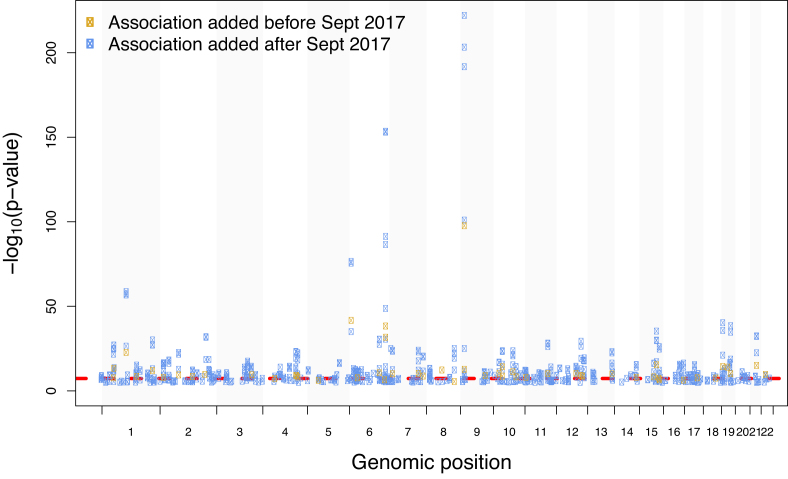
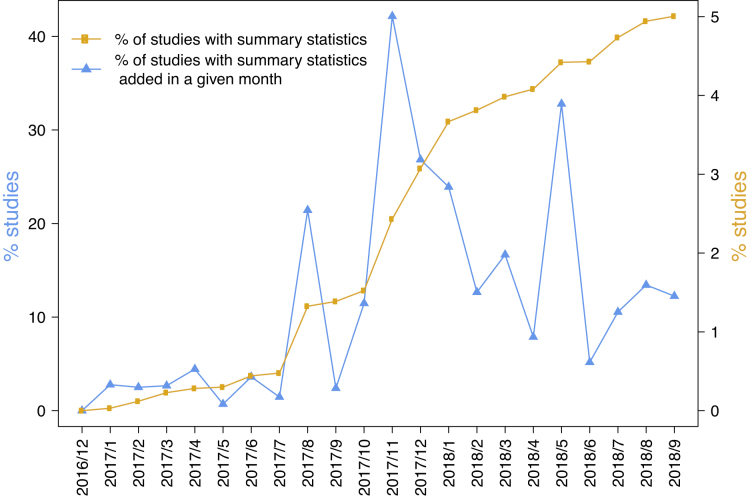
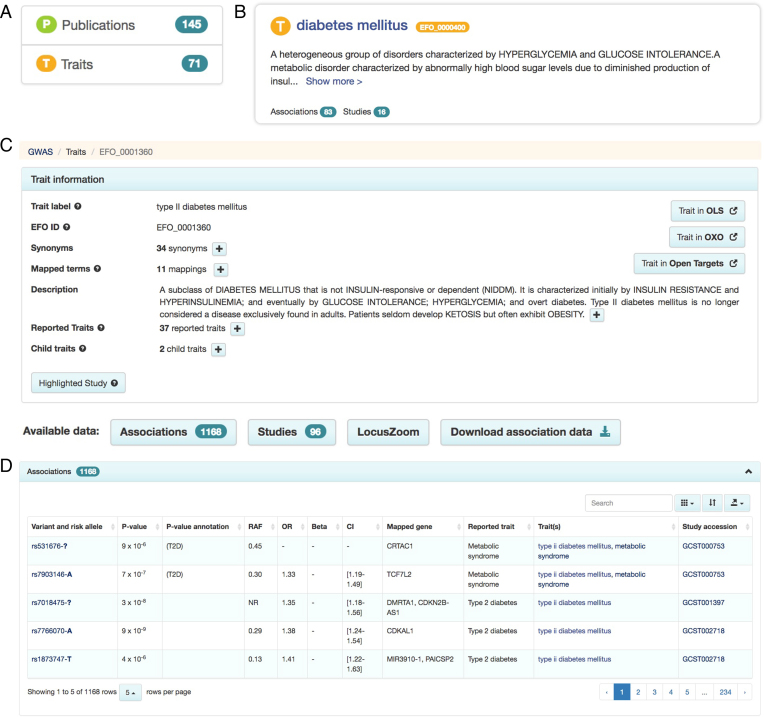
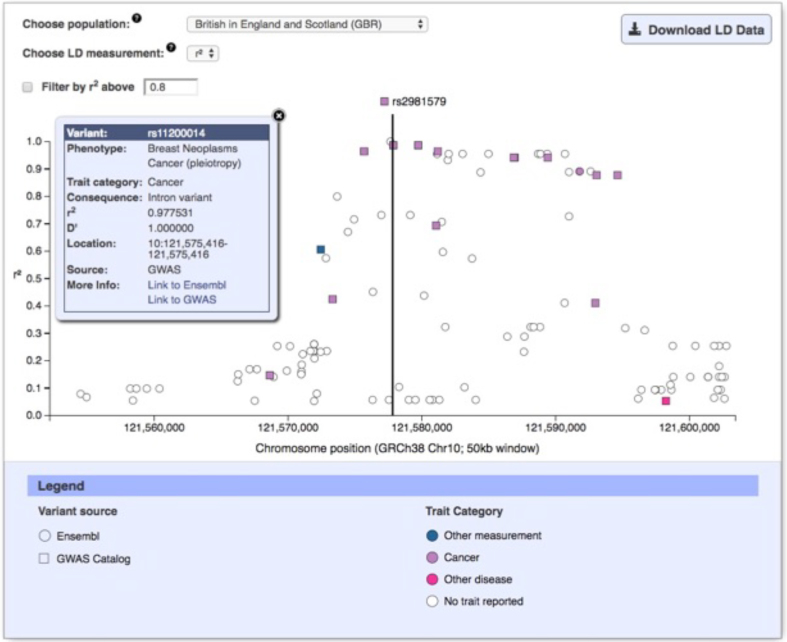
Verification
Claims the paper makes
The claims and statistics of this paper haven’t been checked yet.
Free: it reads the open-access text and checks the first 5 claims that cite a source we can check. Create a free account to check every claim.
Claims other papers make about this one
Each is checked against this paper’s own text: does it say what the citing paper says it does?
The source backs part of the claim, not all of it — or backs it for a different population, condition or comparison.
In the citing paper
“Of note, this region also includes one of the SNPs (rs10119) significantly associated with AD in the National Human Genome Research Institute catalog of published genome-wide association studies (NHGRI-GWAS33), indicating that this regulatory element may be involved in AD in humans (Fig. 6B).”
From Integrated analysis of behavioral, epigenetic, and gut microbiome analyses in AppNL-G-F, AppNL-F, and wild type mice (2021) · cites this paper as [33]
Experimental — accuracy not yet measuredThe source backs part of the claim, not all of it — or backs it for a different population, condition or comparison.
In the citing paper
“Genome-wide association studies (GWASs) have been employed to identify genetic variants in CS genes associated with AD onset [17].”
From Integrated multi-omics analysis revealed the molecular networks and potential targets of cellular senescence in Alzheimer’s disease (2025) · cites this paper as [17]
Experimental — accuracy not yet measuredThe cited source says what the claim attributes to it.
In the citing paper
“Although tens of thousands of associations have been discovered across thousands of common human diseases and traits44, multiple factors have frustrated efforts to convert these genetic signals to knowledge about causal variants, genes and mechanisms.”
From A brief history of human disease genetics (2020) · cites this paper as [44]
The cited source says what the claim attributes to it.
In the citing paper
“Of note, this region also includes one of the SNPs (rs10119) significantly associated with AD in the National Human Genome Research Institute catalog of published genome-wide association studies (NHGRI-GWAS33), indicating that this regulatory element may be involved in AD in humans (Fig. 6B).”
From Integrated analysis of behavioral, epigenetic, and gut microbiome analyses in AppNL-G-F, AppNL-F, and wild type mice (2021) · cites this paper as [33]
The check wasn’t confident either way, so it gives no verdict — never disputed.
In the citing paper
“To date, however, no large-scale molecular genetic studies have utilized the extensive degree of genetic overlap among externalizing traits to aid gene discovery, as most studies have focused on individual disorders6.”
From Multivariate analysis of 1.5 million people identifies genetic associations with traits related to self-regulation and addiction. (2021) · cites this paper as [6]
Experimental — accuracy not yet measured
6 more claims about this paper
Create a free account to see every claim other papers make about this one.
Self-check
Percentages, sums and reported differences re-computed from the paper’s own numbers.
The self-check needs the paper’s full text.
Citations
Cites
PLINK: a tool set for whole-genome association and population-based linkage analyses.
Purcell, S., Neale, B., Todd-Brown, K., Thomas, L., Ferreira, M. A. R., Bender, D., Maller, J., Sklar, P., de Bakker, P. I. W., Daly, M. J., et al. (2007) · The American Journal of Human Genetics · doi:10.1086/519795 · Cited by 34,089 · cited 1×
“Our standard format contains a minimal set of requirements that are included in the outputs from the most common GWAS analysis programs (such as PLINK, (29) and additional optional columns.”
The FAIR Guiding Principles for scientific data management and stewardship
Wilkinson, M. D., Dumontier, M., Aalbersberg, I. J., Appleton, G., Axton, M., Baak, A., Blomberg, N., Boiten, J.-W., da Silva Santos, L. B., Bourne, P. E., et al. (2016) · Scientific Data · doi:10.1038/sdata.2016.18 · Cited by 18,423
A global reference for human genetic variation
The 1000 Genomes Project Consortium, authors, C., Auton, A., Abecasis, G. R., Steering committee, Altshuler, D. M., Durbin, R. M., Abecasis, G. R., Bentley, D. R., Chakravarti, A., et al. (2015) · Nature · doi:10.1038/nature15393 · Cited by 18,247
Self-citationThe International HapMap Project
†The International HapMap Consortium, Genotyping centres: Baylor College of Medicine and ParAllele BioScience, Gibbs, R. A., Belmont, J. W., Hardenbol, P., Willis, T. D., Yu, F., Chinese HapMap Consortium, Yang, H., Ch'ang, L.-Y., et al. (2003) · Nature · doi:10.1038/nature02168 · Cited by 6,057
Self-citationThe Genotype-Tissue Expression (GTEx) pilot analysis: Multitissue gene regulation in humans
The GTEx Consortium, Ardlie, K. G., Deluca, D. S., Segrè, A. V., Sullivan, T. J., Young, T. R., Gelfand, E. T., Trowbridge, C. A., Maller, J. B., Tukiainen, T., et al. (2015) · Science · doi:10.1126/science.1262110 · Cited by 5,062
LocusZoom: regional visualization of genome-wide association scan results
Pruim, R. J., Welch, R. P., Sanna, S., Teslovich, T. M., Chines, P. S., Gliedt, T. P., Boehnke, M., Abecasis, G. R., & Willer, C. J. (2010) · Bioinformatics · doi:10.1093/bioinformatics/btq419 · Cited by 2,707
The new NHGRI-EBI Catalog of published genome-wide association studies (GWAS Catalog)
MacArthur, J., Bowler, E., Cerezo, M., Gil, L., Hall, P., Hastings, E., Junkins, H., McMahon, A., Milano, A., Morales, J., et al. (2017) · Nucleic Acids Research · doi:10.1093/nar/gkw1133 · Cited by 2,161 · cited 1×
“The NHGRI-EBI GWAS Catalog (www.ebi.ac.uk/gwas; (16)) is a publicly available resource of published human GWAS.”
Self-citationThe support of human genetic evidence for approved drug indications
Nelson, M. R., Tipney, H., Painter, J. L., Shen, J., Nicoletti, P., Shen, Y., Floratos, A., Sham, P. C., Li, M. J., Wang, J., et al. (2015) · Nature Genetics · doi:10.1038/ng.3314 · Cited by 1,666 · cited 2×
“estimate that the inclusion of genetic associations in the drug discovery process could double the success rate of targets in clinical development (8).”
Association analysis identifies 65 new breast cancer risk loci
Michailidou, K., Lindström, S., Dennis, J., Beesley, J., Hui, S., Kar, S., Lemaçon, A., Soucy, P., Glubb, D., Rostamianfar, A., et al. (2017) · Nature · doi:10.1038/nature24284 · Cited by 1,413 · cited 1×
“For over a decade, genome-wide association studies (GWAS) have contributed to the identification of reproducible genomic regions associated with an impressive number of common traits, including breast cancer (1,2), ovarian cancer (3), coronary artery disease (4), type 2 diabetes (5), osteoarthritis (6) and systemic lu…”
Yates, A., Akanni, W., Amode, M. R., Barrell, D., Billis, K., Carvalho-Silva, D., Cummins, C., Clapham, P., Fitzgerald, S., Gil, L., et al. (2016) · Nucleic Acids Research · doi:10.1093/nar/gkv1157 · Cited by 1,273
Self-citation
Cited by
Items 301–400 of 1,033
Dutta, P., Talenti, A., Young, R. A., Jayaraman, S., Callaby, R., Jadhav, S. K., Dhanikachalam, V., Manikandan, M., Biswa, B. B., Low, W. Y., et al. (2020) · Nature Communications · doi:10.1038/s41467-020-18550-1 · Cited by 111
Network bioinformatics analysis provides insight into drug repurposing for COVID-19
Xu, L., Yu, J., Zhang, Z., Ren, J. F., Peluffo, A. E., Zhang, W., Zhao, Y., Wu, J., Yan, K., Cohen, D., et al. (2021) · Medicine in Drug Discovery · doi:10.1016/j.medidd.2021.100090 · Cited by 99
“Database search for related genes was performed by a program developed in ‐ house, AutoSeed, which can search for disease ‐ related genes in the following databases: DisGeNET [33], DrugBank [17], KEGG [34], Malacards [35], eDGAR [36], NHGRI ‐ EBI GWAS ‐ Catalog [37].”
Kachuri, L., Mak, A. C. Y., Hu, D., Eng, C. S., Huntsman, S., Elhawary, J. R., Gupta, N., Gabriel, S., Xiao, S., Keys, K. L., et al. (2023) · Nature Genetics · doi:10.1038/s41588-023-01377-z · Cited by 106
Vedi, M., Smith, J. R., Hayman, G. T., Tutaj, M., Brodie, K. C., Pons, J. D., Demos, W., Gibson, A. C., Kaldunski, M. L., Lamers, L., et al. (2023) · Genetics · doi:10.1093/genetics/iyad042 · Cited by 99
Inferring disease architecture and predictive ability with LDpred2-auto
Privé, F., Albiñana, C., Arbel, J., Paşaniuc, B., & Vilhjálmsson, B. J. (2023) · The American Journal of Human Genetics · doi:10.1016/j.ajhg.2023.10.010 · Cited by 107
Fritsche, L. G., Patil, S. B., Beesley, L. J., VandeHaar, P., Salvatore, M., Ma, Y., Peng, R. B., Taliun, D., Zhou, X., & Mukherjee, B. (2020) · The American Journal of Human Genetics · doi:10.1016/j.ajhg.2020.08.025 · Cited by 105
“Cancer Association Group to Investigate Cancer Associated Alterations in the Genome (PRACTICAL),(12) and the Ovarian Cancer Association Consortium (OCAC).(2,9) In addition, we extracted partial”
Genetic evidence suggests posttraumatic stress disorder as a subtype of major depressive disorder
Zhang, F., Rao, S., Cao, H., Zhang, X., Wang, Q., Xu, Y., Sun, J., Wang, C., Chen, J., Xu, X., et al. (2022) · Journal of Clinical Investigation · doi:10.1172/jci145942 · Cited by 103
“…genes highlighted by our meta-analysis have been previously identified in GWASs, we mined the GWAS Catalog database (https://www.ebi.ac.uk/gwas/) (56) for 7 common mental traits, including MDD, schizophrenia, bipolar disorder, autism spectrum disorder, attention deficit/hyperactivity disorder,…”
Genetic Association Between Schizophrenia and Cortical Brain Surface Area and Thickness
Cheng, W., Frei, O., van der Meer, D., Wang, Y., O’Connell, K. S., Chu, Y., Bahrami, S., Shadrin, A. A., Alnæs, D., Hindley, G., et al. (2021) · JAMA Psychiatry · doi:10.1001/jamapsychiatry.2021.1435 · Cited by 97
Wang, S. K., Nair, S., Li, R., Kraft, K., Pampari, A., Patel, A., Kang, J. B., Luong, C., Kundaje, A. B., & Chang, H. Y. (2022) · Cell Genomics · doi:10.1016/j.xgen.2022.100164 · Cited by 105
“To this end, we compiled a list of 1,331 unique index SNPs from the NHGRI-EBI GWAS Catalog representing GWAS hits for five eye diseases: AMD, glaucoma, DR, myopia, and MacTel (Figure 4A; Table S3).(25) The vast majority (96.”
MethodUsing human genetics to improve safety assessment of therapeutics
Carss, K., Deaton, A. M., Río-Espínola, A. D., Diogo, D., Fielden, M. R., Kulkarni, D. A., Moggs, J. G., Newham, P., Nelson, M. R., Sistare, F. D., et al. (2022) · Nature Reviews Drug Discovery · doi:10.1038/s41573-022-00561-w · Cited by 101
From genetic associations to genes: methods, applications, and challenges
Qi, T., Song, L., Guo, Y., Chen, C., & Yang, J. (2024) · Trends in Genetics · doi:10.1016/j.tig.2024.04.008 · Cited by 105
The Parkinson's Disease Genome‐Wide Association Study Locus Browser
Grenn, F. P., Kim, J. J., Makarious, M. B., Iwaki, H., Illarionova, A., Brolin, K., Kluss, J. H., Schumacher‐Schuh, A. F., Leonard, H., Faghri, F., et al. (2020) · Movement Disorders · doi:10.1002/mds.28197 · Cited by 92
“Genes were given a score of 1 in the “ Variant Intolerant ” column in the evidence table if the upper limit of the 90% con fi dence interval was less than 0.35 for any variant type.”
BackgroundMethodInfluentialSC2disease: a manually curated database of single-cell transcriptome for human diseases
Zhao, T., Lyu, S., Lu, G., Juan, L., Zeng, X., Wei, Z., Hao, J., & Peng, J. (2021) · Nucleic Acids Research · doi:10.1093/nar/gkaa838 · Cited by 88
“All the GWAS data were obtained from the GWAS catalog (22).”
MethodDecoding disease: from genomes to networks to phenotypes
Wong, A. K., Sealfon, R. S. G., Theesfeld, C. L., & Troyanskaya, O. G. (2021) · Nature Reviews Genetics · doi:10.1038/s41576-021-00389-x · Cited by 97
Open problems in human trait genetics
Brandes, N., Weissbrod, O., & Linial, M. (2022) · Genome Biology · doi:10.1186/s13059-022-02697-9 · Cited by 83
“Even among genetic effects for which causality is established, only a small fraction have a known, well-established biological mechanism (open problem #13: from causality to mechanism) [49, 50].”
BackgroundPCA outperforms popular hidden variable inference methods for molecular QTL mapping
Zhou, H. J., Li, L., Li, Y., Li, W., & Li, J. J. (2022) · Genome biology · doi:10.1186/s13059-022-02761-4 · Cited by 109
Bahls, M., Leitzmann, M. F., Karch, A., Teumer, A., Dörr, M., Felix, S. B., Meisinger, C., Baumeister, S. E., & Baurecht, H. (2021) · Clinical Research in Cardiology · doi:10.1007/s00392-021-01846-7 · Cited by 109
“8) in PhenoScanner [40], GWAS catalog [41] and GWAS Atlas [42] to identify previously reported associations (P < 5 × 10⁻⁸) with confounders or cardiovascular outcomes.”
MethodAnalysis and Interpretation of the Impact of Missense Variants in Cancer
Petrosino, M., Novak, L., Pasquo, A., Chiaraluce, R., Turina, P., Capriotti, E., & Consalvi, V. (2021) · International Journal of Molecular Sciences · doi:10.3390/ijms22115416 · Cited by 96
Fitipaldi, H., & Franks, P. W. (2022) · Human Molecular Genetics · doi:10.1093/hmg/ddac245 · Cited by 98
“uk/gwas/, March 2005 through June 2022) (16).”
BackgroundBiological mechanisms of aging predict age-related disease co-occurrence in patients
Fraser, H. C., Kuan, V., Johnen, R., Zwierzyna, M., Hingorani, A. D., Beyer, A., & Partridge, L. (2022) · Aging Cell · doi:10.1111/acel.13524 · Cited by 90
Walker, R. M., Vaher, K., Bermingham, M. L., Morris, S. W., Bretherick, A. D., Zeng, Y., Rawlik, K., Amador, C., Campbell, A., Haley, C., et al. (2021) · Genome Medicine · doi:10.1186/s13073-020-00808-4 · Cited by 96
Multi-Omics Approaches in Immunological Research
Chu, X., Zhang, B., Koeken, V. A. C. M., Gupta, M. K., & Li, Y. (2021) · Frontiers in Immunology · doi:10.3389/fimmu.2021.668045 · Cited by 101
Reilly, S. K., Gosai, S. J., Gutierrez, A., Mackay-Smith, A., Ulirsch, J. C., Kanai, M., Mouri, K., Berenzy, D., Kales, S., Butler, G. M., et al. (2021) · Nature Genetics · doi:10.1038/s41588-021-00900-4 · Cited by 99
Rosoff, D. B., Mavromatis, L. A., Bell, A. S., Wagner, J., Jung, J., Marioni, R. E., Smith, G. D., Horvath, S., & Lohoff, F. W. (2023) · Nature Aging · doi:10.1038/s43587-023-00455-5 · Cited by 94
Qiu, W., Chen, H., Kaeberlein, M. R., & Lee, S. (2023) · The Lancet Healthy Longevity · doi:10.1016/s2666-7568(23)00189-7 · Cited by 95
Molina‐Montes, E., Coscia, C., Gómez-Rubio, P., Fernández, A. M., Boenink, R., Rava, M., Márquez, M., Molero, X., Löhr, M. J., Sharp, L., et al. (2020) · Gut · doi:10.1136/gutjnl-2019-319990 · Cited by 101
Causal inference for heritable phenotypic risk factors using heterogeneous genetic instruments
Wang, J., Zhao, Q., Bowden, J., Hemani, G., Davey Smith, G., Small, D. S., & Zhang, N. R. (2021) · PLOS Genetics · doi:10.1371/journal.pgen.1009575 · Cited by 88
“All GWAS summary statistics that are used in the analyses of the manuscript are downloaded from 520 public resources, where most of them are downloaded from the GWAS Catalog [9], and the websites 521 of GWAS consortium GIANT, DIAGRAM, PGC, GLGC, and UKBiobank.”
BackgroundMethodInfluentialPerspectives in Sports Genomics
Ginevičienė, V., Utkus, A., Pranckevičienė, E., Semenova, E. A., Hall, E. C. R., & Ahmetov, I. I. (2022) · Biomedicines · doi:10.3390/biomedicines10020298 · Cited by 90
“uk/gwas/, accessed on 20 November 2021) to document genome-wide associations for PPTs and other traits of interest [55].”
BackgroundMartinou, E., Pericleous, M., Stefanova, I., Kaur, V., & Angelidi, A. M. (2022) · Diagnostics · doi:10.3390/diagnostics12020407 · Cited by 107
Twin studies to GWAS: there and back again
Friedman, N. P., Banich, M. T., & Keller, M. C. (2021) · Trends in Cognitive Sciences · doi:10.1016/j.tics.2021.06.007 · Cited by 86
“Thousands of GWASs on millions of individuals have now been conducted, yielding tens of thousands of replicable associations [18,19].”
BackgroundJu, D., Hui, D., Hammond, D. A., Wonkam, A., & Tishkoff, S. A. (2022) · Annual Review of Biomedical Data Science · doi:10.1146/annurev-biodatasci-122220-112550 · Cited by 98
Liu, D., Gao, X., Pan, X., Zhou, T., Zhu, C., Li, F., Fan, J., Targher, G., & Zhao, J. (2023) · BMC Medicine · doi:10.1186/s12916-023-02775-0 · Cited by 94
Evolutionary modifications in human brain connectivity associated with schizophrenia
van den Heuvel, M. P., Scholtens, L. H., de Lange, S. C., Pijnenburg, R., Cahn, W., van Haren, N. E. M., Sommer, I. E., Bozzali, M., Koch, K., Boks, M. P., et al. (2019) · Brain · doi:10.1093/brain/awz330 · Cited by 90
A big-data approach to understanding metabolic rate and response to obesity in laboratory mice
Corrigan, J. K., Ramachandran, D., He, Y., Palmer, C. J., Jurczak, M. J., Chen, R., Li, B., Friedline, R. H., Kim, J. K., Ramsey, J. J., et al. (2020) · eLife · doi:10.7554/elife.53560 · Cited by 79
“Genetic variants identified with these methods are often outside of protein-coding sequences and may affect positive or negative gene regulation (Buniello et al., 2019).”
BackgroundZhou, Y., Fang, J., Bekris, L. M., Kim, Y. H., Pieper, A. A., Leverenz, J. B., Cummings, J., & Cheng, F. (2021) · Alzheimer's Research & Therapy · doi:10.1186/s13195-020-00760-w · Cited by 83
Abnormalities of the type I interferon signaling pathway in lupus autoimmunity
Gallucci, S., Meka, S., & Gamero, A. M. (2021) · Cytokine · doi:10.1016/j.cyto.2021.155633 · Cited by 91
McAllister, B., Donaldson, J., Binda, C. S., Powell, S., Chughtai, U., Edwards, G., Stone, J., Lobanov, S. V., Elliston, L., Schuhmacher, L.-N., et al. (2022) · Nature Neuroscience · doi:10.1038/s41593-022-01033-5 · Cited by 95
Interpreting non-coding disease-associated human variants using single-cell epigenomics
Gaulton, K. J., Preißl, S., & Ren, B. (2023) · Nature Reviews Genetics · doi:10.1038/s41576-023-00598-6 · Cited by 92
“Common traits and diseases have been linked to sequence variation at thousands of loci through genome-wide association studies (GWAS); however, more than 90% of disease-associated variants map outside protein-coding sequences and remain largely unannotated to date 2,3 .”
BackgroundMulti-PGS enhances polygenic prediction by combining 937 polygenic scores
Albiñana, C., Zhu, Z., Schork, A. J., Ingason, A., Aschard, H., Brikell, I., Bulik, C. M., Petersen, L. V., Agerbo, E., Grove, J., et al. (2023) · Nature Communications · doi:10.1038/s41467-023-40330-w · Cited by 96
“In Step 1 “ Build PGS Library ” , a large, agnostic library of PGS is generated by running LDpred2-auto 16 on publicly available GWAS summary statistics (GWAS Catalog 26 , GWAS ATLAS 27 , PGC 28 etc.).”
MethodFarsi, Z., Nicolella, A. A., Simmons, S., Aryal, S., Shepard, N., Brenner, K. S., Lin, S., Herzog, L. E., Moran, S. P., Stalnaker, K. J., et al. (2023) · Neuron · doi:10.1016/j.neuron.2023.08.004 · Cited by 87
Yang, Q., Sanderson, E., Tilling, K., Borges, M. C., & Lawlor, D. A. (2019) · doi:10.1101/19009605 · Cited by 85
“PhenoScanner [46], GWAS Catalog [47], MR-Base [48] and PHESANT [49]).”
MethodWang, J., Huang, D., Zhou, Y., Yao, H., Liu, H., Zhai, S., Wu, C., Zheng, Z., Zhao, K., Wang, Z., et al. (2019) · Nucleic Acids Research · doi:10.1093/nar/gkz1026 · Cited by 74
“Fortunately, recent GWAS communities advocate the public release of GWAS summary statistics, and some pertinent data have been archived in existing databases including LD Hub (12), GWAS Catalog (8), PhenoScanner (13), MR-Base (14), Gene ATLAS (15) and GWAS ATLAS (16).”
BackgroundMethodInfluentialMendelian randomisation study of the effects of known and putative risk factors on pancreatic cancer
Lu, Y., Gentiluomo, M., Bermejo, J. L., Morelli, L., Obazee, O. M., Campa, D., & Canzian, F. (2020) · Journal of Medical Genetics · doi:10.1136/jmedgenet-2019-106200 · Cited by 90
Pharmacogenomics Biomarker Discovery and Validation for Translation in Clinical Practice
Arbitrio, M., Scionti, F., Martino, M. T. D., Caracciolo, D., Pensabene, L., Tassone, P., & Tagliaferri, P. (2020) · Clinical and Translational Science · doi:10.1111/cts.12869 · Cited by 85
“uk/gwas) produced and developed by the National Human Genome Research Institute (NHGRI) and the European Bioinformatics Institute (EMBL-EBI).(3) Allelic variants in HLA genes have been also correlated with susceptibility and resistance to different diseases, as well as adverse drug reactions.”
MethodWang, L., Balmat, T. J., Antonia, A. L., Constantine, F. J., Henao, R., Burke, T. W., Ingham, A., McClain, M. T., Tsalik, E. L., Ko, E. R., et al. (2021) · Genome Medicine · doi:10.1186/s13073-021-00904-z · Cited by 85
“uk/gwas/ [12] H2P2 cellular GWAS: http://h2p2.”
Alsheikh, A. J., Wollenhaupt, S., King, E. A., Reeb, J., Ghosh, S., Stolzenburg, L. R., Tamim, S., Lazar, J., Davis, J. W., & Jacob, H. J. (2022) · BMC Medical Genomics · doi:10.1186/s12920-022-01216-w · Cited by 90
“We then used the information on the validated variant’s rsID and disease trait to cross validate our data with the GWAS Catalog [5] (accessed Mar 25, 2021) to confirm that each curated variant-disease association is reported in a GWAS (Fig.”
BackgroundMethodScalable Functional Assays for the Interpretation of Human Genetic Variation
Tabet, D., Parikh, V., Mali, P., Roth, F. P., & Claussnitzer, M. (2022) · Annual Review of Genetics · doi:10.1146/annurev-genet-072920-032107 · Cited by 81
“Most common genetic variants associated with human traits and diseases rest in noncoding regions of the genome (24).”
BackgroundWainberg, M., Andrews, S. J., & Tripathy, S. J. (2023) · Alzheimer s Research & Therapy · doi:10.1186/s13195-023-01244-3 · Cited by 90
“the NHGRI-EBI GWAS Catalog [32] (https:// ebi.”
InfluentialDNA methylation biomarkers of myocardial infarction and cardiovascular disease
Fernández-Sanlés, A., Sayols-Baixeras, S., Subirana, I., Sentí, M., Pérez-Fernández, S., de Castro Moura, M., Esteller, M., Marrugat, J., & Elosua, R. (2021) · Clinical Epigenetics · doi:10.1186/s13148-021-01078-6 · Cited by 83
“Interestingly, the SERPINA1 locus also anchors genetic variants related to CHD [20], and other identified loci present with genetic variants associated with body mass index (DNMT3A, ABTB2, ZBTB16, NISCH, AHRR, DLEU1), inflammatory biomarkers or blood cell counts (AIM2, ITPKB, DNMT3A, LZTFL1, PSMB7, ZBTB16, ACTN1, SERP…”
BackgroundHarrison, P. W., López, R., Rahman, N., Allen, S. G., Aslam, R., Buso, N., Cummins, C. A., Fathy, Y., Félix, E., Glont, M., et al. (2021) · Nucleic Acids Research · doi:10.1093/nar/gkab417 · Cited by 91
“SARS-CoV-2 related genomewide association studies from the GWAS Catalogue (5) reside in this category and provide access to datasets from studies looking into genetic variations in contexts such as susceptibility and severity of COVID-19 and its spread.”
BackgroundTwo‐Sample Multivariable Mendelian Randomization Analysis Using R
Rasooly, D., & Peloso, G. M. (2021) · Current Protocols · doi:10.1002/cpz1.335 · Cited by 91
“These can be obtained through publicly available resources, such as the NHGRI-EBI GWAS Catalog (Buniello et al., 2019), GeneAtlas (Canela-Xandri et al., 2018), or MR-Base (Hemani et al., 2018).”
MethodInfluentialTWAS Atlas: a curated knowledgebase of transcriptome-wide association studies
Lu, M., Zhang, Y., Yang, F., Mai, J., Gao, Q., Xu, X., Kang, H., Hou, L., Shang, Y., Qain, Q., et al. (2022) · Nucleic Acids Research · doi:10.1093/nar/gkac821 · Cited by 88
“A variety of public GWAS resources [ i.e. GWAS Catalog (8), dbGAP (9) and GWAS ATLAS (10)] and eQTL resources [ i.e. GTEx (11), BLUEPRINT (12) and eQTLGen (13)] provide a wealth of opportunities for TWAS implementation.”
Zeng, H., Zhang, W., Lin, Q., Gao, Y., Teng, J., Xu, Z., Cai, X., Zhong, Z., Wu, J., Liu, Y., et al. (2023) · Nucleic Acids Research · doi:10.1093/nar/gkad1080 · Cited by 90
“However, compared with large-scale public GWAS summary statistics of various complex traits in humans like GWAS Catalog ( 7 ), GW ASdb ( 8 ),GW AS ATLAS ( 9 ), Brain Catalog ( 10 ) and Open Target ( 11 ), GWASs of complex traits in pigs are typically performed using SNP arrays in small populations…”
BackgroundGenomewide Association Studies in Pharmacogenomics
McInnes, G., Yee, S. W., Pershad, Y., & Altman, R. B. (2021) · Clinical Pharmacology & Therapeutics · doi:10.1002/cpt.2349 · Cited by 89
“GWAS have been performed for thousands of traits and have led to a better understanding of human genetics and the development of diagnostics and therapeutics.(2,3) The growing abundance of genetic data linked with phenotype data has made GWAS an essential approach for understanding how genotype influences phenotype.”
BackgroundFalse discovery rate control in genome-wide association studies with population structure
Sesia, M., Bates, S., Candès, E. J., Marchini, J., & Sabatti, C. (2021) · Proceedings of the National Academy of Sciences · doi:10.1073/pnas.2105841118 · Cited by 98
“We begin to validate our findings by comparing them to the GWAS Catalog (3), the Japan Biobank Project (63), and the FinnGen resource (64) (standard 5 × 10 − threshold for the P values reported by the latter two).”
BackgroundResultInfluentialCommon DNA sequence variation influences 3-dimensional conformation of the human genome
Gorkin, D. U., Qiu, Y., Hu, M., Fletez-Brant, K., Liu, T., Schmitt, A. D., Noor, A., Chiou, J., Gaulton, K. J., Sebat, J., et al. (2019) · Genome Biology · doi:10.1186/s13059-019-1855-4 · Cited by 85
Xu, J., Zhang, P., Huang, Y., Zhou, Y., Hou, Y., Bekris, L. M., Lathia, J., Chiang, C.-W., Li, L., Pieper, A. A., et al. (2021) · Genome Research · doi:10.1101/gr.272484.120 · Cited by 84
“We assembled AD-associated genes from multiple sources, including the GWAS catalog (Buniello et al. 2019) and experimental evidences from animal models and human studies (Piñero et al. 2017).”
Mattheisen, M., Grove, J., Als, T. D., Martin, J., Voloudakis, G., Meier, S. M., Demontis, D., Bendl, J. M., Walters, R. K., Carey, C. E., et al. (2022) · Nature Genetics · doi:10.1038/s41588-022-01171-3 · Cited by 98
Yao, X., Glessner, J. T., Li, J., Qi, X., Hou, X., Zhu, C., Li, X., March, M. E., Yang, L., Mentch, F. D., et al. (2021) · Translational Psychiatry · doi:10.1038/s41398-020-01195-5 · Cited by 85
Eriksson, D., Røyrvik, E. C., Aranda‐Guillén, M., Berger, A. H., Landegren, N., Artaza, H., Hallgren, Å., Grytaas, M. A., Ström, S., Bratland, E., et al. (2021) · Nature Communications · doi:10.1038/s41467-021-21015-8 · Cited by 89
Georges, A. B., Yang, M., Berrandou, T.-E., Bakker, M. K., Dikilitas, O., Kiando, S. R., Ma, L., Satterfield, B. A., Sengupta, S., Yu, M., et al. (2021) · Nature Communications · doi:10.1038/s41467-021-26174-2 · Cited by 87
Wu, Z., Jiang, Z., Li, T., Xie, C., Zhao, L., Yang, J., Ouyang, S., Liu, Y., Li, T., & Xie, Z. (2021) · Nature Communications · doi:10.1038/s41467-021-26856-x · Cited by 85
Khunsriraksakul, C., Li, Q., Markus, H., Patrick, M. T., Sauteraud, R., McGuire, D., Wang, X., Wang, C., Wang, L., Chen, S., et al. (2023) · Nature Communications · doi:10.1038/s41467-023-36306-5 · Cited by 88
The genetic architecture of biological age in nine human organ systems
Wen, J., Tian, Y., Skampardoni, I., Yang, Z., Cui, Y., Anagnostakis, F., Mamourian, E., Zhao, B., Toga, A. W., Zalesky, A., et al. (2024) · Nature Aging · doi:10.1038/s43587-024-00662-8 · Cited by 85
Jo, T., Nho, K., Bice, P., Saykin, A. J., & Initiative, F. T. A. D. N. (2022) · Briefings in Bioinformatics · doi:10.1093/bib/bbac022 · Cited by 80
Deciphering the decline of metabolic elasticity in aging and obesity
Zhou, Q., Yu, L., Cook, J. R., Qiang, L., & Sun, L. (2023) · Cell Metabolism · doi:10.1016/j.cmet.2023.08.001 · Cited by 80
Therapeutic Approaches for COVID-19 Based on the Interferon-Mediated Immune Responses
Negahdaripour, M., Mosaddeghi, P., Shahabinezhad, F., Dehghani, Z., Farahmandnejad, M., Taghipour, M. J., Moghadami, M., Nezafat, N., & Masoompour, S. M. (2021) · Current Signal Transduction Therapy · doi:10.2174/1574362416666210120104636 · Cited by 83
The EN-TEx resource of multi-tissue personal epigenomes & variant-impact models
Rozowsky, J., Gao, J., Borsari, B., Yang, Y. T., Galeev, T., Gürsoy, G., Epstein, C. B., Xiong, K., Xu, J., Li, T., et al. (2023) · Cell · doi:10.1016/j.cell.2023.02.018 · Cited by 78
Rare penetrant mutations confer severe risk of common diseases
Fiziev, P. P., McRae, J. F., Ulirsch, J. C., Dron, J. S., Hamp, T., Yang, Y., Wainschtein, P., Ni, Z., Schraiber, J. G., Gao, H., et al. (2023) · Science · doi:10.1126/science.abo1131 · Cited by 85
“G enome-wide association studies (GWASs) have convincingly identified tens of thousands of common variants that underlie complex human traits and diseases (1), although several key challenges remain.”
BackgroundeXclusionarY: 10 years later, where are the sex chromosomes in GWASs?
Sun, L., Wang, Z., Lu, T., Manolio, T. A., & Paterson, A. D. (2023) · The American Journal of Human Genetics · doi:10.1016/j.ajhg.2023.04.009 · Cited by 92
Tuddenham, J. F., Taga, M. F., Haage, V. C., Marshe, V. S., Roostaei, T., White, C. C., Lee, A., Fujita, M., Khairallah, A., Zhang, Y., et al. (2024) · Nature Neuroscience · doi:10.1038/s41593-024-01764-7 · Cited by 85
“Finally, we demonstrate how our dataset can be leveraged to identify tool compounds that recapitulate microglial subtypes, providing a path toward targeted therapeutic immunomodulation of microglia.”
Multitissue Multiomics Systems Biology to Dissect Complex Diseases
Yang, X. (2020) · Trends in Molecular Medicine · doi:10.1016/j.molmed.2020.04.006 · Cited by 90
Benchmarking bacterial genome-wide association study methods using simulated genomes and phenotypes
Saber, M. M., & Shapiro, B. J. (2020) · Microbial Genomics · doi:10.1099/mgen.0.000337 · Cited by 79
“In humans, GWASs have been used to investigate genotype–phenotype association since the early 2000s, leading to the discovery of more than 149 000 trait- associated genomic markers, and in the past 5 years, the number of GWAS publications has increased by more than 300 % (1961 to 7796) [1].”
MethodSeXX Matters in Multiple Sclerosis
Gilli, F., DiSano, K. D., & Pachner, A. R. (2020) · Frontiers in Neurology · doi:10.3389/fneur.2020.00616 · Cited by 85
Bourgault, J., Abner, E., Manikpurage, H. D., Pujol‐Gualdo, N., Laisk, T., Gobeil, É., Gagnon, É., Girard, A. S., Mitchell, P. L., Thériault, S., et al. (2023) · Gastroenterology · doi:10.1053/j.gastro.2023.01.028 · Cited by 86
Keller, M., Meir, A. Y., Bernhart, S. H., Gepner, Y., Shelef, I., Schwarzfuchs, D., Tsaban, G., Zelicha, H., Hopp, L., Müller, L., et al. (2020) · Genome Medicine · doi:10.1186/s13073-020-00794-7 · Cited by 82
“Furthermore, among the DMRs which showed significant P values in a combined analysis but did not withstand adjustment for multiple testing (N = 661), we identified mostly new candidate genes but also confirmed genetic risk loci for BMI (N = 256), waist-to-hip ratio (N = 154), waist-circumference (N = 55), and type 2 d…”
BackgroundZhang, P., Chen, P., Li, Z., Zhang, A., Zhang, X., Zhang, Y., Liu, D., & Mao, C. (2022) · British Journal of Cancer · doi:10.1038/s41416-022-01736-3 · Cited by 81
“Third, PRS based on GWASs of European ancestry may limit its application in a larger population due to the differences in risk alleles, allele frequency, and the effect sizes of risk alleles.”
MethodInfluentialGenome-wide study on 72,298 individuals in Korean biobank data for 76 traits
Nam, K., Kim, J., & Lee, S. (2022) · Cell Genomics · doi:10.1016/j.xgen.2022.100189 · Cited by 77
The emerging field of polygenic risk scores and perspective for use in clinical care
Yanes, T., McInerney-Leo, A. M., Law, M. H., & Cummings, S. A. (2020) · Human Molecular Genetics · doi:10.1093/hmg/ddaa136 · Cited by 81
Intestinal Inflammation and Parkinson’s Disease
Li, Y., Chen, Y., Jiang, L., Zhang, J., Tong, X., Chen, D., & Le, W. (2021) · Aging and Disease · doi:10.14336/ad.2021.0418 · Cited by 82
Causal effect of COVID‐19 on Alzheimer's disease: A Mendelian randomization study
Baranova, A. V., Cao, H., & Zhang, F. (2022) · Journal of Medical Virology · doi:10.1002/jmv.28107 · Cited by 86
From ‘Omics to Multi-omics Technologies: the Discovery of Novel Causal Mediators
Mohammadi‐Shemirani, P., Sood, T., & Paré, G. (2023) · Current Atherosclerosis Reports · doi:10.1007/s11883-022-01078-8 · Cited by 83
Pan, H., Liu, Z., Ma, J., Li, Y., Zhao, Y., Zhou, X., Xiang, Y., Wang, Y., Zhou, X. C., He, R., et al. (2023) · npj Parkinson's Disease · doi:10.1038/s41531-023-00456-6 · Cited by 85
Raulerson, C. K., Ko, A., Kidd, J., Currin, K. W., Brotman, S. M., Cannon, M. E., Wu, Y., Spracklen, C. N., Jackson, A., Stringham, H. M., et al. (2019) · The American Journal of Human Genetics · doi:10.1016/j.ajhg.2019.09.001 · Cited by 87
Meisner, A., Kundu, P., Zhang, Y. D., Lan, L. V., Kim, S., Ghandwani, D., Pal Choudhury, P., Berndt, S. I., Freedman, N. D., Garcia-Closas, M., et al. (2020) · The American Journal of Human Genetics · doi:10.1016/j.ajhg.2020.07.002 · Cited by 79
Slenders, L., Landsmeer, L. P. L., Cui, K., Depuydt, M. A. C., Verwer, M., Mekke, J., Timmerman, N., van den Dungen, N. A. M., Kuiper, J., de Winther, M. P. J., et al. (2022) · European Heart Journal Open · doi:10.1093/ehjopen/oeab043 · Cited by 76
Song, B., Wang, X., Liang, Z., Ma, J., Huang, D., Wang, Y., de Magalhães, J. P., Rigden, D. J., Meng, J., Liu, G., et al. (2022) · Nucleic Acids Research · doi:10.1093/nar/gkac750 · Cited by 77
The Biology and Genomics of Human Hair Follicles: A Focus on Androgenetic Alopecia
Durán, R. C., Martínez-Ledesma, E., Garcia-Garcia, M., Gauzin, D. B., Sarro-Ramírez, A., Gonzalez-Carrillo, C., Rodríguez-Sardin, D., Fuentes, A., & Cárdenas-Lopez, A. (2024) · International Journal of Molecular Sciences · doi:10.3390/ijms25052542 · Cited by 81
“To date, the GWAS catalog, a publicly available database of trait-associated SNPs, reports 119 variants significantly related to AGA [159].”
BackgroundThe correlation between CpG methylation and gene expression is driven by sequence variants
Stefánsson, Ó. A., Sigurpalsdottir, B. D., Rögnvaldsson, S., Halldorsson, G. H., Juliusson, K., Sveinbjörnsson, G., Gunnarsson, B., Beyter, D., Jónsson, H., Gudjonsson, S. A., et al. (2024) · Nature Genetics · doi:10.1038/s41588-024-01851-2 · Cited by 79
“The ~1 million sequence variants found in association with 5-mCpG rates of individual CpG units were also enriched among GWAS signals (7.3-fold, 95% CI: 6.3, 8.3; P < 0.0001), which was significantly lower than the corresponding 23.2-fold enrichment for ASM-QTLs associated with 5-mCpG rates of MDSs ( P < 0.05).”
InfluentialKundu, P., Torres, E. R. S., Stagaman, K., Kasschau, K., Okhovat, M., Holden, S., Ward, S., Nevonen, K. A., Davis, B. A., Saito, T., et al. (2021) · Scientific Reports · doi:10.1038/s41598-021-83851-4 · Cited by 75
Dissecting the human leptomeninges at single-cell resolution
Kearns, N. A., Iatrou, A., Flood, D. J., De Tissera, S., Mullaney, Z. M., Xu, J., Gaiteri, C., Bennett, D. A., & Wang, Y. (2023) · Nature Communications · doi:10.1038/s41467-023-42825-y · Cited by 75
“We collected a list of AD GWAS genes ( n = 829) from the European BioinformaticsInstituteGWASCatalog 66 andselectedgenelociwithan odds ratio (OR) higher than 1.1 for downstream analysis ( n =212) (Supplementary Data 9).”
InfluentialDeciphering the Plasma Proteome of Type 2 Diabetes
Elhadad, M. A., Jonasson, C., Huth, C., Wilson, R., Gieger, C., Matías‐García, P. R., Grallert, H., Graumann, J., Gailus‐Durner, V., Rathmann, W., et al. (2020) · Diabetes · doi:10.2337/db20-0296 · Cited by 80
Genomic diversity and post-admixture adaptation in the Uyghurs
Pan, Y., Zhang, C., Lü, Y., Ning, Z., Lu, D., Gao, Y., Zhao, X., Yang, Y., Guan, Y., Mamatyusupu, D., et al. (2021) · National Science Review · doi:10.1093/nsr/nwab124 · Cited by 84
“Analysisoftheancestry-divergent SNVsrecordedintheGenome-WideAssociation Studies(GWAS)Catalog[17]alsorevealedthat themajorityofthefunctionallyimportantgenetic componentsfollowedthe‘rulesofadmixture’,while somehadunexpectedfrequenciesinXJU,including LCT – MCM6 , SLC45A2 and HERC2 (Fig.”
Sex- and age-dependent genetics of longevity in a heterogeneous mouse population
Sleiman, M. S. B., Roy, S., Gao, A. W., Sadler, M. C., von Alvensleben, G., Li, H., Sen, Ś., Harrison, D. E., Nelson, J. F., Strong, R., et al. (2022) · Science · doi:10.1126/science.abo3191 · Cited by 78
Bayesian Genetic Colocalization Test of Two Traits Using coloc
Rasooly, D., Peloso, G. M., & Giambartolomei, C. (2022) · Current Protocols · doi:10.1002/cpz1.627 · Cited by 79
“Current Protocols GWAS summary statistics can be obtained through publicly available resources, such as the NHGRI-EBI GWAS Catalog (Buniello et al., 2019).”
MethodDeviatiiarov, R. M., Gams, A., Kulakovskiy, I. V., Buyan, A., Meshcheryakov, G., Syunyaev, R. A., Singh, R., Shah, P. M., Tatarinova, T. V., Gusev, O., et al. (2023) · Nature Cardiovascular Research · doi:10.1038/s44161-022-00182-x · Cited by 77
Insights into Computational Drug Repurposing for Neurodegenerative Disease
Paranjpe, M. D., Taubes, A., & Sirota, M. (2019) · Trends in Pharmacological Sciences · doi:10.1016/j.tips.2019.06.003 · Cited by 70
“…[47] where the National Human Genome Research Institute-European Bioinformatics Institute Genome Wide Association Study (NHGRI-EBI GWAS) catalog iv [49], PubMed, and the Human Metabolome Database [50] were systematically mined to create a collection of proteomic, metabolomic and genetic signatures…”
BackgroundAnnoLnc2: the one-stop portal to systematically annotate novel lncRNAs for human and mouse
Lan, K., Yang, D.-C., Wang, Y., Ding, Y., & Gao, G. (2020) · Nucleic Acids Research · doi:10.1093/nar/gkaa368 · Cited by 77
“In addition to annotating the inputted lncRNA with variants from the NHGRI GWAS Catalog (42) (with ∼25% more candidate variants compared to that in AnnoLnc), AnnoLnc2 also integrates all human eQTLs from GTEx (41) and mouse phenotypic and QTL alleles from MGI (43).”
BackgroundMethodEasy-Prime: a machine learning–based prime editor design tool
Li, Y., Chen, J., Tsai, S. Q., & Cheng, Y. (2021) · Genome biology · doi:10.1186/s13059-021-02458-0 · Cited by 76
SNPs in 3′UTR miRNA Target Sequences Associated with Individual Drug Susceptibility
RYKOVA, E. Y., Ershov, N., Damarov, I. S., & Merkulova, T. I. (2022) · International Journal of Molecular Sciences · doi:10.3390/ijms232213725 · Cited by 78
Metadata
- Authors
- Buniello, A., MacArthur, J. A. L., Cerezo, M., Harris, L. W., Hayhurst, J., Malangone, C., McMahon, A., Morales, J., Mountjoy, E., Sollis, E., Suveges, D., Vrousgou, O., Whetzel, P. L., Amode, R., Guillen, J. A., Riat, H. S., Trevanion, S. J., Hall, P., Junkins, H., Flicek, P., Burdett, T., Hindorff, L. A., Cunningham, F., & Parkinson, H.
- Affiliations
- European Bioinformatics Institute (GB)
- European Molecular Biology Laboratory, European Bioinformatics Institute, Wellcome Genome Campus, Hinxton, Cambridge CB10 1SD, UK
- Centre for Human Genetics (GB)
- National Institutes of Health (US)
- Corresponding author
- Parkinson, Helen
- ORCID
- Venue
- Nucleic Acids Research
- Publisher
- Oxford University Press (OUP)
- Published
- 2018-11-16
- Volume
- 47
- Issue
- D1
- Pages
- D1005-D1012
- ISSN
- 0305-1048 (ISSN-L)
- 1362-4962
- PMC
- PMC6323933
- OpenAlex
- W2901303766
- Semantic Scholar
- c4a71f9579395b92e4696fdf6e9003a54f6eafcf
- Cited by
- 4,000
- References
- 39
- Citations by year
- 2026: 219 · 2025: 302 · 2024: 552 · 2023: 651 · 2022: 815 · 2021: 804 · 2020: 476 · 2019: 173 · 2018: 3
- FWCI
- 231.93
- Type
- journal article
- Language
- en
- Open access
- gold
- doi.org
- Licence
- Locations
- Nucleic Acids Research (publishedVersion, cc-by)
- Europe PMC (PubMed Central) (publishedVersion, cc-by)
- PubMed Central (publishedVersion, cc-by)
- PubMed (publishedVersion)
- Acceda (Universidad de Las Palmas de Gran Canaria) (submittedVersion)
- Funders
- National Institutes of Health (U41-HG007823)
- Topics
- Life Sciences › Biochemistry, Genetics and Molecular Biology › Genetics › Genetic Associations and Epidemiology
- Life Sciences › Biochemistry, Genetics and Molecular Biology › Molecular Biology › Bioinformatics and Genomic Networks
- Physical Sciences › Computer Science › Information Systems › Research Data Management Practices
- Keywords
- GWAS Catalog, genome-wide association study, summary statistics, causal variants, disease mechanisms, therapeutic target, REST API, data harmonization
- MeSH terms
- Disease, Humans, Publications, Software, User-Computer Interface, Genetic Variation, Databases, Genetic, Microarray Analysis, Genome-Wide Association Study
About these checks
Registry, retraction, Cites and statistics results are computed, not judged, with one exception: a printed reference that no index lists is read once by a model before it counts as a citation error. Claims are extracted by a model and kept only when their quote appears verbatim in the text; each cited source is then checked, with a model’s help, for whether it says what the claim relies on. Those verdicts can be wrong — read the claim’s quote and the cited source before relying on one.
Statistics and arithmetic are recomputed, not judged.
Confidence bands are shown only for fields calibrated on our annotated test set. None is calibrated yet, so no band is shown.
What counts as a claim ›How we measure confidence ›How we check this ›
Are you an author, or do you see a problem with this page? Request a review
Data sources
Bibliographic data: Semantic Scholar, OpenAlex, Crossref.
Contains information from the Semantic Scholar Academic Graph Datasets, made available under the ODC Attribution License (ODC-BY 1.0).
Semantic Scholar’s data is described in: Kinney, R., et al. (2023). The Semantic Scholar Open Data Platform. arXiv:2301.10140.
