

The NHGRI-EBI GWAS Catalog of published genome-wide association studies, targeted arrays and summary statistics 2019
Open accessThe DOI matches its Crossref record; 37 of the 39 references it cites were found in a registry or an index.
Abstract
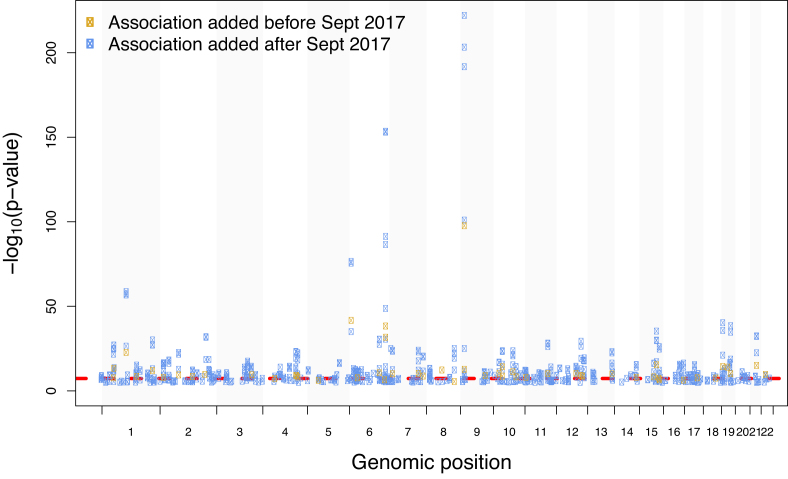
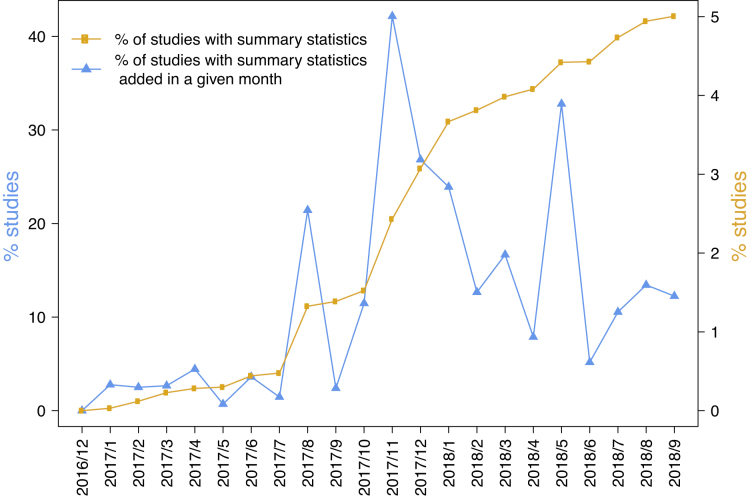
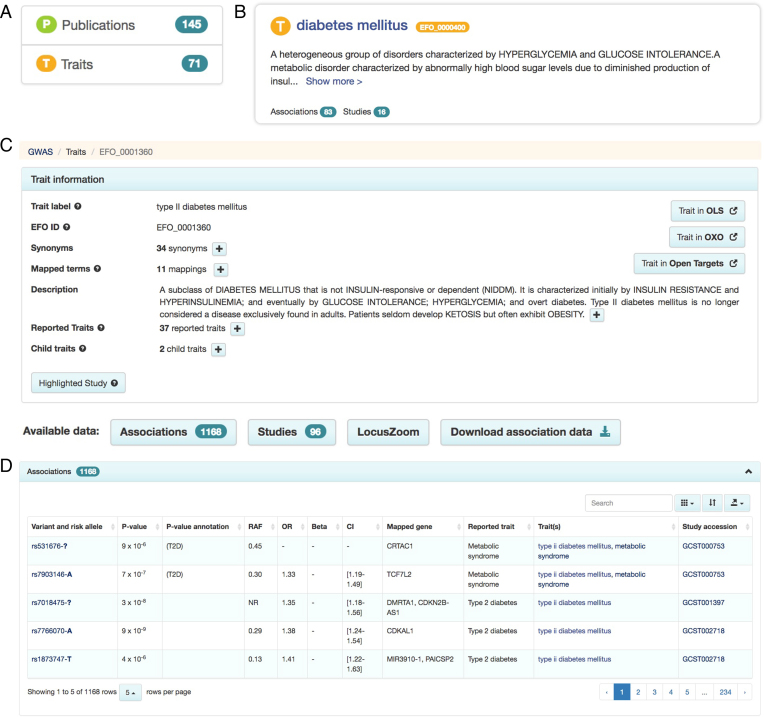
The GWAS Catalog delivers a high-quality curated collection of all published genome-wide association studies enabling investigations to identify causal variants, understand disease mechanisms, and establish targets for novel therapies. The scope of the Catalog has also expanded to targeted and exome arrays with 1000 new associations added for these technologies. As of September 2018, the Catalog contains 5687 GWAS comprising 71673 variant-trait associations from 3567 publications. New content includes 284 full P-value summary statistics datasets for genome-wide and new targeted array studies, representing 6 × 10⁹ individual variant-trait statistics. In the last 12 months, the Catalog's user interface was accessed by ∼90000 unique users who viewed >1 million pages. We have improved data access with the release of a new RESTful API to support high-throughput programmatic access, an improved web interface and a new summary statistics database. Summary statistics provision is supported by a new format proposed as a community standard for summary statistics data representation. This format was derived from our experience in standardizing heterogeneous submissions, mapping formats and in harmonizing content. Availability: https://www.ebi.ac.uk/gwas/.
Overview
The claims and statistics of this paper haven’t been checked yet.
Free: it reads the open-access text and checks the first 5 claims that cite a source we can check. Create a free account to check every claim.
Integrity signals
Registry
Cites
Statistics
Figures
Verification
Claims the paper makes
The claims and statistics of this paper haven’t been checked yet.
Free: it reads the open-access text and checks the first 5 claims that cite a source we can check. Create a free account to check every claim.
Claims other papers make about this one
Each is checked against this paper’s own text: does it say what the citing paper says it does?
The source backs part of the claim, not all of it — or backs it for a different population, condition or comparison.
In the citing paper
“Of note, this region also includes one of the SNPs (rs10119) significantly associated with AD in the National Human Genome Research Institute catalog of published genome-wide association studies (NHGRI-GWAS33), indicating that this regulatory element may be involved in AD in humans (Fig. 6B).”
From Integrated analysis of behavioral, epigenetic, and gut microbiome analyses in AppNL-G-F, AppNL-F, and wild type mice (2021) · cites this paper as [33]
Experimental — accuracy not yet measuredThe source backs part of the claim, not all of it — or backs it for a different population, condition or comparison.
In the citing paper
“Genome-wide association studies (GWASs) have been employed to identify genetic variants in CS genes associated with AD onset [17].”
From Integrated multi-omics analysis revealed the molecular networks and potential targets of cellular senescence in Alzheimer’s disease (2025) · cites this paper as [17]
Experimental — accuracy not yet measuredThe cited source says what the claim attributes to it.
In the citing paper
“Although tens of thousands of associations have been discovered across thousands of common human diseases and traits44, multiple factors have frustrated efforts to convert these genetic signals to knowledge about causal variants, genes and mechanisms.”
From A brief history of human disease genetics (2020) · cites this paper as [44]
The cited source says what the claim attributes to it.
In the citing paper
“Of note, this region also includes one of the SNPs (rs10119) significantly associated with AD in the National Human Genome Research Institute catalog of published genome-wide association studies (NHGRI-GWAS33), indicating that this regulatory element may be involved in AD in humans (Fig. 6B).”
From Integrated analysis of behavioral, epigenetic, and gut microbiome analyses in AppNL-G-F, AppNL-F, and wild type mice (2021) · cites this paper as [33]
The check wasn’t confident either way, so it gives no verdict — never disputed.
In the citing paper
“To date, however, no large-scale molecular genetic studies have utilized the extensive degree of genetic overlap among externalizing traits to aid gene discovery, as most studies have focused on individual disorders6.”
From Multivariate analysis of 1.5 million people identifies genetic associations with traits related to self-regulation and addiction. (2021) · cites this paper as [6]
Experimental — accuracy not yet measured
6 more claims about this paper
Create a free account to see every claim other papers make about this one.
Self-check
Percentages, sums and reported differences re-computed from the paper’s own numbers.
The self-check needs the paper’s full text.
Citations
Cites
PLINK: a tool set for whole-genome association and population-based linkage analyses.
Purcell, S., Neale, B., Todd-Brown, K., Thomas, L., Ferreira, M. A. R., Bender, D., Maller, J., Sklar, P., de Bakker, P. I. W., Daly, M. J., et al. (2007) · The American Journal of Human Genetics · doi:10.1086/519795 · Cited by 34,089 · cited 1×
“Our standard format contains a minimal set of requirements that are included in the outputs from the most common GWAS analysis programs (such as PLINK, (29) and additional optional columns.”
The FAIR Guiding Principles for scientific data management and stewardship
Wilkinson, M. D., Dumontier, M., Aalbersberg, I. J., Appleton, G., Axton, M., Baak, A., Blomberg, N., Boiten, J.-W., da Silva Santos, L. B., Bourne, P. E., et al. (2016) · Scientific Data · doi:10.1038/sdata.2016.18 · Cited by 18,423
A global reference for human genetic variation
The 1000 Genomes Project Consortium, authors, C., Auton, A., Abecasis, G. R., Steering committee, Altshuler, D. M., Durbin, R. M., Abecasis, G. R., Bentley, D. R., Chakravarti, A., et al. (2015) · Nature · doi:10.1038/nature15393 · Cited by 18,247
Self-citationThe International HapMap Project
†The International HapMap Consortium, Genotyping centres: Baylor College of Medicine and ParAllele BioScience, Gibbs, R. A., Belmont, J. W., Hardenbol, P., Willis, T. D., Yu, F., Chinese HapMap Consortium, Yang, H., Ch'ang, L.-Y., et al. (2003) · Nature · doi:10.1038/nature02168 · Cited by 6,057
Self-citationThe Genotype-Tissue Expression (GTEx) pilot analysis: Multitissue gene regulation in humans
The GTEx Consortium, Ardlie, K. G., Deluca, D. S., Segrè, A. V., Sullivan, T. J., Young, T. R., Gelfand, E. T., Trowbridge, C. A., Maller, J. B., Tukiainen, T., et al. (2015) · Science · doi:10.1126/science.1262110 · Cited by 5,062
LocusZoom: regional visualization of genome-wide association scan results
Pruim, R. J., Welch, R. P., Sanna, S., Teslovich, T. M., Chines, P. S., Gliedt, T. P., Boehnke, M., Abecasis, G. R., & Willer, C. J. (2010) · Bioinformatics · doi:10.1093/bioinformatics/btq419 · Cited by 2,707
The new NHGRI-EBI Catalog of published genome-wide association studies (GWAS Catalog)
MacArthur, J., Bowler, E., Cerezo, M., Gil, L., Hall, P., Hastings, E., Junkins, H., McMahon, A., Milano, A., Morales, J., et al. (2017) · Nucleic Acids Research · doi:10.1093/nar/gkw1133 · Cited by 2,161 · cited 1×
“The NHGRI-EBI GWAS Catalog (www.ebi.ac.uk/gwas; (16)) is a publicly available resource of published human GWAS.”
Self-citationThe support of human genetic evidence for approved drug indications
Nelson, M. R., Tipney, H., Painter, J. L., Shen, J., Nicoletti, P., Shen, Y., Floratos, A., Sham, P. C., Li, M. J., Wang, J., et al. (2015) · Nature Genetics · doi:10.1038/ng.3314 · Cited by 1,666 · cited 2×
“estimate that the inclusion of genetic associations in the drug discovery process could double the success rate of targets in clinical development (8).”
Association analysis identifies 65 new breast cancer risk loci
Michailidou, K., Lindström, S., Dennis, J., Beesley, J., Hui, S., Kar, S., Lemaçon, A., Soucy, P., Glubb, D., Rostamianfar, A., et al. (2017) · Nature · doi:10.1038/nature24284 · Cited by 1,413 · cited 1×
“For over a decade, genome-wide association studies (GWAS) have contributed to the identification of reproducible genomic regions associated with an impressive number of common traits, including breast cancer (1,2), ovarian cancer (3), coronary artery disease (4), type 2 diabetes (5), osteoarthritis (6) and systemic lu…”
Yates, A., Akanni, W., Amode, M. R., Barrell, D., Billis, K., Carvalho-Silva, D., Cummins, C., Clapham, P., Fitzgerald, S., Gil, L., et al. (2016) · Nucleic Acids Research · doi:10.1093/nar/gkv1157 · Cited by 1,273
Self-citation
Cited by
Items 801–900 of 1,031
Genetic, Clinical, and Sociodemographic Factors Associated With Stimulant Treatment Outcomes in ADHD
Brikell, I., Wimberley, T., Albiñana, C., Pedersen, E. M., Vilhjálmsson, B. J., Agerbo, E., Demontis, D., Børglum, A. D., Schork, A. J., LaBianca, S., et al. (2021) · American Journal of Psychiatry · doi:10.1176/appi.ajp.2020.20121686 · Cited by 41
Genetic map of regional sulcal morphology in the human brain from UK biobank data
Sun, B. B., Loomis, S. J., Pizzagalli, F., Shatokhina, N., Painter, J. N., Foley, C. N., Biogen Biobank Team, Sun, B. B., Tsai, E. A., Bronson, P. G., et al. (2022) · Nature Communications · doi:10.1038/s41467-022-33829-1 · Cited by 37
Butler‐Laporte, G., Farjoun, Y., Nakanishi, T., Lu, T., Abner, E., Chen, Y., Hultström, M., Metspalu, A., Milani, L. A., Mägi, R., et al. (2023) · Communications Biology · doi:10.1038/s42003-023-05496-5 · Cited by 43
“We fi rst used the GWAS Catalog 67 to fi nd GWAS summary statistics for our 11 phenotypes.”
MethodSingh, S., Choudhury, A., Hazelhurst, S., Crowther, N. J., Boua, P. R., Sorgho, H., Agongo, G., Nonterah, E. A., Micklesfield, L. K., Norris, S. A., et al. (2023) · Nature Communications · doi:10.1038/s41467-023-44079-0 · Cited by 37
“Replication of associations was assessed using the GWAS Catalog 17 , PhenoScanner 37 and summary statistics from other studies 16,38 It was also investigated whether any of the GW signi fi cant SNPs detected in previous BP GWASs 16,17,37,38 ( p 5E − 08), showed p-values (with the same beta direction) below this replica…”
InfluentialWang, K., Zeng, X., Zhou, J., Liu, F., Luan, X., & Wang, X. (2024) · Briefings in Bioinformatics · doi:10.1093/bib/bbae195 · Cited by 40
“In addition, research suggests that variations in TFBSs may be related to certain serious diseases [8].”
Wang, X., Li, F., Zhang, Y., Imoto, S., Shen, H., Li, S., Guo, Y., Yang, J., & Song, J. (2024) · Briefings in Bioinformatics · doi:10.1093/bib/bbae446 · Cited by 40
“Leveraging genome-wide association studies (GWAS), previous investigations have revealed the existence of over 200,000 genetic variants, linked to more than 3000 human traits [5].”
BackgroundLarge-scale genome-wide analyses of stuttering
Polikowsky, H. G., Scartozzi, A., Shaw, D. M., Pruett, D. G., Chen, H., Petty, L. E., Petty, A. S., Lowther, E., Cho, S.-H., Yu, Y., et al. (2025) · Nature Genetics · doi:10.1038/s41588-025-02267-2 · Cited by 40
A super enhancer controls expression and chromatin architecture within the MHC class II locus
Majumder, P., Lee, J. T., Rahmberg, A. R., Kumar, G., Tian, M., Scharer, C. D., & Boss, J. M. (2019) · The Journal of Experimental Medicine · doi:10.1084/jem.20190668 · Cited by 39
“associated SNPs (Buniello et al., 2019) and common SNPs from dbSNP151 (Sherry et al.”
BackgroundInfluentialSupervised learning is an accurate method for network-based gene classification
Liu, R., Mancuso, C. A., Yannakopoulos, A., Johnson, K. A., & Krishnan, A. (2020) · Bioinformatics · doi:10.1093/bioinformatics/btaa150 · Cited by 38
“Key to the success of these methods has been the steady accumulation of large amounts of publicly available data collections such as curated databases of genes and their various attributes [8–18] , controlled vocabularies of biological terms organized into ontologies [19–22], high-throughput functional genomic assa…”
BackgroundA Data-Driven Review of the Genetic Factors of Pregnancy Complications
Barbitoff, Y. A., Tsarev, A. A., Vashukova, E. S., Maksiutenko, E. M., Коваленко, Л. В., Belotserkovtseva, L. D., & Glotov, A. S. (2020) · International Journal of Molecular Sciences · doi:10.3390/ijms21093384 · Cited by 38
“1) HuGE Navigator [17], the National Human Genome Research Institute (NHGRI) GWAS Catalog [18], and the UK Biobank (UKB) genetic and phenotypic dataset (summary GWAS statistics provided by the Neale lab were used).”
MethodThe contribution of non-coding regulatory elements to cardiovascular disease
Villar, D., Frost, S., Deloukas, P., & Tinker, A. (2020) · Open Biology · doi:10.1098/rsob.200088 · Cited by 36
“By comparing these regions with current catalogues of human genetic variants associated with cardiac traits and diseases [5], Dickel et al.”
BackgroundGenomic Risk Score impact on susceptibility to systemic sclerosis
Bossini‐Castillo, L., Villanueva-Martín, G., Kerick, M., Acosta‐Herrera, M., López‐Isac, E., Simeón‐Aznar, C. P., Ortego‐Centeno, N., Assassi, S., Hunzelmann, N., Gabrielli, A., et al. (2020) · Annals of the Rheumatic Diseases · doi:10.1136/annrheumdis-2020-218558 · Cited by 40
Proteome-wide Systems Genetics to Identify Functional Regulators of Complex Traits
Molendijk, J., & Parker, B. L. (2021) · Cell Systems · doi:10.1016/j.cels.2020.10.005 · Cited by 37
A multilayered post-GWAS assessment on genetic susceptibility to pancreatic cancer
de Maturana, E. L., Rodríguez, J., Alonso, L., Lao, O., Molina-Montes, E., Martín-Antoniano, I., Gómez-Rubio, P., Lawlor, R., Carrato, A., Hidalgo, M., et al. (2021) · Genome Medicine · doi:10.1186/s13073-020-00816-4 · Cited by 40
Cupido, A. J., Tromp, T. R., & Hovingh, G. K. (2021) · Current Opinion in Lipidology · doi:10.1097/mol.0000000000000741 · Cited by 37
“At present, over 3100 common genetic variants have been shown to be associated with LDL-C levels or LDL-C-related traits such as statin-response [1].”
BackgroundSelvarajan, I., Toropainen, A., Garske, K. M., Rodríguez, M. L., Ko, A., Miao, Z., Kamińska, D., Õunap, K., Örd, T., Ravindran, A., et al. (2021) · The American Journal of Human Genetics · doi:10.1016/j.ajhg.2021.02.006 · Cited by 35
“These include the rs17293632 located in intron 1 of SMAD3, a key contributor to transforming growth fac- tor-b pathway signaling, which in addition to CAD is found to be associated with inflammatory conditions such as Crohn disease and ulcerative colitis in GWAS.18 Recent fine-mapping efforts have demonstrated causali…”
BackgroundFrancis, M., Li, C., Sun, Y., Zhou, J., Li, X., Brenna, J. T., & Ye, K. (2021) · PLoS Genetics · doi:10.1371/journal.pgen.1009431 · Cited by 37
“For replicated and non-replicated variants with joint meta-analysis P 5 × 10⁻⁸, GWAS Catalog [54] was used to identify novel variants.”
MethodGenetic Variability in Molecular Pathways Implicated in Alzheimer's Disease: A Comprehensive Review
Vogrinc, D., Goričar, K., & Dolžan, V. (2021) · Frontiers in Aging Neuroscience · doi:10.3389/fnagi.2021.646901 · Cited by 36
“A literature search was performed in NHGRI-EBI platform “GWAS catalog,” aiming to systematically gather vast dataset of genome-wide studies and meta-analysis of complex diseases (Buniello et al., 2019).”
MethodGleason, K. J., Yang, F., & Chen, L. (2021) · Genetic Epidemiology · doi:10.1002/gepi.22380 · Cited by 43
Hong, S., Dobricic, V., Ohlei, O., Bos, I., Vos, S. J. B., Prokopenko, D., Tijms, B. M., Andreasson, U., Blennow, K., Vandenberghe, R., et al. (2021) · Alzheimer's & Dementia · doi:10.1002/alz.12330 · Cited by 37
“…leukemia, height, high-density lipoprotein levels) traits showing genome-wide association with TMEM106B (https://www.ebi.ac.uk/gwas/genes/TMEM106B; Buniello et al. 36 ) There is also strong cis pQTL GWAS evidence for SNPs in this region (in particular: rs10950398) and TMEM106B protein levels in…”
Balliu, B., Carcamo‐Orive, I., Gloudemans, M. J., Nachun, D. C., Durrant, M. G., Gazal, S., Park, C. Y., Knowles, D. A., Wabitsch, M., Quertermous, T., et al. (2021) · The American Journal of Human Genetics · doi:10.1016/j.ajhg.2021.08.014 · Cited by 41
Polygenic risk scores: the future of cancer risk prediction, screening, and precision prevention
Wang, Y., Zhu, M., Ma, H., & Shen, H. (2021) · Medical Review · doi:10.1515/mr-2021-0025 · Cited by 37
“Although, for many of these cancers, the number and scale of GWAS in Europeans far exceed those in non-European populations, risk loci specific to other ethnicities, such as Asian, Hispanic, and African American, have also been identified [9].”
BackgroundInfluentialMitochondria in tumour progression: a network of mtDNA variants in different types of cancer
Cavalcante, G. C., Ribeiro‐dos‐Santos, Â., & de Araújo, G. S. (2022) · BMC Genomic Data · doi:10.1186/s12863-022-01032-2 · Cited by 39
“March 2020) [50], comprising data from 3,885 public genome-wide association studies (GWAS).”
BackgroundDe novo human brain enhancers created by single-nucleotide mutations
Li, S., Hannenhalli, S. S., & Ovcharenko, I. (2023) · Science Advances · doi:10.1126/sciadv.add2911 · Cited by 37
Machine learning reveals bilateral distribution of somatic L1 insertions in human neurons and glia
Zhu, X., Zhou, B., Pattni, R., Gleason, K., Tan, C., Kalinowski, A., Sloan, S. A., Fiston-Lavier, A.-S., Mariani, J., Petrov, D. A., et al. (2021) · Nature Neuroscience · doi:10.1038/s41593-020-00767-4 · Cited by 38
Mei, L., Gao, Y., Chen, M., Zhang, X., Yue, W., Zhang, D., & Yu, H. (2021) · Progress in Neuro-Psychopharmacology and Biological Psychiatry · doi:10.1016/j.pnpbp.2021.110450 · Cited by 35
Artigas, M. S., Sánchez‐Mora, C., Rovira, P., Vilar‐Ribó, L., Ramos‐Quiroga, J. A., & Ribasés, M. (2022) · International Journal of Epidemiology · doi:10.1093/ije/dyac128 · Cited by 37
Ramirez, M., Badayeva, Y., Yeung, J., Wu, J., Abdalla-Wyse, A., Yang, E., Trost, B., Scherer, S. W., & Goldowitz, D. (2022) · eLife · doi:10.7554/elife.74207 · Cited by 48
“ASD-associated SNPs were retrieved from the GWAS Catalog ( Buniello et al., 2019 ) and a stringent filter was applied to identify SNPs associated with the ASD (see Materials and methods).”
Wightman, D. P., Savage, J. E., Tissink, E., Romero, C., Jansen, I. E., & Posthuma, D. (2023) · Neurobiology of Aging · doi:10.1016/j.neurobiolaging.2023.03.004 · Cited by 40
Assessing Privacy Vulnerabilities in Genetic Data Sets: Scoping Review
Thomas, M., Mackes, N. K., Preuss-Dodhy, A., Wieland, T., & Bundschus, M. (2024) · JMIR Bioinformatics and Biotechnology · doi:10.2196/54332 · Cited by 39
“…traits (eg, skin, hair and eye color [2,3], facial features [81], BMI [82], and height [4]), ethnicity [1], and susceptibility to diseases [5], making them central to research and genetic testing (refer to the study by Dabas et al [83] for a review of association of SNPs with externally…”
BackgroundAterido, A., Cañete, J. D. D., Tornero, J., Blanco, F. J., Fernández‐Gutiérrez, B., Pérez-García, C., Alpéri, M., Olivé, À., Corominas, H., Martínez-Taboada, V. M., et al. (2019) · Frontiers in Immunology · doi:10.3389/fimmu.2019.01459 · Cited by 35
“In addition, we have investigated whether the GCMs include susceptibility genes for RA (N = 200 genes, P < 5e-08 in GWAS catalog) (55).”
BackgroundResultExploring the genetic relationship between hearing impairment and Alzheimer's disease
Mitchell, B. L., Thorp, J. G., Evans, D. M., Nyholt, D. R., Martin, N. G., & Lupton, M. K. (2020) · Alzheimer s & Dementia Diagnosis Assessment & Disease Monitoring · doi:10.1002/dad2.12108 · Cited by 38
Gillenwater, L. A., Pratte, K., Hobbs, B. D., Cho, M. H., Zhuang, Y., Halper‐Stromberg, E., Cruickshank-Quinn, C. I., Reisdorph, N. A., Petrache, I., Labaki, W. W., et al. (2020) · Network and Systems Medicine · doi:10.1089/nsm.2020.0009 · Cited by 37
“Next, we compared the met-QTL variants with published associations in the NHGRI GWAS catalog.(59) Of the expanded variant set, 351 SNPs have been previously reported, mostly in other metabolomic analyses.”
ResultEvolutionary genetics of skin pigmentation in African populations
Feng, Y., McQuillan, M. A., & Tishkoff, S. A. (2021) · Human Molecular Genetics · doi:10.1093/hmg/ddab007 · Cited by 38
“The majority of evolutionary genetic studies on skin pigmentation have been conducted in European and Asian populations (68,69).”
BackgroundUstinova, M., Pečulis, R., Reščenko, R., Rovīte, V., Zaharenko, L., Elbere, I., Silamiķele, L., Konrāde, I., Sokolovska, J., Pīrāgs, V., et al. (2021) · BMC Medical Genomics · doi:10.1186/s12920-020-00860-4 · Cited by 34
“Information on previously known allele-trait associations reported in both GWAS Catalog and GWAS Central was used for the selection of risk variants associated with at least one group of the tested T2DM complications (see Additional file 1 for a full list of selected candidate SNPs).”
Systematic analysis of purified astrocytes after SCI unveils Zeb2os function during astrogliosis
Wei, H., Wu, X., You, Y., Durán, R. C., Zheng, Y., Narayanan, K. L., Hai, B., Li, X., Tallapragada, N., Prajapati, T. J., et al. (2021) · Cell Reports · doi:10.1016/j.celrep.2021.108721 · Cited by 39
“Highly conserved lncRNA Zeb2os and its antisense protein-coding gene Zeb2 are upregulated in astrocytes after SCI and co-localize We identified DE lncRNAs homologous to human genomic regions that contain single-nucleotide polymorphisms associated with diseases (Buniello et al., 2019; Landrum et al., 2014).”
InfluentialGuo, J., Bakshi, A., Wang, Y., Jiang, L., Yengo, L., Goddard, M. E., Visscher, P. M., & Yang, J. (2021) · Scientific Reports · doi:10.1038/s41598-021-84739-z · Cited by 36
Cancer LncRNA Census 2 (CLC2): an enhanced resource reveals clinical features of cancer lncRNAs
Vancura, A., Lanzós, A., Bosch-Guiteras, N., Esteban, M. T., Gutierrez, A. H., Haefliger, S., & Johnson, R. (2021) · NAR Cancer · doi:10.1093/narcan/zcab013 · Cited by 34
“We obtained 5,331 germline cancer-associated single nucleotide polymorphisms (SNPs) from genome-wide association studies (GWAS) (58) and mapped them to lncRNA and pc-gene exons, calculating a density score that normalises for exon length (SUPP FIG 4B).”
MethodInfluentialWiden, E., Raben, T. G., Lello, L., & Hsu, S. D. H. (2021) · Genes · doi:10.3390/genes12070991 · Cited by 32
Drug Repurposing for Atopic Dermatitis by Integration of Gene Networking and Genomic Information
Adikusuma, W., Irham, L. M., Chou, W., Wong, H. S.-C., Mugiyanto, E., Ting, J., Perwitasari, D. A., Chang, W.-P., & Chang, W. (2021) · Frontiers in Immunology · doi:10.3389/fimmu.2021.724277 · Cited by 38
Constructing germline research cohorts from the discarded reads of clinical tumor sequences
Gusev, A., Groha, S., Taraszka, K., Semenov, Y. R., & Zaitlen, N. (2021) · Genome Medicine · doi:10.1186/s13073-021-00999-4 · Cited by 38
“GWAS have identified over 1,000 SNPs associated with susceptibility to over 30 cancer types[39,40], but current GWAS techniques do not examine tumor sequences.”
BackgroundPerformance of polygenic risk scores for cancer prediction in a racially diverse academic biobank
Wang, L. L., Desai, H., Verma, S. S., Le, A. N., Hausler, R. M., Verma, A., Judy, R., Doucette, A. G., Gabriel, P. E., Abecasis, G. R., et al. (2021) · Genetics in Medicine · doi:10.1016/j.gim.2021.10.015 · Cited by 38
Prokopenko, D., Lee, S., Hecker, J., Mullin, K., Morgan, S. L., Katsumata, Y., Initiative, A. D. N., Weiner, M. W., Fardo, D. W., Laird, N. M., et al. (2022) · Molecular Psychiatry · doi:10.1038/s41380-022-01475-0 · Cited by 35
“Over the past 15 years, around 120 genome-wide association studies (GWAS) have been performed to elucidate the genetic architecture underlying AD according to the GWAS catalog [2].”
BackgroundOsteoarthritis & stroke: a bidirectional mendelian randomization study
Zhao, H., Zhu, J., Ju, L., Sun, L., Tse, L. A., Kinra, S., & Li, Y. (2022) · Osteoarthritis and Cartilage · doi:10.1016/j.joca.2022.06.006 · Cited by 37
Revisiting the Risk Factors for Endometriosis: A Machine Learning Approach
Blass, I., Sahar, T., Shraibman, A., Ofer, D., Rappoport, N., & Linial, M. (2022) · Journal of Personalized Medicine · doi:10.3390/jpm12071114 · Cited by 40
The CADM2 Gene and Behavior: A Phenome-Wide Scan in UK-Biobank
Pasman, J. A., Chen, Z., Smit, D. J. A., Vink, J. M., van den Oever, M. C., Pattij, T., Vries, T. J. D., Abdellaoui, A., & Verweij, K. J. H. (2022) · Behavior Genetics · doi:10.1007/s10519-022-10109-8 · Cited by 35
Aggregative trans-eQTL analysis detects trait-specific target gene sets in whole blood
Dutta, D., He, Y. M., Saha, A., Arvanitis, M., Battle, A. J., & Chatterjee, N. (2022) · Nature Communications · doi:10.1038/s41467-022-31845-9 · Cited by 39
“We compared the estimate to (1) the expected distribution of heritability explained by the selected SNPs and randomly chosen genes (excluding the selected genes) for SCZ and (2) the expected distribution of heritability explained by the selected SNPs and genes for a randomly chosen trait.”
ResultComparative chromatin accessibility upon BDNF stimulation delineates neuronal regulatory elements
Ibarra, I. L., Ratnu, V. S., Gordillo, L., Hwang, I., Mariani, L., Weinand, K., Hammarén, H. M., Heck, J., Bulyk, M. L., Savitski, M. M., et al. (2022) · Molecular Systems Biology · doi:10.15252/msb.202110473 · Cited by 35
“…neuropathological traits, we used data from 45 genome-wide association studies (GWAS) that link genetic variants with complex traits of diseases (Buniello et al , 2019) and calculated the enrichment of trait-associated SNPs among our DA-peaks (transferred to the human genome) using partitioning…”
A pleiotropic hypoxia-sensitive EPAS1 enhancer is disrupted by adaptive alleles in Tibetans
Gray, O. A., Yoo, J., Sobreira, D. R., Jousma, J., Witonsky, D., Sakabe, N. J., Peng, Y., Prabhakar, N. R., Fang, Y. H., Nóbrega, M. A., et al. (2022) · Science Advances · doi:10.1126/sciadv.ade1942 · Cited by 37
“Consistent with the role of HIF-2α in inducing erythropoietin ( EPO ) expression, dozens of GWAS signals for hematological traits observed in European cohorts and eQTLs for EPAS1 are found in these looping regions ( 29 , 30 ).”
Lim, A. J. W., Tyniana, C. T., Lim, L. J., Tan, J. W. L., Koh, E. T., TTSH Rheumatoid Arthritis Study Group, Ang, A. E. L., Chan, G. Y. L., Chan, M. T.-L., Chia, F. L., et al. (2023) · Journal of Translational Medicine · doi:10.1186/s12967-023-03939-5 · Cited by 37
“Since the first three RA GWAS were performed in 2007 [31], > 400 unique SNPs had been documented in the GWAS catalog (as of April 2022) [32] to be significantly associated with RA.”
BackgroundMechanism and treatments of antipsychotic-induced weight gain
Ye, W., Xing, J., Yu, Z., Hu, X., & Yan, Z. (2023) · International Journal of Obesity · doi:10.1038/s41366-023-01291-8 · Cited by 40
“According to the genome-wide association studies (GWAS) catalog, twenty-one of differential genes are associated with obesity, obesity-related traits, or the metabolic syndrome and thirteen of them appeared in functional studies [20].”
BackgroundFunctional characterization of human genomic variation linked to polygenic diseases
Fabo, T., & Khavari, P. A. (2023) · Trends in Genetics · doi:10.1016/j.tig.2023.02.014 · Cited by 35
Genomic loci influence patterns of structural covariance in the human brain
Wen, J., Nasrallah, I. M., Abdulkadir, A., Satterthwaite, T. D., Yang, Z., Erus, G., Robert‐Fitzgerald, T., Singh, A., Sotiras, A., Boquet-Pujadas, A., et al. (2023) · Proceedings of the National Academy of Sciences · doi:10.1073/pnas.2300842120 · Cited by 36
The 2021 update of the EPA’s adverse outcome pathway database
Mortensen, H. M., Senn, J., Levey, T., Langley, P., & Williams, A. J. (2021) · Scientific Data · doi:10.1038/s41597-021-00962-3 · Cited by 36
Gupta, C., Xu, J., Jin, T., Khullar, S., Liu, X., Alatkar, S., Cheng, F., & Wang, D. (2022) · PLOS Computational Biology · doi:10.1371/journal.pcbi.1010287 · Cited by 33
“A GWAS study suggests that NFYA gene associates with late-onset AD [50], and the CREBP gene functions in synaptic plasticity and memory formation and has been previously implicated in AD [51,52].”
BackgroundNöthling, J., Abrahams, N., Toikumo, S., Suderman, M. J., Mhlongo, S., Lombard, C. J., Seedat, S., & Hemmings, S. M. J. (2021) · Translational Psychiatry · doi:10.1038/s41398-021-01608-z · Cited by 34
“Prior findings reporting a link between mood, anxiety, or trauma-related disorders and any CpG site in the genes identified from the EWAS were identified using the aforementioned databases for EWAS studies, and the European Molecular Biology Laboratory-European Bioinformatics Institute (EMBL-EBI) genome-wide associati…”
MethodMapping disease regulatory circuits at cell-type resolution from single-cell multiomics data
Chen, X. X., Wang, Y., Cappuccio, A., Cheng, W.-S., Ruf-Zamojski, F. M., Nair, V. D., Miller, C. M., Rubenstein, A. B., Nudelman, G., Tadych, A., et al. (2023) · Nature Computational Science · doi:10.1038/s43588-023-00476-5 · Cited by 35
“We also found that these circuit chromatin sites were significantly enriched in inflammatory-associated genomic loci reported in the genome-wide association studies (GWAS) catalog database 46 , suggesting active host epigenetic responses to infectious diseases (Supplementary Fig.”
BackgroundMethodKim, M. S., Song, M., Kim, B., Shim, I., Kim, D. S., Natarajan, P., Do, R., & Won, H. (2023) · Cell Reports Medicine · doi:10.1016/j.xcrm.2023.101112 · Cited by 35
Greenfest‐Allen, E., Valladares, O., Kuksa, P. P., Gangadharan, P., Lee, W., Cifello, J., Katanić, Ž., Kuzma, A. B., Wheeler, N. R., Bush, W. S., et al. (2023) · Alzheimer s & Dementia · doi:10.1002/alz.13509 · Cited by 34
Yokoyama, N., Kawasaki, A., Matsushita, T., Furukawa, H., Kondo, Y., Hirano, F., Sada, K., Matsumoto, I., Kusaoi, M., Amano, H., et al. (2019) · Scientific Reports · doi:10.1038/s41598-019-52920-0 · Cited by 34
Advances in genetics toward identifying pathogenic cell states of rheumatoid arthritis
Amariuta, T., Luo, Y., Knevel, R., Okada, Y., & Raychaudhuri, S. (2019) · Immunological Reviews · doi:10.1111/imr.12827 · Cited by 34
Böck, J., Krogsaeter, E., Passon, M., Chao, Y., Sharma, S., Grallert, H., Peters, A., & Grimm, C. M. (2021) · PLoS Genetics · doi:10.1371/journal.pgen.1009236 · Cited by 33
“In addition to the homozygously occurring variations in TPC2 in the SGDP dataset (V219I, K376R, G387D, M484L, L564P, and G734E), another variation, S681L, was found to occur in a homozygous manner in the 1000GP and gnomAD datasets.”
MethodInfluentialBiological computation and computational biology: survey, challenges, and discussion
Dagdia, Z. C., Avdeyev, P., & Bayzid, M. S. (2021) · Artificial Intelligence Review · doi:10.1007/s10462-020-09951-1 · Cited by 36
From Genome-Wide to Environment-Wide: Capturing the Environome
von Stumm, S., & d’Apice, K. (2021) · Perspectives on Psychological Science · doi:10.1177/1745691620979803 · Cited by 36
Holdsworth, G., Staley, J. R., Hall, P., van Koeverden, I. D., Vangjeli, C., Okoye, R., Boyce, R. W., Turk, J. R., Armstrong, M., Wolfreys, A., et al. (2020) · Journal of Bone and Mineral Research · doi:10.1002/jbmr.4287 · Cited by 33
Self-citationAssociation of structural variation with cardiometabolic traits in Finns
Chen, L., Abel, H., Das, I., Larson, D. E., Ganel, L., Kanchi, K., Regier, A., Young, E. P., Kang, C. J., Scott, A. J., et al. (2021) · The American Journal of Human Genetics · doi:10.1016/j.ajhg.2021.03.008 · Cited by 43
Dong, X., Li, X., Chang, T.-W., Scherzer, C. R., Weiss, S. T., & Qiu, W. (2021) · Bioinformatics · doi:10.1093/bioinformatics/btab385 · Cited by 36
Davis, B. H., & Limdi, N. A. (2021) · Clinical Pharmacology & Therapeutics · doi:10.1002/cpt.2357 · Cited by 35
“Fifty years after the commercial introduction of warfarin, VKORC1, encoding the target protein for warfarin, was discovered (2004),35 explaining a significant portion of the variability in warfarin dose.42– 44 GWAS analysis confirmed the influence of common variants in CYP2C9, VKORC1, and CYP4F2 among Whites/Europeans…”
ResultInfluentialA machine learning case–control classifier for schizophrenia based on DNA methylation in blood
Gunasekara, C., Hannon, E. J., MacKay, H., Coarfa, C., McQuillin, A., Clair, D. S., Mill, J. S., & Waterland, R. A. (2021) · Translational Psychiatry · doi:10.1038/s41398-021-01496-3 · Cited by 36
“And, indeed, analysis using the GWAS Catalog [55] showed robust enrichment for colocalization of model CpG probes and GWAS SNPs associated with SZ (Fig.”
MethodPhenoDB, GeneMatcher and VariantMatcher, tools for analysis and sharing of sequence data
Wohler, E., Martin, R. P., Griffith, S., Rodrigues, E. D. S., Antonescu, C. M., Posey, J. E., Coban‐Akdemir, Z., Jhangiani, S. N., Doheny, K. F., Lupski, J. R., et al. (2021) · Orphanet Journal of Rare Diseases · doi:10.1186/s13023-021-01916-z · Cited by 34
“RVIS score [Residual Variation Intolerance Score] [3], OMIM phenotype and mode of inheritance [4], MGI phenotype [5], GTEx expression [6], STRING interaction [7], Gene Ontology [8, 9], PubMed gene link, ClinVar classification and variant link [10], UniProt gene link [11], Gene Imprint information [12], GWAS Catalog ph…”
BackgroundZhang, T., Chen, J., Zhang, J., Guo, Y., Zhou, X., Li, M., Zheng, Z., Zhang, T., Murphy, R. W., Nevo, E., et al. (2021) · Molecular Ecology · doi:10.1111/mec.16174 · Cited by 36
Beyond GWAS: from simple associations to functional insights
Ishigaki, K. (2021) · Seminars in Immunopathology · doi:10.1007/s00281-021-00894-5 · Cited by 38
“The GWAS catalog includes 1,617 associations for RA, 951 for SLE, 197 for systemic sclerosis, 52 for Sjögren syndrome, 18 for polymyositis, and ten for dermatomyositis (as of June 2021; we included all associations in the catalog) [79].”
BackgroundCapturing large genomic contexts for accurately predicting enhancer-promoter interactions
Chen, K., Zhao, H., & Yang, Y. (2022) · Briefings in Bioinformatics · doi:10.1093/bib/bbab577 · Cited by 33
Decoding the PITX2-controlled genetic network in atrial fibrillation
Steimle, J. D., Canozo, F. J. G., Park, M., Kadow, Z. A., Samee, M. A. H., & Martin, J. F. (2022) · JCI Insight · doi:10.1172/jci.insight.158895 · Cited by 35
“Comparison of human GWAS with mouse snRNA-Seq.”
MethodResultInfluentialOpportunities and challenges for the use of common controls in sequencing studies
Wojcik, G. L., Murphy, J. I., Edelson, J. L., Gignoux, C. R., Ioannidis, A. G., Manning, A. K., Rivas, M. A., Buyske, S. G., & Hendricks, A. E. (2022) · Nature Reviews Genetics · doi:10.1038/s41576-022-00487-4 · Cited by 34
DNA methylation patterns reflect individual's lifestyle independent of obesity
Klemp, I., Hoffmann, A., Müller, L., Hagemann, T., Horn, K., Rohde‐Zimmermann, K., Tönjes, A., Thiery, J., Löffler, M., Burkhardt, R., et al. (2022) · Clinical and Translational Medicine · doi:10.1002/ctm2.851 · Cited by 34
Effects of Coronary Artery Disease–Associated Variants on Vascular Smooth Muscle Cells
Solomon, C. U., McVey, D. G., Andreadi, C., Gong, P., Turner, L., Stanczyk, P. J., Khemiri, S., Chamberlain, J. C., Yang, W., Webb, T. R., et al. (2022) · Circulation · doi:10.1161/circulationaha.121.058389 · Cited by 33
A Guide for Understanding and Designing Mendelian Randomization Studies in the Musculoskeletal Field
Hartley, A. E., Power, G. M., Sanderson, E. C. M., & Smith, G. D. (2022) · JBMR Plus · doi:10.1002/jbm4.10675 · Cited by 37
“(43) Published summary statistics can also be downloaded from the GWAS Catalog(49) and the Musculoskeletal Knowledge Portal.”
MethodHiChIPdb: a comprehensive database of HiChIP regulatory interactions
Zeng, W., Liu, Q., Yin, Q., Jiang, R., & Wong, W. H. (2022) · Nucleic Acids Research · doi:10.1093/nar/gkac859 · Cited by 33
“Third, Our HiChIP database provides various functional annotations (e.g. regulatory genes, GWAS Catalog SNPs, etc.), which can facilitate diverse research related to functional genome studies.”
BackgroundMethodInfluentialDrug–Drug–Gene Interactions in Cardiovascular Medicine
Asiimwe, I. G., & Pirmohamed, M. (2022) · Pharmacogenomics and Personalized Medicine · doi:10.2147/pgpm.s338601 · Cited by 41
Wang, Z., Liang, Q., Qian, X., Hu, B., Zheng, Z., Wang, J., Hu, Y., Bao, Z., Zhao, K., Zhou, Y., et al. (2023) · Nature Communications · doi:10.1038/s41467-023-36897-z · Cited by 50
ADRA2A and IRX1 are putative risk genes for Raynaud’s phenomenon
Hartmann, S., Yasmeen, S., Jacobs, B. M., Denaxas, S., Pirmohamed, M., Gamazon, E. R., Caulfield, M. J., Hemingway, H., Pietzner, M., & Langenberg, C. (2023) · Nature Communications · doi:10.1038/s41467-023-41876-5 · Cited by 34
“Investigating thousands of other outcomes from the GWAS catalogue 20 and the Open Targets platform 21 in addition to phenome-wide analyses of UK Biobank ( p 10 − 6 , see the “ Methods ” section), we observednoothersigni fi cantassociationsforrs7090046oritsproxies ( r 2 >0.6), except for “ speci fi…”
InfluentialSystems genetics approaches for understanding complex traits with relevance for human disease
Allayee, H., Farber, C. R., Seldin, M. M., Williams, E. G., James, D. E., & Lusis, A. J. (2023) · eLife · doi:10.7554/elife.91004 · Cited by 37
“%) disease associations identified by GWAS implicate non-coding variation, making the identification of trait-associated variation altering gene regulation (e.g., expression, splicing, etc.) a logical starting point to identify causal genes and mechanisms ( Buniello et al., 2019 ).”
BackgroundAllele-specific alternative splicing and its functional genetic variants in human tissues
Amoah, K., Hsiao, Y.-H. E., Bahn, J. H., Sun, Y., Burghard, C. P., Tan, B. X., Yang, E.-W., & Xiao, X. G. (2021) · Genome Research · doi:10.1101/gr.265637.120 · Cited by 33
“Many genome-wide studies have been conducted to uncover associations between the genetic variants and complex traits (Buniello et al. 2019).”
BackgroundMethodInfluentialA 3D structural SARS-CoV-2–human interactome to explore genetic and drug perturbations
Wierbowski, S. D., Liang, S., Liu, Y., Chen, Y., Gupta, S., Andre, N. M., Lipkin, S. M., Whittaker, G. R., & Yu, H. (2021) · Nature Methods · doi:10.1038/s41592-021-01318-w · Cited by 32
“To further explore the functional importance of variations within human interactors of SARS-CoV-2, we considered phenotypic associations reported in HGMD 68 , ClinVar 69 or the NHGRI-EBI GWAS catalog 70 .”
MethodInfluentialA revamped rat reference genome improves the discovery of genetic diversity in laboratory rats
de Jong, T. V., Pan, Y., Rastas, P. M. A., Munro, D. B., Tutaj, M., Akil, H., Benner, C. W., Chen, D., Chitre, A. S., Chow, W., et al. (2024) · Cell Genomics · doi:10.1016/j.xgen.2024.100527 · Cited by 34
“33 Among the rat genes with high-impact variants, 2,034 have human orthologs with genome-wide significant hits associated with 1,393 mapped traits (Table S15).”
Liu, Y., Wang, W., Cui, X., Lyu, J., & Xie, Y. (2024) · Stroke · doi:10.1161/strokeaha.123.044424 · Cited by 32
Yalçın, M., Grande, V., Outeiro, T. F., & Relógio, A. (2025) · npj Parkinson s Disease · doi:10.1038/s41531-025-01009-9 · Cited by 35
“Although most forms of PD are sporadic, the identi fi cation of genetic factors associated with PD has enabled signi fi cant progress in our understanding of the molecular mechanisms involved 6,7 .”
Fang, H., Chen, L., & Knight, J. C. (2019) · The Lancet Rheumatology · doi:10.1016/s2665-9913(19)30134-1 · Cited by 34
Genome-wide association studies of cardiac electrical phenotypes
Glinge, C., Lahrouchi, N., Jabbari, R., Tfelt‐Hansen, J., & Bezzina, C. R. (2020) · Cardiovascular Research · doi:10.1093/cvr/cvaa144 · Cited by 37
Non‐coding variants in MYH11, FZD3, and SORCS3 are associated with dementia in women
Blue, E., Thornton, T. A., Kooperberg, C. L., Liu, S., Wactawski‐Wende, J., Manson, J. E., Kuller, L., Hayden, K. M., & Reiner, A. P. (2020) · Alzheimer s & Dementia · doi:10.1002/alz.12181 · Cited by 35
CSEA-DB: an omnibus for human complex trait and cell type associations
Dai, Y., Hu, R., Manuel, A. M., Liu, A., Jia, P., & Zhao, Z. (2020) · Nucleic Acids Research · doi:10.1093/nar/gkaa1064 · Cited by 33
“We further curated 260 GWAS traits from GWAS Catalog (15) and GRASP (grasp.”
MethodInfluentialThe European Bioinformatics Institute: empowering cooperation in response to a global health crisis
Cantelli, G., Cochrane, G., Brooksbank, C., McDonagh, E. M., Flicek, P., McEntyre, J., Birney, E., & Apweiler, R. (2020) · Nucleic Acids Research · doi:10.1093/nar/gkaa1077 · Cited by 32
Self-citation3D facial phenotyping by biometric sibling matching used in contemporary genomic methodologies
Hoskens, H., Liu, D., Naqvi, S., Lee, M. K., Eller, R. J., Indencleef, K., White, J. D., Li, J., Larmuseau, M., Hens, G., et al. (2021) · PLoS Genetics · doi:10.1371/journal.pgen.1009528 · Cited by 36
Joint disease-specificity at the regulatory base-pair level
Muthuirulan, P., Zhao, D., Young, M., Richard, D. J., Liu, Z., Emami, A., Portilla, G., Hosseinzadeh, S., Cao, J., Maridas, D. E., et al. (2021) · Nature Communications · doi:10.1038/s41467-021-24345-9 · Cited by 35
Genes in human obesity loci are causal obesity genes in C. elegans
Ke, W., Reed, J. N., Yang, C., Higgason, N. M., Rayyan, L., Wählby, C., Carpenter, A. E., Civelek, M., & O’Rourke, E. J. (2021) · PLoS Genetics · doi:10.1371/journal.pgen.1009736 · Cited by 35
“Currently, there are over 90 GWAS, which associate 2,537 SNPs with different obesity metrics including body mass index (BMI), waist to hip ratio (WHR), WHR adjusted for BMI, body fat distribution, and/or body fat percentage [22].”
BackgroundParrish, R. L., Gibson, G. C., Epstein, M. P., & Yang, J. (2021) · Human Genetics and Genomics Advances · doi:10.1016/j.xhgg.2021.100068 · Cited by 35
Zhao, L., Matloff, W. J., Shi, Y., Cabeen, R. P., & Toga, A. W. (2021) · Biological Psychiatry · doi:10.1016/j.biopsych.2021.11.002 · Cited by 33
Chong, M., Narula, S., Morton, R. W., Judge, C. S., Akhabir, L., Cawte, N., Pathan, N., Lali, R., Mohammadi‐Shemirani, P., Shoamanesh, A., et al. (2021) · Neurology · doi:10.1212/wnl.0000000000013165 · Cited by 33
“UK Biobank mtDNACN GWAS summary statistics will be posted on the GWAS catalog.(39) GISCOME summary statistics are freely available to download from the Cerebrovascular Disease Knowledge Portal.”
MethodConstruction and Application of Polygenic Risk Scores in Autoimmune Diseases
Khunsriraksakul, C., Markus, H., Olsen, N. J., Carrel, L., Jiang, B., & Liu, D. J. (2022) · Frontiers in Immunology · doi:10.3389/fimmu.2022.889296 · Cited by 33
Metadata
- Authors
- Buniello, A., MacArthur, J. A. L., Cerezo, M., Harris, L. W., Hayhurst, J., Malangone, C., McMahon, A., Morales, J., Mountjoy, E., Sollis, E., Suveges, D., Vrousgou, O., Whetzel, P. L., Amode, R., Guillen, J. A., Riat, H. S., Trevanion, S. J., Hall, P., Junkins, H., Flicek, P., Burdett, T., Hindorff, L. A., Cunningham, F., & Parkinson, H.
- Affiliations
- European Bioinformatics Institute (GB)
- European Molecular Biology Laboratory, European Bioinformatics Institute, Wellcome Genome Campus, Hinxton, Cambridge CB10 1SD, UK
- Centre for Human Genetics (GB)
- National Institutes of Health (US)
- Corresponding author
- Parkinson, Helen
- ORCID
- Venue
- Nucleic Acids Research
- Publisher
- Oxford University Press (OUP)
- Published
- 2018-11-16
- Volume
- 47
- Issue
- D1
- Pages
- D1005-D1012
- ISSN
- 0305-1048 (ISSN-L)
- 1362-4962
- PMC
- PMC6323933
- OpenAlex
- W2901303766
- Semantic Scholar
- c4a71f9579395b92e4696fdf6e9003a54f6eafcf
- Cited by
- 4,000
- References
- 39
- Citations by year
- 2026: 219 · 2025: 302 · 2024: 552 · 2023: 651 · 2022: 815 · 2021: 804 · 2020: 476 · 2019: 173 · 2018: 3
- FWCI
- 231.93
- Type
- journal article
- Language
- en
- Open access
- gold
- doi.org
- Licence
- Locations
- Nucleic Acids Research (publishedVersion, cc-by)
- Europe PMC (PubMed Central) (publishedVersion, cc-by)
- PubMed Central (publishedVersion, cc-by)
- PubMed (publishedVersion)
- Acceda (Universidad de Las Palmas de Gran Canaria) (submittedVersion)
- Funders
- National Institutes of Health (U41-HG007823)
- Topics
- Life Sciences › Biochemistry, Genetics and Molecular Biology › Genetics › Genetic Associations and Epidemiology
- Life Sciences › Biochemistry, Genetics and Molecular Biology › Molecular Biology › Bioinformatics and Genomic Networks
- Physical Sciences › Computer Science › Information Systems › Research Data Management Practices
- Keywords
- GWAS Catalog, genome-wide association study, summary statistics, causal variants, disease mechanisms, therapeutic target, REST API, data harmonization
- MeSH terms
- Disease, Humans, Publications, Software, User-Computer Interface, Genetic Variation, Databases, Genetic, Microarray Analysis, Genome-Wide Association Study
About these checks
Registry, retraction, Cites and statistics results are computed, not judged, with one exception: a printed reference that no index lists is read once by a model before it counts as a citation error. Claims are extracted by a model and kept only when their quote appears verbatim in the text; each cited source is then checked, with a model’s help, for whether it says what the claim relies on. Those verdicts can be wrong — read the claim’s quote and the cited source before relying on one.
Statistics and arithmetic are recomputed, not judged.
Confidence bands are shown only for fields calibrated on our annotated test set. None is calibrated yet, so no band is shown.
What counts as a claim ›How we measure confidence ›How we check this ›
Are you an author, or do you see a problem with this page? Request a review
Data sources
Bibliographic data: Semantic Scholar, OpenAlex, Crossref.
Contains information from the Semantic Scholar Academic Graph Datasets, made available under the ODC Attribution License (ODC-BY 1.0).
Semantic Scholar’s data is described in: Kinney, R., et al. (2023). The Semantic Scholar Open Data Platform. arXiv:2301.10140.
