

STRING v11: protein–protein association networks with increased coverage, supporting functional discovery in genome-wide experimental datasets
Open accessThe DOI matches its Crossref record; 64 of the 64 references it cites were found in a registry or an index.
Abstract
Proteins and their functional interactions form the backbone of the cellular machinery. Their connectivity network needs to be considered for the full understanding of biological phenomena, but the available information on protein-protein associations is incomplete and exhibits varying levels of annotation granularity and reliability. The STRING database aims to collect, score and integrate all publicly available sources of protein-protein interaction information, and to complement these with computational predictions. Its goal is to achieve a comprehensive and objective global network, including direct (physical) as well as indirect (functional) interactions. The latest version of STRING (11.0) more than doubles the number of organisms it covers, to 5090. The most important new feature is an option to upload entire, genome-wide datasets as input, allowing users to visualize subsets as interaction networks and to perform gene-set enrichment analysis on the entire input. For the enrichment analysis, STRING implements well-known classification systems such as Gene Ontology and KEGG, but also offers additional, new classification systems based on high-throughput text-mining as well as on a hierarchical clustering of the association network itself. The STRING resource is available online at https://string-db.org/.
Overview
The claims and statistics of this paper haven’t been checked yet.
Free: it reads the open-access text and checks the first 5 claims that cite a source we can check. Create a free account to check every claim.
Integrity signals
Registry
Cites
Statistics
Figures
Verification
Claims the paper makes
The claims and statistics of this paper haven’t been checked yet.
Free: it reads the open-access text and checks the first 5 claims that cite a source we can check. Create a free account to check every claim.
Claims other papers make about this one
Each is checked against this paper’s own text: does it say what the citing paper says it does?
The source backs part of the claim, not all of it — or backs it for a different population, condition or comparison.
In the citing paper
“high correlation between expression profiles was strongly associated with high STRING protein-protein interaction confidence scores”
From Mapping information-rich genotype-phenotype landscapes with genome-scale Perturb-seq (2022) · cites this paper as Szklarczyk et al., 2019
Experimental — accuracy not yet measuredThe source backs part of the claim, not all of it — or backs it for a different population, condition or comparison.
In the citing paper
“Among them, FKBP4, PTGES3, UBE2I, HOXB13 and GATA2 showed evidence for physical subnetwork interactions with AR37.”
From Genome-scale CRISPR screens identify PTGES3 as a direct modulator of androgen receptor function in advanced prostate cancer (2025) · cites this paper as [37]
Experimental — accuracy not yet measuredThe cited source says what the claim attributes to it.
In the citing paper
“Protein–protein interaction (PPI) is another data type that was included in the latest version by adding the most recent PPI data from STRING 11 (19).”
From TCRD and pharos 2021: mining the human proteome for disease biology (2021) · cites this paper as [19]
In the citing paper
“while tau oligomerization for 60 min shows GO annotation groups for programmed cell death and signaling by receptor tyrosine kinases”
From Interaction of tau with HNRNPA2B1 and N6-methyladenosine RNA mediates the progression of tauopathy (2021) · cites this paper as Szklarczyk et al., 2019
Self-check
Percentages, sums and reported differences re-computed from the paper’s own numbers.
The self-check needs the paper’s full text.
Citations
Cites
Controlling the False Discovery Rate: A Practical and Powerful Approach to Multiple Testing
Benjamini, Y., & Hochberg, Y. (1995) · Journal of the Royal Statistical Society Series B: Statistical Methodology · doi:10.1111/j.2517-6161.1995.tb02031.x · Cited by 109,482
(2008) · Journal of Machine Learning Research · Cited by 33,051
WGCNA: an R package for weighted correlation network analysis
Langfelder, P., & Horvath, S. (2008) · BMC Bioinformatics · doi:10.1186/1471-2105-9-559 · Cited by 27,252
STRING v10: protein–protein interaction networks, integrated over the tree of life
Szklarczyk, D., Franceschini, A., Wyder, S., Forslund, K., Heller, D., Huerta-Cepas, J., Simonovic, M., Roth, A., Santos, A., Tsafou, K. P., et al. (2015) · Nucleic Acids Research · doi:10.1093/nar/gku1003 · Cited by 10,436
Self-citationNCBI GEO: archive for functional genomics data sets—update
Barrett, T., Wilhite, S. E., Ledoux, P., Evangelista, C., Kim, I. F., Tomashevsky, M., Marshall, K. A., Phillippy, K. H., Sherman, P. M., Holko, M., et al. (2012) · Nucleic Acids Research · doi:10.1093/nar/gks1193 · Cited by 10,418 · cited 1×
“In the case of transcript data, STRING re-processes and maps the large number of experiments stored in the NCBI Gene Expression Omnibus (46), followed by normalization, redundancy reduction and Pearson correlation (described in (29)).”
MethodKEGG: new perspectives on genomes, pathways, diseases and drugs
Kanehisa, M., Furumichi, M., Tanabe, M., Sato, Y., & Morishima, K. (2017) · Nucleic Acids Research · doi:10.1093/nar/gkw1092 · Cited by 8,865 · cited 6×
“The database channel is based on manually curated interaction records assembled by expert curators, at KEGG (41), Reactome (50), BioCyc (51) and Gene Ontology (52), as well as legacy datasets from PID and BioCarta.”
BackgroundMethodInfluentialUniProt: the Universal Protein knowledgebase
Apweiler, R. (2004) · Nucleic Acids Research · doi:10.1093/nar/gkh131 · Cited by 7,498
Szklarczyk, D., Morris, J. H., Cook, H., Kuhn, M., Wyder, S., Simonovic, M., Santos, A., Doncheva, N. T., Roth, A., Bork, P., et al. (2017) · Nucleic Acids Research · doi:10.1093/nar/gkw937 · Cited by 6,980 · cited 1×
“Many of the features of STRING have been made available and described earlier (28–31) and the website is currently accessed by around 3500 distinct users daily; its hosting facilities have recently been replicated and placed under a commercial load balancer, to provide added stability and capacity.”
BackgroundSelf-citationThe Reactome pathway Knowledgebase
Fabregat, A., Sidiropoulos, K., Garapati, P., Gillespie, M., Hausmann, K., Haw, R., Jassal, B., Jupe, S., Korninger, F., McKay, S., et al. (2016) · Nucleic Acids Research · doi:10.1093/nar/gkv1351 · Cited by 5,605 · cited 1×
“The database channel is based on manually curated interaction records assembled by expert curators, at KEGG (41), Reactome (50), BioCyc (51) and Gene Ontology (52), as well as legacy datasets from PID and BioCarta.”
MethodUniProt: the universal protein knowledgebase
The UniProt Consortium (2017) · Nucleic Acids Research · doi:10.1093/nar/gkw1099 · Cited by 4,436
STRING v9.1: protein-protein interaction networks, with increased coverage and integration
Franceschini, A., Szklarczyk, D., Frankild, S., Kuhn, M., Simonovic, M., Roth, A., Lin, J., Minguez, P., Bork, P., von Mering, C., et al. (2012) · Nucleic Acids Research · doi:10.1093/nar/gks1094 · Cited by 4,398 · cited 2×
“…particular network (counts denote how many records covered at least two of the proteins in the network; not all of these records contributed high-scoring links after score calibration). defined in eggNOG (32), in order to transfer associations between organisms where applicable (described in (29)).”
BackgroundMethodSelf-citationCaspi, R., Billington, R., Ferrer, L., Foerster, H., Fulcher, C. A., Keseler, I. M., Kothari, A., Krummenacker, M., Latendresse, M., Mueller, L. A., et al. (2016) · Nucleic Acids Research · doi:10.1093/nar/gkv1164 · Cited by 3,395 · cited 1×
“The database channel is based on manually curated interaction records assembled by expert curators, at KEGG (41), Reactome (50), BioCyc (51) and Gene Ontology (52), as well as legacy datasets from PID and BioCarta.”
MethodThe Complete Atomic Structure of the Large Ribosomal Subunit at 2.4 Å Resolution
Ban, N., Nissen, P., Hansen, J., Moore, P. B., & Steitz, T. A. (2000) · Science · doi:10.1126/science.289.5481.905 · Cited by 3,327
Amberger, J. S., Bocchini, C. A., Schiettecatte, F., Scott, A. F., & Hamosh, A. (2015) · Nucleic Acids Research · doi:10.1093/nar/gku1205 · Cited by 2,691
Towards a knowledge-based Human Protein Atlas
Uhlen, M., Oksvold, P., Fagerberg, L., Lundberg, E., Jonasson, K., Forsberg, M., Zwahlen, M., Kampf, C., Wester, K., Hober, S., et al. (2010) · Nature Biotechnology · doi:10.1038/nbt1210-1248 · Cited by 2,440
The Database of Interacting Proteins: 2004 update
Salwinski, L. (2004) · Nucleic Acids Research · doi:10.1093/nar/gkh086 · Cited by 2,271
Huerta-Cepas, J., Szklarczyk, D., Forslund, K., Cook, H., Heller, D., Walter, M. C., Rattei, T., Mende, D. R., Sunagawa, S., Kuhn, M., et al. (2016) · Nucleic Acids Research · doi:10.1093/nar/gkv1248 · Cited by 2,101
Self-citationExpansion of the Gene Ontology knowledgebase and resources
The Gene Ontology Consortium (2017) · Nucleic Acids Research · doi:10.1093/nar/gkw1108 · Cited by 1,850
The MIntAct project—IntAct as a common curation platform for 11 molecular interaction databases
Orchard, S., Ammari, M., Aranda, B., Breuza, L., Briganti, L., Broackes-Carter, F., Campbell, N. H., Chavali, G., Chen, C., del-Toro, N., et al. (2014) · Nucleic Acids Research · doi:10.1093/nar/gkt1115 · Cited by 1,831
STITCH 5: augmenting protein–chemical interaction networks with tissue and affinity data
Szklarczyk, D., Santos, A., von Mering, C., Jensen, L. J., Bork, P., & Kuhn, M. (2016) · Nucleic Acids Research · doi:10.1093/nar/gkv1277 · Cited by 1,687 · cited 1×
“STRING shares its genome, protein-and name spaces with a number of sister projects, dedicated to orthology (eggNOG (32)), small molecules (STITCH (33)), protein abundances (PaxDB (34)), tissue expression (TISSUES (35)) and viruses (Viruses.”
BackgroundSelf-citationNetwork‐based classification of breast cancer metastasis
Chuang, H., Lee, E., Liu, Y., Lee, D., & Ideker, T. (2007) · Molecular Systems Biology · doi:10.1038/msb4100180 · Cited by 1,431
Franz, M., Rodriguez, H., Lopes, C., Zuberi, K., Montojo, J., Bader, G. D., & Morris, Q. (2018) · Nucleic Acids Research · doi:10.1093/nar/gky311 · Cited by 1,413 · cited 1×
“The STRING database (‘Search Tool for Retrieval of Interacting Genes / Proteins’) belongs to this latter class, along with GeneMania (22), FunCoup (23), I2D (24), ConsensusPathDb (25), IMP (26) and HumanNet (27)––most of which have recently been reviewed and benchmarked in (7).”
BackgroundSTRING: a web-server to retrieve and display the repeatedly occurring neighbourhood of a gene
Snel, B. (2000) · Nucleic Acids Research · doi:10.1093/nar/28.18.3442 · Cited by 1,249 · cited 1×
“STRING is one of the earliest efforts (28) and strives to differentiate itself mainly through (i) high coverage, (ii) ease of use and (iii) a consistent scoring system.”
BackgroundSelf-citationThe BioGRID interaction database: 2017 update
Chatr-aryamontri, A., Oughtred, R., Boucher, L., Rust, J., Chang, C., Kolas, N. K., O'Donnell, L., Oster, S., Theesfeld, C., Sellam, A., et al. (2017) · Nucleic Acids Research · doi:10.1093/nar/gkw1102 · Cited by 965
Protein Interaction Mapping in C. elegans Using Proteins Involved in Vulval Development
Walhout, A. J. M., Sordella, R., Lu, X., Hartley, J. L., Temple, G. F., Brasch, M. A., Thierry-Mieg, N., & Vidal, M. (2000) · Science · doi:10.1126/science.287.5450.116 · Cited by 757 · cited 1×
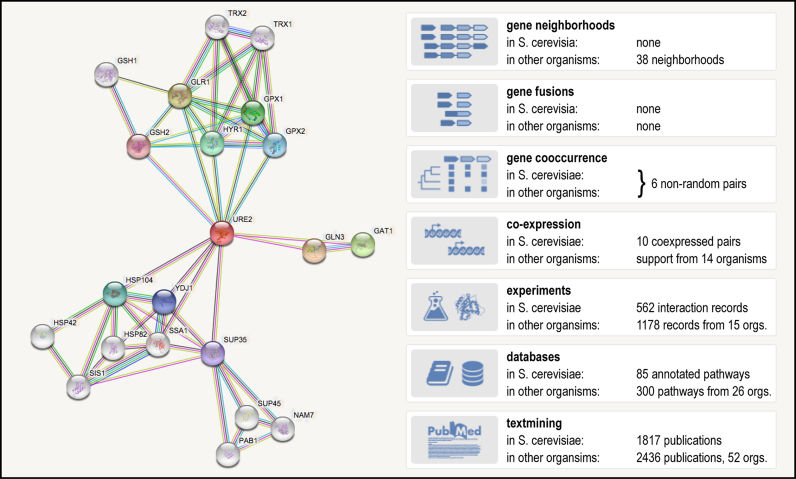
“For the latter transfer, the ‘interolog’ concept is applied (42,43); STRING uses hierarchically arranged orthologous group relations as A typical association network in STRING.”
MethodMassive mining of publicly available RNA-seq data from human and mouse
Lachmann, A., Torre, D., Keenan, A. B., Jagodnik, K. M., Lee, H. J., Wang, L., Silverstein, M. C., & Ma’ayan, A. (2018) · Nature Communications · doi:10.1038/s41467-018-03751-6 · Cited by 701 · cited 1×
“In addition to NCBI Geo, for a sub-set of species, gene count data was downloaded from the ARCHS4 and ARCHS4 zoo collections (48).”
MethodPrioritizing candidate disease genes by network-based boosting of genome-wide association data
Lee, I., Blom, U. M., Wang, P. I., Shim, J. E., & Marcotte, E. M. (2011) · Genome Research · doi:10.1101/gr.118992.110 · Cited by 686 · cited 1×
“The STRING database (‘Search Tool for Retrieval of Interacting Genes / Proteins’) belongs to this latter class, along with GeneMania (22), FunCoup (23), I2D (24), ConsensusPathDb (25), IMP (26) and HumanNet (27)––most of which have recently been reviewed and benchmarked in (7).”
BackgroundAnnotation Transfer Between Genomes: Protein–Protein Interologs and Protein–DNA Regulogs
Yu, H., Luscombe, N. M., Lu, H. X., Zhu, X., Xia, Y., Han, J.-D. J., Bertin, N., Chung, S., Vidal, M., & Gerstein, M. (2004) · Genome Research · doi:10.1101/gr.1774904 · Cited by 563 · cited 1×
“For the latter transfer, the ‘interolog’ concept is applied (42,43); STRING uses hierarchically arranged orthologous group relations as A typical association network in STRING.”
MethodProtein interaction data curation: the International Molecular Exchange (IMEx) consortium
Orchard, S., Kerrien, S., Abbani, S., Aranda, B., Bhate, J., Bidwell, S., Bridge, A., Briganti, L., Brinkman, F. S. L., Cesareni, G., et al. (2012) · Nature Methods · doi:10.1038/nmeth.1931 · Cited by 537 · cited 1×
“Primary interaction databases (3,15–18) are jointly annotating experimental interaction evidence directly from the source publications, and they are coordinating their efforts through the IMEx consortium (19).”
BackgroundWang, M., Herrmann, C. J., Simonovic, M., Szklarczyk, D., & von Mering, C. (2015) · PROTEOMICS · doi:10.1002/pmic.201400441 · Cited by 537 · cited 1×
“STRING shares its genome, protein-and name spaces with a number of sister projects, dedicated to orthology (eggNOG (32)), small molecules (STITCH (33)), protein abundances (PaxDB (34)), tissue expression (TISSUES (35)) and viruses (Viruses.”
BackgroundSelf-citationRiker, A. I., Enkemann, S. A., Fodstad, O., Liu, S., Ren, S., Morris, C., Xi, Y., Howell, P., Metge, B., Samant, R. S., et al. (2008) · BMC Medical Genomics · doi:10.1186/1755-8794-1-13 · Cited by 524 · cited 1×
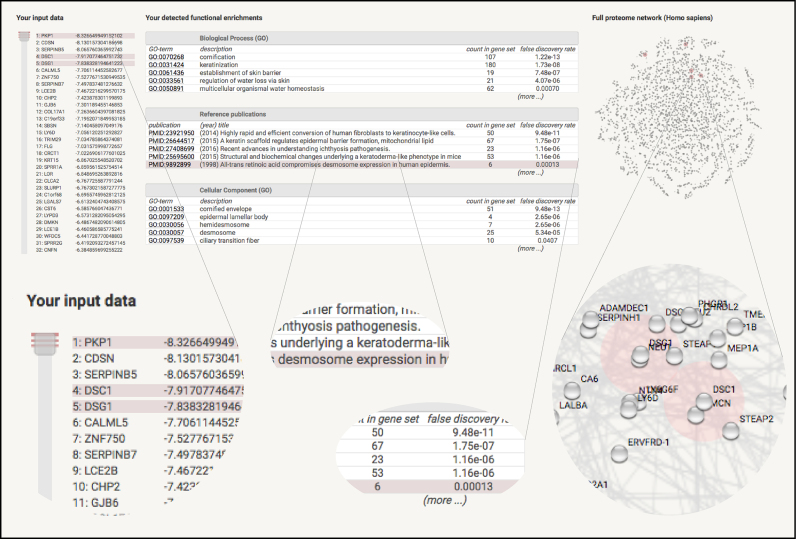
“An expression dataset comparing metastatic melanoma cells with normal skin tissue (62) has been submitted to STRING, with average log fold change values associated to each gene (negative values signify depletion in the melanoma”
Predicting Protein Function by Genomic Context: Quantitative Evaluation and Qualitative Inferences
Huynen, M., Snel, B., Lathe, W., & Bork, P. (2000) · Genome Research · doi:10.1101/gr.10.8.1204 · Cited by 495 · cited 1×
“These evolutionary events are known to be retained non-randomly with respect to the functional roles of genes, and thus allow the inference of functional associations between genes even for otherwise rarely studied organisms (genomic context techniques are reviewed in (44,45)).”
BackgroundSelf-citationStructure, Dynamics, Assembly, and Evolution of Protein Complexes
Marsh, J. A., & Teichmann, S. A. (2015) · Annual Review of Biochemistry · doi:10.1146/annurev-biochem-060614-034142 · Cited by 460 · cited 1×
“Some interactions are quite well documented and understood, for example in the context of three-dimensional reconstructions of large cellular machineries (4–6), while others are only hinted at so far, through indirect evidence such as genetic observations or statistical predictions.”
BackgroundAnalyzing and interpreting genome data at the network level with ConsensusPathDB
Herwig, R., Hardt, C., Lienhard, M., & Kamburov, A. (2016) · Nature Protocols · doi:10.1038/nprot.2016.117 · Cited by 424 · cited 1×
“The STRING database (‘Search Tool for Retrieval of Interacting Genes / Proteins’) belongs to this latter class, along with GeneMania (22), FunCoup (23), I2D (24), ConsensusPathDb (25), IMP (26) and HumanNet (27)––most of which have recently been reviewed and benchmarked in (7).”
BackgroundSystematic Evaluation of Molecular Networks for Discovery of Disease Genes
Huang, J. K., Carlin, D. E., Yu, M. K., Zhang, W., Kreisberg, J. F., Tamayo, P., & Ideker, T. (2018) · Cell Systems · doi:10.1016/j.cels.2018.03.001 · Cited by 289 · cited 2×
“The STRING database (‘Search Tool for Retrieval of Interacting Genes / Proteins’) belongs to this latter class, along with GeneMania (22), FunCoup (23), I2D (24), ConsensusPathDb (25), IMP (26) and HumanNet (27)––most of which have recently been reviewed and benchmarked in (7).”
BackgroundMethodHPIDB 2.0: a curated database for host–pathogen interactions
Ammari, M. G., Gresham, C. R., McCarthy, F. M., & Nanduri, B. (2016) · Database · doi:10.1093/database/baw103 · Cited by 282 · cited 1×
“Primary interaction databases (3,15–18) are jointly annotating experimental interaction evidence directly from the source publications, and they are coordinating their efforts through the IMEx consortium (19).”
BackgroundPathway Analysis: State of the Art
García-Campos, M. A., Espinal-Enríquez, J., & Hernández-Lemus, E. (2015) · Frontiers in Physiology · doi:10.3389/fphys.2015.00383 · Cited by 265
Integrated interactions database: tissue-specific view of the human and model organism interactomes
Kotlyar, M., Pastrello, C., Sheahan, N., & Jurisica, I. (2016) · Nucleic Acids Research · doi:10.1093/nar/gkv1115 · Cited by 254 · cited 1×
“The STRING database (‘Search Tool for Retrieval of Interacting Genes / Proteins’) belongs to this latter class, along with GeneMania (22), FunCoup (23), I2D (24), ConsensusPathDb (25), IMP (26) and HumanNet (27)––most of which have recently been reviewed and benchmarked in (7).”
BackgroundThe identification of functional modules from the genomic association of genes
Snel, B., Bork, P., & Huynen, M. A. (2002) · Proceedings of the National Academy of Sciences · doi:10.1073/pnas.092632599 · Cited by 248
Self-citationComputational Prediction of Protein–Protein Interactions
Skrabanek, L., Saini, H. K., Bader, G. D., & Enright, A. J. (2008) · Molecular Biotechnology · doi:10.1007/s12033-007-0069-2 · Cited by 248 · cited 1×
“These evolutionary events are known to be retained non-randomly with respect to the functional roles of genes, and thus allow the inference of functional associations between genes even for otherwise rarely studied organisms (genomic context techniques are reviewed in (44,45)).”
BackgroundPrePPI: a structure-informed database of protein–protein interactions
Zhang, Q. C., Petrey, D., Garzón, J. I., Deng, L., & Honig, B. (2012) · Nucleic Acids Research · doi:10.1093/nar/gks1231 · Cited by 238 · cited 1×
“A second source of protein–protein interaction information is provided by computational prediction efforts, some of which are hosted by dedicated databases, e.g. (20,21).”
BackgroundPIPs: human protein-protein interaction prediction database
McDowall, M. D., Scott, M. S., & Barton, G. J. (2009) · Nucleic Acids Research · doi:10.1093/nar/gkn870 · Cited by 223 · cited 1×
“A second source of protein–protein interaction information is provided by computational prediction efforts, some of which are hosted by dedicated databases, e.g. (20,21).”
BackgroundA comparison of gene set analysis methods in terms of sensitivity, prioritization and specificity
Tarca, A. L., Bhatti, G., & Romero, R. (2013) · PLoS ONE · doi:10.1371/journal.pone.0079217 · Cited by 203
Drew, K., Lee, C., Huizar, R. L., Tu, F., Borgeson, B., McWhite, C. D., Ma, Y., Wallingford, J. B., & Marcotte, E. M. (2017) · Molecular Systems Biology · doi:10.15252/msb.20167490 · Cited by 190 · cited 1×
“Protein–protein interactions can be collected from a number of online databases (reviewed in (12,13)), as well as from individual high-throughput efforts, e.g. (14).”
BackgroundTISSUES 2.0: an integrative web resource on mammalian tissue expression
Palasca, O., Santos, A., Stolte, C., Gorodkin, J., & Jensen, L. J. (2018) · Database · doi:10.1093/database/bay003 · Cited by 182 · cited 1×
“STRING shares its genome, protein-and name spaces with a number of sister projects, dedicated to orthology (eggNOG (32)), small molecules (STITCH (33)), protein abundances (PaxDB (34)), tissue expression (TISSUES (35)) and viruses (Viruses.”
BackgroundSelf-citationViruses.STRING: A Virus-Host Protein-Protein Interaction Database
Cook, H. V., Doncheva, N. T., Szklarczyk, D., Von Mering, C., & Jensen, L. J. (2018) · Viruses · doi:10.3390/v10100519 · Cited by 169
Self-citationEnright, A. J., & Ouzounis, C. A. (2001) · Genome Biology · doi:10.1186/gb-2001-2-9-research0034 · Cited by 139 · cited 1×
“The basic interaction unit in STRING is the ‘functional as-sociation’, i.e. a link between two proteins that both contribute jointly to a specific biological function (38–40).”
BackgroundCao, M., Zhang, H., Park, J., Daniels, N. M., Crovella, M. E., Cowen, L. J., & Hescott, B. (2013) · PLoS ONE · doi:10.1371/journal.pone.0076339 · Cited by 131 · cited 1×
“The clustering is based on a confidence diffusion state distance matrix (58,59) computed on the full, organism-wide STRING network, which is clustered hierarchically using HPC-CLUST with average linkage (60).”
MethodWong, A. K., Park, C. Y., Greene, C. S., Bongo, L. A., Guan, Y., & Troyanskaya, O. G. (2012) · Nucleic Acids Research · doi:10.1093/nar/gks458 · Cited by 126
Structure of the nuclear exosome captured on a maturing preribosome
Schuller, J. M., Falk, S., Fromm, L., Hurt, E., & Conti, E. (2018) · Science · doi:10.1126/science.aar5428 · Cited by 123
Cao, M., Pietras, C. M., Feng, X., Doroschak, K. J., Schaffner, T., Park, J., Zhang, H., Cowen, L. J., & Hescott, B. J. (2014) · Bioinformatics · doi:10.1093/bioinformatics/btu263 · Cited by 120
Khurana, V., Peng, J., Chung, C. Y., Auluck, P. K., Fanning, S., Tardiff, D. F., Bartels, T., Koeva, M., Eichhorn, S. W., Benyamini, H., et al. (2017) · Cell Systems · doi:10.1016/j.cels.2016.12.011 · Cited by 120
Quantifying critical states of complex diseases using single-sample dynamic network biomarkers
Liu, X., Chang, X., Liu, R., Yu, X., Chen, L., & Aihara, K. (2017) · PLOS Computational Biology · doi:10.1371/journal.pcbi.1005633 · Cited by 114 · cited 1×
“…collect and integrate all types of protein–protein interactions under one framework; this then provides support for data analysis pipelines in diverse areas, ranging from disease module identification (7,8) to biomarker discovery (9–11) and allows manual browsing, ad hoc discovery and annotation.”
MethodXie, L., & Bourne, P. E. (2005) · PLoS Computational Biology · doi:10.1371/journal.pcbi.0010031 · Cited by 70 · cited 1×
“While an impressive amount of structural and functional information on individual proteins has been amassed (1– 3), our knowledge about their interactions remains more fragmented.”
BackgroundIdentifying ELIXIR Core Data Resources
Durinx, C., McEntyre, J., Appel, R., Apweiler, R., Barlow, M., Blomberg, N., Cook, C., Gasteiger, E., Kim, J.-H., Lopez, R., et al. (2016) · F1000Research · doi:10.12688/f1000research.9656.1 · Cited by 61
HPC-CLUST: distributed hierarchical clustering for large sets of nucleotide sequences
Rodrigues, J. F. M., & von Mering, C. (2013) · Bioinformatics · doi:10.1093/bioinformatics/btt657 · Cited by 58
Self-citationWong, A. K., Krishnan, A., Yao, V., Tadych, A., & Troyanskaya, O. G. (2015) · Nucleic Acids Research · doi:10.1093/nar/gkv486 · Cited by 55 · cited 2×
“The STRING database (‘Search Tool for Retrieval of Interacting Genes / Proteins’) belongs to this latter class, along with GeneMania (22), FunCoup (23), I2D (24), ConsensusPathDb (25), IMP (26) and HumanNet (27)––most of which have recently been reviewed and benchmarked in (7).”
BackgroundA strategy for evaluating pathway analysis methods
Yu, C., Woo, H. J., Yu, X., Oyama, T., Wallqvist, A., & Reifman, J. (2017) · BMC Bioinformatics · doi:10.1186/s12859-017-1866-7 · Cited by 50 · cited 2×
“For this type of genome-wide measurements, simple overlap-based over-representation analysis is not the best choice (54–56).”
BackgroundMethodFunCoup 4: new species, data, and visualization
Ogris, C., Guala, D., Kaduk, M., & Sonnhammer, E. L. L. (2018) · Nucleic Acids Research · doi:10.1093/nar/gkx1138 · Cited by 49 · cited 1×
“The STRING database (‘Search Tool for Retrieval of Interacting Genes / Proteins’) belongs to this latter class, along with GeneMania (22), FunCoup (23), I2D (24), ConsensusPathDb (25), IMP (26) and HumanNet (27)––most of which have recently been reviewed and benchmarked in (7).”
BackgroundFunctional association networks as priors for gene regulatory network inference
Studham, M. E., Tjärnberg, A., Nordling, T. E. M., Nelander, S., & Sonnhammer, E. L. L. (2014) · Bioinformatics · doi:10.1093/bioinformatics/btu285 · Cited by 43
Protein-Protein Interactions and Prediction: A Comprehensive Overview
Sowmya, G., & Ranganathan, S. (2013) · Protein and Peptide Letters · doi:10.2174/09298665113209990056 · Cited by 31 · cited 1×
“Protein–protein interactions can be collected from a number of online databases (reviewed in (12,13)), as well as from individual high-throughput efforts, e.g. (14).”
BackgroundtreeClust: An R Package for Tree-Based Clustering Dissimilarities
Samuel, E. B., & Lyn, R. W. (2015) · The R Journal · doi:10.32614/rj-2015-032 · Cited by 21 · cited 1×
“ProteomeHD is not based on Pearson correlation, but instead uses the treeClust algo-rithm (49); for STRING, the results of this algorithm are recalibrated and scored using the KEGG benchmark.”
MethodComplex Network-Based Approaches to Biomarker Discovery
Hayashida, M., & Akutsu, T. (2016) · Biomarkers in Medicine · doi:10.2217/bmm-2015-0047 · Cited by 20 · cited 1×
“…collect and integrate all types of protein–protein interactions under one framework; this then provides support for data analysis pipelines in diverse areas, ranging from disease module identification (7,8) to biomarker discovery (9–11) and allows manual browsing, ad hoc discovery and annotation.”
MethodMapping of Protein-Protein Interactions: Web-Based Resources for Revealing Interactomes
Gemović, B., Šumonja, N., Davidović, R., Perović, V., & Veljković, N. (2018) · Current Medicinal Chemistry · doi:10.2174/0929867325666180214113704 · Cited by 18 · cited 1×
“Protein–protein interactions can be collected from a number of online databases (reviewed in (12,13)), as well as from individual high-throughput efforts, e.g. (14).”
Background
Cited by
Szklarczyk, D., Kirsch, R., Koutrouli, M., Nastou, K., Mehryary, F., Hachilif, R., Gable, A. L., Fang, T., Doncheva, N. T., Pyysalo, S., et al. (2023) · Nucleic Acids Research · doi:10.1093/nar/gkac1000 · Cited by 9,726
Self-citationInference and analysis of cell-cell communication using CellChat
Jin, S., Guerrero-Juarez, C. F., Zhang, L., Chang, I., Ramos, R., Kuan, C.-H., Myung, P., Plikus, M. V., & Nie, Q. (2021) · Nature Communications · doi:10.1038/s41467-021-21246-9 · Cited by 8,409
Imbalanced Host Response to SARS-CoV-2 Drives Development of COVID-19
Blanco-Melo, D., Nilsson-Payant, B. E., Liu, W.-C., Uhl, S., Hoagland, D., Møller, R., Jordan, T. X., Oishi, K., Panis, M., Sachs, D., et al. (2020) · Cell · doi:10.1016/j.cell.2020.04.026 · Cited by 4,222
New insights into the genetic etiology of Alzheimer’s disease and related dementias
Bellenguez, C., Küçükali, F., Jansen, I. E., Kleineidam, L., Moreno-Grau, S., Amin, N., Naj, A. C., Campos-Martin, R., Grenier-Boley, B., Andrade, V., et al. (2022) · Nature Genetics · doi:10.1038/s41588-022-01024-z · Cited by 2,498
SMART: recent updates, new developments and status in 2020
Letunic, I., Khedkar, S., & Bork, P. (2021) · Nucleic Acids Research · doi:10.1093/nar/gkaa937 · Cited by 2,151
“Synchronized with the current STRING version 11 (4), it currently contains > 24 million proteins from 5090 complete genomes (477 Eukaryota , 4445 Bacteria and 168 Archaea ), which is a 2.5-fold increase in both the number of proteins and genomes.”
BackgroundMethodInfluentialSelf-citation
Metadata
- Authors
- Szklarczyk, D., Gable, A. L., Lyon, D., Junge, A., Wyder, S., Huerta-Cepas, J., Simonovic, M., Doncheva, N. T., Morris, J. H., Bork, P., Jensen, L. J., & Mering, C. V.
- Affiliations
- SIB Swiss Institute of Bioinformatics (CH)
- University of Copenhagen (DK)
- Centro de Biotecnología y Genómica de Plantas, Universidad Politécnica de Madrid (UPM)—Instituto Nacional de Investigación y Tecnología Agraria y Alimentaria (INIA), 28223 Madrid, Spain
- University of California, San Francisco (US)
- Structural and Computational Biology Unit, European Molecular Biology Laboratory, 69117 Heidelberg, Germany
- Corresponding author
- Jensen, Lars J
- Mering, Christian von
- ORCID
- Venue
- Nucleic Acids Research
- Publisher
- Oxford University Press (OUP)
- Published
- 2018-11-22
- Volume
- 47
- Issue
- D1
- Pages
- D607-D613
- ISSN
- 0305-1048 (ISSN-L)
- 1362-4962
- PMC
- PMC6323986
- OpenAlex
- W2900569176
- Cited by
- 17,749
- References
- 64
- Citations by year
- 2026: 1049 · 2025: 1843 · 2024: 2377 · 2023: 2759 · 2022: 3359 · 2021: 3711 · 2020: 2202 · 2019: 401 · 2018: 7
- FWCI
- 577.31
- Type
- journal article
- Language
- en
- Open access
- gold
- doi.org
- Licence
- Locations
- Nucleic Acids Research (publishedVersion, cc-by)
- Europe PMC (PubMed Central) (publishedVersion, cc-by)
- PubMed Central (publishedVersion, cc-by)
- PubMed (publishedVersion)
- Research at the University of Copenhagen (University of Copenhagen) (publishedVersion, cc-by)
- MDC Repository (Max-Delbrueck-Center for Molecular Medicine) (acceptedVersion)
- Zurich Open Repository and Archive (University of Zurich) (acceptedVersion, cc-by)
- DIGITAL.CSIC (Spanish National Research Council (CSIC)) (submittedVersion, cc-by)
- eScholarship (California Digital Library) (submittedVersion, cc-by)
- Zurich Open Repository and Archive (University of Zurich) (submittedVersion, cc-by)
- Zurich Open Repository and Archive (University of Zurich)
- Funders
- Swiss Institute of Bioinformatics (NNF14CC0001)
- Danish Council for Independent Research (DFF-4005-00443)
- National Institutes of Health (U54 CA189205, U24 224370)
- National Institute of General Medical Sciences (P41 GM103504)
- Bundesministerium für Bildung und Forschung (#031A537B)
- Topics
- Life Sciences › Biochemistry, Genetics and Molecular Biology › Molecular Biology › Bioinformatics and Genomic Networks
- Health Sciences › Medicine › Health Informatics › Biomedical Text Mining and Ontologies
- Life Sciences › Biochemistry, Genetics and Molecular Biology › Molecular Biology › Genomics and Phylogenetic Studies
- Keywords
- STRING database, protein-protein interaction network, gene set enrichment analysis, Gene Ontology, KEGG, hierarchical clustering, network visualization
- MeSH terms
- Animals, Humans, Software, Genomics, Protein Interaction Mapping, Databases, Genetic, Gene Ontology
About these checks
Registry, retraction, Cites and statistics results are computed, not judged, with one exception: a printed reference that no index lists is read once by a model before it counts as a citation error. Claims are extracted by a model and kept only when their quote appears verbatim in the text; each cited source is then checked, with a model’s help, for whether it says what the claim relies on. Those verdicts can be wrong — read the claim’s quote and the cited source before relying on one.
Statistics and arithmetic are recomputed, not judged.
Confidence bands are shown only for fields calibrated on our annotated test set. None is calibrated yet, so no band is shown.
What counts as a claim ›How we measure confidence ›How we check this ›
Are you an author, or do you see a problem with this page? Request a review
Data sources
Bibliographic data: Semantic Scholar, OpenAlex, Crossref.
Contains information from the Semantic Scholar Academic Graph Datasets, made available under the ODC Attribution License (ODC-BY 1.0).
Semantic Scholar’s data is described in: Kinney, R., et al. (2023). The Semantic Scholar Open Data Platform. arXiv:2301.10140.
