

The DOI matches its Crossref record, with a small difference in title or year; 93 of the 99 references it cites were found in a registry or an index; 14 of the 39 sources its claims cite were checked for support.
Falsification and consciousness
Open accessAbstract
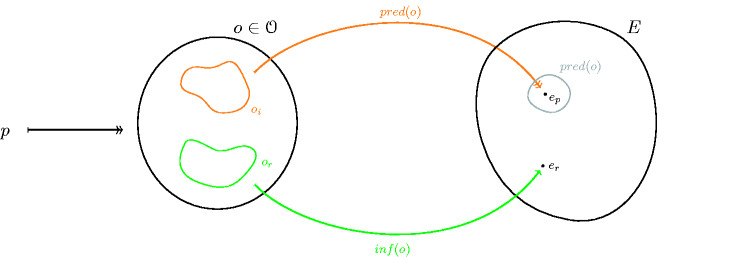
The search for a scientific theory of consciousness should result in theories that are falsifiable. However, here we show that falsification is especially problematic for theories of consciousness. We formally describe the standard experimental setup for testing these theories. Based on a theory's application to some physical system, such as the brain, testing requires comparing a theory's predicted experience (given some internal observables of the system like brain imaging data) with an inferred experience (using report or behavior). If there is a mismatch between inference and prediction, a theory is falsified. We show that if inference and prediction are independent, it follows that any minimally informative theory of consciousness is automatically falsified. This is deeply problematic since the field's reliance on report or behavior to infer conscious experiences implies such independence, so this fragility affects many contemporary theories of consciousness. Furthermore, we show that if inference and prediction are strictly dependent, it follows that a theory is unfalsifiable. This affects theories which claim consciousness to be determined by report or behavior. Finally, we explore possible ways out of this dilemma.
Overview
CoChat Summary
TL;DR
The paper argues that standard tests of theories of consciousness face a dilemma: if inference data (often report/behavior) and prediction data are independent, then minimally informative theories are automatically falsified; if they are strictly dependent, the theories become empirically unfalsifiable. The authors formalize this with a substitution argument and conclude that many contemporary theories, including IIT and GNW in their usual testing setups, are caught between these two problems.
Key findings
- If inference and prediction data are independent, the authors prove that universal substitutions exist, and Theorem 3.10 states that “either every single inference operation is wrong or the theory under consideration is already falsified.”
- They define a minimal-information assumption for theories and show that, under independence, for every possible inference content there is an or-falsification; this applies broadly to contemporary consciousness theories that use internal observables for prediction and report/behavior for inference.
- If inference and prediction data are strictly dependent, Theorem 4.3 shows the theory is “either already falsified or empirically unfalsifiable”; the paper gives examples including behaviorist theories and theories where prediction data are a subset of inference data (e.g. \(oi \subseteq or\)).
- The paper argues that these results apply not just to IIT but also to GNW and related theories, and notes that no current theory or testing paradigm known to the authors satisfies their “lenient dependency” condition.
Methods
- The paper is a formal theoretical analysis of the experimental testing setup for consciousness theories, defining physical systems \(P\), datasets \(O\), prediction correspondences \(pred: O \to E\), and inference functions \(inf: O \to E\).
- It models falsification as a mismatch between inferred and predicted experience, then proves results using a substitution argument, lemmas, propositions, and two main theorems (one for independence, one for strict dependence).
- The argument is illustrated with examples drawn from IIT, GNW, artificial neural networks, Turing machines, universal intelligence, and standard neuroscience reporting paradigms.
Limitations
- The paper states that some contemporary theories may lack the specificity needed to make precise predictions in their current form, so the formalism may describe a more advanced version of a theory rather than its present version.
- It explicitly notes that “no current theory or testing paradigm that we know of” satisfies the proposed lenient dependency case; this is a limitation of the paper’s survey of existing approaches, not a proof of impossibility.
- Evident from the text: the results are formal and depend on assumptions such as the minimal-information condition and the way the inference/prediction split is modeled; the paper discusses “possible ways out” but does not empirically test any alternative framework.
Model-written summary. Check it against the paper before relying on it.
Integrity signals
Registry
Cites
Statistics
Figures




Verification
Claims the paper makes
11 Valid · 11 Not valid · 15 Not checked · 80 Own results and interpretations
The cited sources support only part of this claim — read each source’s verdict below.
In the paper
“It was the first (and arguably may still be the lone) theory that makes precise quantitative predictions about both the contents and level of consciousness (Tononi 2004).”
§ Falsification and consciousness > Introduction
What the sources say
- Partly supportedcites Tononi 2004 sourceExperimental — accuracy not yet measured
The Abstract’s ‘Presentation of the hypothesis’ defines Φ as a measure of the quantity of consciousness and describes an effective-information matrix and variable values for its quality and particular experiences. The ‘second problem’ section develops predictions about differences in experience. Our copy does not establish that IIT was the first—or remains the only—theory to make such predictions, and it cautions that further work is needed to map phenomenological differences onto the proposed informational structure. No page numbers were supplied. (LLM, conf=0.85)
hedged- Asserted: passes — The authors put it forward as true.
- Checkable: passes — It can be checked against evidence.
- Load-bearing: unclear — It is unclear whether the paper’s conclusions depend on it.
- Based: passes — The paper gives a reason why it holds.
- Partly supported
The cited sources that could be checked couldn’t confirm or dispute this claim.
In the paper
“The arguments in this article constitute a proof of the fact that for ANNs, inference and prediction data are independent (Definition 3.8).”
§ Falsification and consciousness > The Substitution Argument > When does a universal substitution exist?
What the sources say
- Could not verifycites Doerig et al. (2019) sourceExperimental — accuracy not yet measured
The available Abstract discusses brain functions, causal structure, and consciousness, but does not address whether inference and prediction data are independent for ANNs. Searches for that phrase and for a paraphrase about artificial neural networks and predictive performance found no passage addressing the claim. (LLM, conf=0.70)
boosted- Asserted: passes — The authors put it forward as true.
- Checkable: passes — It can be checked against evidence.
- Load-bearing: passes — The paper’s conclusions depend on it.
- Based: passes — The paper gives a reason why it holds.
- Could not verify
Every source the paper cites for this claim was checked and supports it.
In the paper
“One consequence is that the “unfolding argument” concerning IIT (Doerig et al. 2019) is merely a small subset of a much larger issue that affects all contemporary theories which seek to make predictions about experience off of internal observables.”
§ Falsification and consciousness > Introduction
What the sources say
- Supportedcites Doerig et al. 2019 source
The paper’s title identifies it as the unfolding argument about IIT and other causal-structure theories. The sentence cites Doerig et al. (2019) for that identification; it presents the broader claim about all contemporary theories as the citing authors’ own consequence, not as a conclusion attributed to Doerig et al. (LLM, conf=0.87)
plain- Asserted: passes — The authors put it forward as true.
- Checkable: passes — It can be checked against evidence.
- Load-bearing: passes — The paper’s conclusions depend on it.
- Based: passes — The paper gives a reason why it holds.
- Supported
The sources with a verdict support this claim; the rest weren’t checked yet, have no full text we could read, or their verdicts aren’t rated yet.
In the paper
“This arguably applies to global workspace theory (Baars 2005), the “attention schema” theory of consciousness (Graziano and Webb 2015) or “fame in the brain” (Dennett 1991) proposals.”
§ Falsification and consciousness > Inference and Prediction Data Are Strictly Dependent
What the sources say
- Not checked — no full text of the sourcecites Baars 2005 source
- Supportedcites Graziano and Webb 2015 source
The Introduction (page not provided) describes awareness as attached to a represented item and says this requires integrating information into a larger brain-spanning representation. The Conclusion (page not provided) likewise describes an attended stimulus as first encoded as a representation, with a further step needed for subjective awareness. These passages support the citing sentence’s qualified suggestion that the subset condition applies to attention schema theory; they do not assess the other theories cited separately. (LLM, conf=0.84)
- Not matchedcites Dennett 1991
Couldn’t be matched to a paper in Crossref, so it can’t be checked.
hedged- Asserted: passes — The authors put it forward as true.
- Checkable: passes — It can be checked against evidence.
- Load-bearing: unclear — It is unclear whether the paper’s conclusions depend on it.
- Based: passes — The paper gives a reason why it holds.
The cited sources support only part of this claim — read each source’s verdict below.
In the paper
“it has already been proven that systems with different internal structures and hence different predicted experiences, can have identical input/output (and therefore identical reports or inferences about report) (Albantakis and Tononi 2019).”
§ Falsification and consciousness > The Substitution Argument > When does a universal substitution exist?
What the sources say
- Partly supportedcites Albantakis and Tononi 2019 sourceExperimental — accuracy not yet measured
The Introduction and Results §3.1 show that systems with equivalent global dynamics can have different causal compositions; Discussion §4.3 links causal composition to predicted phenomenal experience in IIT. But Discussion §4.2 cautions that replacing a subsystem with a dynamically equivalent one can change its input/output behavior in the same environment. The paper does not establish identical reports or inferences about reports. (LLM, conf=0.86)
boosted- Asserted: passes — The authors put it forward as true.
- Checkable: passes — It can be checked against evidence.
- Load-bearing: passes — The paper’s conclusions depend on it.
- Based: passes — The paper gives a reason why it holds.
- Partly supported
63 more claims · 1 with their cited sources checked
Create a free account to see all 117 claims and every source verdict.
- Probably not a substantial claim. 33
- It may state two separate claims as one. 18
- Borderline: one of the tests for a substantial claim is unclear. 1
Citations
Cites
LeCun, Y., Bengio, Y., & Hinton, G. (2015) · Nature · doi:10.1038/nature14539 · Cited by 84,126
Multilayer feedforward networks are universal approximators
Hornik, K., Stinchcombe, M., & White, H. (1989) · Neural Networks · doi:10.1016/0893-6080(89)90020-8 · Cited by 21,728
Multilayer feedforward networks are universal approximators
HornikK., StinchcombeM., & WhiteH. (1989) · Neural Networks · doi:10.5555/70405.70408 · Cited by 9,081
On computable numbers, with an application to the entscheidungsproblem
Turing, A. M. (1937) · Proceedings of the London Mathematical Society · doi:10.1112/plms/s2-42.1.230 · Cited by 8,283
The Logic of Scientific Discovery
(2013) · A Realist Theory of Science · doi:10.4324/9780203090732-9 · Cited by 7,731
The Logic of Scientific Discovery.
Hutchison, T. W., & Popper, K. R. (1959) · Economica · doi:10.2307/2550489 · Cited by 7,499
Computing Machinery and Intelligence (1950)
Turing, A. (2004) · The Essential Turing · doi:10.1093/oso/9780198250791.003.0017 · Cited by 6,118
The Behavior of Organisms: An Experimental Analysis
Jones, F. N., & Skinner, B. F. (1939) · The American Journal of Psychology · doi:10.2307/1416495 · Cited by 4,398 · cited 1×
“This is, for example, the case for behaviourist theories (Skinner, 1938) of consciousness, where consciousness is equated directly with report or behavior.”
BackgroundEnd to End Learning for Self-Driving Cars
Bojarski, M., Del Testa, D., Dworakowski, D., Firner, B., Flepp, B., Goyal, P., Jackel, L. D., Monfort, M., Muller, U., Zhang, J., et al. (2016) · arXiv · doi:10.48550/arxiv.1604.07316 · Cited by 3,198
Experimental and theoretical approaches to conscious processing
Dehaene, S., & Changeux, J.-P. (2011) · Neuron · doi:10.1016/j.neuron.2011.03.018 · Cited by 2,573
Research works printed but not linked: 5
- Aaronson, 2014, Shtetl-Optimized: The Blog of Scott Aaronson
- Ball, 2019, Neuroscience readies for a showdown over consciousness ideas, Quanta Mag, 6
- Block, 1996, How can we find the neural correlate of consciousness?, Trends Neurosci, 19, 456
- Crick, 1990, Seminars in the Neurosciences, 263
- Skinner, 1938, Appleton-Century
Cited by
Hard criteria for empirical theories of consciousness
Doerig, A., Schurger, A., & Herzog, M. H. (2021) · Cognitive Neuroscience · doi:10.1080/17588928.2020.1772214 · Cited by 194
“The unfolding argument does not apply, because predictive processing can be unfolded (Doerig, Schurger, et al. (2019); but see Kleiner (2019) and Kleiner and Hoel (2020)).”
BackgroundInfluentialAre we really unconscious in “unconscious” states? Common assumptions revisited
Sevenius Nilsen, A., Juel, B. E., Thürer, B., Aamodt, A., & Storm, J. F. (2022) · Frontiers in Human Neuroscience · doi:10.3389/fnhum.2022.987051 · Cited by 49
“However, this method has been criticized for being tautological or unfalsifiable (Doerig et al., 2019; Kleiner and Hoel, 2021), but see (Negro, 2020) for a defense.”
BackgroundMethodROSE: A neurocomputational architecture for syntax
Murphy, E. (2023) · Journal of Neurolinguistics · doi:10.1016/j.jneuroling.2023.101180 · Cited by 67
The Mathematical Structure of Integrated Information Theory
Kleiner, J., & Tull, S. (2021) · Frontiers in Applied Mathematics and Statistics · doi:10.3389/fams.2020.602973 · Cited by 46
“As such it is part of a number of recent contributions which seek to explore the role and prospects of mathematical theories of consciousness [11, 15, 18, 30, 49], to help overcome problems of existing models [17, 18, 34] and to eventually develop new proposals [6, 13, 16, 20, 22, 29, 39].”
BackgroundSelf-citationMathematical Models of Consciousness
Kleiner, J. (2020) · Entropy · doi:10.3390/e22060609 · Cited by 76
Self-citation
Metadata
- Authors
- Kleiner, J., & Hoel, E.
- Affiliations
- Ludwig-Maximilians-Universität München (DE)
- Tufts University (US)
- Corresponding author
- Hoel, Erik
- Venue
- Neuroscience of Consciousness
- Publisher
- Oxford University Press (OUP)
- Published
- 2021-01-01
- Volume
- 2021
- Issue
- 1
- Pages
- niab001-niab001
- ISSN
- 2057-2107 (ISSN-L)
- PMC
- PMC8052953
- OpenAlex
- W3015208662
- Semantic Scholar
- 697586e9404b69bebbad312836ba200fde79d21d
- Cited by
- 46
- References
- 99
- Citations by year
- 2026: 6 · 2025: 6 · 2024: 10 · 2023: 8 · 2022: 10 · 2021: 4
- FWCI
- 7.73
- Type
- journal article
- Language
- en
- Open access
- gold
- doi.org
- Locations
- Neuroscience of Consciousness (publishedVersion, cc-by)
- PubMed Central (publishedVersion, cc-by)
- PubMed (publishedVersion)
- arXiv (Cornell University) (submittedVersion)
- arXiv (Cornell University)
- Topics
- Social Sciences › Arts and Humanities › Philosophy › Philosophy and Theoretical Science
- Social Sciences › Arts and Humanities › History and Philosophy of Science › Philosophy of Biology and Scientific Explanation
- Social Sciences › Arts and Humanities › Philosophy › Free Will and Agency
- Keywords
- falsifiability, theory of consciousness, subjective experience, neuroimaging, philosophy of science
About these checks
Registry, retraction, Cites and statistics results are computed, not judged, with one exception: a printed reference that no index lists is read once by a model before it counts as a citation error. Claims are extracted by a model and kept only when their quote appears verbatim in the text; each cited source is then checked, with a model’s help, for whether it says what the claim relies on. Those verdicts can be wrong — read the claim’s quote and the cited source before relying on one.
The claim verdicts this report counts are experimental: their accuracy is not yet measured.
A language model drew the claims from the paper on 2026-10-10, under version 3 of the claim definition (model deepseek-v4.1-flash, prompt extract-v3).
A second model labelled each claim on 2026-10-10 (model jev-1.13-20260917, definition revision gold-guideline-v0.2).
Cited sources are checked with a language model’s help (gpt-6-sol).
Statistics and arithmetic are recomputed, not judged.
Confidence bands are shown only for fields calibrated on our annotated test set. None is calibrated yet, so no band is shown.
What counts as a claim ›How we measure confidence ›How we check this ›
Are you an author, or do you see a problem with this page? Request a review
How to cite
Cite CoChat for the checks on this page, and the paper for its own findings.
- This page
- CoChat. (2026). Citation check: Falsification and consciousness. https://app.cochat.ai/papers/10.1093/nc/niab001
- The paper
- Kleiner, J., & Hoel, E. (2021). Falsification and consciousness. Neuroscience of Consciousness. https://doi.org/10.1093/nc/niab001
Data sources
Bibliographic data: Semantic Scholar, OpenAlex, Crossref.
Contains information from the Semantic Scholar Academic Graph Datasets, made available under the ODC Attribution License (ODC-BY 1.0).
Semantic Scholar’s data is described in: Kinney, R., et al. (2023). The Semantic Scholar Open Data Platform. arXiv:2301.10140.
