

The DOI matches its Crossref record; 37 of the 37 references it cites were found in a registry or an index.
Pathogenic T-cells and inflammatory monocytes incite inflammatory storms in severe COVID-19 patients
Open accessPublished version of a preprint
Abstract
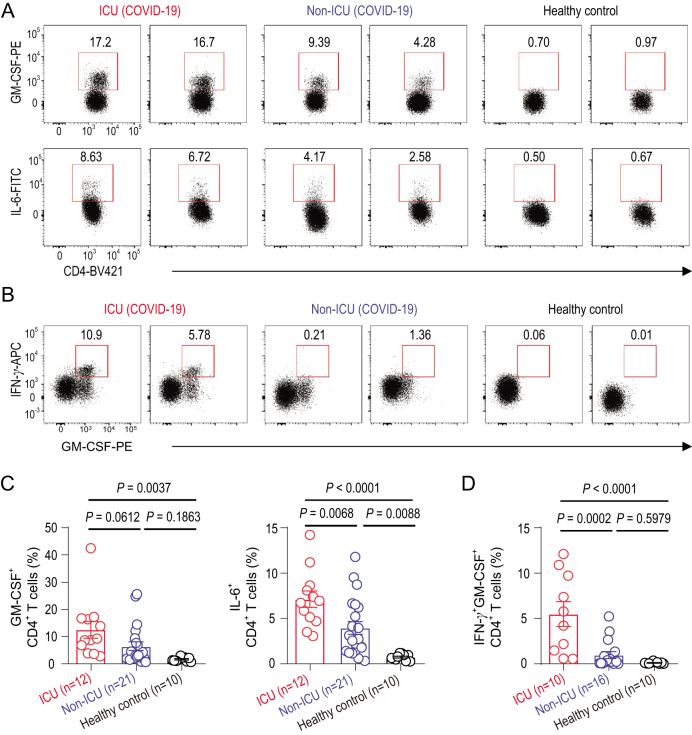
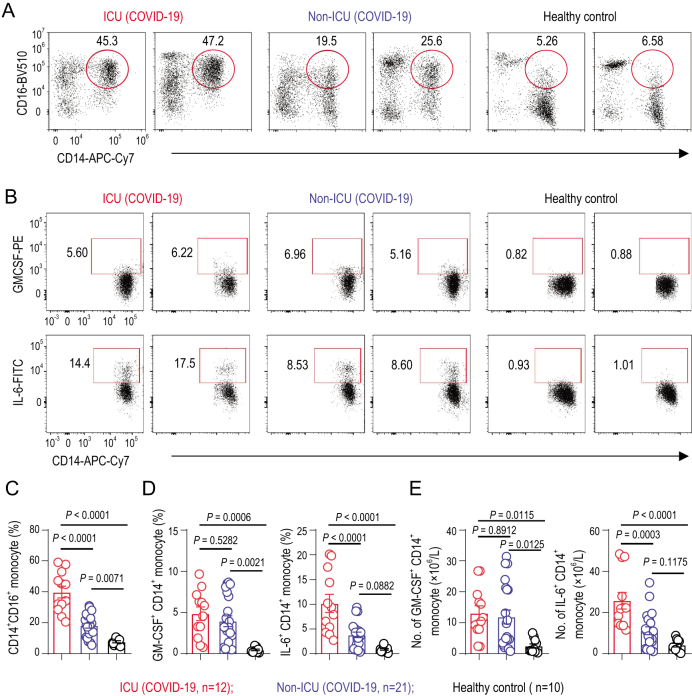
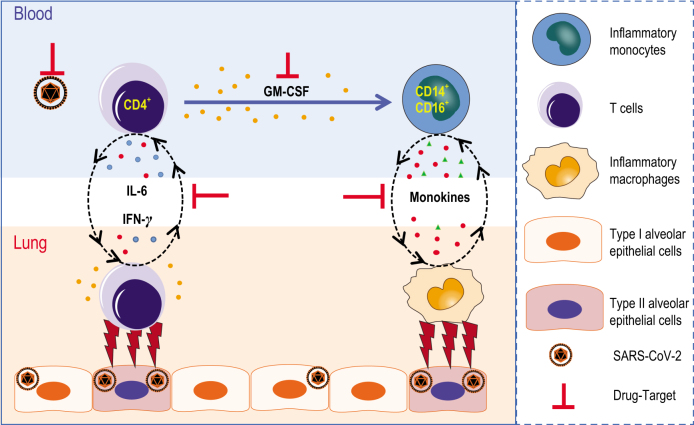
Pathogenic human coronavirus infections, such as severe acute respiratory syndrome CoV (SARS-CoV) and Middle East respiratory syndrome CoV (MERS-CoV), cause high morbidity and mortality [1,2]. Recently, a severe pneumonia-associated respiratory syndrome caused by a new coronavirus (SARS-CoV-2) was reported in December 2019 in the city of Wuhan, Hubei province, China [3–5], which was also named as pneumonia-associated respiratory syndrome (PARS) [6] and can cause coronavirus disease 2019 (COVID-19) to seriously endanger human health. Up to 24 February 2020, at least 77 779 cases had been reported, with 2666 fatal cases according to the report from China CDC. However, the immune mechanism that potentially orchestrates acute mortality from COVID-19 patients is still unknown. Here, we show that, after the SARS-CoV-2 infection, CD4+ T lymphocytes are rapidly activated to become pathogenic T helper (Th) 1 cells and generate GM-CSF, etc. The cytokine environment induces inflammatory CD14+CD16+ monocytes with a high expression of IL-6 and accelerates the inflammation. Given that a large number of inflammatory-cell infiltrations have been observed in lungs from severe COVID-19 patients [7,8], these aberrant pathogenic Th1 cells and inflammatory monocytes may enter the pulmonary circulation in huge numbers and play an immune-damaging role causing lung functional disability and quick mortality. Our results demonstrate that excessive non-effective host-immune responses by pathogenic T-cells and inflammatory monocytes may be associated with severe lung pathology. Thus, we suggest that monoclonal antibodies targeting GM-CSF or interleukin 6 may be effective in blocking inflammatory storms and, therefore, be a promising treatment for severe COVID-19 patients. Coronavirus, including SARS and MERS, has caused two large-scale pandemics in the last two decades [1,2]. Although viral evasion of host-immune responses and virus-induced cytopathic effects are believed to be critical in disease severity, studies from humans who died of SARS and animal models have suggested that an excessive and aberrant host-cytokine storm results in an exuberant immunopathology and lethal disease [9–11]. Inflammatory cytokine storm refers to the immune system gone awry and an excessive inflammatory response flaring out of control. Cytokine storms are associated with a wide variety of infectious and non-infectious diseases including graft-versus-host disease, autoimmune disease, severe virus infection, multiple organ dysfunction syndromes and chimeric antigen receptor (CAR) T-cell therapy [12,13]. It has been reported that, following SARS-CoV infection, dysregulated cytokine/chemokine responses and higher virus titers cause an inflammatory cytokine storm with lung immunopathological injury [12,14]. Such inflammation associated with the cytokine storm may begin at one local site but spread farther throughout the body via the systemic circulation [12,14]. Similarly, patients infected with SARS-CoV-2 who have been reported recently have had increased plasma concentrations of inflammation-related cytokines, including interleukins (IL) 2, 7 and 10, granulocyte-colony-stimulating factor (G-CSF), interferon-γ-inducible protein 10 (IP10), monocyte chemoattractant protein 1 (MCP1), macrophage inflammatory protein 1 alpha (MIP1A) and tumour necrosis factor α (TNF-α), especially in moribund patients [15]. Importantly, COVID-19 patients have developed characteristic pulmonary ground glass changes on imaging and peripheral lymphocytes decreasing [14,16,17]. More importantly, a large number of inflammatory immune-cell infiltrations were also found in a COVID-19 patient with pulmonary pathology [7,8]. These phenomena suggest that severe pulmonary inflammation and cytokine storm also exist in SARS-CoV-2 infection. At present, symptomatic treatments with organ support to moribund patients are the mainstays of clinical management [17]. It is urgent to identify the immunopathology mechanism to delay the pulmonary immune injury. In patients infected with SARS-CoV, it has been reported that the severity of pulmonary immune injury correlated with extensive infiltration of neutrophils and macrophages in the lungs [18,19], accompanied by increased numbers of neutrophils and monocytes and lower CD8+ and CD4+ T-cell counts in the peripheral blood samples [20–22]. To identify the immune characteristics of patients infected with SARS-CoV-2, peripheral blood samples from patients with severe pneumonia were collected for immune analysis. Consistently with previous clinical-characteristics reports [23], these hospitalized patients with confirmed SARS-CoV-2 infection involved in the First Affiliated Hospital of University of Science and Technology of China commonly have fever symptoms. Patients in intensive care units (ICUs) have significantly decreased concentrations of haemoglobin and albumin, but increased concentrations of C-reactive protein, alanine aminotransferase, asparta
Overview
The claims and statistics of this paper haven’t been checked yet.
Run the check — free, no account needed. It reads the open-access text and checks the sources it cites.
Integrity signals
Registry
Cites
Statistics
Figures
Verification
Claims the paper makes
The claims and statistics of this paper haven’t been checked yet.
Run the check — free, no account needed. It reads the open-access text and checks the sources it cites.
Claims other papers make about this one
Each is checked against this paper’s own text: does it say what the citing paper says it does?
The check wasn’t confident either way, so it gives no verdict — never disputed.
In the citing paper
“HLA-DR expression on monocytes from severe COVID-19 patients is also reduced relative to those from mild patients109,110,112,122.”
From SARS-CoV-2, COVID-19 and the aging immune system (2021) · cites this paper as [112]
Experimental — accuracy not yet measuredIn the citing paper
“SARS-CoV-2 infection elicits a Th1 CD4+ T cell response, with IFNγ and IL-2 being the primary cytokines produced by these cells and some TNFα production as well112,126-129.”
From SARS-CoV-2, COVID-19 and the aging immune system (2021) · cites this paper as [112]
Self-check
Percentages, sums and reported differences re-computed from the paper’s own numbers.
The self-check needs the paper’s full text.
Citations
Cites
Clinical features of patients infected with 2019 novel coronavirus in Wuhan, China
Huang, C., Wang, Y., Li, X., Ren, L., Zhao, J., Hu, Y., Zhang, L., Fan, G., Xu, J., Gu, X., et al. (2020) · The Lancet · doi:10.1016/s0140-6736(20)30183-5 · Cited by 48,884
Clinical characteristics of coronavirus disease 2019 in China
Guan, W.-J., Ni, Z.-Y., Hu, Y., Liang, W.-H., Ou, C.-Q., He, J.-X., Liu, L., Shan, H., Lei, C.-L., Hui, D. S. C., et al. (2020) · New England Journal of Medicine · doi:10.1056/nejmoa2002032 · Cited by 30,246
A pneumonia outbreak associated with a new coronavirus of probable bat origin
Zhou, P., Yang, X.-L., Wang, X.-G., Hu, B., Zhang, L., Zhang, W., Si, H.-R., Zhu, Y., Li, B., Huang, C.-L., et al. (2020) · Nature · doi:10.1038/s41586-020-2012-7 · Cited by 21,969
Self-citationWang, D., Hu, B., Hu, C., Zhu, F., Liu, X., Zhang, J., Wang, B., Xiang, H., Cheng, Z., Xiong, Y., et al. (2020) · JAMA · doi:10.1001/jama.2020.1585 · Cited by 20,148
Self-citationLa certeza de lo impredecible: Cultura Educación y Sociedad en tiempos de COVID19
Martínez González, M. (2020) · DSPACE System - Metalibrary (University of the Coast) · Cited by 18,463
Martínez–González, M. B. (2020) · DSPACE System - Metalibrary (University of the Coast) · Cited by 18,292
A new coronavirus associated with human respiratory disease in China
Wu, F., Zhao, S., Yu, B., Chen, Y.-M., Wang, W., Song, Z.-G., Hu, Y., Tao, Z.-W., Tian, J.-H., Pei, Y.-Y., et al. (2020) · Nature · doi:10.1038/s41586-020-2008-3 · Cited by 11,688
Pathological findings of COVID-19 associated with acute respiratory distress syndrome
Xu, Z., Shi, L., Wang, Y., Zhang, J., Huang, L., Zhang, C., Liu, S., Zhao, P., Liu, H., Zhu, L., et al. (2020) · The Lancet Respiratory Medicine · doi:10.1016/s2213-2600(20)30076-x · Cited by 8,545
A novel coronavirus outbreak of global health concern
Wang, C., Horby, P. W., Hayden, F. G., & Gao, G. F. (2020) · The Lancet · doi:10.1016/s0140-6736(20)30185-9 · Cited by 7,700
Identification of a novel coronavirus in patients with severe acute respiratory syndrome
Drosten, C., Günther, S., Preiser, W., van der Werf, S., Brodt, H.-R., Becker, S., Rabenau, H., Panning, M., Kolesnikova, L., Fouchier, R. A. M., et al. (2003) · New England Journal of Medicine · doi:10.1056/nejmoa030747 · Cited by 4,574
Research works printed but not linked: 3
- Tian, 2020, J Thorac Oncol
- Li, 2020, J Med Virol, 92
- Wang, 2020, JAMA, 323
Cited by
Sorted by citations
Items 701–800 of 1,000
Endothelial cell, myeloid, and adaptive immune responses in SARS‐CoV‐2 infection
Degauque, N., Haziot, A., Brouard, S., & Mooney, N. (2021) · The FASEB Journal · doi:10.1096/fj.202100024r · Cited by 14
Bayat, M., Asemani, Y., & Najafi, S. (2021) · International Immunopharmacology · doi:10.1016/j.intimp.2021.107679 · Cited by 15
Gastrointestinal Microenvironment and the Gut-Lung Axis in the Immune Responses of Severe COVID-19
Yang, Y. K., Huang, W., Fan, Y., & Chen, G. (2021) · Frontiers in Molecular Biosciences · doi:10.3389/fmolb.2021.647508 · Cited by 15
Surface Proteins of SARS-CoV-2 Drive Airway Epithelial Cells to Induce IFN-Dependent Inflammation
Anand, G., Perry, A. M., Cummings, C., Raymond, E. S., Clemens, R. A., & Steed, A. L. (2021) · The Journal of Immunology · doi:10.4049/jimmunol.2001407 · Cited by 14
Myeloid dysregulation and therapeutic intervention in COVID-19
Gu, R., Mao, T., Qiao, L., Su, T. T., & Wang, J. (2021) · Seminars in Immunology · doi:10.1016/j.smim.2021.101524 · Cited by 14
Altered Blood Cell Traits Underlie a Major Genetic Locus of Severe COVID-19
Zhou, J., Sun, Y., Huang, W., & Ye, K. (2021) · The Journals of Gerontology Series A · doi:10.1093/gerona/glab035 · Cited by 14
Laser fabrication of flexible electrodes for bioelectronics
Zheng, L., Lu, Y., Lyu, H., Li, T., Cui, S., Xu, Y., Cai, Z., Hou, Y., Li, Y., Yang, Q., et al. (2026) · Biosensors and Bioelectronics · doi:10.1016/j.bios.2026.118386 · Cited by 13
Diagnostic approaches and potential therapeutic options for coronavirus disease 2019
Khan, Z., Ghafoor, D., Khan, A., Ualiyeva, D., Khan, S. A., Bilal, H., Khan, B. R., Khan, A., & Sajjad, W. (2020) · New Microbes and New Infections · doi:10.1016/j.nmni.2020.100770 · Cited by 13
COVID-19 and Cardiovascular Diseases: Challenges and Solutions
Sharma, P., Pradhan, A. K., Vohra, S., & Sethi, R. (2021) · Cardiology Research · doi:10.14740/cr1244 · Cited by 13
Zhang, Y., Shi, F., Wang, Y., Meng, Y., Zhang, Q., Wang, K., Zeng, P., & Diao, H. (2022) · Frontiers in Molecular Biosciences · doi:10.3389/fmolb.2022.835590 · Cited by 13
Wu, K. C. H., He, Q., Bennett, A. N., Li, J., & Chan, K. H. K. (2022) · Frontiers in Genetics · doi:10.3389/fgene.2022.1063519 · Cited by 13
Pulmonary fibrosis in COVID-19: mechanisms, consequences and targets
O’Reilly, S. (2023) · QJM · doi:10.1093/qjmed/hcad092 · Cited by 13
Efficacy and limitations of repurposed drugs and vaccines for COVID-19
Murmu, N., Sarkar, M., Dey, S., Manna, R., Roy, S., Mondal, T., Halder, S., Bhattacharjee, N., Dash, S. K., & Giri, B. (2023) · Journal of Medicine Surgery and Public Health · doi:10.1016/j.glmedi.2023.100041 · Cited by 13
Tsukalov, I., Sánchez‐Cerrillo, I., Rajas, O., Ávalos, E., Iturricastillo, G., Esparcia, L., Buzón, M. J., Genescà, M., Scagnetti, C., Popova, O., et al. (2024) · Nature Communications · doi:10.1038/s41467-024-46322-8 · Cited by 13
Hematological changes in patients with COVID‑19 (Review)
Ye, J., Jiao, Y., Zhang, Y., Li, Z., Zeng, X., Deng, H., & Yang, M. (2020) · Molecular Medicine Reports · doi:10.3892/mmr.2020.11581 · Cited by 14
Torabi‐Rahvar, M., & Rezaei, N. (2020) · Current Pharmaceutical Design · doi:10.2174/1381612826666201125102649 · Cited by 13
Illuminating the immunopathology of SARS‐CoV ‐2
Saksena, S., & Chattopadhyay, P. K. (2021) · Cytometry Part B Clinical Cytometry · doi:10.1002/cyto.b.21988 · Cited by 13
Desai, H. D., Sharma, K. H., Parikh, A., Patel, K., Trivedi, J., Desai, R., Patel, P. P., Patel, Z., Patel, S., & Kini, S. (2021) · Cureus · doi:10.7759/cureus.13116 · Cited by 14
Qiang, X., Zhu, S., Li, J.-H., Chen, W., Yang, H., Wang, P., Tracey, K., & Wang, H. (2021) · Journal of Leukocyte Biology · doi:10.1002/jlb.3covcra0920-628rr · Cited by 6
New Discovery of Myeloid-Derived Suppressor Cell’s Tale on Viral Infection and COVID-19
Park, S., Nam, D., Seong, H. C., & Hahn, Y. S. (2022) · Frontiers in Immunology · doi:10.3389/fimmu.2022.842535 · Cited by 14
Rahangdale, R. R., Tender, T., Balireddy, S., Pasupuleti, M., & Hariharapura, R. C. (2022) · Canadian Journal of Microbiology · doi:10.1139/cjm-2021-0242 · Cited by 15
How Do Anti-SARS-CoV-2 mRNA Vaccines Protect from Severe Disease?
Federico, M. (2022) · International Journal of Molecular Sciences · doi:10.3390/ijms231810374 · Cited by 13
Li, Y., Lan, J., & Wong, G. (2023) · Biosafety and Health · doi:10.1016/j.bsheal.2023.08.003 · Cited by 15
Zheng, M., Gao, Y., Liu, S., Sun, D., Yang, F., Zong, L., Zhang, M., Tian, Z., Xu, Y., & Sun, H. (2020) · Cellular and Molecular Immunology · doi:10.1038/s41423-020-00551-1 · Cited by 13
Self-citationThe significance of bioengineered nanoplatforms against SARS-CoV-2: From detection to genome editing
Hassanzadeh, P. (2021) · Life Sciences · doi:10.1016/j.lfs.2021.119289 · Cited by 13
Mba, I. E., Sharndama, H. C., Osondu-chuka, G. O., & Okeke, O. P. (2021) · Scandinavian Journal of Infectious Diseases · doi:10.1080/23744235.2021.1916071 · Cited by 13
COVID-19 Severity Potentially Modulated by Cardiovascular-Disease-Associated Immune Dysregulation
Lee, A. C., Castaneda, G., Li, W. T., Chen, C., Shende, N., Chakladar, J., Taub, P. R., Chang, E. Y., & Ongkeko, W. M. (2021) · Viruses · doi:10.3390/v13061018 · Cited by 13
A distinct innate immune signature marks progression from mild to severe COVID-19Preprint
Chevrier, S. (2020) · bioRxiv (Cold Spring Harbor Laboratory) · doi:10.17632/vyy8ttw7n9 · Cited by 13
The immunopathogenesis of SARS-CoV-2 infection: Overview of lessons learned in the first 5 years
Yang, O. O. (2025) · The Journal of Immunology · doi:10.1093/jimmun/vkaf033 · Cited by 14
A proposed molecular mechanism for pathogenesis of severe RNA-viral pulmonary infections
Rogan, P. K., Mucaki, E. J., & Shirley, B. C. (2020) · F1000Research · doi:10.12688/f1000research.25390.2 · Cited by 12
Mechanisms and treatments of myocardial injury in patients with corona virus disease 2019
Peng, W., Wu, H., Tan, Y. L., Li, M., Yang, D., & Li, S. (2020) · Life Sciences · doi:10.1016/j.lfs.2020.118496 · Cited by 12
Clinical features and potential mechanism of coronavirus disease 2019-associated liver injury
Han, M.-W., Wang, M., Xu, M.-Y., Qi, W.-P., Wang, P., & Xi, D. (2021) · World Journal of Clinical Cases · doi:10.12998/wjcc.v9.i3.528 · Cited by 12
Baykız, D., Gövdeli, E. A., Özer, P. K., Karaayvaz, E. B., Çatma, Y., Medetalibeyoğlu, A., Çağatay, A., Umman, B., Tükek, T., & Buğra, Z. (2021) · International journal of cardiac imaging · doi:10.1007/s10554-021-02228-w · Cited by 12
Aging versus youth: Endocrine aspects of vulnerability for COVID-19
Oğuz, S. H., Koca, M., & Yıldız, B. O. (2021) · Reviews in Endocrine and Metabolic Disorders · doi:10.1007/s11154-021-09656-y · Cited by 12
Lauro, R., Irrera, N., Eid, A. H., & Bitto, A. (2021) · Pathogens · doi:10.3390/pathogens10040476 · Cited by 12
Cho, J., Lee, J., Sia, C., Koo, C. S., Tan, B. Y., Hong, W.-Z., Choi, E. C.-E., Goh, X., Chai, L. Y. A., Chandran, N., et al. (2021) · Singapore Medical Journal · doi:10.11622/smedj.2021100 · Cited by 12
Neagu, M. T., Constantin, C., & Surcel, M. (2021) · International Journal of Environmental Research and Public Health · doi:10.3390/ijerph182413173 · Cited by 12
pcMSC Modulates Immune Dysregulation in Patients With COVID-19-Induced Refractory Acute Lung Injury
Chen, M.-C., Lai, K. S.-L., Chien, K.-L., Teng, S.-T., Lin, Y.-R., Chao, W., Lee, M.-J., Wei, P., Huang, Y., Kuo, H., et al. (2022) · Frontiers in Immunology · doi:10.3389/fimmu.2022.871828 · Cited by 12
Lu, L. W., Gao, Y., Quek, S. Y., Foster, M. J., Eason, C., Liu, M., Wang, M., Chen, J., & Chen, F. (2022) · Biomedicine & Pharmacotherapy · doi:10.1016/j.biopha.2022.113625 · Cited by 13
Should We Interfere with the Interleukin-6 Receptor During COVID-19: What Do We Know So Far?
Plocque, A., Mitri, C., Lefèvre, C., Tabary, O., Touqui, L., & Philippart, F. (2022) · Drugs · doi:10.1007/s40265-022-01803-2 · Cited by 12
Manfredi, F., Chiozzini, C., Ferrantelli, F., Leone, P., Pugliese, K., Spada, M., Virgilio, A. D., Giovannelli, A., Valeri, M., Cara, A., et al. (2023) · npj Vaccines · doi:10.1038/s41541-023-00686-y · Cited by 12
Munjita, S. M., Samutela, M., Ndashe, K., & Munsaka, S. M. (2020) · Pan African Medical Journal · doi:10.11604/pamj.supp.2020.35.2.23267 · Cited by 12
Temesgen, Z., Kelley, C. F., Cerasoli, F., Kilcoyne, A., Chappell, D. B., Durrant, C., Ahmed, O., Chappell, G., Catterson, V. M., Polk, C. M., et al. (2022) · Thorax · doi:10.1136/thoraxjnl-2022-218744 · Cited by 13
SARS-CoV-2 Portrayed against HIV: Contrary Viral Strategies in Similar Disguise
Duerr, R., Crosse, K. M., Valero-Jimenez, A. M., & Dittmann, M. (2021) · Microorganisms · doi:10.3390/microorganisms9071389 · Cited by 12
Interplay of Monocytes and T Lymphocytes in COVID-19 SeverityPreprint
Padgett, L. E., Dinh, H. Q., Chee, S., Olingy, C. E., Wu, R., Araujo, D. J., Vijayanand, P., Ottensmeier, C. H. H., & Hedrick, C. C. (2020) · bioRxiv (Cold Spring Harbor Laboratory) · doi:10.1101/2020.07.17.209304 · Cited by 12
COVID-19: A threat to the respiratory system
Rasool, G., Khan, W. A., Khan, A., Riaz, M., Abbas, M., Rehman, A. U., Irshad, S., & Ahmad, S. (2024) · International Journal of Immunopathology and Pharmacology · doi:10.1177/03946320241310307 · Cited by 11
Gharote, M. A. (2020) · Indian Journal of Medical Sciences · doi:10.25259/ijms_29_2020 · Cited by 11
Navas, N., Hermosilla, J., Torrente-López, A., Hernández-Jiménez, J., Barrera, J. C., Pérez-Robles, R., & Salmerón‐García, A. (2020) · Journal of Pharmaceutical Analysis · doi:10.1016/j.jpha.2020.06.003 · Cited by 11
A 21st Century Evil: Immunopathology and New Therapies of COVID-19
Silva, T. F., Tomiotto‐Pellissier, F., Sanfelice, R. A., Gonçalves, M. D., Bortoleti, B. T. D. S., Detoni, M. B., Rodrigues, A. C. J., Carloto, A. C. M., Concato, V. M., Siqueira, E. D. S., et al. (2020) · Frontiers in Immunology · doi:10.3389/fimmu.2020.562264 · Cited by 12
An overview of some potential immunotherapeutic options against COVID-19
Bayat, M., Asemani, Y., Mohammadi, M. R., Sanaei, M., Namvarpour, M., & Eftekhari, R. (2021) · International Immunopharmacology · doi:10.1016/j.intimp.2021.107516 · Cited by 11
Khare, K., & Pandey, R. (2022) · Frontiers in Immunology · doi:10.3389/fimmu.2022.973070 · Cited by 15
Mathioudakis, N., Zachiotis, M., Papadakos, S. P., Triantafyllou, M., Karapanou, Α., Samara, S., Karamanakos, G., Spandidos, D. A., Papalexis, P., Damaskos, C., et al. (2022) · Experimental and Therapeutic Medicine · doi:10.3892/etm.2022.11611 · Cited by 11
Papanikolaou, C., Rapti, V., Stellas, D., Stefanou, D. T., Syrigos, K., Pavlakis, G. N., & Souliotis, V. L. (2022) · Vaccines · doi:10.3390/vaccines10101764 · Cited by 12
Th1 cytokine endotype discriminates and predicts severe complications in COVID-19
Hasegawa, T., Hato, T., Okayama, T., Ikeo, K., Miyamoto, Y., Iwanaga, N., Suzuki, K., Yoshida, M., Yamashita, K., Yamashita, S., et al. (2022) · European Cytokine Network · doi:10.1684/ecn.2022.0477 · Cited by 11
Single-cell sequencing of immune cells after marathon and symptom-limited cardiopulmonary exercise
Yu, Y., Zhang, X., Chen, Y., Li, Y., Bian, S., Yang, Y., Song, H., Zhang, C., Dong, Z., Li, G., et al. (2023) · iScience · doi:10.1016/j.isci.2023.106532 · Cited by 11
GM-CSF in the treatment of COVID-19: a new conductor in the pathogenesis of cytokine storm?
Favalli, E. G., & Caporali, R. F. (2020) · The Lancet Rheumatology · doi:10.1016/s2665-9913(20)30185-5 · Cited by 11
The COVID-19 pandemic: A scoping review
Khan, A. A., Khan, S., Khan, U., & Das, K. (2020) · Annals of Phytomedicine An International Journal · doi:10.21276/ap.2020.9.1.3 · Cited by 11
Das, A., Roy, S., Swarnakar, S., & Chatterjee, N. (2021) · Clinical Immunology · doi:10.1016/j.clim.2021.108804 · Cited by 11
Peramivir, an Anti-Influenza Virus Drug, Exhibits Potential Anti-Cytokine Storm Effects
Zhang, C., Tu, Y., Kong, D.-P., Li, Y., Chen, D.-G., Zhuang, C., Su, L., Zhuang, C., & Wang, Z. (2022) · Frontiers in Immunology · doi:10.3389/fimmu.2022.856327 · Cited by 11
Ahmad, S. N., Sameen, D., Dar, M. A., Jallu, R., Shora, T. N., & Dhingra, M. (2022) · International Journal of Women s Health · doi:10.2147/ijwh.s375739 · Cited by 11
Potter, H., Boyd, T. D., Clarke, P., Pelak, V. S., & Tyler, K. L. (2020) · F1000Research · doi:10.12688/f1000research.23729.1 · Cited by 11
COVID-19 and Coronary Heart Disease
Naz, A., & Billah, M. (2021) · Encyclopedia · doi:10.3390/encyclopedia1020028 · Cited by 11
Vanderbeke, L., Mol, P. V., Herck, Y. V., Smet, F. D., Humblet‐Baron, S., Martinod, K., Antoranz, A., Arijs, I., Boeckx, B., Bosisio, F. M., et al. (2020) · SSRN Electronic Journal · doi:10.2139/ssrn.3646561 · Cited by 11
Circulating multimeric immune complexes drive immunopathology in COVID-19Preprint
Ankerhold, J., Giese, S., Kolb, P., Maul-Pavicic, A., Voll, R. E., Göppert, N., Ciminski, K., Kreutz, C., Lother, A., Salzer, U., et al. (2021) · bioRxiv (Cold Spring Harbor Laboratory) · doi:10.1101/2021.06.25.449893 · Cited by 13
Kandimalla, R. J. L., Dewanjee, S., Kalra, R. S., Valupadas, C., Vallamkondu, J., Kolli, V., Reddy, P. A., & Reddy, P. H. (2021) · doi:10.31219/osf.io/pzehv · Cited by 11
Romanet, C., Wormser, J., Cachanado, M., Santiago, M. G., Châtellier, G., Valenza, M. C., & Philippart, F. (2024) · Respiratory Medicine · doi:10.1016/j.rmed.2024.107909 · Cited by 11
Cognition, Cytokines, Blood–Brain Barrier, and Beyond in COVID-19: A Narrative Review
Barajas, A., Alacid, G. R., Vera-Montecinos, A., & Ramos, B. (2026) · International Journal of Molecular Sciences · doi:10.3390/ijms27010546 · Cited by 10
ElSeirafi, M. M. A., Hasan, H. M., Sridharan, K., Zamoori, A., Alkhawaja, S., & Pasha, S. A. A. (2020) · Respiratory Medicine Case Reports · doi:10.1016/j.rmcr.2020.101139 · Cited by 10
Coronavirus disease-2019 (COVID-19): value of IL-6 inhibitors
Nasonov, E. L. (2020) · PULMONOLOGIYA · doi:10.18093/0869-0189-2020-30-5-629-644 · Cited by 10
Dadhwal, R., Sharma, M., & Surani, S. (2021) · Cureus · doi:10.7759/cureus.12501 · Cited by 10
Yuan, S., Pan, Y., Xia, Y., Zhang, Y., Chen, J., Zheng, W., Xu, X., Xie, X., & Zhang, J. (2021) · Journal of Zhejiang University SCIENCE B · doi:10.1631/jzus.b2000608 · Cited by 10
Self-citationAssociation of vitamin D deficiency with clinical presentation of COVID-19
Almehmadi, M. M., Turjoman, A., El-Askary, A., Shafie, A., Rebh, F. Z., Alenazi, M., Halawi, M., & Gharib, A. F. (2021) · European Journal of Inflammation · doi:10.1177/20587392211038315 · Cited by 10
Yamamoto, K., Hosogaya, N., Sakamoto, N., Yoshida, H., Ishii, H., Yatera, K., Izumikawa, K., Yanagihara, K., & Mukae, H. (2021) · BMJ Open · doi:10.1136/bmjopen-2021-053325 · Cited by 10
Deng, Y., Choi, J., & Cao, K. L. (2022) · Briefings in Bioinformatics · doi:10.1093/bib/bbac088 · Cited by 10
Lin, E.-C., & Hong, C. (2022) · Biomedicines · doi:10.3390/biomedicines10051183 · Cited by 11
Bińkowski, J., Taryma‐Leśniak, O., Łuczkowska, K., Niedzwiedź, A. A., Lechowicz, K., Strapagiel, D., Jarczak, J., Dávalos, V., Pujol, A., Esteller, M., et al. (2022) · Biomedicine & Pharmacotherapy · doi:10.1016/j.biopha.2022.113396 · Cited by 10
Veljković, M., Pavlovič, D., Stojanović, N. M., Džopalić, T., & Dragonjić, L. P. (2022) · Medicina · doi:10.3390/medicina58111686 · Cited by 11
Khoramipour, M., Jalali, A., Abbasi, B., & Abbasian, M. H. (2023) · International Immunopharmacology · doi:10.1016/j.intimp.2023.110707 · Cited by 10
Zhou, S., Zhang, A., Liao, H., Liu, Z., & Yang, F. (2023) · Cardiology · doi:10.1159/000533359 · Cited by 10
Dynamic changes in gene-to-gene regulatory networks in response to SARS-CoV-2 infection
Tanaka, Y., Higashihara, K., Nakazawa, M. A., Yamashita, F., Tamada, Y., & Okuno, Y. (2021) · Scientific Reports · doi:10.1038/s41598-021-90556-1 · Cited by 10
Amiodarone-induced organizing pneumonia mimicking COVID-19: a case report
Zizzo, G., Caruso, S., Ricchiuti, E., Turato, R., Stefani, I., & Mazzone, A. (2021) · European journal of medical research · doi:10.1186/s40001-021-00522-w · Cited by 10
Alvarado‐Moreno, J. A., Davila-Moreno, J., Domínguez-Reyes, V., Arreola‐Diaz, R., Isordia‐Salas, I., Chávez‐González, A., & Majluf‐Cruz, A. (2021) · Thrombosis Research · doi:10.1016/j.thromres.2021.08.007 · Cited by 10
RETRACTED ARTICLE: Evaluation of ferritin level in COVID-19 patients and its inflammatory response
Chen, J., He, Z., & Wang, F.-K. (2022) · Applied Nanoscience · doi:10.1007/s13204-021-02115-9 · Cited by 10
RetractedBarmada, A., Handfield, L., Godoy‐Tena, G., de la Calle‐Fabregat, C., Ciudad, L., Arutyunyan, A., Andrés‐León, E., Hoo, R., Porter, T., Oszlánczi, Á., et al. (2023) · European Journal of Immunology · doi:10.1002/eji.202350633 · Cited by 10
Marwah, M. K., Marwah, S., Blann, A. D., Morrissey, H., Ball, P., & Wandroo, F. A. (2021) · International Journal of Laboratory Hematology · doi:10.1111/ijlh.13538 · Cited by 10
Rational use of tocilizumab in COVID-19
Jain, S., & Sharma, S. (2020) · Annals of the Rheumatic Diseases · doi:10.1136/annrheumdis-2020-218519 · Cited by 10
Modern representations of the new coronavirus and the disease caused by SARS-COV-2
Костинов, М. П., Shmitko, A. D., Полищук, В. Б., & Khromova, E. A. (2020) · Infectious diseases News Opinions Training · doi:10.33029/2305-3496-2020-9-2-33-42 · Cited by 9
Emerging therapeutics in the management of COVID-19
Kichloo, A., Albosta, M. S., Kumar, A., Aljadah, M. M., Mohamed, M., El‐amir, Z., Wani, F., Jamal, S. M., Singh, J., & Kichloo, A. A. (2021) · World Journal of Virology · doi:10.5501/wjv.v10.i1.1 · Cited by 9
Immunological aspects of coronavirus disease caused by SARS-CoV-2
Вячеславовна, А. Е. (2020) · Genes and Cells · doi:10.23868/202011002 · Cited by 9
The Pathobiological Basis for Thrombotic Complications in COVID-19: a Review of the Literature
Hoteit, L., Deeb, A., Andraska, E., Kaltenmeier, C., Yazdani, H. O., Tohme, S. T., Neal, M. D., & Mota, R. I. (2021) · Current Pathobiology Reports · doi:10.1007/s40139-021-00228-y · Cited by 9
Al‐Attiyah, R., Safar, H. A., Botras, L., Botras, M., Al-Kandari, F., Chehadeh, W., & Mustafa, A. S. (2022) · Frontiers in Immunology · doi:10.3389/fimmu.2022.851765 · Cited by 9
Punzalan, F. E. R., Aherrera, J. A. M., de Paz‐Silava, S. L. M., Mondragon, A. V., Malundo, A. F. G., Tan, J. J. E., Tantengco, O. A. G., Quebral, E. P. B., Uy, M. N. A. R., Lintao, R. C. V., et al. (2023) · Frontiers in Immunology · doi:10.3389/fimmu.2023.1123497 · Cited by 9
Zhuang, Z., Qi, Y., Yao, Y., & Yu, Y. (2023) · Frontiers in Immunology · doi:10.3389/fimmu.2023.1286380 · Cited by 9
Self-citationAgudelo, J. S. H., Ayala‐Zapata, S., Badiel, M., Zea-Vera, A. F., & Matta, L. (2024) · Heliyon · doi:10.1016/j.heliyon.2024.e24099 · Cited by 9
Tajti, G., Gebetsberger, L., Pamlitschka, G., Radakovics, K., Leitner, J. M., Steinberger, P., Stockinger, H. S. J., & Ohradanova‐Repic, A. (2025) · Frontiers in Immunology · doi:10.3389/fimmu.2025.1460089 · Cited by 9
Calabrese, L. H., Lenfant, T., & Calabrese, C. M. (2020) · Cleveland Clinic Journal of Medicine · doi:10.3949/ccjm.87a.ccc057 · Cited by 9
Benbrahim, Z., Mula‐Hussain, L., Al-Shamsi, H. O., Saghir, M. Z., Asiri, M. A., Bahrani, B. J. A., Nassar, M. A., Bounedjar, A., Fahed, Z., Khatib, S., et al. (2021) · ecancermedicalscience · doi:10.3332/ecancer.2021.1189 · Cited by 9
Enache, A., Ciocan, V., Mureşan, C. O., Cut, T. G., Novacescu, D., Paul, C., Andreescu, N. I., Mihailescu, A., Raica, M., & Dumache, R. (2021) · Applied Sciences · doi:10.3390/app11209505 · Cited by 9
Bayram, M., Yıldırım, Ö., ÖZMEN, R. S., Soylu, B., Dündar, A., Köksal, A. R., Ekinci, İ., Akarsu, M., & Tabak, Ö. (2021) · Biomarkers in Medicine · doi:10.2217/bmm-2021-0337 · Cited by 9
The Impact of COVID-19 and Vaccine on the Human Nervous System
Chen, F., Cao, P., Liu, H., & Cai, D. (2022) · Neuroendocrinology · doi:10.1159/000524234 · Cited by 9
Metadata
- Authors
- Zhou, Y., Fu, B., Zheng, X., Wang, D., Zhao, C., Qi, Y., Sun, R., Tian, Z., Xu, X., & Wei, H.
- Affiliations
- University of Science and Technology of China (CN)
- Corresponding author
- Xu, Xiaoling
- Wei, Haiming
- ORCID
- Venue
- National Science Review
- Publisher
- Oxford University Press (OUP)
- Published
- 2020-03-13
- Volume
- 7
- Issue
- 6
- Pages
- 998-1002
- ISSN
- 2053-714X (ISSN-L)
- 2095-5138
- PMC
- PMC7108005
- OpenAlex
- W3011230498
- Cited by
- 1,295
- References
- 36
- Citations by year
- 2026: 14 · 2025: 48 · 2024: 78 · 2023: 131 · 2022: 201 · 2021: 392 · 2020: 431
- FWCI
- 37.89
- Type
- journal article
- Language
- en
- Open access
- gold
- doi.org
- Licence
- Locations
- National Science Review (publishedVersion, cc-by)
- bioRxiv (Cold Spring Harbor Laboratory) (acceptedVersion)
- Europe PMC (PubMed Central) (publishedVersion, cc-by)
- PubMed Central (publishedVersion, cc-by)
- PubMed (publishedVersion)
- Funders
- China National Center for Biotechnology Development (2020YFC0843800)
- Natural Science Foundation of China (81788101, 81922028)
- Youth Innovation Promotion Association of Chinese Academy of Sciences (2019442)
- Topics
- Health Sciences › Medicine › Infectious Diseases › COVID-19 Clinical Research Studies
- Health Sciences › Medicine › Infectious Diseases › SARS-CoV-2 and COVID-19 Research
- Life Sciences › Immunology and Microbiology › Immunology › Inflammation biomarkers and pathways
- Keywords
- COVID-19 pandemic, SARS-CoV-2, CD4+ T cells, inflammatory monocytes, CD14+CD16+ monocytes, interleukin-6, GM-CSF, cytokine storm, lung inflammation, immunopathology, monoclonal antibodies, IL-6 inhibition, severe pneumonia
About these checks
Registry, retraction, Cites and statistics results are computed, not judged, with one exception: a printed reference that no index lists is read once by a model before it counts as a citation error. Claims are extracted by a model and kept only when their quote appears verbatim in the text; each cited source is then checked, with a model’s help, for whether it says what the claim relies on. Those verdicts can be wrong — read the claim’s quote and the cited source before relying on one.
Statistics and arithmetic are recomputed, not judged.
Confidence bands are shown only for fields calibrated on our annotated test set. None is calibrated yet, so no band is shown.
What counts as a claim ›How we measure confidence ›How we check this ›
Are you an author, or do you see a problem with this page? Request a review
