

The DOI matches its Crossref record; 37 of the 37 references it cites were found in a registry or an index.
Pathogenic T-cells and inflammatory monocytes incite inflammatory storms in severe COVID-19 patients
Open accessPublished version of a preprint
Abstract
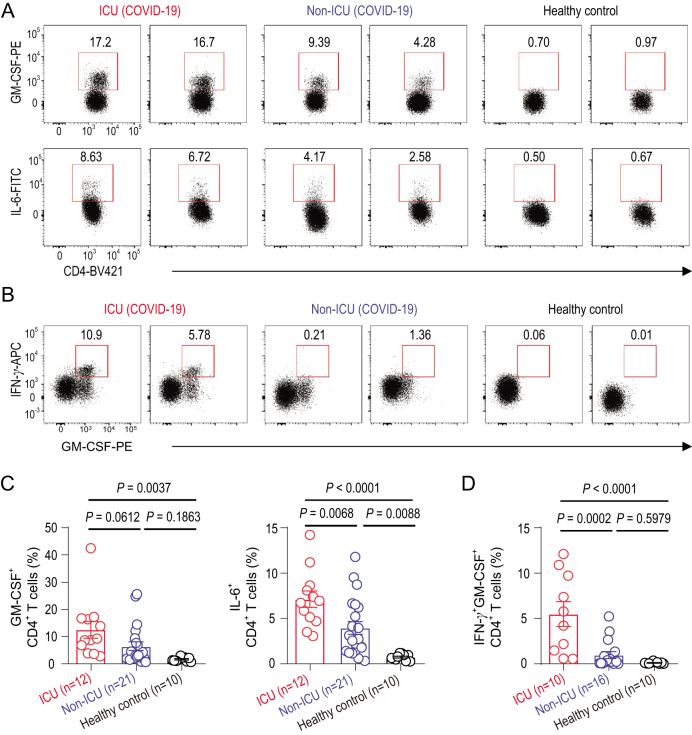
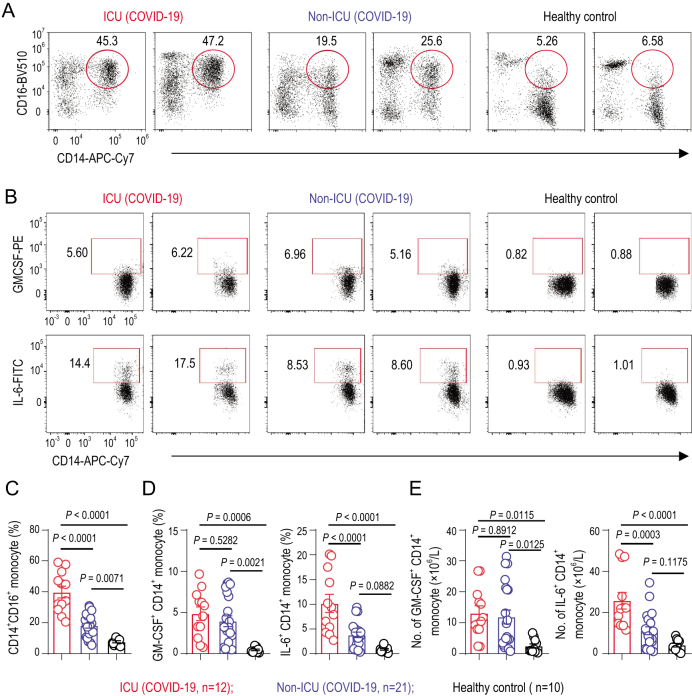
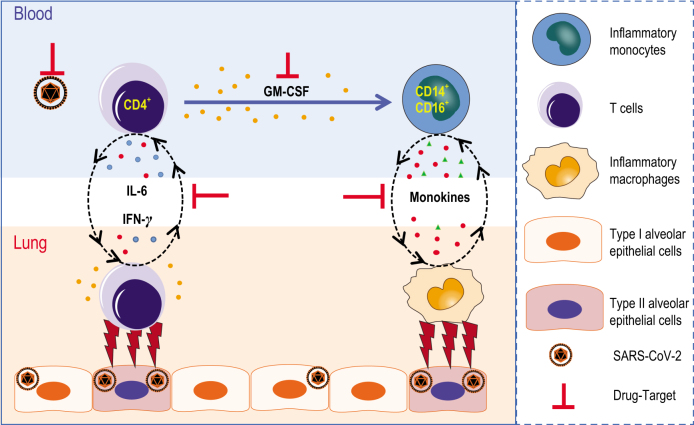
Pathogenic human coronavirus infections, such as severe acute respiratory syndrome CoV (SARS-CoV) and Middle East respiratory syndrome CoV (MERS-CoV), cause high morbidity and mortality [1,2]. Recently, a severe pneumonia-associated respiratory syndrome caused by a new coronavirus (SARS-CoV-2) was reported in December 2019 in the city of Wuhan, Hubei province, China [3–5], which was also named as pneumonia-associated respiratory syndrome (PARS) [6] and can cause coronavirus disease 2019 (COVID-19) to seriously endanger human health. Up to 24 February 2020, at least 77 779 cases had been reported, with 2666 fatal cases according to the report from China CDC. However, the immune mechanism that potentially orchestrates acute mortality from COVID-19 patients is still unknown. Here, we show that, after the SARS-CoV-2 infection, CD4+ T lymphocytes are rapidly activated to become pathogenic T helper (Th) 1 cells and generate GM-CSF, etc. The cytokine environment induces inflammatory CD14+CD16+ monocytes with a high expression of IL-6 and accelerates the inflammation. Given that a large number of inflammatory-cell infiltrations have been observed in lungs from severe COVID-19 patients [7,8], these aberrant pathogenic Th1 cells and inflammatory monocytes may enter the pulmonary circulation in huge numbers and play an immune-damaging role causing lung functional disability and quick mortality. Our results demonstrate that excessive non-effective host-immune responses by pathogenic T-cells and inflammatory monocytes may be associated with severe lung pathology. Thus, we suggest that monoclonal antibodies targeting GM-CSF or interleukin 6 may be effective in blocking inflammatory storms and, therefore, be a promising treatment for severe COVID-19 patients. Coronavirus, including SARS and MERS, has caused two large-scale pandemics in the last two decades [1,2]. Although viral evasion of host-immune responses and virus-induced cytopathic effects are believed to be critical in disease severity, studies from humans who died of SARS and animal models have suggested that an excessive and aberrant host-cytokine storm results in an exuberant immunopathology and lethal disease [9–11]. Inflammatory cytokine storm refers to the immune system gone awry and an excessive inflammatory response flaring out of control. Cytokine storms are associated with a wide variety of infectious and non-infectious diseases including graft-versus-host disease, autoimmune disease, severe virus infection, multiple organ dysfunction syndromes and chimeric antigen receptor (CAR) T-cell therapy [12,13]. It has been reported that, following SARS-CoV infection, dysregulated cytokine/chemokine responses and higher virus titers cause an inflammatory cytokine storm with lung immunopathological injury [12,14]. Such inflammation associated with the cytokine storm may begin at one local site but spread farther throughout the body via the systemic circulation [12,14]. Similarly, patients infected with SARS-CoV-2 who have been reported recently have had increased plasma concentrations of inflammation-related cytokines, including interleukins (IL) 2, 7 and 10, granulocyte-colony-stimulating factor (G-CSF), interferon-γ-inducible protein 10 (IP10), monocyte chemoattractant protein 1 (MCP1), macrophage inflammatory protein 1 alpha (MIP1A) and tumour necrosis factor α (TNF-α), especially in moribund patients [15]. Importantly, COVID-19 patients have developed characteristic pulmonary ground glass changes on imaging and peripheral lymphocytes decreasing [14,16,17]. More importantly, a large number of inflammatory immune-cell infiltrations were also found in a COVID-19 patient with pulmonary pathology [7,8]. These phenomena suggest that severe pulmonary inflammation and cytokine storm also exist in SARS-CoV-2 infection. At present, symptomatic treatments with organ support to moribund patients are the mainstays of clinical management [17]. It is urgent to identify the immunopathology mechanism to delay the pulmonary immune injury. In patients infected with SARS-CoV, it has been reported that the severity of pulmonary immune injury correlated with extensive infiltration of neutrophils and macrophages in the lungs [18,19], accompanied by increased numbers of neutrophils and monocytes and lower CD8+ and CD4+ T-cell counts in the peripheral blood samples [20–22]. To identify the immune characteristics of patients infected with SARS-CoV-2, peripheral blood samples from patients with severe pneumonia were collected for immune analysis. Consistently with previous clinical-characteristics reports [23], these hospitalized patients with confirmed SARS-CoV-2 infection involved in the First Affiliated Hospital of University of Science and Technology of China commonly have fever symptoms. Patients in intensive care units (ICUs) have significantly decreased concentrations of haemoglobin and albumin, but increased concentrations of C-reactive protein, alanine aminotransferase, asparta
Overview
The claims and statistics of this paper haven’t been checked yet.
Run the check — free, no account needed. It reads the open-access text and checks the sources it cites.
Integrity signals
Registry
Cites
Statistics
Figures
Verification
Claims the paper makes
The claims and statistics of this paper haven’t been checked yet.
Run the check — free, no account needed. It reads the open-access text and checks the sources it cites.
Claims other papers make about this one
Each is checked against this paper’s own text: does it say what the citing paper says it does?
The check wasn’t confident either way, so it gives no verdict — never disputed.
In the citing paper
“HLA-DR expression on monocytes from severe COVID-19 patients is also reduced relative to those from mild patients109,110,112,122.”
From SARS-CoV-2, COVID-19 and the aging immune system (2021) · cites this paper as [112]
Experimental — accuracy not yet measuredIn the citing paper
“SARS-CoV-2 infection elicits a Th1 CD4+ T cell response, with IFNγ and IL-2 being the primary cytokines produced by these cells and some TNFα production as well112,126-129.”
From SARS-CoV-2, COVID-19 and the aging immune system (2021) · cites this paper as [112]
Self-check
Percentages, sums and reported differences re-computed from the paper’s own numbers.
The self-check needs the paper’s full text.
Citations
Cites
Clinical features of patients infected with 2019 novel coronavirus in Wuhan, China
Huang, C., Wang, Y., Li, X., Ren, L., Zhao, J., Hu, Y., Zhang, L., Fan, G., Xu, J., Gu, X., et al. (2020) · The Lancet · doi:10.1016/s0140-6736(20)30183-5 · Cited by 48,884
Clinical characteristics of coronavirus disease 2019 in China
Guan, W.-J., Ni, Z.-Y., Hu, Y., Liang, W.-H., Ou, C.-Q., He, J.-X., Liu, L., Shan, H., Lei, C.-L., Hui, D. S. C., et al. (2020) · New England Journal of Medicine · doi:10.1056/nejmoa2002032 · Cited by 30,246
A pneumonia outbreak associated with a new coronavirus of probable bat origin
Zhou, P., Yang, X.-L., Wang, X.-G., Hu, B., Zhang, L., Zhang, W., Si, H.-R., Zhu, Y., Li, B., Huang, C.-L., et al. (2020) · Nature · doi:10.1038/s41586-020-2012-7 · Cited by 21,969
Self-citationWang, D., Hu, B., Hu, C., Zhu, F., Liu, X., Zhang, J., Wang, B., Xiang, H., Cheng, Z., Xiong, Y., et al. (2020) · JAMA · doi:10.1001/jama.2020.1585 · Cited by 20,148
Self-citationLa certeza de lo impredecible: Cultura Educación y Sociedad en tiempos de COVID19
Martínez González, M. (2020) · DSPACE System - Metalibrary (University of the Coast) · Cited by 18,463
Martínez–González, M. B. (2020) · DSPACE System - Metalibrary (University of the Coast) · Cited by 18,292
A new coronavirus associated with human respiratory disease in China
Wu, F., Zhao, S., Yu, B., Chen, Y.-M., Wang, W., Song, Z.-G., Hu, Y., Tao, Z.-W., Tian, J.-H., Pei, Y.-Y., et al. (2020) · Nature · doi:10.1038/s41586-020-2008-3 · Cited by 11,688
Pathological findings of COVID-19 associated with acute respiratory distress syndrome
Xu, Z., Shi, L., Wang, Y., Zhang, J., Huang, L., Zhang, C., Liu, S., Zhao, P., Liu, H., Zhu, L., et al. (2020) · The Lancet Respiratory Medicine · doi:10.1016/s2213-2600(20)30076-x · Cited by 8,545
A novel coronavirus outbreak of global health concern
Wang, C., Horby, P. W., Hayden, F. G., & Gao, G. F. (2020) · The Lancet · doi:10.1016/s0140-6736(20)30185-9 · Cited by 7,700
Identification of a novel coronavirus in patients with severe acute respiratory syndrome
Drosten, C., Günther, S., Preiser, W., van der Werf, S., Brodt, H.-R., Becker, S., Rabenau, H., Panning, M., Kolesnikova, L., Fouchier, R. A. M., et al. (2003) · New England Journal of Medicine · doi:10.1056/nejmoa030747 · Cited by 4,574
Research works printed but not linked: 3
- Tian, 2020, J Thorac Oncol
- Li, 2020, J Med Virol, 92
- Wang, 2020, JAMA, 323
Cited by
Sorted by citations
Items 201–300 of 1,000
Zheng, C. Y., Kar, I., Chen, C. K., Sau, C., Woodson, S., Serra, A., & Abboud, H. (2020) · CNS Drugs · doi:10.1007/s40263-020-00756-y · Cited by 99
Remdesivir in Coronavirus Disease 2019 (COVID-19) treatment: a review of evidence
Lin, H., Cho, S., Aravamudan, V. M., Sanda, H., Palraj, R., Molton, J. S., & Venkatachalam, I. (2021) · Infection · doi:10.1007/s15010-020-01557-7 · Cited by 101
Pormohammad, A., Ghorbani, S., Khatami, A., Farzi, R., Baradaran, B., Turner, D., Turner, R. J., Bahr, N. C., & Idrovo, J. (2020) · Reviews in Medical Virology · doi:10.1002/rmv.2112 · Cited by 100
Imperfect storm: is interleukin-33 the Achilles heel of COVID-19?
Zizzo, G., & Cohen, P. L. (2020) · The Lancet Rheumatology · doi:10.1016/s2665-9913(20)30340-4 · Cited by 99
Distinctive features of SARS-CoV-2-specific T cells predict recovery from severe COVID-19
Neidleman, J. A., Luo, X., George, A. F., McGregor, M. M., Yang, J., Yun, C., Murray, V., Gill, G., Greene, W. C., Vasquez, J., et al. (2021) · Cell Reports · doi:10.1016/j.celrep.2021.109414 · Cited by 97
Treatment Considerations for COVID-19
Vijayvargiya, P., Garrigos, Z. E., Almeida, N. E. C., Gurram, P. R., Stevens, R. W., & Razonable, R. R. (2020) · Mayo Clinic Proceedings · doi:10.1016/j.mayocp.2020.04.027 · Cited by 94
Shi, H., Wang, W., Yin, J., Ouyang, Y., Pang, L., Feng, Y., Qiao, L., Guo, X., Shi, H., Jin, R., et al. (2020) · Cell Death and Disease · doi:10.1038/s41419-020-2636-4 · Cited by 93
Alunno, A., Carubbi, F., & Rodríguez‐Carrio, J. (2020) · RMD Open · doi:10.1136/rmdopen-2020-001295 · Cited by 93
Inhibition of cytokine signaling by ruxolitinib and implications for COVID-19 treatment
Yeleswaram, S., Smith, P. A., Burn, T. C., Covington, M. B., Juvekar, A., Li, Y., Squier, P., & Langmuir, P. B. (2020) · Clinical Immunology · doi:10.1016/j.clim.2020.108517 · Cited by 93
Conte, L., & Toraldo, D. M. (2020) · Therapeutic Advances in Respiratory Disease · doi:10.1177/1753466620937170 · Cited by 96
Immunobiology and immunotherapy of COVID‐19: A clinically updated overview
Esmaeilzadeh, A., & Elahi, R. (2020) · Journal of Cellular Physiology · doi:10.1002/jcp.30076 · Cited by 94
Nucleic Acid Vaccines for COVID-19: A Paradigm Shift in the Vaccine Development Arena
Chavda, V. P., Hossain, M. M. M., Beladiya, J., & Apostolopoulos, V. (2021) · Biologics · doi:10.3390/biologics1030020 · Cited by 92
Du, F., Liu, B., & Zhang, S. (2020) · Journal of Thrombosis and Thrombolysis · doi:10.1007/s11239-020-02224-2 · Cited by 92
Huang, H., Cai, S., Li, Y., Li, Y., Fan, Y., Li, L., Lei, C., Tang, X., Hu, F., Li, F., et al. (2020) · Frontiers in Medicine · doi:10.3389/fmed.2020.557453 · Cited by 91
Aging, inflammaging and immunosenescence as risk factors of severe COVID-19
Tizazu, A. M., Mengist, H. M., & Demeke, G. (2022) · Immunity & Ageing · doi:10.1186/s12979-022-00309-5 · Cited by 96
Arnaldez, F. I., O'Day, S. J., Drake, C. G., Fox, B. A., Fu, B., Urba, W. J., Montesarchio, V., Weber, J. S., Wei, H., Wigginton, J. M., et al. (2020) · Journal for ImmunoTherapy of Cancer · doi:10.1136/jitc-2020-000930 · Cited by 92
Self-citationElhabyan, A., Elhabyan, A., Sanad, E., Abukhadra, A., Elhabyan, A., & Dinu, V. (2020) · Virus Research · doi:10.1016/j.virusres.2020.198163 · Cited by 90
COVID‐19 and hematology findings based on the current evidences: A puzzle with many missing pieces
Karimi‐Shahri, M., Niazkar, H. R., & Rad, F. (2020) · International Journal of Laboratory Hematology · doi:10.1111/ijlh.13412 · Cited by 90
Dysregulated adaptive immune response contributes to severe COVID-19
Yu, K., 吴永坚, He, J., Liu, X., Wei, B., Wen, W., Wen, X., Xu, W., Dong, X., Yan, Y., et al. (2020) · Cell Research · doi:10.1038/s41422-020-0391-9 · Cited by 89
Role of indoor aerosols for COVID-19 viral transmission: a review
Chen, B., Jia, P., & Han, J. (2021) · Environmental Chemistry Letters · doi:10.1007/s10311-020-01174-8 · Cited by 91
Rivera‐Izquierdo, M., Valero-Ubierna, M. D. C., R-delAmo, J. L., Fernández-García, M. Á., Martínez-Diz, S., Tahery-Mahmoud, A., Rodríguez-Camacho, M., Gámiz-Molina, A. B., Gyengo, N. B., Gámez-Baeza, P., et al. (2020) · PLoS ONE · doi:10.1371/journal.pone.0235107 · Cited by 89
Immunology, immunopathogenesis and immunotherapeutics of COVID-19; an overview
Khosroshahi, L. M., Rokni, M., Mokhtari, T., & Noorbakhsh, F. (2021) · International Immunopharmacology · doi:10.1016/j.intimp.2020.107364 · Cited by 90
Immunomodulatory Effects of Azithromycin Revisited: Potential Applications to COVID-19
Venditto, V. J., Haydar, D., Abdel‐Latif, A., Gensel, J. C., Anstead, M., Pitts, M. G., Creameans, J. W., Kopper, T. J., Peng, C., & Feola, D. J. (2021) · Frontiers in Immunology · doi:10.3389/fimmu.2021.574425 · Cited by 90
Hu, S., Jiang, S., Xiang, Q., Bai, R., Ye, X., & Xie, T. (2021) · Drug Development Research · doi:10.1002/ddr.21895 · Cited by 86
Won, T., Wood, M. K., Hughes, D. M., Talor, M. V., Ma, Z., Schneider, J., SKINNER, J. T., Asady, B., Goerlich, E., Halushka, M. K., et al. (2022) · EBioMedicine · doi:10.1016/j.ebiom.2022.103812 · Cited by 89
Fahlberg, M. D., Blair, R. V., Doyle‐Meyers, L. A., Midkiff, C. C., Zenere, G., Russell‐Lodrigue, K., Monjure, C. J., Haupt, E., Penney, T., Lehmicke, G., et al. (2020) · Nature Communications · doi:10.1038/s41467-020-19967-4 · Cited by 85
How Does COVID-19 Affect the Neurobiology of Suicide?
Conejero, I., Nobile, B., Olié, É., & Courtet, P. (2021) · Current Psychiatry Reports · doi:10.1007/s11920-021-01227-x · Cited by 86
Rowaiye, A. B., Okpalefe, O. A., Onuh, O. A., Ogidigo, J. O., Oladipo, O. H., Ogu, A. C., Oli, A. N., Olofinsae, S. A., Onyekwere, O., Abubakar, A. R., et al. (2021) · Journal of Inflammation Research · doi:10.2147/jir.s301784 · Cited by 87
Li, D., Chen, Y., Liu, H. S., Jia, Y., Li, F., Wang, W., Wu, J., Wan, Z., Cao, Y., & Zeng, R. (2020) · Signal Transduction and Targeted Therapy · doi:10.1038/s41392-020-0163-5 · Cited by 84
A Comprehensive Review of Tocilizumab in COVID‐19 Acute Respiratory Distress Syndrome
Khiali, S., Khani, E., & Entezari‐Maleki, T. (2020) · The Journal of Clinical Pharmacology · doi:10.1002/jcph.1693 · Cited by 87
An Effective COVID-19 Vaccine Needs to Engage T Cells
Sauer, K., & Harris, T. (2020) · Frontiers in Immunology · doi:10.3389/fimmu.2020.581807 · Cited by 85
Alosaimi, B., Mubarak, A., Hamed, M. E., Almutairi, A. Z., Alrashed, A. A., AlJuryyan, A., Enani, M. A., Alenzi, F. Q., & Alturaiki, W. (2021) · Frontiers in Immunology · doi:10.3389/fimmu.2021.668725 · Cited by 87
SARS-CoV-2 Targets by the pscRNA Profiling of ACE2, TMPRSS2 and Furin Proteases
Zhou, L., Niu, Z., Jiang, X., Zhang, Z., Zheng, Y. Y., Wang, Z., Zhu, Y., Gao, L., Huang, H., Wang, X., et al. (2020) · iScience · doi:10.1016/j.isci.2020.101744 · Cited by 89
SARS-CoV-2 infection: The role of PD-1/PD-L1 and CTLA-4 axis
Aghbash, P. S., Eslami, N., Shamekh, A., Entezari‐Maleki, T., & Baghi, H. B. (2021) · Life Sciences · doi:10.1016/j.lfs.2021.119124 · Cited by 84
Chen, P., Wu, M., He, Y., Jiang, B., & He, M. (2023) · Signal Transduction and Targeted Therapy · doi:10.1038/s41392-023-01510-8 · Cited by 89
Increased IL‐10‐producing regulatory T cells are characteristic of severe cases of COVID‐19
Neumann, J., Prezzemolo, T., Vanderbeke, L., Roca, C. P., Gerbaux, M., Janssens, S., Willemsen, M., Burton, O. T., Mol, P. V., Herck, Y. V., et al. (2020) · Clinical & Translational Immunology · doi:10.1002/cti2.1204 · Cited by 84
Do an Altered Gut Microbiota and an Associated Leaky Gut Affect COVID-19 Severity?
Kim, H. S. (2021) · mBio · doi:10.1128/mbio.03022-20 · Cited by 86
Rathore, S. S., Rojas, G. A., Sondhi, M., Pothuru, S., Pydi, R., Kancherla, N., Singh, R., Ahmed, N. K., Shah, J., Tousif, S., et al. (2021) · International Journal of Clinical Practice · doi:10.1111/ijcp.14470 · Cited by 83
Ning, Q., Wu, D., Wang, X., Xi, D., Chen, T., Chen, G., Wang, H., Lü, H., Wang, M., Zhu, L., et al. (2022) · Signal Transduction and Targeted Therapy · doi:10.1038/s41392-022-00907-1 · Cited by 86
Naqvi, I. A., Giroux, N. S., Olson, L. B., Morrison, S. A., Llanga, T., Akinade, T., Zhu, Y., Zhong, Y., Bose, S., Arvai, S., et al. (2022) · Biomaterials · doi:10.1016/j.biomaterials.2022.121393 · Cited by 83
Immunogenic and reactogenic efficacy of Covaxin and Covishield: a comparative review
Das, S., Kar, S. S., Samanta, S., Banerjee, J., Giri, B., & Dash, S. K. (2022) · Immunologic Research · doi:10.1007/s12026-022-09265-0 · Cited by 82
Dharra, R., Sharma, A. K., & Datta, S. (2023) · Cytokine · doi:10.1016/j.cyto.2023.156287 · Cited by 82
Cardiovascular Manifestations and Mechanisms in Patients with COVID-19
Dou, Q., Wei, X. C., Zhou, K., Yang, S., & Jia, P. (2020) · Trends in Endocrinology and Metabolism · doi:10.1016/j.tem.2020.10.001 · Cited by 82
Allenbach, Y., Saadoun, D., Maalouf, G., Vieira, M., Hellio, A., Boddaert, J., Gros, H. L., Salem, J., Resche‐Rigon, M., Cherifa, M., et al. (2020) · PLoS ONE · doi:10.1371/journal.pone.0240711 · Cited by 79
Hematopoietic responses to SARS-CoV-2 infection
Elahi, S. (2022) · Cellular and Molecular Life Sciences · doi:10.1007/s00018-022-04220-6 · Cited by 79
Immunotherapeutic approaches to curtail COVID-19
Owji, H., Negahdaripour, M., & Hajighahramani, N. (2020) · International Immunopharmacology · doi:10.1016/j.intimp.2020.106924 · Cited by 79
Immunotherapy of COVID-19: Inside and Beyond IL-6 Signalling
Zizzo, G., Tamburello, A., Castelnovo, L., Laria, A., Mumoli, N., Faggioli, P. M., Stefani, I., & Mazzone, A. (2022) · Frontiers in Immunology · doi:10.3389/fimmu.2022.795315 · Cited by 78
Wang, D., Fu, B., Peng, Z., Yang, D., Han, M., Li, M., Yang, Y., Yang, T., Sun, L., Li, W., et al. (2021) · Frontiers of Medicine · doi:10.1007/s11684-020-0824-3 · Cited by 77
Self-citationde Cevins, C., Luka, M., Smith, N., Meynier, S., Magérus, A., Carbone, F., García-Paredes, V., Barnabei, L., Batignes, M., Boullé, A., et al. (2021) · Med · doi:10.1016/j.medj.2021.08.002 · Cited by 81
Herbal Remedies, Nutraceuticals, and Dietary Supplements for COVID-19 Management: An Update
Chavda, V. P., Patel, A., Vihol, D. R., Vaghasiya, D. D., Ahmed, K. M. S. B., Trivedi, K. U., & Dave, D. J. (2022) · Clinical Complementary Medicine and Pharmacology · doi:10.1016/j.ccmp.2022.100021 · Cited by 79
Qudus, M. S., Tian, M., Sirajuddin, S., Liu, S., Afaq, U., Wali, M., Liu, J., Pan, P., Luo, Z., Zhang, Q., et al. (2023) · Journal of Medical Virology · doi:10.1002/jmv.28751 · Cited by 84
Potential therapeutic targets and promising drugs for combating SARS‐CoV‐2
Zhou, H., Fang, Y., Xu, T., Ni, W., Shen, A., & Meng, X. (2020) · British Journal of Pharmacology · doi:10.1111/bph.15092 · Cited by 78
Pan, W. D., Zhang, J., Wang, M., Ye, J., Xu, Y. Q., Shen, B., He, H., Wang, Z., Ye, D., Zhao, M., et al. (2020) · Hypertension · doi:10.1161/hypertensionaha.120.15289 · Cited by 78
Risk factors for severe COVID-19: Evidence from 167 hospitalized patients in Anhui, China
Wei, Y.-Y., Wang, R.-R., Zhang, D., Tu, Y.-H., Chen, C.-S., Ji, S., Li, C.-X., Li, X.-Y., Zhou, M.-X., Cao, W.-S., et al. (2020) · Journal of Infection · doi:10.1016/j.jinf.2020.04.010 · Cited by 76
Regulatory T cells in COVID-19
Wang, H., Wang, Z., Cao, W., Wu, Q., Yuan, Y., & Zhang, X. (2021) · Aging and Disease · doi:10.14336/ad.2021.0709 · Cited by 77
COVID‐19‐induced endotheliitis: emerging evidence and possible therapeutic strategies
Calabretta, E., Moraleda, J. M., Iacobelli, M., Jara, R., Vlodavsky, I., O’Gorman, P., Pagliuca, A., Mo, C. C., Baron, R. M., Aghemo, A., et al. (2021) · British Journal of Haematology · doi:10.1111/bjh.17240 · Cited by 75
Capturing Cytokines with Advanced Materials: A Potential Strategy to Tackle COVID‐19 Cytokine Storm
Meng, Q., Tian, R., Long, H., Wu, X., Lai, J., Zharkova, O., Wang, J., Chen, X. S., & Rao, L. (2021) · Advanced Materials · doi:10.1002/adma.202100012 · Cited by 75
Cellular Immune Response to COVID-19 and Potential Immune Modulators
Zhou, X. K., & Ye, Q. (2021) · Frontiers in Immunology · doi:10.3389/fimmu.2021.646333 · Cited by 77
Inflammation, Immunity and Immunogenetics in COVID-19: A Narrative Review
Lingeswaran, M., Goyal, T., Ghosh, R., Suri, S., Mitra, P., Misra, S., & Sharma, P. (2020) · Indian Journal of Clinical Biochemistry · doi:10.1007/s12291-020-00897-3 · Cited by 78
Masiá, M., Fernández‐González, M., Padilla, S., Ortega, P., García, J. A., Agulló, V., García‐Abellán, J., Telenti, G., Guillén, L., & Gutiérrez, F. (2020) · EBioMedicine · doi:10.1016/j.ebiom.2020.102999 · Cited by 74
The dysregulated innate immune response in severe COVID-19 pneumonia that could drive poorer outcome
Blot, M., Bour, J., Quenot, J., Bourredjem, A., Nguyen, M., Guy, J., Monier, S., Georges, M., Large, A., Dargent, A., et al. (2020) · Journal of Translational Medicine · doi:10.1186/s12967-020-02646-9 · Cited by 75
White Blood Cells and Severe COVID-19: A Mendelian Randomization Study
Sun, Y., Zhou, J., & Ye, K. (2021) · Journal of Personalized Medicine · doi:10.3390/jpm11030195 · Cited by 73
Role of Gut Microbiome in COVID-19: An Insight Into Pathogenesis and Therapeutic Potential
Hussain, I., Cher, G. L. Y., Abid, M. A., & Abid, M. B. (2021) · Frontiers in Immunology · doi:10.3389/fimmu.2021.765965 · Cited by 75
Wang, Y., Zheng, J., Islam, M. S., Yang, Y., Hu, Y., & Chen, X. (2021) · International Journal of Biological Sciences · doi:10.7150/ijbs.59534 · Cited by 71
Daily Viral Kinetics and Innate and Adaptive Immune Response Assessment in COVID-19: a Case Series
Vetter, P., Eberhardt, C. S., Meyer, B., Martinez-Murillo, P., Torriani, G., Pigny, F., Lemeille, S., Cordey, S., Laubscher, F., Vu, D., et al. (2020) · mSphere · doi:10.1128/msphere.00827-20 · Cited by 72
Liu, J., Yang, X., Wang, H., Li, Z., Deng, H., Liu, J., Xiong, S., He, J., Guo, C., Wang, W., et al. (2021) · mBio · doi:10.1128/mbio.00085-21 · Cited by 71
Self-citationDewanjee, S., Kandimalla, R. J. L., Kalra, R. S., Valupadas, C., Vallamkondu, J., Kolli, V., Ray, S. D., Reddy, A. P., & Reddy, P. H. (2021) · Cells · doi:10.3390/cells10123291 · Cited by 70
Complement cascade in severe forms of COVID‐19: Recent advances in therapy
Benmansour, N. C., Carvelli, J., & Vivier, É. (2021) · European Journal of Immunology · doi:10.1002/eji.202048959 · Cited by 69
RETRACTED: Interleukin-6 in SARS-CoV-2 induced disease: Interactions and therapeutic applications
Majidpoor, J., & Mortezaee, K. (2021) · Biomedicine & Pharmacotherapy · doi:10.1016/j.biopha.2021.112419 · Cited by 71
RetractedA Review on SARS-CoV-2 Virology, Pathophysiology, Animal Models, and Anti-Viral Interventions
Neerukonda, S. N., & Katneni, U. (2020) · Pathogens · doi:10.3390/pathogens9060426 · Cited by 70
Herrmann, M., Schulte, S., Wildner, N. H., Wittner, M., Brehm, T. T., Ramharter, M., Woost, R., Lohse, A. W., Jacobs, T., & Wiesch, J. S. Z. (2020) · Frontiers in Immunology · doi:10.3389/fimmu.2020.01870 · Cited by 68
Nutritional Risk Screening Tools for Older Adults with COVID-19: A Systematic Review
Silva, D. F. O., Lima, S. C. V. C., Sena‐Evangelista, K. C. M., Marchioni, D. M. L., Cobucci, R. N., & de Andrade, F. B. (2020) · Nutrients · doi:10.3390/nu12102956 · Cited by 71
Cremer, P. C., Abbate, A., Hudock, K. M., McWilliams, C. S., Mehta, J. P., Chang, S. Y., Sheng, C. C., Tassell, B. W. V., Bonaventura, A., Vecchié, A., et al. (2021) · The Lancet Rheumatology · doi:10.1016/s2665-9913(21)00070-9 · Cited by 68
Temesgen, Z., Burger, C. D., Baker, J., Polk, C. M., Libertin, C. R., Kelley, C. F., Marconi, V. C., Orenstein, R., Catterson, V. M., Aronstein, W. S., et al. (2021) · The Lancet Respiratory Medicine · doi:10.1016/s2213-2600(21)00494-x · Cited by 70
Kiss, S., Gede, N., Hegyi, P. J., Németh, D. I., Földi, M., Dembrovszky, F., Nagy, B., Juhász, M. F., Ocskay, K., Zádori, N., et al. (2020) · Medical Microbiology and Immunology · doi:10.1007/s00430-020-00696-w · Cited by 67
Petrina, M., Martin, J., & Basta, S. (2021) · Cytokine & Growth Factor Reviews · doi:10.1016/j.cytogfr.2021.01.001 · Cited by 67
Crisafulli, S., Isgrò, V., Corte, L. L., Atzeni, F., & Trifirò, G. (2020) · BioDrugs · doi:10.1007/s40259-020-00430-1 · Cited by 67
Inflammation: A bridge between diabetes and COVID-19, and possible management with sitagliptin
Mozafari, N., Azadi, S., Mehdi-Alamdarlou, S., Ashrafi, H., & Azadi, A. (2020) · Medical Hypotheses · doi:10.1016/j.mehy.2020.110111 · Cited by 66
Mesenchymal stem cell treatment for COVID-19
Xu, R., Feng, Z., & Wang, F. (2022) · EBioMedicine · doi:10.1016/j.ebiom.2022.103920 · Cited by 66
Argano, C., Bocchio, R. M., Natoli, G., Scibetta, S., Monaco, M. L., & Corrao, S. (2023) · Pharmaceuticals · doi:10.3390/ph16010130 · Cited by 67
RetractedAutophagy as an emerging target for COVID-19: lessons from an old friend, chloroquine
Bonam, S. R., Muller, S., Bayry, J., & Klionsky, D. J. (2020) · Autophagy · doi:10.1080/15548627.2020.1779467 · Cited by 68
Welcome, M. O., & Mastorakis, N. E. (2021) · Inflammopharmacology · doi:10.1007/s10787-021-00806-x · Cited by 66
Platelets and SARS-CoV-2 During COVID-19: Immunity, Thrombosis, and Beyond
Sciaudone, A. R., Corkrey, H. A., Humphries, F., & Koupenova, M. (2023) · Circulation Research · doi:10.1161/circresaha.122.321930 · Cited by 68
Preceding infection and risk of stroke: An old concept revived by the COVID-19 pandemic
South, K., McCulloch, L. J., McColl, B. W., Elkind, M. S. V., Allan, S. M., & Smith, C. J. (2020) · International Journal of Stroke · doi:10.1177/1747493020943815 · Cited by 64
Pathogenetic profiling of COVID-19 and SARS-like viruses
Nain, Z., Rana, H. K., Lió, P., Islam, S. M. S., Summers, M. A., & Moni, M. A. (2020) · Briefings in Bioinformatics · doi:10.1093/bib/bbaa173 · Cited by 64
Wildner, N. H., Ahmadi, P., Schulte, S., Brauneck, F., Kohsar, M., Lütgehetmann, M., Beisel, C., Addo, M. M., Haag, F., & Wiesch, J. S. Z. (2020) · Journal of Leukocyte Biology · doi:10.1002/jlb.5cova0620-370rr · Cited by 64
Hematologic changes predict clinical outcome in recovered patients with COVID-19
Mao, J., Dai, R., Du, R., Zhu, Y., Shui, L., & Luo, X. (2021) · Annals of Hematology · doi:10.1007/s00277-021-04426-x · Cited by 65
Головкин, А. С., Kalinina, O., Bezrukikh, V. A., Aquino, A. D., Zaikova, E. K., Karonova, T. L., Melnik, O., Vasilieva, E., & Kudryavtsev, I. V. (2021) · Viruses · doi:10.3390/v13101966 · Cited by 64
Preventing Mortality in COVID-19 Patients: Which Cytokine to Target in a Raging Storm?
Lu, L., Zhang, H., Zhan, M., Jiang, J., Yin, H., Dauphars, D. J., Li, S.-Y., Li, Y., & He, Y.-W. (2020) · Frontiers in Cell and Developmental Biology · doi:10.3389/fcell.2020.00677 · Cited by 67
A systematic meta‐analysis of immune signatures in patients with COVID‐19
Liu, K., Yang, T., Peng, X., Lv, S., Ye, X., Zhao, T., Li, J., Shao, Z., Lu, Q., Li, J., et al. (2020) · Reviews in Medical Virology · doi:10.1002/rmv.2195 · Cited by 66
Taghavi-Farahabadi, M., Mahmoudi, M., Soudi, S., & Hashemi, S. M. (2020) · Medical Hypotheses · doi:10.1016/j.mehy.2020.109865 · Cited by 62
Waris, A., Din, M., Khalid, A., Lail, R. A., Shaheen, A., Khan, N., Nawaz, M., Baset, A., Ahmad, I., & Ali, M. (2021) · Journal of Clinical Laboratory Analysis · doi:10.1002/jcla.23809 · Cited by 62
Batur, L. K., & Hekim, N. (2021) · Journal of Medical Virology · doi:10.1002/jmv.27127 · Cited by 62
Immunosenescence and inflamm-ageing in COVID-19
Zinatizadeh, M. R., Zarandi, P. K., Ghiasi, M., Kooshki, H., Mohammadi, M., Amani, J., & Rezaei, N. (2022) · Ageing Research Reviews · doi:10.1016/j.arr.2022.101818 · Cited by 69
Immune responses in mildly versus critically ill COVID-19 patients
Nasrollahi, H., Talepoor, A. G., Saleh, Z., Vakili, M. E., Heydarinezhad, P., Karami, N., Noroozi, M., Meri, S., & Kalantar, K. (2023) · Frontiers in Immunology · doi:10.3389/fimmu.2023.1077236 · Cited by 63
GM-CSF: Master regulator of the T cell-phagocyte interface during inflammation
Ingelfinger, F., De Feo, D., & Becher, B. (2021) · Seminars in Immunology · doi:10.1016/j.smim.2021.101518 · Cited by 61
Quartuccio, L., Fabris, M., Sonaglia, A., Peghin, M., Domenis, R., Cifù, A., Curcio, F., & Tascini, C. (2021) · Cytokine · doi:10.1016/j.cyto.2021.155438 · Cited by 60
COVID-19: Immunology, Immunopathogenesis and Potential Therapies
Bhardwaj, A., Sapra, L., Saini, C., Azam, Z., Mishra, P. K., Verma, B., Mishra, G. C., & Srivastava, R. K. (2021) · International Reviews of Immunology · doi:10.1080/08830185.2021.1883600 · Cited by 65
Jing, Y., Luo, L., Chen, Y., Westerberg, L. S., Zhou, P., Xu, Z. P., Herrada, A. A., Park, C.-S., Kubo, M., Mei, H., et al. (2021) · Signal Transduction and Targeted Therapy · doi:10.1038/s41392-021-00749-3 · Cited by 61
Host Recovery from Respiratory Viral Infection
Wei, X., Narasimhan, H., Zhu, B., & Sun, J. (2023) · Annual Review of Immunology · doi:10.1146/annurev-immunol-101921-040450 · Cited by 63
Metadata
- Authors
- Zhou, Y., Fu, B., Zheng, X., Wang, D., Zhao, C., Qi, Y., Sun, R., Tian, Z., Xu, X., & Wei, H.
- Affiliations
- University of Science and Technology of China (CN)
- Corresponding author
- Xu, Xiaoling
- Wei, Haiming
- ORCID
- Venue
- National Science Review
- Publisher
- Oxford University Press (OUP)
- Published
- 2020-03-13
- Volume
- 7
- Issue
- 6
- Pages
- 998-1002
- ISSN
- 2053-714X (ISSN-L)
- 2095-5138
- PMC
- PMC7108005
- OpenAlex
- W3011230498
- Cited by
- 1,295
- References
- 36
- Citations by year
- 2026: 14 · 2025: 48 · 2024: 78 · 2023: 131 · 2022: 201 · 2021: 392 · 2020: 431
- FWCI
- 37.89
- Type
- journal article
- Language
- en
- Open access
- gold
- doi.org
- Licence
- Locations
- National Science Review (publishedVersion, cc-by)
- bioRxiv (Cold Spring Harbor Laboratory) (acceptedVersion)
- Europe PMC (PubMed Central) (publishedVersion, cc-by)
- PubMed Central (publishedVersion, cc-by)
- PubMed (publishedVersion)
- Funders
- China National Center for Biotechnology Development (2020YFC0843800)
- Natural Science Foundation of China (81788101, 81922028)
- Youth Innovation Promotion Association of Chinese Academy of Sciences (2019442)
- Topics
- Health Sciences › Medicine › Infectious Diseases › COVID-19 Clinical Research Studies
- Health Sciences › Medicine › Infectious Diseases › SARS-CoV-2 and COVID-19 Research
- Life Sciences › Immunology and Microbiology › Immunology › Inflammation biomarkers and pathways
- Keywords
- COVID-19 pandemic, SARS-CoV-2, CD4+ T cells, inflammatory monocytes, CD14+CD16+ monocytes, interleukin-6, GM-CSF, cytokine storm, lung inflammation, immunopathology, monoclonal antibodies, IL-6 inhibition, severe pneumonia
About these checks
Registry, retraction, Cites and statistics results are computed, not judged, with one exception: a printed reference that no index lists is read once by a model before it counts as a citation error. Claims are extracted by a model and kept only when their quote appears verbatim in the text; each cited source is then checked, with a model’s help, for whether it says what the claim relies on. Those verdicts can be wrong — read the claim’s quote and the cited source before relying on one.
Statistics and arithmetic are recomputed, not judged.
Confidence bands are shown only for fields calibrated on our annotated test set. None is calibrated yet, so no band is shown.
What counts as a claim ›How we measure confidence ›How we check this ›
Are you an author, or do you see a problem with this page? Request a review
