

The DOI matches its Crossref record; 37 of the 37 references it cites were found in a registry or an index.
Pathogenic T-cells and inflammatory monocytes incite inflammatory storms in severe COVID-19 patients
Open accessPublished version of a preprint
Abstract
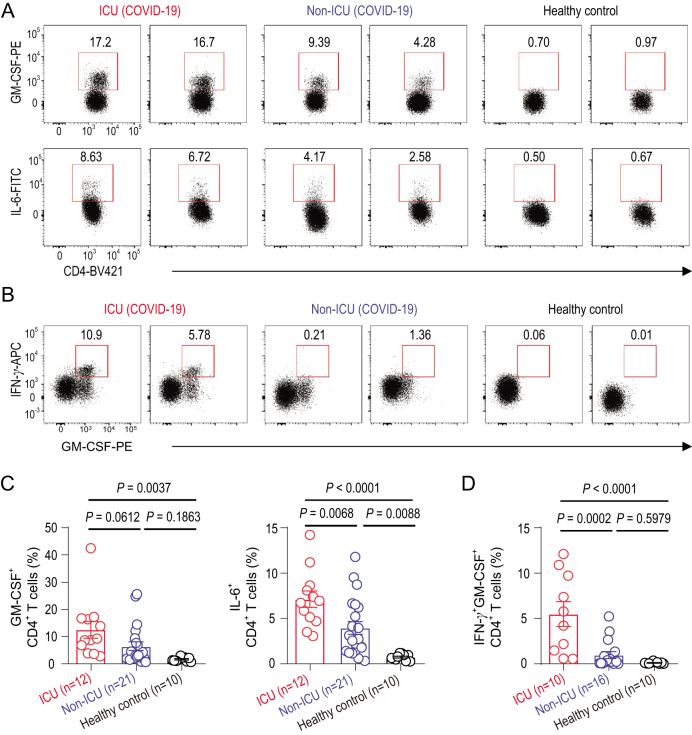
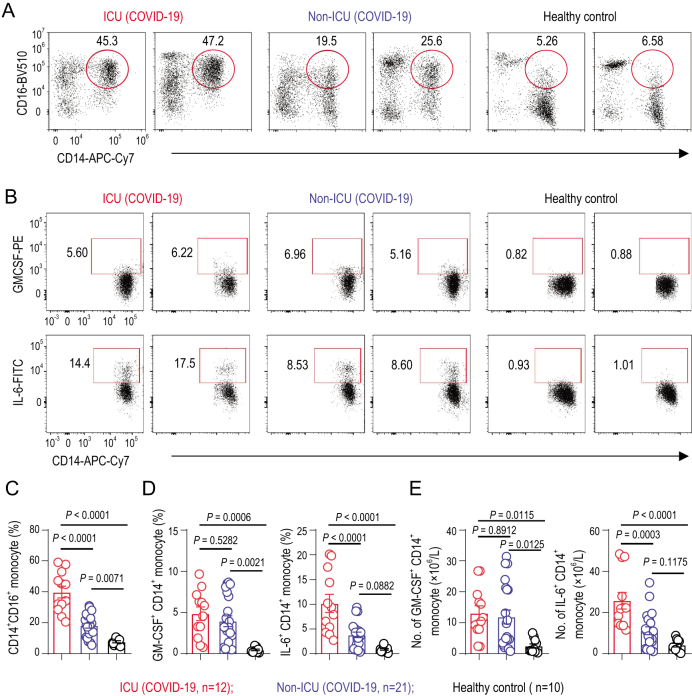
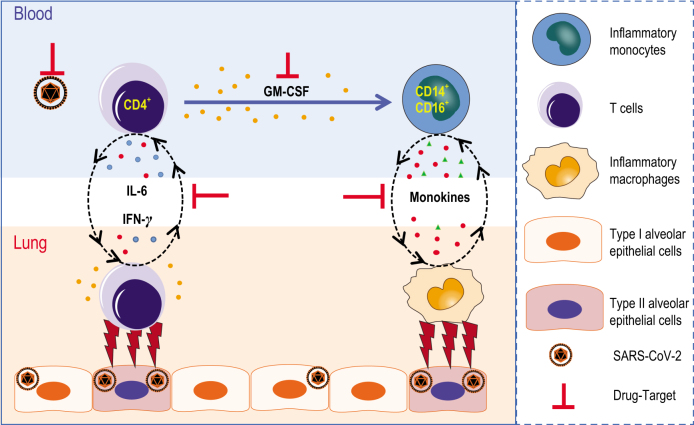
Pathogenic human coronavirus infections, such as severe acute respiratory syndrome CoV (SARS-CoV) and Middle East respiratory syndrome CoV (MERS-CoV), cause high morbidity and mortality [1,2]. Recently, a severe pneumonia-associated respiratory syndrome caused by a new coronavirus (SARS-CoV-2) was reported in December 2019 in the city of Wuhan, Hubei province, China [3–5], which was also named as pneumonia-associated respiratory syndrome (PARS) [6] and can cause coronavirus disease 2019 (COVID-19) to seriously endanger human health. Up to 24 February 2020, at least 77 779 cases had been reported, with 2666 fatal cases according to the report from China CDC. However, the immune mechanism that potentially orchestrates acute mortality from COVID-19 patients is still unknown. Here, we show that, after the SARS-CoV-2 infection, CD4+ T lymphocytes are rapidly activated to become pathogenic T helper (Th) 1 cells and generate GM-CSF, etc. The cytokine environment induces inflammatory CD14+CD16+ monocytes with a high expression of IL-6 and accelerates the inflammation. Given that a large number of inflammatory-cell infiltrations have been observed in lungs from severe COVID-19 patients [7,8], these aberrant pathogenic Th1 cells and inflammatory monocytes may enter the pulmonary circulation in huge numbers and play an immune-damaging role causing lung functional disability and quick mortality. Our results demonstrate that excessive non-effective host-immune responses by pathogenic T-cells and inflammatory monocytes may be associated with severe lung pathology. Thus, we suggest that monoclonal antibodies targeting GM-CSF or interleukin 6 may be effective in blocking inflammatory storms and, therefore, be a promising treatment for severe COVID-19 patients. Coronavirus, including SARS and MERS, has caused two large-scale pandemics in the last two decades [1,2]. Although viral evasion of host-immune responses and virus-induced cytopathic effects are believed to be critical in disease severity, studies from humans who died of SARS and animal models have suggested that an excessive and aberrant host-cytokine storm results in an exuberant immunopathology and lethal disease [9–11]. Inflammatory cytokine storm refers to the immune system gone awry and an excessive inflammatory response flaring out of control. Cytokine storms are associated with a wide variety of infectious and non-infectious diseases including graft-versus-host disease, autoimmune disease, severe virus infection, multiple organ dysfunction syndromes and chimeric antigen receptor (CAR) T-cell therapy [12,13]. It has been reported that, following SARS-CoV infection, dysregulated cytokine/chemokine responses and higher virus titers cause an inflammatory cytokine storm with lung immunopathological injury [12,14]. Such inflammation associated with the cytokine storm may begin at one local site but spread farther throughout the body via the systemic circulation [12,14]. Similarly, patients infected with SARS-CoV-2 who have been reported recently have had increased plasma concentrations of inflammation-related cytokines, including interleukins (IL) 2, 7 and 10, granulocyte-colony-stimulating factor (G-CSF), interferon-γ-inducible protein 10 (IP10), monocyte chemoattractant protein 1 (MCP1), macrophage inflammatory protein 1 alpha (MIP1A) and tumour necrosis factor α (TNF-α), especially in moribund patients [15]. Importantly, COVID-19 patients have developed characteristic pulmonary ground glass changes on imaging and peripheral lymphocytes decreasing [14,16,17]. More importantly, a large number of inflammatory immune-cell infiltrations were also found in a COVID-19 patient with pulmonary pathology [7,8]. These phenomena suggest that severe pulmonary inflammation and cytokine storm also exist in SARS-CoV-2 infection. At present, symptomatic treatments with organ support to moribund patients are the mainstays of clinical management [17]. It is urgent to identify the immunopathology mechanism to delay the pulmonary immune injury. In patients infected with SARS-CoV, it has been reported that the severity of pulmonary immune injury correlated with extensive infiltration of neutrophils and macrophages in the lungs [18,19], accompanied by increased numbers of neutrophils and monocytes and lower CD8+ and CD4+ T-cell counts in the peripheral blood samples [20–22]. To identify the immune characteristics of patients infected with SARS-CoV-2, peripheral blood samples from patients with severe pneumonia were collected for immune analysis. Consistently with previous clinical-characteristics reports [23], these hospitalized patients with confirmed SARS-CoV-2 infection involved in the First Affiliated Hospital of University of Science and Technology of China commonly have fever symptoms. Patients in intensive care units (ICUs) have significantly decreased concentrations of haemoglobin and albumin, but increased concentrations of C-reactive protein, alanine aminotransferase, asparta
Overview
The claims and statistics of this paper haven’t been checked yet.
Run the check — free, no account needed. It reads the open-access text and checks the sources it cites.
Integrity signals
Registry
Cites
Statistics
Figures
Verification
Claims the paper makes
The claims and statistics of this paper haven’t been checked yet.
Run the check — free, no account needed. It reads the open-access text and checks the sources it cites.
Claims other papers make about this one
Each is checked against this paper’s own text: does it say what the citing paper says it does?
The check wasn’t confident either way, so it gives no verdict — never disputed.
In the citing paper
“HLA-DR expression on monocytes from severe COVID-19 patients is also reduced relative to those from mild patients109,110,112,122.”
From SARS-CoV-2, COVID-19 and the aging immune system (2021) · cites this paper as [112]
Experimental — accuracy not yet measuredIn the citing paper
“SARS-CoV-2 infection elicits a Th1 CD4+ T cell response, with IFNγ and IL-2 being the primary cytokines produced by these cells and some TNFα production as well112,126-129.”
From SARS-CoV-2, COVID-19 and the aging immune system (2021) · cites this paper as [112]
Self-check
Percentages, sums and reported differences re-computed from the paper’s own numbers.
The self-check needs the paper’s full text.
Citations
Cites
Clinical features of patients infected with 2019 novel coronavirus in Wuhan, China
Huang, C., Wang, Y., Li, X., Ren, L., Zhao, J., Hu, Y., Zhang, L., Fan, G., Xu, J., Gu, X., et al. (2020) · The Lancet · doi:10.1016/s0140-6736(20)30183-5 · Cited by 48,884
Clinical characteristics of coronavirus disease 2019 in China
Guan, W.-J., Ni, Z.-Y., Hu, Y., Liang, W.-H., Ou, C.-Q., He, J.-X., Liu, L., Shan, H., Lei, C.-L., Hui, D. S. C., et al. (2020) · New England Journal of Medicine · doi:10.1056/nejmoa2002032 · Cited by 30,246
A pneumonia outbreak associated with a new coronavirus of probable bat origin
Zhou, P., Yang, X.-L., Wang, X.-G., Hu, B., Zhang, L., Zhang, W., Si, H.-R., Zhu, Y., Li, B., Huang, C.-L., et al. (2020) · Nature · doi:10.1038/s41586-020-2012-7 · Cited by 21,969
Self-citationWang, D., Hu, B., Hu, C., Zhu, F., Liu, X., Zhang, J., Wang, B., Xiang, H., Cheng, Z., Xiong, Y., et al. (2020) · JAMA · doi:10.1001/jama.2020.1585 · Cited by 20,148
Self-citationLa certeza de lo impredecible: Cultura Educación y Sociedad en tiempos de COVID19
Martínez González, M. (2020) · DSPACE System - Metalibrary (University of the Coast) · Cited by 18,463
Martínez–González, M. B. (2020) · DSPACE System - Metalibrary (University of the Coast) · Cited by 18,292
A new coronavirus associated with human respiratory disease in China
Wu, F., Zhao, S., Yu, B., Chen, Y.-M., Wang, W., Song, Z.-G., Hu, Y., Tao, Z.-W., Tian, J.-H., Pei, Y.-Y., et al. (2020) · Nature · doi:10.1038/s41586-020-2008-3 · Cited by 11,688
Pathological findings of COVID-19 associated with acute respiratory distress syndrome
Xu, Z., Shi, L., Wang, Y., Zhang, J., Huang, L., Zhang, C., Liu, S., Zhao, P., Liu, H., Zhu, L., et al. (2020) · The Lancet Respiratory Medicine · doi:10.1016/s2213-2600(20)30076-x · Cited by 8,545
A novel coronavirus outbreak of global health concern
Wang, C., Horby, P. W., Hayden, F. G., & Gao, G. F. (2020) · The Lancet · doi:10.1016/s0140-6736(20)30185-9 · Cited by 7,700
Identification of a novel coronavirus in patients with severe acute respiratory syndrome
Drosten, C., Günther, S., Preiser, W., van der Werf, S., Brodt, H.-R., Becker, S., Rabenau, H., Panning, M., Kolesnikova, L., Fouchier, R. A. M., et al. (2003) · New England Journal of Medicine · doi:10.1056/nejmoa030747 · Cited by 4,574
Channappanavar, R., & Perlman, S. (2017) · Seminars in Immunopathology · doi:10.1007/s00281-017-0629-x · Cited by 2,524
Coronavirus infections and immune responses
Li, G., Fan, Y., Lai, Y., Han, T., Li, Z., Zhou, P., Pan, P., Wang, W., Hu, D., Liu, X., et al. (2020) · Journal of Medical Virology · doi:10.1002/jmv.25685 · Cited by 1,963
Into the Eye of the Cytokine Storm
Tisoncik, J. R., Korth, M. J., Simmons, C. P., Farrar, J., Martin, T. R., & Katze, M. G. (2012) · Microbiology and Molecular Biology Reviews · doi:10.1128/mmbr.05015-11 · Cited by 1,940
Assiri, A., Al-Tawfiq, J. A., Al-Rabeeah, A. A., Al-Rabiah, F. A., Al-Hajjar, S., Al-Barrak, A., Flemban, H., Al-Nassir, W. N., Balkhy, H. H., Al-Hakeem, R. F., et al. (2013) · The Lancet Infectious Diseases · doi:10.1016/s1473-3099(13)70204-4 · Cited by 1,435
Tian, S., Hu, W., Niu, L., Liu, H., Xu, H., & Xiao, S. (2020) · Journal of Thoracic Oncology · doi:10.1016/j.jtho.2020.02.010 · Cited by 1,428
Multiple organ infection and the pathogenesis of SARS
Gu, J., Gong, E., Zhang, B., Zheng, J., Gao, Z., Zhong, Y., Zou, W., Zhan, J., Wang, S., Xie, Z., et al. (2005) · The Journal of Experimental Medicine · doi:10.1084/jem.20050828 · Cited by 1,379
CAR T cell–induced cytokine release syndrome is mediated by macrophages and abated by IL-1 blockade
Giavridis, T., van der Stegen, S. J. C., Eyquem, J., Hamieh, M., Piersigilli, A., & Sadelain, M. (2018) · Nature Medicine · doi:10.1038/s41591-018-0041-7 · Cited by 1,272
Lung pathology of fatal severe acute respiratory syndrome
Nicholls, J. M., Poon, L. L., Lee, K. C., Ng, W. F., Lai, S. T., Leung, C. Y., Chu, C. M., Hui, P. K., Mak, K. L., Lim, W., et al. (2003) · The Lancet · doi:10.1016/s0140-6736(03)13413-7 · Cited by 1,076
Cooperation of Tim-3 and PD-1 in CD8 T-cell exhaustion during chronic viral infection
Jin, H.-T., Anderson, A. C., Tan, W. G., West, E. E., Ha, S.-J., Araki, K., Freeman, G. J., Kuchroo, V. K., & Ahmed, R. (2010) · Proceedings of the National Academy of Sciences · doi:10.1073/pnas.1009731107 · Cited by 858
The significance of OX40 and OX40L to T‐cell biology and immune disease
Croft, M., So, T., Duan, W., & Soroosh, P. (2009) · Immunological Reviews · doi:10.1111/j.1600-065x.2009.00766.x · Cited by 628
Severe Acute Respiratory Syndrome
Hui, D. S. C., & Zumla, A. I. (2019) · Infectious Disease Clinics of North America · doi:10.1016/j.idc.2019.07.001 · Cited by 527
The Cytokine GM-CSF Drives the Inflammatory Signature of CCR2+ Monocytes and Licenses Autoimmunity
Croxford, A. L., Lanzinger, M., Hartmann, F. J., Schreiner, B., Mair, F., Pelczar, P., Clausen, B. E., Jung, S., Greter, M., & Becher, B. (2015) · Immunity · doi:10.1016/j.immuni.2015.08.010 · Cited by 484
Reducing mortality from 2019-nCoV: host-directed therapies should be an option.
Zumla, A., Hui, D. S., Azhar, E. I., Memish, Z. A., & Maeurer, M. (2020) · The Lancet · doi:10.1016/s0140-6736(20)30305-6 · Cited by 429
Lew, T. W. K. (2003) · JAMA · doi:10.1001/jama.290.3.374 · Cited by 423
Drosten, C., Seilmaier, M., Corman, V. M., Hartmann, W. J., Scheible, G., Sack, S., Guggemos, W., Kallies, R., Muth, D., Junglen, S., et al. (2013) · The Lancet Infectious Diseases · doi:10.1016/s1473-3099(13)70154-3 · Cited by 382
Exacerbated Innate Host Response to SARS-CoV in Aged Non-Human Primates
Smits, S. L., de Lang, A., van den Brand, J. M. A., Leijten, L. M. E., van IJcken, W. F. J., Eijkemans, M. J. C., van Amerongen, G., Kuiken, T., Andeweg, A. C., Osterhaus, A. D. M. E., et al. (2010) · PLoS Pathogens · doi:10.1371/journal.ppat.1000756 · Cited by 332
The Middle East Respiratory Syndrome (MERS)
Azhar, E. I., Hui, D. S. C., Memish, Z. A., Drosten, C., & Zumla, A. I. (2019) · Infectious Disease Clinics of North America · doi:10.1016/j.idc.2019.08.001 · Cited by 285
Li, T., Qiu, Z., Zhang, L., Han, Y., He, W., Liu, Z., Ma, X., Fan, H., Lu, W., Xie, J., et al. (2004) · The Journal of Infectious Diseases · doi:10.1086/381535 · Cited by 279
Revisiting Immune Exhaustion During HIV Infection
Khaitan, A., & Unutmaz, D. (2010) · Current HIV/AIDS Reports · doi:10.1007/s11904-010-0066-0 · Cited by 211
A novel coronavirus (2019-nCoV) causing pneumonia-associated respiratory syndrome
Jiang, S., Xia, S., Ying, T., & Lu, L. (2020) · Cellular and Molecular Immunology · doi:10.1038/s41423-020-0372-4 · Cited by 186
Expression of Lymphocytes and Lymphocyte Subsets in Patients with Severe Acute Respiratory Syndrome
Cui, W., Fan, Y., Wu, W., Zhang, F., Wang, J., & Ni, A. (2003) · Clinical Infectious Diseases · doi:10.1086/378587 · Cited by 181
Rockx, B., Baas, T., Zornetzer, G. A., Haagmans, B. L., Sheahan, T. P., Frieman, M. B., Dyer, M. D., Teal, T. H., Proll, S. C., van den Brand, J. M. A., et al. (2009) · Journal of Virology · doi:10.1128/jvi.00127-09 · Cited by 176
Laderach, D. J., Movassagh, M. J., Johnson, A. G., Mittler, R. S., & Galy, A. H. M. (2002) · International Immunology · doi:10.1093/intimm/dxf080 · Cited by 102
Stienne, C., Michieletto, M. F., Benamar, M., Carrié, N., Bernard, I., Nguyen, X., Lippi, Y., Duguet, F., Liblau, R., Hedrick, S. Μ., et al. (2016) · Immunity · doi:10.1016/j.immuni.2016.09.010 · Cited by 71
Huang, H., Wang, S.-Y., Jiang, T., Fan, R., Zhang, Z., Mu, J., Li, K., Wang, Y., Jin, L., Lin, F., et al. (2018) · Cellular & Molecular Immunology · doi:10.1038/s41423-018-0164-2 · Cited by 47
Davies, R., & Choy, E. (2014) · Seminars in Immunology · doi:10.1016/j.smim.2013.12.002 · Cited by 38
A cluster of patients with severe acute respiratory syndrome in a chest ward in southern Taiwan
Wang, Y.-H., Lin, A.-S., Chao, T.-Y., Lu, S., Liu, J.-W., Chen, S.-S., & Lin, M. (2004) · Intensive Care Medicine · doi:10.1007/s00134-004-2311-8 · Cited by 31
Research works printed but not linked: 3
- Tian, 2020, J Thorac Oncol
- Li, 2020, J Med Virol, 92
- Wang, 2020, JAMA, 323
Cited by
Sorted by citations
The trinity of COVID-19: immunity, inflammation and intervention
Tay, M. Z., Poh, C. M., Rénia, L., MacAry, P. A., & Ng, L. F. P. (2020) · Nature Reviews Immunology · doi:10.1038/s41577-020-0311-8 · Cited by 4,360
Effective treatment of severe COVID-19 patients with tocilizumab
Xu, X., Han, M., Li, T., Sun, W., Wang, D., Fu, B., Zhou, Y., Zheng, X., Yang, Y., Li, X., et al. (2020) · Proceedings of the National Academy of Sciences · doi:10.1073/pnas.2005615117 · Cited by 2,670
Self-citationPathological inflammation in patients with COVID-19: a key role for monocytes and macrophages
Merad, M., & Martin, J. C. (2020) · Nature Reviews Immunology · doi:10.1038/s41577-020-0331-4 · Cited by 2,472
NF-κB in biology and targeted therapy: new insights and translational implications
Guo, Q., Jin, Y., Chen, X., Ye, X., Shen, X., Lin, M., Zeng, C., Zhou, T., & Zhang, J. (2024) · Signal Transduction and Targeted Therapy · doi:10.1038/s41392-024-01757-9 · Cited by 2,405
COVID-19 pathophysiology: A review
Yuki, K., Shibamura‐Fujiogi, M., & Koutsogiannaki, S. (2020) · Clinical Immunology · doi:10.1016/j.clim.2020.108427 · Cited by 2,286
Metadata
- Authors
- Zhou, Y., Fu, B., Zheng, X., Wang, D., Zhao, C., Qi, Y., Sun, R., Tian, Z., Xu, X., & Wei, H.
- Affiliations
- University of Science and Technology of China (CN)
- Corresponding author
- Xu, Xiaoling
- Wei, Haiming
- ORCID
- Venue
- National Science Review
- Publisher
- Oxford University Press (OUP)
- Published
- 2020-03-13
- Volume
- 7
- Issue
- 6
- Pages
- 998-1002
- ISSN
- 2053-714X (ISSN-L)
- 2095-5138
- PMC
- PMC7108005
- OpenAlex
- W3011230498
- Cited by
- 1,295
- References
- 36
- Citations by year
- 2026: 14 · 2025: 48 · 2024: 78 · 2023: 131 · 2022: 201 · 2021: 392 · 2020: 431
- FWCI
- 37.89
- Type
- journal article
- Language
- en
- Open access
- gold
- doi.org
- Licence
- Locations
- National Science Review (publishedVersion, cc-by)
- bioRxiv (Cold Spring Harbor Laboratory) (acceptedVersion)
- Europe PMC (PubMed Central) (publishedVersion, cc-by)
- PubMed Central (publishedVersion, cc-by)
- PubMed (publishedVersion)
- Funders
- China National Center for Biotechnology Development (2020YFC0843800)
- Natural Science Foundation of China (81788101, 81922028)
- Youth Innovation Promotion Association of Chinese Academy of Sciences (2019442)
- Topics
- Health Sciences › Medicine › Infectious Diseases › COVID-19 Clinical Research Studies
- Health Sciences › Medicine › Infectious Diseases › SARS-CoV-2 and COVID-19 Research
- Life Sciences › Immunology and Microbiology › Immunology › Inflammation biomarkers and pathways
- Keywords
- COVID-19 pandemic, SARS-CoV-2, CD4+ T cells, inflammatory monocytes, CD14+CD16+ monocytes, interleukin-6, GM-CSF, cytokine storm, lung inflammation, immunopathology, monoclonal antibodies, IL-6 inhibition, severe pneumonia
About these checks
Registry, retraction, Cites and statistics results are computed, not judged, with one exception: a printed reference that no index lists is read once by a model before it counts as a citation error. Claims are extracted by a model and kept only when their quote appears verbatim in the text; each cited source is then checked, with a model’s help, for whether it says what the claim relies on. Those verdicts can be wrong — read the claim’s quote and the cited source before relying on one.
Statistics and arithmetic are recomputed, not judged.
Confidence bands are shown only for fields calibrated on our annotated test set. None is calibrated yet, so no band is shown.
What counts as a claim ›How we measure confidence ›How we check this ›
Are you an author, or do you see a problem with this page? Request a review
