

Dose–response relationship between protein intake and muscle mass increase: a systematic review and meta-analysis of randomized controlled trials
Open accessPublished version of a preprint
The DOI matches its Crossref record; 38 of the 38 references it cites were found in a registry or an index.
Abstract
Context: Lean body mass is essential for health, yet consensus regarding the effectiveness of protein interventions in increasing lean body mass is lacking. Objective: The aim of this systematic review was to evaluate the dose–response relationship of the effects of protein intake on lean body mass. Data Sources: The PubMed and Ichushi-Web databases were searched electronically, and reference lists of the literature included here and in other meta-analyses were searched manually. Study Selection: Randomized controlled trials evaluating the effects of protein intake on lean body mass were included. Data Extraction: Two authors independently screened the abstracts; 5 reviewed the full texts. Results: A total of 5402 study participants from 105 articles were included. In the multivariate spline model, the mean increase in lean body mass associated with an increase in protein intake of 0.1 g/kg of body weight per day was 0.39 kg (95%CI, 0.36–0.41) and 0.12 kg (95%CI, 0.11–0.14) below and above the total protein intake of 1.3 g/kg/d, respectively. Conclusions: These findings suggest that slightly increasing current protein intake for several months by 0.1 g/kg/d in a dose-dependent manner over a range of doses from 0.5 to 3.5 g/kg/d may increase or maintain lean body mass. Systematic Review Registration: UMIN registration number UMIN000039285.
Overview
The claims and statistics of this paper haven’t been checked yet.
Free: it reads the open-access text and checks the first 5 claims that cite a source we can check. Create a free account to check every claim.
Integrity signals
Registry
Cites
Statistics
Figures
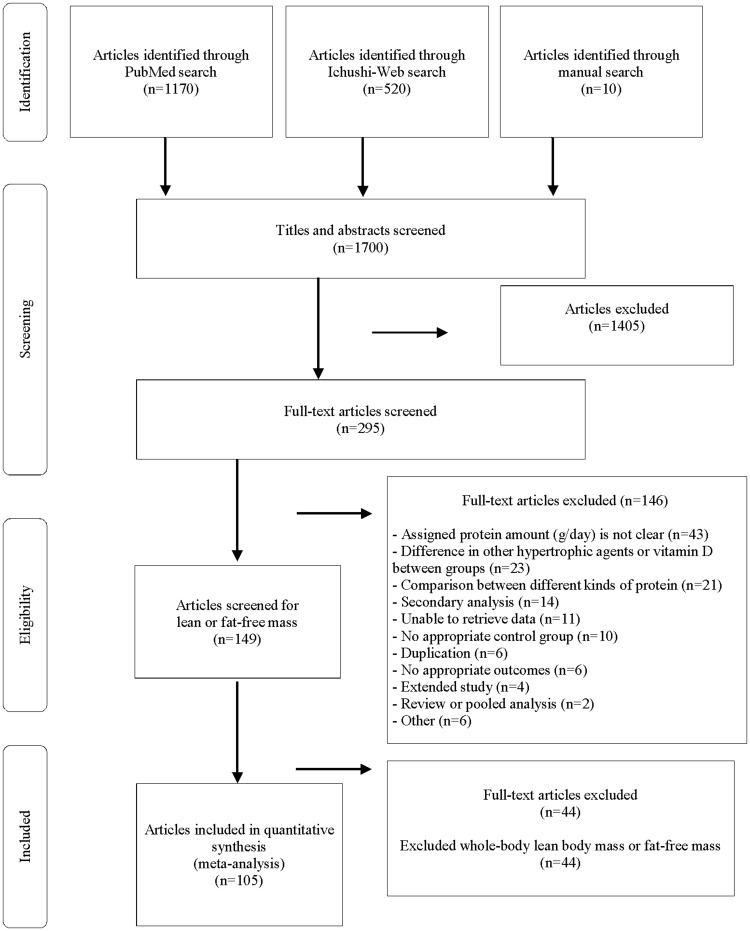
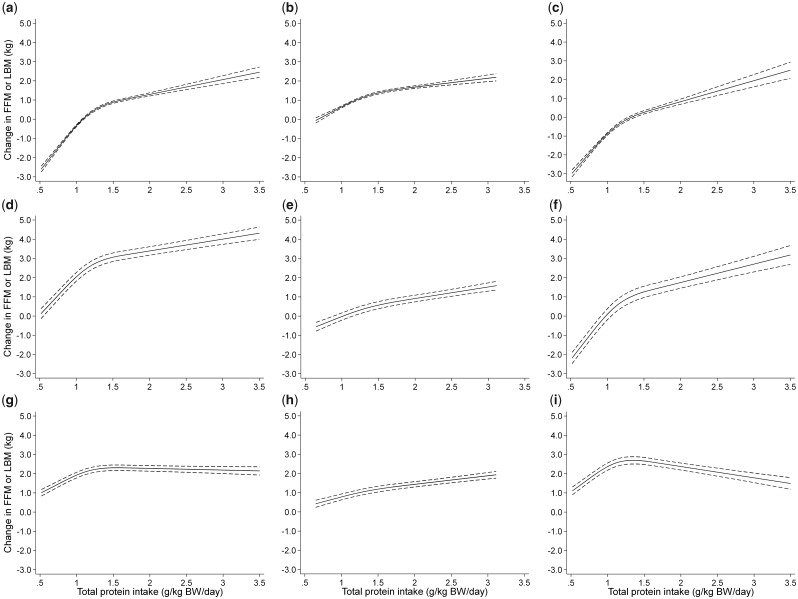
Verification
Claims the paper makes
The claims and statistics of this paper haven’t been checked yet.
Free: it reads the open-access text and checks the first 5 claims that cite a source we can check. Create a free account to check every claim.
Claims other papers make about this one
Each is checked against this paper’s own text: does it say what the citing paper says it does?
The cited source doesn’t support the claim as written.
In the citing paper
“However, the effects of protein ingestion independent of RE are not commonly explored.”
From Systematic review and meta-analysis of protein intake to support muscle mass and function in healthy adults (2022) · cites this paper as [13]
Checked by a reasoning model — may be wrong.
Experimental — accuracy not yet measuredThe source backs part of the claim, not all of it — or backs it for a different population, condition or comparison.
In the citing paper
“The insertion of clinical trials testing multi‐ingredient supplements, 106 including energy‐restricted weight‐loss diets, 13 or using different cut‐off points for age sub‐groups likely explain the differences in main effects and conclusions when comparing studies. 14 , 21 , 22 , 23”
From Systematic review and meta-analysis of protein intake to support muscle mass and function in healthy adults (2022) · cites this paper as [13]
Experimental — accuracy not yet measuredThe source backs part of the claim, not all of it — or backs it for a different population, condition or comparison.
In the citing paper
“In support of this, higher protein intakes showed superior outcomes for developing lean body mass [15,16] and muscle strength [17] in the elderly.”
From Protein Intake, Physical Performance and Body Composition in Master Athletes—A Short Scoping Review (2025) · cites this paper as [15]
Experimental — accuracy not yet measuredThe cited source says what the claim attributes to it.
In the citing paper
“Most meta‐analyses have reported consistently positive results regarding the effect of additional protein ingestion on RE training‐induced increases in LBM. 13 , 14 , 21 , 23”
From Systematic review and meta-analysis of protein intake to support muscle mass and function in healthy adults (2022) · cites this paper as [13]
The cited source says what the claim attributes to it.
In the citing paper
“Tagawa et al. 13 found significant effects of additional protein ingestion on LBM in adults (19–81 years old) independent of resistance exercise (≥2 weeks).”
From Systematic review and meta-analysis of protein intake to support muscle mass and function in healthy adults (2022) · cites this paper as [13]
1 more claim about this paper
Create a free account to see every claim other papers make about this one.
Self-check
Percentages, sums and reported differences re-computed from the paper’s own numbers.
The self-check needs the paper’s full text.
Citations
Cites
Preferred Reporting Items for Systematic Reviews and Meta-Analyses: the PRISMA statement
Moher, D., Liberati, A., Tetzlaff, J., Altman, D. G., & for the PRISMA Group (2009) · BMJ · doi:10.1136/bmj.b2535 · Cited by 83,823
Preferred Reporting Items for Systematic Reviews and Meta-Analyses: The PRISMA Statement
Moher, D., Liberati, A., Tetzlaff, J., Altman, D. G., & The PRISMA Group (2009) · PLoS Medicine · doi:10.1371/journal.pmed.1000097 · Cited by 64,042 · cited 1×
“This systematic review and meta-analysis was conducted in accordance with PRISMA (Preferred Reporting Items for Systematic Reviews and MetaAnalyses) guidelines.(17)”
MethodPreferred reporting items for systematic reviews and meta-analyses: the PRISMA Statement.
(2009) · PubMed Central · Cited by 44,859
Cochrane Handbook for Systematic Reviews of Interventions: Cochrane Book Series
(2008) · doi:10.1002/9780470712184 · Cited by 25,048
Wang, G., Ma, R., Qiao, G., Wada, K., Aizawa, Y., & Satoh, T. (2015) · Integrative Medicine International · doi:10.1159/000368408 · Cited by 18,657
The underappreciated role of muscle in health and disease
Wolfe, R. R. (2006) · The American Journal of Clinical Nutrition · doi:10.1093/ajcn/84.3.475 · Cited by 1,537 · cited 1×
“Among young and middle-aged adults, decreased muscle mass increases the risk of chronic metabolic diseases such as type 2 diabetes and obesity.(1,2) Moreover, among the elderly, sarcopenia, a progressive decrease in muscle mass with age, is a risk factor for fractures, physical disabilities, and frailty.”
BackgroundMorton, R. W., Murphy, K. T., McKellar, S. R., Schoenfeld, B. J., Henselmans, M., Helms, E., Aragon, A. A., Devries, M. C., Banfield, L., Krieger, J. W., et al. (2018) · British Journal of Sports Medicine · doi:10.1136/bjsports-2017-097608 · Cited by 1,269 · cited 2×
“This finding is consistent with previous research using meta-regression between total protein intake and change in fat-free mass.(14) Interestingly, this decline was markedly suppressed by resistance training, suggesting that resistance training may contribute to maintaining or improving the efficiency of protein anab…”
ResultIntercoder Reliability and Validity of WebPlotDigitizer in Extracting Graphed Data
Drevon, D., Fursa, S. R., & Malcolm, A. L. (2017) · Behavior Modification · doi:10.1177/0145445516673998 · Cited by 1,006 · cited 1×
“1 (Ankit Rohatgi; Pacifica, CA).(18) Five authors (K.”
Levine, M. E., Suarez, J. A., Brandhorst, S., Balasubramanian, P., Cheng, C.-W., Madia, F., Fontana, L., Mirisola, M. G., Guevara-Aguirre, J., Wan, J., et al. (2014) · Cell Metabolism · doi:10.1016/j.cmet.2014.02.006 · Cited by 910 · cited 1×
“While inconsistent results regarding renal function(34) and cancer mortality(35) have been reported, some studies report that high protein intake is associated with lower renal function in individuals with mild renal insufficiency(36) and that high consumption of animal proteins is associated with a higher risk of can…”
ResultSkeletal muscle performance and ageing
Tieland, M., Trouwborst, I., & Clark, B. C. (2018) · Journal of Cachexia, Sarcopenia and Muscle · doi:10.1002/jcsm.12238 · Cited by 904 · cited 1×
“Accordingly, sustaining and increasing muscle mass is extremely important for the promotion and maintenance of health across all populations.(4)”
Background
Cited by
Nunes, E. A., Colenso‐Semple, L., McKellar, S. R., Yau, T., Ali, M. U., Fitzpatrick‐Lewis, D., Sherifali, D., Gaudichon, C., Tomé, D., Atherton, P. J., et al. (2022) · Journal of Cachexia, Sarcopenia and Muscle · doi:10.1002/jcsm.12922 · Cited by 280
“Most meta-analyses have reported consistently positive results regarding the effect of additional protein ingestion on RE training-induced increases in LBM.(13,14,21,23) Cermak et al.”
BackgroundResultA guide to enteral nutrition in intensive care units: 10 expert tips for the daily practice
Preiser, J.-C., Arabi, Y. M., Berger, M. M., Casaer, M., McClave, S., Montejo-González, J. C., Peake, S., Reintam Blaser, A., Van den Berghe, G., van Zanten, A., et al. (2021) · Critical Care · doi:10.1186/s13054-021-03847-4 · Cited by 166
Lee, Z., Yap, C. S. L., Hasan, M. S., Engkasan, J. P., Yusof, B. N. M., Day, A. G., Patel, J. J., & Heyland, D. K. (2021) · Critical Care · doi:10.1186/s13054-021-03693-4 · Cited by 147
“3 g/kg/day, the rate of increment of lean body mass continue to rise with resistance training and declined without training [45].”
BackgroundResultThe role of nutrition in the prevention of sarcopenia
Robinson, S. M., Granic, A., Cruz-Jentoft, A. J., & Sayer, A. A. (2023) · American Journal of Clinical Nutrition · doi:10.1016/j.ajcnut.2023.08.015 · Cited by 122
Lee, Z., Dresen, E., Lew, C. C. H., Bels, J. L. M., Hill, A., Hasan, M. S., Ke, L., van Zanten, A. R. H., van de Poll, M. C. G., Heyland, D. K., et al. (2024) · Critical Care · doi:10.1186/s13054-023-04783-1 · Cited by 92
“In this context, a recent systematic review among healthy and non-crit-ically ill patients found that higher protein was associated with increased lean body mass; however, the rate of lean body mass gain plateaued beyond 1.3 g/kg BW/day without resistance training [45].”
BackgroundInfluentialNasimi, N., Sohrabi, Z., Nunes, E. A., Sadeghi, E., Jamshidi, S., Gholami, Z., Akbarzadeh, M., Faghih, S., Akhlaghi, M., & Phillips, S. M. (2023) · Advances in Nutrition · doi:10.1016/j.advnut.2023.05.011 · Cited by 79
Heffernan, A. J., Talekar, C., Henain, M., Purcell, L., Palmer, M., & White, H. (2022) · Critical Care · doi:10.1186/s13054-022-04140-8 · Cited by 72
Monteyne, A. J., Coelho, M. O. C., Murton, A. J., Abdelrahman, D. R., Blackwell, J. R., Koscien, C. P., Knapp, K. M., Fulford, J., Finnigan, T. J. A., Dirks, M. L., et al. (2023) · The Journal of Nutrition · doi:10.1016/j.tjnut.2023.02.023 · Cited by 64
Kokura, Y., Ueshima, J., Saino, Y., & Maeda, K. (2024) · Clinical Nutrition ESPEN · doi:10.1016/j.clnesp.2024.06.030 · Cited by 66
Nutritionism in a food policy context: the case of ‘animal protein’
Leroy, F., Beal, T., Gregorini, P., McAuliffe, G. A., & van Vliet, S. (2022) · Animal Production Science · doi:10.1071/an21237 · Cited by 55
Dairy protein intake is inversely related to development of non-alcoholic fatty liver disease
Lee, J., Lee, H. S., Ahn, S. B., & Kwon, Y. (2021) · Clinical Nutrition · doi:10.1016/j.clnu.2021.08.012 · Cited by 50
Tagawa, R., Watanabe, D., Ito, K., Otsuyama, T., Nakayama, K., Sanbongi, C., & Miyachi, M. (2022) · Sports Medicine - Open · doi:10.1186/s40798-022-00508-w · Cited by 45
“To the best of our knowledge, while a few studies have investigated the dose-response relationship of total protein intake to muscle mass [32, 38, 39] or strength [39], this study is the first meta-analysis to quantitatively assess the detailed dose-response relationship between total protein intake and muscle strengt…”
BackgroundResultSelf-citationThe Importance of Dietary Protein Quality in Mid- to High-Income Countries
Moughan, P. J., Fulgoni, V. L. I., & Wolfe, R. R. (2024) · Journal of Nutrition · doi:10.1016/j.tjnut.2024.01.020 · Cited by 47
Granic, A., Sayer, A. A., Cooper, R., & Robinson, S. M. (2024) · Proceedings of The Nutrition Society · doi:10.1017/s0029665124007432 · Cited by 44
“The results suggest that even a small increase in protein intake via supplementation may promote an increase in muscle mass with or without exercise (50) .”
Foods, nutrients and hip fracture risk: A prospective study of middle-aged women
Webster, J., Greenwood, D. C., & Cade, J. E. (2022) · Clinical Nutrition · doi:10.1016/j.clnu.2022.11.008 · Cited by 32
Kim, J., & Song, Y. (2022) · Obesity Facts · doi:10.1159/000527838 · Cited by 30
“According to meta-analyses, high dietary protein intake and protein supplementation were beneficial in terms of body composition and maintenance of lean mass [46, 47].”
Otsuka, Y., Iidaka, T., Horii, C., Muraki, S., Oka, H., Nakamura, K., Izumo, T., Rogi, T., Shibata, H., Tanaka, S., et al. (2021) · Nutrients · doi:10.3390/nu13051730 · Cited by 31
“In fact, a recent meta-analysis indicated that protein supplementation enhances the increase in lean body mass and hand grip strength [14,15], and high protein intake (1.”
BackgroundAntonio, J., Evans, C., Ferrando, A. A., Stout, J. R., Antonio, B., Cintineo, H. P., Harty, P., Arent, S. M., Candow, D. G., Forbes, S. C., et al. (2024) · Journal of the International Society of Sports Nutrition · doi:10.1080/15502783.2024.2341903 · Cited by 27
“A systematic review and meta-analysis by Tagawa et al. concluded that “slightly increasing current protein intake for several months by 0.1 g/kg/d in a dose-dependent manner over a range of doses from 0.5 to 3.5 g/kg/d may increase or maintain lean body mass” [175].”
BackgroundInfluentialGarcía, A. M. R., Fracassi, P., Scherf, B., Hamon, M., & Iannotti, L. L. (2024) · Nutrients · doi:10.3390/nu16193346 · Cited by 32
“…Table S1: Search terms used in the review by database; Table S2: Food composition databases of poultry eggs; Table S3: Food composition databases of milk from mammalian livestock species and humans; Table S4: Food composition databases of meat from mammalian and avian livestock species.”
MethodGuan, X., Chen, D., & Xu, Y. (2024) · Journal of Intensive Medicine · doi:10.1016/j.jointm.2023.12.002 · Cited by 28
“[ 68 , 69 , 77–79 ] Timely and appropriate nutritional intervention combined with early exercise helps to maintain or increase lean body/SMM in patients.”
BackgroundMesinovic, J., Hurst, C., Leung, G. K. W., Ryan, J. R., Daly, R. M., & Scott, D. (2025) · Reviews in Endocrine and Metabolic Disorders · doi:10.1007/s11154-025-09968-3 · Cited by 27
“Systematic reviews of RCT suggest that protein intakes > 1.0–1.3 g/kg/day promote fat loss [56, 147–150] and can attenuate ER-related losses in lean (muscle) mass [56, 147, 151–153].”
InfluentialChou, H., Lai, T., Yen, C., Chang, P., Pan, J.-C., & Lin, P. (2022) · International Journal of Environmental Research and Public Health · doi:10.3390/ijerph19052492 · Cited by 23
“Recently, a systematic review and meta-analysis reported that total protein consumption was associated with body mass increase in a dose-response relationship [34].”
BackgroundHam, H., & Ha, K. (2022) · 대한지역사회영양학회지 · doi:10.5720/kjcn.2022.27.1.47 · Cited by 20
Unterberger, S., Aschauer, R., Zöhrer, P. A., Draxler, A., Aschauer, M., Kager, B., Franzke, B., Strasser, E.-M., Wagner, K., & Wessner, B. (2023) · Nutrients · doi:10.3390/nu15061458 · Cited by 20
“It has been shown that protein intake is associated with muscle mass [24], but there is no information on whether protein (or macronutrient) intake is related to the PhA.”
BackgroundNishikori, S., & Fujita, S. (2024) · Scientific Reports · doi:10.1038/s41598-024-61289-8 · Cited by 23
Cena, H., Vandoni, M., Magenes, V. C., Napoli, I. D., Marin, L., Baldassarre, P., Luzzi, A., Pasquale, F. D., Zuccotti, G., & Calcaterra, V. (2022) · International Journal of Environmental Research and Public Health · doi:10.3390/ijerph19148300 · Cited by 19
“5 g/kg body weight) could increase lean body mass and facilitate loss of fat mass [79], conflicting results have been obtained regarding the association between protein intake after infancy and growth markers in late childhood and adolescence [80].”
ResultHelms, E. R., Spence, A., Sousa, C. A., Kreiger, J., Taylor, S., Oranchuk, D. J., Dieter, B. P., & Watkins, C. M. (2023) · Sports Medicine - Open · doi:10.1186/s40798-023-00651-y · Cited by 21
Wu, Y., de Crom, T. O. E., Chen, Z., Benz, E., van der Schaft, N., Pinel, A., Boirie, Y., Eglseer, D., Topinková, E., Schoufour, J. D., et al. (2025) · Clinical Nutrition · doi:10.1016/j.clnu.2025.07.033 · Cited by 16
Miladi, S., Driss, T., Ameur, R., Miladi, S. C., Miladi, S. J., Najjar, M. F., Neffati, F., & Hammouda, O. (2025) · Nutrients · doi:10.3390/nu17010169 · Cited by 14
“The decrease in lean mass may be explained by insufficient protein intake [45].”
Kimura, M., Moriyasu, A., & Makizako, H. (2021) · Nutrients · doi:10.3390/nu14010072 · Cited by 18
“A previous study suggested that greater dietary protein may help slow age-related loss of lean muscle mass [16], and a recent meta-analysis showed a positive dose–response relationship between protein intake and muscle mass increase [17].”
Adequate Protein Intake on Comprehensive Frailty in Older Adults: Kyoto-Kameoka Study
Nanri, H., Watanabe, D., Yoshida, T., Yoshimura, E., Okabe, Y., Ono, M., Koizumi, T., Kobayashi, H., Fujita, H., Kimura, M., et al. (2022) · The journal of nutrition health & aging · doi:10.1007/s12603-022-1740-9 · Cited by 13
“Given that a meta-analysis of dietary intervention studies showed a non-linear association between protein intake and muscle mass gain (27), there may be a threshold for protein intake to reduce the risk of frailty.”
Self-citationLum, D., Soh, S. K., Teo, C. J. H., Wong, O. Q. H., & Lee, M. J. C. (2022) · International Journal of Sports Physiology and Performance · doi:10.1123/ijspp.2021-0461 · Cited by 14
Doubly labelled water‐calibrated energy intake associations with mortality risk among older adults
Watanabe, D., Yoshida, T., Watanabe, Y., Kimura, M., Yamada, Y., & Kyoto–Kameoka Study Group (2022) · Journal of Cachexia Sarcopenia and Muscle · doi:10.1002/jcsm.13122 · Cited by 14
“Although this meta-analysis indicated that increasing protein intake may increase dose-dependent lean mass, these relationships were attenuated by adjusting for the change in body weight for the intervention period as an indicator of energy balance.(33) In addition, the anabolic effect of protein feeding has a higher…”
BackgroundMethodResultSelf-citationUchida, M., Park, J., Fujie, S. J., Hosomi, K., Horii, N., Watanabe, K., Sanada, K., Shinohara, Y., Mizuguchi, K., Kunisawa, J., et al. (2024) · Physiological Reports · doi:10.14814/phy2.16100 · Cited by 13
“…with their right leg fixed to a custom-msade dynamometer (Takei Scientific Instruments Co., Ltd., Niigata, Japan) equipped with a force transducer (LU-100KSE; Kyowa Electronic Instruments, Tokyo, Japan) and their hip and knee joints fixed at 90°, as previously described (Watanabe et al., 2020).”
BackgroundMethodInfluentialSelf-citationABDELBAKY, A., Elmasry, W. G., & Awad, A. H. (2024) · Cureus · doi:10.7759/cureus.54136 · Cited by 12
“Early 48 hours of progressive nutrition supplement initiation in critically ill persons with suitable protein provision might reduce the catabolism, and improve integrity of the gastrointestinal tract [6].”
BackgroundUnderpowered studies in muscle metabolism research: Determinants and considerations
Houtvast, D. C. J., Betz, M. W., Hooren, B. V., Vanbelle, S., Verdijk, L. B., van Loon, L. J. C., & Trommelen, J. (2024) · Clinical Nutrition ESPEN · doi:10.1016/j.clnesp.2024.10.152 · Cited by 14
Qiu, S., Cai, X., Yuan, Y., Xie, B., Sun, Z., & Wu, T. (2021) · Journal of Diabetes · doi:10.1111/1753-0407.13217 · Cited by 12
Ishikawa‐Takata, K., Matsumoto, M., & Takimoto, H. (2024) · Geriatrics and gerontology international/Geriatrics & gerontology international · doi:10.1111/ggi.14875 · Cited by 11
Haruna, K., Minami, S., Miyoshi, N., Fujino, S., MIZUMOTO, R., Toyoda, Y., Hayashi, R., Kato, S., Takeda, M., Sekido, Y., et al. (2024) · Cancers · doi:10.3390/cancers16193429 · Cited by 12
Ogawa, S., Himuro, N., Koyama, M., Seko, T., Mori, M., & Ohnishi, H. (2022) · International Journal of Environmental Research and Public Health · doi:10.3390/ijerph192315769 · Cited by 10
“In addition, Model 4 took into account other potential confounding factors including biochemical data, which may be associated with muscle strength and walking speed [24,25].”
BackgroundMoyama, S., Yamada, Y., Noboru, M., Fujita, H., Araki, A., Suzuki, A., Seino, Y., Shide, K., Kimura, K., Murotani, K., et al. (2023) · Nutrients · doi:10.3390/nu15092024 · Cited by 12
Protein Delivery in Critical Care- What Have Recent Trials Shown Us?
Paulus, M. C., & van Zanten, A. R. H. (2024) · Critical Care Clinics · doi:10.1016/j.ccc.2024.09.003 · Cited by 11
Maeta, A., Katsukawa, M., Hayase, Y., & Takahashi, K. (2022) · Foods · doi:10.3390/foods11030389 · Cited by 13
“5 g/kg/d may increase or maintain lean body mass [7].”
BackgroundKnowledge of gym goers on myths and truths in resistance training
Unger, A., Mosgan, C., Wolte, C., Pettauer, S., & Wilke, J. (2025) · Scientific Reports · doi:10.1038/s41598-025-87485-8 · Cited by 10
Wittholz, K., Bidgood, E., Fetterplace, K., McLean, A., Rooyackers, O., Deane, A. M., & Karahalios, A. (2024) · Clinical Nutrition · doi:10.1016/j.clnu.2024.09.025 · Cited by 8
Zeraattalab-Motlagh, S., Mortazavi, A., Ghoreishy, S. M., & Mohammadi, H. (2023) · Osteoporosis International · doi:10.1007/s00198-023-06948-8 · Cited by 9
“Greater protein intake leads to appropriate muscle mass, which may decrease hip fracture [89, 90].”
Lee, Y.-S., & Lee, Y. (2024) · 대한지역사회영양학회지 · doi:10.5720/kjcn.2024.29.3.173 · Cited by 7
“Previous research has reported that increased energy intake from protein can increase satiety, fatty acid oxidation, and lean body mass, as well as lower blood pressure, positively impacting weight control and cardiovascular disease management [4-6].”
Preoperative nutritional optimization for adult spinal deformity: Review
Reyes, J. L., Katiyar, P., Greisberg, G., Coury, J. R., Dionne, A. C., Lombardi, J. M., & Sardar, Z. M. (2023) · Spine Deformity · doi:10.1007/s43390-023-00792-w · Cited by 7
“Increased dietary protein is known to promote lean body mass including skeletal muscle mass [29].”
Multi-ingredient supplementation for combating sarcopenia and polymorbidity
Nederveen, J. P., Nilsson, M. I., & Tarnopolsky, M. A. (2025) · Current Opinion in Clinical Nutrition & Metabolic Care · doi:10.1097/mco.0000000000001166 · Cited by 8
Zilova, I. S., & Ēn, T. (2023) · Voprosy Pitaniya · doi:10.33029/0042-8833-2023-92-4-114-124 · Cited by 7
Genome-wide association study of handgrip strength in the Northern Chinese adult twins
Luo, J., Zhang, T., Wang, W., & Zhang, D. (2022) · Connective Tissue Research · doi:10.1080/03008207.2022.2104160 · Cited by 6
Wittholz, K., Bongetti, A. J., Fetterplace, K., Caldow, M. K., Karahalios, A., Souza, D. P. D., Doomun, S. N. E., Rooyackers, O., Koopman, R., Lynch, G. S., et al. (2024) · Journal of Parenteral and Enteral Nutrition · doi:10.1002/jpen.2622 · Cited by 6
Trends in knee osteoarthritis prevalence over a 10-year period in Japan: The ROAD study 2005–2015
Tanegashima, G., Iidaka, T., Muraki, S., Horii, C., Oka, H., Kawaguchi, H., Nakamura, K., Akune, T., Tanaka, S., & Yoshimura, N. (2025) · Osteoarthritis and Cartilage Open · doi:10.1016/j.ocarto.2025.100569 · Cited by 5
Ma, Y., Yan, R., Li, Y., Li, D., Sun, X., Chen, T., & Liu, X. (2025) · Frontiers in Nutrition · doi:10.3389/fnut.2025.1640858 · Cited by 5
Baniasadi, M. M., Khakbaz, M., & Azadbakht, L. (2025) · Clinical Nutrition · doi:10.1016/j.clnu.2025.106569 · Cited by 5
Miguel-Albarreal, A. D., Rivero‐Pino, F., Marquez‐Paradas, E., Grao‐Cruces, E., la Rosa, T. G., & la Paz, S. M. (2024) · Nutrients · doi:10.3390/nu16111594 · Cited by 5
“…in the health status of humans, the current suggested dietary consumption of protein has been established at 0.8 g/kg/day for young healthy men, whereas consumption ranging from 1.0 to 1.5 g/kg/day in older adults has been reported to trigger improvements in glycemic control and muscle mass [8,9].”
BackgroundInfluentialMonsalves‐Álvarez, M., Glaves, A., & Gómez-López, J. (2021) · Nutrición Hospitalaria · doi:10.20960/nh.03632 · Cited by 6
“Si bien la ingesta proteica tiene una relación directa con la masa muscular (11), la fuente (p.”
BackgroundWatanabe, D., Yoshida, T., Itoi, A., Nanri, H., Yamada, Y., Miyachi, M., Kimura, M., & Kyoto‐Kameoka Study Group (2022) · Geriatrics and gerontology international/Geriatrics & gerontology international · doi:10.1111/ggi.14345 · Cited by 5
Self-citationDietary protein and muscle wasting in chronic kidney disease: new insights
Güngör, Ö., Kara, A. V., Hasbal, N. B., & Kalantar‐Zadeh, K. (2023) · Current Opinion in Clinical Nutrition & Metabolic Care · doi:10.1097/mco.0000000000000903 · Cited by 8
Li, Z., He, W., Tian, D., Sun, Y., Yang, Q., & Cao, L. (2025) · Nursing in Critical Care · doi:10.1111/nicc.70023 · Cited by 5
“4,5 However, enteral nutrition in ICUs faces challenges related to the failure to promptly and adequately assess or screen patients' nutritional status and accurately manage the enteral nutrition process.”
Lee, D. C., Duraj, T., Cooper, I. D., Maroon, J. C., Smith, K., Abdel-Hadi, W., Omene, E., Athanasios, E., & Seyfried, T. N. (2026) · Frontiers in Science · doi:10.3389/fsci.2026.1763395 · Cited by 4
Maeta, A., Katsukawa, M., Hayase, Y., & Takahashi, K. (2022) · Plant Foods for Human Nutrition · doi:10.1007/s11130-022-01030-w · Cited by 4
Fujihira, K., Takahashi, M., Wang, C., Fuke, S., & Hayashi, N. (2023) · Temperature · doi:10.1080/23328940.2023.2278410 · Cited by 4
“Increased protein intake is associated with the maintenance or increase in lean body mass [15] and has a protective role in preventing frailty in older populations [16].”
BackgroundKatsumata, Y., Yatabe, T., Kuroiwa, H., Iwata, H., Oda, S., & Kawano, T. (2024) · Annals of Nutrition and Metabolism · doi:10.1159/000540301 · Cited by 5
“[12, 19] vs. 18 [14, 23], p 0.001, respectively).”
InfluentialKohno, M., Ulla, A., Taniguchi, R., OHISHI, A., HIRAYAMA, K., Takemura, Y., Takao, S., Kanazawa, Y., Matsumoto, Y., Harada, M., et al. (2022) · Journal of Nutritional Science and Vitaminology · doi:10.3177/jnsv.68.521 · Cited by 4
Oshita, K., Myotsuzono, R., & Tashiro, T. (2023) · International Journal of Sport and Health Science · doi:10.5432/ijshs.202229 · Cited by 4
Protein Intake, Physical Performance and Body Composition in Master Athletes—A Short Scoping Review
Franzke, B., Maierhofer, R., & Putz, P. (2025) · Nutrients · doi:10.3390/nu17030498 · Cited by 3
“In support of the findings of Tagawa et al. [15], the latest research on protein dosage pointed to possible additional benefits of a single, very high instance of protein consumption (100 g) following an exercise stimulus [37].”
InfluentialFrancisco, G. D., Couceiro, C., & Olmedo, R. H. (2026) · Journal of Food Measurement & Characterization · doi:10.1007/s11694-026-04109-z · Cited by 4
Kanter, M. M., Aaron, S., Austad, S. N., Brown, A. W., Burd, N. A., Campbell, W. W., Cope, M. B., Davis, T. A., Erdman, J. W., Freitas, M., et al. (2026) · Critical Reviews in Food Science and Nutrition · doi:10.1080/10408398.2026.2658728 · Cited by 7
“…several meta-analyses published since 2018 examining the effects of diet and supplemental protein on body composition or functional outcomes report much smaller sample sizes (Morton et al. 2018; Ten Haaf et al. 2018; Liao et al. 2020; Tagawa et al. 2020; Nunes et al. 2022; Kokura et al. 2024).”
Hatamoto, Y., Tanoue, Y., Tagawa, R., Yasukata, J., Shiose, K., Kose, Y., Watanabe, D., Tanaka, S., Chen, K. Y., Ebine, N., et al. (2024) · Clinical Nutrition · doi:10.1016/j.clnu.2024.09.035 · Cited by 4
Self-citationEffect of Sucrose on Amino Acid Absorption of Whey: A Randomized Crossover Trial
Wajiki, M., Yamamoto, T., Maruki‐Uchida, H., Nagashima, H., Shimizu, T., & Morita, M. (2022) · Metabolites · doi:10.3390/metabo12040282 · Cited by 3
“Protein intake is also recommended for elderly people because its combination with muscle mass has a dose–response relationship [9], and muscle strength is associated with healthy life [10].”
BackgroundAmjed, A. S., Abdelhakiem, A., Allen, N., Brune, C., Sokoloski, M. L., & Gordon, R. A. (2024) · Physiologia · doi:10.3390/physiologia4040026 · Cited by 2
“It is possible that we may have observed differences in lean mass for RAM + WH had the protein dose been increased, or if participants had consumed protein at several points each day (pre-fast and post-fast [46–48].”
Yang, S., Su, H., Zhang, N., Han, Y., Ge, Y., Fei, Y., Liu, Y., Hilowle, A. A., Xu, P., & Zhang, J. (2025) · BMC Medical Research Methodology · doi:10.1186/s12874-025-02522-4 · Cited by 2
“…physiological indicators, such as body weight and frailty [4], body weight, waist-to-height ratio, and depression [5], protein intake and muscle gain [6], blood uric acid content and risk of death [7], and uric acid and risk of chronic kidney disease [7, 8], all demonstrate a U-shaped pattern.”
Does nutrition therapy alter the pathophysiology of severe acute pancreatitis?
Gao, L., Xu, Y., & Ke, L. (2025) · Current Opinion in Critical Care · doi:10.1097/mcc.0000000000001284 · Cited by 2
Im, J. Y., Jung, E. J., Lee, J. G., Han, B. K., Hong, J., & Kim, Y. J. (2025) · Journal of Medicinal Food · doi:10.1177/1096620x251362009 · Cited by 2
Wu, H., Chen, M., Wang, X., Chang, Q., Gu, Y., Meng, G., Zhang, Q., Liu, L., Wang, X., Sun, S., et al. (2025) · Nutrition Research · doi:10.1016/j.nutres.2025.09.007 · Cited by 2
Shibasaki, T., Nakamura, H., Kurosaka, Y., Sawada, S., Miyaji, K., & Machida, S. (2025) · Frontiers in Physiology · doi:10.3389/fphys.2025.1649300 · Cited by 2
Utku, İ. K., Aydoğmuş, B. Ç., Avcioğlu, H. N., Çatıkkaş, N. M., Durak, A., Günay, D. S., & Safer, U. (2025) · TURKISH JOURNAL OF MEDICAL SCIENCES · doi:10.55730/1300-0144.6074 · Cited by 2
Macdonald, C. (2026) · Frontiers in Nutrition · doi:10.3389/fnut.2026.1853124 · Cited by 2
Smillie, L., Minehan, M., Knight-Agarwal, C. R., Oliver, C., & Turner, M. R. (2024) · JCSM Communications · doi:10.1002/rco2.109 · Cited by 2
Shida, J., Watanabe, R., Kazama, I., Wanezaki, M., Misawa, H., Uno, C., & Matsuda, Y. (2024) · Clinical Case Reports · doi:10.1002/ccr3.9434 · Cited by 2
Sringari, S., Vijaykumar, S. D., Sherkane, M., Venkatesh, M., Gupta, S., Lomore, K., & Venkatesh, K. V. (2025) · Frontiers in Nutrition · doi:10.3389/fnut.2025.1519756 · Cited by 3
Takayama, H., Fukatsu, K., Noguchi, M., Takahashi, K., Watkins, A., Matsumoto, N., Narita, T., & Murakoshi, S. (2024) · Journal of Parenteral and Enteral Nutrition · doi:10.1002/jpen.2686 · Cited by 1
A Preliminary Analysis of AI Chatbots for Individualized Nutrition Advice
Wong, L. T., Chui, K. T., Pang, S. S. H., Liu, J., Fong, E. K. S., & Lee, L. (2024) · International Symposium on Educational Technology · doi:10.1109/iset61814.2024.00023 · Cited by 1
“Inadequate protein intake at each meal, especially at breakfast and lunch, can lead to muscle atrophy in the long term [18].”
BackgroundNishiyama, M., Nakamura, S., Matsuki, T., & Narimatsu, H. (2024) · npj Aging · doi:10.1038/s41514-024-00184-y · Cited by 1
Mertz, K. H., Sorensen, H. H., Lorentz, C., Johansen, E., Fredskild, N. U., Wulff, M. W., Svensson, R. B., Kjaer, M. B., Linden, F. H., Kjær, M., et al. (2025) · Scandinavian Journal of Medicine and Science in Sports · doi:10.1111/sms.70043 · Cited by 1
“The optimal daily protein intake for training adaptations in healthy tissue is debated, but most available evidence suggests that the majority of the effects of protein supplementation occur up to ~1.6 g/kg bodyweight (BW) per day [19, 20].”
InfluentialSakamoto, D., Terashima, Y., Sugawara, M., Unno, R., Watanabe, T., Uno, T., & Maruyama, M. (2025) · Nutrients · doi:10.3390/nu17243900 · Cited by 1
“The results of a recent meta-analysis of randomized controlled trials suggested that slightly increasing protein intake for several months, even by as little as 0.1 g/kg BW/d, may increase or help maintain muscle mass with or without resistance training [26].”
InfluentialTsutsumi, R., Narasaki, S., Horikawa, Y. T., Izumi-Mishima, Y., Yasui‐Yamada, S., Nomura, K., Sakaue, H., & Tsutsumi, Y. M. (2026) · Clinical Nutrition Open Science · doi:10.1016/j.nutos.2025.12.011 · Cited by 1
High-Protein Diets: What to Tell Our Patients
Garibotto, G., Verzola, D., Picciotto, D., & Russo, E. (2026) · American Journal of Kidney Diseases · doi:10.1053/j.ajkd.2026.01.023 · Cited by 1
Oshita, K., Myotsuzono, R., & Tashiro, T. (2022) · Taiikugaku kenkyu (Japan Journal of Physical Education Health and Sport Sciences) · doi:10.5432/jjpehss.22034 · Cited by 1
Eating Plans to Cut Body Fat, Gain Muscle, and Prepare for Competition
Saxena, D., & Dass, A. (2024) · Advances in medical diagnosis, treatment, and care (AMDTC) book series · doi:10.4018/979-8-3693-6317-1.ch005 · Cited by 1
Protein Supplements: Bulk or Bilk?
Kramer, M. S. (2023) · Springer eBooks · doi:10.1007/978-3-031-46022-7_17
Effect of snack bar type on satiation and sensory acceptance in young adults
Listyarani, H., Prayudani, A. P. G., Prihandari, R., Prangdimurti, E., & Astawan, M. (2024) · IOP Conference Series Earth and Environmental Science · doi:10.1088/1755-1315/1359/1/012005
Ramadan, F. R., Sholihah, L. A., Mayasari, N. R., & Gusrianto, W. A. (2024) · GEMA Lingkungan Kesehatan · doi:10.36568/gelinkes.v22i2.171
“Research by Tagawa et al. (2021) and Haaf et al. (2019) shows that protein intake is related to lean body mass. Health students are at risk of obesity due to factors such as lack of physical activity and excessive energy intake.”
BackgroundTakahashi, R., Kobayashi, Y., Fujii, T., Kuwabara, S., Yoshimoto-Segawa, Y., Aoi, W., & Kuwahata, M. (2024) · Physical Activity and Nutrition · doi:10.20463/pan.2024.0021
“In a recent report, a large meta-analysis of randomized controlled trials evaluating the effect of protein intake on lean body mass proposed a dose-response relationship between protein intake and muscle mass gain, and an appropriate range of protein intake 13 .”
Backgroundたんぱく質の摂り方と筋肉に関する最近の知見: 筋力トレーニング,たんぱく質摂取量,種類,タイミングの影響
Tagawa, R., & Sanbongi, C. (2023) · KAGAKU TO SEIBUTSU · doi:10.1271/kagakutoseibutsu.61.577
Self-citationSong, H., Eom, H., & Moon, J. (2024) · The Korean Journal of Community Living Science · doi:10.7856/kjcls.2024.35.4.569
Sinulingga, T. N. (2025) · Jurnal Kesehatan Tambusai · doi:10.31004/jkt.v6i1.40523
“Protein memiliki peran yang sangat penting dalam pemeliharaan dan perbaikan jaringan tubuh, serta dalam melawan infeksi, mengingat sistem kekebalan tubuh pasien HIV sering kali tertekan (Tagawa et al., 2021).”
Dietary Protein: Impact on Public Health
Sone, H., Yoshizawa, S. M., & Horikawa, C. (2025) · Springer eBooks · doi:10.1007/978-3-031-32047-7_157-1
Should I increase weights at the gym? How often? And by how much?
Bennett, H. (2025) · The Conversation · doi:10.64628/aa.rhxs5kwr3
Metadata
- Authors
- Tagawa, R., Watanabe, D., Ito, K., Ueda, K., Nakayama, K., Sanbongi, C., & Miyachi, M.
- Affiliations
- Meiji (Japan) (JP)
- National Institute of Biomedical Innovation, Health and Nutrition (JP)
- Corresponding author
- Miyachi, Motohiko
- Venue
- Nutrition Reviews
- Publisher
- Oxford University Press (OUP)
- Published
- 2020-11-03
- Volume
- 79
- Issue
- 1
- Pages
- 66-75
- ISSN
- 0029-6643 (ISSN-L)
- 1753-4887
- PMC
- PMC7727026
- OpenAlex
- W3111699849
- Cited by
- 118
- References
- 38
- Citations by year
- 2026: 17 · 2025: 23 · 2024: 32 · 2023: 14 · 2022: 25 · 2021: 7
- FWCI
- 1.34
- Type
- journal article
- Language
- en
- Open access
- hybrid
- doi.org
- Licence
- Locations
- Nutrition Reviews (publishedVersion, cc-by-nc-nd)
- medRxiv (acceptedVersion, cc-by-nd)
- PubMed Central (publishedVersion, cc-by-nc-nd)
- PubMed (publishedVersion)
- Topics
- Health Sciences › Nursing › Nutrition and Dietetics › Muscle metabolism and nutrition
- Health Sciences › Medicine › Physiology (medical) › Nutrition and Health in Aging
- Health Sciences › Medicine › Physiology (medical) › Body Composition Measurement Techniques
- Keywords
- protein intake, lean body mass, muscle mass, dose-response relationship, protein supplementation, dietary protein, muscle protein synthesis, muscle protein degradation
About these checks
Registry, retraction, Cites and statistics results are computed, not judged, with one exception: a printed reference that no index lists is read once by a model before it counts as a citation error. Claims are extracted by a model and kept only when their quote appears verbatim in the text; each cited source is then checked, with a model’s help, for whether it says what the claim relies on. Those verdicts can be wrong — read the claim’s quote and the cited source before relying on one.
Statistics and arithmetic are recomputed, not judged.
Confidence bands are shown only for fields calibrated on our annotated test set. None is calibrated yet, so no band is shown.
What counts as a claim ›How we measure confidence ›How we check this ›
Are you an author, or do you see a problem with this page? Request a review
Data sources
Bibliographic data: Semantic Scholar, OpenAlex, Crossref.
Contains information from the Semantic Scholar Academic Graph Datasets, made available under the ODC Attribution License (ODC-BY 1.0).
Semantic Scholar’s data is described in: Kinney, R., et al. (2023). The Semantic Scholar Open Data Platform. arXiv:2301.10140.
