

A Person-Centered Prehabilitation Program Based on Cognitive-Behavioral Physical Therapy for Patients Scheduled for Lumbar Fusion Surgery: A Randomized Controlled Trial
Open accessThe DOI matches its Crossref record; 86 of the 88 references it cites were found in a registry or an index.
Abstract
Background: Prehabilitation programs have led to improved postoperative outcomes in several surgical contexts, but there are presently no guidelines for the prehabilitation phase before lumbar fusion surgery. Objective: The objective was to investigate whether a person-centered physical therapy prehabilitation program, based on a cognitive-behavioral approach, is more effective than conventional care in reducing disability and improving functioning after lumbar fusion surgery in patients with degenerative disk disease. Design: This study was a randomized controlled trial. Setting: The study took place at 2 private spine clinics and 1 university hospital. Patients: We prospectively enrolled 118 patients scheduled for lumbar fusion surgery. Intervention: The active intervention used a person-centered perspective and focused on promoting physical activity and targeting psychological risk factors before surgery. The control group received conventional preoperative care. Measurements: The primary outcome was the Oswestry Disability Index score. Secondary outcomes were back and leg pain intensity, catastrophizing, kinesiophobia, self-efficacy, anxiety, depression, health-related quality of life, and patient-specific functioning, physical activity, and physical capacity. Data were collected on 6 occasions up to 6 months postoperatively. A linear mixed model was used to analyze the change scores of each outcome. Results: No statistically significant between-group difference was found on the primary outcome (disability) over time (baseline to 6 months). Among secondary outcome measures, a statistically significant interaction effect (“Group × Time”) was seen for the European Quality of Life 5 Dimensions Questionnaire. The largest between-group difference on the European Quality of Life 5 Dimensions Questionnaire index was seen 1 week prior to surgery and favored the active intervention. The largest between-group effect sizes at the 6-month follow-up favored the active intervention, and were seen for physical activity intensity, steps per day, and the One Leg Stand Test. Both groups reached the minimal important change for the primary outcome and, in several secondary outcomes (pain intensity, back and leg; pain catastrophizing; anxiety; health-related quality of life [EQ5D VAS]), already at 8-week follow-up. Limitations: The participants’ preoperative level of disability was lower than normative values, which suggests selection bias. Conclusions: Both interventions led to clinically important changes, but it is not clear what kind of prehabilitation program is the most effective.
Overview
The claims and statistics of this paper haven’t been checked yet.
Free: it reads the open-access text and checks the first 5 claims that cite a source we can check. Create a free account to check every claim.
Integrity signals
Registry
Cites
Statistics
Figures


Verification
Claims the paper makes
The claims and statistics of this paper haven’t been checked yet.
Free: it reads the open-access text and checks the first 5 claims that cite a source we can check. Create a free account to check every claim.
Claims other papers make about this one
Each is checked against this paper’s own text: does it say what the citing paper says it does?
The cited source says what the claim attributes to it.
In the citing paper
“Twelve studies evaluated (sub)acute outcomes, 2,7,11,12,18,21,29,32,39,44,45,55 and all but 2 studies 2,18 evaluated chronic outcomes.”
Self-check
Percentages, sums and reported differences re-computed from the paper’s own numbers.
The self-check needs the paper’s full text.
Citations
Cites
The Hospital Anxiety and Depression Scale
Zigmond, A. S., & Snaith, R. P. (1983) · Acta Psychiatrica Scandinavica · doi:10.1111/j.1600-0447.1983.tb09716.x · Cited by 47,139
Depression and quality of life in older persons: A review
Sivertsen, H., Bjørkløf, G. H., Engedal, K., Selbæk, G., & Helvik, A.-S. (2015) · Dementia and Geriatric Cognitive Disorders · doi:10.1159/000437299 · Cited by 14,152
‘Small Changes' to Diet and Physical Activity Behaviors for Weight Management
Hills, A. P., Byrne, N. M., Lindstrom, R., & Hill, J. O. (2013) · Obesity Facts · doi:10.1159/000345030 · Cited by 9,493
Moher, D., Hopewell, S., Schulz, K. F., Montori, V., Gotzsche, P. C., Devereaux, P. J., Elbourne, D., Egger, M., & Altman, D. G. (2010) · BMJ · doi:10.1136/bmj.c869 · Cited by 8,883
Cohen, J. (1992) · Psychological Bulletin · doi:10.1037//0033-2909.112.1.155 · Cited by 8,771
The Pain Catastrophizing Scale: Development and validation.
Sullivan, M. J. L., Bishop, S. R., & Pivik, J. (1995) · Psychological Assessment · doi:10.1037//1040-3590.7.4.524 · Cited by 8,227
Physical Activity in the United States Measured by Accelerometer
TROIANO, R. P., BERRIGAN, D., DODD, K. W., MÂSSE, L. C., TILERT, T., & MCDOWELL, M. (2008) · Medicine & Science in Sports & Exercise · doi:10.1249/mss.0b013e31815a51b3 · Cited by 7,638 · cited 1×
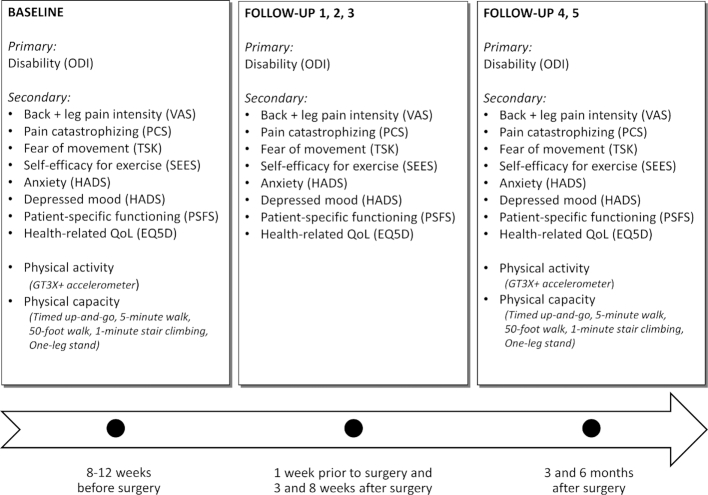
“45,46 (cid:2) Physical capacity was measured by 5-minute walking; 50-foot fast walking; Timed “Up & Go” test; 1-minute stair-climbing; and the One Leg Stand (OLS) test.”
Fairbank, J. C. T., & Pynsent, P. B. (2000) · Spine · doi:10.1097/00007632-200011150-00017 · Cited by 5,851
Statistical Methods for Meta-Analysis.
Freeman, P. R., Hedges, L. V., & Olkin, I. (1986) · Biometrics · doi:10.2307/2531069 · Cited by 4,784
Oswestry Low Back Pain Disability Questionnaire
(2007) · Encyclopedia of Pain · doi:10.1007/978-3-540-29805-2_3023 · Cited by 3,954
The validation of visual analogue scales as ratio scale measures for chronic and experimental pain
Price, D. D., McGrath, P. A., Rafii, A., & Buckingham, B. (1983) · Pain · doi:10.1016/0304-3959(83)90126-4 · Cited by 3,921 · cited 1×
“37 (cid:2) Pain catastrophizing was measured using the Pain Catastrophizing Scale, with 13 items assessing pain catastrophizing thoughts: higher scores indicate greater pain catastrophizing.”
Bellg, A. J., Treatment Fidelity Workgroup of the NIH Behavior Change Consortium, Borrelli, B., Resnick, B., Hecht, J., Minicucci, D. S., Ory, M., Ogedegbe, G., Orwig, D., Ernst, D., et al. (2004) · Health Psychology · doi:10.1037/0278-6133.23.5.443 · Cited by 2,620 · cited 2×
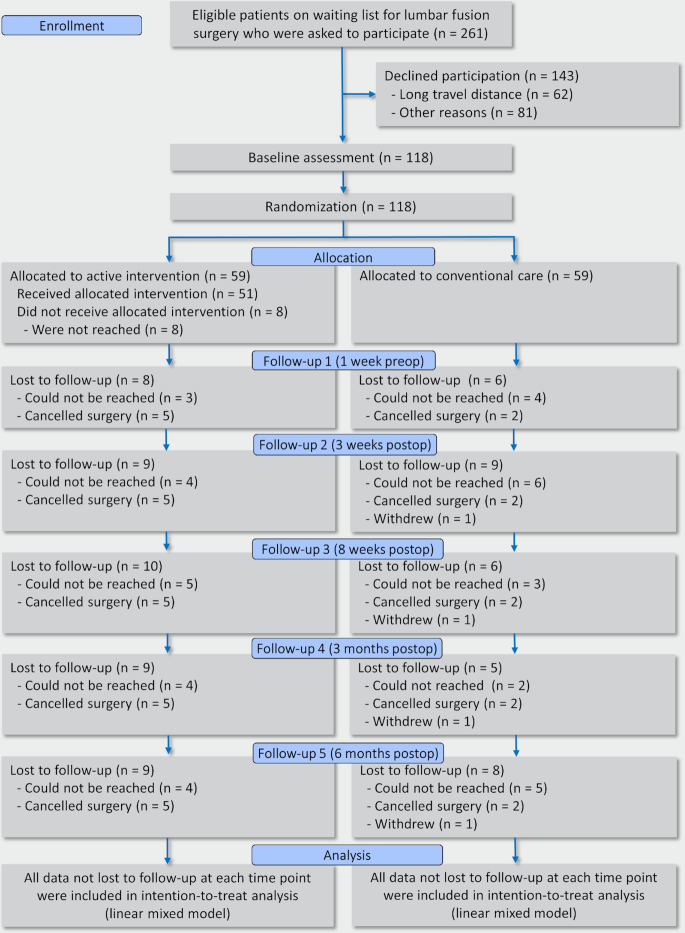
“34 Although 3 study sites were included, 90% of the patients underwent surgery at the same spine clinic.”
Fear of movement/(re)injury in chronic low back pain and its relation to behavioral performance
Vlaeyen, J. W. S., Kole-Snijders, A. M. J., Boeren, R. G. B., & van Eek, H. (1995) · Pain · doi:10.1016/0304-3959(94)00279-n · Cited by 2,446 · cited 3×
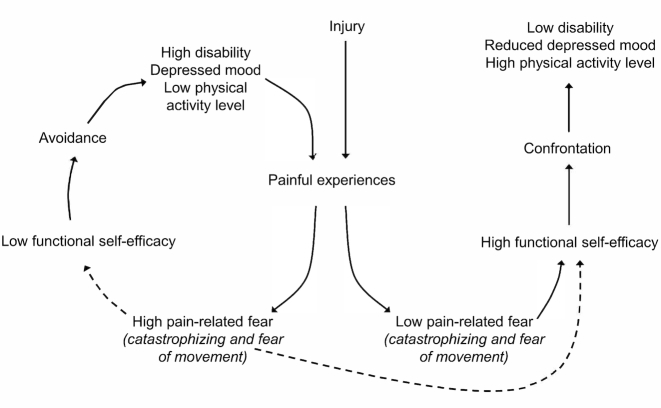
“All outcome measures were selected based on the modified cognitive-behavioral fear-avoidance model of Vlaeyen et al 27,28 (Fig.”
Moher, D., Hopewell, S., Schulz, K. F., Montori, V., Gøtzsche, P. C., Devereaux, P. J., Elbourne, D., Egger, M., & Altman, D. G. (2012) · International Journal of Surgery · doi:10.1016/j.ijsu.2011.10.001 · Cited by 2,345 · cited 2×
“Furthermore, the design and analyses followed the CONSORT statement 33 and followed systematic steps by performing a pilot and feasibility study.”
Oswestry Low Back Pain Disability Questionnaire
Fairbank, J. C. T., Couper, J., Davies, J. B., & O'Brien, J. P. (2020) · PsycTESTS Dataset · doi:10.1037/t04205-000 · Cited by 2,033
Validation of Accelerometer Wear and Nonwear Time Classification Algorithm
CHOI, L., LIU, Z., MATTHEWS, C. E., & BUCHOWSKI, M. S. (2011) · Medicine & Science in Sports & Exercise · doi:10.1249/mss.0b013e3181ed61a3 · Cited by 1,804 · cited 1×
“45,46 (cid:2) Physical capacity was measured by 5-minute walking; 50-foot fast walking; Timed “Up & Go” test; 1-minute stair-climbing; and the One Leg Stand (OLS) test.”
Gueorguieva, R., & Krystal, J. H. (2004) · Archives of General Psychiatry · doi:10.1001/archpsyc.61.3.310 · Cited by 1,529 · cited 1×
“66 Selection bias might threaten internal validity.”
Jensen, M. (2003) · The Journal of Pain · doi:10.1016/s1526-5900(03)00716-8 · Cited by 1,312
Low back pain: a call for action
Buchbinder, R., van Tulder, M., Öberg, B., Costa, L. M., Woolf, A., Schoene, M., Croft, P., Buchbinder, R., Hartvigsen, J., Cherkin, D., et al. (2018) · The Lancet · doi:10.1016/s0140-6736(18)30488-4 · Cited by 1,242 · cited 2×
“The content of our prehabilitation program was based on the evidence of benefit for healthy behavior in general and in particular for patients with chronic LBP.”
Self-citation(2011) · Amsterdam UMC (VU Amsterdam) - Institutional Repository · Cited by 1,209
How many steps/day are enough? for adults
Tudor-Locke, C., Craig, C. L., Brown, W. J., Clemes, S. A., De Cocker, K., Giles-Corti, B., Hatano, Y., Inoue, S., Matsudo, S. M., Mutrie, N., et al. (2011) · International Journal of Behavioral Nutrition and Physical Activity · doi:10.1186/1479-5868-8-79 · Cited by 1,087
Assessing Disability and Change on Individual Patients: A Report of a Patient Specific Measure
Stratford, P. (1995) · Physiotherapy Canada · doi:10.3138/ptc.47.4.258 · Cited by 928
The clinical importance of changes in outcome scores after treatment for chronic low back pain
Hägg, O., Fritzell, P., & Nordwall, A. (2003) · European Spine Journal · doi:10.1007/s00586-002-0464-0 · Cited by 907
Self-citationSelf-Reported Population Health: An International Perspective based on EQ-5D
(2014) · Springer eBooks · doi:10.1007/978-94-007-7596-1 · Cited by 794
Multidisciplinary biopsychosocial rehabilitation for chronic low back pain
Kamper, S. J., Apeldoorn, A. T., Chiarotto, A., Smeets, R. J. E. M., Ostelo, R. W., Guzman, J., & van Tulder, M. W. (2014) · Cochrane Database of Systematic Reviews · doi:10.1002/14651858.cd000963.pub3 · Cited by 629 · cited 1×
“25 It is reasonable to propose the same for patients awaiting surgery.”
Self-citationEffect Sizes in Cluster-Randomized Designs
Hedges, L. V. (2007) · Journal of Educational and Behavioral Statistics · doi:10.3102/1076998606298043 · Cited by 567 · cited 2×
“Hedges g for between-group effect sizes of the primary and secondary outcomes at each time point was computed using SEs from the mixed-model output to derive pooled and weighted SDs. 57 Effect sizes (ESs) were categorized as small ( d ≈ 0.20 to 0.50), medium ( d ≥ 0.50 to 0.80), and large ( d ≥ 0.80) 58 and presented…”
InfluentialThe effects of preoperative exercise therapy on postoperative outcome: a systematic review
Valkenet, K., van de Port, I. G., Dronkers, J. J., de Vries, W. R., Lindeman, E., & Backx, F. J. (2011) · Clinical Rehabilitation · doi:10.1177/0269215510380830 · Cited by 441
Outcome measures in chronic low back pain
Maughan, E. F., & Lewis, J. S. (2010) · European Spine Journal · doi:10.1007/s00586-010-1353-6 · Cited by 438
Santa Mina, D., Clarke, H., Ritvo, P., Leung, Y. W., Matthew, A. G., Katz, J., Trachtenberg, J., & Alibhai, S. M. H. (2014) · Physiotherapy · doi:10.1016/j.physio.2013.08.008 · Cited by 424
Simmonds, M. J., Olson, S. L., Jones, S., Hussein, T., Lee, C. E., Novy, D., & Radwan, H. (1998) · Spine · doi:10.1097/00007632-199811150-00011 · Cited by 368 · cited 1×
“47–49”
Effects of person-centred care in patients with chronic heart failure: the PCC-HF study
Ekman, I., Wolf, A., Olsson, L.-E., Taft, C., Dudas, K., Schaufelberger, M., & Swedberg, K. (2012) · European Heart Journal · doi:10.1093/eurheartj/ehr306 · Cited by 325 · cited 1×
“28 31 To further enhance the patient’s self-efficacy, we therefore applied the principles of person-centered care.”
Lundberg, M. K. E., Styf, J., & Carlsson, S. G. (2004) · Physiotherapy Theory and Practice · doi:10.1080/09593980490453002 · Cited by 295
Self-citationPrehabilitation and early rehabilitation after spinal surgery: randomized clinical trial
Nielsen, P. R., Jørgensen, L. D., Dahl, B., Pedersen, T., & Tønnesen, H. (2010) · Clinical Rehabilitation · doi:10.1177/0269215509347432 · Cited by 271 · cited 3×
“As with other studies of prehabilitation applied before lumbar spine surgery, 20–22, 61 no statistically significant difference was found between the groups on the primary outcome,”
Hagstromer, M., Troiano, R. P., Sjostrom, M., & Berrigan, D. (2010) · American Journal of Epidemiology · doi:10.1093/aje/kwq069 · Cited by 271
Sullivan, M. J., Adams, H., Rhodenizer, T., & Stanish, W. D. (2006) · Physical Therapy · doi:10.1093/ptj/86.1.8 · Cited by 270
Woby, S. R., Urmston, M., & Watson, P. J. (2007) · European Journal of Pain · doi:10.1016/j.ejpain.2006.10.009 · Cited by 257 · cited 4×
“All outcome measures were selected based on the modified cognitive-behavioral fear-avoidance model of Vlaeyen et al 27,28 (Fig.”
InfluentialStrategies to improve retention in randomised trials: a Cochrane systematic review and meta-analysis
Brueton, V. C., Tierney, J. F., Stenning, S., Meredith, S., Harding, S., Nazareth, I., & Rait, G. (2014) · BMJ Open · doi:10.1136/bmjopen-2013-003821 · Cited by 253 · cited 1×
“64,65 Questionnaires were kept short and participants were contacted by telephone to book appointments for follow-up visits.”
Kelly, L. A., McMillan, D. G., Anderson, A., Fippinger, M., Fillerup, G., & Rider, J. (2013) · BMC Medical Physics · doi:10.1186/1756-6649-13-5 · Cited by 220 · cited 1×
“44 The variables, steps per day, time in moderate-to-vigorous physical activity, time spent in light physical activity, and time spent sedentary, were analyzed.”
Archer, K. R., Devin, C. J., Vanston, S. W., Koyama, T., Phillips, S. E., George, S. Z., McGirt, M. J., Spengler, D. M., Aaronson, O. S., Cheng, J. S., et al. (2016) · The Journal of Pain · doi:10.1016/j.jpain.2015.09.013 · Cited by 219
Oxford Handbook of Medical Statistics
Peacock, J., & Peacock, P. (2010) · Oxford University Press eBooks · doi:10.1093/med/9780199551286.001.0001 · Cited by 212 · cited 1×
“50 The power calculation recommended a sample of 55 in each group for a statistically significant between-group difference of at least 8 points in the ODI (SD = 15).”
Prehabilitation in Preparation for Orthopaedic Surgery
Ditmyer, M. M., Topp, R., & Pifer, M. (2002) · Orthopaedic Nursing · doi:10.1097/00006416-200209000-00008 · Cited by 204
Louw, A., Diener, I., Landers, M. R., & Puentedura, E. J. (2014) · Spine · doi:10.1097/brs.0000000000000444 · Cited by 200 · cited 2×
“20 Rolving et al examined whether a multidisciplinary cognitive-behavioral therapy intervention (6 × 3 hours) would be beneficial.”
Self-Reported Population Health: An International Perspective Based on EQ-5D
Szende, A., Janssen, M. B., Cabasés, J. M., & Ramos Goñi, J. M. (2013) · Value in Health · doi:10.1016/j.jval.2013.08.812 · Cited by 196
Conner-Spady, B. L., Marshall, D. A., Bohm, E., Dunbar, M. J., Loucks, L., Khudairy, A. A., & Noseworthy, T. W. (2015) · Quality of Life Research · doi:10.1007/s11136-014-0910-6 · Cited by 187
Predictors of surgical outcome and their assessment
Mannion, A. F., & Elfering, A. (2006) · European Spine Journal · doi:10.1007/s00586-005-1045-9 · Cited by 184
Normative data for the Hospital Anxiety and Depression Scale
Breeman, S., Cotton, S., Fielding, S., & Jones, G. T. (2015) · Quality of Life Research · doi:10.1007/s11136-014-0763-z · Cited by 180
Keefe, F. J., Main, C. J., & George, S. Z. (2018) · Physical Therapy · doi:10.1093/ptj/pzy024 · Cited by 180 · cited 1×
“62 Van Erp et al 63 showed that Swedish surgeons recommend faster mobilization than their Dutch counterparts (direct vs 1 day postoperative), and more activities on the first day (sitting, standing, walking); there are no available studies of Swedish physical therapists’ attitudes toward…”
Lindbäck, Y., Tropp, H., Enthoven, P., Abbott, A., & Öberg, B. (2018) · The Spine Journal · doi:10.1016/j.spinee.2017.12.009 · Cited by 166 · cited 5×
“18,19 22 Louw et al investigated whether 1 session of pain neuroscience education before surgery would improve the surgical outcome.”
InfluentialAsher, A. L., Kerezoudis, P., Mummaneni, P. V., Bisson, E. F., Glassman, S. D., Foley, K. T., Slotkin, J. R., Potts, E. A., Shaffrey, M. E., Shaffrey, C. I., et al. (2018) · Neurosurgical FOCUS · doi:10.3171/2017.10.focus17554 · Cited by 162
Abbott, A. D., Tyni-Lenné, R., & Hedlund, R. (2010) · Spine · doi:10.1097/brs.0b013e3181d1049f · Cited by 160 · cited 1×
“18,19 22 Louw et al investigated whether 1 session of pain neuroscience education before surgery would improve the surgical outcome.”
Scott, W., Wideman, T. H., & Sullivan, M. J. L. (2014) · The Clinical Journal of Pain · doi:10.1097/ajp.0b013e31828eee6c · Cited by 155
Cabilan, C. J., Hines, S., & Munday, J. (2015) · JBI Database of Systematic Reviews and Implementation Reports · doi:10.11124/jbisrir-2015-1885 · Cited by 152
Johnsen, L. G., Hellum, C., Nygaard, Ø. P., Storheim, K., Brox, J. I., Rossvoll, I., Leivseth, G., & Grotle, M. (2013) · BMC Musculoskeletal Disorders · doi:10.1186/1471-2474-14-148 · Cited by 149
Marmelo, F., Rocha, V., & Moreira-Gonçalves, D. (2018) · European Journal of Preventive Cardiology · doi:10.1177/2047487317752373 · Cited by 149
Treanor, C., Kyaw, T., & Donnelly, M. (2018) · Journal of Cancer Survivorship · doi:10.1007/s11764-017-0645-9 · Cited by 146 · cited 1×
“6 13 It can, for example, focus on increasing physical activity, decreasing anxiety, or improving nutritional status.”
Gautschi, O. P., Stienen, M. N., Corniola, M. V., Joswig, H., Schaller, K., Hildebrandt, G., & Smoll, N. R. (2017) · Neurosurgery · doi:10.1227/neu.0000000000001320 · Cited by 143
The concept of prehabilitation: What the surgeon needs to know?
Roy, B. L., Selvy, M., & Slim, K. (2016) · Journal of Visceral Surgery · doi:10.1016/j.jviscsurg.2016.01.001 · Cited by 137
Optimization of surgical outcomes with prehabilitation
Santa Mina, D., Scheede-Bergdahl, C., Gillis, C., & Carli, F. (2015) · Applied Physiology, Nutrition, and Metabolism · doi:10.1139/apnm-2015-0084 · Cited by 131
Predictors of multidimensional outcome after spinal surgery
Mannion, A. F., Elfering, A., Staerkle, R., Junge, A., Grob, D., Dvorak, J., Jacobshagen, N., Semmer, N. K., & Boos, N. (2007) · European Spine Journal · doi:10.1007/s00586-006-0255-0 · Cited by 126 · cited 1×
“14 It is known that presurgical psychological states, such as catastrophizing 15 and fear-avoidance beliefs, 16 are significant predictors of pain and poor function after lumbar surgery.”
A cost‐effectiveness study of a patient‐centred integrated care pathway
Olsson, L., Hansson, E. K., Ekman, I., & Karlsson, J. (2009) · Journal of Advanced Nursing · doi:10.1111/j.1365-2648.2009.05017.x · Cited by 125
Lemanu, D. P., Singh, P. P., MacCormick, A. D., Arroll, B., & Hill, A. G. (2013) · World Journal of Surgery · doi:10.1007/s00268-012-1886-4 · Cited by 121
Monticone, M., Ferrante, S., Teli, M., Rocca, B., Foti, C., Lovi, A., & Brayda Bruno, M. (2014) · European Spine Journal · doi:10.1007/s00586-013-2889-z · Cited by 119 · cited 1×
“18,19 22 Louw et al investigated whether 1 session of pain neuroscience education before surgery would improve the surgical outcome.”
Preoperative exercise therapy for elective major abdominal surgery: A systematic review
Pouwels, S., Stokmans, R. A., Willigendael, E. M., Nienhuijs, S. W., Rosman, C., van Ramshorst, B., & Teijink, J. A. W. (2013) · International Journal of Surgery · doi:10.1016/j.ijsu.2013.11.018 · Cited by 118
Oxford Handbook of Medical Statistics
Peacock, J. L., & Peacock, P. J. (2020) · doi:10.1093/med/9780198743583.001.0001 · Cited by 114
LaCaille, R. A., DeBerard, M. S., Masters, K. S., Colledge, A. L., & Bacon, W. (2005) · The Spine Journal · doi:10.1016/j.spinee.2004.08.004 · Cited by 113
Leg pain and psychological variables predict outcome 2–3 years after lumbar fusion surgery
Abbott, A. D., Tyni-Lenné, R., & Hedlund, R. (2011) · European Spine Journal · doi:10.1007/s00586-011-1709-6 · Cited by 108 · cited 1×
“14 It is known that presurgical psychological states, such as catastrophizing 15 and fear-avoidance beliefs, 16 are significant predictors of pain and poor function after lumbar surgery.”
Adogwa, O., Park, P., Shau, D. N., Mendenhall, S. K., Bydon, A., Cheng, J. S., Asher, A. L., & McGirt, M. J. (2013) · The Spine Journal · doi:10.1016/j.spinee.2013.01.017 · Cited by 105 · cited 1×
“53–56 The baseline values of the confounding factors were added as fixed factors.”
Rolving, N., Nielsen, C. V., Christensen, F. B., Holm, R., Bünger, C. E., & Oestergaard, L. G. (2015) · Spine · doi:10.1097/brs.0000000000000843 · Cited by 105
Smeets, R., Hijdra, H. J., Kester, A. D. M., Hitters, M. W. M. G. C., & Knottnerus, J. A. (2006) · Clinical Rehabilitation · doi:10.1177/0269215506070698 · Cited by 94
Self-citationWho Should Undergo Surgery for Degenerative Spondylolisthesis? Treatment Effect Predictors in SPORT
Pearson, A. M., Lurie, J. D., Tosteson, T. D., Zhao, W., Abdu, W. A., & Weinstein, J. N. (2013) · Spine · doi:10.1097/brs.0b013e3182a314d0 · Cited by 72 · cited 1×
“53–56 The baseline values of the confounding factors were added as fixed factors.”
Andersson, E. I., Lin, C. C., & Smeets, R. J. E. M. (2010) · Spine · doi:10.1097/brs.0b013e3181cea12e · Cited by 69
Self-citationEffects of nursing interventions within an integrated care pathway for patients with hip fracture
Olsson, L., Karlsson, J., & Ekman, I. (2007) · Journal of Advanced Nursing · doi:10.1111/j.1365-2648.2007.04209.x · Cited by 69
Who Will Adhere? Key Issues in the Study and Prediction of Adherence in Randomized Controlled Trials
Ginis, K. A. M., Bowen, D. J., Dunbar‐Jacob, J. M., & Perri, M. G. (2000) · Controlled Clinical Trials · doi:10.1016/s0197-2456(00)00078-7 · Cited by 64 · cited 1×
“67 Even so, significant changes were achieved in almost all outcome measures among all participants.”
MONTICONE, M., AMBROSINI, E., ROCCA, B., FOTI, C., & FERRANTE, S. (2017) · European Journal of Physical and Rehabilitation Medicine · doi:10.23736/s1973-9087.16.04362-8 · Cited by 59
Lotzke, H., Jakobsson, M., Brisby, H., Gutke, A., Hägg, O., Smeets, R., den Hollander, M., Olsson, L., & Lundberg, M. (2016) · BMC Musculoskeletal Disorders · doi:10.1186/s12891-016-1203-8 · Cited by 53 · cited 7×
“32 This RCT had low levels of attrition ( 15”
InfluentialSelf-citationBoden, I. J., El‐Ansary, D., Zalucki, N., Robertson, I. K., Browning, L., Skinner, E. H., & Denehy, L. (2017) · Physiotherapy · doi:10.1016/j.physio.2017.08.008 · Cited by 44
Prehabilitation: The Emperor's New Clothes or a New Arena for Physical Therapists?
Lundberg, M., Archer, K. R., Larsson, C., & Rydwik, E. (2018) · Physical Therapy · doi:10.1093/ptj/pzy133 · Cited by 44 · cited 1×
“4 Physical activity is identified as a major component of most programs, 5 but at the start of this study there was only very low-quality evidence for the effectiveness of physical therapist interventions before lumbar fusion surgery.”
Self-citationFactor structure and internal consistency of a Swedish version of the pain catastrophizing scale
Kemani, M. K., Grimby‐Ekman, A., Lundgren, J., Sullivan, M., & Lundberg, M. (2019) · Acta Anaesthesiologica Scandinavica · doi:10.1111/aas.13246 · Cited by 43 · cited 1×
“38,39 (cid:2) Kinesiophobia was rated using the Tampa Scale for Kinesiophobia.”
Self-citationRydwik, E., Hovmöller, F., & Boström, C. (2013) · Physiotherapy Theory and Practice · doi:10.3109/09593985.2013.838614 · Cited by 31
Gilmore, S. J., McClelland, J. A., & Davidson, M. (2014) · Physiotherapy · doi:10.1016/j.physio.2014.06.007 · Cited by 31 · cited 1×
“14 It is known that presurgical psychological states, such as catastrophizing 15 and fear-avoidance beliefs, 16 are significant predictors of pain and poor function after lumbar surgery.”
van Erp, R. M. A., Jelsma, J., Huijnen, I. P. J., Lundberg, M., Willems, P. C. P. H., & Smeets, R. (2017) · Spine · doi:10.1097/brs.0000000000002406 · Cited by 28
Self-citationKinesiophobia : various aspects of moving with musculoskeletal pain
Lundberg, M. (2006) · Gothenburg University Publications Electronic Archive (Gothenburg University) · Cited by 26
Self-citationJönsson, E. H., Ólafsson, G., Fritzell, P., Hägg, O., & Borgström, F. (2017) · Spine · doi:10.1097/brs.0000000000002089 · Cited by 23
Self-citationMaribo, T., Iversen, E., Andersen, N. T., Stengaard‐Pedersen, K., & Schiøttz‐Christensen, B. (2009) · International Musculoskeletal Medicine · doi:10.1179/175361409x12472218841040 · Cited by 21
Leighton, P. A., Brealey, S., & Dias, J. J. (2018) · Journal of Evidence-Based Medicine · doi:10.1111/jebm.12271 · Cited by 11
Lotzke, H., Gutke, A., den Hollander, M., Smeets, R., & Lundberg, M. (2019) · European Journal of Physiotherapy · doi:10.1080/21679169.2018.1553999 · Cited by 2 · cited 2×
“35 Outcome measures.”
Self-citation
Research works printed but not linked: 3
- WHO, 2010, Global Recommendations on Physical Activity for Health
- Strömqvist, 2009, A deeper look at patients operated on for DDD, SWESPINE: the Swedish Spine Register, 44
- Lindbäck Y, Tropp H, Enthoven P, Abbott A, Oberg B., 2018, PREPARE: presurgery physiotherapy for patients with degenerative lumbar spine disorders: a randomized controlled trail, 1347
Cited by
Prehabilitation for Patients Undergoing Orthopedic Surgery: A Systematic Review and Meta-analysis
Punnoose, A., Claydon-Mueller, L. S., Weiss, O., Zhang, J., Rushton, A., & Khanduja, V. (2023) · JAMA Network Open · doi:10.1001/jamanetworkopen.2023.8050 · Cited by 219
Towards a common definition of surgical prehabilitation: a scoping review of randomised trials
Fleurent-Grégoire, C., Burgess, N., McIsaac, D. I., Chevalier, S., Fiore, J. F., Carli, F., Levett, D. Z. H., Moore, J., Grocott, M. P. W., Copeland, R. J., et al. (2024) · British Journal of Anaesthesia · doi:10.1016/j.bja.2024.02.035 · Cited by 157
Coronado, R. A., Brintz, C. E., McKernan, L. C., Master, H., Motzny, N., Silva, F. M., Goyal, P. M., Wegener, S. T., & Archer, K. R. (2020) · PAIN Reports · doi:10.1097/pr9.0000000000000847 · Cited by 115
Perry, R. E., Herbert, G., Atkinson, C., England, C. Y., Northstone, K., Baos, S., Brush, T., Chong, A., Ness, A., Harris, J. M., et al. (2021) · BMJ Open · doi:10.1136/bmjopen-2021-050806 · Cited by 130
Janssen, E., Punt, I. M., Clemens, M. J., Staal, J. B., Hoogeboom, T. J., & Willems, P. C. P. H. (2020) · Journal of Orthopaedic and Sports Physical Therapy · doi:10.2519/jospt.2021.9748 · Cited by 60
Metadata
- Authors
- Lotzke, H., Brisby, H., Gutke, A., Hägg, O., Jakobsson, M., Smeets, R., & Lundberg, M.
- Affiliations
- Spine Center Göteborg (SE)
- Sahlgrenska University Hospital (SE)
- University of Gothenburg (SE)
- Maastricht University (NL)
- Corresponding author
- Lundberg, Mari
- Venue
- Physical Therapy
- Publisher
- Oxford University Press (OUP)
- Published
- 2019-02-21
- Volume
- 99
- Issue
- 8
- Pages
- 1069-1088
- ISSN
- 0031-9023 (ISSN-L)
- 1538-6724
- PMC
- PMC6665875
- OpenAlex
- W2915902951
- Cited by
- 112
- References
- 88
- Citations by year
- 2026: 9 · 2025: 17 · 2024: 18 · 2023: 27 · 2022: 15 · 2021: 12 · 2020: 9 · 2019: 3
- FWCI
- 6.04
- Type
- journal article
- Language
- en
- Open access
- hybrid
- doi.org
- Licence
- Locations
- Physical Therapy (publishedVersion, cc-by-nc-nd)
- Europe PMC (PubMed Central) (publishedVersion, cc-by-nc-nd)
- PubMed Central (publishedVersion, cc-by-nc-nd)
- PubMed (publishedVersion)
- Research Publications (Maastricht University) (publishedVersion, cc-by-nc-nd)
- VUBIR (Vrije Universiteit Brussel) (submittedVersion)
- Research Publications (Maastricht University) (submittedVersion, other-oa)
- Funders
- Alzheimer's Foundation of America (120216)
- Eurospine Research (8-2014)
- Swedish Research Council (2015-02511)
- Västra Götaland Region
- Topics
- Health Sciences › Health Professions › Physical Therapy, Sports Therapy and Rehabilitation › Musculoskeletal pain and rehabilitation
- Health Sciences › Medicine › Orthopedics and Sports Medicine › Spine and Intervertebral Disc Pathology
- Health Sciences › Health Professions › Physical Therapy, Sports Therapy and Rehabilitation › Medical Practices and Rehabilitation
- Keywords
- prehabilitation, lumbar fusion, person-centred care, intervertebral disc degeneration, disability, health-related quality of life, pain catastrophizing, kinesiophobia, self-efficacy, physical activity, postoperative outcomes
- MeSH terms
- Adult, Disability Evaluation, Female, Humans, Lumbar Vertebrae, Male, Middle Aged, Preoperative Care, Surveys and Questionnaires, Spinal Fusion, Cognitive Behavioral Therapy, Low Back Pain, Patient-Centered Care, Physical Therapy Modalities
About these checks
Registry, retraction, Cites and statistics results are computed, not judged, with one exception: a printed reference that no index lists is read once by a model before it counts as a citation error. Claims are extracted by a model and kept only when their quote appears verbatim in the text; each cited source is then checked, with a model’s help, for whether it says what the claim relies on. Those verdicts can be wrong — read the claim’s quote and the cited source before relying on one.
Statistics and arithmetic are recomputed, not judged.
Confidence bands are shown only for fields calibrated on our annotated test set. None is calibrated yet, so no band is shown.
What counts as a claim ›How we measure confidence ›How we check this ›
Are you an author, or do you see a problem with this page? Request a review
Data sources
Bibliographic data: Semantic Scholar, OpenAlex, Crossref.
Contains information from the Semantic Scholar Academic Graph Datasets, made available under the ODC Attribution License (ODC-BY 1.0).
Semantic Scholar’s data is described in: Kinney, R., et al. (2023). The Semantic Scholar Open Data Platform. arXiv:2301.10140.
