

The DOI matches its Crossref record; 96 of the 97 references it cites were found in a registry or an index.
Distributed affective space represents multiple emotion categories across the human brain
Open accessPublished version of a preprint
Abstract
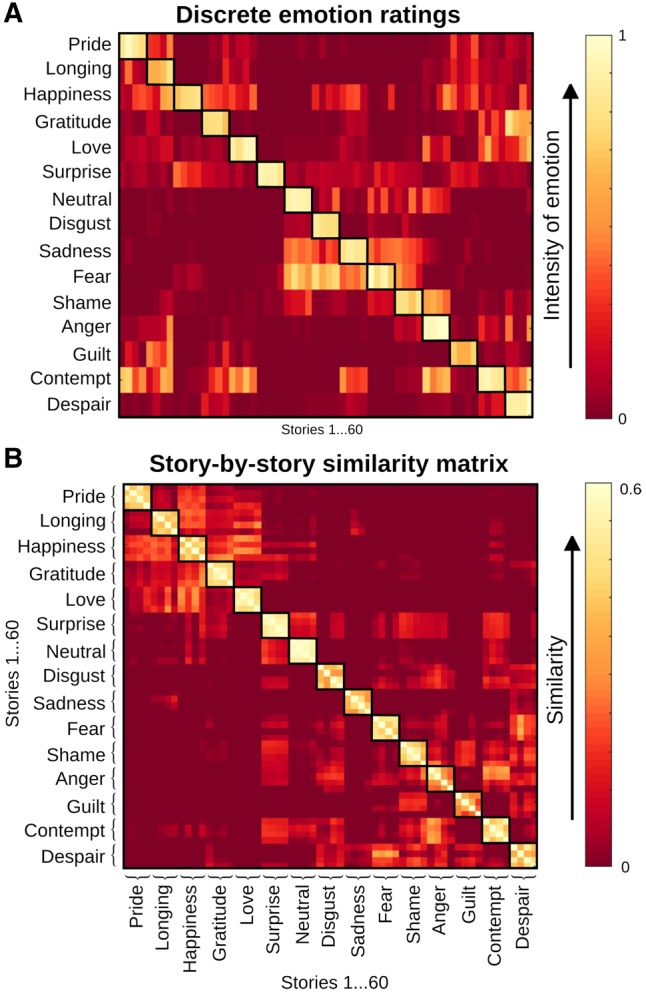
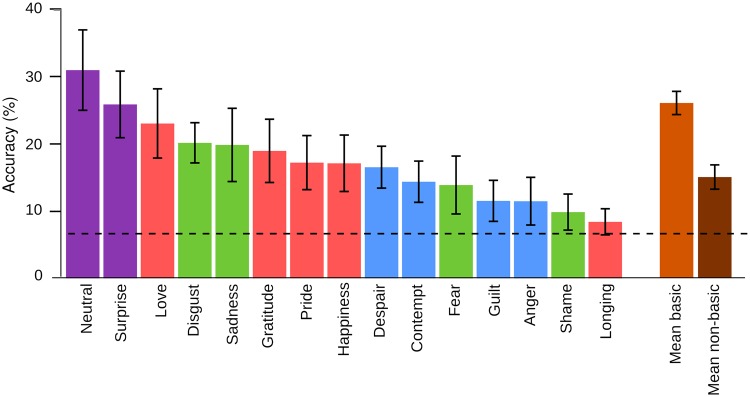
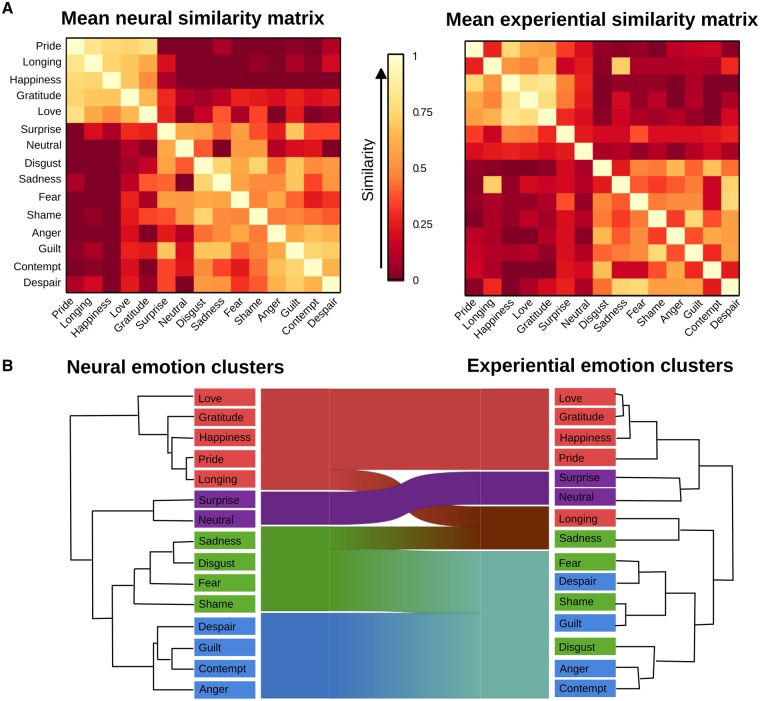
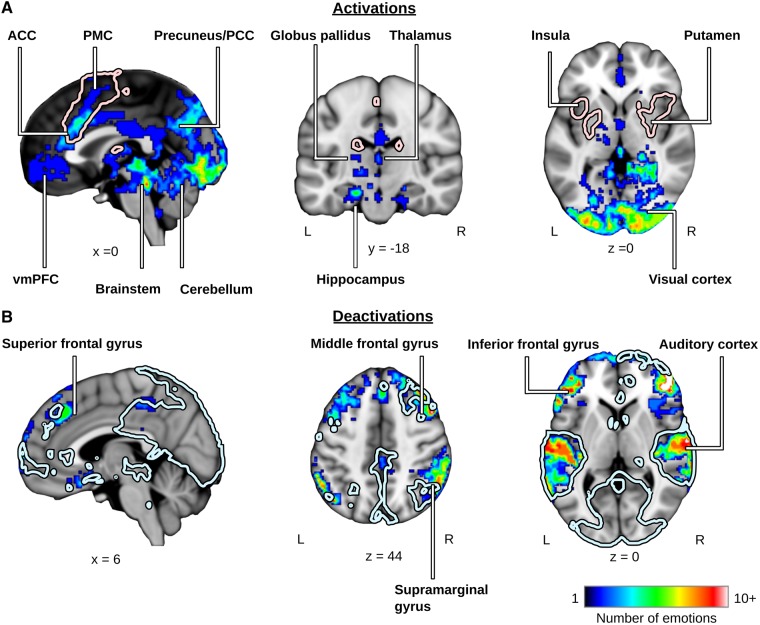
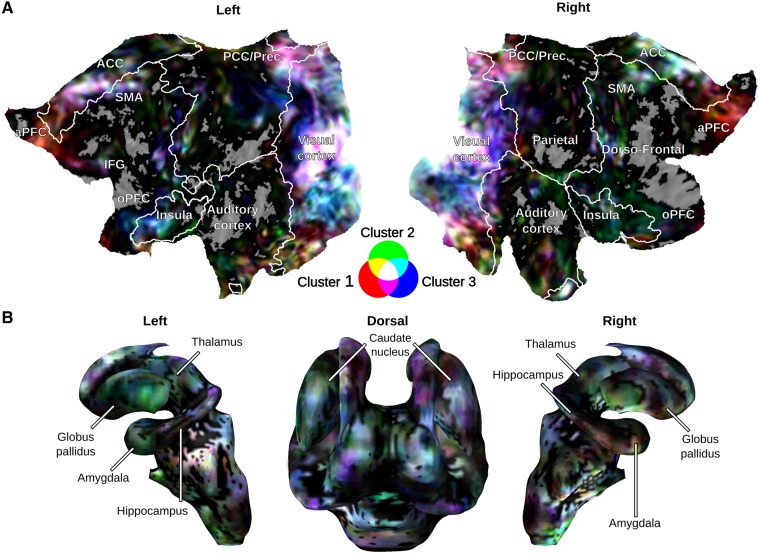
The functional organization of human emotion systems as well as their neuroanatomical basis and segregation in the brain remains unresolved. Here, we used pattern classification and hierarchical clustering to characterize the organization of a wide array of emotion categories in the human brain. We induced 14 emotions (6 'basic', e.g. fear and anger; and 8 'non-basic', e.g. shame and gratitude) and a neutral state using guided mental imagery while participants' brain activity was measured with functional magnetic resonance imaging (fMRI). Twelve out of 14 emotions could be reliably classified from the haemodynamic signals. All emotions engaged a multitude of brain areas, primarily in midline cortices including anterior and posterior cingulate gyri and precuneus, in subcortical regions, and in motor regions including cerebellum and premotor cortex. Similarity of subjective emotional experiences was associated with similarity of the corresponding neural activation patterns. We conclude that different basic and non-basic emotions have distinguishable neural bases characterized by specific, distributed activation patterns in widespread cortical and subcortical circuits. Regionally differentiated engagement of these circuits defines the unique neural activity pattern and the corresponding subjective feeling associated with each emotion.
Overview
The claims and statistics of this paper haven’t been checked yet.
Run the check — free, no account needed. It reads the open-access text and checks the sources it cites.
Integrity signals
Registry
Cites
Statistics
Figures
Verification
Claims the paper makes
The claims and statistics of this paper haven’t been checked yet.
Run the check — free, no account needed. It reads the open-access text and checks the sources it cites.
Claims other papers make about this one
Each is checked against this paper’s own text: does it say what the citing paper says it does?
The cited source says what the claim attributes to it.
In the citing paper
“This suggests that on subjectively experienced level, the universalism extends beyond the canonical”
From Bodily maps of emotions are culturally universal (2020) · cites this paper as Saarimaki et al., 2018
Self-check
Percentages, sums and reported differences re-computed from the paper’s own numbers.
The self-check needs the paper’s full text.
Citations
Cites
Desikan, R. S., Ségonne, F., Fischl, B., Quinn, B. T., Dickerson, B. C., Blacker, D., Buckner, R. L., Dale, A. M., Maguire, R. P., Hyman, B. T., et al. (2006) · NeuroImage · doi:10.1016/j.neuroimage.2006.01.021 · Cited by 13,324
Jenkinson, M., Bannister, P., Brady, M., & Smith, S. (2002) · NeuroImage · doi:10.1006/nimg.2002.1132 · Cited by 11,888 · cited 6×
“, 2001) and transforming the masks to the native space using FLIRT (Jenkinson et al., 2002) with nine degrees of freedom.”
MethodInfluentialJenkinson, M., Beckmann, C. F., Behrens, T. E. J., Woolrich, M. W., & Smith, S. M. (2012) · NeuroImage · doi:10.1016/j.neuroimage.2011.09.015 · Cited by 11,314
Fast robust automated brain extraction
Smith, S. M. (2002) · Human Brain Mapping · doi:10.1002/hbm.10062 · Cited by 10,496 · cited 2×
“, 2002) and non-brain matter was removed using BET (Smith, 2002).”
MethodAn argument for basic emotions
Ekman, P. (1992) · Cognition and Emotion · doi:10.1080/02699939208411068 · Cited by 9,646
Zhang, Y., Brady, M., & Smith, S. M. (2001) · IEEE Transactions on Medical Imaging · doi:10.1109/42.906424 · Cited by 7,628 · cited 1×
“Participant-wise gray matter masks were generated by segmenting the T1-weighted images into gray and white matter and cerebrospinal fluid using the FAST segmentation tool (Zhang et al., 2001) and transforming the masks to the native space using FLIRT (Jenkinson et al.”
MethodCore affect and the psychological construction of emotion.
Russell, J. A. (2003) · Psychological Review · doi:10.1037/0033-295x.110.1.145 · Cited by 6,113 · cited 2×
“Accordingly, the specific number of basic emotions has been debated and the distinction between basic and non-basic emotions has been questioned (e.g. Russell, 2003).”
BackgroundThe feeling of what happens: body and emotion in the making of consciousness
(2000) · Choice Reviews Online · doi:10.5860/choice.37-6553 · Cited by 6,001
Baron‐Cohen, S., Wheelwright, S., Hill, J., Raste, Y., & Plumb, I. (2001) · Journal of Child Psychology and Psychiatry · doi:10.1111/1469-7610.00715 · Cited by 4,555 · cited 1×
“Yet, a wide array of other emotions, including ‘secondary’ or ‘social’ emotions (see reviews and proposed taxonomies in Damasio, 1999; Adolphs, 2002a), also serve adaptive survival functions and are characterized by distinctive facial expressions (Baron-Cohen et al., 2001; Shaw et al., 2005), bodily sensations (Nummen…”
BackgroundBaron‐Cohen, S., Wheelwright, S. J., Hill, J., Raste, Y., & Plumb, I. (2001) · PubMed · Cited by 4,313
Cited by
Sorted by citations
Emotion Recognition for Human-Robot Interaction: Recent Advances and Future Perspectives
Spezialetti, M., Placidi, G., & Rossi, S. (2020) · Frontiers in Robotics and AI · doi:10.3389/frobt.2020.532279 · Cited by 315
Emotion schemas are embedded in the human visual system
Kragel, P. A., Reddan, M. C., LaBar, K. S., & Wager, T. D. (2019) · Science Advances · doi:10.1126/sciadv.aaw4358 · Cited by 214
Movies and narratives as naturalistic stimuli in neuroimaging
Jääskeläinen, I. P., Sams, M. E., Glerean, E., & Ahveninen, J. (2020) · NeuroImage · doi:10.1016/j.neuroimage.2020.117445 · Cited by 202
“Recent evidence indicates that it is possible to classify more specific emotions also, such as love and pride within the “happiness” basic-emotion category (Saarimäki et al., 2018).”
BackgroundSelf-citationChang, L. J., Jolly, E., Cheong, J. H., Rapuano, K. M., Greenstein, N., Chen, P.-H. A., & Manning, J. R. (2021) · Science Advances · doi:10.1126/sciadv.abf7129 · Cited by 177
Semantic Space Theory: A Computational Approach to Emotion
Cowen, A., & Keltner, D. J. (2020) · Trends in Cognitive Sciences · doi:10.1016/j.tics.2020.11.004 · Cited by 189
“Experiences of speci fi c emotions, then, are found to involve multiple interacting systems – situated near DMN and subcortical regions – that enter distinct states in response to perceived threats and opportunities [9,62,80 – 82].”
Naturalistic Stimuli in Affective Neuroimaging: A Review
Saarimäki, H. (2021) · Frontiers in Human Neuroscience · doi:10.3389/fnhum.2021.675068 · Cited by 147
Self-citationThe cultural evolution of emotion
Lindquist, K. A., Jackson, J. C., Leshin, J. C., Satpute, A. B., & Gendron, M. (2022) · Nature Reviews Psychology · doi:10.1038/s44159-022-00105-4 · Cited by 143
“Researchers are now applying machine learning methods to classify discrete emotion states from behavioural and biological measures including self report 52,53 , facial behaviours 54 , vocal acoustics 55 , peripheral autonomic activity 52,56 and brain activity 57–59 .”
Navigating the Science of Emotion
Barrett, L. F. (2016) · Elsevier eBooks · doi:10.1016/b978-0-08-100508-8.00002-3 · Cited by 122
Horikawa, T., Cowen, A. S., Keltner, D., & Kamitani, Y. (2020) · iScience · doi:10.1016/j.isci.2020.101060 · Cited by 101
Social touch experience in different contexts: A review
Saarinen, A. I. L., Harjunen, V. J., Jasinskaja‐Lahti, I., Jääskeläinen, I. P., & Ravaja, N. (2021) · Neuroscience & Biobehavioral Reviews · doi:10.1016/j.neubiorev.2021.09.027 · Cited by 109
“Moreover, as self-reports of emotional states include their strengths and weaknesses, future studies could more widely utilize multi-voxel pattern analysis as a complementary method to decode the emotional states of experimental subjects (Saarim ¨ aki et al., 2018, 2016).”
MethodSelf-citationEmotional Objectivity: Neural Representations of Emotions and Their Interaction with Cognition
Todd, R. M., Miskovic, V., Chikazoe, J., & Anderson, A. K. (2019) · Annual Review of Psychology · doi:10.1146/annurev-psych-010419-051044 · Cited by 116
Bodily maps of emotions are culturally universal
Volynets, S., Glerean, E., Hietanen, J. K., Hari, R., & Nummenmaa, L. (2020) · Emotion · doi:10.1037/emo0000624 · Cited by 93
Self-citationEmotionotopy in the human right temporo-parietal cortex
Lettieri, G., Handjaras, G., Ricciardi, E., Leo, A., Papale, P., Betta, M., Pietrini, P., & Cecchetti, L. (2019) · Nature Communications · doi:10.1038/s41467-019-13599-z · Cited by 105
A New, Better BET: Rescuing and Revising Basic Emotion Theory
Hutto, D. D., Robertson, I., & Kirchhoff, M. D. (2018) · Frontiers in Psychology · doi:10.3389/fpsyg.2018.01217 · Cited by 99
“” 3For example, a good deal of work has been devoted to investigating the neurobiological profile of the alleged basic emotions (see Vytal and Hamann, 2010 for a review; see also Wager et al., 2015; Clark-Polner et al., 2016; Nummenmaa and Saarimäki, 2017; Saarimäki et al., 2018).”
Decoding Music-Evoked Emotions in the Auditory and Motor Cortex
Putkinen, V., Nazari‐Farsani, S., Seppälä, K., Karjalainen, T., Sun, L., Karlsson, H. K., Hudson, M., Heikkilä, T., Hirvonen, J., & Nummenmaa, L. (2020) · Cerebral Cortex · doi:10.1093/cercor/bhaa373 · Cited by 85
Self-citationBittersweet: The Neuroscience of Ambivalent Affect
Vaccaro, A. G., Kaplan, J., & Damásio, A. R. (2020) · Perspectives on Psychological Science · doi:10.1177/1745691620927708 · Cited by 81
“…compared with either positivity or negativity (Becker et al., 2014; Schulte et al., 2012; Simmons, Stein, Matthews, Feinstein, & Paulus, 2006), has been found to be similarly responsive to bittersweetness (Schulte et al., 2012) and longing (Saarimaki et al., 2018; for t-map, see Saarimaki, 2018).”
BackgroundMethodExpressions of emotions across species
Zych, A. D., & Gogolla, N. (2021) · Current Opinion in Neurobiology · doi:10.1016/j.conb.2021.01.003 · Cited by 85
“amygdala, the periaqueductal grey and the hypothalamus [29,60 ,67,89,91,92].”
BackgroundEmotions amplify speaker–listener neural alignment
Smirnov, D., Saarimäki, H., Glerean, E., Hari, R., Sams, M., & Nummenmaa, L. (2019) · Human Brain Mapping · doi:10.1002/hbm.24736 · Cited by 71
Self-citationAzari, B., Westlin, C., Satpute, A. B., Hutchinson, J. B., Kragel, P. A., Hoemann, K., Khan, Z., Wormwood, J. B., Quigley, K. S., Deniz Erdogmus, B., et al. (2020) · Scientific Reports · doi:10.1038/s41598-020-77117-8 · Cited by 83
Classification of emotion categories based on functional connectivity patterns of the human brain
Saarimäki, H., Glerean, E., Smirnov, D., Mynttinen, H., Jääskeläinen, I. P., Sams, M. E., & Nummenmaa, L. (2021) · NeuroImage · doi:10.1016/j.neuroimage.2021.118800 · Cited by 71
Self-citationBrain Basis of Psychopathy in Criminal Offenders and General Population
Nummenmaa, L., Lukkarinen, L., Sun, L., Putkinen, V., Seppälä, K., Karjalainen, T., Karlsson, H. K., Hudson, M., Venetjoki, N., Salomaa, M., et al. (2021) · Cerebral Cortex · doi:10.1093/cercor/bhab072 · Cited by 60
Self-citationDecision-making: from neuroscience to neuroeconomics—an overview
Serra, D. (2021) · Theory and Decision · doi:10.1007/s11238-021-09830-3 · Cited by 63
Cromwell, H. C., Abe, N., Barrett, K. C., Caldwell‐Harris, C. L., Gendolla, G. H. E., Koncz, R., & Sachdev, P. S. (2020) · Neuroscience & Biobehavioral Reviews · doi:10.1016/j.neubiorev.2020.02.032 · Cited by 57
Xu, S., Zhang, Z., Li, L., Zhou, Y., Lin, D., Zhang, M., Zhang, L., Huang, G., Liu, X., Becker, B., et al. (2023) · NeuroImage · doi:10.1016/j.neuroimage.2023.119941 · Cited by 53
“neural representations of discrete emotional experiences are distributed across multiple brain regions (Gao et al., 2020; Horikawa et al., 2020; Saarimäki et al., 2018).”
BackgroundLi, G., Zhang, S., Le, T. M., Tang, X., & Li, C. R. (2020) · NeuroImage · doi:10.1016/j.neuroimage.2020.117171 · Cited by 50
“Together, although the RSC, including the PCC, and PCu appear to respond to a wide range of emotions (Saarimaki et al., 2018), the afore-described studies provide evidence in support of left-and right-hemispheric RSC in processing anger and fear, respectively, in broad consistence with the current…”
Distinct dimensions of emotion in the human brain and their representation on the cortical surface
Koide‐Majima, N., Nakai, T., & Nishimoto, S. (2020) · NeuroImage · doi:10.1016/j.neuroimage.2020.117258 · Cited by 54
A Generalizable Multivariate Brain Pattern for Interpersonal Guilt
Yu, H., Koban, L., Chang, L. J., Wagner, U., Krishnan, A., Vuilleumier, P. O., Zhou, X., & Wager, T. D. (2020) · Cerebral Cortex · doi:10.1093/cercor/bhz326 · Cited by 51
Self-citationPatterns of brain activity associated with nostalgia: a social-cognitive neuroscience perspective
Yang, Z., Wildschut, T., Izuma, K., Gu, R., Luo, Y. L. L., Cai, H., & Sedikides, C. (2022) · Social Cognitive and Affective Neuroscience · doi:10.1093/scan/nsac036 · Cited by 56
Affect and emotions in placebo and nocebo effects: What do we know so far?
Geers, A. L., Faasse, K., Guevarra, D. A., Clemens, K. S., Helfer, S. G., & Colagiuri, B. (2020) · Social and Personality Psychology Compass · doi:10.1111/spc3.12575 · Cited by 48
A matter of time: how does emotion influence temporal aspects of remembering?
Petrucci, A. S., & Palombo, D. J. (2021) · Cognition & Emotion · doi:10.1080/02699931.2021.1976733 · Cited by 49
“Other research suggests that the dimensional composition of emotion is only part of the story, and that some basic emotions, such as sadness or anger, are fundamentally unique from one another (Peelen et al., 2010; Saarimäki et al., 2016, 2018; Sitaram et al., 2011).”
BackgroundNavigating the science of emotion
Barrett, L. F., & Westlin, C. (2021) · Elsevier eBooks · doi:10.1016/b978-0-12-821124-3.00002-8 · Cited by 49
Perception of Discrete Emotions in Others: Evidence for Distinct Facial Mimicry Patterns
Wingenbach, T. S. H., Brosnan, M., Pfaltz, M. C., Peyk, P., & Ashwin, C. (2020) · Scientific Reports · doi:10.1038/s41598-020-61563-5 · Cited by 50
Gaviria, J., Rey, G., Bolton, T. A. W., Delgado, J., Ville, D. V. D., & Vuilleumier, P. O. (2020) · Human Brain Mapping · doi:10.1002/hbm.25277 · Cited by 34
“…particularly in relation to self-reflective processing and introspection (Cavanna & Trimble, 2006; Engen, Kanske, & Singer, 2017; Fox et al., 2018; Saarimäki et al., 2018); and (d) an independent GLM analysis of the movie blocks (not used in subsequent CAP analysis) revealed significant increases…”
MethodSelf-citationThe thermodynamic brain and the evolution of intellect: the role of mental energy
Déli, É., & Kisvárday, Z. F. (2020) · Cognitive Neurodynamics · doi:10.1007/s11571-020-09637-y · Cited by 36
From Architecture to Evolution: Multisensory Evidence of Decentralized Emotion
Kryklywy, J. H., Ehlers, M. R., Anderson, A. K., & Todd, R. M. (2020) · Trends in Cognitive Sciences · doi:10.1016/j.tics.2020.08.002 · Cited by 30
“Indeed, empirical work has identified a widespread network of subcortical and cortical structures [38,39] involved in evaluating and representing emotional content, including the anterior cingulate [40–42], insular [43,44], and orbital frontal [45,46] cortices, amygdalae [47], and ventral striatum [48].”
BackgroundA multivariate brain signature for reward
Speer, S. P. H., Keysers, C., Barrios, J. C., Teurlings, C. J. S., Smidts, A., Boksem, M. A. S., Wager, T. D., & Gazzola, V. (2023) · NeuroImage · doi:10.1016/j.neuroimage.2023.119990 · Cited by 36
Emerging Frontiers in Human–Robot Interaction
Safavi, F., Olikkal, P., Pei, D., Kamal, S., Meyerson, H., Penumalee, V., & Vinjamuri, R. K. (2024) · Journal of Intelligent & Robotic Systems · doi:10.1007/s10846-024-02074-7 · Cited by 33
“Some scholars argue that emotions comprise discrete entities and are categorized distinctly [111, 112]; in contrast, others suggest that continuous values define features that describe emotions [113].”
The thermodynamics of cognition: A mathematical treatment
Déli, É., Peters, J. F., & Kisvárday, Z. F. (2021) · Computational and Structural Biotechnology Journal · doi:10.1016/j.csbj.2021.01.008 · Cited by 32
Piecing together the puzzle of emotional consciousness
Engelen, T., & Mennella, R. (2023) · Neuroscience of Consciousness · doi:10.1093/nc/niad005 · Cited by 33
“For example, neither authors opposing (Clark-Polner et al., 2016) nor supporting (Saarim¨aki et al., 2016, 2018) the existence of discrete neural signatures of emotions would argue that all kind of emotional experience can be mapped onto a single generalized network.”
BackgroundBodily feelings and aesthetic experience of art
Nummenmaa, L., & Hari, R. (2023) · Cognition & Emotion · doi:10.1080/02699931.2023.2183180 · Cited by 40
Self-citationDynamic functional brain networks underlying the temporal inertia of negative emotions
Gaviria, J., Rey, G., Bolton, T. A. W., Ville, D. V. D., & Vuilleumier, P. O. (2021) · NeuroImage · doi:10.1016/j.neuroimage.2021.118377 · Cited by 28
Self-citationThe emotional brain: Fundamental questions and strategies for future research
Shackman, A. J., & Wager, T. D. (2018) · Neuroscience Letters · doi:10.1016/j.neulet.2018.10.012 · Cited by 32
Bodily Maps of Emotion in Major Depressive Disorder
Lyons, N., Strasser, A., Beitz, B., Teismann, T., Ostermann, T., Anderle, L., & Michalak, J. (2021) · Cognitive Therapy and Research · doi:10.1007/s10608-020-10195-0 · Cited by 26
Decoding dynamic affective responses to naturalistic videos with shared neural patterns
Chan, H., Smidts, A., Schoots, V. C., Sanfey, A. G., & Boksem, M. A. S. (2020) · NeuroImage · doi:10.1016/j.neuroimage.2020.116618 · Cited by 26
Decoding six basic emotions from brain functional connectivity patterns
Liu, C., Wang, Y., Sun, X., Fang, F., & Fang, F. (2022) · Science China Life Sciences · doi:10.1007/s11427-022-2206-3 · Cited by 28
“Brain imaging researchers have applied multivariate pattern analysis (MVPA) to decode emotions from brain activity patterns to characterize emotion representations (Saarimäki et al., 2018; Tu et al., 2021; Wu et al., 2020).”
BackgroundInfluentialGündem, D., Potočnik, J., Winter, F. D., Kaddouri, A. E., Stam, D., Peeters, R. R., Emsell, L., Sunaert, S. G., Oudenhove, L. V., Vandenbulcke, M., et al. (2022) · Communications Biology · doi:10.1038/s42003-022-04324-6 · Cited by 34
Visual and auditory brain areas share a representational structure that supports emotion perception
Sievers, B., Parkinson, C. M., Kohler, P. J., Hughes, J. M., Fogelson, S. V., & Wheatley, T. P. (2021) · Current Biology · doi:10.1016/j.cub.2021.09.043 · Cited by 28
Volynets, S., Smirnov, D., Saarimäki, H., & Nummenmaa, L. (2020) · Social Cognitive and Affective Neuroscience · doi:10.1093/scan/nsaa110 · Cited by 26
Self-citationCowen, A., Brooks, J. A., Prasad, G., Tanaka, M., Kamitani, Y., Kirilyuk, V., Somandepalli, K., Jou, B., Schroff, F., Adam, H., et al. (2024) · Frontiers in Psychology · doi:10.3389/fpsyg.2024.1350631 · Cited by 43
An fMRI Study of Affective Congruence across Visual and Auditory Modalities
Gao, C., Weber, C. E., Wedell, D. H., & Shinkareva, S. V. (2020) · Journal of Cognitive Neuroscience · doi:10.1162/jocn_a_01553 · Cited by 24
“…& Vuilleumier, 2010; Said, Moore, Engell, Todorov, & Haxby, 2010; Ethofer, Van De Ville, Scherer, & Vuilleumier, 2009), anterior cingulate (Saarimäki et al., 2018; Kotz et al., 2013; Sitaram et al., 2011), middle cingulate (Chikazoe, Lee, Kriegeskorte, & Anderson, 2014), precentral…”
Li, T., Li, G., Xue, T., & Zhang, J. (2020) · Frontiers in Neuroscience · doi:10.3389/fnins.2020.00369 · Cited by 22
“For functional MRI (fMRI) study, the emotions have discrete neural bases characterized by specific, distributed activation patterns in widespread cortical and subcortical circuits (Saarimäki et al., 2018).”
BackgroundSocial and Affective Neuroscience of Everyday Human Interaction
Boggio, P. S., Wingenbach, T. S. H., Coêlho, M. L. D. S., Comfort, W. E., Marques, L. M., & Alves, M. V. (2022) · Springer eBooks · doi:10.1007/978-3-031-08651-9 · Cited by 23
Love is a physiological motivation (like hunger, thirst, sleep or sex)
Burunat, E. (2019) · Medical Hypotheses · doi:10.1016/j.mehy.2019.05.011 · Cited by 25
“subcortical regions, which allows to differentiate positive emotions, basic negative emotions, social negatives, and surprise [16].”
BackgroundA Customized ECA-CRNN Model for Emotion Recognition Based on EEG Signals
Song, Y. X., Yin, Y., & Xu, P. (2023) · Electronics · doi:10.3390/electronics12132900 · Cited by 19
“As a form of information produced by the brain, as well as an intuitive and subjective response exhibited by individuals towards external stimuli, emotion is significant to the analysis of people’s mental activities and the detection of mental conditions [2].”
BackgroundLandau-Wells, M., & Saxe, R. R. (2020) · Current Opinion in Behavioral Sciences · doi:10.1016/j.cobeha.2019.12.002 · Cited by 15
Riberto, M., Paz, R., Pobric, G., & Talmi, D. (2022) · Journal of Neuroscience · doi:10.1523/jneurosci.1490-21.2022 · Cited by 23
The somatotopy of observed emotions
Sel, A., Calvo‐Merino, B., Manos Tsakiris, A., & Förster, B. (2020) · Cortex · doi:10.1016/j.cortex.2020.04.002 · Cited by 21
Six types of loves differentially recruit reward and social cognition brain areas
Rinne, P., Lahnakoski, J. M., Saarimäki, H., Tavast, M., Sams, M. E., & Henriksson, L. (2024) · Cerebral Cortex · doi:10.1093/cercor/bhae331 · Cited by 19
Self-citationBehavioral Experience-Sampling Methods in Neuroimaging Studies With Movie and Narrative Stimuli
Jääskeläinen, I. P., Ahveninen, J., Klucharev, V. A., Шестакова, А. Н., & Lévy, J. (2022) · Frontiers in Human Neuroscience · doi:10.3389/fnhum.2022.813684 · Cited by 16
“Recently, this has been demonstrated also in case of social emotions such as pride and love (Saarimäki et al., 2018).”
BackgroundSelf-citationImaging Real-Time Tactile Interaction With Two-Person Dual-Coil fMRI
Renvall, V., Kauramäki, J., Malinen, S., Hari, R., & Nummenmaa, L. (2020) · Frontiers in Psychiatry · doi:10.3389/fpsyt.2020.00279 · Cited by 19
Self-citationMEANING OF AWE IN JAPANESE (CON)TEXT: BEYOND FEAR AND RESPECT
Nakayama, M., & Uchida, Y. (2020) · PSYCHOLOGIA · doi:10.2117/psysoc.2020-b004 · Cited by 19
“The similarity structure was also reflected in neural representation of emotion (Saarimäki et al., 2016, 2018).”
BackgroundRiegel, M., Wierzba, M., Wypych, M., Ritchey, M., Jednoróg, K., Grabowska, A., Vuilleumier, P. O., & Marchewka, A. (2022) · NeuroImage · doi:10.1016/j.neuroimage.2022.118889 · Cited by 15
Self-citationThe bright side of words: Norms for 9000 Spanish words in seven discrete positive emotions
Hinojosa, J. A., Guasch, M., Montoro, P. R., Albert, J., Fraga, I., & Ferré, P. (2023) · Behavior Research Methods · doi:10.3758/s13428-023-02229-8 · Cited by 17
“…pride, love, awe, relief, compassion, contentment, gratitude, pleasure, excitement, or hope (see Campos et al., 2013; Keltner & Cowen, 2021; Saarimaki et al., 2018; Sauter, 2017; Shiota et al., 2017; Van Cappellen et al., 2023; Warren et al., 2021, for a synthesis of differences in…”
BackgroundModality-general and modality-specific audiovisual valence processing
Gao, C., & Shinkareva, S. V. (2021) · Cortex · doi:10.1016/j.cortex.2021.01.022 · Cited by 14
“The many faces of sorrow”: An empirical exploration of the psychological plurality of sadness
Tsikandilakis, M., Bali, P., Yu, Z., Karlis, A.-K., Tong, E. M. W., Milbank, A. G., Mével, P.-A., Derrfuß, J., & Madan, C. R. (2023) · Current Psychology · doi:10.1007/s12144-023-04518-z · Cited by 17
“…proposed that sadness involves an increase in peripheral nervous system arousal because it is associated with the distressing experience of failure (Rot-tenberg & Gross, 2003; Rottenberg et al., 2003) and the loss of an important object or subject (Saarimäki et al., 2018; Shirai & Suzuki, 2017).”
Multivariate fMRI pattern analysis of fear perception across modalities
Whitehead, J. C., & Armony, J. L. (2018) · European Journal of Neuroscience · doi:10.1111/ejn.14322 · Cited by 12
“Most notably, contributions from regions in the insula, supplementary motor area, and subcortical structures were identified in discriminating four negative emotions including fear from neutral (Saarimäki et al., 2018).”
BackgroundLinking Personality Traits to Individual Differences in Affective Spaces
Levine, S. M., Alahäivälä, A.-L. I., Wechsler, T. F., Wackerle, A. M., Rupprecht, R., & Schwarzbach, J. V. (2020) · Frontiers in Psychology · doi:10.3389/fpsyg.2020.00448 · Cited by 14
How emotion is experienced and expressed in multiple cultures: a large-scale experimentPreprint
Cowen, A., Prasad, G., Tanaka, M., Kamitani, Y., Kirilyuk, V., Somandepalli, K., Jou, B., Schroff, F., Hartwig, A., Brooks, J. A., et al. (2021) · doi:10.31234/osf.io/gbqtc · Cited by 13
Can the Fermionic Mind Hypothesis (FMH) Explain Consciousness? The Physics of Selfhood
Deli, E. K. (2020) · Activitas Nervosa Superior · doi:10.1007/s41470-020-00070-4 · Cited by 6
Decoding brain basis of laughter and crying in natural scenes
Nummenmaa, L., Malén, T., Nazari‐Farsani, S., Seppälä, K., Sun, L., Santavirta, S., Karlsson, H. K., Hudson, M., Hirvonen, J., Sams, M. E., et al. (2023) · NeuroImage · doi:10.1016/j.neuroimage.2023.120082 · Cited by 16
Self-citationEmotions and the Problem of Variability
Loaiza, J. R. (2020) · Review of Philosophy and Psychology · doi:10.1007/s13164-020-00492-8 · Cited by 16
Riberto, M., Paz, R., Pobric, G., & Talmi, D. (2022) · Apollo (University of Cambridge) · doi:10.17863/cam.93189 · Cited by 12
Rinne, P., Tavast, M., Glerean, E., & Sams, M. E. (2023) · Philosophical Psychology · doi:10.1080/09515089.2023.2252464 · Cited by 12
“…and neuroscientific research may shed light on to what extent different types of love share similar neural activation patterns (Ortigue et al., 2010; Saarimäki et al., 2018), and what the relationship is between these patterns and the similarity of feelings associated with different types of love.”
Self-citationNeural Predictors of Fear Depend on the Situation
Wang, Y., Kragel, P. A., & Satpute, A. B. (2024) · Journal of Neuroscience · doi:10.1523/jneurosci.0142-23.2024 · Cited by 21
Uncovering the genetic profiles underlying the intrinsic organization of the human cerebellum
Wang, Y., Chai, L., Chu, C., Li, D., Gao, C., Wu, X., Yang, Z., Zhang, Y., Xu, J., Nyengaard, J. R., et al. (2022) · Molecular Psychiatry · doi:10.1038/s41380-022-01489-8 · Cited by 11
Do sparse brain activity patterns underlie human cognition?
Jääskeläinen, I. P., Glerean, E., Klucharev, V. A., Шестакова, А. Н., & Ahveninen, J. (2022) · NeuroImage · doi:10.1016/j.neuroimage.2022.119633 · Cited by 9
“Subsequently, such fingerprint patterns of activity were found across a host of brain regions during a variety of tasks and stimuli (Chen et al., 2019; Masson et al., 2019; Saarimäki et al., 2018).”
BackgroundSelf-citationHow the Brain Becomes the Mind: Can Thermodynamics Explain the Emergence and Nature of Emotions?
Déli, É., Peters, J. F., & Kisvárday, Z. F. (2022) · Entropy · doi:10.3390/e24101498 · Cited by 10
Horikawa, T., Cowen, A., Keltner, D. J., & Kamitani, Y. (2019) · bioRxiv (Cold Spring Harbor Laboratory) · doi:10.1101/872192 · Cited by 10
Emotional activation in a cognitive behavioral setting: extending the tradition with embodiment
Hauke, G., Lohr, C., & Shafir, T. (2024) · Frontiers in Psychology · doi:10.3389/fpsyg.2024.1409373 · Cited by 13
Cerebral topographies of perceived and felt emotions
Saarimäki, H., Nummenmaa, L., Volynets, S., Santavirta, S., Aksiuto, A., Sams, M. E., Jääskeläinen, I. P., & Lahnakoski, J. M. (2025) · Imaging Neuroscience · doi:10.1162/imag_a_00517 · Cited by 15
“These regions are consistently reported to activate during emotional experiences elicited by different types of stimuli ( Saarim ä ki, 2021; Saarim ä ki et al., 2016, 2018).”
InfluentialSelf-citationIdentifying the hierarchical emotional areas in the human brain through information fusion
Huang, Z., Du, C., Li, C., Fu, K., & He, H. (2024) · Information Fusion · doi:10.1016/j.inffus.2024.102613 · Cited by 8
“Given their simplicity, efficiency, and strong interpretability, a large number of studies [5–7, 9–11, 27] employ linear regression or multivariate statistical methods to develop models for emotion encoding or decoding.”
BackgroundMethodEmbedding emotion concepts in cognitive maps
Ma, Y., Vafaie, N., & Kragel, P. A. (2025) · Neuroscience & Biobehavioral Reviews · doi:10.1016/j.neubiorev.2025.106089 · Cited by 7
Irish, B. J. (2025) · Cambridge University Press eBooks · doi:10.1017/9781009442534 · Cited by 6
Emotional States versus Mental Heart Rate Component Monitored via Wearables
Fernández, A. P., Leenders, C., Aerts, J., & Berckmans, D. (2023) · Applied Sciences · doi:10.3390/app13020807 · Cited by 6
Supracategorical fear information revealed by aversively conditioning multiple categories
Levine, S. M., Kumpf, M., Rupprecht, R., & Schwarzbach, J. V. (2020) · Cognitive Neuroscience · doi:10.1080/17588928.2020.1839039 · Cited by 6
Neural predictors of subjective fear depend on the situationPreprint
Wang, Y., Kragel, P. A., & Satpute, A. B. (2022) · bioRxiv (Cold Spring Harbor Laboratory) · doi:10.1101/2022.10.20.513114 · Cited by 6
Molecular Imaging of the Human Emotion Circuit
Nummenmaa, L., Seppälä, K., & Putkinen, V. (2022) · Springer eBooks · doi:10.1007/978-3-031-08651-9_1 · Cited by 9
Self-citationNew Horizons in Human–Robot Interaction: Synergy, Cognition, and Emotion
Safavi, F., Pei, D., Olikkal, P., & Vinjamuri, R. K. (2024) · Springer eBooks · doi:10.1007/978-3-031-66656-8_5 · Cited by 4
Controversias en torno a los conceptos cotidianos y conceptos científicos de emoción
Loaiza, J. R. (2022) · Ideas y Valores · doi:10.15446/ideasyvalores.v71n8supl.103859 · Cited by 4
Investigation of different ML approaches in classification of emotions induced by acute stress
Sourkatti, H., Pettersson, K., van der Sanden, B. P. G. H., Lindholm, M., Plomp, J., Määttänen, I., Henttonen, P., & Närväinen, J. (2023) · Heliyon · doi:10.1016/j.heliyon.2023.e23611 · Cited by 4
“Neural correlates of specific emotions have been reported mainly in brain imaging and electrical stimulation studies [78,62].”
BackgroundNeuropsychologia special issue editorial: The neural basis of emotion
Hamann, S. B., Pessoa, L., & Wager, T. D. (2020) · Neuropsychologia · doi:10.1016/j.neuropsychologia.2020.107507 · Cited by 4
Arts-based methods for hallucination research
Melvin, K., Rollins, C. P. E., Cromby, J., Crossley, J., Garrison, J. R., Murray, G. K., & John Suckling, A. (2021) · Cognitive Neuropsychiatry · doi:10.1080/13546805.2021.1993807 · Cited by 4
“…the embodied and situated feelings that colour hallucinations, neurocognitive models will bene fi t since there is some evidence that di ff erent multisensory bodily signals (Grivaz et al., 2017) and di ff erent basic and complex emotions have distinguishable neural bases (Saarimäki et al., 2018).”
BackgroundVaccaro, A. G., Heydari, P., Christov‐Moore, L., Damásio, A. R., & Kaplan, J. (2022) · Social Cognitive and Affective Neuroscience · doi:10.1093/scan/nsac035 · Cited by 4
“These regions include the medial prefrontal cortex (mPFC), inferior frontal gyrus, posterior medial cortex, insula and amygdalae (Peelen et al., 2010; Kim et al., 2015; Saarimaki et al., 2016, 2018; Sachs et al., 2018).”
BackgroundInfluentialWhat Is Psychological Spin? A Thermodynamic Framework for Emotions and Social Behavior
Déli, É. (2023) · Psych · doi:10.3390/psych5040081 · Cited by 6
Efficient brain connectivity reconfiguration predicts higher marital quality and lower depression
Ma, S., Zhang, J., Wang, L., Song, K., Yao, S.-T., Fang, R.-H., Hu, Y., Jiang, X., Potenza, M. N., & Fang, X. (2021) · Social Cognitive and Affective Neuroscience · doi:10.1093/scan/nsab094 · Cited by 4
Cerebral Topographies of Perceived and Felt EmotionsPreprint
Saarimäki, H., Nummenmaa, L., Volynets, S., Santavirta, S. S., Aksiuto, A., Sams, M. E., Jääskeläinen, I. P., & Lahnakoski, J. (2023) · bioRxiv (Cold Spring Harbor Laboratory) · doi:10.1101/2023.02.08.521183 · Cited by 4
Self-citationNtoumanis, I., Townsend, M., Cooper, C. M., & Papadelis, C. L. (2026) · NeuroImage · doi:10.1016/j.neuroimage.2026.121806 · Cited by 3
Reward responses to vicarious feeding depend on body mass index
Järvinen, L., Santavirta, S., Putkinen, V., Karlsson, H. K., Seppälä, K., Sun, L., Hudson, M., Hirvonen, J., Nuutila, P., & Nummenmaa, L. (2025) · Cognitive Affective & Behavioral Neuroscience · doi:10.3758/s13415-025-01265-5 · Cited by 3
Self-citationFranco, G. A. M., Jasinskaja‐Lahti, I., Aulbach, M. B., Harjunen, V. J., Peltola, A., Ravaja, N., Tassinari, M., Vainio, S., & Jääskeläinen, I. P. (2025) · NeuroImage · doi:10.1016/j.neuroimage.2025.121129 · Cited by 3
“All the emotional patterns are highly distributed throughout the whole brain, a characteristic found in multiple prior studies (Horikawa et al., 2020; Nummenmaa and Saarim ¨ aki, 2019; Saarim ¨ aki et al., 2020, 2018, 2016).”
Self-citationLulla, R., Christov‐Moore, L., Vaccaro, A. G., Reggente, N., Iacoboni, M., & Kaplan, J. (2024) · Imaging Neuroscience · doi:10.1162/imag_a_00110 · Cited by 3
Metadata
- Authors
- Saarimäki, H., Ejtehadian, L. F., Glerean, E., Jääskeläinen, I. P., Vuilleumier, P., Sams, M., & Nummenmaa, L.
- Affiliations
- Aalto University (FI)
- University of Turku (FI)
- University of Geneva (CH)
- Corresponding author
- Saarimäki, Heini
- ORCID
- Venue
- Social Cognitive and Affective Neuroscience
- Publisher
- Oxford University Press (OUP)
- Published
- 2018-05-01
- Volume
- 13
- Issue
- 5
- Pages
- 471-482
- ISSN
- 1749-5016 (ISSN-L)
- 1749-5024
- PMC
- PMC6007366
- OpenAlex
- W2953286634
- Cited by
- 146
- References
- 97
- Citations by year
- 2026: 6 · 2025: 19 · 2024: 14 · 2023: 19 · 2022: 23 · 2021: 20 · 2020: 31 · 2019: 9 · 2018: 4
- FWCI
- 9.53
- Type
- journal article
- Language
- en
- Open access
- gold
- doi.org
- Licence
- Locations
- Social Cognitive and Affective Neuroscience (publishedVersion, cc-by-nc)
- bioRxiv (Cold Spring Harbor Laboratory) (acceptedVersion)
- Europe PMC (PubMed Central) (publishedVersion, cc-by-nc)
- PubMed Central (publishedVersion, cc-by-nc)
- PubMed (publishedVersion)
- Archive ouverte UNIGE (University of Geneva) (publishedVersion, other-oa)
- Aaltodoc (Aalto University) (submittedVersion, cc-by-nc)
- Archive ouverte UNIGE (University of Geneva) (submittedVersion, cc-by-nc)
- Funders
- Aalto University, Academy of Finland (#265917, #294897, #138145, #276643, #313000)
- Finnish Cultural Foundation (#00140220)
- Swiss National Science Foundation National Center of Competence in Research for Affective Sciences (#51NF40-104897)
- Topics
- Life Sciences › Neuroscience › Cognitive Neuroscience › Neural and Behavioral Psychology Studies
- Physical Sciences › Computer Science › Artificial Intelligence › Emotion and Mood Recognition
- Life Sciences › Neuroscience › Cognitive Neuroscience › Functional Brain Connectivity Studies
- Keywords
- emotion classification, basic emotions, cingulate cortex, precuneus, cerebellum, premotor cortex, subjective emotional experience, emotion induction
- MeSH terms
- Adult, Affect, Brain, Brain Mapping, Cerebellum, Cerebral Cortex, Cerebrovascular Circulation, Emotions, Female, Hemodynamics, Humans, Magnetic Resonance Imaging, Cluster Analysis, Young Adult
About these checks
Registry, retraction, Cites and statistics results are computed, not judged, with one exception: a printed reference that no index lists is read once by a model before it counts as a citation error. Claims are extracted by a model and kept only when their quote appears verbatim in the text; each cited source is then checked, with a model’s help, for whether it says what the claim relies on. Those verdicts can be wrong — read the claim’s quote and the cited source before relying on one.
Statistics and arithmetic are recomputed, not judged.
Confidence bands are shown only for fields calibrated on our annotated test set. None is calibrated yet, so no band is shown.
What counts as a claim ›How we measure confidence ›How we check this ›
Are you an author, or do you see a problem with this page? Request a review
