

Cognitive and behavioral therapy for insomnia increases the use of continuous positive airway pressure therapy in obstructive sleep apnea participants with comorbid insomnia: a randomized clinical trial
Open accessThe DOI matches its Crossref record; 55 of the 56 references it cites were found in a registry or an index, and 1 are not checked yet; 12 of the 29 sources its claims cite were checked for support.
Abstract
Study Objectives: Insomnia and obstructive sleep apnea (OSA) commonly co-occur which makes OSA difficult to treat with continuous positive airway pressure (CPAP). We conducted a randomized controlled trial in participants with OSA and co-occurring insomnia to test the hypothesis that initial treatment with cognitive and behavioral therapy for insomnia (CBT-i), versus treatment as usual (TAU) would improve insomnia symptoms and increase subsequent acceptance and use of CPAP. Methods: One hundred and forty-five participants with OSA (apnea-hypopnea index ≥ 15) and comorbid insomnia were randomized to either four sessions of CBT-i, or TAU, before commencing CPAP therapy until 6 months post-randomization. Primary between-group outcomes included objective average CPAP adherence and changes in objective sleep efficiency by 6 months. Secondary between-group outcomes included rates of immediate CPAP acceptance/rejection, and changes in; sleep parameters, insomnia severity, and daytime impairments by 6 months. Results: Compared to TAU, participants in the CBT-i group had 61 min greater average nightly adherence to CPAP (95% confidence interval [CI] = 9 to 113; p = 0.023, d = 0.38) and higher initial CPAP treatment acceptance (99% vs. 89%; p = 0.034). The CBT-i group showed greater improvement of global insomnia severity, and dysfunctional sleep-related cognitions by 6 months (both: P < 0.001), and greater improvement in sleep impairment measures immediately following CBT-i. There were no between-group differences in sleep outcomes, or daytime impairments by 6 months. Conclusions: In OSA participants with comorbid insomnia, CBT-i prior to initiating CPAP treatment improves CPAP use and insomnia symptoms compared to commencing CPAP without CBT-i. OSA patients should be evaluated for co-occurring insomnia and considered for CBT-i before commencing CPAP therapy. adherence. © Sleep Research Society 2019.
Verified 2026-11-22 · 1 reference not checked yet
Overview
CoChat Summary
TL;DR
In adults with moderate/severe OSA and comorbid insomnia, four sessions of CBT-i before starting CPAP increased average nightly CPAP use by about 61 min and reduced immediate CPAP rejection compared with treatment as usual. CBT-i also improved insomnia severity and dysfunctional sleep-related cognitions, but not objective sleep or daytime impairment outcomes by 6 months.
Key findings
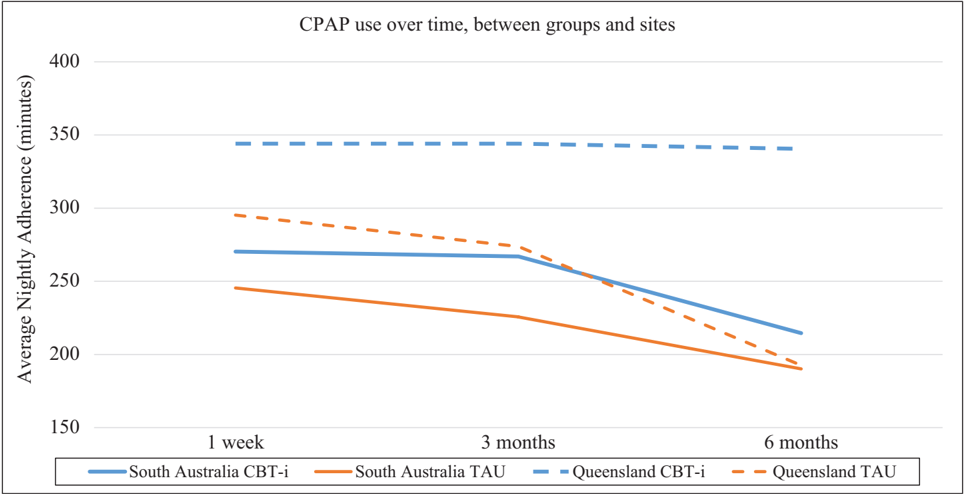
- Average nightly CPAP use was 60.7 min higher in the CBT-i group (M = 265.2, 95% CI 226.2–304.2) than the TAU group (M = 204.5, 95% CI 166.3–242.7; p = 0.023, Cohen’s d = 0.38); the abstract reports 61 min.
- Immediate CPAP rejection was higher in TAU (n = 8, 11%, CI 3.8–18.2) than CBT-i (n = 1, 1.4%, CI −1.3–4.1; Fisher’s p = 0.034), an 87% reduction. After excluding immediate rejecters, there was no significant difference in overall nightly CPAP use (mean difference = 39 min, CI −12 to 90; p = 0.131, d = 0.25).
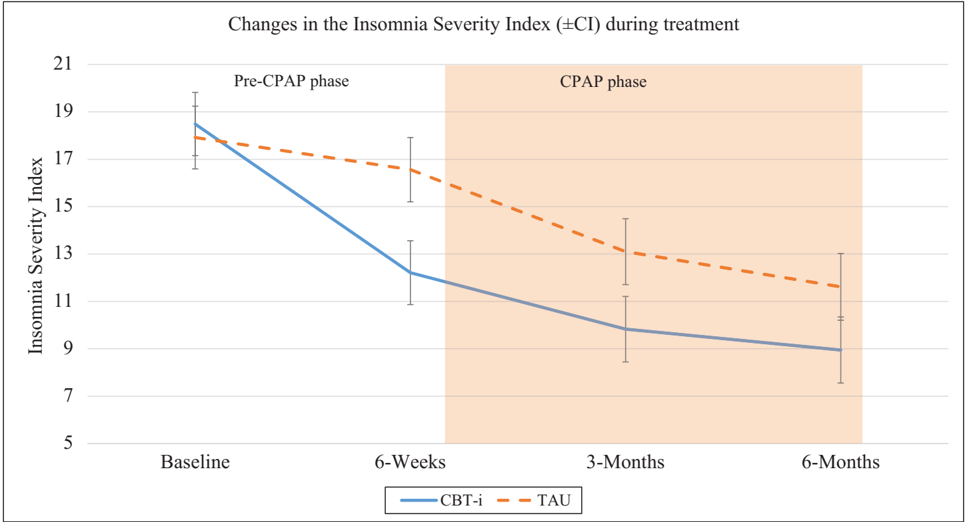
- CBT-i produced greater improvement in global insomnia severity and dysfunctional sleep-related cognitions by 6 months (both p < 0.001). Insomnia remission (ISI < 8) occurred in 53.2% of CBT-i vs 31.7% of TAU (p = 0.02), and positive insomnia response (ISI reduction > 7) in 62.9% vs 38.3% (p = 0.007).
- No between-group differences were found in PSG sleep outcomes or daytime impairment by 6 months; by 6 weeks there was a trend toward greater reduction in wake after sleep onset in CBT-i (26 min vs 4.9 min; overall interaction p = 0.078).
Methods
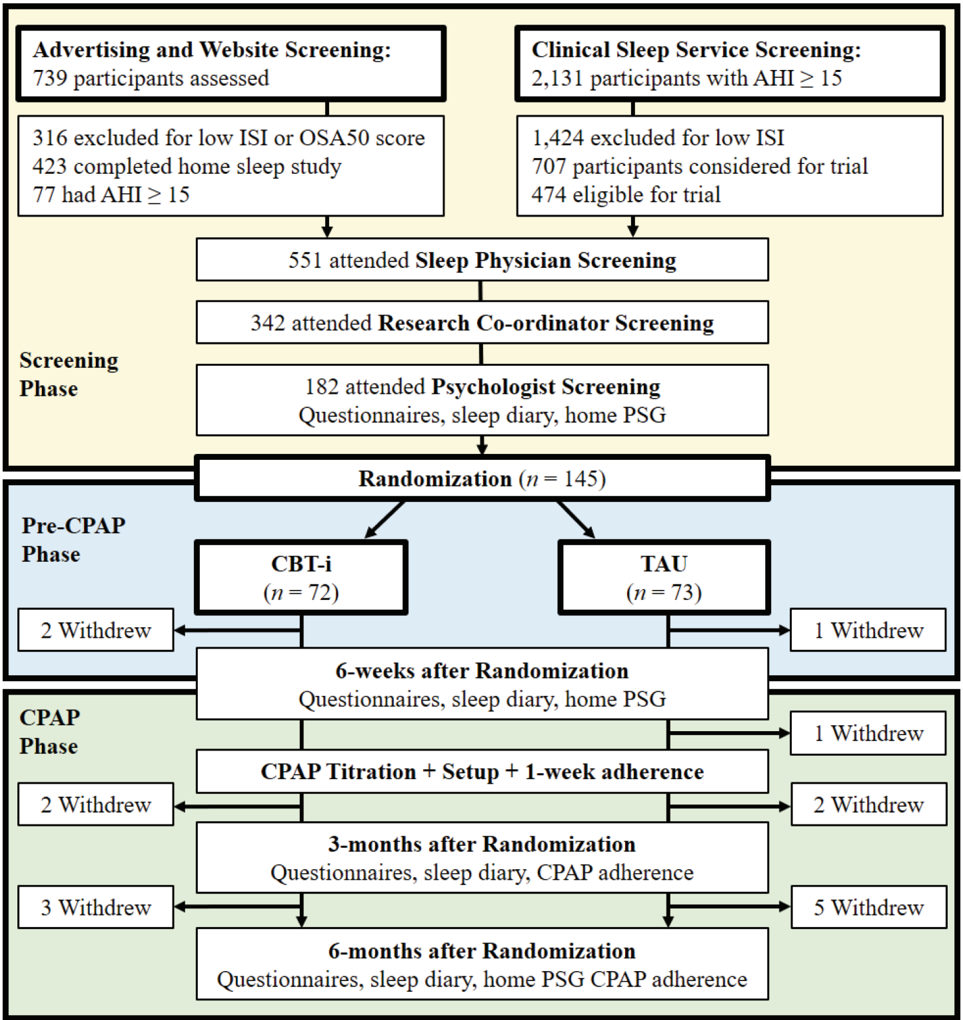
- Randomized controlled trial at two Australian teaching hospital sites (Adelaide and Brisbane) between November 2013 and April 2016. One hundred forty-five participants with OSA (AHI ≥ 15/h) and comorbid insomnia were randomized to four weekly 45-min CBT-i sessions or TAU before commencing CPAP, with follow-up to 6 months.
- Inclusion criteria included age 18–75 years, AHI ≥ 15/h on full-night PSG, physician-confirmed OSA and CPAP recommendation, and psychologist-established insomnia by ICSD-III criteria with ISI ≥ 14 and ISI subscore ≥ 4. Randomization used minimization to balance insomnia severity, AHI, gender, site, prior CPAP use, and age.
- Primary outcomes were average objective nightly CPAP adherence and change in objective sleep efficiency by 6 months. Linear mixed model intention-to-treat analyses were used, with Fisher’s exact test for immediate CPAP acceptance/rejection.
Limitations
- Stated: no placebo control was used during the CBT-i phase; objective sleep efficiency was measured by home PSG and partly depended on self-reported time in bed; and the sample had moderate/severe OSA and formally diagnosed insomnia, so results may not generalize to mild OSA or COMISA patients without formal insomnia diagnostic criteria.
- Evident from results/discussion: the average CPAP adherence advantage was largely driven by fewer immediate CPAP rejecters; among participants who accepted CPAP, there was no significant between-group difference in average adherence, though a trend suggested less decline in the CBT-i group over time (interaction p = 0.092).
- Evident from results: the group-by-time interaction for the primary CPAP adherence outcome was not statistically significant (overall interaction p = 0.171), despite the significant main group effect.
Model-written summary. Check it against the paper before relying on it.
Integrity signals
Registry
Cites
Statistics
Figures
Verification
Claims the paper makes
9 Valid · 1 Not valid · 11 Not checked · 65 Own results and interpretations
The cited sources support only part of this claim — read each source’s verdict below.
In the paper
“Preliminary evidence suggests that CBT-i is an effective treatment for insomnia in the presence of comorbid OSA [32,33].”
§ Cognitive and behavioral therapy for insomnia increases the use of continuous positive airway pressure therapy in obstructive sleep apnea participants with comorbid insomnia: a randomized clinical trial > Introduction
What the sources say
- Partly supportedcites [32] 32. Fung CH, et al. Efficacy of cognitive behavioral therapy for insomnia in older adults with occult sleep-disordered breathing. Psychosom Med. 2016;78(5):629-639. sourceExperimental — accuracy not yet measured
The Discussion reports that CBT-I improved sleep in older veterans with insomnia and untreated mild, occult sleep-disordered breathing. This supports preliminary efficacy in that group, but the claim extends it to comorbid OSA generally, without the study’s limits on severity and population. The indexed passages provide section labels but no page numbers. (LLM, conf=0.84)
- Not checked — no full text of the sourcecites [33] 33. Sweetman A, et al. Does comorbid obstructive sleep apnea impair the effectiveness of cognitive and behavioral therapy for insomnia? Sleep Med. 2017;39:38-46. source
states a possible cause- Asserted: passes — The authors put it forward as true.
- Checkable: passes — It can be checked against evidence.
- Load-bearing: passes — The paper’s conclusions depend on it.
- Based: passes — The paper gives a reason why it holds.
- Partly supported
Every source the paper cites for this claim was checked and supports it.
In the paper
“Although CPAP effectively stabilizes the upper airway and improves the clinical manifestations of OSA [17], patient acceptance and long-term adherence to CPAP remains a significant barrier to treatment.”
§ Cognitive and behavioral therapy for insomnia increases the use of continuous positive airway pressure therapy in obstructive sleep apnea participants with comorbid insomnia: a randomized clinical trial > Introduction
What the sources say
- Supportedcites [18] 18. Weaver TE, et al. Adherence to continuous positive airway pressure therapy: the challenge to effective treatment. Proc Am Thorac Soc. 2008;5(2):173-178. source
The discussion of CPAP use states that many patients refuse treatment because it requires a mask and machine, and calls this nonacceptance a crucial cause of nonadherence. The “Patterns of CPAP Adherence” section adds that use established in the first week predicts long-term use. Together, these passages support the claim that acceptance and sustained adherence are barriers to effective treatment. (LLM, conf=0.92)
plain- Asserted: passes — The authors put it forward as true.
- Checkable: passes — It can be checked against evidence.
- Load-bearing: passes — The paper’s conclusions depend on it.
- Based: passes — The paper gives a reason why it holds.
- Supported
A result the paper reports from its own data — it cites no other source for it, so there is none to check. The quote shows it is in the paper.
In the paper
“There was no between-group difference in rates of CPAP use during the 6-month PSG.”
§ Cognitive and behavioral therapy for insomnia increases the use of continuous positive airway pressure therapy in obstructive sleep apnea participants with comorbid insomnia: a randomized clinical trial > Polysomnographic sleep parameters
plain- Asserted: passes — The authors put it forward as true.
- Checkable: passes — It can be checked against evidence.
- Load-bearing: unclear — It is unclear whether the paper’s conclusions depend on it.
- Based: passes — The paper gives a reason why it holds.
A result the paper reports from its own data — it cites no other source for it, so there is none to check. The quote shows it is in the paper.
In the paper
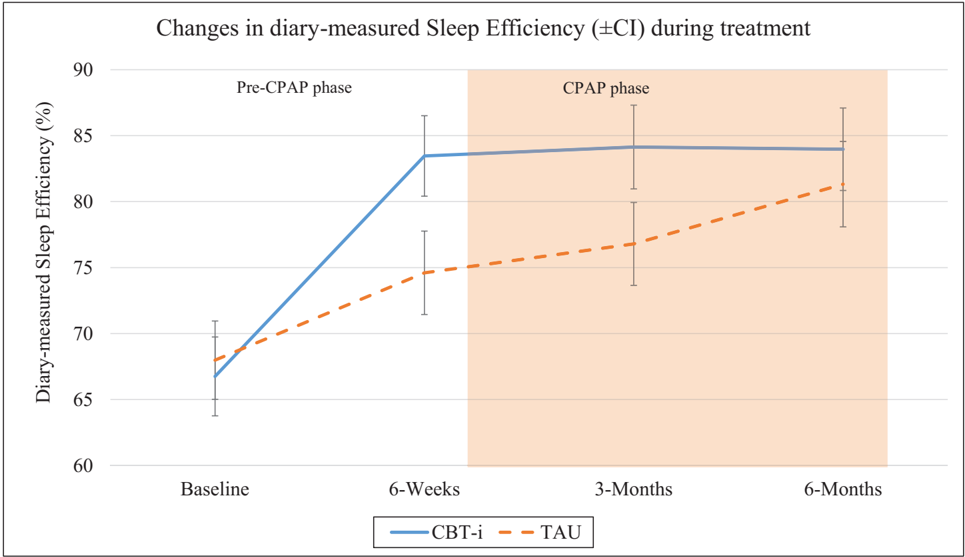
“Compared to TAU, participants in the CBT-i group reported significantly greater improvements in diarymeasured sleep onset latency, wake after sleep onset, and sleep efficiency from baseline to 6 weeks (Table 3, Figure 2).”
§ Cognitive and behavioral therapy for insomnia increases the use of continuous positive airway pressure therapy in obstructive sleep apnea participants with comorbid insomnia: a randomized clinical trial > CBT-i implementation and efficacy
plainstates a cause- Asserted: passes — The authors put it forward as true.
- Checkable: passes — It can be checked against evidence.
- Load-bearing: passes — The paper’s conclusions depend on it.
- Based: passes — The paper gives a reason why it holds.
37 more claims
Create a free account to see all 86 claims and every source verdict.
- It may state two separate claims as one. 23
- Probably not a substantial claim. 29
- The quote only partly states this claim. 1
Claims other papers make about this one
Each is checked against this paper’s own text: does it say what the citing paper says it does?
The cited source says what the claim attributes to it.
In the citing paper
“The ISI [54] is a brief, and valuable questionnaire measure of insomnia presence and severity, which has been utilized in several hundred insomnia treatment studies, including COMISA research [52,63,64,65].”
From Co-morbid insomnia and sleep apnea (COMISA): Prevalence, consequences, methodological considerations, and recent randomized controlled trials (2019) · cites this paper as [64]
The cited source says what the claim attributes to it.
In the citing paper
“Compared to the control group, we found that the CBTi group showed significantly greater improvement of sleep-diary parameters, the ISI, and dysfunctional sleep-related beliefs from pre- to post-CBTi, and subsequently showed greater initial acceptance of CPAP, and 61 min greater use by 6 months follow-up [64].”
From Co-morbid insomnia and sleep apnea (COMISA): Prevalence, consequences, methodological considerations, and recent randomized controlled trials (2019) · cites this paper as [64]
The cited source says what the claim attributes to it.
In the citing paper
“This ‘nocturnal’ score has also recently been investigated in other insomnia research [66,67], and has previously been utilized in several COMISA treatment studies [52,63,64].”
From Co-morbid insomnia and sleep apnea (COMISA): Prevalence, consequences, methodological considerations, and recent randomized controlled trials (2019) · cites this paper as [64]
The cited source says what the claim attributes to it.
In the citing paper
“Although several early pilot studies and a randomized controlled trial (RCT) reported mixed findings [69,75,76,77], more recent quasi-experimental and RCT data support the effectiveness of CBTi in COMISA patients [52,64,78,79].”
From Co-morbid insomnia and sleep apnea (COMISA): Prevalence, consequences, methodological considerations, and recent randomized controlled trials (2019) · cites this paper as [64]
The cited source says what the claim attributes to it.
In the citing paper
“Finally, our recent RCT data from 145 COMISA patients with moderate and severe OSA, indicated that CBTi leads to greater improvement in ISI scores, diary-measured sleep parameters, and dysfunctional beliefs and attitudes about sleep by post-treatment, compared to a no-treatment control group [64].”
From Co-morbid insomnia and sleep apnea (COMISA): Prevalence, consequences, methodological considerations, and recent randomized controlled trials (2019) · cites this paper as [64]
1 more claim about this paper
Create a free account to see every claim other papers make about this one.
Statistics recomputed
Every reported test result, recomputed from its test statistic and degrees of freedom. A result shows as not adding up only once an independent check has confirmed it.
- Consistentt(158.36) = 2.3reported p = .023 · recomputed p = .023
“t(158.36)= 2.30, p = .023”
- Consistentt(151.2) = -1.52reported p = .131 · recomputed p = .131
“t(151.2) = -1.52,p = .131”
Self-check
Percentages, sums and reported differences re-computed from the paper’s own numbers.
Each contradiction between two passages listed here was confirmed by an independent check.
Rated major: it would touch a result — a value a result rests on, reported and recomputed p-values on opposite sides of the significance level, two passages that conflict with no sign which is right, or a cited work retracted before this paper was published.
In the paper
§ Cognitive and behavioral therapy for insomnia increases the use of continuous positive airway pressure therapy in obstructive sleep apnea participants with comorbid insomnia: a randomized clinical trial > Polysomnographic sleep parameters
“Changes in objective sleep efficiency, sleep onset latency, wake after sleep onset, and total sleep time from baseline to 6 months and baseline to 6 weeks were not different between groups (Table 2).”
§ Cognitive and behavioral therapy for insomnia increases the use of continuous positive airway pressure therapy in obstructive sleep apnea participants with comorbid insomnia: a randomized clinical trial > Conclusion
“| WASO (min) | 95.7 | 69.7 | 63.8^ | .56 | 82.1 | 77.2 | 69.3 | .23 | .078 | | .078 | .037 |”
Citations
Cites
A New Method for Measuring Daytime Sleepiness: The Epworth Sleepiness Scale
Johns, M. W. (1991) · Sleep · doi:10.1093/sleep/14.6.540 · Cited by 17,364
Validation of the Insomnia Severity Index as an outcome measure for insomnia research
Bastien, C. (2001) · Sleep Medicine · doi:10.1016/s1389-9457(00)00065-4 · Cited by 8,067
(1995) · Cited by 6,909
(2007) · Cited by 6,530
Increased Prevalence of Sleep-Disordered Breathing in Adults
Peppard, P. E., Young, T., Barnet, J. H., Palta, M., Hagen, E. W., & Hla, K. M. (2013) · American Journal of Epidemiology · doi:10.1093/aje/kws342 · Cited by 4,618
Epidemiology of insomnia: what we know and what we still need to learn
Ohayon, M. M. (2002) · Sleep Medicine Reviews · doi:10.1053/smrv.2002.0186 · Cited by 3,743
Nieto, F. J. (2000) · JAMA · doi:10.1001/jama.283.14.1829 · Cited by 3,369
Adult Obstructive Sleep Apnea Task Force of the American Academy of Sleep Medicine, Epstein, L. J., Kristo, D., Strollo, P. J., Friedman, N., Malhotra, A., Patil, S. P., Ramar, K., Rogers, R., Schwab, R. J., et al. (2009) · Journal of Clinical Sleep Medicine · doi:10.5664/jcsm.27497 · Cited by 3,360
Depression Anxiety Stress Scales
Lovibond, S. H., & Lovibond, P. F. (2011) · PsycTESTS Dataset · doi:10.1037/t01004-000 · Cited by 2,416
CPAP for Prevention of Cardiovascular Events in Obstructive Sleep Apnea
McEvoy, R. D., Antic, N. A., Heeley, E., Luo, Y., Ou, Q., Zhang, X., Mediano, O., Chen, R., Drager, L. F., Liu, Z., et al. (2016) · New England Journal of Medicine · doi:10.1056/nejmoa1606599 · Cited by 2,101
Self-citation
Research works printed but not linked: 2
- 4. American Academy of Sleep Medicine. International Classification of Sleep Disorders, 3rd ed.: Diagnostic and Coding Manual. Westchester, IL: American Academy of Sleep Medicine; 2014.
- 21. Smith SS, et al. Sleep onset insomnia is associated with reduced adherence to CPAP therapy. Sleep Biol Rhythms. 2009;7:A74.
Cited by
International Consensus Statement on Obstructive Sleep Apnea
Chang, J. L., Goldberg, A. N., Alt, J. A., Mohammed, A., Ashbrook, L., Auckley, D., Ayappa, I., Bakhtiar, H., Barrera, J. E., Bartley, B. L., et al. (2023) · International Forum of Allergy & Rhinology · doi:10.1002/alr.23079 · Cited by 350
Sweetman, A., Lack, L., & Bastien, C. (2019) · Brain Sciences · doi:10.3390/brainsci9120371 · Cited by 253
Self-citationBi-directional relationships between co-morbid insomnia and sleep apnea (COMISA)
Sweetman, A., Lack, L., McEvoy, R. D., Smith, S., Eckert, D. J., Osman, A., Carberry, J. C., Wallace, D., Nguyen, P. D., & Catcheside, P. (2021) · Sleep Medicine Reviews · doi:10.1016/j.smrv.2021.101519 · Cited by 203
Self-citationHarvey, A. G., Dong, L., Hein, K., Yu, S. H., Martinez, A. J., Gumport, N. B., Smith, F. L., Chapman, A., Lisman, M., Mirzadegan, I. A., et al. (2021) · Journal of Consulting and Clinical Psychology · doi:10.1037/ccp0000650 · Cited by 94
“Individuals with sleep apnea and periodic limb movement disorder often have comorbid insomnia and poor sleep habits, and can benefit from CBT-I (23, 24).”
BackgroundInfluentialOng, J. C., Crawford, M., & Wallace, D. M. (2020) · CHEST Journal · doi:10.1016/j.chest.2020.12.002 · Cited by 103
Comorbid Insomnia and Obstructive Sleep Apnea (COMISA): Current Concepts of Patient Management
Ragnoli, B., Pochetti, P., Raie, A., & Malerba, M. (2021) · International Journal of Environmental Research and Public Health · doi:10.3390/ijerph18179248 · Cited by 100
Ong, J. C., Crawford, M. R., Dawson, S. C., Fogg, L. F., Turner, A. D., Wyatt, J. K., Crisostomo, M. I., Chhangani, B. S., Kushida, C. A., Edinger, J. D., et al. (2020) · Sleep · doi:10.1093/sleep/zsaa041 · Cited by 74
“These findings are consistent with previous reports which found that CBT-I can effectively treat insomnia among those with comorbid and untreated OSA [26, 48, 49].”
BackgroundMethodResultInfluentialSweetman, A., Lack, L., McEvoy, R. D., Antic, N. A., Smith, S., Chai-Coetzer, C. L., Douglas, J., O'Grady, A., Dunn, N., Robinson, J., et al. (2020) · ERJ Open Research · doi:10.1183/23120541.00161-2020 · Cited by 72
Self-citationMessineo, L., Eckert, D. J., Lim, R., Chiang, A., Azarbarzin, A., Carter, S. G., & Carberry, J. C. (2020) · The Journal of Physiology · doi:10.1113/jp280173 · Cited by 71
“CBT, the recommended therapeutic intervention for chronic insomnia, not only improves insomnia symptoms but also ameliorates CPAP adherence in people with comorbid OSA and insomnia (Sweetman et al. 2019).”
BackgroundInsomnia disorder: clinical and research challenges for the 21st century
Ferini‐Strambi, L., Auer, R., Bjorvatn, B., Castronovo, V., Franco, O. H., Gabutti, L., Galbiati, A., Hajak, G., Khatami, R., Kitajima, T., et al. (2021) · European Journal of Neurology · doi:10.1111/ene.14784 · Cited by 89
Self-citationSweetman, A., Farrell, S., Wallace, D. M., & Crawford, M. (2023) · Journal of Sleep Research · doi:10.1111/jsr.13847 · Cited by 67
“In three RCTs CBTi was combined with PAP therapy and compared to either PAP alone (Ong et al., 2020; Sweetman et al., 2019b), or PAP therapy with sleep hygiene advice (Bjorvatn et al., 2018).”
BackgroundMethodResultInfluentialSelf-citationAlessi, C. A., Fung, C. H., Dzierzewski, J. M., Fiorentino, L., Stepnowsky, C., Rodriguez Tapia, J. C., Song, Y., Zeidler, M. R., Josephson, K., Mitchell, M. N., et al. (2021) · Sleep · doi:10.1093/sleep/zsaa235 · Cited by 63
Sweetman, A., McEvoy, R. D., Smith, S., Catcheside, P. G., Antic, N. A., Chai-Coetzer, C. L., Douglas, J., O’Grady, A., Dunn, N., Robinson, J., et al. (2020) · Sleep · doi:10.1093/sleep/zsaa002 · Cited by 62
Self-citationManagement of insomnia in sleep disordered breathing
Janssen, H. C. J. P., Venekamp, L. N., Peeters, G. A. M., Pijpers, A., & Pevernagie, D. A. A. (2019) · European Respiratory Review · doi:10.1183/16000617.0080-2019 · Cited by 55
Cruz, M. G. M. E., Kryger, M. H., Morin, C. M., Palombini, L., Salles, C., & Gozal, D. (2021) · Sleep Medicine · doi:10.1016/j.sleep.2021.05.043 · Cited by 62
Bjorvatn, B., Jernelöv, S., & Pallesen, S. (2021) · Frontiers in Psychology · doi:10.3389/fpsyg.2021.639198 · Cited by 63
Mechanisms of cognitive behavioural therapy for insomnia
Altena, E., Ellis, J., Camart, N., Guichard, K., & Bastien, C. (2023) · Journal of Sleep Research · doi:10.1111/jsr.13860 · Cited by 52
“As insomnia is also highly comorbid with sleep apnea (Sweetman, Lack, Catcheside, et al., 2019), with the occurrence of both simultaneously being associated with a higher risk of mortality (Sweetman et al., 2022), CBT-I has been shown to be affective for both treating insomnia symptoms and the…”
BackgroundWallace, D. M., & Wohlgemuth, W. K. (2019) · Journal of Clinical Sleep Medicine · doi:10.5664/jcsm.8094 · Cited by 51
Baptista, P., Costantino, A., Moffa, A., Rinaldi, V., & Casale, M. (2020) · Nature and Science of Sleep · doi:10.2147/nss.s221542 · Cited by 60
Approach the Patient With Obstructive Sleep Apnea and Obesity
Meyer, E. J., & Wittert, G. (2023) · The Journal of Clinical Endocrinology & Metabolism · doi:10.1210/clinem/dgad572 · Cited by 69
Mysliwiec, V., Brock, M. S., Pruiksma, K. E., Straud, C. L., Taylor, D. J., Hansen, S. L., Foster, S. N., Mithani, S., Zwetzig, S. E., Gerwell, K. M., et al. (2022) · SLEEP · doi:10.1093/sleep/zsac203 · Cited by 49
Comorbid Insomnia and Sleep Apnea
Sweetman, A., Lack, L. C., Crawford, M., & Wallace, D. M. (2022) · Sleep Medicine Clinics · doi:10.1016/j.jsmc.2022.07.006 · Cited by 56
Self-citationYounes, M. K., Gerardy, B., Pack, A. I., Kuna, S. T., Castro‐Diehl, C., & Redline, S. S. (2022) · SLEEP · doi:10.1093/sleep/zsac059 · Cited by 52
Sweetman, A., Lovato, N., Micic, G., Scott, H., Bickley, K., Haycock, J., Harris, J., Gradisar, M., & Lack, L. (2020) · Sleep Medicine · doi:10.1016/j.sleep.2020.08.023 · Cited by 39
Self-citationSweetman, A., Lack, L. C., McEvoy, R. D., CATCHESIDE, P. G., Antic, N. A., Chai‐Coetzer, C. L., Douglas, J. A., O’Grady, A., Dunn, N., Robinson, J., et al. (2020) · Journal of Clinical Sleep Medicine · doi:10.5664/jcsm.8944 · Cited by 43
“001) indicated a greater reduction in ISI scores in the CBTi than the control group, confirming theprevious results.(22)Amain effect of depression (P <.”
InfluentialSelf-citationSweetman, A., Lechat, B., Appleton, S., Reynolds, A. C., Adams, R., & Melaku, Y. A. (2022) · Sleep Epidemiology · doi:10.1016/j.sleepe.2022.100043 · Cited by 39
Self-citationCo-morbid insomnia and sleep apnea (COMISA): recent research and future directions
Sweetman, A., Osman, A. M., Lack, L. C., Crawford, M., & Wallace, D. M. (2023) · Current Opinion in Pulmonary Medicine · doi:10.1097/mcp.0000000000001007 · Cited by 43
Self-citationTelehealth, Telemedicine, and Obstructive Sleep Apnea
Schutte-Rodin, S. (2020) · Sleep Medicine Clinics · doi:10.1016/j.jsmc.2020.05.003 · Cited by 37
Younes, M. K., & Giannouli, E. (2020) · Journal of Clinical Sleep Medicine · doi:10.5664/jcsm.8214 · Cited by 30
Comorbid Insomnia and Sleep Apnea: From Research to Clinical Practice
Cruz, M. G. M. E., & Sweetman, A. (2025) · Seminars in Respiratory and Critical Care Medicine · doi:10.1055/a-2591-5664 · Cited by 37
Self-citationBeaudin, A. E., Raneri, J. K., Ahmed, S. B., Allen, A. J. H., Nocon, A., Gomes, T., Gakwaya, S., Sériès, F., Kimoff, J. R., Skomro, R., et al. (2022) · SLEEP · doi:10.1093/sleep/zsac088 · Cited by 31
Sleep Deficiency in Obstructive Sleep Apnea
Adekolu, O., & Zinchuk, A. V. (2022) · Clinics in Chest Medicine · doi:10.1016/j.ccm.2022.02.013 · Cited by 28
Lundetræ, R. S., Saxvig, I. W., Aurlien, H., Lehmann, S., & Bjorvatn, B. (2021) · Frontiers in Psychology · doi:10.3389/fpsyg.2021.691495 · Cited by 26
Armstrong, C. C., Dong, L., & Harvey, A. G. (2022) · Behaviour Research and Therapy · doi:10.1016/j.brat.2022.104053 · Cited by 22
Tu, A. Y., Crawford, M., Dawson, S. C., Fogg, L., Turner, A. D., Wyatt, J. K., Crisostomo, M. I., Chhangani, B. S., Kushida, C. A., Edinger, J. D., et al. (2021) · Journal of Clinical Sleep Medicine · doi:10.5664/jcsm.9696 · Cited by 26
Co-morbid Insomnia and Sleep Apnoea (COMISA): Latest Research from an Emerging Field
Sweetman, A. (2023) · Current Sleep Medicine Reports · doi:10.1007/s40675-023-00262-9 · Cited by 22
Self-citationCrowther, M. E., Saunders, W. J., Sletten, T. L., Drummond, S. P. A., & Bei, B. (2023) · Journal of Sleep Research · doi:10.1111/jsr.14023 · Cited by 21
“A minimum of 5.5 h was also used in a trial of CBT-I within a comorbid insomnia and sleep apnoea sample, with the initial TIB further modified for each individual based on baseline waketime sleepiness (Sweetman et al., 2019).”
MethodInfluentialRecent Advances in Diagnosis and Treatment of Insomnia Disorder
Kim, S. J. (2020) · 신경정신의학 · doi:10.4306/jknpa.2020.59.1.2 · Cited by 20
Stepped care management of insomnia co-occurring with sleep apnea: the AIR study protocol
Eldridge-Smith, E. D., Manber, R., Tsai, S. C., Kushida, C. A., Simmons, B., Johnson, R. E., Horberg, R., Depew, A., Abraibesh, A., Simpson, N. S., et al. (2022) · Trials · doi:10.1186/s13063-022-06753-4 · Cited by 18
Obstructive sleep apnoea–hypopnoea syndrome
Read, N., Jennings, C., & Hare, A. (2023) · Emerging Topics in Life Sciences · doi:10.1042/etls20180939 · Cited by 17
Drakou, T., Steiropoulos, P., Saroglou, M., Georgopoulou, A., Kazis, D., Papagiannopoulos, S., Porpodis, Κ., & Τryfon, S. (2021) · Sleep And Breathing · doi:10.1007/s11325-020-02266-z · Cited by 19
Brooker, E. J., Landry, S. A., Genta, P. R., Abdelmessih, G. T., Edwards, B. A., & Drummond, S. P. A. (2025) · Journal of Clinical Sleep Medicine · doi:10.5664/jcsm.11636 · Cited by 15
The Hidden Burden of COMISA: Clinical Implications and Treatment Challenges
Popovici, C., Steiropoulos, P., Mihaicuta, S. D., Dumitru, S., Dragila, S., Bikov, A., & Corlăteanu, A. (2025) · Pulmonary Therapy · doi:10.1007/s41030-025-00331-0 · Cited by 21
“One study demonstrated that CBT-I delivered prior to CPAP initiation significantly improved both PAP adherence and insomnia symptoms compared with initiating CPAP alone [52].”
Sweetman, A., Lechat, B., CATCHESIDE, P. G., Smith, S. S., Antic, N. A., O’Grady, A., Dunn, N., McEvoy, R. D., & Lack, L. C. (2021) · Frontiers in Psychology · doi:10.3389/fpsyg.2021.676763 · Cited by 14
Self-citationRefining the Measurement of Insomnia in Patients With Obstructive Sleep Apnea
Sweetman, A., Lack, L., & McEvoy, D. (2019) · Journal of Clinical Sleep Medicine · doi:10.5664/jcsm.8108 · Cited by 13
“1,15 Therefore, the adoption of psychological services directed toward the identi fi cation and treatment of insomnia will assist sleep clinics in improving treatment outcomes for patients with OSA.”
Self-citationRisk of resistant hypertension associated with insomnia in patients with obstructive sleep apnea
Wu, H., & Guo, Y. (2022) · Sleep Medicine · doi:10.1016/j.sleep.2022.12.001 · Cited by 14
Sweetman, A., Reynolds, C. M., Lack, L. C., Vakulin, A., Chai‐Coetzer, C. L., Wallace, D. M., Crawford, M., & Richardson, C. E. (2024) · Frontiers in Sleep · doi:10.3389/frsle.2024.1355468 · Cited by 14
Self-citationSymptom subtypes of obstructive sleep apnea 10 years later: past, present, and future
Keenan, B. T., Ye, L., Pien, G. W., Magalang, U. J., Benediktsdóttir, B., Gíslason, Þ., & Pack, A. I. (2025) · SLEEP · doi:10.1093/sleep/zsaf082 · Cited by 16
Solelhac, G., Wachinou, A. P., Goyal, A., Imler, T., Pakhare, A. P., Sen, A. K., Haba-Rubio, J., Heiniger, G., Waeber, A., Vollenweider, P., et al. (2025) · Sleep Medicine · doi:10.1016/j.sleep.2025.106526 · Cited by 17
Jomha, M., Dabboussi, T., Parker, N. P., Manchanda, S., Chernyak, Y., & Stahl, S. M. (2022) · Sleep Medicine · doi:10.1016/j.sleep.2022.06.016 · Cited by 13
Chu, Y., & Zinchuk, A. V. (2024) · Journal of Clinical Medicine · doi:10.3390/jcm13061636 · Cited by 16
“In summary, those with mild-to-moderate airway collapsibility, lower LG, higher ArTH, and weaker muscle compensation may be better candidates for OAT.”
BackgroundMcBain, S. A., & Cordova, M. J. (2024) · Journal of Traumatic Stress · doi:10.1002/jts.23075 · Cited by 15
Carmody, J. K., Duraccio, K. M., Krietsch, K. N., Simmons, D. M., & Byars, K. C. (2022) · Sleep Medicine · doi:10.1016/j.sleep.2022.10.011 · Cited by 12
Billings, M. E., & Pendharkar, S. R. (2020) · Sleep Medicine Clinics · doi:10.1016/j.jsmc.2020.10.005 · Cited by 12
Impact of the COVID-19 pandemic on obstructive sleep apnea: recommendations for symptom management
Rizzo, D., Libman, E., Baltzan, M., Fichten, C. S., & Bailes, S. (2020) · Journal of Clinical Sleep Medicine · doi:10.5664/jcsm.8922 · Cited by 11
D'Rozario, A. L., Galgut, Y., Crawford, M., & Bartlett, D. J. (2021) · Sleep Medicine Clinics · doi:10.1016/j.jsmc.2020.10.006 · Cited by 12
Pépin, J., Attias, D., Baillieul, S., Messaoud, R. B., Béquignon, É., Gagnadoux, F., Gentina, T., Heinzer, R. C., Patout, M., Perrin, C., et al. (2025) · Sleep Medicine · doi:10.1016/j.sleep.2025.106522 · Cited by 12
Bensen-Boakes, D.-B., Osman, A. M., Lack, L. C., CATCHESIDE, P. G., Antic, N. A., Smith, S. S., Chai‐Coetzer, C. L., O’Grady, A., Dunn, N., Robinson, J., et al. (2022) · Applied Sciences · doi:10.3390/app12041787 · Cited by 17
Self-citationGeneral practitioner management of comorbid insomnia and sleep apnoea
Sweetman, A., Frank, O., Stocks, N. P., Mukherjee, S., & Lack, L. C. (2023) · Australian Journal of General Practice · doi:10.31128/ajgp-12-22-6648 · Cited by 11
Self-citationCerebral small vessel disease: The impact of glymphopathy and sleep disorders
Hein, Z. M., Nassir, C. M. N. C. M., Ramli, M. D. C., Jaffer, U., Mehat, M. Z., Mustapha, M., & Hamid, H. A. (2025) · Journal of Cerebral Blood Flow & Metabolism · doi:10.1177/0271678x251333933 · Cited by 13
“Therapeutic interventions aimed at improving sleep quality, such as cognitive-behavioural therapy (CBT) for insomnia, continuous positive airway pressure (CPAP) for sleep apnoea, 17 and pharmacological treatments, may enhance glymphatic function and mitigate CSVD progression.”
Sweetman, A., Richardson, C. E., Smith, A. B., & Reynolds, C. M. (2025) · Journal of Sleep Research · doi:10.1111/jsr.70114 · Cited by 9
“It is possible that tailored digital CBTi may improve PAP use in people with COMISA that are naïve to PAP (Alessi et al. 2021; Sweetman et al. 2019), and those who have already been prescribed PAP therapy (Eldridge-Smith et al. 2022).”
Self-citationIntervención psicológica en trastornos del sueño: una revisión actualizada
García, H. B. Á., & Jiménez‐Correa, U. (2020) · Clínica Contemporánea · doi:10.5093/cc2020a9 · Cited by 17
Baron, K. G., Gilles, A. A., Sundar, K. M., Baucom, B., Duff, K. M., & Troxel, W. (2022) · Pilot and Feasibility Studies · doi:10.1186/s40814-022-01089-x · Cited by 11
Liu, J., Zang, C., Yi, M., & Zhang, Y. (2024) · Behavioral Sleep Medicine · doi:10.1080/15402002.2024.2324361 · Cited by 8
Andersen, M. L., Gozal, D., & Tufik, S. (2024) · Sexual Medicine Reviews · doi:10.1093/sxmrev/qeae068 · Cited by 8
El-Solh, A., Lawson, Y., Martinson, A. A., & Wilding, G. E. (2025) · Psychiatric Quarterly · doi:10.1007/s11126-025-10143-9 · Cited by 7
“Although four randomized controlled trials (RCTs) concluded that CBT-I improves insomnia symptoms in patients with COMISA and can be safely administered prior to OSA treatment [16–19 ],, two RCTs found no significant benefit of CBT-I for improving CPAP adherence [17, 18].”
Ho, K. K., Simić, M., Pinheiro, M. B., Miller, C. B., Ferreira, M. L., Grunstein, R. R., Hopper, J. L., Ordoñana, J. R., & Ferreira, P. H. (2022) · Pilot and Feasibility Studies · doi:10.1186/s40814-022-01087-z · Cited by 10
Gao, Y., Guo, Y., Dong, J., Liu, Y., Hu, W., Lu, M., Shen, Y., Liu, Y., Wei, Y., Wang, Z., et al. (2022) · Clinical Cardiology · doi:10.1002/clc.23941 · Cited by 8
Shi, Y., Nie, Y., Hao, F., Feng, X., Zhang, Y., Sanford, L. D., Ren, R., & Tang, X. (2025) · Respiratory Research · doi:10.1186/s12931-025-03193-x · Cited by 10
Sleep-Disordered Breathing Risk with Comorbid Insomnia Is Associated with Mild Cognitive Impairment
Agudelo, C., Ramos, A. R., Sun, X., Kaur, S., Papa, D. D., Kather, J., Wallace, D. M., & (ADNI), O. B. O. T. A. D. N. I. (2022) · Applied Sciences · doi:10.3390/app12052414 · Cited by 6
Multimodal Treatment of Sleep Apnea
Gonzalo Labarca, T., Henríquez‐Beltrán, M., & Messineo, L. (2024) · Sleep Medicine Clinics · doi:10.1016/j.jsmc.2024.10.006 · Cited by 8
El-Solh, A., Martinson, A. A., Attai, P., Homish, G. G., Aibangbee, K. E., & Gould, E. (2025) · Sleep And Breathing · doi:10.1007/s11325-025-03298-z · Cited by 5
“Although clinical trials have demonstrated the clinical effectiveness of cognitive behavioral therapy for insomnia in patients with COMISA [26– 28], identifying uniform 2 A receiver operator characteristic curve for total sleep time.”
Patient preferences in obstructive sleep apnea—a discrete choice experiment
Braun, M., Dietz-Terjung, S., Taube, C., & Schoebel, C. (2022) · Sleep And Breathing · doi:10.1007/s11325-021-02549-z · Cited by 7
Bertrand, M., Bastien, C., Boutin, I., & Vallières, A. (2022) · Sleep Medicine · doi:10.1016/j.sleep.2021.11.016 · Cited by 8
Circadian factors in comorbid insomnia and sleep apnea
Sweetman, A., Reynolds, A. C., & Lack, L. C. (2021) · Journal of Clinical Sleep Medicine · doi:10.5664/jcsm.9408 · Cited by 7
Self-citationMouchati, C., Grigg-Damberger, M. M., Ahdab, J. E., Mora-Muñoz, L., Katzan, I. L., Thompson, N. R., Pascoe, M., Walia, H. K., & Foldvary‐Schaefer, N. (2025) · Sleep Medicine · doi:10.1016/j.sleep.2025.106600 · Cited by 9
Duarte, R. L. M., Magalhães-da-Silveira, F. J., & Gozal, D. (2021) · Journal of Clinical Sleep Medicine · doi:10.5664/jcsm.9842 · Cited by 5
Insomnia and Upper Airway Stimulation Therapy Benefit and Adherence: A Case Series
Stahl, S. M., Manchanda, S., Parker, N. P., & Chernyak, Y. (2022) · Journal of Clinical Psychology in Medical Settings · doi:10.1007/s10880-022-09885-6 · Cited by 6
Positive Airway Pressure Therapy Compliance in Patients With Comorbid Insomnia and Sleep Apnea
Bae, M. R., Lee, Y.-H., Lee, S. W., Chung, S., & Chung, Y. (2024) · Clinical and Experimental Otorhinolaryngology · doi:10.21053/ceo.2023.00017 · Cited by 5
Management of Adult Obstructive Sleep Apnoea: Many Questions, Not Enough Answers!
Stanczyk, M., McNicholas, W. T., Pevernagie, D., Riha, R. L., & Ryan, S. (2025) · Journal of Sleep Research · doi:10.1111/jsr.70047 · Cited by 7
“CPAP usage is generally lower in COMISA than in OSA alone (Philip et al. 2018; Wallace et al. 2018) and insomnia-targeting strategies such as cognitive behavioural therapy for insomnia (CBT-I) may be beneficial (Alessi et al. 2021; Sweetman et al. 2019).”
Sleep Deficiency in Obstructive Sleep Apnea
Adekolu, O., Ahsan, M., Anwar, A. I., & Zinchuk, A. V. (2024) · Sleep Medicine Clinics · doi:10.1016/j.jsmc.2024.08.002 · Cited by 4
Influence of Age on Adherence to Auto-CPAP: Experience from a Sleep Center in Portugal
Barroso, A., Carrondo, M. C., & Moita, J. (2022) · Advances in respiratory medicine · doi:10.5603/arm.a2022.0014 · Cited by 6
Overview of Medication Treatment for Co-Morbid Insomnia and Sleep Apnea (COMISA)
Lowe, A. D., & Lowe, M. S. (2022) · Springer eBooks · doi:10.1007/978-3-030-93146-9_18 · Cited by 4
Beyond cognition and sleep: Stop the domino effect
Amin, S. N., Khashaba, A. S., Alazzam, A. Y., ALKHAWALDAH, H. M., ALBAKRI, K. A., ALMAJDOUBAH, O. A., Alabdallat, Y. J., & SEIF, A. S. A. (2023) · Journal of Experimental and Clinical Medicine · doi:10.52142/omujecm.40.1.28 · Cited by 8
Conley, S., Jeon, S., Wang, Z., Tocchi, C., Linsky, S., O’Connell, M., & Redeker, N. S. (2023) · Journal of Sleep Research · doi:10.1111/jsr.14058 · Cited by 4
“Previous randomised control trials demonstrated that CBT-I improves insomnia symptoms, daytime sleepiness, and decreases the AHI (Alessi et al., 2020; Sweetman et al., 2019; Sweetman et al., 2020) among people with comorbid insomnia and sleep apnea.”
Insomnia disorder update: the benefits of screening and treatment for this common presentation
Ree, M. J., & Richardson, C. E. (2021) · Internal Medicine Journal · doi:10.1111/imj.15567 · Cited by 5
Morris, J. L., Patel, S. R., & Luyster, F. S. (2025) · Behavioral Sleep Medicine · doi:10.1080/15402002.2025.2549552 · Cited by 2
Siengsukon, C. F., Robichaud, J., Nelson, E., Glaser, A., Baber, G., Gratton, M., Zanotto, A., Phadnis, M. A., & LYNCH, S. G. (2026) · Contemporary Clinical Trials Communications · doi:10.1016/j.conctc.2026.101595 · Cited by 2
Sleep and obesity—known interactions and open questions
Schmickl, C. N., Gomez, R., Sunwoo, B. Y., Mesarwi, O. A., Kumar, A., & Malhotra, A. (2026) · Journal of Clinical Sleep Medicine · doi:10.1007/s44470-026-00130-7 · Cited by 3
“In patients with COMISA, CBT-I may improve insomnia symptoms and facilitate subsequent CPAP acceptance and adherence [51].”
Ee, J. S., Pham, C. K., Shaha, D. P., Rogers, M. C., Cacace, G. S., & Mounts, C. W. (2021) · Military Medicine · doi:10.1093/milmed/usaa306 · Cited by 3
The association between irregularity in sleep-wake rhythm and CPAP adherence
Honma, A., Nohara, M., Honma, S., & Homma, A. (2024) · npj Biological Timing and Sleep · doi:10.1038/s44323-024-00001-5 · Cited by 2
“Alternative treatments are needed when CPAP itself exacerbates patients ’ sleep quality, but treatments for insomnia also improve CPAP adherence in patients with OSA and comorbid insomnia symptoms 40 .”
Patient accessibility and utilization of behavioral sleep medicine referrals in an academic center
Chernyak, Y., Ofner, S., Williams, M. K., Bolarinwa, C., Manchanda, S., & Otte, J. L. (2024) · Journal of Clinical Sleep Medicine · doi:10.5664/jcsm.11252 · Cited by 2
Sweetman, A., Reynolds, C. M., Spiegelhalder, K., Rajagopalan, P., & Richardson, C. E. (2025) · Current Pulmonology Reports · doi:10.1007/s13665-025-00387-y · Cited by 2
Self-citationSex Differences in Etiologies of Sleep Disorders
Choi, S. J., Kim, D., Hwang, Y., Jo, H., & Joo, E. Y. (2020) · Journal of Sleep Medicine · doi:10.13078/jsm.200023 · Cited by 2
ATS Core Curriculum 2021. Adult Sleep Medicine: Sleep Apnea
Jamil, S. M., Shafazand, S., Dudley, K. A., Lipford, M. C., Gu, C., Jun, J. C., Budnick, I. M., Davis, E. M., Kent, D. T., Stanley, J. J., et al. (2021) · ATS Scholar · doi:10.34197/ats-scholar.2021-0027re · Cited by 3
Die Rolle von Schlafproblemen in der muskuloskelettalen Physiotherapie – Teil 1
Runge, N., & Suckow, M. (2023) · MSK – Muskuloskelettale Physiotherapie · doi:10.1055/a-2013-4589 · Cited by 2
Iwashita, M., Yamadera, W., Hotchi, A., Utsumi, T., Amagai, M., Ishii, J., Suzuki, T., Itoh, H., & Shigeta, M. (2022) · Sleep and Biological Rhythms · doi:10.1007/s41105-022-00395-4 · Cited by 3
“In addition, previous studies have suggested that CBT-I may be effective in improving comorbidity symptoms [8, 11, 33, 37], but we did not verify this effect in the present study.”
BackgroundZhang, Y., Somers, V. K., & Tang, X. (2025) · The Lancet Respiratory Medicine · doi:10.1016/s2213-2600(25)00015-3 · Cited by 1
Winter, S., Crocker, S., Rolls, T., Curtin, D., Haratsis, J. M., Rautenberg, T. A., & Szollosi, I. (2025) · BMC Health Services Research · doi:10.1186/s12913-025-13134-5 · Cited by 1
Comorbid insomnia and sleep apnea (COMISA)
Sweetman, A. (2025) · Elsevier eBooks · doi:10.1016/b978-0-443-13954-3.00039-5 · Cited by 1
Self-citation
Metadata
- Authors
- Sweetman, A., Lack, L., Catcheside, P. G., Antic, N. A., Smith, S., Chai-Coetzer, C. L., Douglas, J., O’grady, A., Dunn, N., Robinson, J., Paul, D., Williamson, P., & McEvoy, R. D.
- Affiliations
- Flinders University (AU)
- The University of Queensland (AU)
- The Adelaide Institute for Sleep Health: A Centre of Research Excellence, College of Medicine and Public Health, Flinders University of South Australia, Bedford Park, South Australia, Australia
- Prince Charles Hospital (AU)
- Corresponding author
- Sweetman, Alexander
- Venue
- Sleep
- Publisher
- Oxford University Press (OUP)
- Published
- 2019-08-12
- Volume
- 42
- Issue
- 12
- ISSN
- 0161-8105 (ISSN-L)
- 1550-9109
- OpenAlex
- W2967584826
- Cited by
- 149
- References
- 55
- Citations by year
- 2026: 19 · 2025: 30 · 2024: 14 · 2023: 14 · 2022: 31 · 2021: 19 · 2020: 17 · 2019: 4
- FWCI
- 20.87
- Type
- journal article
- Language
- en
- Open access
- hybrid
- doi.org
- Licence
- Locations
- SLEEP (publishedVersion, cc-by)
- PubMed (publishedVersion)
- Adelaide Research & Scholarship (AR&S) (University of Adelaide) (submittedVersion)
- Funders
- Australian Research Council Future Fellowship (FT120100510)
- Philips Respironics
- Re-timer
- Topics
- Social Sciences › Psychology › Experimental and Cognitive Psychology › Sleep and related disorders
- Health Sciences › Medicine › Physiology (medical) › Obstructive Sleep Apnea Research
- Health Sciences › Dentistry › Oral Surgery › Temporomandibular Joint Disorders
- Keywords
- obstructive sleep apnea, insomnia comorbidity, continuous positive airway pressure, CPAP adherence, CPAP acceptance, sleep efficiency, insomnia severity, daytime dysfunction, usual care
- MeSH terms
- Adult, Aged, Australia, Female, Follow-Up Studies, Humans, Sleep Initiation and Maintenance Disorders, Male, Middle Aged, Sleep, Comorbidity, Cognitive Behavioral Therapy, Sleep Apnea, Obstructive, Continuous Positive Airway Pressure, Young Adult
About these checks
Registry, retraction, Cites and statistics results are computed, not judged, with one exception: a printed reference that no index lists is read once by a model before it counts as a citation error. Claims are extracted by a model and kept only when their quote appears verbatim in the text; each cited source is then checked, with a model’s help, for whether it says what the claim relies on. Those verdicts can be wrong — read the claim’s quote and the cited source before relying on one.
The claim verdicts this report counts are experimental: their accuracy is not yet measured.
A language model drew the claims from the paper on 2026-10-11, under version 3 of the claim definition (model deepseek-v4.1-flash, prompt extract-v3).
A second model labelled each claim on 2026-10-11 (model jev-1.13-20260917, definition revision gold-guideline-v0.2).
Cited sources are checked with a language model’s help (gpt-6-sol).
Statistics and arithmetic are recomputed, not judged.
Confidence bands are shown only for fields calibrated on our annotated test set. None is calibrated yet, so no band is shown.
What counts as a claim ›How we measure confidence ›How we check this ›
Are you an author, or do you see a problem with this page? Request a review
Data sources
Bibliographic data: Semantic Scholar, OpenAlex, Crossref.
Contains information from the Semantic Scholar Academic Graph Datasets, made available under the ODC Attribution License (ODC-BY 1.0).
Semantic Scholar’s data is described in: Kinney, R., et al. (2023). The Semantic Scholar Open Data Platform. arXiv:2301.10140.
