

Are physical activity interventions for healthy inactive adults effective in promoting behavior change and maintenance, and which behavior change techniques are effective? A systematic review and meta-analysis
Open accessThe DOI matches its Crossref record; 79 of the 79 references it cites were found in a registry or an index.
Abstract
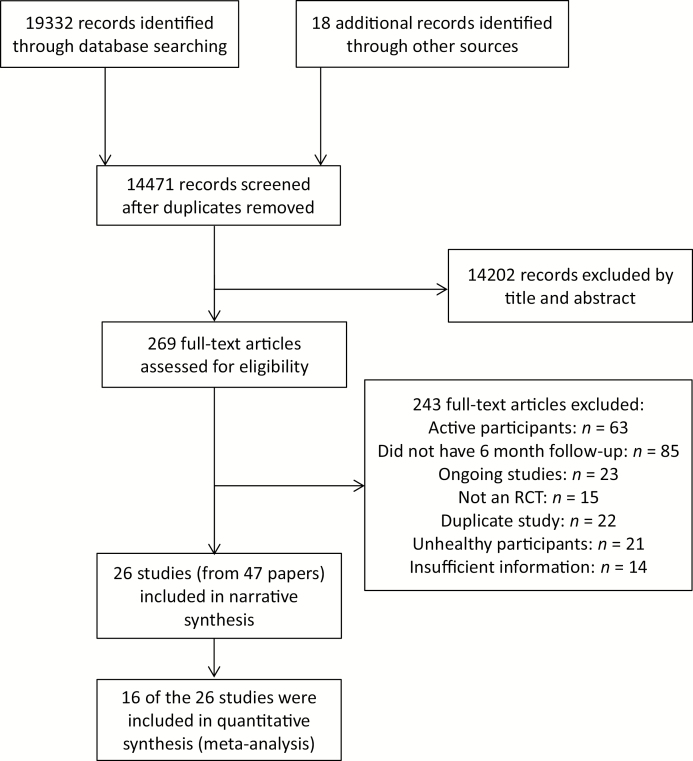
Physical inactivity and sedentary behavior relate to poor health outcomes independently. Healthy inactive adults are a key target population for prevention. This systematic review and meta-analysis aimed to evaluate the effectiveness of physical activity and/or sedentary behavior interventions, measured postintervention (behavior change) and at follow-up (behavior change maintenance), to identify behavior change techniques (BCT) within, and report on fidelity. Included studies were randomized controlled trials, targeting healthy inactive adults, aiming to change physical activity and/or sedentary behavior, with a minimum postintervention follow-up of 6 months, using 16 databases from 1990. Two reviewers independently coded risk of bias, the "Template for Intervention Description and Replication" (TIDieR) checklist, and BCTs. Twenty-six studies were included; 16 pooled for meta-analysis. Physical activity interventions were effective at changing behavior (d = 0.32, 95% confidence intervals = 0.16-0.48, n = 2,346) and maintaining behavior change after 6 months or more (d = 0.21, 95% confidence intervals = 0.12-0.30, n = 2,190). Sedentary behavior interventions (n = 2) were not effective. At postintervention, physical activity intervention effectiveness was associated with the BCTs "Biofeedback," "Demonstration of the behavior," "Behavior practice/rehearsal," and "Graded tasks." At follow-up, effectiveness was associated with using "Action planning," "Instruction on how to perform the behavior," "Prompts/cues," "Behavior practice/rehearsal," "Graded tasks," and "Self-reward." Fidelity was only documented in one study. Good evidence was found for behavior change maintenance effects in healthy inactive adults, and underlying BCTs. This review provides translational evidence to improve research, intervention design, and service delivery in physical activity interventions, while highlighting the lack of fidelity measurement.
Overview
The claims and statistics of this paper haven’t been checked yet.
Free: it reads the open-access text and checks the first 5 claims that cite a source we can check. Create a free account to check every claim.
Integrity signals
Registry
Cites
Statistics
Figures
Verification
Claims the paper makes
The claims and statistics of this paper haven’t been checked yet.
Free: it reads the open-access text and checks the first 5 claims that cite a source we can check. Create a free account to check every claim.
Claims other papers make about this one
Each is checked against this paper’s own text: does it say what the citing paper says it does?
The cited source doesn’t support the claim as written.
In the citing paper
“In addition, lifestyle interventions have shown to be effective in reducing sedentary behavior [13].”
From Consumer-based wearable activity trackers increase physical activity participation: systematic review and meta-analysis (2019) · cites this paper as [13]
Checked by a reasoning model — may be wrong.
Experimental — accuracy not yet measuredThe source backs part of the claim, not all of it — or backs it for a different population, condition or comparison.
In the citing paper
“Interventions shown to increase PA level or reduce sedentary behaviour include behaviour theory-based interventions, such as goal-setting, re-evaluation of goals, self-monitoring, and feedback.112,113”
From 2023 ESC guidelines for the management of cardiovascular disease in patients with diabetes. (2023) · cites this paper as [113]
Experimental — accuracy not yet measured
Self-check
Percentages, sums and reported differences re-computed from the paper’s own numbers.
The self-check needs the paper’s full text.
Citations
Cites
The Cochrane Collaboration's tool for assessing risk of bias in randomised trials
Higgins, J. P. T., Altman, D. G., Gotzsche, P. C., Juni, P., Moher, D., Oxman, A. D., Savovic, J., Schulz, K. F., Weeks, L., Sterne, J. A. C., et al. (2011) · BMJ · doi:10.1136/bmj.d5928 · Cited by 33,817
Dermyshi, E., Wang, Y., Yan, C., Hong, W., Qiu, G., Gong, X., & Zhang, T. (2017) · Neonatology · doi:10.1159/000454668 · Cited by 24,451
GRADE guidelines: 1. Introduction—GRADE evidence profiles and summary of findings tables
Guyatt, G., Oxman, A. D., Akl, E. A., Kunz, R., Vist, G., Brozek, J., Norris, S., Falck-Ytter, Y., Glasziou, P., & deBeer, H. (2011) · Journal of Clinical Epidemiology · doi:10.1016/j.jclinepi.2010.04.026 · Cited by 10,681 · cited 3×
“Using the GRADE criteria [41-42] the post-intervention physical activity outcome was downgraded two levels to low quality, because there was a high level of heterogeneity”
BackgroundMethodHoffmann, T. C., Glasziou, P. P., Boutron, I., Milne, R., Perera, R., Moher, D., Altman, D. G., Barbour, V., Macdonald, H., Johnston, M., et al. (2014) · BMJ · doi:10.1136/bmj.g1687 · Cited by 10,548 · cited 1×
“The ‘Template for Intervention Description and Replication’ (TIDieR; [24]) allows”
Background‘Small Changes' to Diet and Physical Activity Behaviors for Weight Management
Hills, A. P., Byrne, N. M., Lindstrom, R., & Hill, J. O. (2013) · Obesity Facts · doi:10.1159/000345030 · Cited by 9,493
GRADE guidelines: 3. Rating the quality of evidence
Balshem, H., Helfand, M., Schünemann, H. J., Oxman, A. D., Kunz, R., Brozek, J., Vist, G. E., Falck-Ytter, Y., Meerpohl, J., & Norris, S. (2011) · Journal of Clinical Epidemiology · doi:10.1016/j.jclinepi.2010.07.015 · Cited by 8,285 · cited 2×
“Using the GRADE criteria [41-42] the post-intervention physical activity outcome was downgraded two levels to low quality, because there was a high level of heterogeneity”
MethodMichie, S., Richardson, M., Johnston, M., Abraham, C., Francis, J., Hardeman, W., Eccles, M. P., Cane, J., & Wood, C. E. (2013) · Annals of Behavioral Medicine · doi:10.1007/s12160-013-9486-6 · Cited by 7,629 · cited 3×
“is essential for implementing, replicating, and synthesising successful approaches [19].”
BackgroundMethodInfluentialEvaluating the public health impact of health promotion interventions: the RE-AIM framework.
Glasgow, R. E., Vogt, T. M., & Boles, S. M. (1999) · American Journal of Public Health · doi:10.2105/ajph.89.9.1322 · Cited by 7,217 · cited 1×
“investigate whether positive behavioral changes can be sustained [74].”
BackgroundHistorical Origins of the Health Belief Model
Rosenstock, I. M. (1974) · Health Education Monographs · doi:10.1177/109019817400200403 · Cited by 6,116
Answering the Call for a Standard Reliability Measure for Coding Data
Hayes, A. F., & Krippendorff, K. (2007) · Communication Methods and Measures · doi:10.1080/19312450709336664 · Cited by 4,225 · cited 1×
“Inter-rater reliability throughout this review was assessed using Krippendorf’s α, a reliability coefficient that compares favourably to alternatives [39].”
Method
Research works printed but not linked: 1
- Higgins, 2011, Chapter 16: special topics in statistics
Cited by
Items 201–300 of 447
The Impact of Nurse Health-Coaching Strategies on Cognitive—Behavioral Outcomes in Older Adults
Potempa, K. M., Butterworth, S. W., Flaherty‐Robb, M., Calarco, M. M., Marriott, D. J., Ghosh, B., Gabarda, A., Windsor, J., Potempa, S., Laughlin, C., et al. (2022) · International Journal of Environmental Research and Public Health · doi:10.3390/ijerph20010416 · Cited by 9
“To effect long-term sustainable changes, the NHC uses strategies to support permanent habits that help the target behavior [14,15], such as a “coupling ritual” anchoring medication to eating breakfast at the kitchen table every morning, which then transfers (i.”
Reflections on four decades of physical activity epidemiology
Sternfeld, B., & Jacobs, D. R. (2024) · Journal of sport and health science/Journal of Sport and Health Science · doi:10.1016/j.jshs.2024.01.009 · Cited by 9
Evaluating a buildings’ impact on active transportation: An interdisciplinary approach
Alfonsin, N., McLeod, V., Loder, A., & DiPietro, L. (2019) · Building and Environment · doi:10.1016/j.buildenv.2019.106322 · Cited by 8
Grundlagen, Strategien und Ansätze der Primär-, Sekundär- und Tertiärprävention
Habermann-Horstmeier, L., & Lippke, S. (2021) · Springer Reference Pflege, Therapie, Gesundheit · doi:10.1007/978-3-662-62426-5_6 · Cited by 14
Boudreau, F., Dagenais, G. R., de Vries, H., Walthouwer, M. J. L., Côté, J., Turbide, G., Bourlaud, A.-S., & Poirier, P. (2020) · Health Psychology and Behavioral Medicine · doi:10.1080/21642850.2020.1850287 · Cited by 7
Subialka, J. A., McConnell, R. C., Vosburgh, E., Pyle, D., Klopper, M., Maddox, D., Miller, T., Mancini, A., & Dijkers, M. P. J. M. (2025) · JOSPT Methods · doi:10.2519/josptmethods.2025.0004 · Cited by 9
Montelaghi, A., Ciorciari, A. M., Roklicer, R., Jurak, G., & Carraro, A. (2025) · Artificial Intelligence Review · doi:10.1007/s10462-025-11361-0 · Cited by 7
Recreational Physical Activity in Urban India: Perceptions and a Pilot Intervention
Rathi, N., Bhandarkar, R., & Kulkarni, M. (2022) · Behaviour Change · doi:10.1017/bec.2022.9 · Cited by 6
Brunet, J., Price, J., Srikanthan, A., Gillison, F., Standage, M., Taljaard, M., Beauchamp, M. R., Reed, J. L., & Wurz, A. J. (2022) · PLoS ONE · doi:10.1371/journal.pone.0273045 · Cited by 8
“The ACCESS intervention is multicomponent and includes essential elements derived from previous studies with young adults who have completed cancer treatment [18], as well as from published interventions yielding significant changes in PA [48].”
MethodGoddard, S. G., Dossetor, J., Barry, S., Lawrence, A., Stevens, C. J., & Swann, C. (2024) · Research Quarterly for Exercise and Sport · doi:10.1080/02701367.2024.2412661 · Cited by 7
“Goal-setting interventions are widely recognized as an effective method for increasing PA across diverse populations and settings (McEwan et al., 2016), making goal-setting one of the most commonly used strategies in this domain (Howlett et al., 2019).”
Cross, A. J., Howlett, N., & Sheffield, D. (2020) · Psychology and Health · doi:10.1080/08870446.2020.1759601 · Cited by 8
“Clearer theoretical descriptions and intervention reporting using the TIDIER checklist will help strengthen the evidence base, by allowing easier replication of effective approaches and clearer explanations for secondary analyses (Hoffmann et al., 2014; Howlett et al., 2019).”
BackgroundMethodSelf-citationSammut, M., Haracz, K., English, C., Shakespeare, D. T., Crowfoot, G., Nilsson, M., & Janssen, H. (2021) · International Journal of Environmental Research and Public Health · doi:10.3390/ijerph182111448 · Cited by 6
“two systematic reviews investigating factors that contribute to the successful delivery of physical activity and lifestyle interventions that highlight the importance of health professional support in providing activity demonstration, biofeedback, practise, and graded tasks [10,38].”
BackgroundLong-term physical activity outcomes in the Seamos Activas II trial
Marcus, B. H., Larsen, B. A., Linke, S., Hartman, S. J., Pekmezi, D., Benitez, T. J., Sallis, J. F., Mendoza-Vasconez, A. S., & DUNSIGER, S. I. (2021) · Preventive Medicine Reports · doi:10.1016/j.pmedr.2021.101628 · Cited by 9
Physical Activity Promotion: Moving From Talking the Talk to Walking the Walk
Rethorn, Z. D., Covington, J. K., Cook, C. E., & Bezner, J. R. (2022) · Journal of Orthopaedic and Sports Physical Therapy · doi:10.2519/jospt.2022.10859 · Cited by 6
Daryabeygi‐Khotbehsara, R., Islam, S. M. S., Dunstan, D. W., Abdelrazek, M., Markides, B. R., Pham, T. T., & Maddison, R. (2022) · Electronics · doi:10.3390/electronics11193011 · Cited by 6
Cox, A. C., & Rhodes, R. E. (2023) · Journal of Aging and Physical Activity · doi:10.1123/japa.2022-0285 · Cited by 7
Alsaleh, E. (2023) · Frontiers in Public Health · doi:10.3389/fpubh.2023.1098953 · Cited by 8
“Nevertheless, maintenance of a healthy lifestyle as a form of long-term behavior is infrequently reported with regard to these interventions (23).”
BackgroundLandais, L. L., Jelsma, J. G. M., Verhagen, E. A. L. M., Timmermans, D. R. M., & Damman, O. C. (2023) · Health Psychology and Behavioral Medicine · doi:10.1080/21642850.2023.2242484 · Cited by 9
“Interventions targeting these factors generally achieve small effects, especially in the long term (Howlett et al., 2019; McEachan et al., 2011).”
BackgroundLally, P. J., Kennedy, F., Smith, S., Beeken, R. J., Buck, C., Thomas, C., Counsell, N., Wyld, L., Martin, C., Williams, S. V., et al. (2024) · Cancer Medicine · doi:10.1002/cam4.7124 · Cited by 7
Sécula, F., Erismann, S., Carolina, C., Chater, A., Shabab, L., Glen, F. C., Curteanu, A., Serbulenco, A., Silitrari, N., Demişcan, D., et al. (2020) · BMC Proceedings · doi:10.1186/s12919-020-0183-8 · Cited by 8
Self-citationNoone, C., Warner, N. Z., Byrne, M., Durand, H., Lavoie, K., McGuire, B. E., McSharry, J., Meade, O., Morrissey, E. C., Molloy, G. J., et al. (2020) · HRB Open Research · doi:10.12688/hrbopenres.13099.2 · Cited by 6
Souza, E. D. S. D., Jardim, P. R. N., Sá, H. C. D., da Silva, D. G., Victor, E. C., Ferreira, V. S., Reis, A. G., Mendes, N. D. O., Sousa, C. L. M. E., & Samineses, S. G. (2020) · Revista Eletrônica Acervo Científico · doi:10.25248/reac.e5201.2020 · Cited by 6
“Rev Eletrônica Acervo Saúde, 2019; 11(13): 926.”
Consistent Exercise Timing as a Strategy to Increase Physical Activity: A Feasibility Study
Schumacher, L. M., Kalala, S., Thomas, J. G., Raynor, H. A., Rhodes, R. E., & Bond, D. S. (2023) · Translational Journal of the American College of Sports Medicine · doi:10.1249/tjx.0000000000000227 · Cited by 5
Spillman, L. N., Stowe, E., Madden, A. M., Rennie, K. L., Griep, L. M. O., Allison, M. E., Kenney, L., O'Connor, C., & Griffin, S. J. (2024) · Transplantation Reviews · doi:10.1016/j.trre.2024.100852 · Cited by 6
“In studies involving other adult populations, the most effective BCTs vary across populations and may be different for initial behaviour change compared to behaviour change maintenance [41 – 43] [44].”
Grunseit, A. C., Huang, B., Merom, D., Cranney, L., Bauman, A. E., & Rogers, K. D. (2024) · Health Promotion International · doi:10.1093/heapro/daae098 · Cited by 7
“More generally, feedback on performance has been shown to promote PA increase maintenance (Howlett et al ., 2019).”
BackgroundMo, P. K. H., Xie, L., Lee, T. C., & Li, A. Y. C. (2025) · JMIR Public Health and Surveillance · doi:10.2196/59519 · Cited by 10
Exercise Prescription in Cardiac Rehabilitation
Staroń, A., Wolszakiewicz, J., & AlSulaimi, M. (2022) · MDPI eBooks · doi:10.3390/books978-3-0365-2029-2 · Cited by 11
Bäccman, C., Bergkvist, L., & Wästlund, E. (2023) · JMIR Formative Research · doi:10.2196/47312 · Cited by 6
Taking the Big Leap | understanding, accessing and improving behavioural science interventions
Gantayat, N., Ashok, A., Manchi, P., Pierce-Messick, R., Porwal, R., & Gangaramany, A. (2024) · Frontiers in Public Health · doi:10.3389/fpubh.2024.1355539 · Cited by 7
Woodward, A., Klonizakis, M., Broom, D. R., Cholerton, R., & Piercy, H. (2024) · Health Education Research · doi:10.1093/her/cyae040 · Cited by 17
“Some efficacious behaviour change techniques in PA interventions include providing feedback on performance, self-monitoring and goal setting [25].”
Thal, S. B., Bright, S. J., Ntoumanis, N., MYERS, B. J., Jones, J., & Quested, E. (2025) · Psychology of sport and exercise · doi:10.1016/j.psychsport.2025.102829 · Cited by 6
Zhao, Z., & Gan, Y. (2025) · BMC Psychology · doi:10.1186/s40359-025-02751-8 · Cited by 5
“However, the actual effects of these cognitive mediators, which are considered to be beneficial to initiate or sustain exercise, have not been particularly promising [17, 18].”
Tanlamai, U., Jaikengkit, A.-O., Jarutach, T., Rajkulchai, S., & Ritbumroong, T. (2022) · Health Informatics Journal · doi:10.1177/14604582211070214 · Cited by 6
“The signals that are tracked by these devices give an objective measure of different daily activity patterns and sedentary behavior.(27) Although researchers and practitioners tend to believe in the technical accuracy of accelerometer devices; the research method disparities make it difficult to compare the findings f…”
Backgroundvan Keulen, H. M., Voogt, C. V., Kleinjan, M., Kramer, J., Andree, R., & van Empelen, P. (2022) · JMIR Formative Research · doi:10.2196/36969 · Cited by 5
“Self-reward has not yet been properly examined as an effective method for changing behavior [47], but it has shown promising effects on promoting behavior change and maintenance of physical activity [48] and fruit consumption [49].”
MethodCassola, F., Morgado, L. C., Coelho, A. F., Paredes, H., Barbosa, A., Tavares, H., & Soares, F. J. (2022) · Energies · doi:10.3390/en15124354 · Cited by 9
Kinsara, A. J., Aljehani, R., Wolszakiewicz, J., Staroń, A., & Alsulaimy, M. A. (2023) · Journal of the Saudi Heart Association · doi:10.37616/2212-5043.1346 · Cited by 7
“Current guidelines on physical activity recommend that individuals with increased cardiovascular risk should perform at least 150 min of aerobic exercise at a moderate intensity or 75 min of high intensity exercise three to five days a week or a combination of moderate- and vigorousintensity exercise, Table 7 [27].”
BackgroundFraming Physical Literacy for Adults Through a Rehabilitation Lens: An Expert Consensus Study
Petrusevski, C., MacDermid, J. C., Wilson, M. G., & Richardson, J. A. (2024) · Journal of Aging and Physical Activity · doi:10.1123/japa.2023-0095 · Cited by 8
Aguirre-Elordui, S., Fernández-Landa, J., Olasagasti-Ibargoien, J., & Castañeda-Babarro, A. (2024) · Journal of Cancer Survivorship · doi:10.1007/s11764-024-01654-8 · Cited by 8
“This finding was consistent with previous meta-analyses conducted on both healthy inactive individuals [46] and cancer patients [20] or survivors [23] who completed PA and BCT interventions and a subsequent follow-up of at least 3 months with similar SMD not higher than 0.26.”
Influentialde Paula, C. B. C. O., Ferla, B. W., Santos, C. A., Gomes, T. N., Martins, T. J., & Neves, L. M. (2021) · Revista Brasileira de Atividade Física & Saúde · doi:10.12820/rbafs.26e0183 · Cited by 5
Latrille, C., Chapel, B., Héraud, N., Bughin, F., Hayot, M., & Boiché, J. (2023) · Digital Health · doi:10.1177/20552076221150744 · Cited by 9
“To structure the description of content, the v1 taxonomy of BCTs(65) is known to improve the ability of researchers, practitioners, and policymakers to interpret and replicate effective interventions.(82) This taxonomy comprises an extensive hierarchical classification of clearly, distinctly (i.”
BackgroundFischer, X., Donath, L., Zahner, L., Faude, O., & Gerber, M. (2019) · Journal of Behavioral Medicine · doi:10.1007/s10865-019-00112-6 · Cited by 7
Irwan, A. M., Potempa, K. M., Abikusno, N., & Syahrul, S. (2024) · Journal of Multidisciplinary Healthcare · doi:10.2147/jmdh.s461166 · Cited by 4
“23 Therefore, longer follow-ups are also required to determine and achieve the sustainability of behavioral changes.”
BackgroundLet’s Get Smart and Set Goals to ASPIRE
Gano‐Overway, L. A., & Sackett, S. C. (2021) · Journal of Sport Psychology in Action · doi:10.1080/21520704.2021.2007192 · Cited by 4
Landais, L. L., Damman, O. C., Jelsma, J. G. M., Verhagen, E. A. L. M., & Timmermans, D. R. M. (2022) · International Journal of Behavioral Nutrition and Physical Activity · doi:10.1186/s12966-022-01288-y · Cited by 7
“Introduction Interventions that promote physical activity among inactive adults generally show small effects, usually diminishing over time [1].”
BackgroundHawkins, R. M., Swann, C., & Jackman, P. (2023) · Research Quarterly for Exercise and Sport · doi:10.1080/02701367.2022.2147894 · Cited by 4
Kuberski, M., Góra, T., & Wąsik, J. (2024) · Physical Activity Review · doi:10.16926/par.2024.12.13 · Cited by 4
Impact of a health literacy sensitive model of care in outpatient nephrology dietetic clinics
Lambert, K., Tulissio, N., & Cosier, D. (2024) · Journal of Human Nutrition and Dietetics · doi:10.1111/jhn.13373 · Cited by 7
Kaushal, N., Nemati, D., Kholodovsky, E., Jahn, J., & Best, T. M. (2024) · Social Science & Medicine · doi:10.1016/j.socscimed.2024.117610 · Cited by 4
Gard, A. J. M., & Lavallee, D. E. (2025) · Healthcare · doi:10.3390/healthcare13080856 · Cited by 9
Kuwamura, Y., Yoshida, S., Kurahash, K., Sumikawa, M., Yumoto, H., Uemura, H., & Matsuhisa, M. (2022) · The Journal of Medical Investigation · doi:10.2152/jmi.69.86 · Cited by 5
Sandström, A. A., Fjellman‐Wiklund, A., Sandlund, M., & Eskilsson, T. (2023) · Global Health Action · doi:10.1080/16549716.2023.2212950 · Cited by 6
“Other studies have found that heart rate monitors [22] or”
BackgroundMethodGodoy‐Izquierdo, D., Moreno, R. L., Ogallar, A., González, J., de Teresa, C., & Mendoza, N. (2023) · BMC Psychology · doi:10.1186/s40359-023-01245-9 · Cited by 7
Shah, V., Geller, G., Xu, D., Taylor, L. C., Griffin, S. J., & Usher‐Smith, J. A. (2023) · Cancer Causes & Control · doi:10.1007/s10552-023-01773-0 · Cited by 6
Ciuró, A. H., Raya-Benítez, J., Mateo, A. C., Núñez, J. M., Martos, I. C., López‐López, L., & Valenza, M. C. (2024) · Patient Education and Counseling · doi:10.1016/j.pec.2024.108454 · Cited by 4
Lorenzo, E., Page, J., Wong, R., & Lyons, E. (2025) · International Journal of Behavioral Nutrition and Physical Activity · doi:10.1186/s12966-025-01783-y · Cited by 4
Ester, M., Gillespie, D., Zafar, S. N., Githumbi, R., Dhiman, K., Adhikari, K., & Barber, C. E. H. (2025) · BMC Rheumatology · doi:10.1186/s41927-025-00601-z · Cited by 2
“However, past meta-regressions suggest that certain behavior change techniques (e.g. action planning, graded tasks [79]) and supervised intervention components [80] may contribute to greater increases in physical activity.”
Examining performance changes using multiple goal setting with a focus on the SMART principle
Shokri, S., Aghdasi, M. T., & Behzadnia, B. (2025) · Scientific Reports · doi:10.1038/s41598-025-31819-z · Cited by 5
“…shows that goal setting is one of the most common components of behavioral interventions 25 and promotes participation and keep physical activity 26,27 , also as a suitable psychological education technique 28 and a suitable strategy to reduce the decline from mental warm-up 3 are useful, and goal…”
InfluentialGrundlagen, Strategien und Ansätze der Primär-, Sekundär- und Tertiärprävention
Habermann-Horstmeier, L., & Lippke, S. (2019) · Springer Reference Pflege, Therapie, Gesundheit · doi:10.1007/978-3-662-55793-8_6-1 · Cited by 8
van Maldegem, S. J. M. V. C. –., Mols, F., Seidell, J. C., de Kruif, A. J. T. C. M., van de Poll-Franse, L. V., & Hoedjes, M. (2023) · Annals of Behavioral Medicine · doi:10.1093/abm/kaad049 · Cited by 3
“These BCTs have been related to maintenance of behavior change in previous studies [29, 47, 50, 51].”
BackgroundResultMylius, C., Mooiweer, Y., Krijnen, W. P., Takken, T., Munster, B. C. V., van der Schans, C. P., & Klaase, J. M. (2023) · Clinical Rehabilitation · doi:10.1177/02692155231202215 · Cited by 3
“52 – 54 In these populations, larger effects are reported when using individually adapted behavioral interventions.”
BackgroundWan, J., Kim, J., Tsujimoto, T., Mizushima, R., Shi, Y., Kiyohara, K., & Nakata, Y. (2024) · Behavioral Sciences · doi:10.3390/bs14121224 · Cited by 4
“The BCTs 2.2 Feedback on behavior, 2.3 Self-monitoring, 3.3 Social support (emotional), and 8.3 Habit formation were potential positive components.”
InfluentialThomas, A. C., Sabadis, S., Childs, R. F., Young, J. L., & McConnell, R. C. (2025) · JOSPT Methods · doi:10.2519/josptmethods.2025.0138 · Cited by 4
Whittaker, J. L., Cammalleri, A., Archibald, C., Brooks-Hill, A. L., Chin, P. Y. K., Clark, S. J., Davis, J. C., Hoens, A. M., Hunt, M. A., Kausky, K., et al. (2025) · Trials · doi:10.1186/s13063-025-08896-6 · Cited by 4
The psychology of health-related behaviour change
Campbell-Danesh, A. (2021) · Elsevier eBooks · doi:10.1016/b978-0-12-821573-9.00003-5 · Cited by 3
Economic Benefits of Changes in Active Transportation Behavior Associated with a New Urban Trail
Anderson, C. E., Izadi, M., Tian, G., & Gustat, J. (2021) · Translational Journal of the American College of Sports Medicine · doi:10.1249/tjx.0000000000000158 · Cited by 3
Pope, J. P., Pelletier, L. G., & Wall, H. (2021) · Physical Activity and Health · doi:10.5334/paah.121 · Cited by 3
Liapi, F., Chater, A., Pescheny, J. V., Randhawa, G., & Pappas, Y. (2022) · International Journal of Environmental Research and Public Health · doi:10.3390/ijerph19020817 · Cited by 6
“Systematic reviews and meta-analyses support the idea that follow-up contact is a critical component of sustainable behaviour change after intervention completion [36,37].”
BackgroundSelf-citationHaussmann, A., Ungar, N., Tsiouris, A., Schmidt, L. I., Wiskemann, J., Steindorf, K., & Sieverding, M. (2022) · European Journal of Cancer Care · doi:10.1111/ecc.13622 · Cited by 3
Barrett, S., Begg, S. J., O’Halloran, P., Doran, C. M., & Kingsley, M. (2022) · PLoS ONE · doi:10.1371/journal.pone.0270211 · Cited by 4
Acceptability of a Brief, Intensive Adolescent Obesity Intervention With Wellness Coaching
Biggs, B. K., Vickers, K. S., Hathaway, J. C., Hofschulte, D. R., Clark, M. M., Mapes, M. D., Murad, A. L., Peterson, N. W., Prigge, B., Kumar, S., et al. (2023) · Clinical Practice in Pediatric Psychology · doi:10.1037/cpp0000449 · Cited by 4
Liao, Y., Schembre, S. M., Brannon, G. E., Pan, Z., Wang, J., Ali, S., Beg, M. S., & Basen‐Engquist, K. (2022) · PLoS ONE · doi:10.1371/journal.pone.0274492 · Cited by 3
The Fidget Factor and the obesity paradox. How small movements have big impact
Levine, J. A. (2023) · Frontiers in Sports and Active Living · doi:10.3389/fspor.2023.1122938 · Cited by 3
Butler, M. J., Romain, A.-M. N., Augustin, R., Robles, P. L., Friel, C. P., Vicari, F. A., Chandereng, T., Alfano, C. M., Cheung, Y.-K. K., & Davidson, K. W. (2023) · Contemporary Clinical Trials · doi:10.1016/j.cct.2023.107205 · Cited by 3
Rocke, K. D., Howitt, C., Panter, J., Tully, M. A., & Hambleton, I. R. (2023) · Cureus · doi:10.7759/cureus.44060 · Cited by 6
“Physical activity interventions targeting individuals have produced inconsistent results in the medium and long term, and efforts to address the burden of physical inactivity have turned towards redesigning the built environment to offer more opportunities for physical activity [11,12].”
BackgroundBourne, J. E., Leary, S. D., England, C. Y., & Searle, A. (2023) · Frontiers in Sports and Active Living · doi:10.3389/fspor.2023.1150724 · Cited by 5
Aulbach, M. B., Puukko, S., Palsola, M., Haukkala, A., Sund, R., Vasankari, T. J., & Hankonen, N. E. (2023) · Psychology Health & Medicine · doi:10.1080/13548506.2023.2285734 · Cited by 3
“Such studies have successfully changed perceived behavioral control, self-efficacy and, at least in the short term, perceived norms (Hadgraft et al., 2017) but have failed to obtain reliable effects on behavior (Aittasalo et al., 2012; Howlett et al., 2019; Norton et al., 2011).”
BackgroundPhysical activity, sedentary time and motivation to change: an Italian survey
Pippi, R., Mortati, A., Fruttini, D., Pasqualini, L., Gatti, A., Vandoni, M., Mascherini, G., Musumeci, G., & Fanelli, C. G. (2024) · Physical Activity Review · doi:10.16926/par.2024.12.15 · Cited by 3
“…of BCTs in combination with delivery/context components, individually and synergistically, promotes the effectiveness of physical activity interventions [26] while mobile health (mHealth) intervention based on the self-regulatory theory appears useful as an additional tool with older adults [32].”
MethodChin, Y. C., Luna, O., & Witts, B. N. (2024) · Behavior Analysis in Practice · doi:10.1007/s40617-024-00970-w · Cited by 3
“While consensus is lacking regarding what is considered long-term in follow-ups of PA interventions, researchers from the broader scientific community typically define it as ≥ 6 or 12 months post-intervention (e.g., Howlett et al., 2019; Wahlich et al., 2020).”
Riseth, L., Nilsen, T. I. L., Mittet, Ø., & Steinsbekk, A. (2021) · Preventive Medicine Reports · doi:10.1016/j.pmedr.2021.101605 · Cited by 3
Reid, H. A. B., Caterson, J., & Copeland, R. J. (2021) · OSF Preprints (OSF Preprints) · doi:10.31219/osf.io/wbpxa · Cited by 4
Crawshaw, J., Meyer, C., Antonopoulou, V., Antony, J., Grimshaw, J., Ivers, N. M., Konnyu, K. J., Lacroix, M., Presseau, J., Simeoni, M., et al. (2023) · Research Square · doi:10.21203/rs.3.rs-2997223/v1 · Cited by 3
Baldwin, A. S., Lamb, C. L., Geary, B. A., Mitchell, A. D., Kouros, C. D., Levens, S. M., & Martin, L. E. (2022) · JMIR Research Protocols · doi:10.2196/40908 · Cited by 3
“4 components among 26 interventions [16]) without knowing which specific components are active and which are inert.”
BackgroundMabweazara, S. Z., Manne‐Goehler, J., Hamer, M., Cellini, J., & Siedner, M. J. (2023) · Systematic Reviews · doi:10.1186/s13643-023-02186-5 · Cited by 3
Jones, J., Alexander, L., Hancock, E., & Cooper, K. (2025) · Journal of Parkinson s Disease · doi:10.1177/1877718x251324415 · Cited by 3
Garstang, K. R., Magistro, D., Jackman, P. C., Cooper, S. B., & Healy, L. C. (2025) · Journal of Health Psychology · doi:10.1177/13591053251330430 · Cited by 4
“Goal setting is a widely used and effective technique for increasing physical activity (Howlett et al., 2019; McEwan et al., 2016).”
Exercise Therapy “Wears Down” My Knee Joint: Myth or Reality?
Bricca, A., Juhl, C. B., & Roos, E. M. (2025) · Journal of Orthopaedic and Sports Physical Therapy · doi:10.2519/jospt.2025.13069 · Cited by 3
Meiring, L., van Eeden, R., & Fadiji, A. W. (2025) · SA Journal of Industrial Psychology · doi:10.4102/sajip.v51i0.2249 · Cited by 3
Goodwin, A. M., Friel, C. P., Miller, D., Vicari, F. A., Duer-Hefele, J., Chandereng, T., Davidson, K. W., Alfano, C. M., Cheung, Y. K., & Butler, M. J. (2025) · BMJ Open · doi:10.1136/bmjopen-2024-090789 · Cited by 2
Alageel, S., Alsukait, R. F., Alharbi, A., Bilal, L., Aldakhil, H., & Altwaijri, Y. A. (2025) · International Journal for Equity in Health · doi:10.1186/s12939-025-02654-5 · Cited by 3
Siette, J., de Vera-Pinpin, M. J. R., Alsager, S. Y., Dodds, L., Naismith, S. L., & Armitage, C. J. (2025) · Scientific Reports · doi:10.1038/s41598-025-24009-4 · Cited by 5
Hua, N., Qin, C., Wang, A., Yang, Y., Zhang, X., Zhang, Q., & Chen, J. (2025) · BMC Geriatrics · doi:10.1186/s12877-025-06633-x · Cited by 3
“Commonly used and effective BCTs in previous PA interventions, including problem solving, demonstration of the behavior, action planning, and instruction on how to perform the behavior, were also considered [36, 37].”
Cox, E. R., Beacroft, S., Jansson, A. K., Wade, L., Duncan, M., Lubans, D. R., Robards, S. L., Leitner, M., Gutberlet, N., & Plotnikoff, R. C. (2025) · International Journal of Behavioral Nutrition and Physical Activity · doi:10.1186/s12966-025-01868-8 · Cited by 4
“…assessing the promotion of physical activity through mHealth interventions (focusing on aerobic activity) have identified goal setting, self-monitoring, and social support as the most frequently employed BCTs [82, 83], reflecting an emphasis on enhancing motivation to engage in physical activity.”
Höchli, B., Brügger, A., & Messner, C. (2021) · International Journal of Sport and Exercise Psychology · doi:10.1080/1612197x.2021.1891000 · Cited by 2
“Among interventions and behavioural change techniques to foster PA, goal setting is one of the most widely applied and universally accepted strategies (Glanz & Bishop, 2010; Howlett et al., 2019; Michie et al., 2013; Swann et al., 2019).”
Klaassen, A. E., Kapanen, A. I., Zed, P. J., & Conklin, A. (2023) · International Journal of Environmental Research and Public Health · doi:10.3390/ijerph20010846 · Cited by 4
“This follows from previous research where patients have had difficulty maintaining and achieving PA change, particularly when beginning from more sedentary lifestyles (like our cohort) [45].”
MethodTan, S.-T., Sidik, S. M., Rampal, L. R. G., Tan, K., Ibrahim, Z., Ahmad, N., Mustapha, U. K., Paimin, F., Talib, N. H., Sharifuddin, N., et al. (2022) · Malaysian Journal of Medicine and Health Sciences · doi:10.47836/mjmhs.18.6.9 · Cited by 2
Nurse‐led models of care for metabolic syndrome in primary care: A scoping review
Marzano, M., Caniano, L., & Abram, M. D. (2023) · Journal of Clinical Nursing · doi:10.1111/jocn.16867 · Cited by 3
Mbabazi, J., MacGregor, F., Breckon, J. D., Tolchard, B., Kunonga, E., Nalweyiso, D. I., Fashina, A. Y., & Fashina, L. A. (2023) · International Journal of Physical Activity and Health · doi:10.18122/ijpah.2.3.8.boisestate · Cited by 3
Phillips, L. A., More, K. R., Russell, D., & Kim, H. S. (2024) · Journal of Behavioral Medicine · doi:10.1007/s10865-024-00503-4 · Cited by 2
Self-efficacy-based Interventions for Patients With Obstructive Sleep Apnea: A Systematic Review
Cho, M.-E., & Hwang, S.-K. (2024) · Asian Nursing Research · doi:10.1016/j.anr.2024.09.002 · Cited by 3
Voss, M. L., Brick, R. S., Padgett, L. S., WECHSLER, S., JOSHI, Y., Tomé, G. A., Arbid, S., Campbell, G. B., Campbell, K. L., Hassanieh, D. E., et al. (2024) · European Journal of Physical and Rehabilitation Medicine · doi:10.23736/s1973-9087.24.08452-1 · Cited by 4
Metadata
- Authors
- Howlett, N., Trivedi, D., Troop, N. A., & Chater, A. M.
- Affiliations
- University of Hertfordshire (GB)
- Corresponding author
- Howlett, Neil
- Venue
- Translational Behavioral Medicine
- Publisher
- Oxford University Press (OUP)
- Published
- 2018-02-28
- Volume
- 9
- Issue
- 1
- Pages
- 147-157
- ISSN
- 1613-9860 (ISSN-L)
- 1869-6716
- PMC
- PMC6305562
- OpenAlex
- W2788581315
- Cited by
- 448
- References
- 78
- Citations by year
- 2026: 38 · 2025: 59 · 2024: 73 · 2023: 64 · 2022: 76 · 2021: 62 · 2020: 43 · 2019: 27 · 2018: 5
- FWCI
- 4.49
- Type
- journal article
- Language
- en
- Open access
- hybrid
- doi.org
- Licence
- Locations
- Translational Behavioral Medicine (publishedVersion, cc-by-nc)
- Europe PMC (PubMed Central) (publishedVersion, cc-by-nc)
- PubMed Central (publishedVersion, cc-by-nc)
- PubMed (publishedVersion)
- University of Hertfordshire Research Archive (University of Hertfordshire) (acceptedVersion)
- University of Hertfordshire Research Archive (University of Hertfordshire) (submittedVersion, cc-by-nc)
- UCL Discovery (University College London) (submittedVersion)
- University of Bedfordshire Repository (University of Bedfordshire) (submittedVersion)
- University of Bedfordshire Repository (University of Bedfordshire) (submittedVersion, cc-by-nc-nd)
- Funders
- University of Hertfordshire
- Topics
- Health Sciences › Medicine › Public Health, Environmental and Occupational Health › Physical Activity and Health
- Social Sciences › Psychology › Applied Psychology › Behavioral Health and Interventions
- Social Sciences › Psychology › Developmental and Educational Psychology › Behavioral and Psychological Studies
- Keywords
- physical activity interventions, sedentary behavior, behaviour change techniques, behavior maintenance, intervention fidelity, biofeedback, action planning, prompts and cues, self-reward
- MeSH terms
- Behavior Therapy, Health Promotion, Humans, Health Behavior, Exercise, Sedentary Behavior
About these checks
Registry, retraction, Cites and statistics results are computed, not judged, with one exception: a printed reference that no index lists is read once by a model before it counts as a citation error. Claims are extracted by a model and kept only when their quote appears verbatim in the text; each cited source is then checked, with a model’s help, for whether it says what the claim relies on. Those verdicts can be wrong — read the claim’s quote and the cited source before relying on one.
Statistics and arithmetic are recomputed, not judged.
Confidence bands are shown only for fields calibrated on our annotated test set. None is calibrated yet, so no band is shown.
What counts as a claim ›How we measure confidence ›How we check this ›
Are you an author, or do you see a problem with this page? Request a review
Data sources
Bibliographic data: Semantic Scholar, OpenAlex, Crossref.
Contains information from the Semantic Scholar Academic Graph Datasets, made available under the ODC Attribution License (ODC-BY 1.0).
Semantic Scholar’s data is described in: Kinney, R., et al. (2023). The Semantic Scholar Open Data Platform. arXiv:2301.10140.
