

Are physical activity interventions for healthy inactive adults effective in promoting behavior change and maintenance, and which behavior change techniques are effective? A systematic review and meta-analysis
Open accessThe DOI matches its Crossref record; 79 of the 79 references it cites were found in a registry or an index.
Abstract
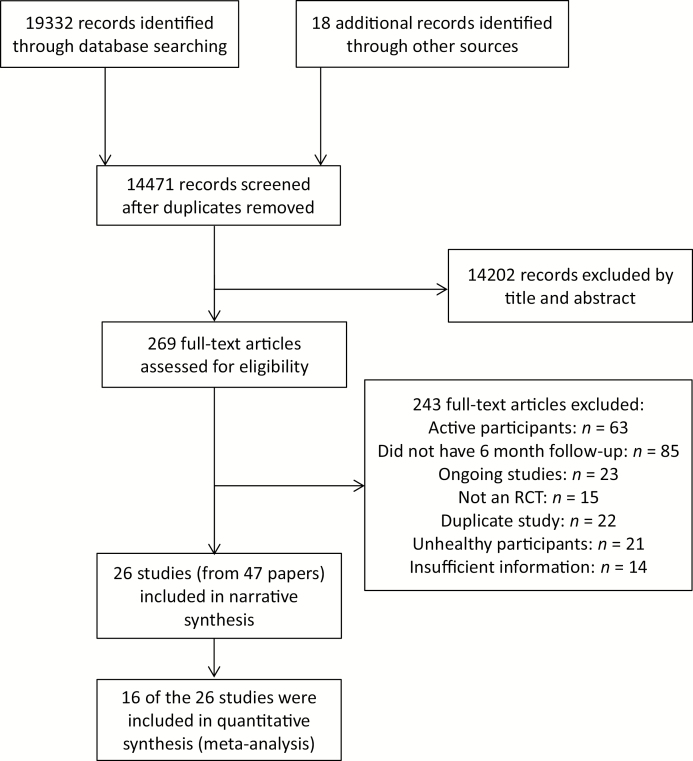
Physical inactivity and sedentary behavior relate to poor health outcomes independently. Healthy inactive adults are a key target population for prevention. This systematic review and meta-analysis aimed to evaluate the effectiveness of physical activity and/or sedentary behavior interventions, measured postintervention (behavior change) and at follow-up (behavior change maintenance), to identify behavior change techniques (BCT) within, and report on fidelity. Included studies were randomized controlled trials, targeting healthy inactive adults, aiming to change physical activity and/or sedentary behavior, with a minimum postintervention follow-up of 6 months, using 16 databases from 1990. Two reviewers independently coded risk of bias, the "Template for Intervention Description and Replication" (TIDieR) checklist, and BCTs. Twenty-six studies were included; 16 pooled for meta-analysis. Physical activity interventions were effective at changing behavior (d = 0.32, 95% confidence intervals = 0.16-0.48, n = 2,346) and maintaining behavior change after 6 months or more (d = 0.21, 95% confidence intervals = 0.12-0.30, n = 2,190). Sedentary behavior interventions (n = 2) were not effective. At postintervention, physical activity intervention effectiveness was associated with the BCTs "Biofeedback," "Demonstration of the behavior," "Behavior practice/rehearsal," and "Graded tasks." At follow-up, effectiveness was associated with using "Action planning," "Instruction on how to perform the behavior," "Prompts/cues," "Behavior practice/rehearsal," "Graded tasks," and "Self-reward." Fidelity was only documented in one study. Good evidence was found for behavior change maintenance effects in healthy inactive adults, and underlying BCTs. This review provides translational evidence to improve research, intervention design, and service delivery in physical activity interventions, while highlighting the lack of fidelity measurement.
Overview
The claims and statistics of this paper haven’t been checked yet.
Free: it reads the open-access text and checks the first 5 claims that cite a source we can check. Create a free account to check every claim.
Integrity signals
Registry
Cites
Statistics
Figures
Verification
Claims the paper makes
The claims and statistics of this paper haven’t been checked yet.
Free: it reads the open-access text and checks the first 5 claims that cite a source we can check. Create a free account to check every claim.
Claims other papers make about this one
Each is checked against this paper’s own text: does it say what the citing paper says it does?
The cited source doesn’t support the claim as written.
In the citing paper
“In addition, lifestyle interventions have shown to be effective in reducing sedentary behavior [13].”
From Consumer-based wearable activity trackers increase physical activity participation: systematic review and meta-analysis (2019) · cites this paper as [13]
Checked by a reasoning model — may be wrong.
Experimental — accuracy not yet measuredThe source backs part of the claim, not all of it — or backs it for a different population, condition or comparison.
In the citing paper
“Interventions shown to increase PA level or reduce sedentary behaviour include behaviour theory-based interventions, such as goal-setting, re-evaluation of goals, self-monitoring, and feedback.112,113”
From 2023 ESC guidelines for the management of cardiovascular disease in patients with diabetes. (2023) · cites this paper as [113]
Experimental — accuracy not yet measured
Self-check
Percentages, sums and reported differences re-computed from the paper’s own numbers.
The self-check needs the paper’s full text.
Citations
Cites
The Cochrane Collaboration's tool for assessing risk of bias in randomised trials
Higgins, J. P. T., Altman, D. G., Gotzsche, P. C., Juni, P., Moher, D., Oxman, A. D., Savovic, J., Schulz, K. F., Weeks, L., Sterne, J. A. C., et al. (2011) · BMJ · doi:10.1136/bmj.d5928 · Cited by 33,817
Dermyshi, E., Wang, Y., Yan, C., Hong, W., Qiu, G., Gong, X., & Zhang, T. (2017) · Neonatology · doi:10.1159/000454668 · Cited by 24,451
GRADE guidelines: 1. Introduction—GRADE evidence profiles and summary of findings tables
Guyatt, G., Oxman, A. D., Akl, E. A., Kunz, R., Vist, G., Brozek, J., Norris, S., Falck-Ytter, Y., Glasziou, P., & deBeer, H. (2011) · Journal of Clinical Epidemiology · doi:10.1016/j.jclinepi.2010.04.026 · Cited by 10,681 · cited 3×
“Using the GRADE criteria [41-42] the post-intervention physical activity outcome was downgraded two levels to low quality, because there was a high level of heterogeneity”
BackgroundMethodHoffmann, T. C., Glasziou, P. P., Boutron, I., Milne, R., Perera, R., Moher, D., Altman, D. G., Barbour, V., Macdonald, H., Johnston, M., et al. (2014) · BMJ · doi:10.1136/bmj.g1687 · Cited by 10,548 · cited 1×
“The ‘Template for Intervention Description and Replication’ (TIDieR; [24]) allows”
Background‘Small Changes' to Diet and Physical Activity Behaviors for Weight Management
Hills, A. P., Byrne, N. M., Lindstrom, R., & Hill, J. O. (2013) · Obesity Facts · doi:10.1159/000345030 · Cited by 9,493
GRADE guidelines: 3. Rating the quality of evidence
Balshem, H., Helfand, M., Schünemann, H. J., Oxman, A. D., Kunz, R., Brozek, J., Vist, G. E., Falck-Ytter, Y., Meerpohl, J., & Norris, S. (2011) · Journal of Clinical Epidemiology · doi:10.1016/j.jclinepi.2010.07.015 · Cited by 8,285 · cited 2×
“Using the GRADE criteria [41-42] the post-intervention physical activity outcome was downgraded two levels to low quality, because there was a high level of heterogeneity”
MethodMichie, S., Richardson, M., Johnston, M., Abraham, C., Francis, J., Hardeman, W., Eccles, M. P., Cane, J., & Wood, C. E. (2013) · Annals of Behavioral Medicine · doi:10.1007/s12160-013-9486-6 · Cited by 7,629 · cited 3×
“is essential for implementing, replicating, and synthesising successful approaches [19].”
BackgroundMethodInfluentialEvaluating the public health impact of health promotion interventions: the RE-AIM framework.
Glasgow, R. E., Vogt, T. M., & Boles, S. M. (1999) · American Journal of Public Health · doi:10.2105/ajph.89.9.1322 · Cited by 7,217 · cited 1×
“investigate whether positive behavioral changes can be sustained [74].”
BackgroundHistorical Origins of the Health Belief Model
Rosenstock, I. M. (1974) · Health Education Monographs · doi:10.1177/109019817400200403 · Cited by 6,116
Answering the Call for a Standard Reliability Measure for Coding Data
Hayes, A. F., & Krippendorff, K. (2007) · Communication Methods and Measures · doi:10.1080/19312450709336664 · Cited by 4,225 · cited 1×
“Inter-rater reliability throughout this review was assessed using Krippendorf’s α, a reliability coefficient that compares favourably to alternatives [39].”
Method
Research works printed but not linked: 1
- Higgins, 2011, Chapter 16: special topics in statistics
Cited by
2021 ESC Guidelines on cardiovascular disease prevention in clinical practice
Visseren, F. L. J., Mach, F., Smulders, Y. M., Carballo, D., Koskinas, K. C., Bäck, M., Benetos, A., Biffi, A., Boavida, J.-M., Capodanno, D., et al. (2021) · European Heart Journal · doi:10.1093/eurheartj/ehab484 · Cited by 6,485
2023 ESC guidelines for the management of cardiovascular disease in patients with diabetes.
Marx, N., Federici, M., Schütt, K., Müller-Wieland, D., Ajjan, R. A., Antunes, M. J., Christodorescu, R. M., Crawford, C., Di Angelantonio, E., Eliasson, B., et al. (2023) · European Heart Journal · doi:10.1093/eurheartj/ehad192 · Cited by 1,642
Brickwood, K.-J., Watson, G., O'Brien, J., & Williams, A. D. (2019) · JMIR mHealth and uHealth · doi:10.2196/11819 · Cited by 689
“In addition, lifestyle interventions have shown to be effective in reducing sedentary behavior [13].”
2021 ESC Guidelines on cardiovascular disease prevention in clinical practice
Visseren, F. L. J., Mach, F., Smulders, Y. M., Carballo, D., Koskinas, K. C., Bäck, M., Benetos, A., Biffi, A., Boavida, J.-M., Capodanno, D., et al. (2022) · European Journal of Preventive Cardiology · doi:10.1093/eurjpc/zwab154 · Cited by 542
Charchar, F. J., Prestes, P. R., Mills, C., Ching, S. M., Neupane, D., Marques, F. Z., Sharman, J. E., Vogt, L., Burrell, L. M., Korostovtseva, L., et al. (2024) · Journal of Hypertension · doi:10.1097/hjh.0000000000003563 · Cited by 297
Grimmett, C., Corbett, T., Brunet, J., Shepherd, J., Pinto, B. M., May, C. R., & Foster, C. (2019) · International Journal of Behavioral Nutrition and Physical Activity · doi:10.1186/s12966-019-0787-4 · Cited by 234
“Effectiveness was associated with ‘action planning’, ‘instruction on how to perform the behaviour’, ‘prompts/cues’, ‘behaviour practice/rehearsal’, ‘graded tasks’ and ‘self-reward’ [62].”
Exercise for Primary and Secondary Prevention of Cardiovascular Disease
Tucker, W. J., Fegers-Wustrow, I., Halle, M., Haykowsky, M. J., Chung, E. H., & Kovacic, J. C. (2022) · Journal of the American College of Cardiology · doi:10.1016/j.jacc.2022.07.004 · Cited by 244
Interventions for promoting habitual exercise in people living with and beyond cancer
Turner, R. R., Steed, L., Quirk, H., Greasley, R. U., Saxton, J. M., Taylor, S. J., Rosario, D. J., Thaha, M. A., & Bourke, L. (2018) · Cochrane Database of Systematic Reviews · doi:10.1002/14651858.cd010192.pub3 · Cited by 227
Updating goal-setting theory in physical activity promotion: a critical conceptual review
Swann, C., Rosenbaum, S., Lawrence, A., Vella, S. A., McEwan, D., & Ekkekakis, P. (2021) · Health Psychology Review · doi:10.1080/17437199.2019.1706616 · Cited by 225
Compernolle, S., DeSmet, A., Poppe, L., Crombez, G., De Bourdeaudhuij, I., Cardon, G., van der Ploeg, H. P., & Van Dyck, D. (2019) · International Journal of Behavioral Nutrition and Physical Activity · doi:10.1186/s12966-019-0824-3 · Cited by 186
Feil, K., Fritsch, J., & Rhodes, R. E. (2023) · British Journal of Sports Medicine · doi:10.1136/bjsports-2022-106640 · Cited by 206
Brand, R., & Cheval, B. (2019) · Frontiers in Psychology · doi:10.3389/fpsyg.2019.01147 · Cited by 164
“Nevertheless, we take the liberty of providing a few suggestions for practice, because these will certainly not have a negative effect on the effectiveness of standard intervention methods (Howlett et al., 2019).”
BackgroundA scoping review of ontologies related to human behaviour change
Norris, E., Finnerty, A. N., Hastings, J., Stokes, G., & Michie, S. (2019) · Nature Human Behaviour · doi:10.1038/s41562-018-0511-4 · Cited by 130
Tang, M. S. S., Moore, K., McGavigan, A., Clark, R. A., & Ganesan, A. N. (2020) · JMIR mhealth and uhealth · doi:10.2196/15576 · Cited by 134
“Several systematic reviews have shown that wearable trackers are effective [4,6,8].”
BackgroundText Message Interventions for Physical Activity: A Systematic Review and Meta-Analysis
Smith, D. M., Duque, L., Huffman, J. C., Healy, B. C., & Celano, C. M. (2020) · American Journal of Preventive Medicine · doi:10.1016/j.amepre.2019.08.014 · Cited by 129
Carraça, E., Encantado, J., Battista, F., Beaulieu, K., Blundell, J., Busetto, L., van Baak, M., Dicker, D., Ermolao, A., Farpour‐Lambert, N., et al. (2021) · Obesity Reviews · doi:10.1111/obr.13258 · Cited by 129
“PA interventions for inactive healthy adults also found that intervention effectiveness was associated with the use of behavior practice and rehearsal.(62) A few additional BCTs came up as significant in sensitivity analysis but were used in very few interventions and/or”
BackgroundBlack, N., Johnston, M., Michie, S., Hartmann‐Boyce, J., West, R., Viechtbauer, W., Eisma, M. C., Scott, C., & de Bruin, M. (2020) · Addiction · doi:10.1111/add.15056 · Cited by 102
Spring, B. J., Champion, K. E., Acabchuk, R. L., & Hennessy, E. A. (2020) · Health Psychology Review · doi:10.1080/17437199.2020.1721310 · Cited by 115
The (over)use of SMART goals for physical activity promotion: A narrative review and critique
Swann, C., Jackman, P. C., Lawrence, A., Hawkins, R. M., Goddard, S. G., Williamson, O., Schweickle, M. J., Vella, S. A., Rosenbaum, S., & Ekkekakis, P. (2022) · Health Psychology Review · doi:10.1080/17437199.2021.2023608 · Cited by 123
Franke, T., Sims‐Gould, J., Nettlefold, L., Ottoni, C. A., & McKay, H. A. (2021) · BMC Public Health · doi:10.1186/s12889-021-10363-1 · Cited by 103
Guía ESC 2021 sobre la prevención de la enfermedad cardiovascular en la práctica clínica
Visseren, F. L. J., Mach, F., Smulders, Y. M., Carballo, D., Koskinas, K. C., Bäck, M., Bénétos, A., Biffi, A., Boavida, J. M., Capodanno, D., et al. (2022) · Revista Española de Cardiología · doi:10.1016/j.recesp.2021.10.016 · Cited by 124
Novel Smartphone Game Improves Physical Activity Behavior in Type 2 Diabetes
Höchsmann, C., Müller, O., Ambühl, M., Klenk, C., Königstein, K., Infanger, D., Walz, S. P., & Schmidt-Trucksäss, A. (2019) · American Journal of Preventive Medicine · doi:10.1016/j.amepre.2019.02.017 · Cited by 67
Pears, S., & Sutton, S. (2021) · Health Psychology Review · doi:10.1080/17437199.2020.1727759 · Cited by 74
Bentley, M. R. N., Mitchell, N., & Backhouse, S. H. (2020) · Appetite · doi:10.1016/j.appet.2020.104645 · Cited by 71
Brierley, M. L., Chater, A., Smith, L. R., & Bailey, D. P. (2019) · Sports Medicine · doi:10.1007/s40279-019-01168-9 · Cited by 77
“All interventions (including active control comparison groups receiving BCTs) were independently coded for BCTs by MB and AC using the main article for each intervention as well as all related (published) material, including additional articles describing the same study, protocol papers, clinical trial registries, and…”
InfluentialSelf-citationHoffmann, C. M., Petrov, M. E. R., & Lee, R. E. (2021) · Preventive Medicine Reports · doi:10.1016/j.pmedr.2021.101496 · Cited by 85
“Of particular importance is the inclusion of implementation strategies and behavior change techniques (e.g. self-reward, graded tasks) to PA intervention, both of which may increase or sustain PA in adults, to prevent devastating and costly conditions later in life (Howlett et al., 2018).”
BackgroundVetrovsky, T., Borowiec, A., Juřík, R., Wahlich, C., Śmigielski, W., Steffl, M., Tufano, J. J., Drygas, W., Stastny, P., Harris, T., et al. (2022) · British Journal of Sports Medicine · doi:10.1136/bjsports-2021-105198 · Cited by 68
“8 14 One of the most frequent components employed in complex PA interventions is self-monitoring, 8 10 a crucial element of health promotion and disease prevention.”
Landais, L. L., Damman, O. C., Schoonmade, L. J., Timmermans, D. R. M., Verhagen, E. A. L. M., & Jelsma, J. G. M. (2020) · International Journal of Behavioral Nutrition and Physical Activity · doi:10.1186/s12966-020-00942-7 · Cited by 82
Gasana, J., O’Keeffe, T., Withers, T. M., & Greaves, C. J. (2023) · BMC Public Health · doi:10.1186/s12889-023-16541-7 · Cited by 85
Ekkekakis, P., Zenko, Z., & Vazou, S. (2021) · Psychology of sport and exercise · doi:10.1016/j.psychsport.2021.101930 · Cited by 85
Prokopidis, K., & Witard, O. C. (2021) · Nutrition Research Reviews · doi:10.1017/s0954422421000135 · Cited by 74
“More recent interest has focused on the impact of lifestyle factors on sarcopenia risk, with studies measuring changes in muscle protein metabolism in response to physical inactivity (18 – 20) , muscle disuse/immobilisation (21,22) and low protein consumption (23) in older adults.”
Granet, J., Peyrusqué, E., Ruiz, F., Buckinx, F., Abdelkader, L. B., Dang-Vu, T. T., Sirois, M.-J., Gouin, J.-P., Pageaux, B., & Aubertin-Leheudre, M. (2023) · The Journals of Gerontology Series A · doi:10.1093/gerona/glac127 · Cited by 58
In Vitro Killing of Schistosomula of Schistosoma Mansoni by BCG and C. Parvum-Activated Macrophages
Mahmoud, A. A. F., Peters, P., Civil, R. H., & Remington, J. S. (1979) · The Journal of Immunology · doi:10.4049/jimmunol.122.5.1655 · Cited by 59
Gerber, M., Beck, J., Brand, S., Cody, R., Donath, L., Eckert, A., Faude, O., Fischer, X., Hatzinger, M., Holsboer‐Trachsler, E., et al. (2019) · Trials · doi:10.1186/s13063-019-3468-3 · Cited by 66
The impact of COVID‐19 on health behaviour, well‐being, and long‐term physical health
McBride, E., Arden, M. A., Chater, A., & Chilcot, J. (2021) · British Journal of Health Psychology · doi:10.1111/bjhp.12520 · Cited by 63
Self-citationNorris, E., Finnerty, A. N., Hastings, J., Stokes, G., & Michie, S. (2018) · PsyArXiv (OSF Preprints) · doi:10.31234/osf.io/y7dus · Cited by 51
Wahlich, C., Chaudhry, U. A. R., Normansell, R., Cook, D. G., Hirani, S. P., Knightly, R., & Harris, T. J. (2020) · BMJ Open · doi:10.1136/bmjopen-2019-034541 · Cited by 56
Wu, S., Li, G., Du, L., Chen, S., Zhang, X., & He, Q. (2023) · Digital Health · doi:10.1177/20552076231176705 · Cited by 62
“And these interventions have been proven to be effective at increasing PA participation as well as reducing sedentary time in the short term.(87)”
BackgroundEl-Gayar, O., Ofori, M., & Nawar, N. (2021) · Journal of Biomedical Informatics · doi:10.1016/j.jbi.2021.103839 · Cited by 45
Melo, G., Aguilar-Farías, N., Barrera, E. L., Chomali, L., Moz-Christofoletti, M. A., Salgado, J. C., Swensson, L., & Carlos, J. (2023) · The Lancet Regional Health - Americas · doi:10.1016/j.lana.2023.100486 · Cited by 68
Gerber, M., Cheval, B., Cody, R., Colledge, F., Hohberg, V., Klimentidis, Y. C., Lang, C., Looser, V. N., Ludyga, S., Stults‐Kolehmainen, M., et al. (2025) · Physiological Reviews · doi:10.1152/physrev.00021.2024 · Cited by 72
Physical activity and exercise training in cystic fibrosis
Radtke, T., Smith, S. J., Nevitt, S. J., Hebestreit, H. U., & Kriemler, S. (2022) · Cochrane Database of Systematic Reviews · doi:10.1002/14651858.cd002768.pub5 · Cited by 79
Ester, M., Eisele, M., Wurz, A. J., McDonough, M. H., McNeely, M. L., & Culos-Reed, S. N. (2021) · JMIR Cancer · doi:10.2196/28852 · Cited by 44
“Recommendations have been made to use behavioral theories to guide intervention design to enhance the effectiveness of behavior change interventions [21,22].”
BackgroundBarrett, S., Begg, S. J., O’Halloran, P., & Kingsley, M. (2020) · International Journal of Behavioral Nutrition and Physical Activity · doi:10.1186/s12966-020-01063-x · Cited by 41
“Although PA coaching has demonstrated effectiveness in maintaining PA changes [16, 17, 22], studies that confirm long term PA behaviour change in ambulatory secondary care are scarce.”
BackgroundWilliams, J., Stubbs, B., Richardson, S., Flower, C., Barr-Hamilton, L., Grey, B., Hubbard, K., Spaducci, G., Gaughran, F., & Craig, T. (2019) · BMC Psychiatry · doi:10.1186/s12888-019-2274-5 · Cited by 52
Crawshaw, J., Meyer, C., Antonopoulou, V., Antony, J., Grimshaw, J., Ivers, N. M., Konnyu, K. J., Lacroix, M., Presseau, J., Simeoni, M., et al. (2023) · Implementation Science · doi:10.1186/s13012-023-01318-8 · Cited by 47
Salisbury, C. E., Hyde, M. K., Cooper, E. T., Stennett, R., Gomersall, S. R., & Skinner, T. L. (2023) · Journal of Cancer Survivorship · doi:10.1007/s11764-023-01377-2 · Cited by 50
“Evidence in healthy adults indicates that BCTs effective in the short-term (< 6 months) versus long-term (≥ 6 month) maintenance of physical activity can differ [22], and collating interventions with ≥ 3 months follow-up means that this overlap may make it difficult to identify the BCTs that are effective for long-ter…”
BackgroundGyawali, B., Sharma, R., Mishra, S. R., Neupane, D., Vaidya, A., Sandbæk, A., & Kallestrup, P. (2021) · JAMA Network Open · doi:10.1001/jamanetworkopen.2020.35799 · Cited by 56
Goal setting and achievement for walking: A series of N-of-1 digital interventions.
Chevance, G., Baretta, D., Golaszewski, N., Takemoto, M., Shrestha, S., Jain, S., Rivera, D. E., Klasnja, P., & Hekler, E. (2021) · Health Psychology · doi:10.1037/hea0001044 · Cited by 37
Exercise behavior change revisited: Affective-reflective theory
Brand, R., & Panteleimon Ekkekakis, A. (2021) · Society for Transparency, Openness, and Replication in Kinesiology eBooks · doi:10.51224/b1004 · Cited by 54
“Other meta-analyses have arrived at similar conclusions (e.g., Howlett et al., 2019; Rhodes et al., 2020).”
ResultGoldschmidt, S., Schmidt, M. E., & Steindorf, K. (2023) · Supportive Care in Cancer · doi:10.1007/s00520-022-07485-6 · Cited by 53
“Similarly, a review and meta-analysis considering interventions to promote PA in healthy inactive adults found that maintenance of PA was associated with using action planning, instruction on how to perform the behaviour, prompts and cues, behaviour practice and rehearsal, graded tasks, and self-reward [59].”
BackgroundAlley, S., van Uffelen, J. G. Z., Schöeppe, S., Parkinson, L., Hunt, S., Power, D., Waterman, N., Waterman, C., To, Q. G., Duncan, M. J., et al. (2022) · Journal of Medical Internet Research · doi:10.2196/31352 · Cited by 38
“Intervention strategies to improve maintenance of physical activity over time may improve the effectiveness of computer-tailored physical activity advice in older adults [46].”
Páez, A., Nunan, D., McCulloch, P. G., & Beard, D. J. (2024) · Journal of Clinical Epidemiology · doi:10.1016/j.jclinepi.2024.111610 · Cited by 44
Whatnall, M. C., Sharkey, T., Hutchesson, M., Haslam, R. L., Bezzina, A., Collins, C. E., & Ashton, L. (2021) · Journal of Sports Sciences · doi:10.1080/02640414.2021.1898107 · Cited by 53
“Comparably, a meta-analysis by Howlett et al. in 2018 of PA and sedentary behaviour interventions among inactive adults reported increases of 5–247 min/week of total PA in intervention compared with control groups (Howlett et al., 2019).”
BackgroundMethodResultInfluentialMadigan, C. D., Fong, M., Howick, J., Kettle, V. E., Rouse, P. C., Hamilton, L., Roberts, N. W., Gomersall, S. R., & Daley, A. (2021) · Obesity Reviews · doi:10.1111/obr.13304 · Cited by 45
A Behavioral Perspective for Improving Exercise Adherence
André, N., Grousset, M., & Audiffren, M. F. (2024) · Sports Medicine - Open · doi:10.1186/s40798-024-00714-8 · Cited by 48
“Another review carried out by Howlett et al. [27] showed that biofeedback, demonstration of behavior, behavior practice/rehearsal, and graded tasks were effective short-term intervention techniques for healthy inactive participants.”
BackgroundMethodBird, E. L., Biddle, M. S. Y., & Powell, J. E. (2019) · BMC Public Health · doi:10.1186/s12889-019-7701-5 · Cited by 44
Guo, J. (2022) · BioMed Research International · doi:10.1155/2022/9378860 · Cited by 42
Gilchrist, H., Oliveira, J. S., Kwok, W. S., Sherrington, C., Pinheiro, M. B., Bauman, A. E., Tiedemann, A., & Hassett, L. M. (2023) · Annals of Behavioral Medicine · doi:10.1093/abm/kaad074 · Cited by 44
“Previous systematic reviews of physical activity interventions have identified and described BCTs used in each study [16, 19–28], and considered the relationship of BCTs with study outcomes.”
Integrating high‐intensity interval training into the workplace: The Work‐HIIT pilot RCT
Eather, N., Babic, M., Riley, N., Harris, N., Jung, M. E., Jeffs, M., Barclay, B., & Lubans, D. R. (2020) · Scandinavian Journal of Medicine and Science in Sports · doi:10.1111/sms.13811 · Cited by 37
Howlett, N., García-Iglesias, J., Bontoft, C., Breslin, G., Bartington, S., Freethy, I., Malillos, M. H., Jones, J., Lloyd, N., Marshall, T., et al. (2022) · Drug and Alcohol Dependence · doi:10.1016/j.drugalcdep.2022.109597 · Cited by 43
Self-citationHowlett, N., Schulz, J., Trivedi, D. P., Troop, N. A., & Chater, A. (2020) · Psychology and Health · doi:10.1080/08870446.2020.1763994 · Cited by 45
Self-citationReid, H. A. B., Smith, R., Williamson, W., Baldock, J., Caterson, J., Kluzek, S., Jones, N., & Copeland, R. J. (2022) · BMC Public Health · doi:10.1186/s12889-022-14178-6 · Cited by 43
Fischer, X., Kreppke, J.-N., Zahner, L., Gerber, M., Faude, O., & Donath, L. (2019) · International Journal of Environmental Research and Public Health · doi:10.3390/ijerph16142626 · Cited by 35
“This holds true especially for long-term effects, as those are generally smaller [15].”
BackgroundResultInfluentialRao, W. (2024) · Heliyon · doi:10.1016/j.heliyon.2024.e36393 · Cited by 47
“Each entity is characterized by distinct attributes, with a notable “ course selection ” relationship established between the “ student ” and “ course ” entities [20].”
BackgroundFleming, J., Bryce, C., Parsons, J., Wellington, C., & Dale, J. R. (2020) · British Journal of General Practice · doi:10.3399/bjgp20x710453 · Cited by 33
Meyer-Schwickerath, C., Morawietz, C., Baumann, F. T., Huber, G., & Wiskemann, J. (2021) · Disability and Rehabilitation · doi:10.1080/09638288.2021.1938247 · Cited by 32
Barrett, S., Begg, S. J., O’Halloran, P., Howlett, O., Lawrence, J., & Kingsley, M. (2021) · International Journal of Behavioral Nutrition and Physical Activity · doi:10.1186/s12966-020-01076-6 · Cited by 34
“Without a clear measurement of fidelity, reports of the effectiveness of interventions must be interpreted cautiously, as the possibility that the intervention was not delivered as intended cannot be ruled out [65].”
BackgroundAlSwayied, G., Guo, H., Rookes, T., Frost, R., & Hamilton, F. L. (2022) · JMIR mhealth and uhealth · doi:10.2196/40271 · Cited by 42
Willinger, N., Steele, J., Atkinson, L., Liguori, G. A., Jiménez, A., Mann, S., & Horton, E. (2020) · Journal of Physical Activity and Health · doi:10.1123/jpah.2019-0349 · Cited by 34
Rethorn, Z. D., Covington, J. K., Cook, C. E., & Bezner, J. R. (2021) · Physical Therapy · doi:10.1093/ptj/pzab291 · Cited by 31
Proposing an ontological shift from intervention to intravention in sport and exercise psychology
Camiré, M. (2022) · Psychology of sport and exercise · doi:10.1016/j.psychsport.2022.102342 · Cited by 30
Swann, C., Hooper, A., Schweickle, M. J., Peoples, G. E., Mullan, J., Hutto, D. D., Allen, M. S., & Vella, S. A. (2019) · Psychology of sport and exercise · doi:10.1016/j.psychsport.2019.01.003 · Cited by 43
MacPherson, M., Dineen, T. E., Cranston, K. D., & Jung, M. E. (2020) · Canadian Journal of Diabetes · doi:10.1016/j.jcjd.2020.09.011 · Cited by 32
Hartman, S. J., Chen, R., Tam, R. M., Narayan, H. K., Natarajan, L., & Liu, L. (2022) · JMIR mhealth and uhealth · doi:10.2196/37086 · Cited by 32
“Additionally, prior studies have either been short term or had continued contacts with the participants in their maintenance phase [22-24].”
BackgroundThal, S. B., Maunz, L. A., Quested, E., Bright, S. J., MYERS, B. J., & Ntoumanis, N. (2022) · Psychology of Addictive Behaviors · doi:10.1037/adb0000842 · Cited by 34
Elsborg, P., Heinze, C., Melby, P. S., Nielsen, G., Bentsen, P., & Ryom, K. (2021) · BMC Public Health · doi:10.1186/s12889-021-11299-2 · Cited by 35
“However, this is an important group to gain knowledge about in order to improve and tailor effective initiatives and programs that can increase PA among inactive [10].”
BackgroundFreshwater, M., Christensen, S. M., Oshman, L. D., & Bays, H. E. (2022) · Obesity Pillars · doi:10.1016/j.obpill.2022.100014 · Cited by 33
“The most successful behavior therapy techniques are [69,70]: 1.”
BackgroundThomas, P. C., Curtis, K., POTTS, H. W. W., Bark, P., Perowne, R., Rookes, T., & Rowe, S. L. (2024) · JMIR Mental Health · doi:10.2196/57577 · Cited by 30
Mbous, Y. P. V., Patel, J., & Kelly, K. M. (2020) · Translational Behavioral Medicine · doi:10.1093/tbm/ibz176 · Cited by 24
Scott, C., de Barra, M., Johnston, M., de Bruin, M., SCOTT, N. W., Matheson, C., Bond, C. M., & Watson, M. C. (2020) · BMJ Open · doi:10.1136/bmjopen-2019-036500 · Cited by 27
Godoy‐Izquierdo, D., de Teresa, C., & Mendoza, N. (2024) · Maturitas · doi:10.1016/j.maturitas.2024.107924 · Cited by 33
Arigo, D., Mogle, J. A., & Smyth, J. M. (2021) · Journal of Behavioral Medicine · doi:10.1007/s10865-021-00229-7 · Cited by 29
“As noted, existing literature also indicates that social comparison is used as a behavior change technique in many PA interventions (Bélanger-Gravel et al., 2011; Howlett et al., 2019), particularly in digital programs (e.”
Sheeran, P., Wright, C. E., Listrom, O., Klein, W. M. P., & Rothman, A. J. (2023) · Annals of Behavioral Medicine · doi:10.1093/abm/kaad002 · Cited by 22
Marenus, M. W., Murray, A., Friedman, K., Sanowski, J., Ottensoser, H., Cahuas, A., Kumaravel, V., & Chen, W. (2021) · BioMed Research International · doi:10.1155/2021/8400241 · Cited by 26
Leunis, S., Vandecruys, M., Cornelissen, V., Craenenbroeck, A. H. V., Geest, S. D., Monbaliu, D. R. L., & Smet, S. D. (2022) · Kidney and Dialysis · doi:10.3390/kidneydial2020029 · Cited by 24
“…to be effective in (overweight) non-transplanted individuals seeking to adopt and maintain a physically active lifestyle: action planning, self-monitoring of behaviour, instruction on how to perform the behaviour, prompts/cues, behaviour practice/rehearsal, graded tasks, and self-reward [127–129].”
BackgroundAshizawa, R., Honda, H., Take, K., Yoshizawa, K., Kameyama, Y., & Yoshimoto, Y. (2022) · Clinical Rehabilitation · doi:10.1177/02692155221135412 · Cited by 22
Nezondet, C., Gandrieau, J., Bourrelier, J., Nguyen, P., & Zunquin, G. (2023) · Children · doi:10.3390/children10060956 · Cited by 21
“During adapted exercise sessions, several strategies have been used to develop motivation and confidence in adolescents [60,61]:”
MethodHubbard, G., Thompson, C. W., Locke, R., Jenkins, D., Munoz, S.-A., van Woerden, H. C., Maxwell, M., Yang, Y., & Gorely, T. (2020) · BMC Public Health · doi:10.1186/s12889-020-08518-7 · Cited by 23
Factors Associated with an Unhealthy Lifestyle among Adults in Riyadh City, Saudi Arabia
Alquaiz, A. M., Kazi, A., Almigbal, T. H., Al-Hazmi, A., Qureshi, R., & AlHabeeb, K. M. (2021) · Healthcare · doi:10.3390/healthcare9020221 · Cited by 21
“Overall, younger males and older aged women reported unhealthy lifestyle, and these differences suggest that no single strategy can be applied to the whole population [26].”
BackgroundCancelliere, C., Sutton, D. A., Côté, P., French, S. D., Taylor-Vaisey, A. L., & Mior, S. A. (2019) · Implementation Science · doi:10.1186/s13012-019-0931-1 · Cited by 23
“Identifying barriers and facilitators to program implementation using a system such as COM-B, and subsequently implementing corresponding behavior change techniques, may help to improve the clinical effectiveness and impact of programs of care [54, 55].”
MethodGarstang, K. R., Jackman, P. C., Healy, L. C., Cooper, S. B., & Magistro, D. (2024) · Journal of Physical Activity and Health · doi:10.1123/jpah.2023-0340 · Cited by 20
Thøgersen‐Ntoumani, C., Quested, E., Smith, B., Nicholas, J., McVeigh, J. A., Fenton, S. A. M., Stamatakis, E., Parker, S. K., Pereira, G. F., Gucciardi, D. F., et al. (2020) · Contemporary Clinical Trials · doi:10.1016/j.cct.2020.105969 · Cited by 24
Alòs, F., Colomer, M. À., Martín-Cantera, C., Muñoz, M. S., Bort‐Roig, J., Saigí, I., Chirveches-Pérez, E., Solà-Gonfaus, M., Molina-Aragonés, J. M., & Puig-Ribera, A. M. (2022) · BMC Public Health · doi:10.1186/s12889-022-13676-x · Cited by 23
More, K. R., & Phillips, L. A. (2022) · Frontiers in Psychology · doi:10.3389/fpsyg.2022.940777 · Cited by 33
“Action planning has been shown to be a viable target to elicit behavior change in past intervention studies and is one of the only known techniques that leads to continued activity engagement six months post-intervention (Gollwitzer and Sheeran, 2006; Howlett et al., 2019).”
ResultChater, A., Schulz, J., Jones, A., Burke, A., Carr, S., Kukucska, D., Troop, N., Trivedi, D. P., & Howlett, N. (2022) · Frontiers in Public Health · doi:10.3389/fpubh.2022.903109 · Cited by 25
“Strengths This study had a number of strengths which included having the methods pre-registered in a detailed protocol [30], the content being heavily guided by BCTs found to be present in effective interventions [19] and the delivery based on theoretical and methodological approaches from health psychology and behavi…”
BackgroundMethodInfluentialSelf-citationJames, J., Hardeman, W., Goodall, M., Eborall, H., Sprung, V. S., Bonnett, L. J., & Wilding, J. P. H. (2021) · Physiotherapy · doi:10.1016/j.physio.2021.10.002 · Cited by 26
Frick, M., Neu, L., Liebhaber, N., Sperner‐Unterweger, B., Stötter, J., Keller, L., & Hüfner, K. (2021) · Sustainability · doi:10.3390/su132313361 · Cited by 26
García-Pérez-de-Sevilla, G., Guido, O. B., la Cruz, M. D. L. P. D., Fernández, A. B., Alejo, L. B., Goercke, M. I. R., & Pérez, M. (2021) · International Journal of Environmental Research and Public Health · doi:10.3390/ijerph182212198 · Cited by 21
“The participants in this study achieved long-term adherence to a healthy lifestyle, which could be partly because they were predisposed to change [14], and had psychological support since nutritional barriers and motivation to change were addressed during the workshops [13,15].”
BackgroundPeng, S., Othman, A. T., Yuan, F., & Liang, J. (2022) · International Journal of Environmental Research and Public Health · doi:10.3390/ijerph19127337 · Cited by 24
“[16], also showed a significant small-to-moderate effect size effect of BCTs on initiating PA behaviors.”
Background
Metadata
- Authors
- Howlett, N., Trivedi, D., Troop, N. A., & Chater, A. M.
- Affiliations
- University of Hertfordshire (GB)
- Corresponding author
- Howlett, Neil
- Venue
- Translational Behavioral Medicine
- Publisher
- Oxford University Press (OUP)
- Published
- 2018-02-28
- Volume
- 9
- Issue
- 1
- Pages
- 147-157
- ISSN
- 1613-9860 (ISSN-L)
- 1869-6716
- PMC
- PMC6305562
- OpenAlex
- W2788581315
- Cited by
- 448
- References
- 78
- Citations by year
- 2026: 38 · 2025: 59 · 2024: 73 · 2023: 64 · 2022: 76 · 2021: 62 · 2020: 43 · 2019: 27 · 2018: 5
- FWCI
- 4.49
- Type
- journal article
- Language
- en
- Open access
- hybrid
- doi.org
- Licence
- Locations
- Translational Behavioral Medicine (publishedVersion, cc-by-nc)
- Europe PMC (PubMed Central) (publishedVersion, cc-by-nc)
- PubMed Central (publishedVersion, cc-by-nc)
- PubMed (publishedVersion)
- University of Hertfordshire Research Archive (University of Hertfordshire) (acceptedVersion)
- University of Hertfordshire Research Archive (University of Hertfordshire) (submittedVersion, cc-by-nc)
- UCL Discovery (University College London) (submittedVersion)
- University of Bedfordshire Repository (University of Bedfordshire) (submittedVersion)
- University of Bedfordshire Repository (University of Bedfordshire) (submittedVersion, cc-by-nc-nd)
- Funders
- University of Hertfordshire
- Topics
- Health Sciences › Medicine › Public Health, Environmental and Occupational Health › Physical Activity and Health
- Social Sciences › Psychology › Applied Psychology › Behavioral Health and Interventions
- Social Sciences › Psychology › Developmental and Educational Psychology › Behavioral and Psychological Studies
- Keywords
- physical activity interventions, sedentary behavior, behaviour change techniques, behavior maintenance, intervention fidelity, biofeedback, action planning, prompts and cues, self-reward
- MeSH terms
- Behavior Therapy, Health Promotion, Humans, Health Behavior, Exercise, Sedentary Behavior
About these checks
Registry, retraction, Cites and statistics results are computed, not judged, with one exception: a printed reference that no index lists is read once by a model before it counts as a citation error. Claims are extracted by a model and kept only when their quote appears verbatim in the text; each cited source is then checked, with a model’s help, for whether it says what the claim relies on. Those verdicts can be wrong — read the claim’s quote and the cited source before relying on one.
Statistics and arithmetic are recomputed, not judged.
Confidence bands are shown only for fields calibrated on our annotated test set. None is calibrated yet, so no band is shown.
What counts as a claim ›How we measure confidence ›How we check this ›
Are you an author, or do you see a problem with this page? Request a review
Data sources
Bibliographic data: Semantic Scholar, OpenAlex, Crossref.
Contains information from the Semantic Scholar Academic Graph Datasets, made available under the ODC Attribution License (ODC-BY 1.0).
Semantic Scholar’s data is described in: Kinney, R., et al. (2023). The Semantic Scholar Open Data Platform. arXiv:2301.10140.
